










We imported this new, very nice and interesting tetra for the first time now from Brazil. Obviously this species originates from the Araguaia/Tocantins basin in Central Brazil. In the most current issue of the German aquarium magazine “Amazonas” (Issue 35, May/June 2011, p. 79) this fish is named “7 Rays Mint Tetra” what is adopted here.
The fish become about 3 cm long and the males can be easily recognized by the very strange looking laterally broadened anterior anal fin rays (seven, thus the popular name) and the saw-like keel structure at the lower end of the caudal peduncle. Structures of that kind can be found in the genera Spintherobolus and Serrapinnus, but in the 7 Rays Mint Tetra the anterior anal fin rays are not connected by membranes which is the case in all known species of Spintherobolus and Serrapinnus. Thus our fish might not belong only to a new species, but also to a new genus.
Regarding keeping the new species proved to be undemanding so far. The fish are typical, very lively schooling fish.
For our customers: the animals have code 293692 on our stocklist. Please note that we exclusively supply the wholesale trade.
Lexicon: Serrapinnus: Latin, means “saw-fin”, referring to “the peculiar shape of the anal-fin rays of mature males.” (Malabarba, 1998). Spintherobolus: from ancient Greek, means about “emitting sparks”, probably referring to the lateral line organ.
Suggestion of a common name: 7 Rays Mint Tetra
Text & photos: Frank Schäfer
Postscriptum: the species has been described in 2012 under the name of Serrapinnus sterbai by Axel Zarske. This is the complete reference: Zarske, A. (2012): Serrapinnus sterbai spec. nov. — Beschreibung eines neuen Salmlers (Teleostei: Characiformes: Characidae: Cheirodontinae) aus Brasilien mit Bemerkungen zu S. gracilis (Géry, 1960) comb. nov. und S. littoris (Géry, 1960) comb. nov. Vertebrate Zoology v. 62 (no. 1): 3-17.
| Angaben zum Tier | |
|---|---|
| Herkunft | Brasilien / Brazil |
| Verfügbare Größe in cm | 3-4 |


 Finally we were successful and imported a larger number of this wonderfully coloured predatory tetra from Peru. Both sexes have the splendid orange belly. Females can be recognized by the shape of the ventral fins: they are comparatively small and rounded (large and pointed in males).


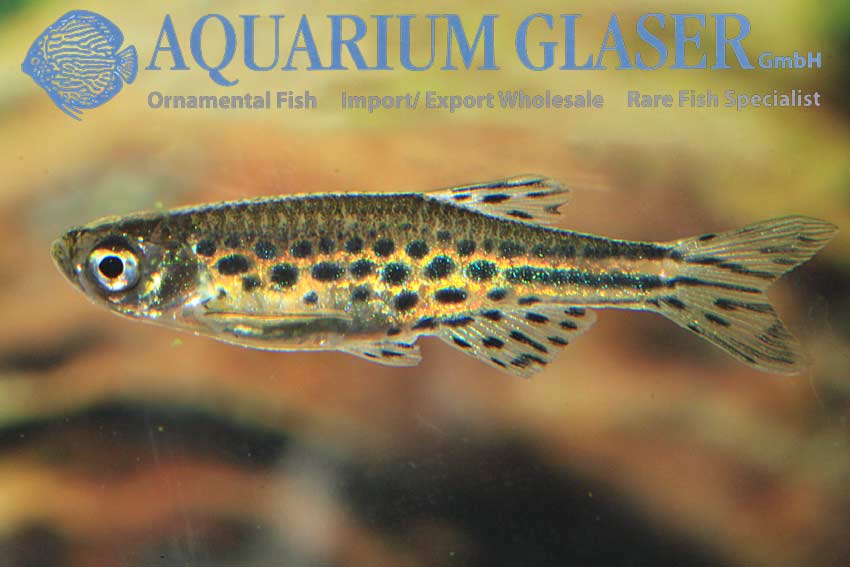


 Only limited number available. Code: 262322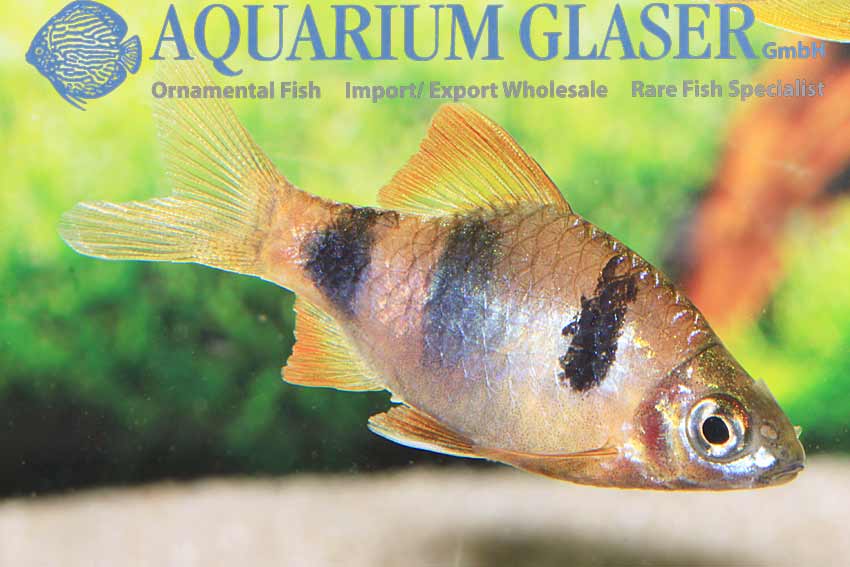


 Code: 456043


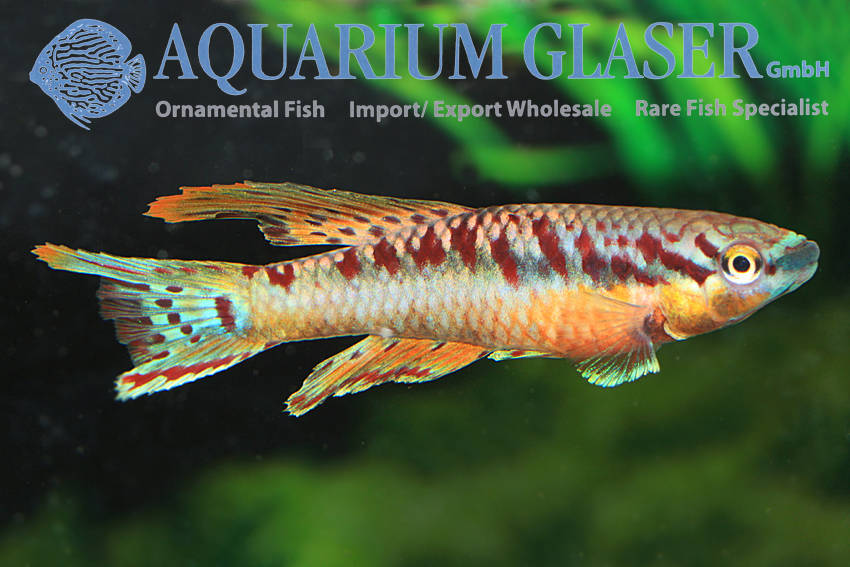


 Code number: 221092


 The snooks (Centropomus) are distributed in the New World; currently 12 species are recognized. Persons that are reminiscent of giant perches (Lates) by looking at snooks are not wrong: until quite recently the snooks and the giant perches were united in a single family, Centropomidae.


 The coastal rainforests of southeastern Brazil are the home of a good number of unusual aquarium fish. One of the most popular and most attractive species from that region is for sure Scleromystax barbatus, the Bearded cory (formerly known as Corydoras b.). Sadly the natural habitats in that region are much affected by the growing human population. Especially the pollution of the water bodies is a growing threat for the aquatic animals and many of the endemic fish are in danger of extinction. Collecting these animals for aquarium purposes has no effect in this context. On the other hand it is not unlikely that some of the more attractive species will survive this century only in captivity.


