








The classification of the genus of African alestid characins is the subject of ongoing debate, with no end in sight. There is constant back and forth, especially with regard to the Congo characins, which are of some importance in aquariums. Just recently, in the latest checklist of characins (Toledo-Piza et al, 2024), P. bleheri, which at first glance is very similar to the “normal” Congo tetra (Phenacogrammus interruptus), was listed in the genus Alestopetersius. There are currently 12 accepted species in Alestopetersius. Many are very similar to each other and difficult to identify. A. smykalai from the Niger is easily recognizable, but the species from the Congo – all the rest – are very tricky. Males in breeding coloration are characterized by their coloring, but it can take several weeks to months for them to get into the mood for breeding. For understandable reasons, we cannot wait that long in the trade.
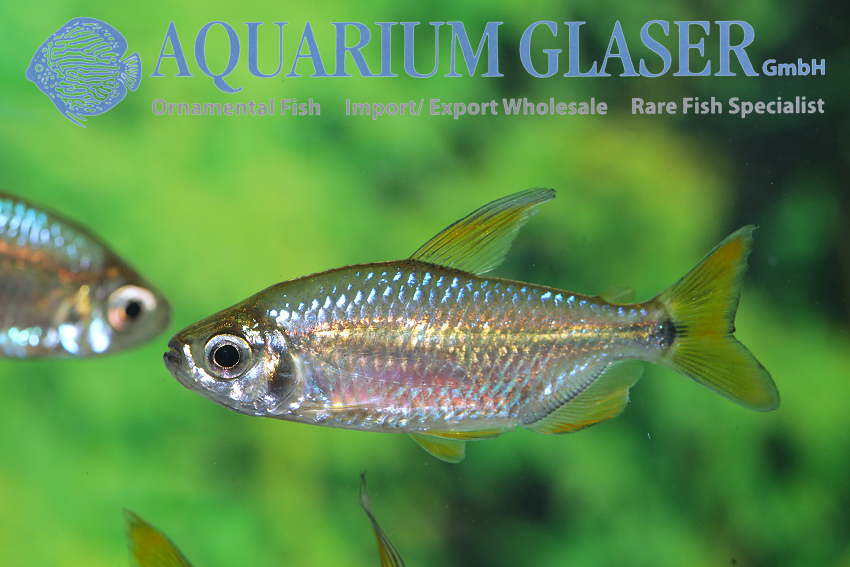
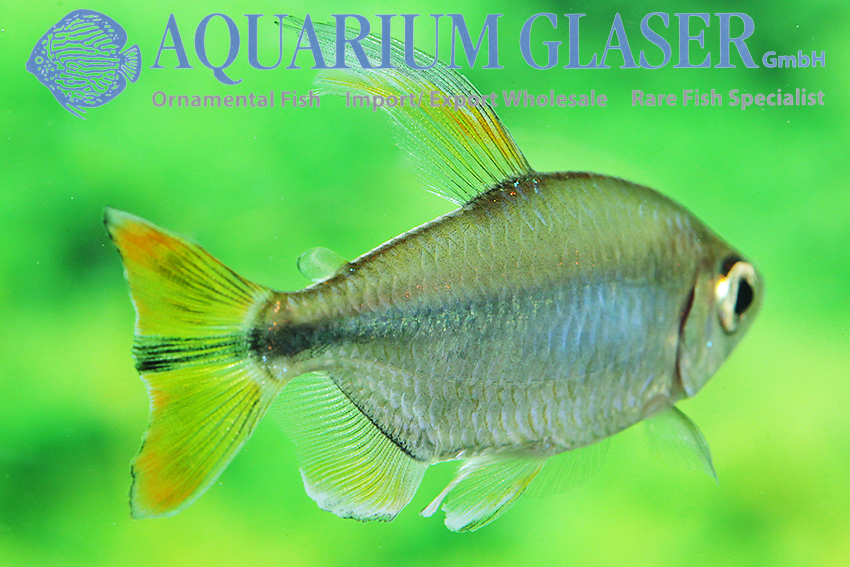
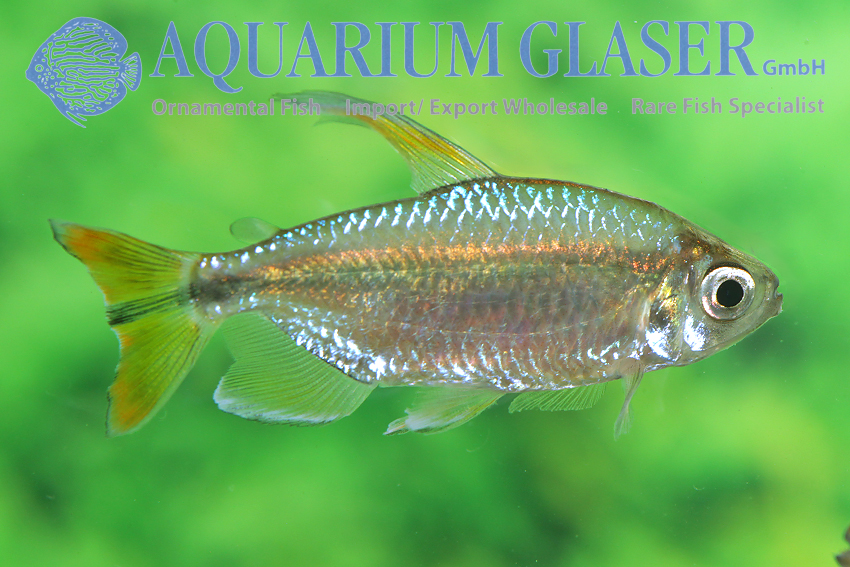
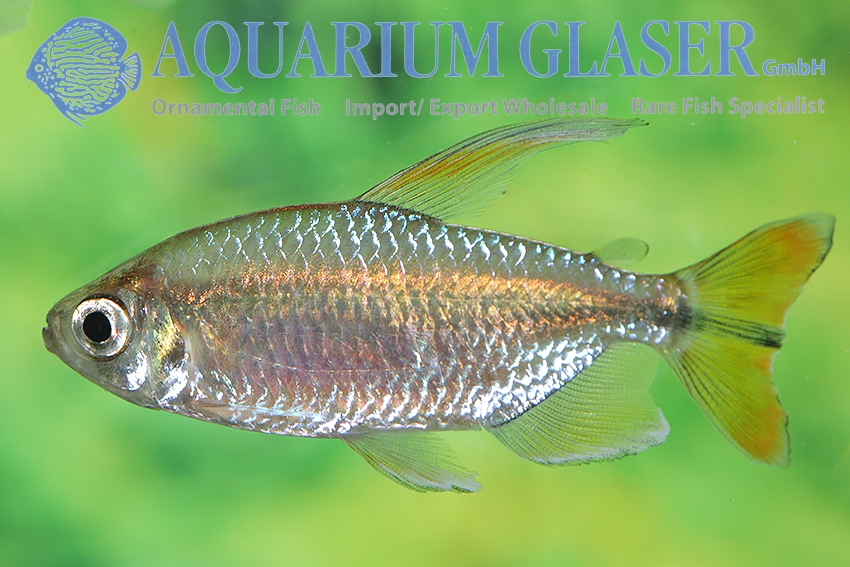
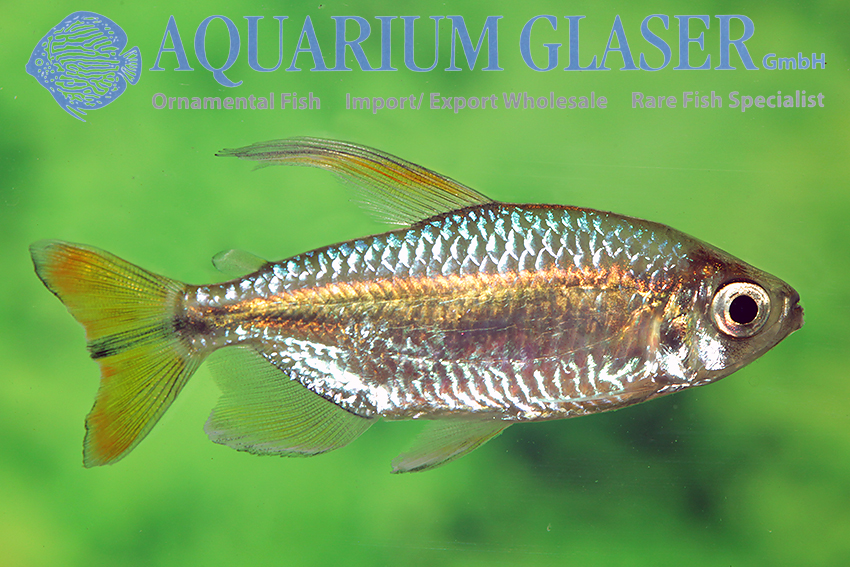
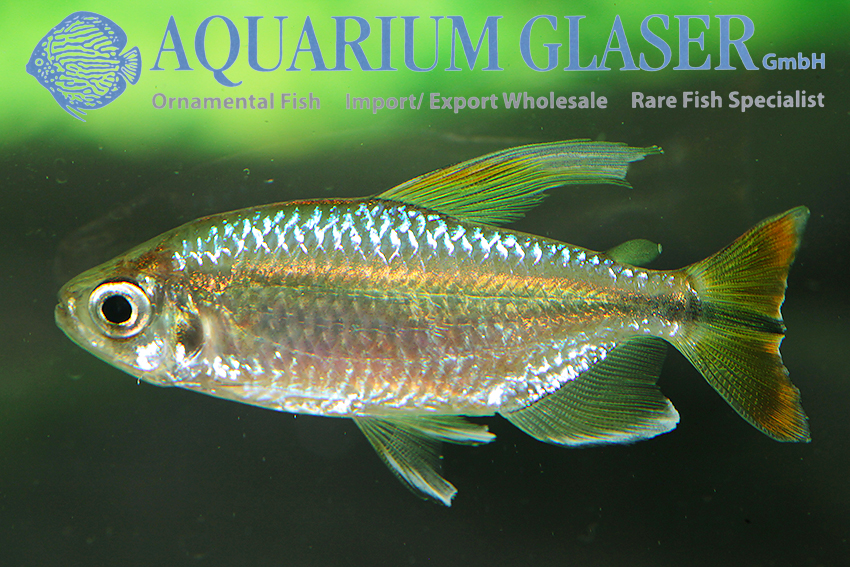
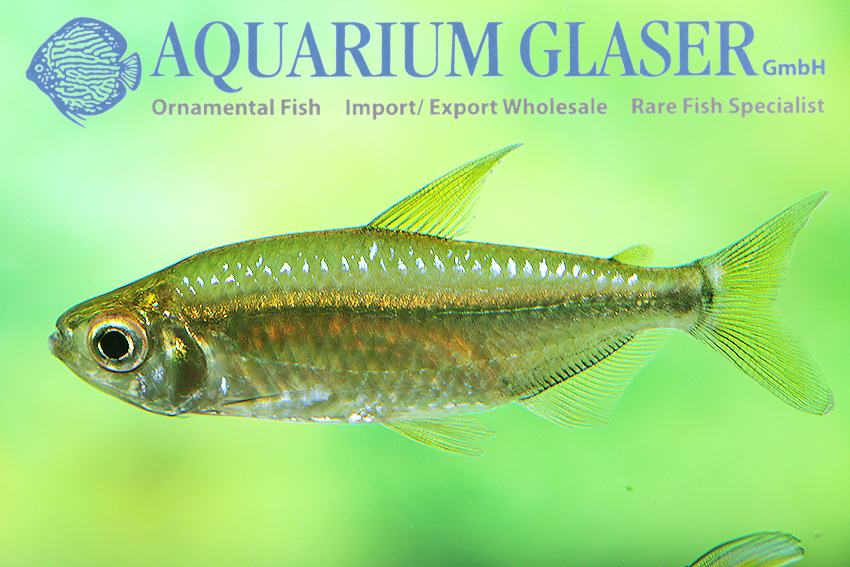
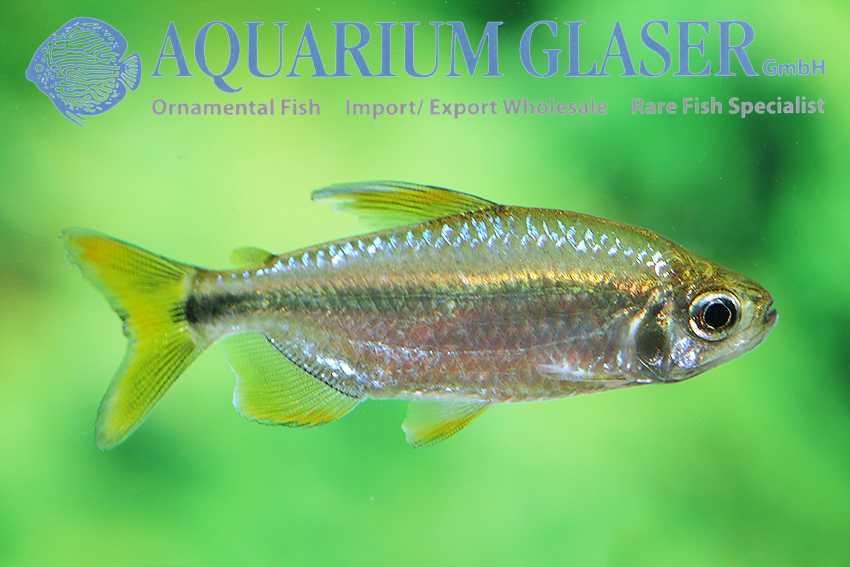
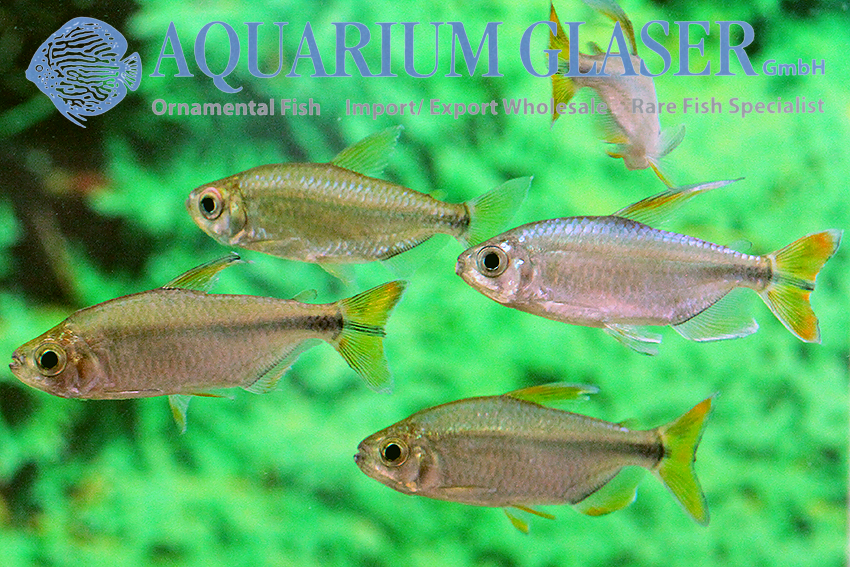
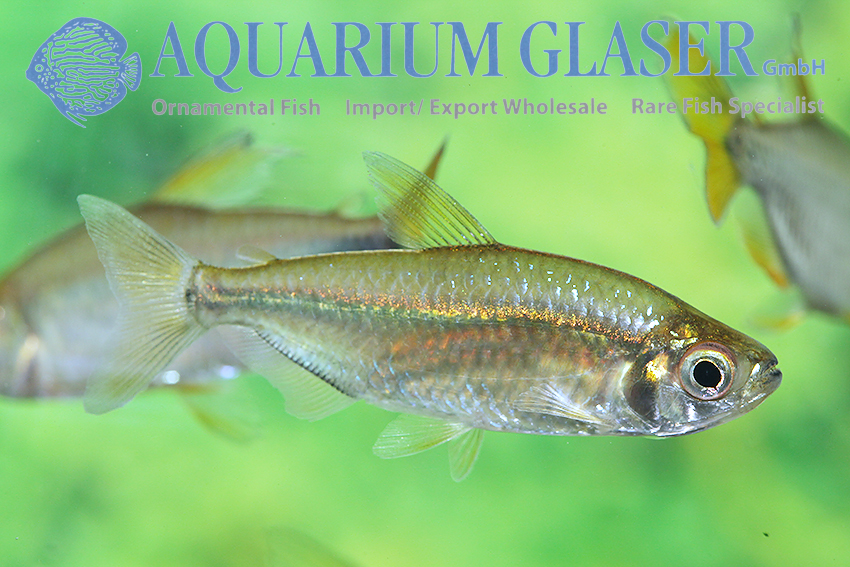
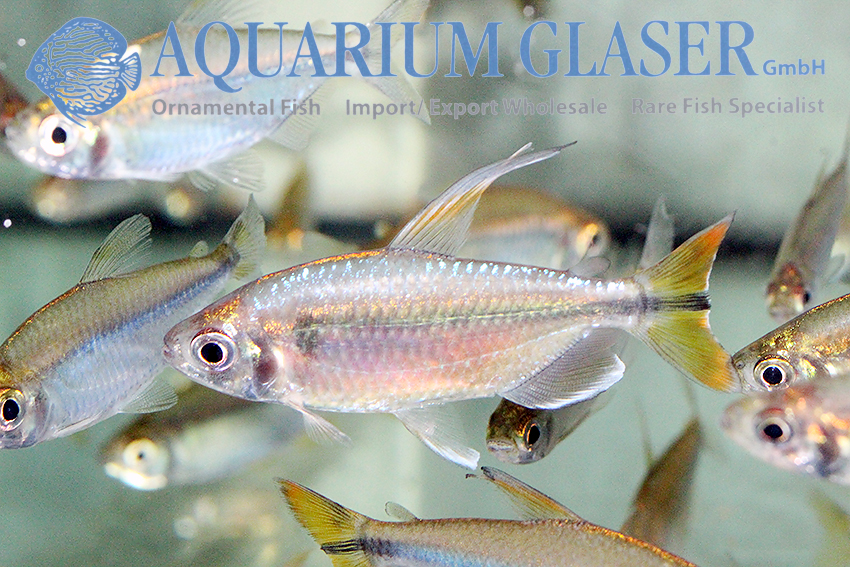
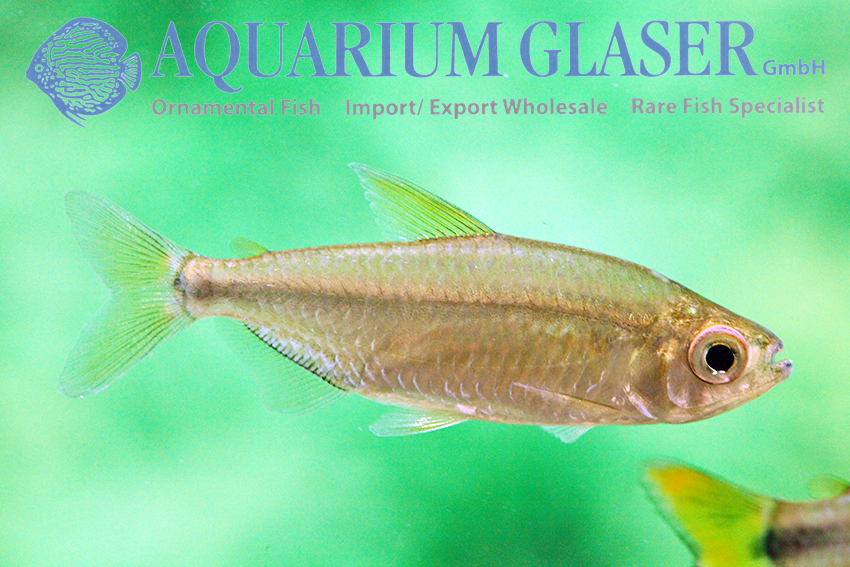
We recently received a shipment of Congo tetras from the Congo labeled “Alestopetersius brichardi.” This species does exist, and a quick Google image search using this name returned our fish among the results. In the meantime (after 10 days), some of the males have changed color, causing us to have serious doubts. Fortunately, the last revision of all Alestopetersius species was not long ago; it was carried out in 2012 by Mbimbi Mayi Munene & Stiassny on the occasion of the description of a new species. According to this, A. brichardi is a slender fish with a broad black longitudinal band that extends to the end of the caudal fin. A. leopoldianus (https://www.aquariumglaser.de/en/09-characoids-tetra-relationship/alestopetersius-leopoldianus-2/) is very similar. Our fish, on the other hand, has a significantly higher back, the longitudinal band (which is only visible in certain lighting conditions) is much narrower, and there is a vertical humeral spot on the shoulder, which is absent in A. brichardi.
We have decided to leave our new import without a “proper” name and instead name it after the location where it was found. According to the supplier, these animals were caught in the Kwilu River, one of the larger tributaries of the Kasai River, not far from the city of Bandundu in the province of the same name in the DR Congo. In a scientific collection published in 2011 (Mbimbi Mayi Munene & Stiassny, 2011), two Alestopetersius species from the Kwilu are reported: the newly described A. conspectus (this species differs from all other A. species in, among other things, a striking flag pattern on the caudal fin) and A. sp. “mbuji”; unfortunately, the latter species was only available in one specimen that was not described in detail, but DNA analysis showed that it is a new species not yet recorded scientifically. Of the species described, the similarity to A. bifasciatus seems greatest to us due to the high proportion of black coloring in the caudal fin.
Such novelties are relatively expensive for several reasons, and debates about who is right in determining and naming them are counterproductive for the spread of the animals in the hobby, as there is always the underlying suspicion that someone in the commercial chain of catcher-buyer-exporter-importer-wholesaler-retailer has fraudulent intentions. Without a doubt, the newly imported Alestopetersius sp. “Kwilu-Bandundu” are beautiful fish. We can only advise anyone interested in African characins to grab them while they can, as it is highly uncertain when and if another import of these fish will be successful.
Our specimens have proven to be robust and healthy so far. The alpha male photographed (recognizable by the white fin edges) is approx. 5.5 cm long (including tail fin), so Alestopetersius sp. “Kwilu-Bandundu” seems to remain relatively small (although the animals will probably grow another one to two centimeters). They adapt well to life in an aquarium. From experience with other Congo tetras, we know that only soft, slightly acidic water is required for breeding. The only Alestopetersius firmly established in the hobby is the yellow Congo tetra (A. caudalis), which is now almost exclusively offered as a captive-bred species. For more information on this species, see: https://www.aquariumglaser.de/en/fisharchive/alestopetersius-caudalis-4/.
The new Alestopetersius sp. “Kwilu-Bandundu” is completely peaceful. It should be kept in as large a group of conspecifics as possible in a densely planted aquarium that also provides enough swimming space, with lighting that is not too bright. Any drinking water is suitable for keeping them. However, experience has shown that Alestopetersius develop their fins most beautifully in soft, slightly acidic water (pH around 6). The temperature should be between 22 and 28°C. They will eat any food of animal origin, whether dry, frozen, or live. The animals particularly enjoy being fed small fruit flies (Drosophila), a trick used by breeders to achieve the most abundant spawning possible in female A. caudalis.
For our customers: Alestopetersius sp. “Kwilu-Bandundu” has code 100193 on our stock list. Please note that we only supply wholesale customers.
Literature:
Boden. G. in Toledo-Piza, M., E. G. Baena, F. C. P. Dagosta, N. A. Menezes, M. Ândrade, R. C. Benine, V. A. Bertaco, J. L. Birindelli, G. Boden, P. A. Buckup, P. Camelier, F. R. Carvalho, R. M. C. Castro, J. Chuctaya, E. Decru, E. Derijst et al. (2024): Checklist of the species of the Order Characiformes (Teleostei: Ostariophysi). Neotropical Ichthyology v. 22 (no. 1): e230086: 1-548.
Mbimbi Mayi Munene, J. J. & M. L. J. Stiassny (2011): Fishes of the Kwilu River (Kasai basin, central Africa): A list of species collected in the vicinity of Kikwit, Bandundu Province, Democratic Republic of Congo. Check List 7 (5): 691-699
Mbimbi Mayi Munene, J. J. & M. L. J. Stiassny (2012): A new Alestopetersius (Characiformes: Alestidae) from the Kwilu River (Kasai basin) of central Africa; with a phylogeny for the genus and synonymy of Duboisialestes. Zootaxa No. 3166: 59-68.
Poll, M. (1967): Révision des Characidae nains Africans. Annales, Musée Royal de l’Afrique Centrale, Tervuren, Série in 8o, Sciences Zoologiques No. 162: 1-158.
Text & photos: Frank Schäfer
