








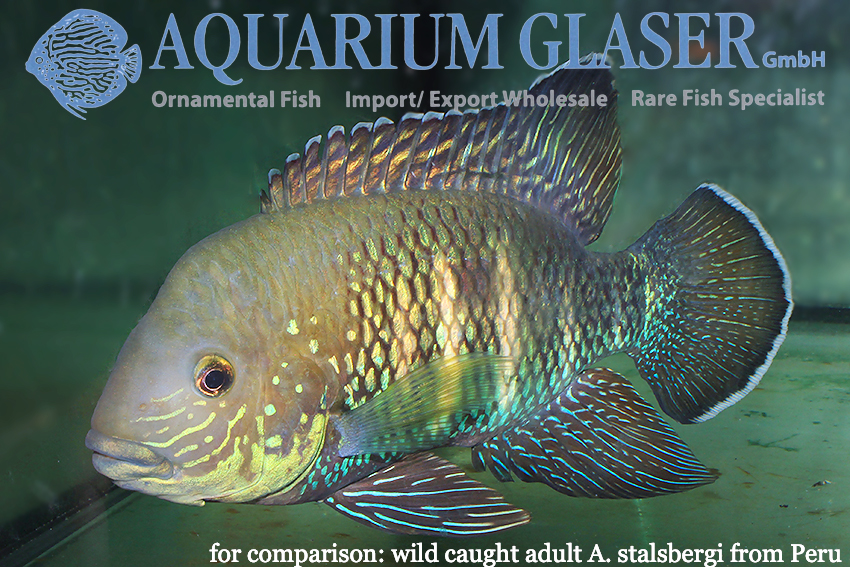
Until relatively recently, the magnificent large-growing Andinoacara species were classified in the genus Aequidens. The genus Andinoacara comprises a total of eight recognized species. Three large-growing species—A. blombergi, A. rivulatus, and A. stalsbergi—form a species complex. These three species can therefore be relatively easily confused with one another. The easiest way to tell them apart is with the gold-edged variant of A. rivulatus (see https://www.aquariumglaser.de/en/25-perchlike-fishes/andinoacara-rivulatus-2/), as only this form has yellow-orange fin edges within the complex. A. stalsbergi has silver-white fin edges and is therefore also known as the “silverseam cichlid.” This is misleading in that it is not the decisive difference between the species, as both other species can also have silver-white seams. Instead, you have to look at the scales to identify them. In A. stalsbergi, the center of the scales is light (bright green-blue when alive), and the edges of the scales are dark. In the other two species, it is exactly the opposite. The caudal fin seam of the male A. rivulatus of the silverseam variant is significantly wider than in the other two species. This makes this form easy to recognize.
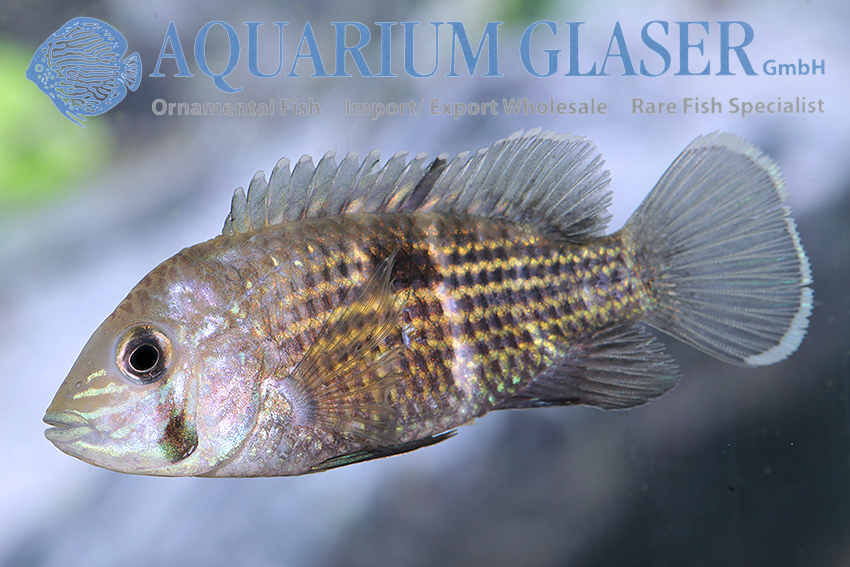
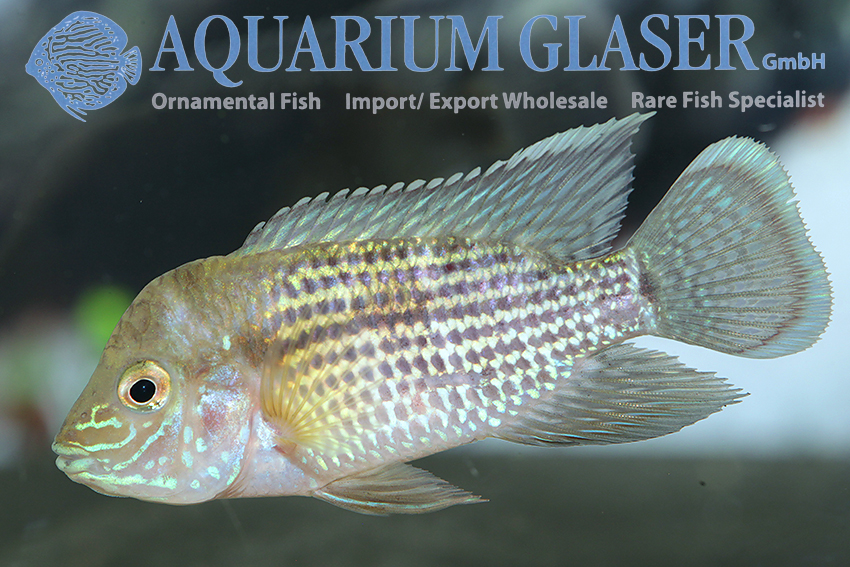
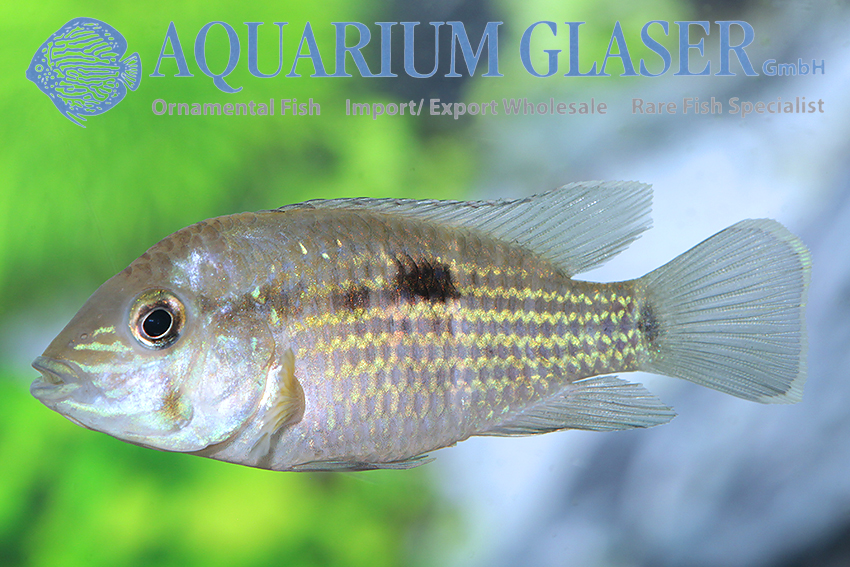
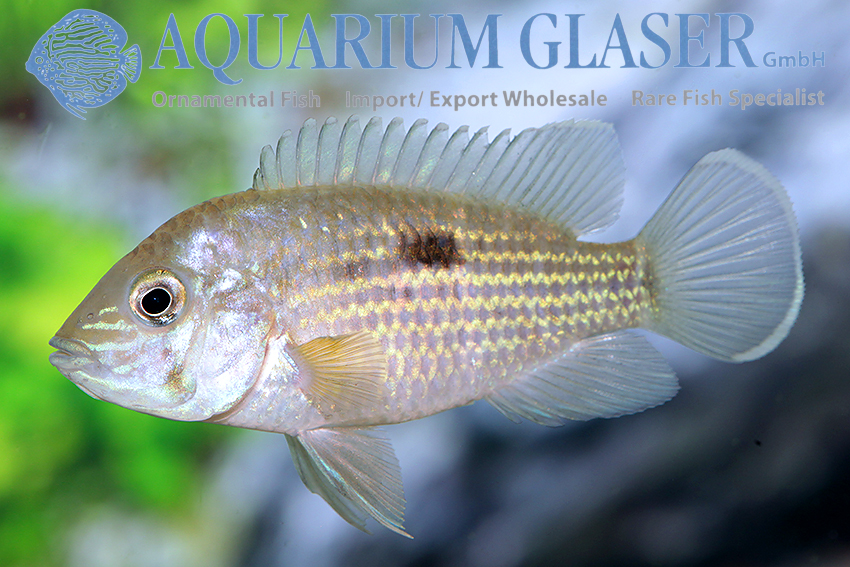
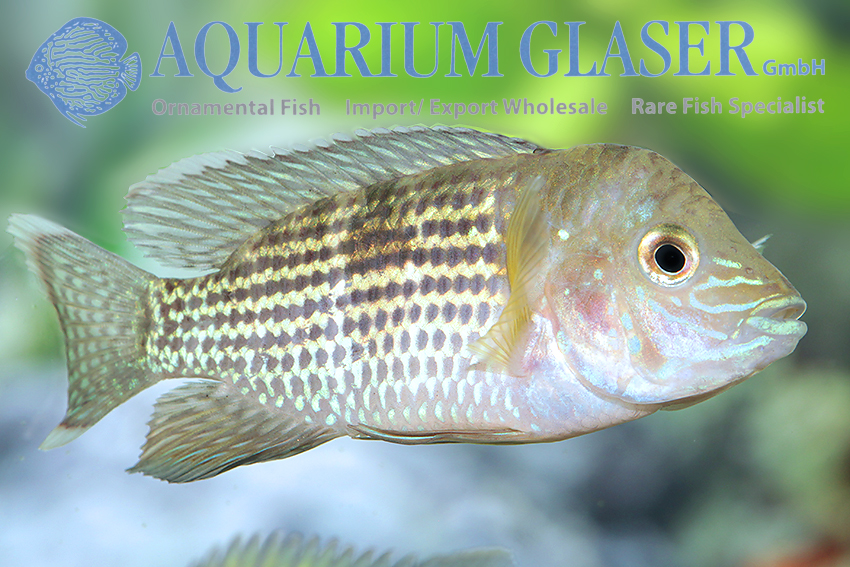
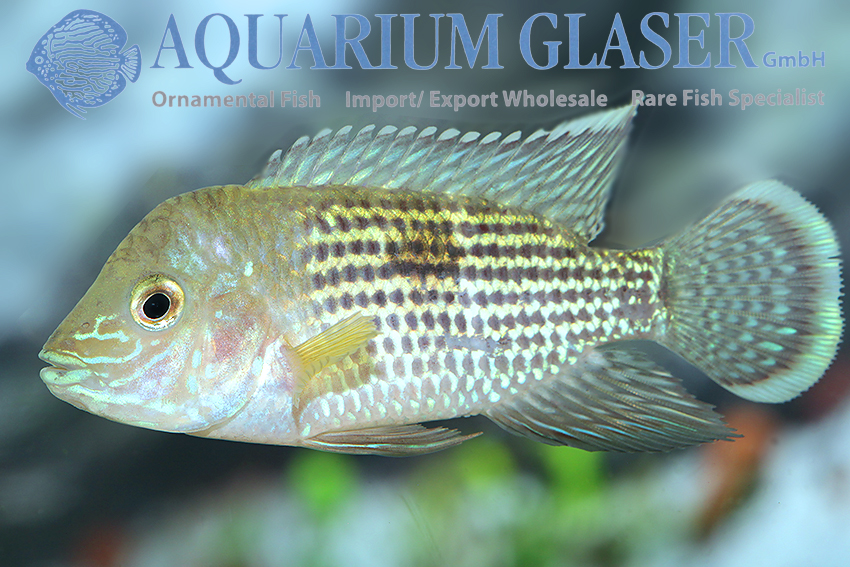
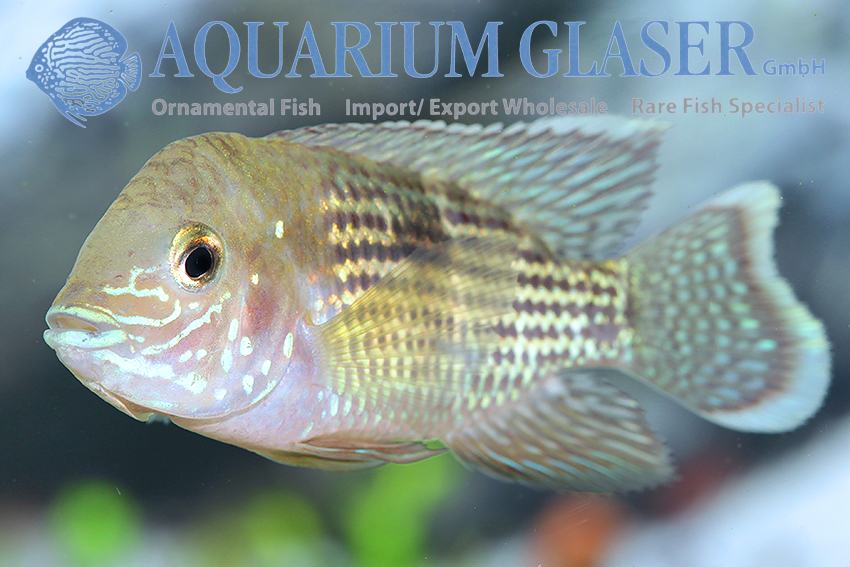
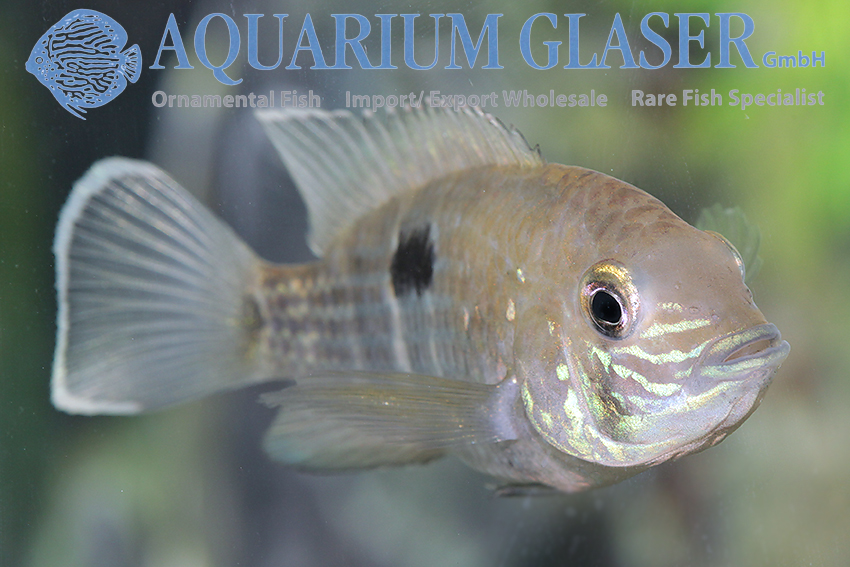
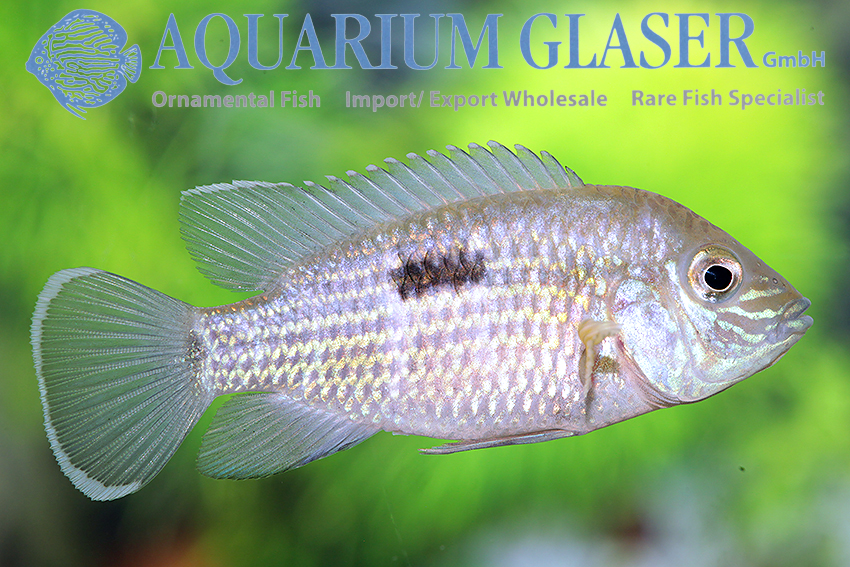
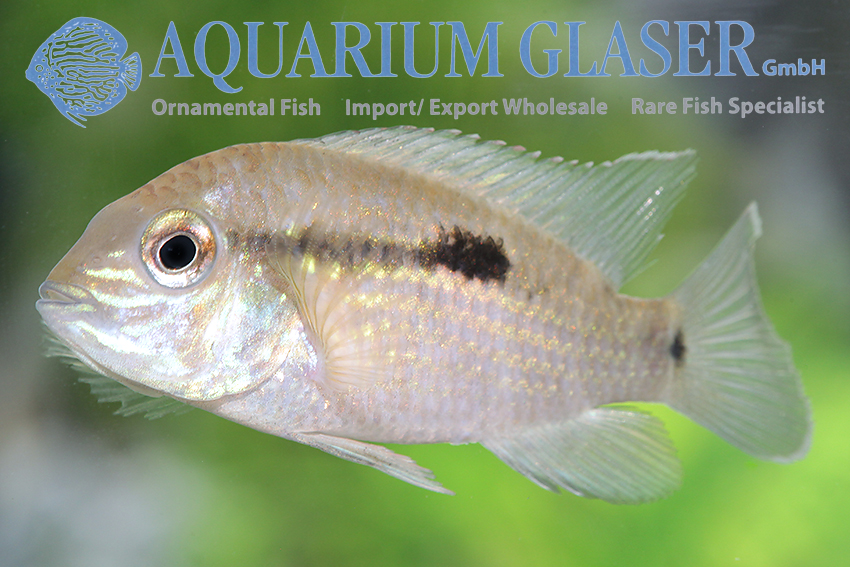
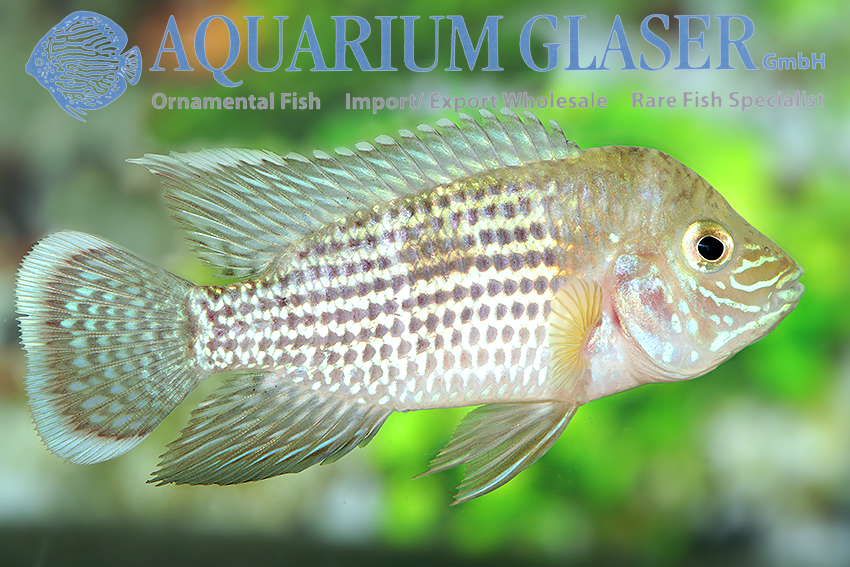
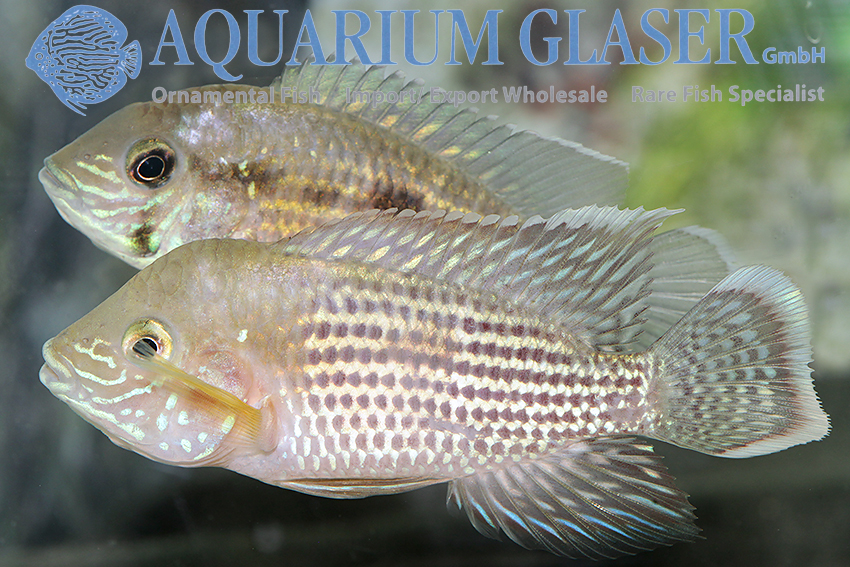
Andinoacara rivulatus is relatively widespread along the Pacific slope of Peru and Ecuador. So it is not surprising that the species has developed different color variations. We have the “silverseam variant” of A. rivulatus as German offspring in stock. The “goldseam variant,” on the other hand, is mainly offered by Asian breeders.
All three Andinoacara species mentioned can grow to well over 20 cm in size, meaning they can become real giants. Keeping them in aquariums that are too small is a problem, as they then become “green terrors,” as they are known in English. Any tank mates will then have nothing to laugh about. In sufficiently large aquariums, however, they are rather calm large cichlids. Sexual maturity sets in much earlier, at around 8 cm in length. Andinoacara are open breeders with a parental family. They are undemanding in terms of water composition; any drinking water is suitable for care and breeding. They eat any standard ornamental fish food of a suitable size. The water temperature can be between 20 and 26°C, or slightly warmer for breeding. During brood preparation, these fish become active in interior tank design. It is therefore best to plant their aquarium with large, potted plants that will not suffer too much from the fish’s activity. The sexes can be distinguished quite easily by the seam of the tail fin, which is much narrower in females. But the old rule of cichlid care also applies here: while dominant males are always easy to recognize (in this case: broad tail fin seam and forehead hump), oppressed males like to camouflage themselves as females in terms of color and physique. So if you want to breed, you should purchase a group of younger fish, from which harmonious pairs will usually form naturally.
For our customers: the animals have codes 610012 (4-6 cm), 610013 (6-8 cm), and 610014 (10-12 cm) on our stock list. Please note that we only supply wholesale customers.
Text & photos: Frank Schäfer
