








The gold barb is a breed that originated from a barb closely related to the chinese barb (Barbodes semifasciolatus). However, no one knows for sure; the entire Barbodes genus is in dire need of revision. The gold barb was developed in the 1950s by an aquarist named Thomas Schubert from Camden, New Jersey (USA), which is why it is often referred to by the invalid name “Barbus (or Puntius, both of which are incorrect) schuberti.” The name “schuberti” is not a scientific name, but a fantasy name and should therefore always be placed in quotation marks. Since the gold barb is a domesticated species that does not exist in nature, the use of a scientific species name does not make much sense anyway.
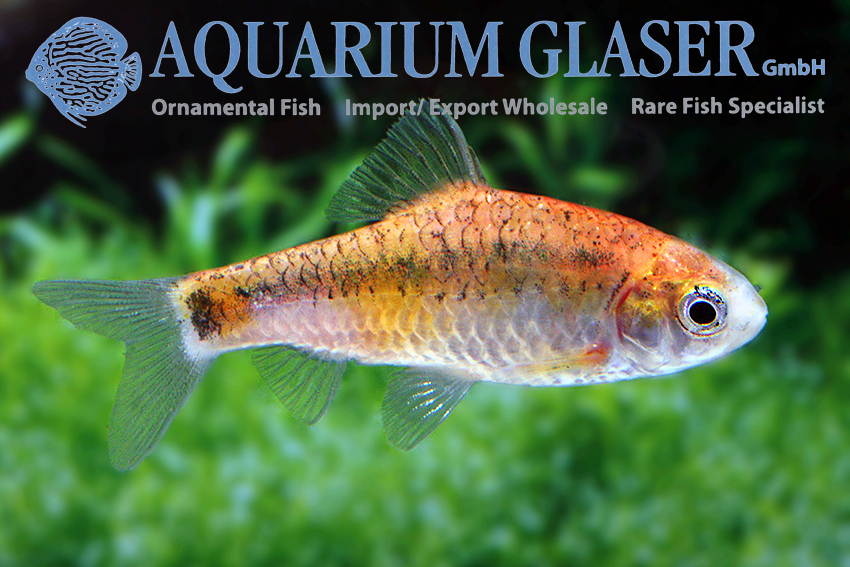
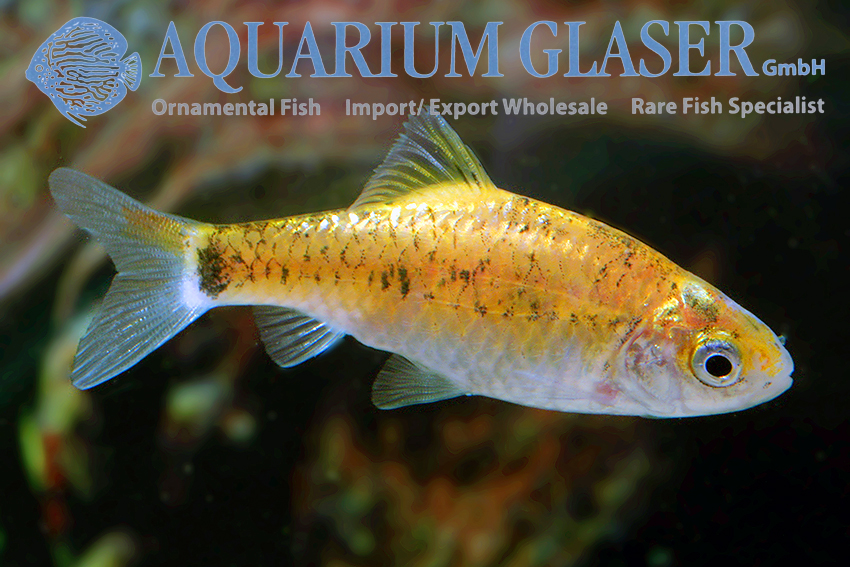
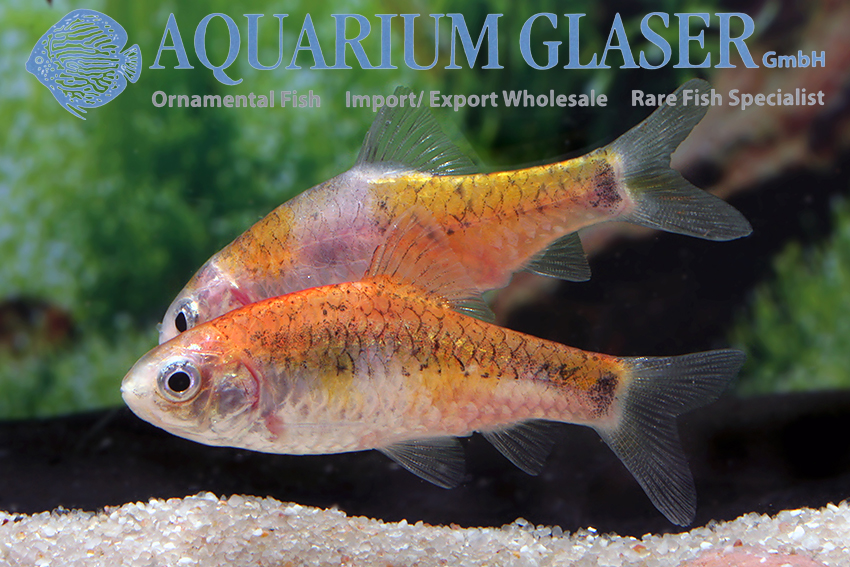
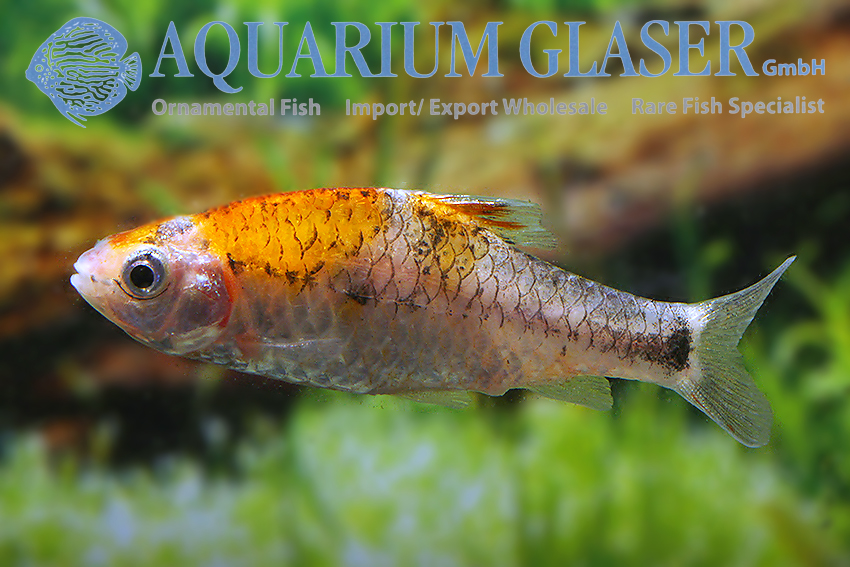
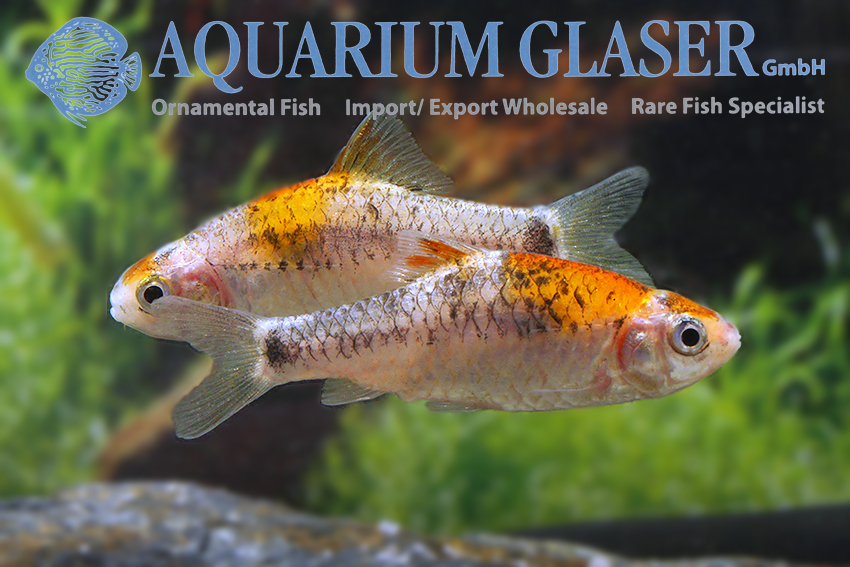
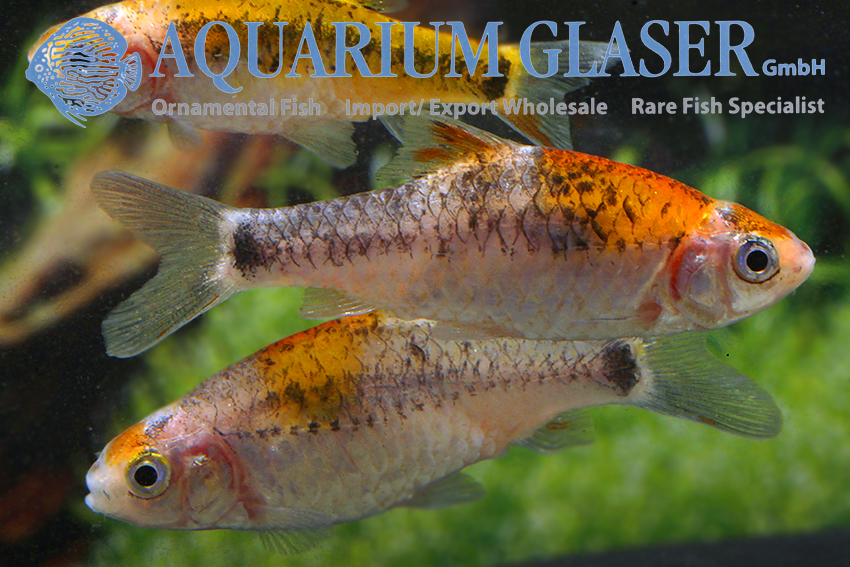
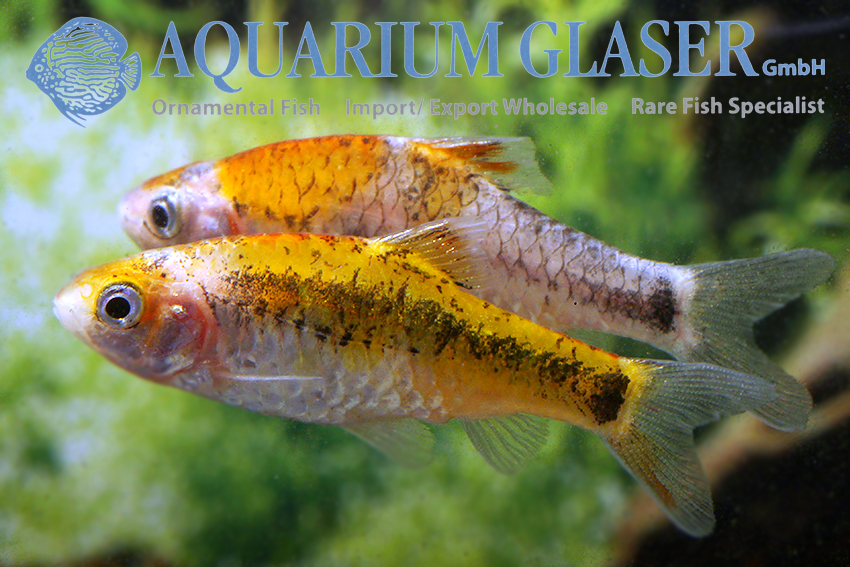
This is an absolutely peaceful and easy-to-care-for fish that has never disappeared from aquariums around the world since its creation. More recently, new color variations of the gold barb have been developed, including a two- or three-color form that is traded as the “koi gold barb.”
When it comes to care, there is not much to say about this fish: it thrives just as well at room temperature as it does at 28°C, and it is completely indifferent to hardness and pH values. If the water is suitable for drinking, the gold barb will also live in it. And you can feed the animal anything that is available on the market as food for ornamental fish. Gold barbs live to a ripe old age, often reaching 6 years. They can grow to an astonishing size. They are capable of breeding at a length of 3-4 cm, but very old females can reach 8-10 cm in length. The males always remain slightly smaller.
For our customers: depending on their size, the animals have codes 371341 (small) to 371344 (large-extra large) on our stock list. Please note that we only supply wholesale customers.
Text & photos: F. Schäfer
