








Betta macrostoma is undoubtedly one of the most beautiful fighting fish—and one of the most sensitive. There is hardly any other fish species that is as susceptible to bacterial infections as this one. Many breeders have no choice but to run their tanks continuously through UV filters. A little tip: clay dissolved in the water also reliably “captures” bacteria.
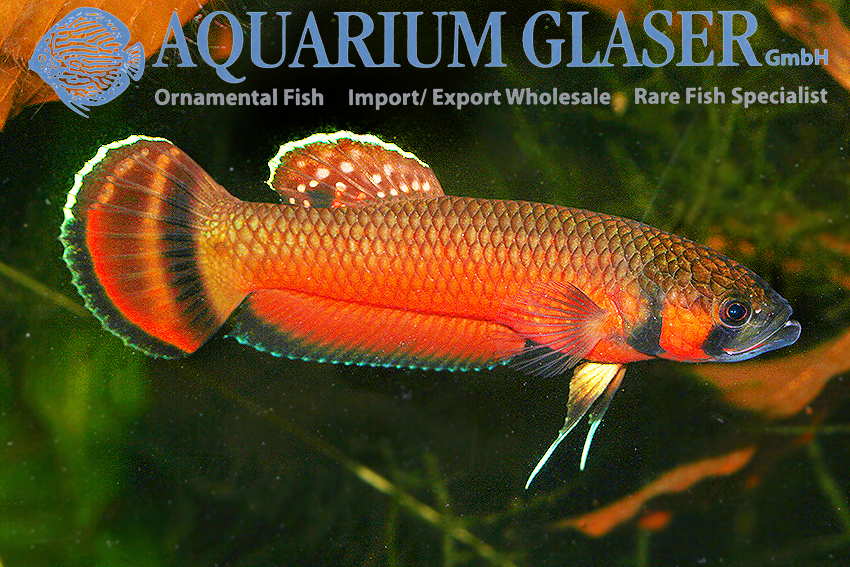
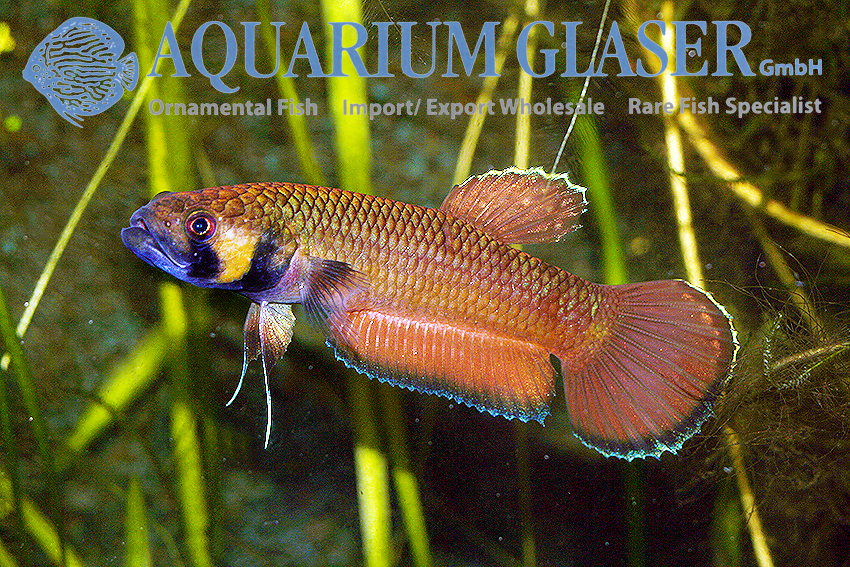
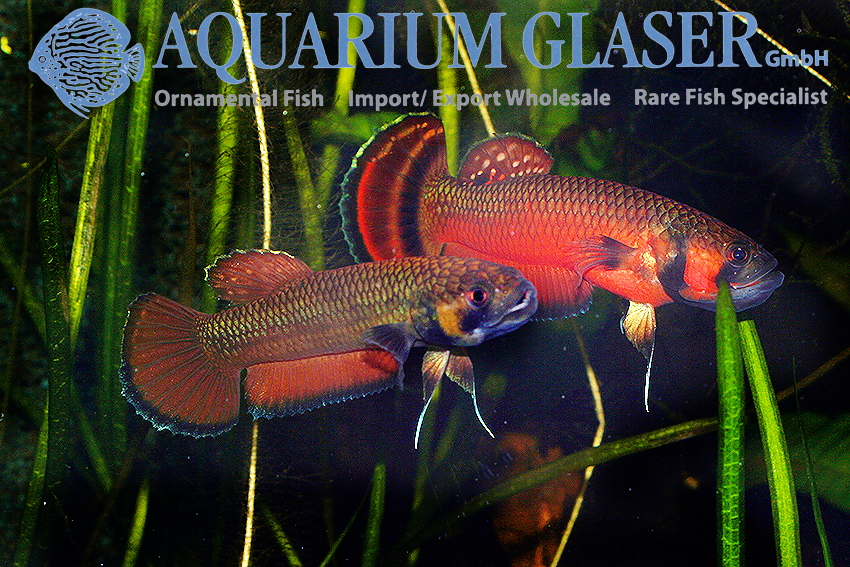
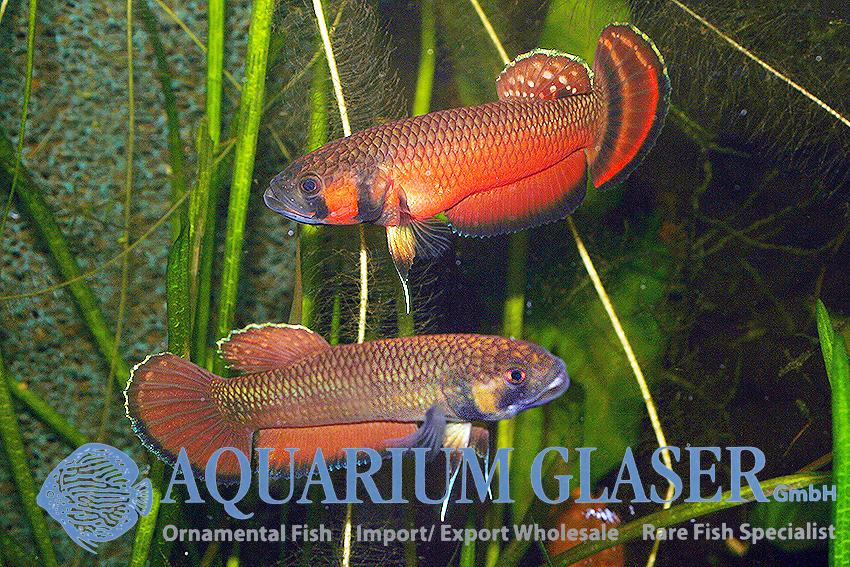
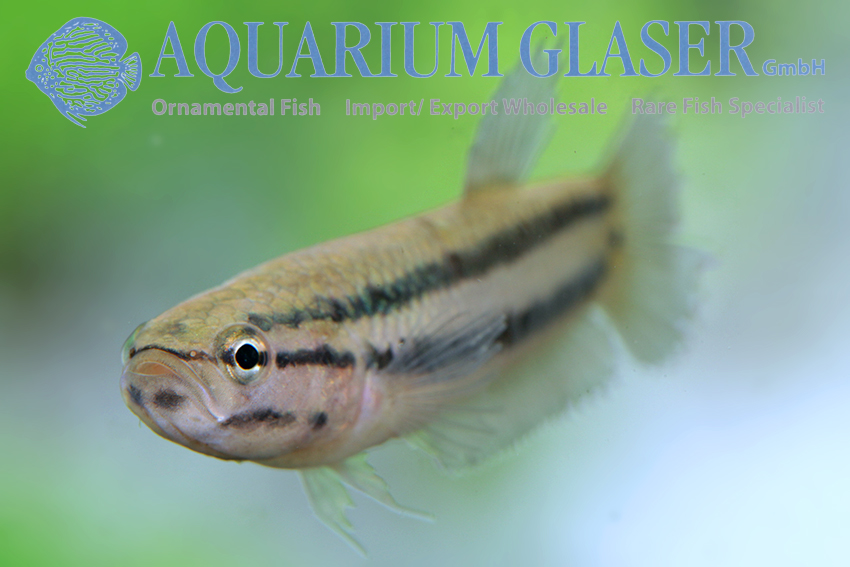
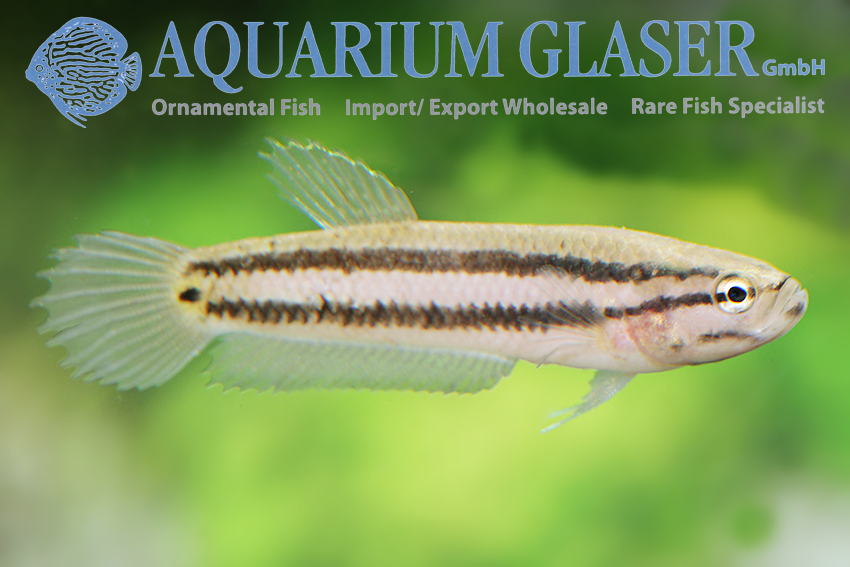
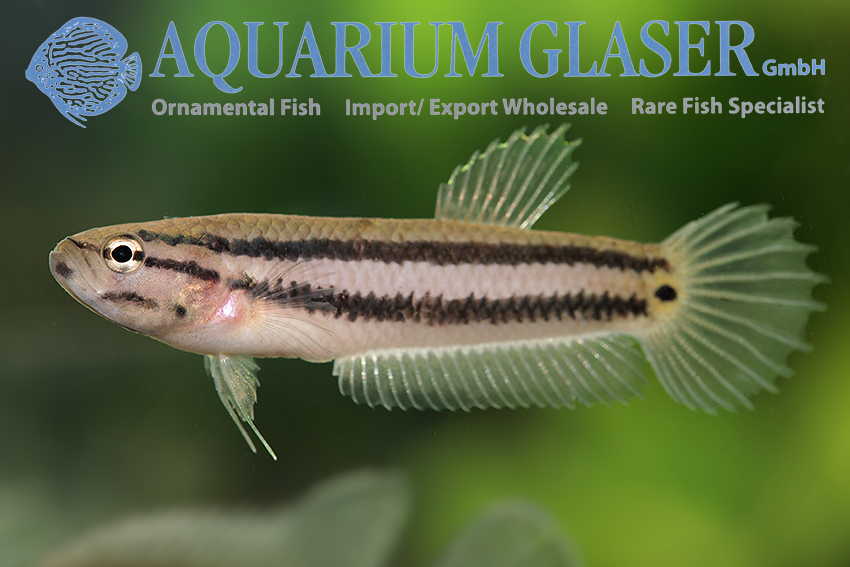
We do not normally stock these precious fish, only occasionally offering a few pairs. However, we currently have a number of immature fish measuring 5-6 cm in length on offer; the maximum achievable size is around 8 cm. At a size of 5-6 cm, it is not yet possible to distinguish between the sexes with certainty, but these immature fish are considerably more adaptable to changing conditions. Usually, females at this age have more contrasting banding and a more delicate head profile. However, when the fish are caught and their colors fade depending on the situation, such subtle characteristics are usually not noticeable.Sexually mature males are easily recognized by a dark spot on their dorsal fin, which is always absent in females.
There are a few points to consider when caring for Betta macrostoma. First, they are excellent jumpers. In nature (the species is endemic to Borneo, where it is found in the Sultanate of Brunei), they live in small streams and often have to overcome small waterfalls. In addition, flying insects are an important part of their diet. The bettas jump well and aim precisely for this food. Due to their sensitivity to bacteria, the water should be humic acid (pH 5.5-6), which is best achieved in soft water; in such water, denitrification often works poorly, so it is essential to keep an eye on the nitrite level! Most harmful bacteria do not like the acidic pH value (unfortunately, this also applies to beneficial filter bacteria), the fish would not mind otherwise. Worm food (Tubifex, etc.) is taboo for B. macrostoma. It leads to intestinal diseases. Instead, the food should be rich in fiber. Insects and crustaceans are ideal food, and the animals also accept dry food, but this should not be their sole source of nutrition.
The water temperature can be between 24 and 28°C. Even if the fish do not necessarily need it, dense planting with fast-growing aquatic plants is highly desirable. They maintain the water quality at a high level because they release bactericidal substances into the water and also process most of the ammonium excreted by the fish. This compensates to a certain extent for the often weak biological filter performance in acidic water.
For our customers: depending on their size, the animals have codes 384000 (sm) to 384004 (6-8 cm) on our stock list. Please note that we only supply wholesale customers.
Text & photos: Frank Schäfer
