








Hoplisoma sterbai (formerly: Corydoras sterbai, see https://www.aquariumglaser.de/en/10-catfishes/corydoras-sterbai-wild-4/) from the Rio Guapore basin in Brazil and Bolivia is at the top of the list of all-time favorites among armored catfish. The species is available year-round as captive-bred and occasionally also as wild-caught, and there is even an albino breeding form of these animals. The related long-snouted catfish from the same distribution area is Brochis haraldschultzi. There has been some confusion about the type locality of B. haraldschultzi, but according to current knowledge, it appears that H. sterbai and B. haraldschultzi do indeed occur syntopically; the word “syntopic” means that both species live together in the same habitat. If two species occur only in the same area but not together, this is called sympatric.
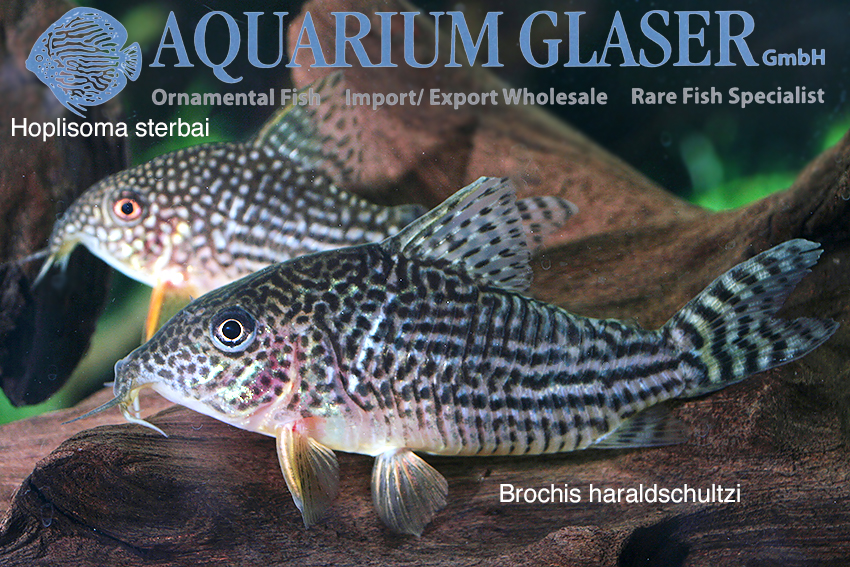
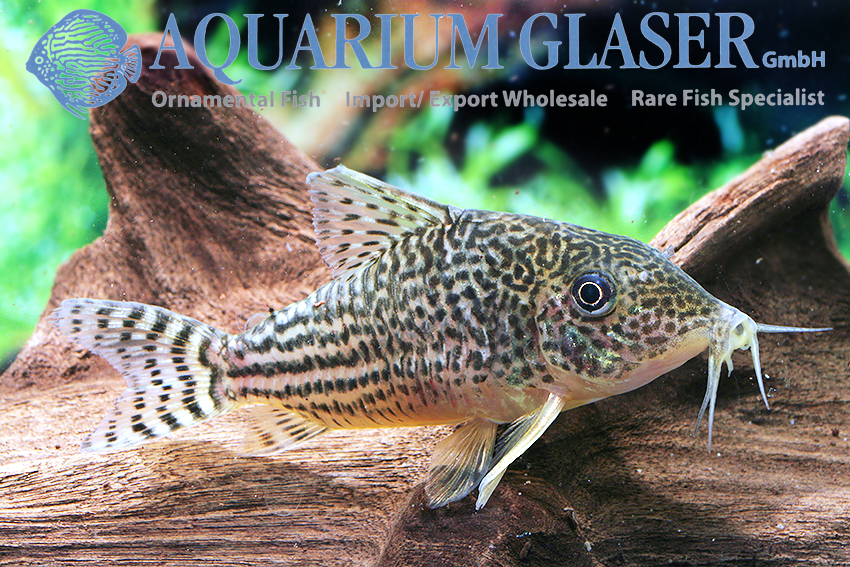
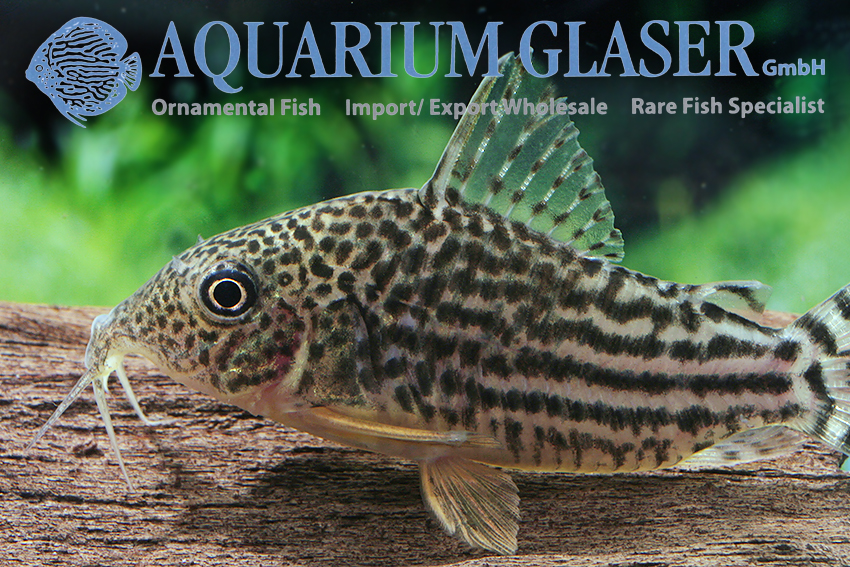
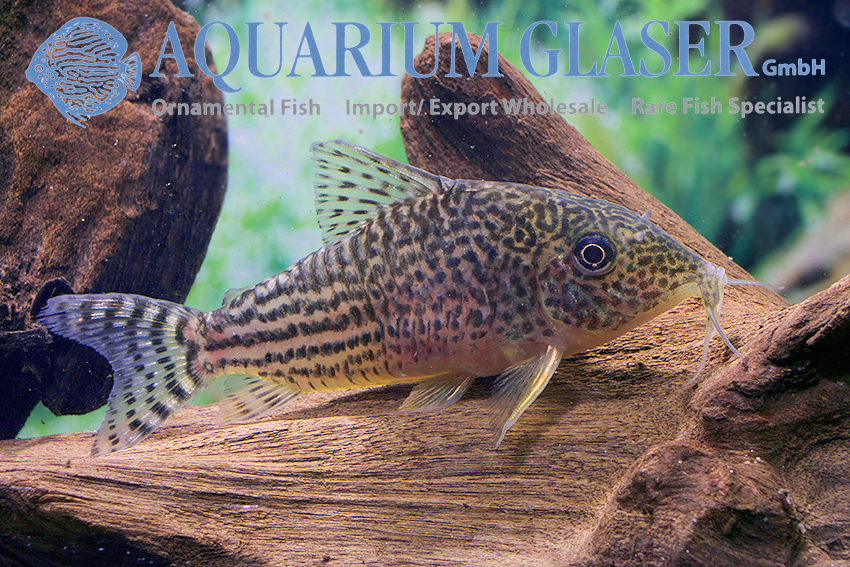
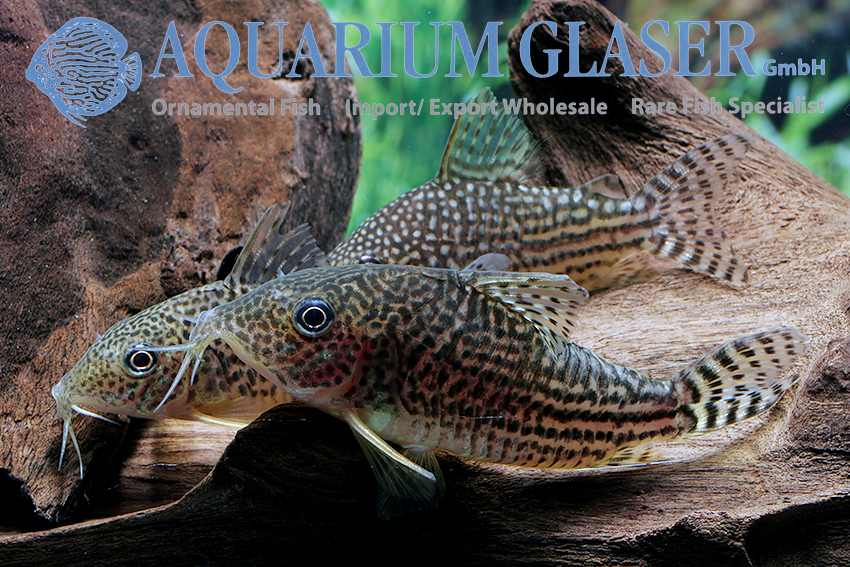
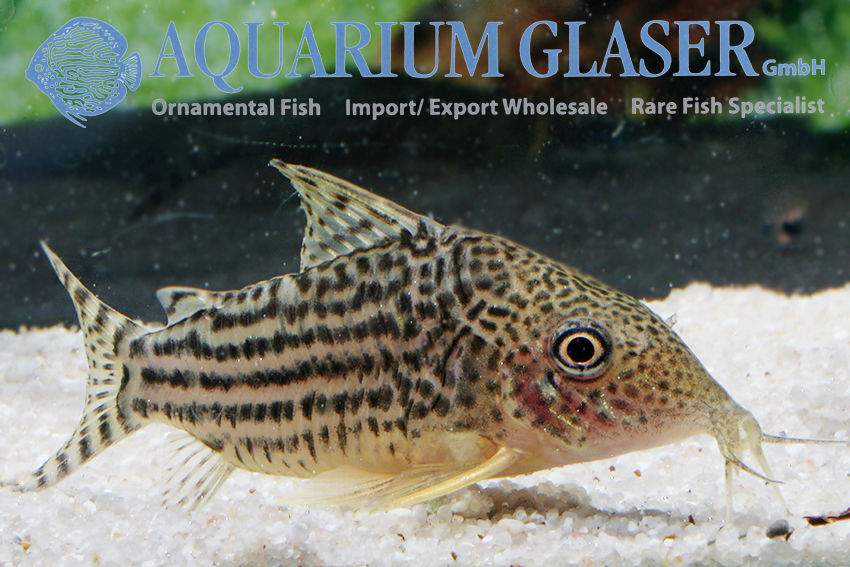
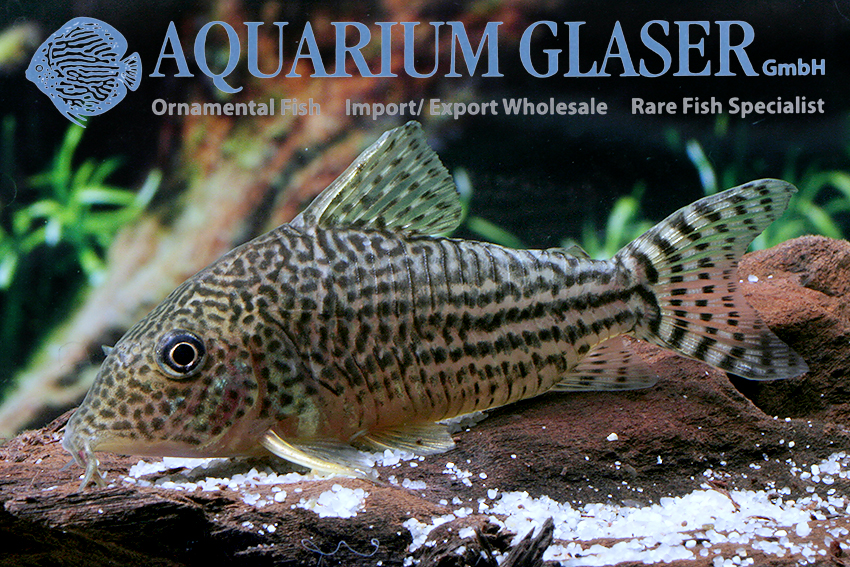
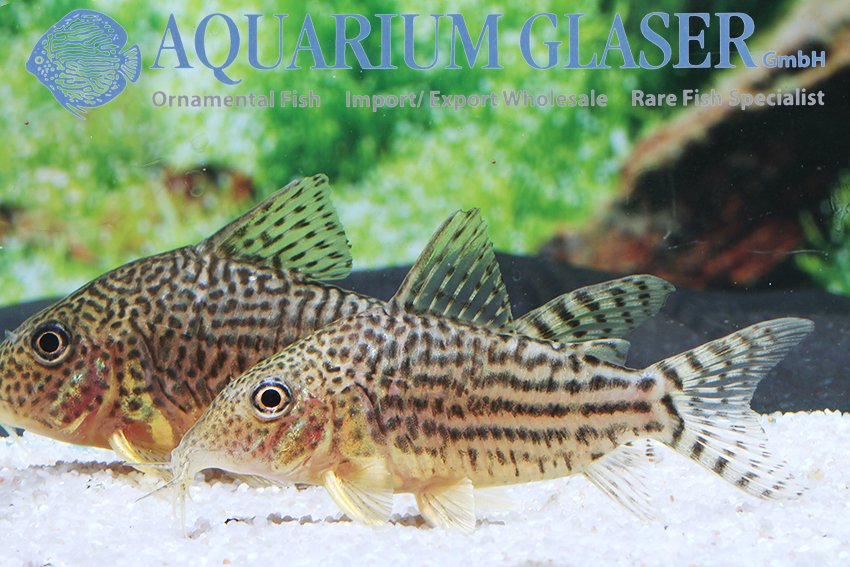
Although H. sterbai and B. haraldschultzi were scientifically described together in 1962 and both species already existed as live aquarium fish at that time, B. haraldschultzi never managed to achieve the same level of recognition as its cousin, let alone its popularity. Which of the two is more beautiful? That is purely a matter of taste. One thing is certain: there is rarely enough space on the ornamental fish market for two similar species in the long term. Sooner or later, one of them will prevail and the other will become a rarity. In this case, B. haraldschultzi became a rarity. We are therefore always particularly pleased when we succeed in importing this species again and can thus meet the somewhat more specific demands of the Corydoras fan community.
There are no significant differences between H. sterbai and B. haraldschultzi in terms of care and breeding. Ecologically, the two species are distinguished by the structure of their heads, which enables them to utilize different food resources. This allows both species to coexist without competing with each other. The similar coloring does not indicate any close relationship. Rather, due to their strong spines on their pectoral fins and dorsal fin (stings from these two species in particular are extremely painful, even for humans!), armored catfish are usually only preyed upon once by fish-eating animals. After that, fish-eating animals avoid these spiny beasts. This benefits every armored catfish with similar coloring, which is why up to four or five unrelated species often have the same or very similar coloration. H. sterbai and B. haraldschultzi are similar in size, with a maximum length of approximately 8 cm (total length including tail fin).
For our customers: the animals have code 231502-231506 (depending on size) on our stock list. Please note that we only supply wholesale customers.
Text & photos: Frank Schäfer
