








Banjo catfish (Bunocephalus) are extremely common in nature. That’s why we always have them in stock. We usually refer to these animals as Bunocephalus coracoideus, which may be correct in many cases. But when you look at such a swarm of banjo catfish, you notice that there are always other species mixed in. As a rule, it is not possible to identify them with reasonable effort, let alone sort them, but it is extremely exciting to raise and observe a group of perhaps 20 of these animals in an aquarium. Then you notice how variable these animals are in coloration, that there are clear differences in anatomy (especially the bone ridges along the middle of the back in front of the dorsal fin), and also that there are species that prefer to burrow more than others.
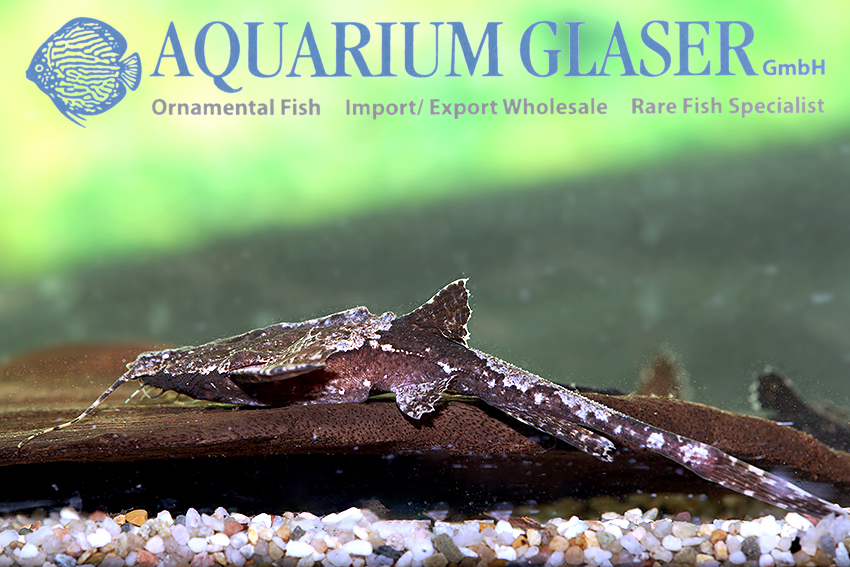
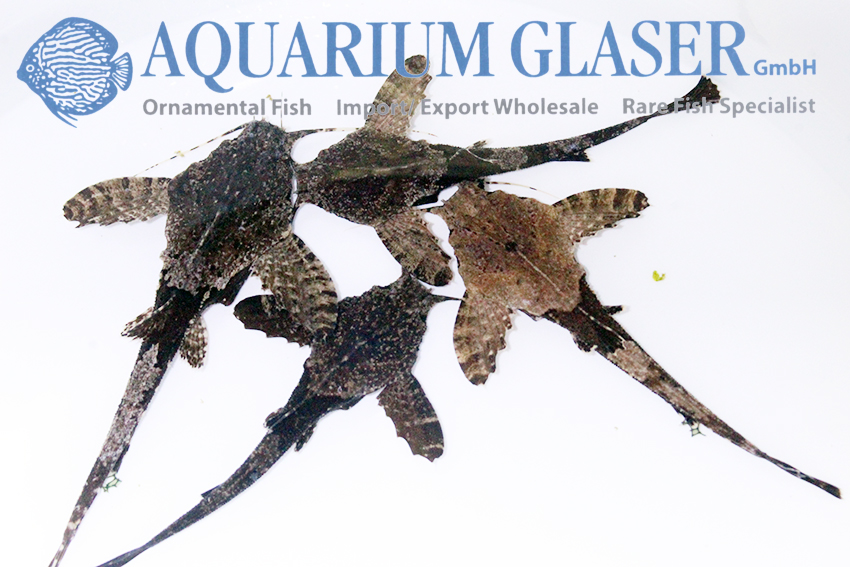
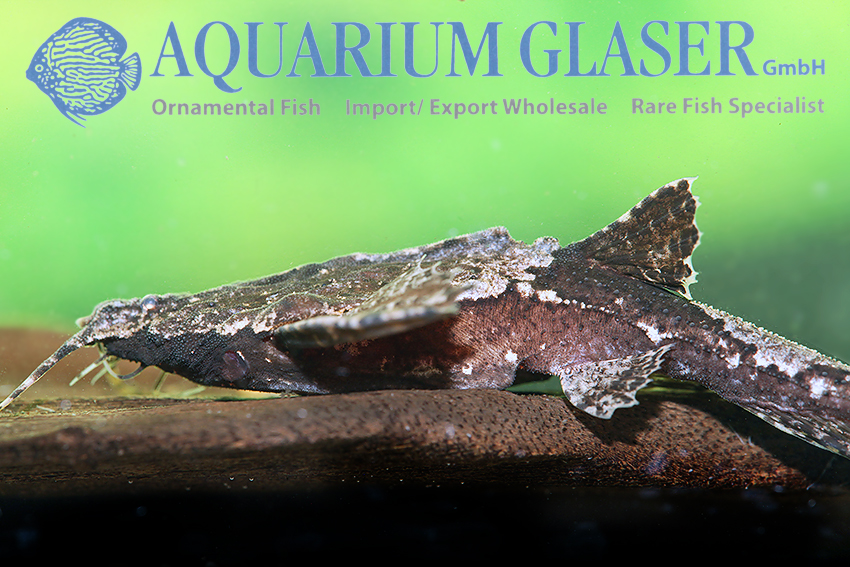
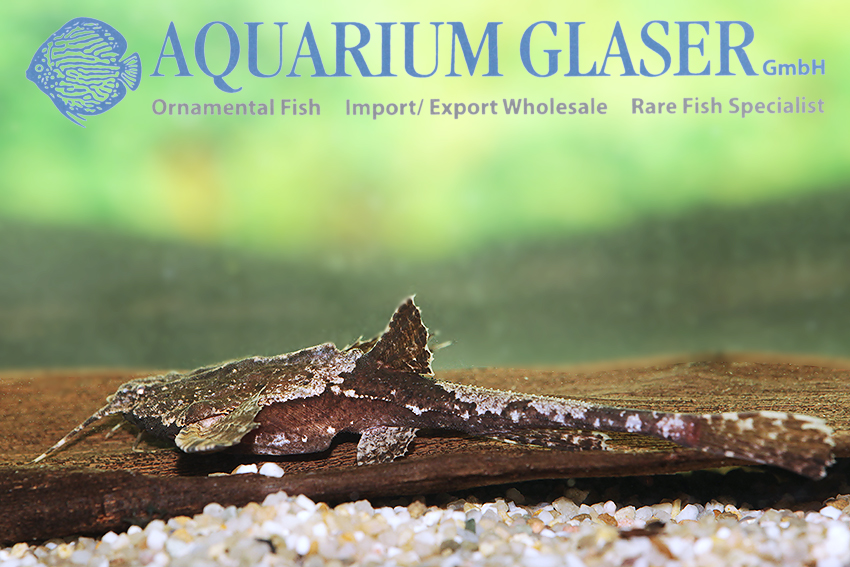
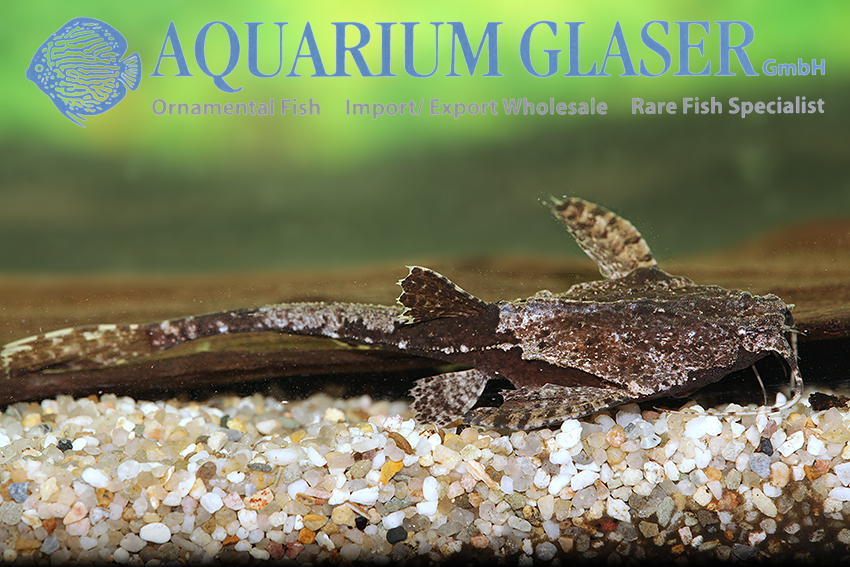
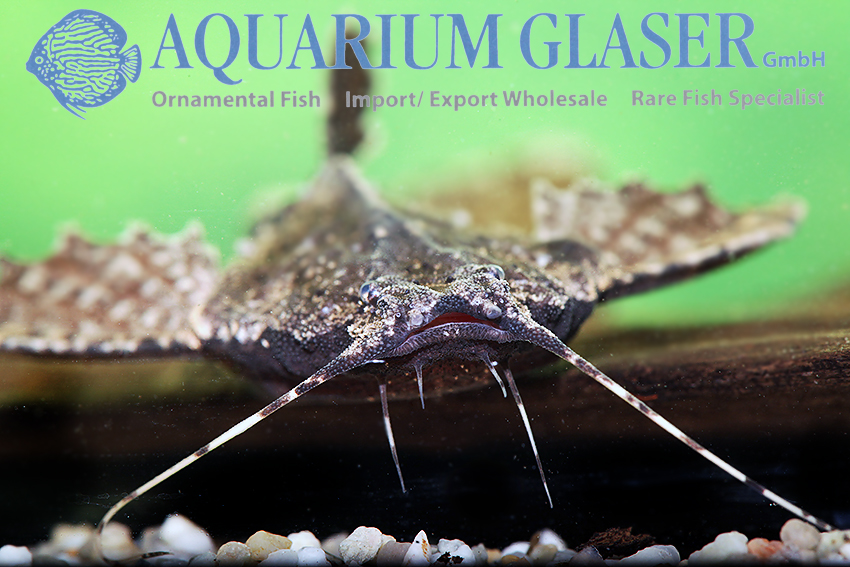
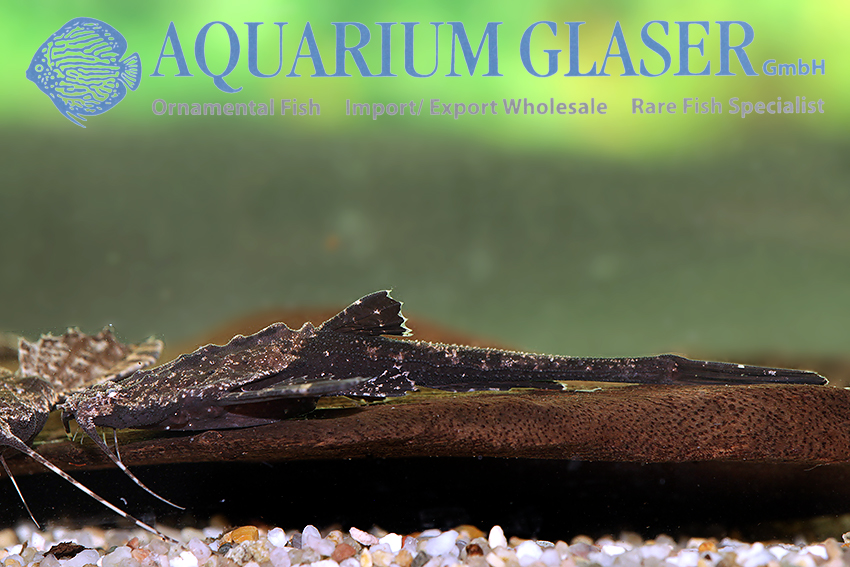
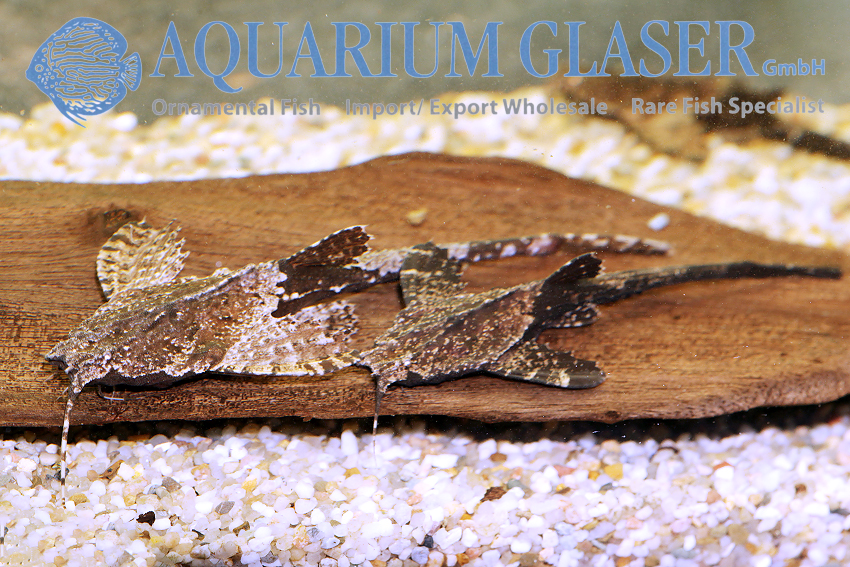
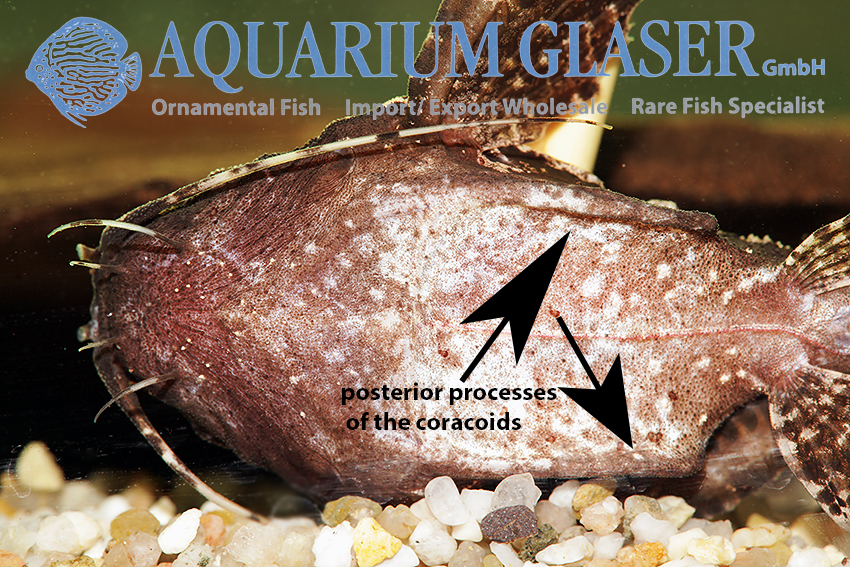
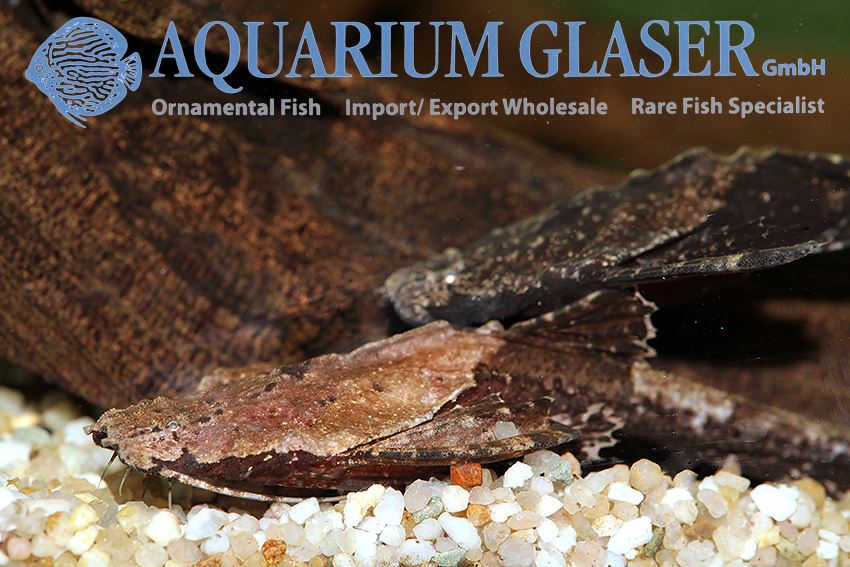
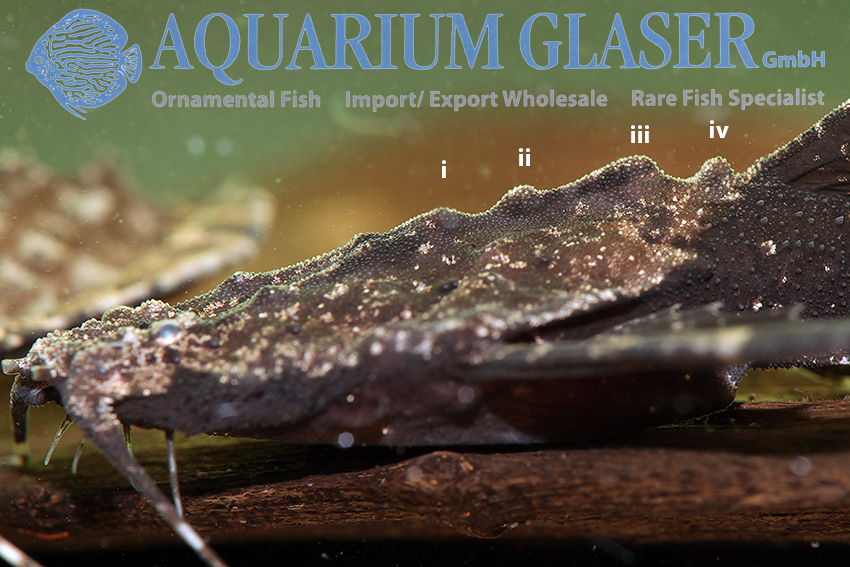
As mentioned, Bunocephalus are usually not identified in more detail in the trade and are marketed under the name B. coracoideus. It gets tricky when Bunocephalus that are visually distinguishable from the “mainstream” are imported; we try to identify these as accurately as possible, of course. That is why we will briefly describe here what we currently understand to be the “real” B. coracoideus.
The species name “coracoideus” refers to a very characteristic feature of this species, the coracoid bones. These are bony processes that, in this case, support the pectoral fins. Since these bony processes lie directly under the skin, they are also clearly visible in living animals. According to current knowledge, B. coracoideus has the most pronounced coracoid bones in the genus Bunocephalus, which currently comprises 14 species. The ventral parts of the processes extend almost to the base of the ventral fins. A second feature that characterizes the species B. coracoideus very well are the bony protuberances along the middle of the head. Three distinct larger elevations can be seen here, and a small one immediately in front of the dorsal fin. This combination of features allows for a fairly reliable identification in most cases. Colouring is not such a good characteristic, as it is very variable. However, it almost always consists of a front part covering the head that differs from the colouring of the tail. A well-known synonym for B. coracoideus is B. bicolor; “bicolor” means “two-colored”.
B. coracoideus is widespread throughout the Amazon region and can therefore come to us from practically all ornamental fish exporting countries that have access to the Amazon. Currently, for example, we have some very beautiful specimens from Colombia in stock. However, genetic studies have shown that different populations of B. coracoideus, which are visually indistinguishable from one another, differ so significantly in terms of their genetic makeup that they should actually be considered different species. This is important to know in practice, especially when attempting to breed them. If you want to breed Bunocephalus, which is entirely possible, although not commonly practiced, you should always assemble your breeding stock from animals from the same import to avoid producing unwanted hybrids.
For our customers: B. coracoideus has code 212901 (2-3 cm) to 212907 (10-12 cm) on our stock list, depending on size. Please note that we only supply wholesale customers.
Text & photos: Frank Schäfer
