








In southern India lies the ancient Deccan Plateau, which was formed when India was still part of Africa. Numerous small rivers flow directly into the Indian Ocean from here, and due to their geographical isolation, many of these rivers have developed their own color variations, subspecies, or species of freshwater fish. Barbs and loaches in particular are found here in a wide variety of forms, which, incidentally, have been virtually unexplored by science to date.
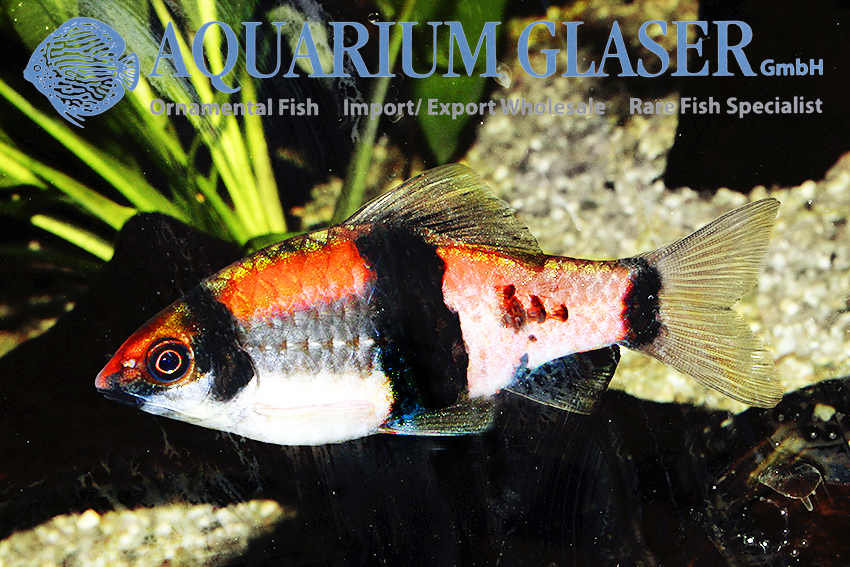
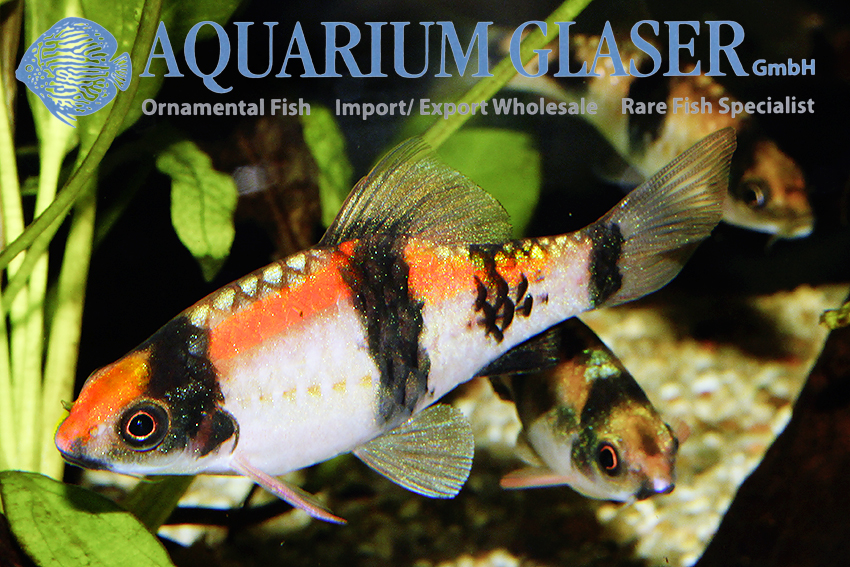
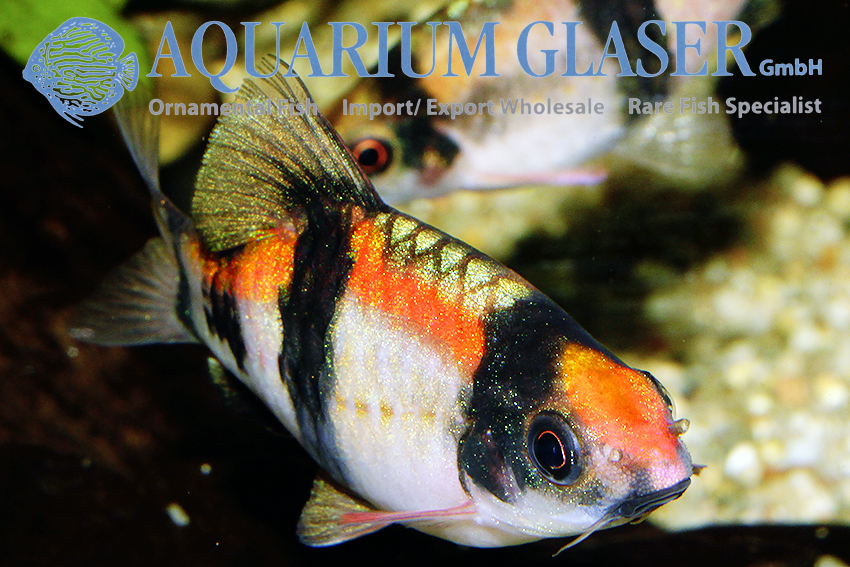
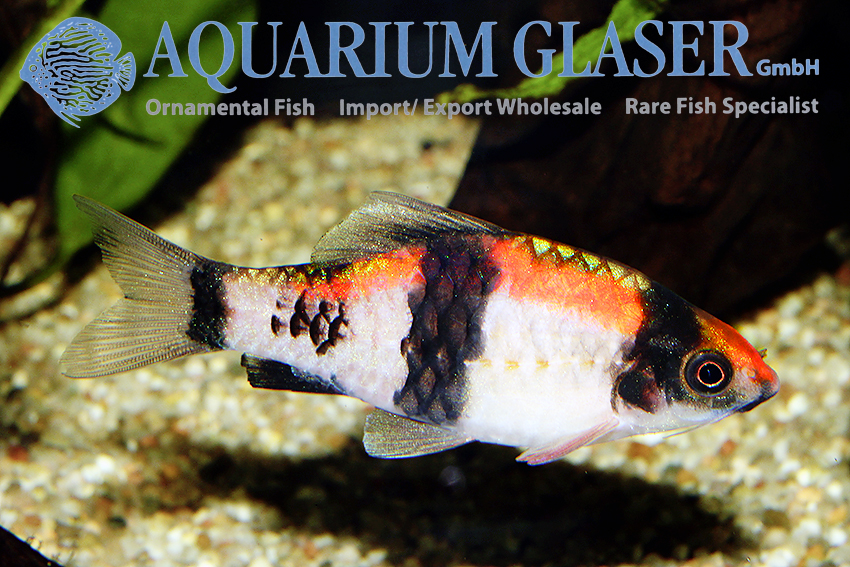
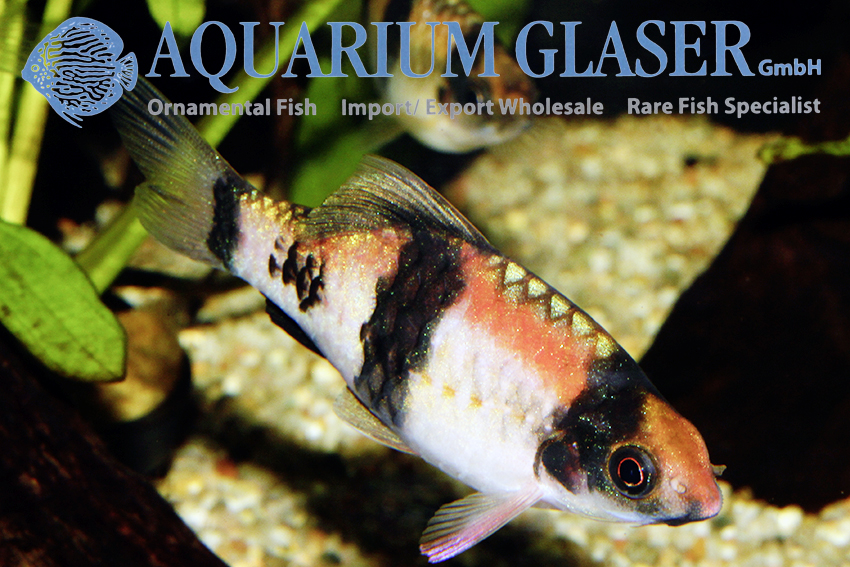
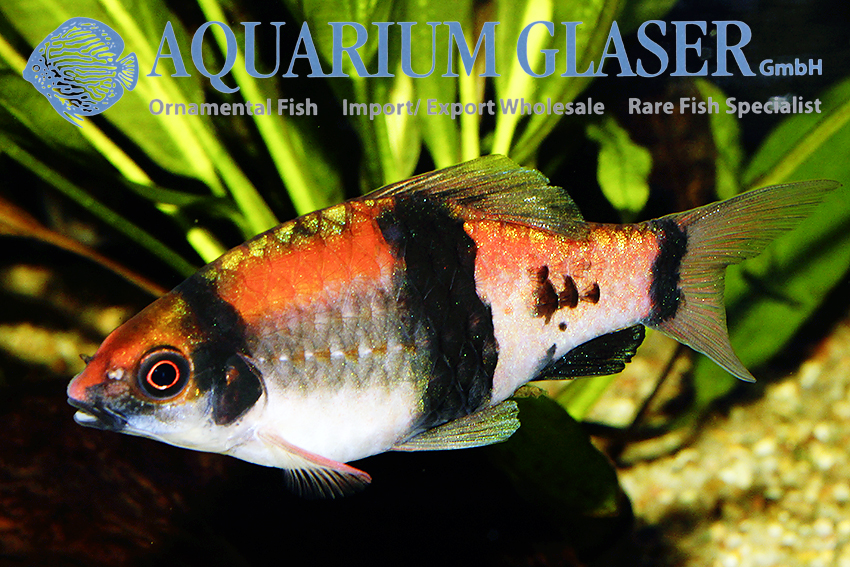
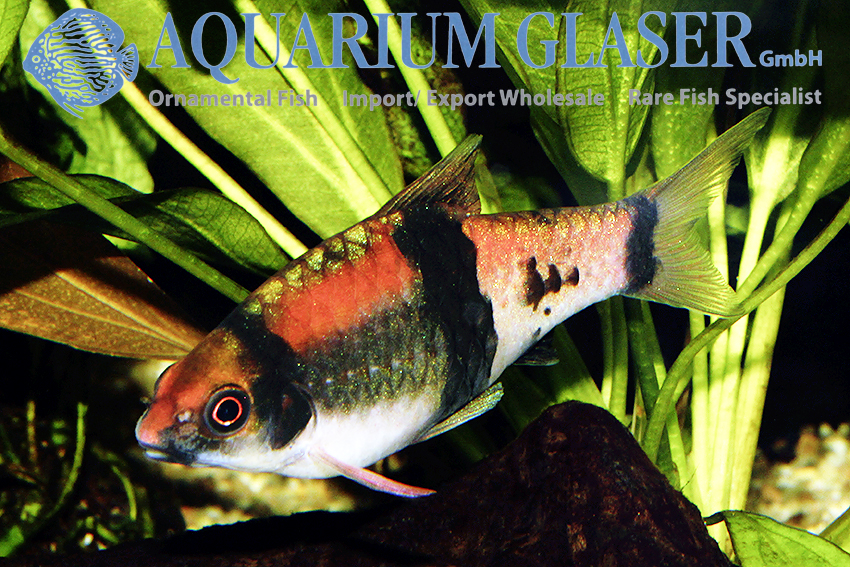
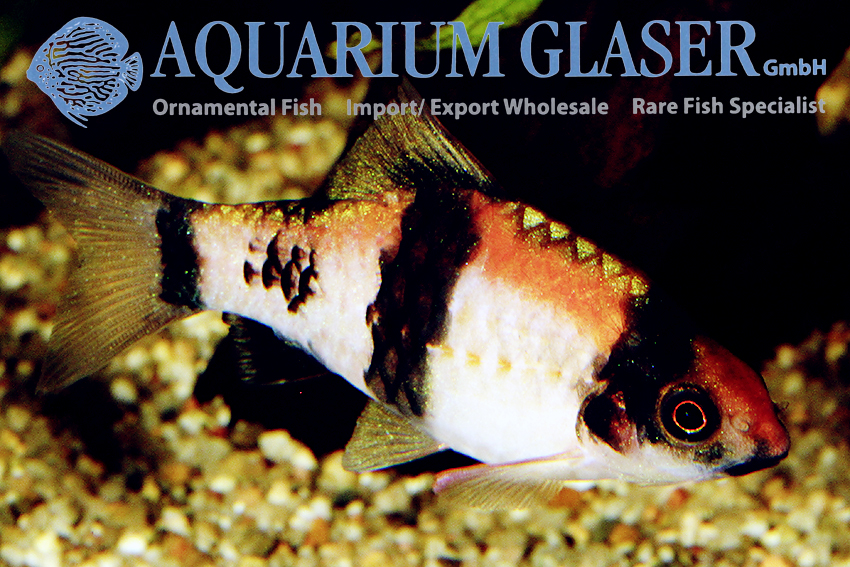
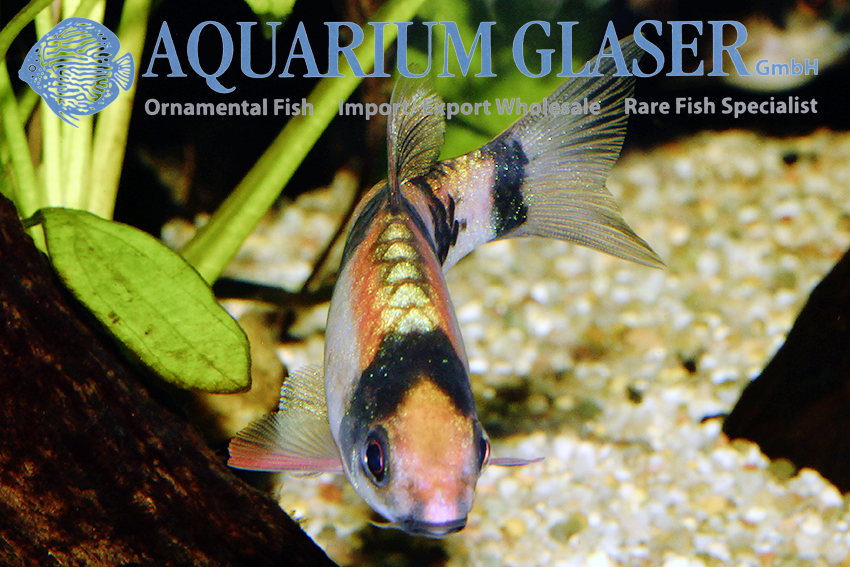
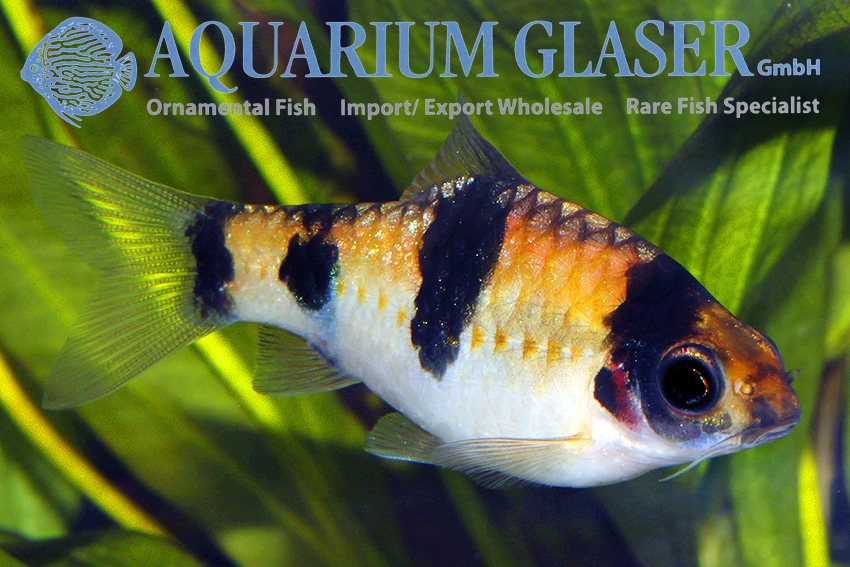
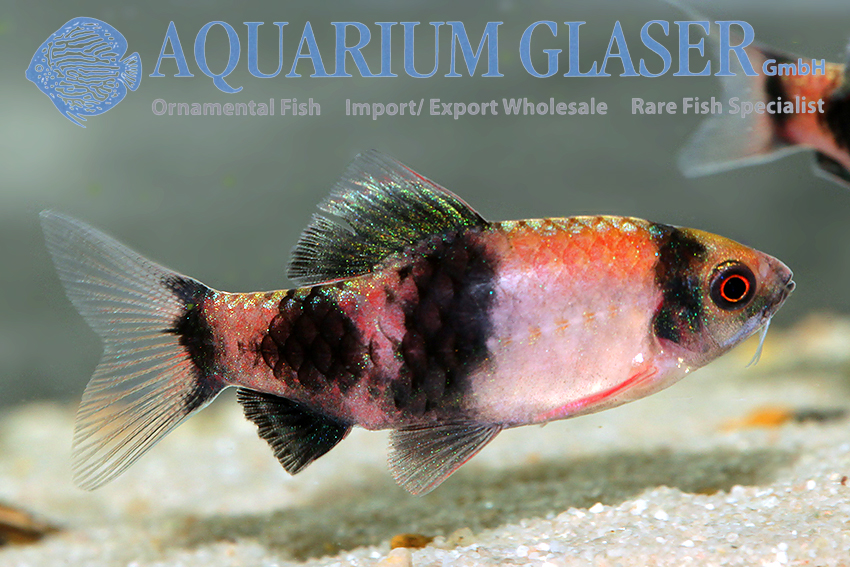
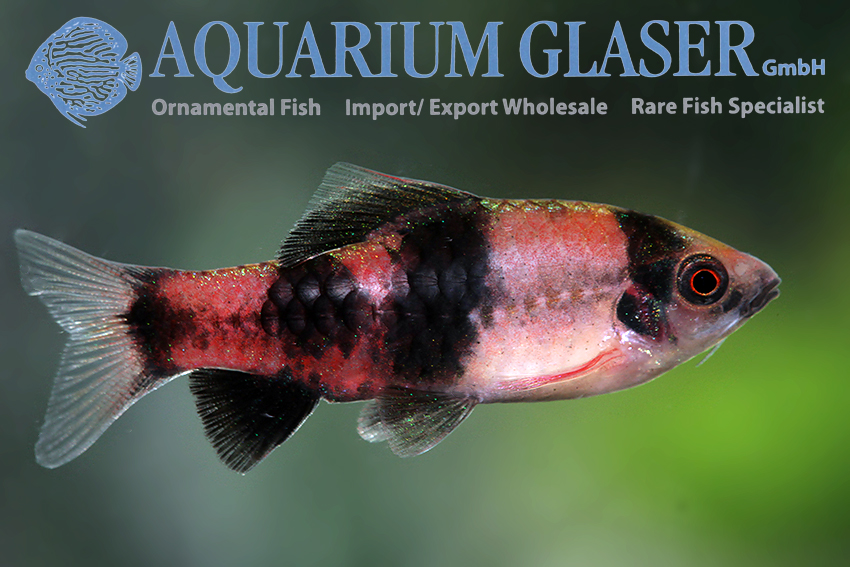
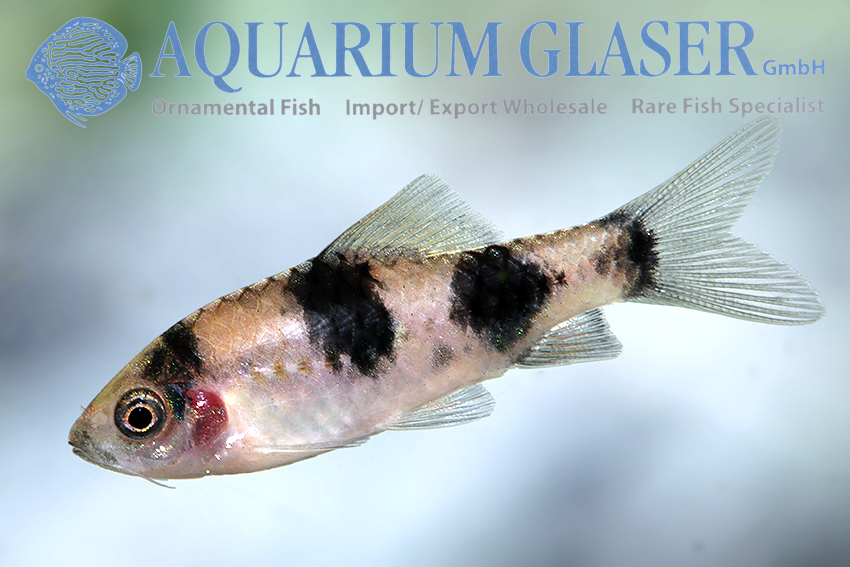
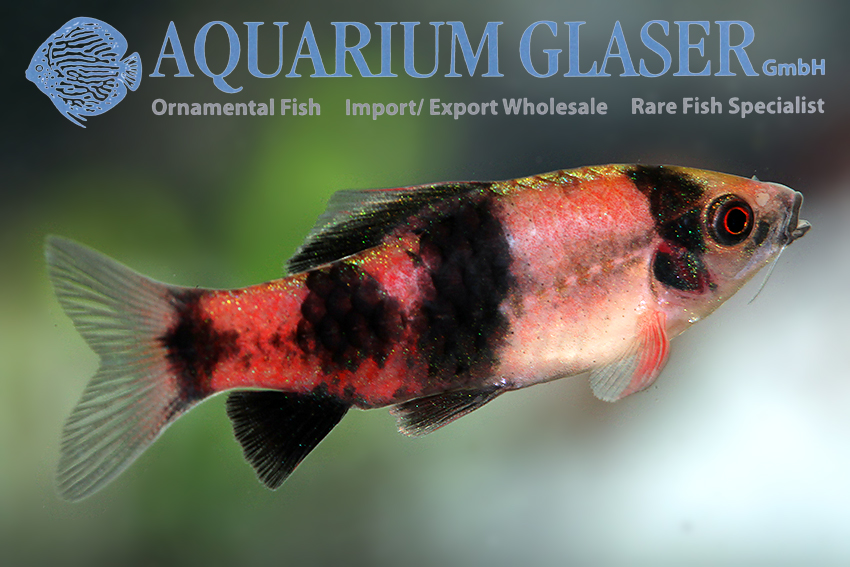
According to current research, the genus Haludaria, which was previously classified as Barbus, Puntius, or Dravidia, comprises six described species: H. afasciata, H. fasciata, H. grayi, H. kannikattiensis, H. melanampyx, and H. pradhani. Colloquially, they are also known as melon barbs; the German name translates „glowing coal barbs“. Unfortunately, there is no revision that would allow the validity of these species to be assessed. For this reason, the strains available in the hobby are all grouped under Haludaria fasciata, even though there are sometimes significant differences in color. A frequently encountered name is H. melanampyx. The barbel described under this name has no tail root spot, in contrast to the forms kept and bred in the hobby. So if H. melanampyx is a valid species, it is not represented in the hobby. However, it’s important to know that the black markings in Haludaria can be switched on and off depending on the fish’s mood. Therefore, differences in markings are particularly difficult to assess within this genus.
We regularly have some truly magnificent wild-caught specimens in stock, which have a fantastic deep red as their base color. The males seem to glow from within. Currently, we have also received some wonderful offspring of this fish, which are already developing coloration at a small size (3-4 cm) and live up to the name “glowing coal barb.” Haludaria fasciata grows to around 8 cm in length and is completely peaceful. As a barb, it will occasionally nibble on tender plant parts if it is not provided with sufficient plant food. The water composition is irrelevant, but the temperature should be around 26°C. A “winter rest” of 6-8 weeks at temperatures between 18 and 22°C has a very positive effect on the fish, but is not absolutely necessary.
For our customers: the animals have codes 370002 and 370003 (WF, “melanampyx”), 369512 (NZ, md), 369521 (WF, red, md) and 369523 (WF, red, lg) on our stock list. Please note that we only supply wholesale customers.
Text & photos: Frank Schäfer
