








With 23 species, the genus Hemiodus is quite species-rich. The majority of species grow to a length of 15-20 cm, with the largest reaching around 30 cm. Previously, three genera were distinguished (Hemiodus, Hemiodopsis, and Pterohemiodus). However, the characteristics considered to be differences between the genera proved to be insufficiently relevant. Therefore, all three were merged back into one genus – Hemiodus.
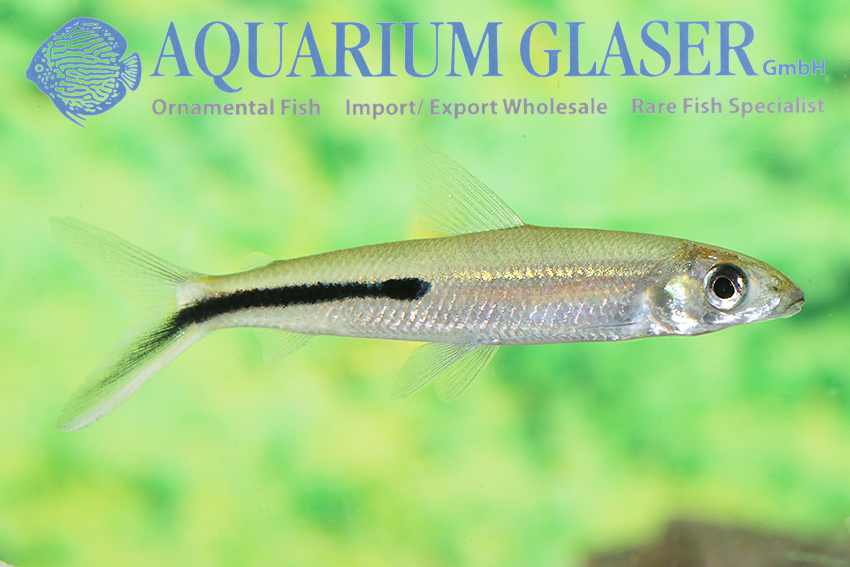
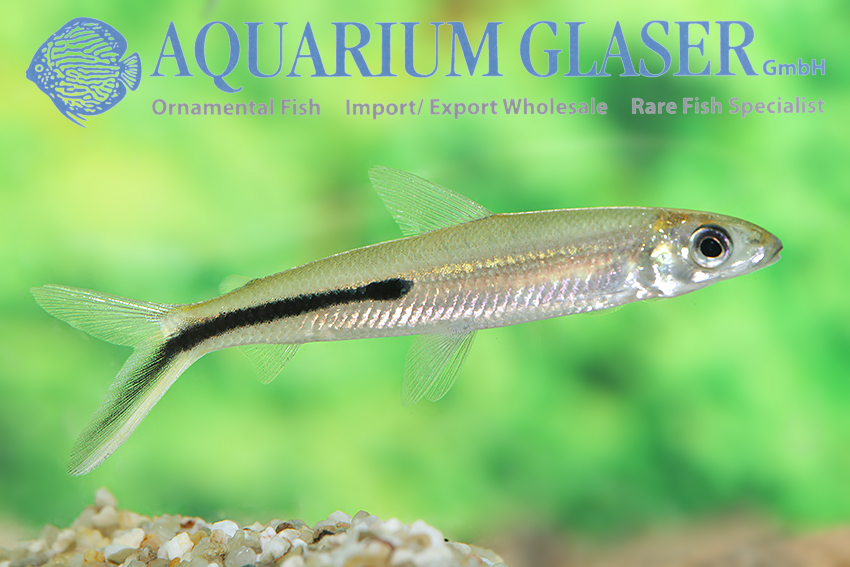
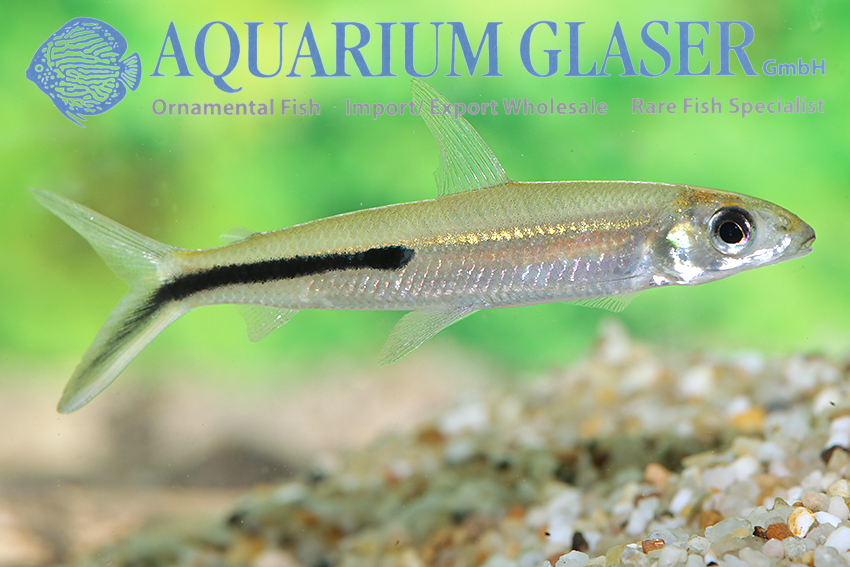
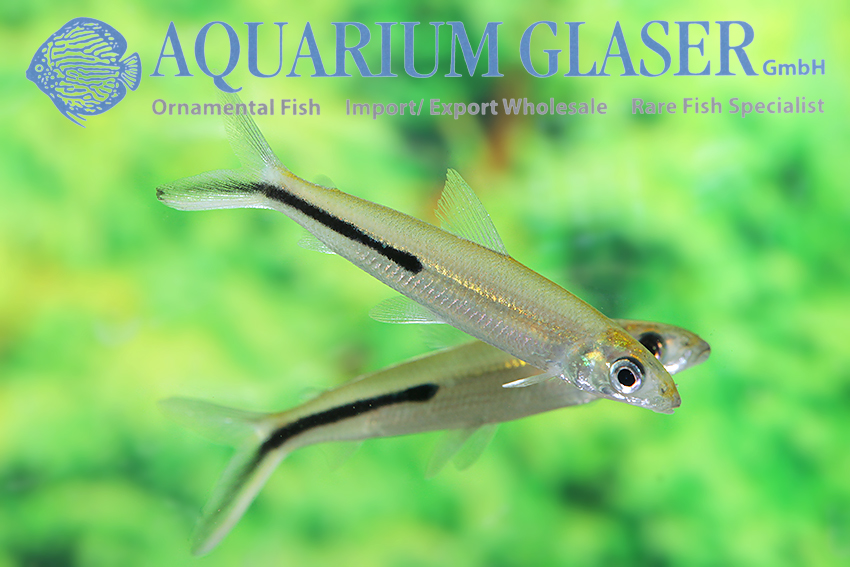
Hemiodus are sensitive to stress. Their capture, acclimatization, and transport can therefore only be successful with the utmost care. This is the reason why these fish are relatively rare in the trade. All species observed in aquariums to date exhibit a slanted swimming behavior. These elegant animals should always be kept in schools of at least eight, as individual fish can be very nervous. Another basic requirement is a large aquarium with plenty of free swimming space. Hemiodus are peaceful towards each other and towards fish of other species. There have been no reports of breeding in aquariums. Hemiodus can be described as undemanding in terms of water values (pH and hardness) and food (any standard ornamental fish food of a suitable size is readily accepted), but the water should be clear and rich in oxygen. A temperature between 24 and 28°C is probably optimal for all species.
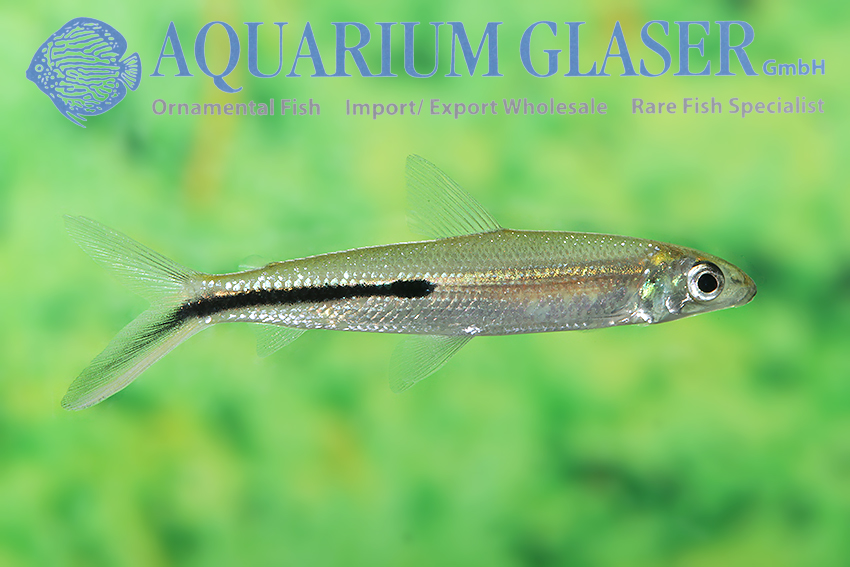
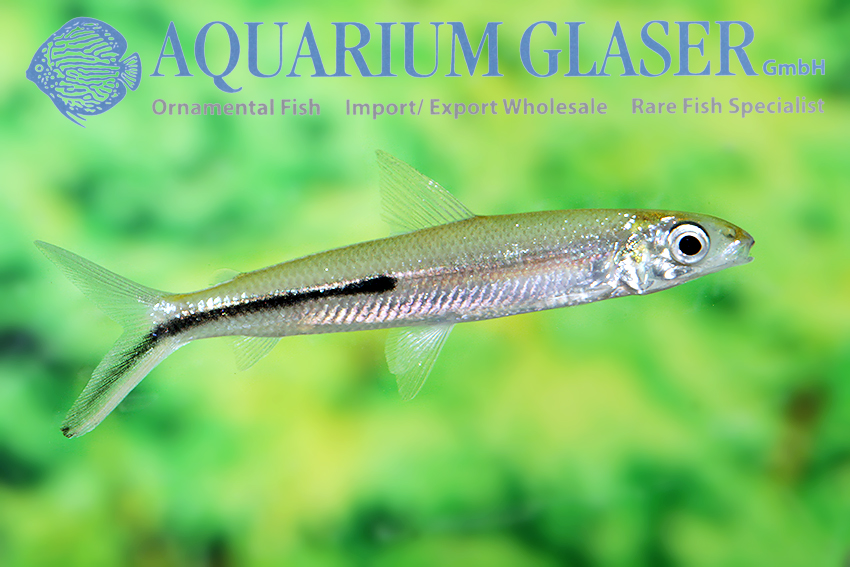
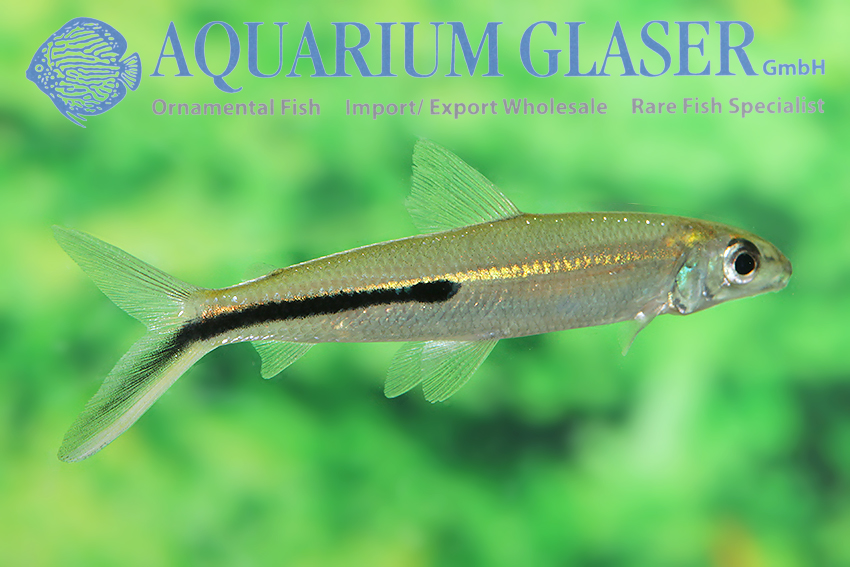
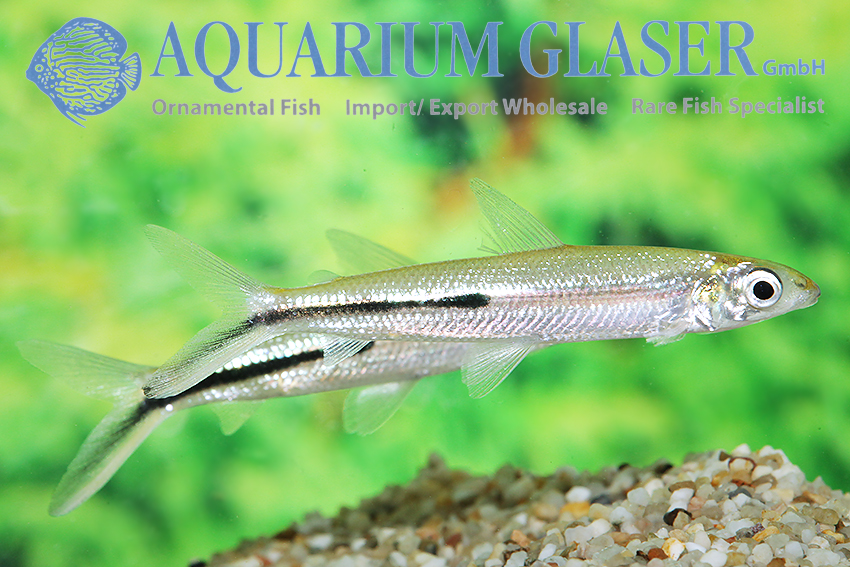
The only species of the genus that is offered relatively regularly is Hemiodus gracilis. It has a characteristic pattern. A strong black longitudinal band begins approximately in the middle of the body and continues into the lower half of the caudal fin. Below this black band, the edge of the tail fin of H. gracilis is deep red – very attractive! H. semitaeniatus and H. goeldii are almost identical in color, but in both species the lower edge of the tail fin is white rather than red. H. semitaeniatus has significantly more scales in the longitudinal row than H. gracilis and H. goeldii (these have only about 50 fairly large scales in the longitudinal row, H. semitaeniatus has over 50, making the scales significantly smaller in relation to the body). You can easily shorten the scale counting by only counting the scales along the edge of the back before the base of the dorsal fin. Here, H. semitaeniatus has well over 20 scales, while H. goeldii has only 12.
We recently received „H. gracilis“ from Colombia, which unfortunately show no red in their tail fins. Closer investigation revealed that they are actually H. semitaeniatus. This species is widespread in South America: it has been reported in Brazil, Bolivia, Guyana, Colombia, Paraguay, Peru, and Venezuela. However, recent genetic studies on Hemiodus (Nogueira et al., 2020) suggest that this is more likely to be a species complex than a single species. The largest specimen of H. semitaeniatus measured to date was 20 cm long.
For our customers: the animals have code 258282 (4-6 cm) on our stock list. Please note that we only supply wholesale customers.
Literature:
Nogueira, A. F., C. Oliveira, F. Langeani & A. L. Netto-Ferreira (2020): Overlooked biodiversity of mitochondrial lineages in Hemiodus (Ostariophysi, Characiformes). Zoologica Scripta v. 50 (no. 3): 337-351.
Text & photos: Frank Schäfer
