








The three-banded flag tetra, Hyphessobrycon heterorhabdus, was once one of the most sought-after small tetras. When tetras were very fashionable – in the 1950s to 1970s – this species was classified as a “problem fish” because it did not reproduce without tricks and gimmicks. However, keeping this species without breeding intentions was completely problem-free. Today, we know of a whole complex of three-banded flag tetra species, and identifying them is anything but easy. It is likely that the animals kept at that time were not H. heterorhabdus at all. More information on this can be found here: https://www.aquariumglaser.de/en/09-characoids-tetra-relationship/hyphessobrycon-heterorhabdus-2/
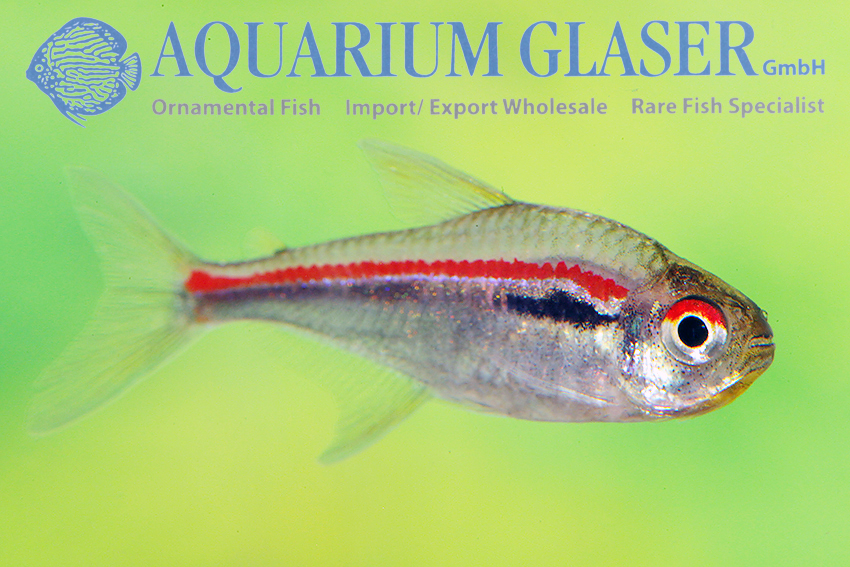
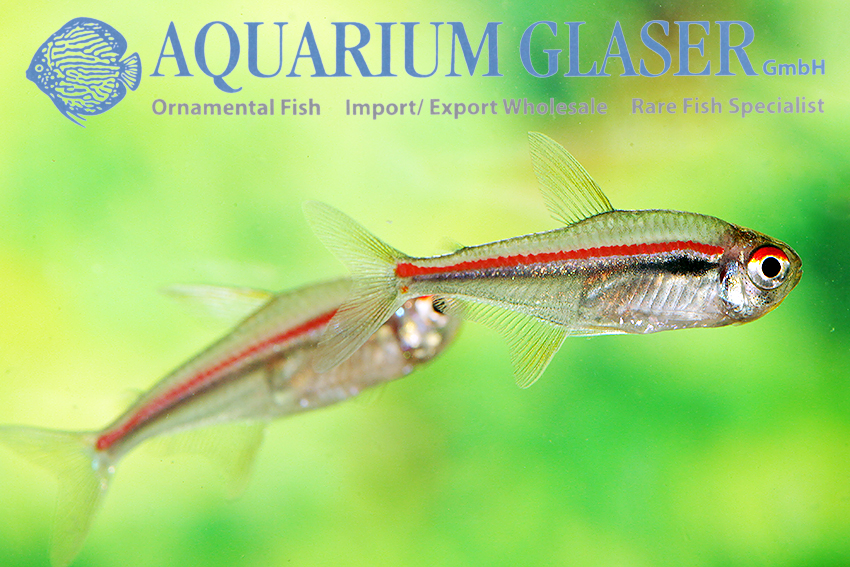
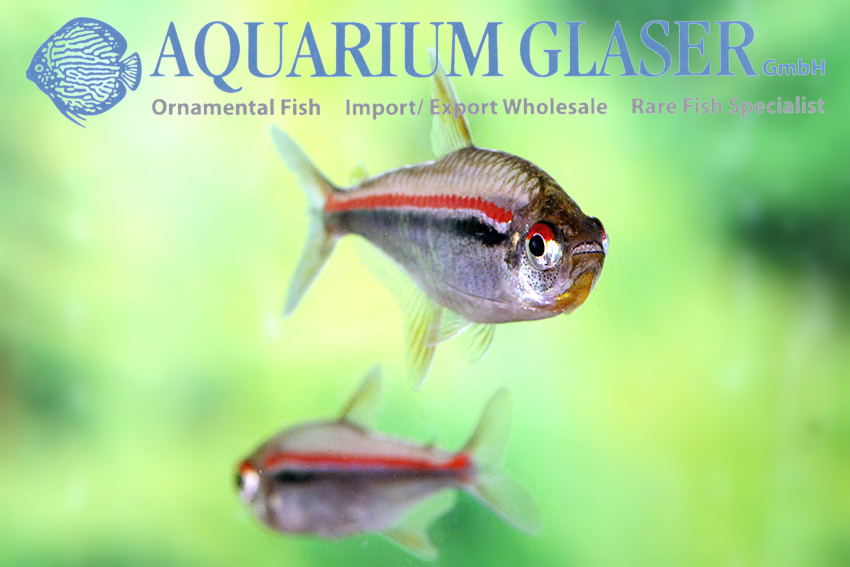
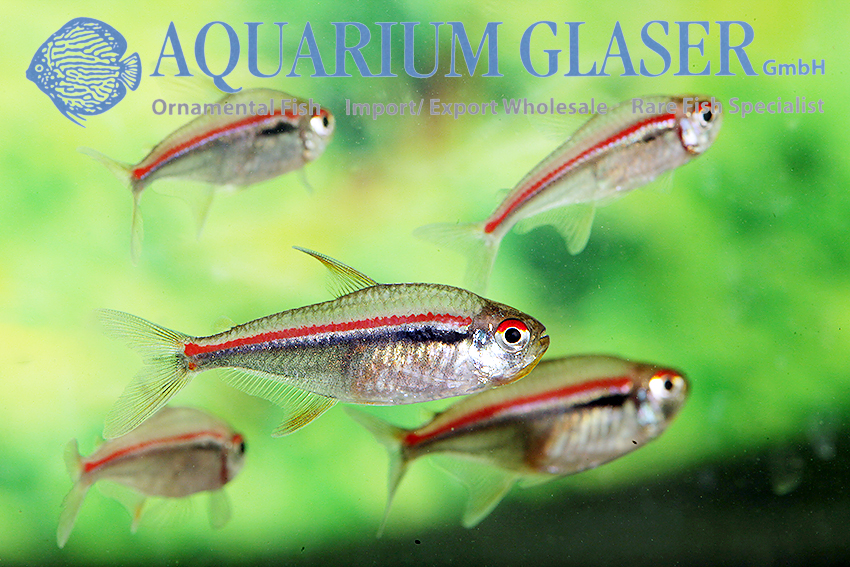
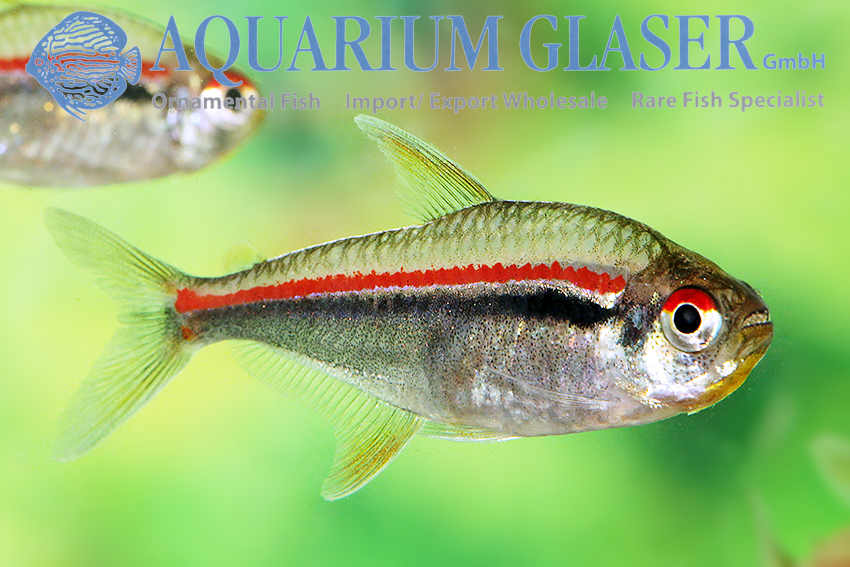
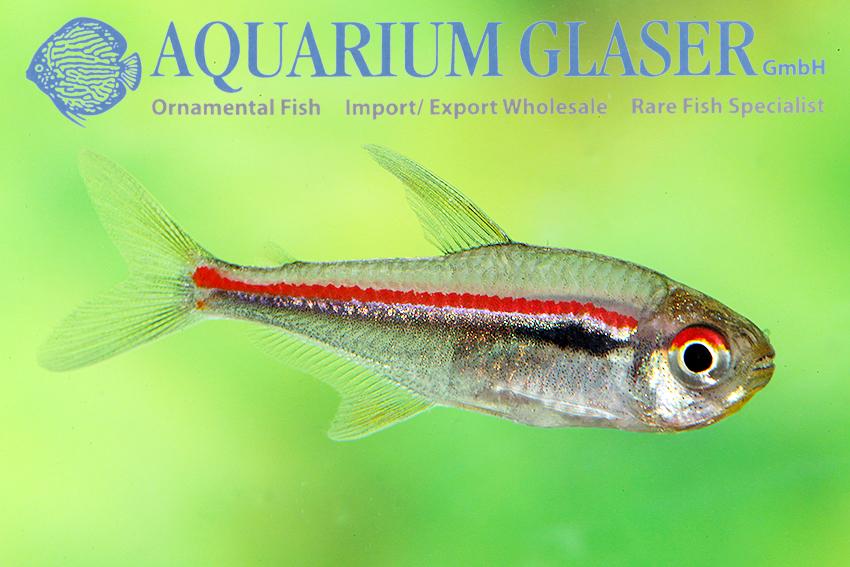
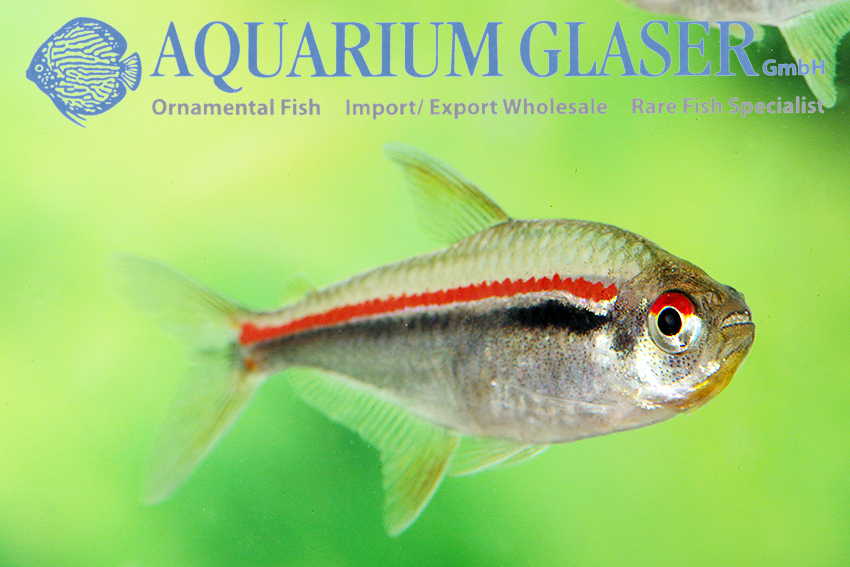
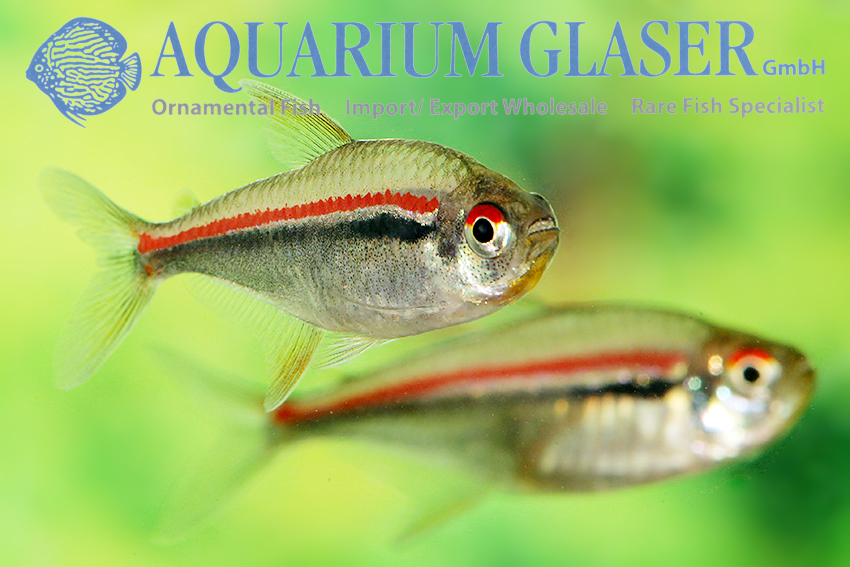
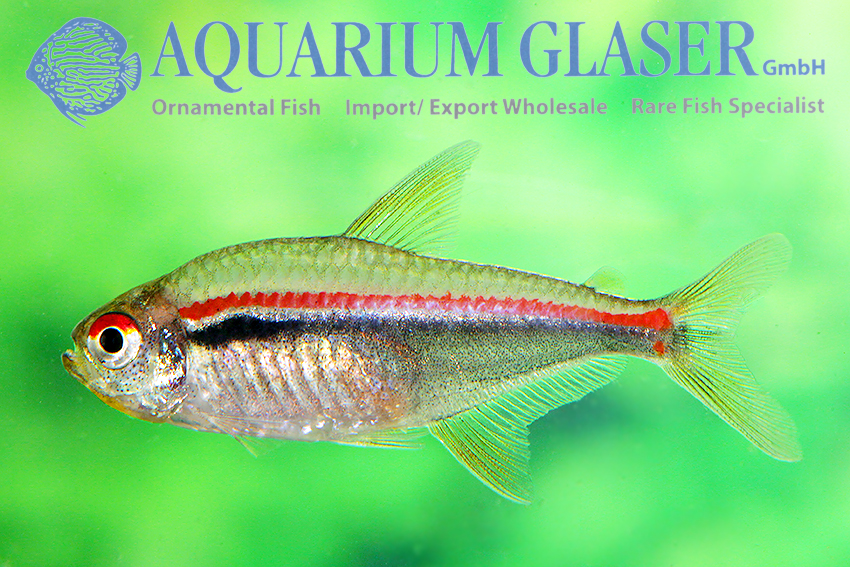
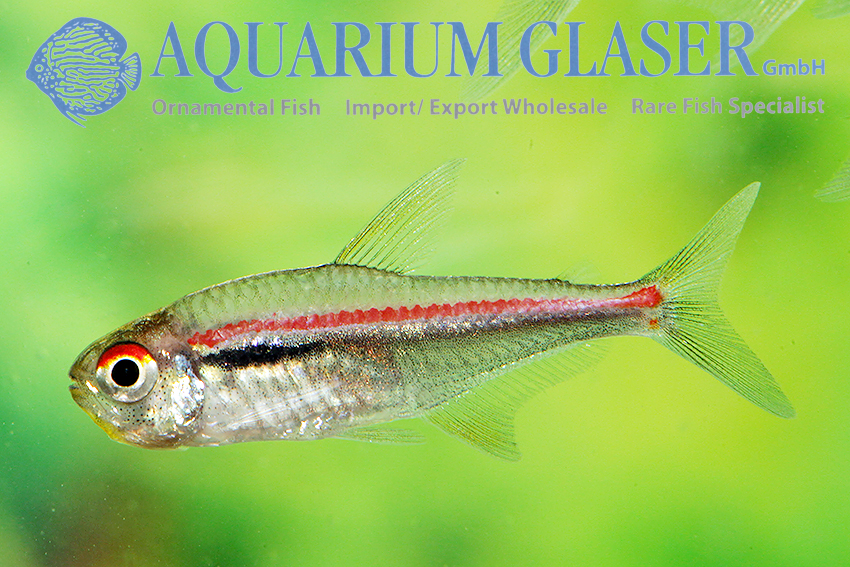
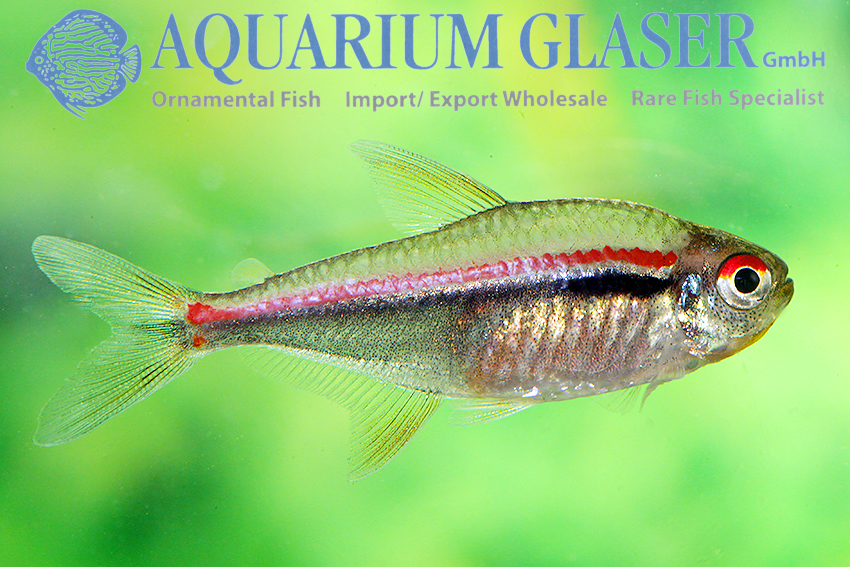
However, a very closely related species of this three-banded flag tetra is fairly easy to identify: Hyphessobrycon amapaensis, the Amapa three-banded flag tetra. This species was caught and brought back from Brazil during an ornamental fish expedition by Bitter and Hessfeld, which was still legally possible at the time (1997). A year later, it was scientifically described as a new species by Zarske and Gery. It was found in a savanna stream on the B156 in the state of Amapa. The water there was clear, slightly brownish, slightly acidic (pH 5.8 to 6.3), very soft (both KH and GH below 1° dH, conductivity 9-13 µS/cm) and around 25-27°C warm. The most interesting accompanying fish was Hyphessobrycon takasei (https://www.aquariumglaser.de/en/09-characoids-tetra-relationship/hyphessobrycon-takasei-2/).
The distinguishing feature of Hyphessobrycon amapaensis is the black section of the longitudinal stripe. In all three-striped flag tetras in the narrower sense, the longitudinal stripe consists of three differently colored, parallel stripes: one red, one light, and one black. In contrast to all other three-banded flag tetras, the black band of Hyphessobrycon amapaensis is greatly widened immediately behind the gill cover to the end of the pectoral fins and also extends into the caudal fin. The uppermost band is coral red and much clearer than in other three-banded flag tetras. To identify the species with certainty, you need to take your time. Depending on its mood, each fish can strongly contract the body cells that contain the black pigment – then the fish becomes light in color and the black markings almost invisible – or expand them. This is what makes the very rapid color change that so many fish exhibit possible. When Hyphessobrycon amapaensis is frightened, the black longitudinal band is often not easily recognizable.
Hyphessobrycon amapaensis is the only species of all three-banded flag tetras to have gained a firm place in the hobby. It is available in good quality as offspring in various sizes almost all year round, although its breeding still requires an experienced tetra breeder even today. Wild-caught specimens only come onto the market very sporadically. The pictures show captive-bred specimens in the md-lg size class. It is an ideal fish for well-maintained community aquariums. Soft, slightly acidic water is favorable for optimal coloration, but the fish are highly adaptable and practically any tap water is suitable for their care. The species is completely peaceful towards conspecifics and non-conspecific fish, and should be kept in a school. The maximum length is about 4 cm. They eat any commercially available ornamental fish food of a suitable size.
For our customers: depending on size and origin, the animals have the codes 259452 (breeding sm-md), 259453 (breeding md-lg), 259454 (breeding lg), 259463 (wild lg), and 259464 (wild xlg) on our stock list. Please note that we only supply wholesale customers.
Text & photos: Frank Schäfer
