








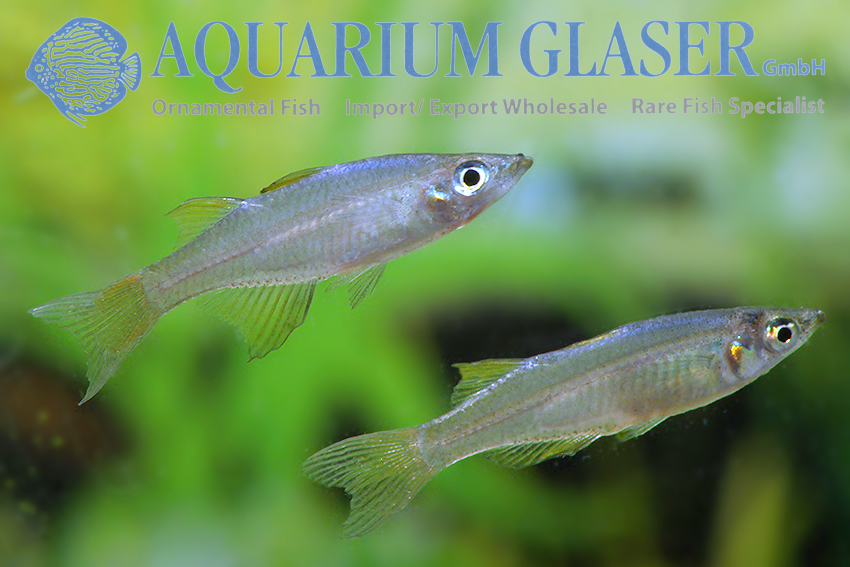
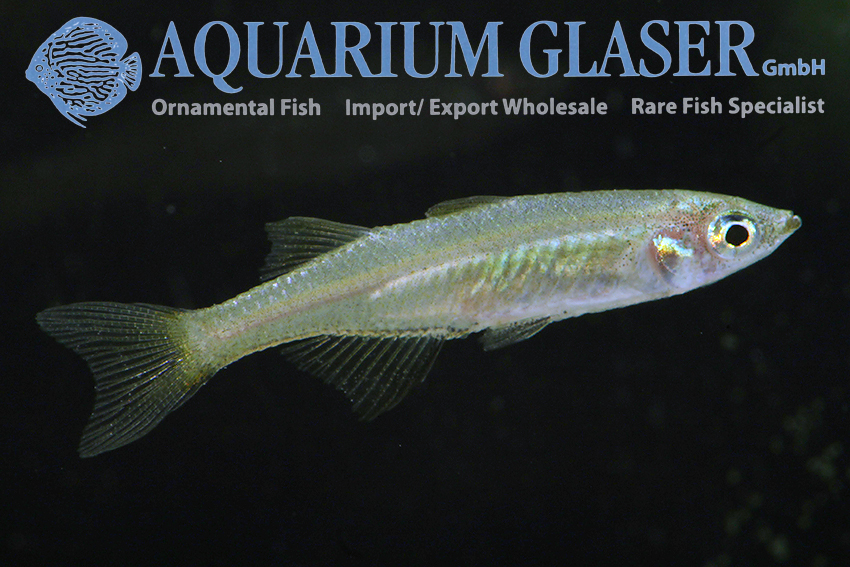
The discovery of Iriatherina werneri in 1973 by two traveling aquarists in rice fields near the city of Merauke in New Guinea was a sensation at the time. The animals were scientifically described in 1974 and named in honor of one of the discoverers. Since there were no ornamental fish exports from New Guinea at that time, aquarists had to rely on captive-bred specimens. These were expensive and exclusively male. The few breeders had a monopolistic position and did not give it up lightly. It was not until 1978, when another population was discovered in the swamp areas of the Jardine River on the Cape York Peninsula in Australia, that the monopoly ended. Now females were finally available. Although they are not nearly as pretty as the males, they are indispensable for breeding. Nowadays, the butterfly rainbowfish is theoretically available from a number of commercial breeders for relatively little money, but there have been major quality problems in recent years. We are therefore delighted to once again have a reliable supplier of healthy and stable Iriatherina werneri (there is only this one species in the genus).
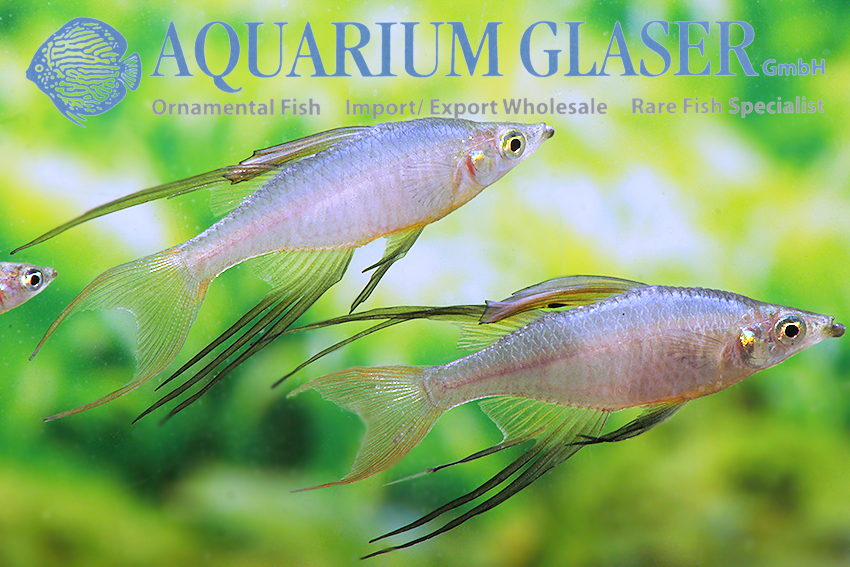
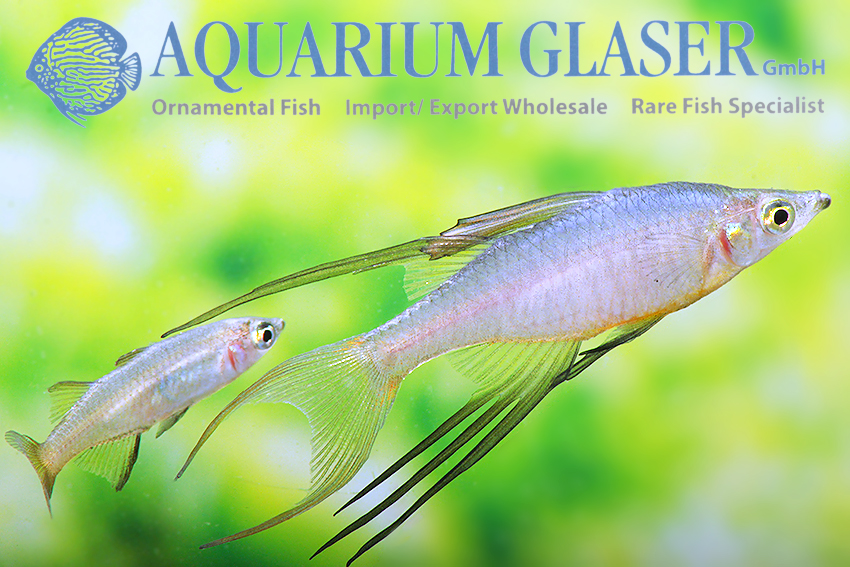
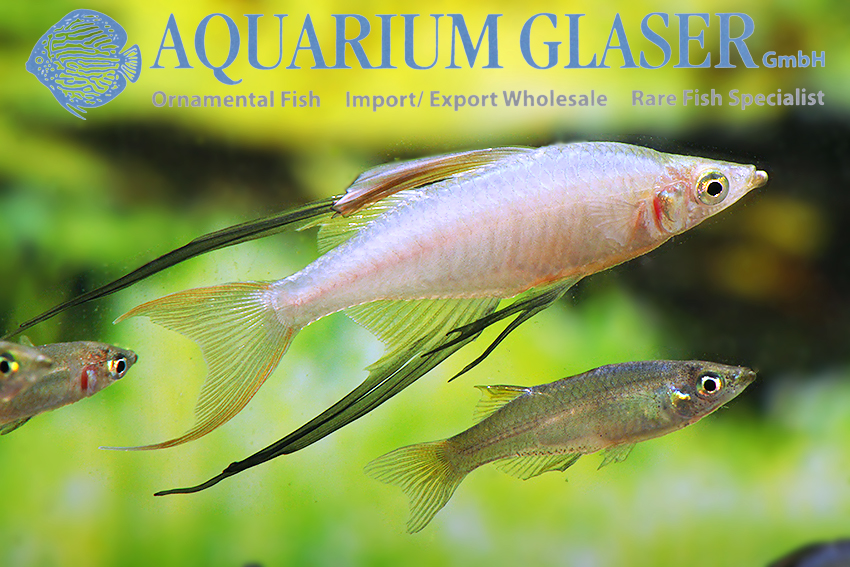
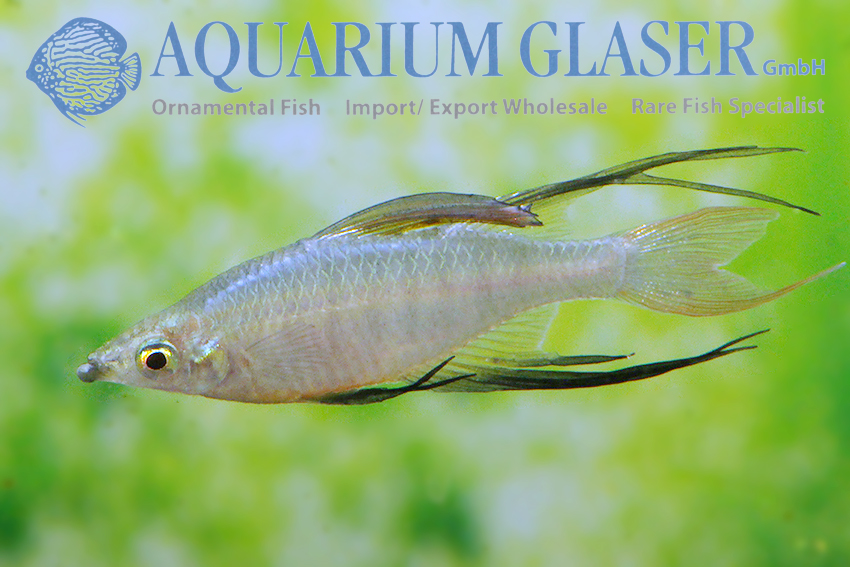
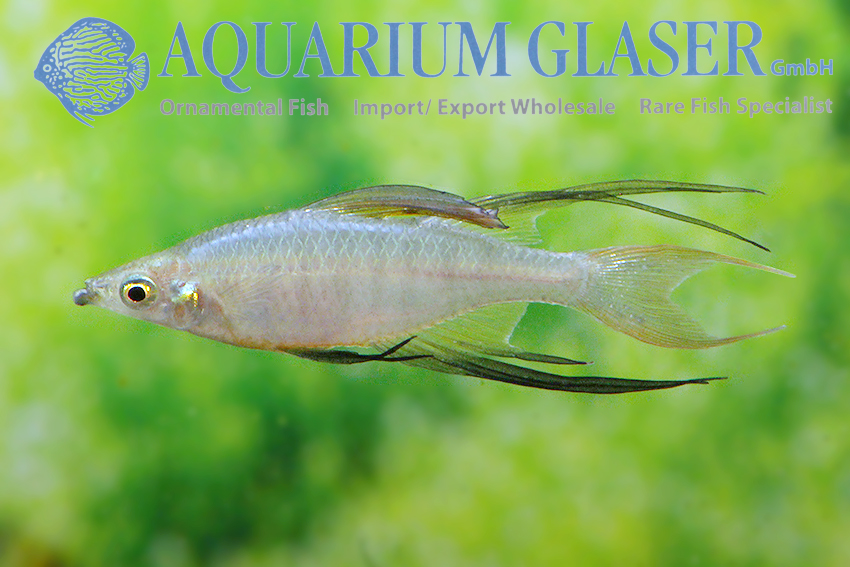
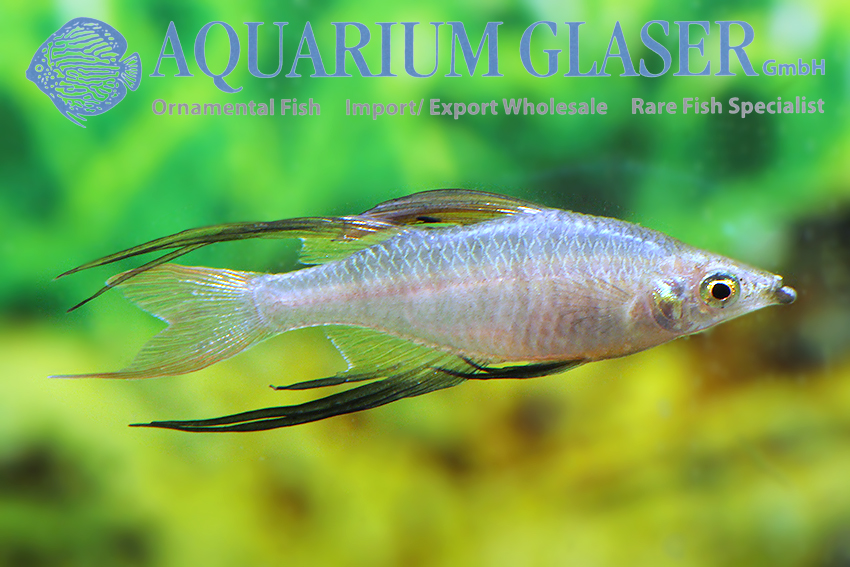
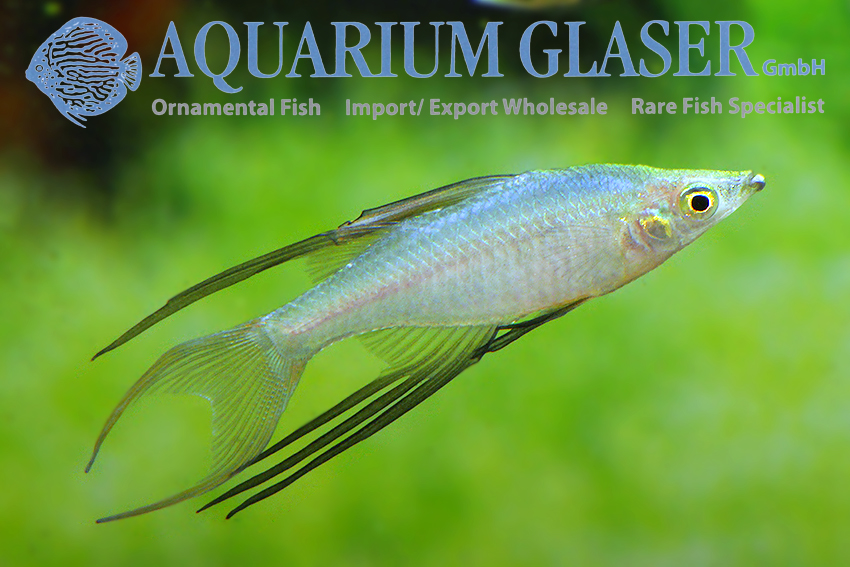
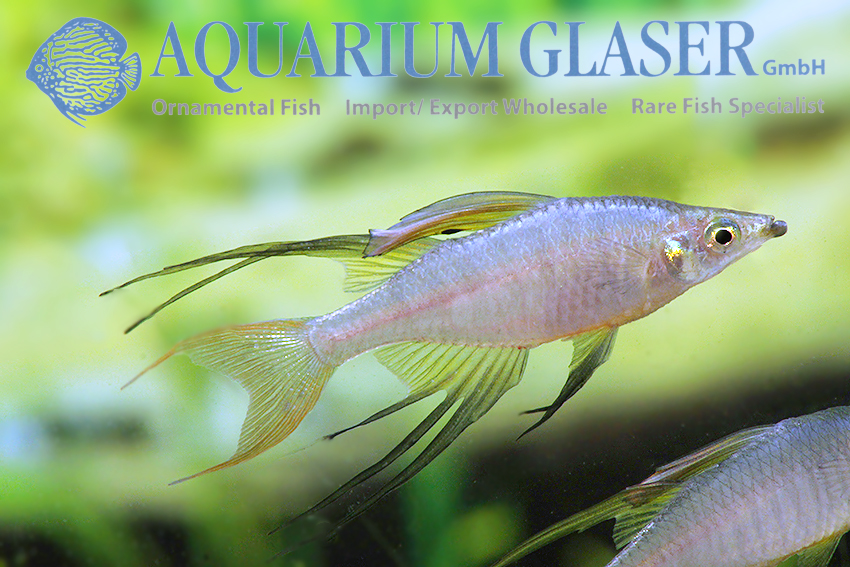
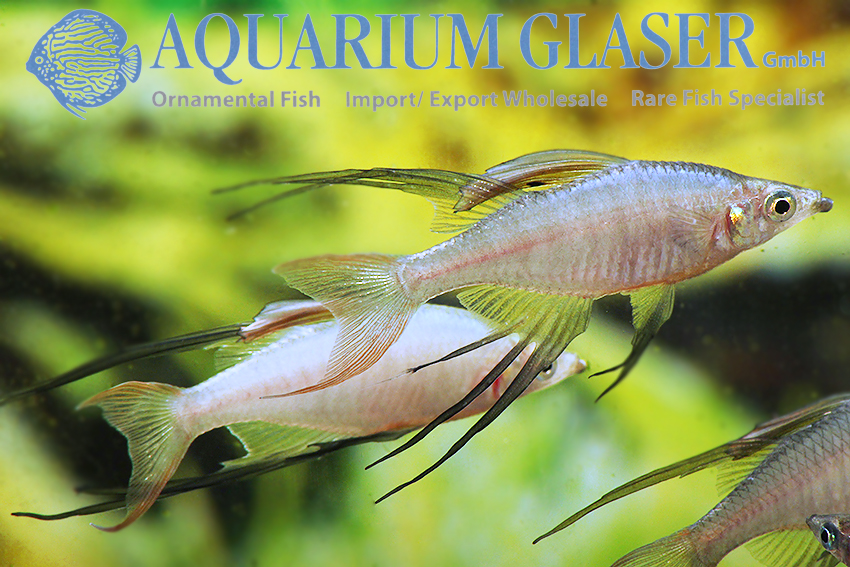
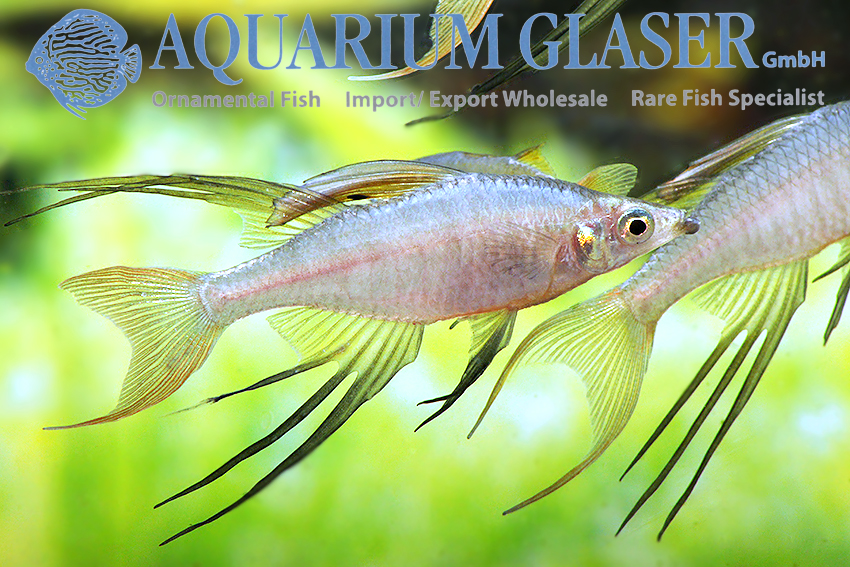
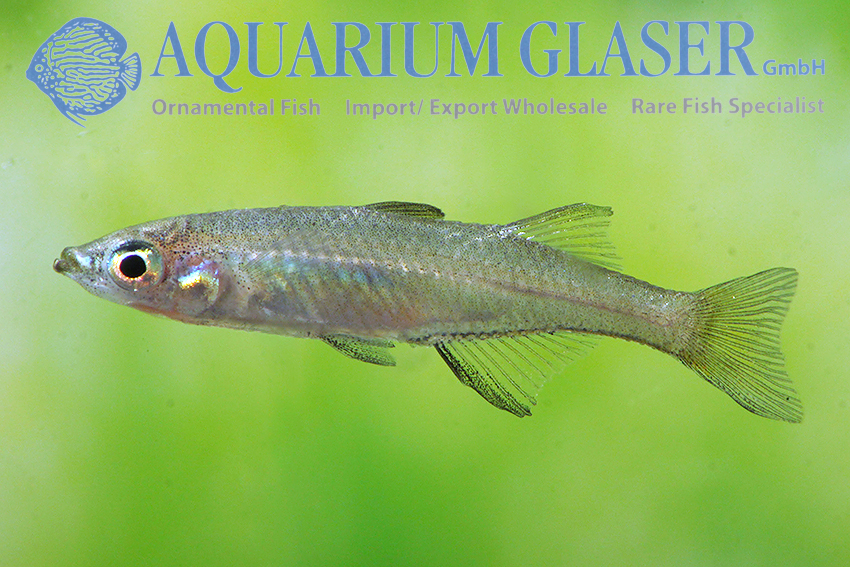
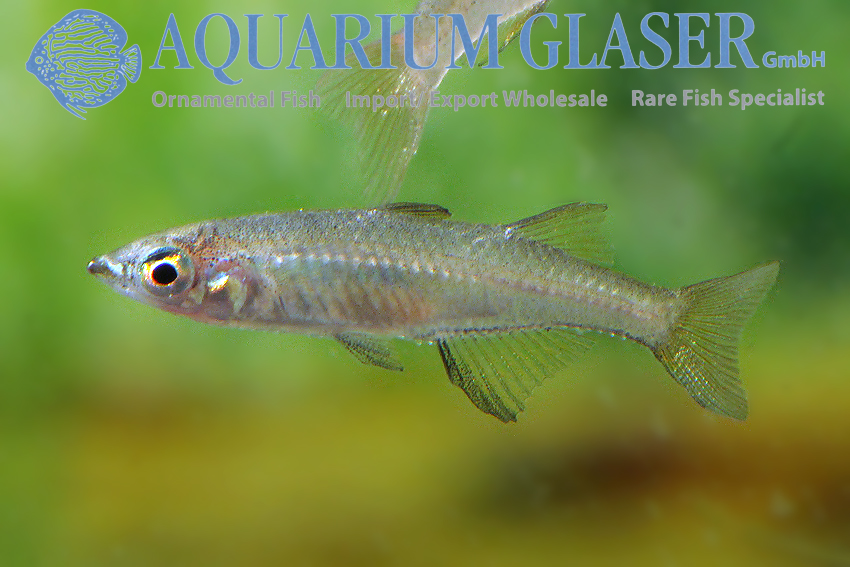
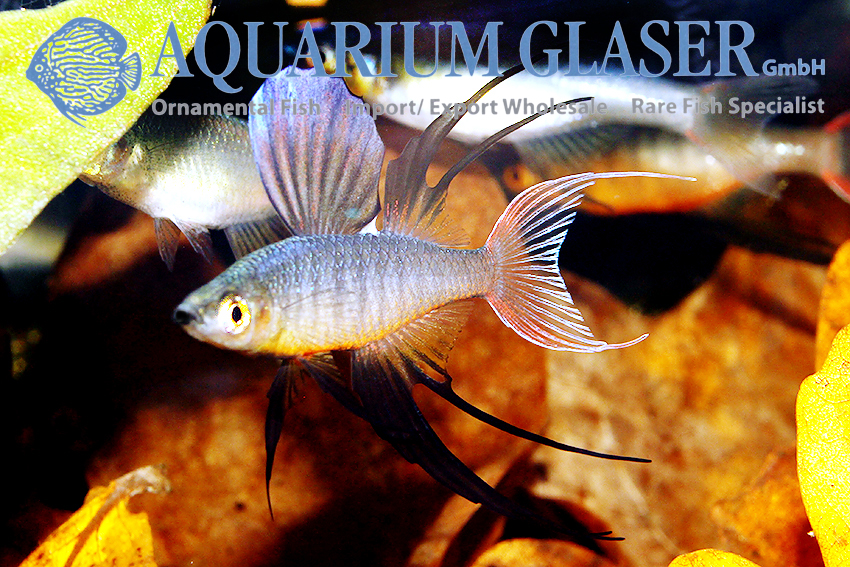
The common name – butterfly rainbow fish – was very aptly chosen, because just like a butterfly spreads its wings, the male flaps the front of its two dorsal fins up and down during courtship. The males also have long, thread-like, deep black filaments in the second dorsal fin and the anal fin. This delicate fish reaches a maximum length of 5 cm when fully grown.
There is hardly a more peaceful aquarium fish. This species should therefore only be kept together with other very peaceful fish, otherwise they will perish. I. werneri is very adaptable in terms of water values; the pH can be between 5.5 and just over 8 (but be careful: adjustments must be made very slowly, as the animals are extremely sensitive to sudden changes!), and the hardness should be soft to medium. The water temperature should be slightly higher than usual, approx. 25-29°C. However, the most important thing is proper feeding. The animals have only a small mouth. Therefore, food particles should not be large, even for adult specimens. Artemia nauplii are ideal, along with very finely ground dry food, micro worms and vinegar eels, rotifers, cyclops (also frozen), etc.
If you meet these conditions and also provide the animals with humic substances from peat, alder cones, or dead leaves, you will have great joy with these wonderful animals.
For our customers: depending on their size, the fish have codes 421702 (md) to 421705 (sh) on our stock list. Please note that we only supply wholesale customers.
Text & photos: Frank Schäfer
