








New imports often pose a significant challenge when it comes to identification. A good example of this is the beautiful tetra from Peru, which we were recently able to import again after exactly 25 years, but whose identity remains highly questionable. At the time, based on the available data, we identified the fish as Acrobrycon ipanquianus, an identification that cannot be upheld in light of recent research findings on A. ipanquianus.
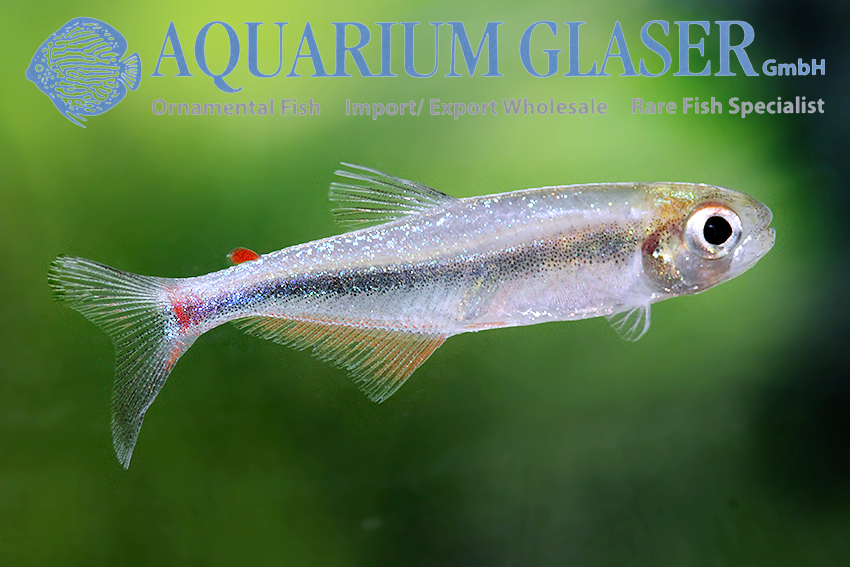
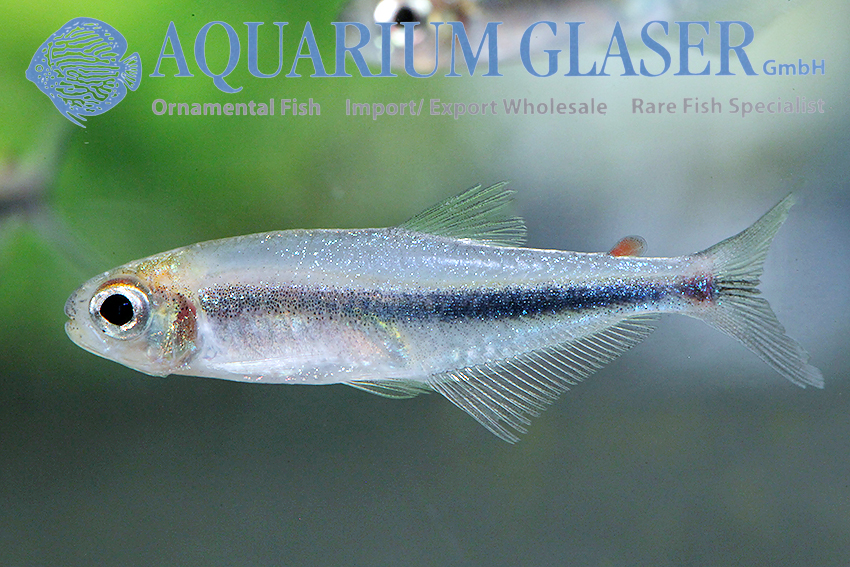
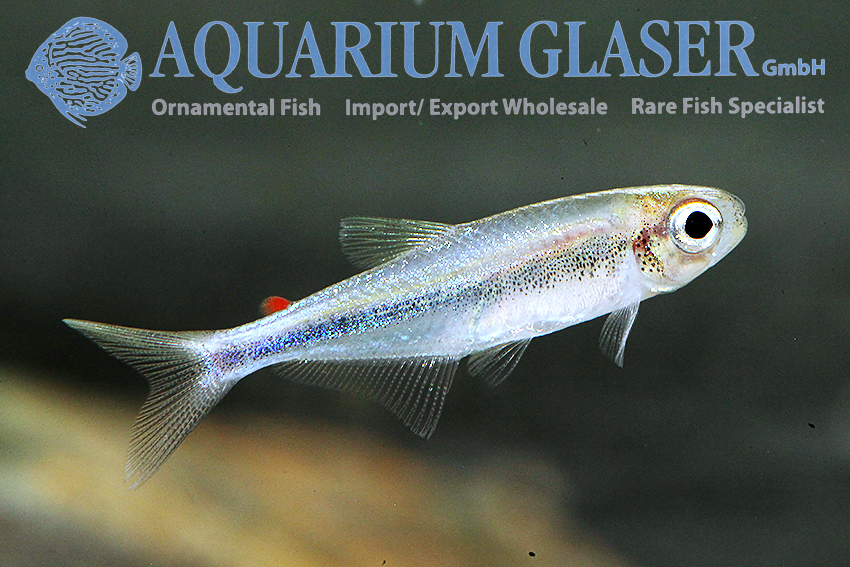
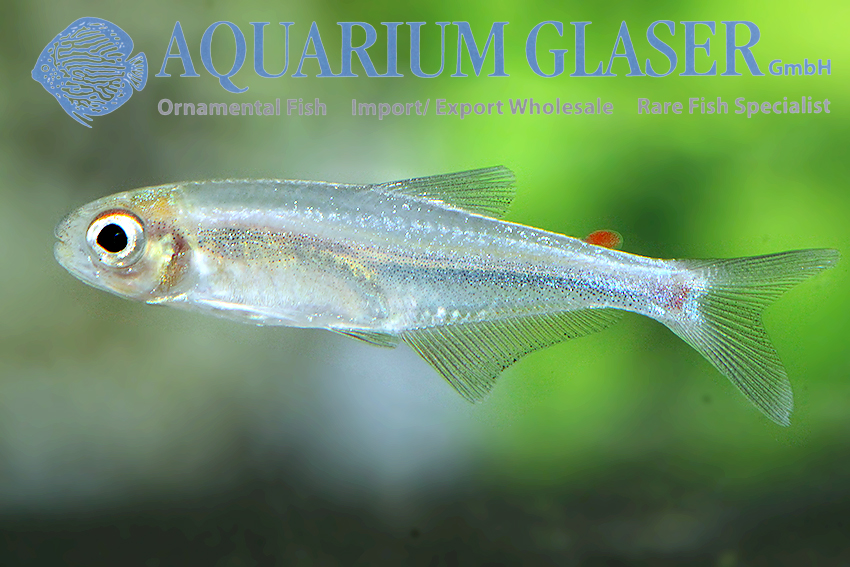
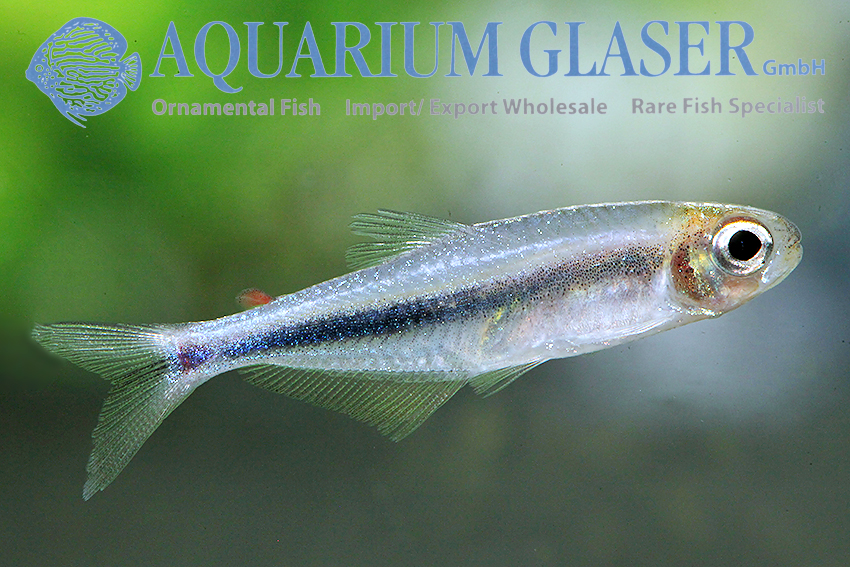
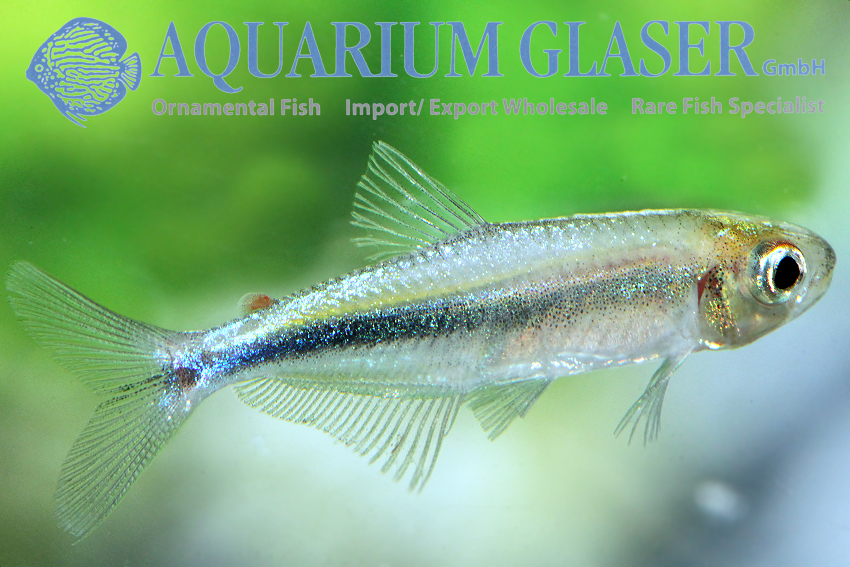
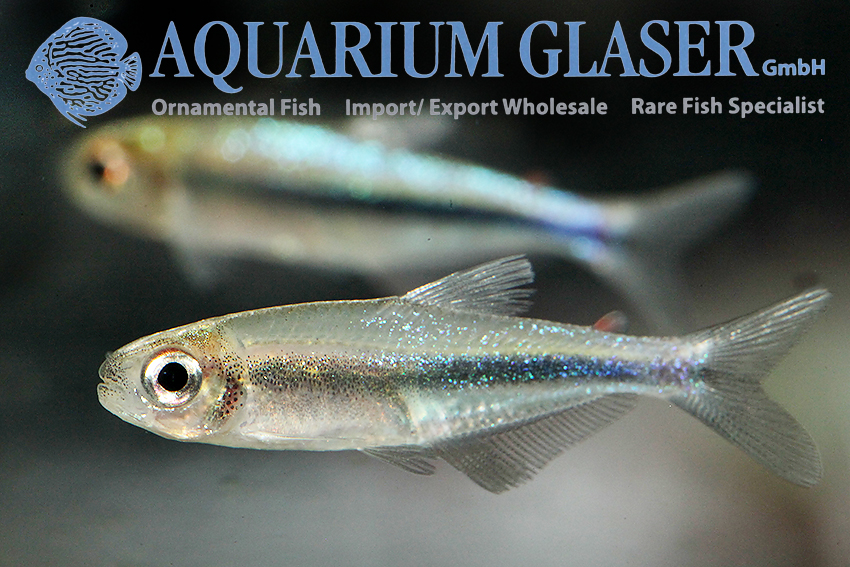
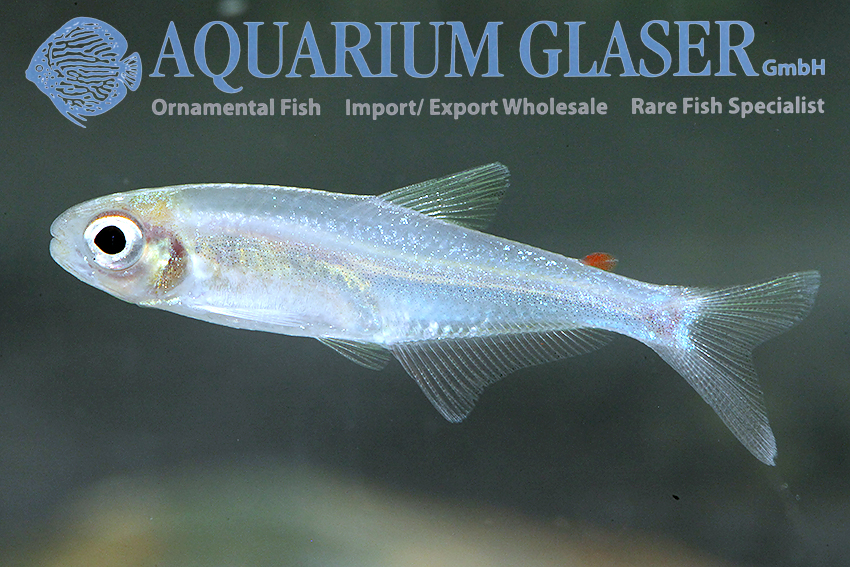
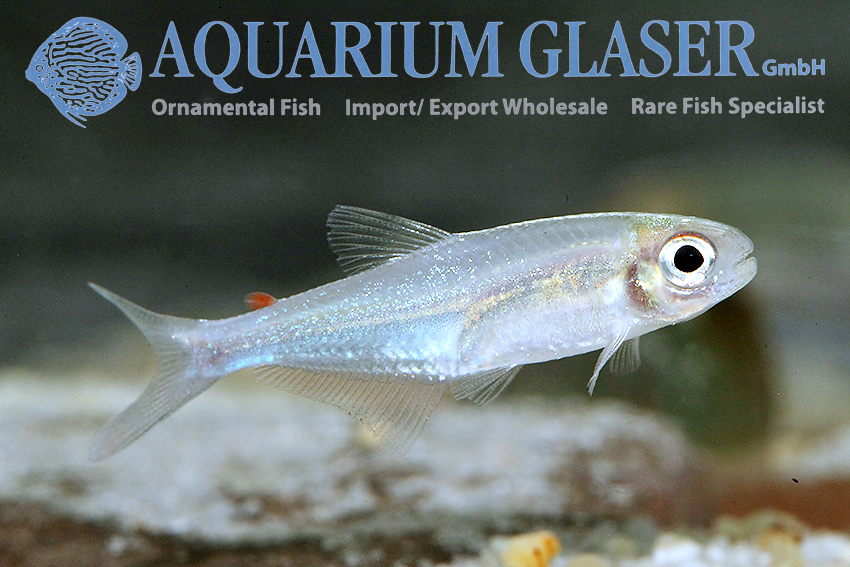
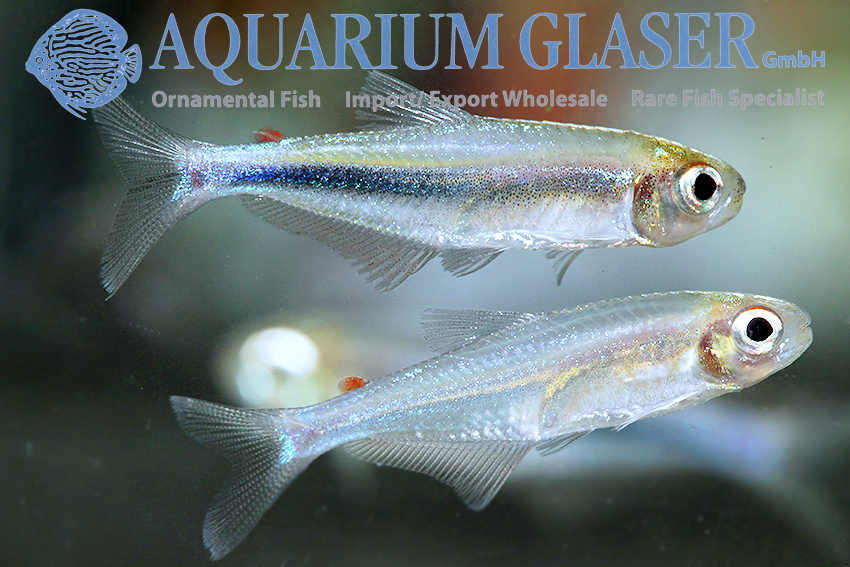
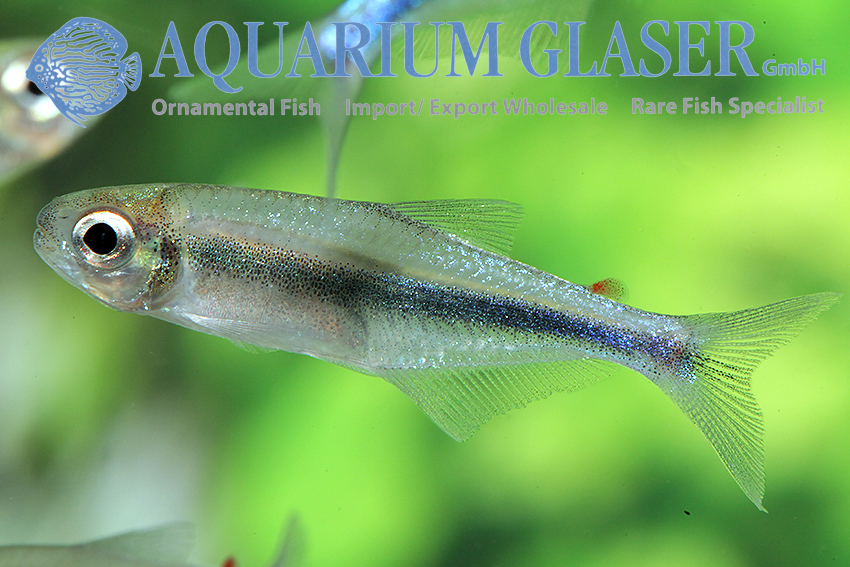
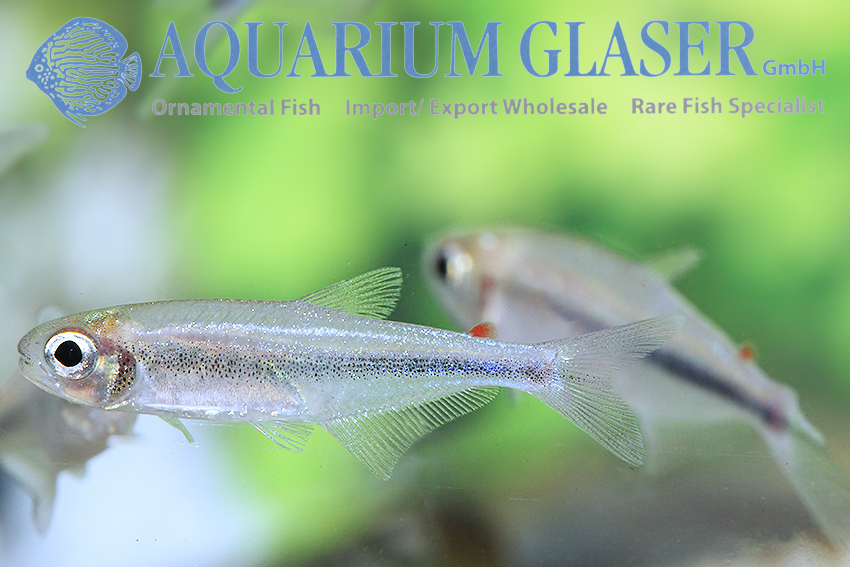
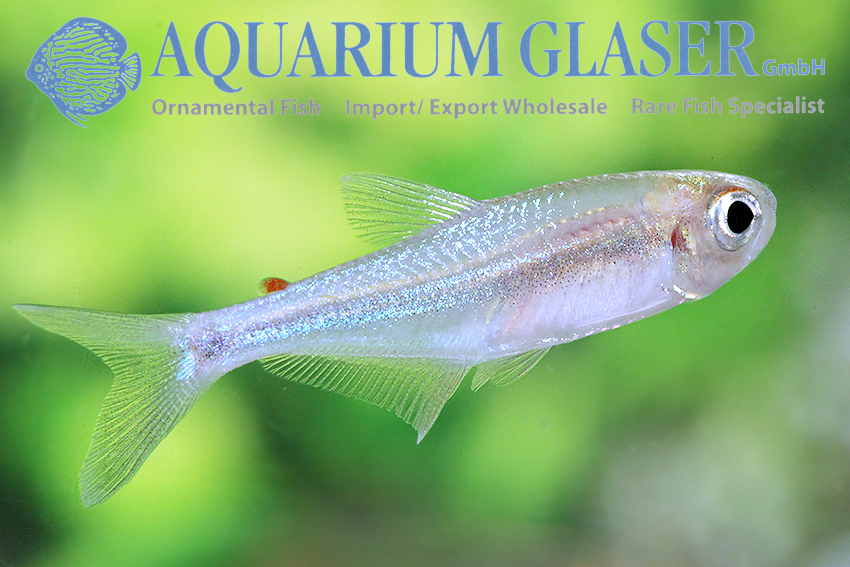
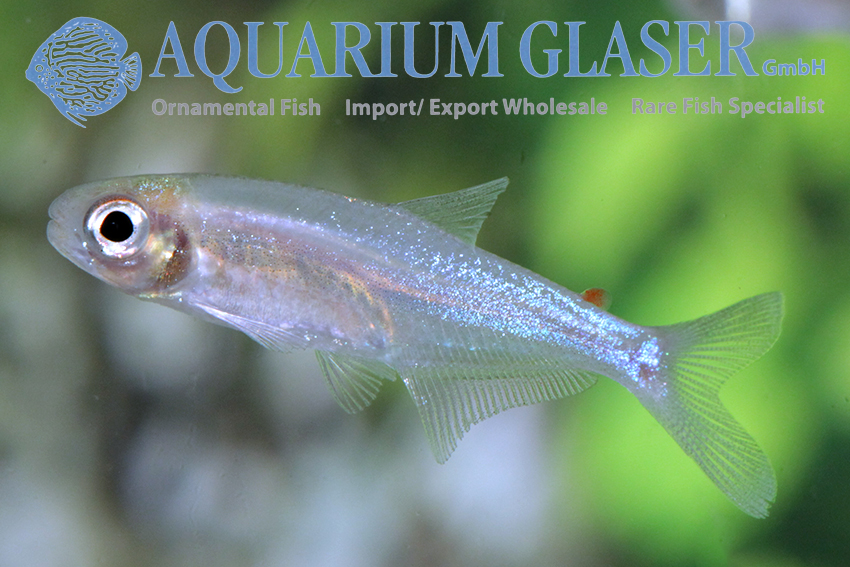
At first glance, the small (approx. 3 cm) fish strongly resembles the Blue Peruvian tetra, Knodus borki. At second glance, however, it differs significantly from that species due to its cherry-red adipose fin. The characteristic of a red adipose fin is extremely unusual in characins in general and is displayed by all specimens of the new imports regardless of their mood, making it a species-specific trait in living animals. Unfortunately, red and yellow colors fade very quickly in preserved fish. In scientific species descriptions, such a characteristic is therefore only mentioned if the live coloration is known. However, this is very rarely the case.
The genus Knodus, together with its immediate sister genus Bryconamericus, forms a large species complex. According to Fishbase (accessed on March 18, 2026), 81 species are currently assigned to the genus Bryconamericus, and 29 species to Knodus. There is some overlap between the two. The only difference between Bryconamericus and Knodus is that in Knodus, parts of the caudal fin are scaled, whereas in Bryconamericus they are not. However, there are Bryconamericus species that have a few large scales at the junction between the trunk and the caudal fin. For this reason, some ichthyologists view Knodus merely as a synonym for Bryconamericus. This makes evaluating the literature difficult. There are hardly any live photos of any of the 110 species. Our new import has—clearly visible in some of our photos—quite dense scaling on the proximal part of the lower caudal fin lobe. It is therefore most likely a Knodus, but there is currently no way to definitively identify our new imports.
At the moment, everything points to Knodus sp. “Red Adipose Fin” being either an undescribed species or a member of another characin genus that we are not currently aware of. Even though this is somewhat unsatisfying given the considerable effort we have already put into attempting an identification, we should therefore leave it at the provisional designation Knodus sp. “Red Adipose Fin” for the time being.
Watching this lively and beautiful fish is a lot of fun. It has a remarkable ability to change color. It lacks a humeral spot entirely. Instead, it has a black longitudinal band that runs along the center of the body, starting at the edge of the gill cover and ending at the tip of the caudal fin. The pigment cells containing the dark pigment that form the longitudinal band can be contracted so strongly by the living fish that it appears completely transparent from one moment to the next. The coloration features a beautifully blue-iridescent back and a red adipose fin. Additionally, the anal fin may turn red, and occasionally a red spot appears at the base of the caudal fin. In terms of care, the new Knodus sp. “Red Adipose Fin” proved to be completely trouble-free; they eat all standard foods and show obvious well-being in soft to moderately hard water at 22–26°C.
For our customers: the animals have code 264748 on our stock list. Please note that we supply exclusively to wholesalers.
Text & photos: Frank Schäfer
