








The genus Labeo plays hardly any role in aquatics; most species grow large (30-50 cm), have little to offer in terms of color, and are also considered quarrelsome. The smaller and more colorful species formerly classified as Labeo, such as the redtail shark, are currently classified in the genus Epalzeorhynchos. True Labeo species are found in Asia and Africa. Few people are aware that there are an impressive 108 Labeo species, slightly more than 80 of which live in Africa. This makes it difficult to correctly identify African Labeo, which are sometimes sent as juveniles. But sometimes it is quite easy. The only species that is reasonably relevant to aquarists is the spotted OB morph of Labeo cyclorhynchus, which is occasionally imported under its synonym L. variegatus. Labeo longipinnis is also relatively distinctive, but much, much rarer on offer.
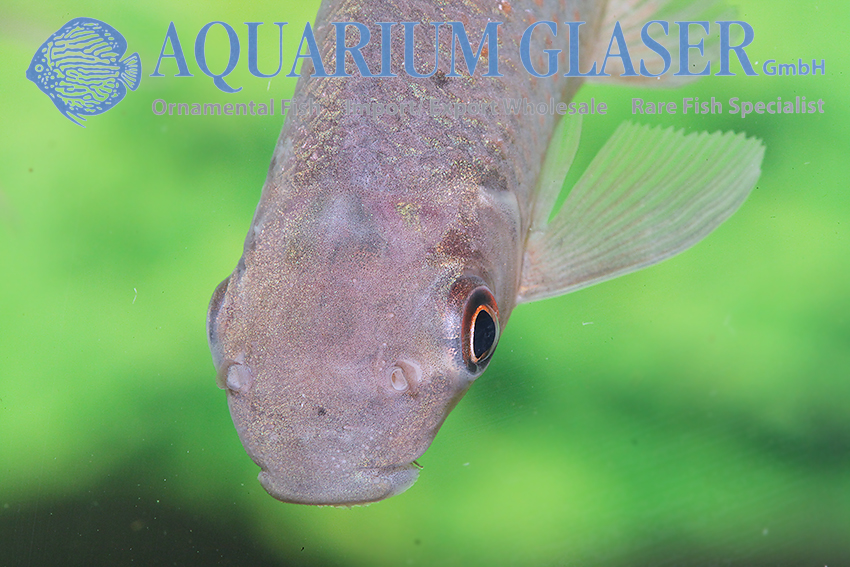
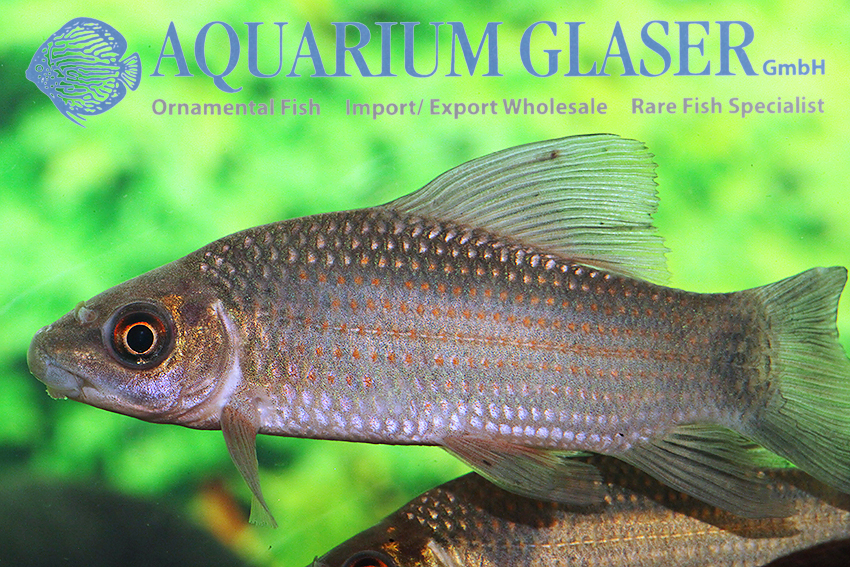
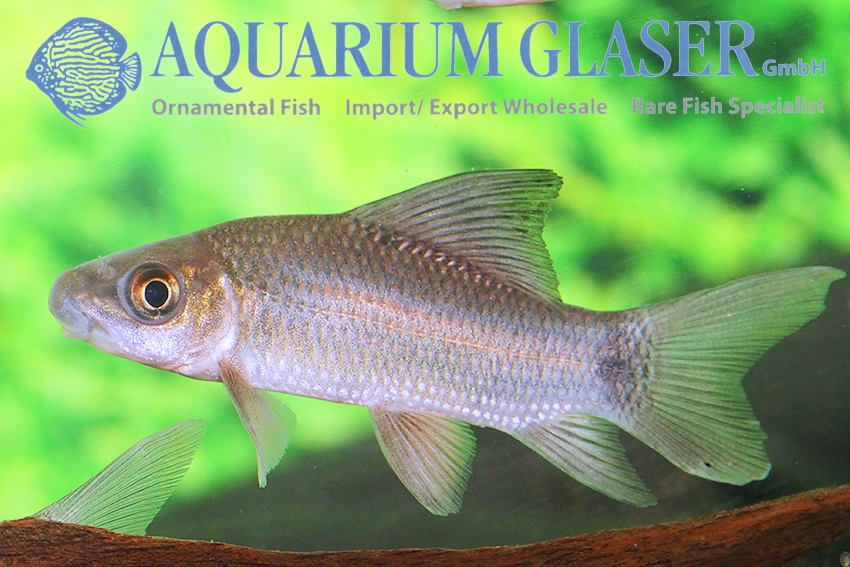
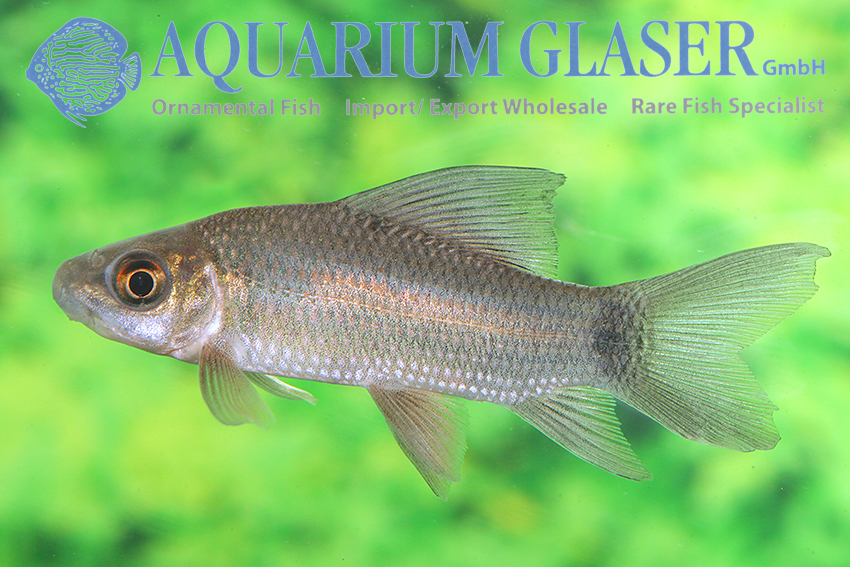
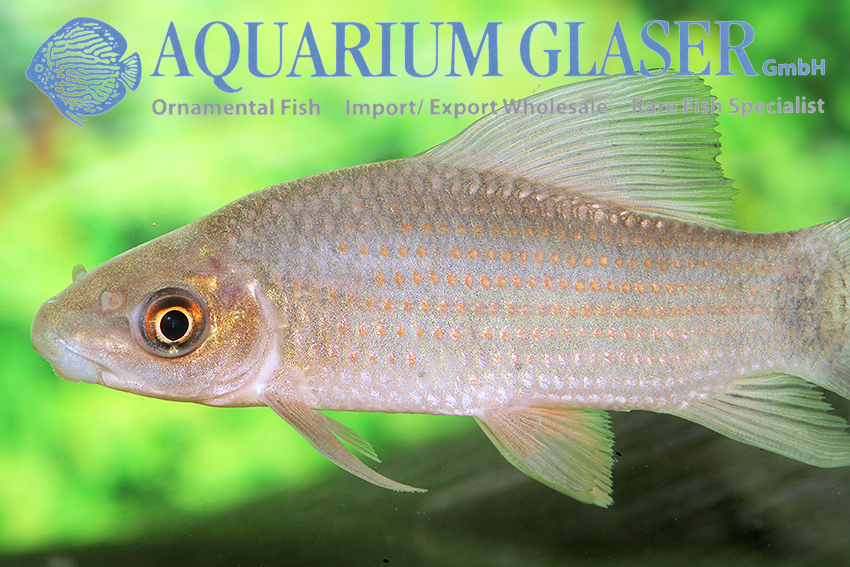
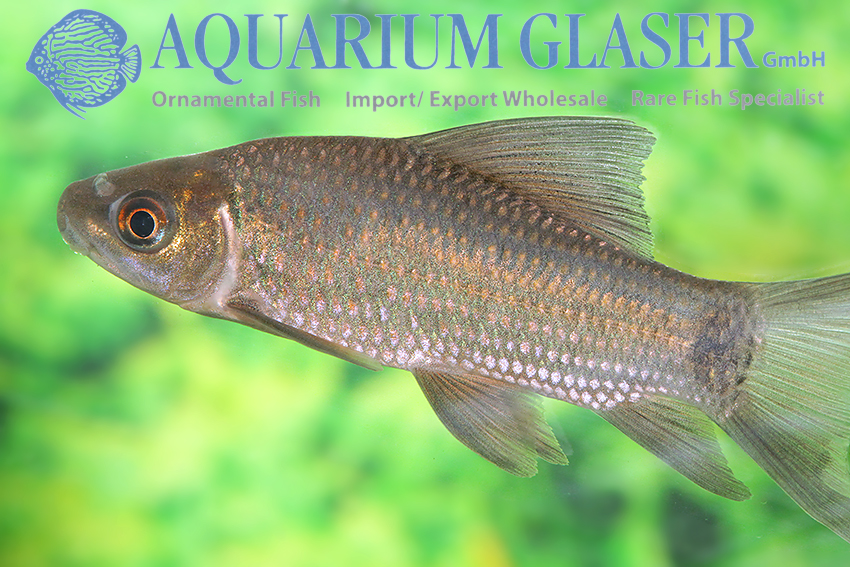
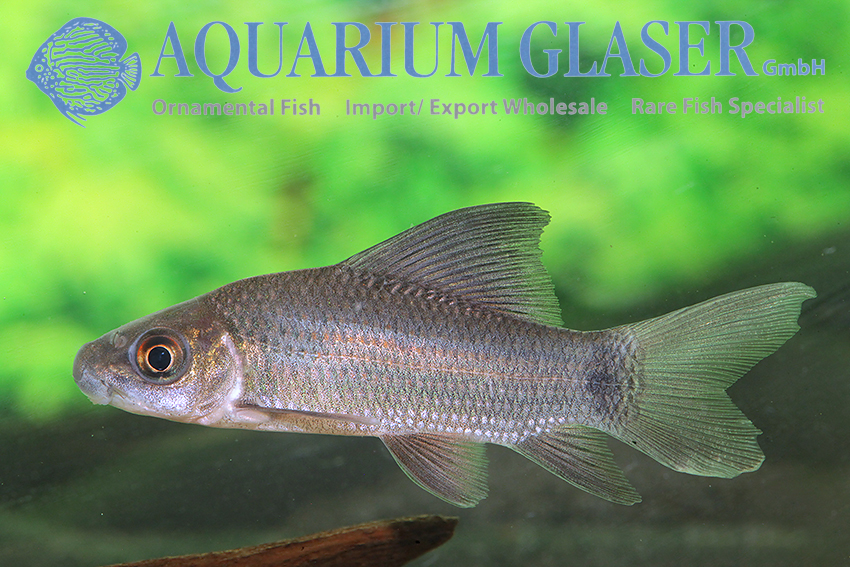
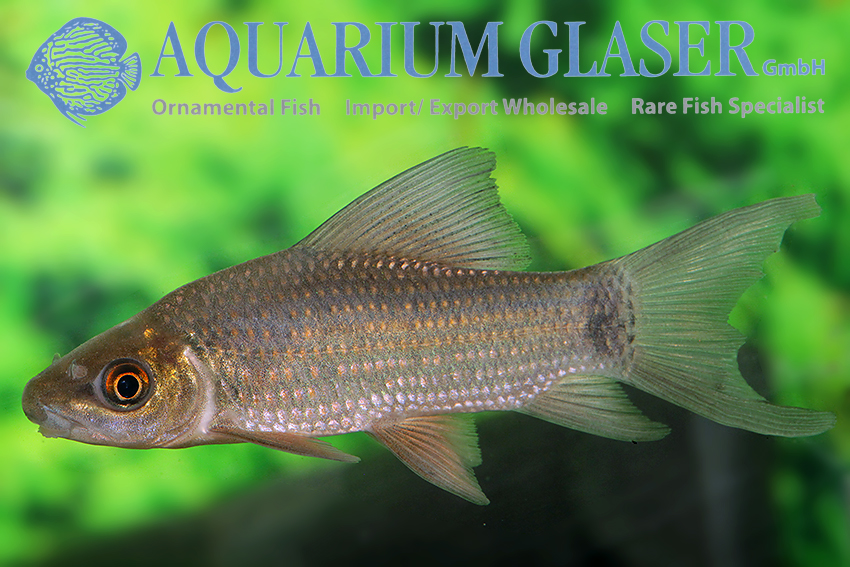
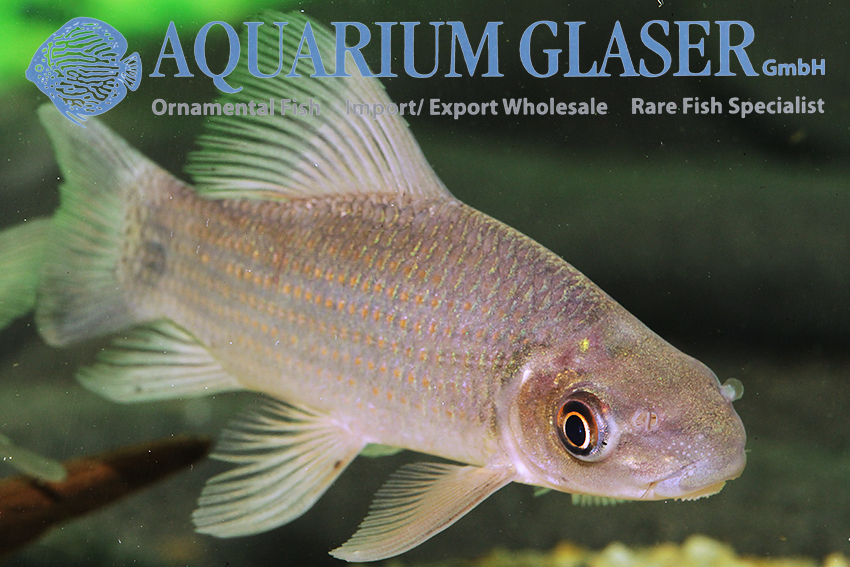
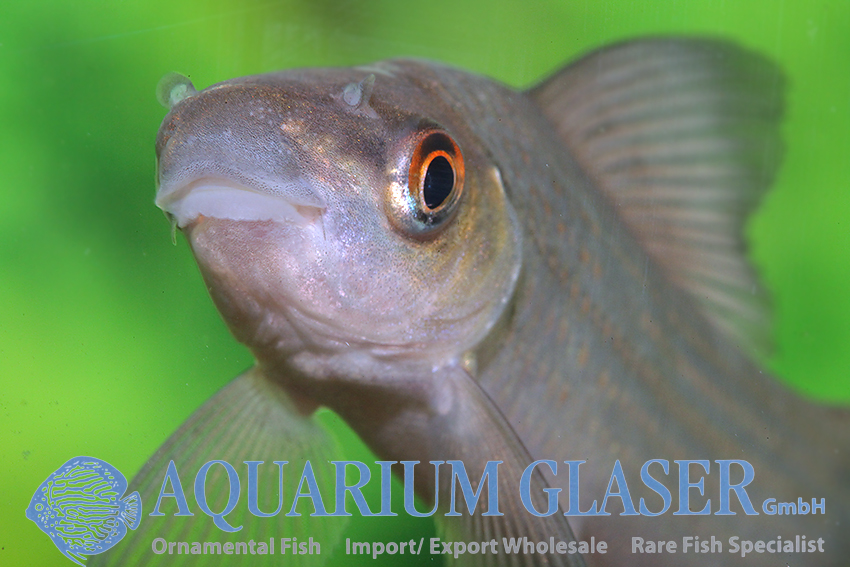
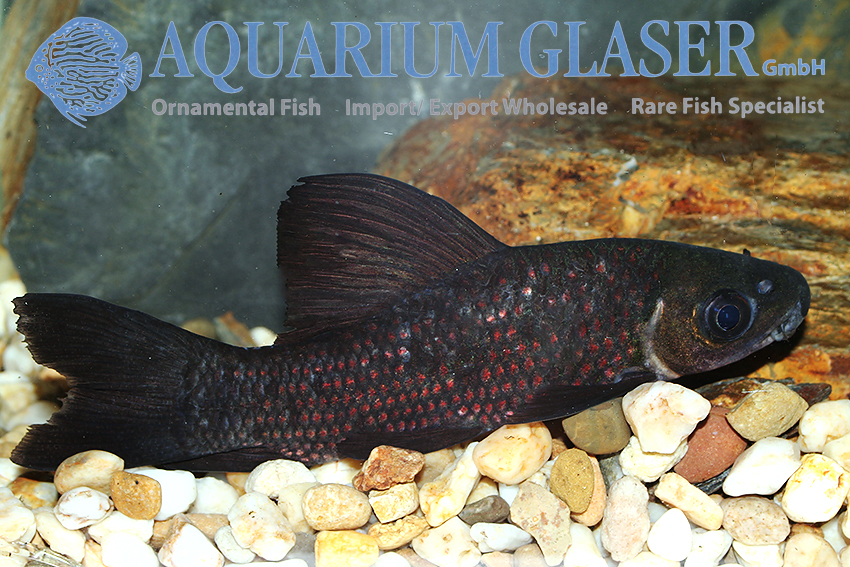
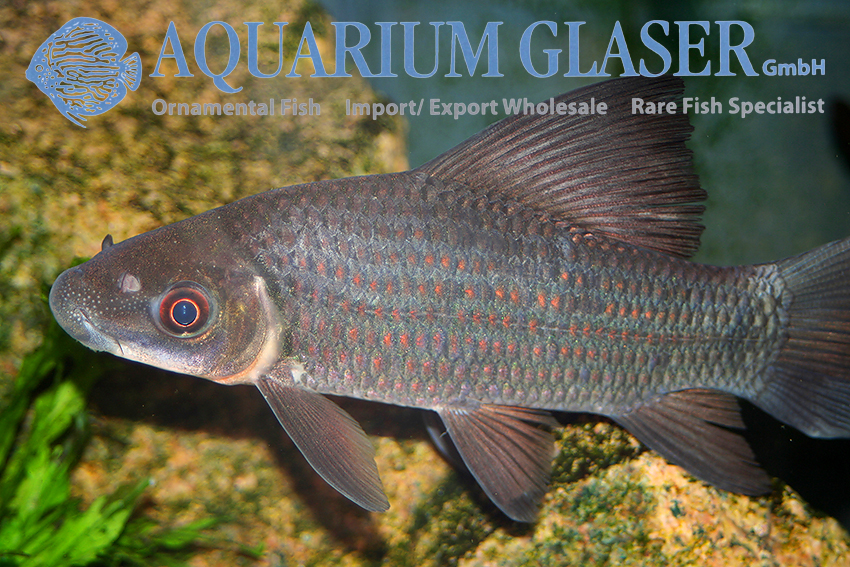
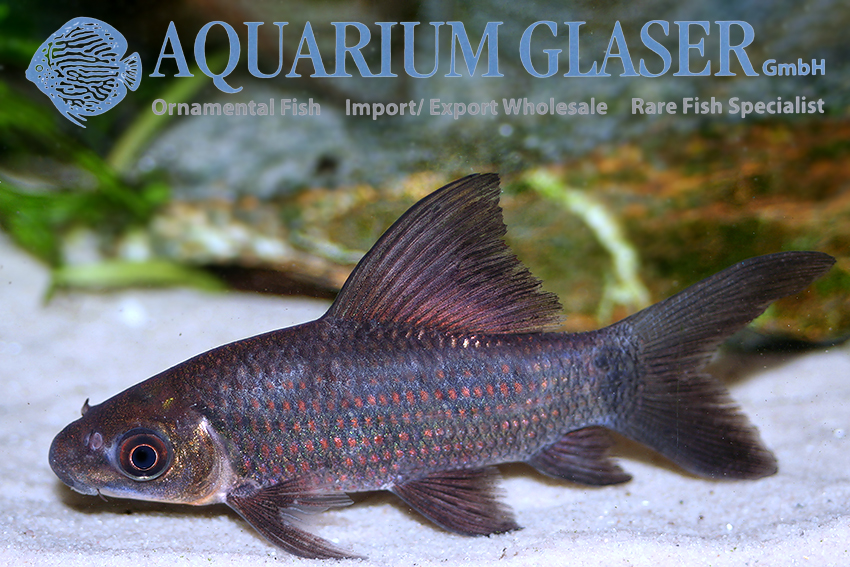
The combination of a sail-shaped dorsal fin, a very short but extremely high tail stalk, a large dark spot on the tail root at least in young animals, and red dots on each scale (the smallest animal we have seen so far was about 5 cm long), is unique in the Congo. There is a synonym for L. longipinnis that is well known among ichthyologists, namely Labeo velifer. Both species were described by Boulenger from the upper Congo, L. velifer based on specimens over 40 cm long (total length, including tail fin), L. longipinnis based on a specimen about 17 cm long. The counts and measurements are the same for both species, but Boulenger found a pair of small barbels in the corners of the mouth of L. velifer, but not in L. longipinnis. Early on, there were doubts that this was sufficient to justify two species. As early as 1917, L. longipinnis was therefore established as the name to be used, since both species had been described at the same time in the same work from 1898, meaning that the two names are equivalent. However, it took until 1995 for Tshibwabwa & Teugels to finally establish that the two Labeo species were identical. There is a great similarity with Labeo coubie from the Niger (see https://www.aquariumglaser.de/en/08-carp-like-fishes-2-barbs-minnows-carps-goldfish-etc/labeo_coubie_en/), which, however, has a much longer and slimmer caudal peduncle.
Due to its maximum size of over 40 cm, Labeo longipinnis is a magnificent fish for very large aquariums and display tanks. Interestingly, they are quite peaceful among themselves. Although there are constant short chases (where even small and slender animals can chase individuals twice their size), the whole thing is more playful in nature; we would most likely compare this species in terms of behavior to Tropheus cichlids, for example. Similar to these, they apparently need a social group, within which they constantly squabble. It is also interesting to note that wild-caught specimens never have completely intact fins. The smooth edges of the fins indicate that Labeo longipinnis is probably one of the preferred victims of the characins of the Phago relationship, which are specialized in eating fins. These fin injuries heal quickly and without leaving any traces, and should disappear completely after a few weeks. In the aquarium, Labeo species are not very picky about food and happily eat everything that other fish like. Any water suitable for drinking is also suitable for keeping Labeo longipinnis. The water temperature can range between 22 and 28°C.
For our customers: Labeo longipinnis has code 142603 (6-8 cm) and 142604 (8-10 cm) on our stock list. Please note that we only supply wholesale customers.
Literature:
Boulenger, G. A. (1898): Matériaux pour la faune du Congo. Poissons nouveaux du Congo. Deuxième Partie. Elopes, Characins, Cyprins. Annales du Musee du Congo (Série Zoologie) v. 1 (fasc. 2): 21-38, Pls. 10-19.
Boulenger, G. A. (1909): Catalogue of the fresh-water fishes of Africa in the British Museum (Natural History). v. 1: i-xi + 1-373
Liyandja, T. L. D. & M. L. J. Stiassny (2023): Description of two new Labeo (Labeoninae; Cyprinidae) endemic to the Lulua River in the Democratic Republic of Congo (Kasai ecoregion); a hotspot of fish diversity in the Congo Basin. American Museum Novitates No. 3999: 1-22.
Tshibwabwa, S. M. & G. G. Teugels (1995): Contribution to the systematic revision of the African cyprinid fish genus Labeo: species from the Lower Zaire river system. Journal of Natural History v. 29 (no. 6): 1543-1579.
Text & photos: Frank Schäfer
