








From a geological perspective, we are currently in an ice age – despite global warming and its terrible consequences. This means that both polar ice caps are frozen. However, within the ice age, we are living in a warm period called the interglacial period. It began about 11,700 years ago. Before that, large parts of Asia, Europe, and North America were also glaciated, i.e., covered by thick ice sheets. We colloquially refer to this period, which began around 115,000 years ago, as the ice age, i.e., the time when Neanderthals and our immediate ancestors, the Cro-Magnon people, hunted mammoths and other large mammals. During this cold period, so much water was bound up in the ice masses that sea levels around the world were considerably lower than they are today. During the cold period, New Guinea and Australia formed a contiguous landmass called Sahul. The journal of the Australian Rainbowfish Society is named after it and is called “Fishes of Sahul.” Today, a wide strait, the Torres Strait, lies between New Guinea and Australia. It is around 140 km wide and was flooded around 8,000 years ago. A remnant of the former land bridge between New Guinea and the Cape York Peninsula (Australia) is the Aru Archipelago, which still rises above the sea today. There is a small group of rainbowfish species that are closely related to the species of the Melanotaenia goldiei group living in New Guinea: Melanotaenia kolaensis, M. picta, M. senckenbergianus, and M. wokamensis. They were only scientifically revised in 2015 (Allen et al.).
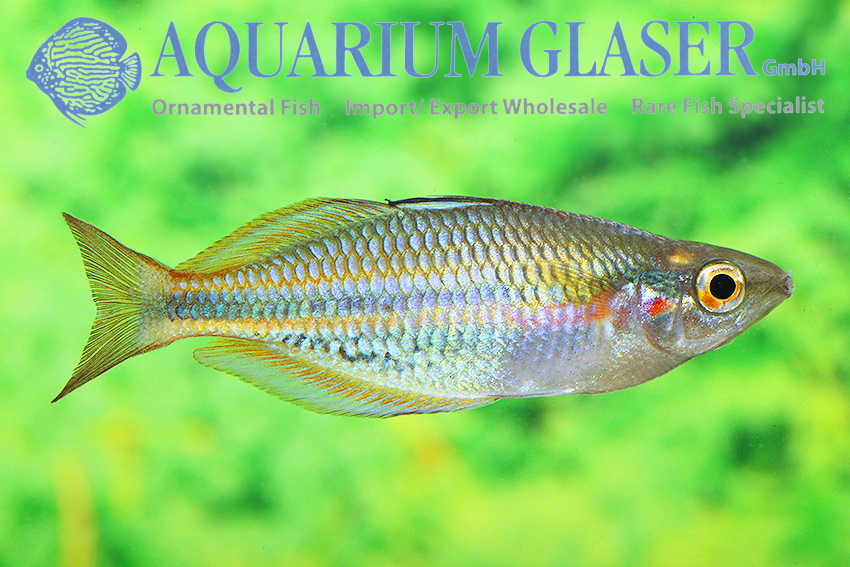
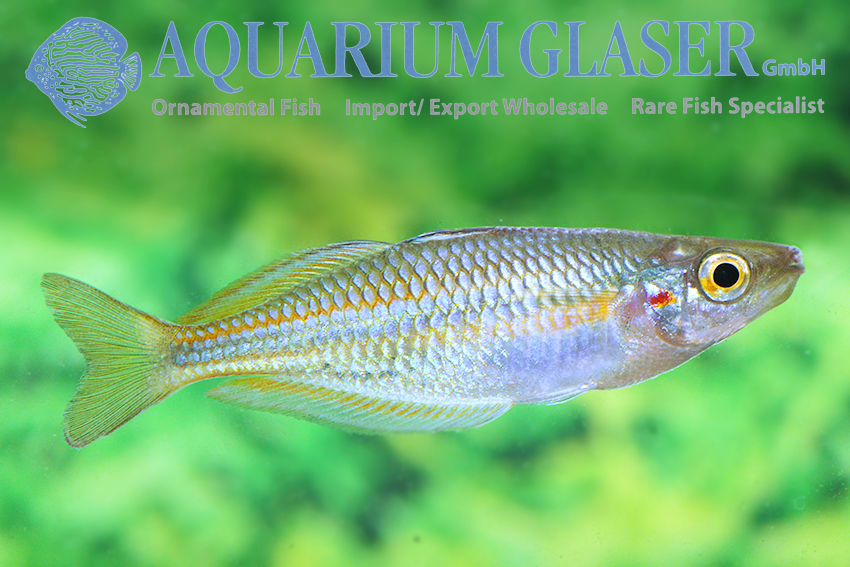
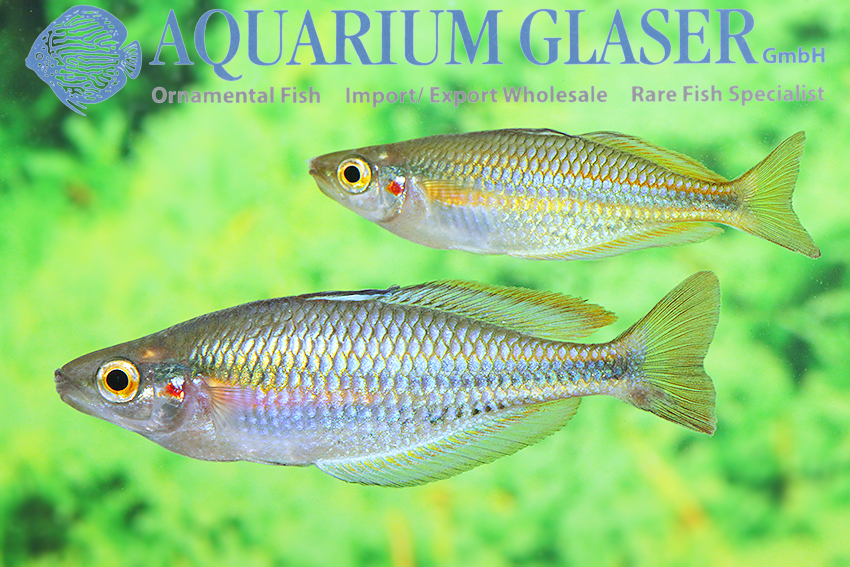
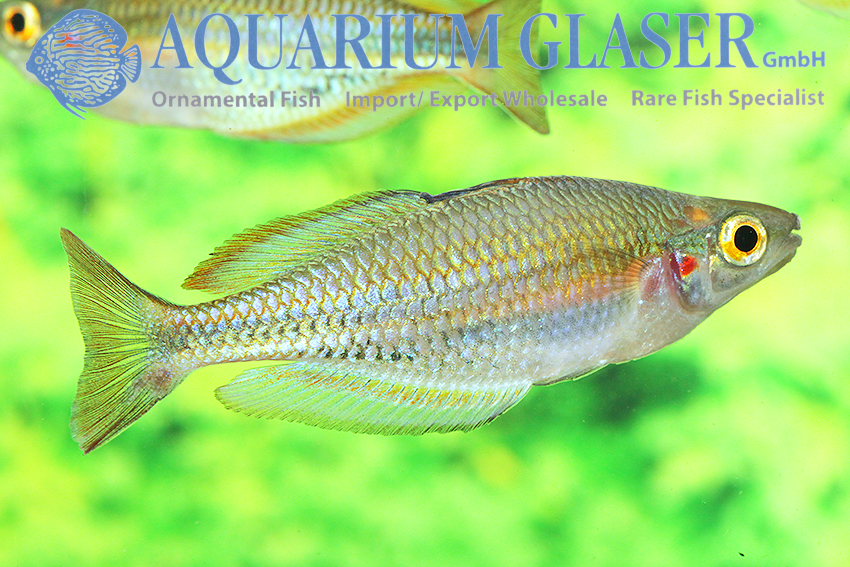
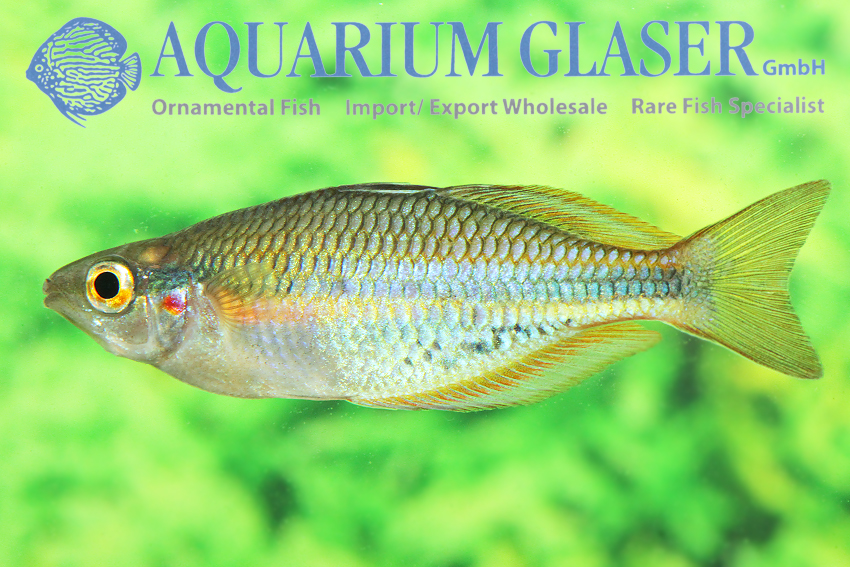
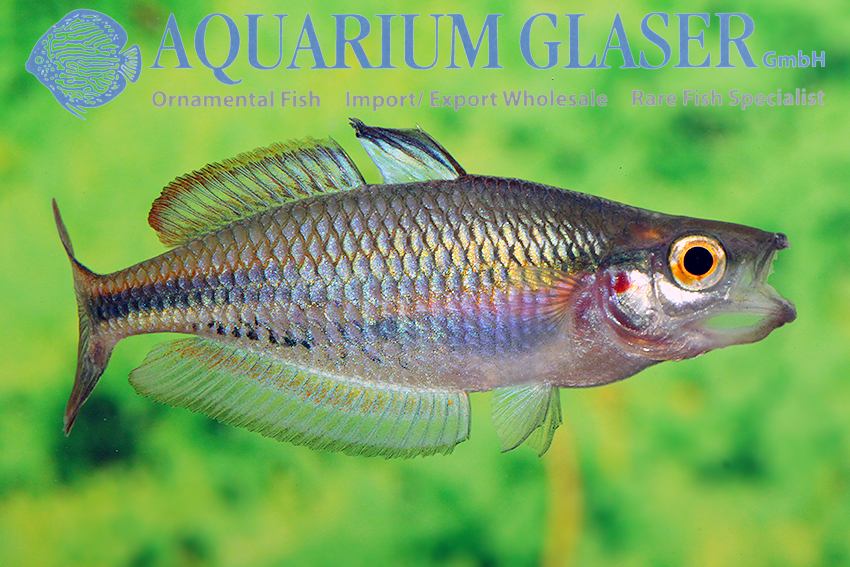
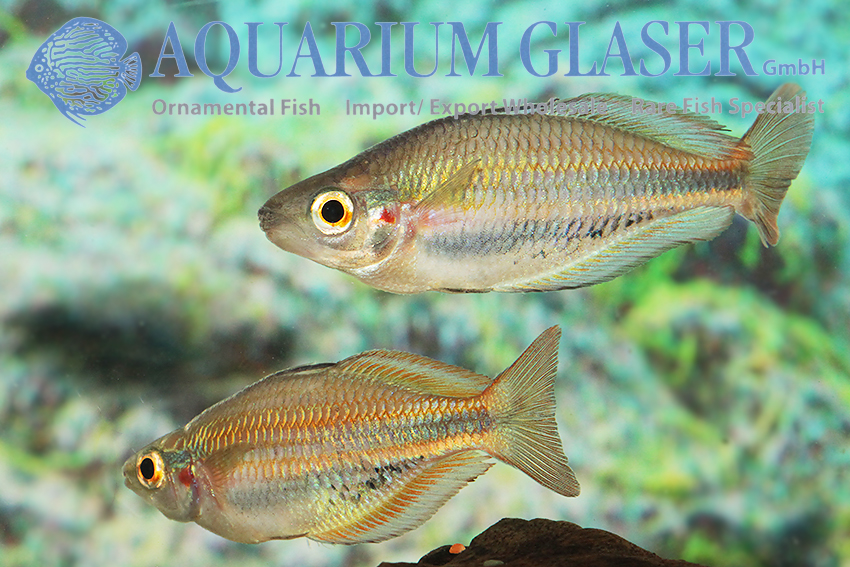
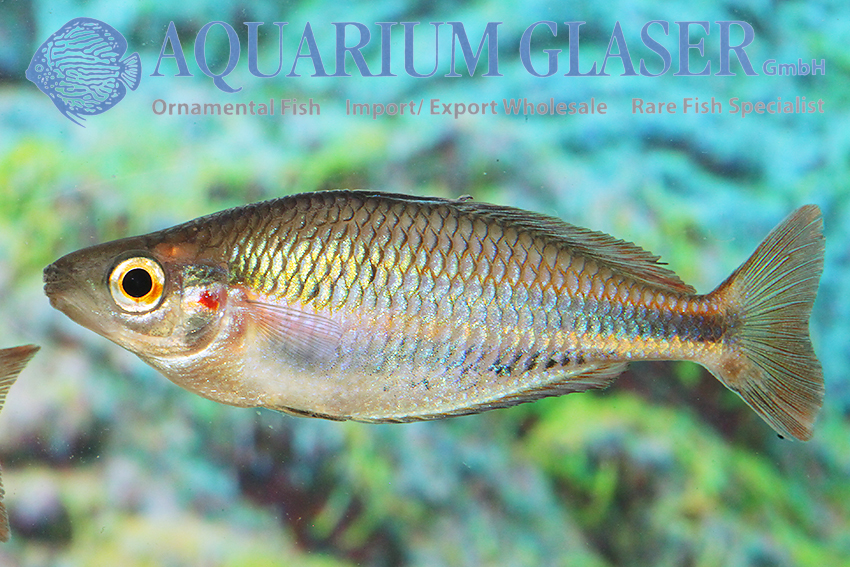
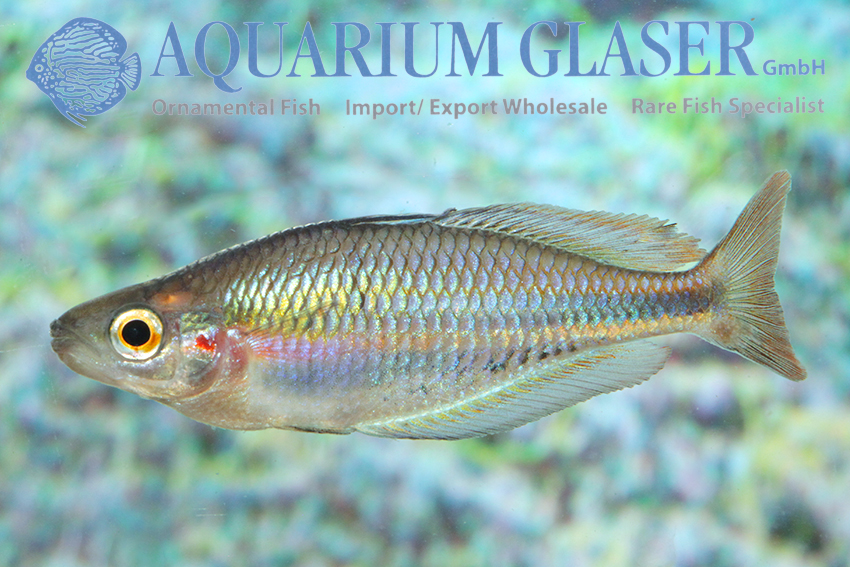
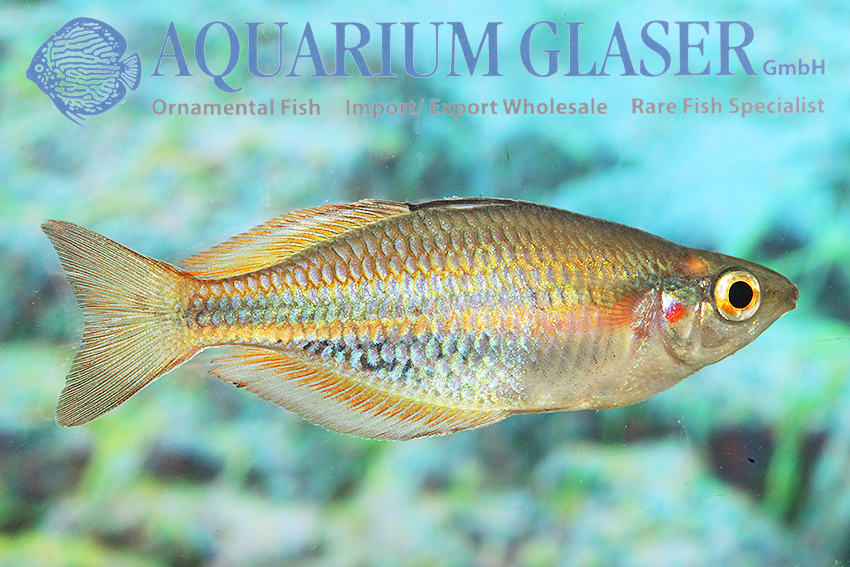
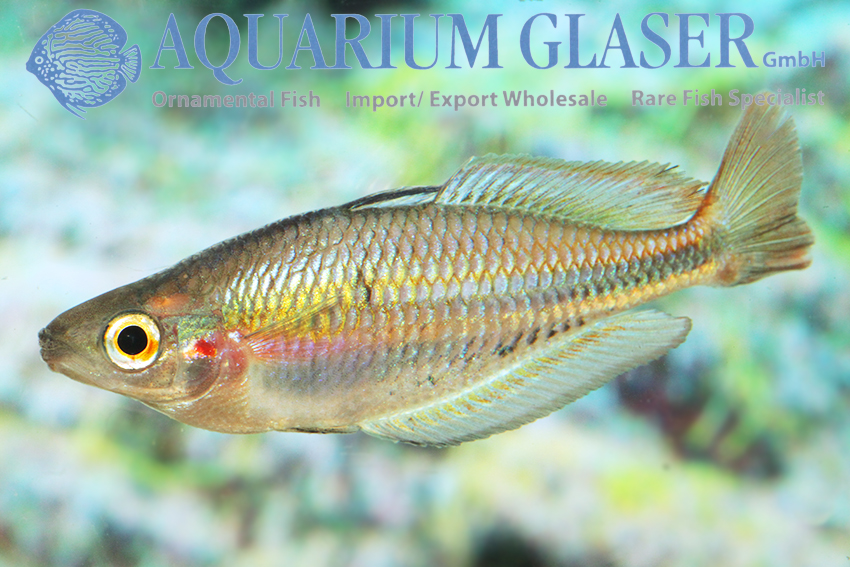
Visually, it is almost impossible for a non-specialist to tell these four species apart. It is therefore highly advisable to keep them strictly in separate aquariums to avoid unwanted hybrids. They are all very beautiful fish, but for a number of reasons they are only kept and bred by specialists. Accordingly, they are extremely rare in the trade. We are very pleased to be able from time to time to offer a small number of young, but already fully colored Melanotaenia picta as offspring. As with all rainbowfish, the colors of this species become more intense with age.
M. picta was described from the drainage of the Mareremar River on the island of Kobroor. Kobroor belongs to the Aru Islands, which are politically part of Indonesia. The first describers raved about the landscape; it must be beautiful there. The animals live in the crystal-clear water of small forest streams. There is hardly any vegetation there, but plenty of hiding places. Even before its scientific description, M. picta was present in the hobby as M. sp. “Aru II.” In terms of care and breeding, this species, which grows to about 11 cm in length, is comparable to most other rainbowfish. The water should not be too soft, the pH should be in the neutral range, and the temperature should be between 22-26°C. They will eat any standard ornamental fish food of a suitable size.
For our customers: the animals have code 428553 on our stock list. Please note that we only supply wholesale customers.
Literature:
Allen, G. R., Hadiaty, R. K., Unmack,P. J. & M. V. Erdmann (2015): Rainbowfishes (Melanotaenia: Melanotaeniidae) of the Aru Islands, Indonesia, with description of five new species and redescription of M. patoti Weber and M senkenbergianus Weber. aqua, International Journal of Ichthyology v. 21 (no. 2): 66-108.
Text & photos: Frank Schäfer
