








The dwarf cichlids of the genus Nannacara are found along the Atlantic coast of South America from Brazil to Venezuela. The easternmost species is N. taenia (see https://www.aquariumglaser.de/en/25-perchlike-fishes/nannacara-taenia/), which is also the smallest species of the genus. To the west, this is followed by Nannacara aureocephalus, the largest species of the genus. Its range covers northern Brazil (Oiapock system) and large parts of French Guiana. There are areas where N. aureocephalus occurs immediately adjacent to, and sometimes even together with, the very similar but smaller species N. anomala. The status of some populations in French Guiana is still unclear (see https://www.aquariumglaser.de/en/25-perchlike-fishes/nannacara-sp-crique-canceler-2/ andhttps://www.aquariumglaser.de/en/25-perchlike-fishes/25d-perchlike-fishes-4-south-american-dwarf-cichlids/nannacara_sp_sourourou_en/). Young animals of N. aureocephalus and N. anomala in particular look very similar and cannot be distinguished from each other with certainty. In this regard, we are always dependent on the reliability of our breeders.
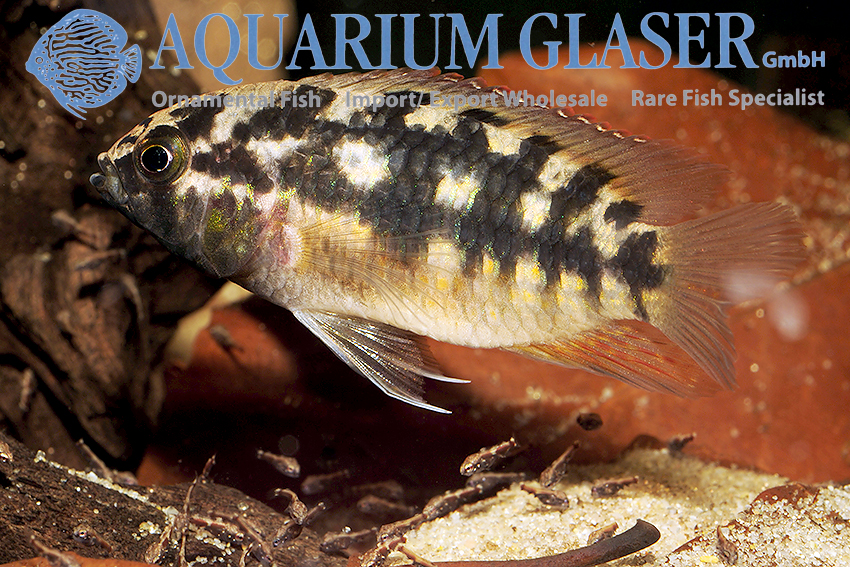
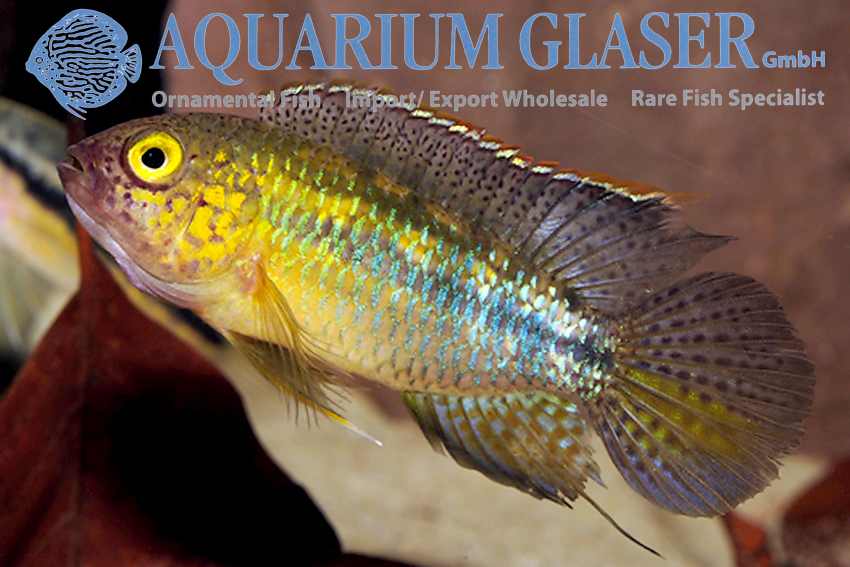
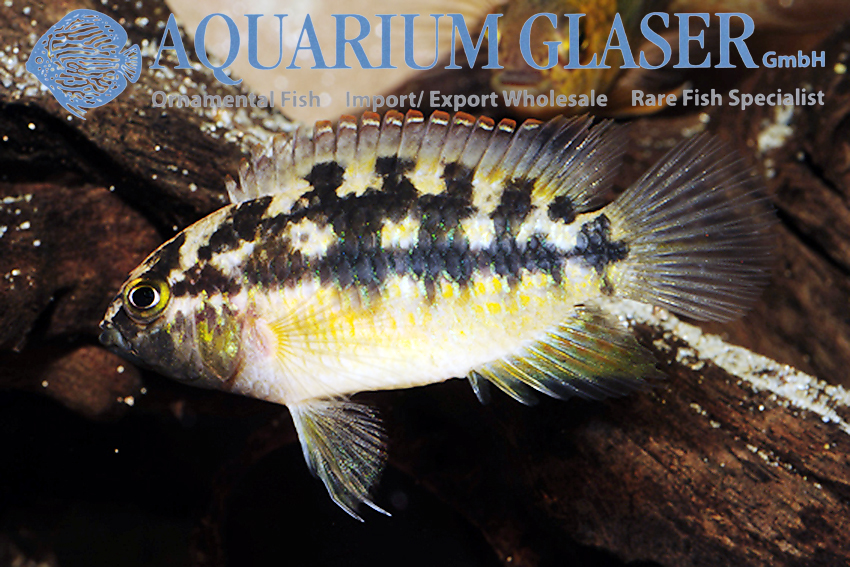
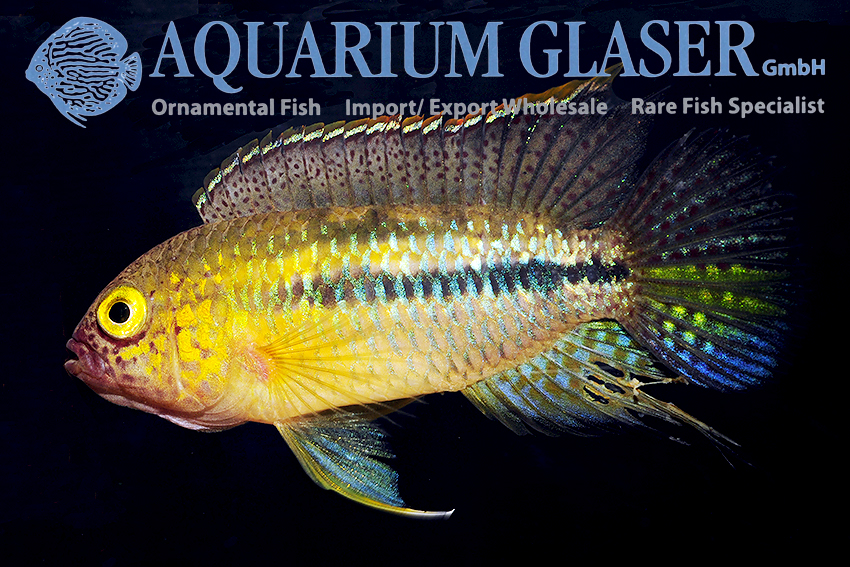
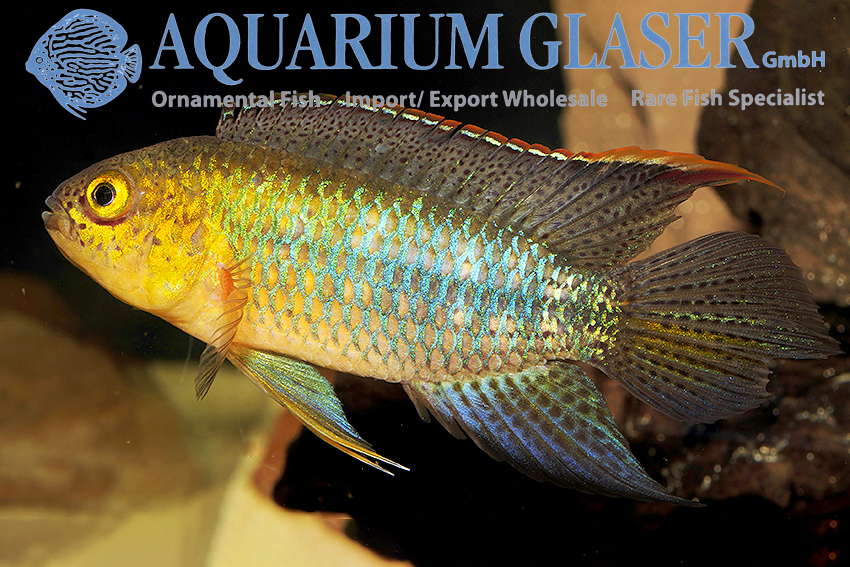
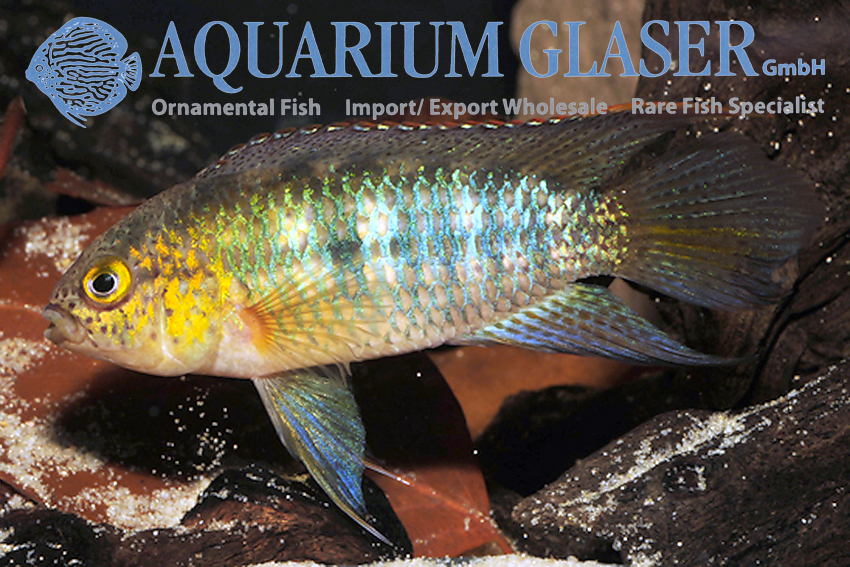
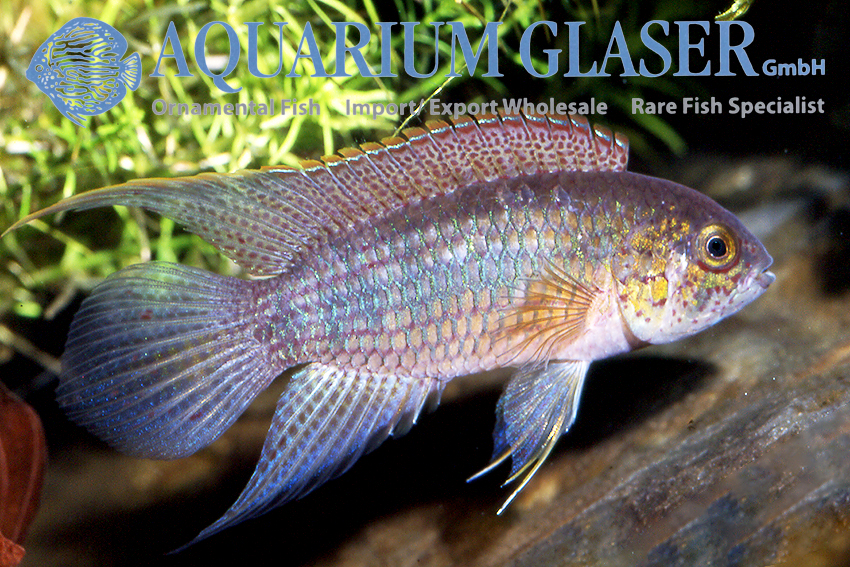
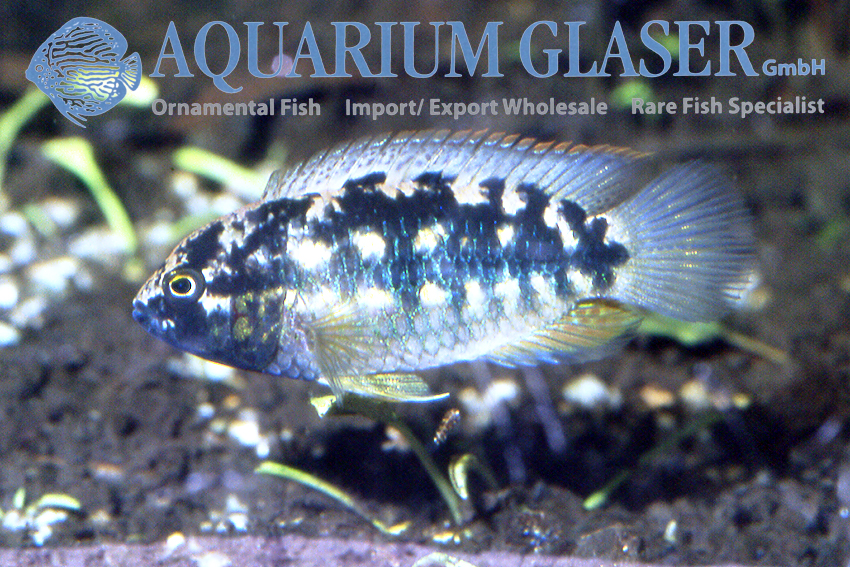
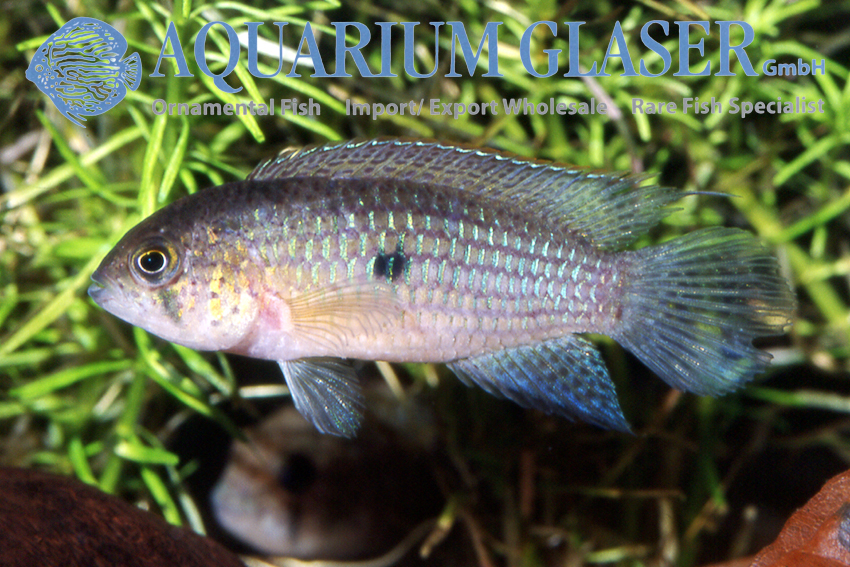
However, adult males of N. aureocephalus are easy to recognize due to their comparatively stocky build, size (up to 12 cm total length, N. anomala only reaches a maximum of 10 cm), and the intense golden sheen of their heads (green-blue in N. anomala). While the males exceed what is commonly referred to as “dwarf cichlids” (i.e., species that grow to a maximum length of 10 cm), the females remain within the definition with a maximum length of 6 cm. The females of N. aureocephalus also differ from the females of N. anomala mainly in their stockier, less laterally compressed stature. We strongly advise against raising young fish of both species together, as there is a high risk of unintentional mixing.
In the aquarium, N. aureocephalus are very beautiful animals whose behavior is largely similar to that of N. anomala (see https://www.aquariumglaser.de/en/fisharchive/nannacara-anomala-4/). Experienced keepers recommend large aquariums (120 cm or longer). It is important to use fine sand as substrate, at least in some areas. Dead leaves (beech, oak, or sea almond leaves) release humic substances that are very beneficial to the fish and, when they decompose, also provide good additional nutrition. Otherwise, all common types of food are accepted. The water temperature should be between 23 and 27°C.
For our customers: depending on their size, the animals have codes 684002 and 684003 for wild-caught animals and codes 684051 to 684055 for captive-bred animals on our stock list. Please note that we only supply wholesale customers.
Text: Frank Schäfer, photos: Frank Schäfer & Uwe Römer
