








The three-banded pencilfish, Nannostomus trifasciatus, is one of the most popular ornamental fish. It combines numerous characteristics that make it desirable: beautiful coloration, peaceful nature, small size, and easy feeding. However, few people know that the name “Nannostomus trifasciatus” actually refers to several species. The “real” N. trifasciatus is relatively rare in stores. It comes from the area around Manaus in Brazil and Tabatinga/Leticia in the border triangle of Peru, Colombia, and Brazil. Its distinguishing feature: above the broad, dark longitudinal band, there is an additional narrow red stripe. Unfortunately, this stripe is easily overexposed and is therefore often difficult to see in photographs.
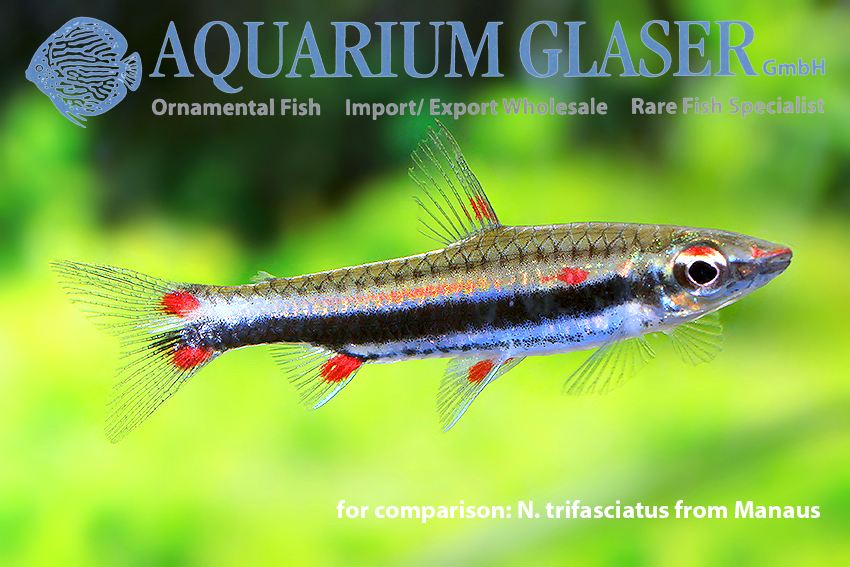
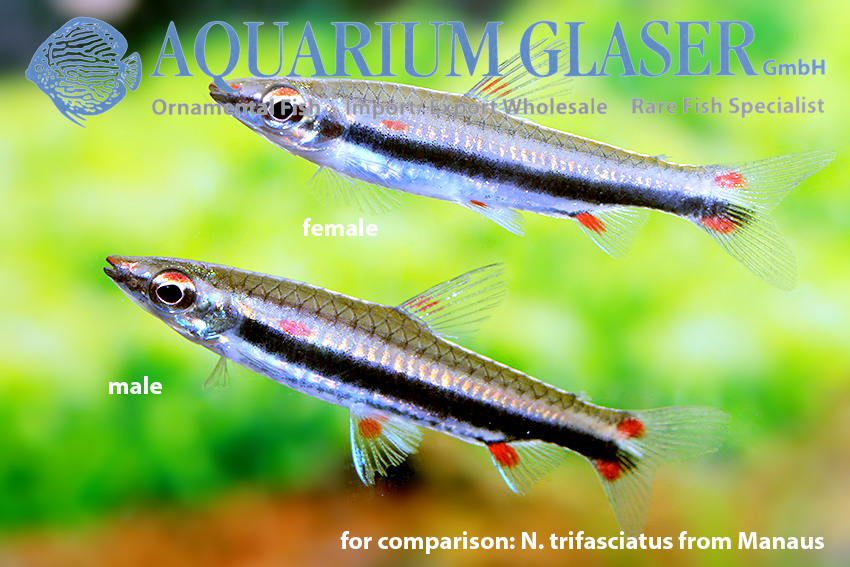
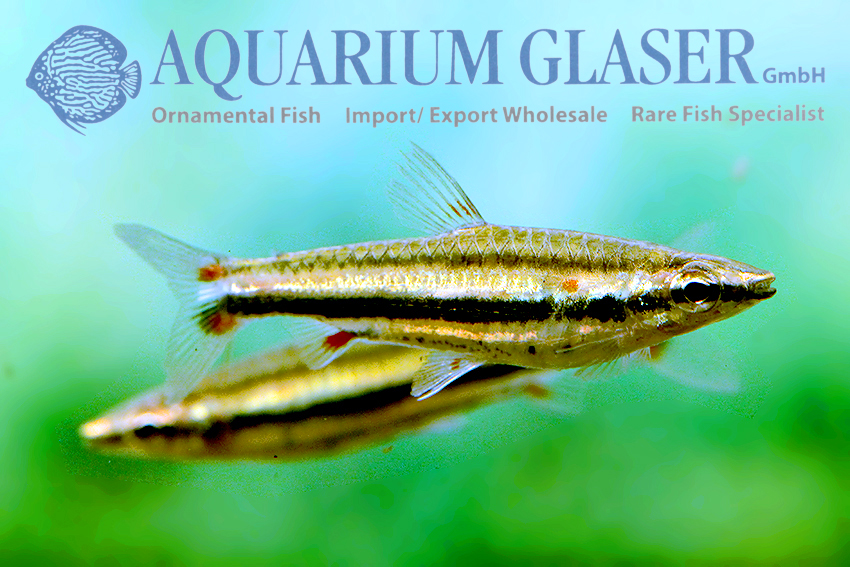
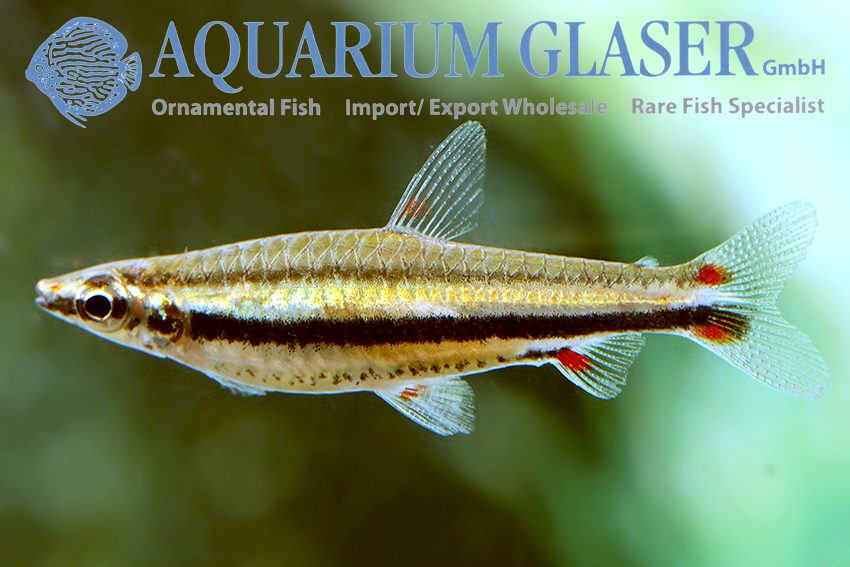
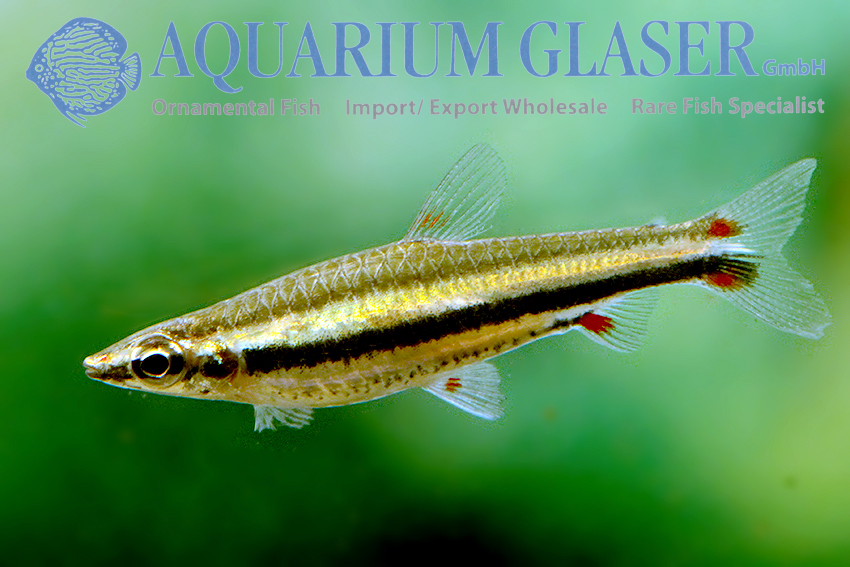
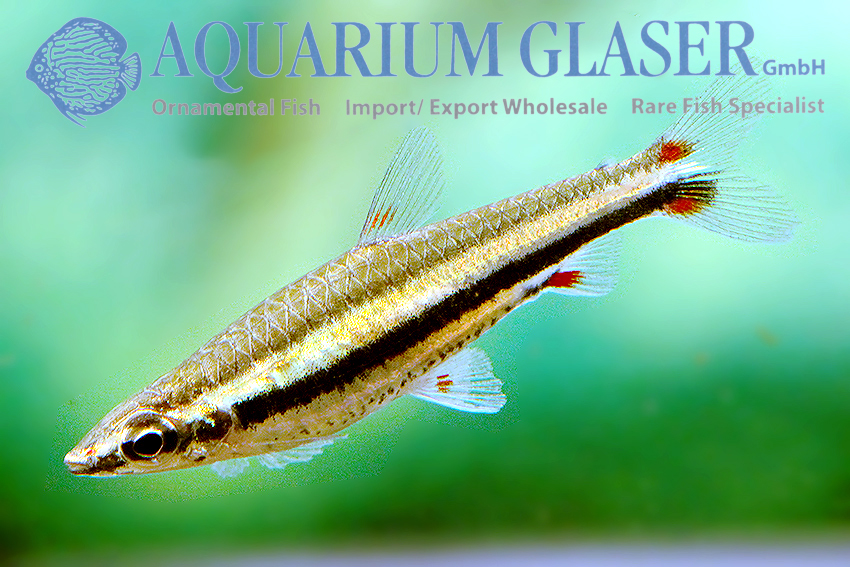
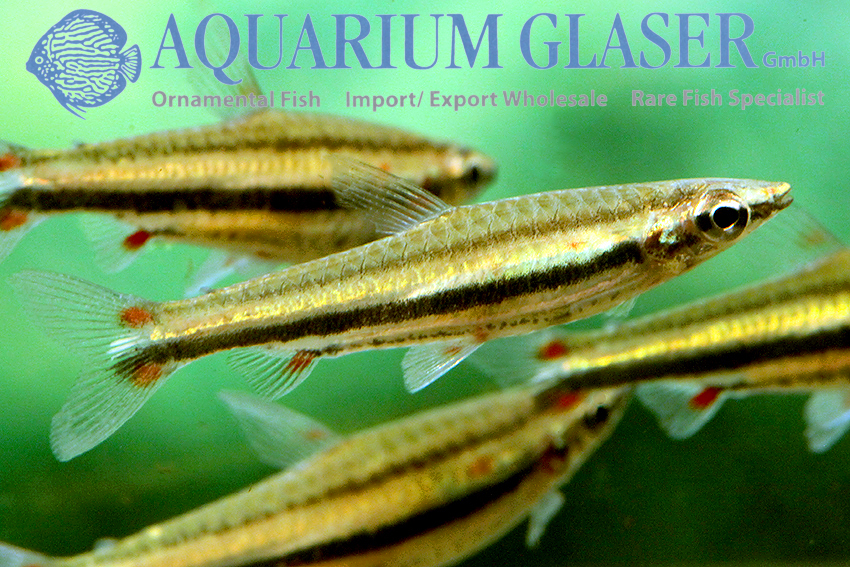
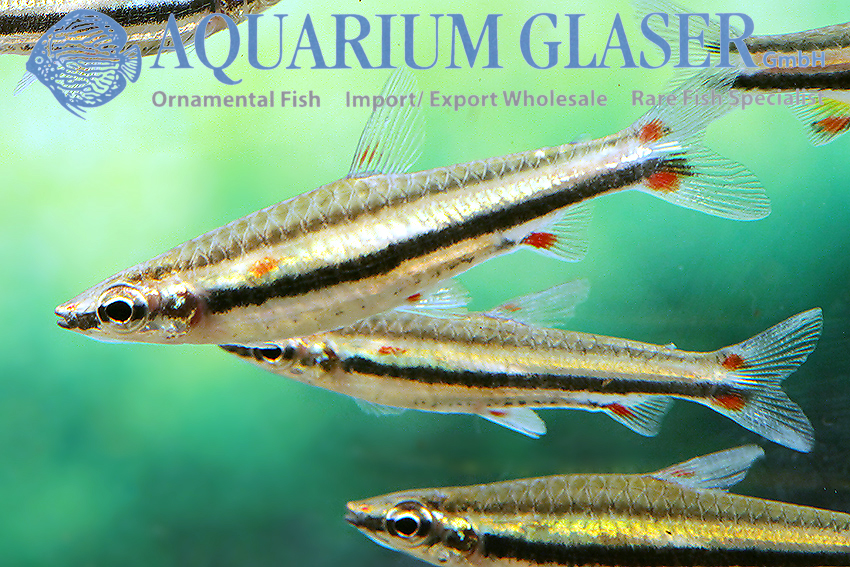
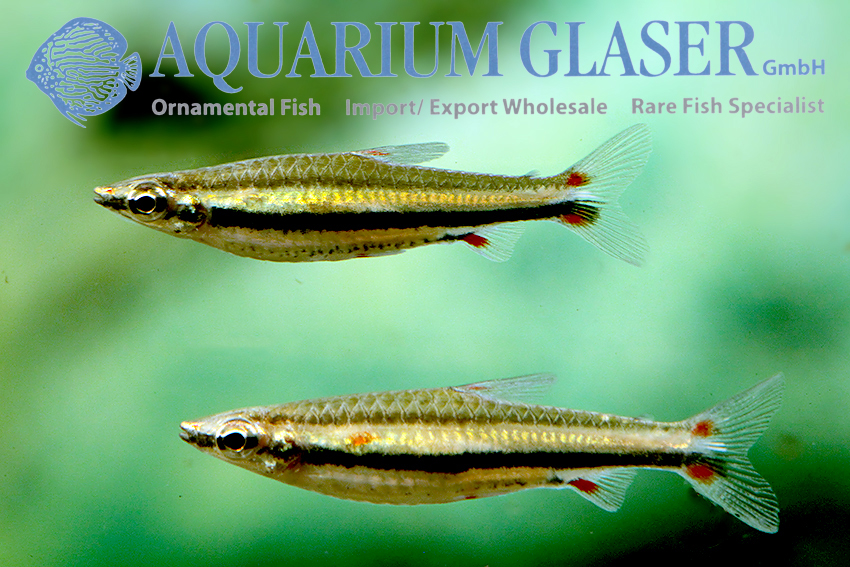
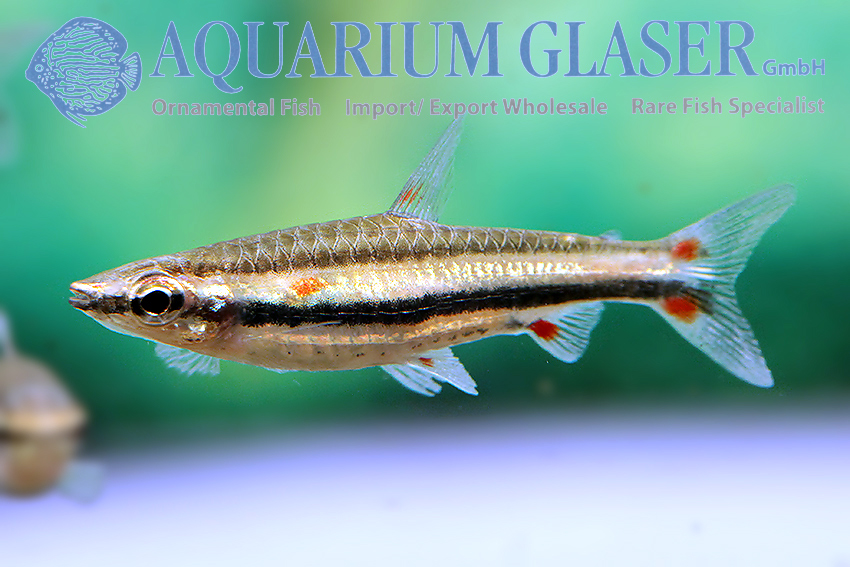
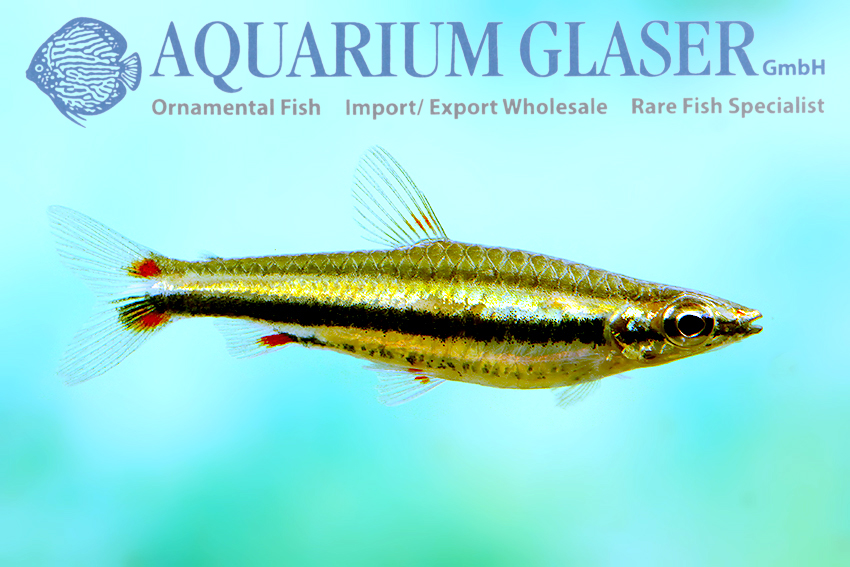
The twin species, N. erythrurus, is very widespread. It was first described from Guyana, but is also found in Peru and in the lower reaches of the Amazon in Brazil. The red stripe mentioned above is always absent here; only a red shoulder spot is often found. The similarity between N. erythrurus and N. trifasciatus is so great that until 2013, N. erythrurus was usually considered a synonym of N. trifasciatus; N. erythrurus was described as early as 1909.
From time to time, we receive such beautiful N. erythrurus from Peru and Brazil that we also distinguish them as a special species. Otherwise, no distinction is usually made between the two species in the trade.
N. erythrurus and N. trifasciatus do not differ in terms of the positive characteristics listed above. Both are ideal aquarium fish.
For our customers: N. erythrurus has code 272013, N. trifasciatus code 272301-272306 (depending on size). Please note that we only supply wholesale customers.
Text & photos: Frank Schäfer
