








Most species of Nomorhamphus halfbeaks come from the island of Sulawesi (formerly: Celebes). Some, such as N. ebrardtii or N. rex, are mainly traded as wild-caught specimens, others, including N. liemi, are also bred. Black Celebes halfbeaks are very rare in the trade. We can sometimes offer captive-bred specimens of Nomorhamphus celebensis of 4-6 cm in length, sometimes also wild-caught specimens. Then it gets tricky, as we do not know the exact localities and without them an exact species classification is hardly possible. There are three scientifically described species of black Celebes halfbeaks: the aforementioned N. celebensis, plus N. towoetii and N. aenigma. Another species known in the hobby, which is characterized by an orange zone in the dorsal fin area, is still the subject of debate. At present, most authors consider it to be a color form of N. towoetii. Basically it wouldn’t matter, but there are behavioral differences. N. celebensis is the most peaceful of all halfbeaks, whereas N. towoetii is considered to be very quarrelsome. We are not yet aware of any evaluations of N. aenigma in this respect.
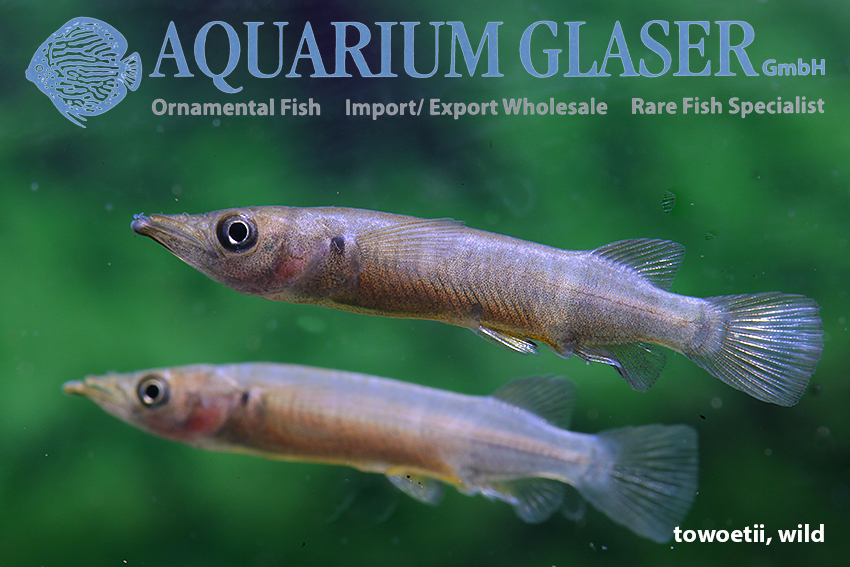
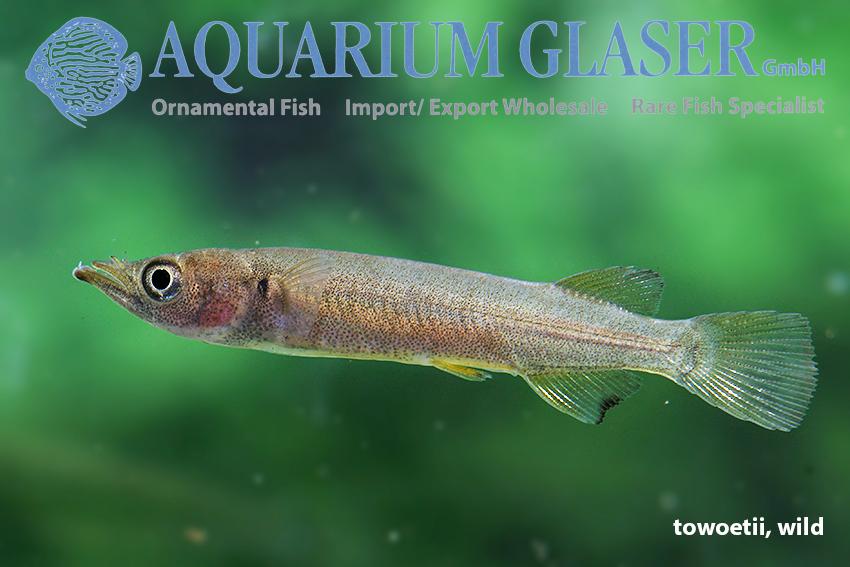
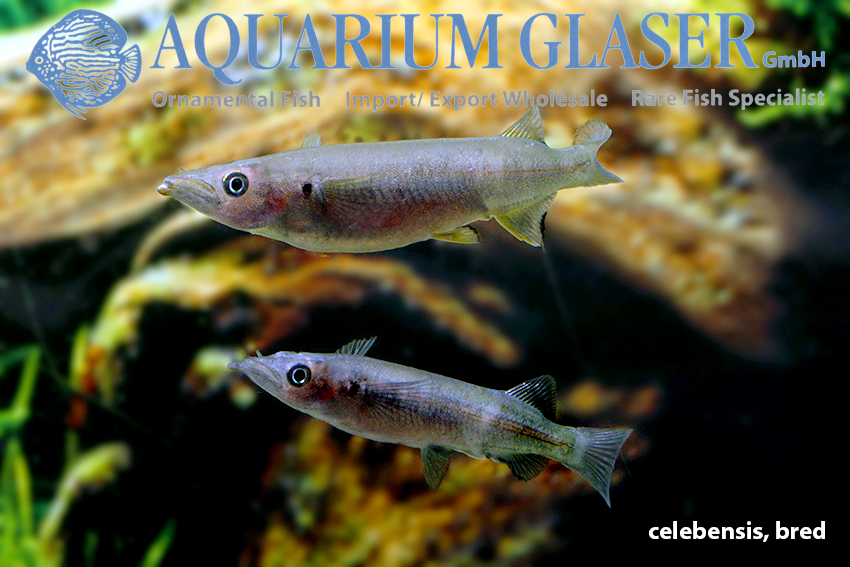
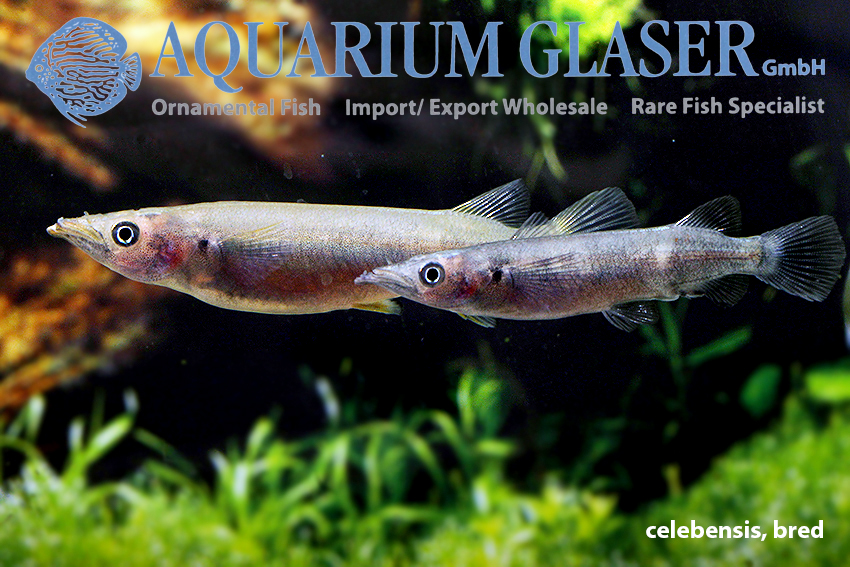
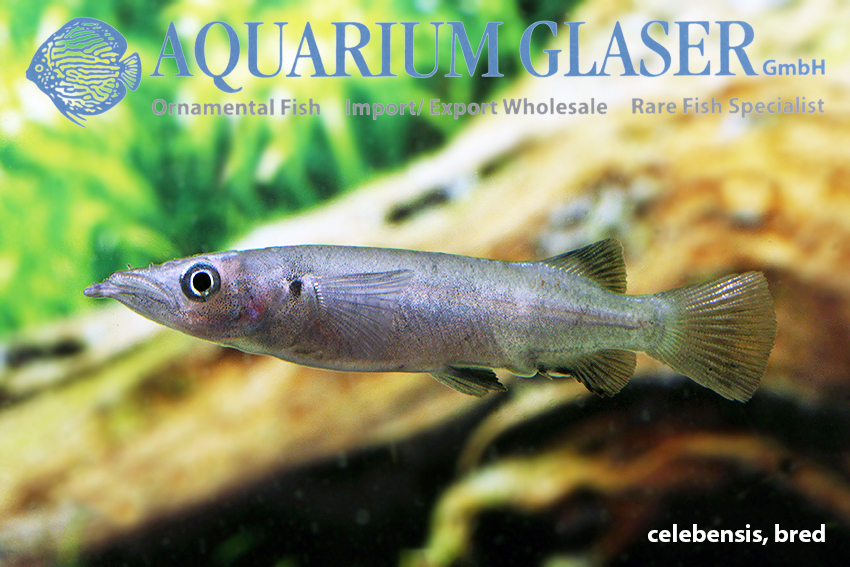
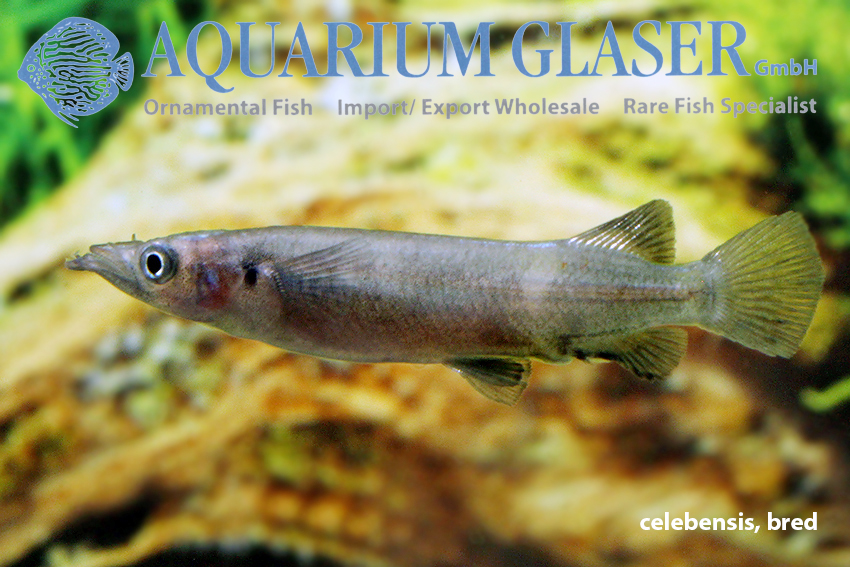
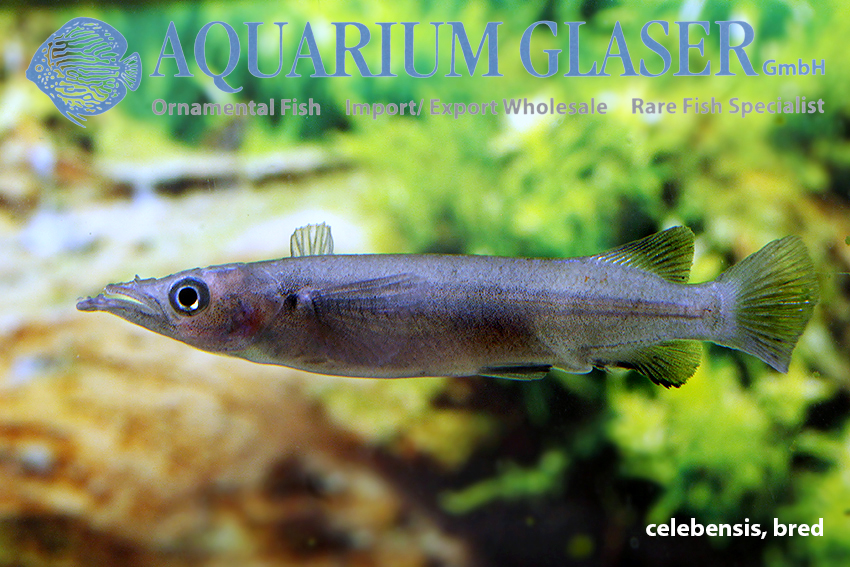
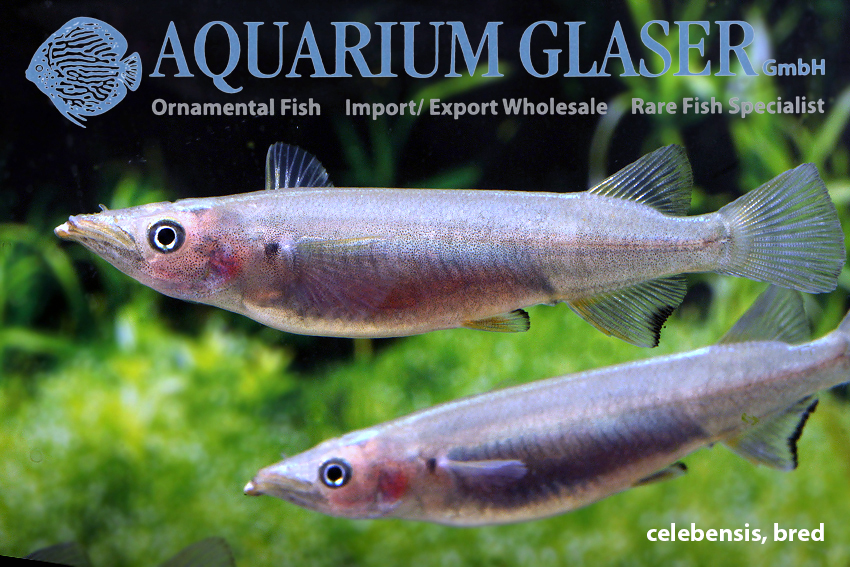
Let’s start with N. celebensis: This species may not be as colorful, but it is peaceful. You can socialize them well with each other as well as with fish of other species. During courtship the males become deep black with light vertical bands. In earlier reports (before around 1980), N. liemi, which had not yet been scientifically described at the time, was referred to as N. celebensis. These care and breeding reports, in which the males are described as very territorial, therefore do not refer to the “true” N. celebensis. While the males of this viviparous species stop growing at around 6 cm in length, the females can grow considerably larger at around 10 cm. When breeding, it is crucial to save the young from the parents, as they are very cannibalistic. Pregnant females should not be transferred to the litter aquarium too late, otherwise stillbirths may occur, but not too early either, as the lively animals like free swimming space. As you can see, even breeding supposedly “simple” livebearers has its pitfalls.
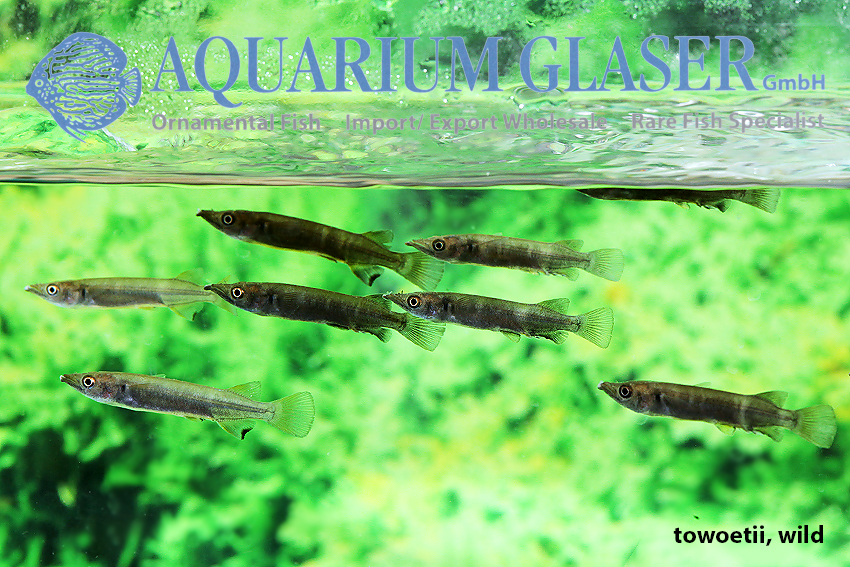
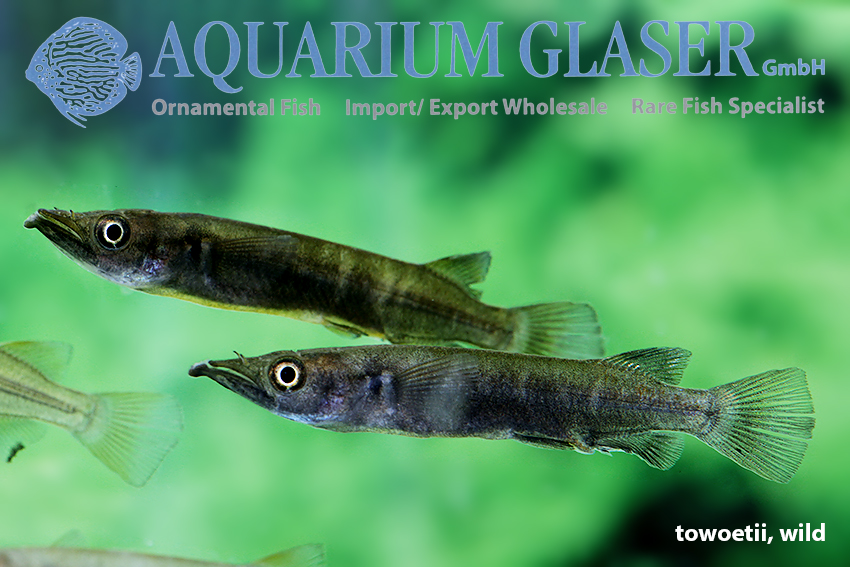
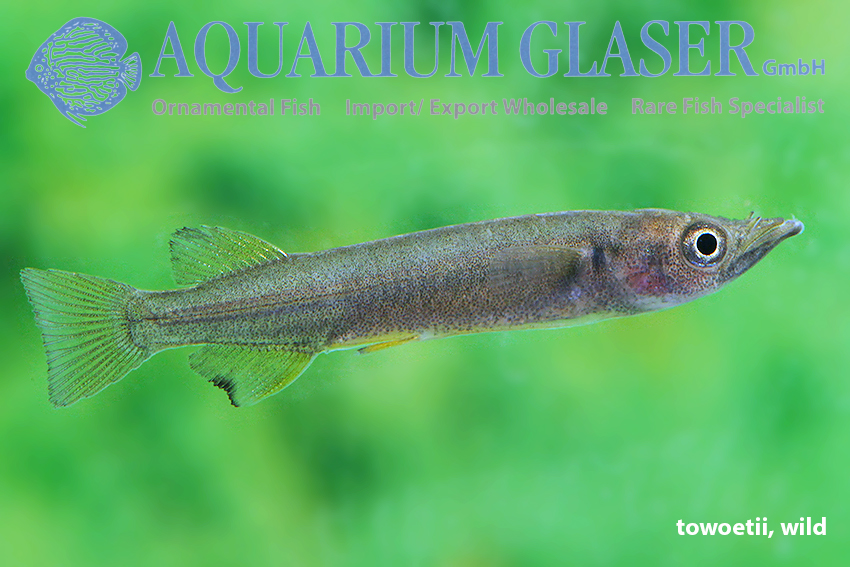
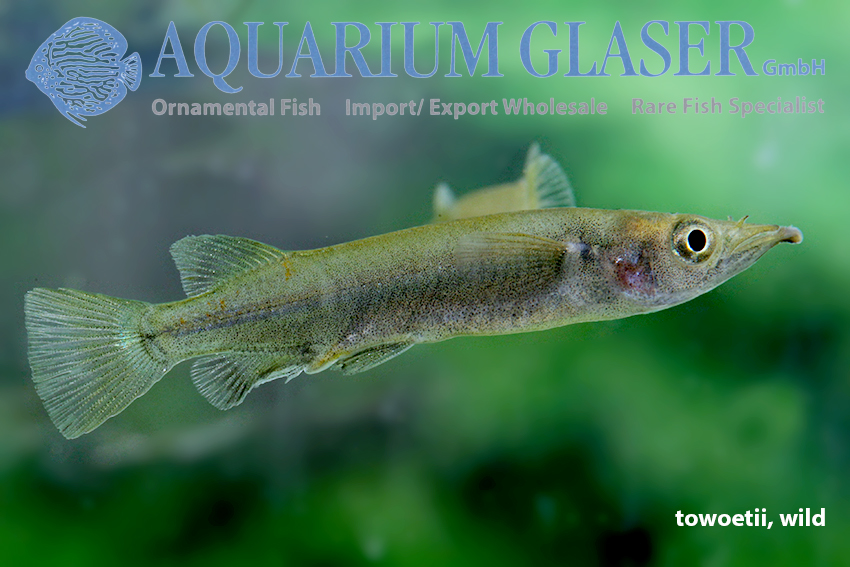
Now to N. towoetii: as already mentioned, this species is considered quarrelsome. It remains smaller than N. celebensis, females reach a maximum length of 8 cm, males 5-6 cm. The most certain difference between the two species N. celebensis and N. towoetii is that in N. celebensis the females always remain gray, while the females of N. towoetii can turn almost as black as the males. Currently (July 2025) we have been able to import wild-caught specimens, which should be N. towoetii due to the coloration of the females, but they are extremely peaceful among themselves and even like to swim in schools.
The strange shape of their mouths suggests that these fish mainly eat insects that fall to the surface of the water. In the aquarium, however, they are very fond of flake food. Care is easy in this respect. Nomorhamphus can be found in cool running waters. They do not necessarily need a strong current, but clean water. Good filtration and regular water changes are therefore essential. Unfortunately, there is serious misinformation about the occurrence of these fish, particularly in the scientific literature, which can lead to serious mistakes in keeping them. According to the literature, N. celebensis is native to Lake Poso and N. towoetii to Lake Towuti. However, they do not and did not occur there, but in the cool tributaries of the highlands, sometimes also in runoffs. In Lake Poso the water temperature is usually between 27 and 28°C, the water is slightly alkaline (pH around 8) and the water is relatively soft (total hardness around 5° dH, of which 4° KH). In the streams where Nomorhamphus live, however, the temperature hardly ever rises above 22°C!
Unfortunately, Nomorhamphus celebensis is (at least on paper) a critically endangered species. The main reasons given for this are the invasive fish species that have been introduced into Lake Poso, water pollution from various sources and intensive food fishing. However, this assessment is put into perspective when one considers that there are at most stray Nomorhamphus in the lake itself. There is no evidence of negative consequences of catching and exporting as aquarium fish; it is very unlikely that they exist. Nevertheless, it would be nice if a stable ex-situ population of these halfbeaks could be established; we have had to learn from bitter experience in the past how quickly a commercially unimportant fish species such as N. celebensis and N. towoetii can become extinct due to economic interests that are seen as overriding.
For our customers: the animals have code 438802 (as N. celebensis) on our stocklist. Please note that we only supply the wholesale trade.
Text & photos: Frank Schäfer
