








The African glass catfish, Parailia pellucida, is a magnificent aquarium fish, but strangely enough, it is virtually unknown among hobbyists. Yet this species is almost always available. We import it regularly from Nigeria.
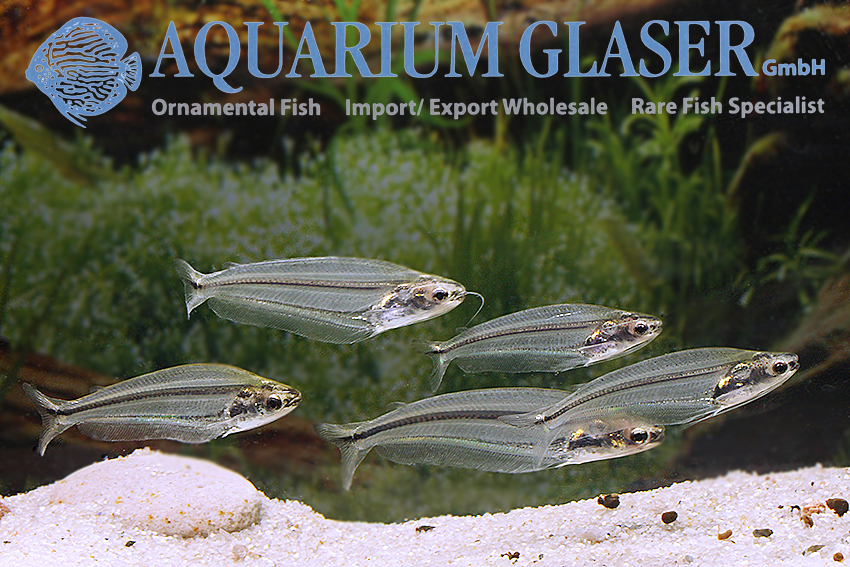
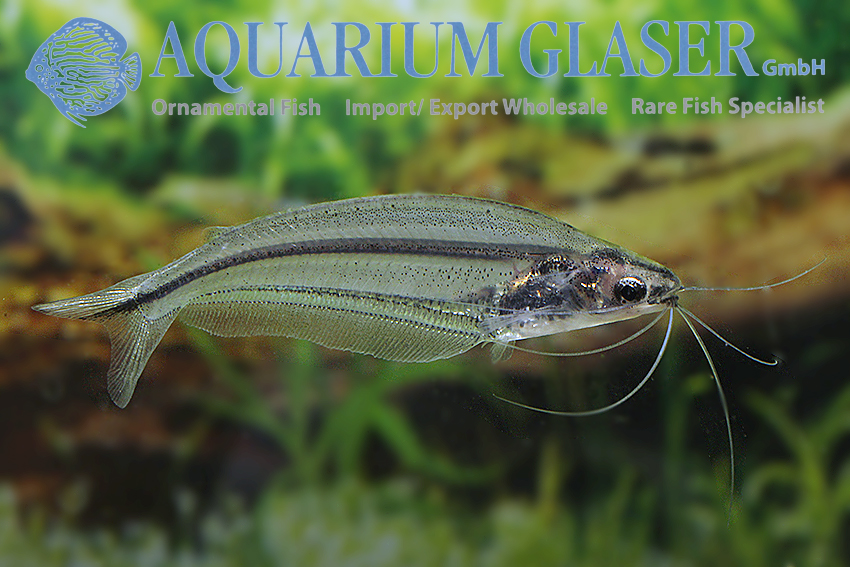
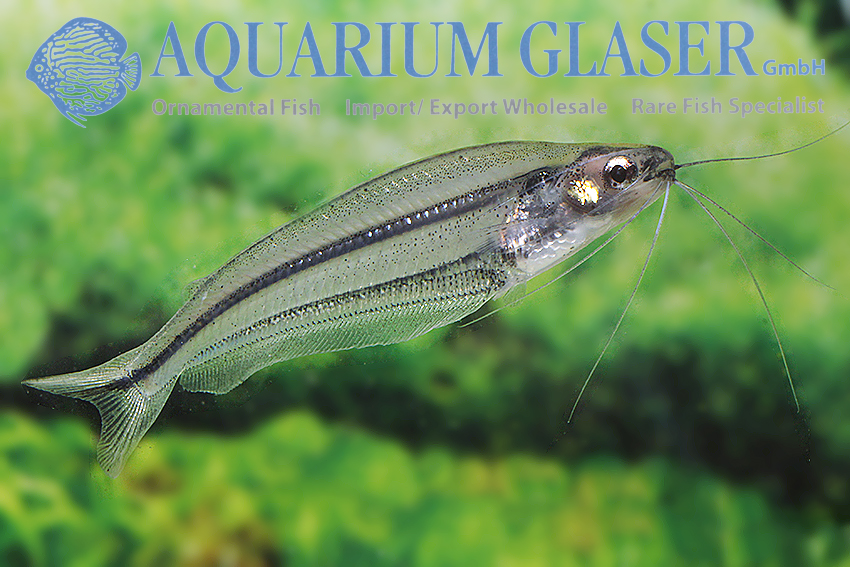
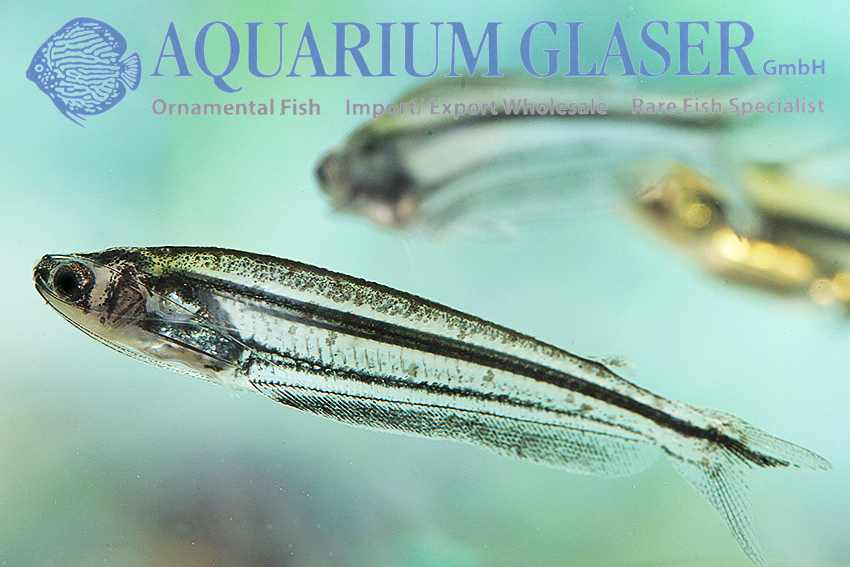
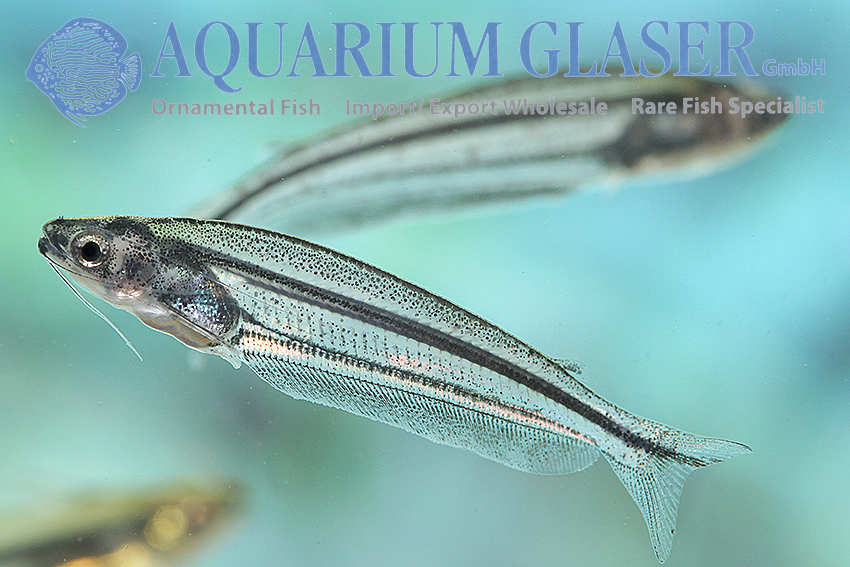
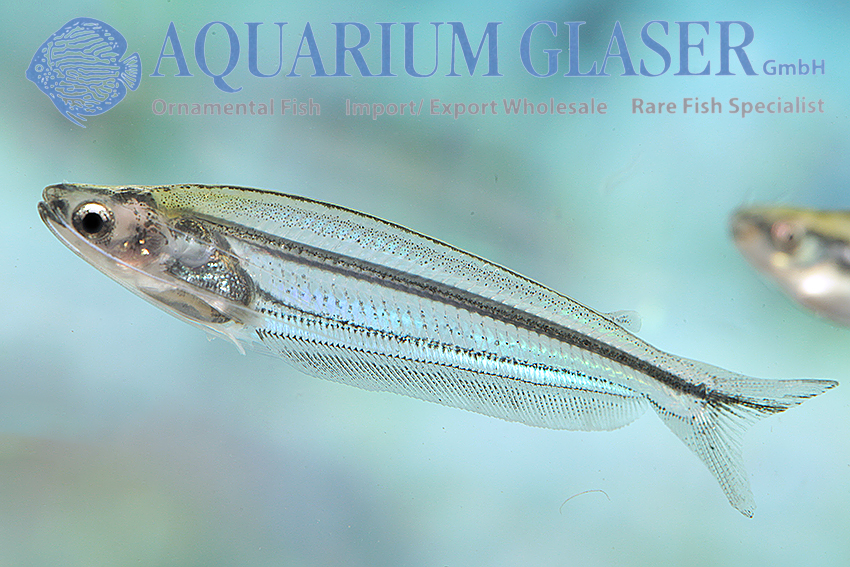
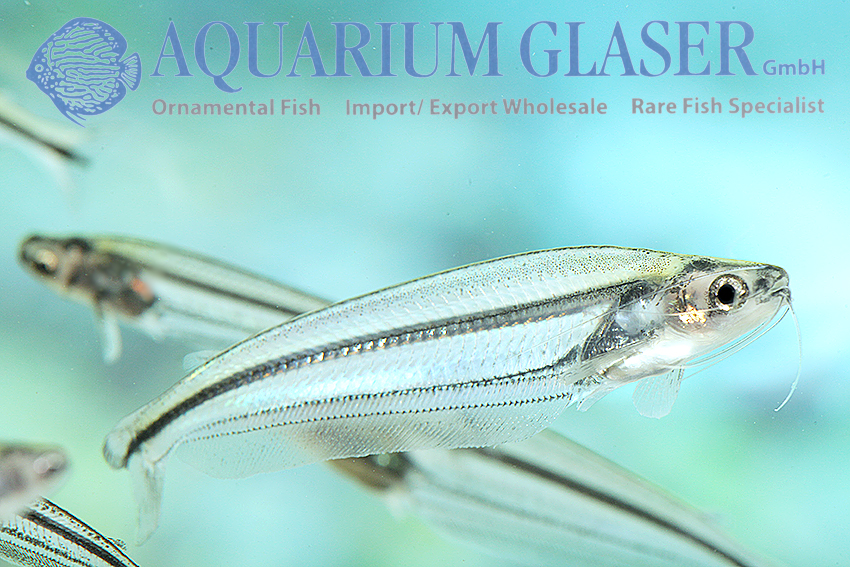
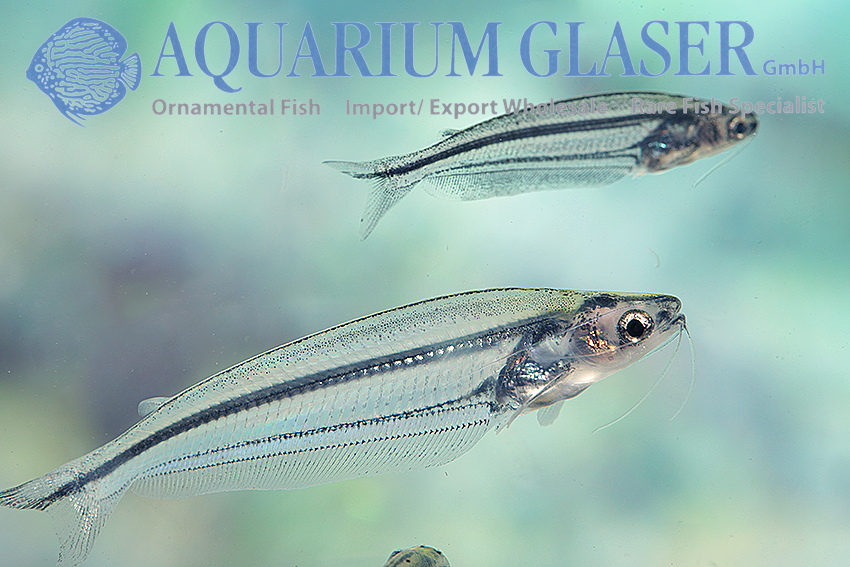
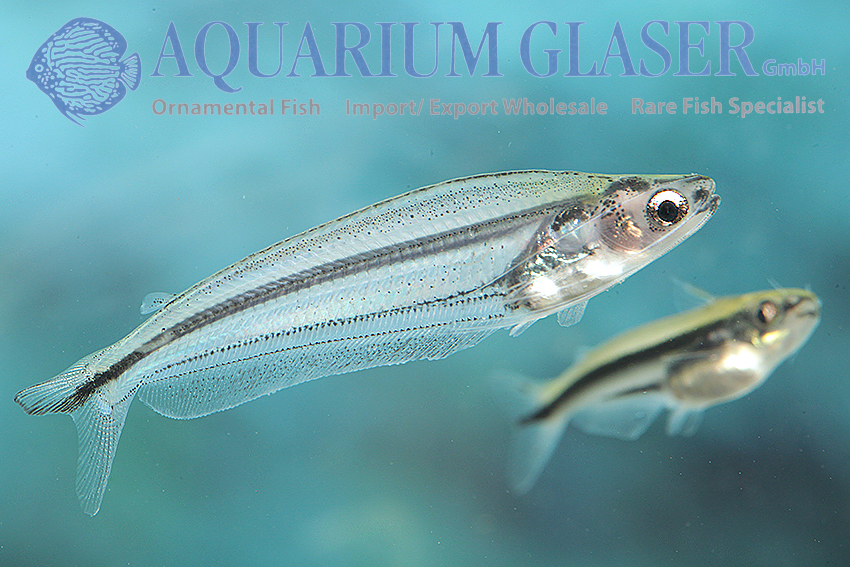
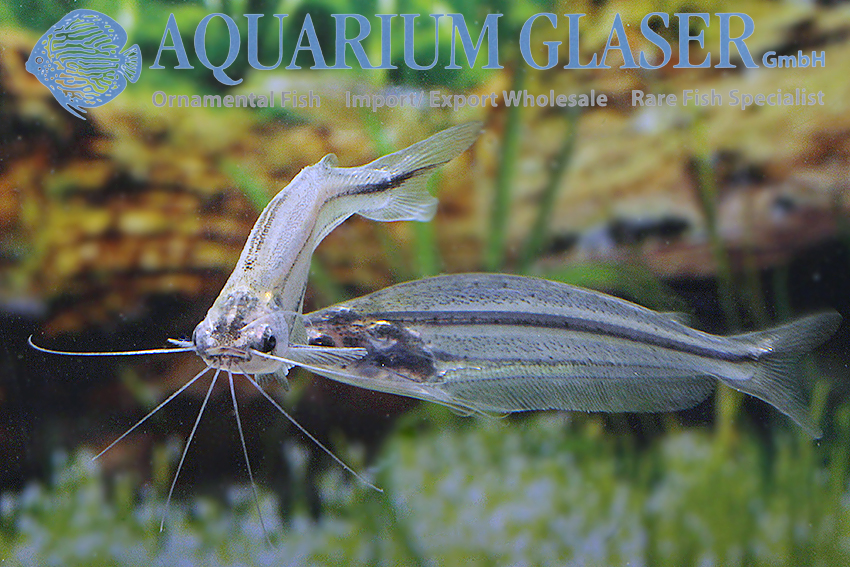
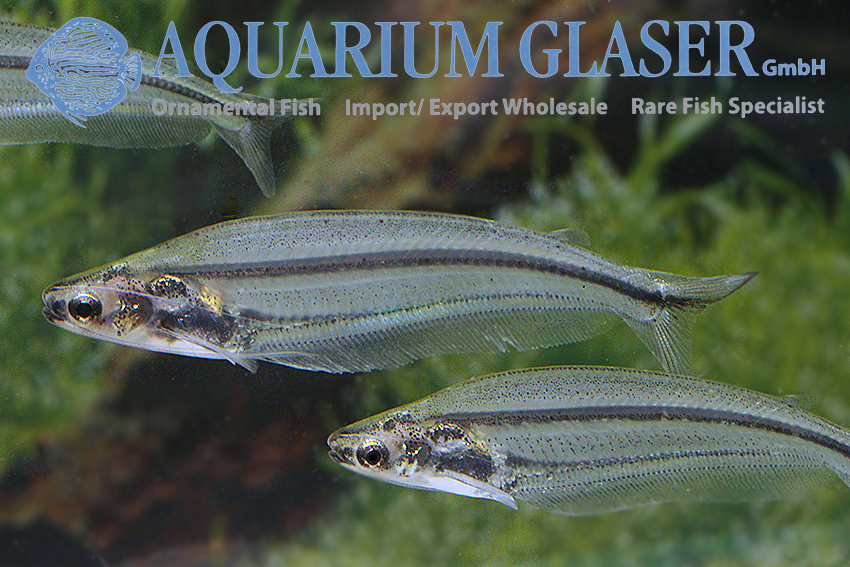
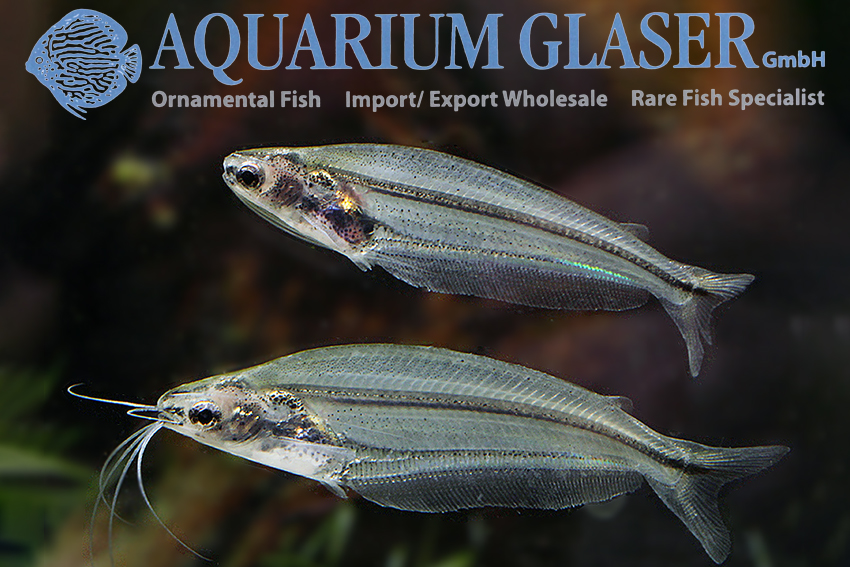
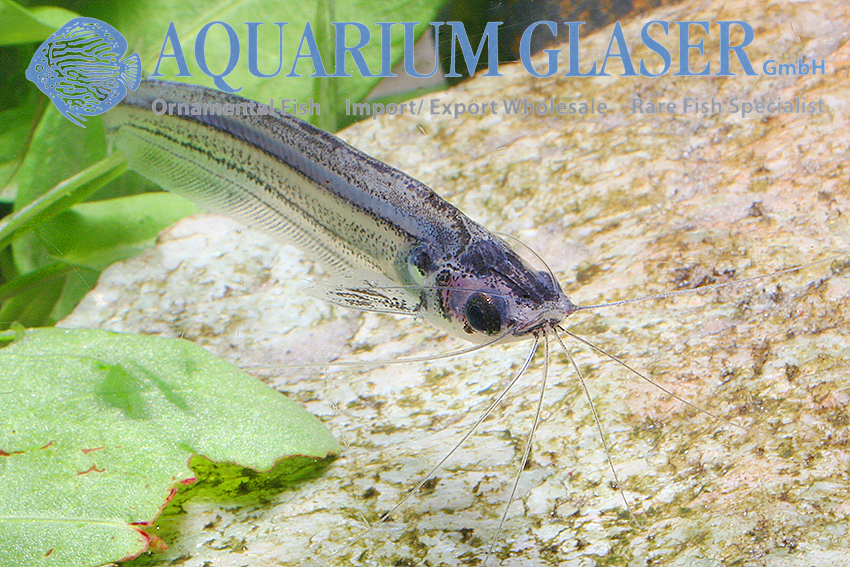
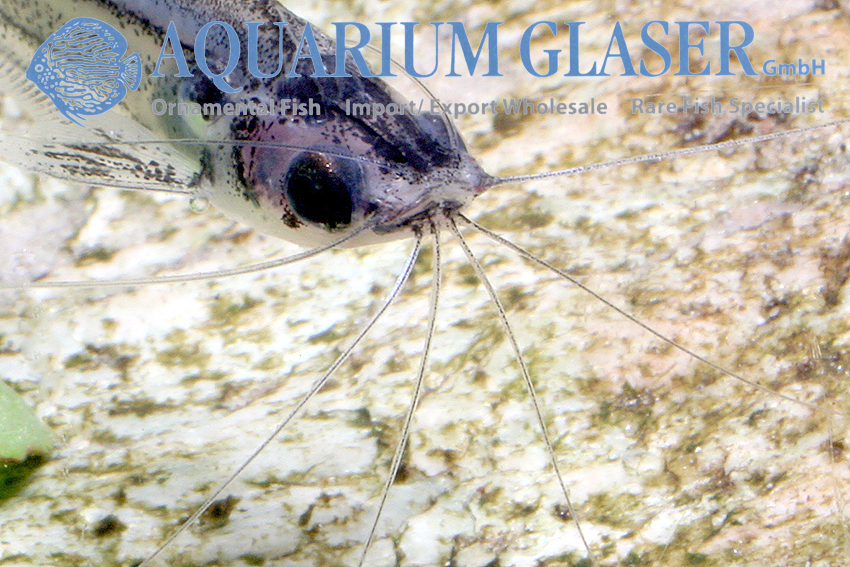
The African glass catfish is not closely related to the Asian glass catfish (most commonly found in aquariums: Kryptopterus vitreolus, see https://www.aquariumglaser.de/en/10-catfishes/kryptopterus-vitreolus-2/). The latter belongs to the true catfish family (Siluridae), making it a cousin of the wels catfish, while African glass catfish belong to the Schilbeidae family. The similar appearance and behavior of both groups of glass catfish is therefore not based on kinship, but on similar living conditions, just as with bats and birds, which are also not closely related simply because they both have wings.
Externally, P. pellucida differs from Kryptopterus in that it has an adipose fin and eight long barbels (Kryptopterus has two). The maximum length of the African glass catfish is around 15 cm, but specimens over 8 cm in length are extremely rare. The genus Parailia comprises five species, but only P. pellucida is regularly available in the trade, with P. congica (from the Congo, otherwise very similar to P. pellucida) occasionally appearing. P. pellucida is extremely common in nature. The species is an important link in the food chain for larger fish species, but is also consumed directly (in the form of soup or sauce) due to its often massive occurrence. The large schools usually comprise animals of very different sizes, often mixed with other species (e.g., Pareutropius buffei). Here, too, small P. buffei are often found as bycatch in imports.
African glass catfish are completely peaceful plankton eaters that should always be kept in groups with their own kind. These fish love well-planted aquariums with plenty of cover and lighting that is not too bright, and they are easy to feed with all standard foods. African glass catfish are completely undemanding in terms of water hardness and pH value; any drinking water is suitable for keeping these catfish. In contrast to their better-known Asian cousins, African glass catfish are always clearly visible in the aquarium during the day, at least if the aquarium is not too brightly lit. The Asian species, on the other hand, prefer to stay hidden and wait for dusk.
The animals have probably never been bred intentionally; the males often turn very dark during courtship and regularly court in the aquarium. There is a report from 1977 according to which eight young animals suddenly appeared in the aquarium without any special intervention, initially staying in the root area of Java fern (Micropterus). So, if necessary, it would probably not be a serious problem to breed these fish for aquariums. However, there is currently no need for this, and for ecological reasons, sustainable wild capture (as is absolutely the case here) is preferable.
For our customers: the animals have code 155904 on our stock list. Please note that we only supply wholesale.
Text & photos: Frank Schäfer
