








Pangasius spp. (shark catfish) are huge edible fish that feed largely on a vegetarian diet and have low water quality requirements. This makes them extremely well suited for aquaculture in tropical regions. These fish farms are where the cute babies that still regularly appear on the ornamental fish market come from. As long as they are small, they can of course be kept in aquariums, but where to put them when they become too big? However, there are other species that look very similar, remain small throughout their lives (6-8 cm), and are just as active during the day and swim around continuously as shark catfish: swallow catfish (Pareutropius) from Africa.
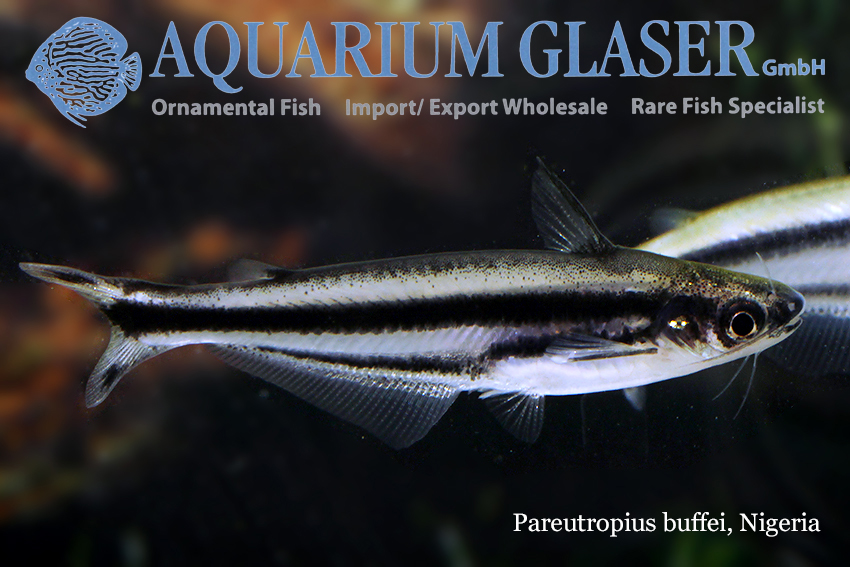
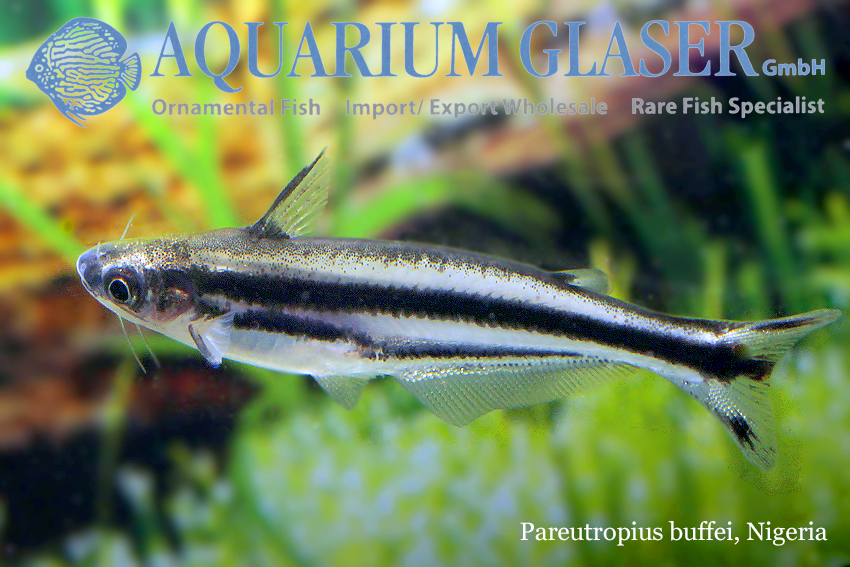
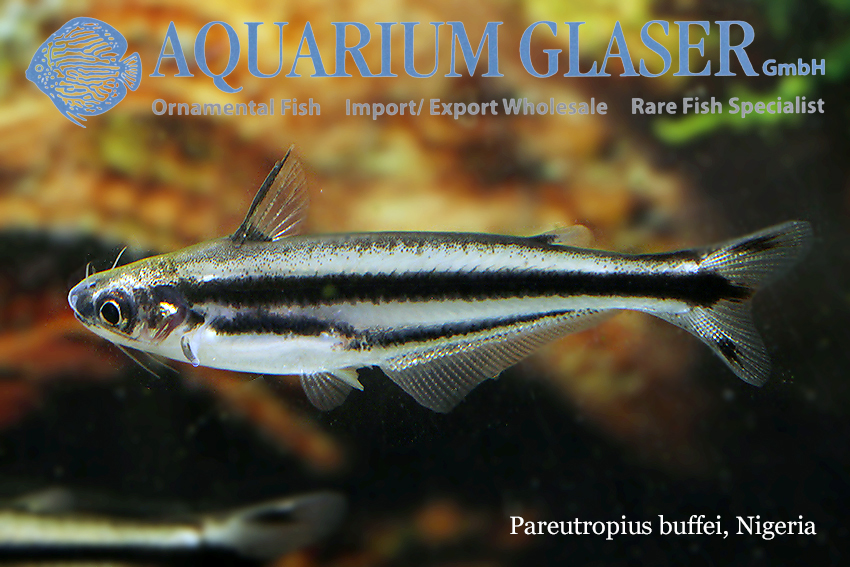
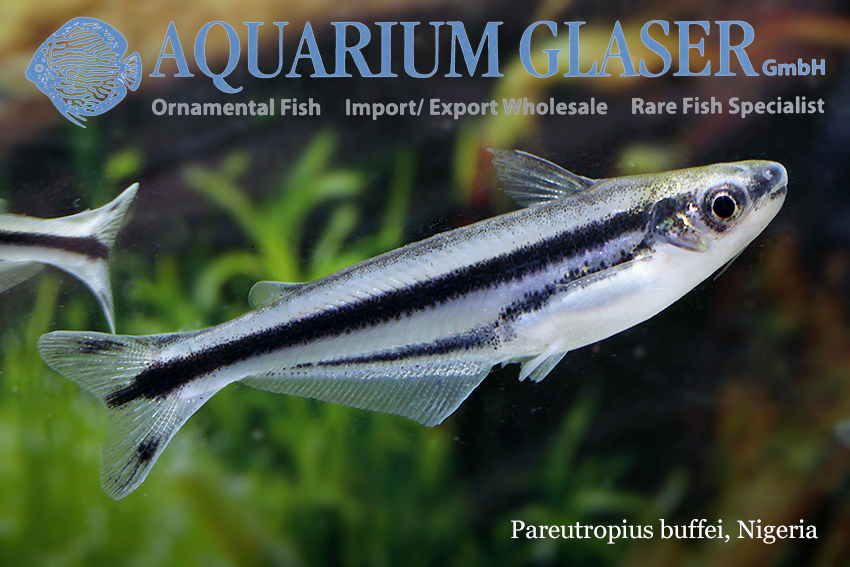
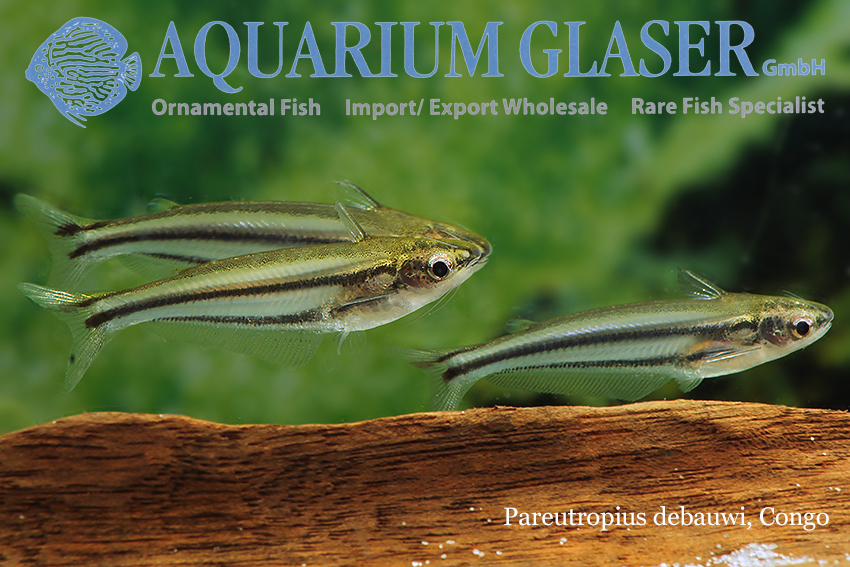
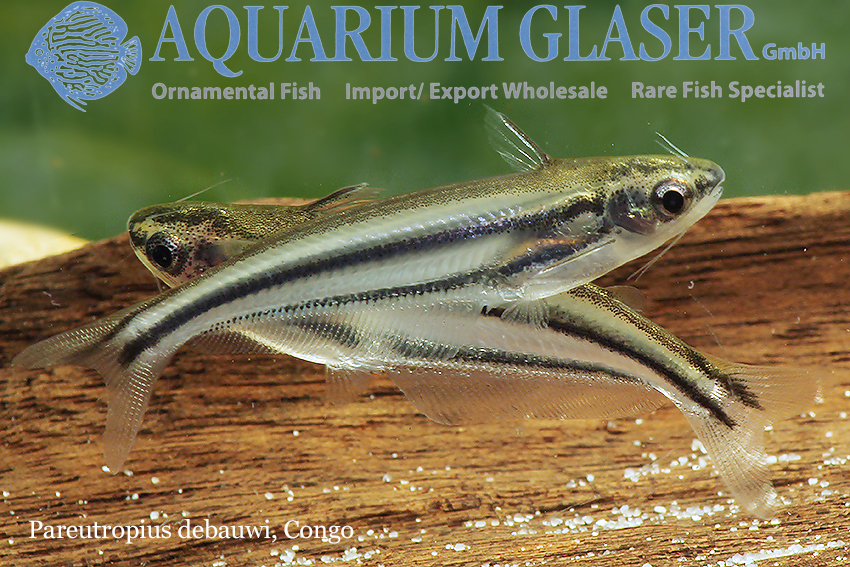
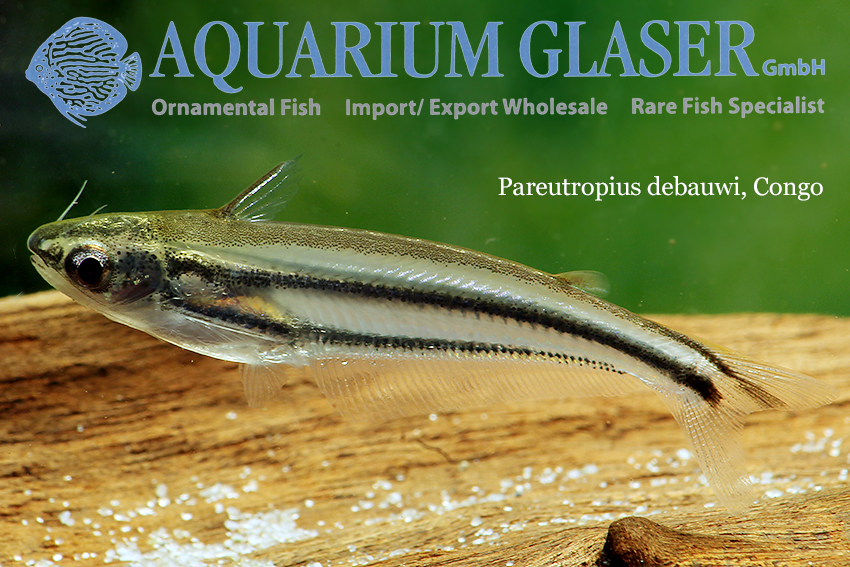
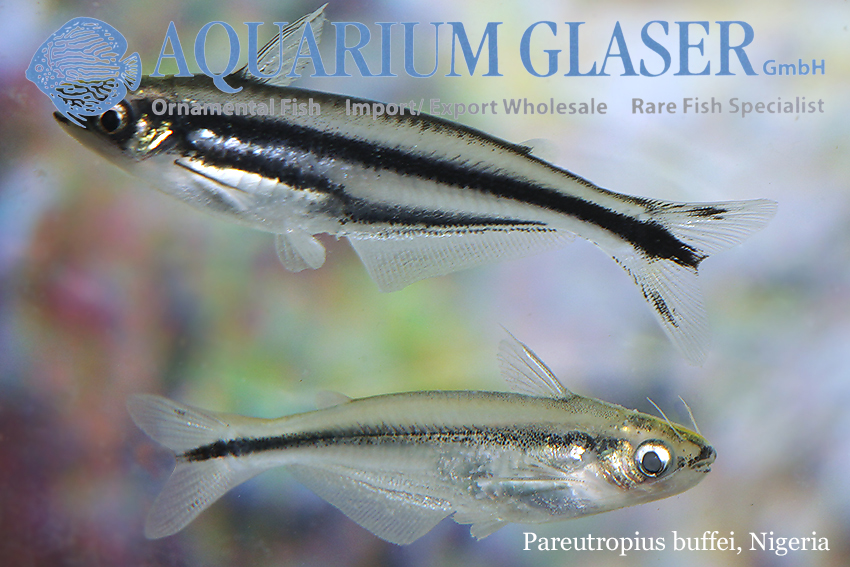
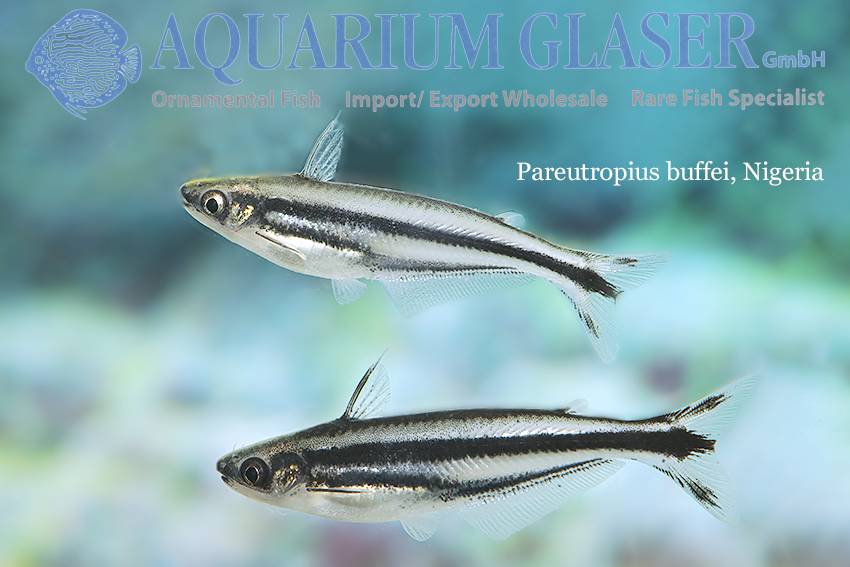
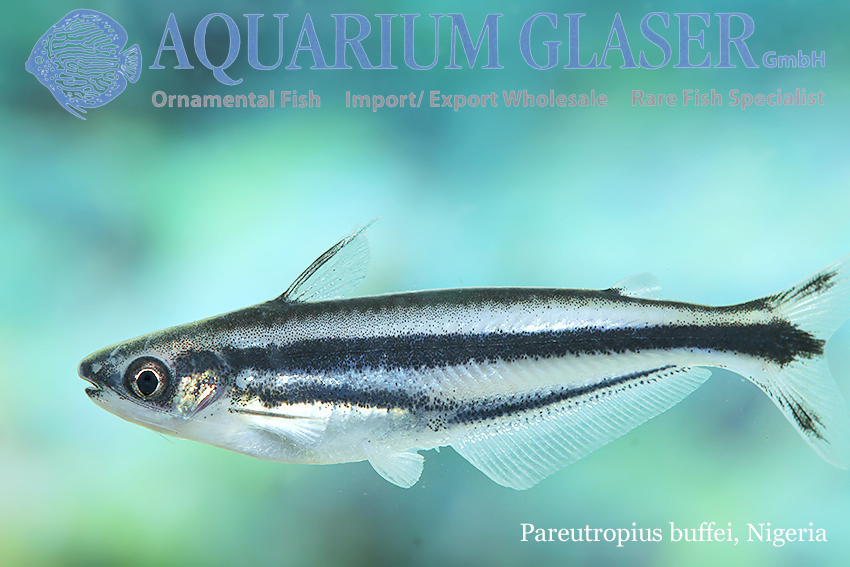
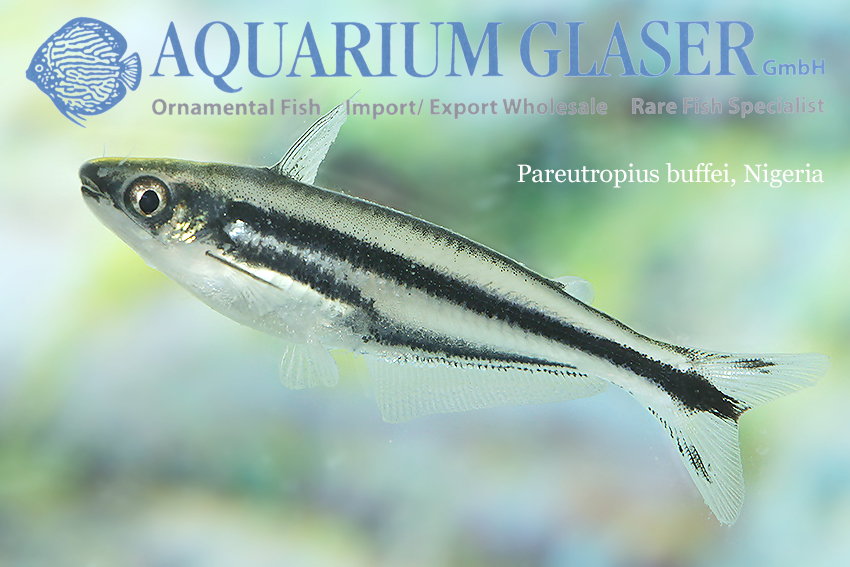
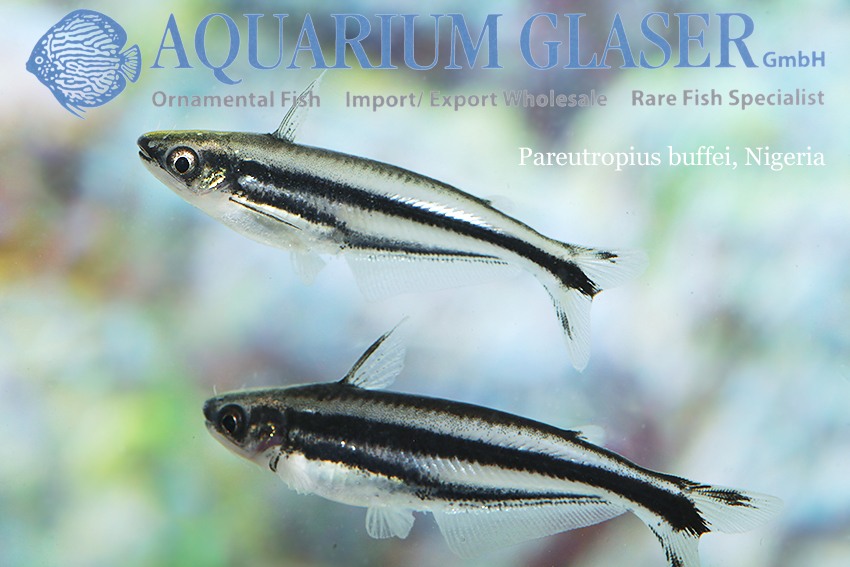
There are four species of these swallow catfish, all of which remain small and are very common in nature. They look so similar to each other that it doesn’t really matter which species you buy, especially since they behave as if they were all from the same species when kept in mixed shoals. The species is only relevant if you want to breed them. There is a simple rule for this: swallow catfish from East Africa (almost never available in stores) are P. longifilis, those from the Congo (very rare in stores) are P. debauwi (with an “i” at the end, not “ie”!), and those regularly imported from the Niger are P. buffei. The fourth species, P. mandevillei, also originates from the Congo; if it has ever been imported, no one has recognized it. In the trade, all swallow catfish are usually called “Eutropiella debauwie” (both names are misspelled; if anything, it should be Eutropiellus debauwi). However, as mentioned above, most are P. buffei. The differences can be seen in the attached photos; it is mainly the coloration of the tail fin that enables aquarists with a special interest to distinguish between the species. The commonly used name P. vandeweyeri is a synonym for P. buffei, Eutropiellus a synonym for Pareutropius.
Occasionally, swarms of imported P. buffei contain very light-colored specimens. This is not a separate species or variant, but the result of corneal opacity of the eye. We have not investigated this in detail, but it seems likely that this phenomenon is similar to that observed in South American golden tetras. The light coloration makes the affected specimens easier prey for fish-eating animals. The corneal opacity, which in turn leads to light coloration, is probably caused by a parasite that undergoes a host change. Just like gold tetras, the light-colored swallow catfish are fully viable in aquariums and live just as long as their normally colored counterparts, i.e., several years.
Swallow catfish are diurnal, very lively, and completely peaceful schooling fish. They should never be kept in groups of fewer than 6, preferably 10-20 specimens. There are hardly any externally recognizable sexual differences, but females grow slightly larger and are plumper. Like many catfish, swallow catfish reduce their gonads (testicles, ovaries) during dry seasons to conserve energy, as this tissue is very rich in fat. In an aquarium, with its consistent year-round temperatures and good food supply, it is always dry season for the fish, so they cease all reproductive activity and reduce their gonads. This process can be easily reversed by imitating a rainy season. It is sufficient to artificially irrigate the water surface for 6-8 hours a day with a filter pipe for about 50 days to allow the gonads to mature (Kirschbaum et al., 2008). Breeding was already successful in the 1950s with P. longifilis. The swallow catfish are open spawners without brood care. The water values are irrelevant for care; any drinking water is suitable. The water temperature can be between 22 and 28°C. Any commercially available ornamental fish food (dry, live, frozen) of a suitable size is readily accepted. Plants are not damaged.
For our customers: P. buffei has code 129000 (baby) to 129005 (sh) on our stock list. Please note that we only supply wholesale.
Literature:
Kirschbaum, F., Leyendecker, U., Nyonge, B., Schulz, C., Weitkamp, H., Didhiou, S., Thomas, M. & C. Schugardt (2008): Environmental control of cyclical reproduction of tropical freshwater fish: Evidence from comparative experimental data. Cybium 2008, 32(2) suppl.: 294-296.
Text & photos: Frank Schäfer
