








There are four species of lungfish in Africa, some of which are difficult to distinguish from one another. The situation in Congo is particularly confusing (see https://www.aquariumglaser.de/en/29-lungfishes/lungfishes-from-the-congo/). Only the species Protopterus dolloi is always easy to recognize due to its elongated body shape. The surest way to distinguish between the three species Protopterus aethiopicus, P. annectens, and P. amphibius is by the base of the dorsal fin. In P. amphibius, this begins just behind the pectoral fins, in P. annectens approximately halfway between the pectoral and pelvic fins (slightly closer to the pectoral fins), and in P. aethiopicus behind the midpoint between the pectoral and pelvic fins. Coloring characteristics are largely useless, as there is a very strong individual color variation. It is said that P. amphibius (this species only occurs in southeastern Africa and is therefore hardly ever exported, as there are no regular ornamental fish exports from the area where P. amphibius occurs) retains its external gills the longest, but P. annectens and P. aethiopicus also often do so for a very long time (see below).
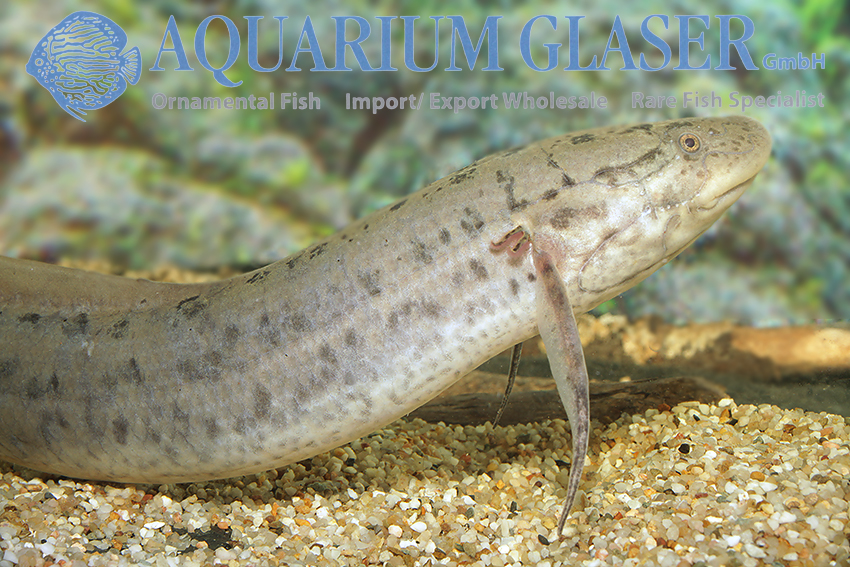
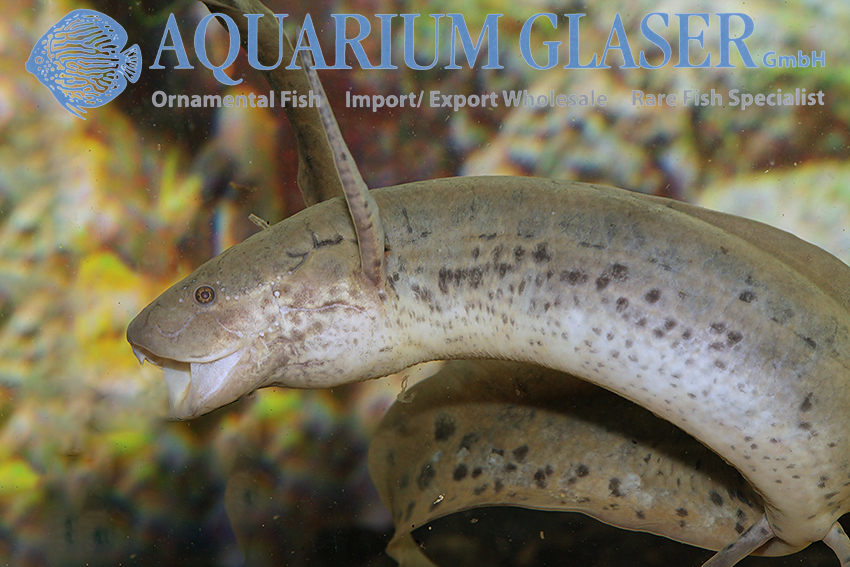
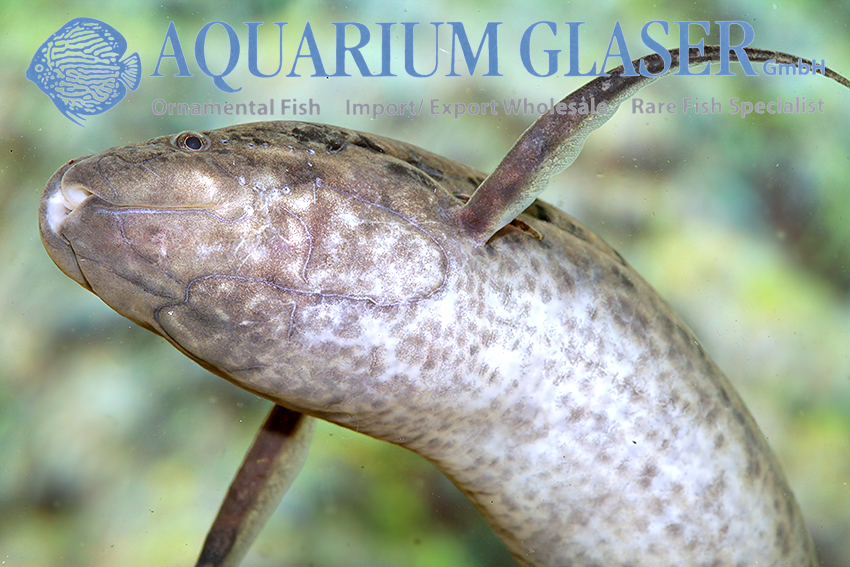
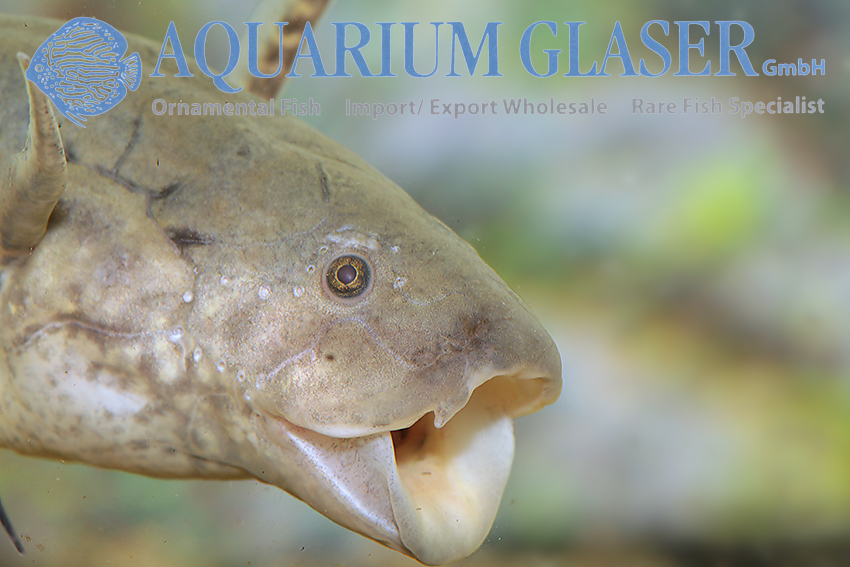
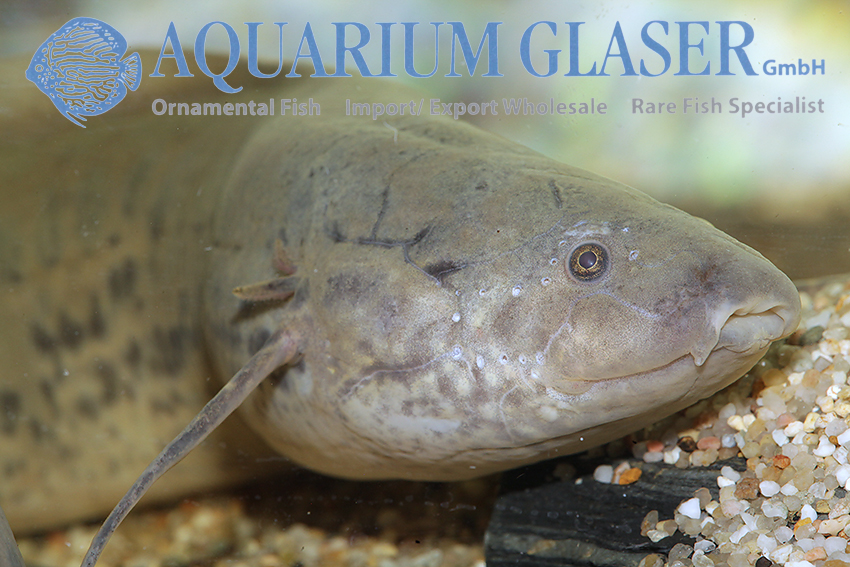
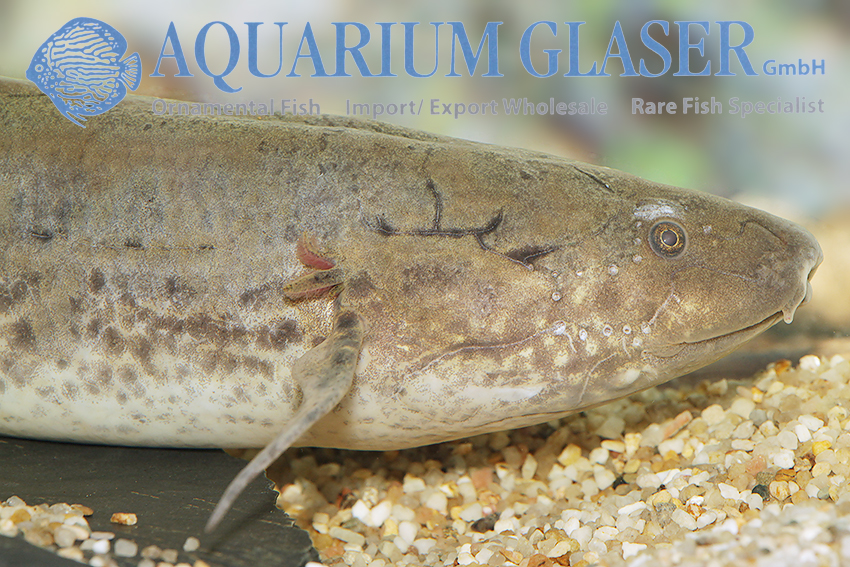
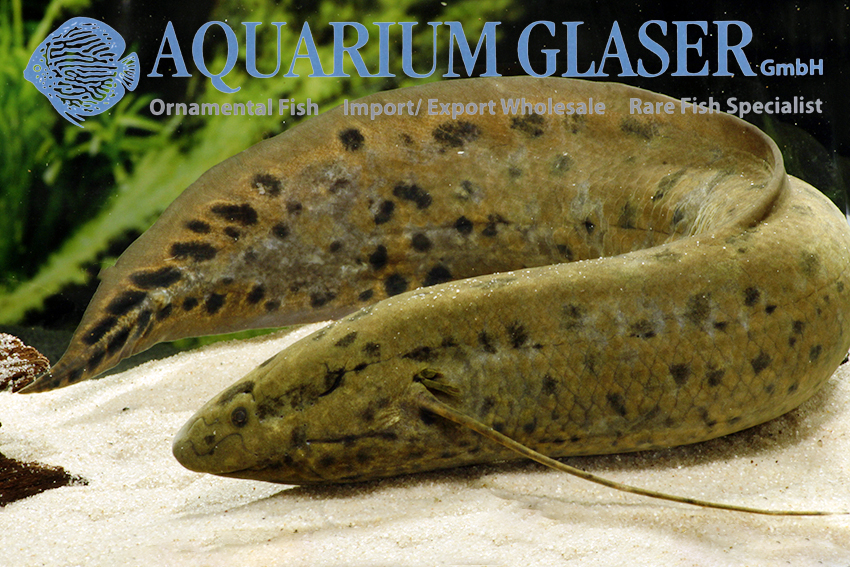
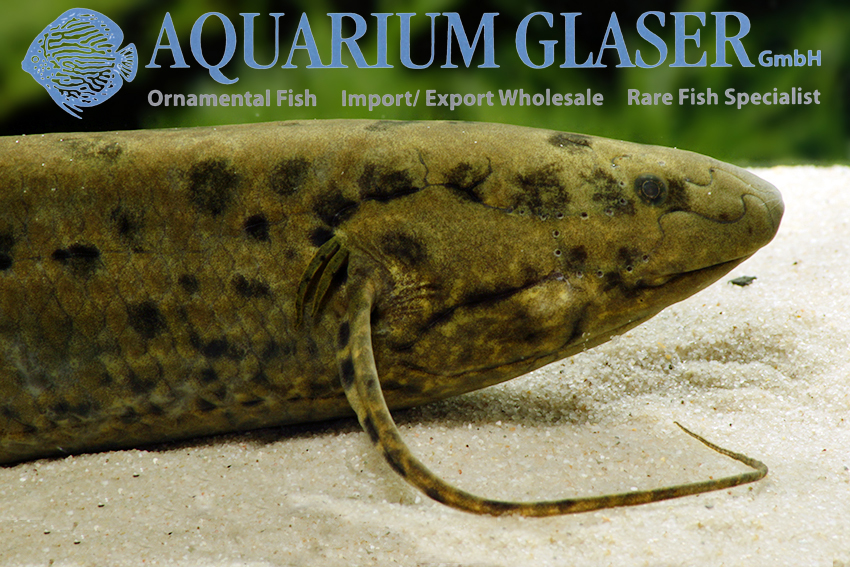
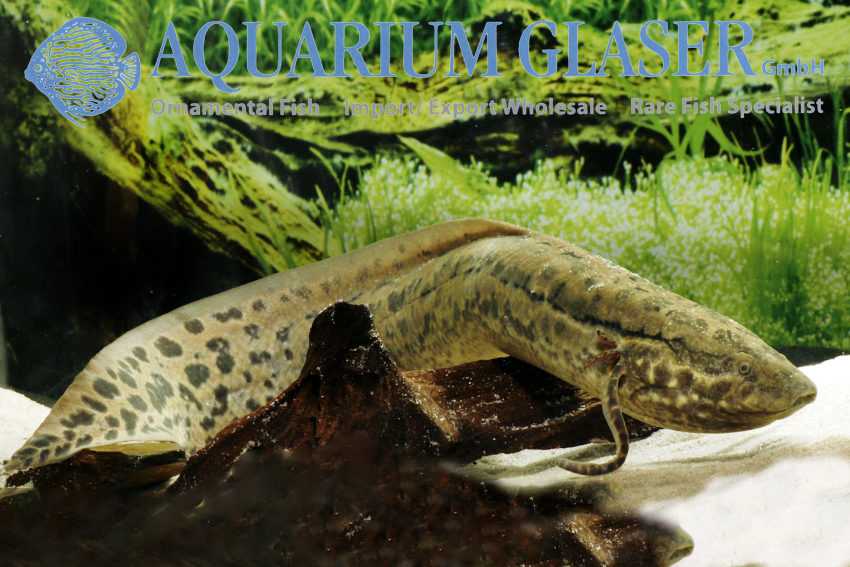
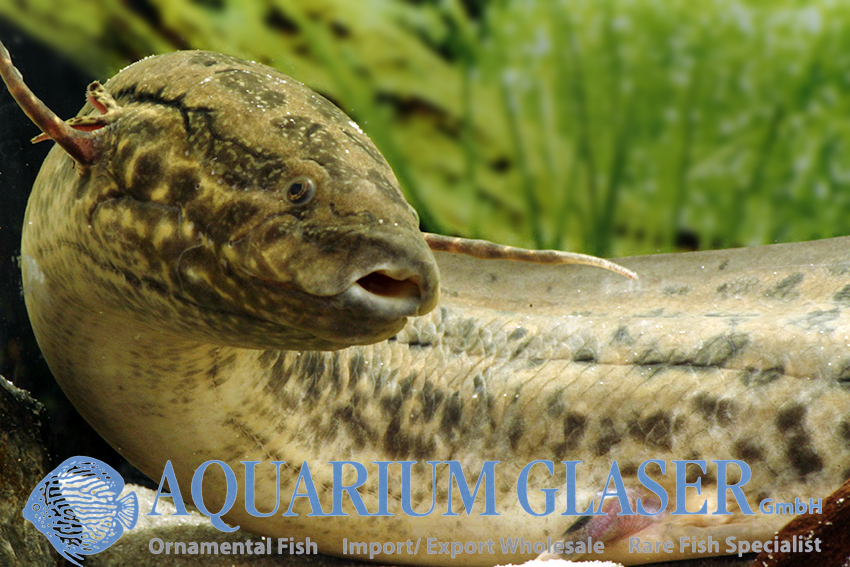
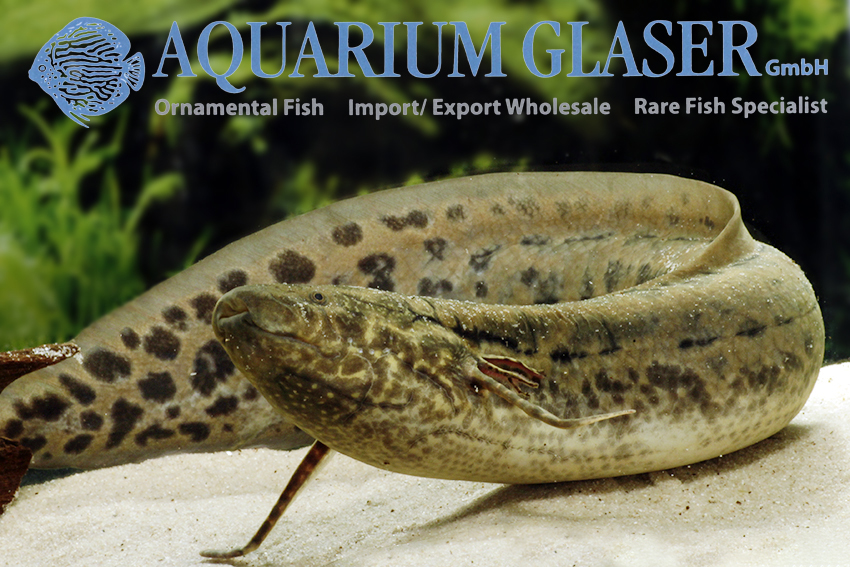
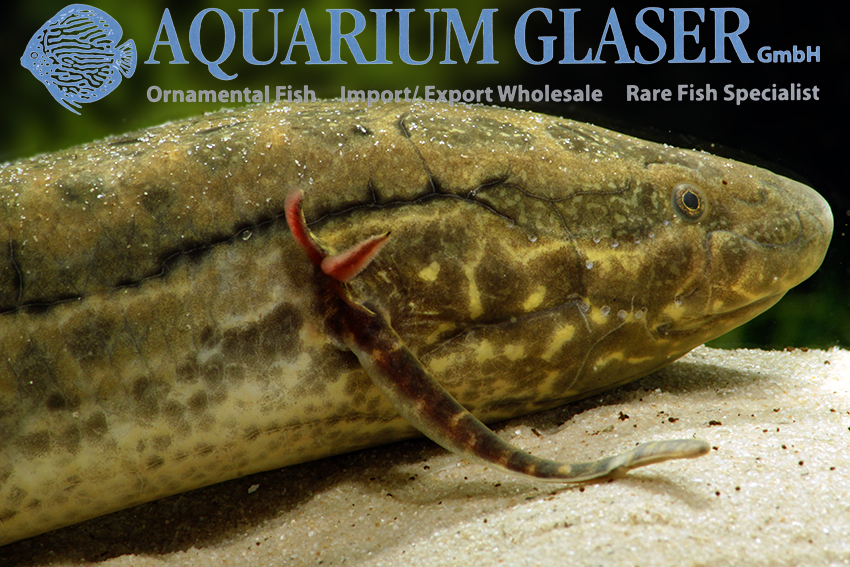
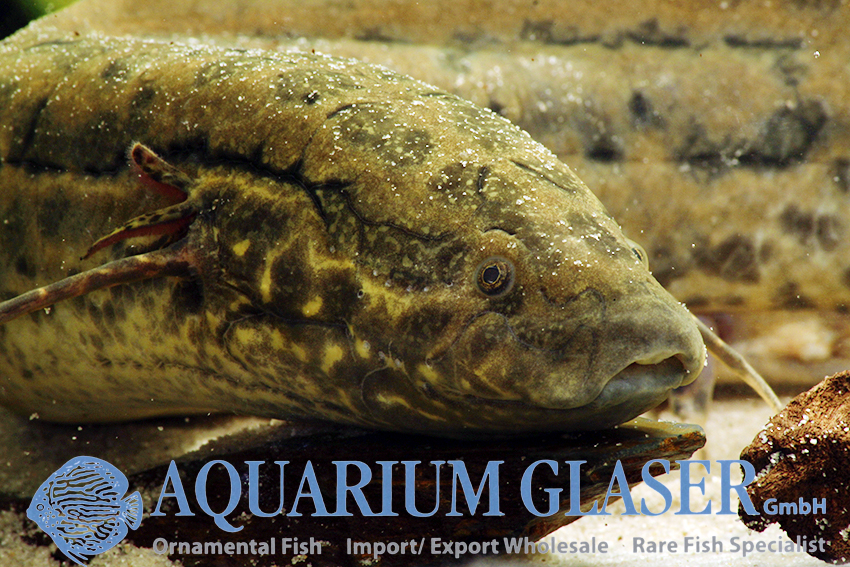
In any case, Protopterus annectens (West African lungfish) from Nigeria is most commonly found in the trade, even if this “frequency” is very relative. After all, the fish reach lengths of around one meter and are very incompatible with each other. For this reason, only a few specimens are imported each year.
We usually import these animals with a length of 15-25 cm. This means that the largest of them are just reaching sexual maturity. The species P. annectens is the only species of African lungfish in which scientific studies on externally recognizable sexual differences have been carried out on wild specimens to date. According to these studies, the males have longer and broader heads. Despite their lung respiration, P. annectens retain their external gills for many years, which are typical of all lungfish species as larvae, making them resemble newt larvae. Each West African lungfish has a unique body pattern. Within the same import and from the same catch area, there are leopard-like spotted and almost monochromatic animals. This has no significance in terms of gender or origin.
Surprisingly, these large animals prefer to eat relatively small types of food. Although small fish are always at risk in their presence, worm food or granules are clearly preferred; in addition, the animals accept many types of frozen food, insects, etc. They find their food mainly through their sense of smell. Injuries often occur among them during feeding, as the greedy fish snap blindly around them. Fortunately, injuries heal well and the regenerative capacity of these primitive fish is legendary.
Observing these animals (which are normally quite sluggish) is very interesting. They move their thread-like fins as if they were arms and legs. When aggressive, the attacker opens its mouth wide and stretches its “arms” upward. There is still much to learn about the behavior of these animals. The genus Protopterus has existed for about 400 million years, and the age of the modern species now in existence is estimated at about 26-42 million years (depending on the author, these figures vary considerably).
The males of P. annectens grow larger than the females. The species practices brood care in the male sex. During the dry season, the fish burrow into the ground and survive the drying up of their habitat in a cocoon; in this “dry sleep,” during which their metabolism is greatly reduced, lungfish can survive for several months, allegedly even years. Spawning occurs when the rainy season begins and the water rises again. Spawning takes place in a chamber in the ground, which is connected to the open water by a tunnel system.
For our customers: depending on their size, the animals have codes 167602 (12-15 cm) to 167607 (60 cm) on our stock list. Please note that we only supply wholesale customers.
Text & photos: Frank Schäfer
