








This attractive squeaker catfish originates from the lower Congo (for example in the Pool Malebo area, formerly known as Stanley Pool). With a final size of around 20 cm, it is one of the medium-sized species of the genus. In the past, this catfish was considered to be as sensational as the zebra catfish (L46, Hypancistrus zebra) was a few decades later. In Aquarium Atlas, Volume 1, we read: “One of the most beautiful squeaker catfish, but very rare and expensive. Only about a dozen animals are caught each year.” Well, that is a nostalgic look back at the past; basically, Synodontis flavitaeniatus is by no means a common fish, but that is usually due to low demand rather than anything else. At present, however, this catfish is indeed becoming a rarity, as importing fish from the Congo is becoming increasingly complicated and breeding such catfish on a commercial basis is hardly worthwhile. This requires a consistently high demand as a basic prerequisite.
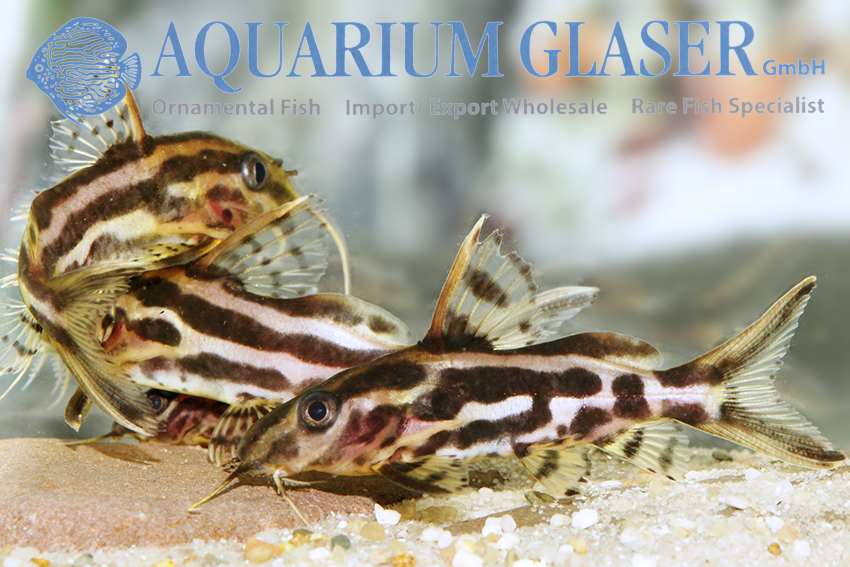
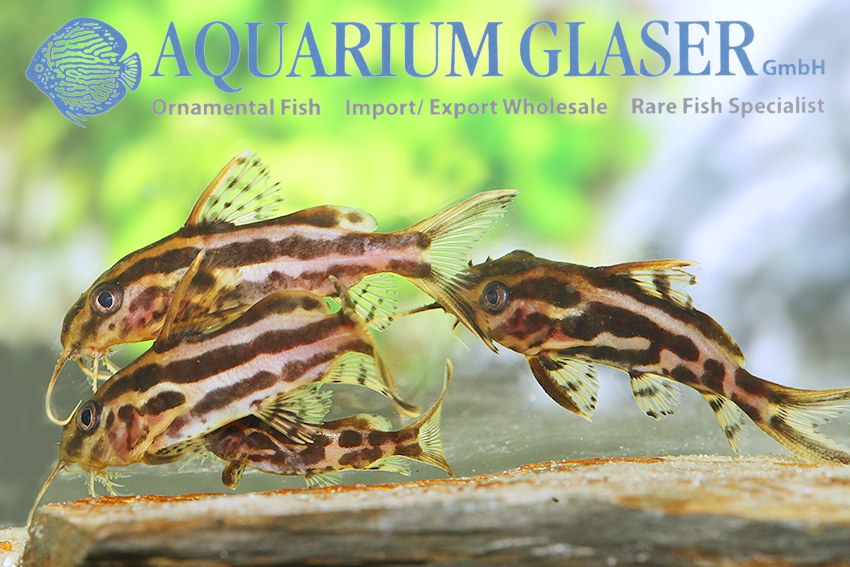
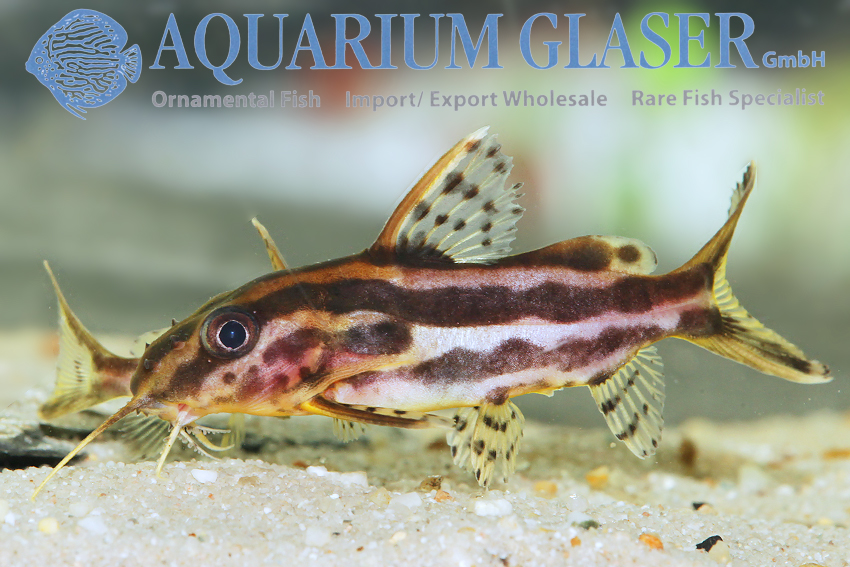
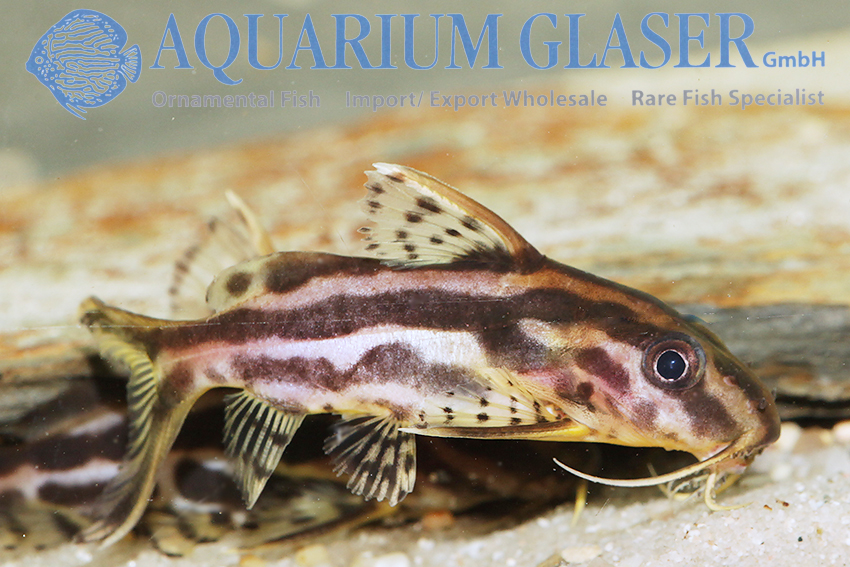
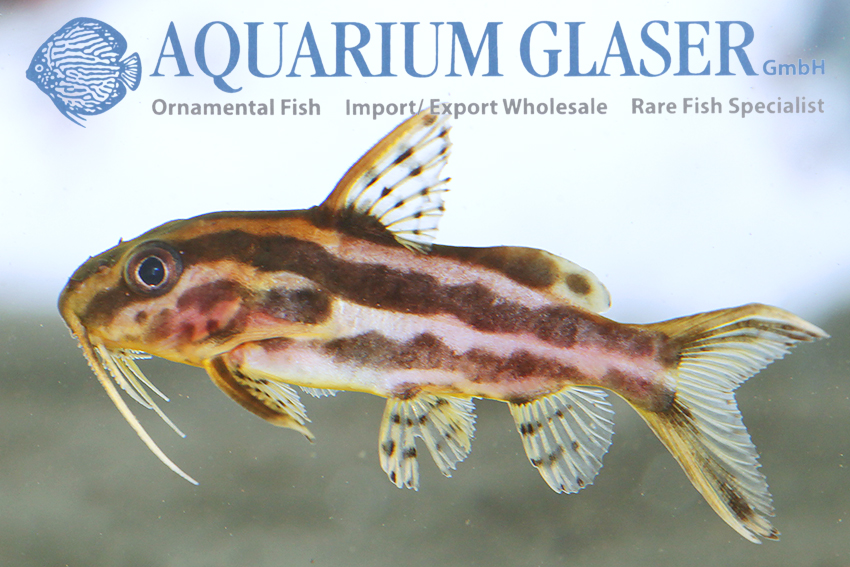
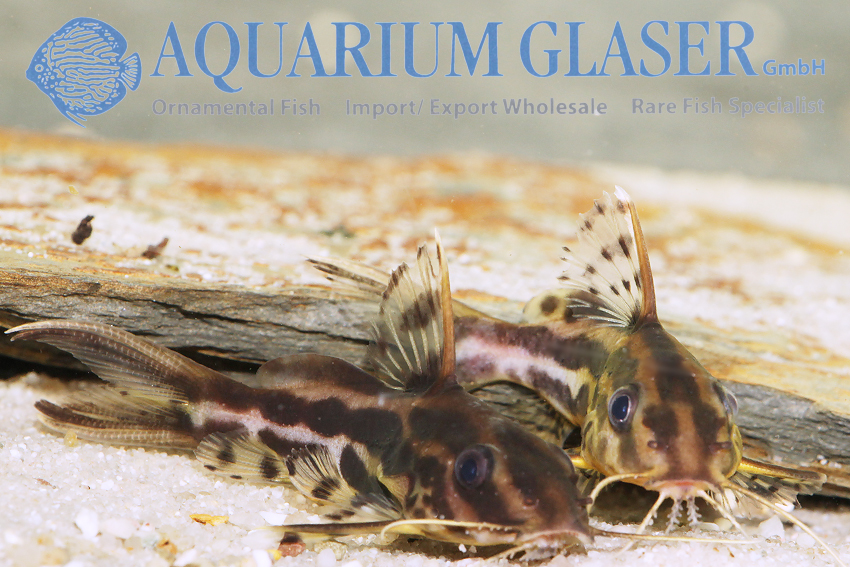
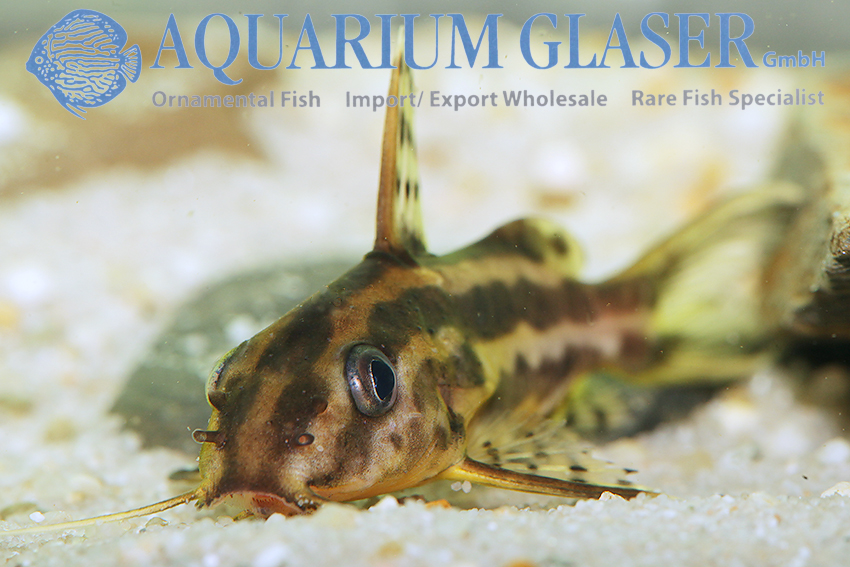
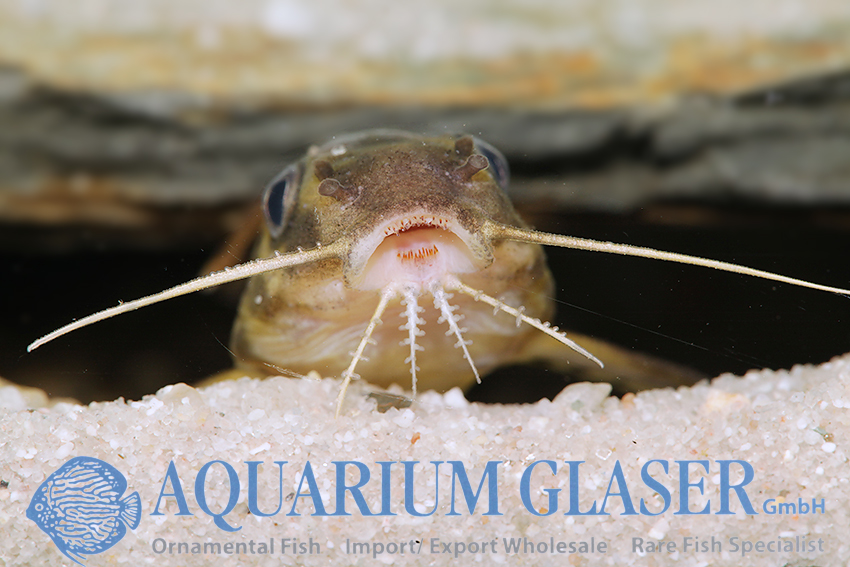
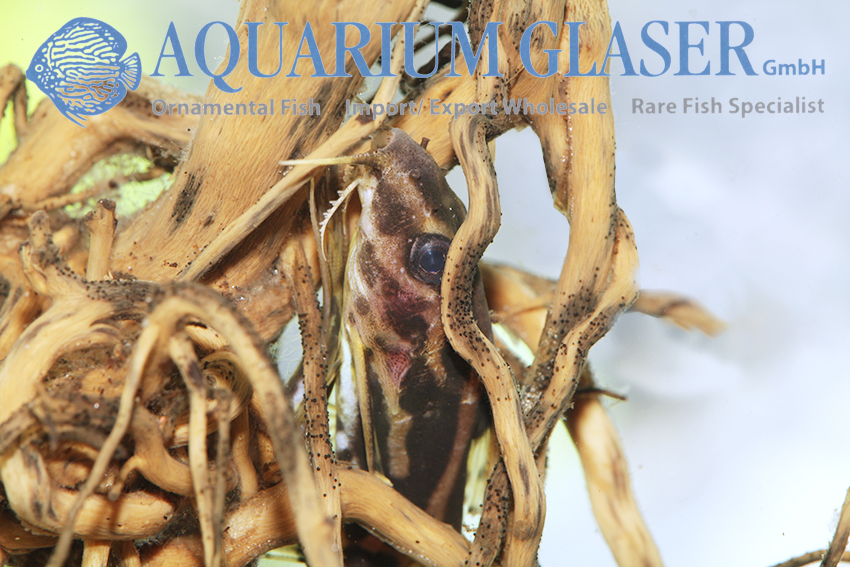
We haven’t had any S. flavitaeniatus in our facility for several years now. What is striking about this species is, on the one hand, the teeth, which already begin on the outside of the upper lip, and, on the other hand, the striped pattern. The former indicates that S. flavitaeniatus feeds in nature on animals that sit in depressions and which the catfish can pick out with its special teeth. The latter can be explained when you see this Synodontis sitting in relatively finely branched roots, which it prefers to all other hiding places. This is because it then visually disappears into nothingness. The reddish-yellow-brown striping that is so conspicuous in swimming animals is perfect camouflage in this environment!
S. flavitaeniatus can be kept in aquariums for decades without much effort. Like most squeaker catfish, they form a hierarchy among themselves. This regularly results in skin abrasions, but these heal easily and without complications. The animals are relatively peaceful towards fish of other species. Any tank mates should not be too delicate, but S. flavitaeniatus are a wonderful addition to a West African aquarium with medium-sized tetras, barbs, and cichlids. These crepuscular fish need daytime hiding places, but after a certain acclimatization period, they are also very active during the day, especially at feeding times. The chemical composition of the water is irrelevant; any drinking water is suitable for their care. The water temperature can range from 22-28°C. They will eat any standard ornamental fish food of a suitable size.
For our customers: depending on their size, the animals have codes 179500 (3-4 cm) to 179504 (10-12 cm) on our stock list. Please note that we only supply wholesale customers.
Text & photos: Frank Schäfer
