








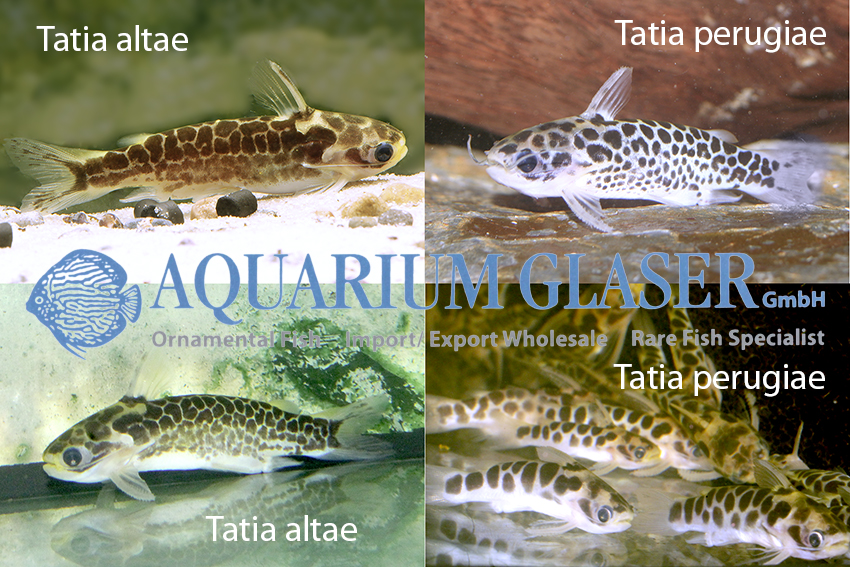
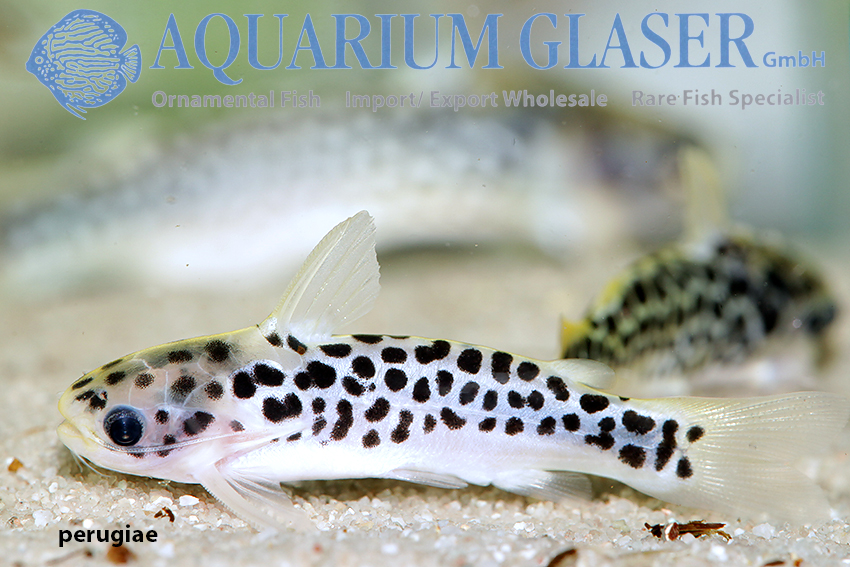
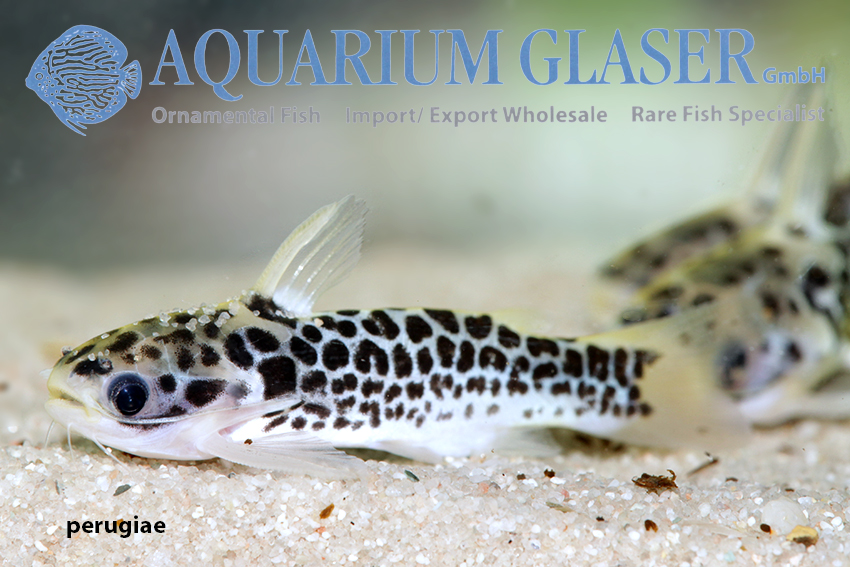
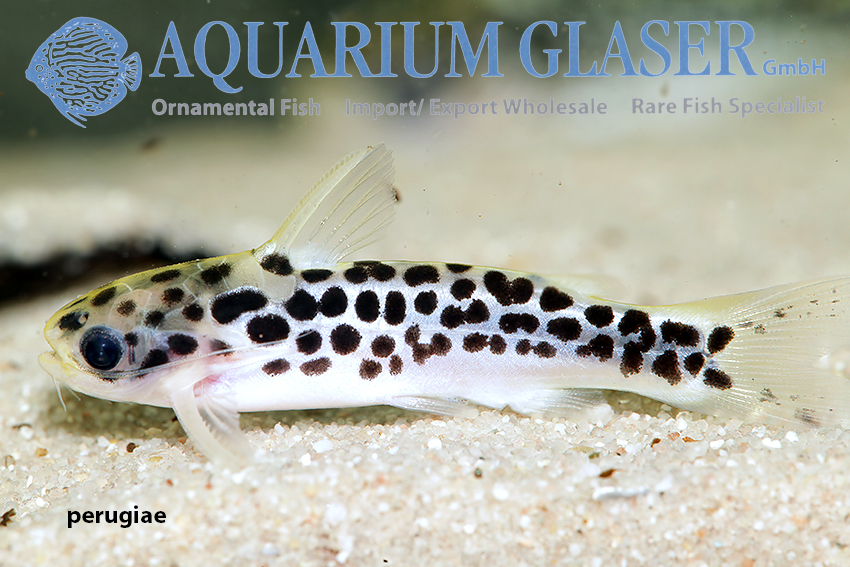
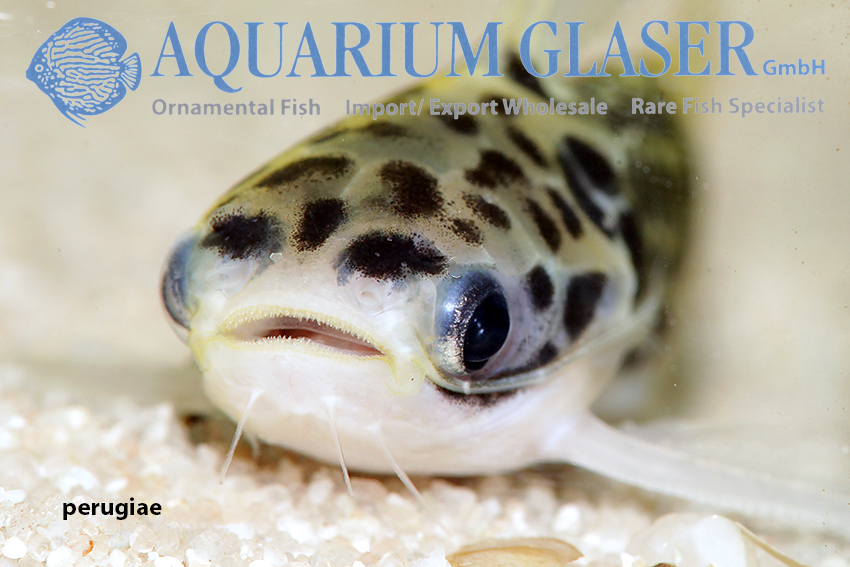
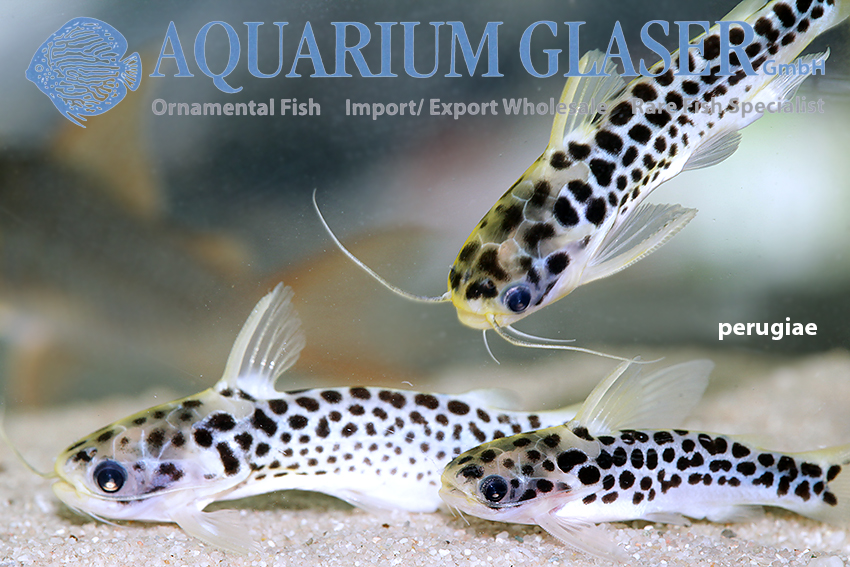
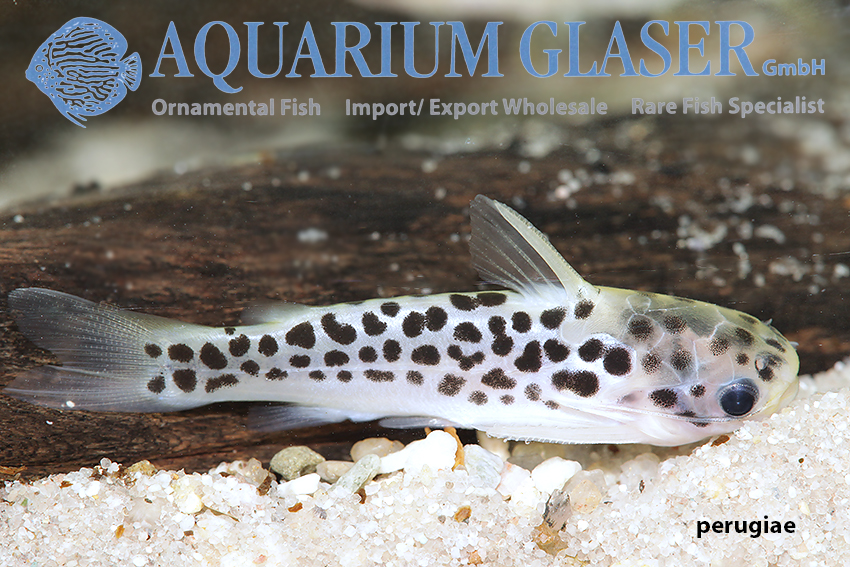
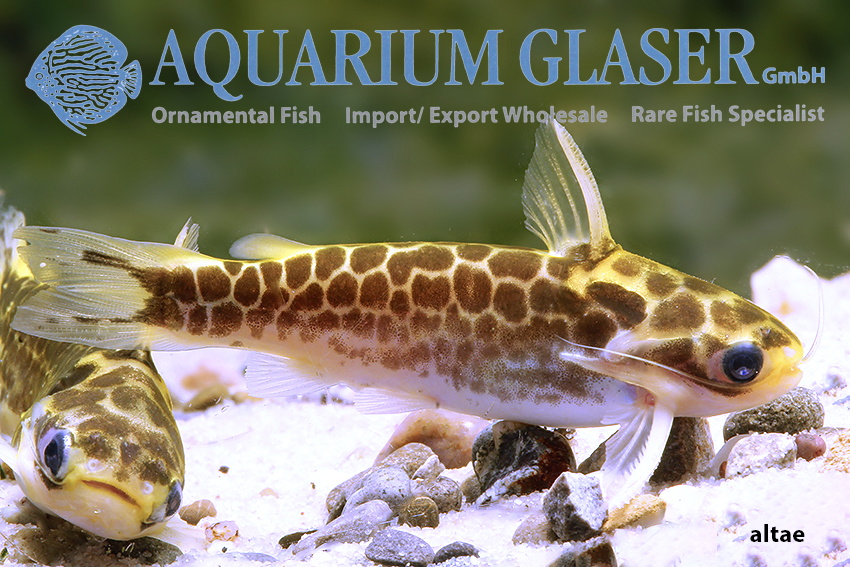
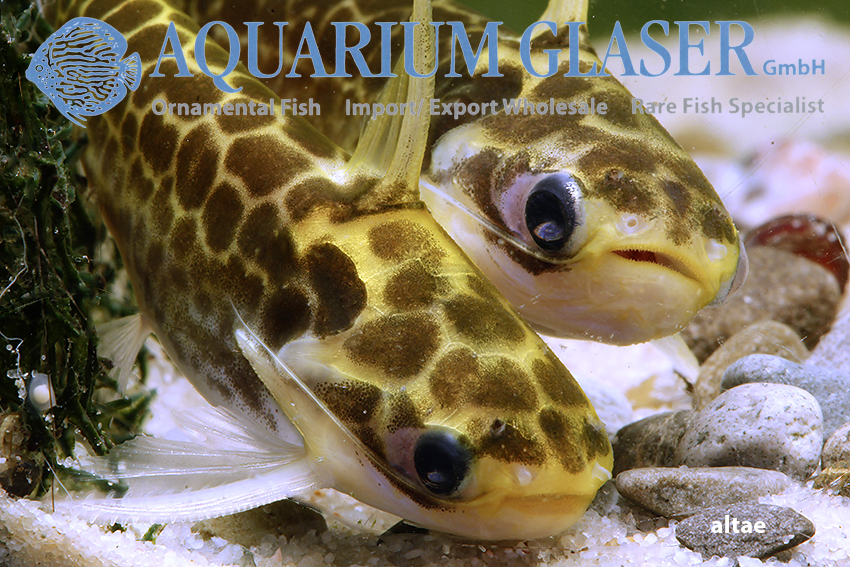
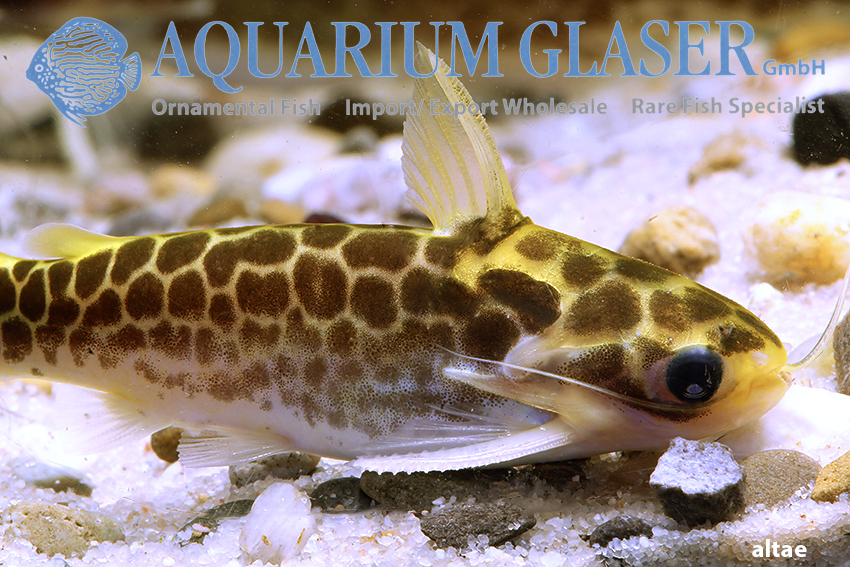
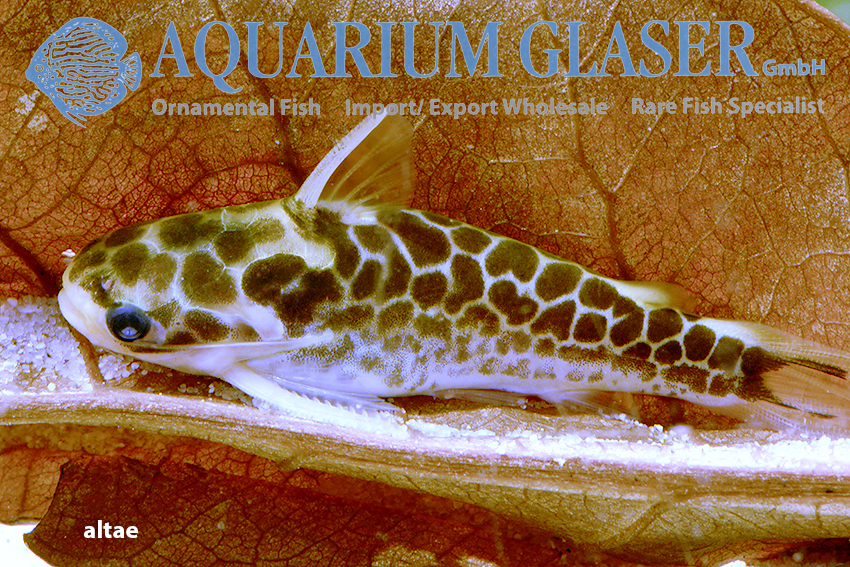
The driftwood catfish Tatia perugiae has become firmly established in the hobby. The species is small (4-6 cm), very pretty in color, and easy to breed in the aquarium. In addition, the animals are very peaceful and undemanding in terms of water composition and food. It is understandable that they usually only leave their hiding places to feed and then swim around busily. We source the species as offspring or from Peru. There are at least two color forms, one with relatively small and one with large dark spots (see collage of the two pictures on the right; all fish in this collage are sexually mature males). But overall, the species is highly variable in coloration, and each individual can be recognized by its personal spot pattern, which is as specific as a fingerprint.
Unfortunately, this species has already undergone several genus changes. It was first placed in Tatia, then in Centromochlus, then in Duringlanis, and now, in the most recent review by Luisa Maria Sarmento-Soares & Ronaldo Fernando Martins-Pinheiro (2020), back in Tatia. In the study by Calegari et al. (2019), which is only one year older, Duringlanis was still identified as a valid genus—in short, one should search for both genus names when compiling information on these fish.
In the same journal as Sarmento-Soares & Martins-Pinheiro, Henry W. Fowler described a very similar species from Colombia (Morelia, headwaters of the Rio Caqueta) as Centromochlus altae 75 years earlier. He wrote at the time that this species was very similar to Steindachner’s Centromochlus perugiae from 1882 (which originates from eastern Ecuador), but had a different pattern of spots.
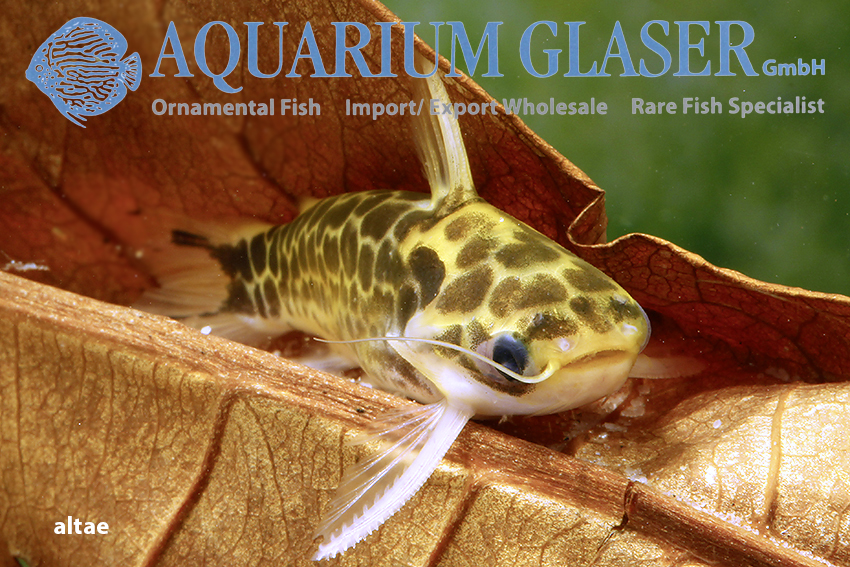
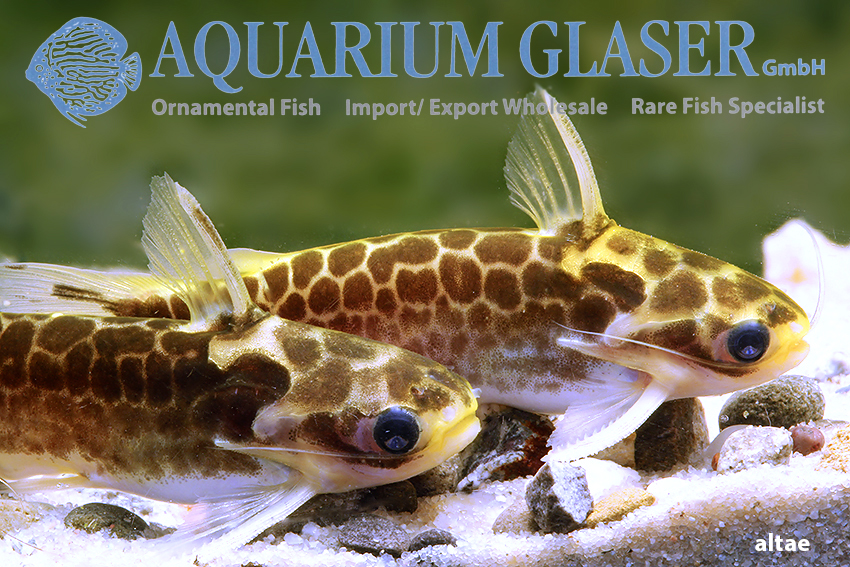
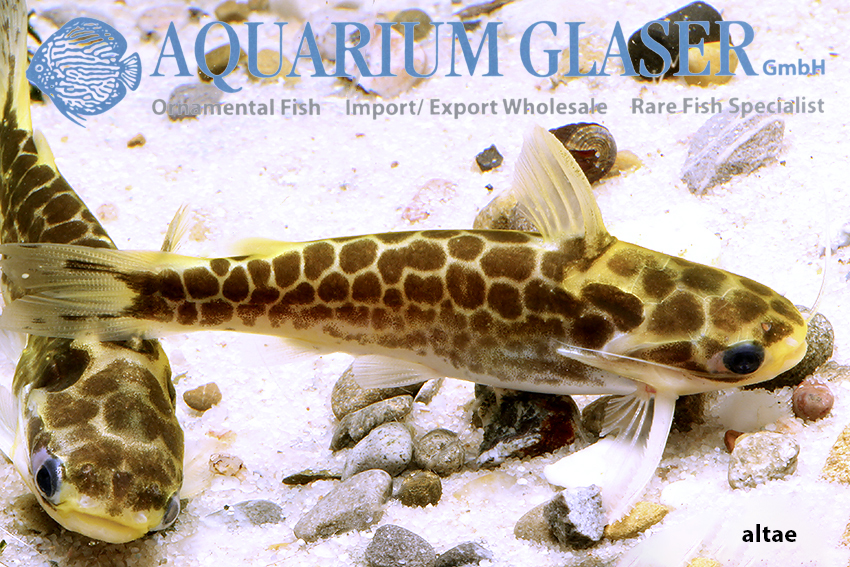
We have occasionally been able to import Tatia from Colombia, which are probably T. altae. Apart from the shape of the spots, the very pretty yellowish base color of the Colombian animals is striking, especially in the head area. All other characteristics and properties correspond to T. perugiae. The differences in coloration between the two species (if they are species and not just location variants) can be most easily seen in the collage attached to this post. Tatia altae has a light net pattern of fine lines on a dark background, while T. perugiae has round dark spots scattered on a light background.
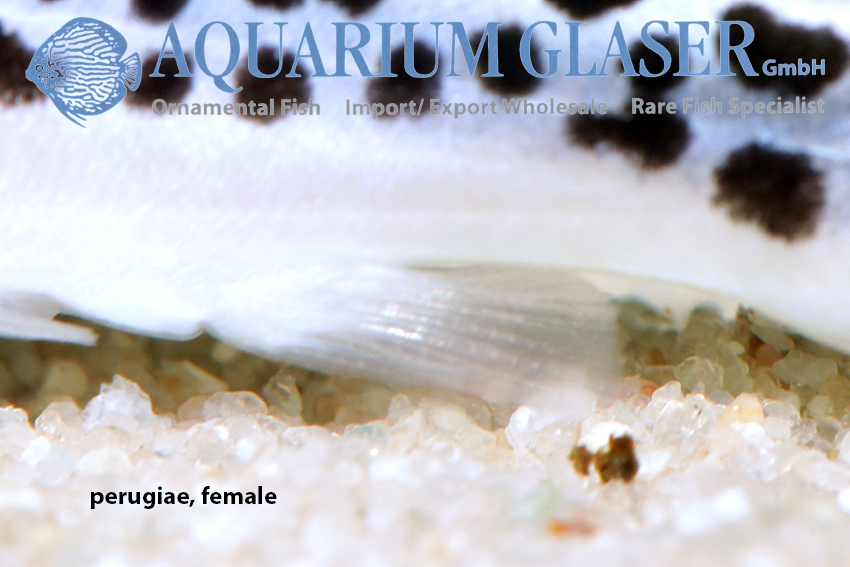
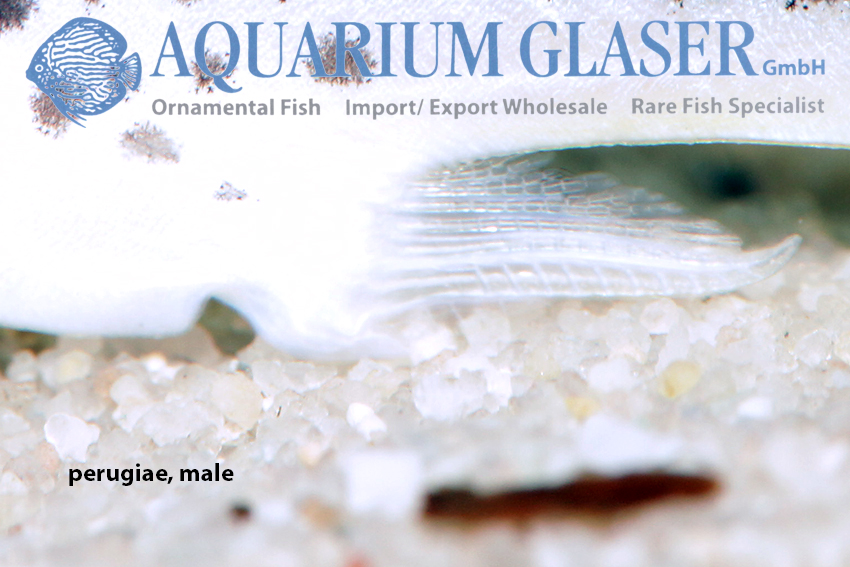
All driftwood catfish—including Tatia perugiae and T. altae—practice internal fertilization. The specially shaped anal fin serves this purpose. A fertilized female can therefore lay viable eggs later in the absence of males, which they prefer to do in round caves. It has been shown that these small Tatia species like it warm, with 26-28°C being the most favorable temperature.
For our customers: Tatia perugiae has code 295811 (bred) and (depending on size) 295820-295822 (wild) on our stock list. Tatia altae has code 295401 on our stock list. Please note that we only supply wholesale.
Literature:
Calegari, B. B., R. P. Vari & R. E. Reis (2019): Phylogenetic systematics of the driftwood catfishes (Siluriformes: Auchenipteridae): a combined morphological and molecular analysis. Zoological Journal of the Linnean Society v. 187 (3): 661-773
Sarmento-Soares, L. M. & R. F. Martins-Pinheiro (2020): A reappraisal of phylogenetic relationships among auchenipterid catfishes of the subfamily Centromochlinae and diagnosis of its genera (Teleostei: Siluriformes). Proceedings of the Academy of Natural Sciences of Philadelphia, 167 (1): 85-146)
Text & photos: Frank Schäfer
