








We were able to import this cute dwarf tetra from Peru for the first time in April 2003. Since then, we have succeeded in importing it from time to time. The fish was initially provisionally called “Heterocharax sp. – Orangefin Tetra” or “Hummingbird Tetra”, sometimes also referred to as “Tyttocharax sp.”. A. Zarske scientifically described the species in 2010 as Trochilocharax ornatus and also created a new genus for it. Depending on the lighting, the barely 2 cm long jewels shimmer blue or are transparent. This dwarf tetra is extremely lively and has so far proved to be easy to keep.
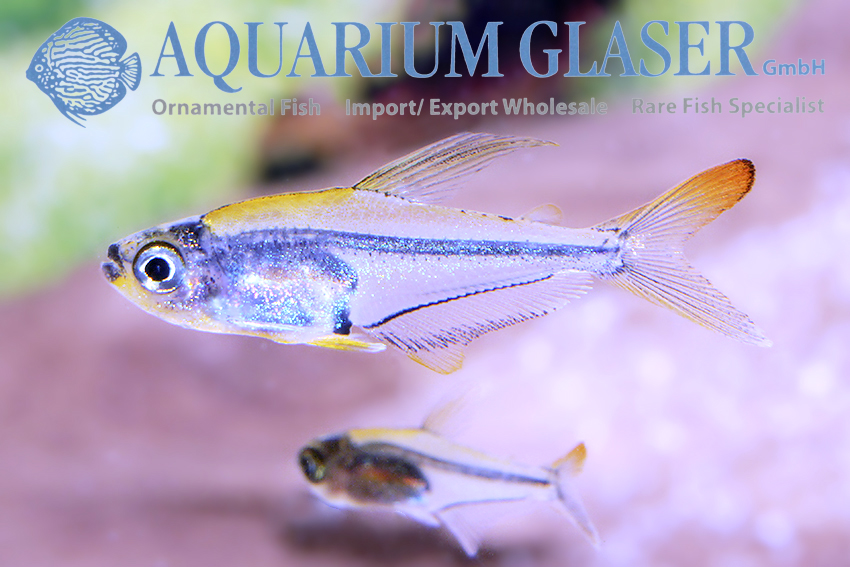
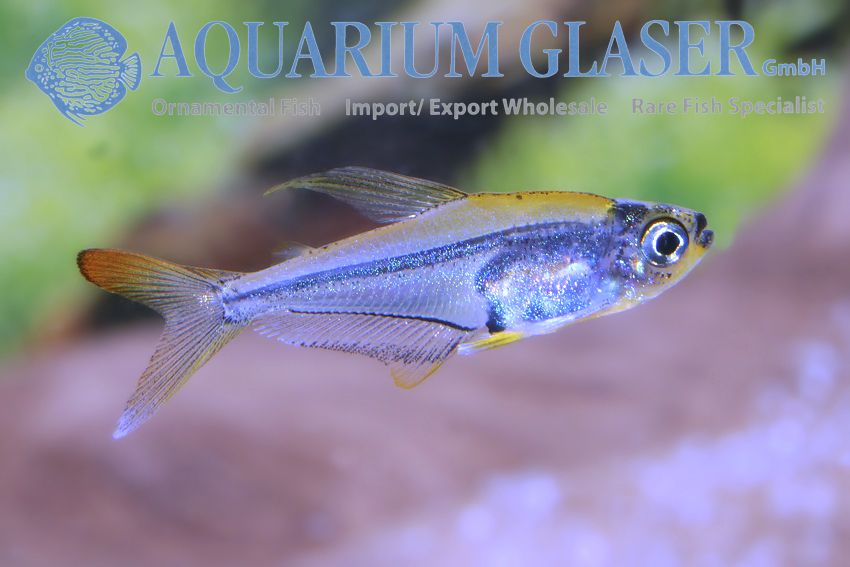
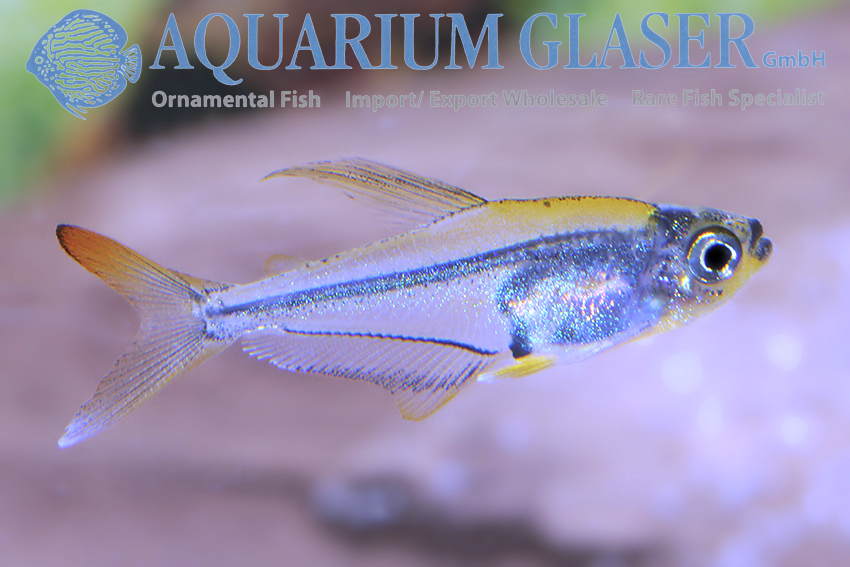
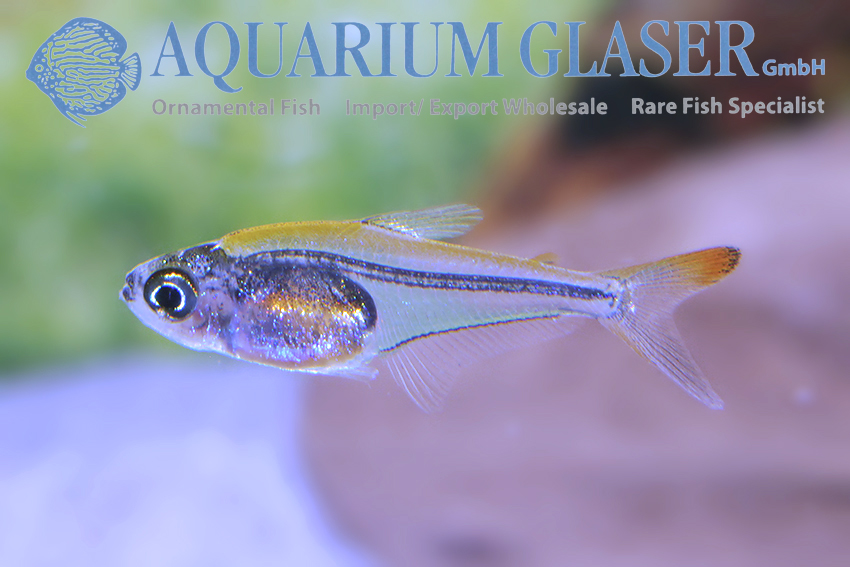
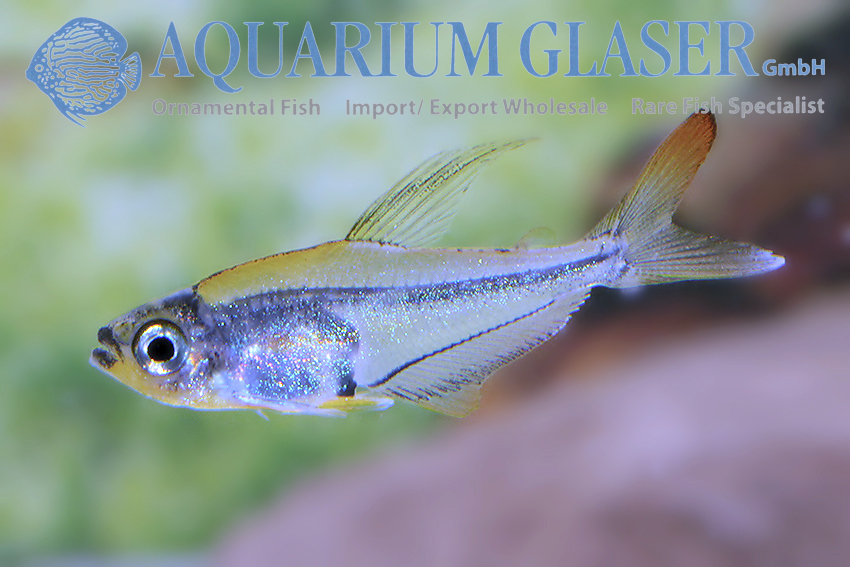
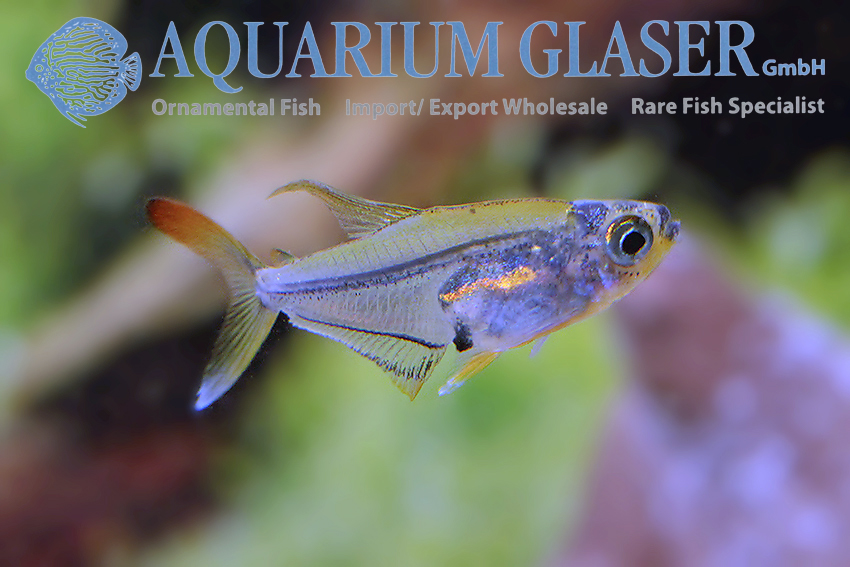
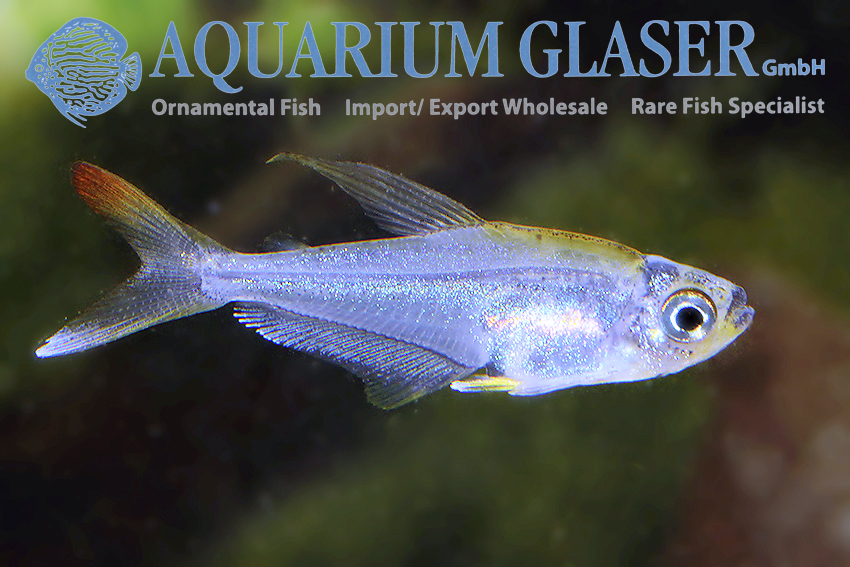
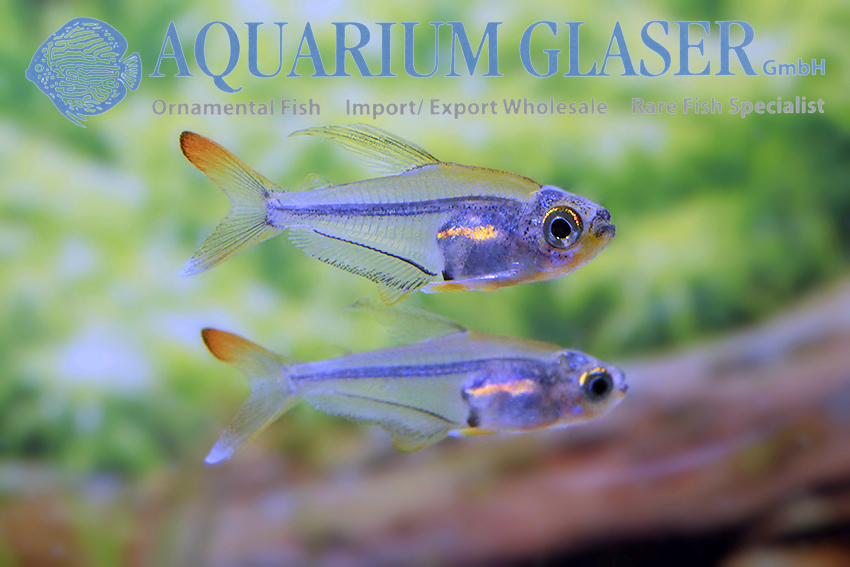
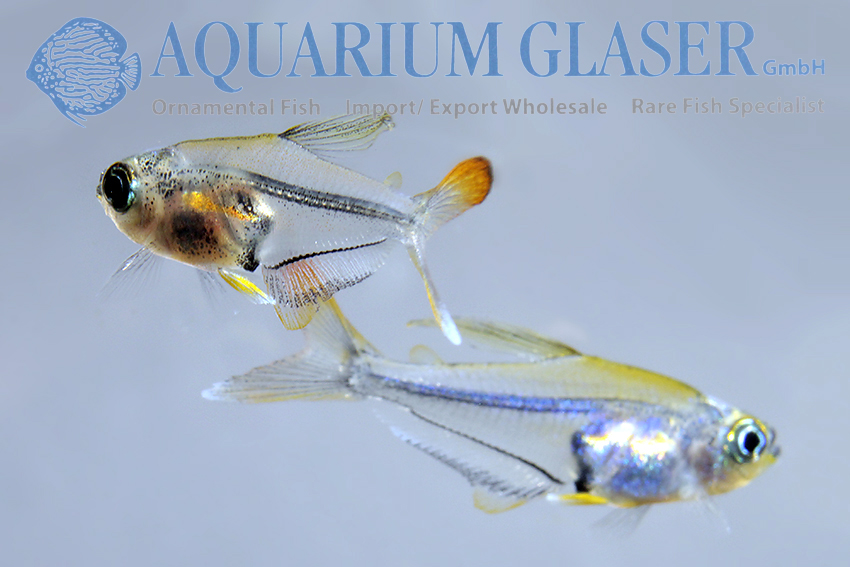
Males and females are very easy to distinguish, as the males have an elongated dorsal fin and colored ventral fins. The maximum length of these animals is less than 2 cm (excluding the caudal fin), males are significantly larger than females. The hummingbird tetras are adaptable with regard to close-up feeding and chemical water conditions. Any common ornamental fish food of a suitable size is readily accepted. They ignore other fish and plants.
Interestingly, these tetras have internal fertilization. It is not yet clear how they do it, but the females lay fertilized eggs on plant leaves and roots without the presence of males; of course, they must first be kept together with males. Apart from the tiny size of the young, breeding does not present any particular difficulties. You can find a free breeding report online (in German only) here: https://www.datz.de/suesswasser/243-der-kolibrisalmler-ein-zwerg-mit-innerer-befruchtung
For our customers: The fish have code 258332 on our stocklist. Please note that we only supply the wholesale trade.
Lexicon: Heterocharax: means “deviant Charax”. Charax is a different genus of characin. Trochilocharax: after the scientific word for “hummingbirds”, Trochilidae, which in turn is derived from the ancient Greek word “trochilos”, which was used by Aristotle for a small bird. Charax is another tetra genus. ornatus: Latin, means “adorned”. Tyttocharax: ancient Greek, means “tiny charax”. Charax is another genus of characin.
Text & photos: Frank Schäfer
