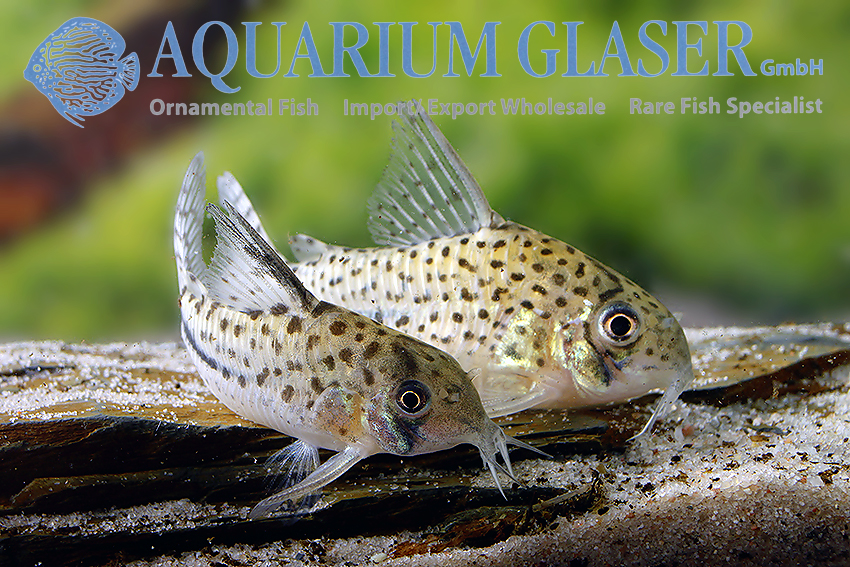
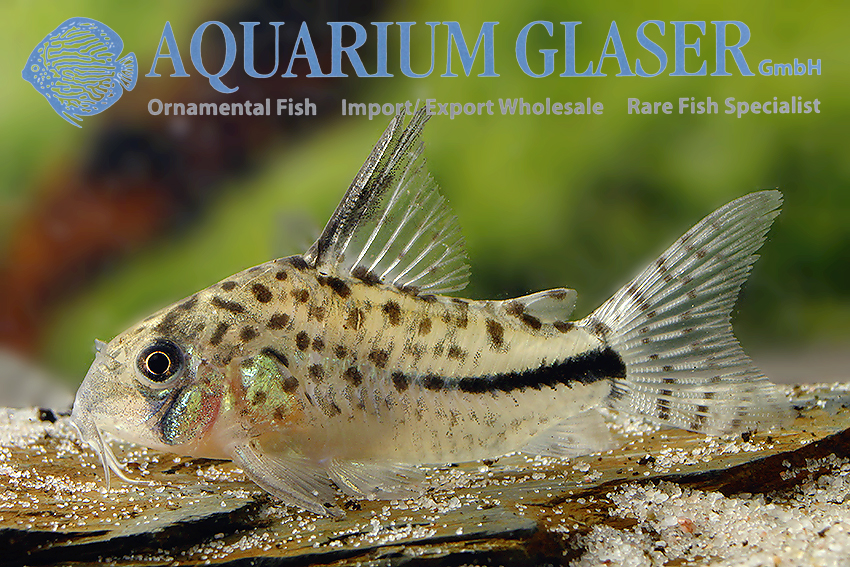
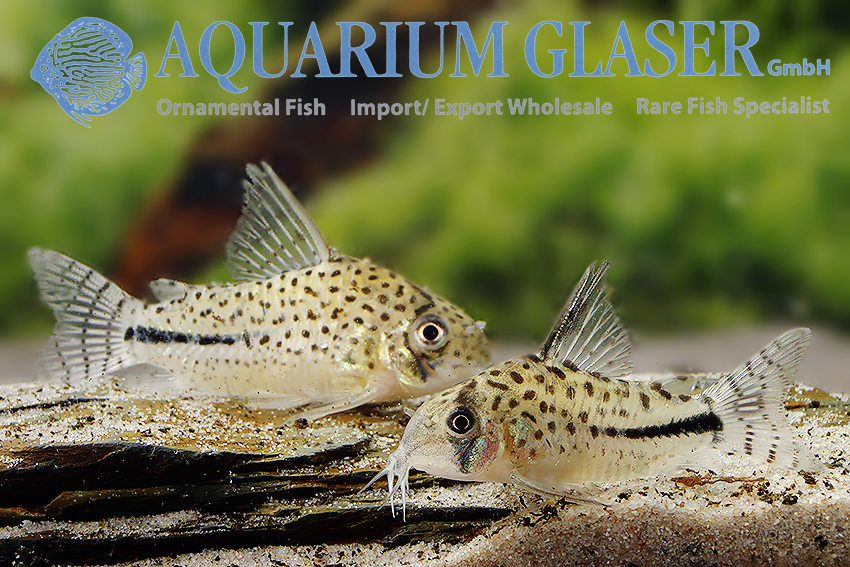
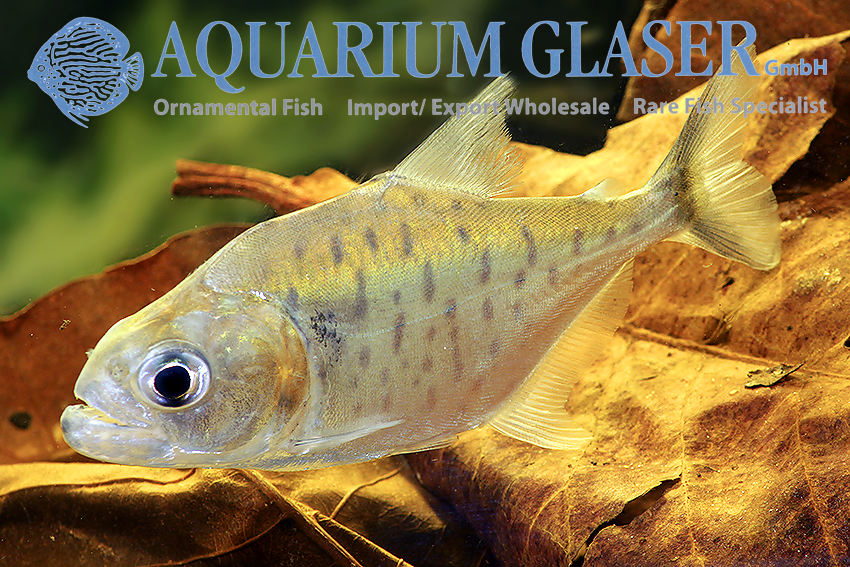
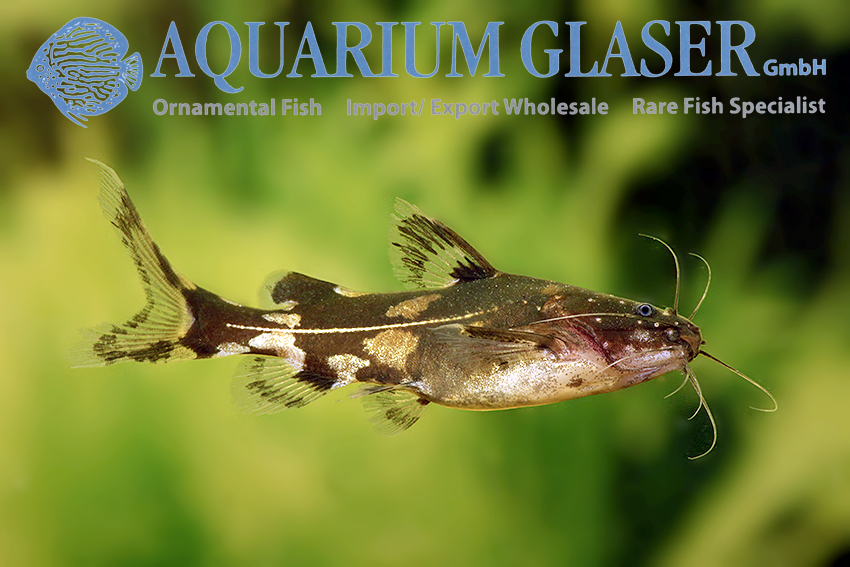
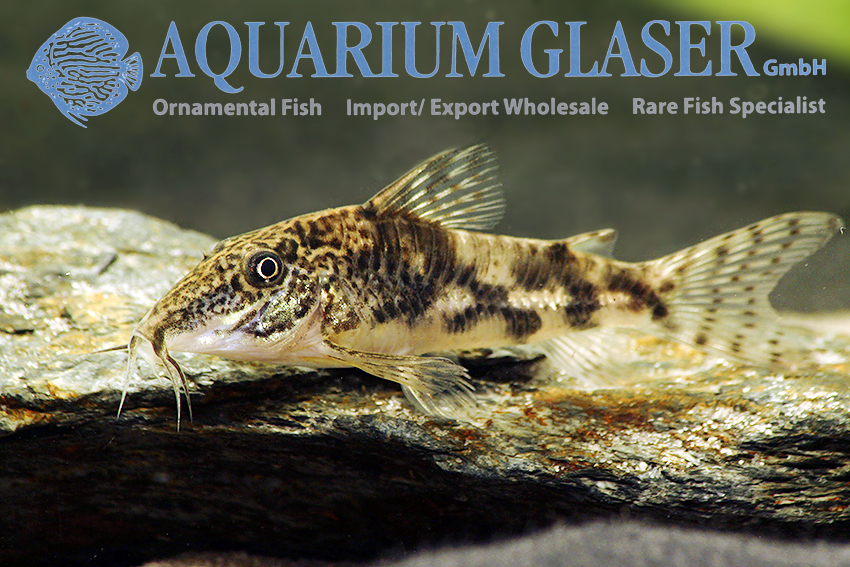
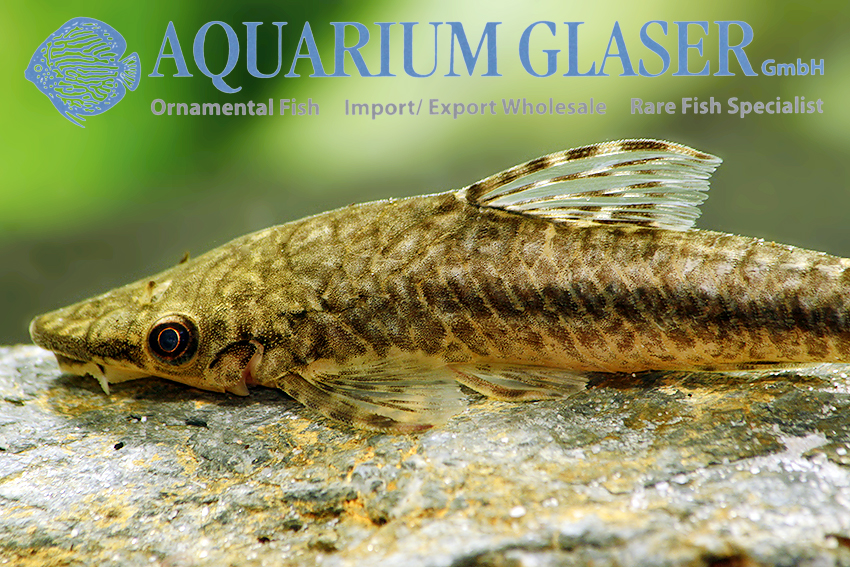
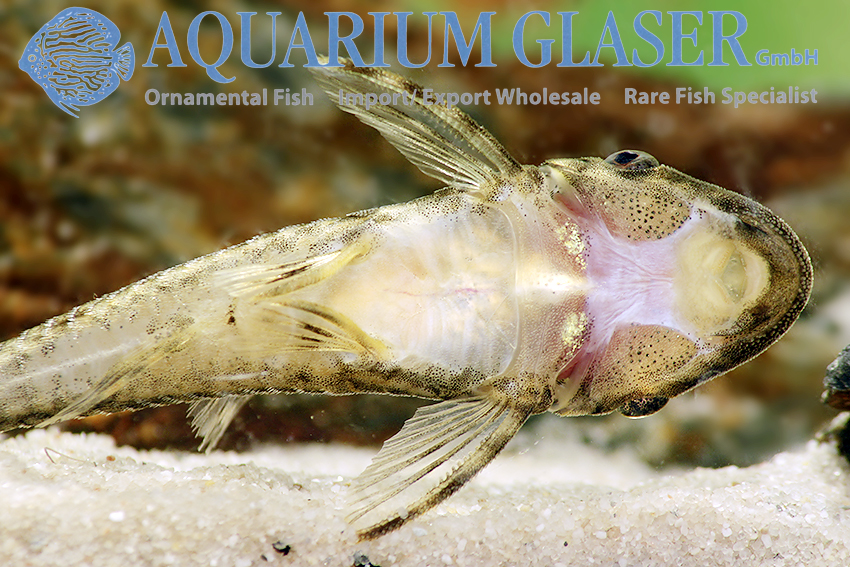
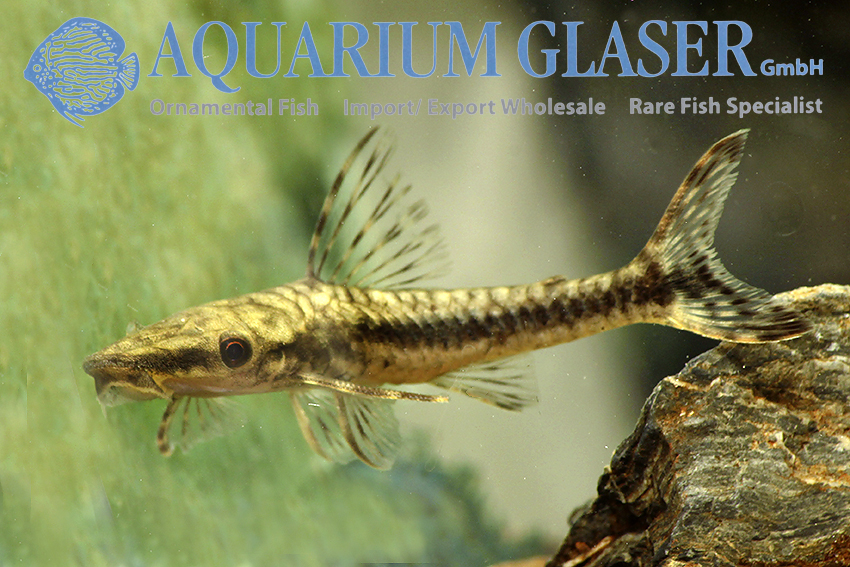
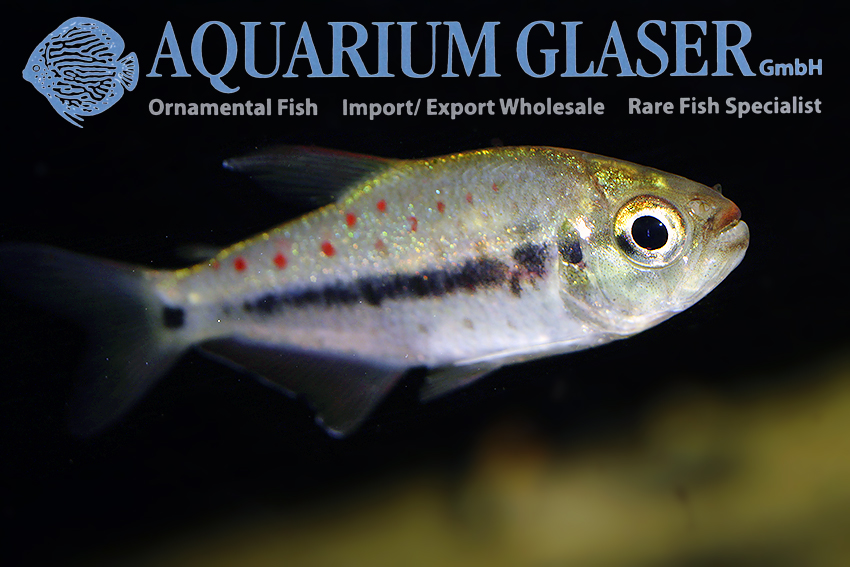
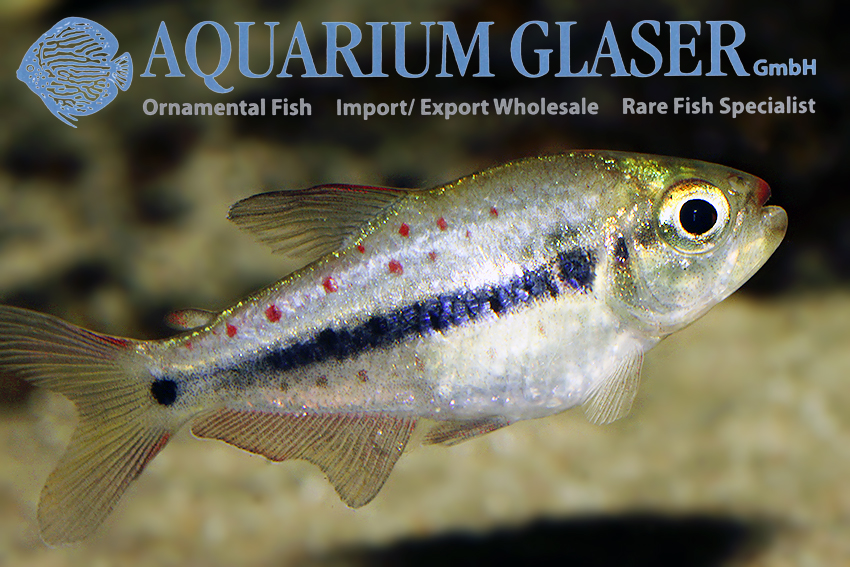
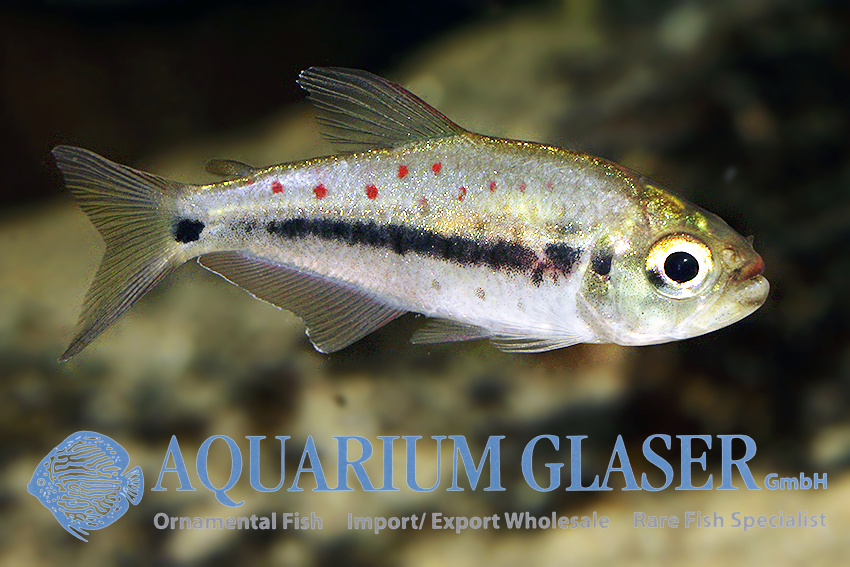
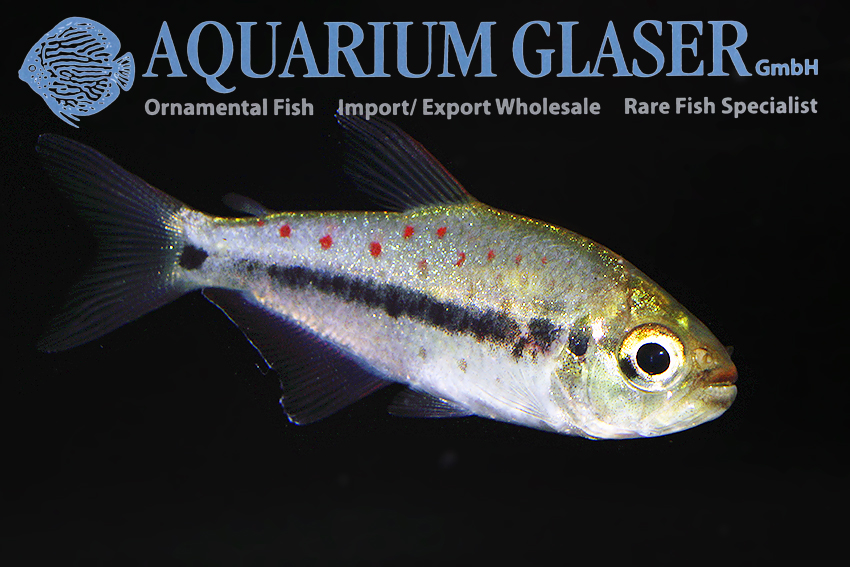
Author Archives: Frank Schäfer

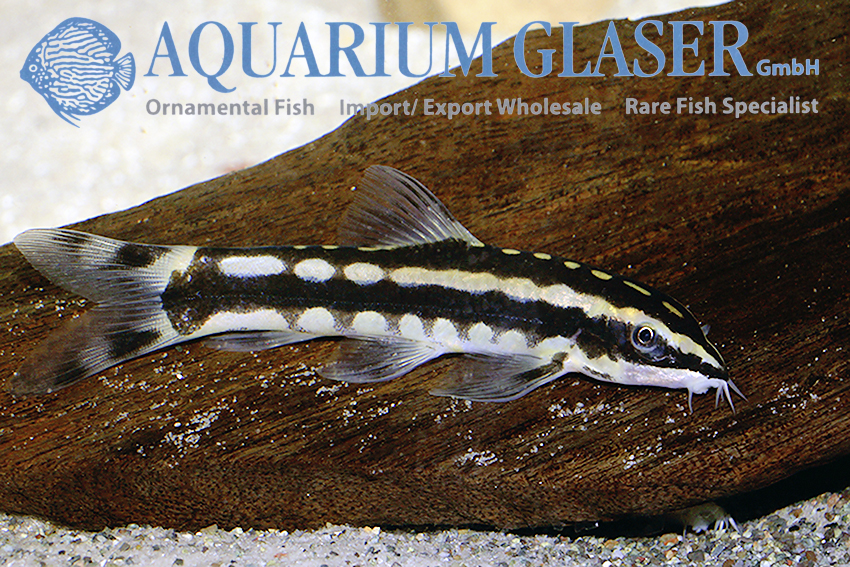
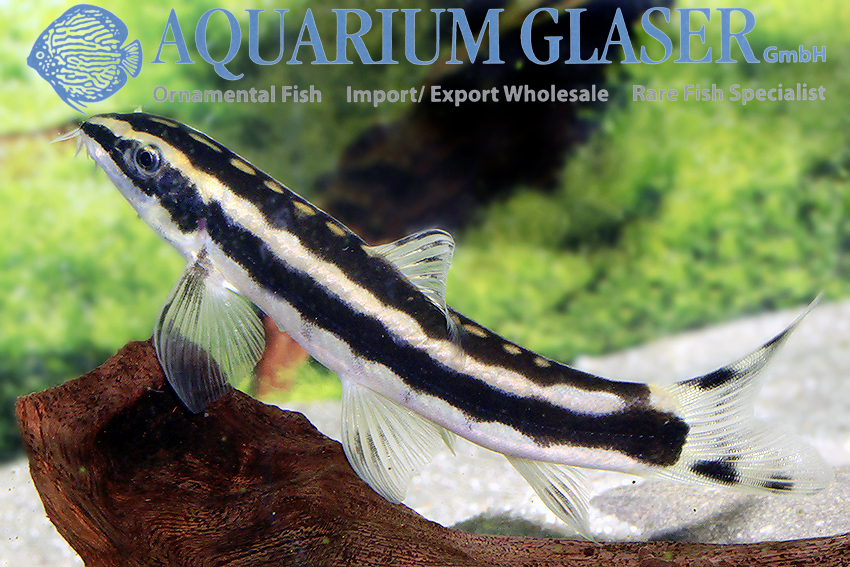
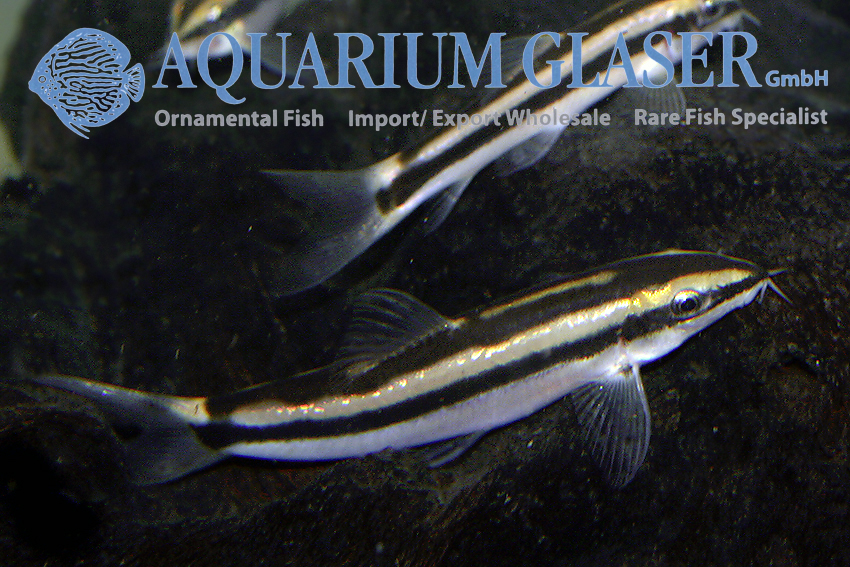
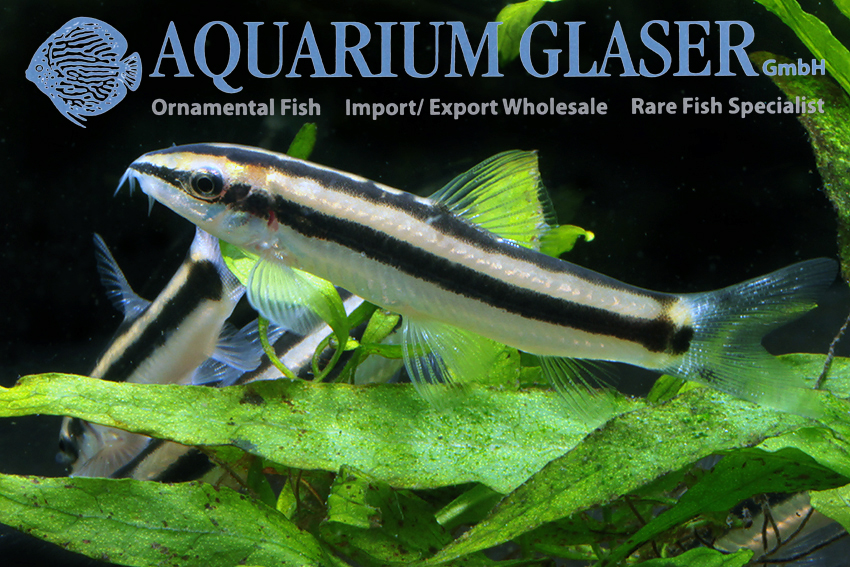
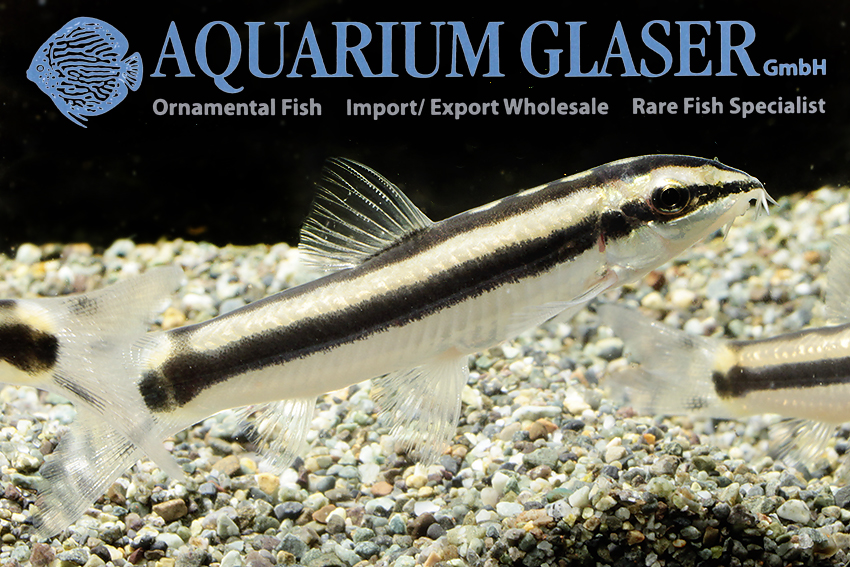
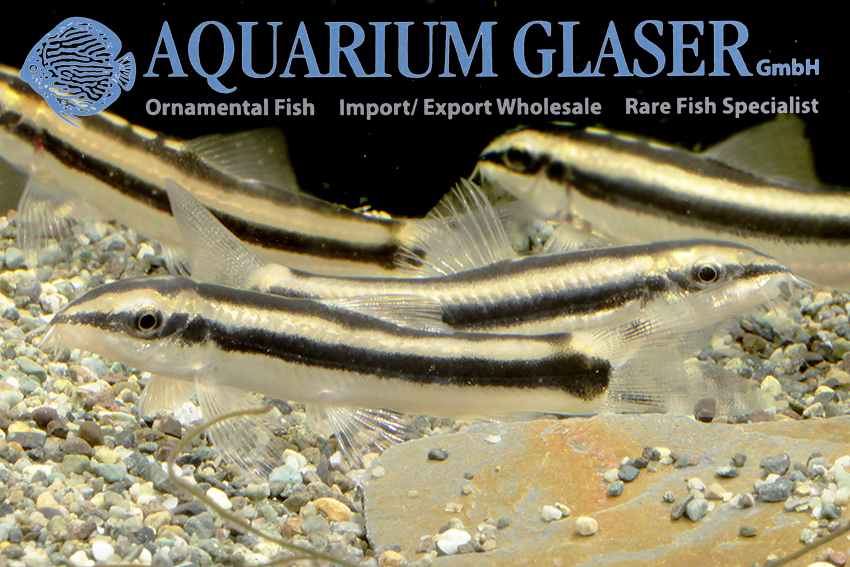
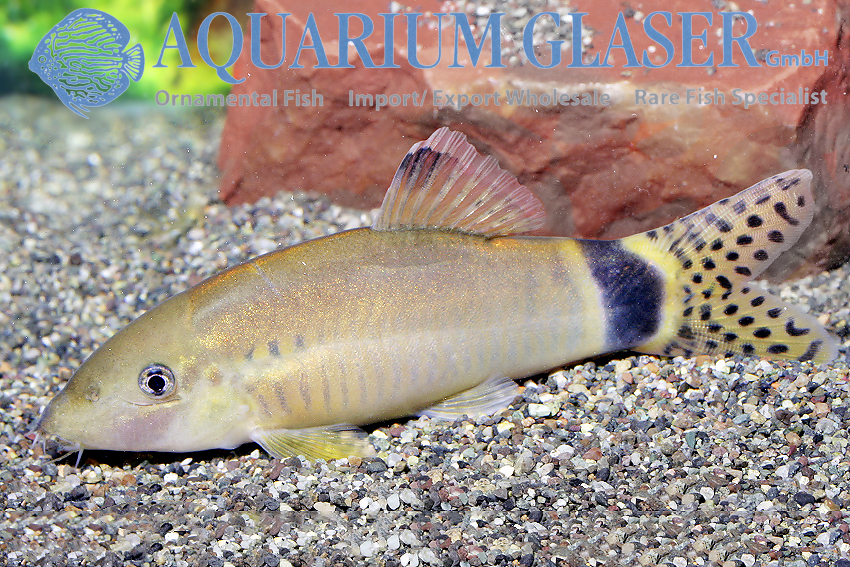
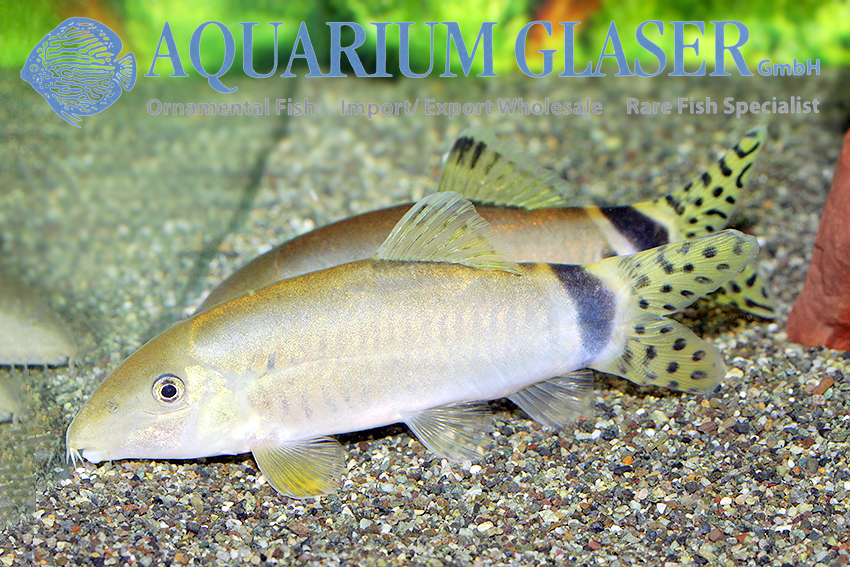
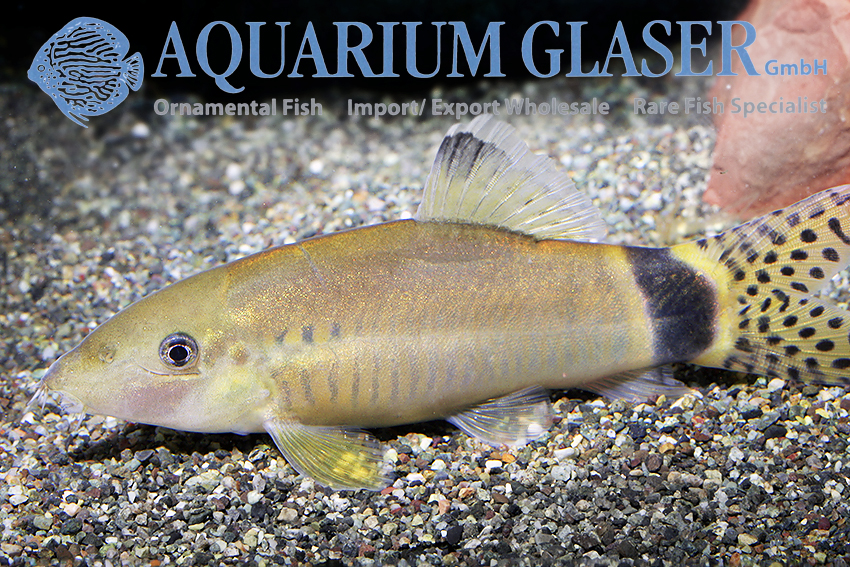
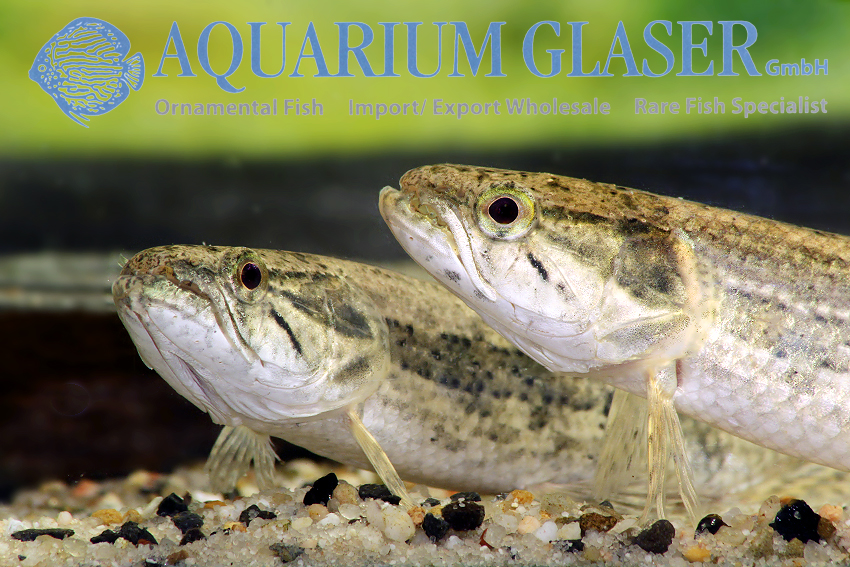
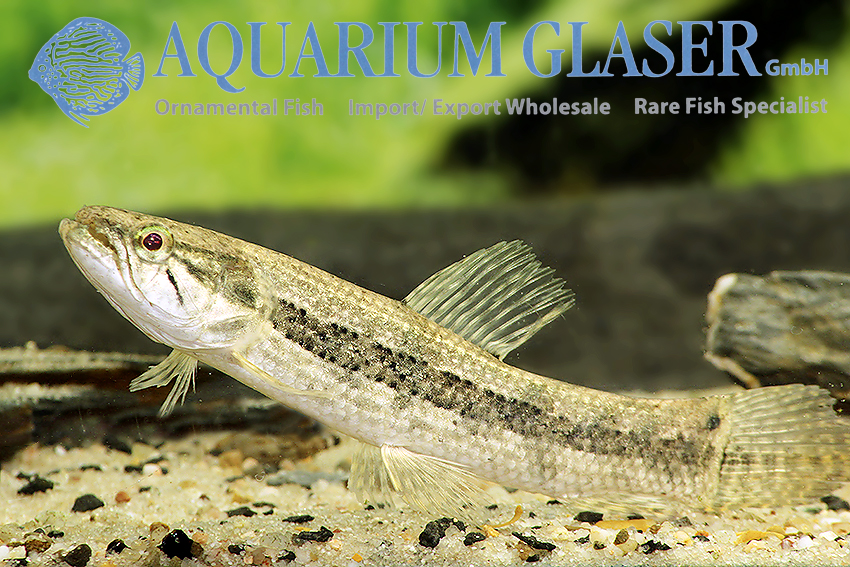
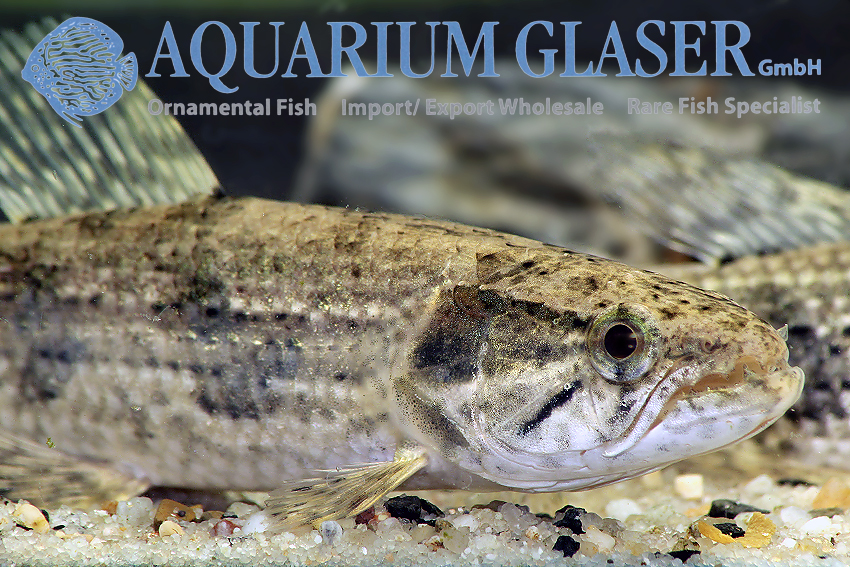
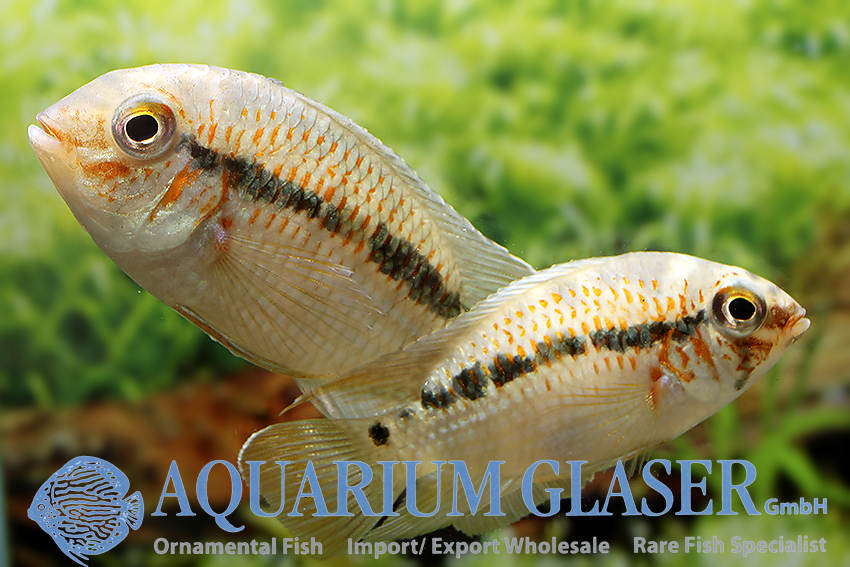
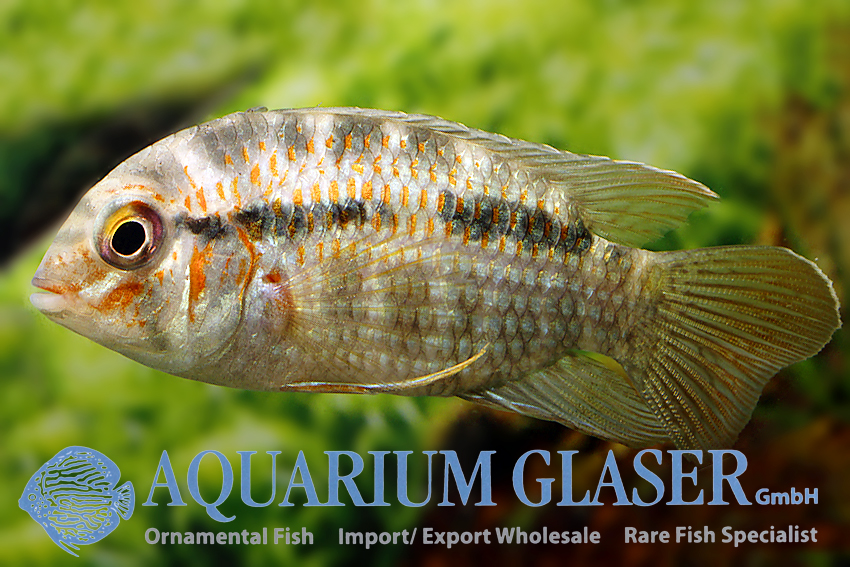
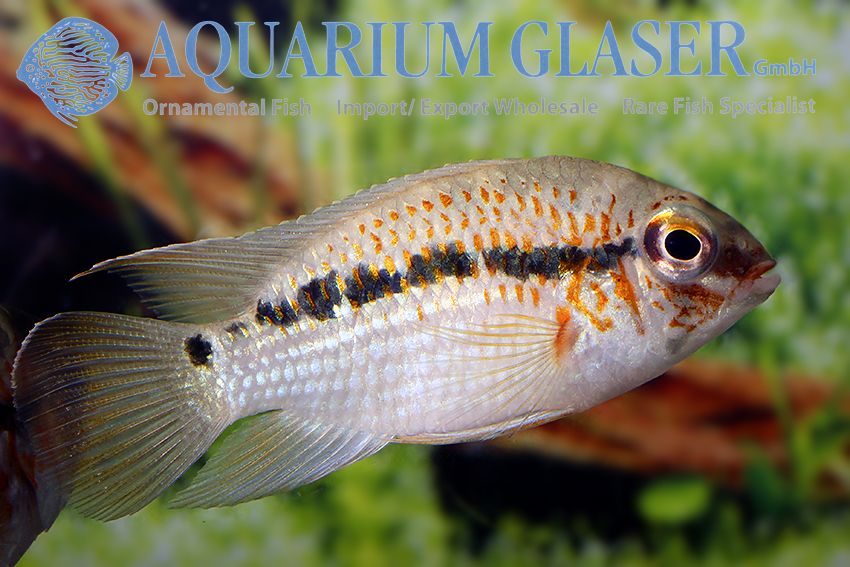
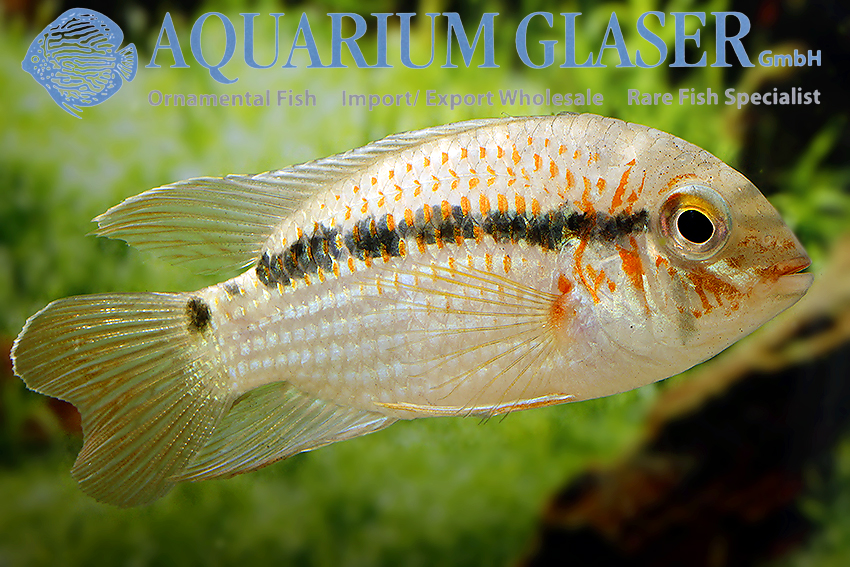
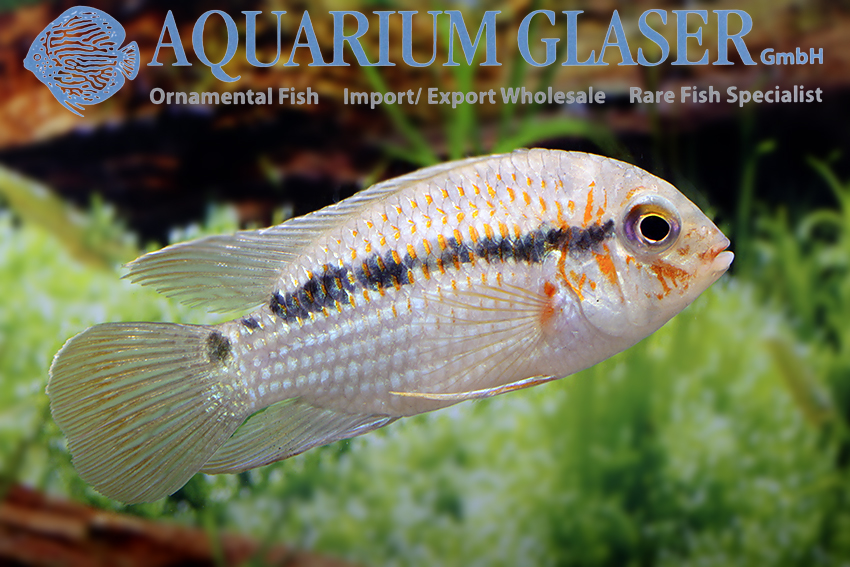
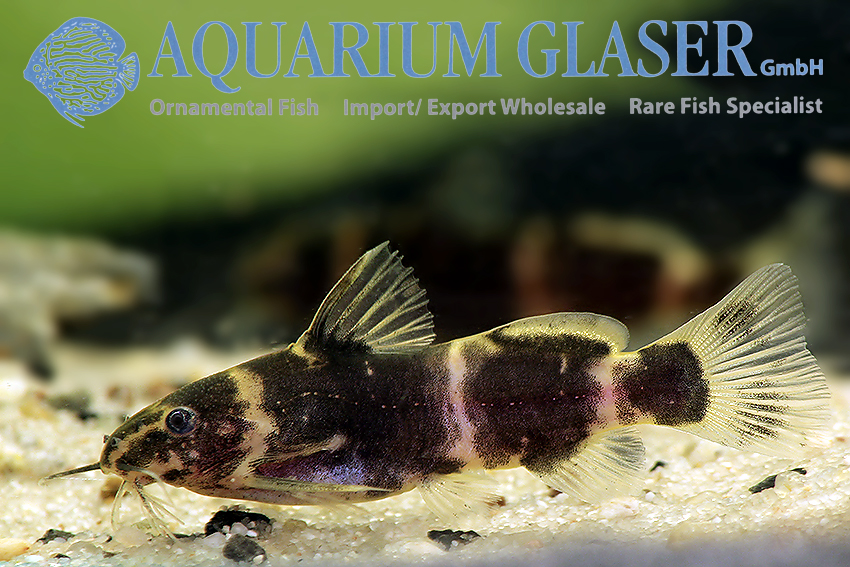
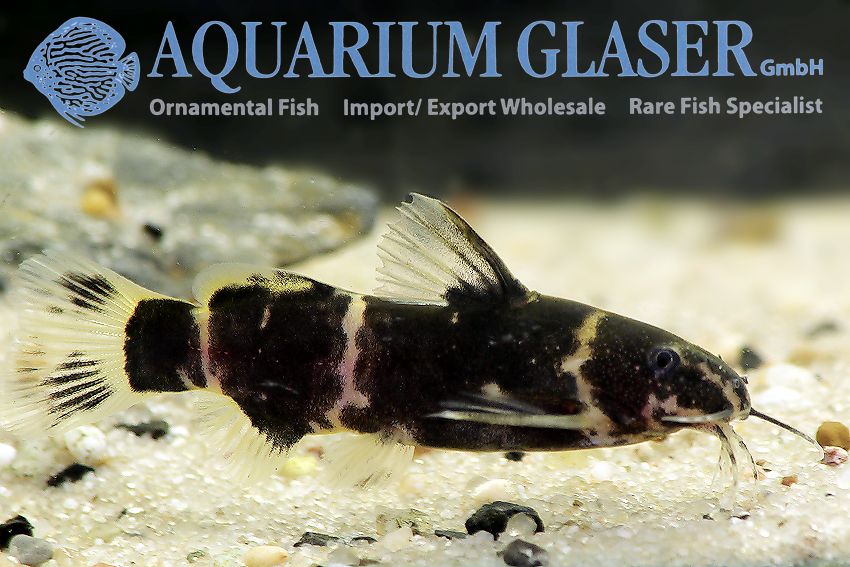
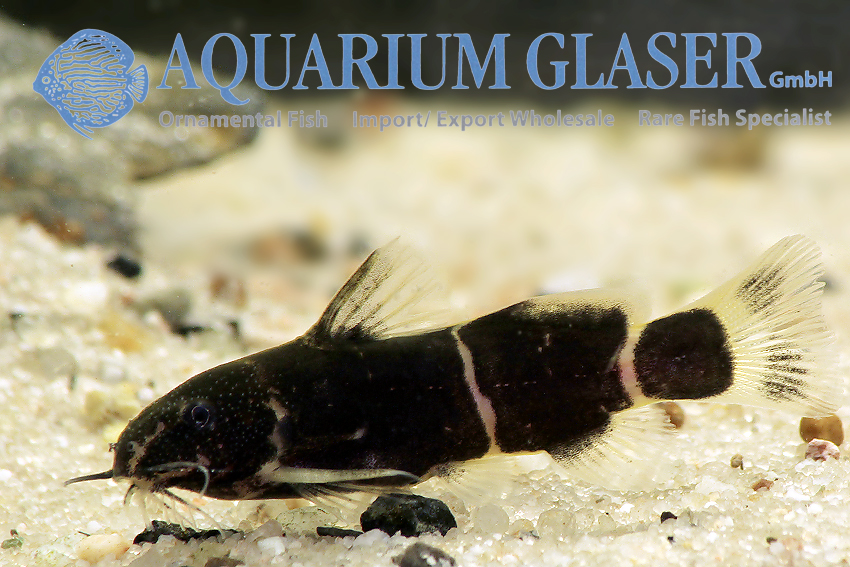
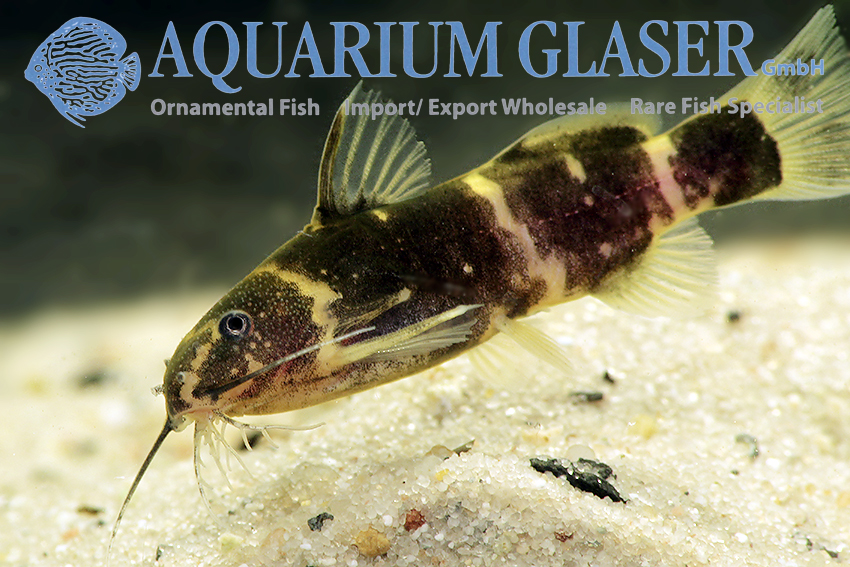
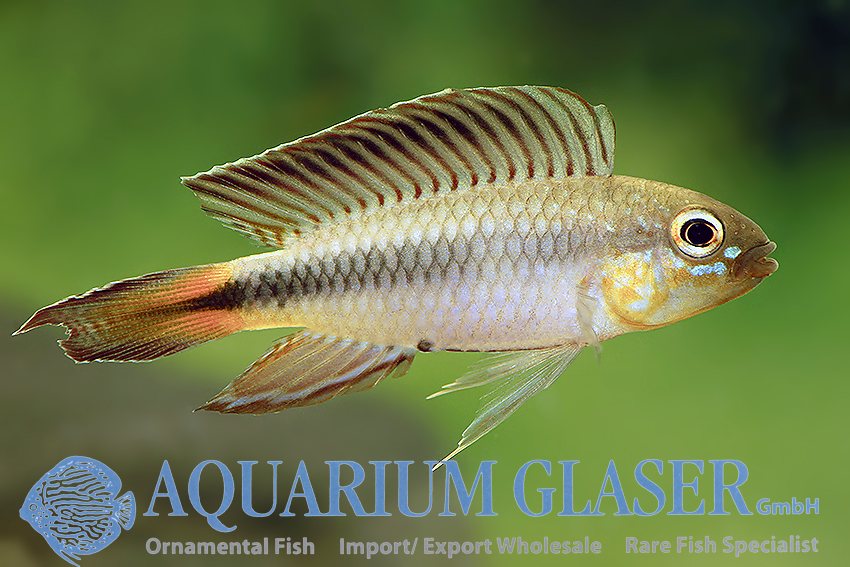
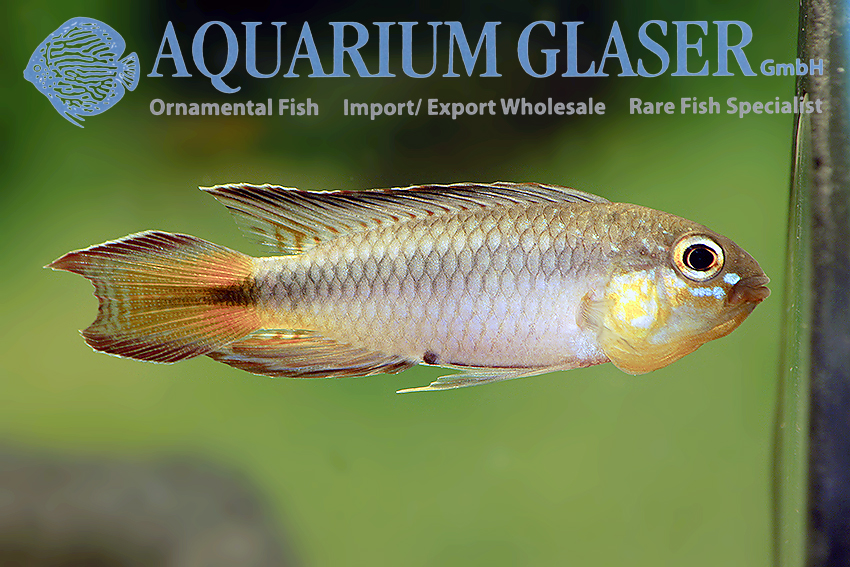
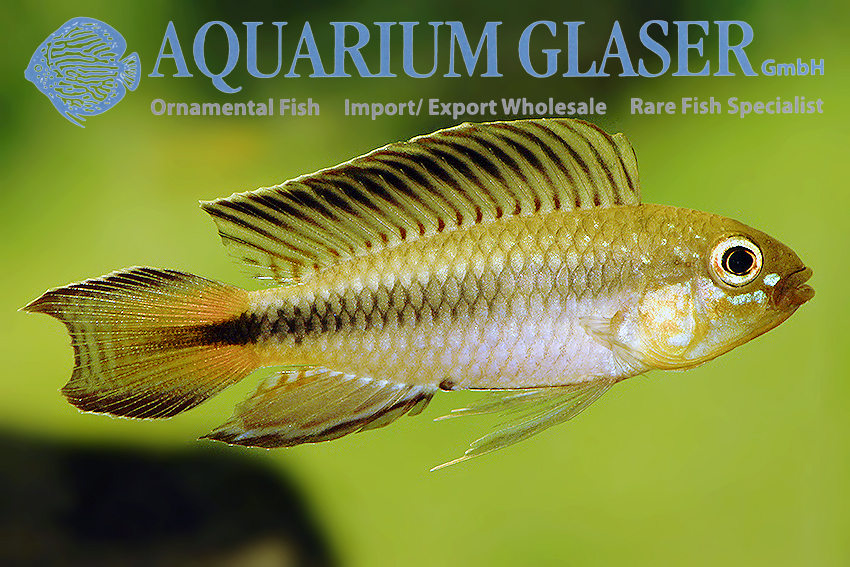
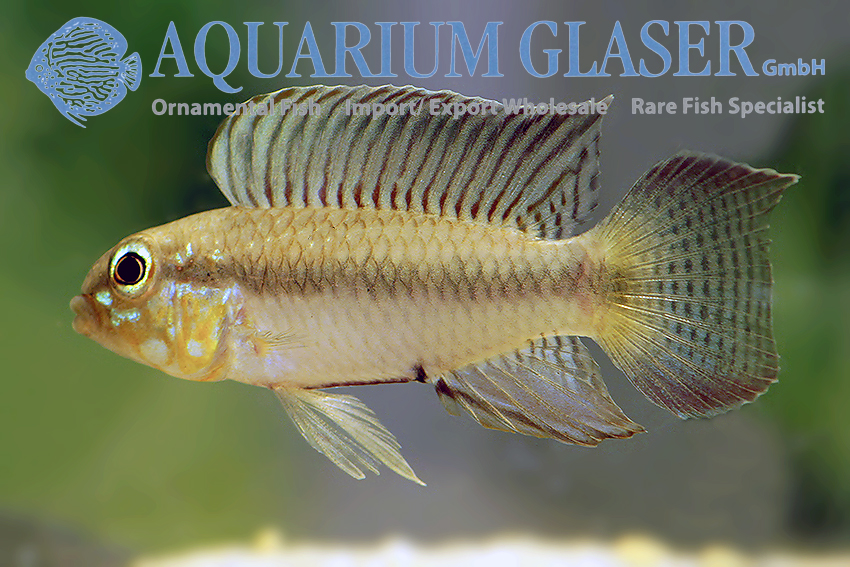
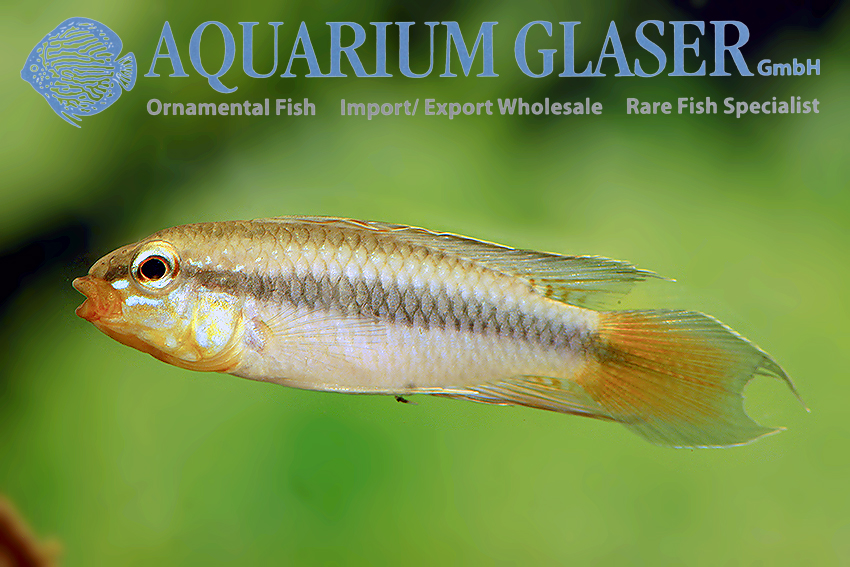
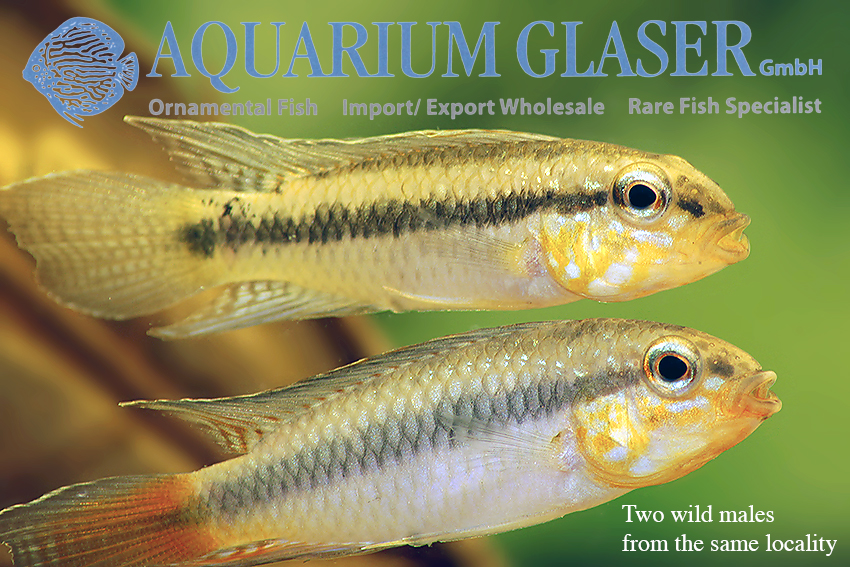
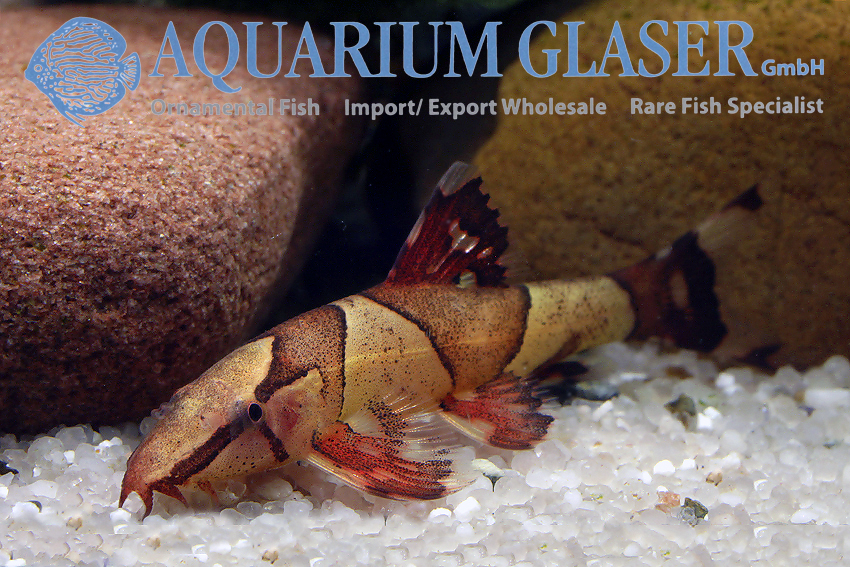
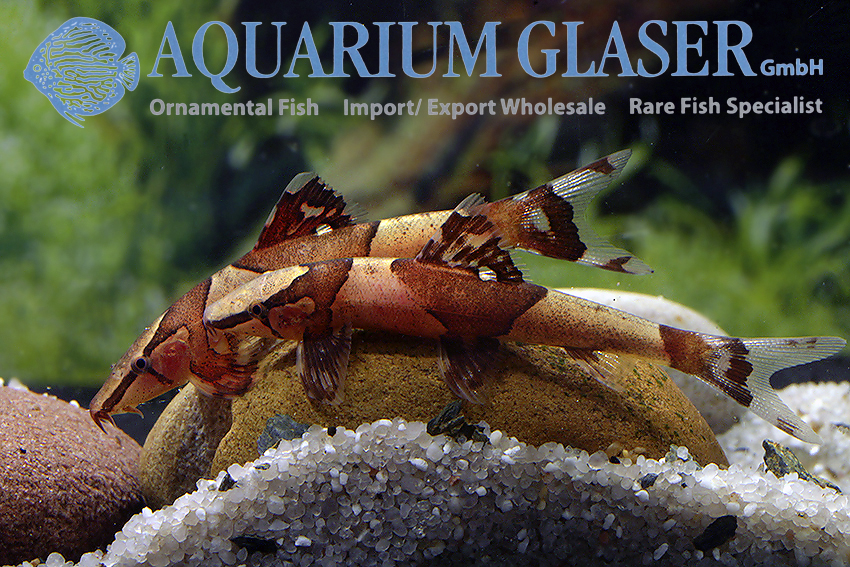
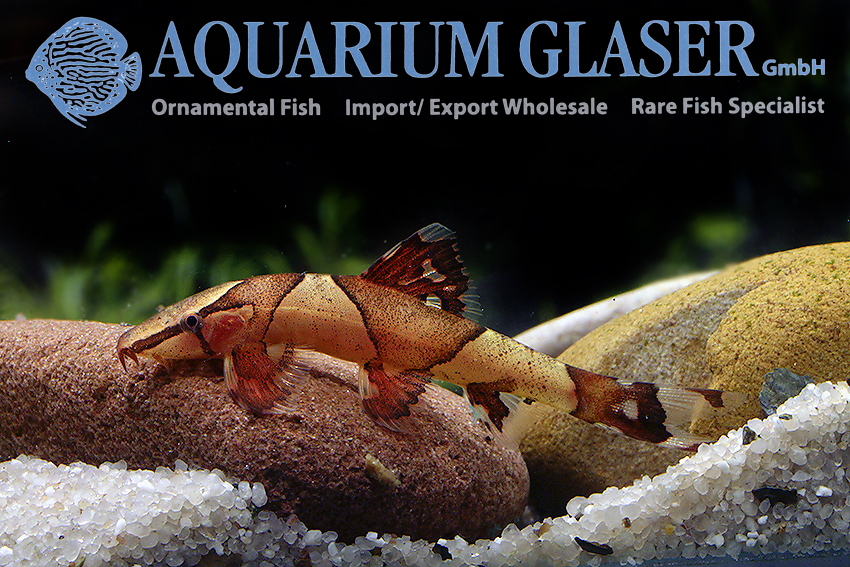
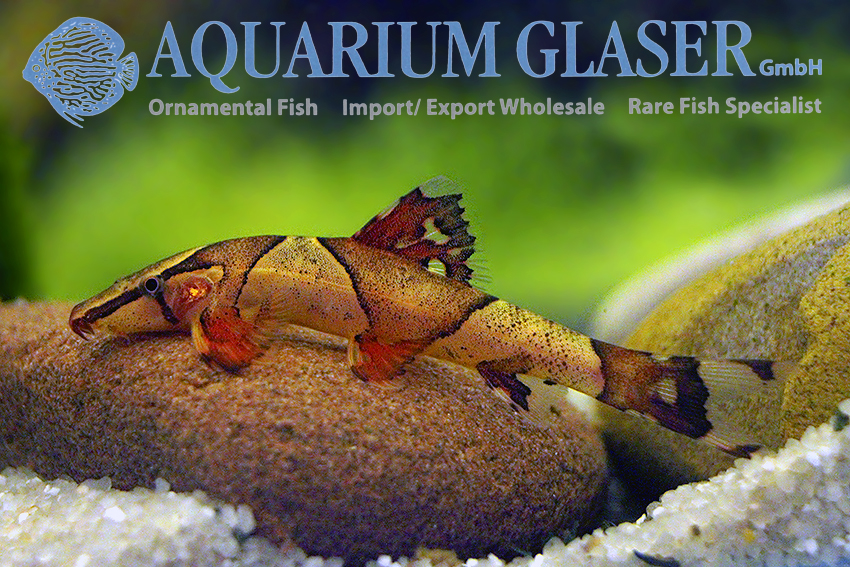
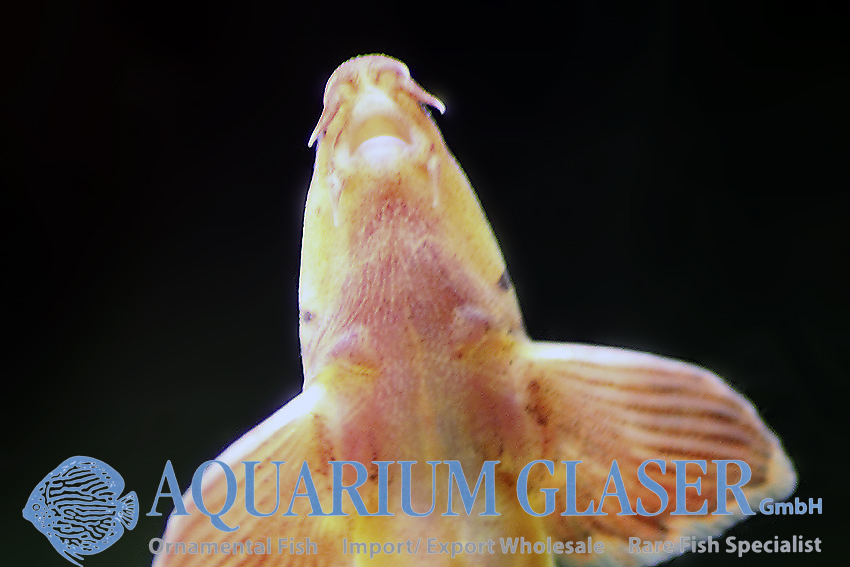
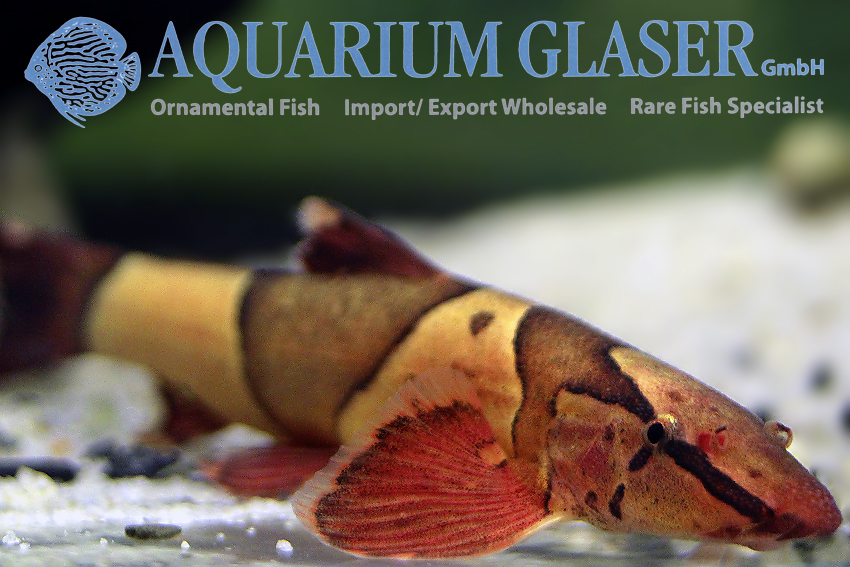
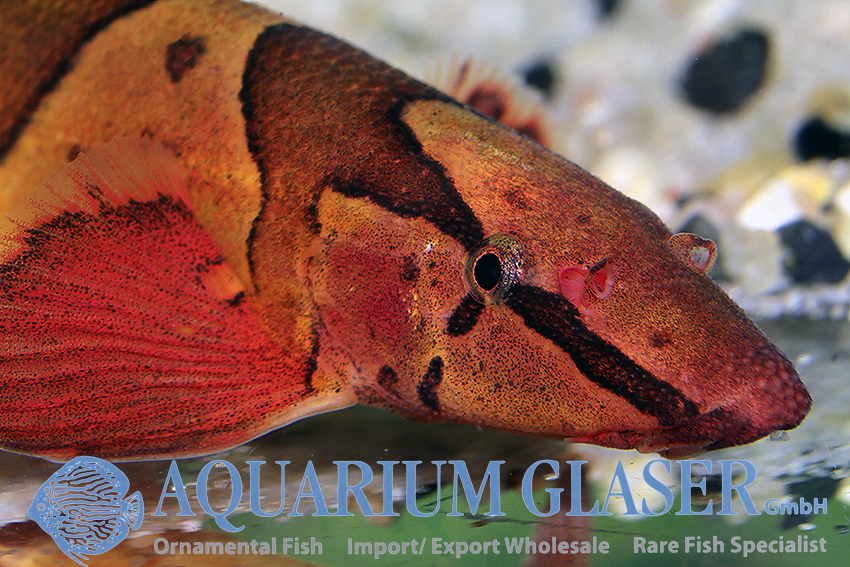
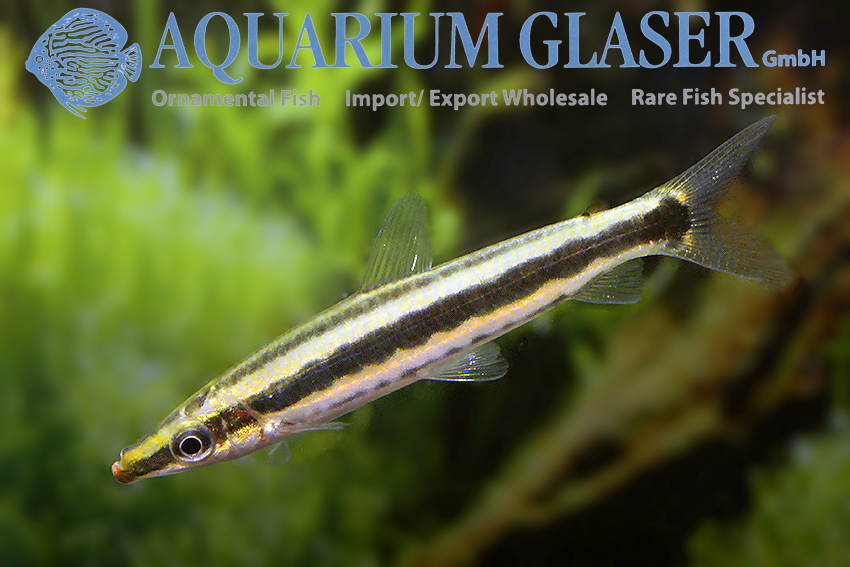
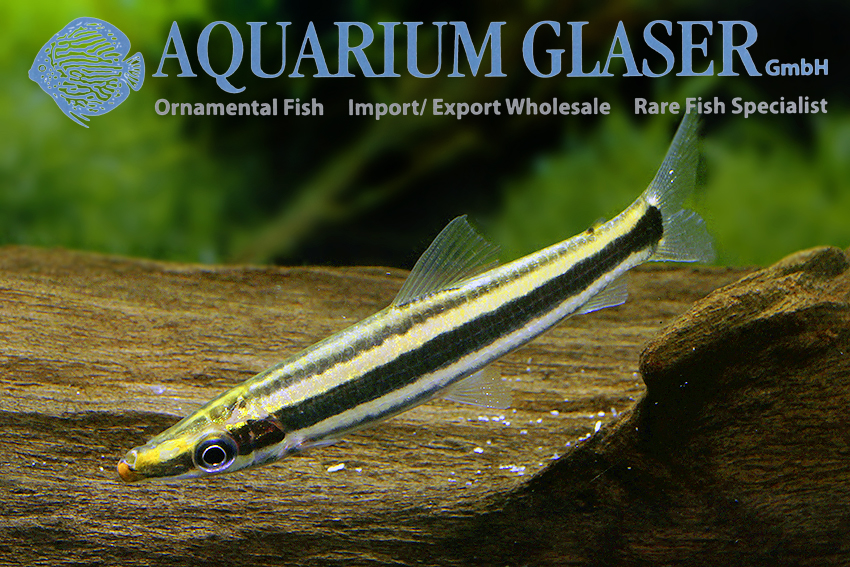
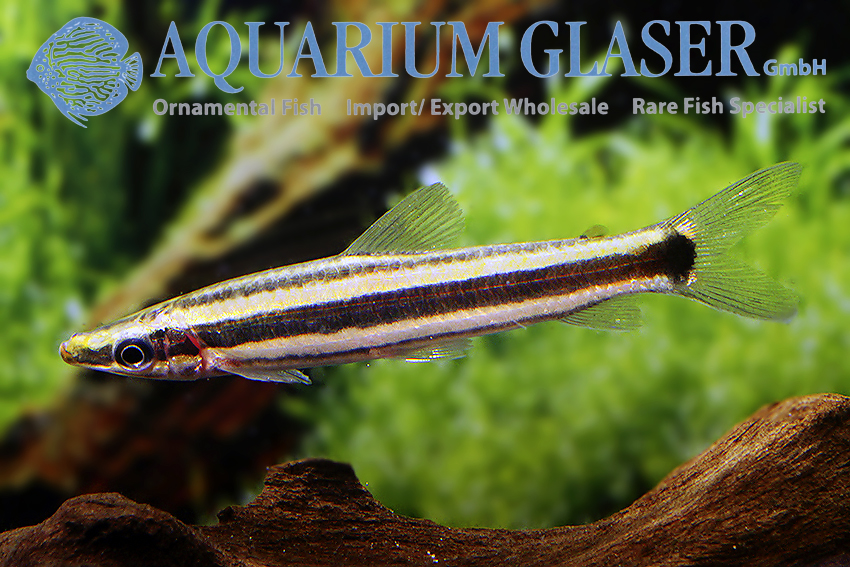
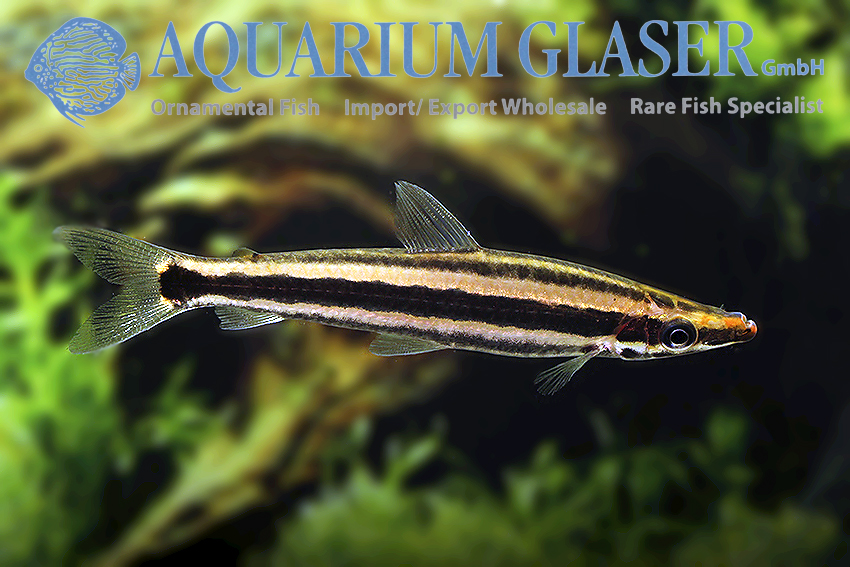
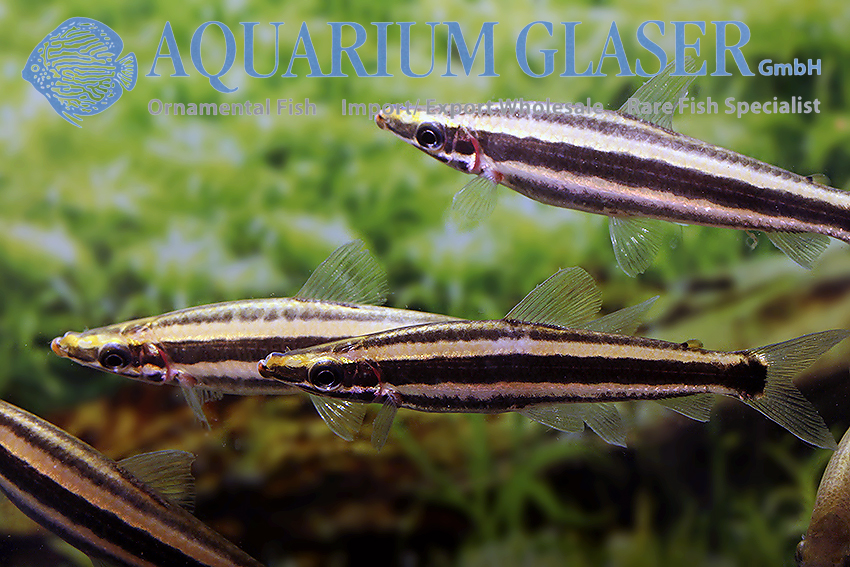
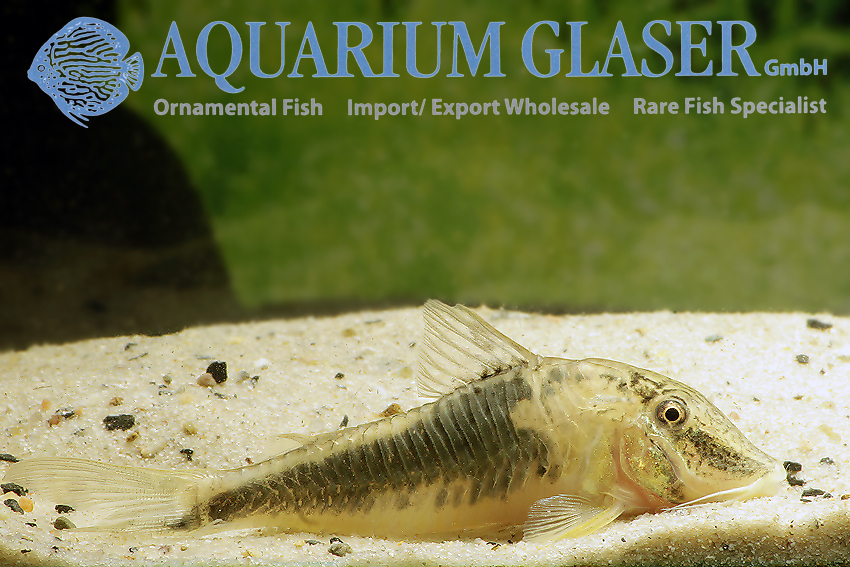
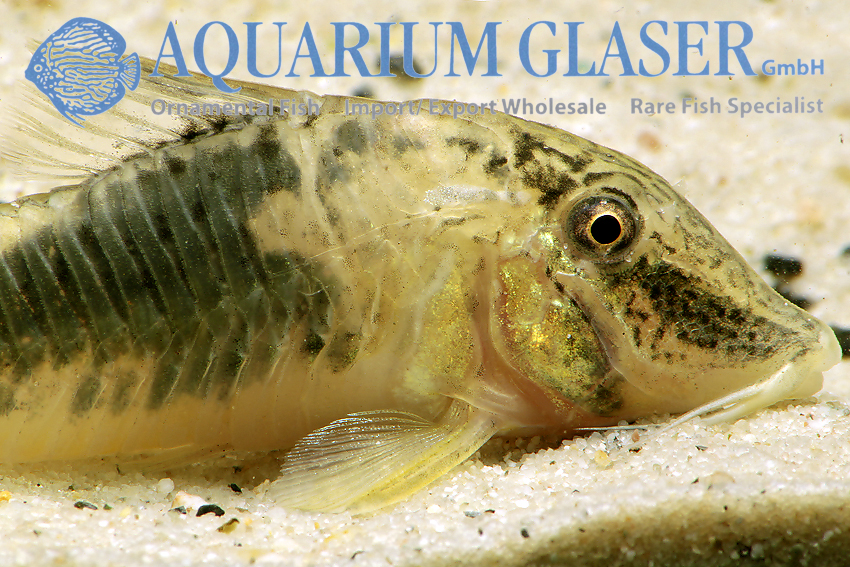
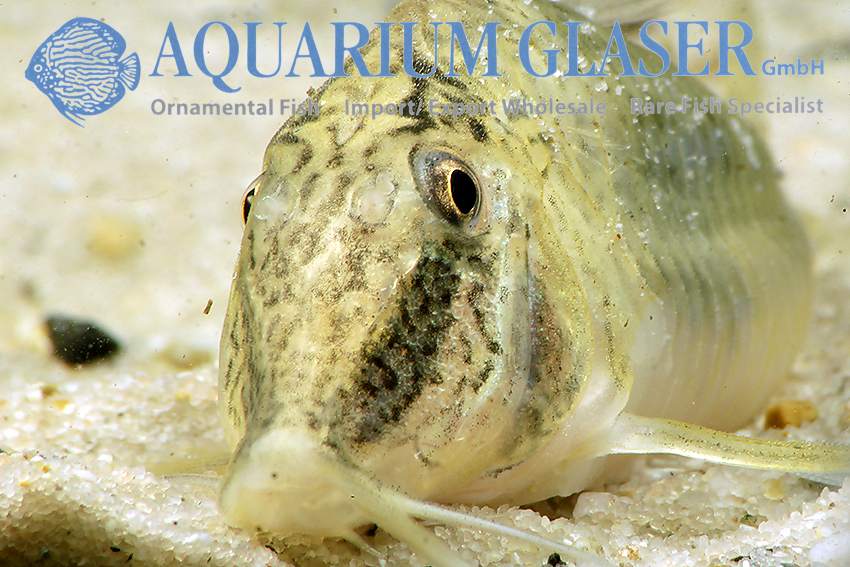
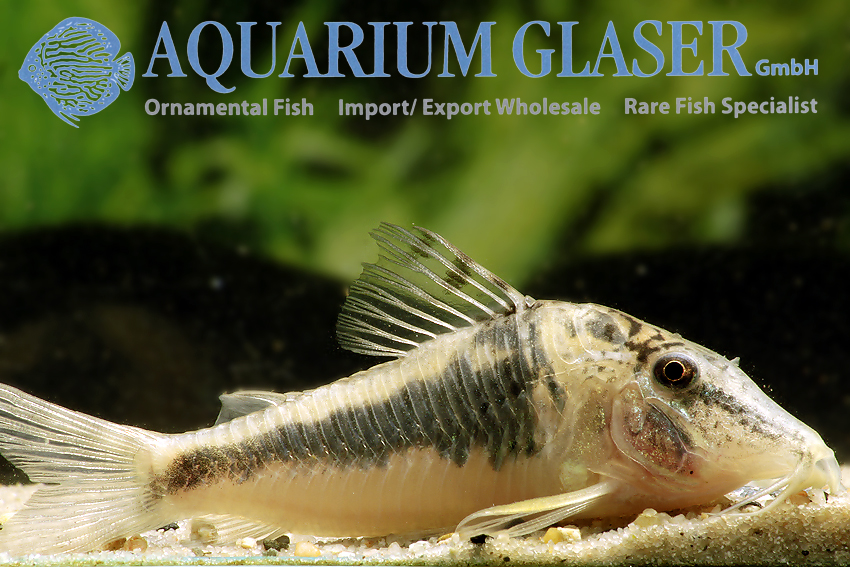
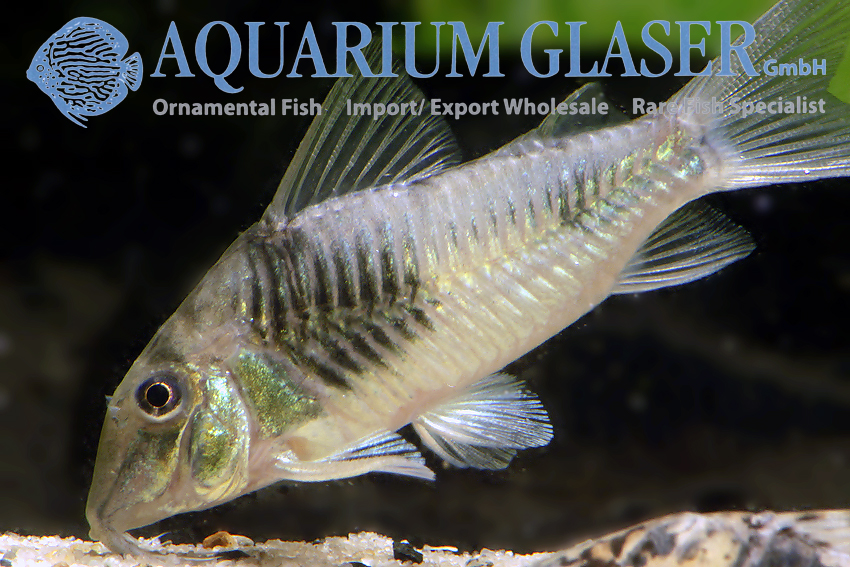
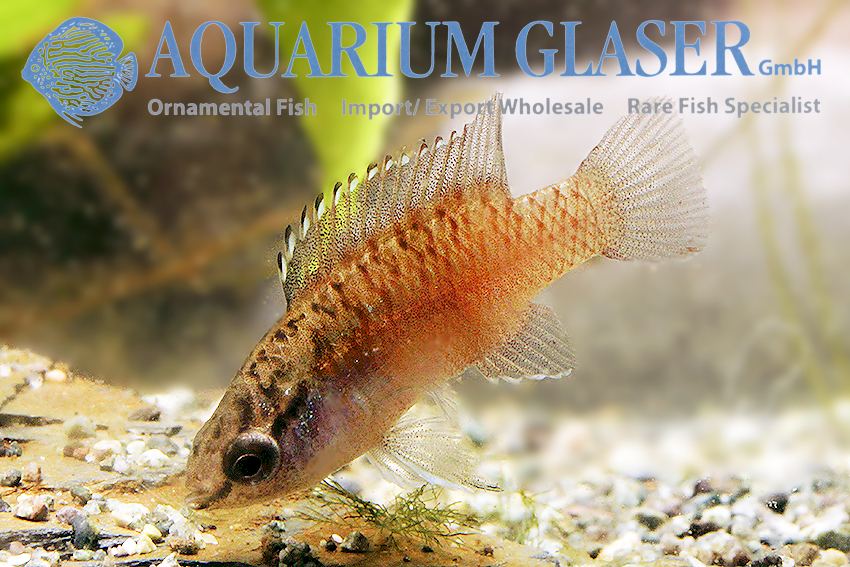
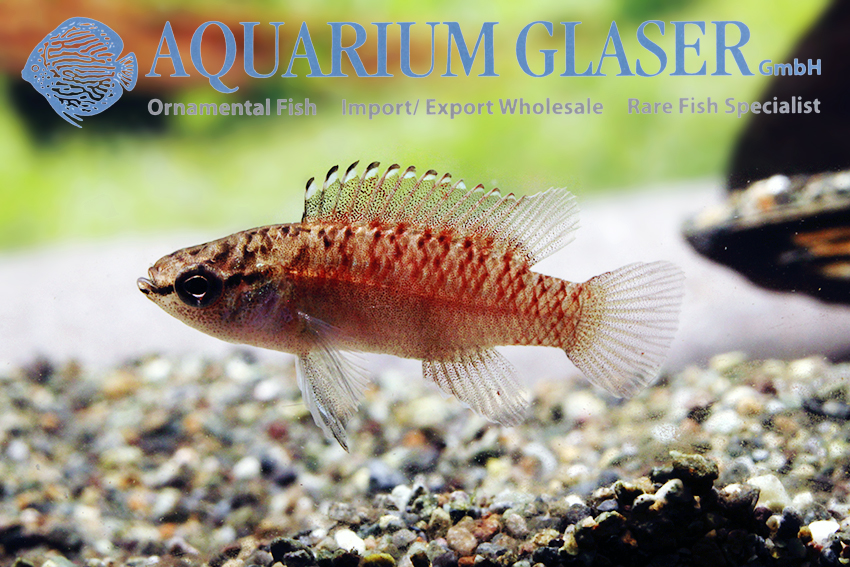
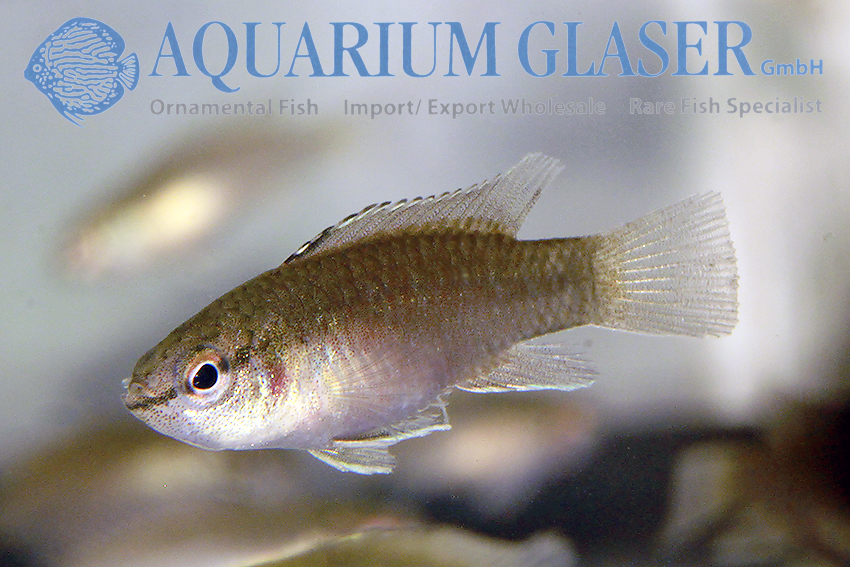
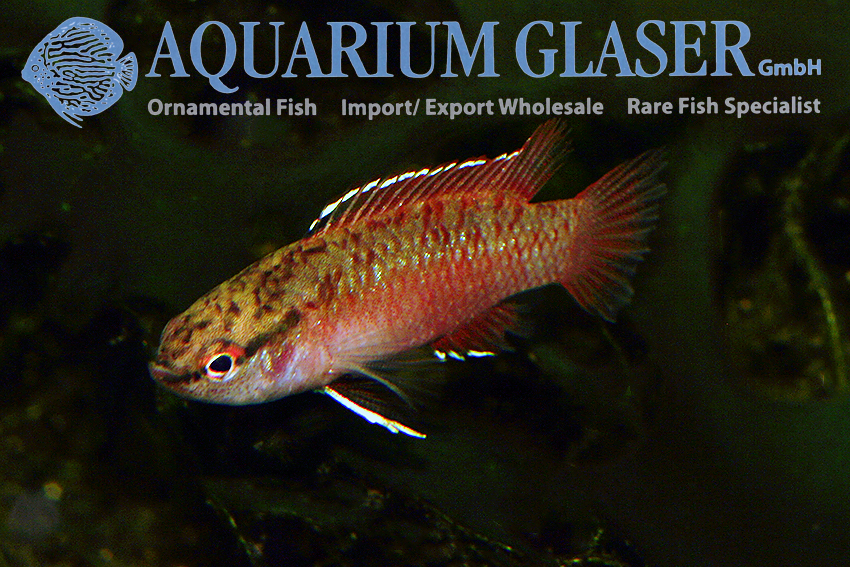
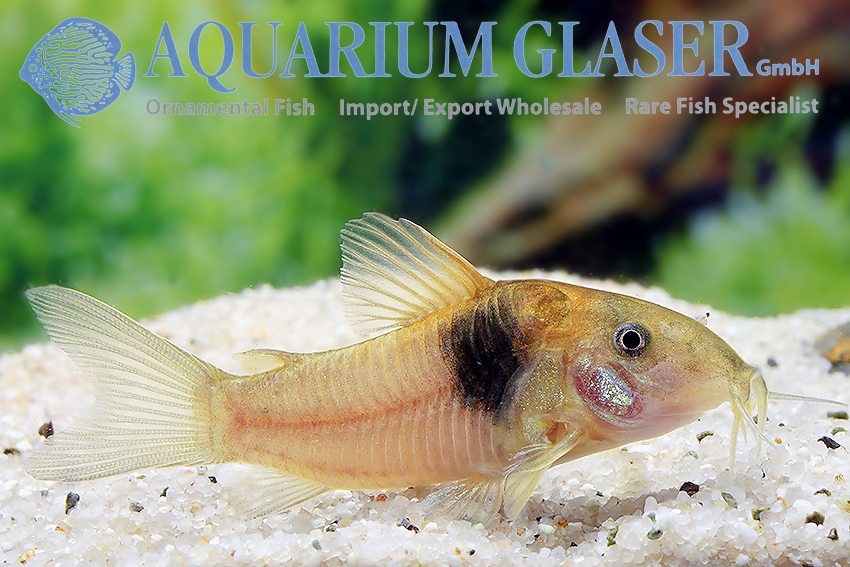
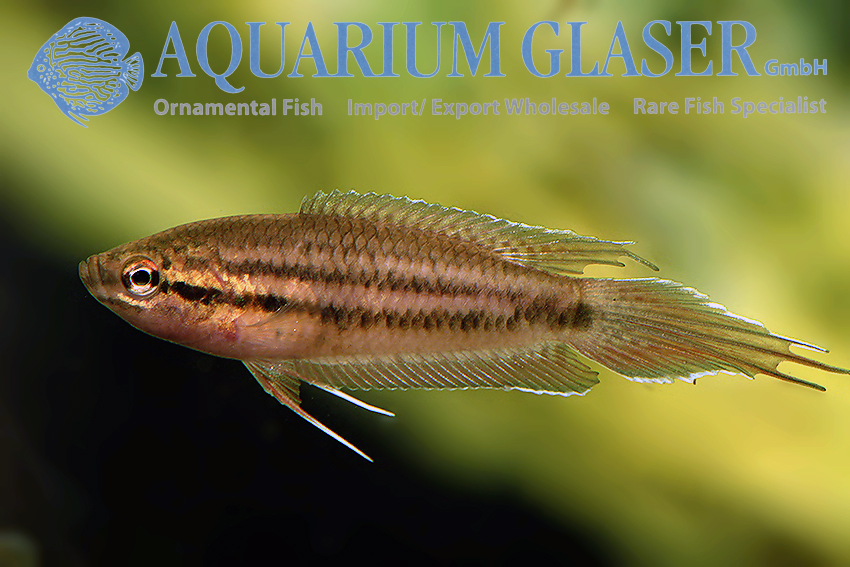
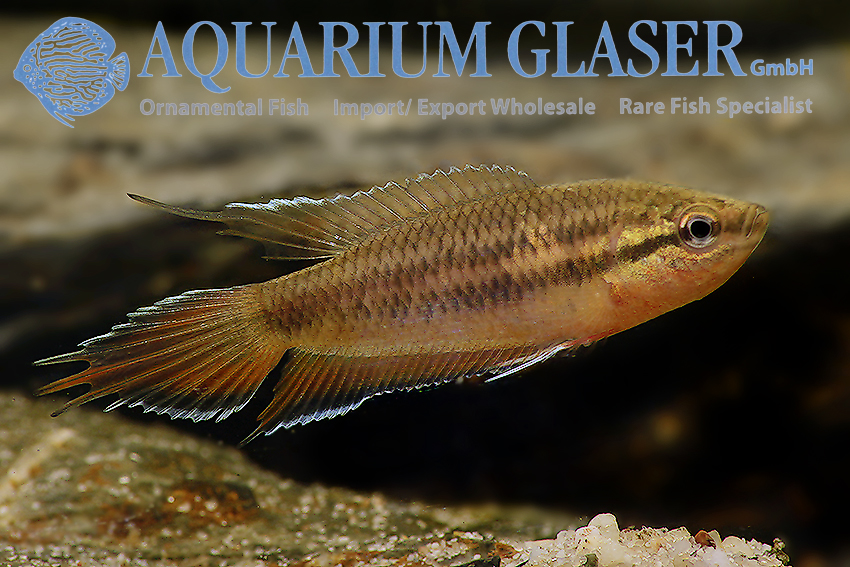
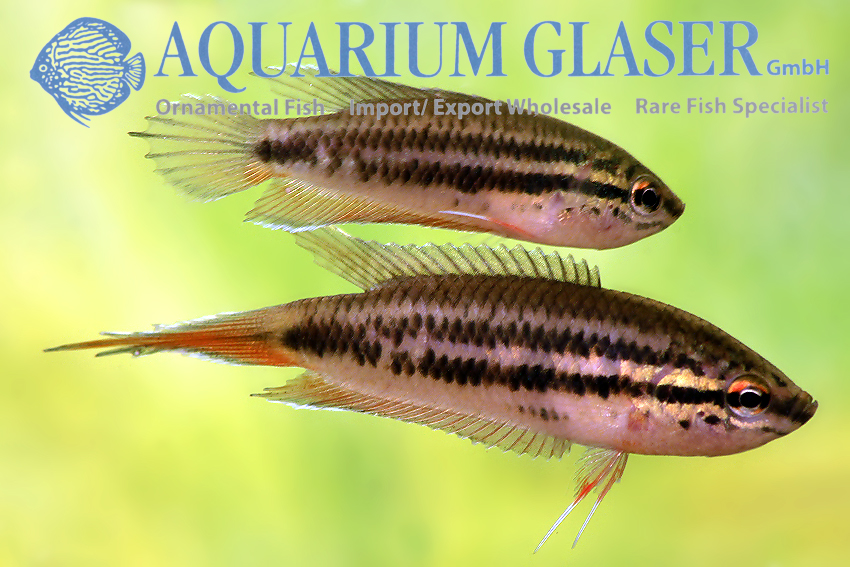
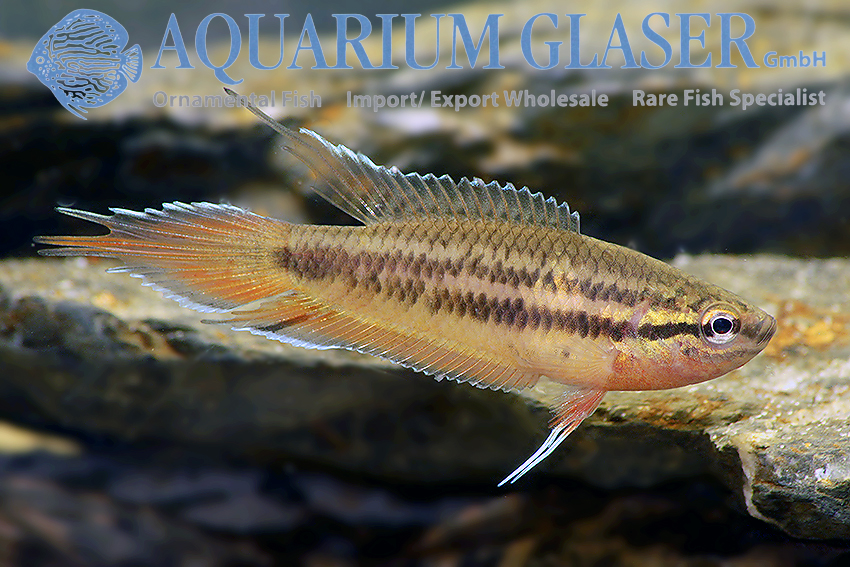
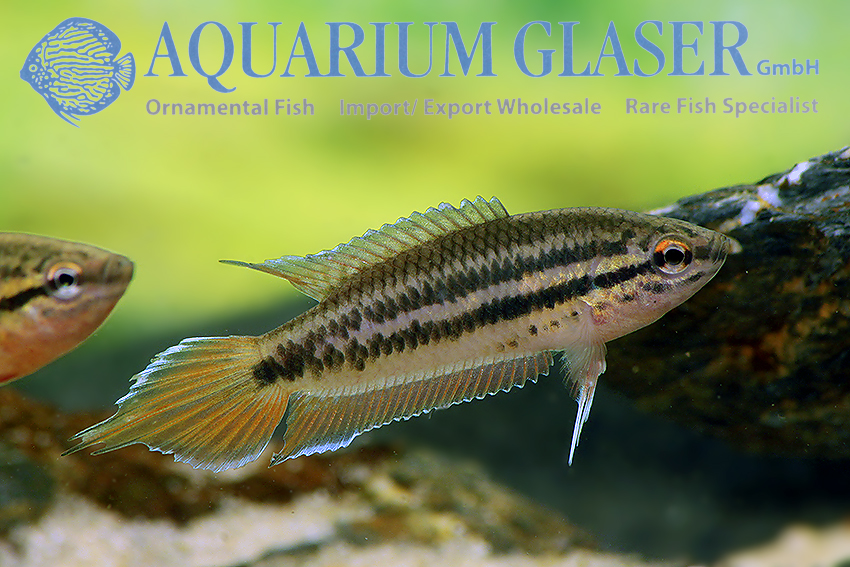
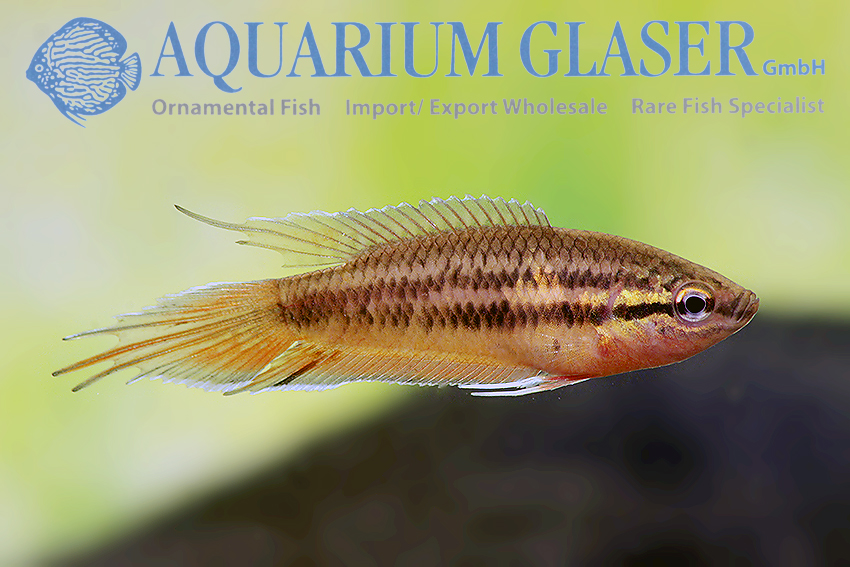
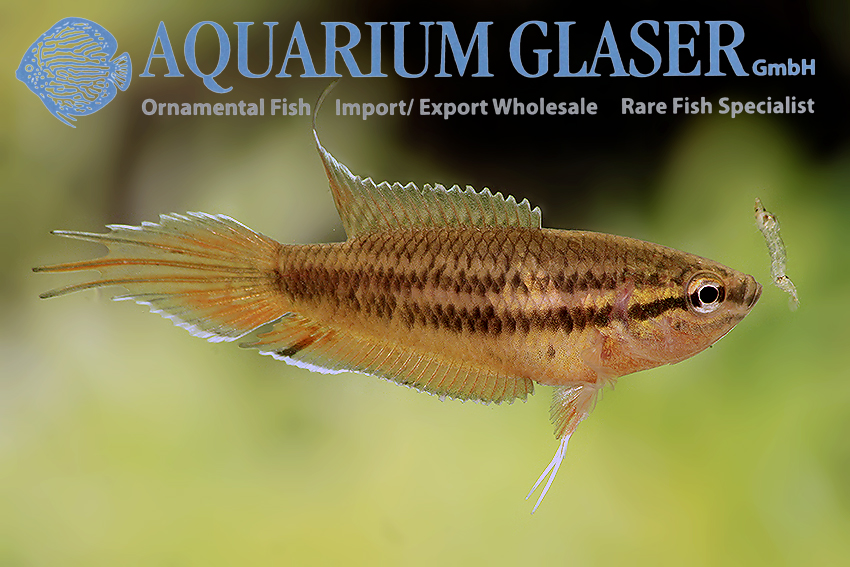
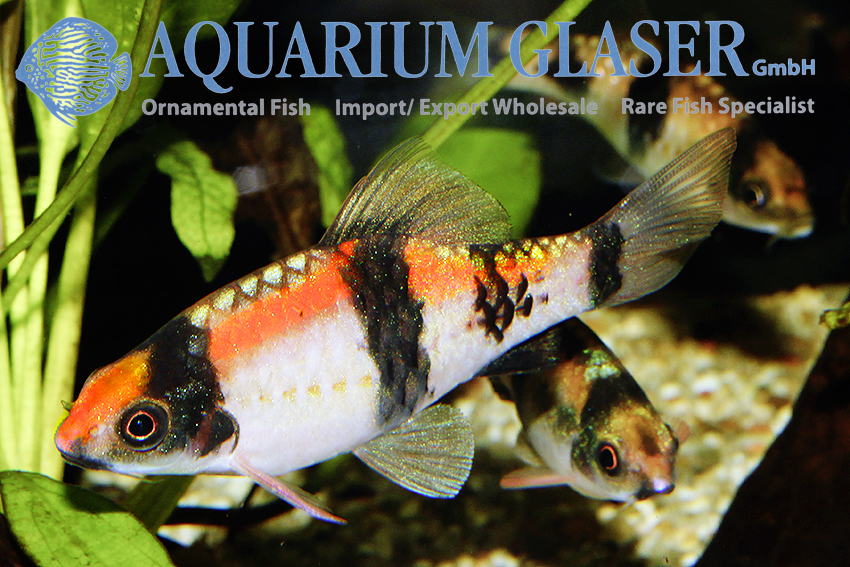
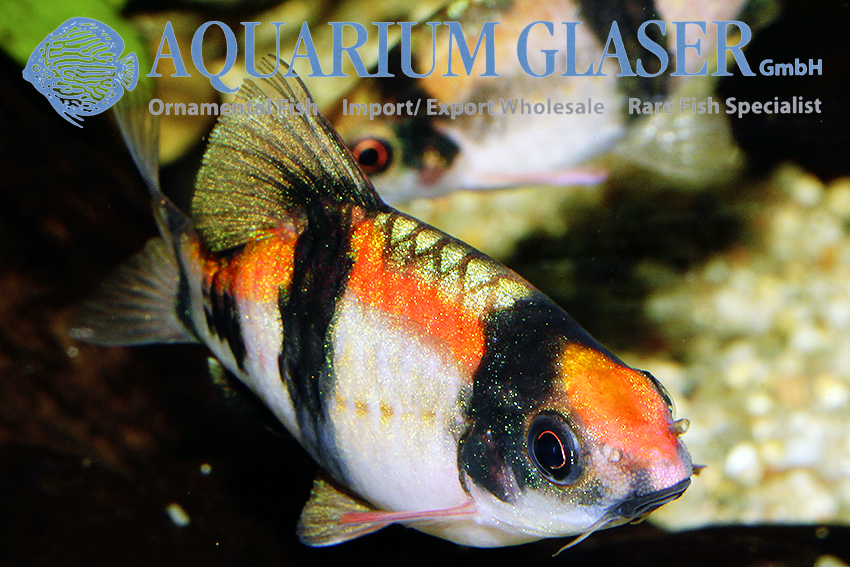
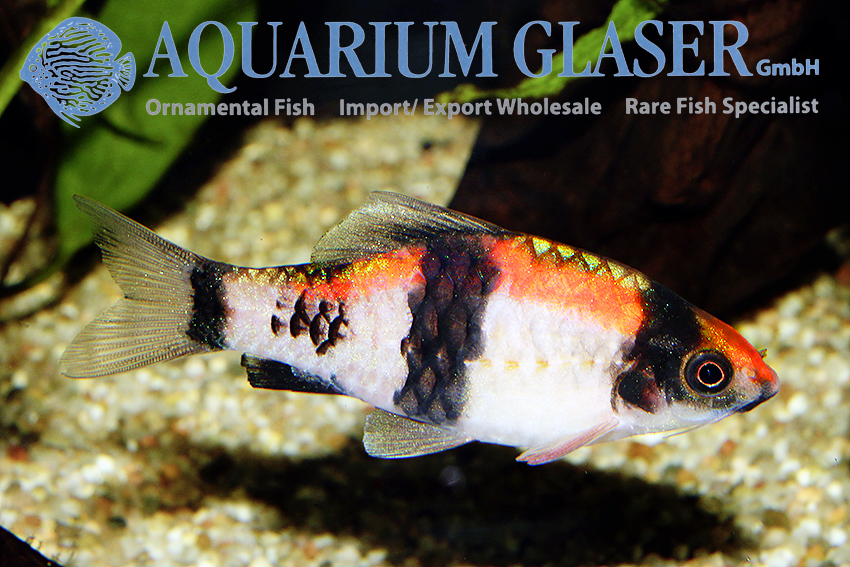
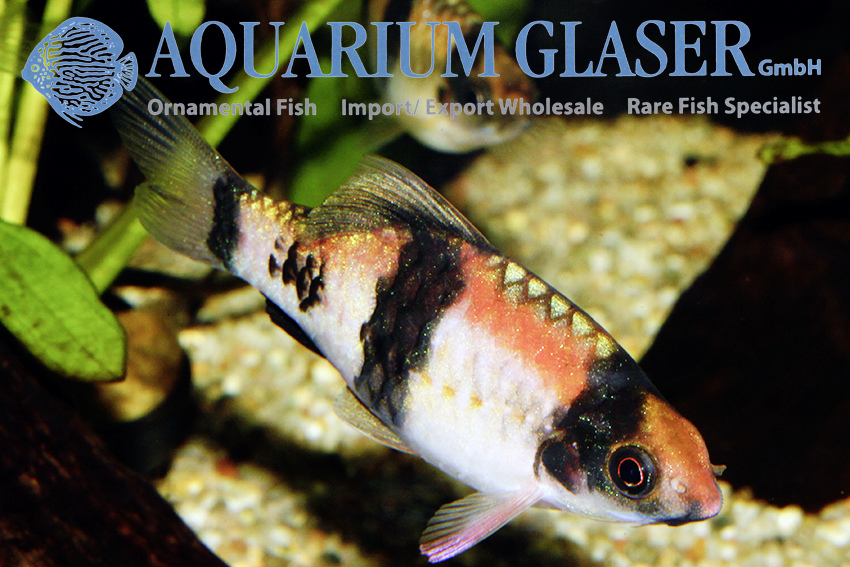
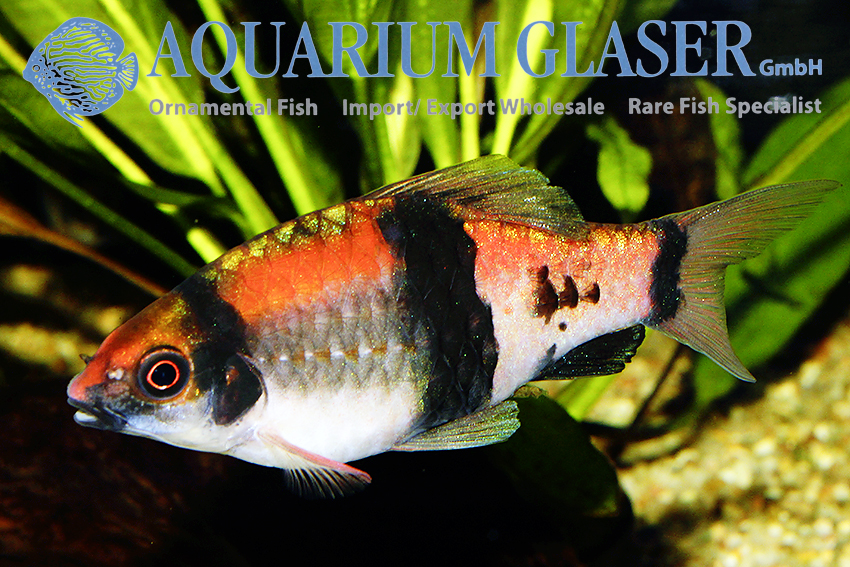
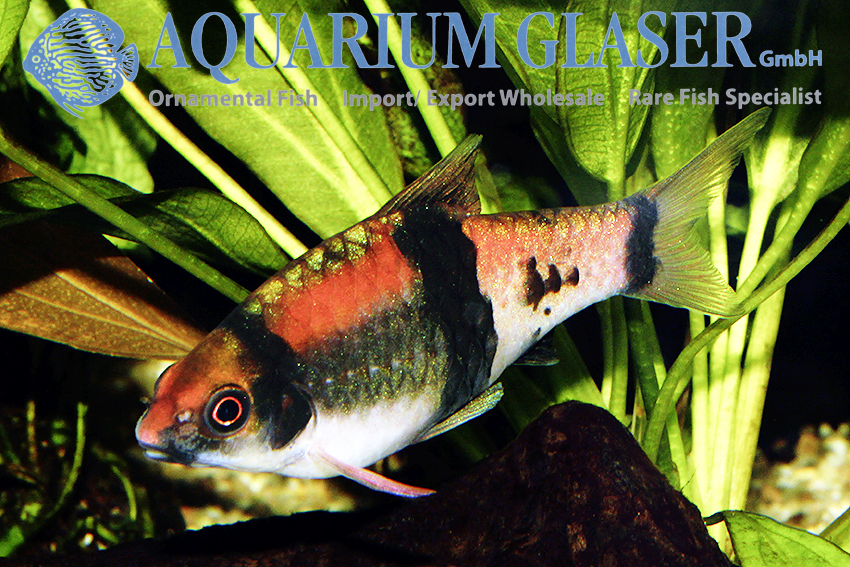
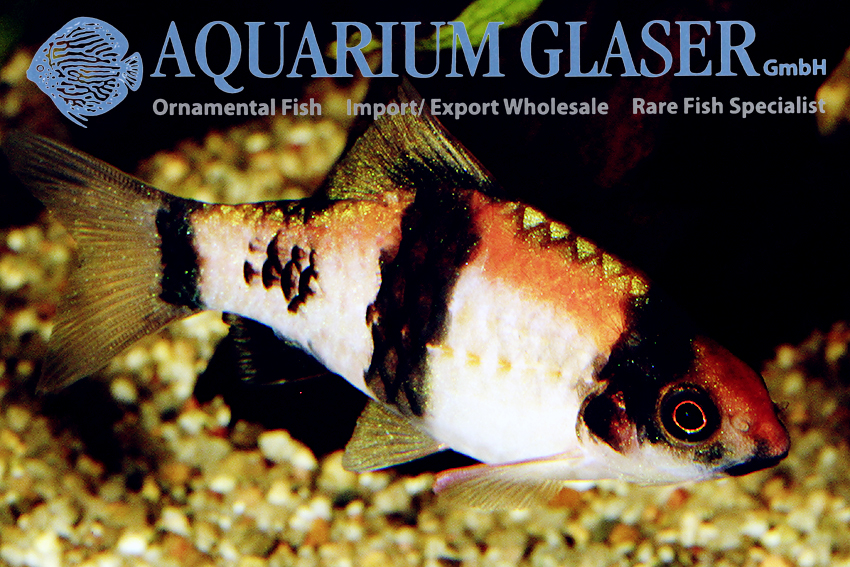
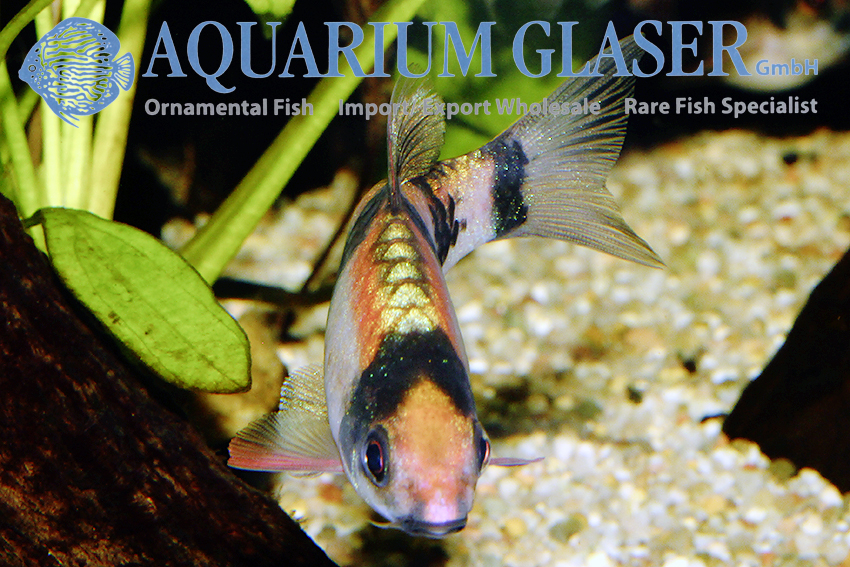
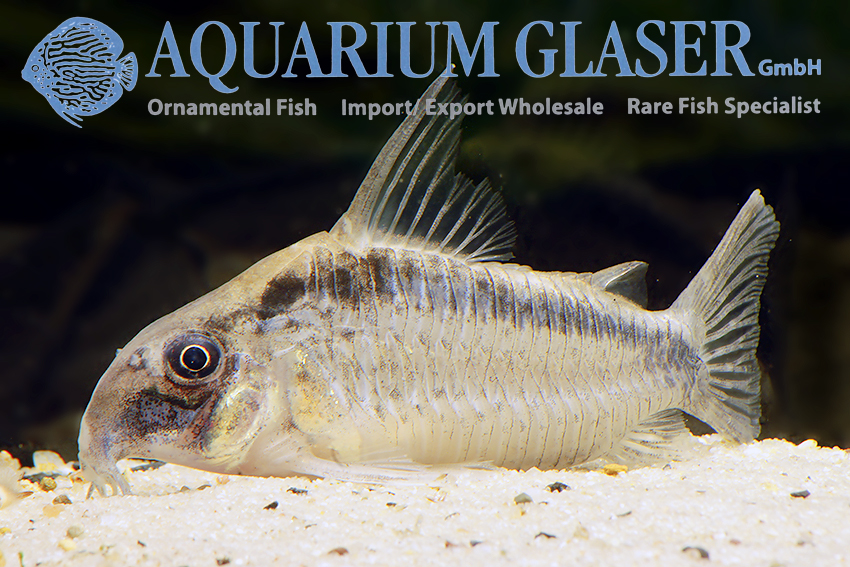
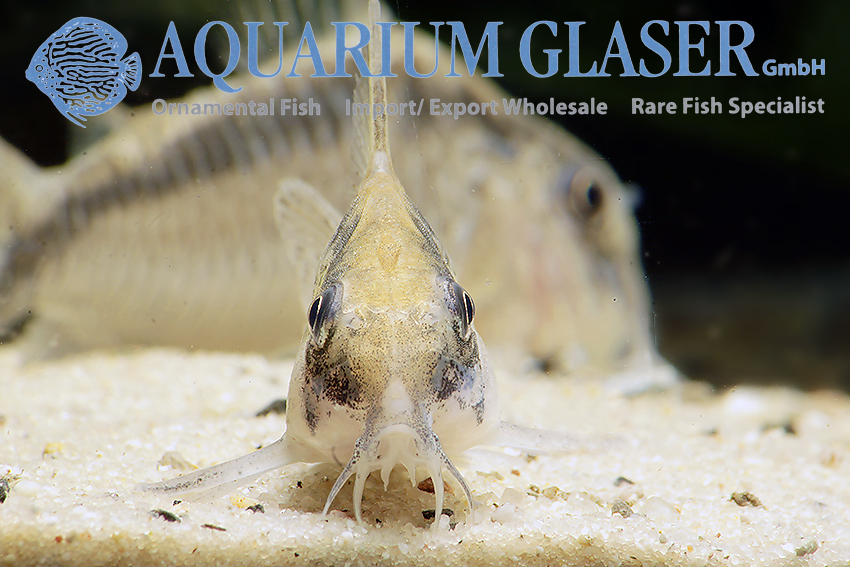
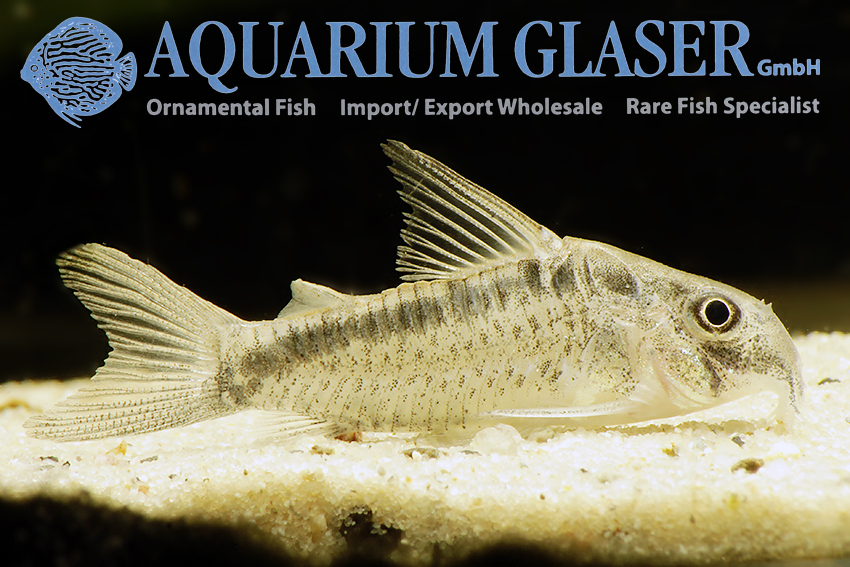
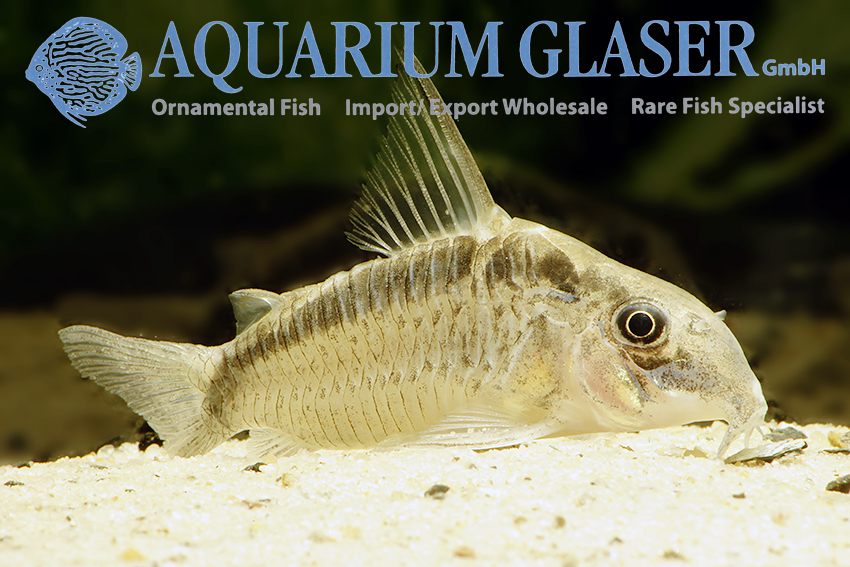
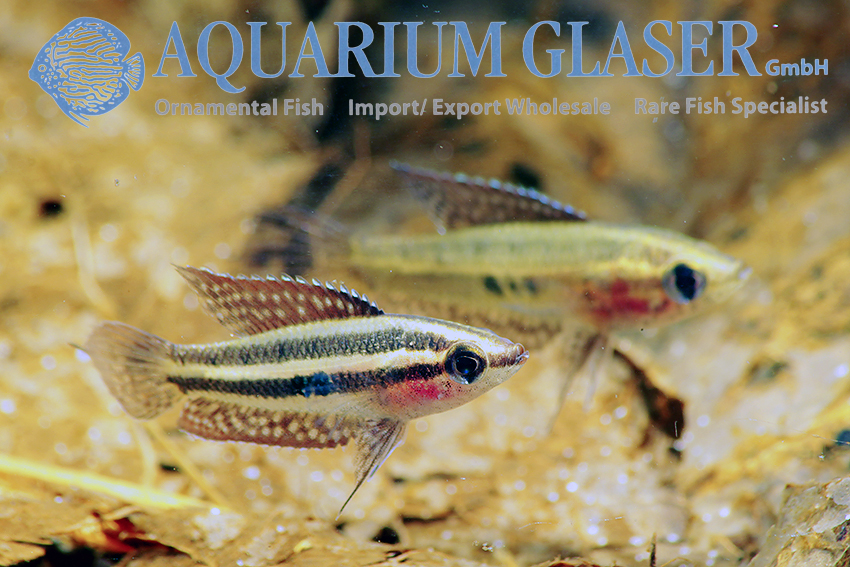
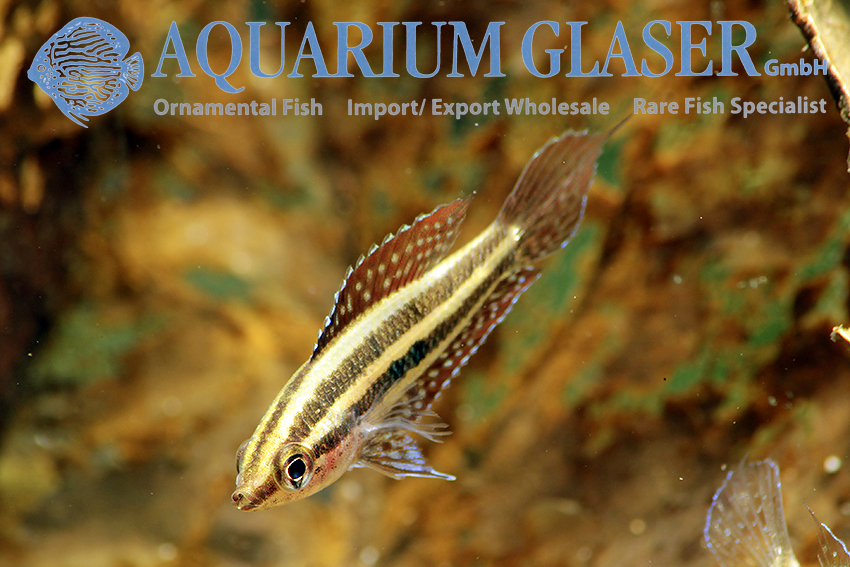
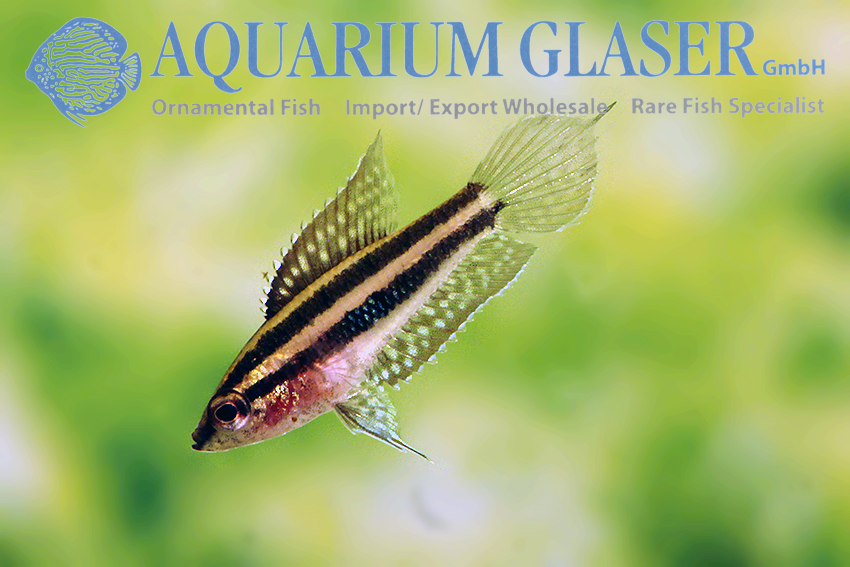
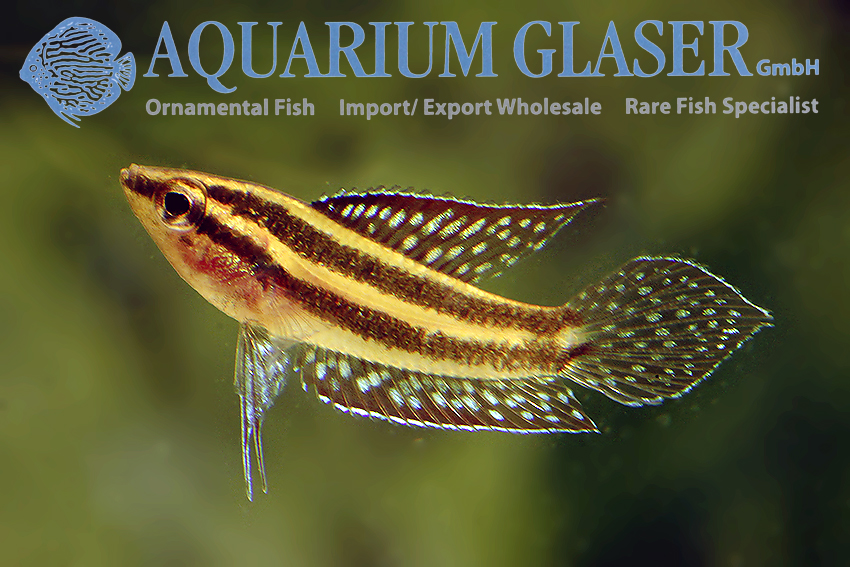
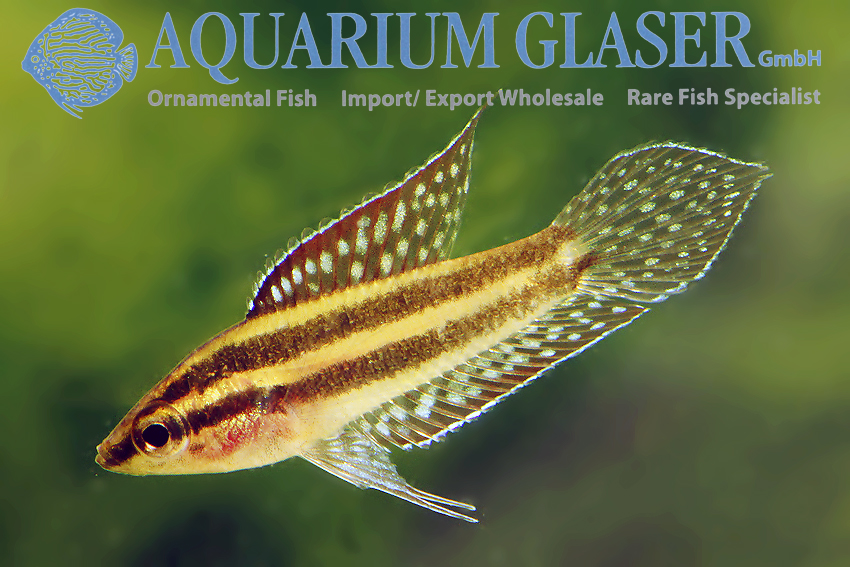
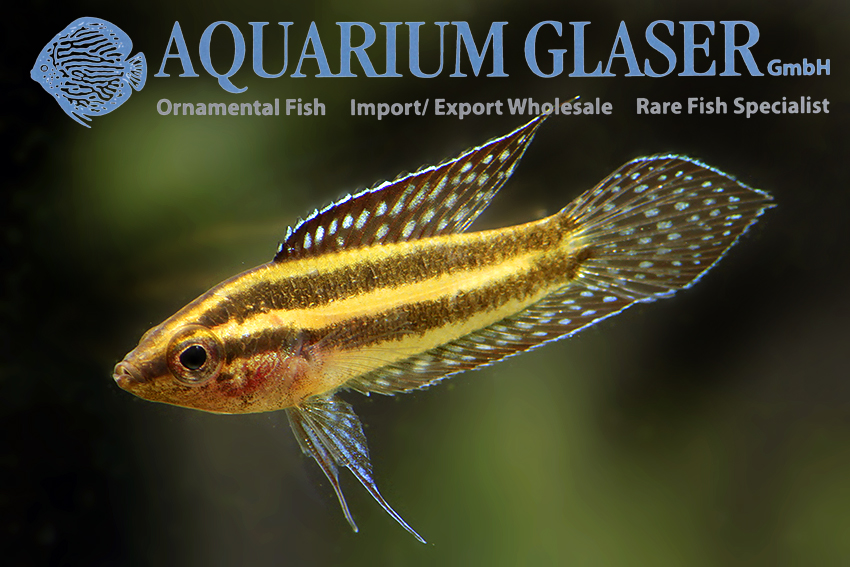
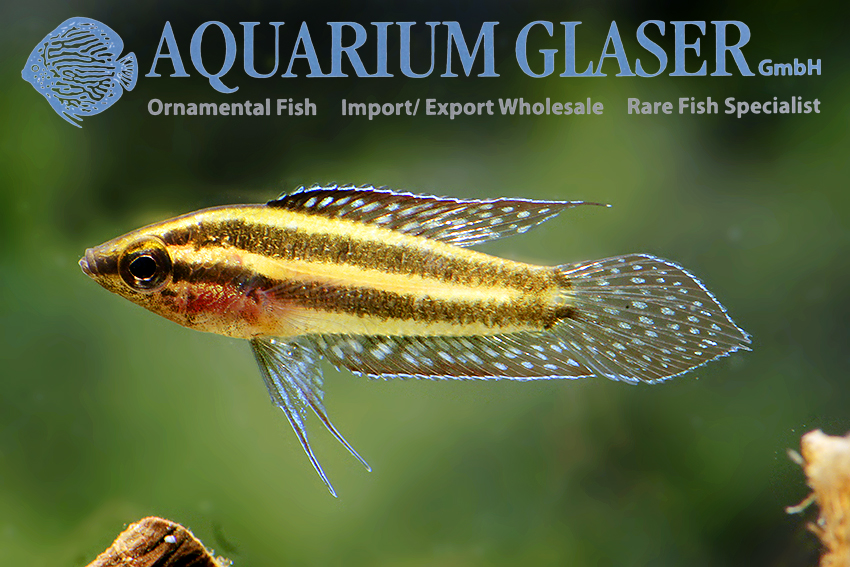
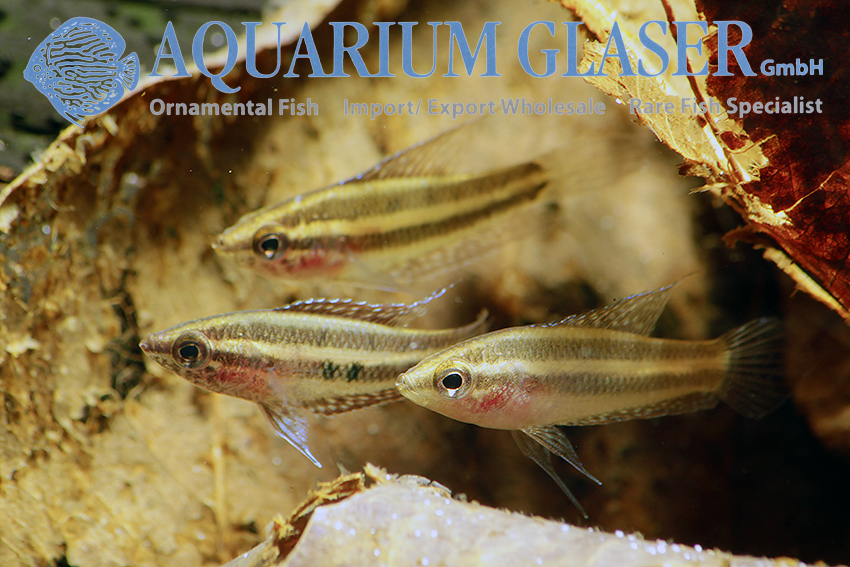
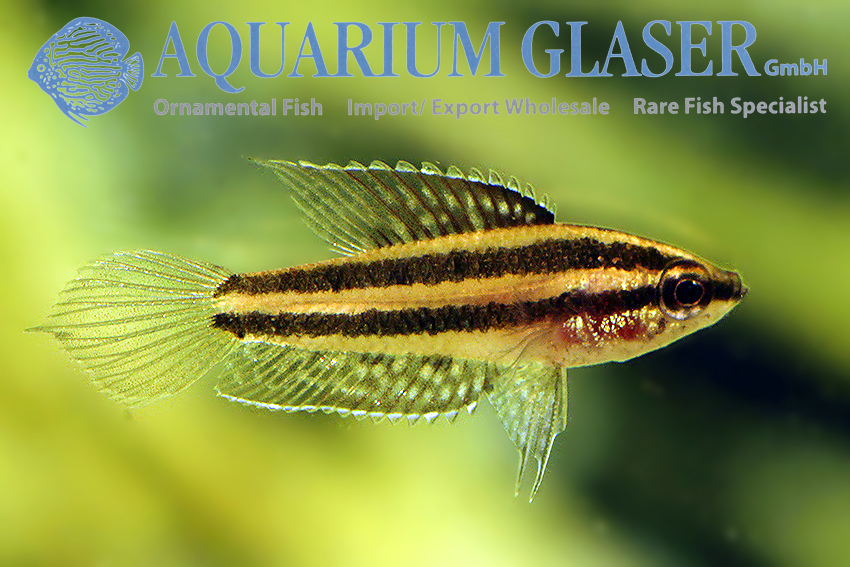
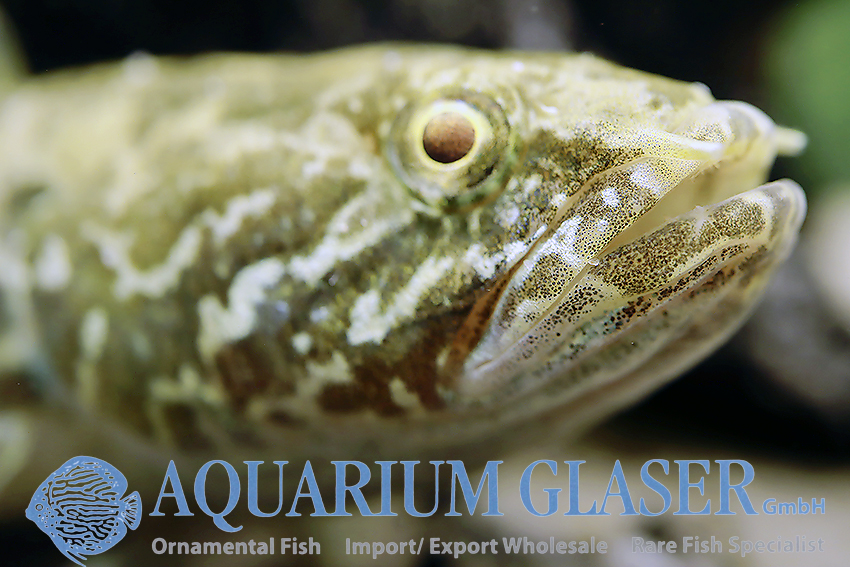
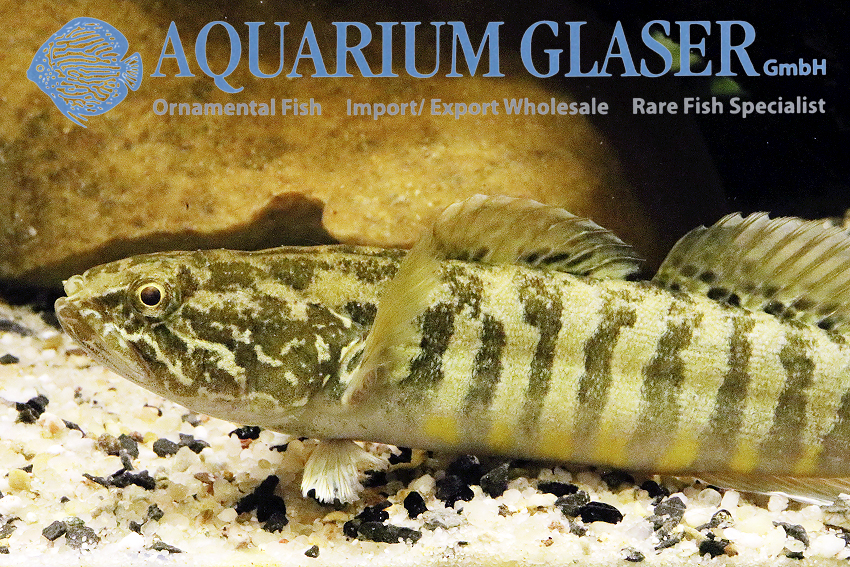
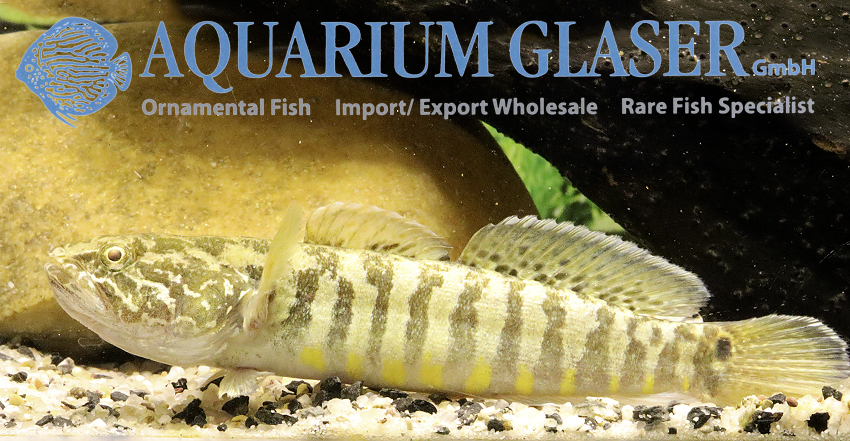
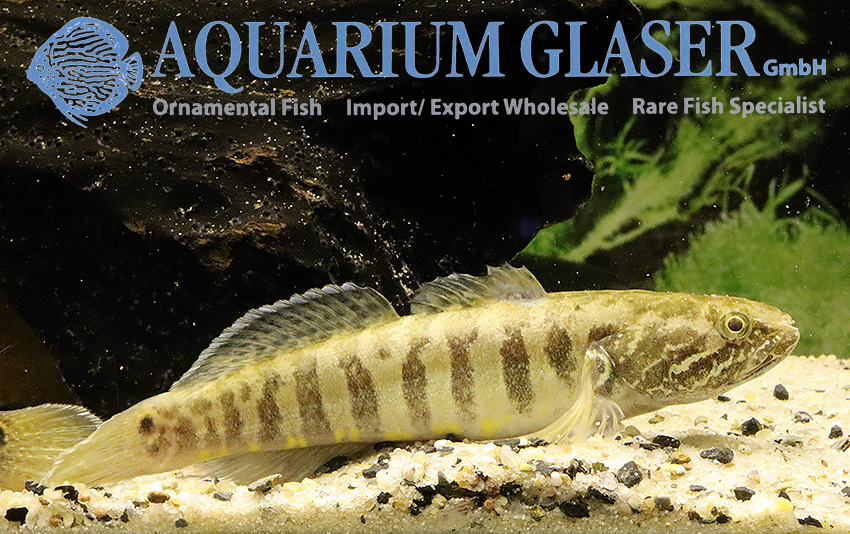
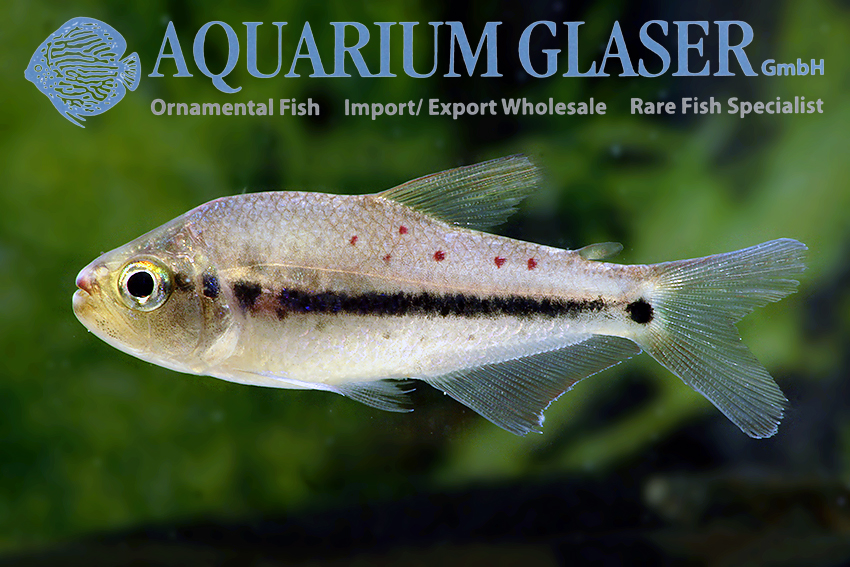
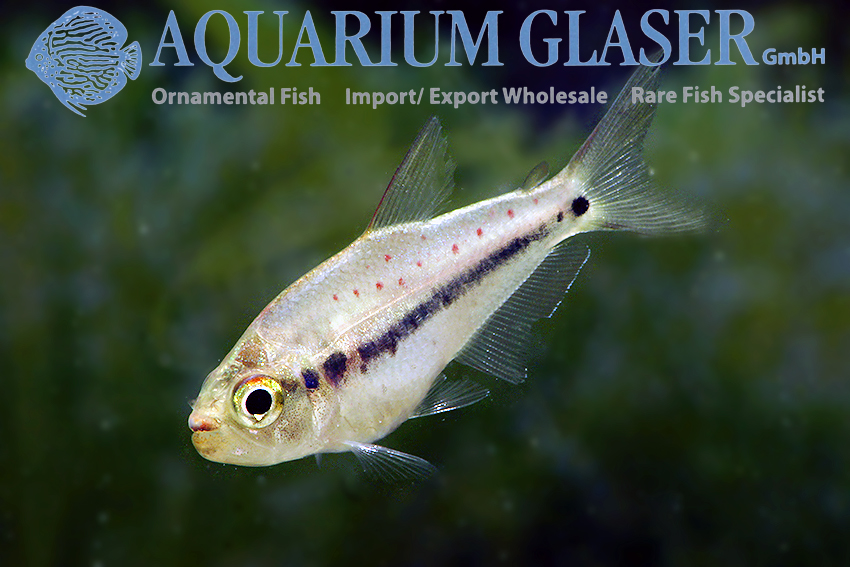
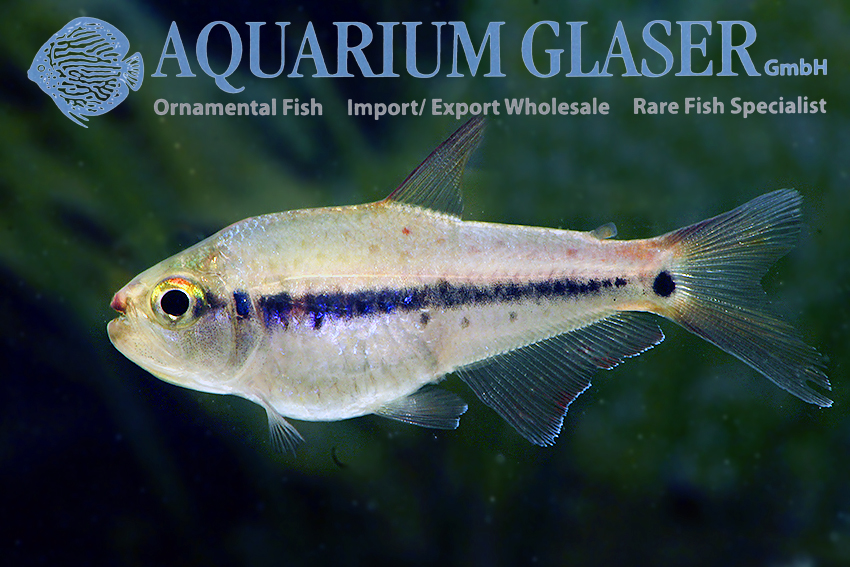
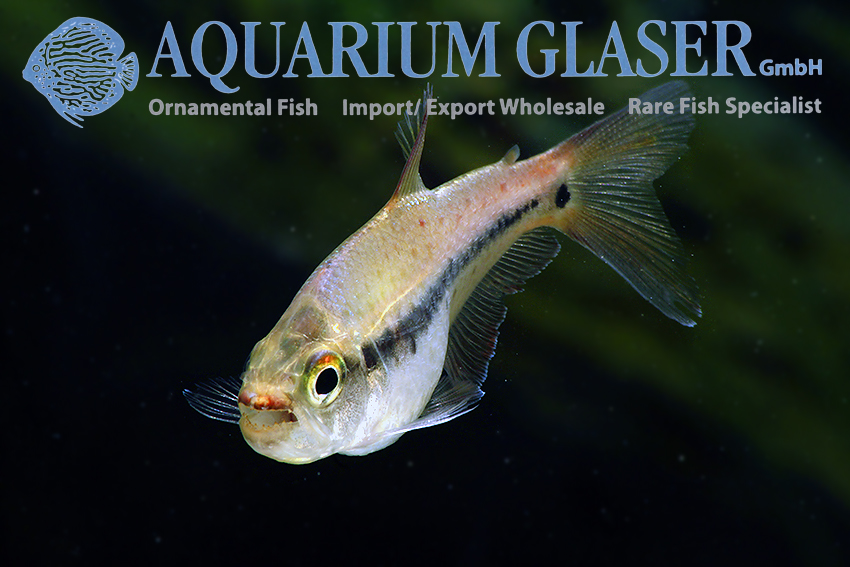
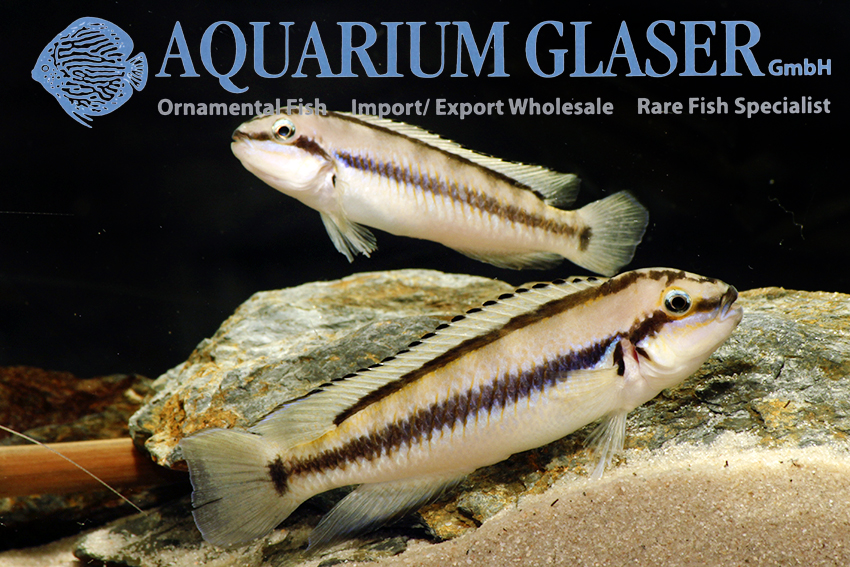
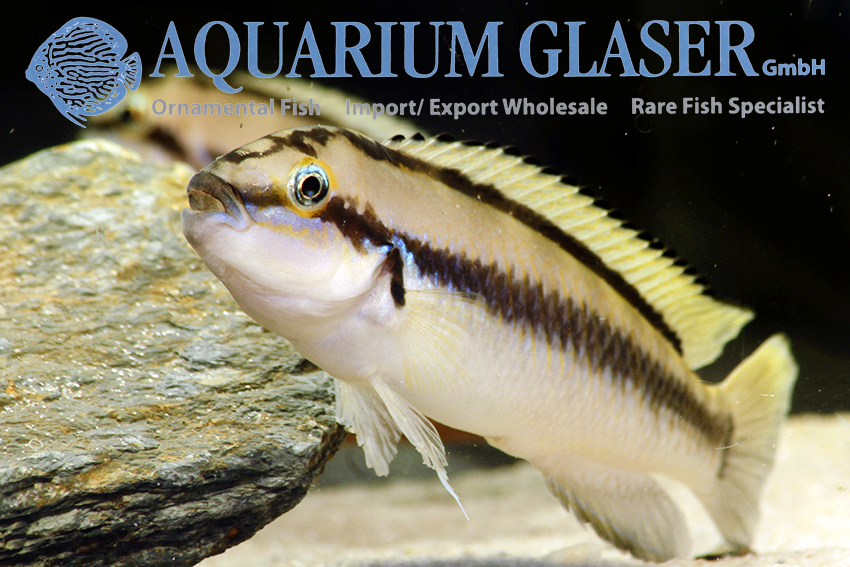
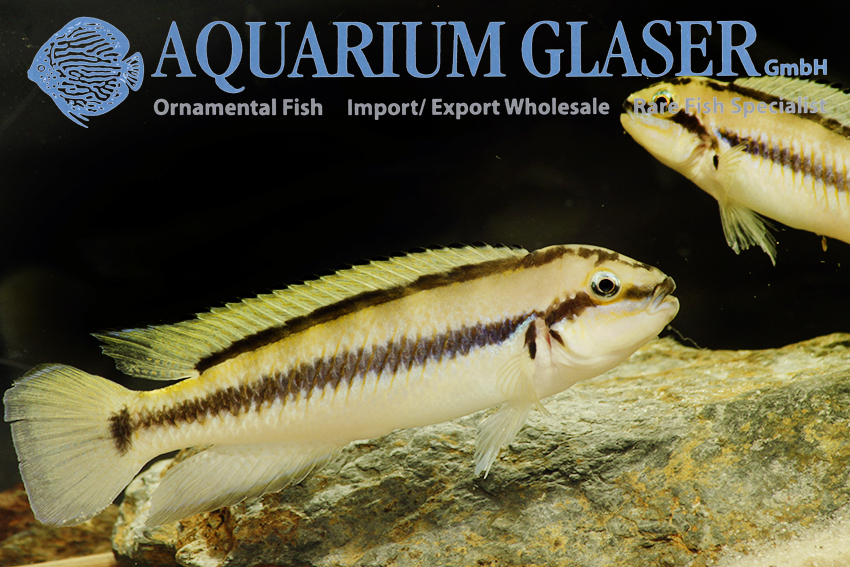
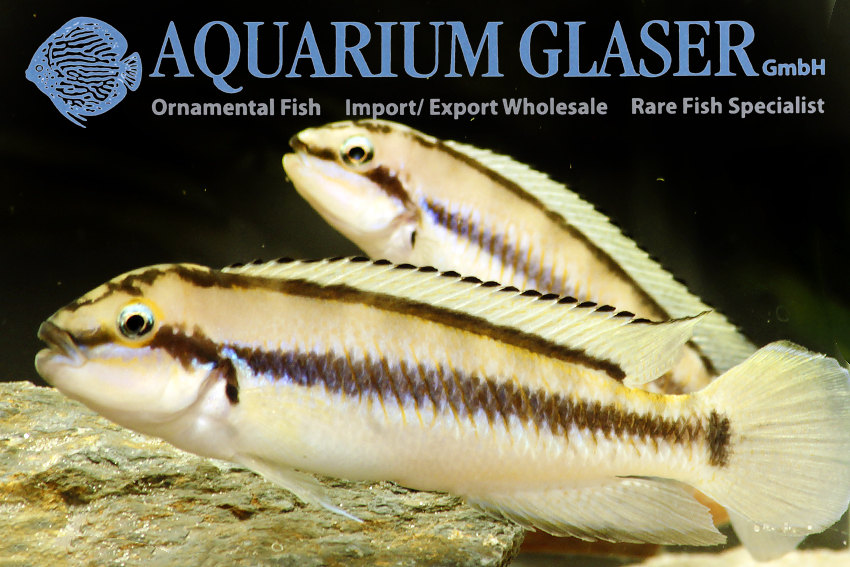
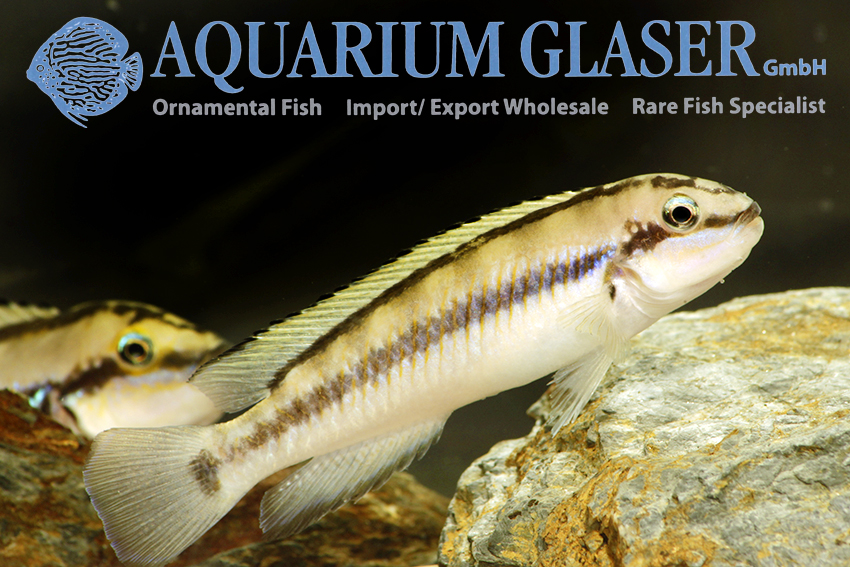
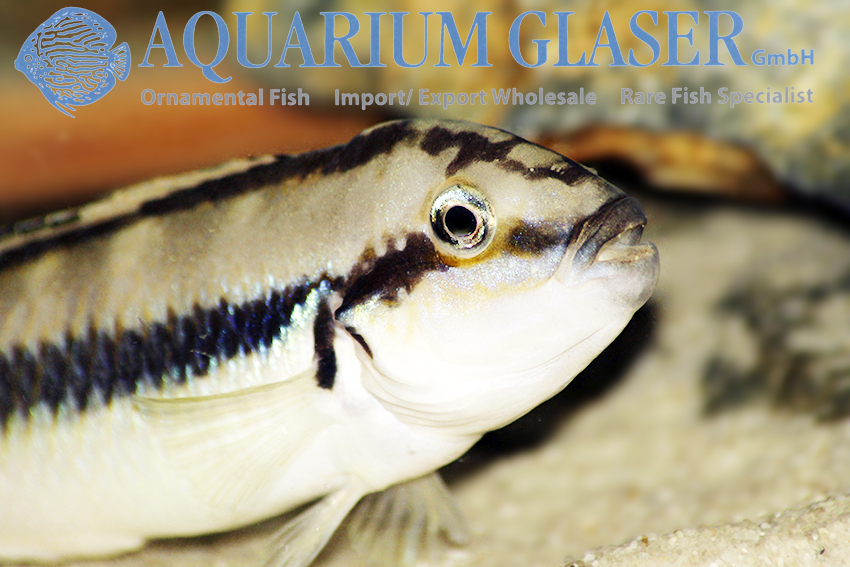
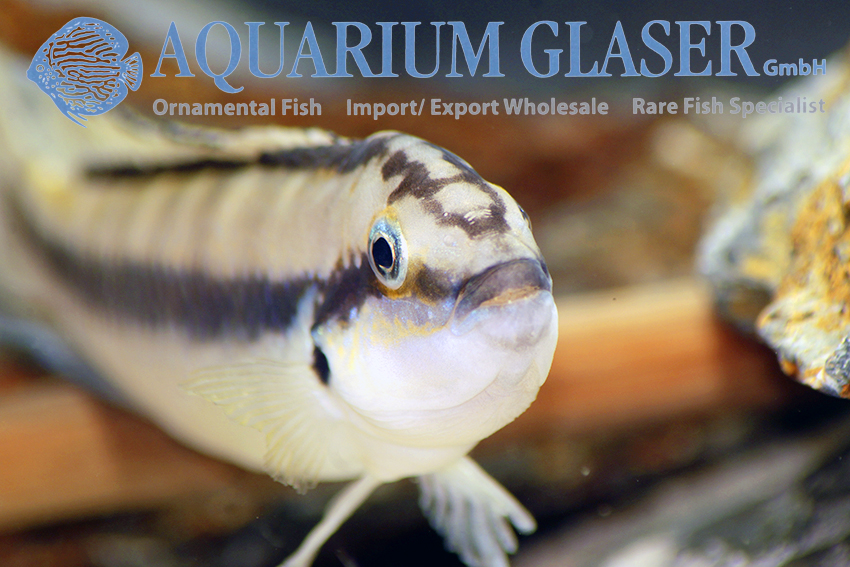
Ambastaia nigrolineata: It doesn´t have to be always sidthimunki….

13. February 2019

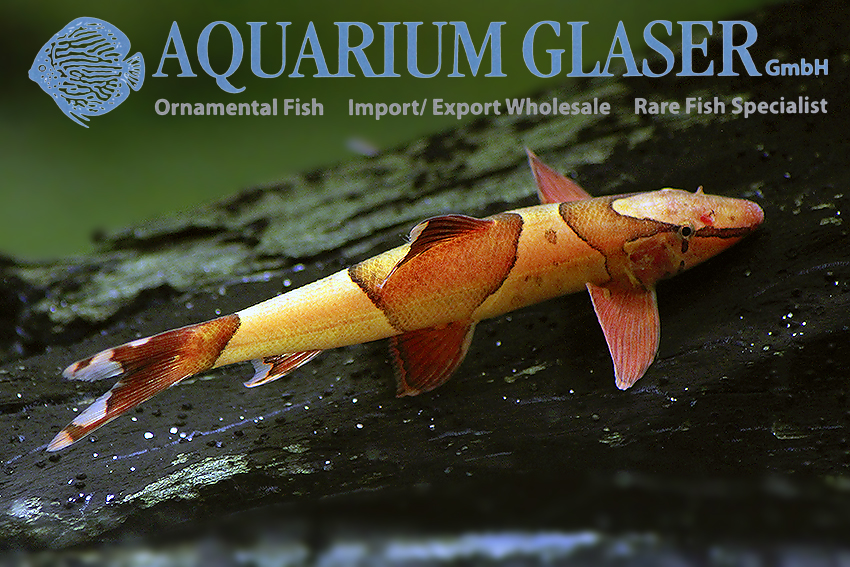
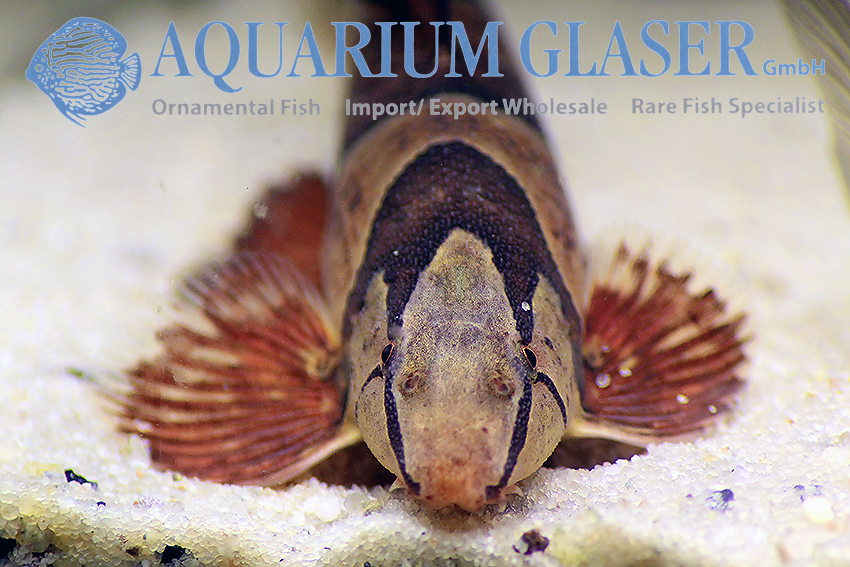
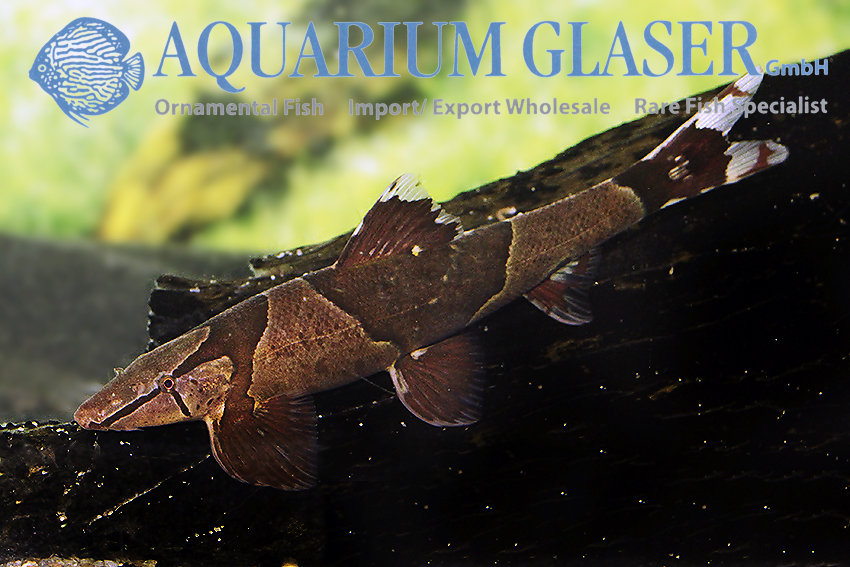
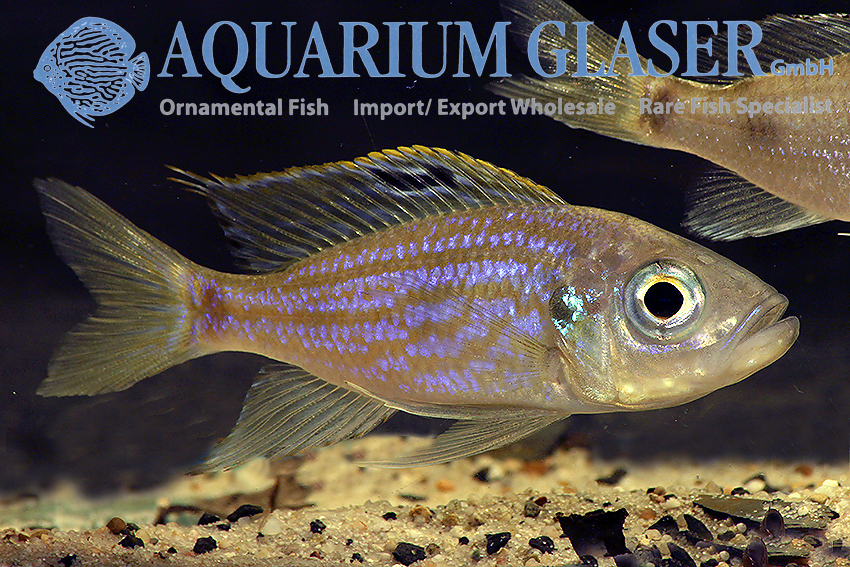
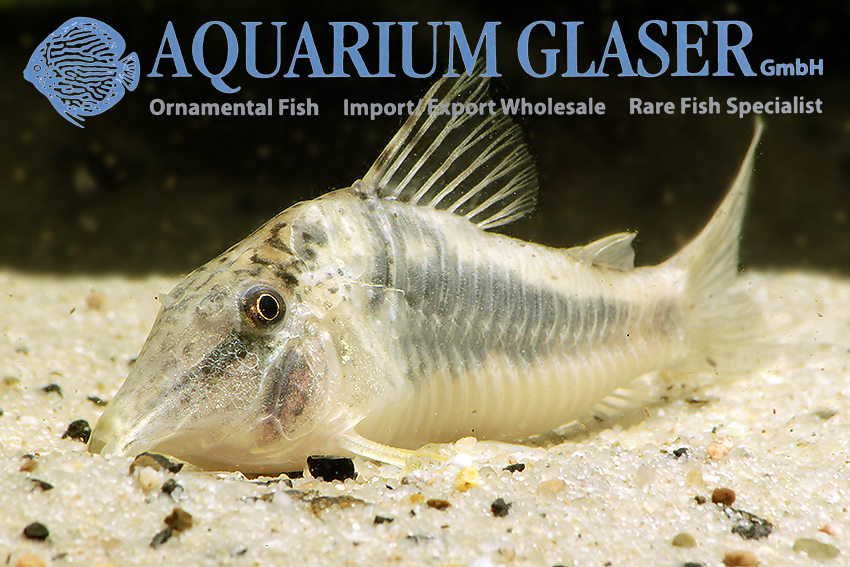
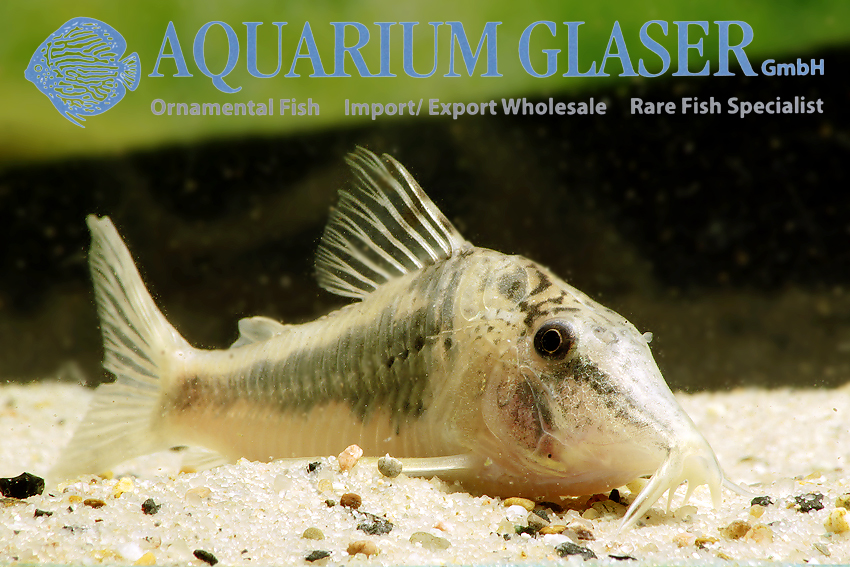
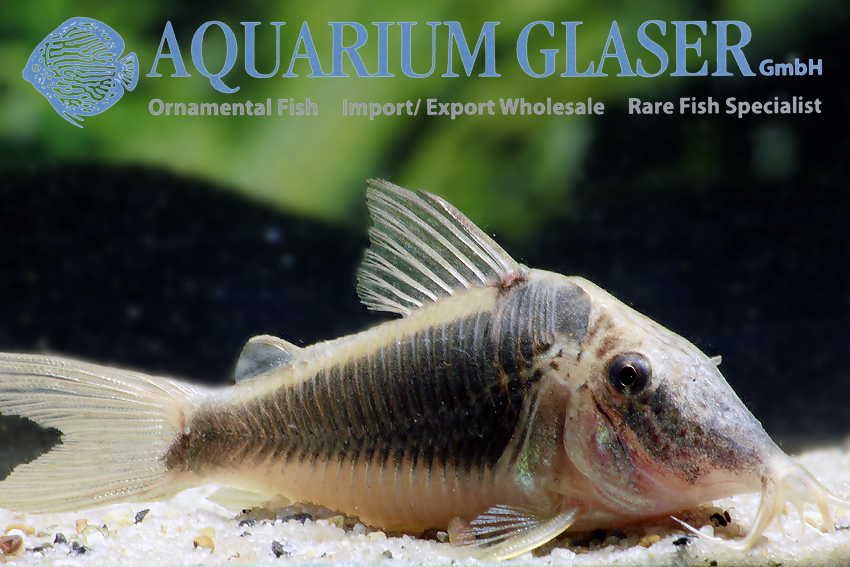
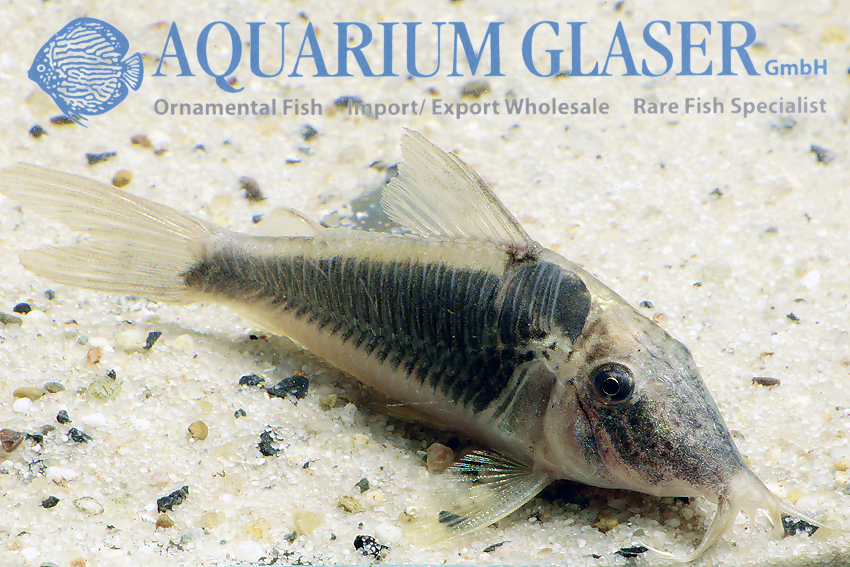
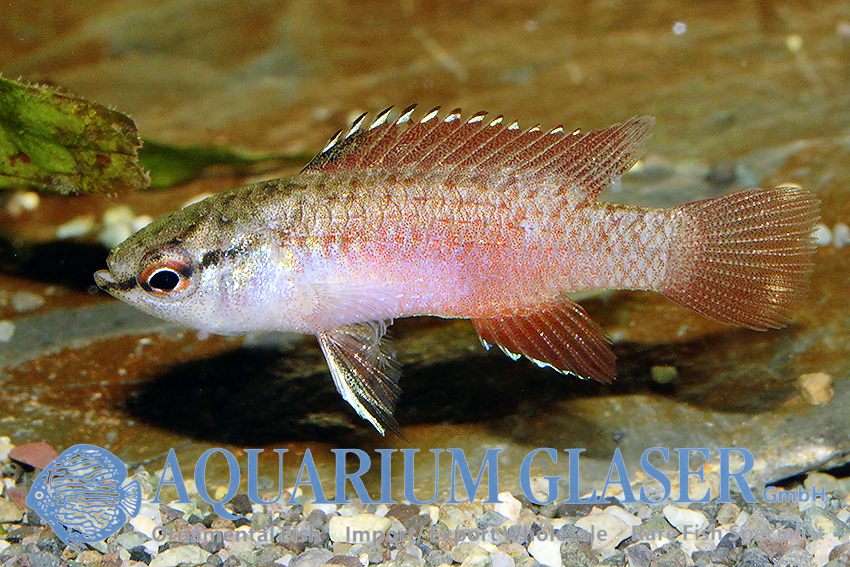
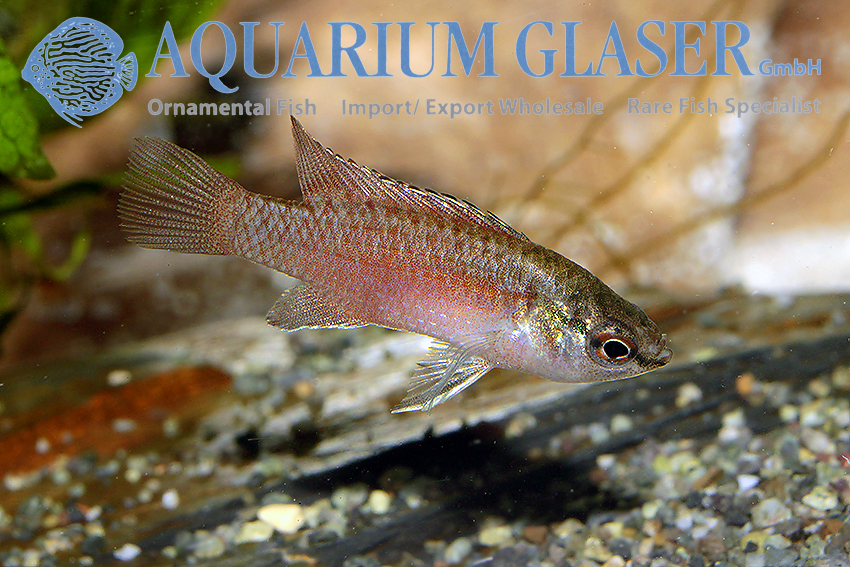
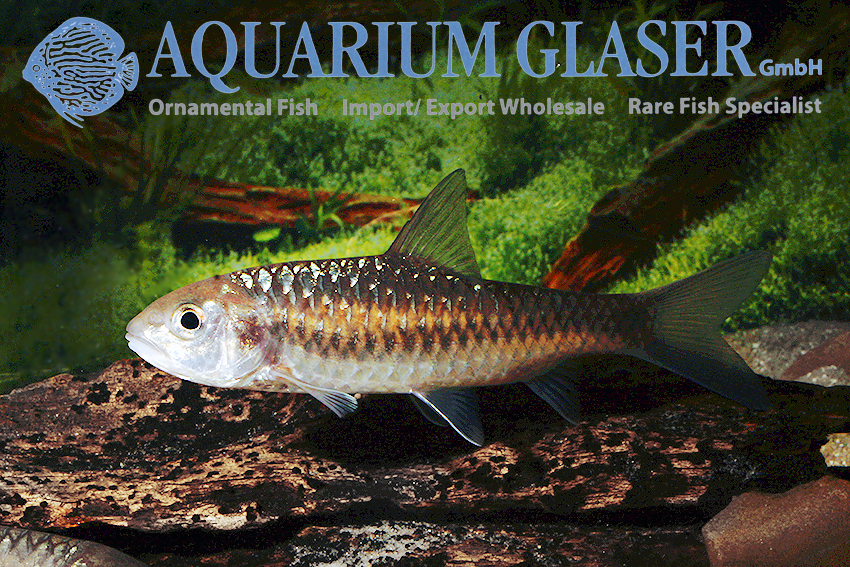
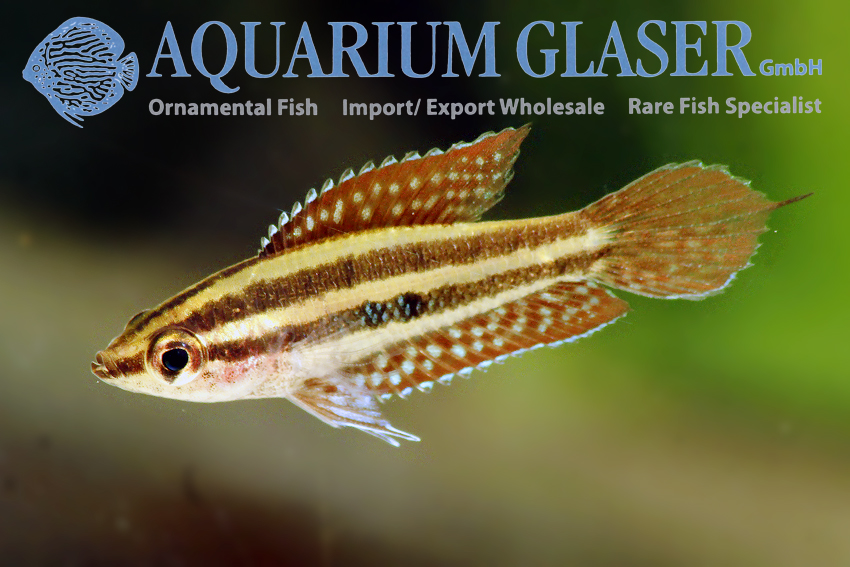
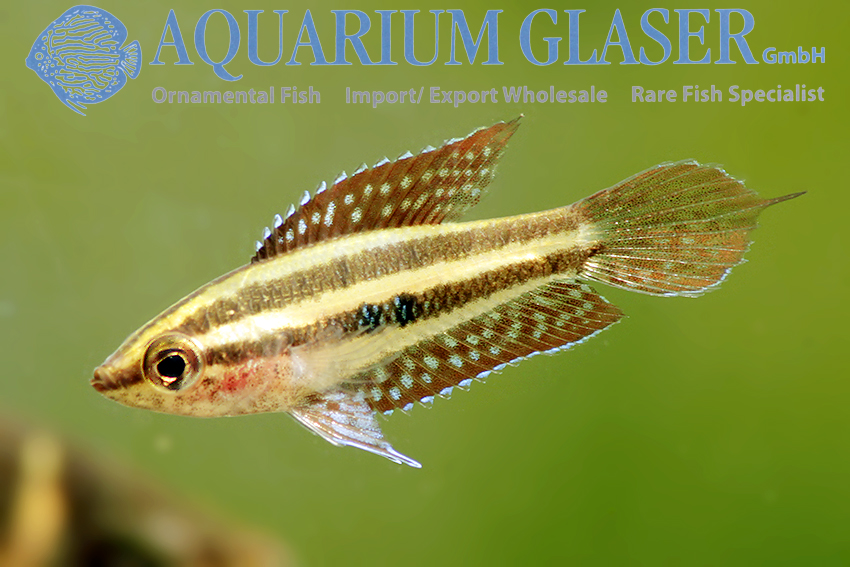
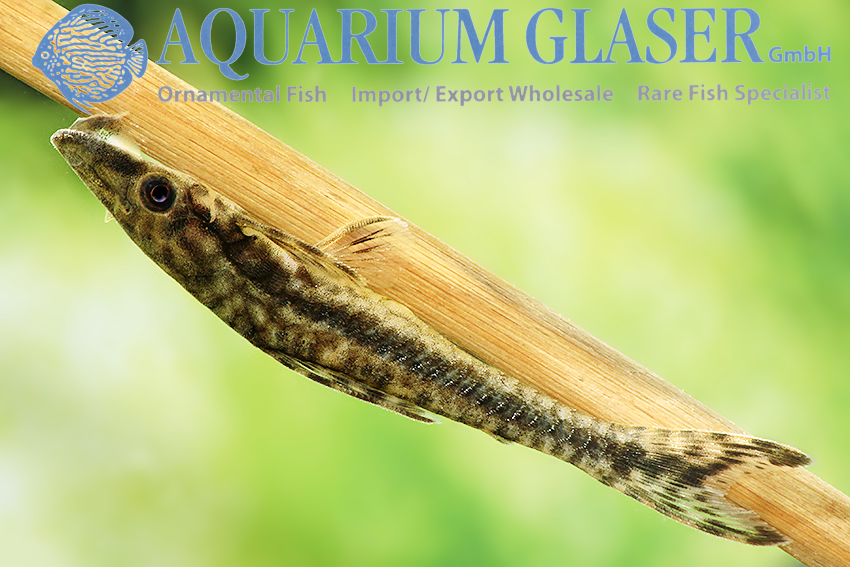
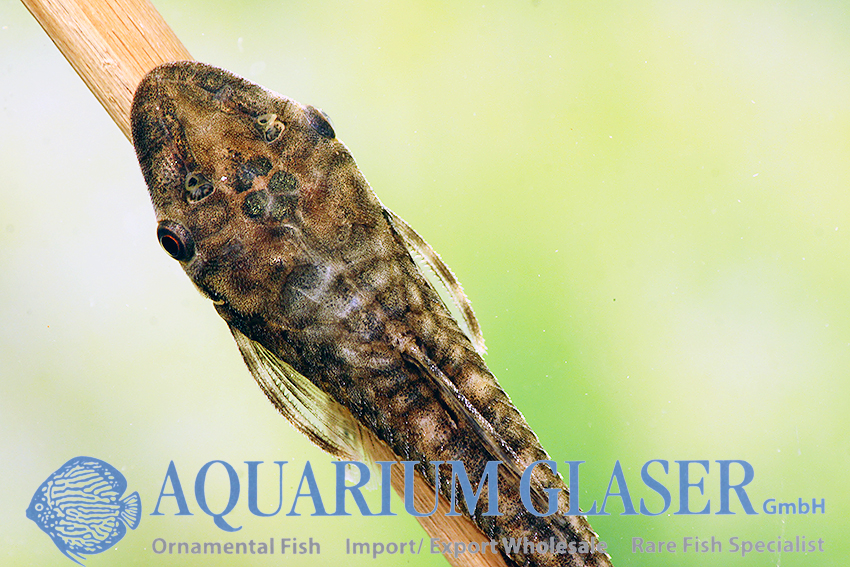
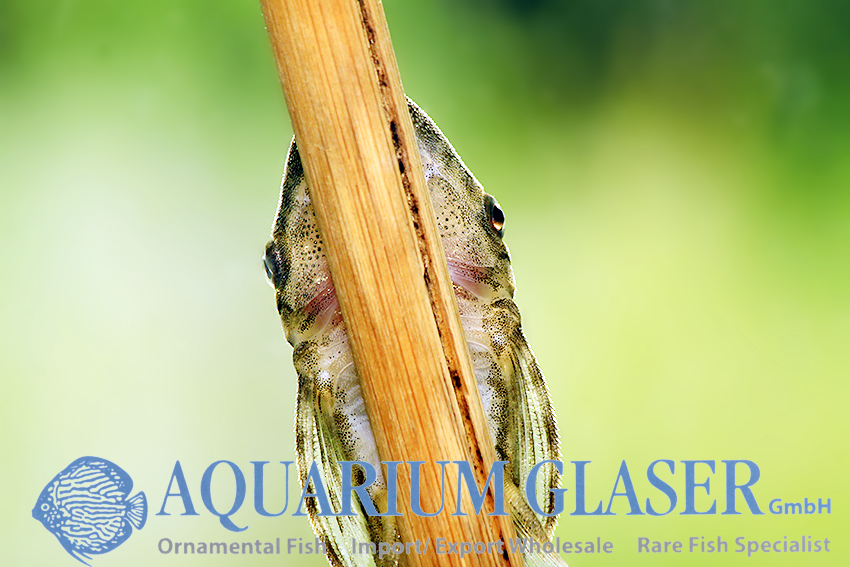
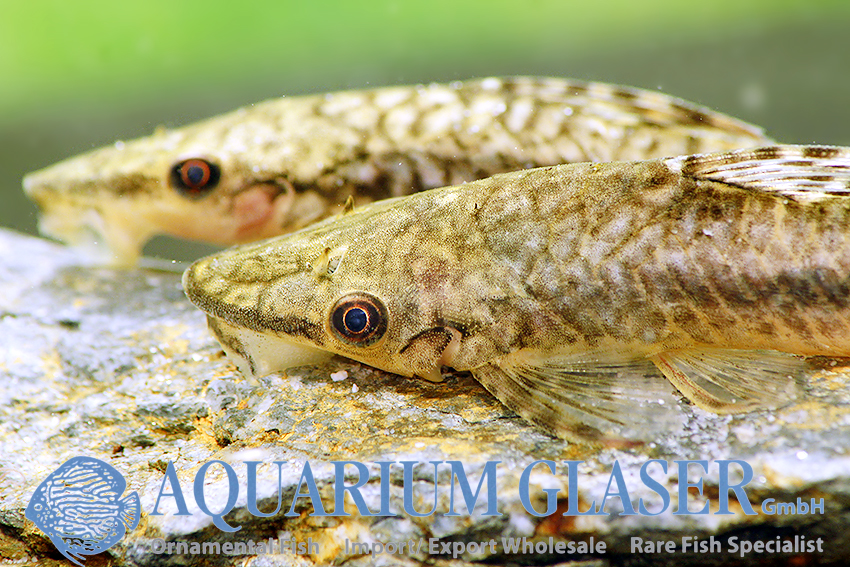
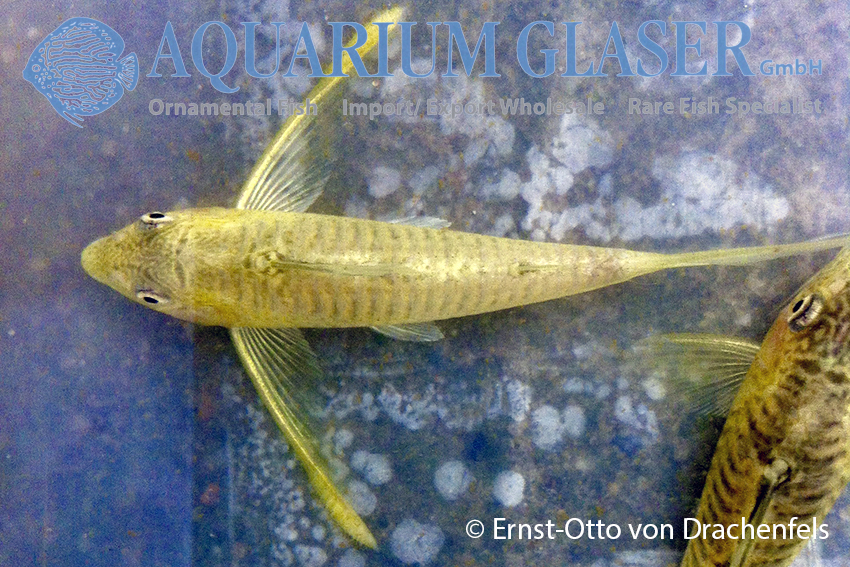
These dwarfish relatives of the clown loach have done a kind of odyssey in respect of the generic name in the past. Both were originally described in the genus Botia. Later they were placed in Yasuhikotakia. Only in 2012 they changed to the genus Ambastaia, which has been generated especially for them. This genus contains only two species, namely Ambastaia nigrolineata and A. sidthimunki. The genus is defined by the unique coloration of these species.

Ambastaia nigrolineata occurs in Laos, Thailand, and China. A. nigrolineata stays almost as small as A. sidthimunki and becomes around 7-8 cm long (including tail fin).

Juveniles have only two black stripes on an ebony white body, later the males develope a pattern that is quite similar to that of A. sidthimunki.

For our customers: the fish have code 404702 on our stocklist. Please note that we exclusively supply the wholesale trade.

Text & photos: Frank Schäfer

Platystacus cotylephorus

11. February 2019

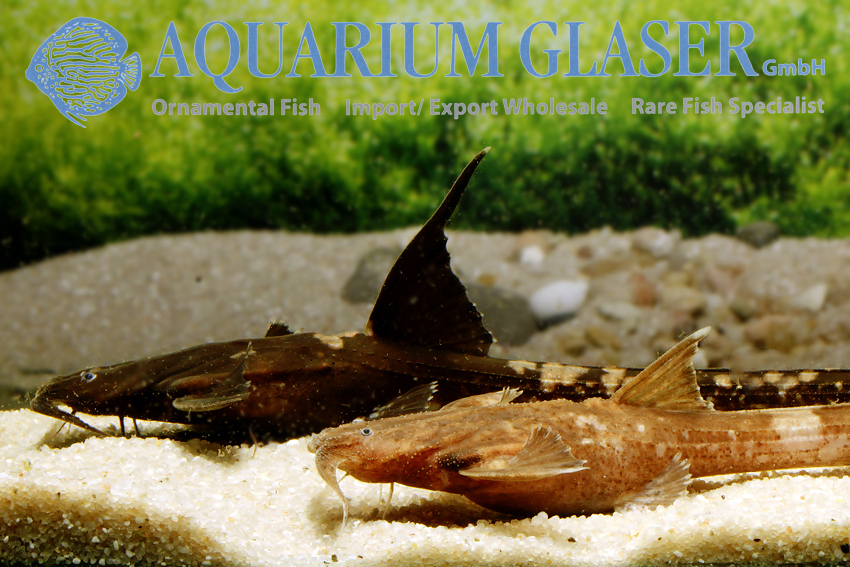
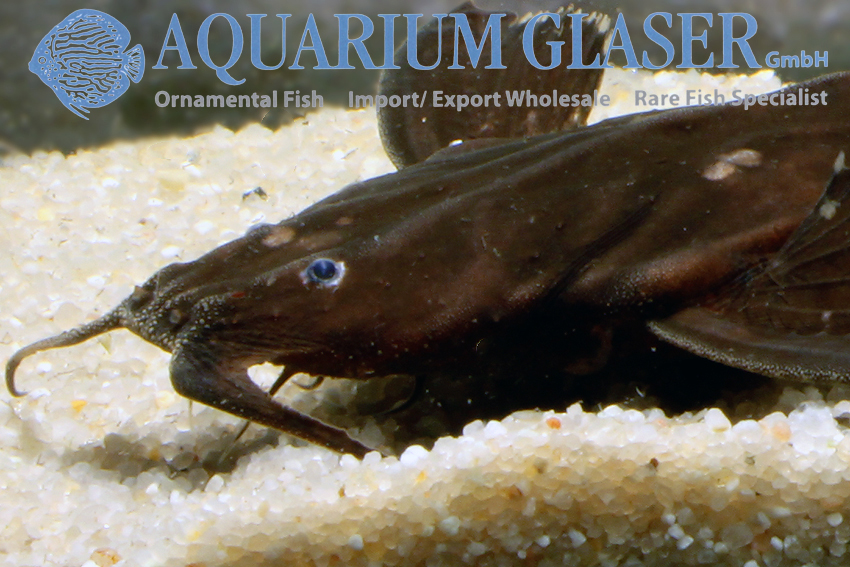
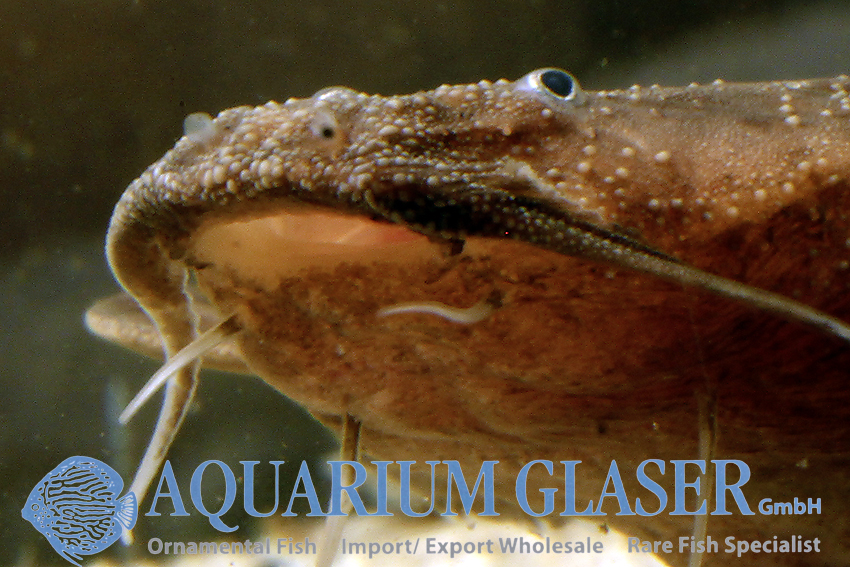
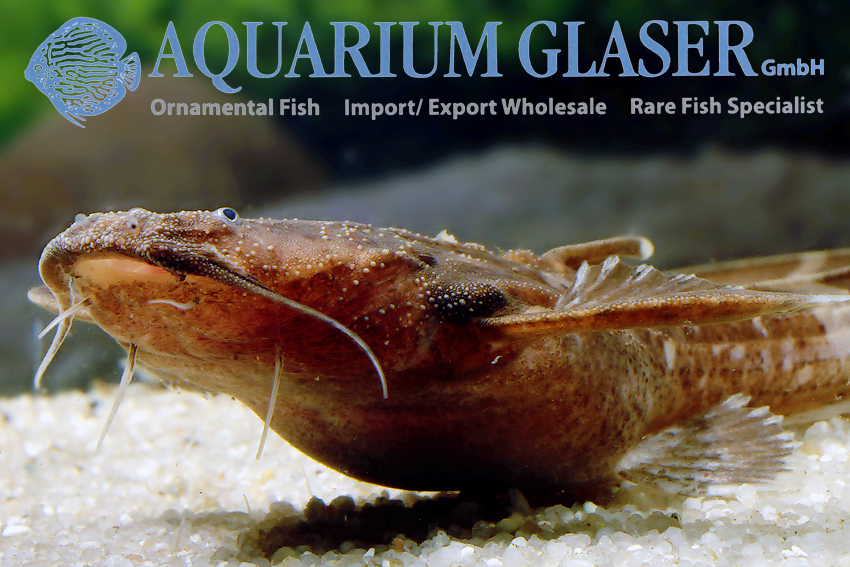
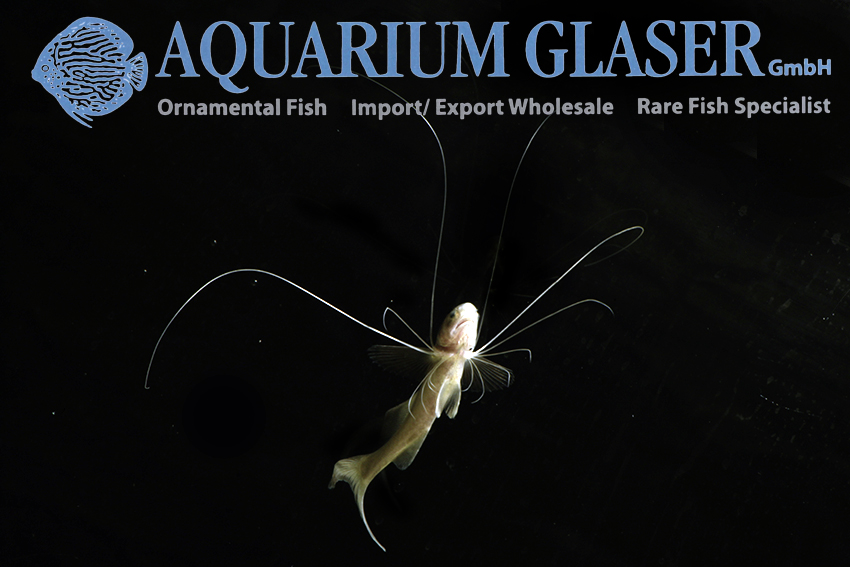
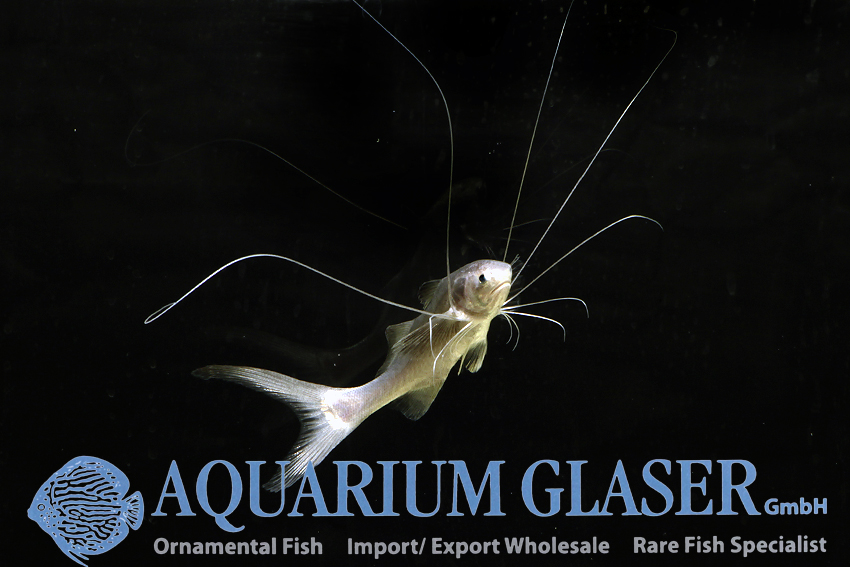
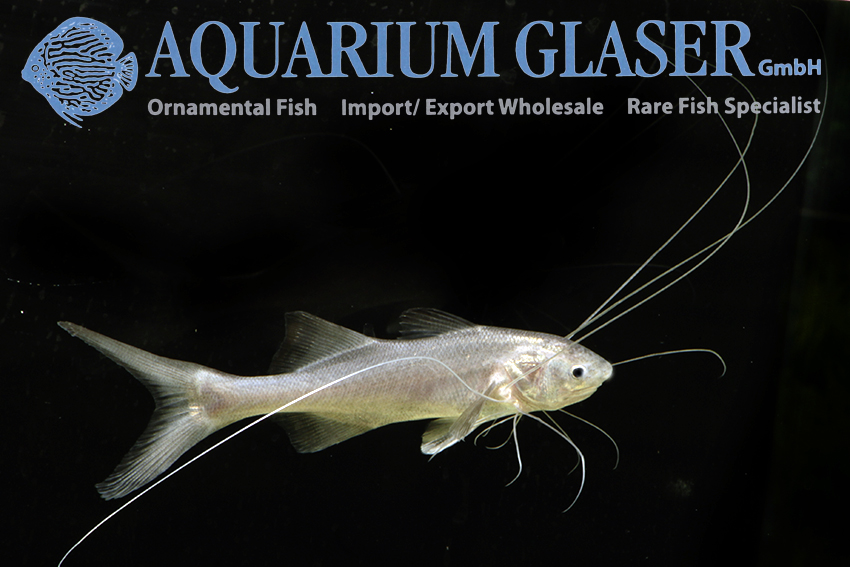
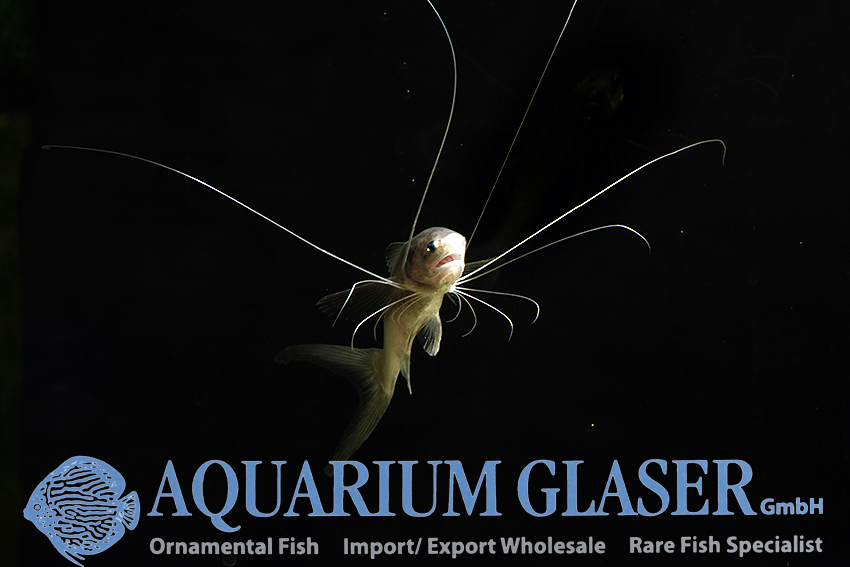
We received this beautiful banjo cat from Brazil currently. The species represents by far the most desirable member of the family. The fish becomes approximately 30 cm long and thus should be kept in larger tanks. In contrast to most other banjo catfishes – which usually do not move if possible – this species is comparetively lively.

Platystacus cotylephorus inhabits the lower reaches of rivers and even tolerates brackish water. It can be kept, however, also in pure freshwater, but the pH should be neutral or slightly alcalic in that case and the water should be medium hard, not soft. 

Basically speaking the species is very peaceful, although very small tank inhabitants may be eaten. The banjo cats accept readily any type of frozen food, most do even feed on granulated dry food; Tubifex are regarded as an delicatecy. 

One of the characteristic features of the species is the fact that there do not exist even two specimens with exactly the same coloration. There are no differences between the sexes known for sure, but it is said that females have a rather brown basic coloration while males have a black one. In our fish quite different shapes of the dorsal fin can also be observed which possibly proof to be a way for sexing the fish.

Although the species has not been bred successfully in aquaria so far it is known that the female attaches the eggs on the underside of its belly until they hatch. This is an unique case of broodcare in fishes.

For our customers: the fish have code 280603 on our stocklist. Please note that we exclusively supply the wholesale trade.

Lexicon: Platystacus: ancient Greek, combines the words “broad” and “needle”; referring to the shape of the body. cotylephorus: ancient Greek, means “bearing cups”, referring to the honeycomb-like skin structure on the belly of the females, in which the eggs are deposited.

Suggestion of a common name: Longtail banjo cat

Text & photos: Frank Schäfer

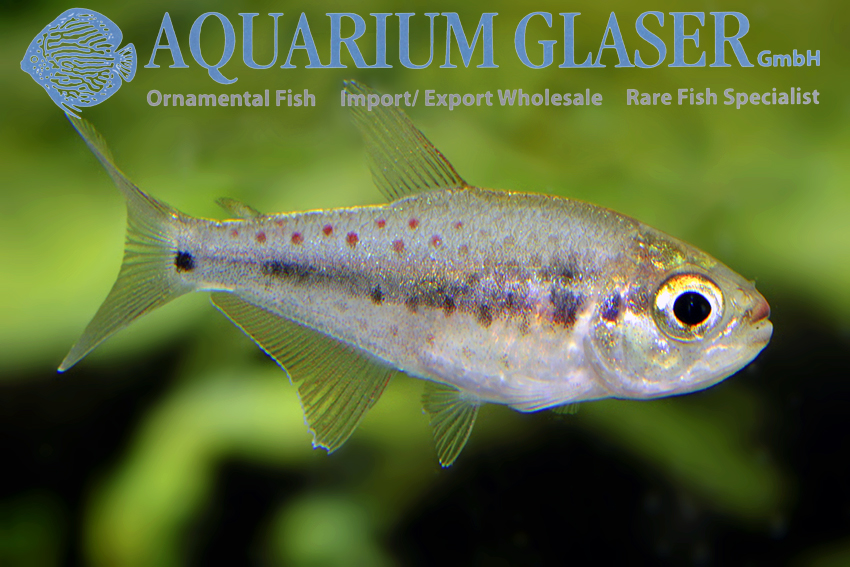
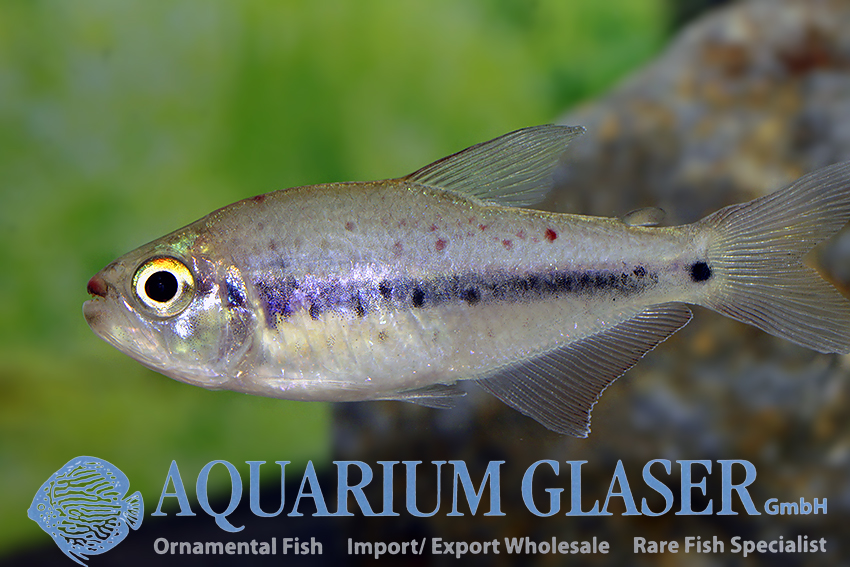
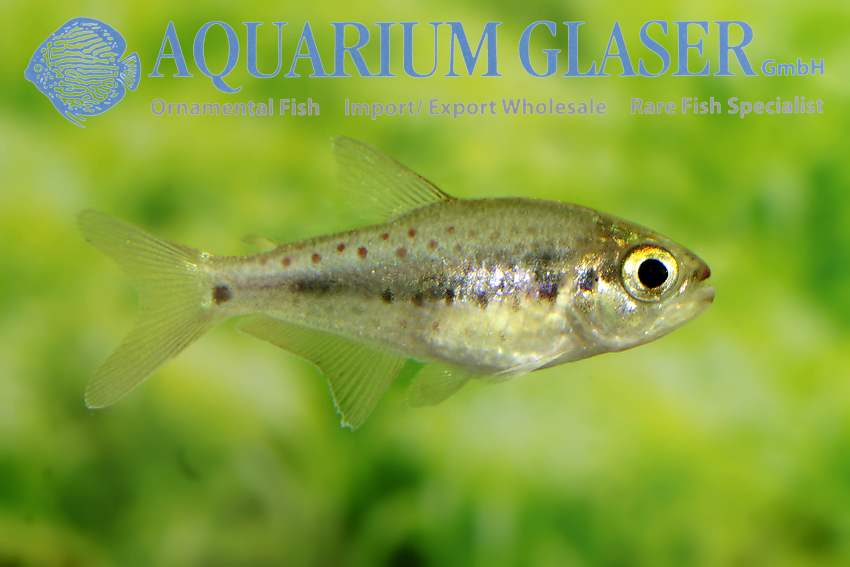
Moenkhausia copei

8. February 2019

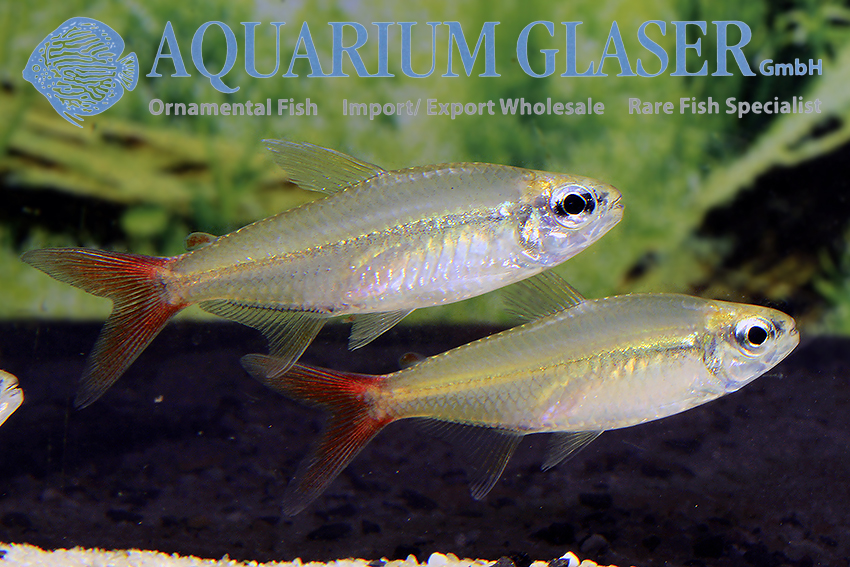
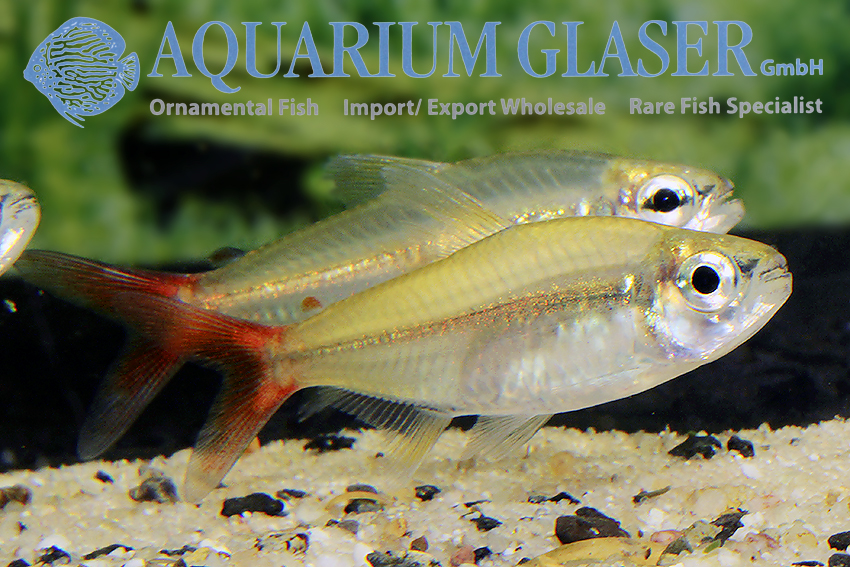
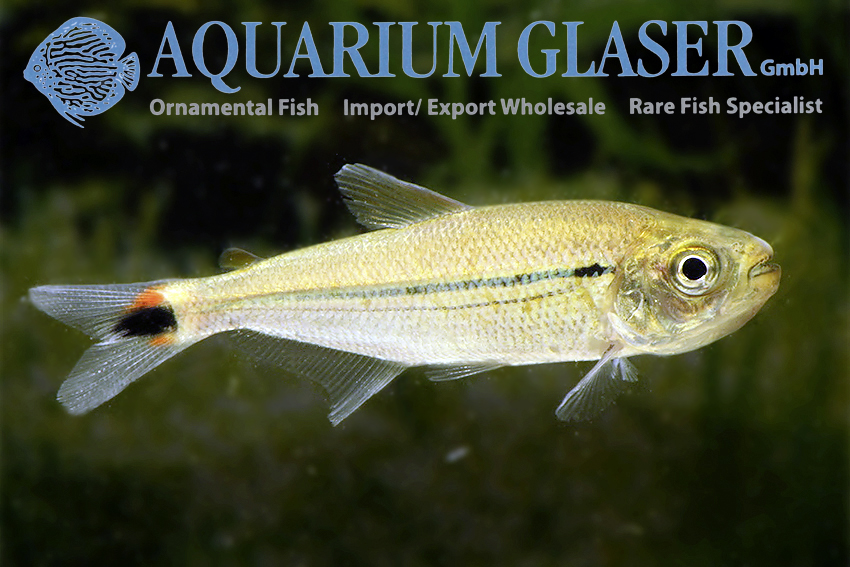
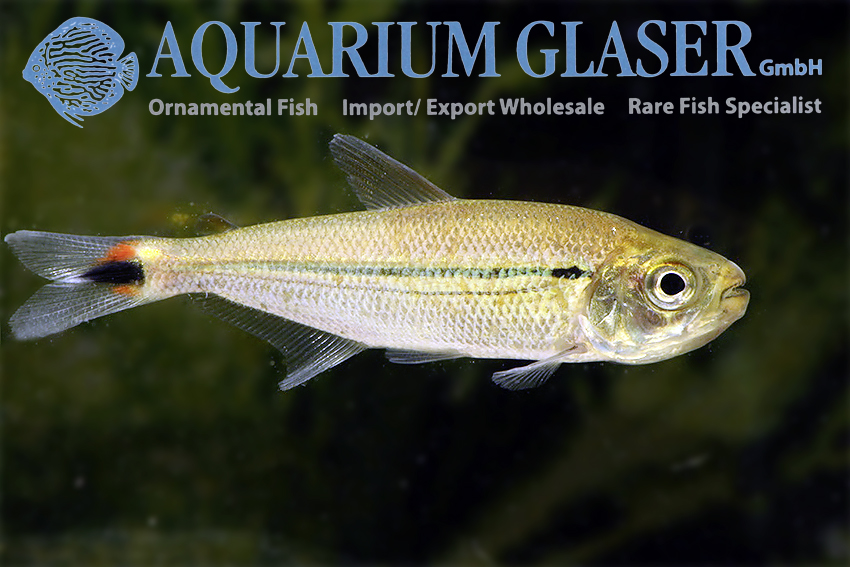
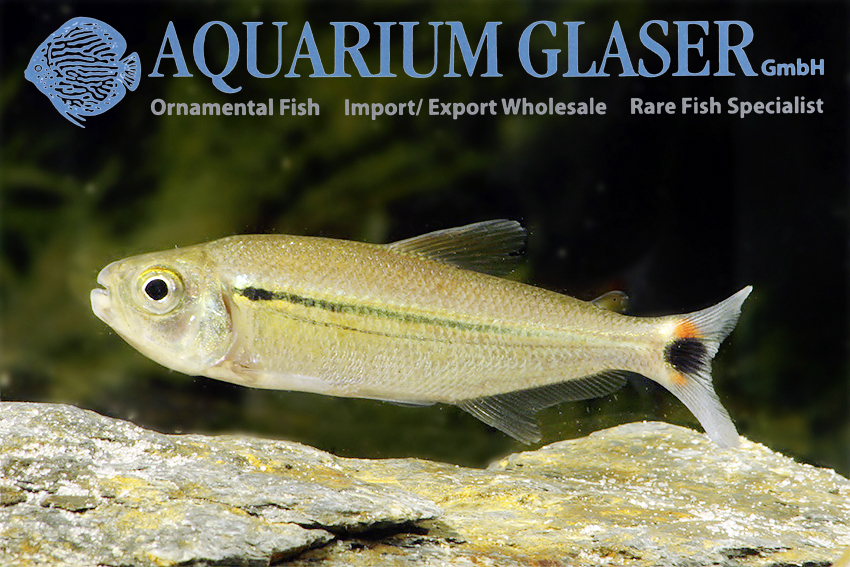
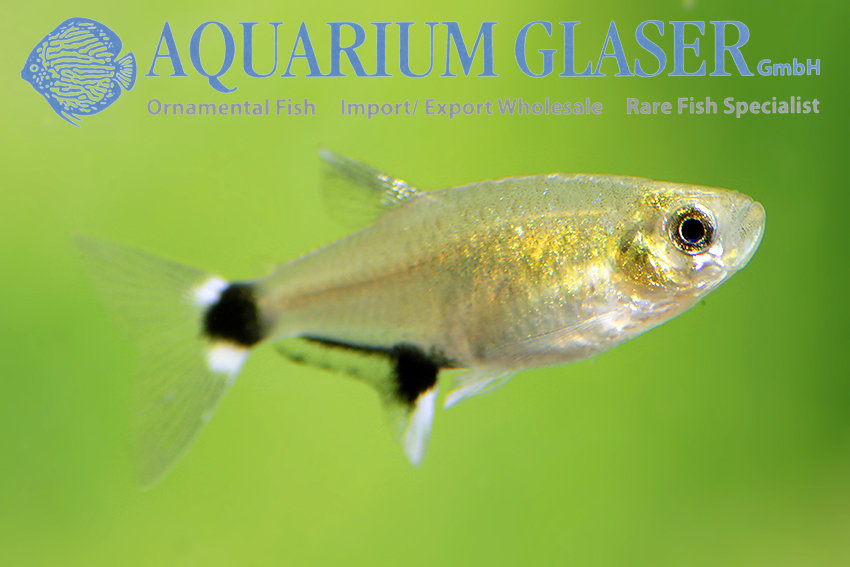
From Venezuela we received a very nice color variation of Moenkhausia copei. The fish now look a bit like a stretched version of Moenkhausia collettii, where the shoulder spot so typical for M. collettii is missing and where the orange tail fin of M. collettii is red. 

We were able to import Moenkhausia copei for the first time in 2011, then from Peru. They weren’t quite as strongly colored, but otherwise they match well with our current Venezuela fish. You can find a picture of the Peruvian fish on our homepage: http://www.aquariumglaser.de/fischarchiv/moenkhausia_copei_en/

Moenkhausia copei reaches a total length of about 6 cm and is widespread in the Amazon and Orinoco basins. Apparently we could now import a really attractive variant of the peaceful and very lively swarm fish.

In spawn-mood, the males very well develop a strong humeral spot. This characteristic can therefore not be used reliably to distinguish between M. collettii and M. copei. The general body-form probably is the most reliable determining-characteristic.

For our customers: the animals have code 268632 on our stocklist. Please note that we only supply the wholesale trade.

Text & photos: Frank Schäfer

Yasuhikotakia splendida

8. February 2019

The genus Yasuhikotakia was separated from the genus Botia by Teodor Nalbant in 2002 and currently comprises 10 species. Some of them are important aquarium fish like Y. morleti (older synonym: Botia horae) and Y. modesta

The newest species on the ornamental fish market is Y. splendida, which was described as Botia splendida in 1995. It differs from the very closely related, aquaristically well known species Y. morleti only by its colouration. However, this is very striking, beautiful and makes the species unmistakable.

So far the species is only known from Laos (Xe Pian), but this does not mean that it does not occur in other places. Together with it Y. modesta and Ambastaia sidthimunki were found, the latter a species described from Northern Thaialnd and in the meantime even considered extinct. In nature these loaches inhabit clear running waters with stony bottom.

Not much is known about the behaviour of Y. splendida. However, it is not to be assumed that it deviates substantially from that of the skunk loach; Y. splendida also becomes similarly large with about 10 cm. At present our specimens are 6-8 cm long. Since the fishing areas are far away from the normal routes, there are only a few specimens on the world market and these are very expensive. 

For our customers: the animals have code 405203 on our stocklist. We have very few specimens in stock. Please note that we only supply wholesalers.

Text & Photo: Frank Schäfer

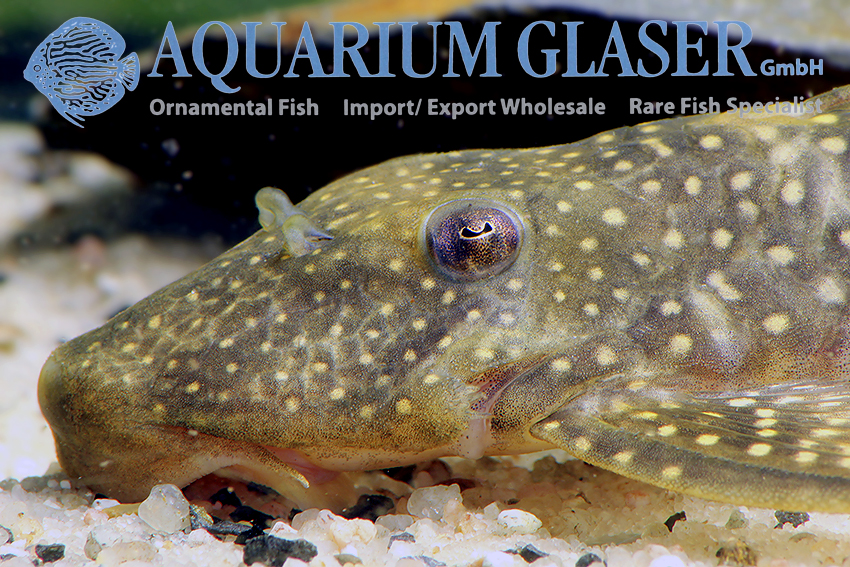
Pseudancistrus sidereus

6. February 2019

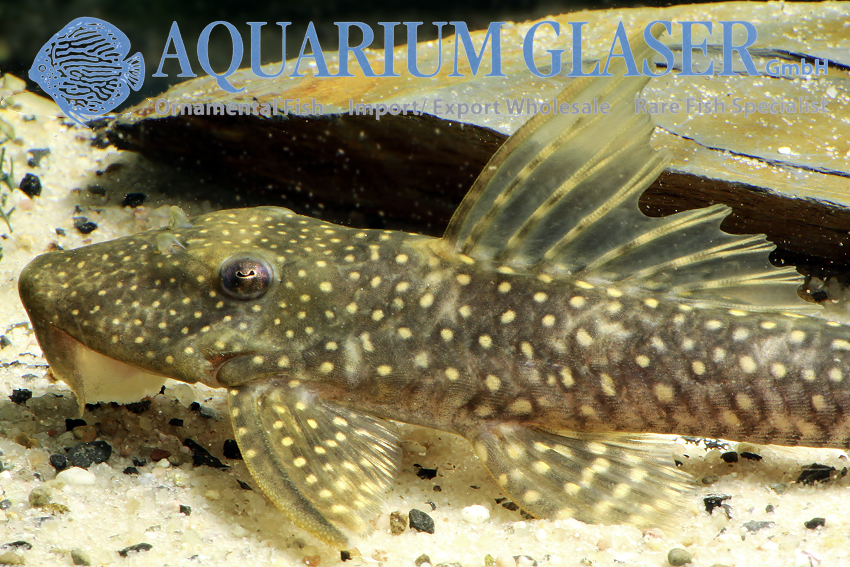
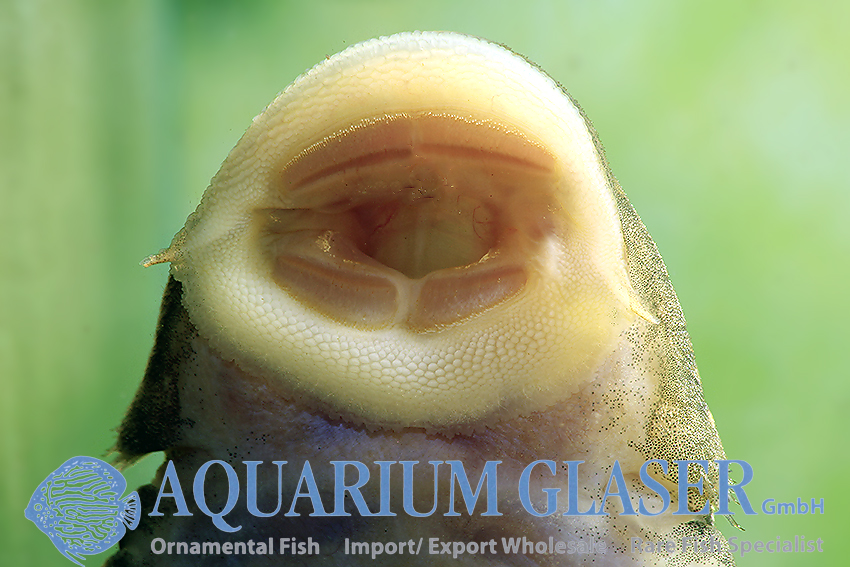
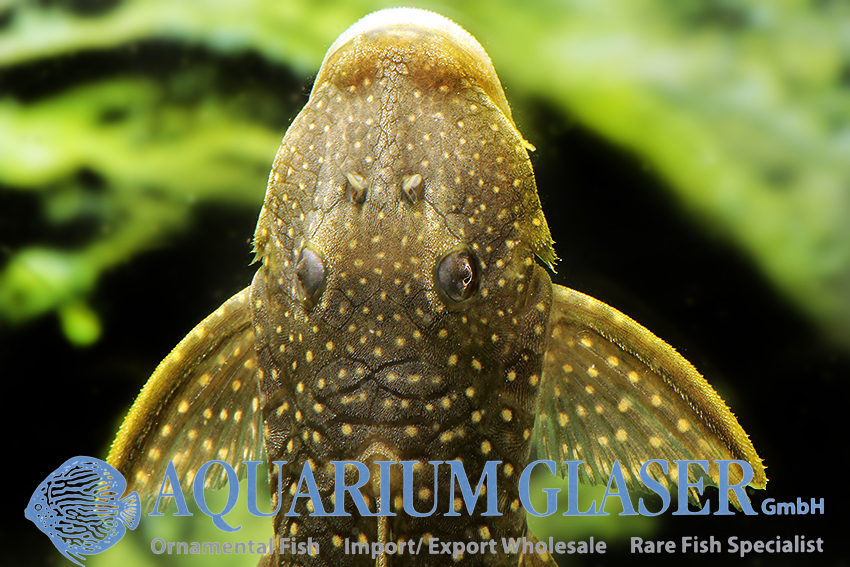
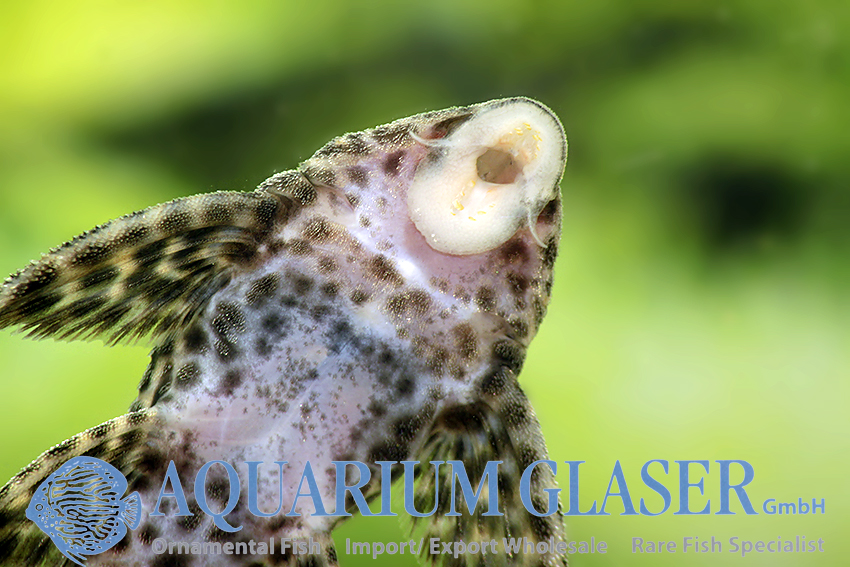
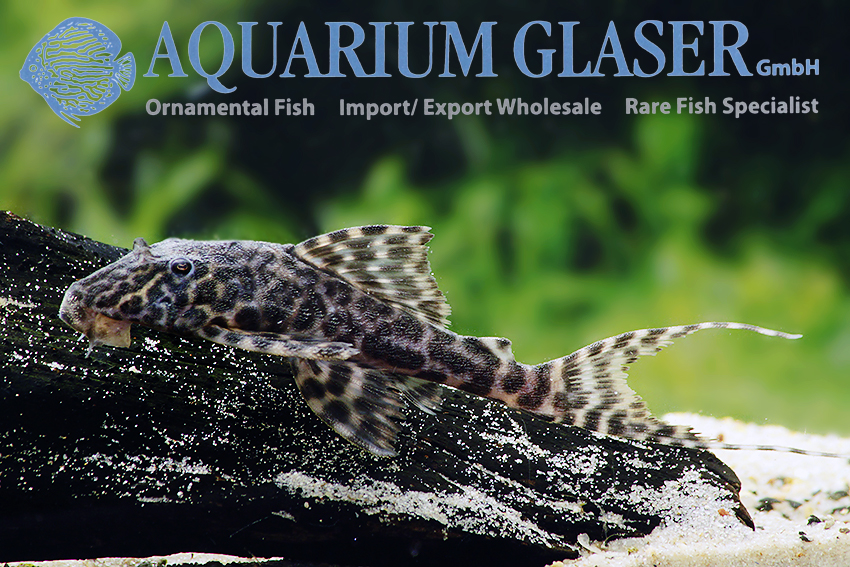
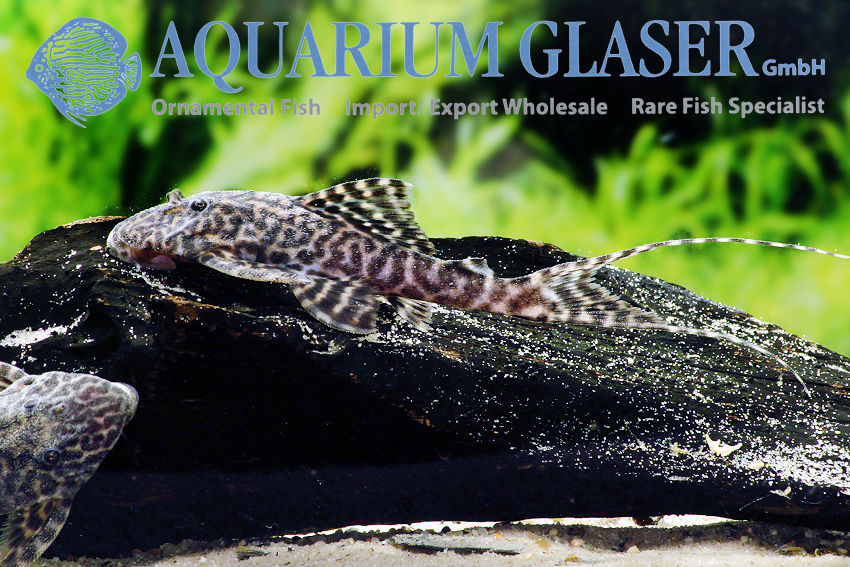
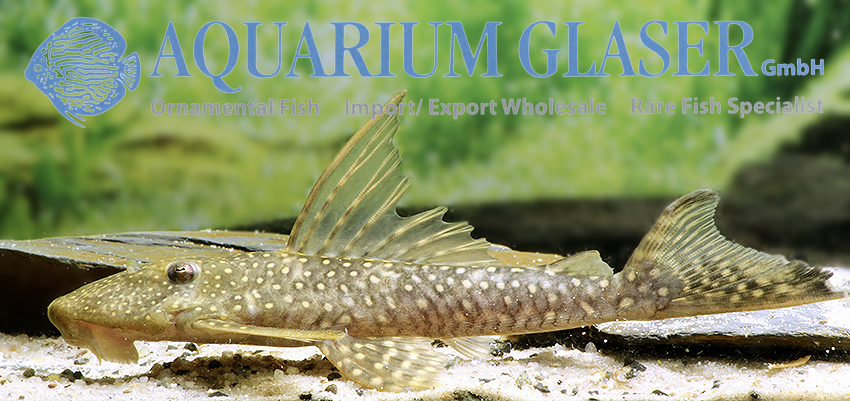
Nasty people could say: another brightly spotted brown-black loricariid catfish. But the heart of real fans of this group of animals beats faster at the sight of the fish, which differs from all other L-catfish by the combination of the crescent-shaped dorsal fin and the tail fin coloration, which is actually typical for Lasiancistrus species. The species was described scientifically in 2004, but the fishing area (Minicia in Venezuela, the species inhabits the Rio Casiquiare and the upper Orinoco River drainage) is off the beaten track of ornamental fish catchers, which is why the species is only offered now and at high prices in small numbers from time to time. They are typical Aufwuchs eaters, as you can see from the numerous small teeth. The largest specimen known so far was about 20 cm long, our only animal we can offer at the moment is 10-12 cm long.

The assignment of P. sidereus to the genus Pseudancistrus is controversial, genetic studies suggest that a new genus should be established for this species and for P. pectegenitor (L261). However, there is no L-number for P. sidereus, since it was scientifically described before the aquaristic first import.

For our customers: the animal has code 205204 on our stocklist. Please note that we only supply wholesalers. Only one specimen available!

Text & Photos: Frank Schäfer

Heros notatus BRAZIL WILD

4. February 2019

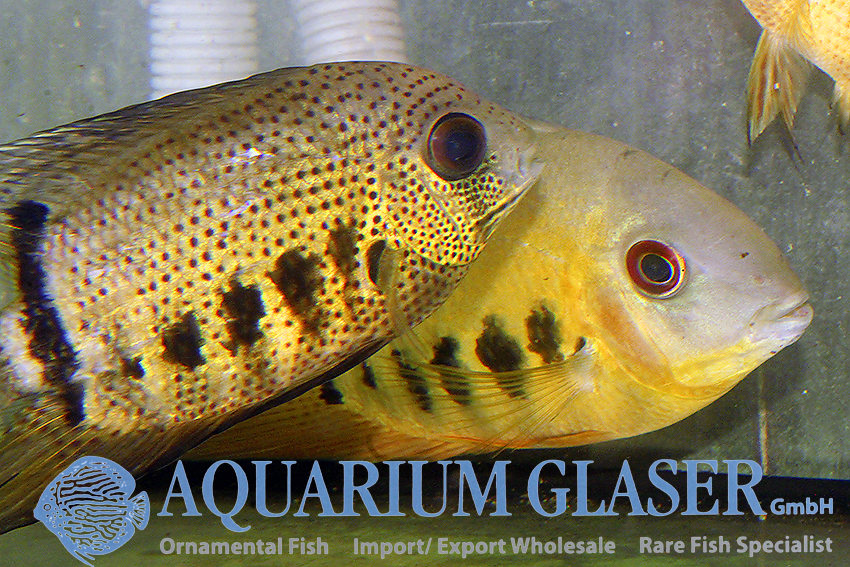
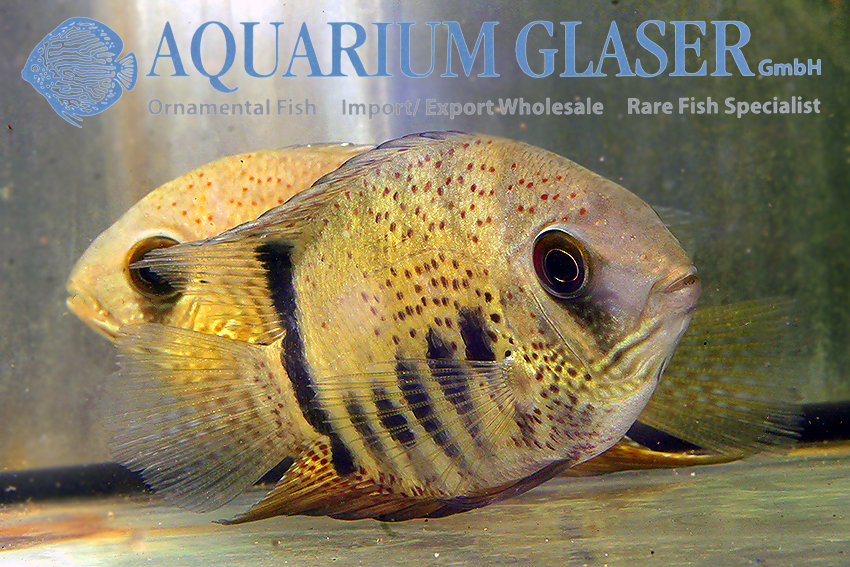
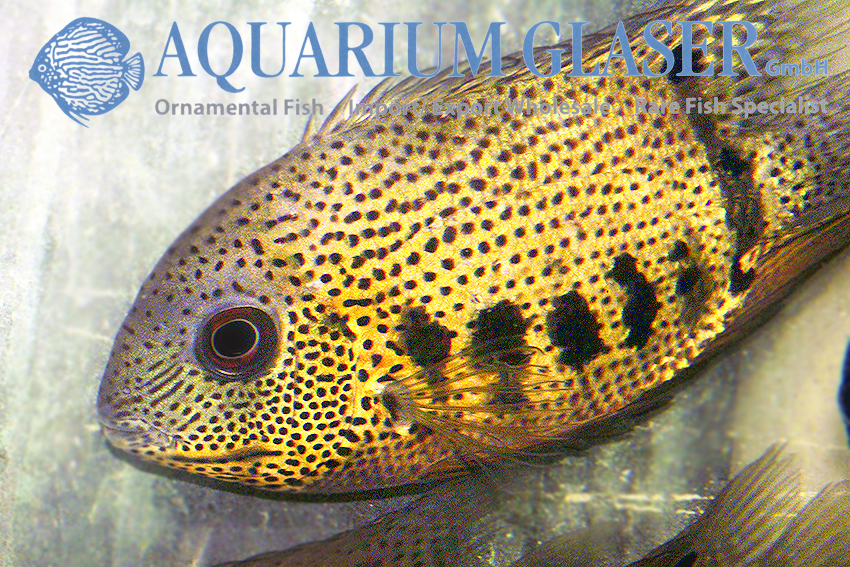
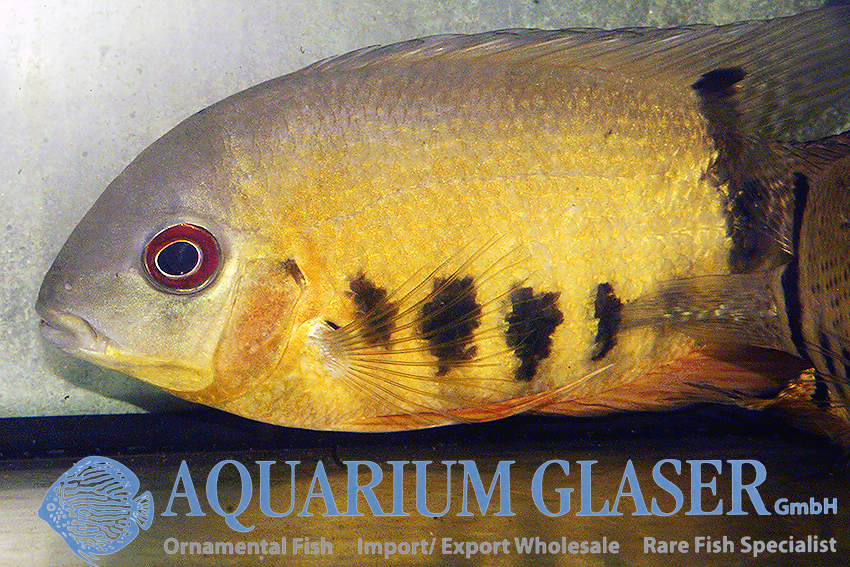
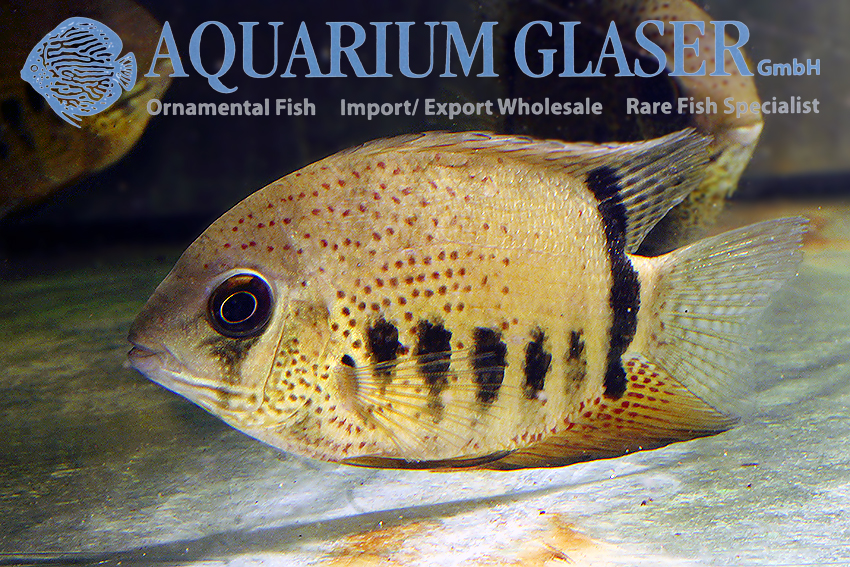
We have received wonderful Heros notatus from Brazil. A typical feature of this species are the dark spots in the lower half of the body. As with all Heros the sexes differ by the head colouring, however, it is not always easy to distinguish a strongly coloured female from a male standing far below in the hierarchy. To avoid to get constantly in trouble with the dominant male, low-ranking males assume female coloration. One calls this also “Sneaker”-behaviour. Sneaker-males frequently appear in cichlids. In the nature, they “take revenge” for the humiliation through the territorial, dominant male by joining the spawning couple during the spawning process and fertilizing many eggs on that occasion. So they can pass on their genes to the next generation, without having spent energy on building up the territory, defence of the territory and courtship display in front of the female. 

For our customers: the animals have code 682955 on our stocklist. Please note that we only supply wholesalers.

Text & Photos: Frank Schäfer

Pao suvattii (= Tetraodon suvattii)

1. February 2019

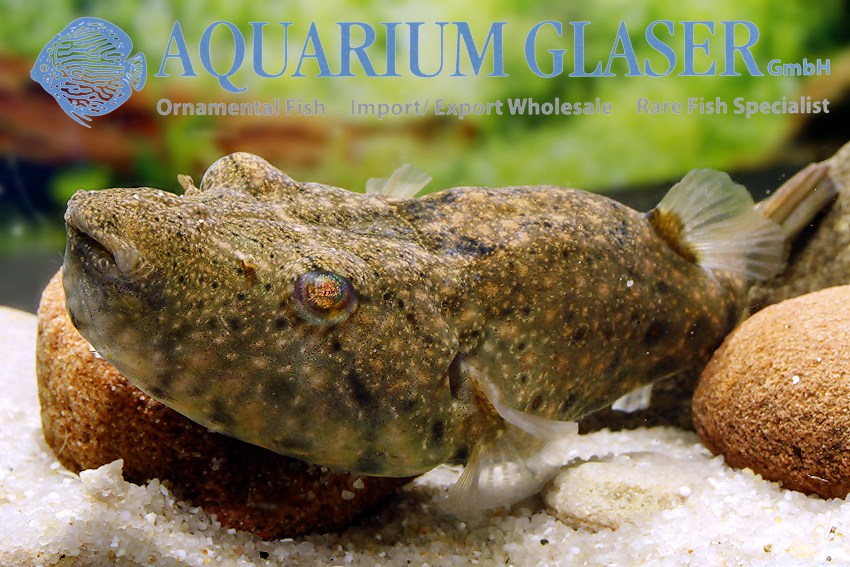
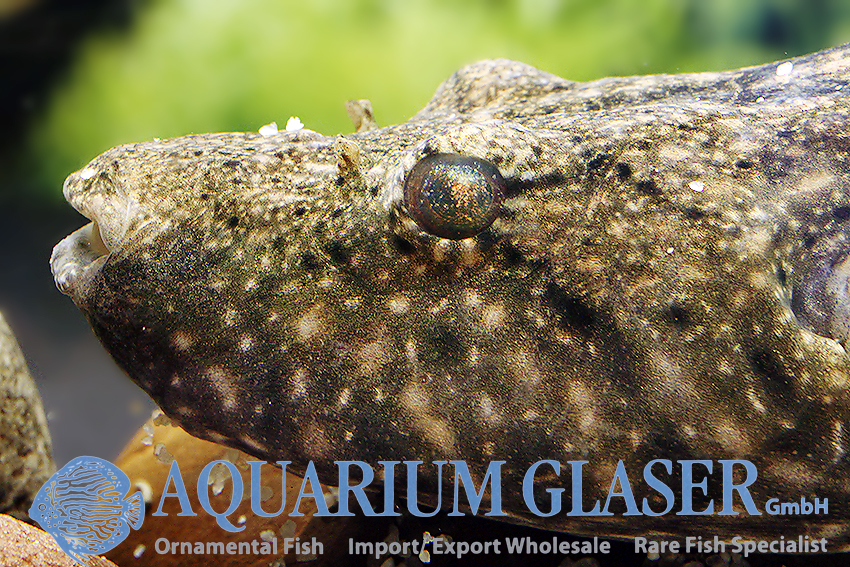
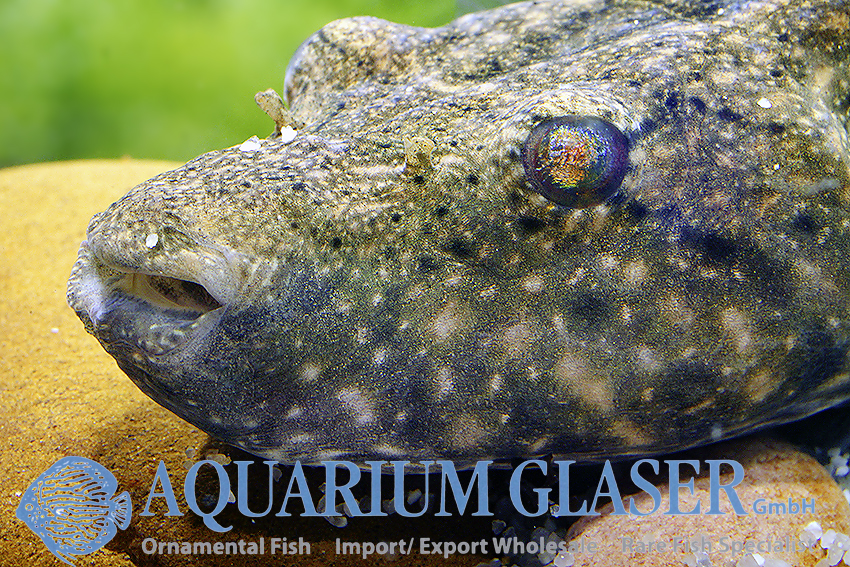
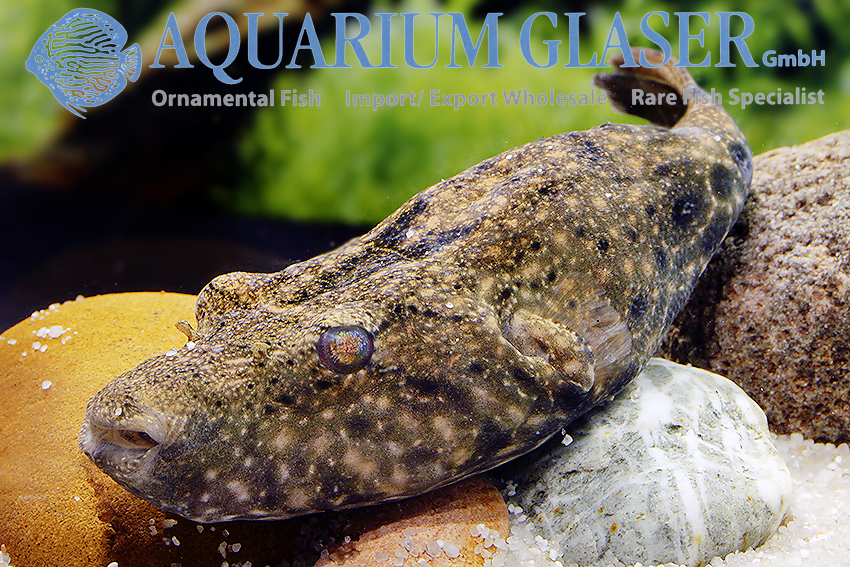
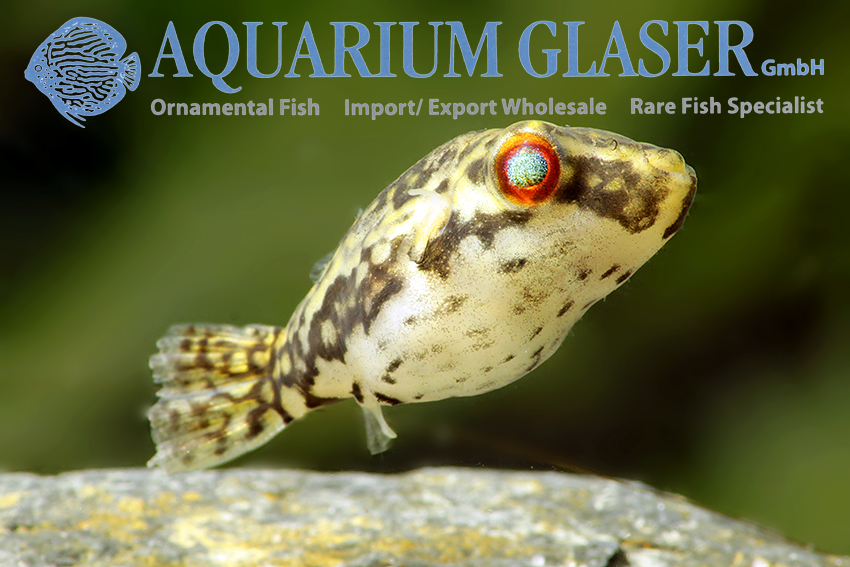
This freshwater pufferfish originates from the rivers of Thailand. Here it imitates stones and lurks for clueless feeder fish. In the aquarium it can be easily fed by large pieces of frozen food given by a forceps. The fish becomes around 12-15 cm long and looks very much alike the African cousin Tetraodon miurus. However, the always visible V on the back makes Pao (formerly placed in Tetraodon) suvattii unmistakable.

For our customers: the fish have code 461554 on our stocklist. Please note that we exclusively supply the wholesale trade.

Text & photos: Frank Schäfer

Pethia phutunio (= Barbus p.)

30. January 2019

The dwarf barb has delighted aquarium enthusiasts since it was first imported from India in 1906. This is not so much due to its magnificent colouring; dwarf barbs are pretty, but no colour miracles. Rather, the tiny animal, which only grows to 2-3 cm in size in nature, fitted wonderfully into the formerly common, relatively small aquariums. Since it lives at temperatures between 14 and 30°C, not even an aquarium heating was necessary in heated dwellings yet. And filtering and aeration was rarely practiced at that time anyway.

All this has changed fundamentally nowadays. In fact, Pethia phutunio is considered somewhat sensitive. The causes are easy to name: Control heaters prevent temperature fluctuations and there is no debris left in the clean aquariums. Debris, i.e. dead plant remains, faeces and food remains, are an important food component of these and many other barbs. But if you are looking for an ideal fish for a small, natural aquarium without technology, you will still find it in Pethia phutunio today.

For our customers: the animals have code 370902 on our stocklist. Please note that we exclusively supply the wholesale trade.

Text & photos: Frank Schäfer

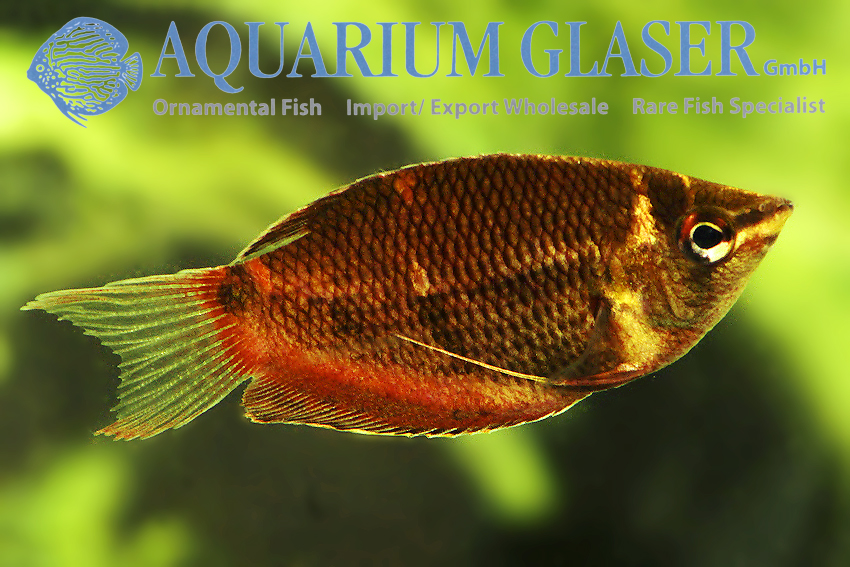
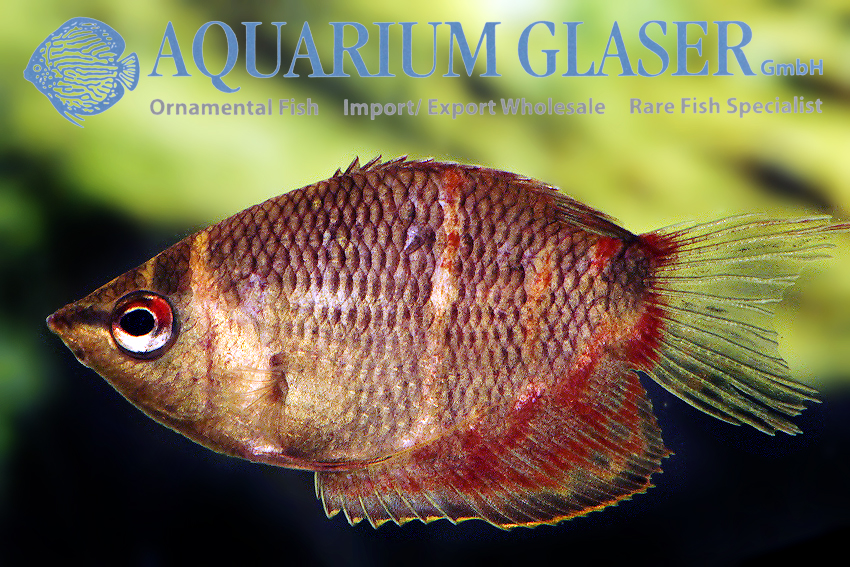
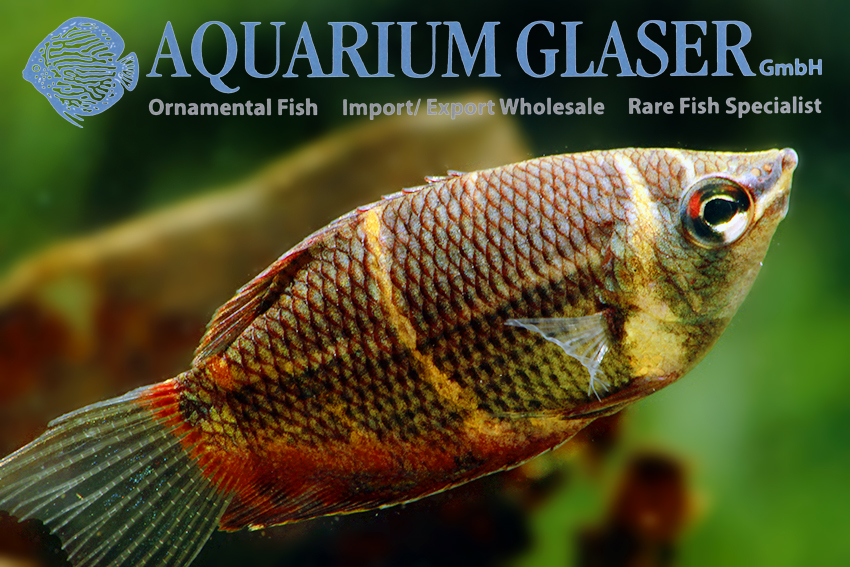
Colisa lalia

28. January 2019

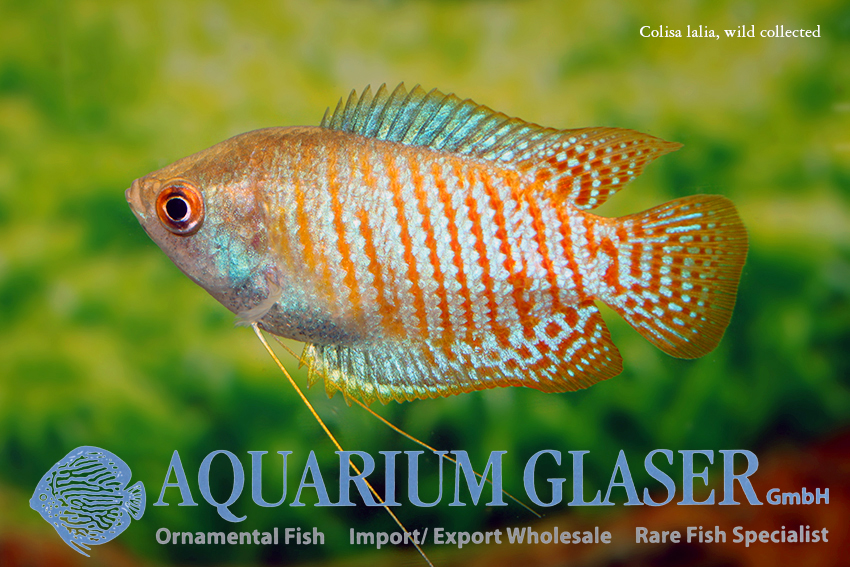
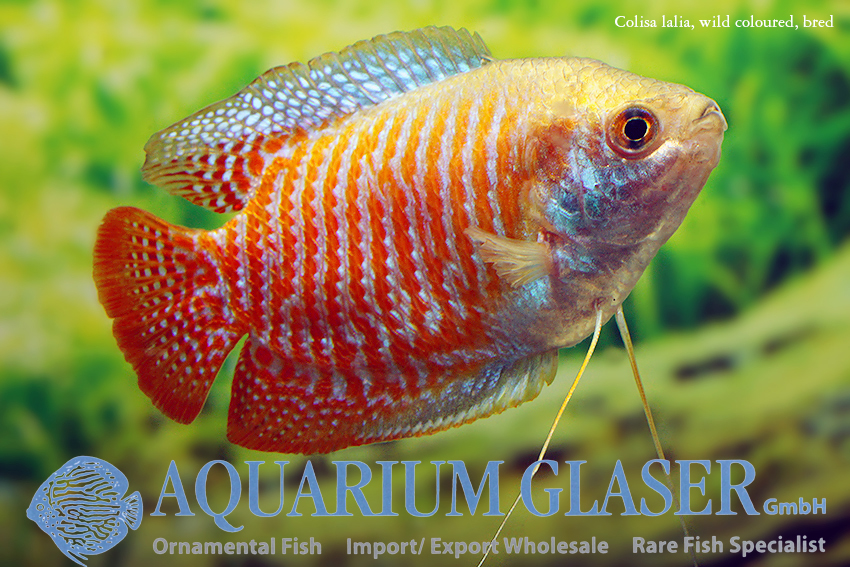
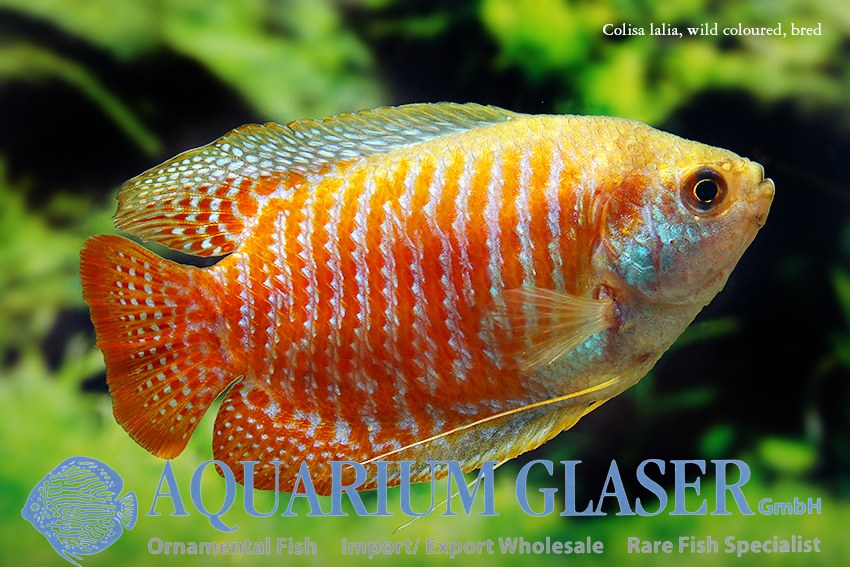
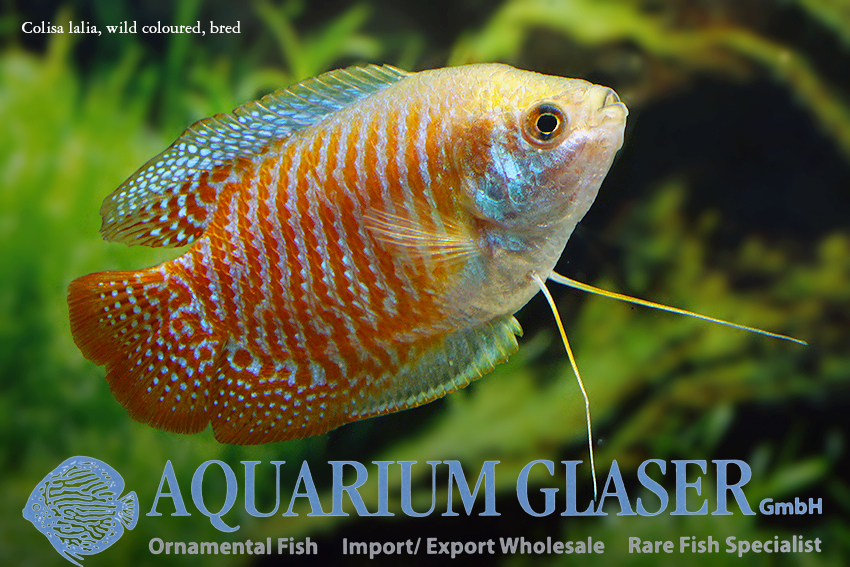
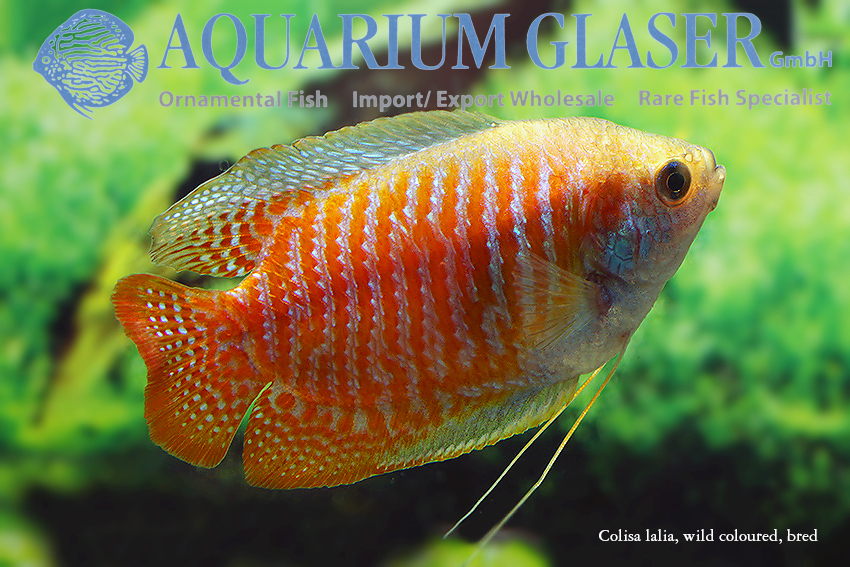
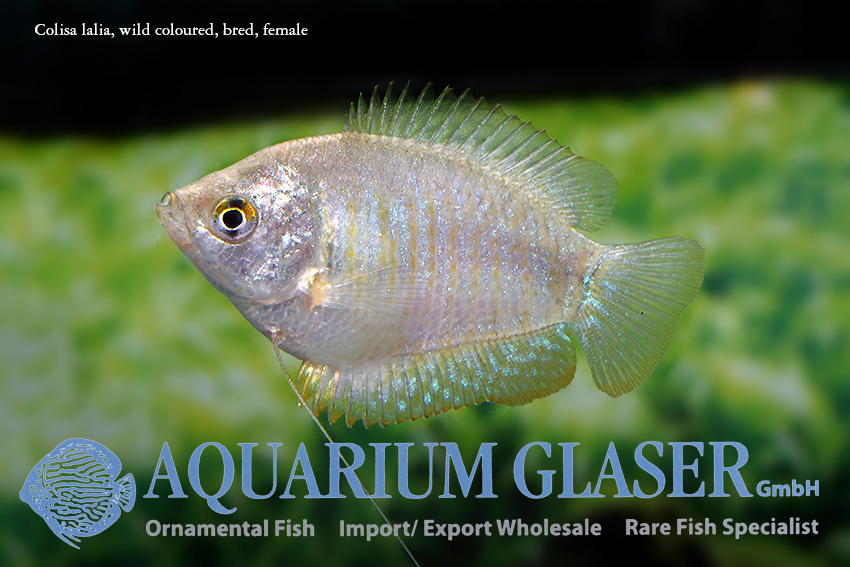
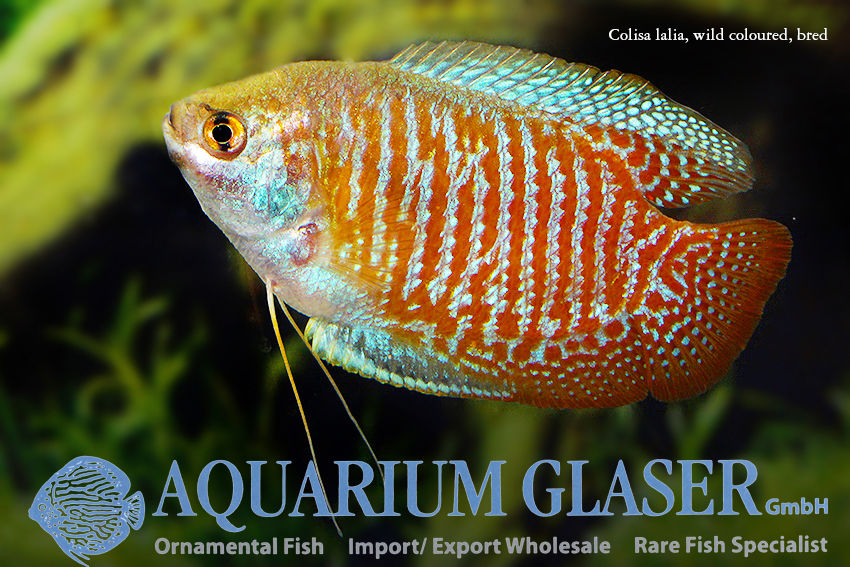
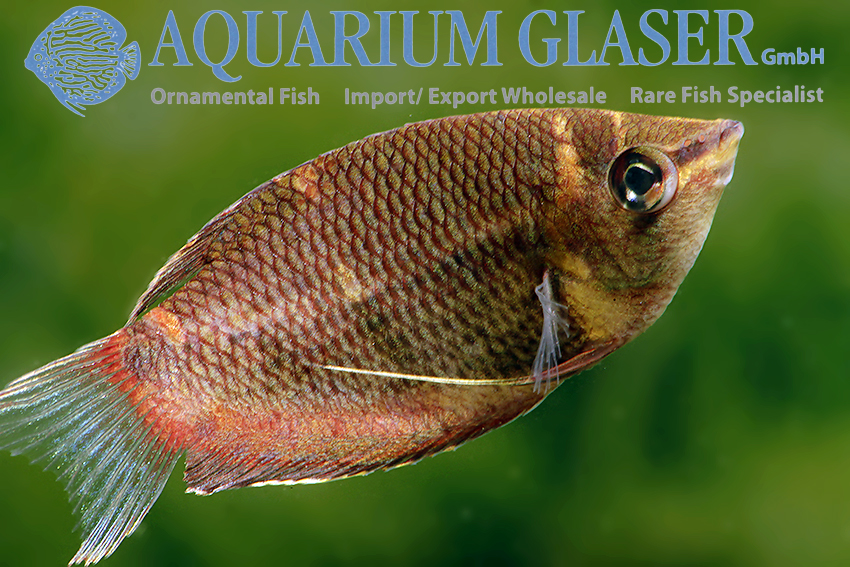
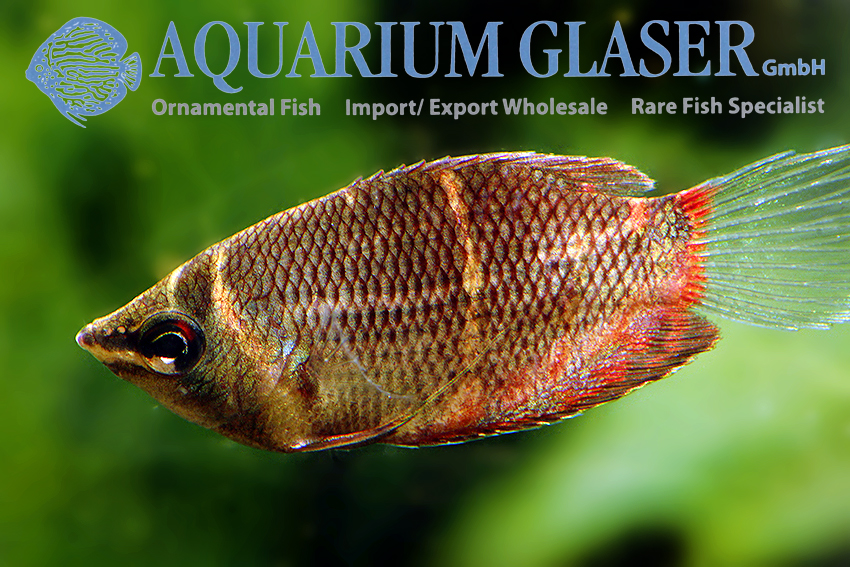
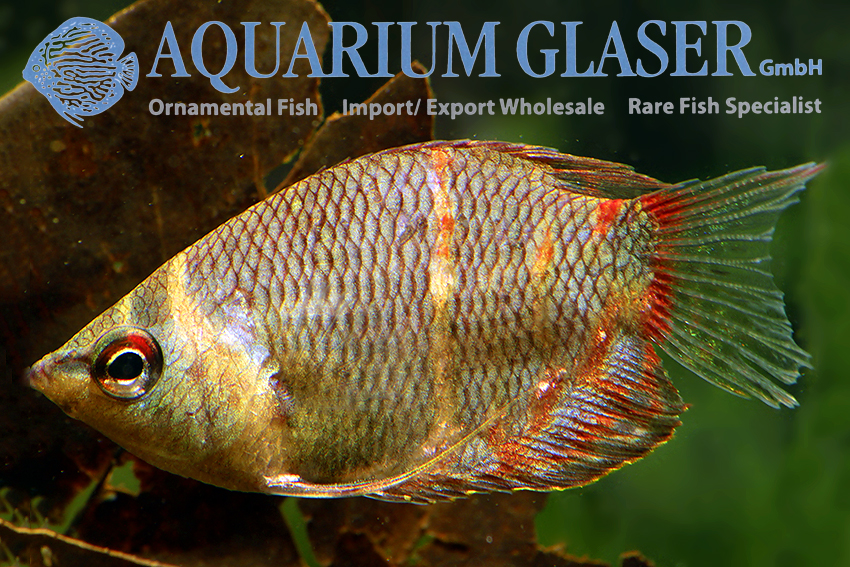
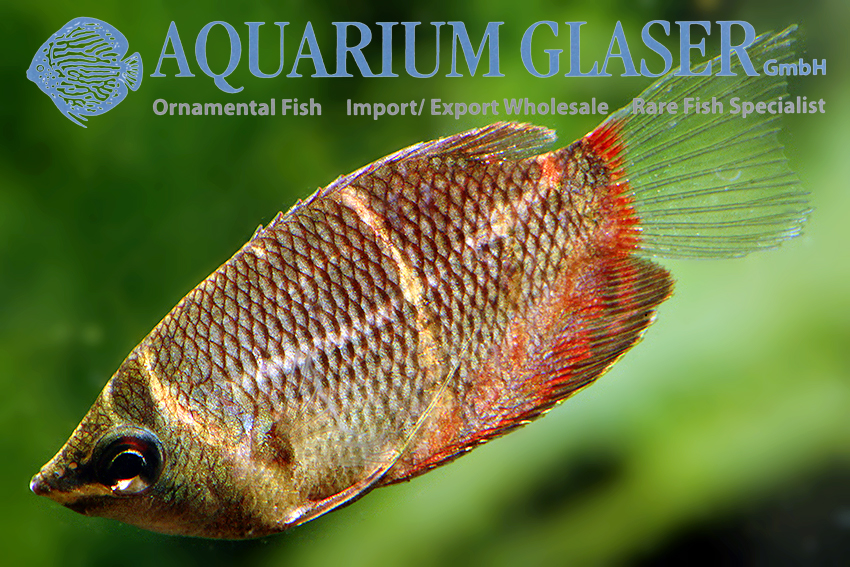
The dwarf gourami is the perfect ornamental fish. It unites magnificent coloration, a peaceful mind and an interesting behaviour. It becomes only 3 cm (wild caughts) or 6 cm (artifical bred sports) long and due to its calm habit it can be kept even in smaller tanks. And if it comes to feeding: the dwarf gourami happily accepts any type of fish food, may it be dried, frozen or alive. The only condition: food particles must not be too big, because the dwarf gourami has a tight throad. Sometimes the dwarf gourami is named Trichogaster lalius, but this is an opinion we do not follow.

For our customers: the xxl show animals (bred ones) have code 411505, the wild collected ones 411523 on our stocklist. Please note that we exclusively supply the wholesale trade.

Text & photos: Frank Schäfer

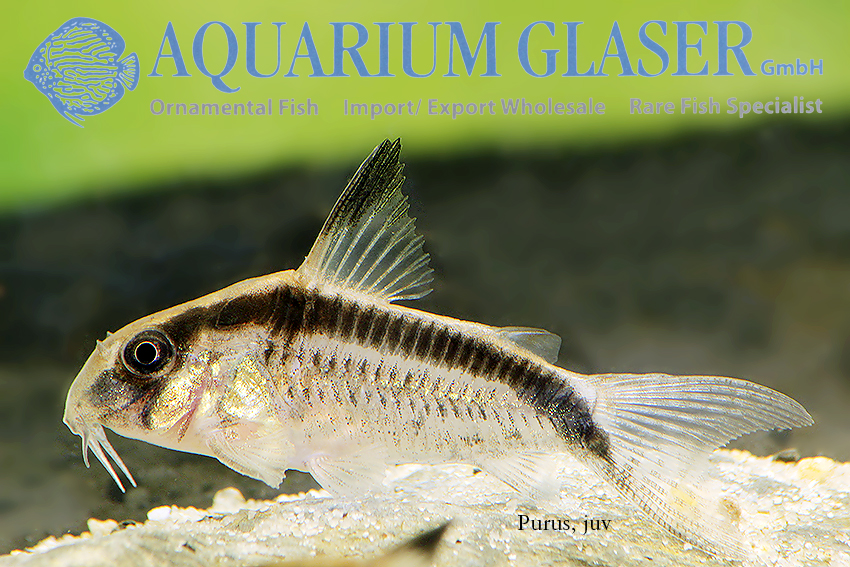
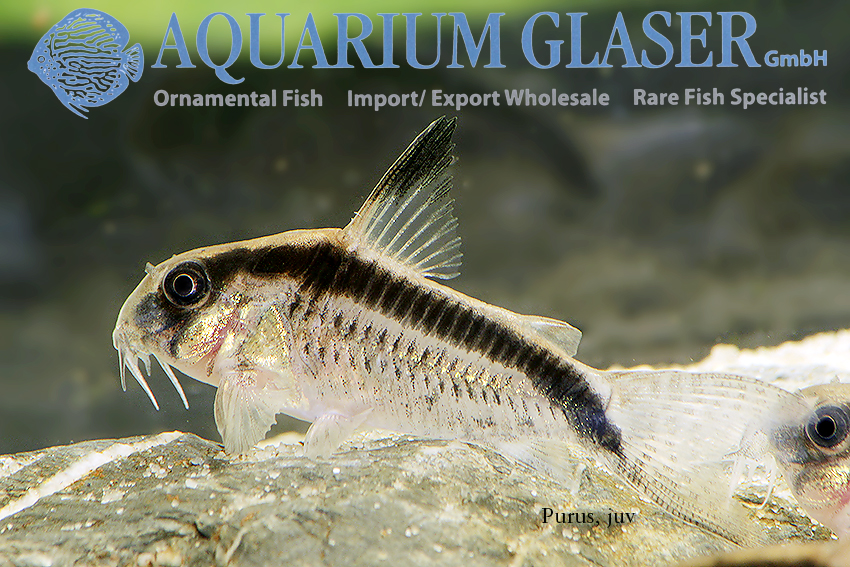
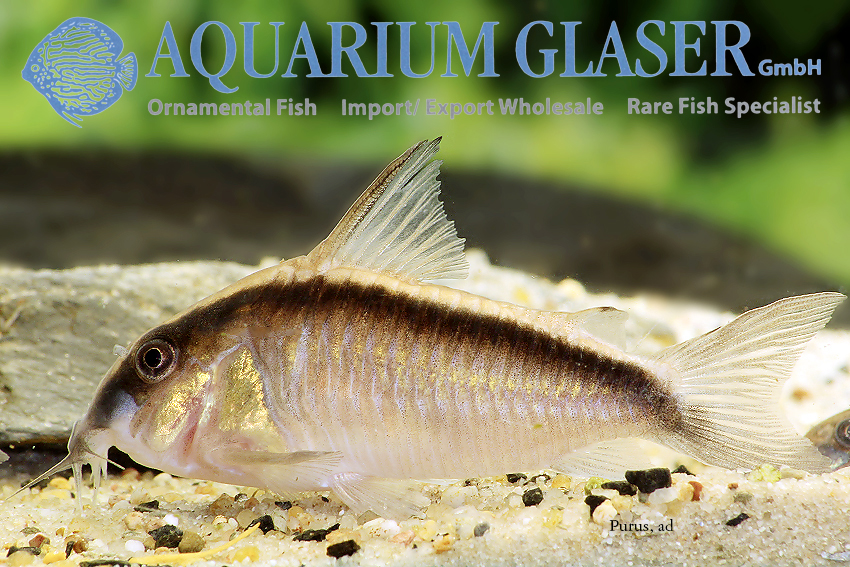
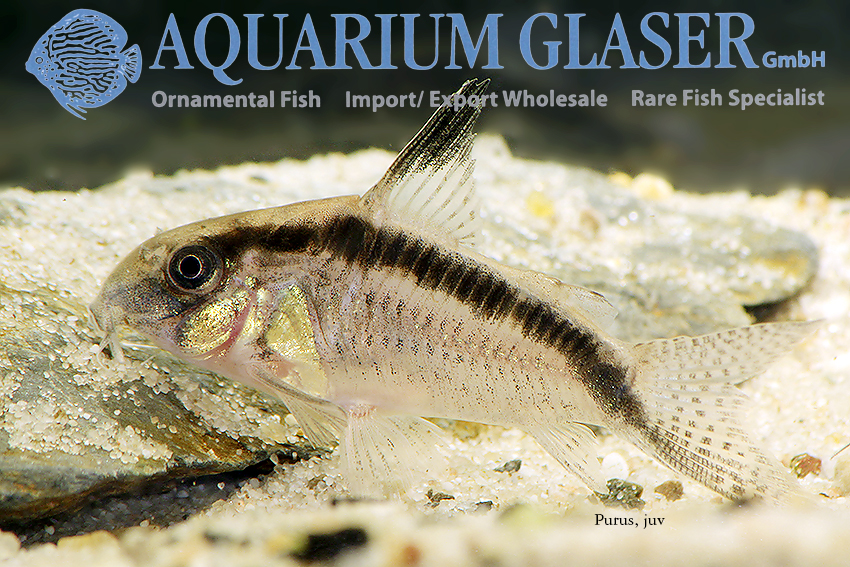
Corydoras arcuatus “Purus”

25. January 2019

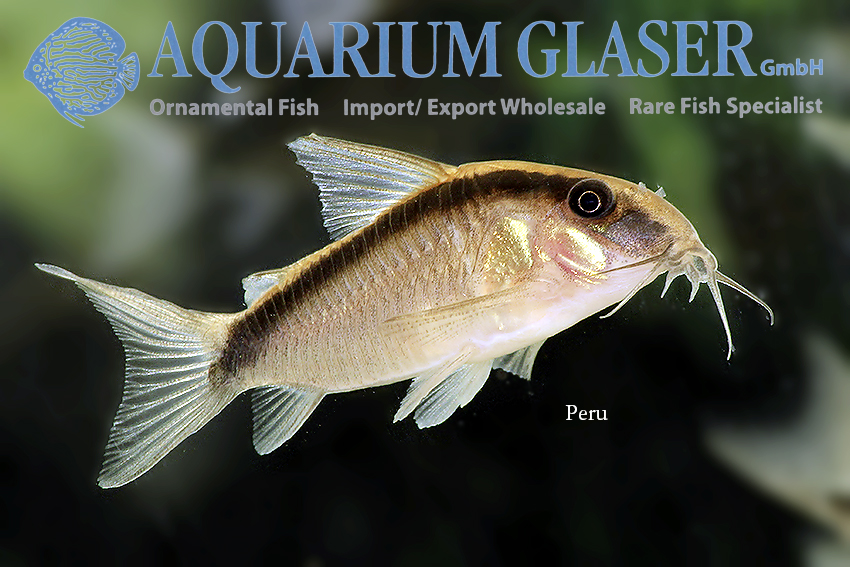
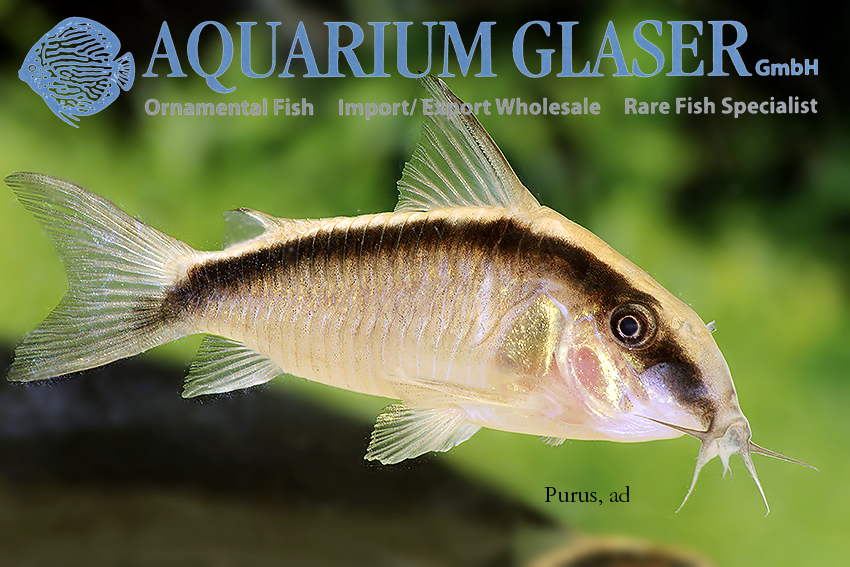
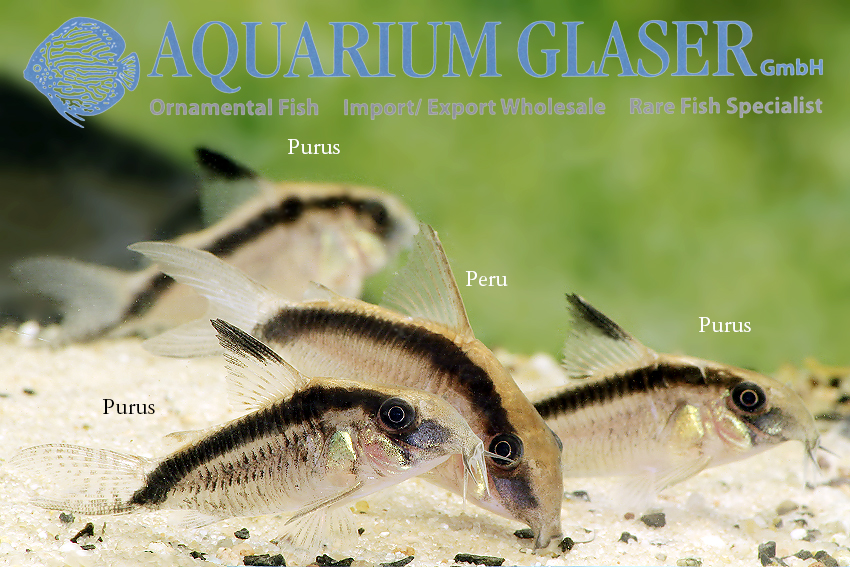
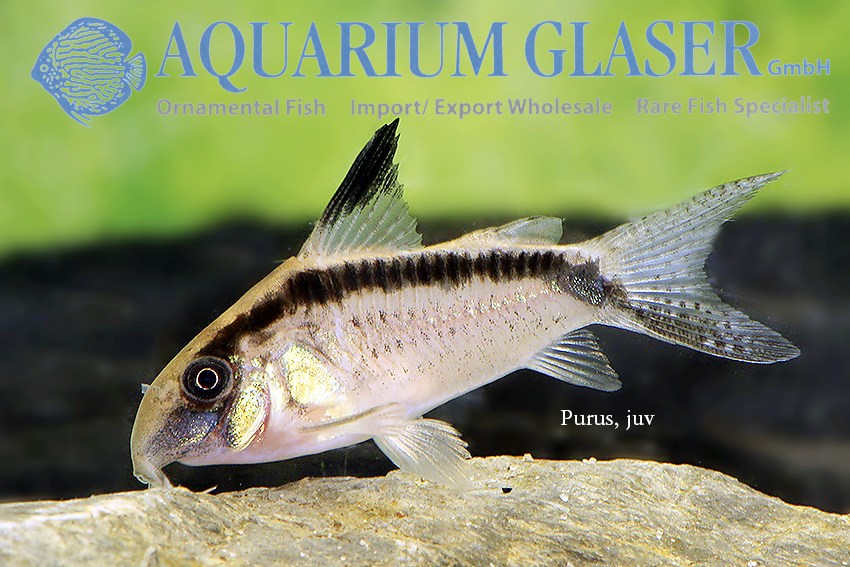
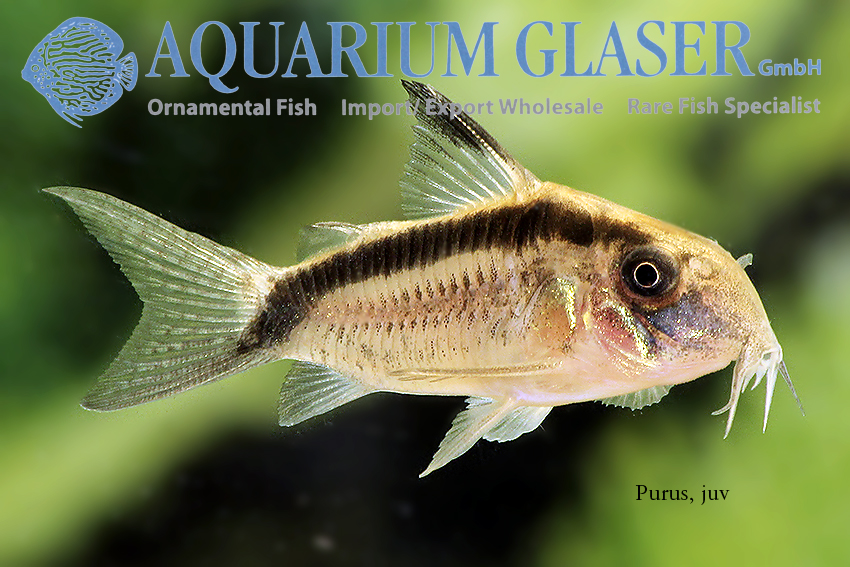
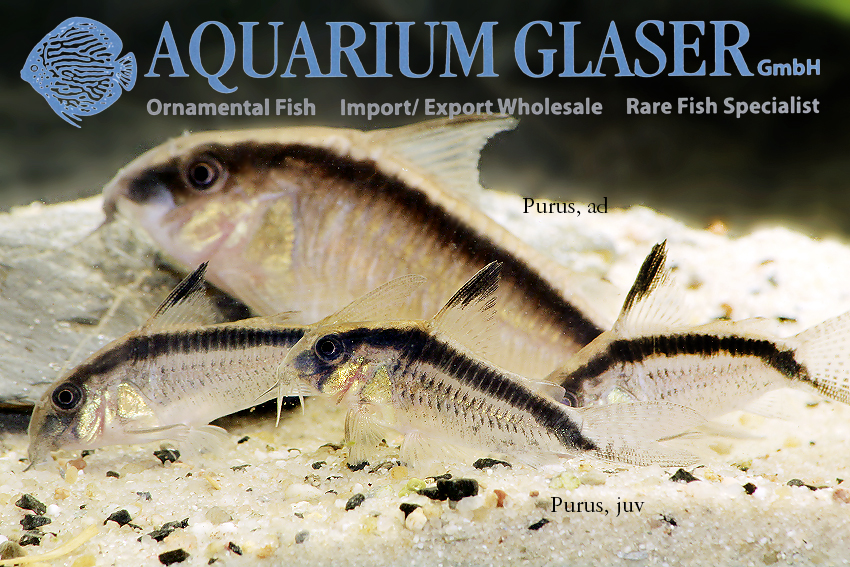
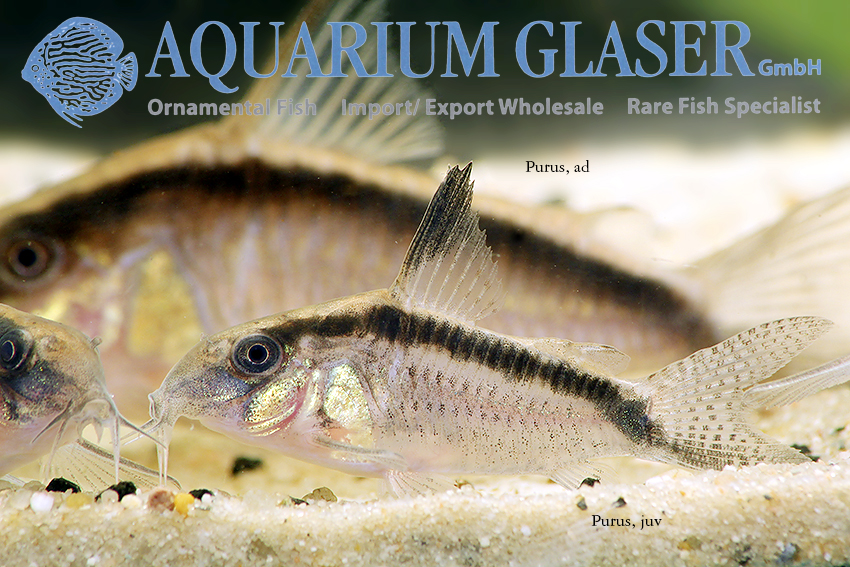
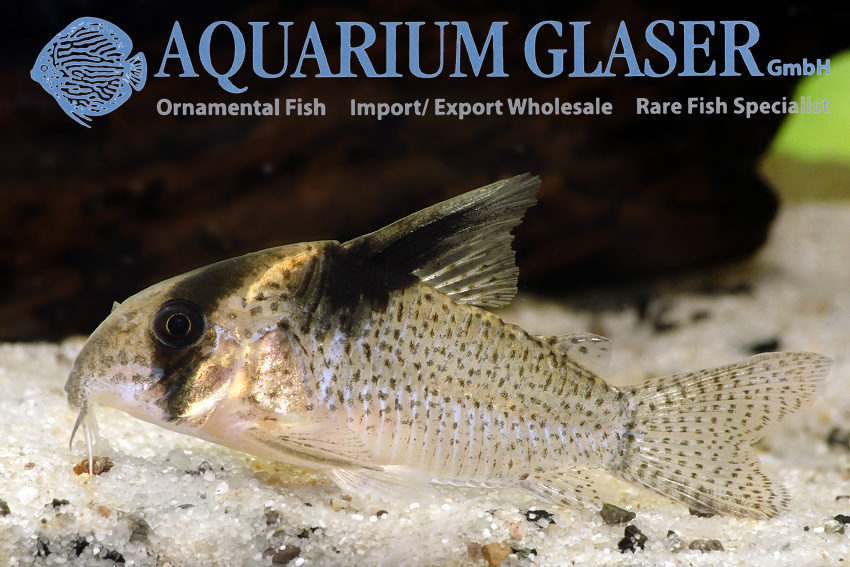
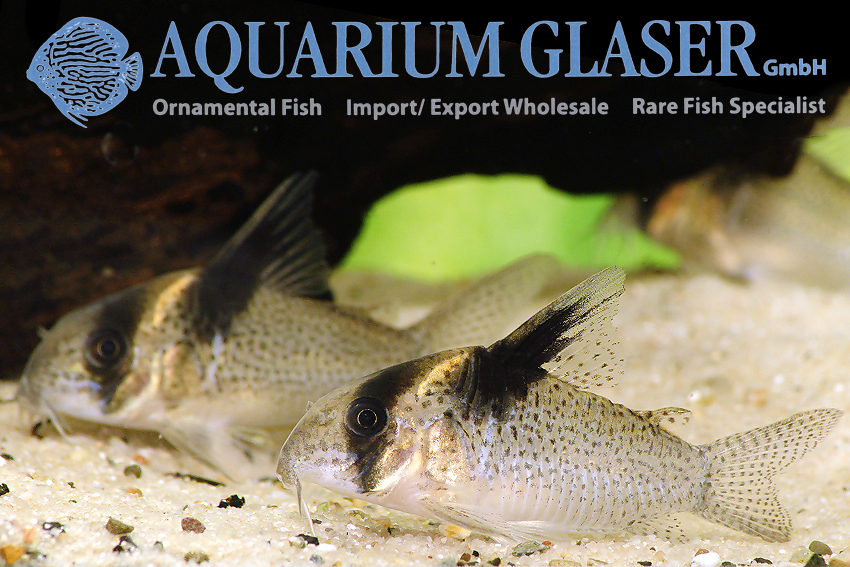
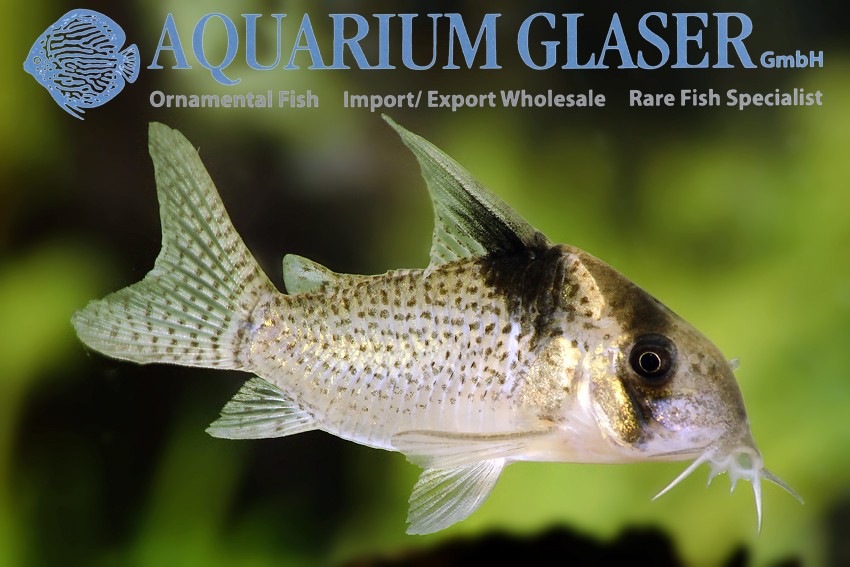
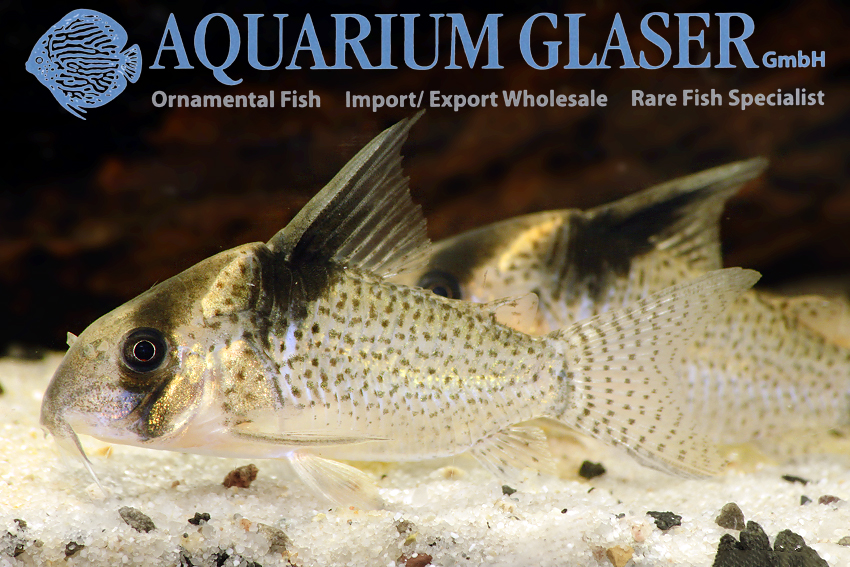
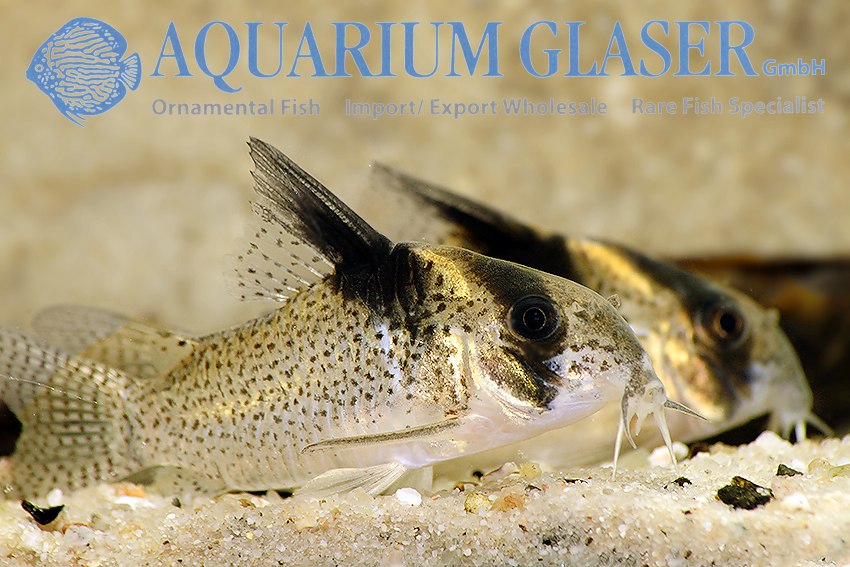
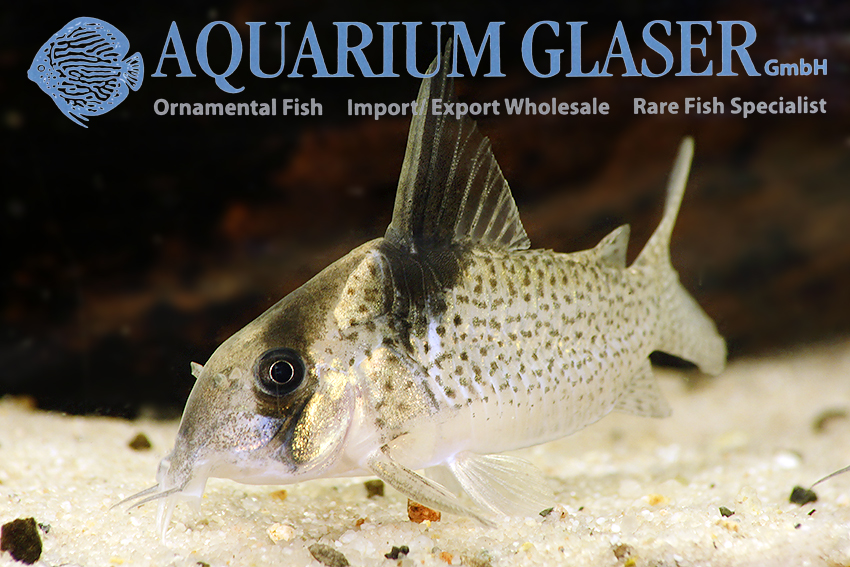
The skunk cory is one of the most famous Corydoras species – you might think! In reality it is most probably a scientifically undescribed species, while Corydoras arcuatus – this scientific name is used for the skunk cory – is hardly ever on the market. But regardless of that: the regularly in large numbers available skunk corys come from Peru and become about 5 cm long. 

From Brazil, more precisely from the basin of the Rio Purus (the Rio Purus is a more than 3,200 km long right tributary of the Amazon, which originates in the Peruvian Andes and flows into the Amazon about 150 km west of Manaus) come skunk corys, which become much bigger (6-7 cm). Mostly, these fish have a dark-gray back-fin spine (very much more brightly with “ordinary” skunk corys), is to be distinguished otherwise however from the smaller remaining skunk corys not colorwise.

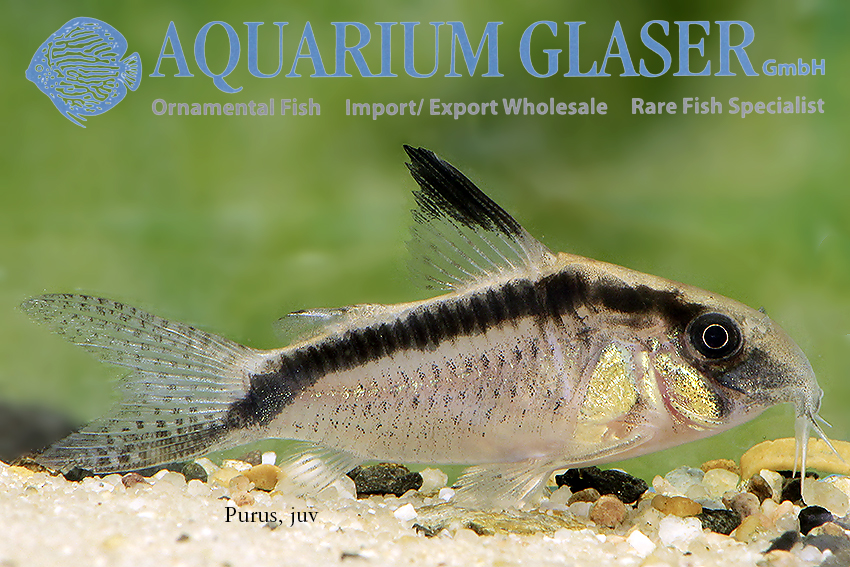
Now we received, together with our imports of the Corydoras cf. urucu (https://www.aquariumglaser.de/en/fish-archives/corydoras-cf-urucu-2/), young of the skunk cory from the Rio Purus. They are clearly slimmer than about the same size Peru skunk corys, often have a fine drawing in the tail fin (the tail fin is transparent with Peru skunk corys) and above all a strong black tip of the dorsal fin. Such a thing never occurs with Peruvian skunk corys.

For our customers: the skunk corys from Purus in Brazil have code 222022 (3-4 cm), 222024 (6-7 cm), those from Peru 222004 (4-5 cm) on our stocklist. Please note that we only supply wholesalers.

Text & Photos: Frank Schäfer

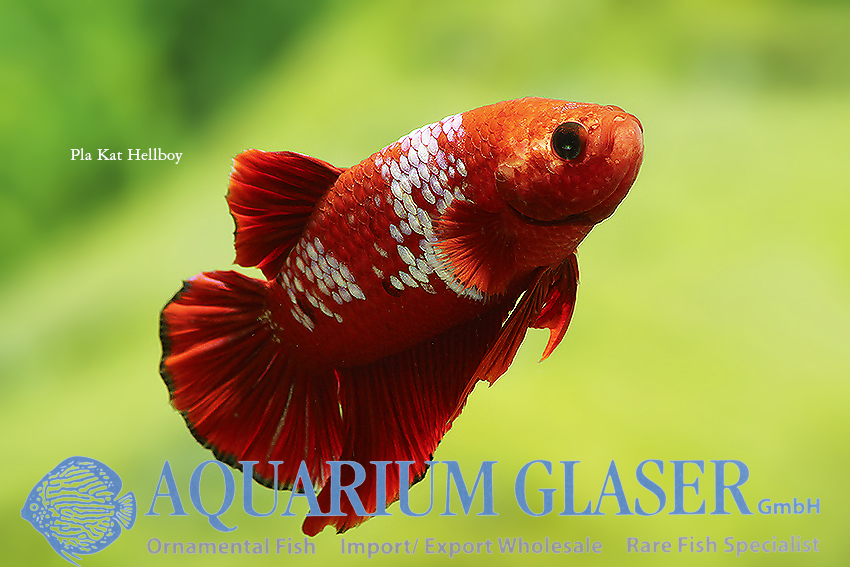
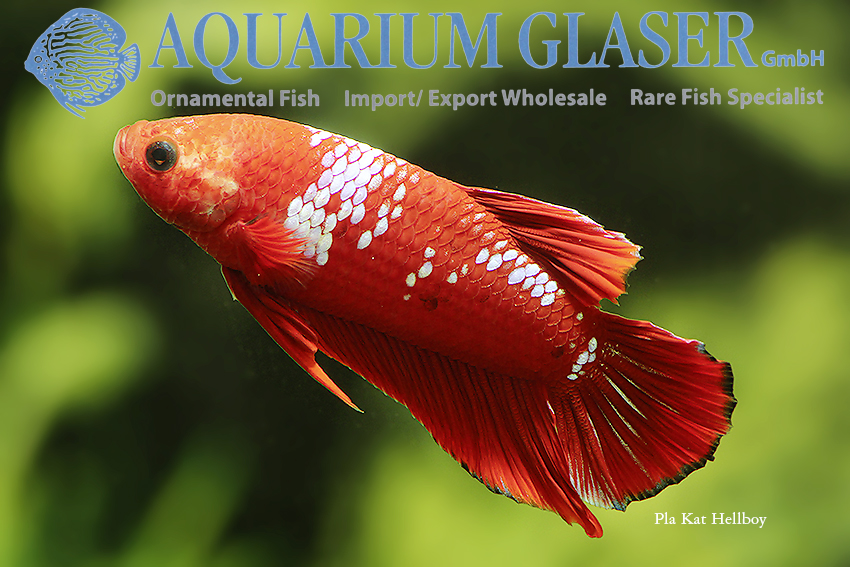
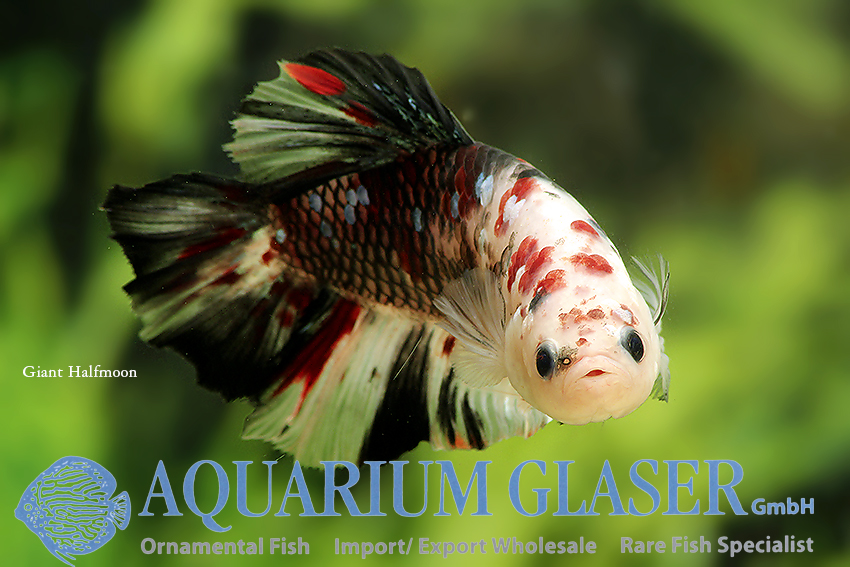
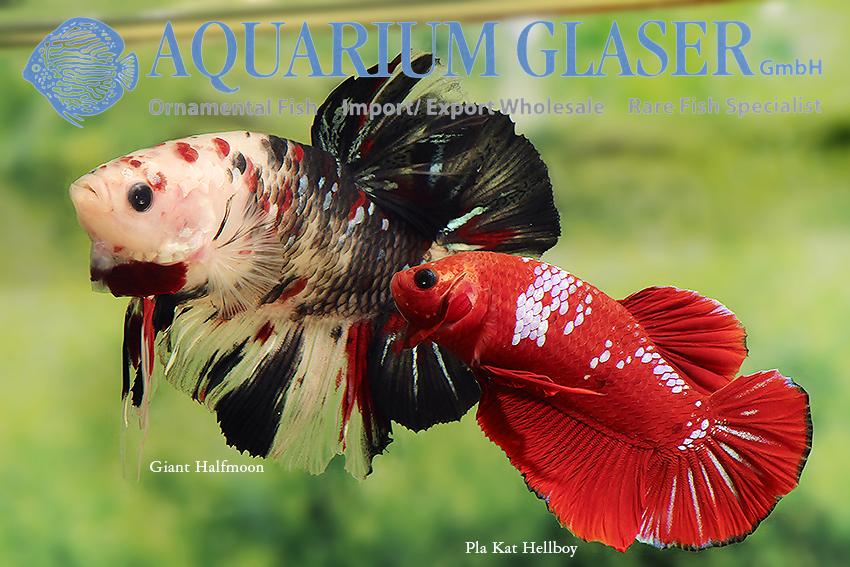
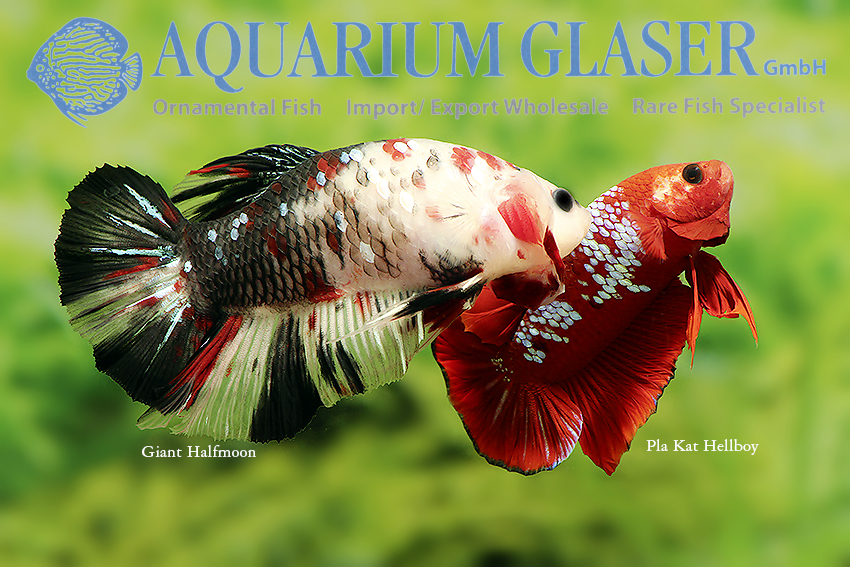
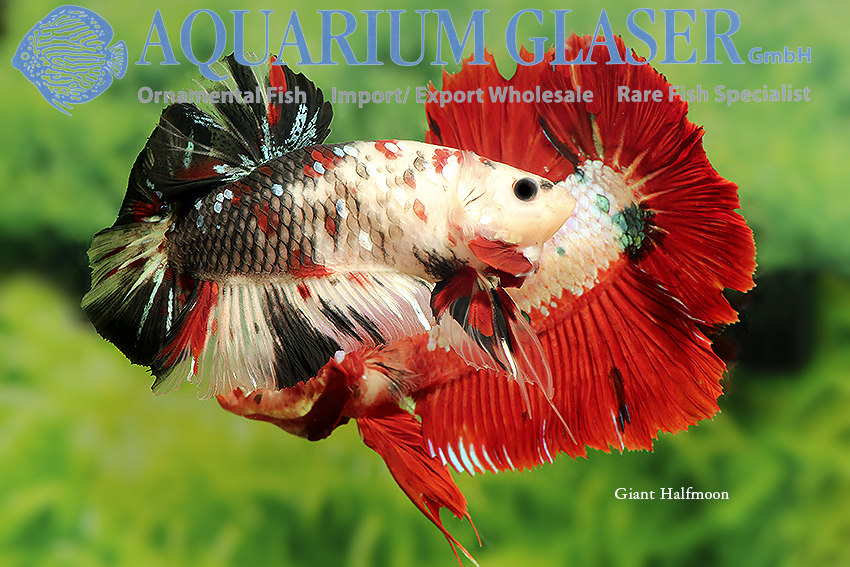
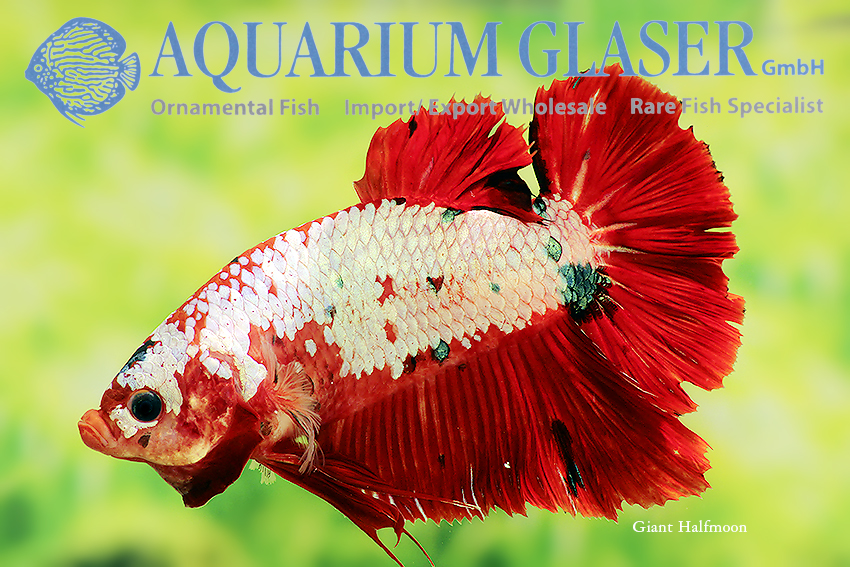
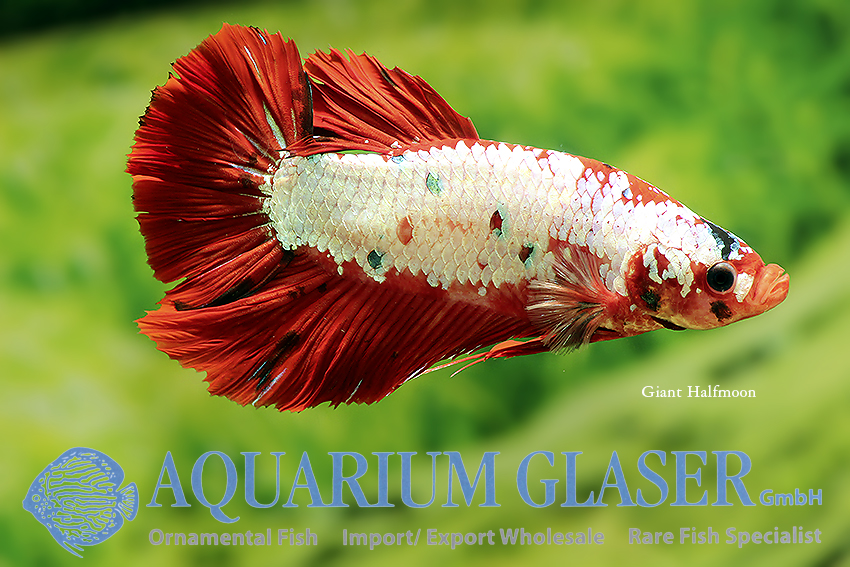
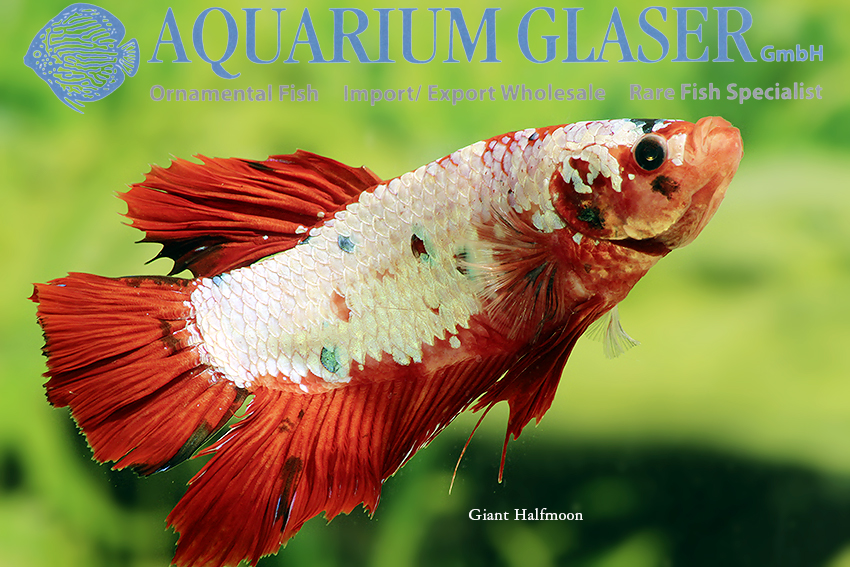
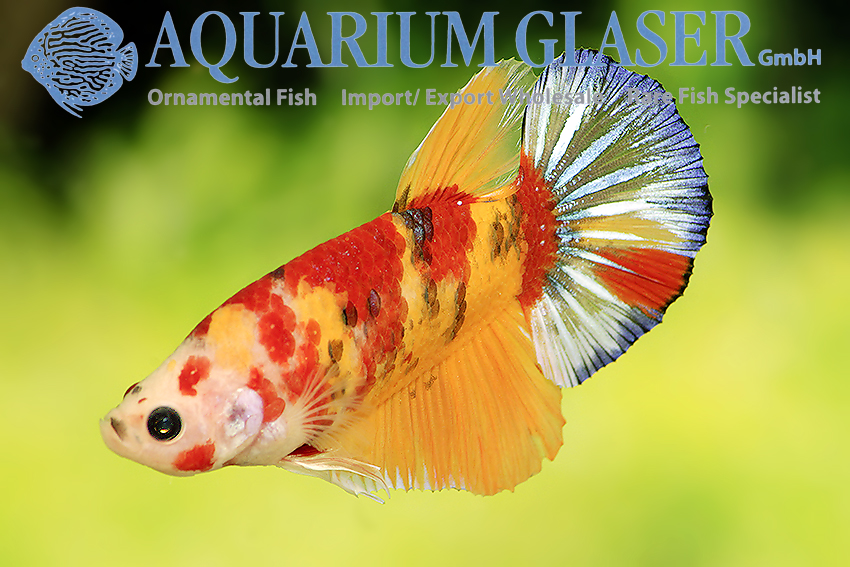
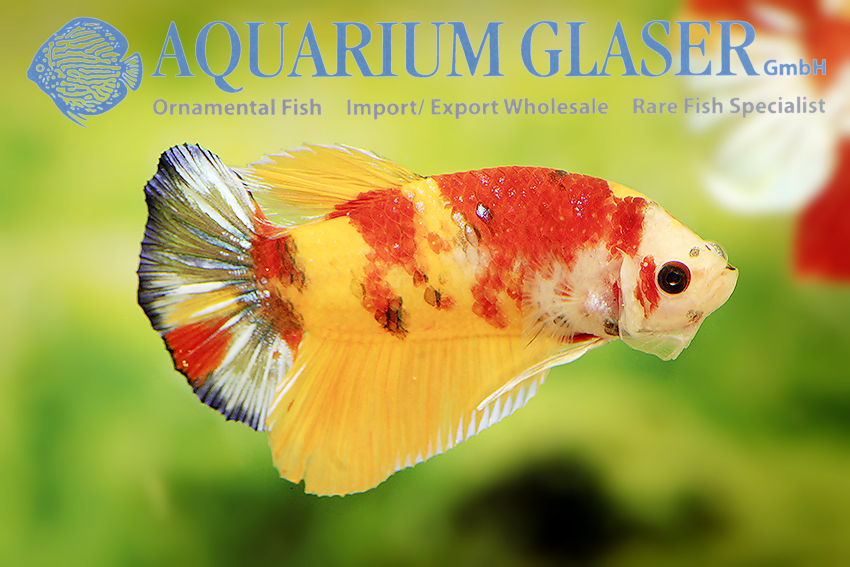
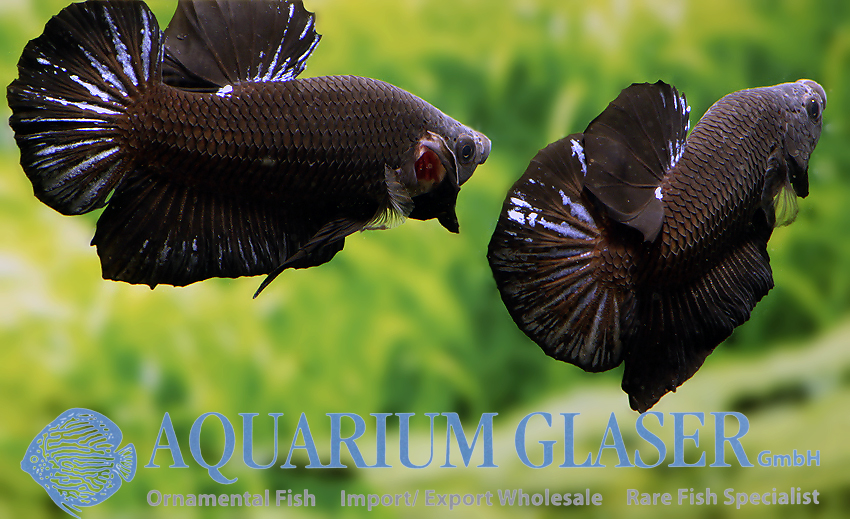
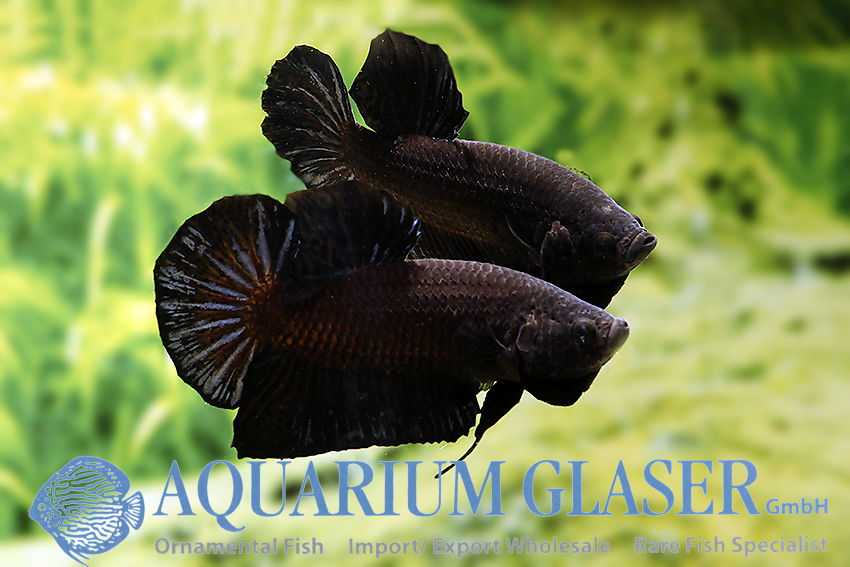
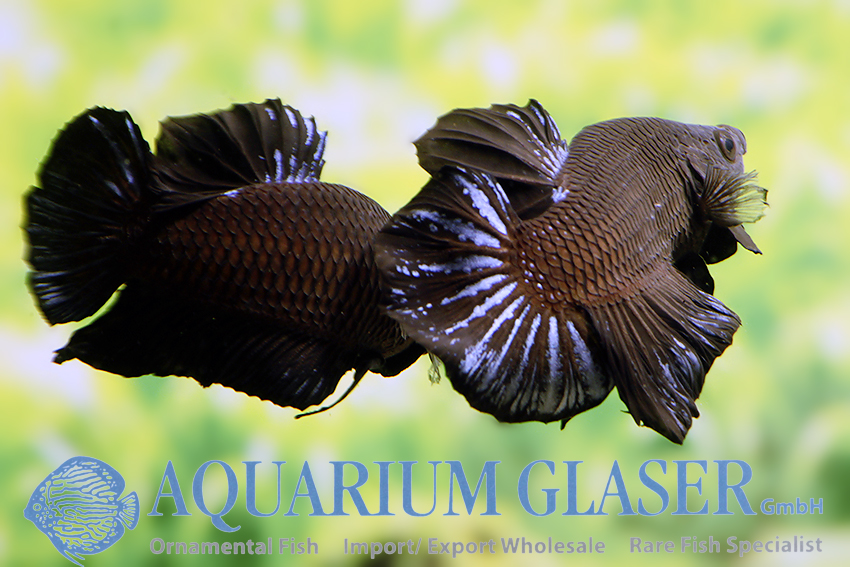
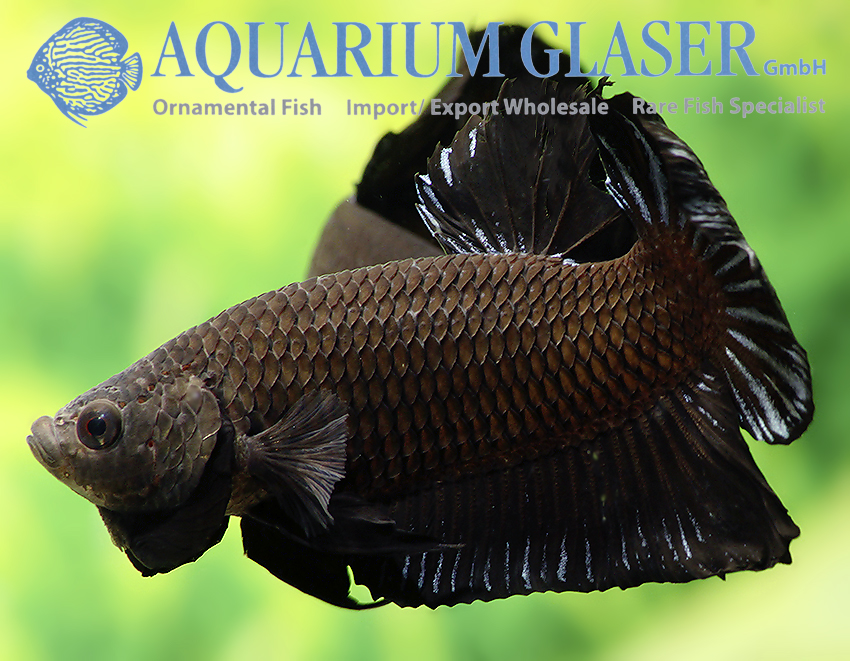
Betta splendens “Pla Kat Hellboy” and “Giant Halfmoon”

25. January 2019

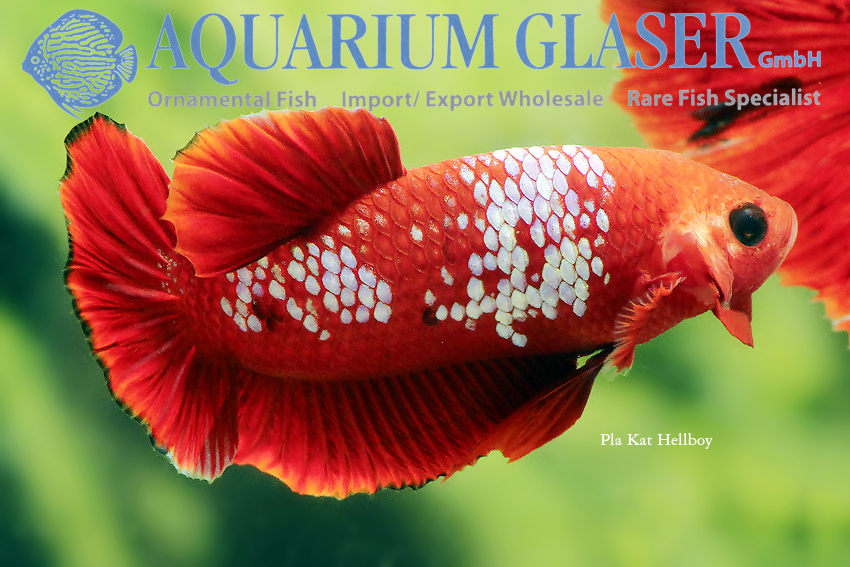
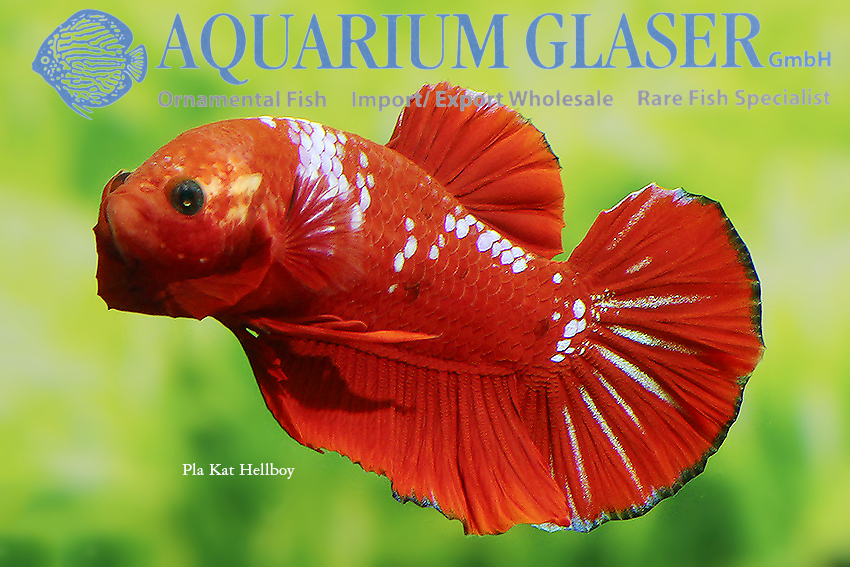
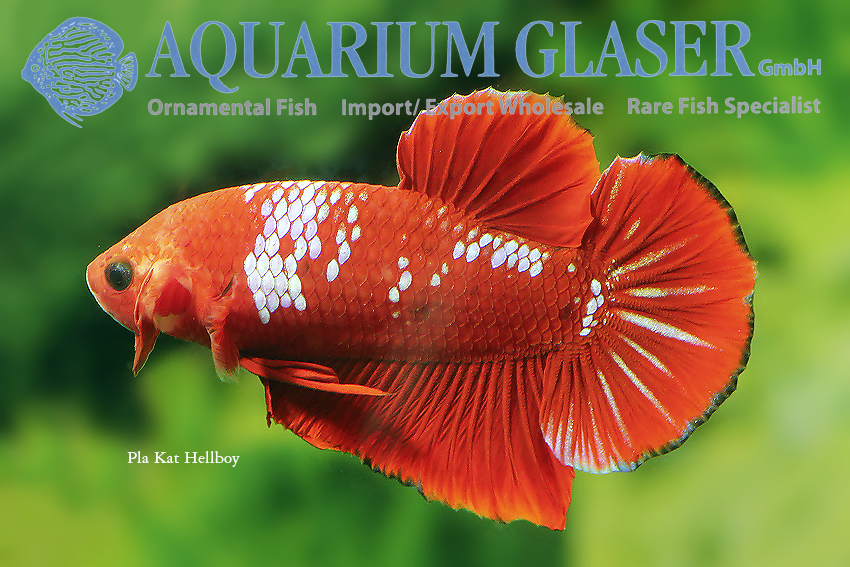
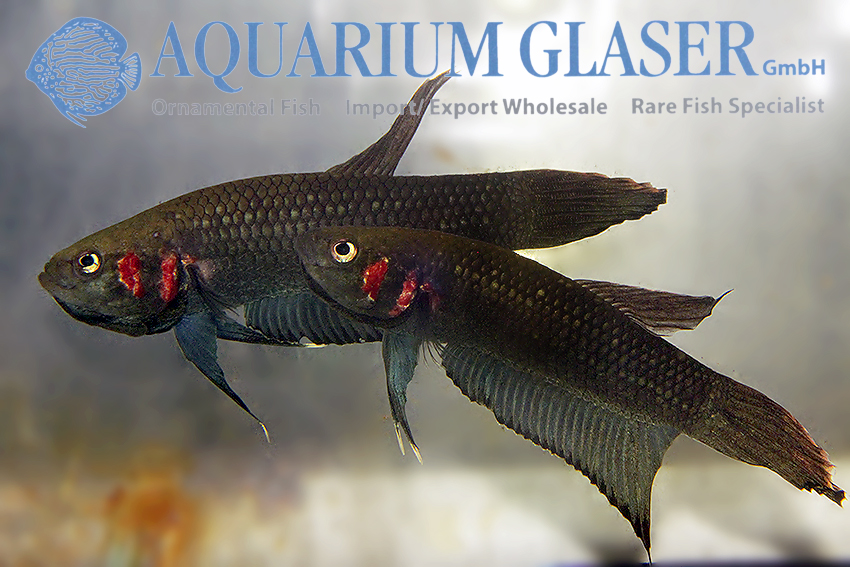
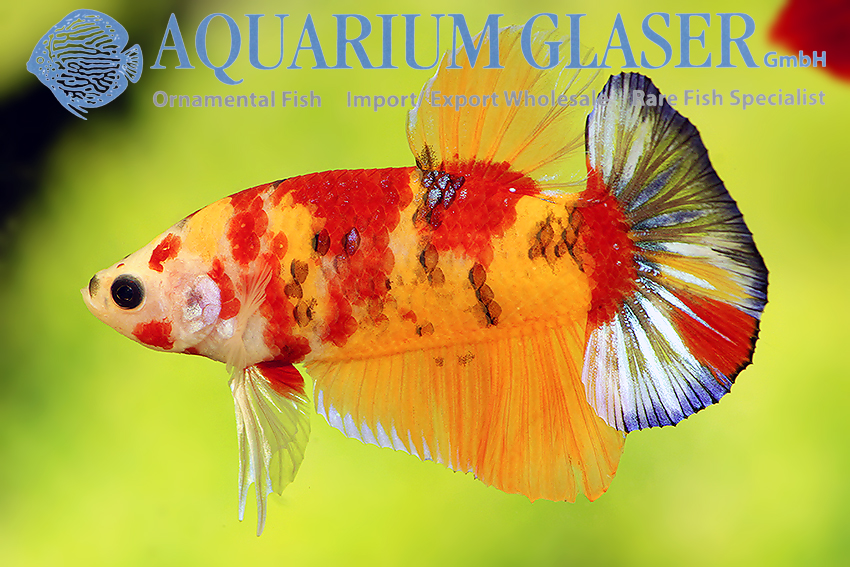
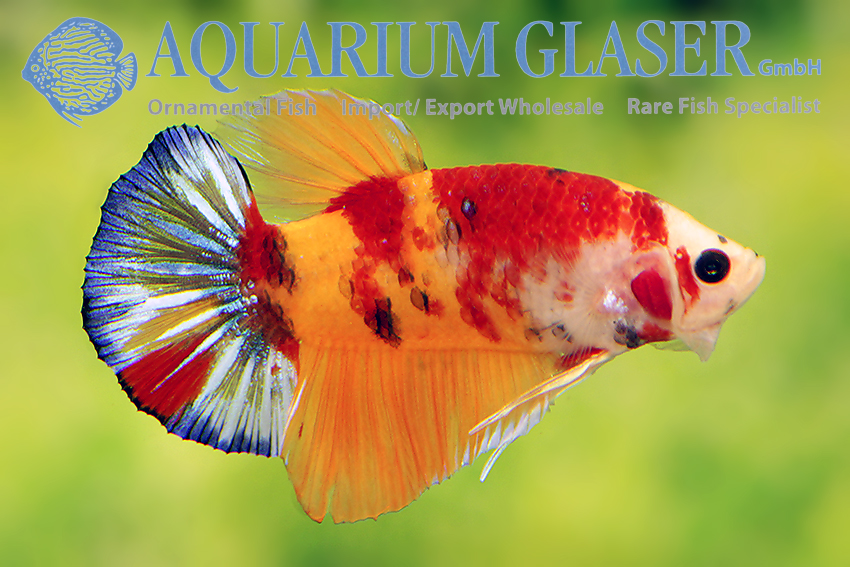
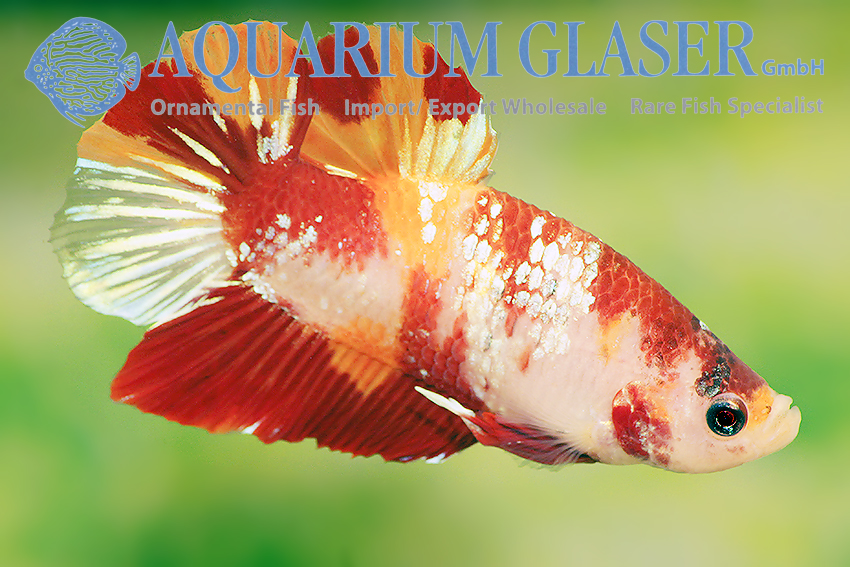
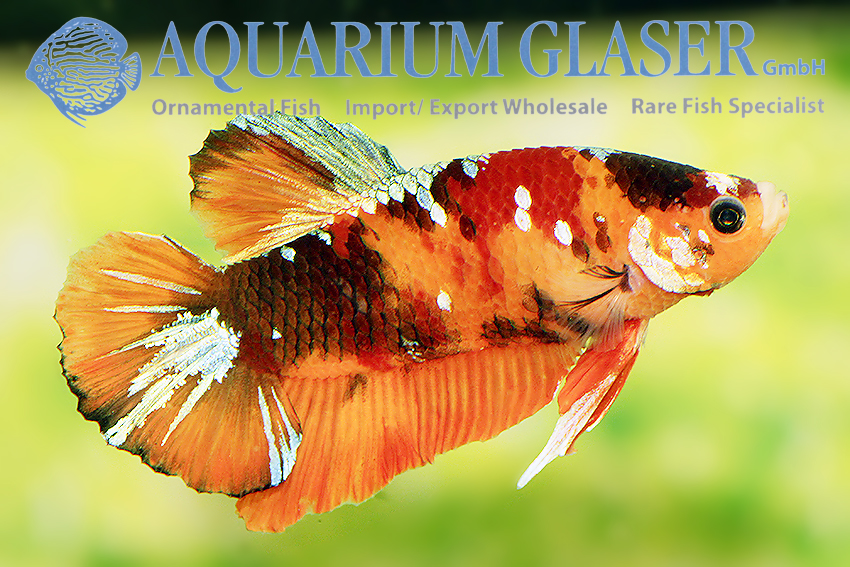
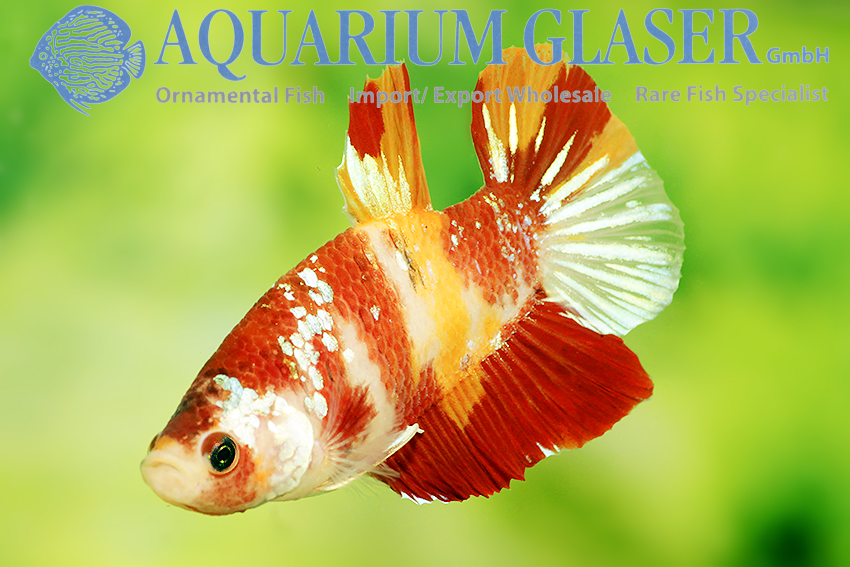
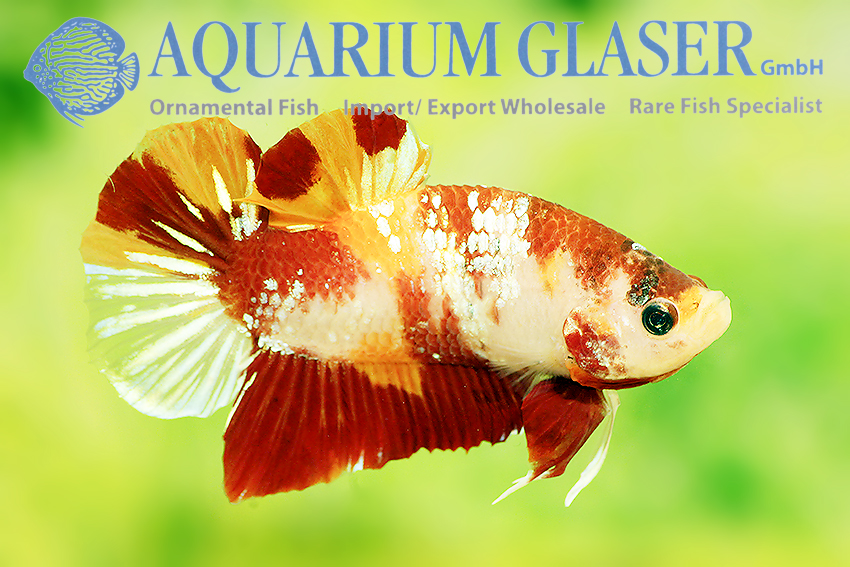
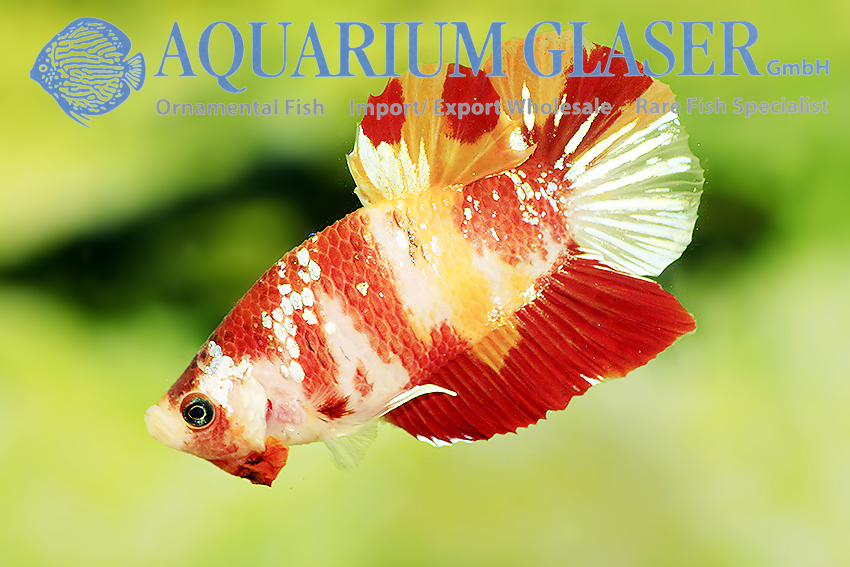
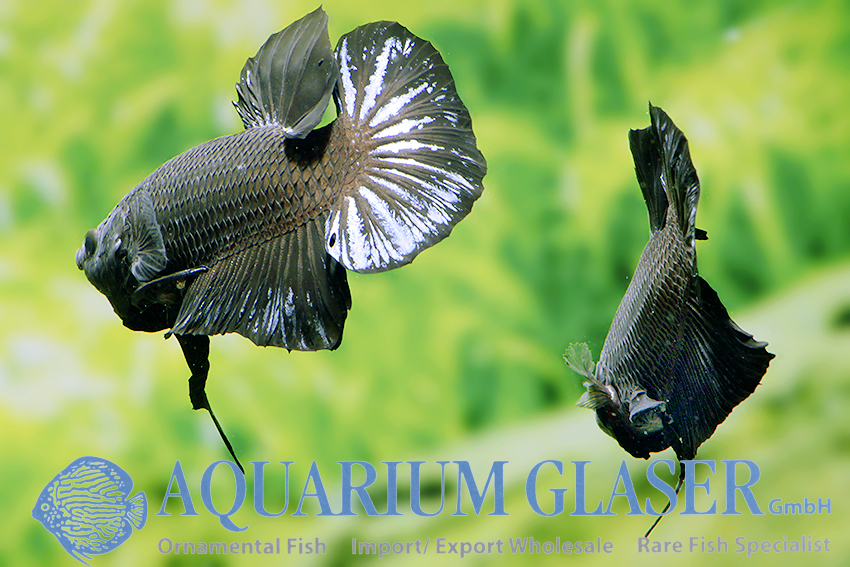
Again our proven supplier from Thailand sent us some special Betta delicatessen. The Pla Kat Hellboy is a velvet red, short-finned fighting fish, very often with blue scales (there are also plain red ones). The very special thing about it: the also deep red colored pectoral fins. 

The Giant Halfmoon are real giants and have only been selected for this characteristic. The colouring of each individual animal is different. Their total length is 7-8 cm, with normal Bettas 4-5 cm. On some pictures you can see an adult Hellboy together with one of the Giants. You can also see that the body mass of the Giants is considerably larger than that of the Hellboy, which is only about 2 cm smaller. One can compare the Giants with cold-blooded horses: rather friendly giants. It takes quite a while until they begin to impress each other in the photo tank. Nevertheless, it is also true for the Giants that only one male may be cared for per aquarium, otherwise you risk at least damaged fins.

For our customers: the Pla Kat Hellboys have code 390082, the Giant Halfmoon 390556 on our stocklist. Please note that we only supply the wholesale trade.

Text & photos: Frank Schäfer

Hoplias malabaricus German bred

23. January 2019

For the first time we can offer this predatory tetra as German bred ones! Hoplias malabaricus is one of the most widespread species of tetra in South America; it is therefore suspected that it is more likely to be a number of externally very similar, so-called cryptic species. The offspring was bred with a pair of wild-caughts from Brazil (unfortunately no closer catching area is known), the male is about 30 cm long, the female 28-29 cm. The male is 2.5-3 years old, the female about 2 years, the animals were not acquired together, but at intervals of about half a year. The aquarium is furnished with coarser sand, roots and robust plants (Cryptocoryne crispulata var. balansae). 

Hoplias are very calm fish, lurking hunters who do not move much. The breeding animals are fed with smelt, sprats, mussels, worms, but meat is also popular. The water values in the breeding tank: Temperature 26°C, pH value 6 to 7.5 (with scarcely 6 they have spawned); otherwise Hoplias have no big demands on the water values. 

Spawning takes place, as the breeder S. Schroers informs us, in the evening hours. The male digs a hollow in the ground, where the eggs (several thousand) are laid by the female. The male guards the nest and takes care of the brood. This can lead to quarrels between the parents. The male is very aggressive and irritable in this time. 

The offspring specimens, which we can offer now, are currently 6-8 cm long and quite compatible with each other – provided there is enough food. 

For our customers: the animals have code 258722 on our stocklist. Please note that we only supply to wholesalers.

Text: S. Schroers & F. Schäfer, Photos: Frank Schäfer

Krobia xinguensis

22. January 2019

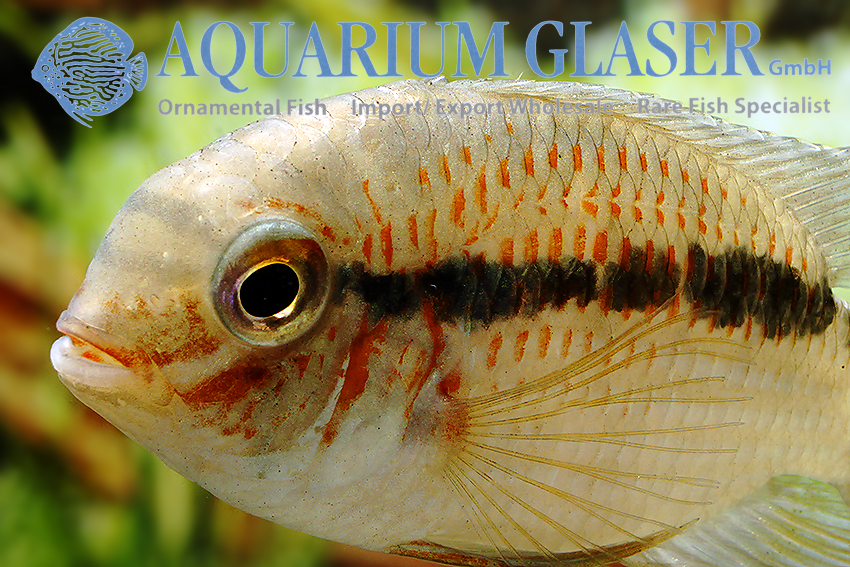
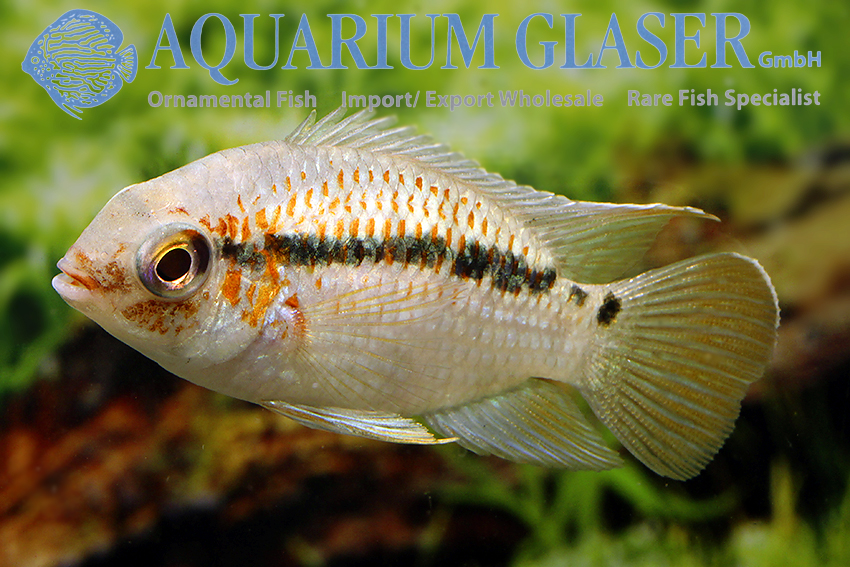
This pretty cichlid has been described scientifically only in 2012. Up to that time it was known among hobbyists under the name of Krobia sp. “Xingu Red Head”. This nice relative of Aequidens is the ideal cichlid species for beginners, because it is one of the most peaceful species of cichlid at all. Besides this the fish have beautiful colours and the fish stay small: less than 10 cm, which means that they are dwarf cichlids. K. xinguensis are typical open brooders with biparental family.

For our customers: the fish have code 683263 on our stocklist. Please note that we exclusively supply the wholesale trade.

Text & photos: Frank Schäfer

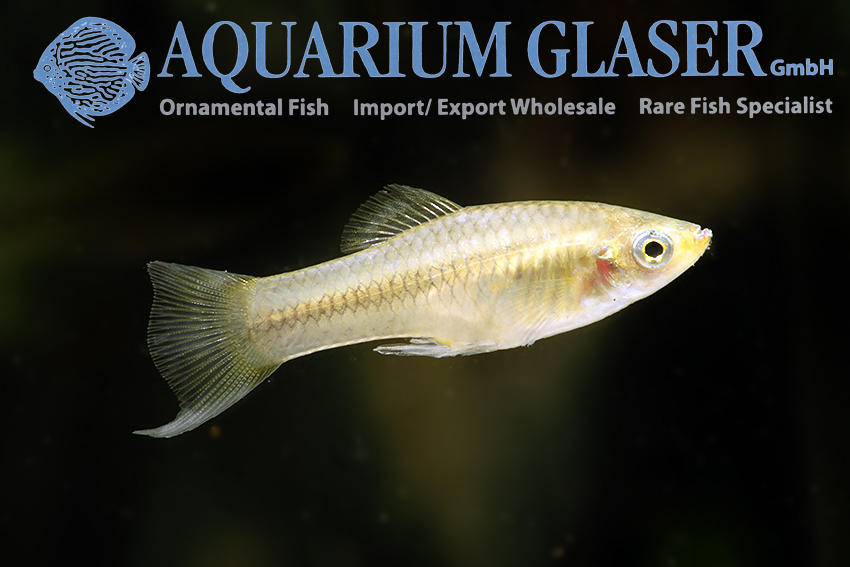
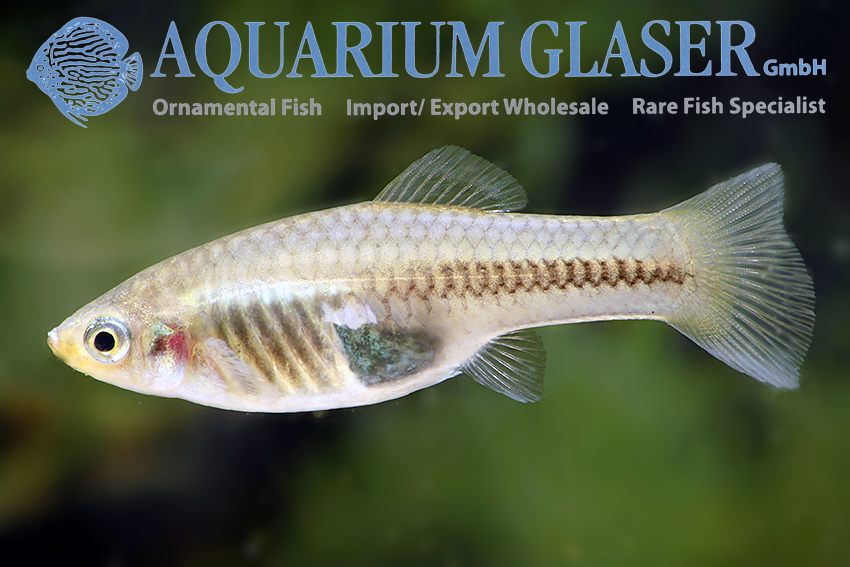
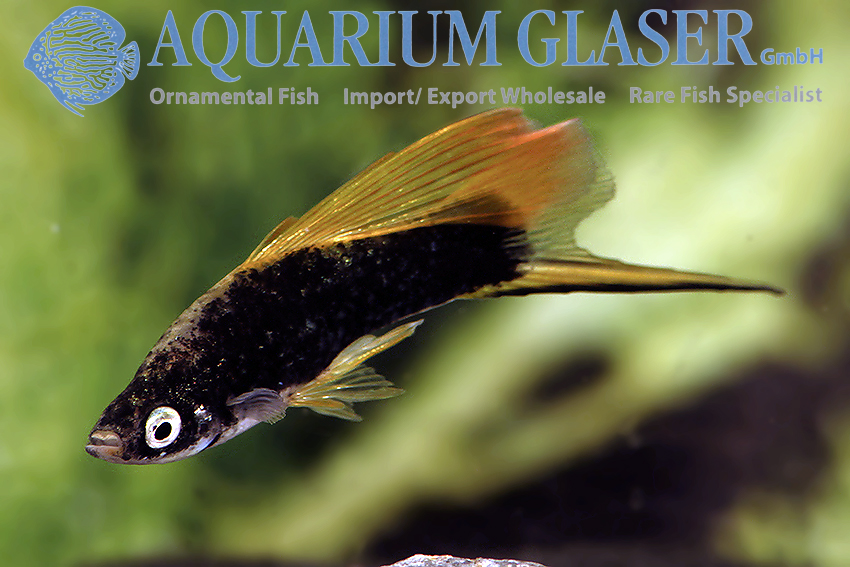
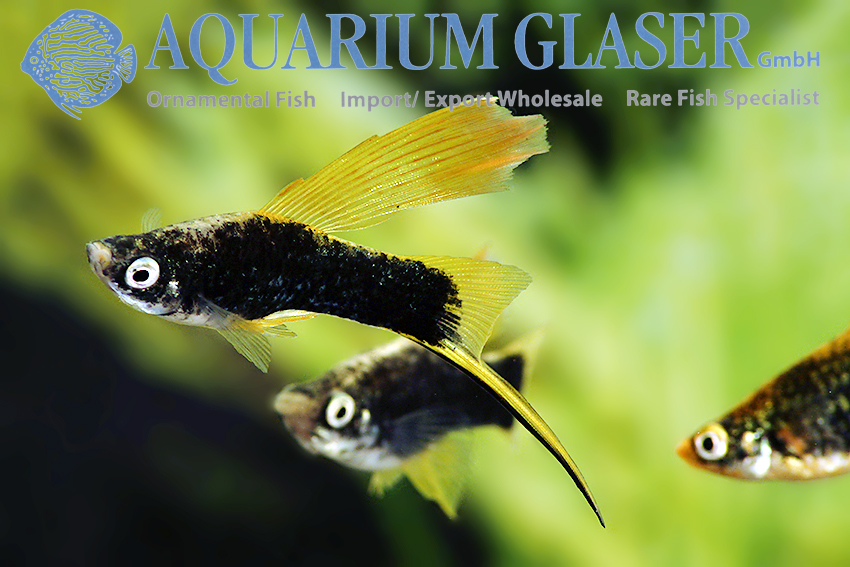
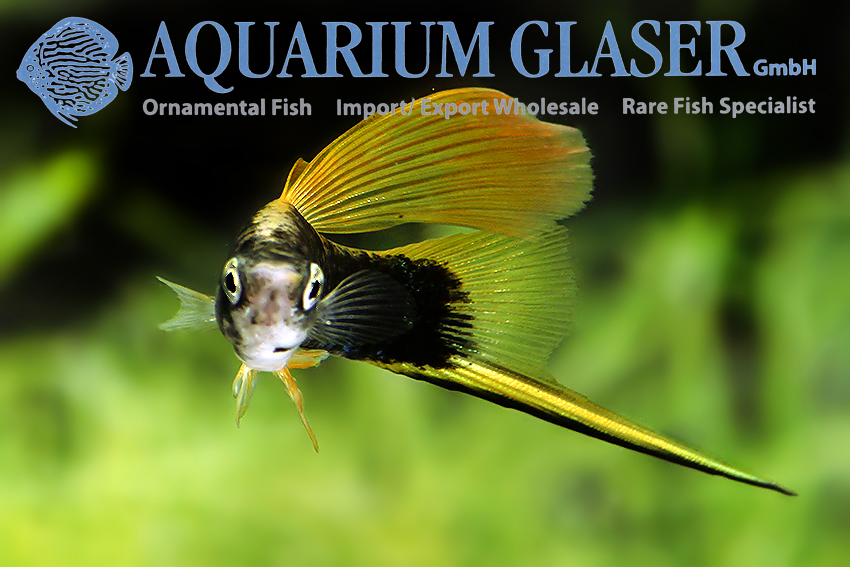
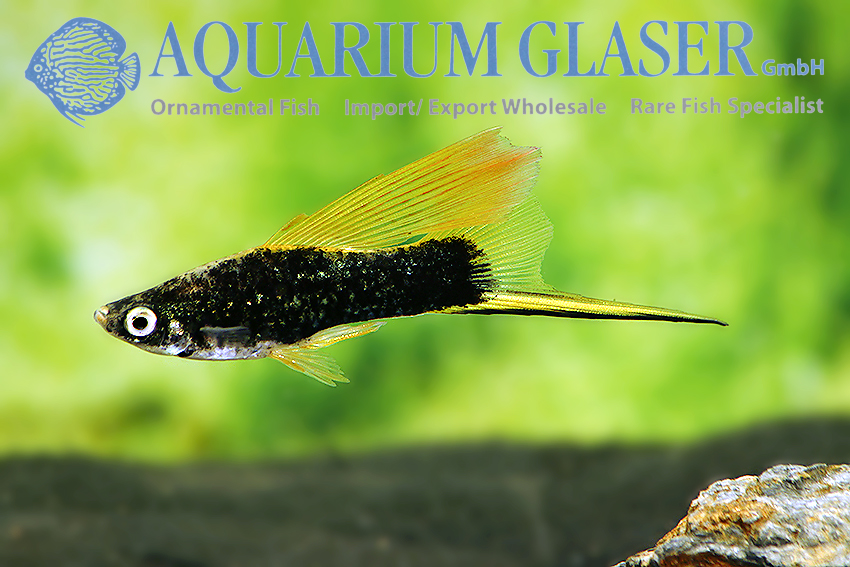
Black Molly = Black Molly?

19. January 2019

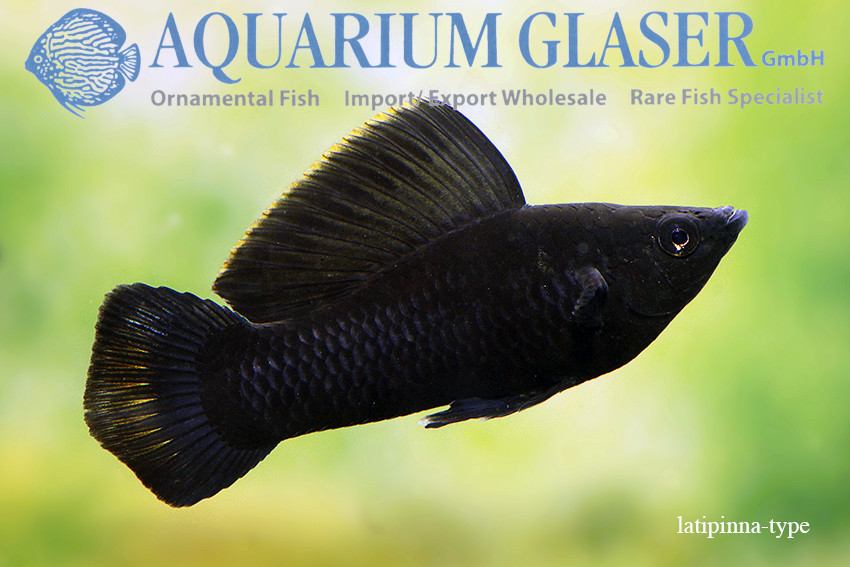
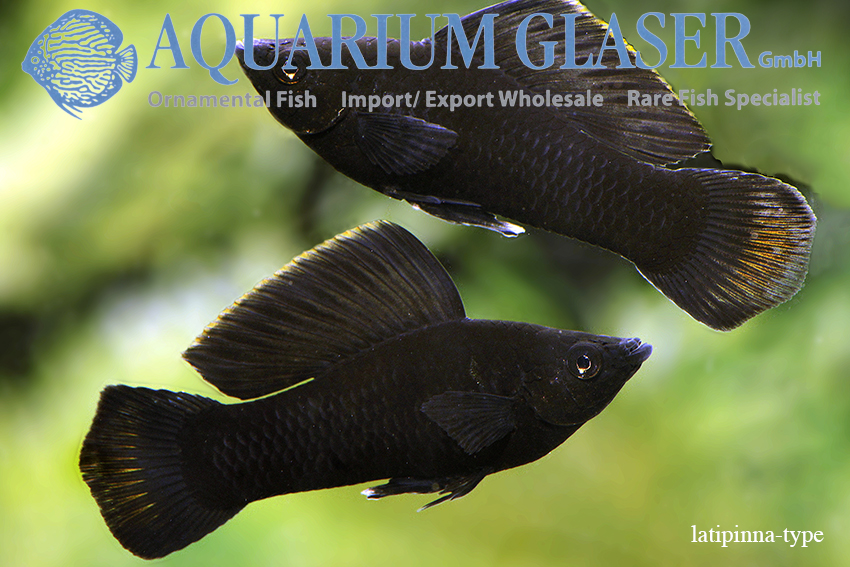
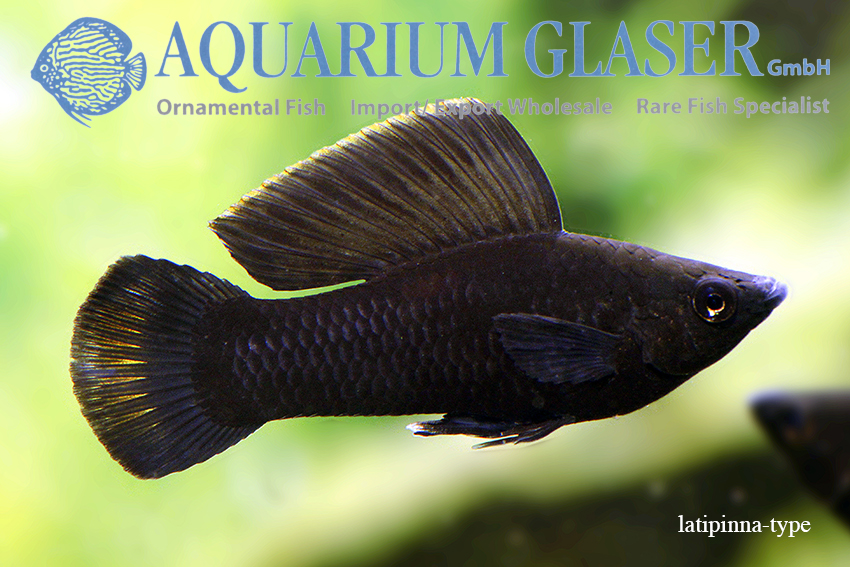
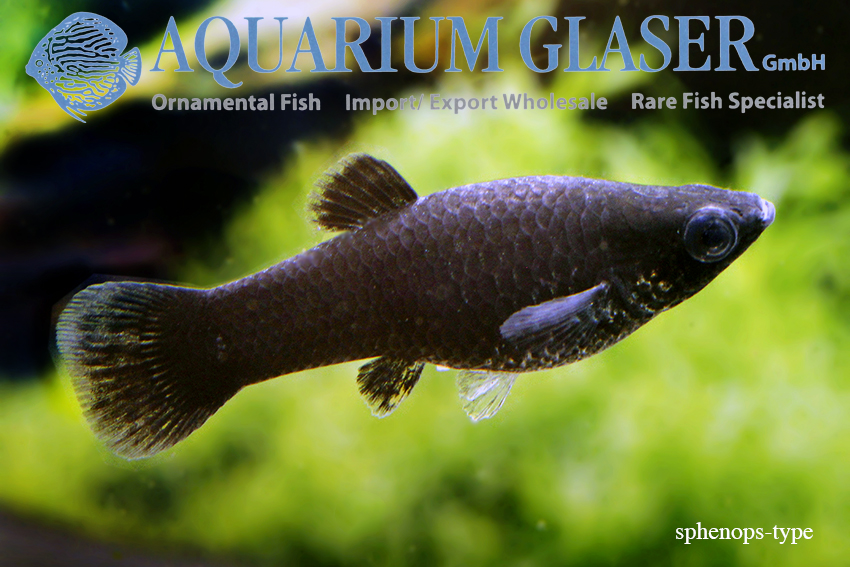
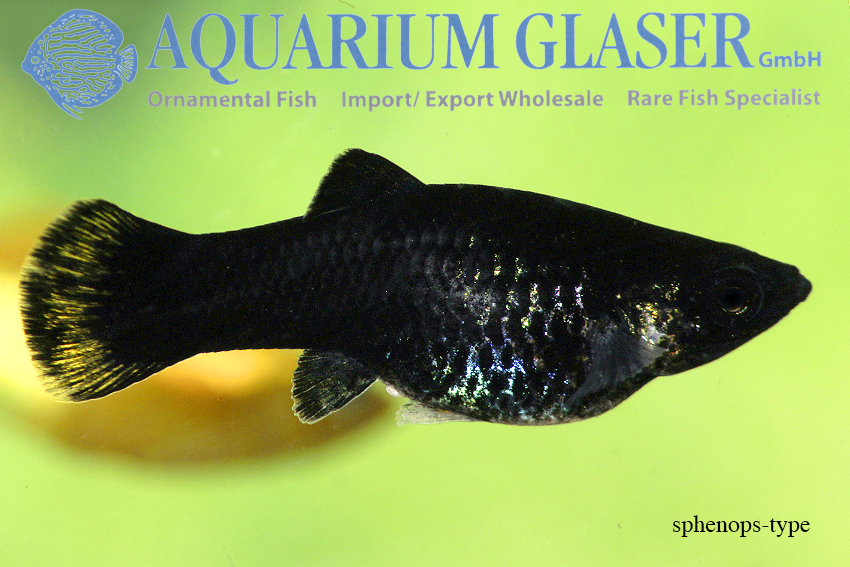
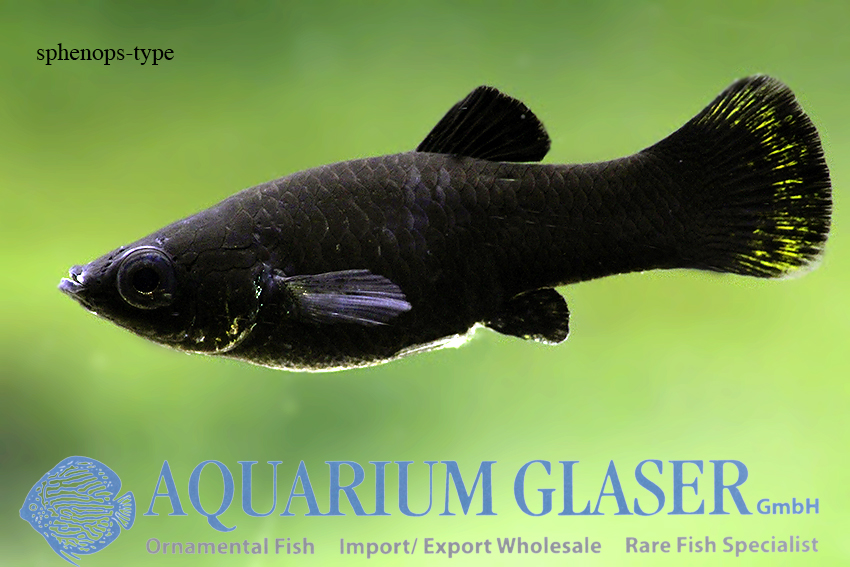
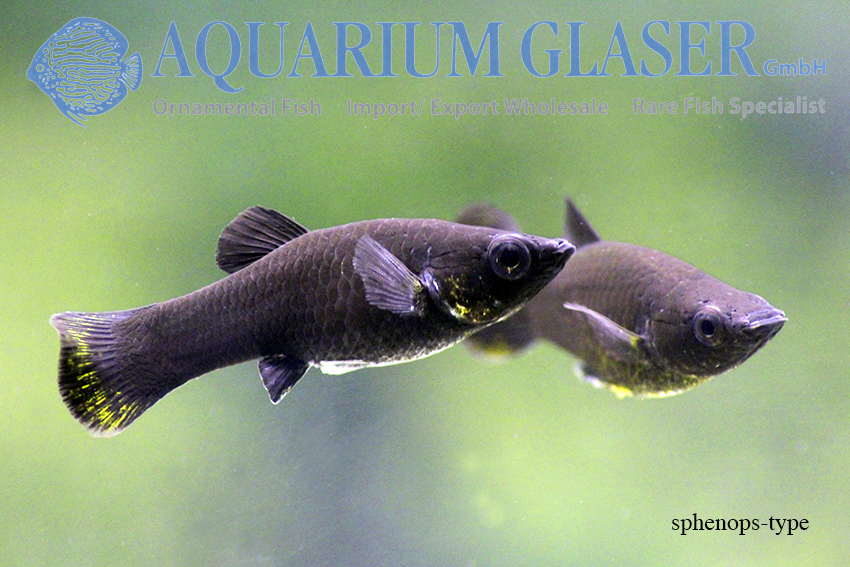
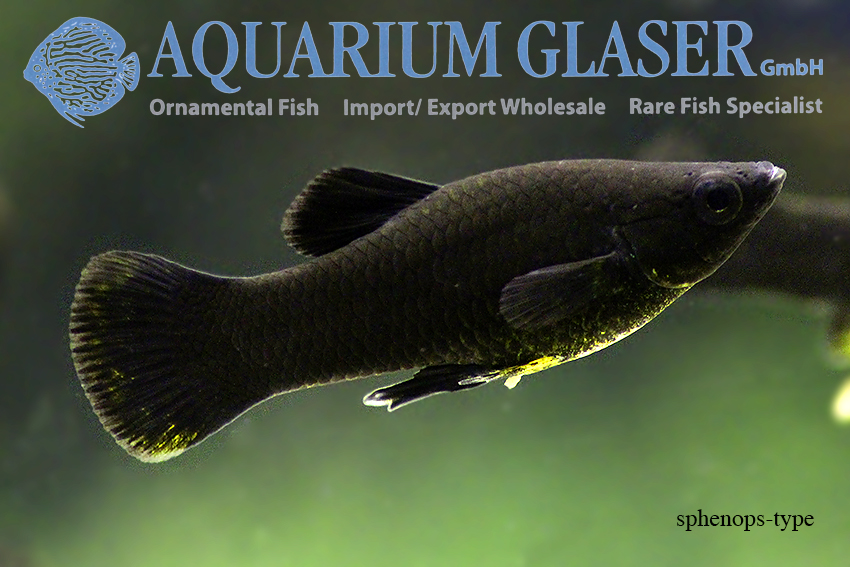
Sometimes we also take a closer look at the everyday species; one tends to judge fish like the Black Molly in trade only according to the aspects: 1. are the fish healthy and stable? and 2. are they well grown? 

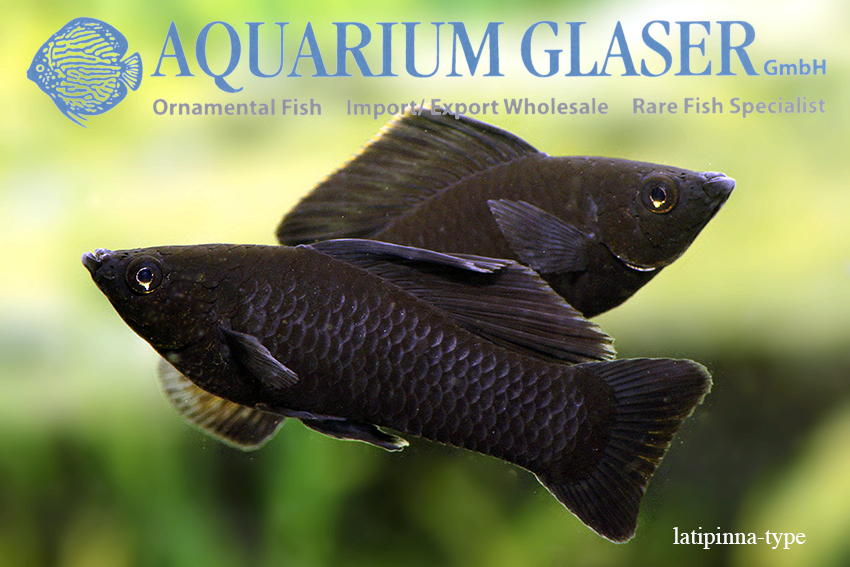
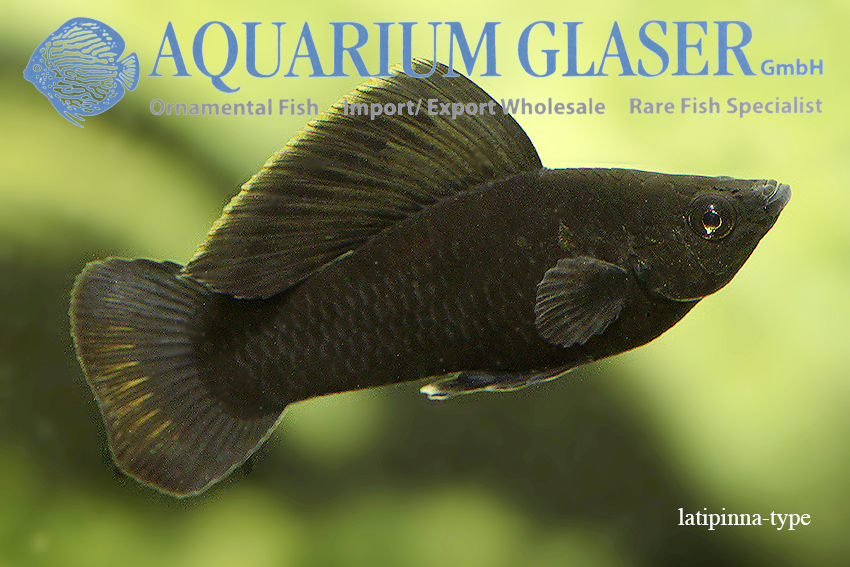
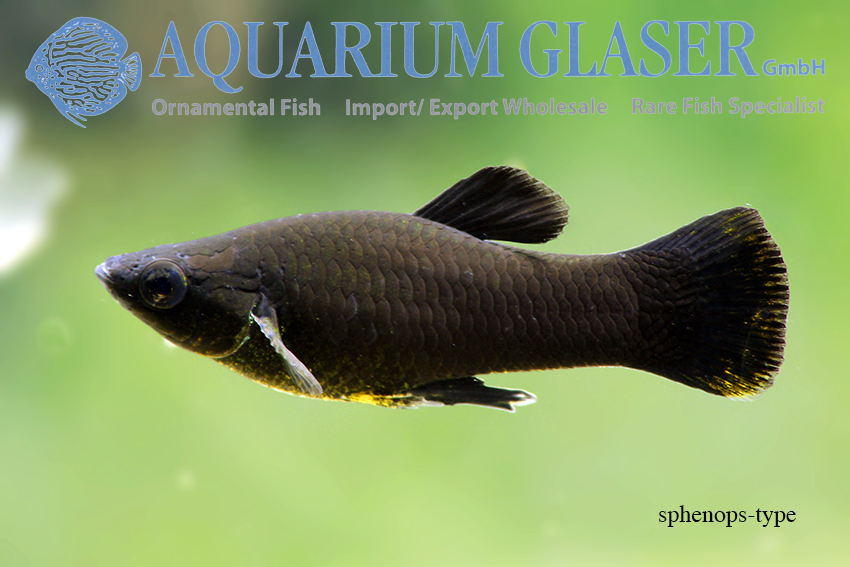
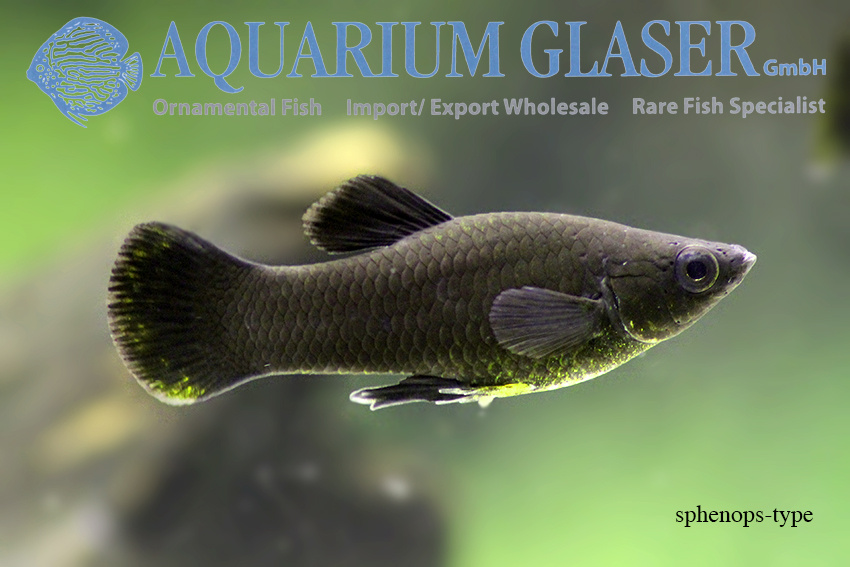
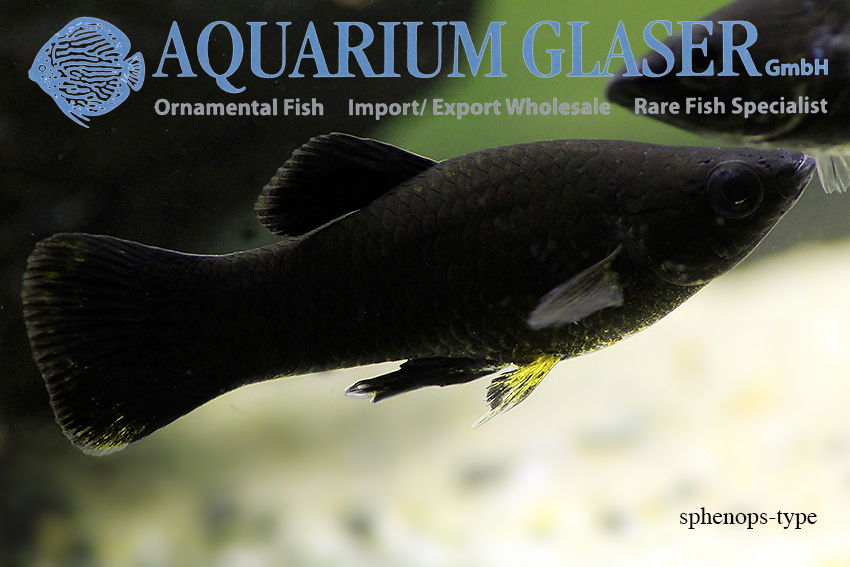
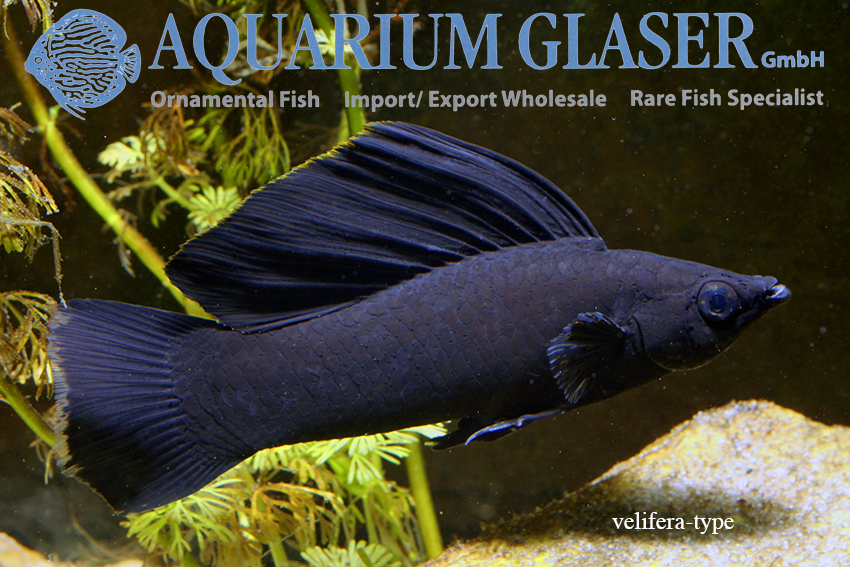
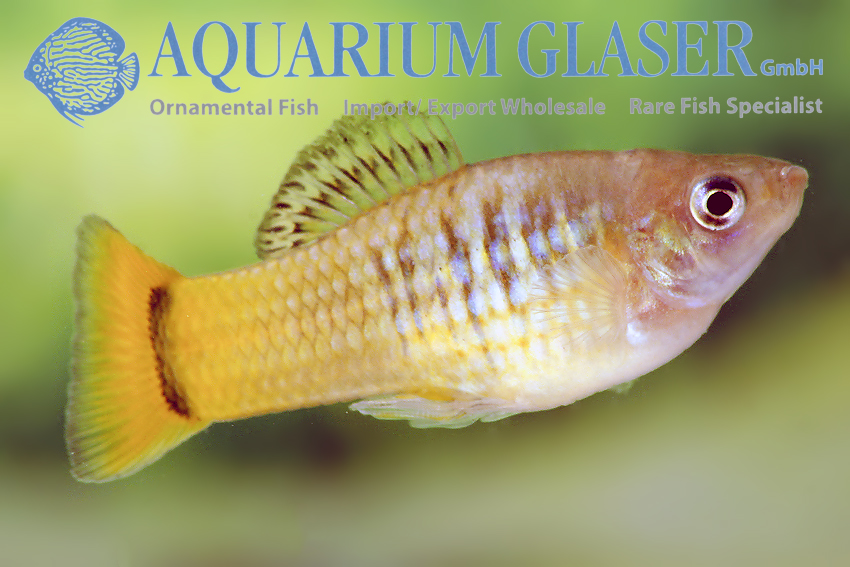
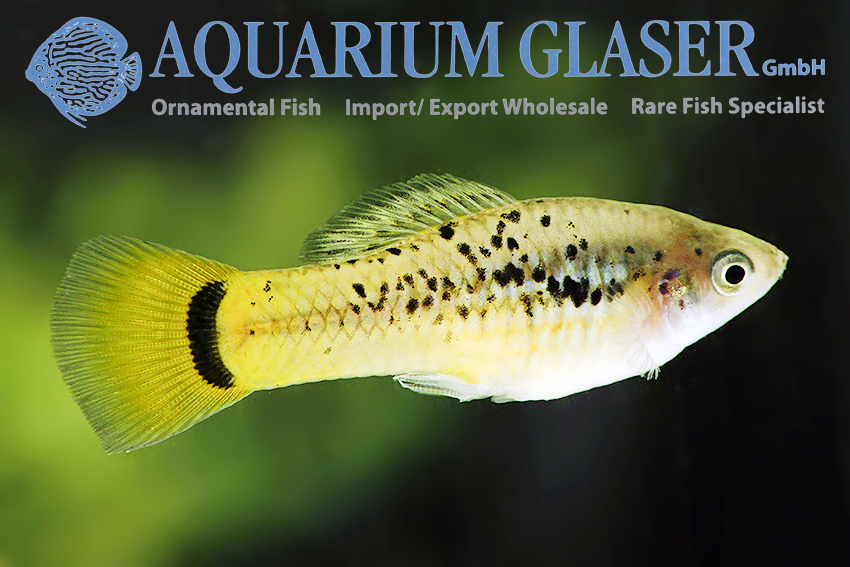
But Black Molly is certainly not the same as Black Molly. Depending on which wild species dominates in the respective strain – as is well known, Black Mollys were created by multiple crosses of different species, whereby the blacklings (Melanos) that already occur sporadically in nature were crossed into existing aquarium strains of Molly species – they sometimes differ considerably from each other.

Currently we offer e.g. Black Mollys from Sri Lanka, which are very similar to the wild species Poecilia latipinna. Especially beautiful here are dominant males, which have a red seam along the magnificent dorsal fin.

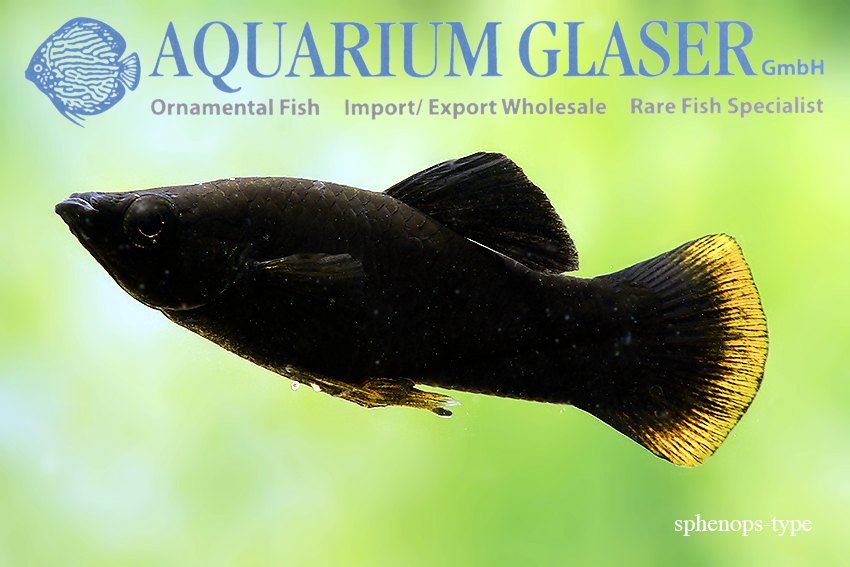
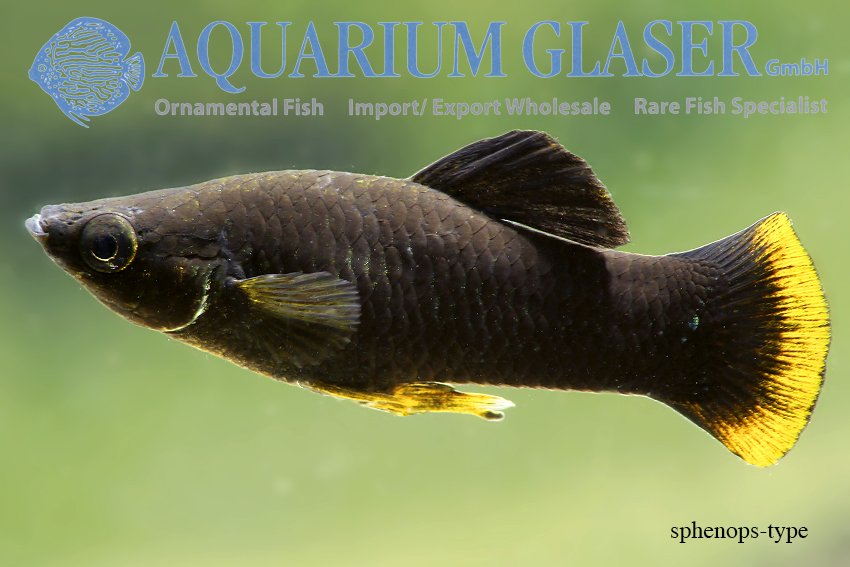
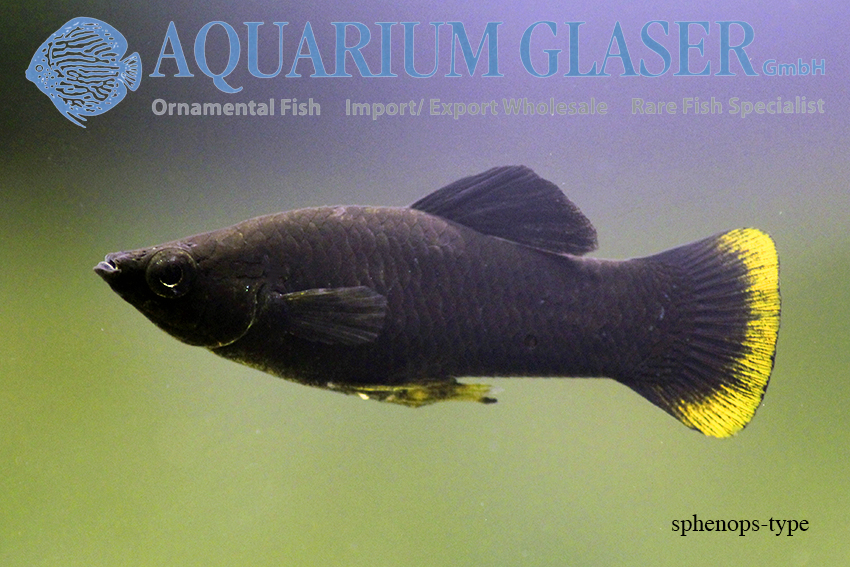
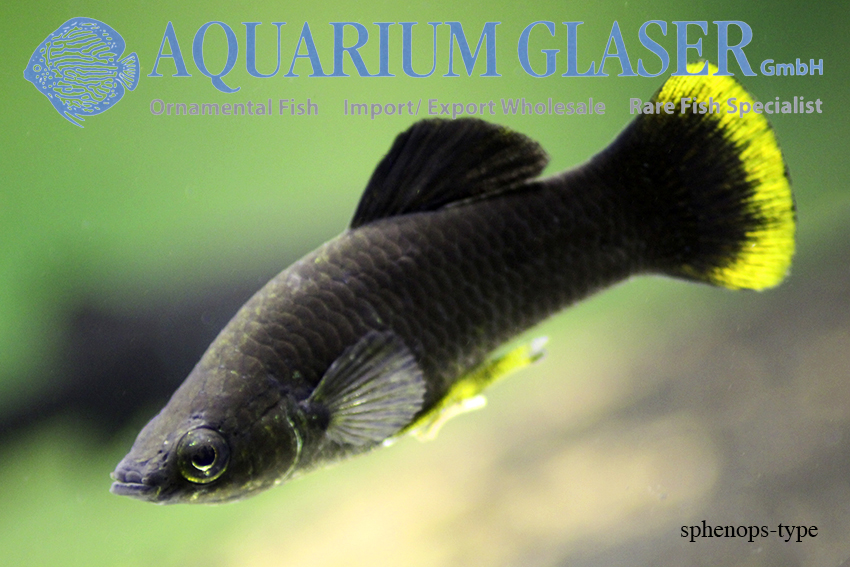
Another Black Molly form we get from Vietnam. It is closer to the species Poecilia sphenops and P. mexicana, the dorsal fin is much smaller than in the one mentioned before. The alpha males develop an orange border along the caudal fin, which is very attractive.

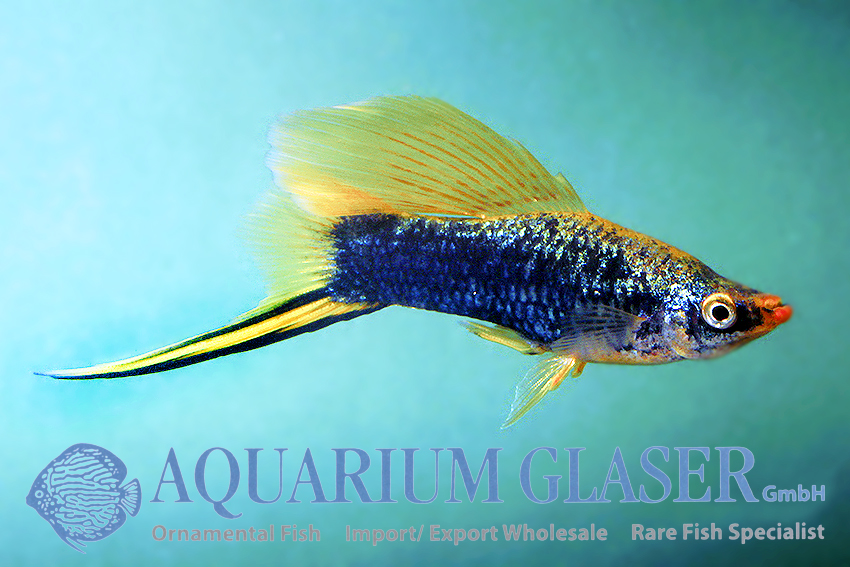
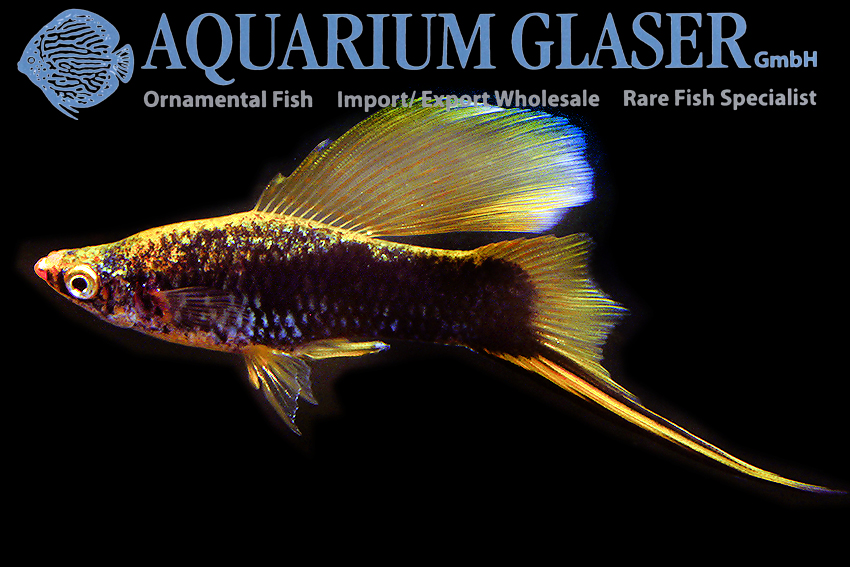
Not as Black Molly, but as Black Velifera one calls the splendid animals, which come after the species Poecilia velifera. They are clearly larger than the other Black Mollys. 

For our customers: Black Mollys from Sri Lanka have code 432003, those from Vietnam 432132 and black velifera 433004 on our stocklist. Please note that we only supply the wholesale trade.

Text & photos: Frank Schäfer

Microsynodontis batesii

16. January 2019

Squeakers or upside-down catfishes are a fish family occurring exclusively in Africa. The best known genus is Synodontis, which comprises over 130 species. Closely related to this genus is the genus Microsynodontis. The genus name means “small Synodontis” and is program, because these fish already become sexually mature with 3-4 cm of length, are thus true dwarf fish. The biggest known species becomes maximum 10 cm long, most reach 5-6 cm of final-length.

Unfortunately, it is very tricky to determine the species correctly; until 2004 the fish presented here were called M. batesii, then the species was divided into 8 species, but so far no scientist has found the time to correctly determine the animals imported by us from Nigeria. It is possible that this is a species that has not yet been scientifically recorded, among the already described species M. emarginata is the most similar one; it is obvious that all the species previously grouped under M. batesii look extraordinarily similar.

We receive these fish with a length of 2-3 cm and have never seen specimens larger than about 5 cm. They are very sociable animals that like to live in dense association with their conspecifics. Microsynodontis are very peaceful against other fish. They are well suited for the containment of a possible mass increase of small water snails, because these form a component of the food of the small catfish. Otherwise, all usual feeds are eaten gladly. The chemical water composition is of no importance for the care of these animals, but extremes should be avoided. The water temperature can lie in the range of 22-28°C.

For our customers: the animals have code 149302 on our stocklist. Please note that we only supply wholesalers.

Text & photos: Frank Schäfer

Apistogramma uaupesi

14. January 2019

Apistogramma uaupesi is certainly one of the most beautiful dwarf cichlids. Adult males can be very variable colored, therefore A. uaupesi got several German popular names, like “Rotkeil-Apistogramma” or “Blutkehl-Apistogramma” (= Red Wedge and Blood Throat). In nature, however, all color variants occur together, so it is not a matter of locality forms, but of an intraspecific polychromatism.

We could just import beautiful wild catches from Brazil. 

For our customers: the fish have code 630423 on our stocklist. Please note that we exclusively supply the wholesale trade.

Text & photos: Frank Schäfer

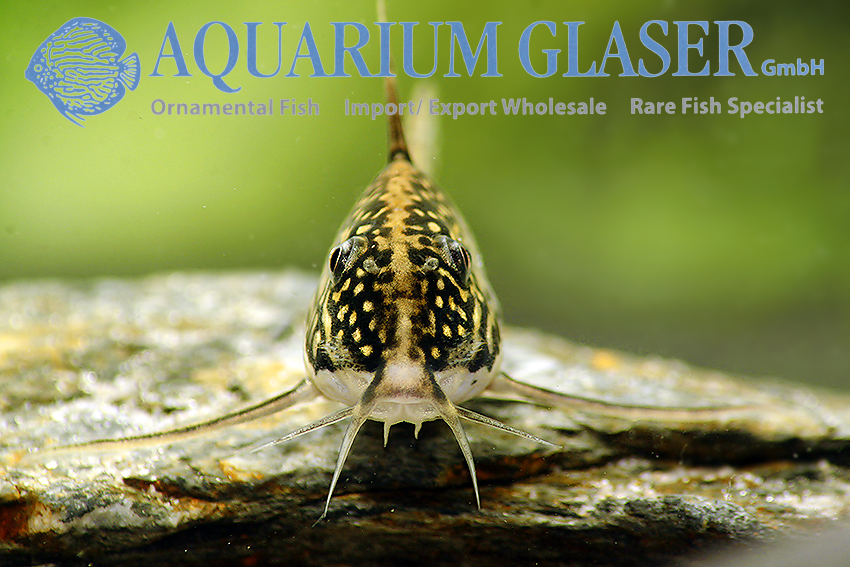
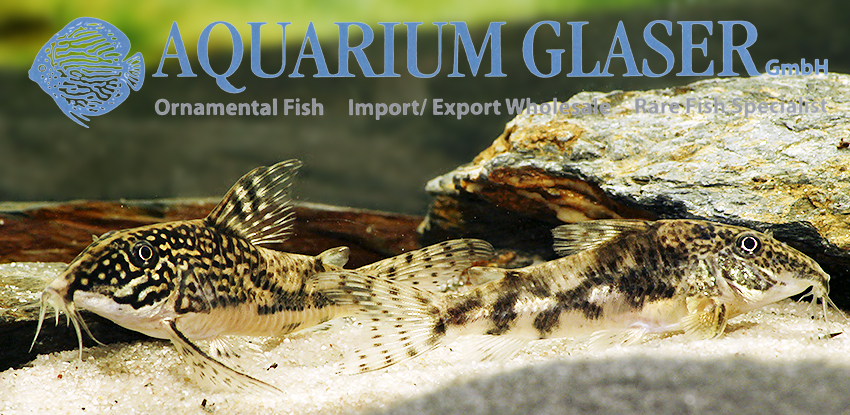
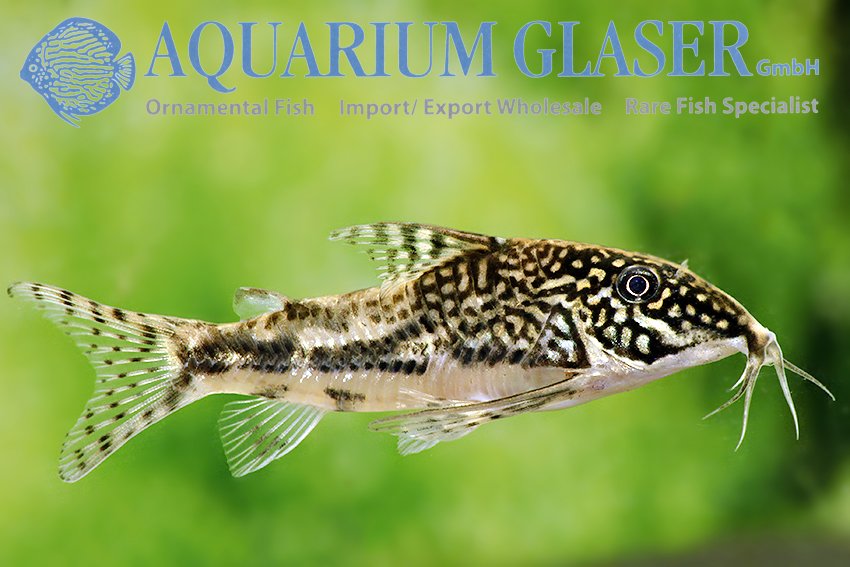
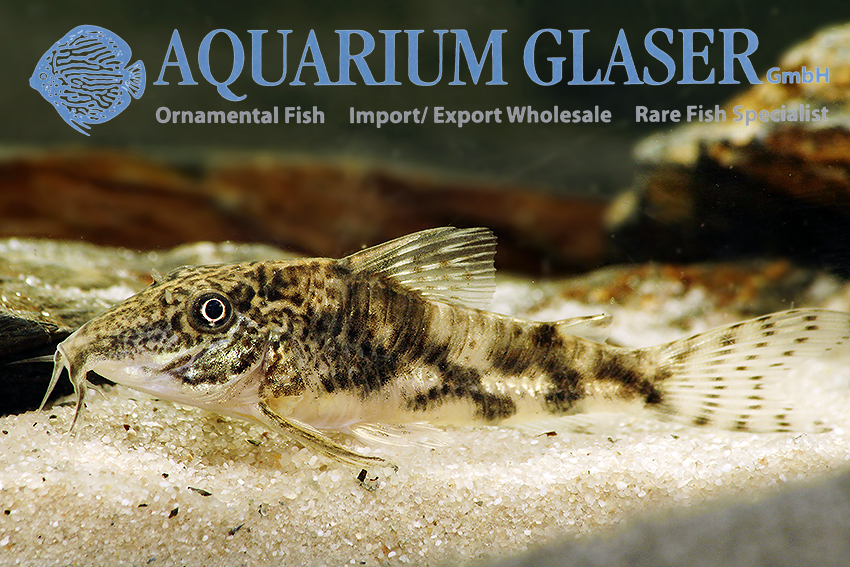
Corydoras sp. C91

11. January 2019

We received beautiful Corydoras sp. C91 from Peru (Rio Huallaga). The splendid species belongs to the closer relationship of Corydoras julii, C. punctatus, and C. trilineatus. The species was called Corydoras sp. “Heiko” or C. sp. “Peru-Bondi” in the trade before it was given a C-number.

The peaceful schooling species gets the most brillant colours when kept in soft and slightly acidic water, but is completely undemanding and can be also kept under other water conditions. Temperature should be between 22°C and 26°C.

For our customers: The species has code 229593 on our stocklist. Please note that we exclusively supply the wholesale trade.

Text & photos: Frank Schäfer

Serrasalmus manueli

11. January 2019

This piranha, described from Venezuela, is easily recognizable by its characteristic pattern in connection with the head profile, but still causes great confusion, as the fish in the trade come from completely different areas and are still indistinguishable. 

S. manueli was described as Pygocentrus manueli from the Río Paraguaza, middle Orinoco, Venezuela. The first description was made in a journal which is not generally accessible and so it only became known to the scientific community through the work of Machado-Allison, especially Machado-Allison 2002. Therefore these piranhas were often misidentified before as Serrasalmus humeralis. 

Two characteristics make S. manueli very special: firstly the mostly vertically extended body points and secondly the head anatomy. Only S. gouldingi has the same head shape as a juvenile fish, with the lower jaw appearing very massive and rectangular. However, S. gouldingi has no humeral spot, which is always clearly pronounced in S. manueli. 

S. manueli is one of the largest piranha species with a maximum length of more than 35 cm. Adults of S. manueli have a round head profile, a blood-red head, a large humeral spot, a white-silvery body and a blackish tail fin. Apart from the population in Venezuela, there is also a population in the Rio Negro and the Rio Xingu in Brazil. Like all piranhas of the genus Serrasalmus, this species should normally be kept individually as it is a fin eater.

For our customers: the animals have code 292294 on our stocklist. Please note that we only supply wholesalers.

Text & photos: Frank Schäfer

Catlocarpio siamensis

9. January 2019

The Giant Carp (Catlocarpio siamensis) is the biggest carp of Southeast-Asia with allegedly up to 3 m of length. However, such large animals have never been scientifically confirmed. The largest documented specimen was “only” about 150 cm long. In nature the Mekong giant carp is probably extinct or at least very, very rare. Fortunately, the species can be bred in aquaculture, so that at least complete extinction is not to be feared. The causes for the extinction in nature are, as usual, the destruction of the biotopes and habitats by humans, whereby the large migratory fish hardly ever get old enough to reproduce naturally. The massive fishing for food purposes certainly also has an influence on the stocks, but how strong it is, has not been scientifically researched yet.

Of course, the young of this strange fish, which we currently have in stock, come from aquaculture, so they are bred ones. They are peaceful, somewhat shy animals that are easy to feed with all common fish foods. 

For our customers: the animals have code 408172 on our stocklist. Please note that we only supply wholesalers.

Text & photos: Frank Schäfer

Neolamprologus marunguensis

8. January 2019

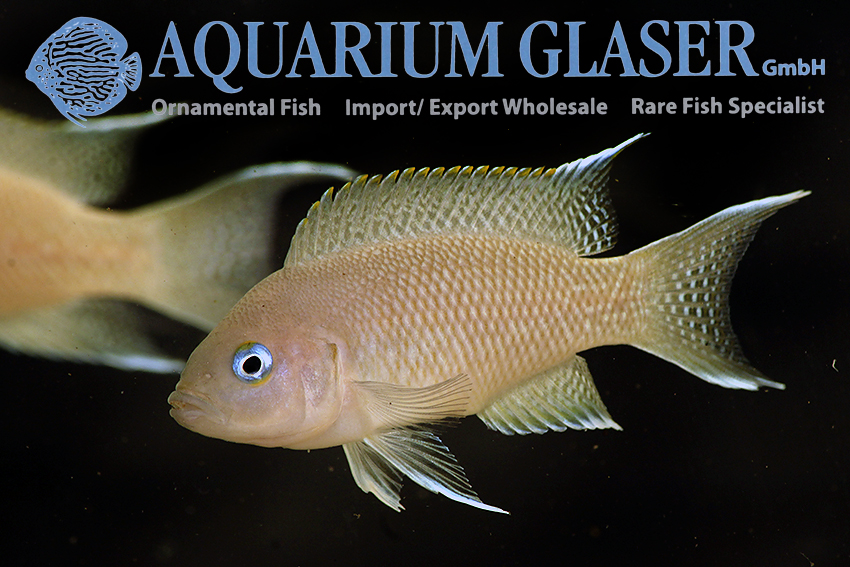
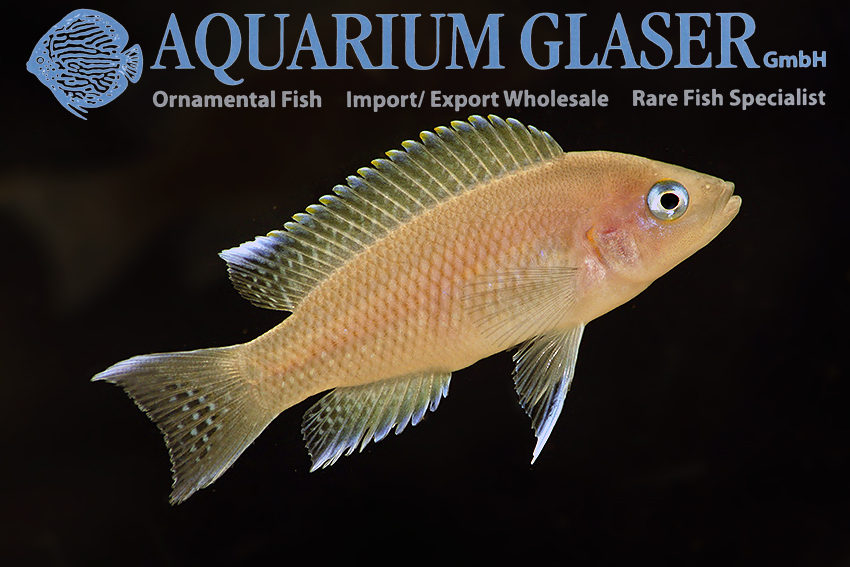
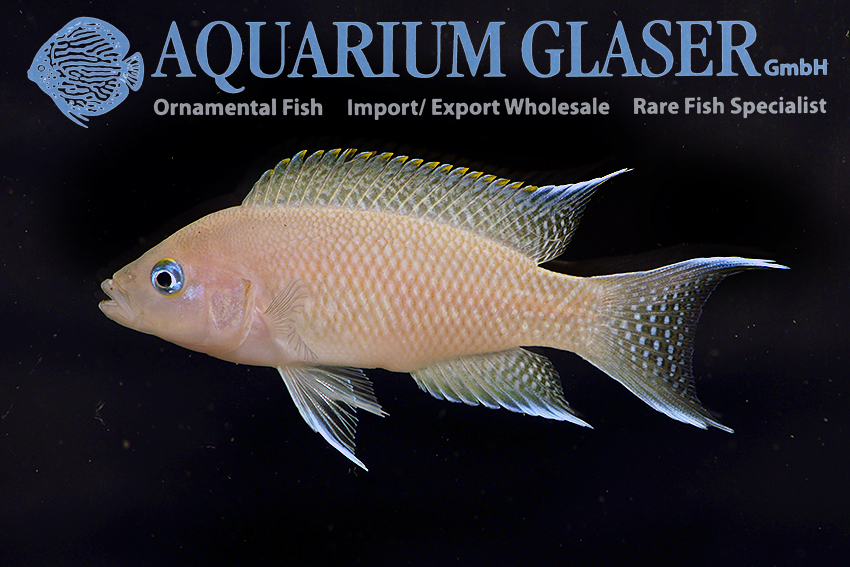
Currently we can once again offer the little blue-eyed sister of the Princess of Burundi: Neolamprologus marunguensis. The beautiful dwarf cichlid from Lake Tanganyika belongs to the problem-free ornamental fish. As with all princesses, one can frequently observe  multiple broods, with what the older siblings take part in keeping of the small young animals. Therefore, one should not maintain N. marunguensis in too small aquariums, although the fish becomes only approximately 6-7 cm long and is not a very active swimming animal, because observing this family life makes much joy, however, also requires some place.

For our customers: the animals have code 555252 on our stocklist. Please note that we only supply wholesalers.

Text & photos: Frank Schäfer

Pseudomystus funebris

4. January 2019

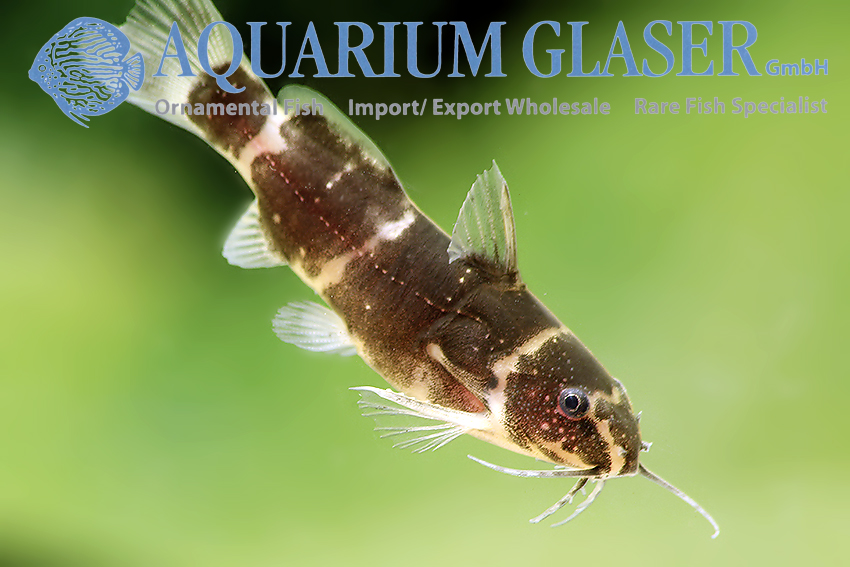
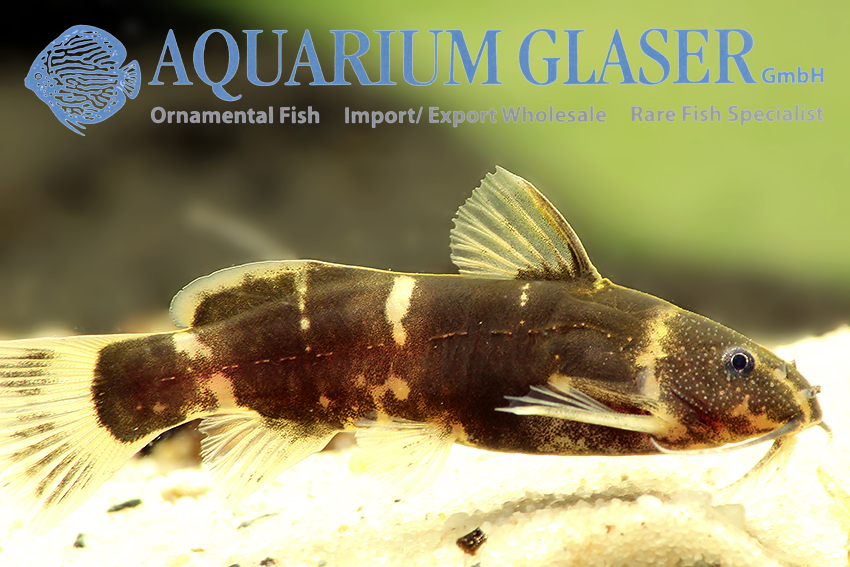
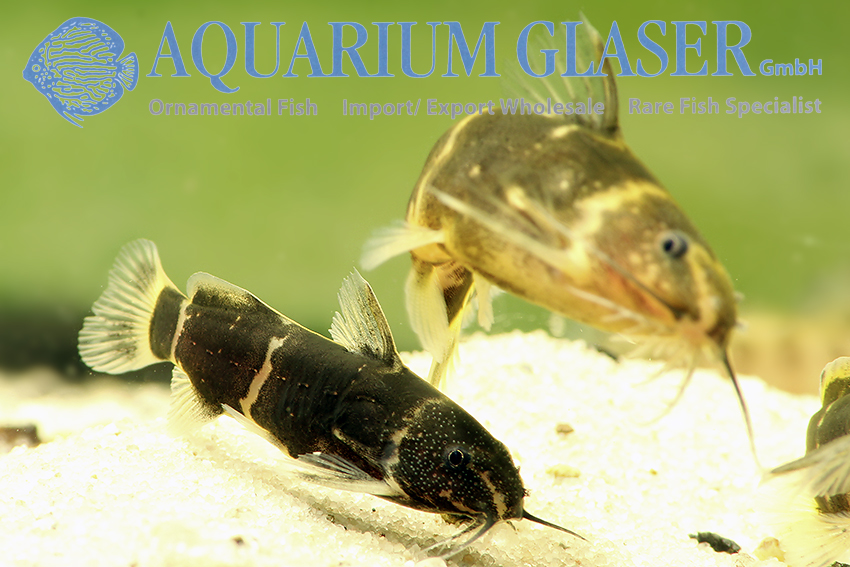
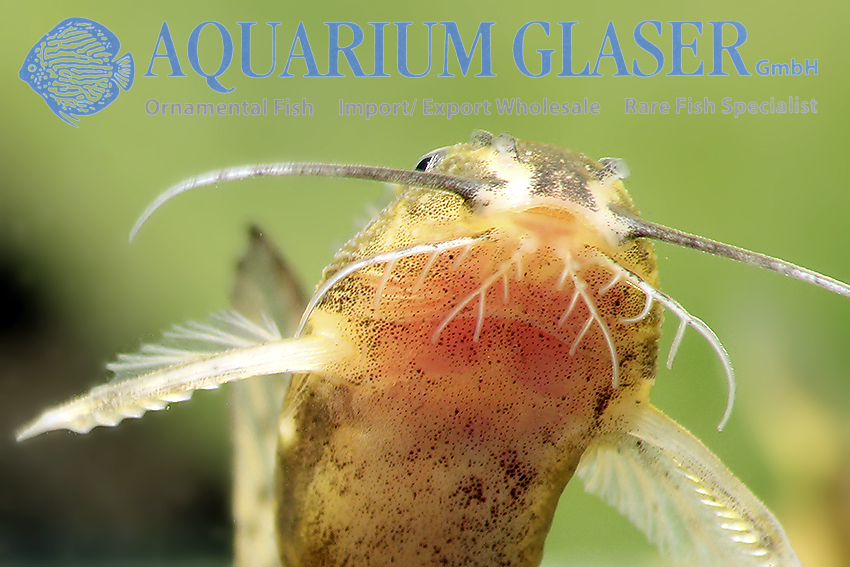
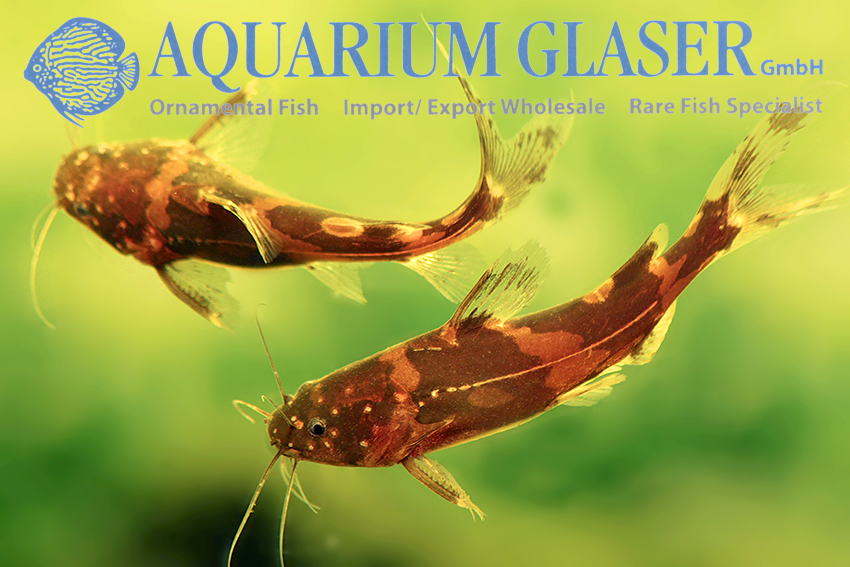
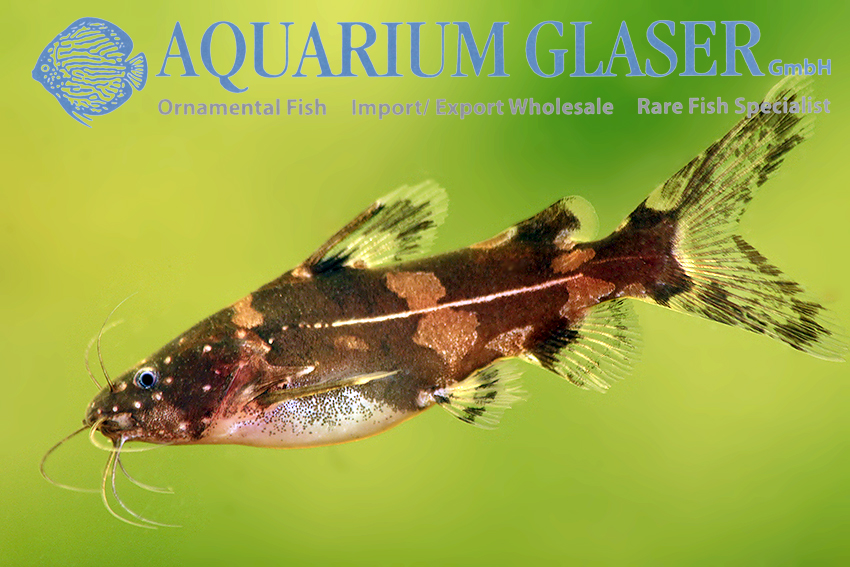
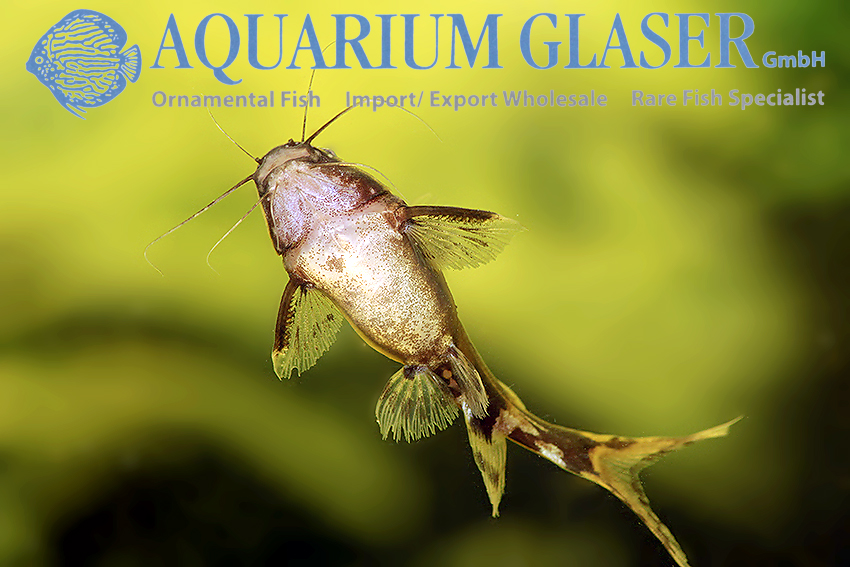
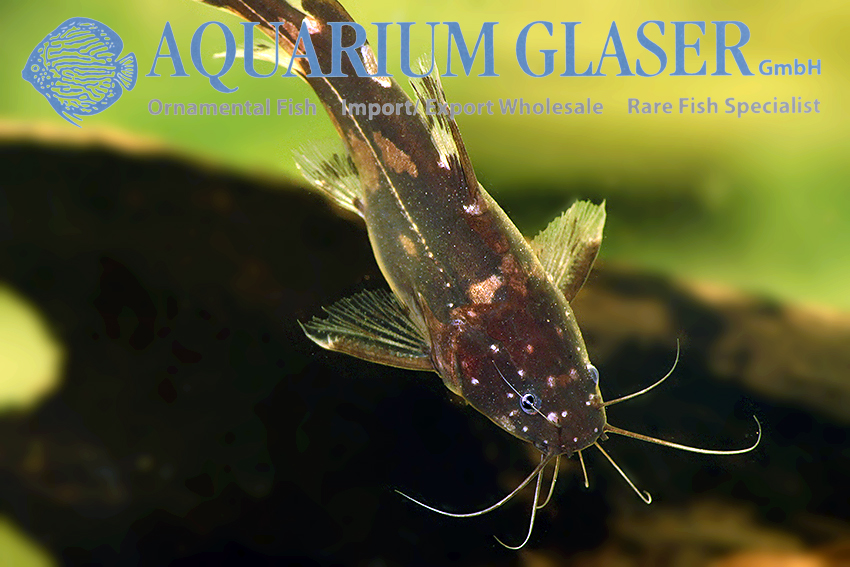
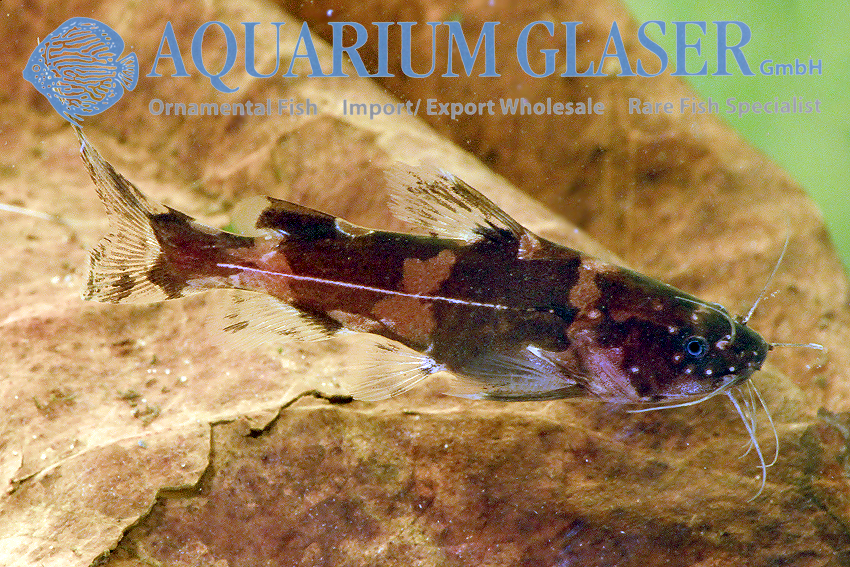
Again we could import a cute blackwater dwarf catfish from Indonesia, this time from Borneo. Pseudomystus funebris was only scientifically described in 2010 and is extremely similar to P. heokhuii which occurs on Sumatra. Like the latter, it reaches a total length of about 6 cm. The species is very peaceful and also constantly on the move during the day. The company of other species seems to be very important to the animals.

One maintains such animals in community tanks with peaceful other fish, with damped light, many dead leaves on the ground and a planting from Cryptocoryns, which thrive also in twilight well. Although soft and acid water is not an absolute necessity, the care of the mentioned animals and plants in such water is particularly problem-free.

For our customers: the animals have code 446492 on our stocklist. Please note that we only supply wholesalers.

Text & photos: Frank Schäfer

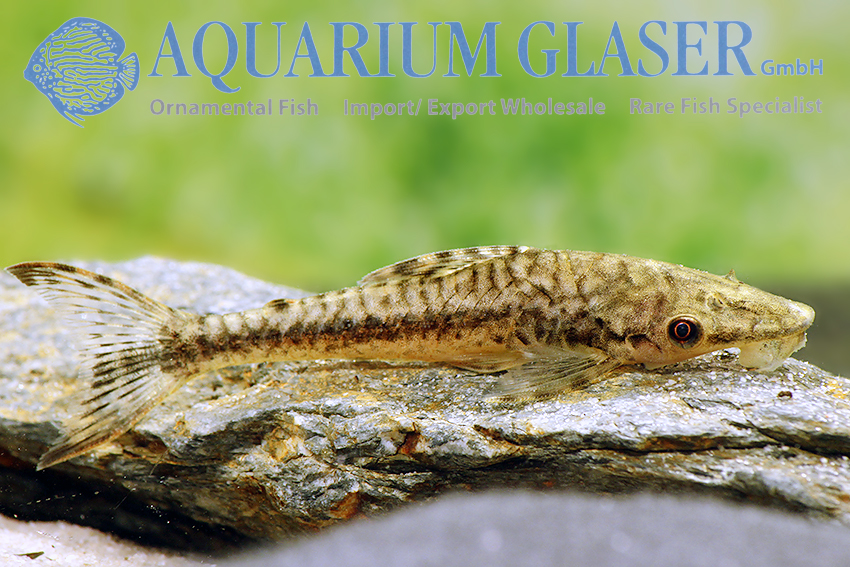
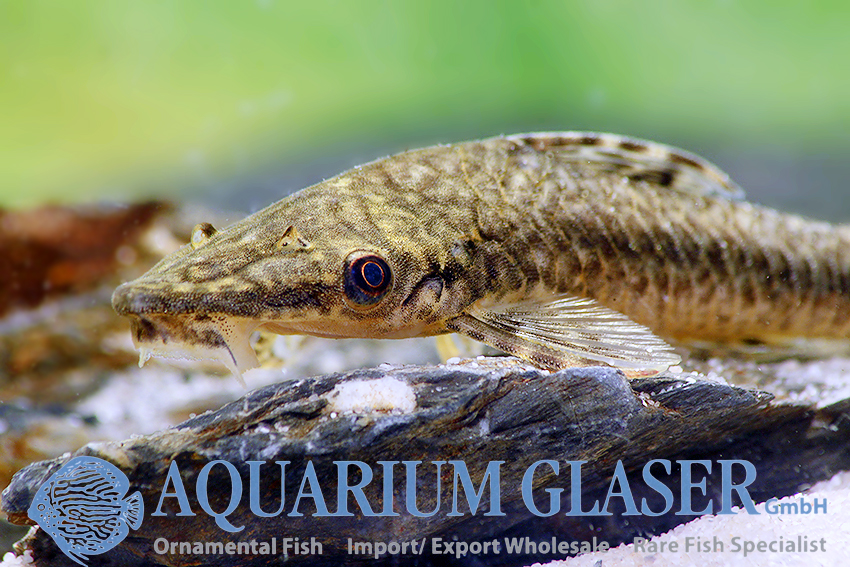
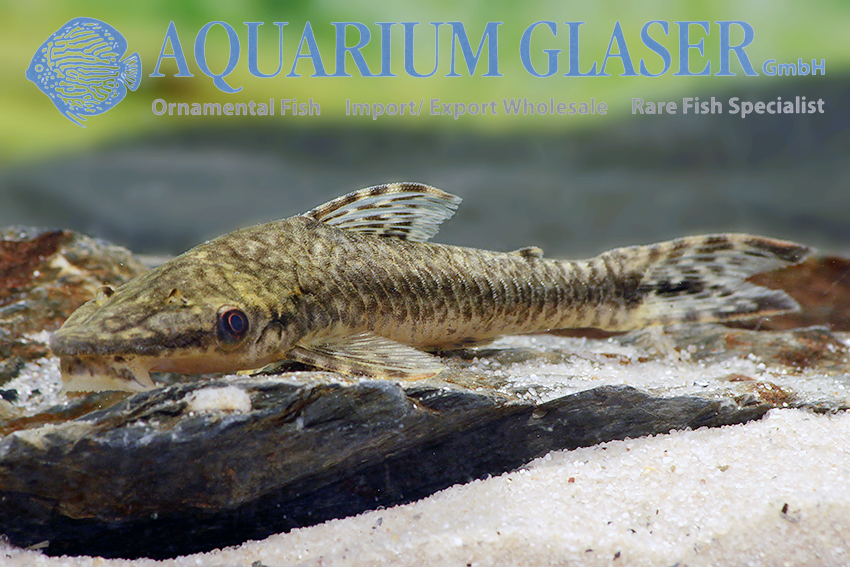
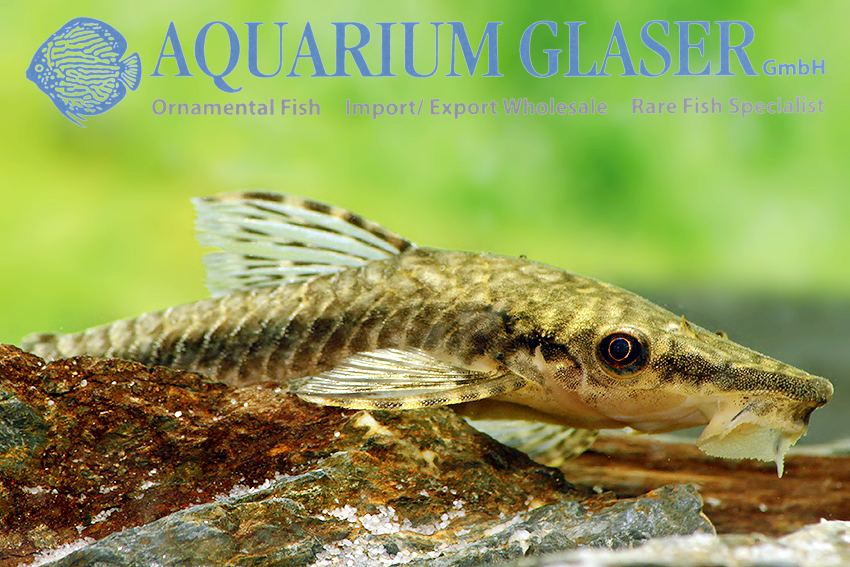
Homaloptera parclitella

28. December 2018

Hillstream loaches belong to the family of loaches. Probably the most beautiful species can be found in the genus Homaloptera. There are several closely related and similar looking species. In the German one calls it often “saddle-stain-loaches”, English, the animals become “lizard loaches” called.

Homaloptera parclitella is an extraordinarily beautiful hillstream loach from the black water of South-Thailand and Malaysia. It is closely related to the Indonesian H. orthogoniata. In the care, the up to 8 cm long animals are demanding: as black-water-inhabitants, they require a low-bacterial milieu, the water should be enriched absolutely with humic matter from peat, alder cones or leaves, otherwise the animals are very receptive to parasites. In addition, these fish have a high oxygen demand as inhabitants of running water. The water should therefore not be too warm, 22-25°C are ideal. As food live food is preferred in the beginning, later the animals also accept frost and dry food.

The beautiful fish are very peaceful, but like to impress each other in harmless ranking fights, which are very interesting to look at.

For our customers: the fish have code 421578 on our stocklist. Please note that we only supply wholesalers.

Text & photos: Frank Schäfer

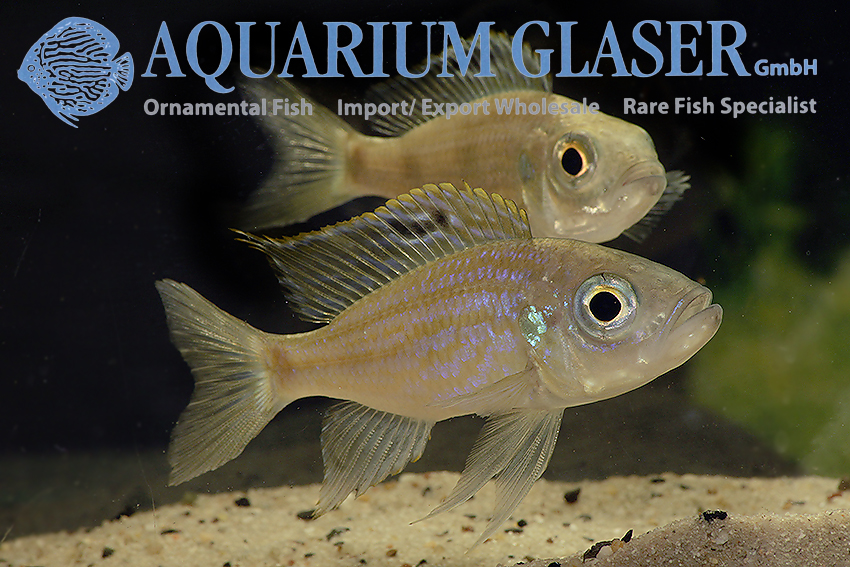
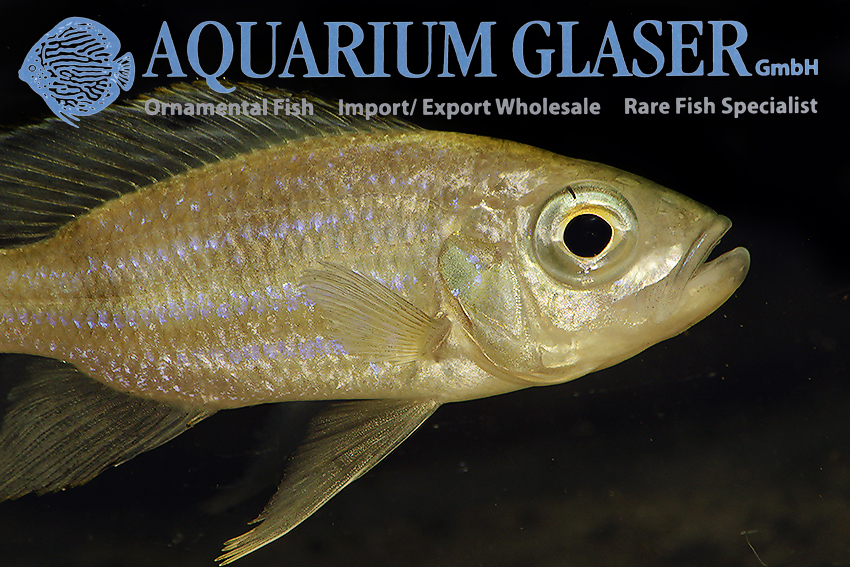
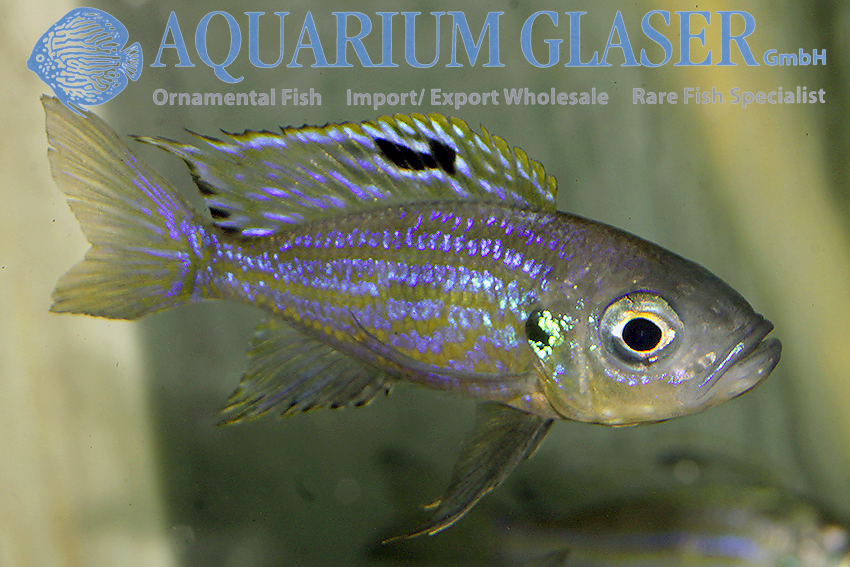
Aulonocranus dewindti

28. December 2018

This interesting cichlid, the genus is monotypic with Aulonocanus dewindti, so currently only this one species is assigned to it, originates from Lake Tanganyika. The up to 14 cm long species is a mouth-breeder in the female sex and lives in the lake over sandy areas. Here the males dig pits in the sand, that serve as breeding sites. Not much has yet been written about the beautiful fish, presumably because they appear somewhat inconspicuously silvery in neutral coloration and therefore seem unattractive. They are a bit shy open water animals, but they also like to look for food on the ground. They peck into the sand in almost vertical posture. A. dewindti is best cared for in a group, in the wild they swim in schools of sometimes several hundred specimens. The sexes are easy to distinguish with sexually mature animals (from approx. 6-8 cm of length), the females have rounded fins, the males pointed.

For our customers: the animals have code 502984 on our stocklist. Please note that we only supply the wholesale trade.

Text & photos: Frank Schäfer

Anostomus ternetzi

28. December 2018

The golden striped headstander, Anostomus tenetzi, has a very wide distribution in South America. It is recorded from Brazil, French Guyana, Guyana, Suriname, and Venezuela. The specimens on which the original descritption based, originated from Venezuela, and we were able to import them from there once more.

This beautiful fish is among the most peaceful species of headstander at all. It stay smaller than Anostomus anostomus. The latter can become more than 16 cm long, while A. ternetzi attains a maximum length of about 12 cm only.

In very young specimens of A. ternetzi the broad band along the body has wavy edges; it looks as if it would be composed of many, merged spots. Later these edges become straight in many specimens, but in others it stays wavy. Possibly this is a secondary sexual character. It is known from many species of fish that the female´s pattern is more similar to the juvenile pattern than in males.

For our customers: Anostomus ternetzi has code 206001 on our stocklist. Pleaee note that we exclusively supply the wholesale trade.

Lexicon: Anostomus: means “the one with the upturned mouth”. ternetzi: dedication name for Carl Ternetz (1870-1928). 

Common name: Golden Striped Headstander

Text & photos: Frank Schäfer

Oryzias latipes – Medaka breeding forms

22. December 2018

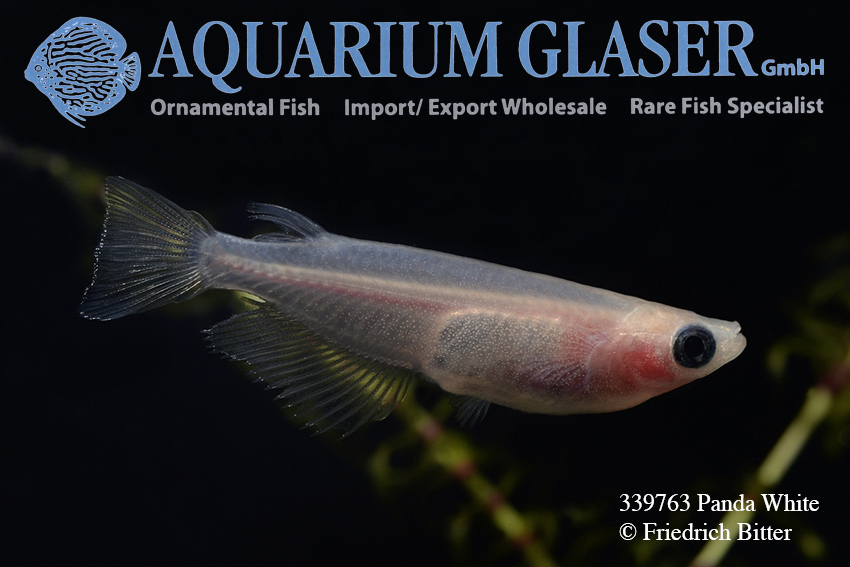
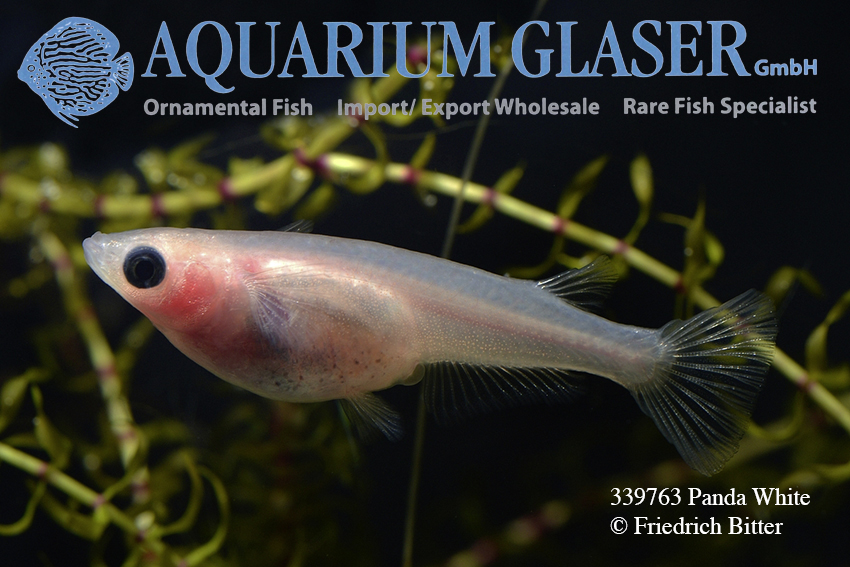
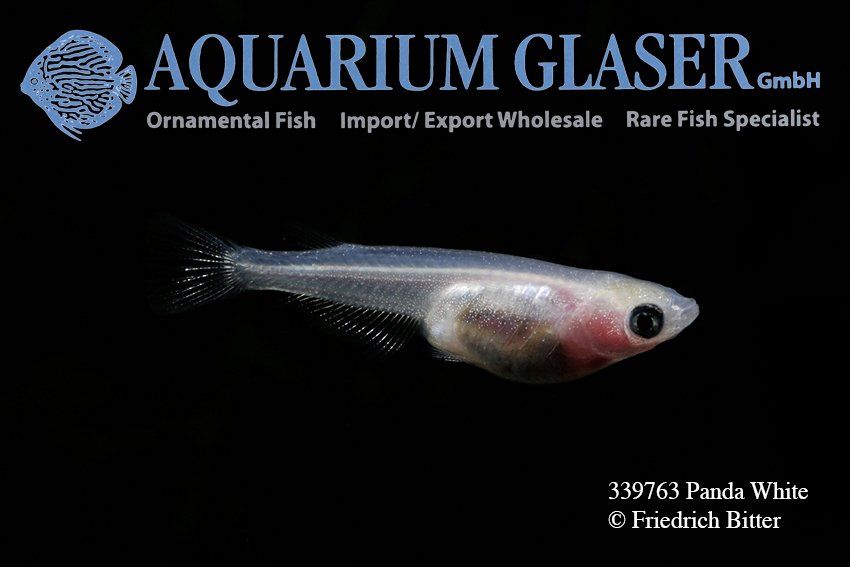
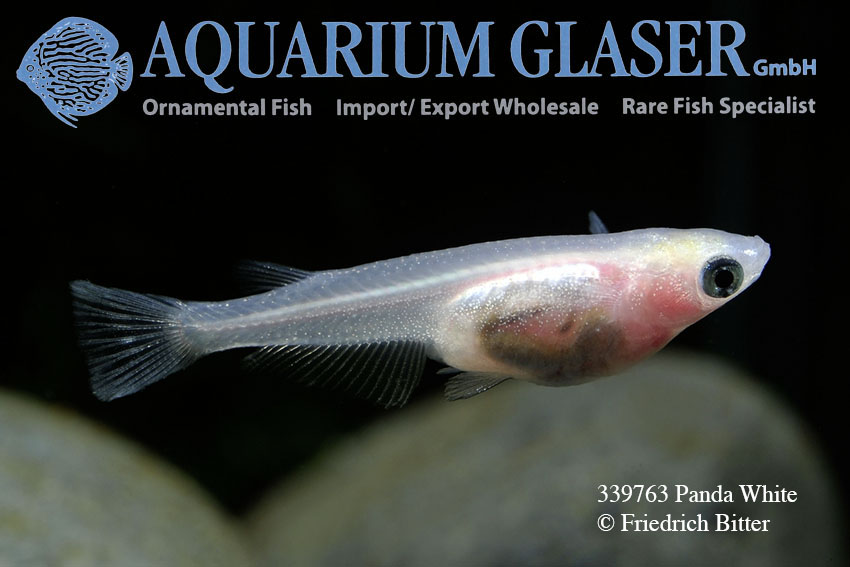
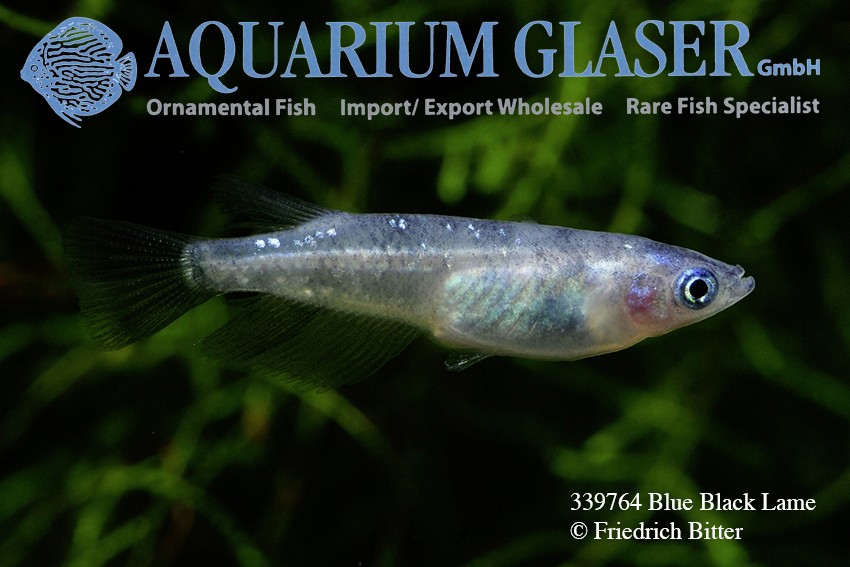
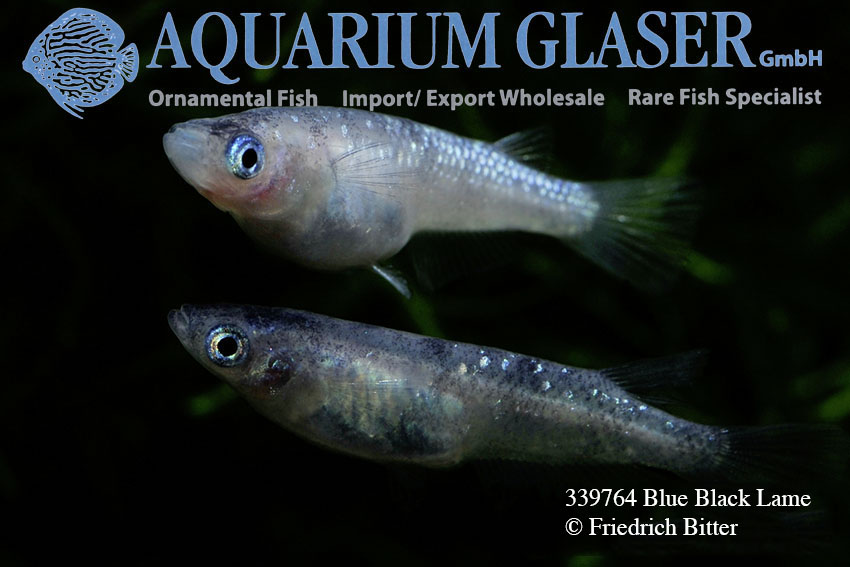
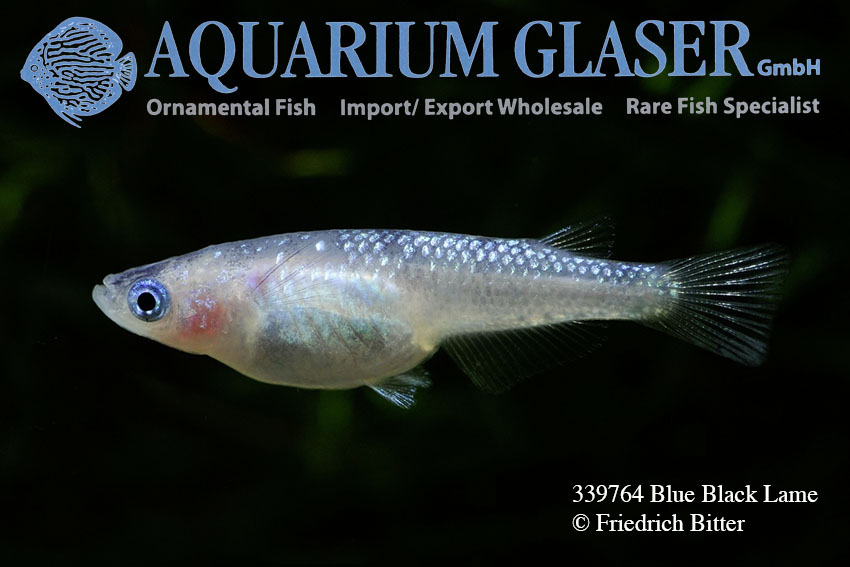
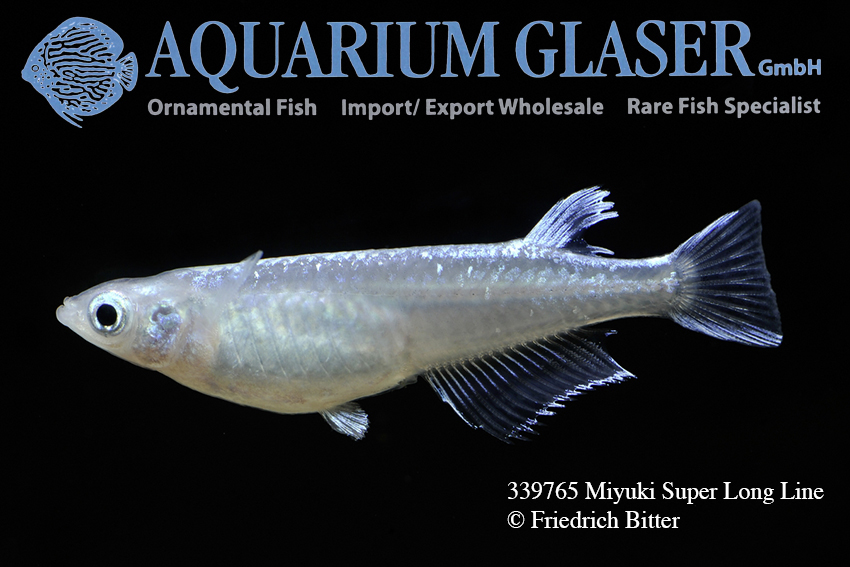
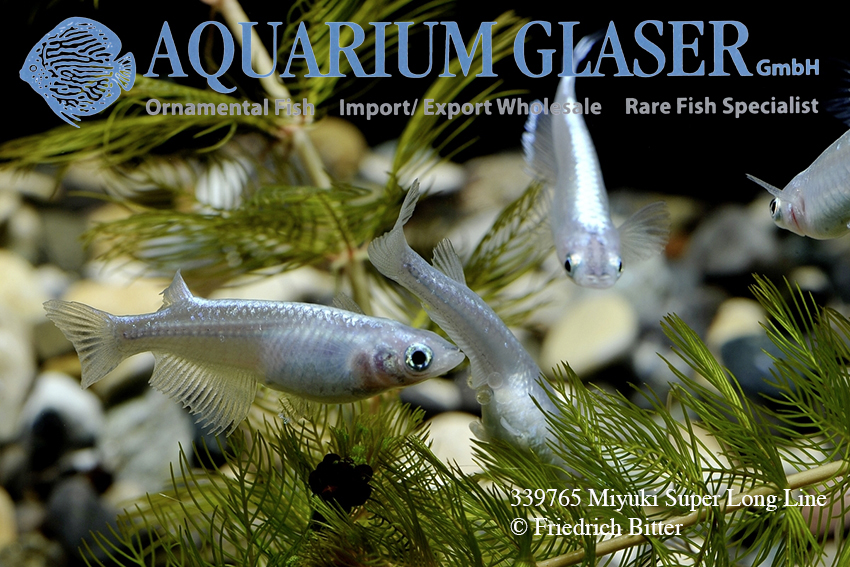
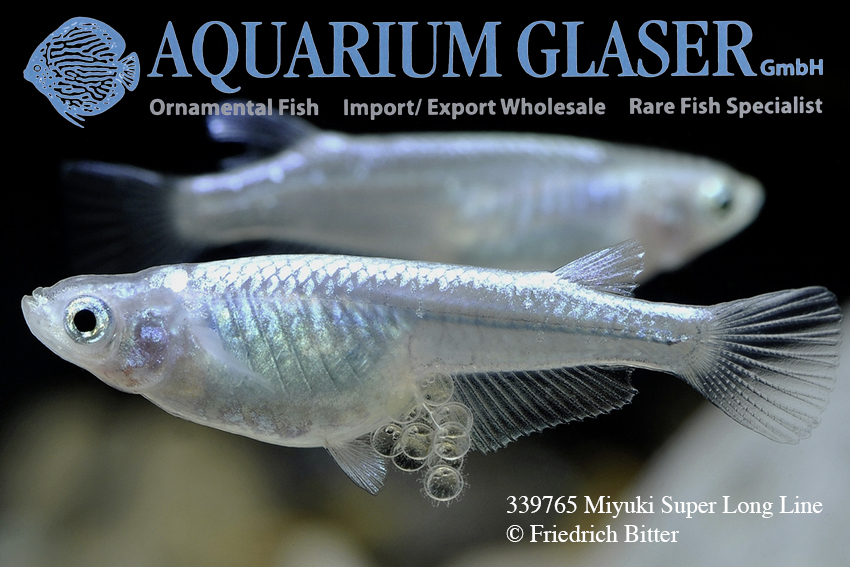
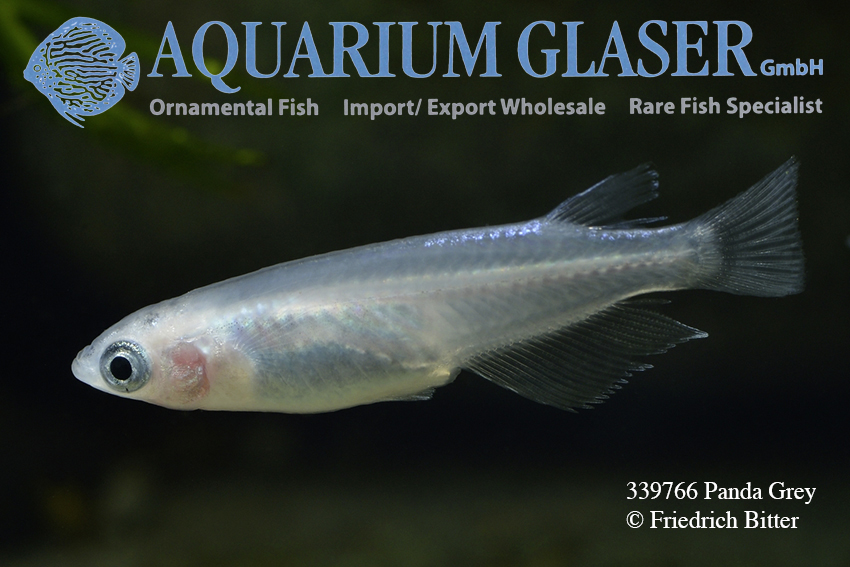
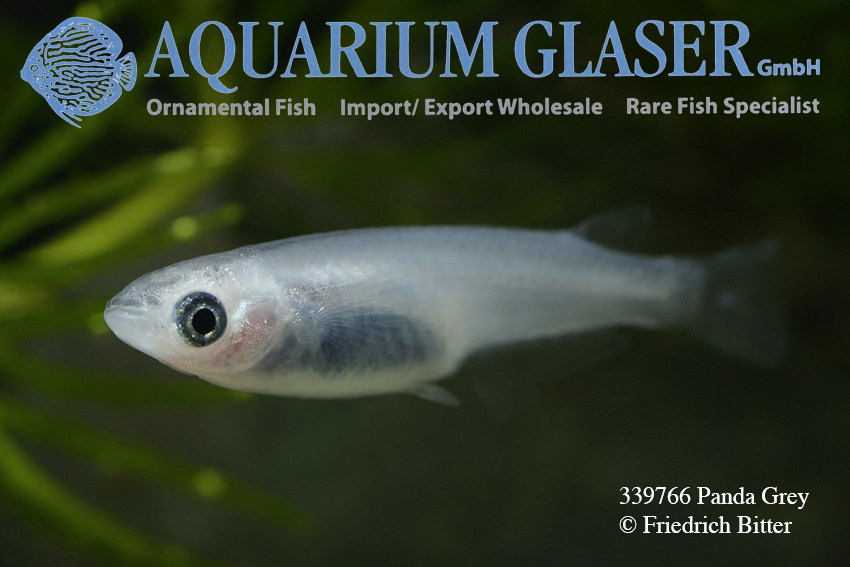
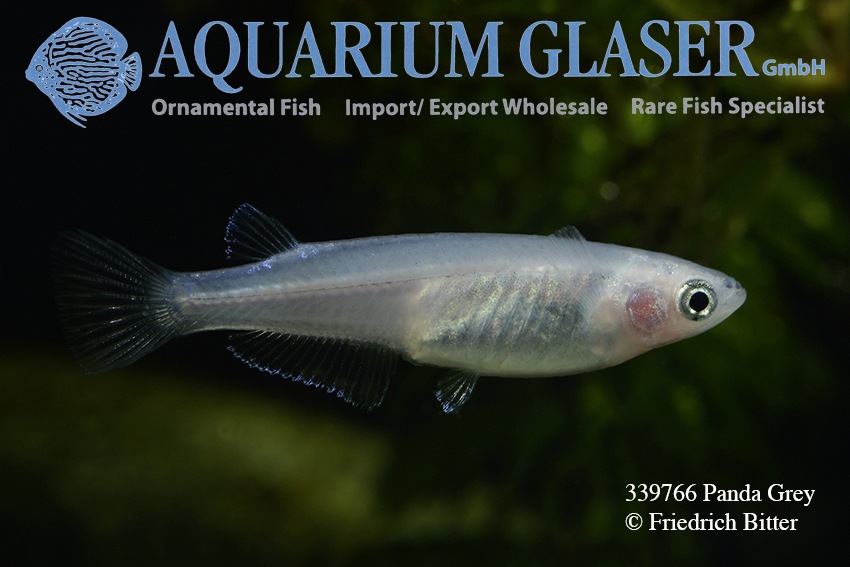
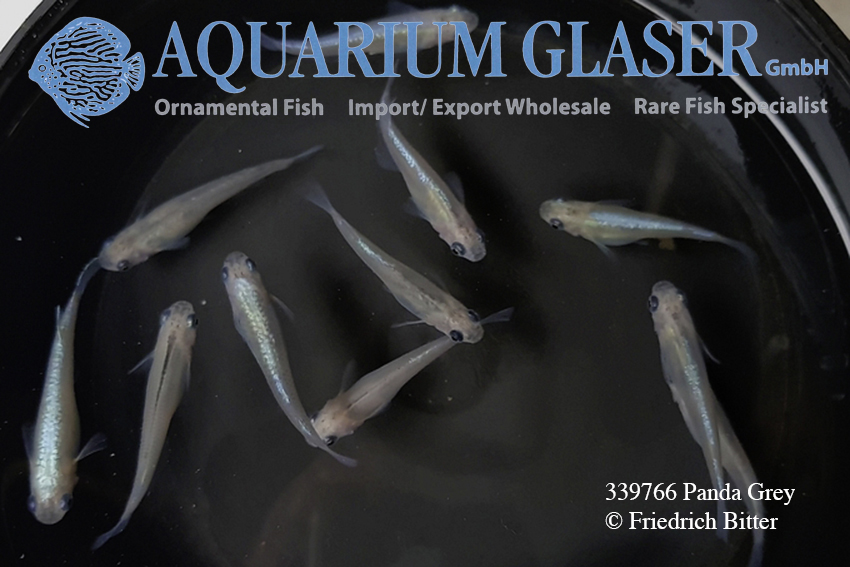
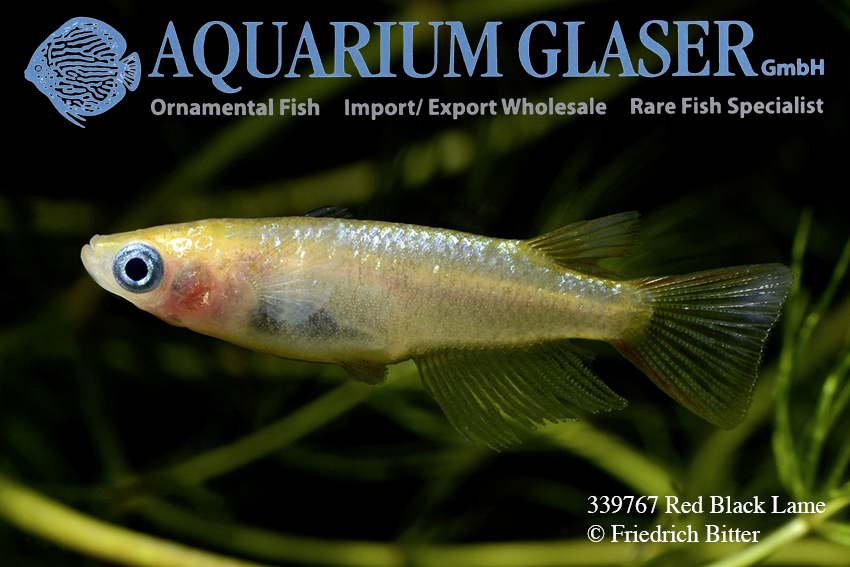
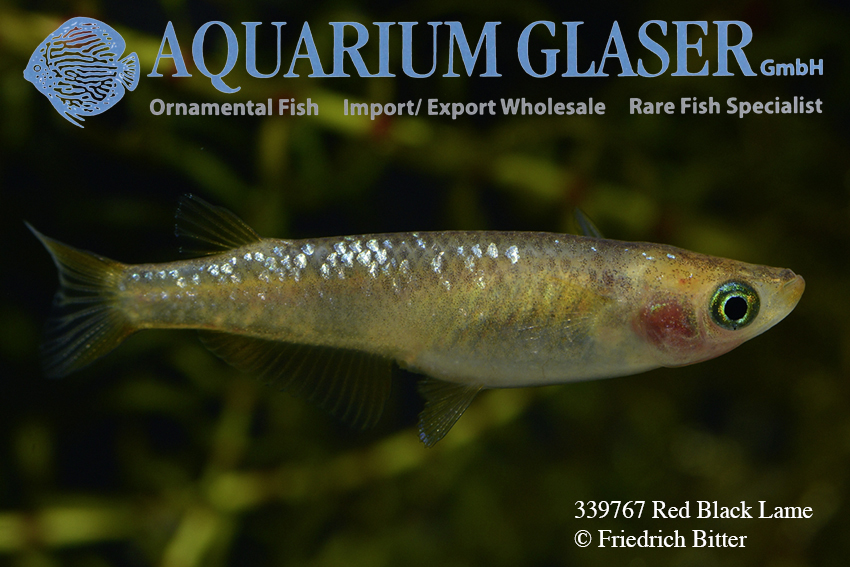
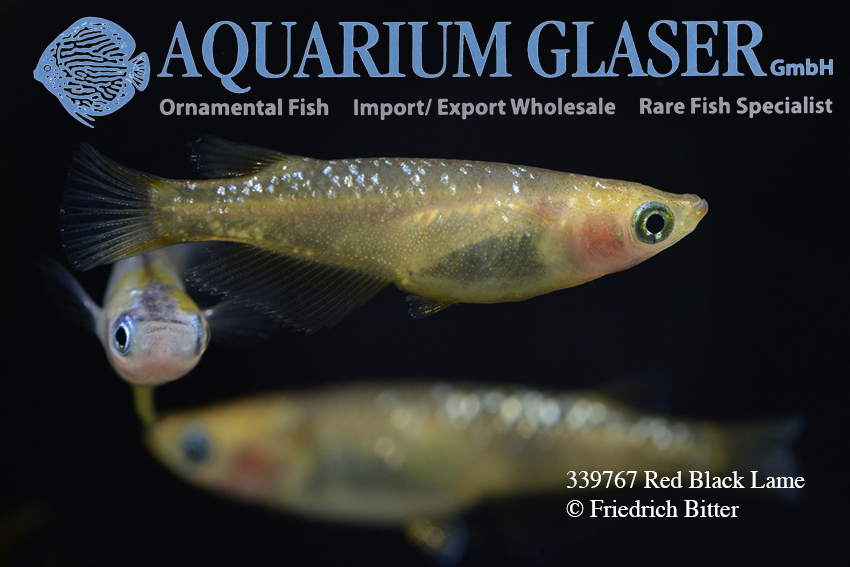
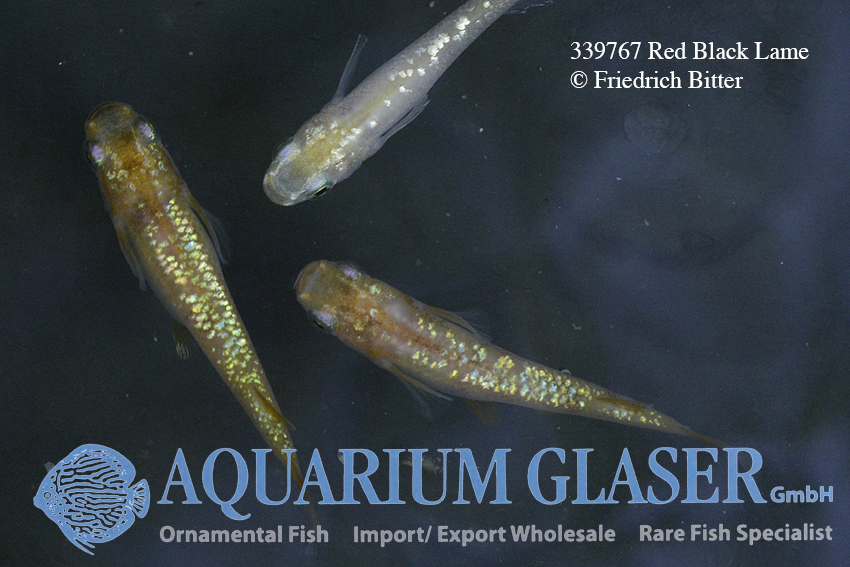
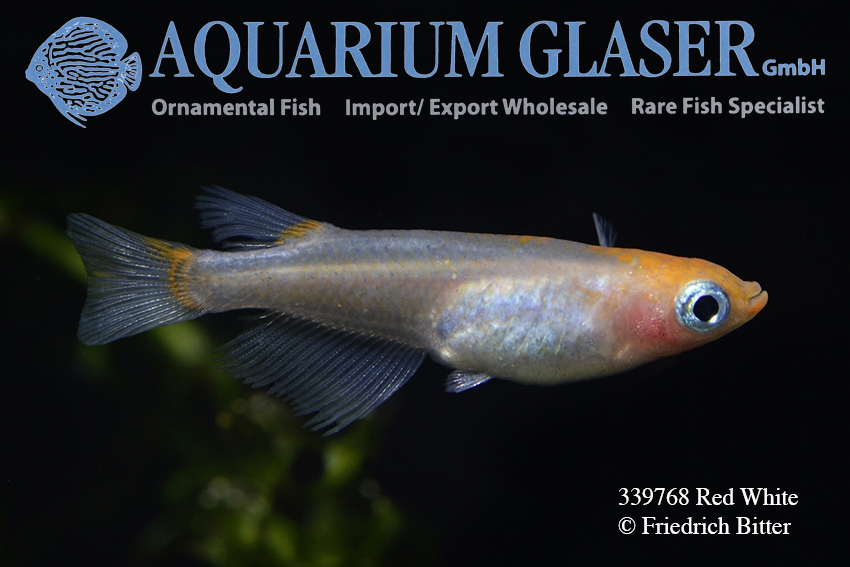
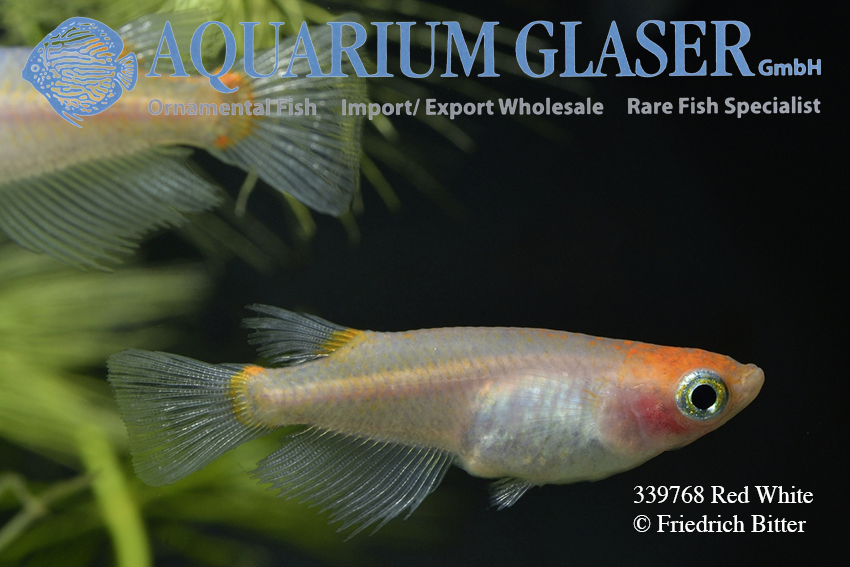
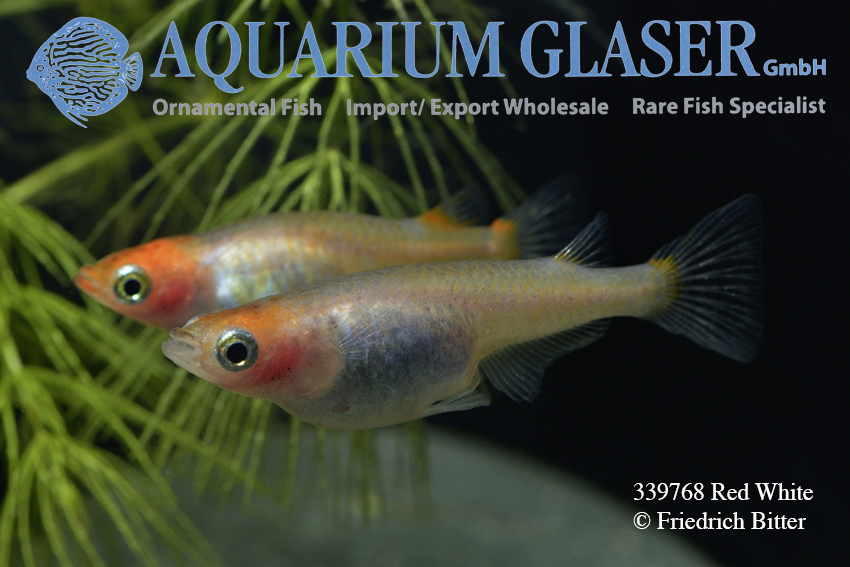
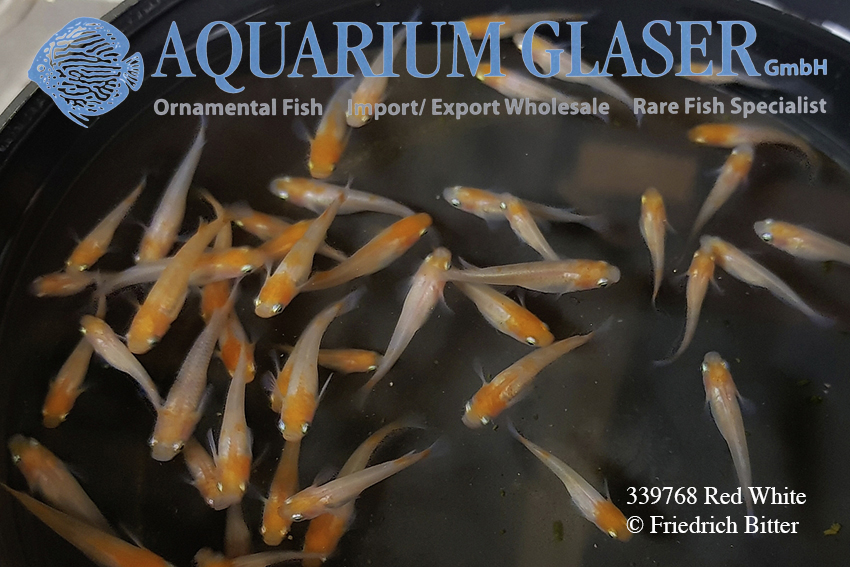
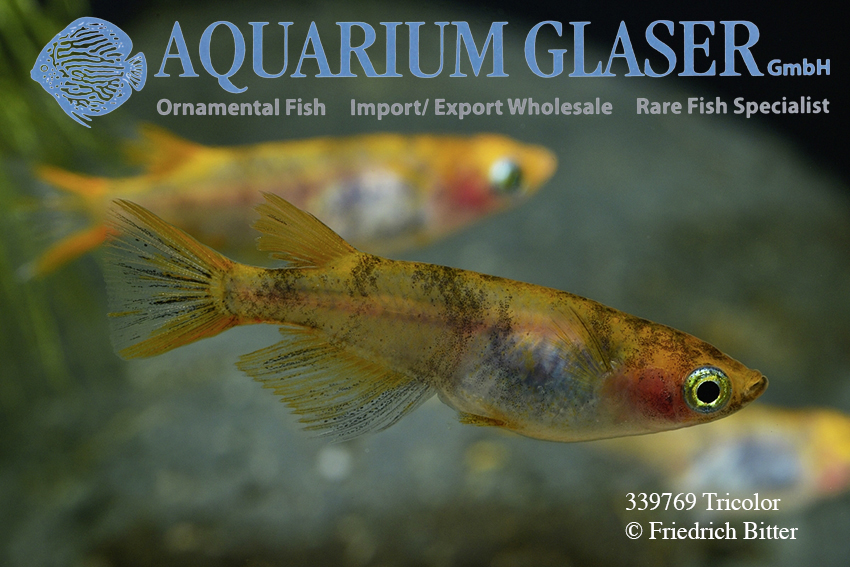
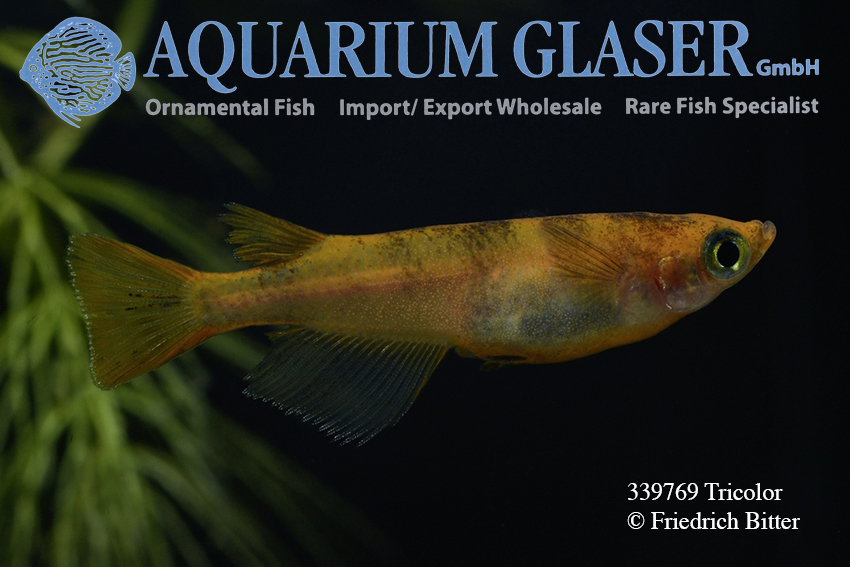
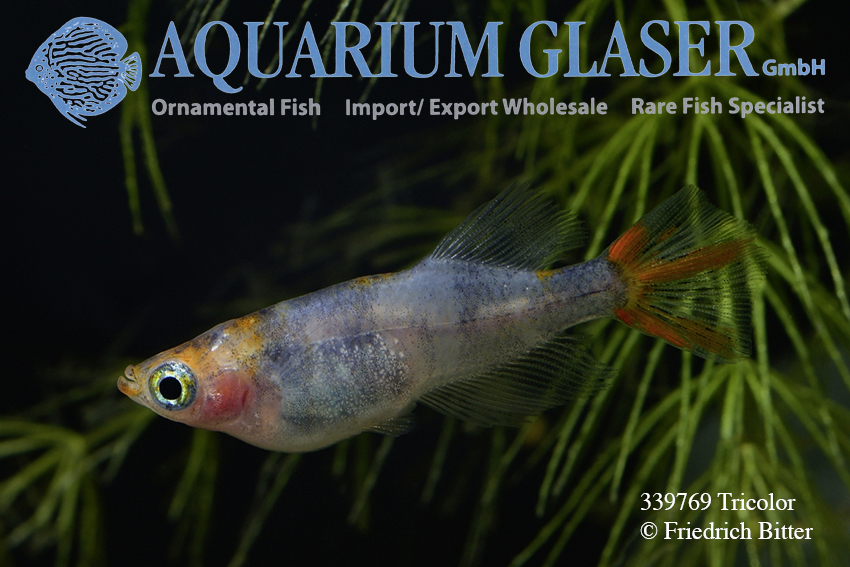
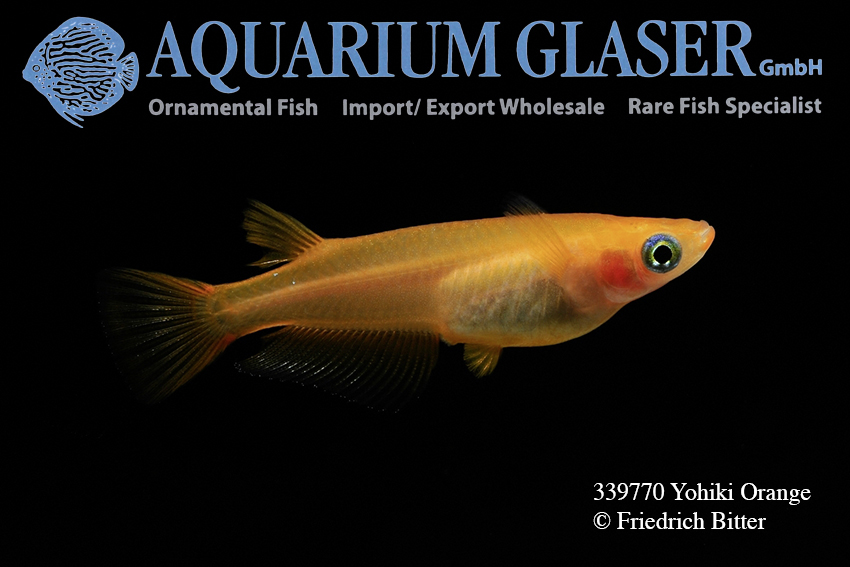
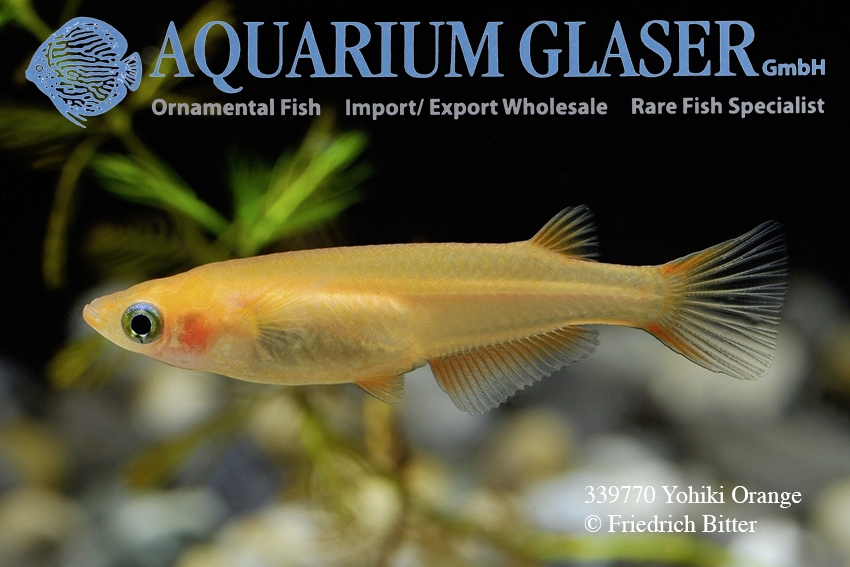
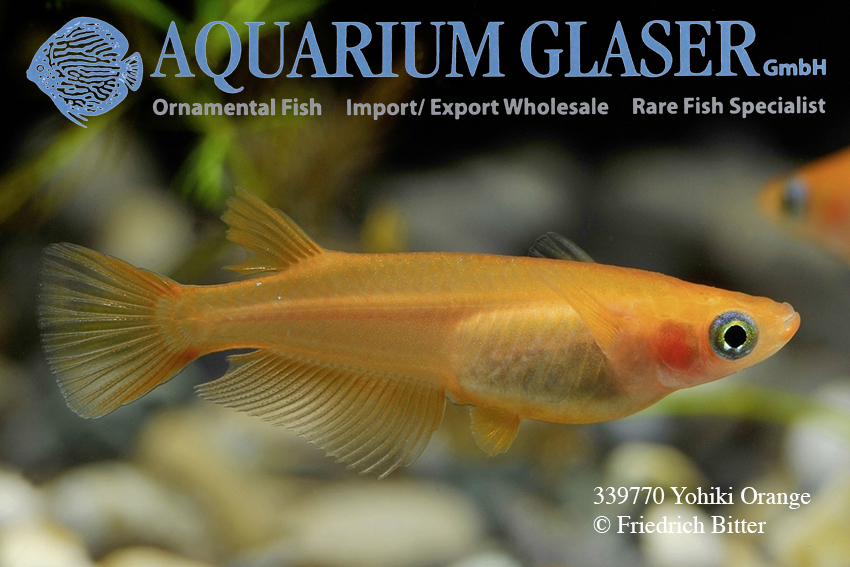
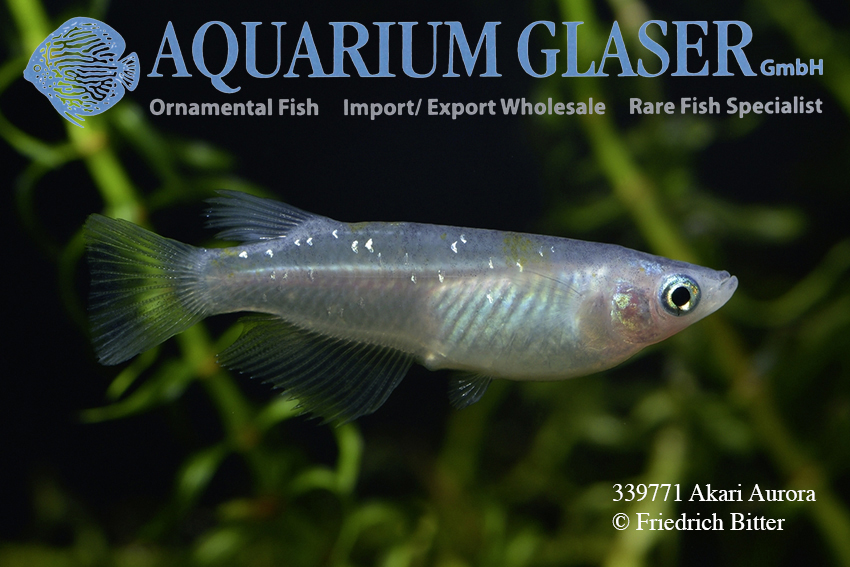
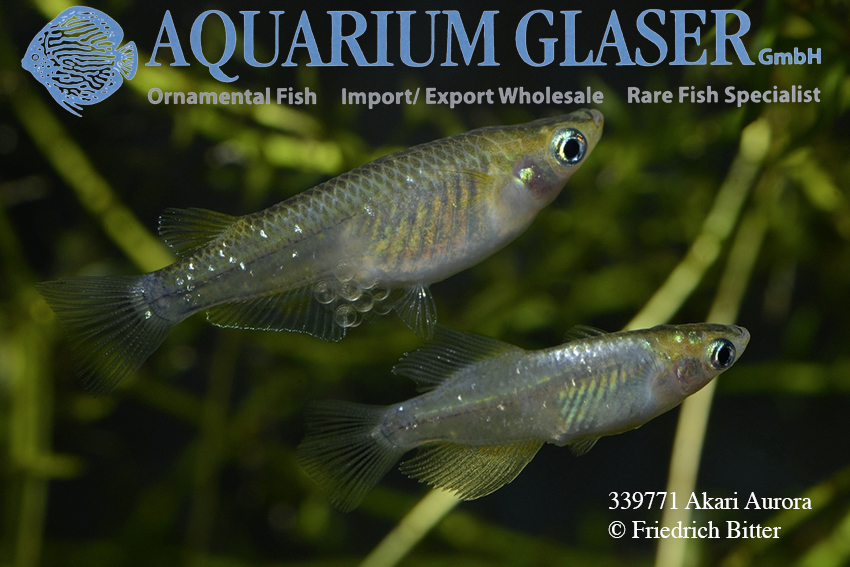
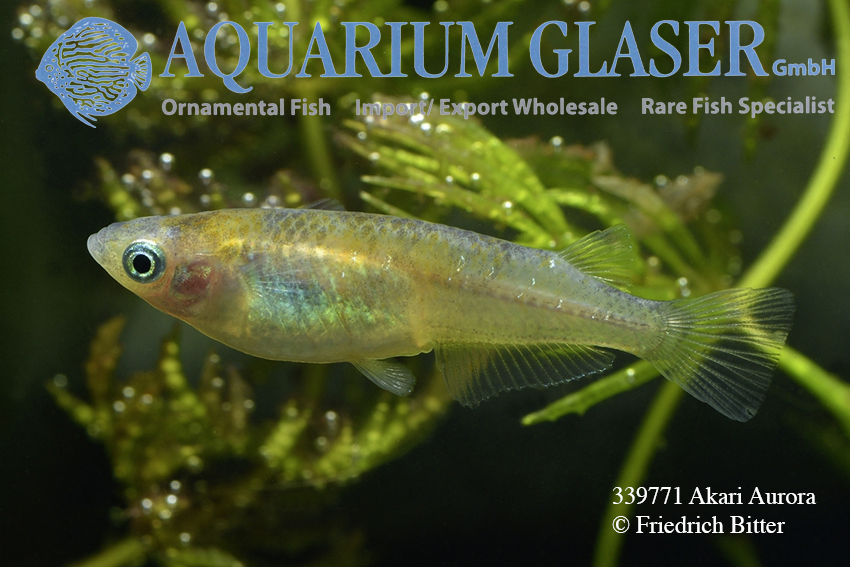
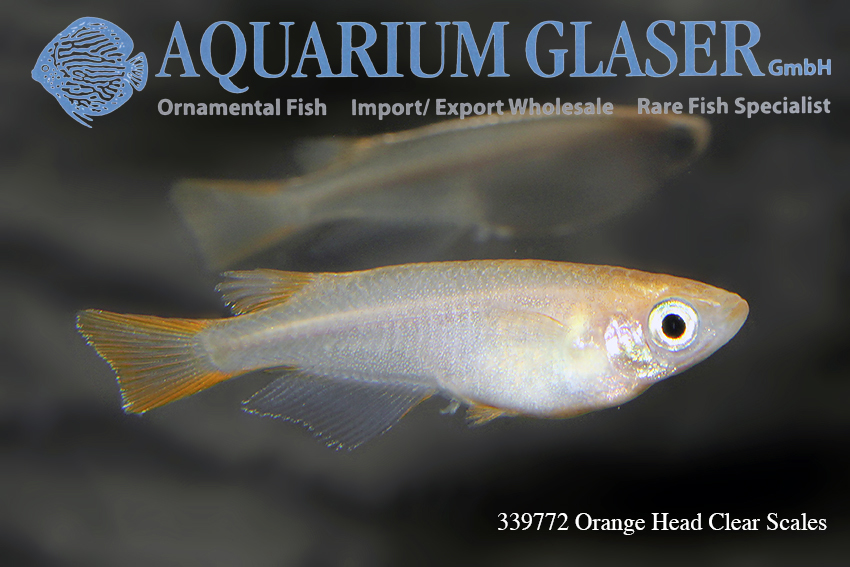
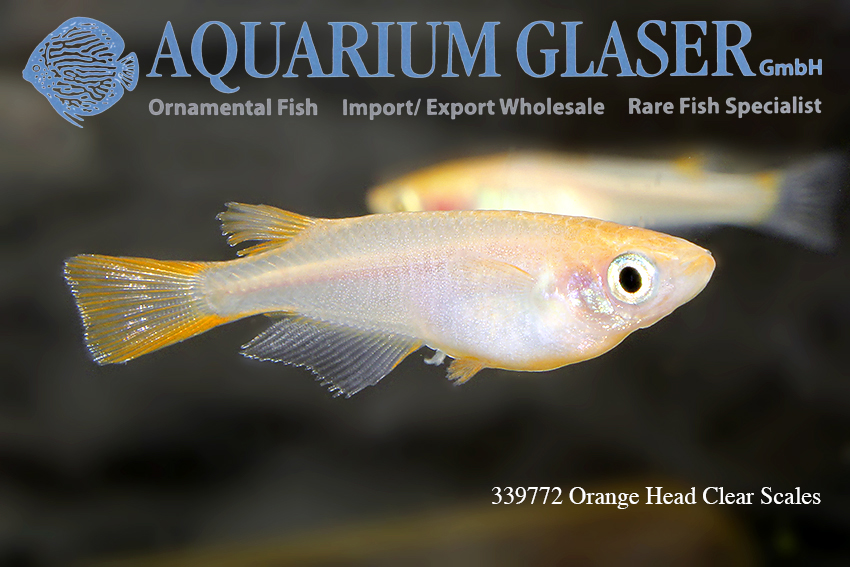
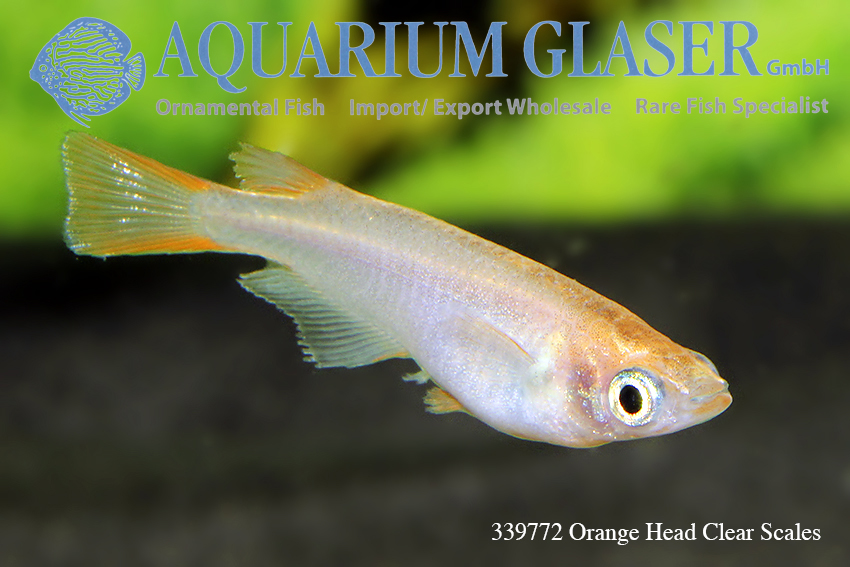
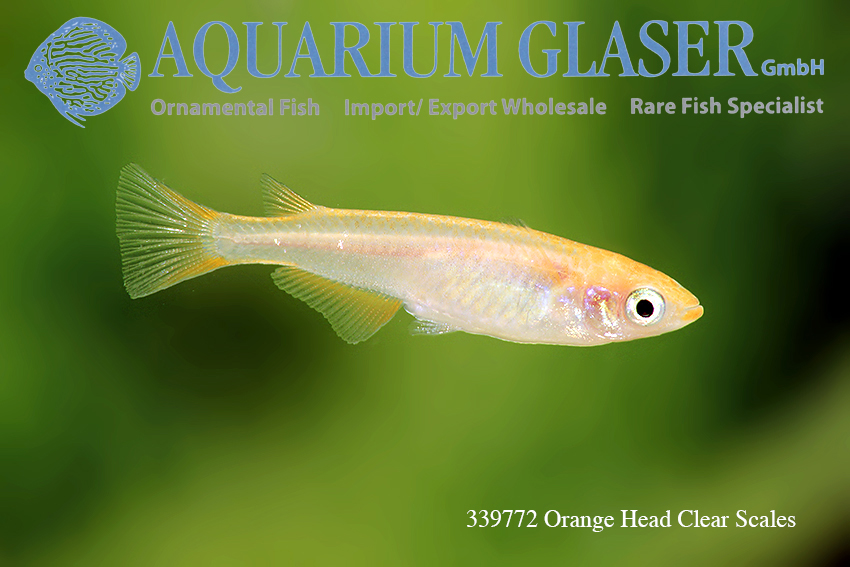
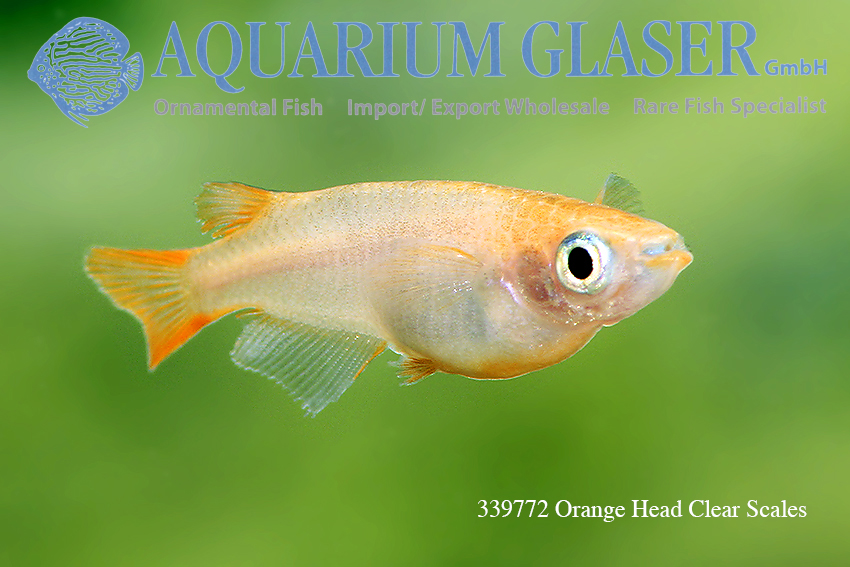
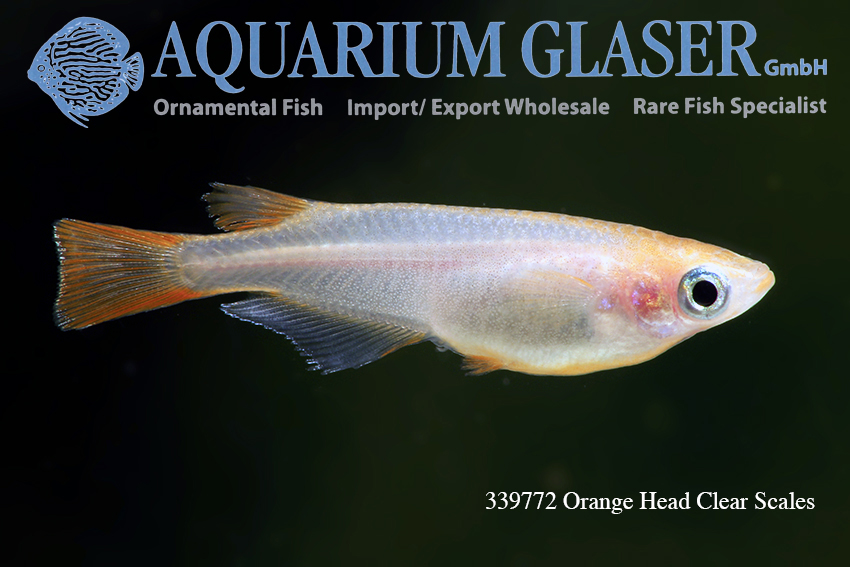
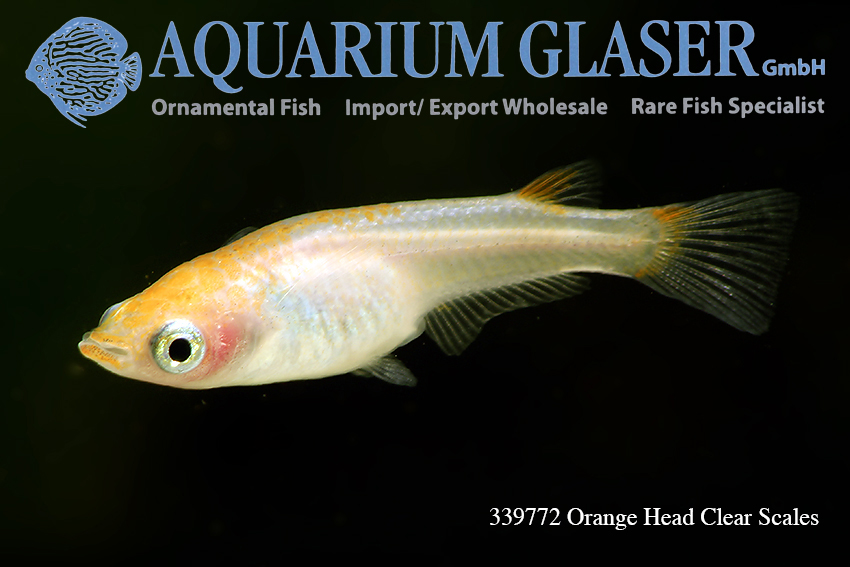
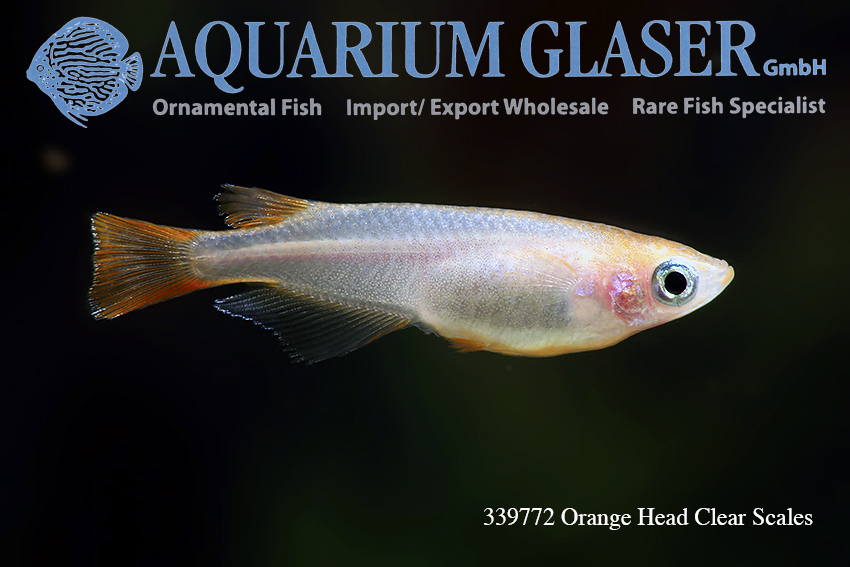
The care and breeding of the Japanese Rice Fish or Medaka has a very long tradition in Japan. Already around 1900 gold-colored Medakas were mentioned in the aquaristic literature. The breeding of these small fish is currently experiencing a renaissance in Japan. Friedrich Bitter drew attention to this and also imported many of these forms which had not previously existed in Europe. From him we have received 10 variants of these animals, which we present to you:

Panda White

Genetic pure strain often used for crossings. Since some of his genes are recessively inherited, the other parent usually prevails in crosses. Is bred especially for top view.

Blue & Black Lame

Moderately variable strain, with which also animals with orange-yellow body-color appear from time to time in the offspring. The name Lame refers to the silver scales, which are mainly on the flanks and less on the back. Is bred equally for the view from the side and from above.

Miyuki Super Long Line

Genetic pure strain. The basic body colour is slightly bluish, which is why the animals are called Miyuki. A silver-blue band runs along the back from the head to the tail, which helped the variant to the designation Super Long Line. Is bred often also for the top view.

Panda Grey

Moderately variable strain in which individual adult fish develop a fine blue dorsal line. The term panda refers to the eyes that appear dark from above. The basic colour of the fish is grey. Is bred mainly for the top view.

Red & Black Lame

Slightly variable strain. In the offspring animals with yellow-orange, white and blue basic colour can appear. The term Lame refers to the metallic reflective scales of the body, which almost appear gold-coloured towards the back, especially in intensively orange-coloured animals. These are bred for side and top view.

Red & White

Very variable strain. Breeding goal are actually fish with red-orange head and orange areas on fins and light body. In the offspring, however, also strongly orange-colored and white-pink-colored specimens appear in all gradations. For aquarium (side view) and mini pond (top view).

Tricolor (Akane-Nishiki)

A variable strain that always brings surprises. One-, two- and three-coloured (Tricolor) animals appear. For the breeding goal Tricolor it is best to combine three-coloured with two-coloured specimens, because the colours appear stronger and clearer in the offspring. Red, white (or transparent) and black remind strongly of Koi in the Tricolor, which is why they are mostly bred for the top view.

Yokihi Orange

A strain that looks rather yellow-orange in an aquarium. If the animals are kept in the open under direct sunlight, they become strong orange-red after few weeks. This form is multiplied equally for aquarium and outdoor.

Akari Aurora

All strains with the designation Akari are very variable in respect of the color distribution. This is exactly what attracts breeders to use them for cross-breeding. The additional designation Aurora refers to darker scales, which increase strongly towards the back. Also interesting about this trunk are the irregularly distributed silver scales on the body sides. This strain is bred for aquarium and outdoor keeping.

Yellow Head, Clear Scales

A very rare strain in Germany with moderate variability. The head should be as yellow (orange) as possible, the body is at least partially transparent. The fins are sometimes orange, from the back sometimes irregular, dark spots reach up to the flanks. Fish for top and side view.

Text: Friedrich Bitter, photos: Friedrich Bitter & Frank Schäfer

Betta foerschi bred

19. December 2018

The fighting fish of the Betta foerschi relationship – there are several very similar species, which are considered by some specialists to be only local varieties of the same species, namely Betta foerschi – are not only particularly beautiful, but also particularly interesting. They are mouth breeders, but they are, so to speak, at an intermediate stage of development between bubble nest building Betta species and specialized mouth breeders. The spawning process is similar to that of the bubblenest builders, the mouth-brood-time is considerably shorter with 7-8 days than that of the specialized mouth-breeders, who brood about 10 days.

Betta foerschi is a typical black water fish, which needs very soft and sour water for breeding, bred ones therefore are only rarely found in the trade. We just have a few XXXL pairs with a total length of 7 cm on offer.

For our customers: the animals have code 381423 on our stocklist. Please note that we only supply wholesalers.

Text & photos: Frank Schäfer

Auchenoglanis sp. Niger (A. biscutatus)

17. December 2018

Until recently only two species of Auchenoglanis were recognized as vaild: A. biscutatus from the Nile and the whole of West Africa and A. occidentalis from Central Africa. But in 2010 the genus was revised by Retzer, who accepted a total of 8 different species, 7 already described formerly and one new species, namely A. senegali.

The species from the Niger, which we import, looks most similar to A. wittei from the Congo, but according to Retzer the Auchenoglanis from the Niger belongs most probably to a still scientifically undescribed species. For the reasons mentioned above the fish is listed on our stocklist as Auchenoglanis biscutatus.

All Auchenoglanis can grow to a length of more than 40 cm, but as they feed mainly on small food particles they are usually very peaceful against even much smaller tankmates. The meaty lips that serve for the detection for food in mud led to the nickname “kissing mouths” for Auchenoglanis in aquaristic circles.

For our customers: the fish have code 100212 on our stocklist. Please note that we exclusively supply the wholesale trade.

Text & photos: Frank Schäfer

Pterophyllum „Santa Isabel“

14. December 2018

We can offer just wonderful, young adult German bred offspring of the famous Santa-Isabel-Angel, which differs clearly from other wild collected angels by its attractive red coloration at the front-back. The animals are descendants of fish that we were able to import as wild catches some years ago (see: https://www.aquariumglaser.de/en/fish-archives/fantastic_pterophyllum_scalare_santa_isabel_arrived__en/).

Especially worth mentioning is – besides the gorgeous colouring, the size and the beautiful growth – that these Santa Isabel are very peaceful among each other. This is not self-evident with Santa Isabel angels, there are among them also distinctly quarrelsome tribes.

For our customers: the animals have code 699843 on our stocklist. Please note that we only supply wholesalers.

Text & photos: Frank Schäfer

Corydoras Rarities

14. December 2018

From Peru we received samples of some top rarities among the armored catfish. All belong to the group of long snouts, which in contrast to the round snouts do not live in swarms, but have to be laboriously collected individually.

The species, called by the exporter as Corydoras sp. as “Melita”, belongs to the immediate circle of forms of Corydoras fowleri, from which it differs by its slightly more elongated body and the more massive coloured flank wedge.

Corydoras sp. “Karina” is also a species of the Corydoras-fowleri complex. The species is characterized by the comparatively wide light zone of the back of the black wedge. The latter reminds of Corydoras semiaquilus, which is also extremely closely related to C. fowleri.

Corydoras sp. “Souza” clearly deviates from the two species mentioned so far. We have already received fishes under this name earlier, these were always animals of the kind, which are known in the hobby at present as Corydoras sp. “C124”. This time, however, an animal came as “Souza”, which looks very similar to the Brazilian C. treitlii and would have to be attributed purely “technically” to Corydoras semiaquilus; however, it is more likely that it is a scientifically undescribed species.

So if the three species described so far belonged to the close relationship of C. fowleri/C. semiaquilus, the fourth species, called Corydoras sp. “Panduro”, could at first sight be considered to be C. ellisae from Paraguay or C. septentrionalis from Venezuela. However, both species have a pattern of stripes in the tail-fin, that C. sp. “Panduro” is missing. C. sp. “Panduro” could be a species which imitates the round snouted C. weitzmani which also comes from Peru.

We do not yet know exactly whether it will be possible to import these four interesting species in larger quantities. Anyway, we will try.

Text & photos: Frank Schäfer

Panaqolus sp. L351

12. December 2018

From Peru comes a Panaqolus, that is charcterized particularly through the small eye and the long tail fin filaments.  

With L351 they got their own code number. Unfortunately L351 is imported only very rarely, because most photos of this species show a darkly colored, unattractive fish. In reality, the animal is very nicely colored after a certain acclimatization! L351 belongs to the genus Panaqolus and becomes only about 15-20 cm long, according to the opinion of several catfish specialists. A large part of the food of these fish is wood, which may never be missing in the aquarium. Because wood eating causes a lot of excrement and thus a lot of dirt (wood is extremely low in nutrients, even if intestinal bacteria make the wood digestible for Panaqolus, the fish have to eat a lot in order to cover their energy requirements), a large filter system must be installed.

For our customers: the fish have code 26480-L 351-3 on our stocklist. Please note that we excvlusively supply the wholesale trade.

Text & photos: Frank Schäfer

Xiphophorus andersi

10. December 2018

Once again we can present and offer you a top rarity among the wild forms of livebearers: Xiphophorus andersi. Most likely the animals we have received from a German breeder are the first ever to be offered in the ornamental fish wholesale trade. 

Xiphophorus andersi comes from the Rio Atoyak in the state of Veracruz, Mexico, which is one of the Atlantic processes of the Central American country. The species was only scientifically described in 1980 and seems to occur only very locally. 

In this species there are small early males and large late males. In practical breeding it has been shown that it is better to leave both forms in the breeding line (many breeders tend to exclude the early males as “Mickerlings” from breeding), because otherwise there is the danger that the offspring consists only of animals of one sex (one cannot predict whether male or female).

The fish are demanding to look after. It is important to pay attention to the best water quality, generous, regular partial water changes are absolutely obligatory, so that these rare animals thrive well in the long run.

For our customers: the animals have code 476525 on our stocklist. Please note that we only supply the wholesale trade. Only available in small quantities!

Text & photos: Frank Schäfer

Dario kajal

7. December 2018

The first reports of a new dwarf badis appeared in June 2004. Nonn Panitvong, an enthusiastic Thai aquarist, had found the animals in Bangladesh. Panitvong did not announce a more precise location, but said he caught the animals in a pond near a rice field, together with Danio rerio, Oryzias sp., Channa sp., Colisa chuna and others.

In the German literature the new Dario was first introduced by Alexander Dorn, who was able to import and reproduce it from Thailand on private initiative (Dorn, 2006). In Thailand, the fish, which only reach a total length of about two centimetres, were offered in a pet shop as Dario sp. “Bangladesh”; this makes it quite likely that it was the strain originally collected by Sanitvong. Dorn, who also documented the fish in beautiful pictures, suggested the German common name “Kirschfleck-Dario” (= „Cherryspot-Dario“).

Afterwards it became quiet around the cute little fish for quite a while. Only in 2009 Indian exporters started to offer the species regularly under the name Dario sp. “Jaintia Hills” (Werth, 2009). Further, but hardly common trade names are Dario “Kishore Ganj” and Dario “Black Fin”. Although there were no large quantities, from then on a few hundred specimens per year were available for interested aquarists in Europe. As additional information one learned now that these animals are found in the Indian federal state Meghalaya, in quite large height. A large part of Meghalaya is formed by two mountain ranges, the Khasi- and the Jaintia Mountains; the mountain tribes living there already enjoyed autonomy status during British colonial times. Meghalaya borders Bangladesh to the north. Meghalaya fish have a special feature: they need to be kept a little cooler from time to time during the year. Some imports made real problems until we learned from the exporters that they were collected at only 14°C. Then some things became clear…

About 10 years after its discovery, the new Dario species was scientifically described by Ralf Britz and Sven O. Kullander. They have chosen the name Dario kajal for the little animals, because a really good recognition feature of the species are the black eye stripes. 

The description was based on animals which had all been collected in the small river Seinphoh near Umolong (Meghalaya, Jaintia Hills). For us aquarists, the eye stripe, which does not appear in this form in any of the other Dario species described, can be sufficient as a distinguishing feature. 

In the aquarium all Dario have to be treated in approximately the same way. The best way to take care of the weakly competitive fish is in species aquariums, which can be small, because the males hardly defend a territory. Usually Dario are seasonal permanent spawners, i.e. they spawn almost daily when water temperature and food supply match. Only in winter – all species except D. urops come from subtropical climates, where it can get very cold – reproductive behaviour is stopped. Certainly Dario also eat an egg or young fish sometimes, however, they don’t pursue them purposefully. So, accordingly fine feed presupposed, a few young always come up also in the regular tank. Unfortunately, one cannot nourish Dario apparently with Artemia nauplia as alone or main-food in the duration, as it is possible with the licorice gouramis (Parosphromenus). Thus, one needs a live food source. Dario do indeed eat frozen food, but in small species aquariums it is hardly possible to dose it correctly and it is very polluting for the water. Concerning the water values, Dario are undemanding. All water that is suitable as drinking water is also suitable for the care of the dwarf badis.

Text & photos: Frank Schäfer

Literature: 

Britz, R. & S. O. Kullander (2013): Dario kajal, a new species of badid fish from Meghalaya, India (Teleostei: Badidae). Zootaxa 3731 (3): 331-337

Dorn, A. ( 2006): Eine vierte Dario-Art. Datz 59 (9): 21

Werth, A. (2009): Importnachrichten. Dario sp. “Jaintia Hills”. Datz 62 (6): Aquarien-Praxis: 14

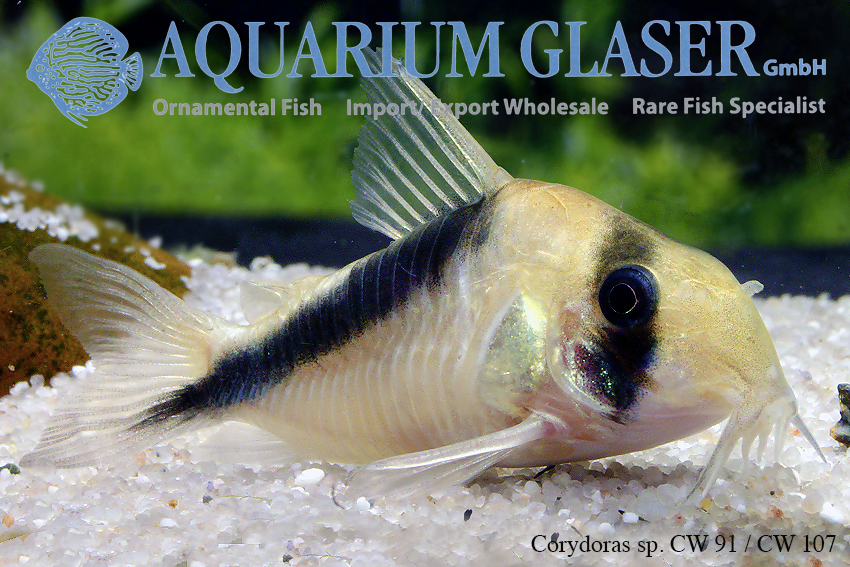
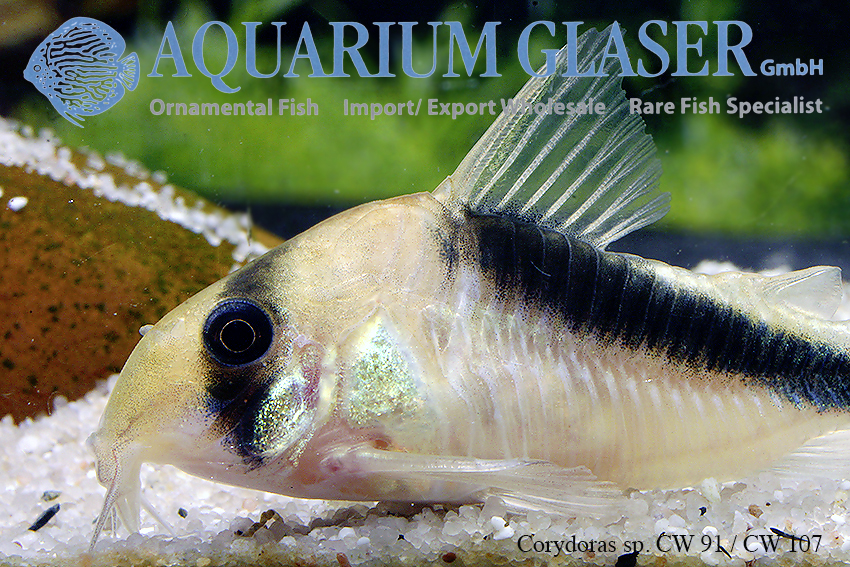
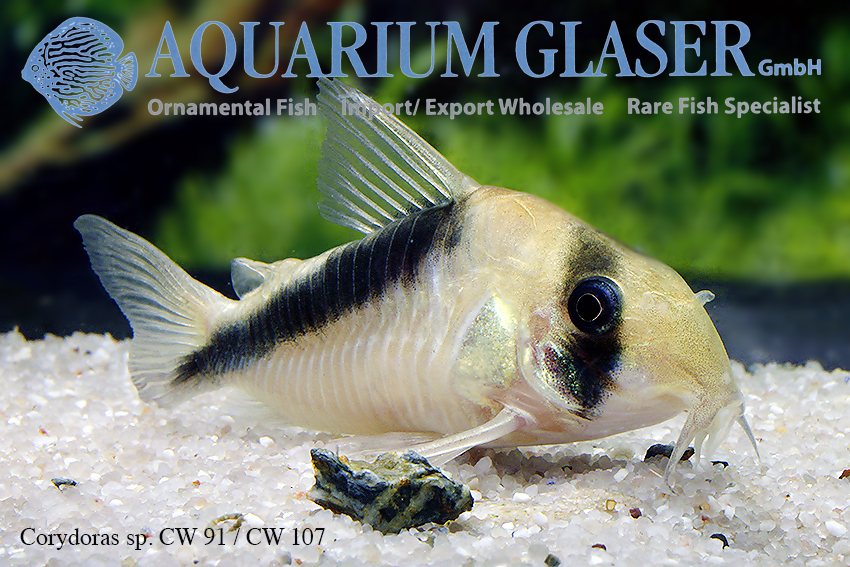
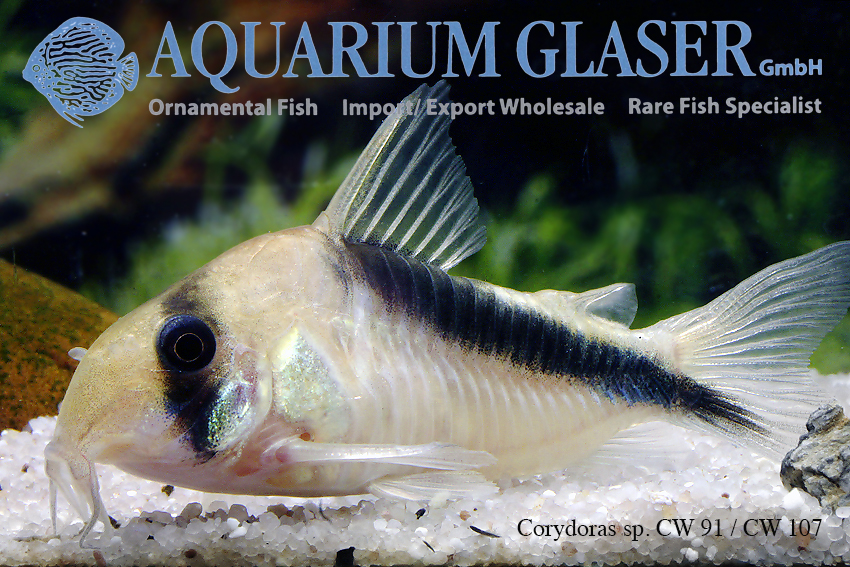
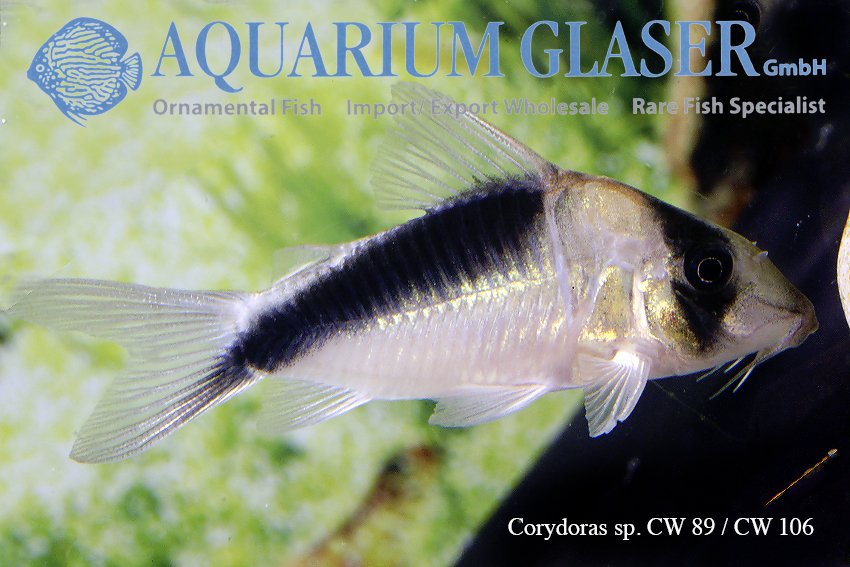
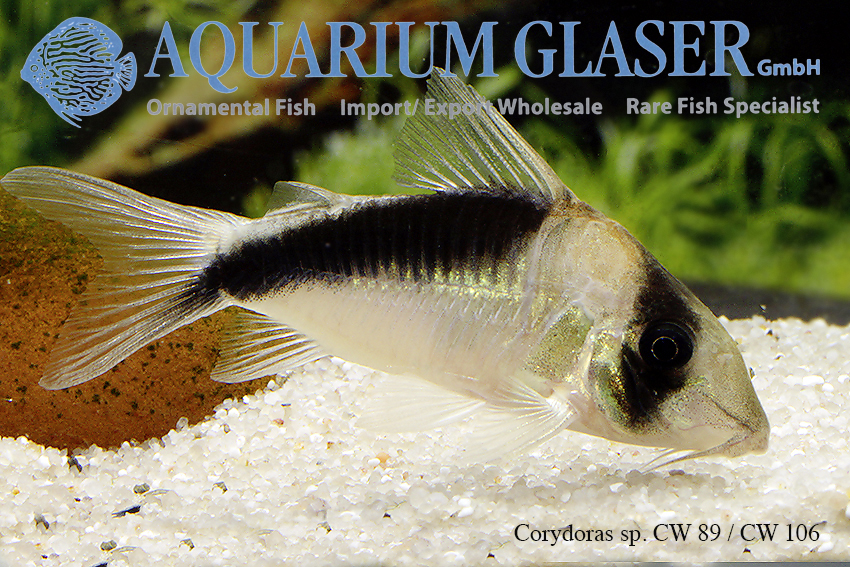
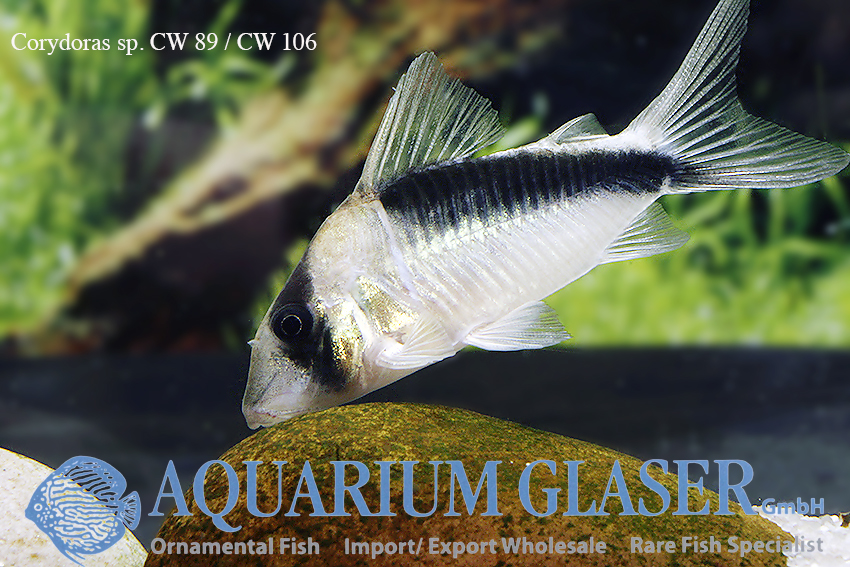
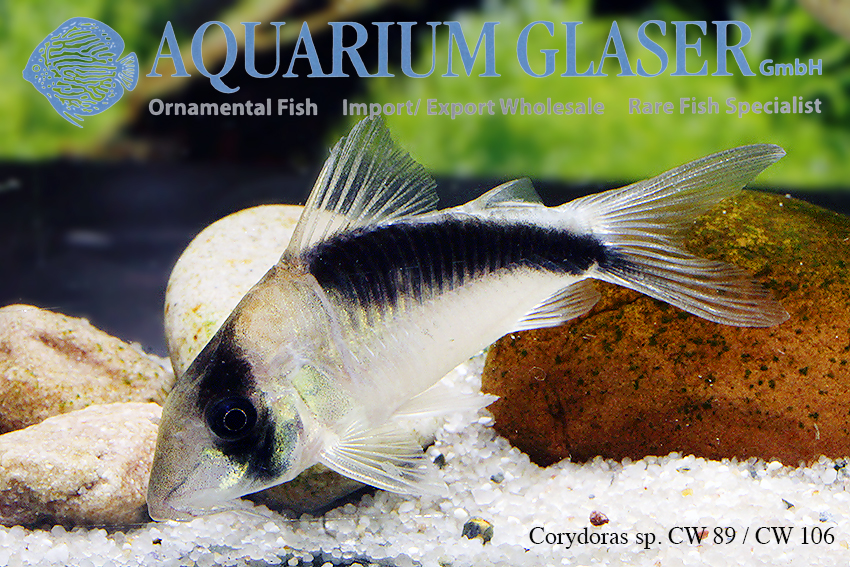
Corydoras CW 89 / CW 91 / CW 106 / CW 107

5. December 2018

From the Rio Vaupes in Colombia we have received a few specimens of two Corydoras species. These are real rarities.

Corydoras sp. CW 107 reminds of Corydoras davidsandsi and we think it is the same species as Corydoras sp. CW 91.

The long snouted counterpart of Corydoras sp. CW 107 is Corydoras sp. CW 106, which in turn should be of the same species as Corydoras sp. CW 89.

In both species the dorsal band running into the lower caudal lobes is very typical.

Unfortunately, these armored catfish are very expensive and will therefore probably not appear in larger numbers in the foreseeable future. But it is also very nice to know that they exist.

For our customers: CW 89/106 has code 236104, CW91/107 code 236114 on our stocklist. Please note that we only supply the wholesale trade. Only a few specimens available!

Text & Photos: Frank Schäfer

Ctenopoma breviventrale

3. December 2018

Why should one keep grey fish? Some may ask themselves this question when looking at the pictures of this bushfish from the Congo. The answer is: the urge to explore! Unfortunately, many animal and plant species die out every day. Also many freshwater fish are strongly threatened by environmental changes – other factors such as catch or diseases play according to all available research results no appreciable role in this drama. The recording of species diversity, biodiversity, is the first and most important step in stopping the extinction of species, because you can only protect what you know.

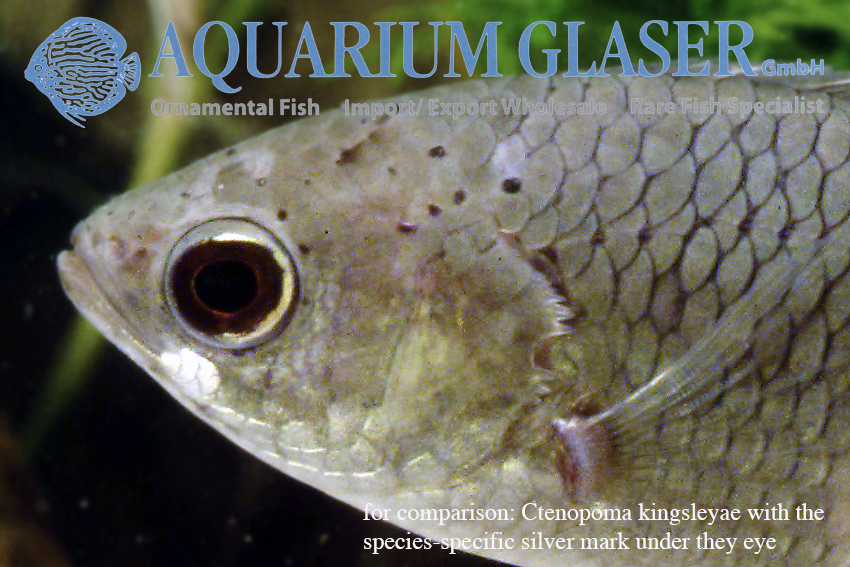
The “Grey Ocellatum”, as the Labyrinth fish lovers call this species, is a good example of knowledge gained through aquaristics. This species was described in 1938 using a single specimen from the Congo under the name Anabas breviventralis. With regard to body proportions, fin ray numbers, scale formula, etc., many bushfish species cannot be reliably distinguished from each other. Therefore, one can do little with in alcohol preserved, old and discolored specimens in this regard. And so Ctenopoma breviventrale (the species name, breviventralis, is an adjective and must be adapted in sex to the genus name if the species is grouped into a new genus; Anabas is masculine, therefore breviventralis, Ctenopoma neutrum, therefore breviventrale) is today synonymous with C. kingsleyae, the Tailspot bushfish, to many scientists who have never seen the living animals. However, C. kingsleyae has never been imported alive from the Congo, and all animals sent from there as C. kingsleyae have always been “Grey Ocellatum”. The “Grey Ocellatum” differs from C. kingsleyae certainly and simply in that only C. kingsleyae has a conspicuously enlarged silver scales below the eye.

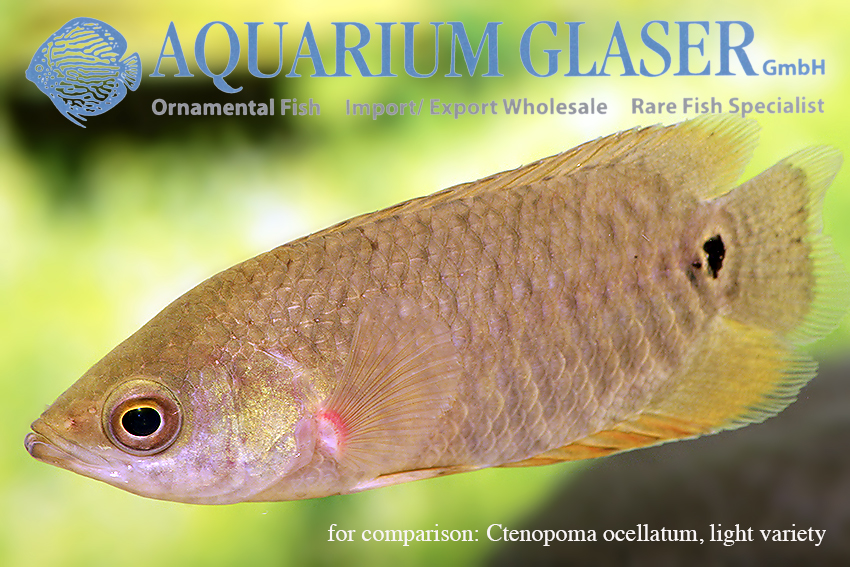
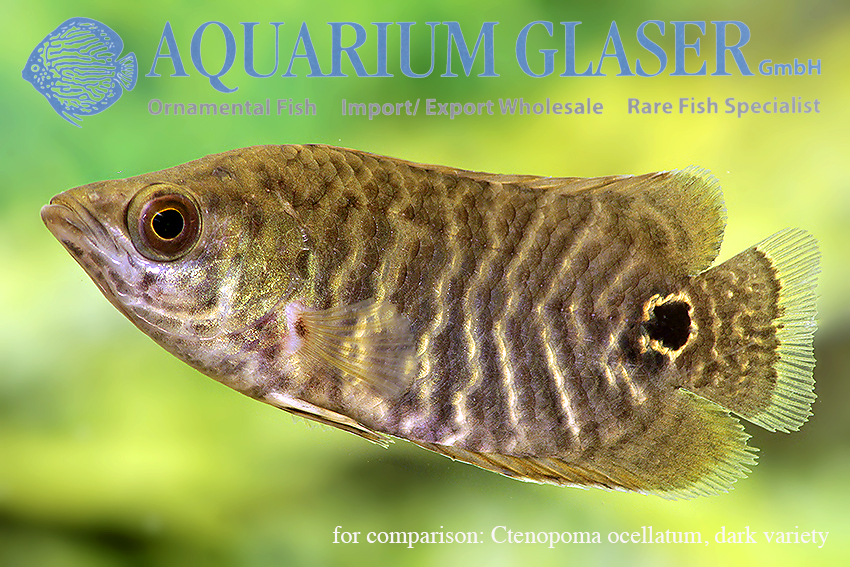
The “Grey Ocellatum” undoubtedly differs from the “real” Ctenopoma ocellatum which occurs together with it by the complete absence of vertical bands. Due to the follow-up study of the type specimen of Anabas breviventralis carried out by the author of these lines himself in the Natural History Museum of Paris, there are currently no serious doubts that the “Grey Ocellatum” from the Congo is actually the species Ctenopoma breviventrale.

The Grey Ocellatum belongs to the smaller bushfish species that do not care for their spawn. The largest specimen we have seen so far was less than 10 cm long.  However, the fish matures earlier, with a length of about 5-6 cm, as you can easily see from the spiny field behind the eye, which the males develop when they reach sexual maturity. C. breviventrale is peaceful opposite conspecifics and fish, that do not serve as feed, plants are not bothered and the chemical water-composition is irrelevant for the care. The water temperature should be 24-28°C.

For our customers: the animals have code 115553 on our stocklist. Please note that we only supply wholesalers. Only a few specimens available!

Text & photos: Frank Schäfer

Neolissochilus stracheyi – Blue Tor

30. November 2018

Once more we have this splendid large barb (maximum size: approx. 60 cm) from Burma in stock. We have only a limited number of specimens! If one photographs these fishes and sets the flashlight directly from the front the fish looks rather drab silvery. But in the real life, when the fish is swimming, the extremely large, diamond-shaped blue scales on the back shine brightly and the orange-red stripe on the side looks really gorgeous. It is due to these wonderful colours that the “Blue Tor” is already a much sought-for fish for koi carp ponds in tropical Asia (at temperatures between 22 and 24°C). These colours, which are always visible for the human eye under daylight conditions, can be shown in photos only in slightly underexposed pictures and grazing light.

Neolissochilus inhabit rivers in primary forests of subtropical regions of northern India, Burma, Thailand and most probably Cambodia. The water in their habitats is always very clean and it is known that the fish disappear when human activities (clearning, water pollution) are increasing. Due to the geografical distribution the species is adapted to water temperatures between 16 and 26°C.

For our customers: the fish have code 438363 on our stocklist. Please note that we exclusively supply the wholesale trade.

Lexicon: Neolissochilus: ancient Greek, means “new Lissochilus”; Lissochilus is anther genus of barb. stracheyi: dedication name. Blue Tor: the common name refers to the large blue scales on the back and the overall similarity of the fish to the members of the carp genus Tor.

Text & photos: Frank Schäfer

Betta splendens “Crown Tail Thai Flag”

28. November 2018

Three-coloured fighting fish have been around for many decades, they are usually called “Butterfly Bettas”. At the moment we have some specimens of a not only beautiful, but also symbolic Betta breed in stock, which are dyed in the national colours of Thailand!

According to Wikipedia, the current flag of Thailand, a tricolour with five stripes, was introduced in 1917 by King Rama VI. The middle stripe is twice as wide as the outer stripes. Red stands for the nation, white for the religion and blue for the monarchy.

Thailand is the original home of the Betta breed. So it is only right that the first “National Betta” shows the Thai colours, don’t you think?

For our customers: the animals have code 390613 on our stocklist. Please note that we only supply wholesalers.

Text & photos: Frank Schäfer

Corydoras sp. CW 16 “teniente”

27. November 2018

Recently we received a shipment of highly interesting fish from the entry of Madre de Dios in the border area between Peru and Bolivia. Among them were beautiful corydoras catfish from the closer relationship of Corydoras melanotaenia. However, it is certainly a scientifically undescribed species, which was documented by Ian Fuller with the code number CW 16 (CW stands for Corydoras World). The fish were sent as Corydoras “teniente”.

For our customers: the animals have code 247804 on our stocklist. Please note that we only supply the wholesale trade. Only very few animals are available!

Text & Photos: Frank Schäfer

Aplocheilichthys luxophthalmus (= Poropanchax luxophthalmus)

23. November 2018

Currently we were able to import once more one of the most beautiful lampeyes from Nigeria: Aplocheilichthys luxophthalmus. Those who follow the splitting of the genus Aplocheilichthys place the maximum 3 cm long fish in the genus Poropanchax.

A. luxophthalmus is a schooling fish that should never be kept in groups with less than ten specimens. They are absolutely peaceful against all other fish. Males and females can be easily told apart by the shape of the anal fin (see photos). They spawn in fine plants, the eggs need 10 – 14 days to hatch.
Experienced aquarists prefer to keep this species in medium hard to hard water for the fish are much hardier under these conditions. Often a slight addition of salt is recommended (a teaspoon full of salt on 10 litres of water). This is not necessary, but has the advantage that artemia nauplii, which form an important part of the diet of these tiny fish in the aquarium, stay longer alive.

The brilliant shining colours of the fish are best shown in dark aquaria. Alder cones make the water brown (like a dark tea) and also have a nice side affect, for they are strengthening the fish’s immune system. The water temperature should lie between 22 and 28°C.

For our customers: the fish have code 301402 on our stocklist. Please note that we exclusively supply the wholesale market.

Text & photos: Frank Schäfer

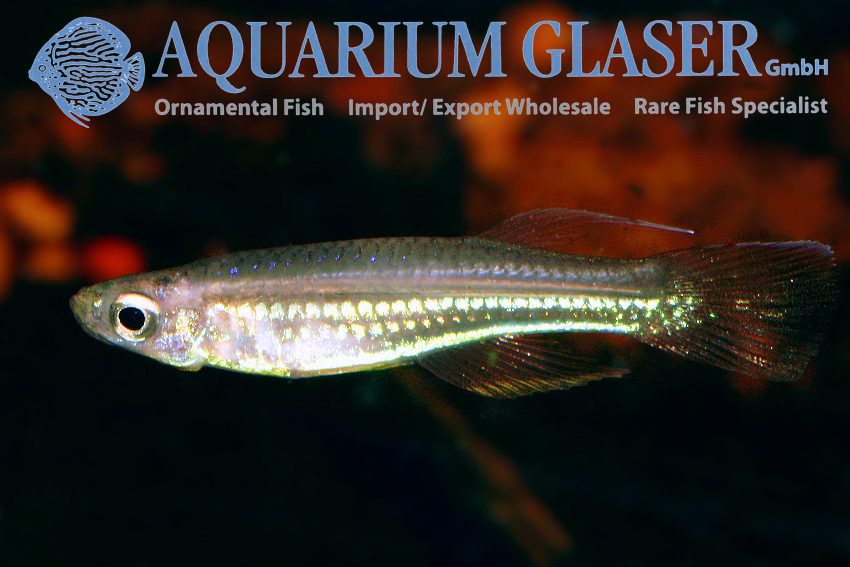
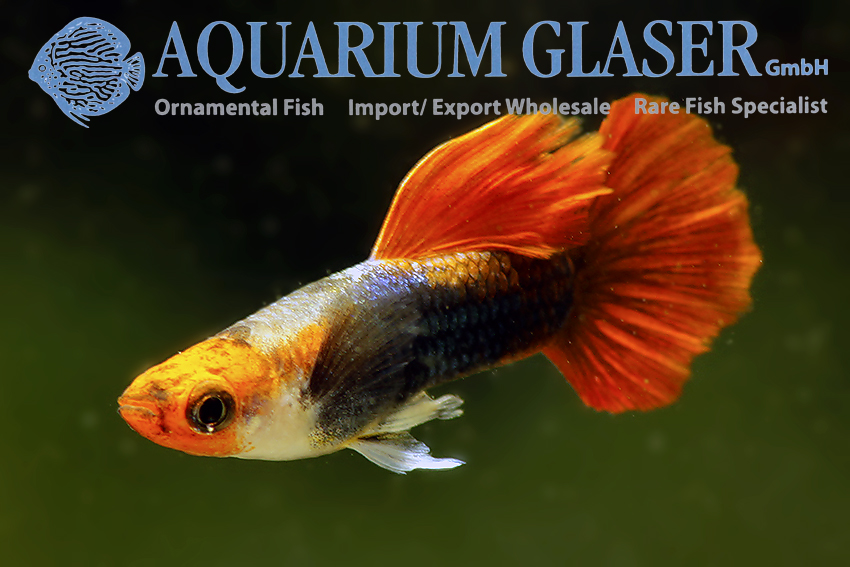
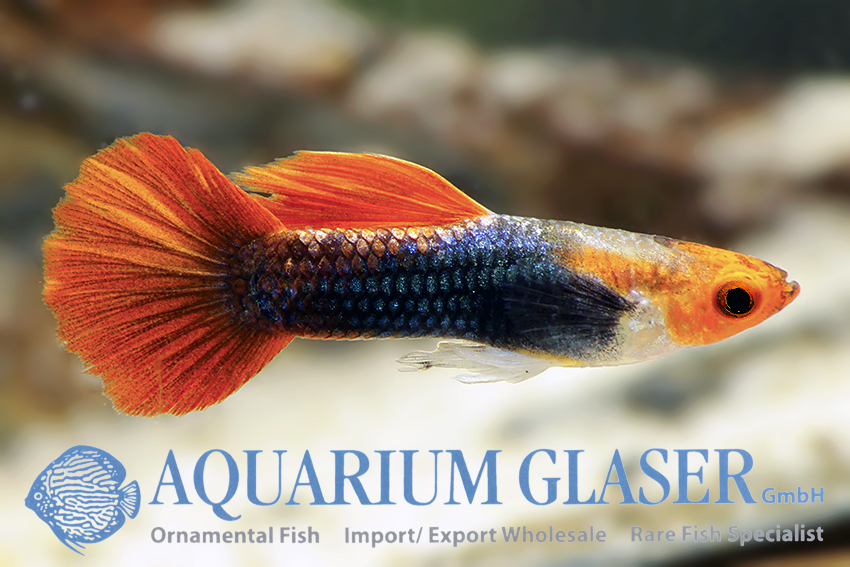
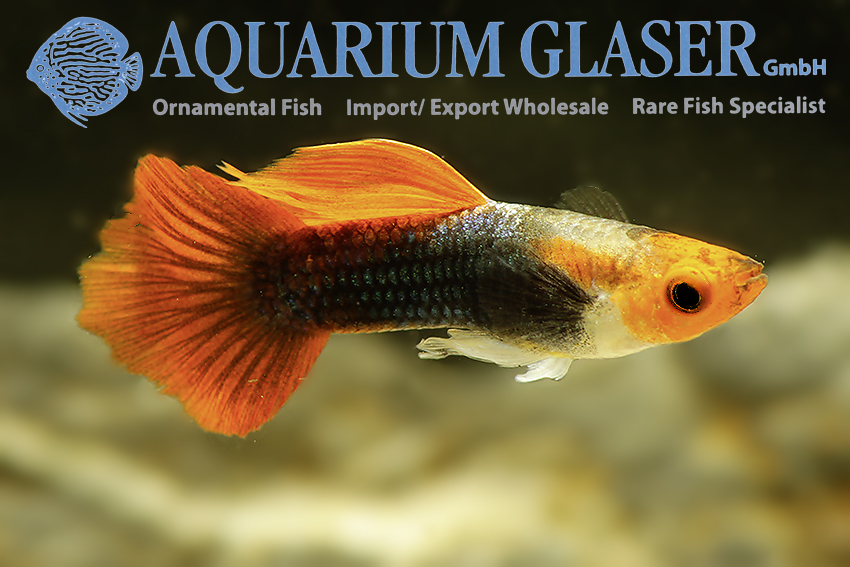
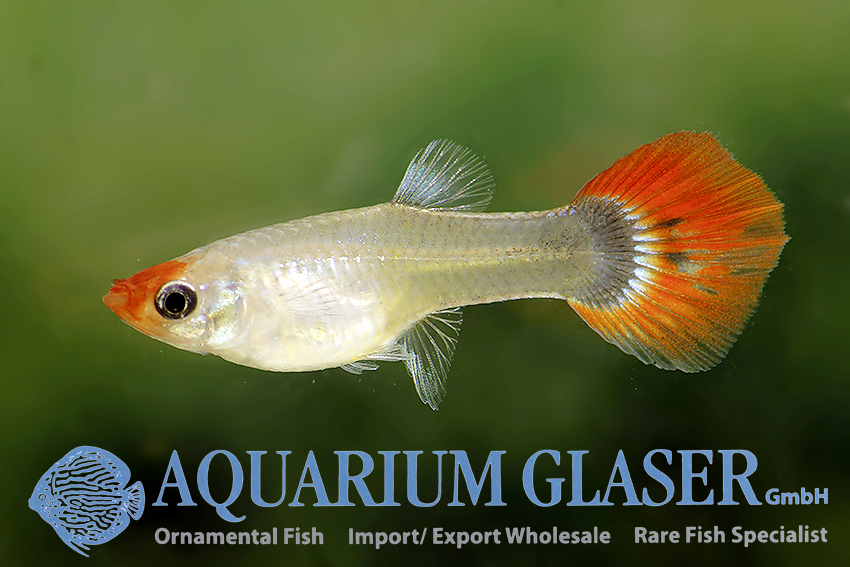
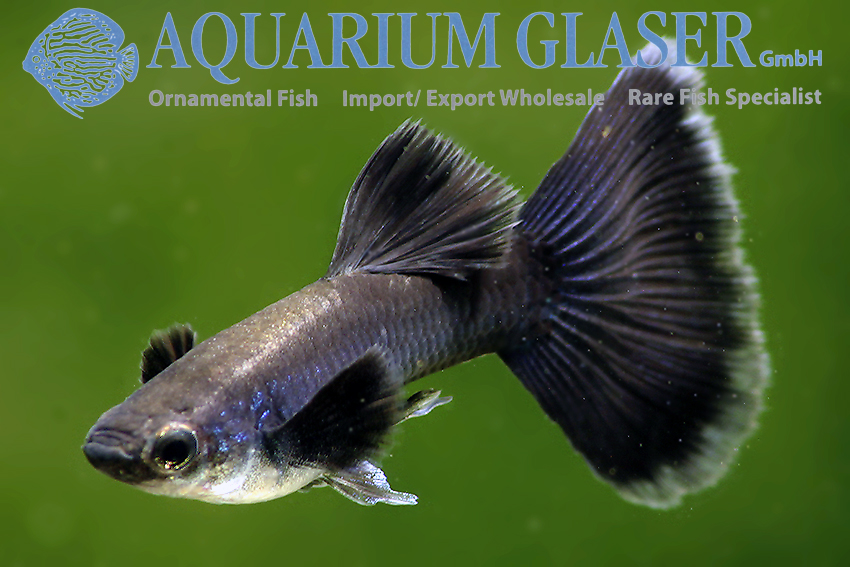
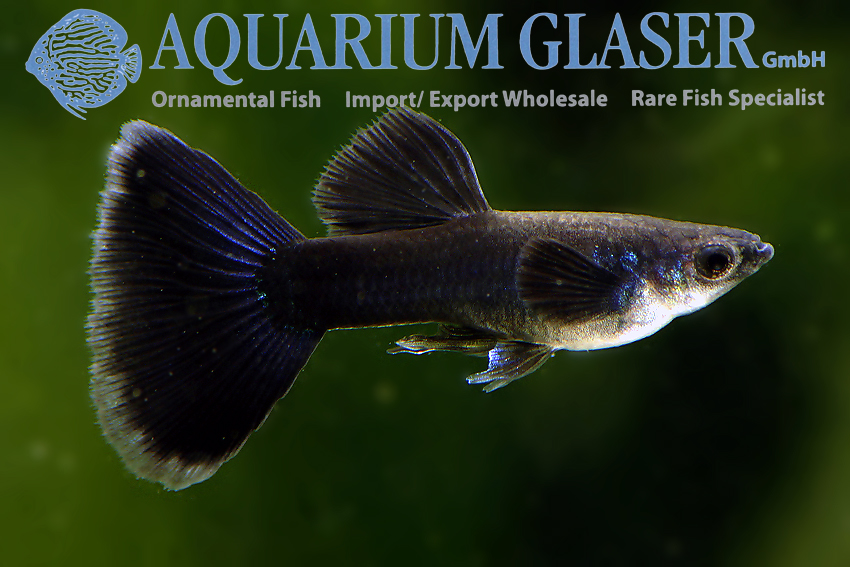
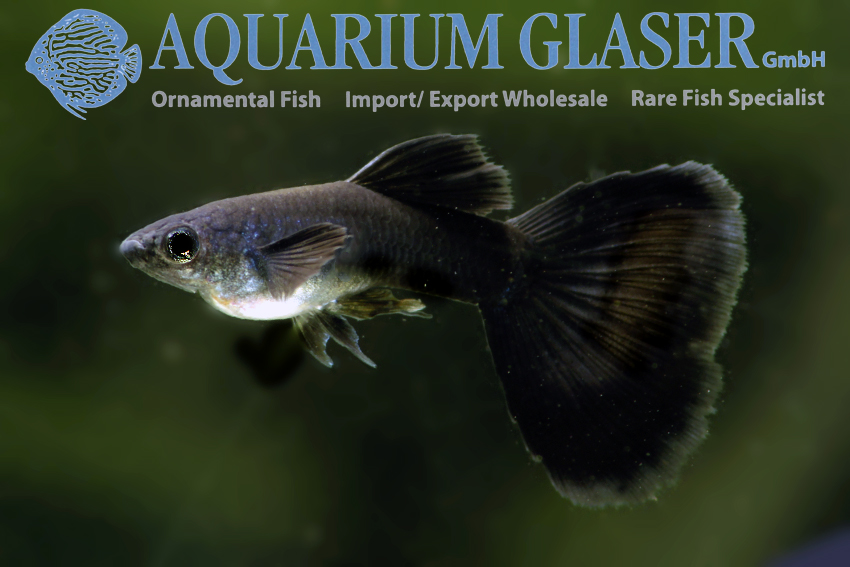
New highly selected guppys: Koi Red Tuxedo Red Nose and Full Black

21. November 2018

In this case “new” does not mean that there were no colour varieties like this before, but that we have a new breeder, who gives us these and other high end breeding guppies in pairs and colour hits, so that we can pass on really fantastic animals. Of course there is also a certain variance within the high end breeding guppies.

For our customers: Koi Red Tuxedo Red Nose has code 419088, Full Black 419089 on our stocklist. Please note that we only supply wholesalers.

Text & photos: Frank Schäfer

Metynnis maculatus

19. November 2018

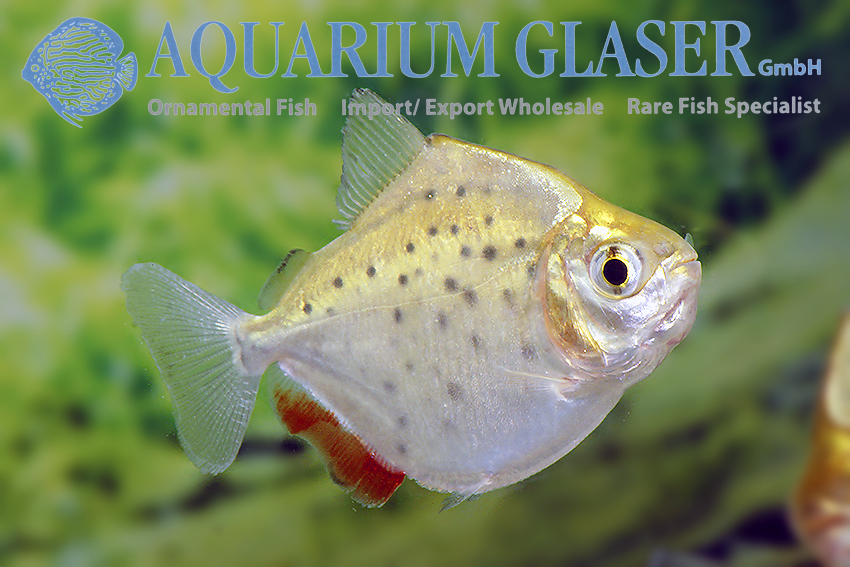
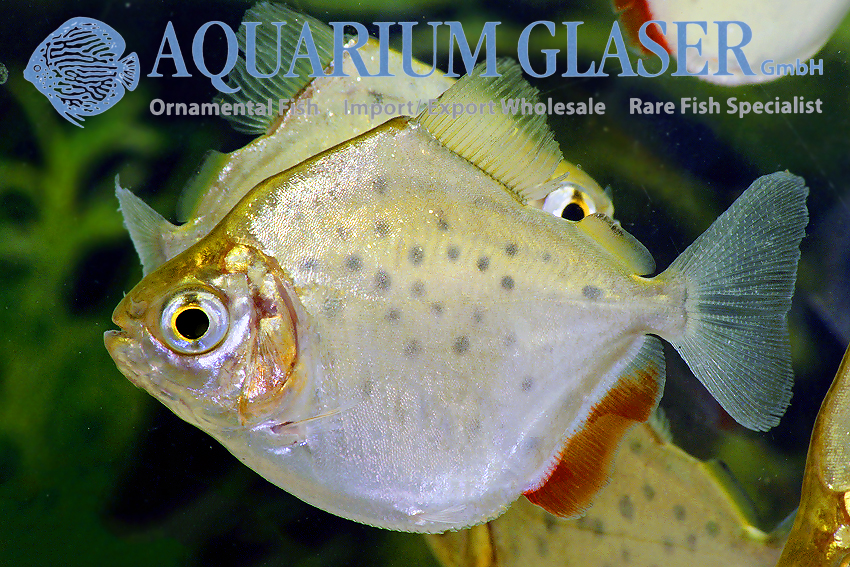
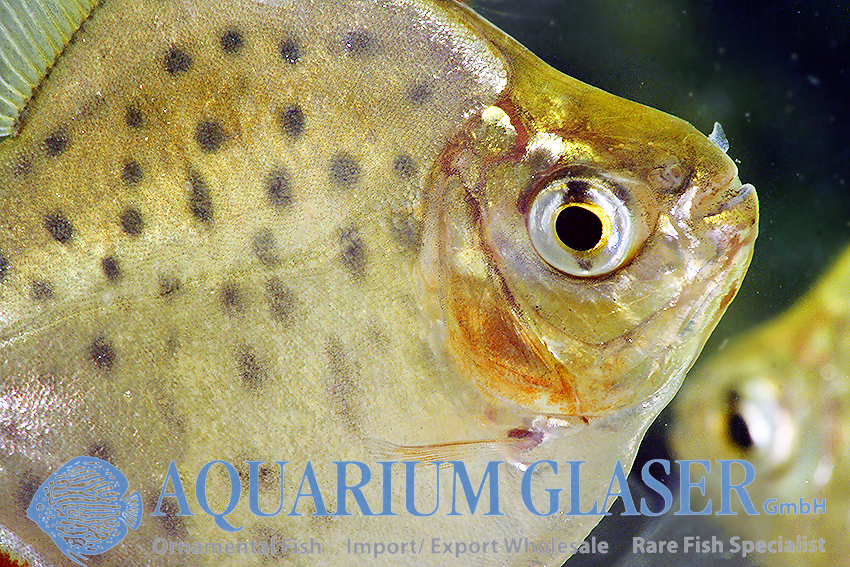
There are two rather similar species of the silver dollar genus Metynnis with a pattern of black spots. They differ mainly by the (externally not visible) number of the gill rakes and the number of scales along the long side of the body, but also somewhat in relation to the body shape. We currently call the somewhat more oval animals from Brazil M. lippincottianus (see https://www.aquariumglaser.de/fischarchiv/metynnis_cf_lippincottianus_en/) and the more disc-shaped ones from the Orinoco entry M. maculatus; but it could also turn out in a scientific investigation that it is exactly the other way around.

Recently we received this very attractive M. maculatus from Colombia again. According to literature, the species becomes 18-20 cm long. Even if the herbivorous silver dollars are often characterized as “peaceful” against the “bloodthirsty” Piranhas: they are tetras and they can also quarrel. In the case of Metynnis, the animals often tatter the tail fin in the course of the ranking-fights. However, this is harmless and heals quickly again.

For our customers: the animals have code 268002 on our stocklist. Please note that we only supply wholesalers.

Text & photos: Frank Schäfer

Neritina juttingae

16. November 2018

The Neritina snails are enjoying growing popularity among aquarists. There are several reasons for this. The most important one is certainly that they look attractive. In addition, Neritina snails do not reproduce in freshwater aquariums, as the larvae only develop in the sea. The third important reason for the popularity is that Neritina snails also grate very hard, solid algae, which other freshwater snails or algae-eating fish usually avoid.

The biggest disadvantage of many Neritina snails is that they often crawl out of the water (because they live in nature in the tidal area of the sea, similar to our Common periwinkle all over the North Sea and Atlantic). The aquarium must therefore be well covered.

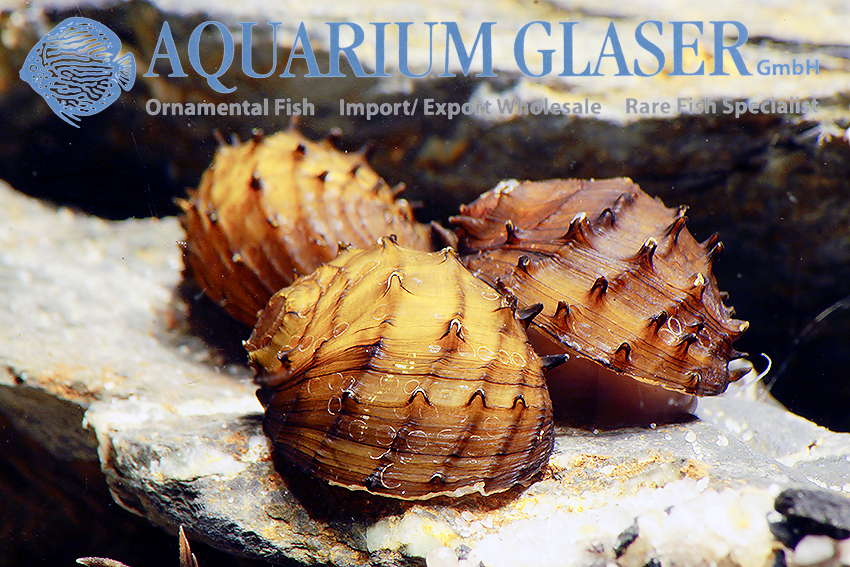
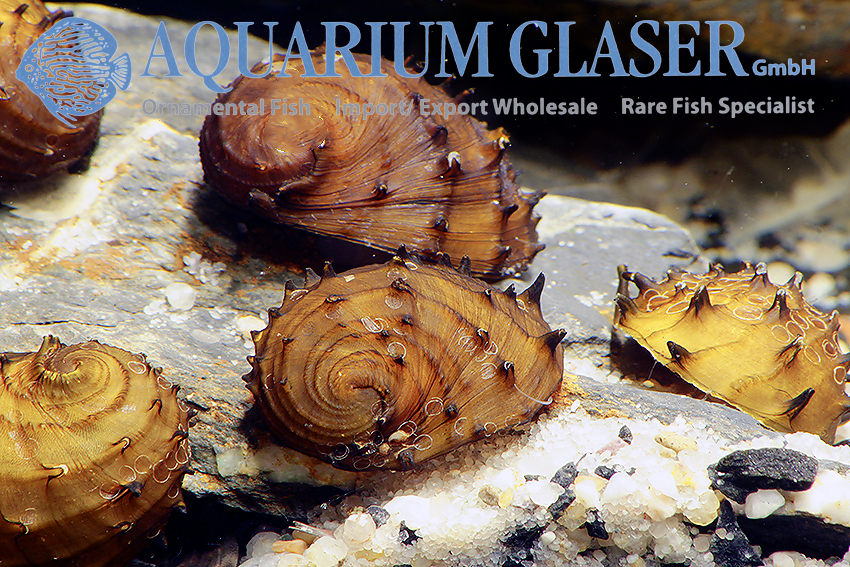
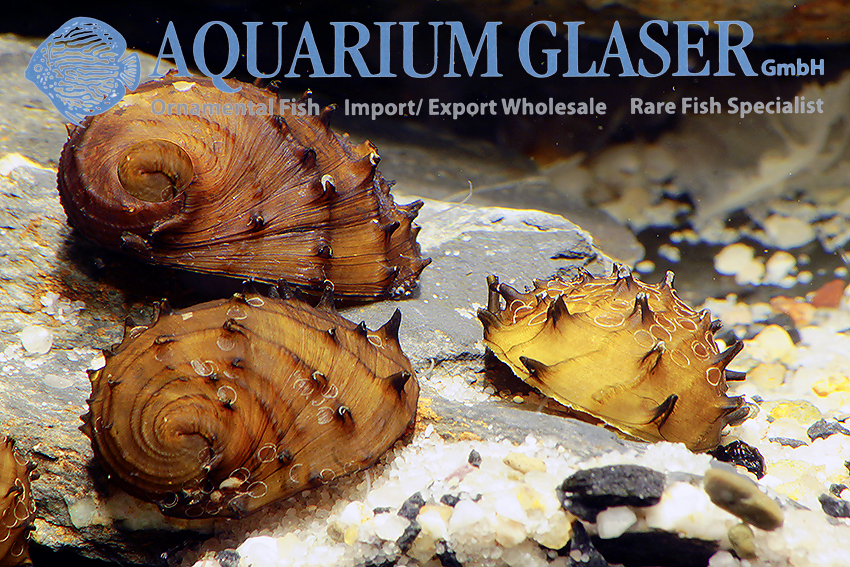
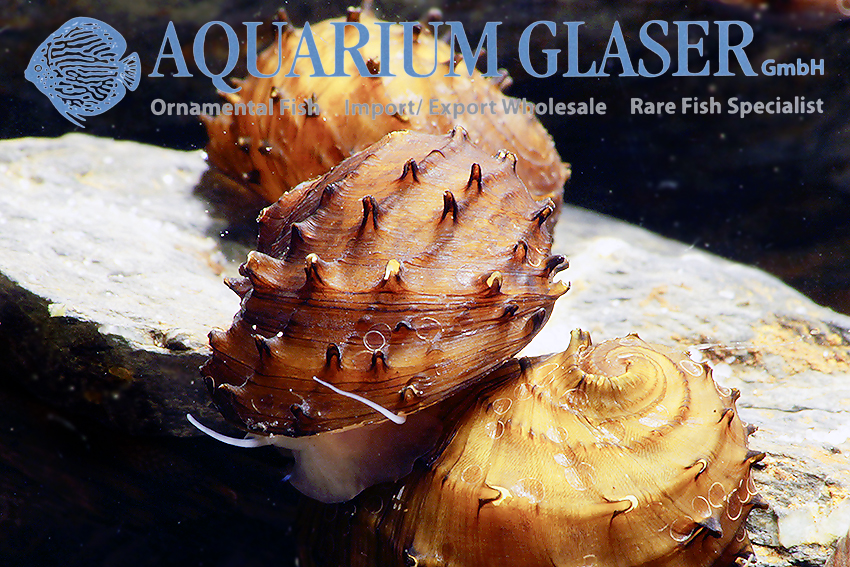
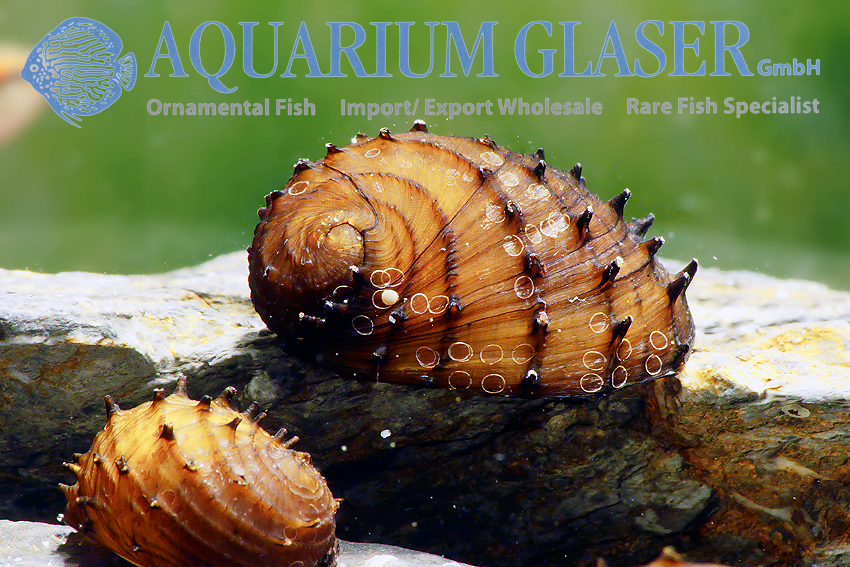
Neritina juttingae from Borneo does not have this disadvantage; she rarely leaves the water. The unmistakable species has numerous horns on its shell; it grows to 1.5-2 cm in size. In the aquarium, it has proved to feed this snail species dead leaves (beech, oak, walnut, cherry, cattappa tree), as it particularly likes this as food.

For our customers: the animals have code 485552 on our stocklist. Please note that we only supply wholesalers.

Text & photos: Frank Schäfer

Pseudosphromenus dayi

14. November 2018

The red spike-tail is a classic among the aquarium fish and is and is not missing in any manual of ornamental fish science before the Second World War. But its origin was always mysterious, the original description from the year 1909 was based on aquarium imports. Today it has become quiet around him and his close relatives from Sri Lanka, Malpulutta kretseri, since the initially often shy animals in the pet shop are obviously difficult to present attractively. That’s why red spike-tails are currently almost completely extinct in the hobby.

We are therefore very pleased to be able to offer this pretty, small (4-5 cm) and absolutely peaceful labyrinth fish, which likes to build its foam nest in caves or under plant leaves, from Kerala in South India as a wild catch.

For our customers: the animals have code 446602 on our stocklist. Please note that we only supply wholesalers.

Haludaria fasciata, the melon barb (formerly: Barbus fasciatus)

12. November 2018

In the south of India rises the ancient high plateau of the Deccan, which was already formed when India was still part of Africa. From here numerous small rivers flow directly into the Indian Ocean and in many of these rivers own colour variations, subspecies or species of freshwater fish have formed due to the geographical isolation. Barbs and loaches in particular can be found here in a great variety of forms, which, by the way, has not yet been scientifically researched.

A typical fish of this region is the melon barb, Haludaria (formerly Barbus or Puntius) fasciata. The above-mentioned applies to them fully, there are many colour strokes of them in the different rivers. The most attractive varieties – from an aquaristic point of view – are red, but they are also yellow and orange varieties.

We have often quite wonderful wild-caught specimens in stock, which have a fantastically deep red as basic color. The males seem to glow from the inside. The melon barb becomes about 8 cm long and is completely peaceful. As a barb it nibbles on delicate plant parts if it is not sufficiently supplied with plant food. The water-composition is secondary, the temperature should amount to around 26°C. A “hibernation” of 6-8 weeks at temperatures between 18 and 22°C has a very positive effect on the fish, but is not absolutely necessary.

For our customers: the animals have code 369523 on our stocklist. Please note that we only supply the wholesale trade.

Text & photos: Frank Schäfer

Betta splendens „Emerald Candy“

9. November 2018

This is the latest Betta creation from Southeast Asian breeders. A multicoloured short fin, where matte scales and emerald green shining body and fin parts contrast wonderfully with each other.

For the first time we have received a hand-picked selection of this new breed from Betta splendens „Emerald Candy“.

For our customers: the fish have code 390077 on our stocklist. Please note that we exclusively supply the wholesale trade.

Text % photos: Frank Schäfer

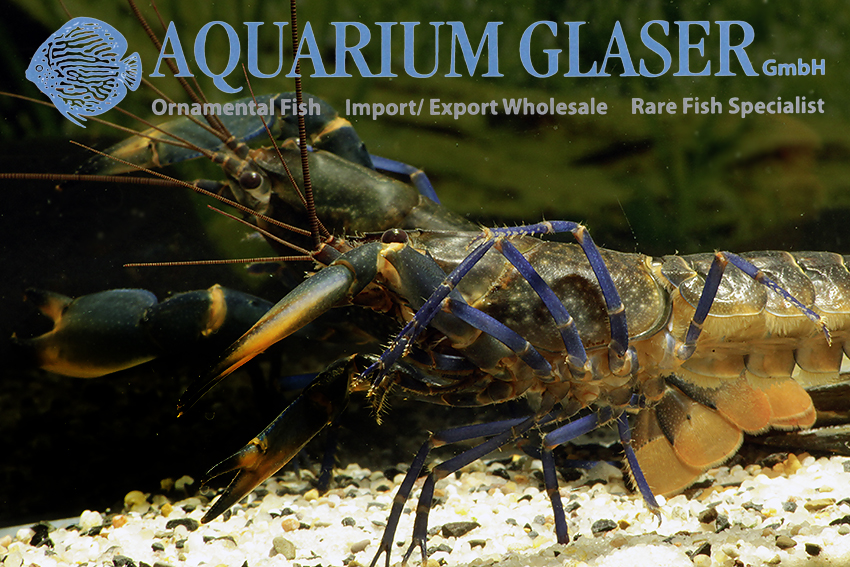
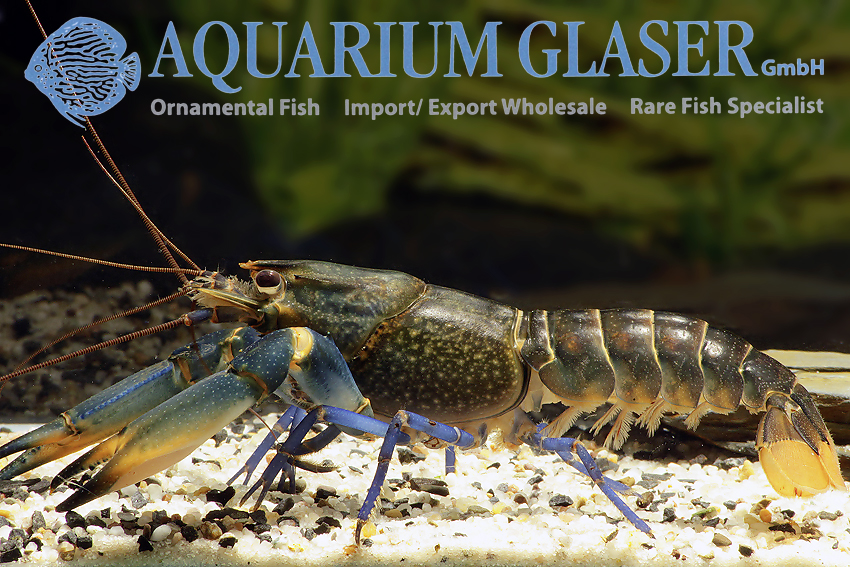
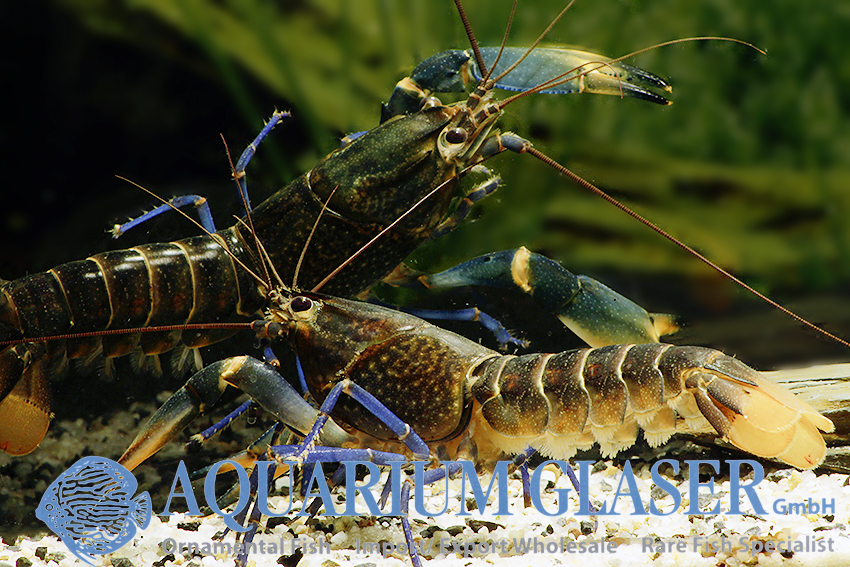
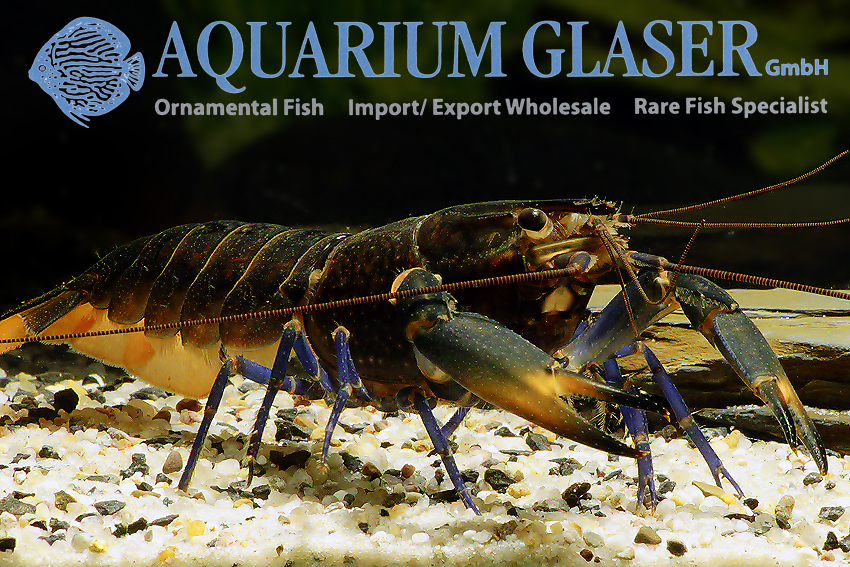
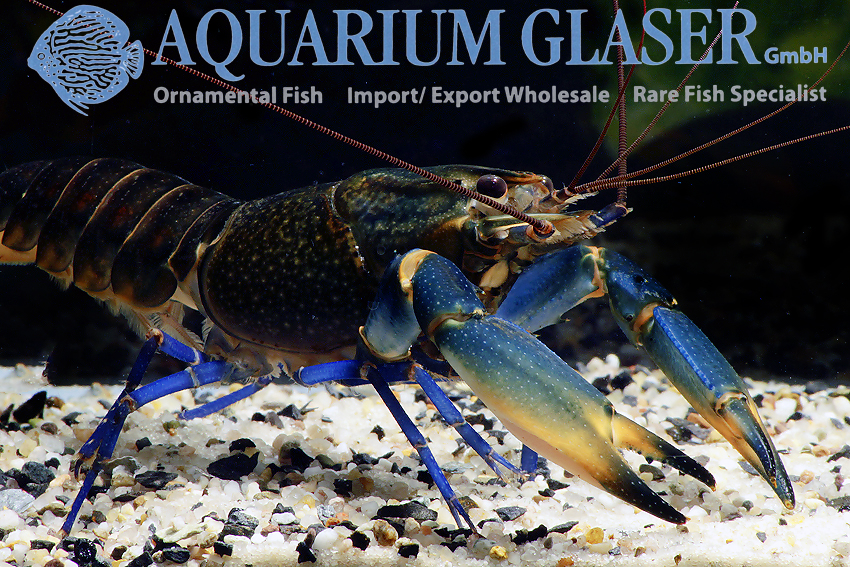
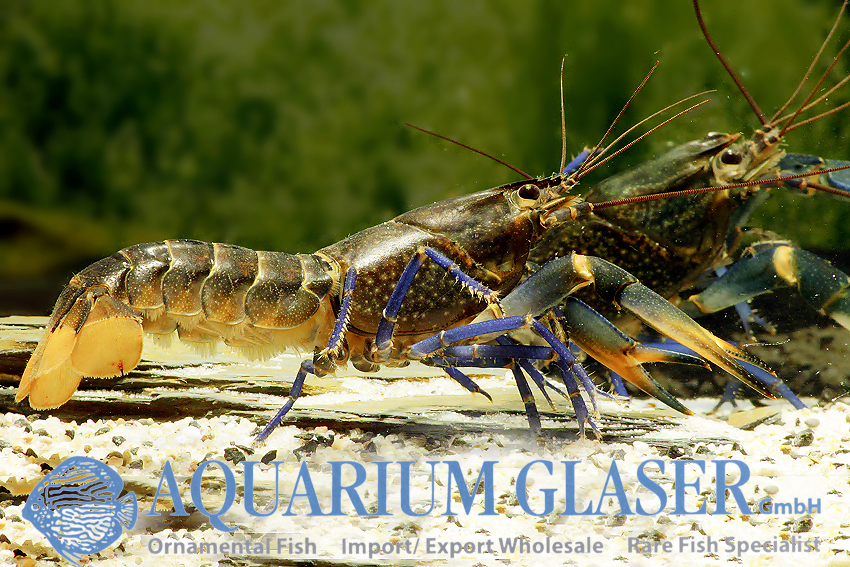
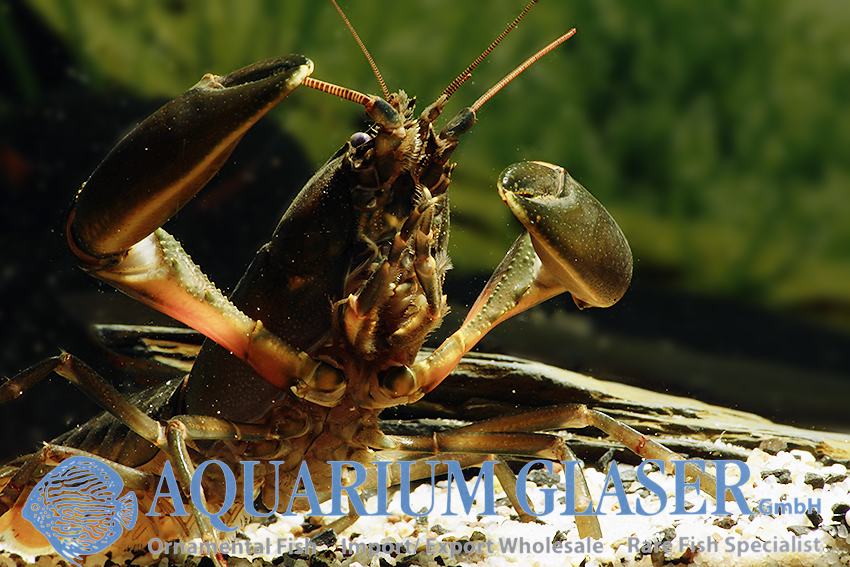
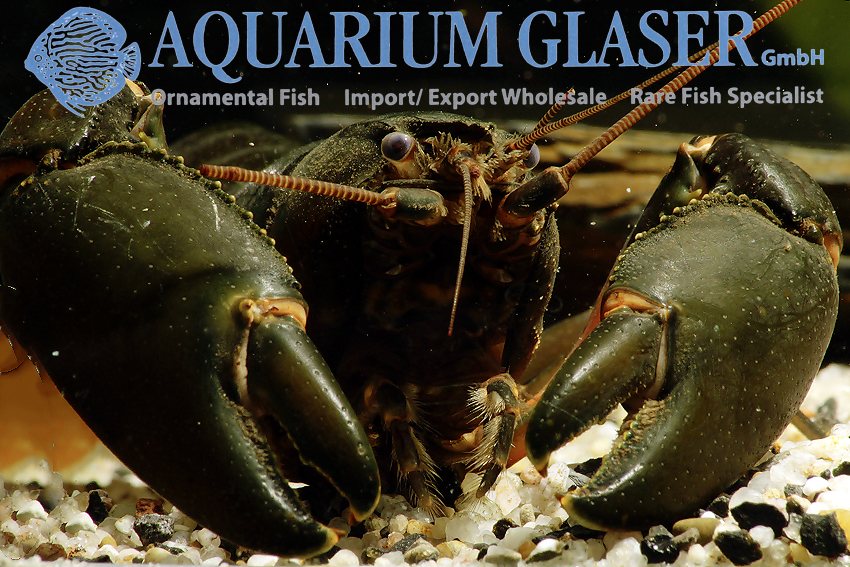
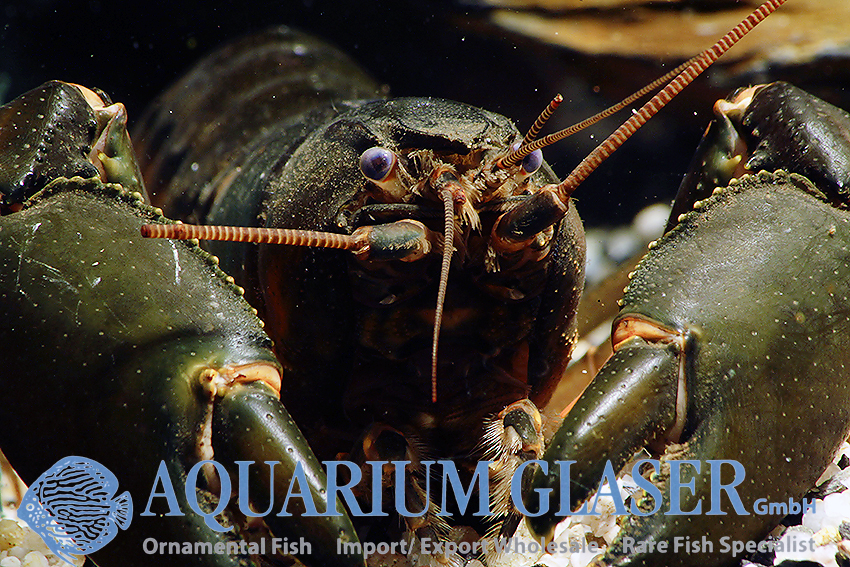
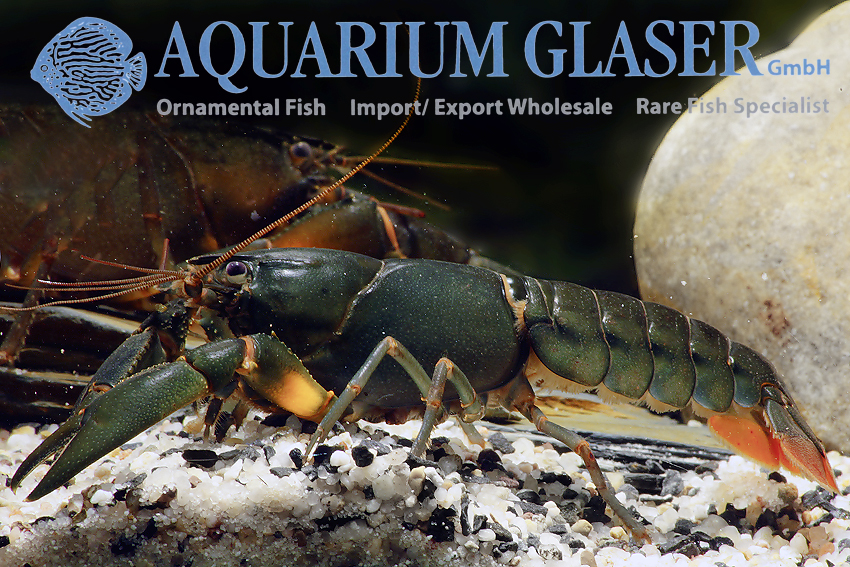
Cherax sp. Blue Moon Black Body / Black Scorpion Blue Leg

7. November 2018

The variety of colours of the crayfish on New Guinea is really amazing. In the trade it is often problematic to assign the import animals exactly to any species, because the colouring is also very variable within the species and only rarely all specimens of an import look the same.

Be that as it may: the form we were able to import now has a black-brown shell and was therefore initially referred to by us as Cherax sp. “Black Scorpion”. But Chris Lukhaup identified it as a member of the Cherax sp. “Blue Moon” species complex. The legs are blue, the tail fan has a wide orange hem, the scissor tips are not orange, which is an important characteristic.

These crayfish become 12-15 cm long and, like most New Guinea crayfish, are quite peaceful contemporaries. An essential part of the food of these animals is of plant origin. Therefore, it depends very much on the feeding, whether they more or also less destroying the aquarium´plants. To be on the safe side, precious plants should not be kept in a Cherax aquarium.

For our customers: the animals have code 481475 on our stocklist. Please note that we only supply wholesalers.

Text & photos: Frank Schäfer

Badis badis

5. November 2018

The blue perch is a classic among aquarium fish and has been in the hobby for over 100 years. The maximum length of the peaceful animal is 5 cm. Males in courtship display are almost black with sometimes blue shimmering fins, in neutral colouring the animals are reddish brown with vertical black bandages (which can also vanish completely); any colouring between these two extremes is possible depending on the mood, which is why this species is also called chameleon fish.

Badis badis are undemanding as far as water values are concerned. They can be maintained well at room temperature, i.e. without additional heating. The temperature may lie in the range between 18 and 30°C, the fish are very adaptable in this respect. However, they live much longer at lower and fluctuating temperatures.

Plants are not damaged by blue perch and other fish are usually ignored. Only very small ons could be considered as food.

All species of Badis avoid dry food, but are easy to feed with frozen or live food.

For our customers: the animals have code 368003 on our stocklist. Please note that we only supply the wholesale trade.

Text & photos: Frank Schäfer

Corydoras cf. urucu

2. November 2018

Once again we were able to import a new catfish, whose identity raises many questions. The fish were offered to us as Corydoras evelynae, a species that was described by only one specimen with a very inaccurate location (“upper Solimoes”, which includes an area larger than Germany). Our new imports were collected in the surroundings of Labrina in the Rio Mucuin in the central entry of the Rio Purus. According to our exporters there are very similar fish also in Rio Urucu and Rio Jutai, both tributaries of the Solimoes, but very far away from Rio Mucuim.

If one disregards the place of discovery, our new imports are very similar to Corydoras urucu, which was described in 2009 from the river of the same name. However, C. urucu is said to be a dwarf species that should not grow larger than 2-3 cm, while our largest animals are well twice as big. Obviously, this is a species complex that needs to be explored in more detail.

Our fish are very variable in terms of pattern. In fact, some animals are coloured similar to C. evelynae and have a back bandage dissolved to dots, while the majority of animals remind of Corydoras arcuatus in colour. However, the body shape is quite different from that of C. arcuatus and is more reminiscent of the relatives of C. loretoensis.

For our customers: the animals have code 248105 on our stocklist. Please note that we only supply wholesalers.

Text & photos: Frank Schäfer

Pachypanchax sakaramyi – one of the rarest fish in the world

2. November 2018

Although the species Pachypanchax sakaramyi – it originates from the Sakaramy River on Madagascar – was described as early as 1928, it could not be found for decades afterwards and even was referred to the realm of legends. It was not until the 1990s that they were found again. From these animals (5 pairs), which Paul Loiselle was able to collect in October 1994, all animals living today in aquaria originate.

Unfortunately, the population in nature has developed very negatively. At present, the species is considered “critically endangered”. After that only “extinct” remains! One of the last populations was destroyed by drinking water withdrawals for private residences and a monastery, now there is only one confirmed occurrence of the species in a river section between Ambohitra and the village Sakaramy. Originally this beautiful killi probably occured along a mountain range (the Ambohitra mountains). There it is said to have been exterminated by introduced Guppies and Gambuses, which eat the young fish of Pachypanchax; the incessant deforestation gave the remaining populations the rest.

Fortunately, P. sakaramyi can be traded freely, so you can contribute to the conservation of the species without the hassle of bureaucracy by buying these beautiful fish. The requirements of the species are easy to meet: medium-hard water, pH around 7.5 and temperatures between 20 and 25°C are acceptable. They are robust killis, which can also be well maintained in community tanks, but not with very small and delicate fish.

For our customers: the animals have code 342452 on our stocklist. Please note that we only supply the wholesale trade. Only available in small quantities!

Text & photos: Frank Schäfer

Corydoras sp CW 98

31. October 2018

This beautiful Corydoras belongs to a scientifically undescribed species. It originates from the upper Rio Negro in Brazil. Because of the bright orange neck spot it is usually misidentified as Corydoras burgessi, which also comes from this region, especially as C. burgessi has a very variable pattern and there are also spotted colour variants of this species. Overall, CW 98 reminds us more of C. brevirostris from the Orinoco drainage.

For our customers: the animals have code 225043 on our stocklist. Please note that we only supply the wholesale trade.

Text & photos: Frank Schäfer

Parosphromenus linkei

29. October 2018

The magnificent licorice guramis (Parosphromenus) have experienced a species explosion in recent years. Until 1979 only three species were known, today there are 20 scientifically described species and some more undescribed ones are already known in the hobby. Unfortunately, many are threatened with extinction because they live in peat swamps and these habitats are drained extensively in order to cultivate oil palms there. So there is a great risk that the recently discovered biodiversity will disappear again. The collecting for aquarium keeping has no influence whatsoever on the wild stocks.

Parosphromenus linkei comes from the Indonesian part of Borneo, from the province of Kalimantan Tengah. It belongs to the quite well recognizable species. Many specimens have one or more shiny green spots on their flanks, but there are also animals that lack this characteristic. The species becomes approximately 2-3 cm long. In the aquarium, fine live-food in form of Artemia-Nauplii, soft and acidic water, dim light and dead laves are the prerequisite for a successful care and breeding. There are, like all licorice guramis, cave-breeders, who can reach an astonishingly high age in the aquarium for so small fish. Already over 10 years old specimens became known, that still reproduced. In the nature, however, they usually only become one year old and do not experience a second brood-period.

For our customers: the animals have code 441077 on our stocklist. Please note that we only supply wholesalers.

Text & photos: Frank Schäfer

Sphaerichthys osphromenoides

12. October 2018

From Indonesia we received beautiful, very large and strong chocolate Guramis (Sphaerichthys osphromenoides). Unfortunately the exact place of origin is not known, but we suspect that they come from the Indonesian part of Central Borneo, Kalimantan. Particularly noticeable in the animals is their high red portion in the coloration, which is however somewhat different with each specimen.

For our customers: the animals have code 455804 on our stocklist. Please note that we only supply wholesalers.

Text & photos: Frank Schäfer

Priapella compressa

12. October 2018

The Blue-eyes from Mexico are closely related to the Knife-bellies (Alfaro). Like these, the males of Priapella have a massive keel along the underside of the tail. All Priapella attract attention by their blue, shining eyes. They are powerful swimmers who appreciate a good current. In nature they live close to the surface in clear flowing waters. That is why they have high demands on water hygiene. The aquarium for Priapella should always contain very clear, clean and oxygen-rich water. The temperature can be between 22 and 28°C. Priapella are schooling fish and should best be cared for in groups of 10 or more. When breeding, approach food (Drosophila) is almost essential. 

All in all, blue-eyes are beautiful but demanding fish, which are therefore rarely bred and offered. At the moment we have Priapella compressa in beautiful, adult specimens in stock. They are German bred ones.

For our customers: the animals have code 444493 on our stocklist. Please note that we only supply the wholesale trade.

Text & photos: Frank Schäfer

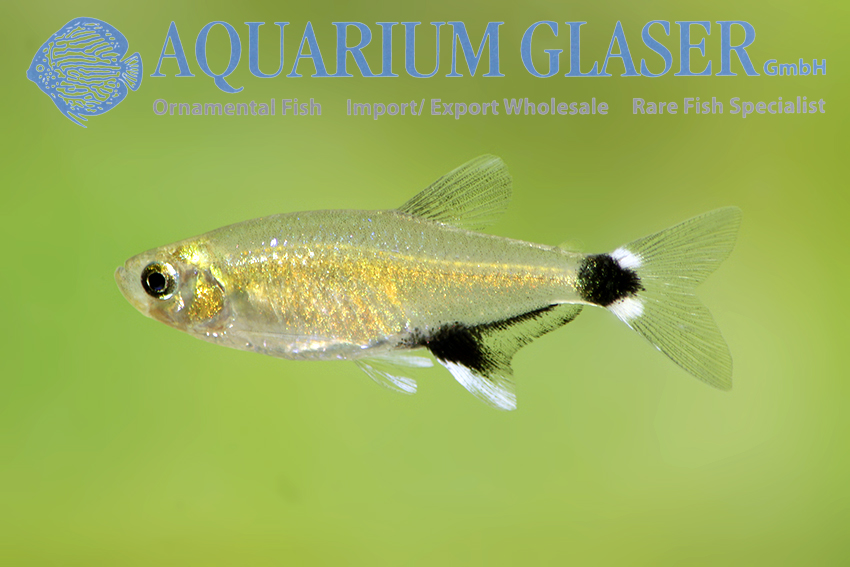
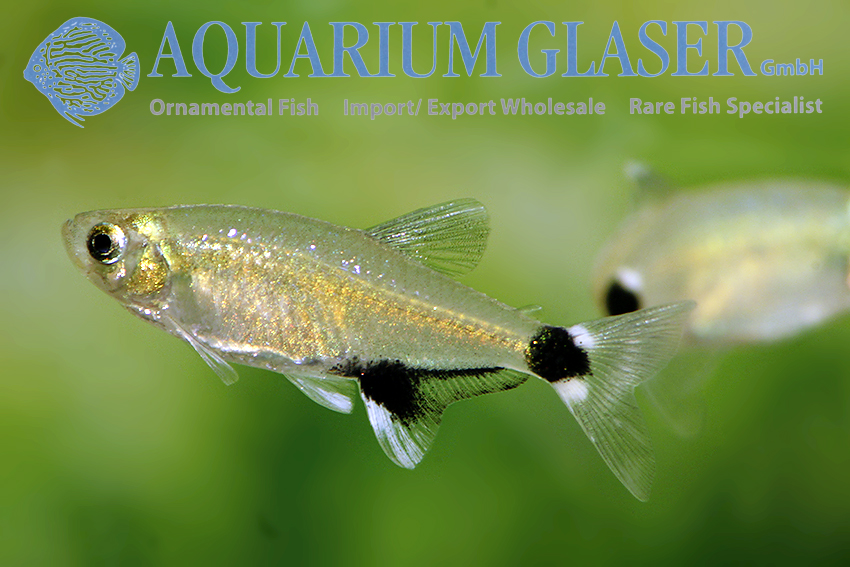
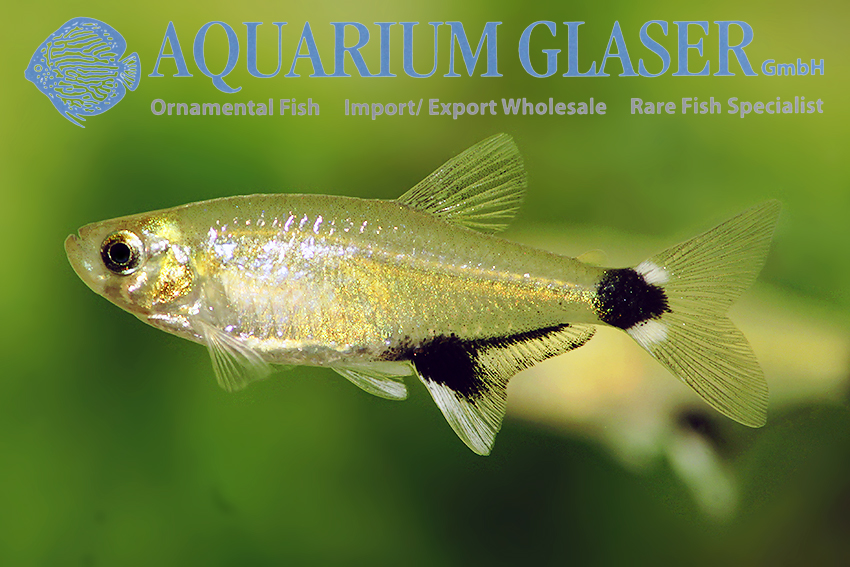
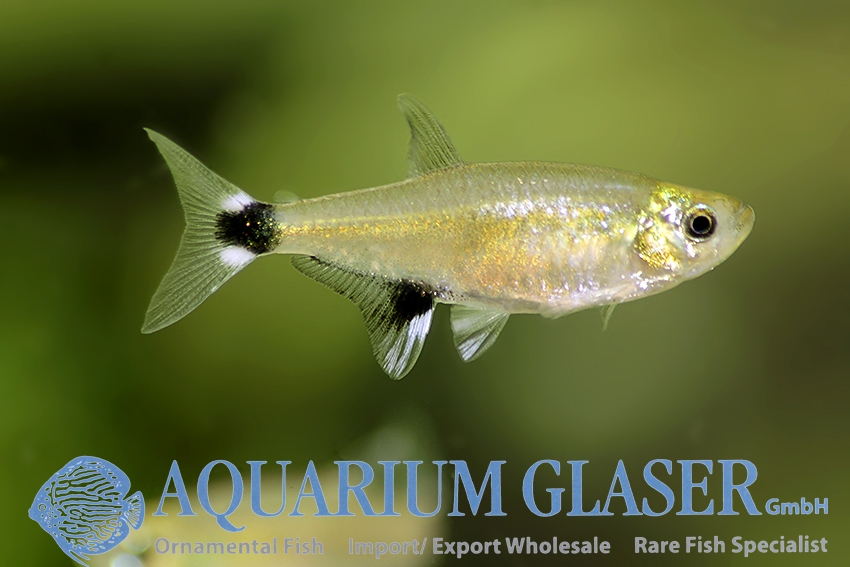
Moenkhausia heikoi

12. October 2018

For the first time we could import, even if only in very limited numbers, this tetra from the Rio Xingu described only in 2004. The animal became known in 2001, when Rainer Stawikowski presented the fish as “Hemigrammus sp. Xingu” in the journal DATZ. The scientific description took place in 2004, twice and almost simultaneously: by Géry and Zarske as Moenkhausia heikoi and by Lima and Zuanon as Astyanax dnophos. Since the work of Géry and Zarske appeared 5 days earlier, the name M. heikoi is valid.

This species is characterized by its large eye with a conspicuous light spot. The fish live in nature in cave-like structures between rocks in the rapids of the Xingu. Of course, they are very difficult to catch there, which is why they only appear very rarely on the market and at high prices.

For our customers: the fish have code 269513 on our stocklist. Please note that we only supply wholesalers.

Text & photos: Frank Schäfer

Cherax sp. „Black Scorpion“

11. October 2018

Along with other species of Cherax,, which we have already introduced to you, we have received the Cherax sp. “Black Scorpion”. They are very attractive animals whose care and breeding does not differ significantly from that of the previously known Cherax forms from New Guinea.

For our customers: The animals have code 481473 on our stocklist. Please note that we only supply wholesalers.

Text & photos: Frank Schäfer

Serrasalmus compressus – a very interesting piranha from Peru

8. October 2018

Recently we obtained a shipment of piranhas from Peru. The fish are 5-9 cm long. At the first glimpse the shipment could be told apart into two phenotypes. First, there were fish with comparatively small spots, a lot of red coloration in the anal fin and a comparatively thin black border on the caudal fin. The second form has comparatively large spots, almost no red in the anal fin – this fin also has a more distinct black seam – and a very broad black seam on the border of the caudal fin. However, „technically“ speaking both forms do not differ in any aspect that can be seen with the bare eye, like body shape etc.

The fish with the small spots fits very good to the piranhas we often obtain from Peru and which we have determined as Serrasalmus compressus in the past. The other animals belong for sure to the same closer relationship within Serrasalmus, but there is no scientifically accepted other species than S. compressus that fits. The only possible exception may be the Black Piranha (S. rhombeus), which we get from Peru from time to time (see https://www.aquariumglaser.de/en/fish-archives/gigantic_black_piranha_arrived__en/). However, Serrasalmus rhombeus is easily distinguished from other piranhas by the red eye, that should already be visible in 5-9 cm long animals (see https://www.aquariumglaser.de/en/fish-archives/piranhas_serrasalmus_niger_en/). As we could find no matching name for the second phenotype we now offer them all under the name of S. compressus, but we cannot exclude the possibility that two species are involved, maybe even a scientifically undescribed one.

For our customers: the fish have code 291332 on our stocklist. Please note that we exclusively supply the wholesale trade.

Text & photos: Frank Schäfer

Microdevario kubotai

5. October 2018

Microdevario kubotai

This extraordinary beauty is a real dwarf (maximum length around 2.5 cm). It originates from the southwestern province of Ranong in Thailand (which forms a border to Burma) and is now available in perfect quality. Initially this fish has been described in the genus Microrasbora, but has been transferred together with M. gatesi and M. nana in the new genus Microdevario in 2009.

The peaceful schooling fish is a perfect species for the so-called nano-aquaria. In the wild, they inhabit brooks and so they need clear, clean and oxygen-rich water. The temperature should be between 22°C and 26°C. Water chemestry is of no relevance as long as extremes are avoided.

One should keep in mind that the brilliant green stripe can be seen only when the light comes from ahead and arrange the illumination of the tank in an appropriate way.

For our customers: the fish has code 430892 on our stocklist. Please note that we exclusively supply the wholesale trade.

Text & Photos: Frank Schäfer

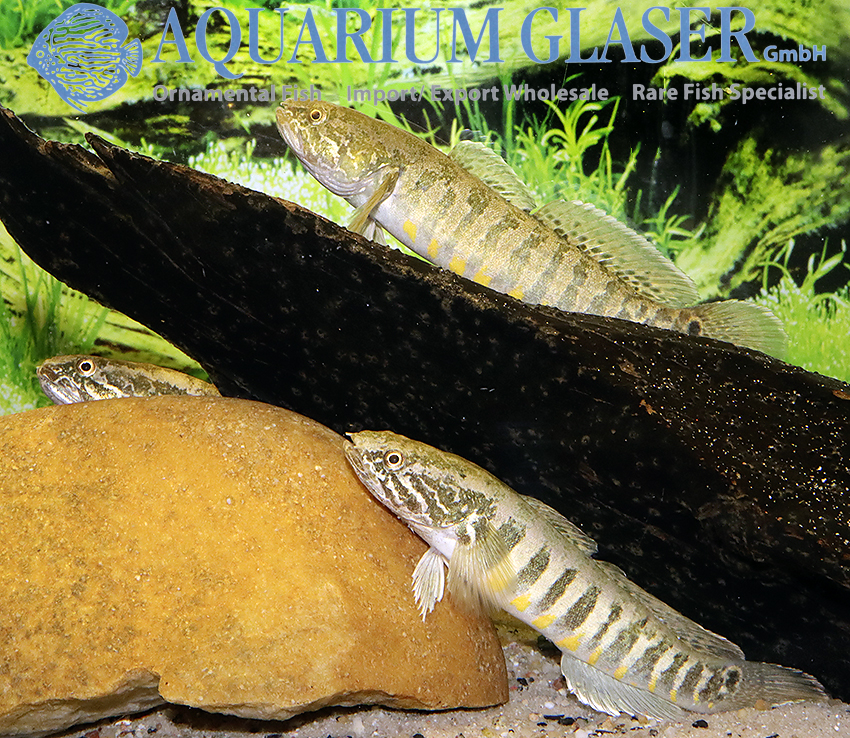
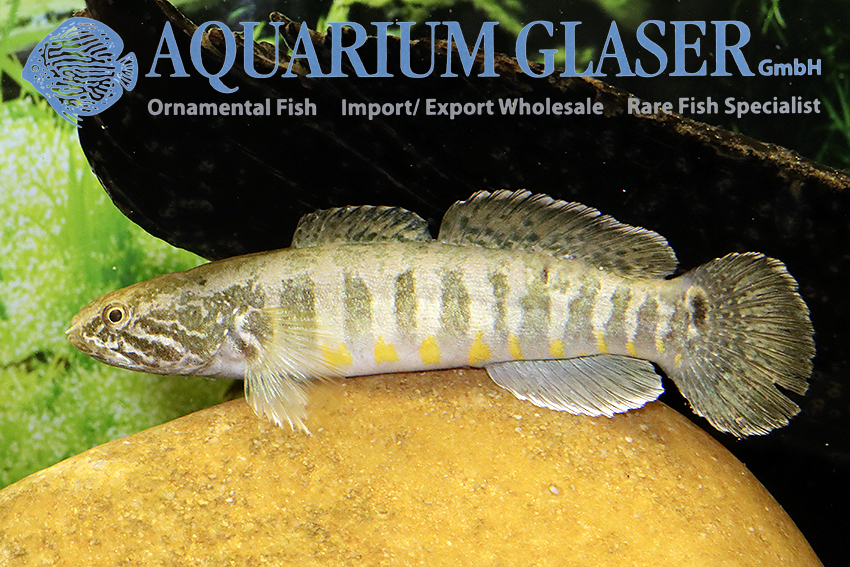
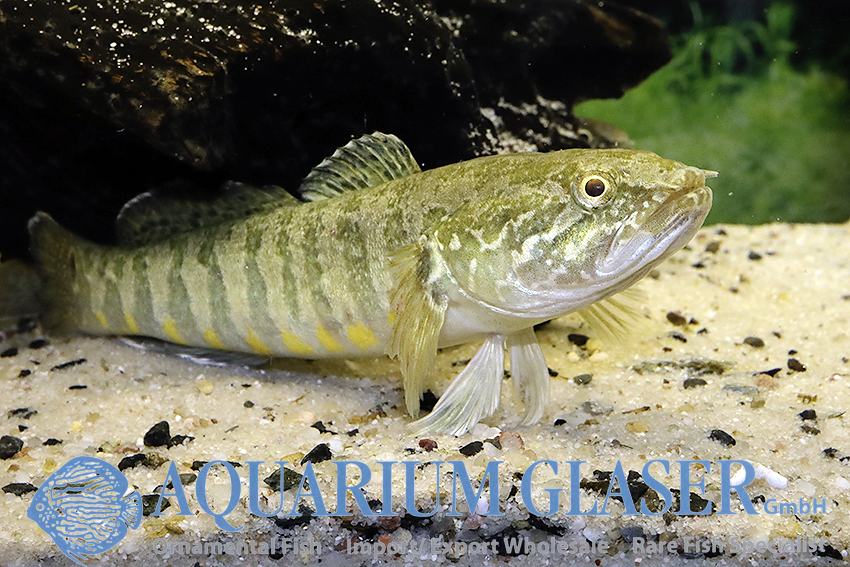
Bostrychus zonatus

4. October 2018

Bostrychus zonatus is a sleeper goby and becomes about 15 cm long. They are predatory fish, which should therefore only be kept together with species that have at least half the body length of the gobies, larger is safer.

The beautiful animal is widespread in fresh and brackish water in New Guinea and northern Australia. It is therefore a good idea to keep for it together with rainbowfish from this region.

The colouring can change very quickly depending on the mood, excited animals become very rich in contrast. 

These animals demand hard water, in any case the pH-value should be above 8 if possible. Soft soil, many hiding places and a light addition of salt (the latter is not absolutely necessary) increase the well-being of the quarrelsome fish.

For our customers: the fish have code 396503 on our stocklist. Please note that we only supply wholesalers.

Text & photos: Frank Schäfer

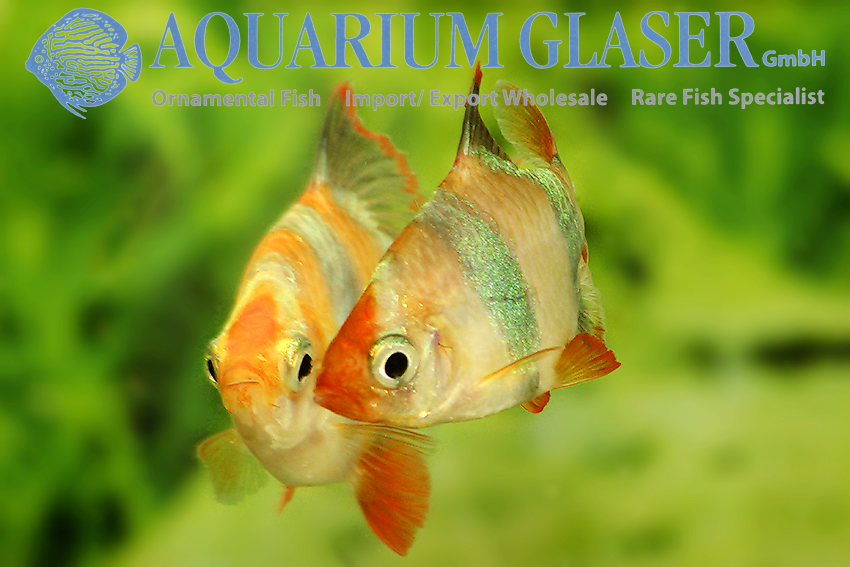
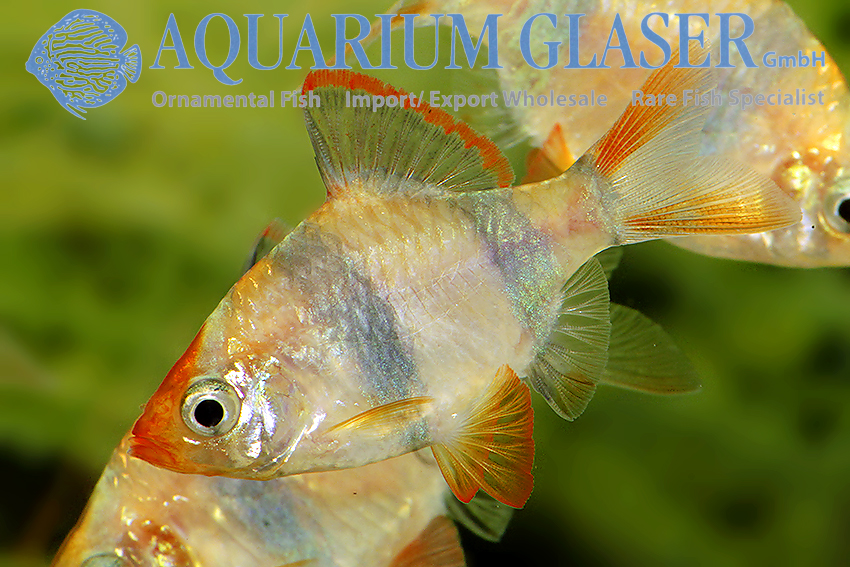
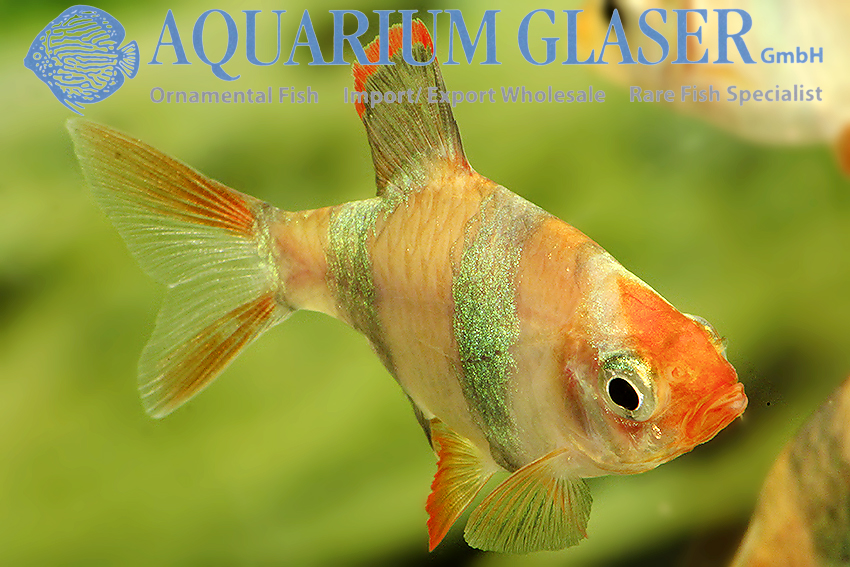
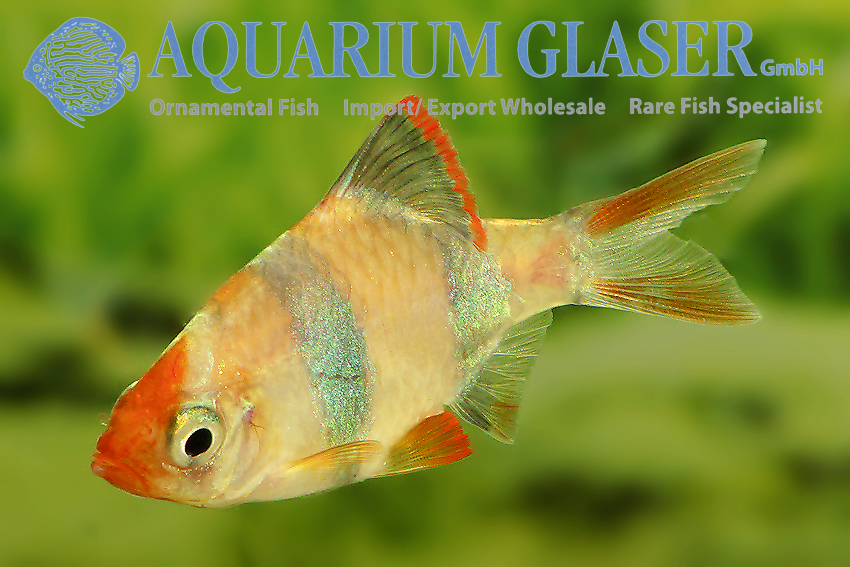
Puntigrus anchisporus (= Barbus tetrazona) Gold Green Stripe

2. October 2018

About 10 years ago the breeders suddenly focussed again on the old-known tiger barb, whose scientific name is, by the way, Puntigrus anchisporus. Puntigrus tetrazona is a species that is practically never seen in the aquarium, the edges of its fins, which are coloured red in the tiger barb, are black. 

One of the new breeding forms that appeared at that time was the “Gold Green Stripe”. It still exists today and enjoys some popularity. The maintenance breeding of breeding forms is more demanding than that of wild forms, because if you make a mistake and the strain dies out, it has disappeared, while in wild species you can always fall back on specimens from nature.

Thus breeding forms are a good reflection of the breeding abilities of the farms involved and in the case of the “Gold Green Stripe” one must say – no matter whether one likes this special breeding form or not – the breeders master their craft! They are vital animals with excellent body and fin shape.

For our customers: the animals have code 372053 on our stocklist. Please note that we only supply the wholesale trade.

Text & photos: Frank Schäfer

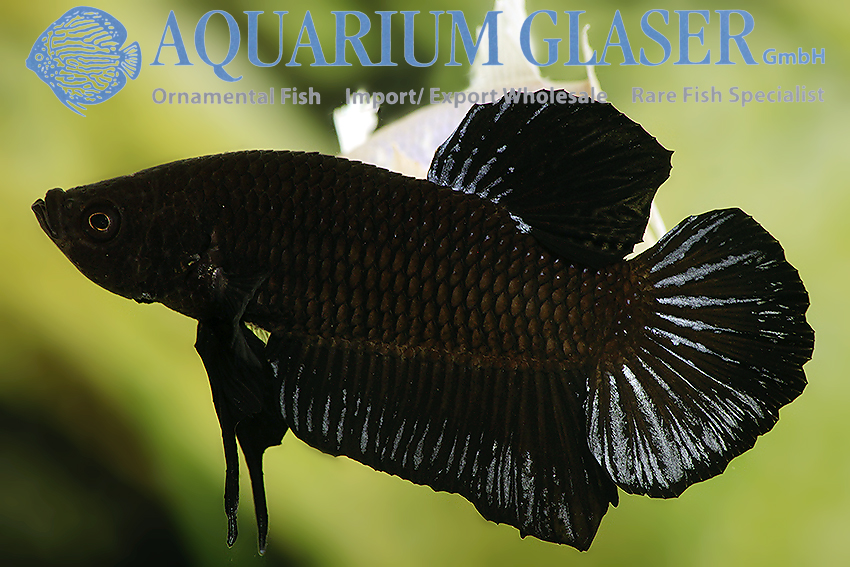
Betta splendens Black Knight Pla Kat

28. September 2018

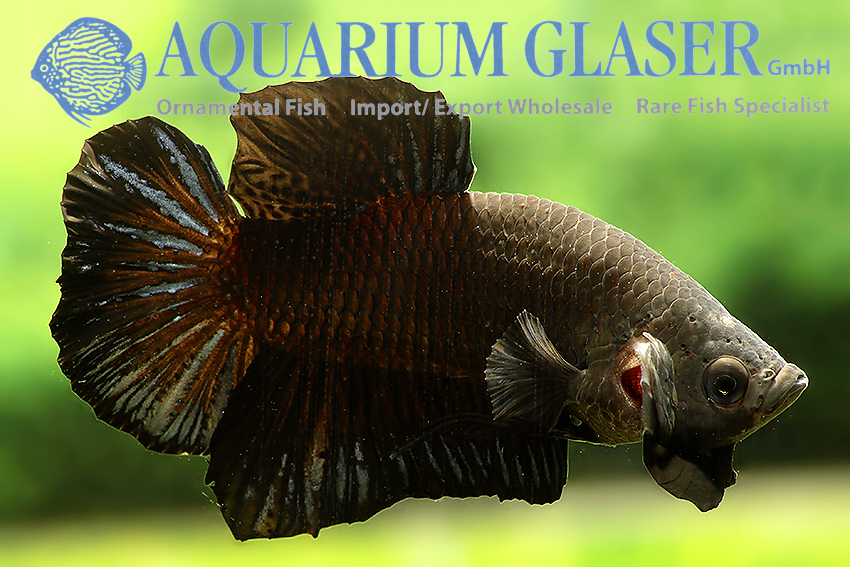
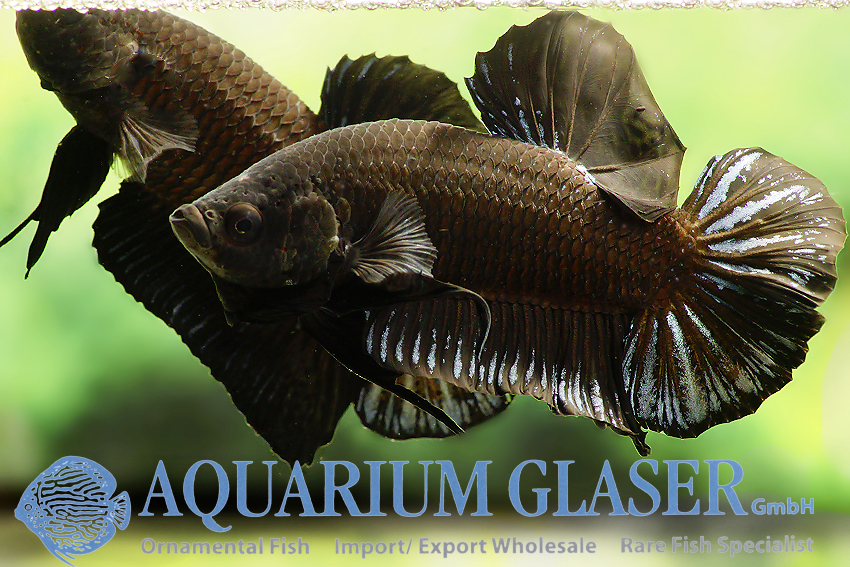
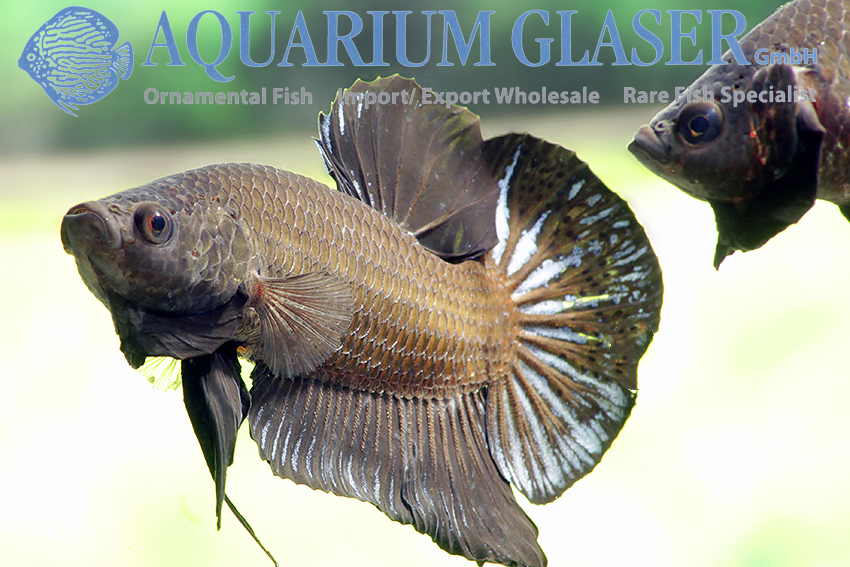
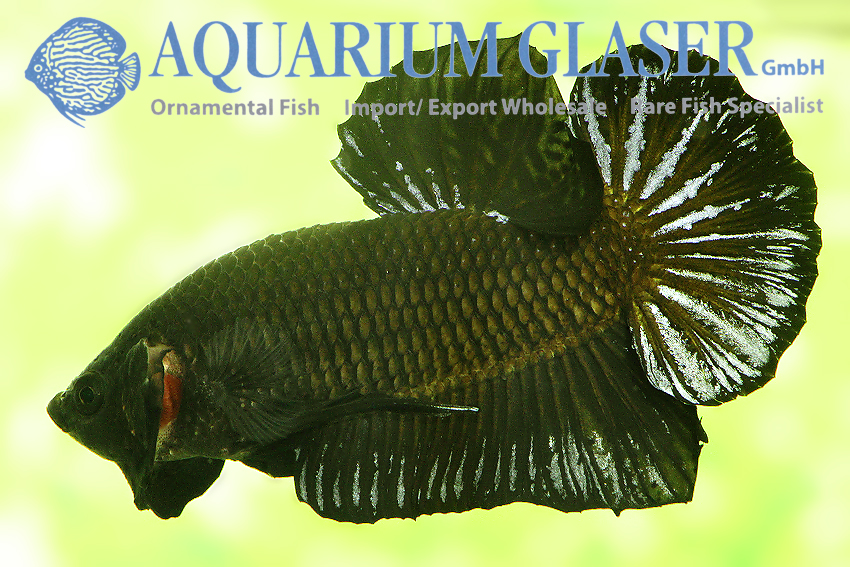
Black knights – that’s what Thai breeders call this beautiful, short-finned fighting fish, which we can offer at the moment. The animals are colored so intensively black that you can’t see any detail on normal exposed photos, they just look like a black surface. But if you overexpose strongly, you can see that the black color is actually a deep, dark brown that swallows practically all light.

For our customers: the fish have code 390081 on our stocklist. Please note that we exclusively supply the wholesale trade.

Text & photos: Frank Schäfer

L264 Leporacanthicus joselimai German bred

26. September 2018

Leporacanthicus joselimai (L264) comes from the Rio Tapajós in Brazil and grows 15-20 cm long. It belongs to the carnivorous species of suckermouth catfish and should therefore be fed with a wide range of feed, such as frozen food, granules, flakes, etc.. Since most of the food is eaten at night, it is necessary to plan feeding accordingly.

In the group maintained L. joselimai are very lively and tolerable, while individually kept animals are very shy and often react aggressively to other tankmates. 

The breeding of these beautiful catfish is not yet an everyday event and so we are pleased to be able to offer very pretty offspring of currently 4-6 cm length as German bred ones.

For our customers: the animals have code 26480-L 264X-1 on our stocklist. Please note that we exclusively supply the wholesale trade.

Text & photos: Frank Schäfer

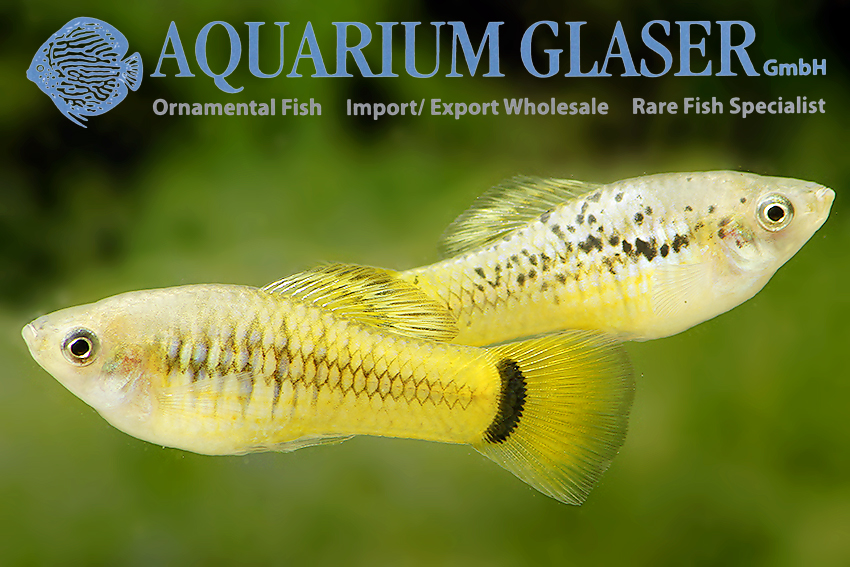
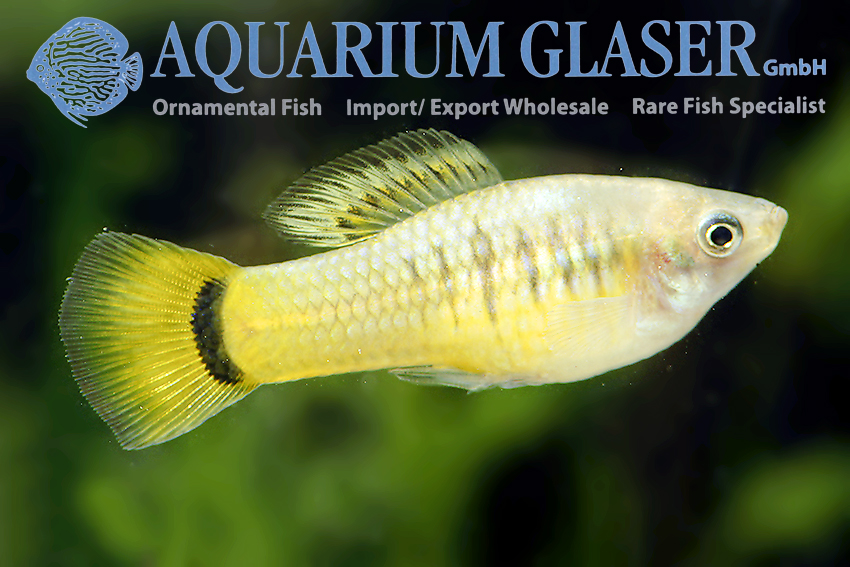
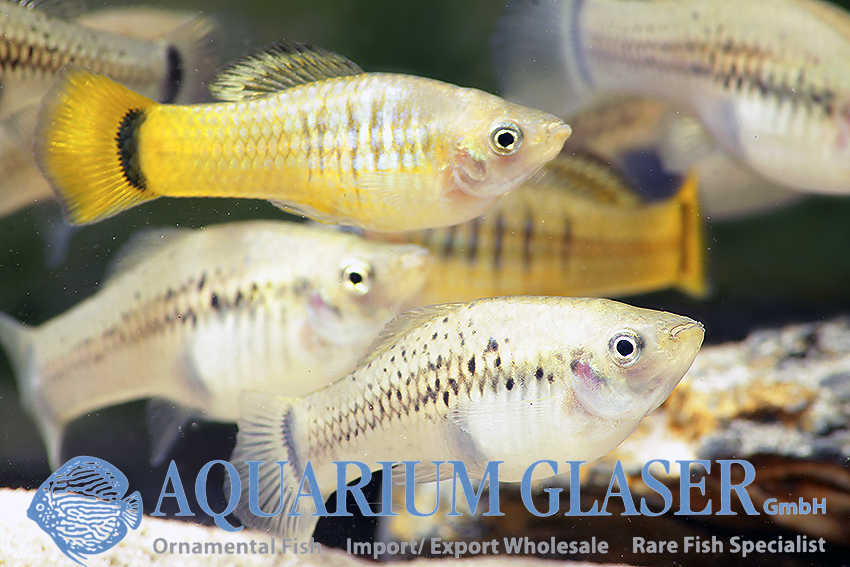
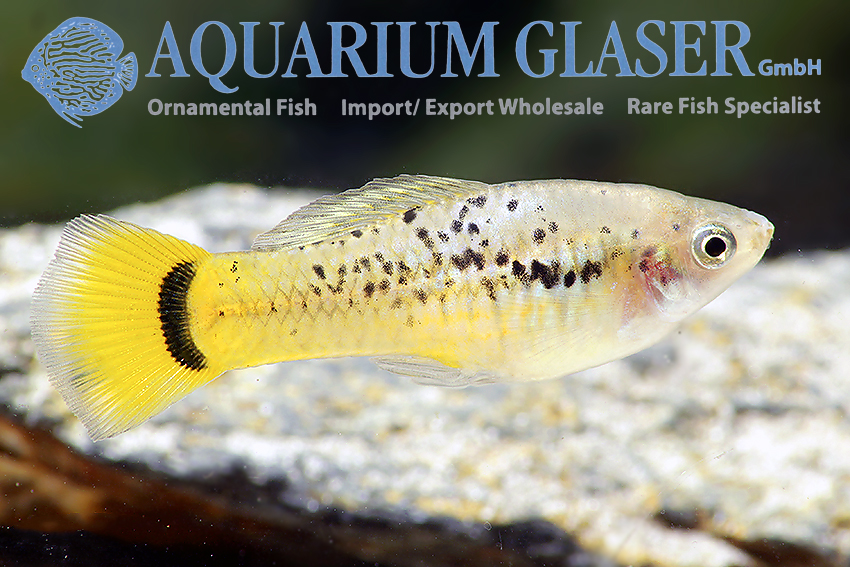
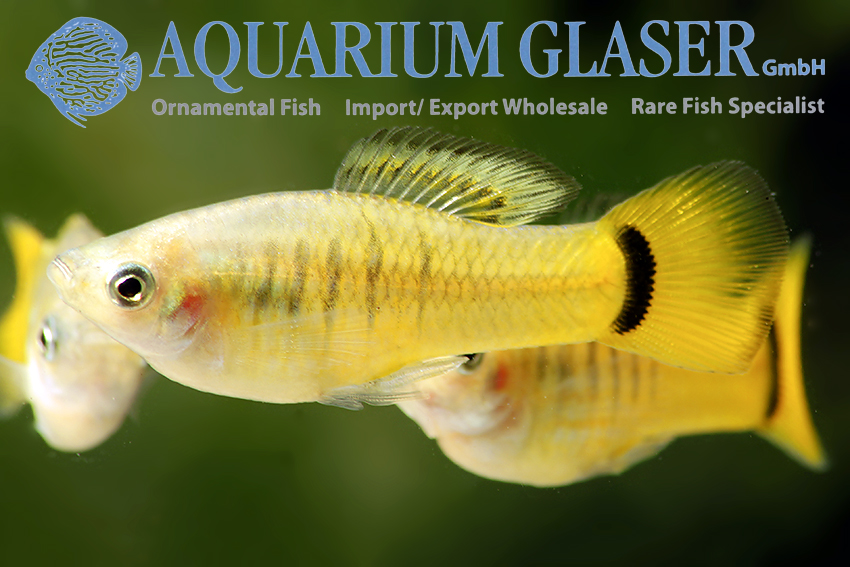
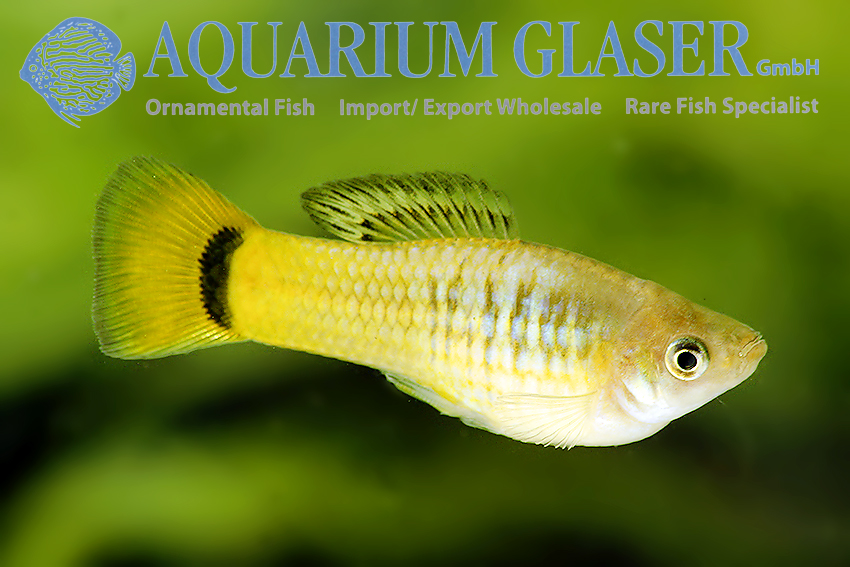
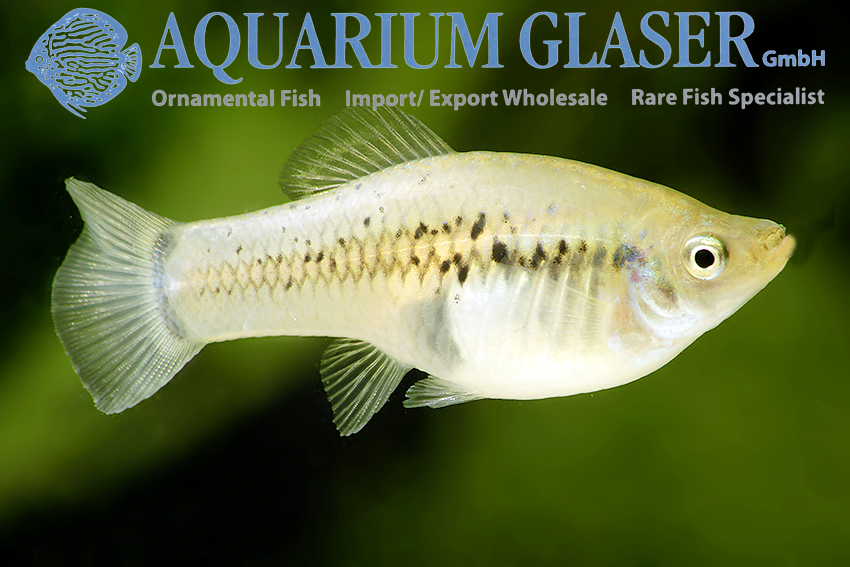
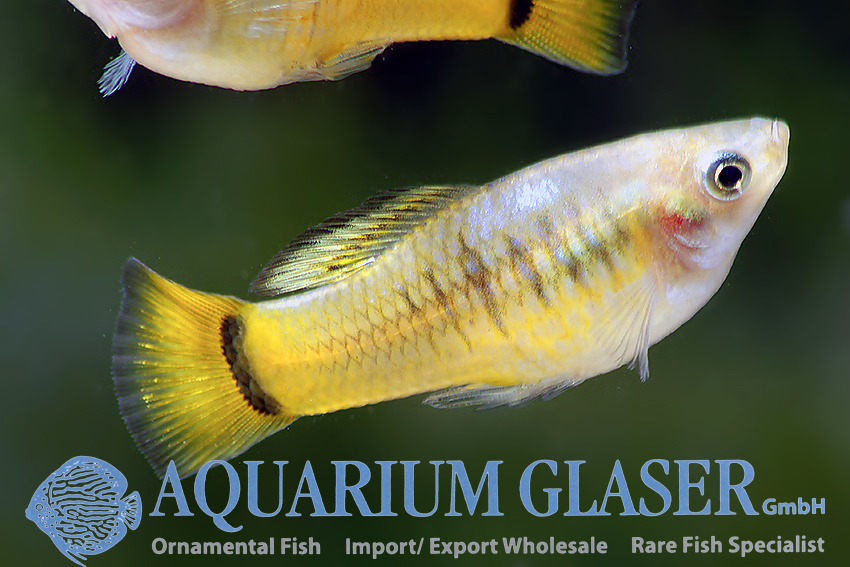
Xiphophorus variatus “Puente Escalanar”

25. September 2018

Once again we can offer a  extremely beautiful wild strain of the variatus platy in good numbers as German offspring. The ancestors of these animals were collected in 2002 in Puente Escalanar, Veracruz, Mexico by private hobbyists and brought along. Since then, the animals have enthused mainly the community of friends of livebearers; to our knowledge, they have not yet appeared in regular trade.

A special characteristic of these animals is the sickle-shaped tail-root-spot, which all specimens, males and females, show. Males have two basic coloration types. First specimens with tiger stripes on the flanks of the front body and second such, which are dotted here. Dominant specimens of the tigred variety become quince-yellow, with the dotted is much blue shimmer in the front body. Particularly beautiful are the sky-blue scales, which some males of the tigered form show along the mid of the front body.

They are lively, very healthy animals, whose behaviour has remained very original. When they are worried, they join together to form the swarm, which is very rarely observed among the domesticated tribes that have been around for a hundred years.

For our customers: the animals have code 443000 (sm-md) and 443002 (md-lg) on our stocklist. Please note that we exclusively supply the wholesale trade.

Text & photos: Frank Schäfer

Xiphophorus hellerii „Hamburg Highfin“

19. September 2018

Only very rarely one of the most beautiful breeding forms of the swordtail comes to us: the black Simpson with orange fins. Among fish lovers Bayreuth is known as the spade for this very distinctive swordtail breeding form and is called “Bayreuth Cross”. In Germany, this variant was first exhibited in 1968 (report by the Nordbayer Kurier on 11 October 1968). As with other swordtails – Hamburg, Wiesbaden, Berlin – the name of the city was adopted for this helleri and thus it became the Bayreuth swordtail.

However, this was not the first time that a swordtail of the “Bayreuth type” was bred. In fact, five years earlier, Hawaiian fish breeders Eric and Larry Nishida crossed a red Simpson fin male with a normal fin Hamburg female. Hamburgers are black swordtails whose scales have a green or blue sheen. The result of this crossing had the high Simpson fin, the body coloration of the hamburger, a well developed sword, a bright red throat region and red fins.  An article about this “Nishida Highfin-helleri” appeared in the American magazine “The Aquarium” in November 1963.

Our fish are offspring from Vietnam.

For our customers: the animals have code 420972 on our stocklist. Please note that we exclusively supply the wholesale trade.

Text & photos: Frank Schäfer

Carinotetraodon irrubesco

18. September 2018

Pufferfish are most often thought to be brackish water fishes. But there do exist indeed species that are adopted to totally fresh water. Some of them even live in the very soft and acidic waters of the forests. Among the latter are the species of Carinotetraodon from Indonesia; we currently could import once more C. irrubesco from Sumatra.

This species of Carinotetraodon becomes about 5 cm long in males, females stay a bit smaller. Males can be recognized by the red caudal fin. All other colours can change very fast and are not of much use for determination.

In respect of behaviour, Carinotetraodon irrubesco can be best compared with a small cichlid of the more aggressive kind. Sometimes other fish are totally ignored, sometimes bitten. It is not possible to make any reliable prognoses. So these puffers are best kept by pair in a single species tank. Here they also often will spawn. The eggs are scattered freely in plants, this species does not take care for the brood.

For our customers: the fish have code 408153 on ur stocklist. Please note that we exclusively supply the wholesale trade.

Text & photos: Frank Schäfer

Pelvicachromis pulcher Albino

14. September 2018

Breeding forms are like certain foods: you like them – or not. But it is a fact that the aquarium hobby, like all other areas of domestic animal and plant care, cannot get along without breeding forms.


The albino of the krib, Pelvicachromis pulcher, is a breeding form whose charm is not obvious at first sight. The animals come mostly adolescent into the trade and are then simply white kribs. Well. Now we have full-grown animals in our stock. And the situation is very different. The red and yellow colour elements remain in the albino, only the black colours have been genetically lost. In reproductive mood, both the males and the females of the albino krib look quite wonderfully!

For our customers: the fish have code 559703 on our stocklist. Please note that we exclusiveky supply the wholesale trade.

Text & photos: Frank Schäfer

Guppy “Red Smoke”

12. September 2018

Glasbelly guppies do not produce guanine due to a genetic peculiarity – this is the silver dye that makes fish glisten. This makes them more or less transparent, as the guanine normally reflects the light and prevents transparency like a mirror. Mostly Glasbelly guppies are bred as albinos. If the black melanin also falls away, the view becomes perfect.

Not everyone likes albinos and therefore there are other established Glassbelly strains, but almost all are blonde, yellow-red in colour. We have now received a number of Glasbelly smoke guppies from a German breeder for the first time. They lack guanine, but not melanin. We think they are distinctive animals and also very vital.

The line was created by mating a normal coloured male with an albino glassbelly female. The young were all wild-coloured, i.e. with normal guanine expression, so the genes of the father were dominant as expected. However, according to Mendel’s rules, the second generation produced a proportion of glass belly with black eyes from which the „Red Smoke“ was bred. The strain isn’t fully bred yet, but that doesn’t matter. For ornamental fish breeding, it is a well-known fact that the path is the goal!

For our customers: the animals have code 419091 on our stock list. Please note that we only supply wholesale. Only available in limited quantities!

Text & photos: Frank Schäfer

Polynemus paradiseus

10. September 2018

Currently we have a really unusual species of fish in our fishhouse: Polynemus paradiseus. The Polynemidae family is almost unknown to hobbyists, despite the fact that over the centuries 96 species have been described, 42 are still valid, and these fish are important food fishes in their home range. Two species of the genus Polynemus have only 7 spines in the first dorsal fin (most species have 8), namely P. paradiseus, a species decribed as early as 1758 by Linné and P. hornadyai, described in 1936 by Myers. While P. paradiseus has a very wide distribution along the whole eastern coastline of the Indian subcontinent to Thailand, P. hornadyai is known so far only from the Malayan part of Borneo.

We have some very charming youngsters of P. paradiseus from Thailand in stock. The fish come from aquaculture and are only 6-8 cm long, but the long filaments are much longer than the body inluding tail fin. These filaments serve as sensitive organs, comparable to the ventral fins of the gouramis (Colisa and Trichogaster). The origin of the filaments in Polynemus are the pectoral fins. Basically speaking, Polynemus inhabit river mouths and prefer brackish water. Maximum length reported for P. polynemus is 30 cm, but only very rarely specimens longer than 17 cm are collected.

These unusual fish should be kept in large aquaria with sandy bottom and as little furnish as possible; they need free space for swimming. They feed on small invertebrates, bloodworm is a perfect food for them. Against conspecifics and other fish, P. paradiseus are completely peaceful, but one must take care that other fish do not nip on the long filaments. These fish need high oxygen contents and are very sensitive against organic pollution of the water. In a long time sight they should be kept in strong brackish water (10-15 g salt/litre) or in pure marine water, although our specimens are adoipted to pure freshwater.

For our customers: the fish have code 443842 on our stocklist. Please note that we exclusively supply the wholesale trade.

Text & photos: Frank Schäfer

Scleromystax barbatus

7. September 2018

No doubt: this cory from the south of Brazil, where it inhabits cool blackwater brooks near the coast, is among the most beautiful species of cory at all. Sadly it is not exported from Brazil currently. Keeping this fish is usually problem-free, but breeding is due to the high demands (cool, very clean water with a low pH) not that easy. Who is able to supply the fish 16-18°C in living rooms? Even the professional breeders from Southeast Asia cannot supply S. barbatus in a great amount. But of course there do exist breeders who know what to do. So we can offer quite regulary this wonderful fish, but always in limited numbers. Currently we have very nice young adults in stock. They are 5-6 cm long, but for sure they will grow 2-3 cm longer.

For our customers: the fish have code 224014 on our stocklist. Please note that we exclusively supply the wholesale trade.
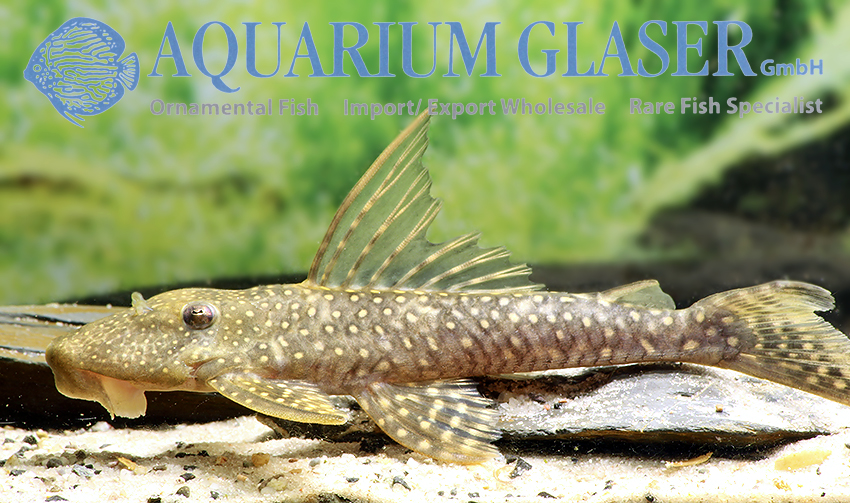
Text & photos: Frank Schäfer

Hypoptopoma gulare

7. September 2018

The genus Hypoptopoma comprises small to medium sized loricariids. The largest species known becomes about 10 cm long. At the first glimpse they look much alike a Otocinclus, but larger. Typical for members of Hypoptopoma is the position of the eyes. They are placed in way at the side of the head that the fish can look over almost 360° when it sits on a plant. This feature can be found among the loricariids only in Hypoptopoma and Oxyropsis. The latter, however, has a flattened caudal peduncle, while in Hypoptopoma the caudal peduncle is oval in cross section.

Sadly determination of species of Hypoptopoma is a tricky thing, although in 2010 a throughout taxonomical revision of the genus was published.

We obtain quite often a species from Peru which we think is Hypoptopoma gulare. This species has been described scientifically from the surroundings of Loreto where collectors of ornamental fish often work. Maintaining Hypoptopoma is comparable to that of the much better known Otocinclus, but of course the larger Hypoptopoma need more food. So in case there do not grow enough algae in the tank it is necessary to feed the suckers with food tablets or slices of vegetables to make sure they find enough to eat. Against conspecifics and other fish Hypoptopoma are completely peaceful. They are open spawners, the male guards the eggs until they hatch. It is not possible to distinguish the sexes of this fsh externally.

For our customers: the fish have code 262292 on our stocklist. Please note that we exclusively supply the wholesale trade.

Text & photos: Frank Schäfer

Poecilia caucana

5. September 2018

With an overall length of 3 – 5 cm the Cauca Molly (Poecilia caucana), originating from Colombia, Venezuela, and Panama belongs to the smaller livebearers. Remarkably is the yellow – orange coloured dorsal fin and a violet metallically shining along the body as well as the orange band in the proximal part of the caudal fin in males. 

The water equivalents (pH values of 8,2- 8.6, LF 360 and 420 Mikrosiemens/cm), based on different places where the animals are found in the area of the Rio Cauca, makes them to suitable aquarium inhabitants for the most Central European tap waters. These fish appreciate higher temperatures between 26 and 28°C. 

As an algae eater the Cauca molly is constantly on the search for food. All usual kinds of fish food are greedily eaten. With appropriate care a new generation will appear sooner or later. THe fish we can offer currently are bred ones from Southeast Asia.

For our customers: the fish have code 424713 on our stocklist. Please note that we exclusiveky supply the wholesale trade.

Photos: Frank Schäfer, Text: Klaus Diehl

Clarias gariepinus

3. September 2018

The airbreathing catfishes of the genus Clarias are among the most important food fishes that are bred in aqua culture in the tropics. They are absolutely undemanding in respect of water quality and the fact that they readily accept any food as long as it contains enough protein makes them ideal candidates for aqua culture. They are fast growing and can survive for hours outside the water due to their breathing organ. So they can be offered alive on the foodmarkets, where other fish often rotten quite fast due to the heat. Mainly the species Clarias gariepinus is bred that way all over the world where the temperatures allow this. Initially this catfish originates from Africa. The species can effect huge ecological problems where it escapes.

Clarias gariepinus is not an aquarium fish in the usual sense. It is rather dull coloured and becomes too large for that. But it is an intelligent fish, a real personality that can be trained for example on whistles. Many breeders of ornamental fish keep a Clarias to have an opportunity to use deformed bred fishes as feeder fish and so to fulfill the animal wellfare laws.

For our customers: C. gariepinus has code 114854 on our stocklist. Please note that we exclusively supply the wholesale trade.
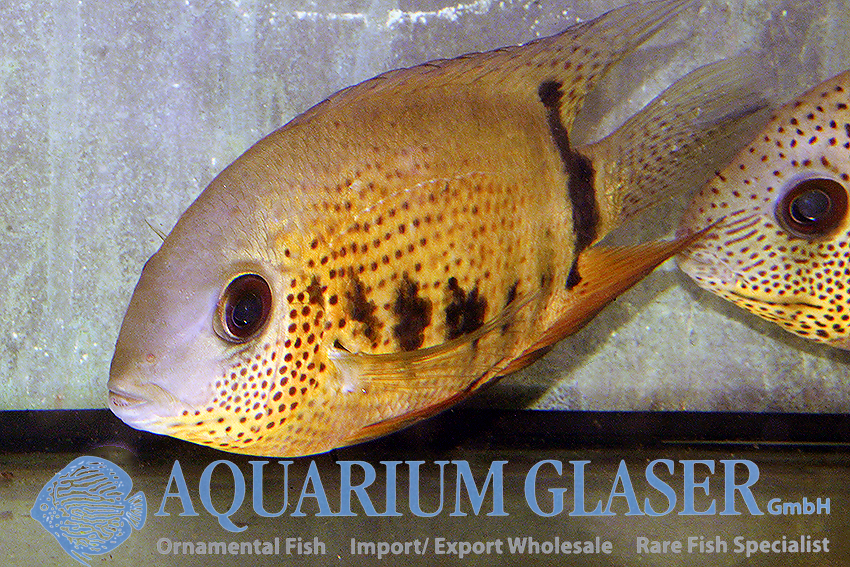
Text & photos: Frank Schäfer

Potamorrhaphis labiatus

31. August 2018

The slender freshwater needlefish from South America are much sought for by specialists. Many years only one species was mentioned in the aquarium literature, namely Potamorrhaphis guianensis. This species really exists and is said to be fairly wide spread in South America. But it seems that the needlefish we obtain from Peru currently belong to another species.

There are four accepted species within Potamorrhaphis and after studying the scientific lterature it seems most likely that the Peruvian fish belong to the species P. labiatus. The differences between P. guianensis and P. labiatus mentioned in the scientific literature are not visible in live specimens; anyway, differences in coloration are much more important for us. The most distinctive feature in our Peruvian imports is that there are vertical stripes extending from the lateral stripe in direction of the back. In P. guianensis – judging from photos of live fish collected in Guyana – the lateral stripe is solid and has no extensions.

Potamorrhaphis labiatus attains a maximum length of about 18 cm. Against conspecifics the fish are absolutely peaceful. During the phase of settlement one must take extra care that the fish don´t panic, for otherwise they could heavily hurt the sensitive beak. However, minor wounds of that type are unavoidable and will heal without any complications.

Initially these predators have to be fed with live feeder fish, but well settled specimens accept after some time deep frozen fish from a forceps, too.

For our customers: the fish have code 281544 on our stocklist. Please note that we exclusively supply the wholesale trade.

Text & photos: Frank Schäfer

Jupiaba sp. „Cherry Spot“

29. August 2018

We were able to import a new species of tetra from Venezuela which does not resemble to any species known to us. According to the collector the animals were collected in small brooks in the surroundings of Puerto Inirida. There are no doubts that our new imports belong to the Astyanax relationship in the broadest sense, most probably to the genus Jupiaba. However, the diagnistic character of Jupiaba – elongated, sharp pelvic bones – are not visible in life fish. But our animals remind in respect of the shape of the body in J. pirana and in respect of the longitudinal band in J. antheroides. Unique in our fish is the black pigmented lateral line organ and the prominent caudal spot which is accompanied by two brillant red spots. Currently the fish are about 7 cm long, very lively and with a slight tendency to panic. The settlement of the animals is so far without any problems.

For our customers: the fish have code 209353 on our stocklist. Please note thta we exclusively supply the wholesale trade.

Text & photos: Frank Schäfer

L137 Hypostomus soniae / Cochliodon soniae

27. August 2018

The pretty, blue-eyed L137 from the Rio Tapajós is only rarely offered. It is a medium-sized species of Hypostomus that can reach a maximum length of about 20 cm. The colour of the fish is quite variable. Specimens exist that have rather brown fins, others have spotted fins and again others have bright orange-red fins. The latter might be confused with the similar “Bruno” from Paraguay (code 27510), but L137 can be always identified by the blue eyes, which are unique within the genus Hypostomus.

For our customers: the fish have code 26480-L 137-1 on our stocklist. Please note that we exclusively supply the wholesale trade.

Lexicon: Hypostomus: from ancient Greek, means “with inferior mouth”. Cochliodon: menas “with mussel-shaped tooth”. soniae: dedication name for Sonia Fisch-Muller, curator for fishes at the Muesum of Geneva.

Text & photos: Frank Schäfer

Astronotus ocellatus Colombia

24. August 2018

We obtained very nice juveniles of the Oscar from Colombia. In contrast to the adults the juveniles are strictly schooling fish. In case of a real or imaginary danger the fish school performs a kind of globe. This behaviour also explains the otherwise illogical attractive pattern. In a school this pattern works as a camouflage, comparable to the wear of militairs.

However, one should not be fooled by the large innocent looking eyes of these fish, which are, by the way, real personalities. Oscars are predators and 5-6 cm long ones will readily take a guppy as snack. So the oscar is suited for community tanks only under certain circumstances. Tankmates must be large enough that they are not taken for food. In case this preference is fulfilled the oscar is on its best behaviour. Compared with other large species of cichlid, members of the genus Astronotus are rather peaceful creatures.

For our customers: the fish have code 632501 (4-6 cm) and 632502 (4-7 cm) on our stocklist. Please note that we exclusively supply the wholesale trade.

Text & photos: Frank Schäfer

Acestrorhynchus heterolepis and A. microlepis

24. August 2018

For the first time we were able to import Acestrorhynchus heterolepis, which has been described scientifically as early as 1878 by Cope from Peru. Our specimens originate from Venezuela; it was a mixed shipment of these fish and A. microlepis*. A. heterolepis has two dark horizontal bands, thus reminding a bit in A. isalinae; however, A. heterolepis is unique in the genus due to a patch of scales of different size immediately behind the opercle. At that place A. microlepis has a small black blotch.

Our specimens are currently 7-9 cm long; according to the scientific literature both species can attain a maximum length of about 35 cm.

* it is posssible the these fish belong to the species A. apurensis; A. apurensis and A. microlepis differ only in the length of the snout compared with the head length; it is impossile to tell both species apart without comparative material.

For our customers: the animals have code 202053 (A. heterolepis) and 202203 (A. microlepis) on our stocklist. Please note that we exclusively supply the wholesale trade.

Text & photos: Frank Schäfer

Aphyocharax paraguayenis

22. August 2018

This small, about 4.5 cm maximum length reaching tetra belongs to the most attractive species of tetra at all. The species is very hardy and undemanding and can be easily bred in huge numbers. It is a fish of the subtropical regions and doesn´t even require a heater. In the wild, water temperatures between 16 and 30°C occur. However, one must keep in mind that temperature changes in nature usually take a lot of time.

Sadly the dawn tetra (this is one of the popular names applied to this fish by hobbyists) has one disadvantage: it sometimes bites of parts of fins and scales from other fish. It is still a mystery why this nasty behaviour sometimes appears. But probably, similar as in tiger barbs or flame tetras, the behaviour only appears when the school of dawn tetras is too small. Larger schools of 20 or more specimens have enough to do with conspecifics and usually leave other fish alone.

Another opportunity is to keep A. paraguayensis in a single species tank or only combined with some catfish. For example Corydoras hastatus lives in nature along with the dawn tetra in mixed schools. This is a fascinating look!

For our customers: the fish have code 206512 on our stocklist. Please note that we exclusively supply the wholesale trade.

Text & photos: Frank Schäfer

Gnathonemus petersii – Peters’ elephantnose fish

20. August 2018

Most often this bizarre mormyrid is kept as a single specimen. This is due to the fact that small groups of this fish most often don´t do well in a long time sight and they can perform mobbing against each other even to death. However, in the wild these up to 30 cm long, but rarely longer than 15 cm found animals form sometimes really large schools. In our facility they are kept in groups of about 50 animals in tanks of 200 x 60 x 60 cm. Here the elephant fish forms schools and shows a schooling behaviour as it is hardly seen in any other fish in the aquarium.

More information on Gnathonemus petersii is provided here: https://www.aquariumglaser.de/en/fish-archives/the_possibly_rarest_fish_in_the_world_lives_in_aquarium_glaser_s_fishhouse_en/

For our customers: the fish have code 133502 (7-10 cm) and 133503 (10-12 cm) on our stocklist. Please note that we exclusively supply the wholesale trade.

Text & photos: Frank Schäfer

Corydoras fowleri Variant

17. August 2018

Corydoras fowleri is a very rare and very beautiful species of Corydoras. The species originates from Peru. It is well known for its high degree of variability in respect of coloration. Our latest import contained specimens that looked very different from their conspecifics. They have a strong golden-bronze coloration of the neck and an overall metallic shine. We simply don´t know wether these fish represent a new variety or if they only show a phenomenon that can be fund quite often among Corydoras: freshly collected specimens of many species show much stronger colours than fish that live already for some time in the aquarium. The reason for that is most probably the fact that the fish in nature often live in very turbid water. When they are put in the clear aquarium water they change in a kind of camouflage-mode.

We have separated four of the aberrant specimens and will report on what has become of them at a given time.

For our customers: Corydoras fowleri has code 229804 on our stocklist. Please note that we exclusively supply the wholesale trade. Available in small numbers only!

Text & photos: Frank Schäfer

Panaque sp L330

15. August 2018

The „Full Spotted Royal Pleco“ belongs to the very attractive members of the wood-feeding genus Panaque. The species attains a maximum size of about 40 cm. Sadly in young fish the adult coloration cannot become even guessed, they are striped, like many other members of the genus. Only in halfgrown fish the spotted pattern has developed. We were able again now to import some 15 cm long (standard length, without tailfin) respectively 19 cm (total length, inclusive tailfin) long specimens of L330 from Colombia.

It is very interesting that these only halfgrown fish show some obvious sexual differences. A specimen with a yellow stripe in the caudal fin is – accoding to shape of head and body when looked from top – obviously a male, while the most likely female counterpart has only yellow corners of the caudal fin.

Sadly these comparatively large fish caused a kind of sand storm in the photo tank. Even after the water has been cleared there were attached to the mucus of the body sand particles. So please don´t worry, our fish don´t have an ick (Ichthyphthirius), but only harmless sand granules.

For our customers: the fish have code 26480-L 330-7 on our stocklist. Please note that we exclusively suppyl the wholesale trade. Only very few specimens available!

Text & photos: Frank Schäfer

Macrobrachium rosenbergii

13. August 2018

The largest species of freshwater shrimp at all is Macrobrachium rosenbergii. Males of the species can reach a length of 50 cm (inclusive the long arms), as is shown by the specimens we photographed years ago on a food marked in Thailand. Despite that enormous size the species does not get old. Scientific research found that the shrimps live only 1.5 years. In this time they sometimes wander more than 1.000 km upstreams of rivers and back again, for the larvae can hatch in marine environment only.

Macrobrachium rosenbergii is heavily used in aquacuture in southeast Asia. We import medium sized specimens (body length without the arms 6-8 cm) on a regular basis. Some females of that size from our current stock have spawned now!

For our customers: the animals have code 484554 on our stocklist. Please note that we excvlusively supply the wholesale trade.

Text & Photos: Frank Schäfer

Micropoecilia picta Red

10. August 2018

This extremely beautiful livebearer has been discovered in 1991 by Dieter Bork in eastern Venezuela near Tucupita. Here it inhabits the floodplains of the Orinoco river. Bork was able to collect and export some specimens. Micropoecilia picta is very variable in respect of coloration. However, in contrast to M. parae, usually only one colour variety inhabits a given biotope. Nevertheless it is possible to develop certain strains during breeding in captivity.

The Red Picta is, like all members of the genus, a very demanding fish that can be kept and bred over longer periods only by very experienced hobbyists. Nevertheless M. picta is the least demanding species of the genus. We currently have very pretty young adults of M. picta Red in stock. The fish were bred in Thailand. To show you the extend of coloration these fish can have we added two pictures of fully grown specimens to this post; the remaining pictures show animals from our actual stock.

For our customers: the fish have code 268542 on our stocklist. Please note that we exclusively supply the wholesale trade.

Text & Photos: Frank Schäfer

Pseudochalceus kyburzi

10. August 2018

After many years we finally were able again to import this very beautiful tetra from Colombia once more. This species attains usually a length of about 5 cm, the largest one reported had about 8 cm in length. In respect of the general look and the behaviour Pseudochalceus kyburzi can be best compared with the emperor tetras (Nematobrycon). By the way: the species name – kyburzi – was chosen to honour the discoverer of the emperor tetra, William A. Kyburz of Colombia, at the time a famous exporter of ornamental fish.

For our customers: the fish has code 283802 on our stocklist. Please note that we exclusively supply the wholesale trade.

Text & photos: Frank Schäfer

Telmatochromis vittatus

8. August 2018

Only comparatively rarely Telmatochromis vittatus from Lake Tanganyika can be found in the trade, despite the fact that this dwarf cichlid – it becomes only about 8.5 cm long – is perfectly suited for keeping and breeding in home aquaria. Maybe this is due to the fact that the fish look somewhat similar but not as brillant as Julidochromis species.

Keeping this fish is easy and can be compared with that of the several Lamprologus species. Like these, T. vittatus is a biparental cave brooder which is kept best by pair. Males become larger than females and develop a small hump on the head. The aquarists dedicted to T. vittatus like it very much due to the fact that this fish loves to feed on small snails. This led to the misleading popular name „Striped Snail Telmatochromis“. However, hobbyists think that a snail cichlid is a species that prefers to breed in empty snail shells; T. vittatus does not usually.

For our customers: the fish have code 576542 on our stocklist. Please note that we exclusively supply the wholesale trade.

Text & photos: Frank Schäfer

Uca tangeri

6. August 2018

The eastern Atlantic from Portugal to Angola, is the origin of the fiddler crab Uca tangeri, where it inhabits sand and mangrove coasts. We obtain the animal from Nigeria. The to an enormous size grown major claw of the males is remarkable. It is used for attracting the females and for the fight between rivaling males. In their periodically flooded habitat they inhabit muddy burrows, which they leave at ebb-tide for the intake of food.

As omnivores they are not discriminating anything and feed on nearly each organic matter the sea is offering them. With the domestic care, frosted and granulated food can be fed, also different fruits and vegetables. For maintenance it should be tried to imitate their habitat, i.e. a land part with sand and gravel and a water part filled with brackish water should be present in the aquarium. Some hiding places give them retreat possibilities.

For our customers: the animals have code 489603 on our stocklist. Please note that we exclusively supply the wholesale trade.

Photos: F. Schäfer, text: K. Diehl

Squaliforma cf. emarginata L11

3. August 2018

Among the loricariid catfishes that are known by scientists for a very long time already is this species. It has been described initially 1840 under the name of Hypostomus emarginatus. Since then it has been placed in different genera, in 2001 in Squaliforma and in 2016 in Aphanotorulus, when Squaliforma has been considered to be a synonym of Aphanotorulus. However, that latest act is not followed by all scientists so far, so we are a bit conservative and stay with the placement within Squaliforma.

Sadly the collecting site of the type specimen of Squaliforma emarginata is not known. Not less than 5 L-numbers have been given for that species, all from different locations (L11 from Brazil, Rio Xingu near Altamira, L108 from Ecuador, upper course of the Rio Napo, L116 from Brazil, Rio Trombetas, L131 from Brazil, Rio Tapajós, L153 from Venezuela, Rio Apure). This fish (or very close relatives, who knows) is known currently from almost the whole of the Orinoco and the Amazon basins. As the fish we currently have in stock originate from the Rio Xingu the L-number 11 fits.

L11 can become as large as 40 cm and is known as a very peaceful member of the loricariid family that is very well suited for aquaria large enough. It is also a quite pretty fish!

For our customers: the animals have code 26480-L 011-4 on our stocklist. Please note that we exclusively supply the wholesale trade.

Text & photos: Frank Schäfer

Channa sp. New Mimetic Orange Blotch

3. August 2018

Along with the yellow-lipped variety of Channa ornatipinnis this undescribed dwarf snakehead was collected. Currently the fish are about 12-15 cm long and seem to be fully grown; however, this cannot be said without some questionmarks. The whole habit and the coloration of the fish reminds one strongly in Channa andrao from North Bengal, but C. andrao has no ventral fins, which are present in the new species.

For our customers: the animals have code 409293 on our stocklist. Please note thta we exclusively supply the wholesale trade.

Text & photos: Frank Schäfer

Xiphophorus hellerii „Kohaku“

1. August 2018

Red-white, koicoloured livebeares are very hip currently. Usually the commercial breeders do not name their creations by their genetic compostion – like private hobbyists do -, but name them instead with as fancy names as possible. The „Kohaku“ is a white albino swordtail with a bright red patch on the front part of the body. This sport is known for some time already with black eyes. This was named „Marlboro“ and the selection with the red patch on the front part of the body „Tanchu“. No doubt: the albino selection called „Kohaku“ is a real eyecatcher!

For our customers: the fish have code 421273 on our stocklist. Please note that we exclusively supply e wholesale trade.

Text & photos: Frank Schäfer

Channa ornatipinnis

30. July 2018

When in 2007 the comparatibly small (about 20-25 cm) and very colourful species Channa ornatipinnis was described from the Rakhine State in Burma the fans of snakeheads were really enthusiastic. Soon after the first specimens appeared in the ornamental fish market. Since then the fish were offered regulary, but only from time to time. 

But: the imported specimens differed in a detail from the fish from the original description: the color of the lips! These are blue in the imported specimens, but yellow in specimens from commercial imports.

Now we obtained, more than 10 yers after, the „original yellow lips“ from a new source. Sadly the collectors do not want to tell us were the fish exactly come from. They are real beauties!

For our customers: the animals have code 409194 on our stocklist. Please note that we exclusively supply the wholesale trade.

Text & photos: Frank Schäfer

Corydoras geoffroy

27. July 2018

For a very long time this species of Corydoras – the type species of the entire genus! – was a myth. Until now it is a top-rarity among the corys. So we are extremely glad that our proofed breeder for special cases, Kurt Jülich, was successful in breeding with wild collected specimens. We can offer this offspring now. The youngsters are still a bit drab coloured, so we are very grateful to Ernst-Otto von Drachenfels and Jürgen Glaser for supplying some pictures of adult fish.

For our customers: the fish have code 230212 on our stocklist. Please note that we exclusively supply the wholesale trade.

Text: Frank Schäfer, photos: Ernst-Otto von Drachenfels and Jürgen Glaser

Hyphessobrycon herbertaxelrodi „Smoke“

27. July 2018

This is a very interesting and beautiful new sport of tetra. One can only guess that it belongs to the species Hyphessobrycon herbertaxelrodi, but there is no other species known in the hobby that fits better.

Two characters make this fish very desirable: the extraordinary strong schooling behaviour and the intensive dark coloration of the body that is contrasting with the bright light head.

We have obtained these fish as bred ones from Singapore. Currently they are about 2-3 cm long, we suppose that threy will become – like the Black Neon – about 3-4 cm long.

For our customers: the fish have code 260922 on our stocklist. Please note that we exclusively supply the wholesale trade.

Text & photos: Frank Schäfer

Sperata acicularis

26. July 2018

The catfish of the genus Sperata can be easily identified due to the black spot in the adipose fin. Determination of the the four currently accepted species, on the other hand, is a tricky thing. Only S. seenghala, a widespread species from India, can be comparatively easily identified, because in that species the eye is positioned in the first third of the skull, at about half of the skull length in the other species. So bony structures of the skull and the foreback must be compared to identify the three remaining species, a thing impossible to do in live juveniles.

We currently could import Sperata acicularis or at least we obtained the fish under that name. But our supplier is very reliable and S. acicularis is the only species of the genus reported so far for Burma, so we have no reason to doubt.

Like all species of Sperata this catfish is a giant. The largest specimen reported so far was 180 cm long, but the usual size is 30-40 cm. As these catfish are very popular as food fish there are intentions to keep and breed them in aquaculture, but this has failed so far in a larger scale. Species of Sperata spawn in pits in the ground and guard eggs and fry.

For our customers: the fish have code 455862 on our stocklist. Please note that we exclusively supply the wholesale trade.

Text & photos: Frank Schäfer

Myloplus aylan (= M. schomburgkii “Big Black Stripe”)

23. July 2018

UPDATE: This species was scientifically described as Myloplus aylan in 2024 and separated from M. schomburgkii.

Obviously many different varieties – or do they even represent different species, who knows? – of the attractive pacu Myloplus (formerly: Myleus) schomburgkii exist. We obtained recently very nice specimens from Colombia, which are characterized by the very broad black band over the body. Our fish are 9-12 cm long and only subadults; Myloplus schomburgkii attains a maximum size of more than 40 cm. 

For our customers: the fish have code 270514 on our stocklist. Please note that we exclusively supply the wholesale trade. Available in limited numbers only.
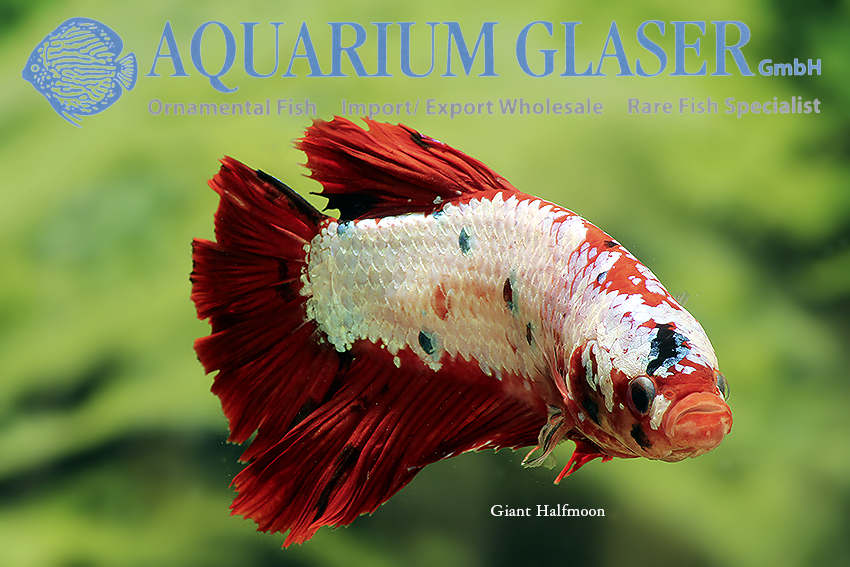
Text & photos: Frank Schäfer

Pseudocrenilabrus philander dispersus

20. July 2018

When in 1902 the Dwarf Egyptian Mouthbrooder (Pseudocrenilabrus multicolor) was imported for the very first time hobbyists were really enthusiastic about it. The mouthbrooding behaviour which lasts in that species a good time longer than the first release from the maternal mouth was simply fascinating for our ancestors to observe.

Some years later – 1911 – a similar species was imported. It became somewhat larger (5-6 cm in P. multicolor, 6-8 cm in the new species) and was determined as Pseudocrenilabrus philander dispersus or Brass Mouthbrooder, sometimes also as Southern Mouthbrooder. This species is much nicer in respect of coloration, but as easy to keep and breed as its cousin.

This fish was studied again 1990. The research resulted in the finding that it was not identical with P. philander dispersus, but an undescribed form, which was named Pseudocrenilabrus multicolor victoriae. Since then the same fish swims under both names – P. philander dispersus and P. multicolor victoriae – in the aquaria worldwide. Only very recently it was discovered that a great number of undecscribed species of Pseudocrenilabrus exists. We should wait until the results of that research are published before we should decide how to name the Brass Mouthbrooder correctly.

This is a wonderful aquarium fish with a splendid coloration and a fascinating behaviour. It can be kept very well in planted tanks, for the fish do not harm the plants. Due to the small size the fish also needs no large aquaria. However, one should not underestimate the potential of aggressivness in this golden flasher. One should never keep delicate or sensitive fish along with them.

For our customers: thev fish have code 567002 on our stocklist. Please note that we exclusively supply the wholesale trade.

Text & photos: Frank Schäfer

Pterophyllum scalare Santa Isabel

20. July 2018

We received wonderful wild collected angelfish from the municipality of the city Santa Isabel at the Rio Negro. Like many other fishes from that area – mainly discus and Apistogramma – the angels show a high degree of red coloration on the body. The reason for that phenomenon is unknown to us. The water in the upper reaches of the Rio Negro is very soft and acidic. Like all larger wild fish, these angels have their experience with fin-eating piranhas. However, the angels are very healthy and stable and regenerate their finneage very fast. So after a few weeks nothing of the hurts of the wild will be visible any more.

For our customers: the fish have code 699835 on our stocklist. Please note that we exclusively supply the wholesale trade.

Text & photos: Frank Schäfer

Ctenolucius hujeta

18. July 2018

This genus of South America gar characins contains only two species that are distiguished basically by the coloration of adult specimens (this means from about 15 cm length on): C. hujeta and C. beani. Both occur in Colombia; C. beani further occurs in Panama and C. hujeta in Venezuela. C. beani has an adult pattern with clearly visible longitudinal stripes which are lacking in C. hujeta. However, almost all traded specimens are bred ones and are usually placed in C. hujeta. Maximum size in both species is about 25-30 cm.

A genus-specific feature of Ctenolucius are the strange skin lappets at the end of the lower jaw. Very similar structures can be found in the West African characins of the genus Hepsetus, which are also very simial in the overall appearance. But while Hepsetus are often found in swamps and have an accessory breathing organ via a primitive lung, Ctenolucius are usually found in running waters. So it is unlikely that the skin lappets work as a breathing help, at least in Ctenolucius. However, the sense of these skin lappets remains still unknown.

Currently we have very nice, about 5-7 cm long bred Ctenolucius hujeta from Singapore in stock.

For our customers: the fish have code 250501 on our stocklist. Please note that we exclusively supply the wholesale trade.

Text & photos: Frank Schäfer

Lepisosteus oculatus

16. July 2018

The Spotted Gar (Lepisosteus oculatus) is a living fossil. Gars live on earth since about 145 million years. Nowadays 7 species still exist, all native to North- and Central America. Gars are predators. They can survive in oxygen-poor waters due a primitive lung that enables them to breath air additionally to the gill breathing. So Gars are often  found in swamps and other oxygen-poor environments.

Some species of Gar are bred regulary in Indonesia. We obtain our fish from there. The most attractive species in respect of coloration is Lepisosteus oculatus. Usually this species becomes 60-90 cm long; the largest specimen known so far was 1.2 m long. The photographed specimens are 10-12 cm long. As Gars become quite tame in ponds or aquaria they can be fed after some time of settlement usually with dead fish from a forceps.

The Spotted Gar originates from the Mississippi and other rivers that flow to the Golf of Mexico. So it is a rather subtropical species and only contingently winter hardy in a garden pond; this should one keep in mind in case it is planned to keep the fish in outdoor ponds. Despite the Spotted Gar is a freshwater fish it is known to enter brackish waters occasionally.

Against conspecifics and other fish too large to feed Gars are usually peaceful. This makes them perfect subjects for public aquaria where they have lived as long as 70 years. In the wild, L. oculatus is said to live about 18 years.

For our customers: the fish have code 848013 on our stocklist. Please note that we exclusively supply the wholesale trade.

Text & photos: Frank Schäfer

Monodactylus kottelati

13. July 2018

Monos are classics among the brackish water fishes. Much of the aquarium literature about them mentions that these fish can be adapted easily to freshwater. But – what should this be good for? Is it really that difficult to put some salt (10-20 g per litre) in water? If one keeps them in brackish water and at a water temperature of about 26-28°C these racehorses among the fishes will bring only joy for the keeper. Currently we import quite often Monodactylus kottelati from Thailand. This fish reaches a length up to 20 cm and should be kept in a large (!) school of conspecifics. Otherwise they can be very quarrelsome.

For our customers: the fish have code 436242 on our stocklist. Please note that we exclusively supply the wholesale trade.

Text & photos: Frank Schäfer

Tetragonopterus argenteus

11. July 2018

Currently we can offer wonderful, fully grown Tetragonopterus argenteus from Paraguay. The species attains a length of 8 – 12 cm. Formerly the genus Tetragonopterus was a catch-all genus for small characins from South America. Most of them are placed now in other genera, for example Hemigrammus, Hyphessobrycon, or Moenkhausia. But still the common name „tetra“ for characins is in broad use and tetra is nothing else than the abbreviation of Tetragonopterus. Nowadays only 15 species are placed in Tetragonopterus and only one, T. argenteus, can be considered as an aquarium fish.

For our cstomers: the fish have code 296006 on our stocklist. Please note that we exclusively supply the wholesale trade.

Text & photos: Frank Schäfer

Microphis aculeatus

9. July 2018

Only very rarely we obtain the freshwater pipefish Microphis aculeatus from Nigeria. The fish belong to the free swimming members of the family and are very attractive. As in all pipefish the male has to care for the eggs until they hatch. The eggs are deposited in a pouch along the belly. So the male can be easily recognized by the totally different shape of the body. Moreover the up to 15 cm long males (females stay a bit smaller) have a pretty red stripe along the back and a nice pattern on the snout.

For our customers: the fish have code 149204 on our stocklist. Please note that we exclusively supply the wholesale trade.
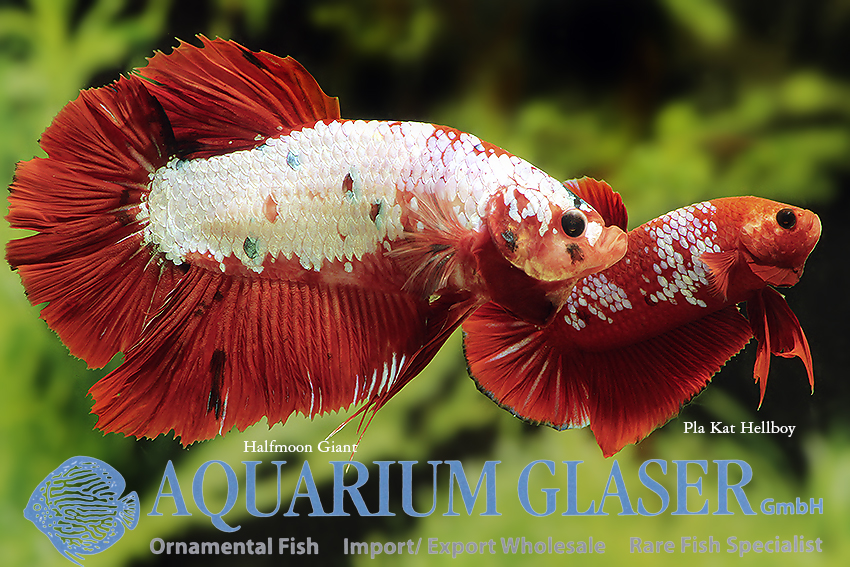
Text & photos: Frank Schäfer