








One of the largest Asian barbs imported for aquarium keeping is Barbonymus schwanefeldii. It used to be known formerly as Barbus. This species, native to Borneo, Malaysia, and Thailand, grows up to 35 cm long. The red coloration of the tail fin is wonderful and is found in this intensity in hardly any other fish. Due to its size, B. schwanefeldii is of course also eaten in its native country and farmed as a food fish. Due to stocking measures for food purposes, it is now considered an invasive species in various parts of the world.


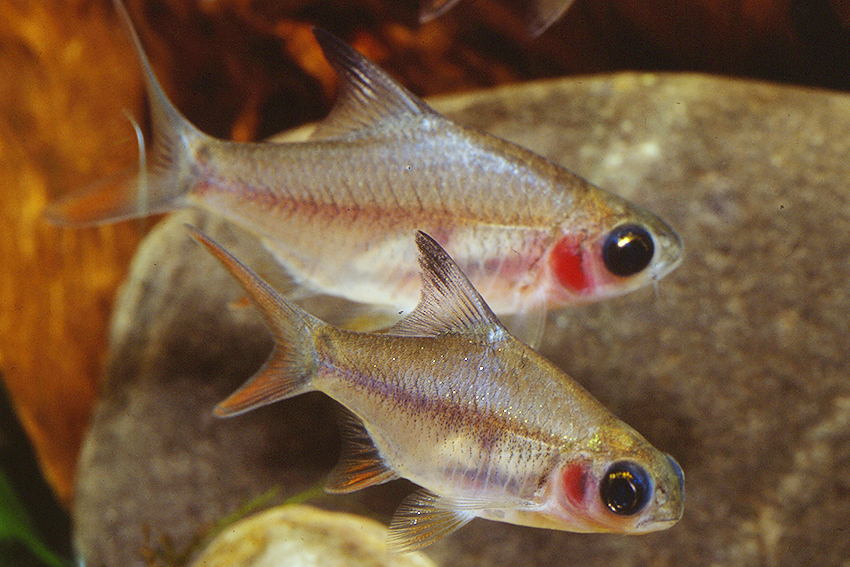
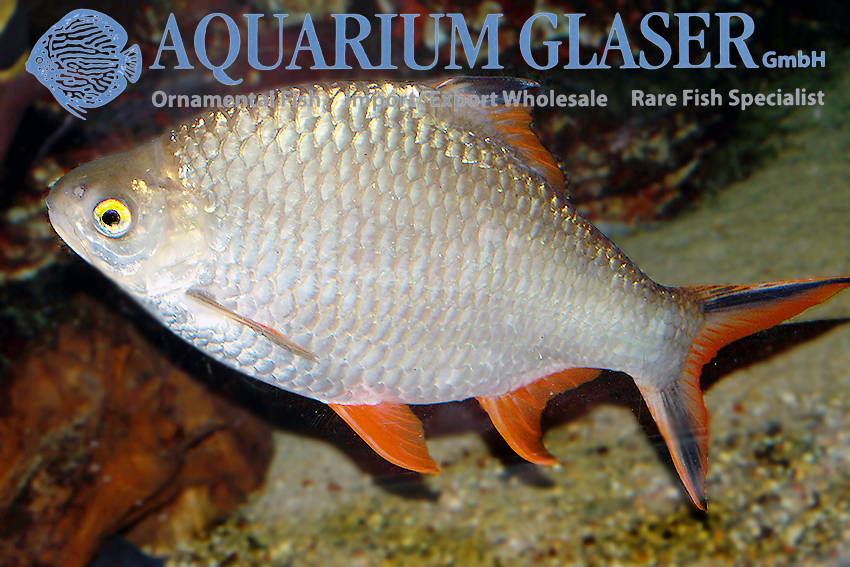


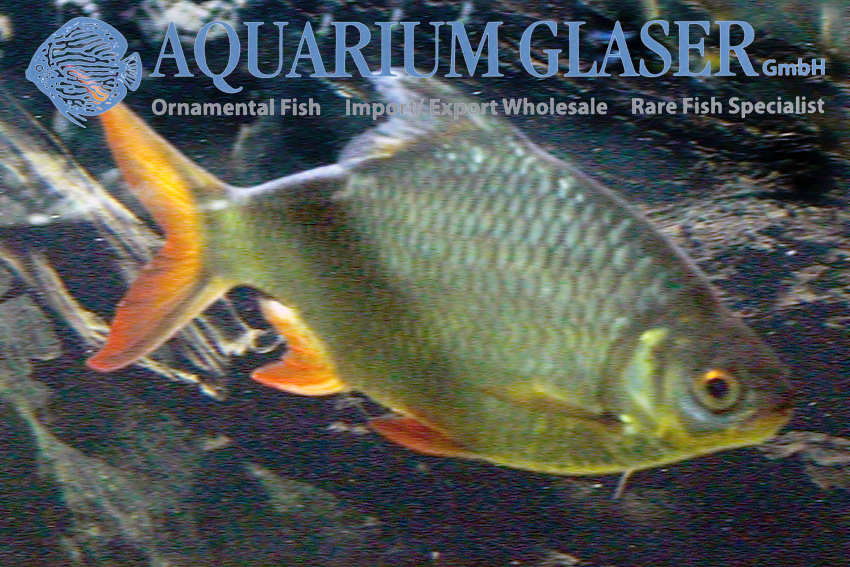
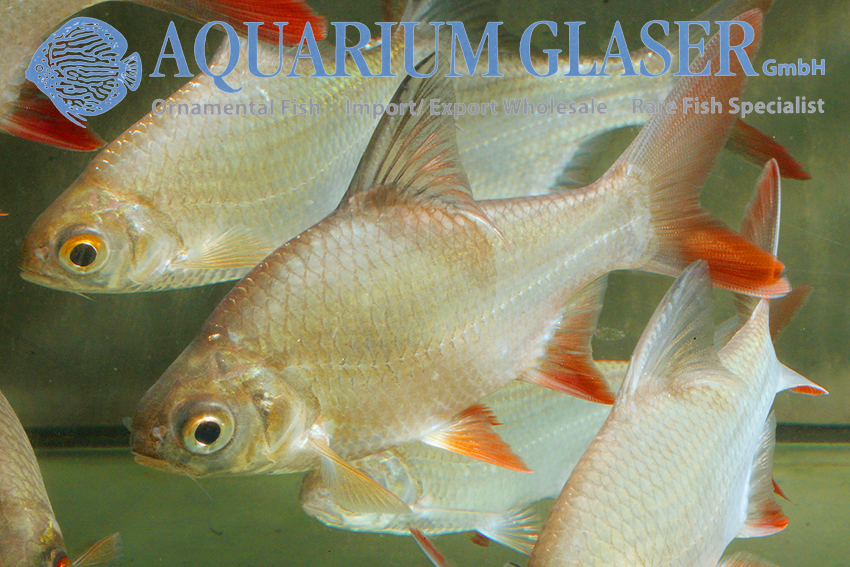
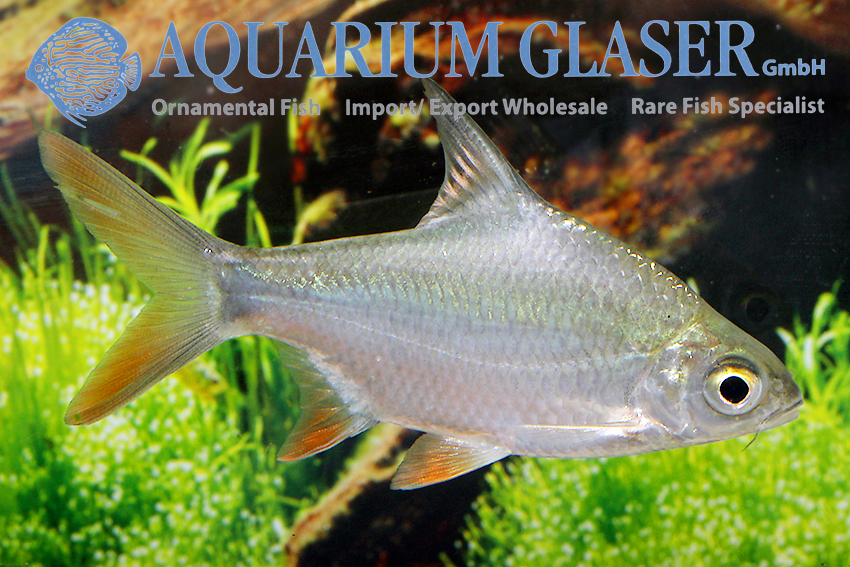

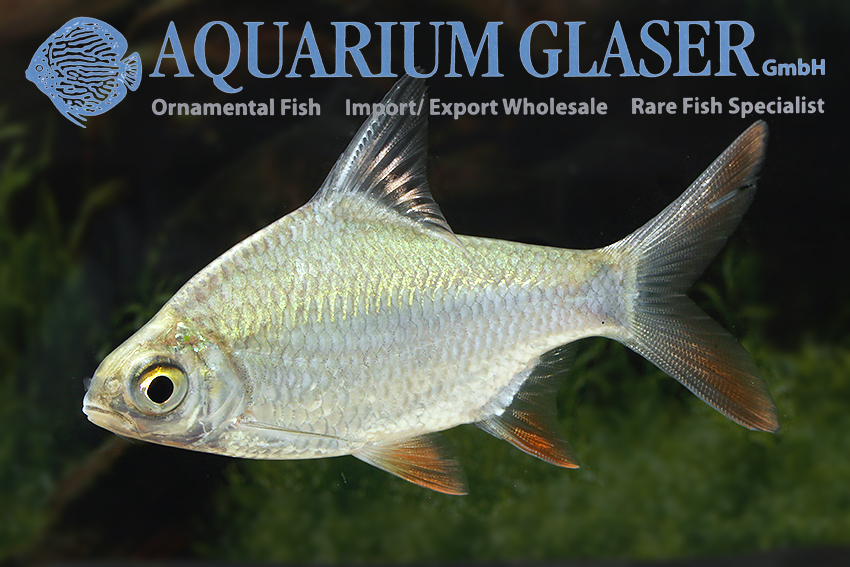
The genus Barbonymus was only established in 1999, with B. schwanefeldii as the genus type. There are nine species in the genus, but only one other species besides B. schwanefeldii is occasionally imported: B. altus. This species is so similar to B. schwanefeldii that there is hardly ever any distinction made between B. schwanefeldii and B. altus in the trade. The only difference between them is their coloration. B. schwanefeldii has clearly visible black stripes on the upper and lower edges of the caudal fin at all ages, which are either completely absent in B. altus or at most only faintly visible. In addition, B. schwanefeldii has a round black spot at the tip of the dorsal fin, which is absent in B. altus. However, specimens are also found in nature that cannot be clearly assigned to one species or the other. There are also bred forms of B. schwanefeldii. One is a yellowish form known as “gold” and the other is an albino form. The latter, however, could also be a bred form of B. altus, as these albinos are occasionally offered as aquarium breeds. Since B. altus appears to remain slightly smaller than B. schwanefeldii, it probably does not need such large aquariums and is correspondingly easier to breed in aquariums.
Both species are also known internationally as “tinfoil barb,” which refers to the strong silver sheen of their scales. B. altus appears slightly more yellowish, which is why it is sometimes sold as “golden tinfoil barb.” In German, both are called “Brassenbarbe” (bream barbel), in reference to the native bream (Abramis brama), a similarly high-backed carp fish. Incidentally, B. schwanefeldii was accidentally named B. schwanenfeldii in its first scientific description. Since there is agreement that this was a mistake – the species was named in 1854 in honor of Mr. H. W. Schwanefeld – the spelling without the “n” should be used.
When it comes to care, you can’t go far wrong with either Barbonymus species. They are large omnivores that also eat tender plants and are happy with any drinking water. The water temperature can be between 22 and 28°C. They are peaceful, sociable animals, but they need space to swim and grow.
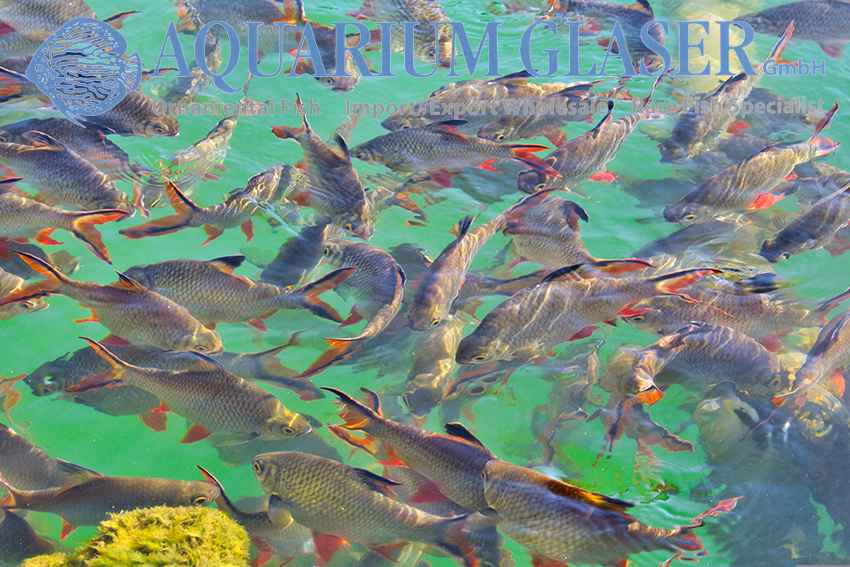
Incidentally, in southern Thailand there is a small river near a cave where a holy man once lived. As a result, the river around the cave is also considered sacred, and the fish that live there are not caught or eaten. There, in crystal clear water, you can admire magnificent B. schwanefeldii, which are fed by devout people and swim around near the surface without any fear.
For our customers: we usually do not distinguish between Barbonymus altus and B. schwanefeldii and offer them all as B. schwanefeldii. Depending on their size, they have codes 371401 (3-4 cm) to 371407 (20-25 cm) on our stock list. The yellowish breeding form Gold has code 371502, albinos 371552 (3-5 cm) and 371553 (6-8 cm). In cases where we offer B. altus separately, B. altus measuring 10-12 cm in length have code 371405 on our stock list, and those measuring 5-7 cm have code 371403. Please note that we only supply wholesale customers.
Text: Frank Schäfer, photos: Frank Schäfer, HHach/pixabay, and Erwin Schraml
