








The genus Garra is incredibly diverse and confusing. Currently (December 2025), 277 species names are associated with Garra, of which 171 are generally considered valid. The distribution area is huge and extends across parts of Africa and large parts of Asia; they can be found basically anywhere where it does not get too cold in winter. In the last comprehensive revision of Asian species from 1964, Menon distinguished only 37 species! In Africa, the genus is represented by at least 24 species. In Asia, its distribution ranges from Turkey (Garra caudomaculata, G. culiciphaga, G. kemali, G. klatti, G. menderescensis, G. orontesi, G. rezai, G. rufa, G. turcica, G. variabilis) across the Arabian Peninsula, Iran, and Iraq, and over the Himalayas to the east into the tropics. Caves and oases are also colonized. The genus is particularly species-rich in mountainous regions. From the above, it is clear that the genus Garra is currently very confusing.
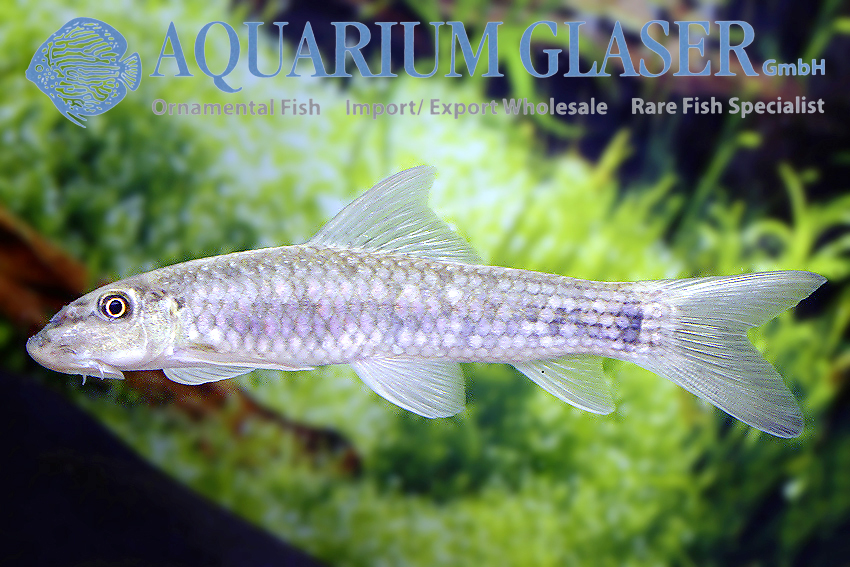
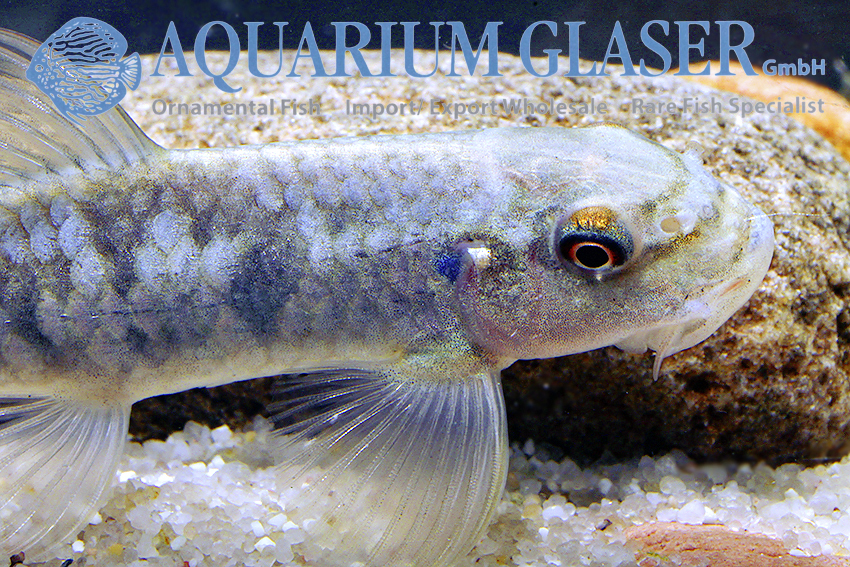
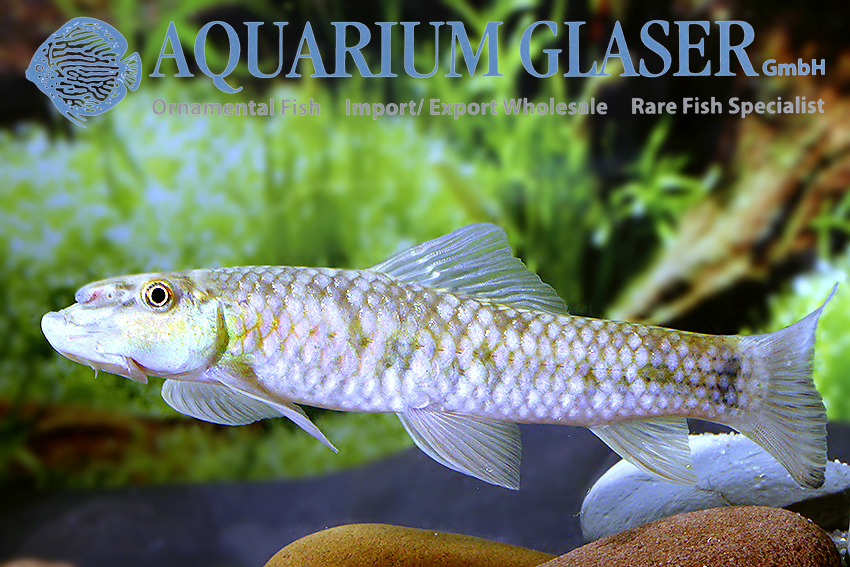
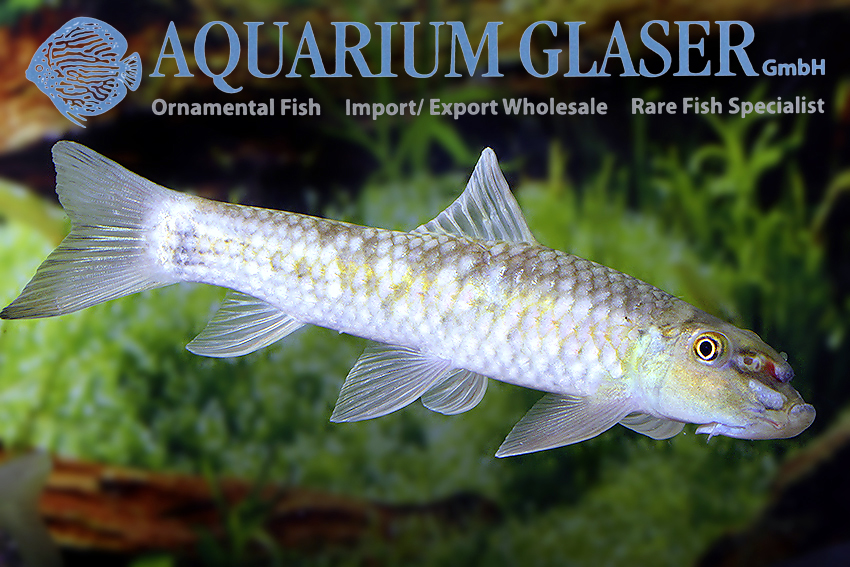
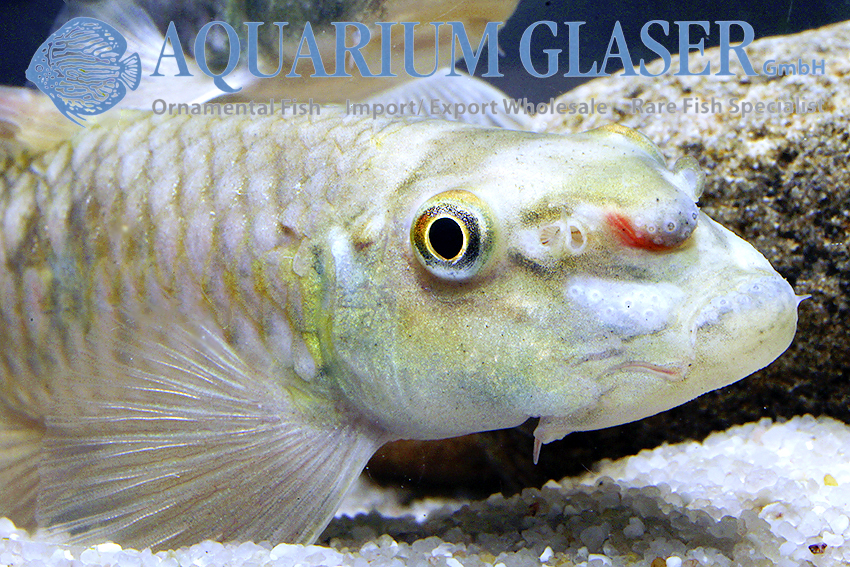
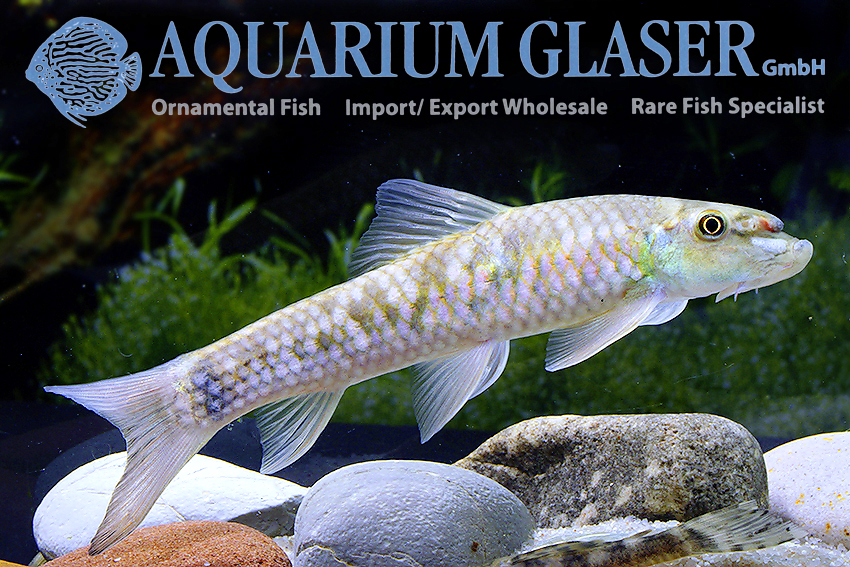
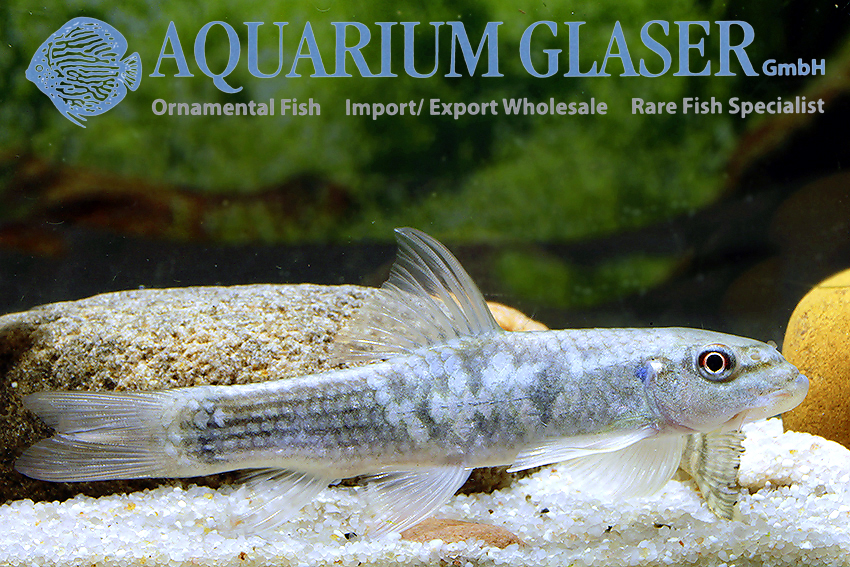
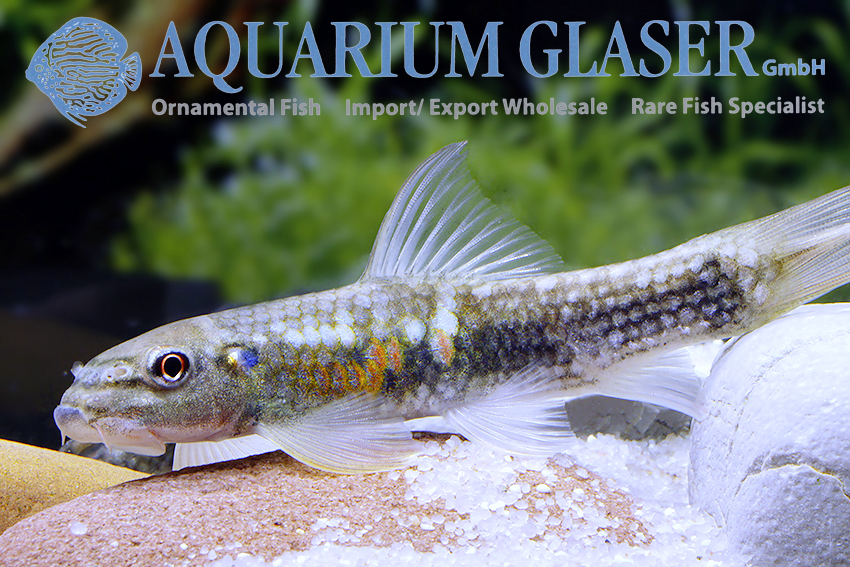
We have once again received a magnificent Garra species from India (more precise details are lacking), which is traded as Garra sp. Sunset-Goldscale. The most striking feature is the large, shiny scales on the flanks, which are arranged differently on each individual. Depending on the incidence of light, they shimmer bright blue, red-orange, or golden. The fully grown males (the specimen photographed is approx. 9.5 cm long and the largest animal we have seen so far) have an impressive forehead appendage (scientifically called a proboscis) and snout tubercles. The shape of this proboscis is species-specific. So many new Garra species have been described from India recently that it is not possible to determine the exact species with a reasonable amount of effort, especially since it cannot be ruled out that this is a species that has not yet been scientifically recorded. Our animals most closely resemble the species Garra gotyla, but more detailed, lengthy investigations are necessary to obtain clarity here. In any case, these algae eaters are animals that are not only useful, but also attractive and interesting!
The key aquarium parameters are: clear, low-pollution water, pH and hardness are essentially irrelevant, but the pH value should not fall below 6 on a permanent basis, temperature should be on the low side (20-24°C, possibly 2°C higher for breeding). Very peaceful, sociable (group keeping of 6 or more specimens recommended), plants are not damaged but cleaned. Aufwuchs eaters (algae and microorganisms), therefore do not feed too much nutrient-rich but fiber-rich food. Dry food is accepted without any problems, supplemented with the usual frozen and live food types. Only the males have a proboscis. We are not aware of any breeding reports, but so far all Garra species that have been attempted to breed have proven to be gravel spawners without brood care.
For our customers: the fish have code 416442 (4-6 cm) on our stock list. Please note that we only supply wholesale customers.
Text & photos: Frank Schäfer
