








Since we went online with our homepage over 20 years ago, many new discoveries have been presented here. Some of them were able to establish themselves as ornamental fish, others disappeared again.The former category includes Hyphessobrycon robustulus, which was initially exported from Peru as “junior tetra”; it is now also regularly bred commercially.The somewhat unusual name comes from the fact that the Peruvian exporter – Jorge Panduro Sr. – handed over the business to his son – Jorge Panduro Jr. – at the time of the discovery of this beautiful tetra. He thought it would be a nice idea to share this with his customers in the form of an interesting novelty. Another popular name for this species is “Panduro tetra” or “Pandurini tetra”, which needs no further explanation after what has been said so far.
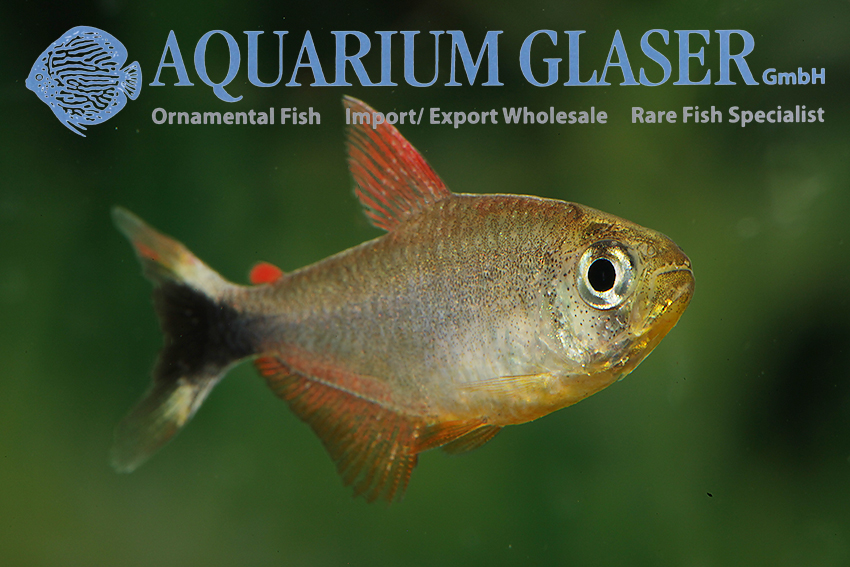
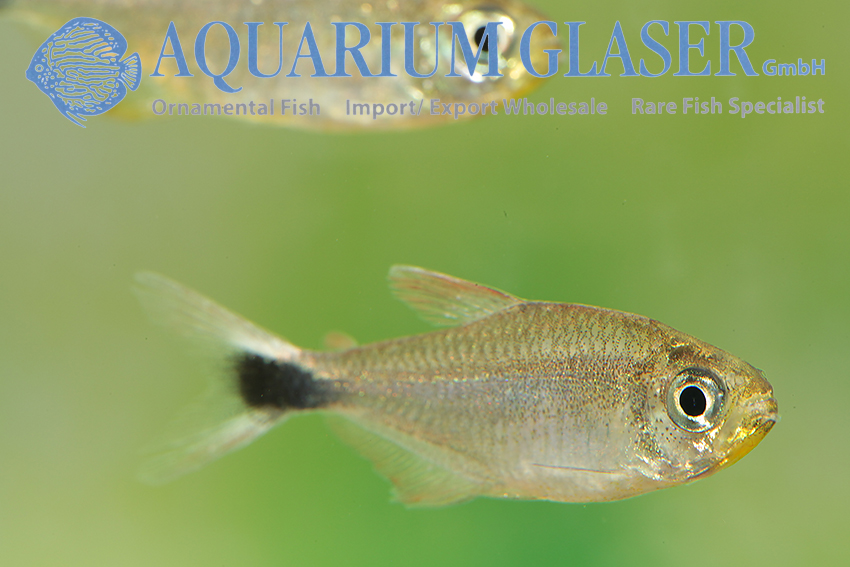
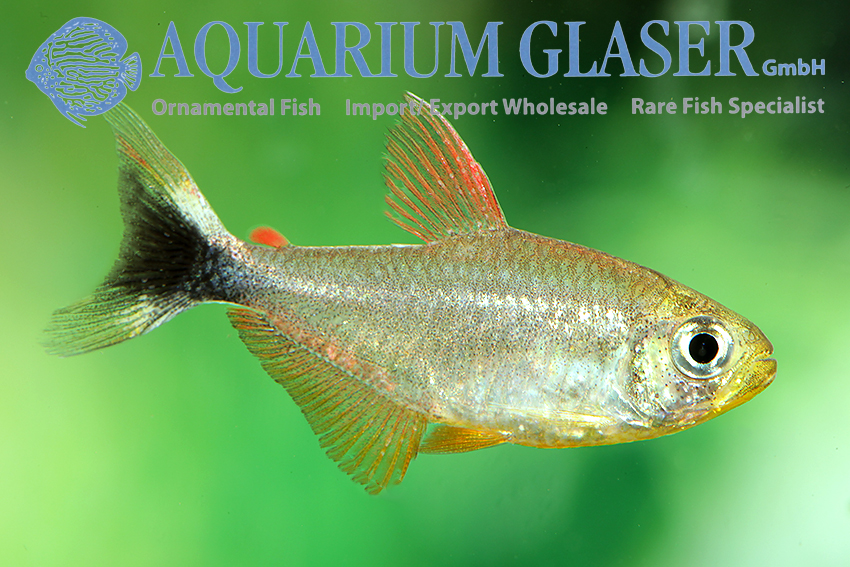
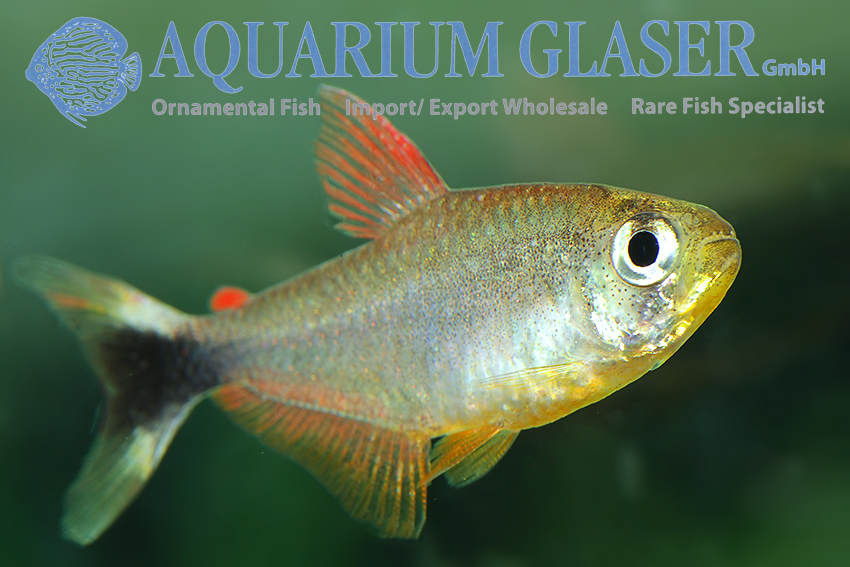
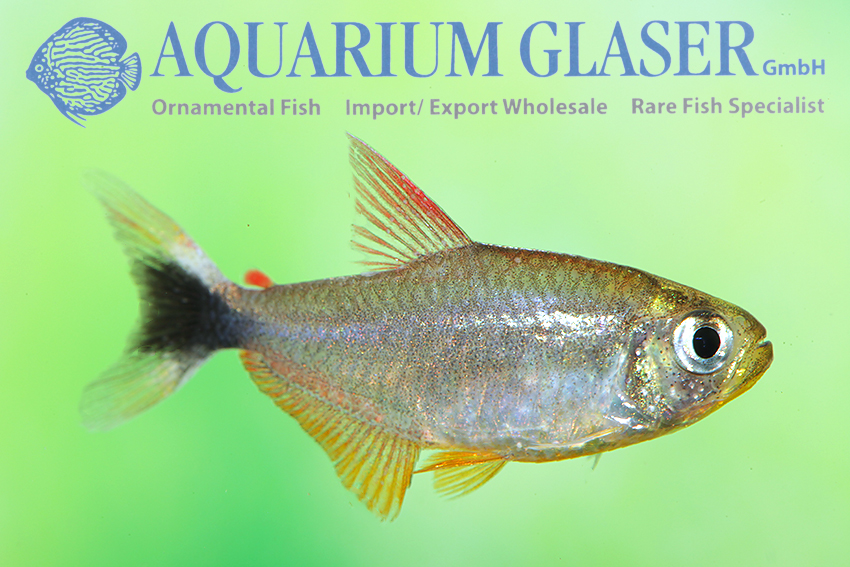
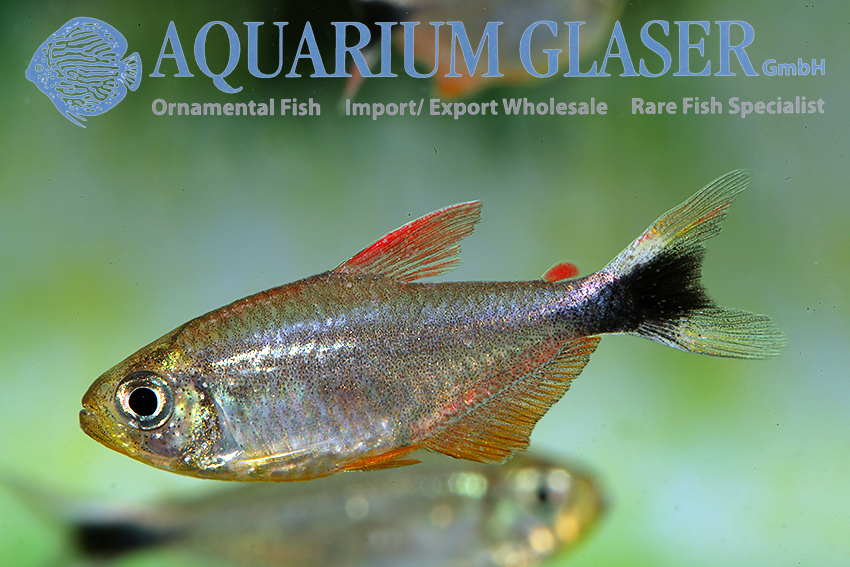
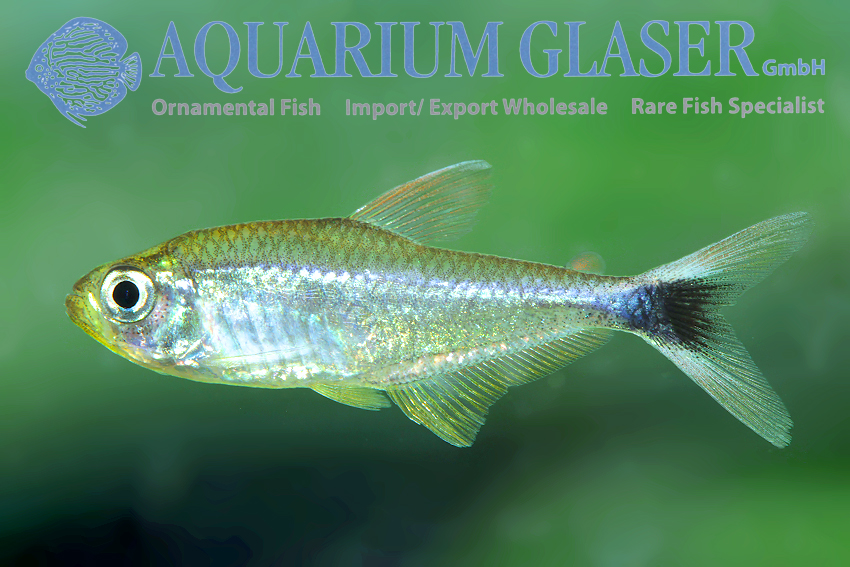
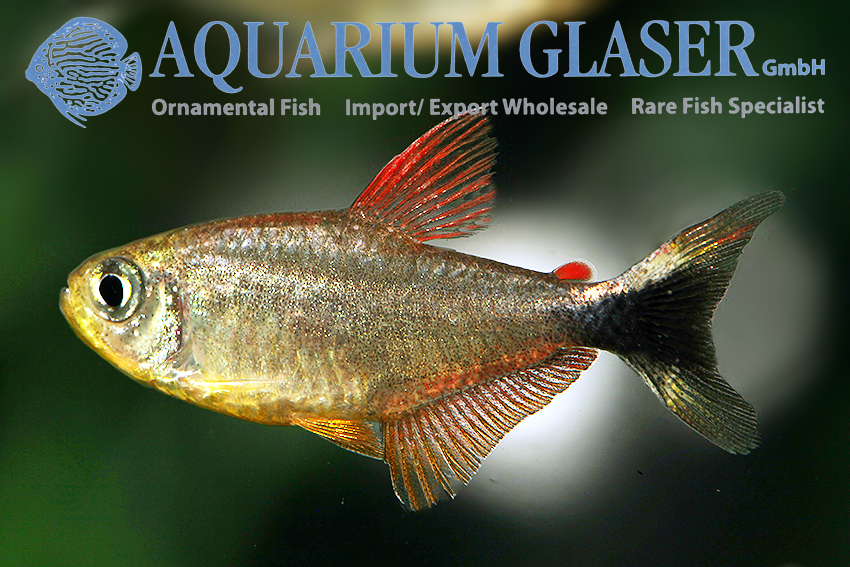
Hyphessobrycon robustulus was already described by Cope in 1870 under the name Hemigrammus robustulus. Anatomical features led to its transfer to the genus Hyphessobrycon. The type locality was Pebas in Peru, which at that time belonged to Ecuador. To our knowledge, the “official” assignment of the junior tetra to the species Hyphessobrycon robustulus was made by Zarske in 2007. Previously, another, paler species was listed under this name (e.g. Aquarien-Atlas, Vol. 1, 1990), which was later scientifically described as Hyphessobrycon frankei.
In general, the name Hyphessobrycon robustulus has become established for the junior tetra. In February 2024 a scientific checklist of all tetra species was published. Here, Hyphessobrycon robustulus is listed as a currently scientifically unclassifiable species (“species inquirendae”), which is only known according to the types from 1870.
It is therefore not impossible that we will have to retrain at some point. Incidentally, the fishing area for the junior tetra is in the area around Tamishiyacu in the Fernando Lores district of Peru, around 50 km upstream from Iquitos.
The junior tetra is an ideal aquarium fish, a picture-book tetra. It is small (3.5 – 4 cm), peaceful, colorful and lively. The species makes no special demands on the water composition, the temperature can be between 22 and 28°C. Hyphessobrycon robustulus exhibits an unusually strong sexual dichromatism for characins. All fin parts that are red in the male are yellow in the female.This can be seen particularly well in the video of the species that we have posted on YouTube: https://www.youtube.com/watch?v=JzonUg3cd-s
The pictures for this post show wild-caught specimens that we are once again able to offer.
For our customers: Wild-caught specimens have code 261432, captive-bred specimens code 261423 on our stock list. Please note that we only supply the wholesale trade.
Literature:
Riehl, R. & Baensch, H. A. (1990): Aquarien Atlas Band 1. 8. Auflage. Mergus Verlag, Melle. page cited: 290
Toledo-Piza, M., E. G. Baena, F. C. P. Dagosta, N. A. Menezes, M. Ândrade, R. C. Benine, V. A. Bertaco, J. L. Birindelli, G. Boden, P. A. Buckup, P. Camelier, F. R. Carvalho, R. M. C. Castro, J. Chuctaya, E. Decru, E. Derijst et al. (2024): Checklist of the species of the Order Characiformes (Teleostei: Ostariophysi). Neotropical Ichthyology v. 22 (no. 1): e230086: 1-548.
Zarske, A. & J. Géry (1997): Hyphessobrycon frankei sp.n. Die Aquarien- und Terrarienzeitschrift DATZ 50 (5) 1997: 308-312
Zarske, A. (2007): Hyphessobrycon robustulus (Cope, 1870). Aqaristik Fachmagazin, 198: 26-28
Text & photos: Frank Schäfer
