








The dragonfish of East Asia are no longer considered to be members of the carp family (Cyprinidae), but rather form their own family, Xenocypridae. Based on current knowledge, this family comprises 44 genera and 164 species. However, only five genera endemic to East Asia (i.e., found exclusively there) are referred to as true dragonfish—sometimes grouped under the term “Opsariichthine”: Nipponocypris, Parazacco, and Candidia, which have a distinct longitudinal band; and Zacco and Opsariichthys, which have vertical stripes on their flanks. Opsariichthys is distinguished from Zacco only by very subtle differences. The most important distinction is that Opsariichthys species have a hook at the end of the lower jaw that fits into a notch at the end of the upper jaw when the mouth is closed. This hook-and-notch anatomy is absent in Zacco. Opsariichthys species are found in China, Taiwan, Korea, Japan, Russia, and northern Vietnam. We have now been able to import a species from Vietnam.
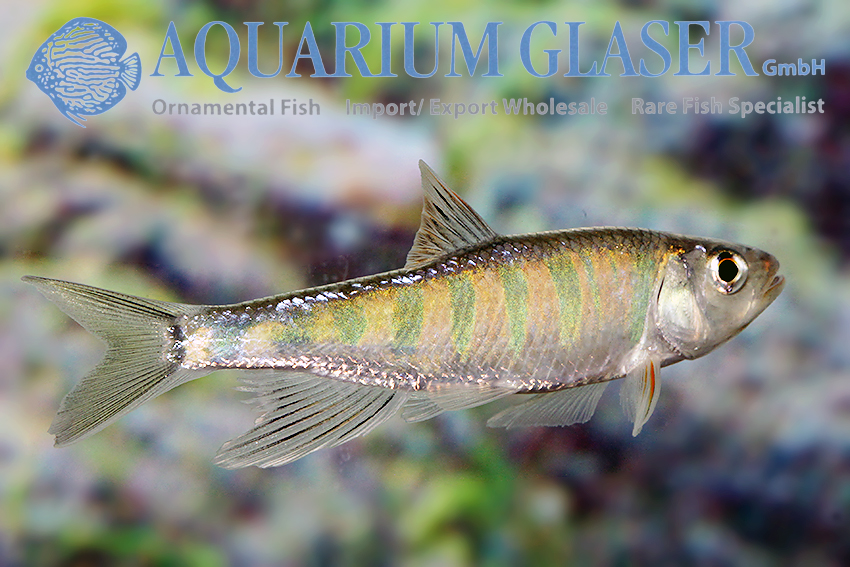
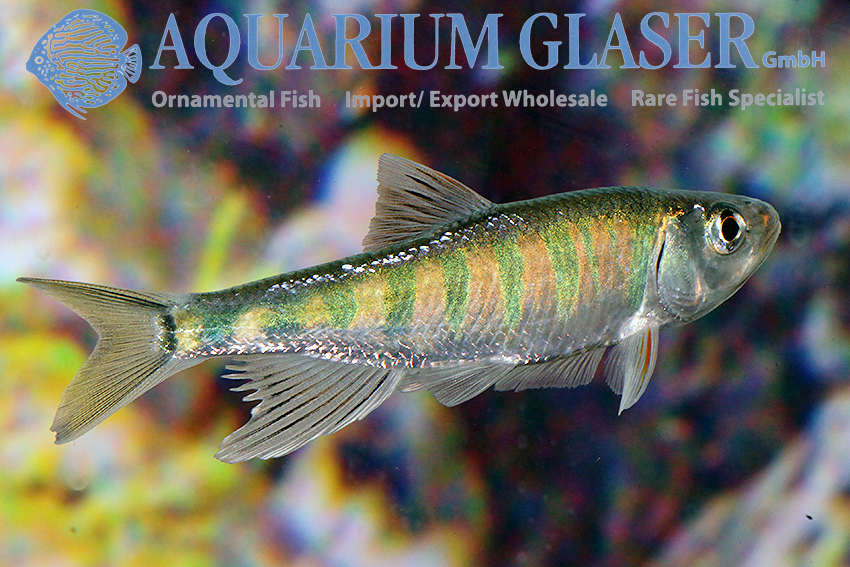
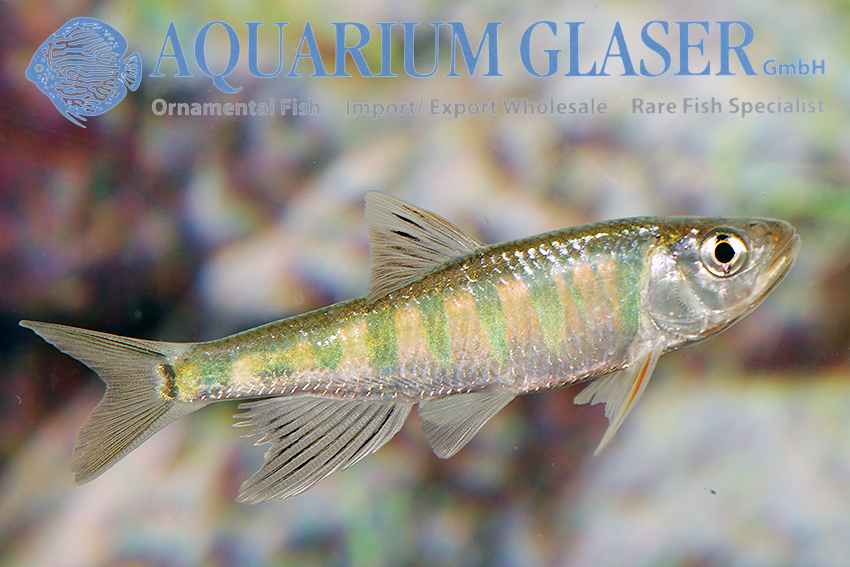
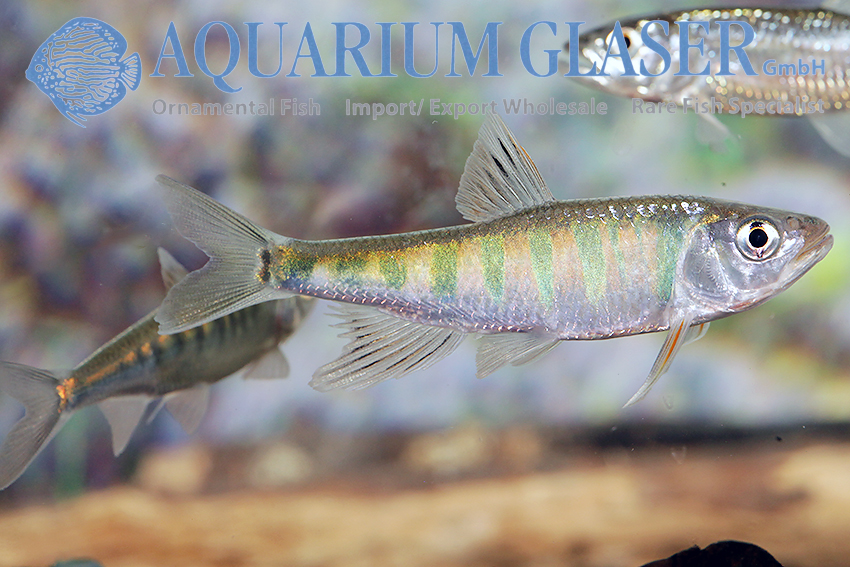
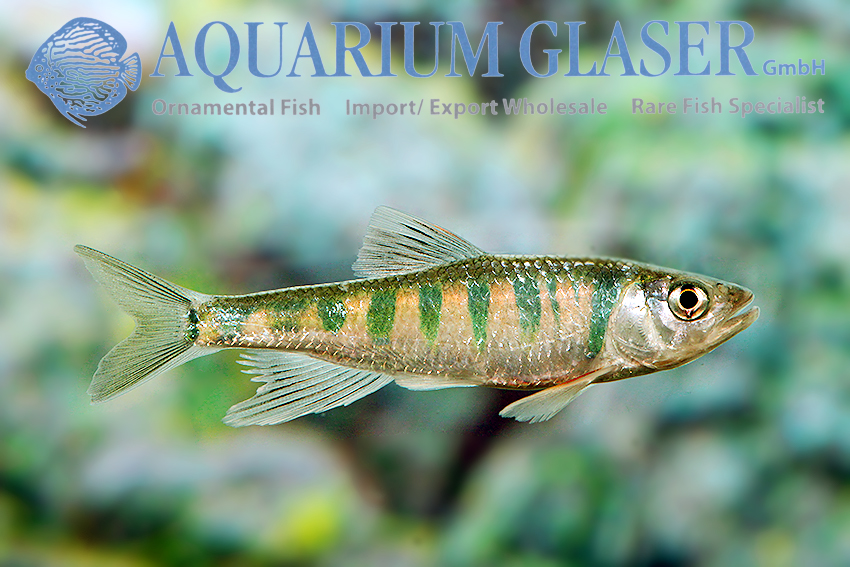
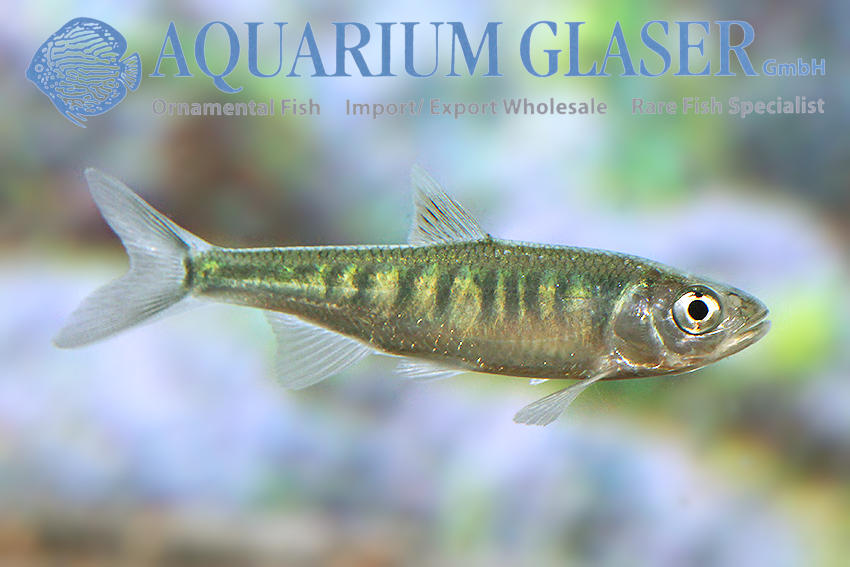
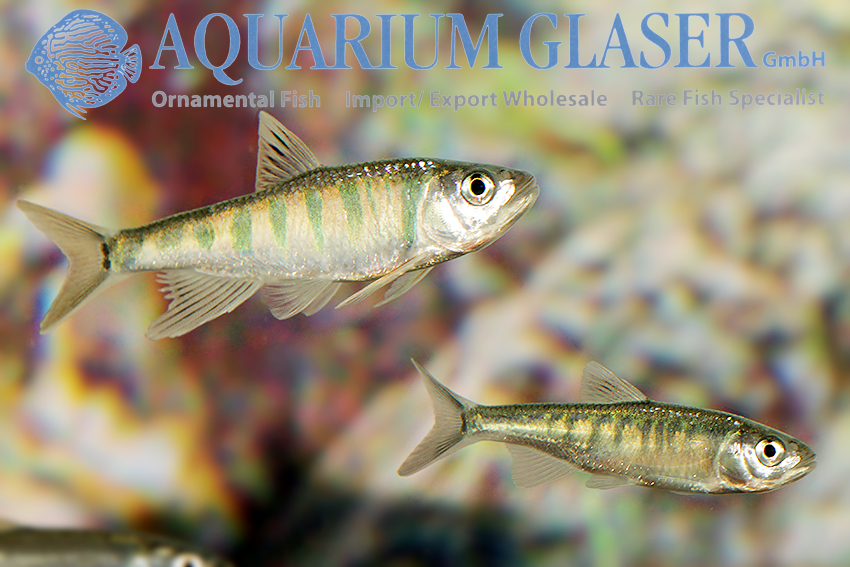
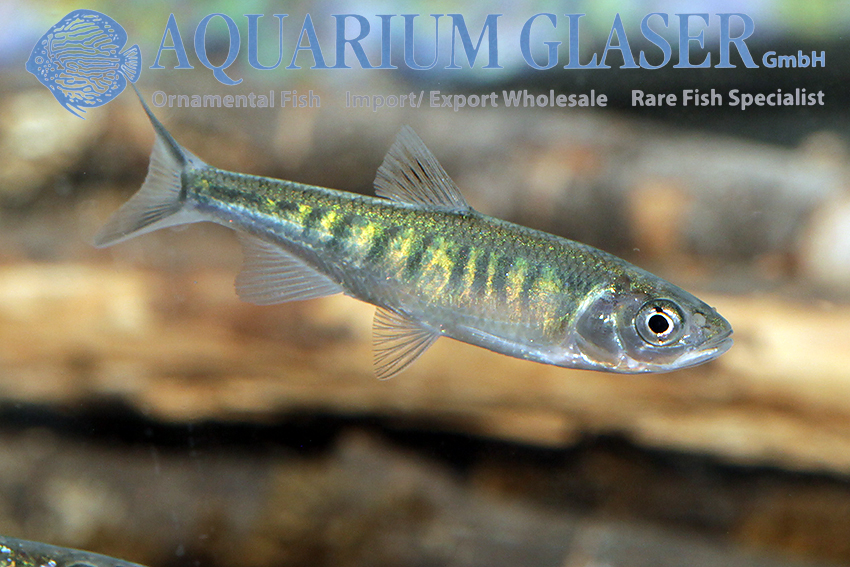
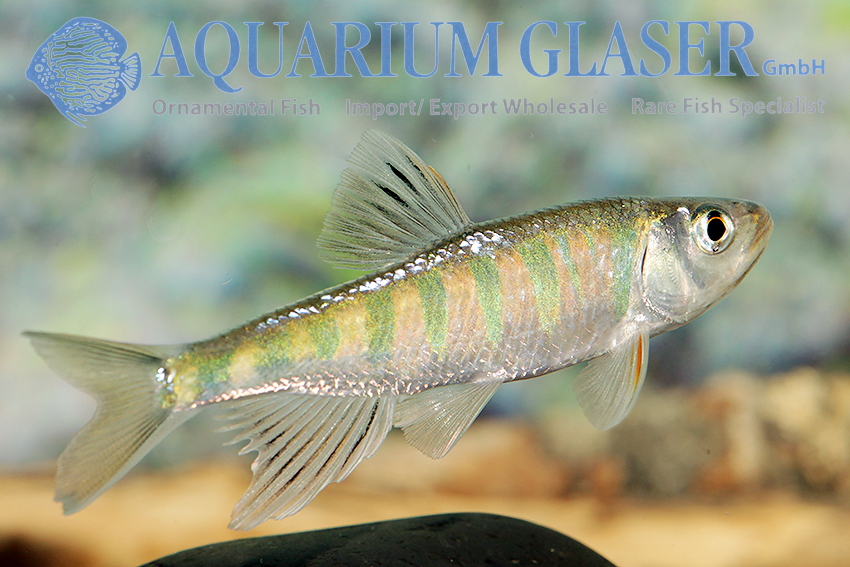
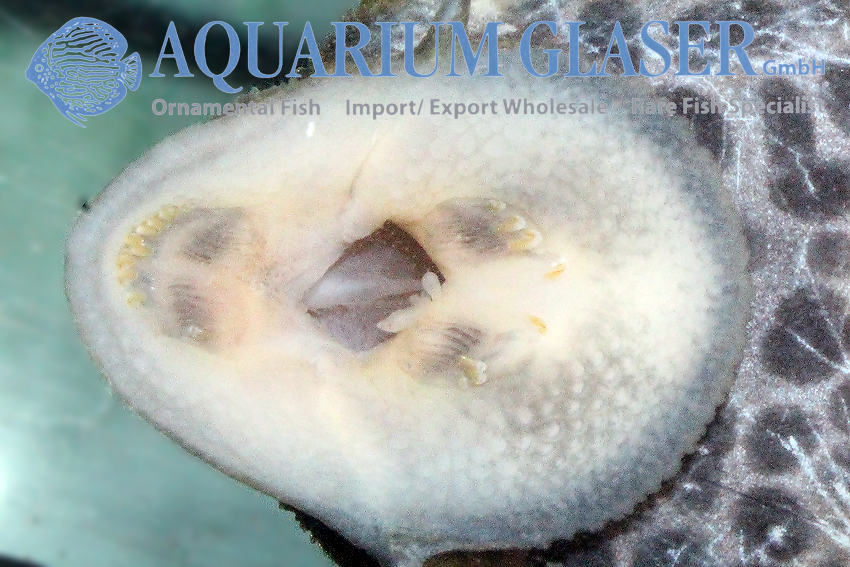
Opsariichthys duchuunguyeni, described only in 2013, belongs to a group of species classified within Opsariichthys that lack the notch in the upper jaw. The other species of the genus Opsariichthys reported from Vietnam have this notch very clearly. See also our entry on O. cf. songmaensis: https://www.aquariumglaser.de/en/08-carp-like-fishes-2-barbs-minnows-carps-goldfish-etc/opsariichthys-cf-songmaensis-2/, where this feature is clearly visible.
Dragonfish are magnificent aquarium fish that love cool, flowing water. They do not require an additional heater. Their large mouths are a clear indication that even small fish can disappear inside them, so be careful. During dominance fights, the caudal fin is particularly prone to damage. However, this shouldn’t deter you from keeping these fish in a school, as they are very social creatures despite their rough interactions with one another.
Maximum size: approx. 7–9 cm (males) and 6–7 cm (females); Temperature: 14–24°C; pH and hardness: not significant for care (tap water); Diet: Omnivorous; accepts any dry, frozen, or live food of suitable size. Social behavior: Schooling fish with a social hierarchy.
For our customers: These fish are listed under code 439930 on our stock list. Please note that we supply exclusively to wholesale customers.
References:
Huynh, T. Q. & I-S. Chen (2014): A new species of cyprinid fish of the genus Opsariichthys from the Ky Cung–Bang Giang River basin, northern Vietnam, with notes on the taxonomic status of the genus from northern Vietnam and southern China. Journal of Marine Science and Technology, vol. 21, Suppl. [for 2013]: 135–145.
Text & photos: Frank Schäfer
