








A true classic is the krib, or, as it is also sometimes known, the king cichlid Pelvicachromis pulcher. The most complicated thing about it is the history of its name. In the very early days, it was known as P. kribensis; in English-speaking countries, it is still referred to as “the krib” to this day. Then it was recognized that it was actually P. pulcher, but there was quite a bit of confusion regarding the correct naming of various color forms and locality variants. Currently, a distinction is made between P. pulcher and P. sacrimontis (which used to be called “Form B” of P. pulcher). Both are native to the Niger River in Nigeria, and both have different color variations. For P. sacrimontis, see here: https://www.aquariumglaser.de/en/fisharchive/pelvicachromis-sacrimontis-p-pulcher-red-wild-2/. for a wild form of P. pulcher, see here: https://www.aquariumglaser.de/en/25-perchlike-fishes/pelvicachromis-pulcher-wild-yellow-2/
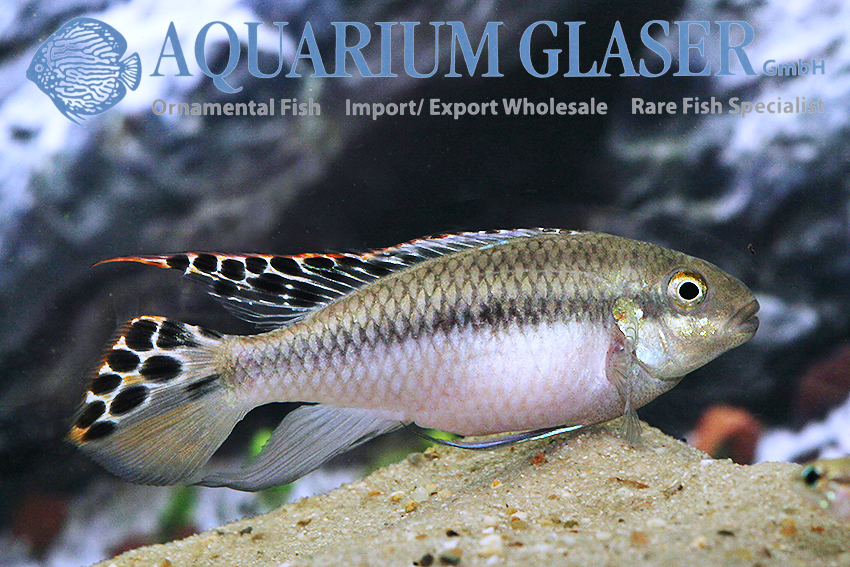
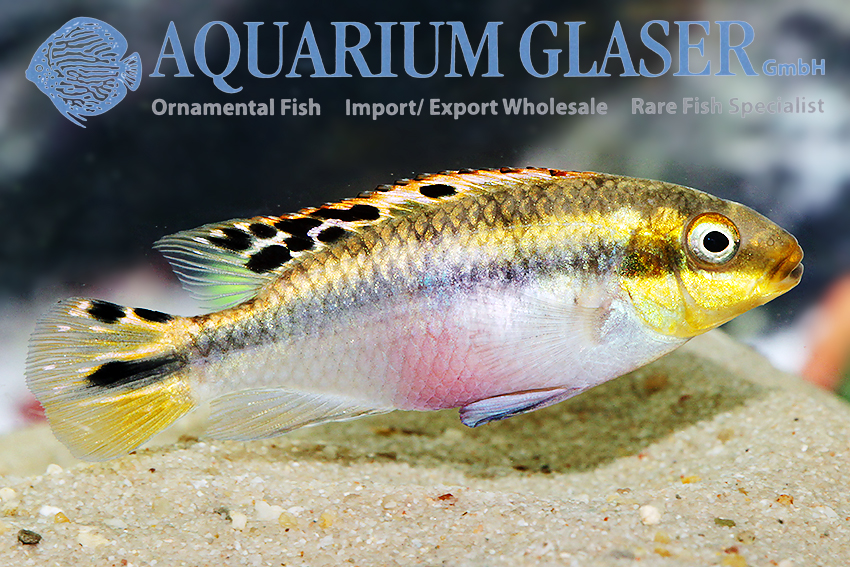
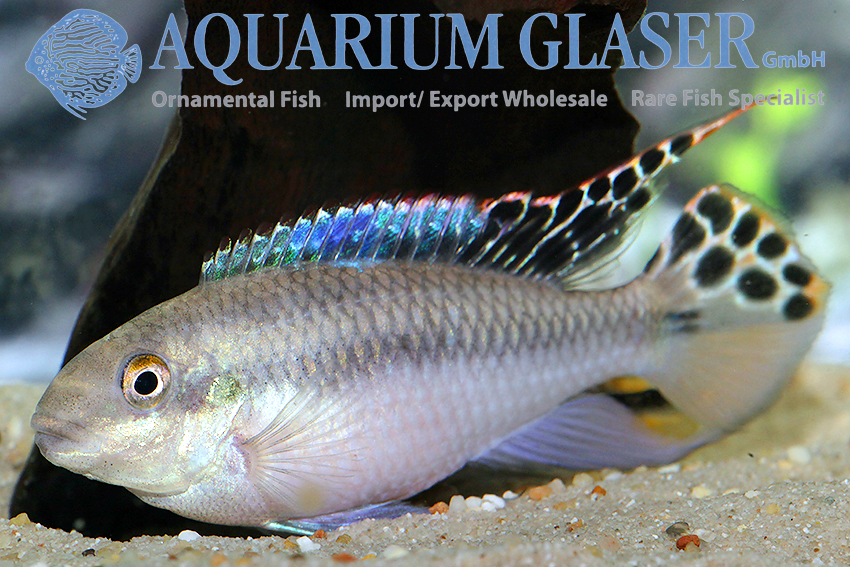
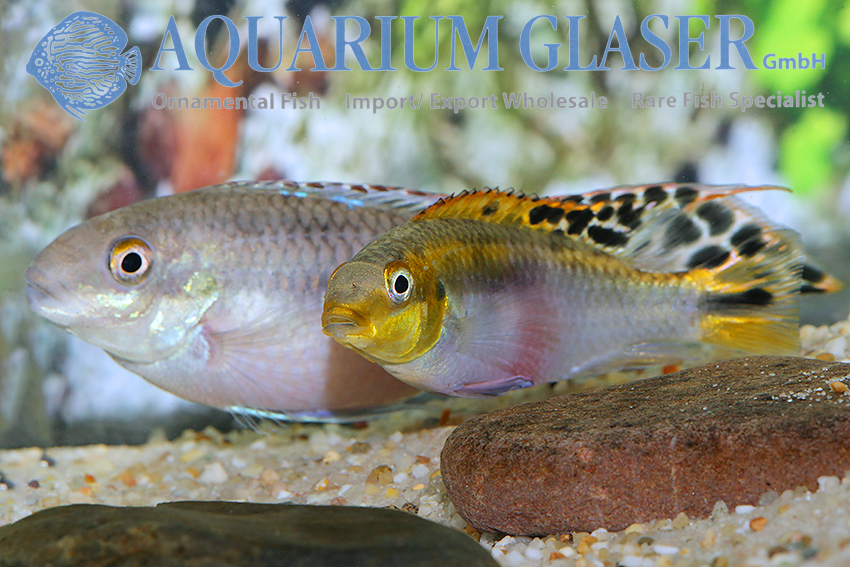
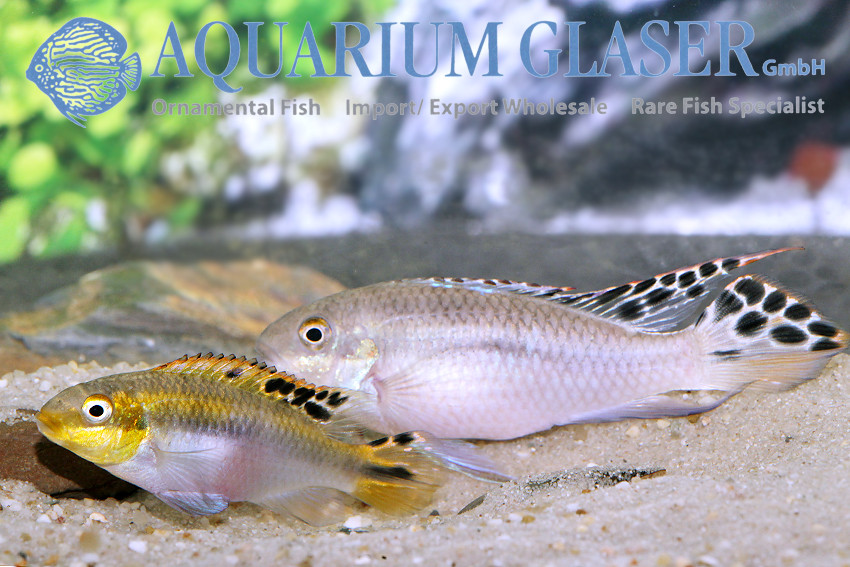
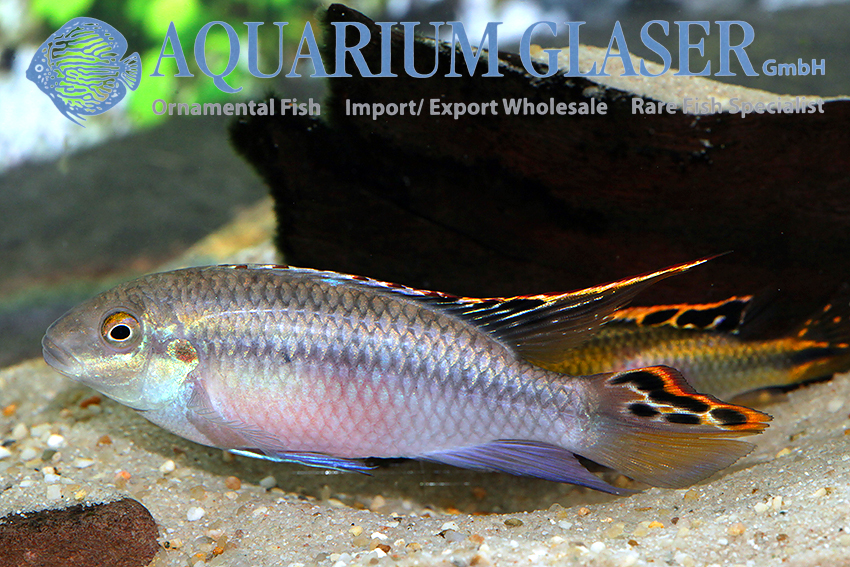
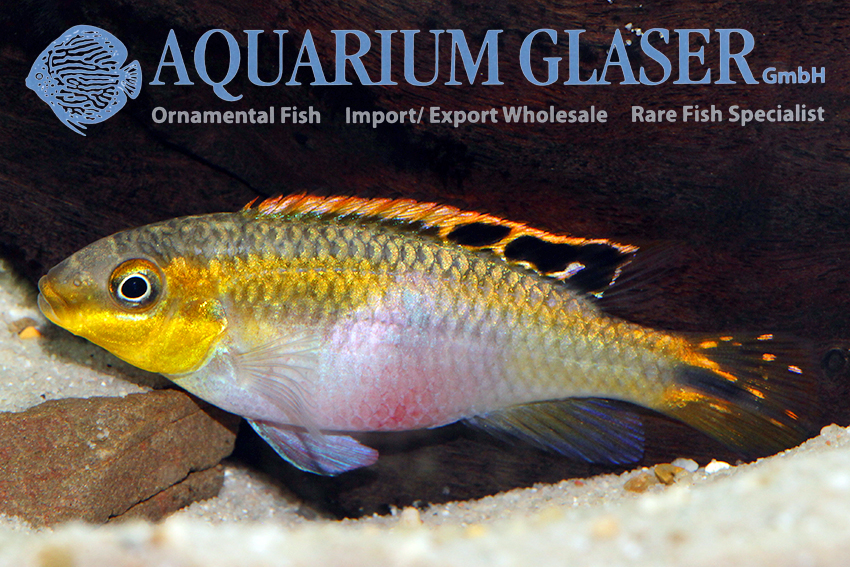
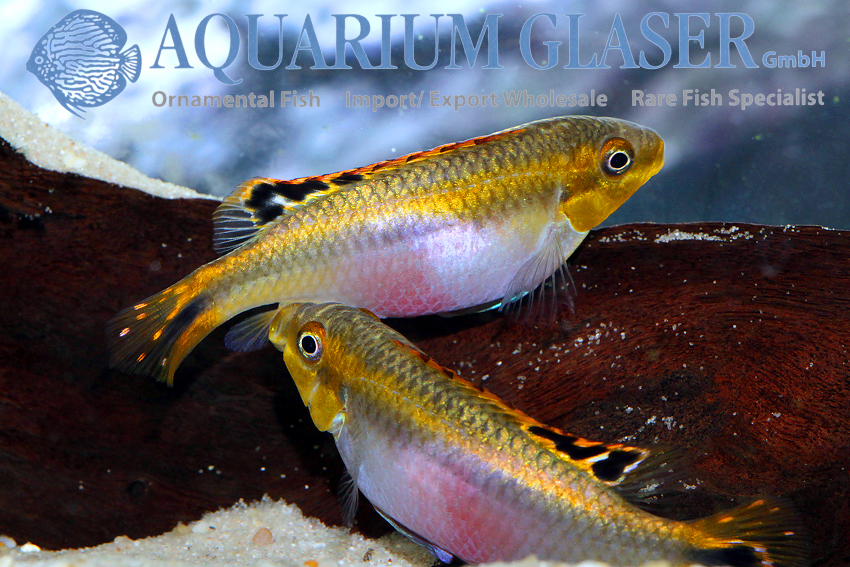
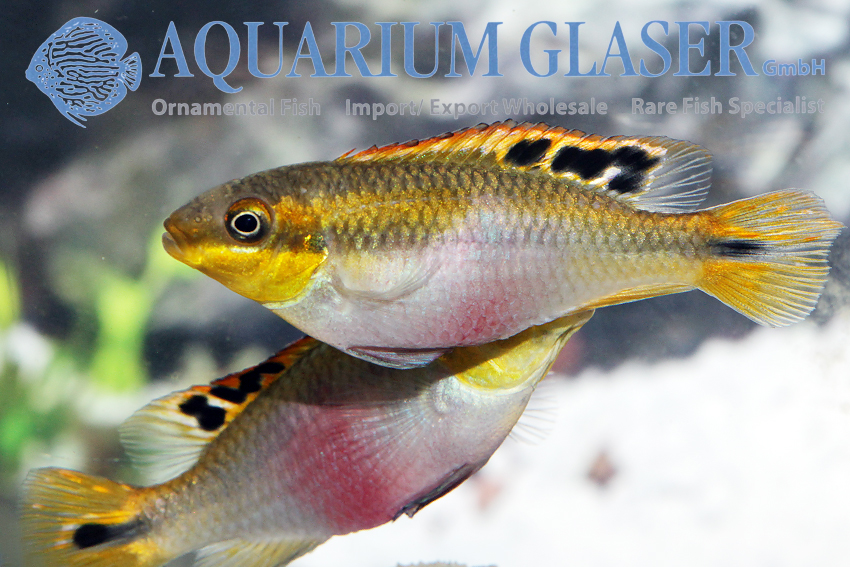
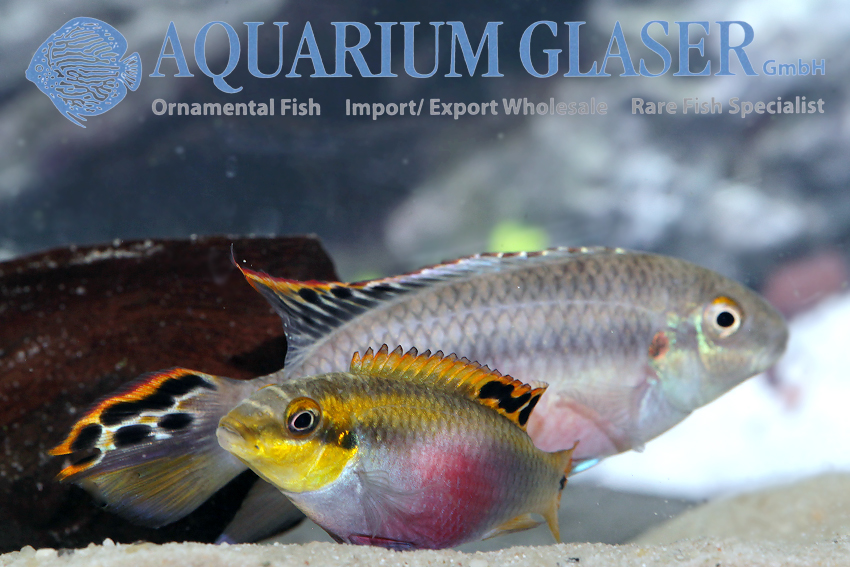
Pelvicachromis is a dwarf cichlid, meaning it grows to a maximum of 10 cm in length, and even then only the males; females always remain significantly smaller. We sometimes receive offspring of P. pulcher that have beautiful spots on their dorsal fins. Unfortunately, these are individual beauties. In every brood where such fish appear, there are also significantly more plain-colored specimens that have only a few or no spots on their dorsal fin.
In the past, keeping and breeding this cichlid was considered difficult. The fish prefer soft, slightly acidic water. They were also often kept at temperatures that were too high. Pelvicachromis originate from shaded streams with temperatures of only 22–24°C, and even significantly cooler after rain. But today, decades of breeding have produced robust and adaptable fish that tolerate virtually all water parameters and even raise their fry in moderately hard, slightly alkaline water. Plants and other fish are almost always left undisturbed; if the tank is large enough, this even holds true during the breeding season. They are cave spawners that form family groups. They will eat any commercially available fish food of a suitable size.
For our customers: depending on their size, these fish are listed under codes 559901 (2–3 cm) to 559904 (5–7 cm) on our stock list. Please note that we supply exclusively to wholesale customers.
Text & photos: Frank Schäfer
