








Barracuda tetras of the genus Acestrorhynchus are very well suited for aquarium keeping, even though they are true predatory fish and primarily feed on small fish in the wild. Several species grow to a medium size, about 20–30 cm, but there are also dwarf species, including A. isalinae, which reaches only about 7.5 cm in standard length (i.e., about 10 cm in total length; after all, the caudal fin is usually not included in the measurement for fish); Imported specimens sometimes include giants measuring about 12 cm in total length (ie with caudal fin). This species is also the most attractive Acestrorhynchus in terms of body markings: It has two black longitudinal bands and a partially red or yellow caudal base spot; overall, the caudal base spot is divided into three sections. The top section is red or yellow, the middle section is black, and the bottom section is white.
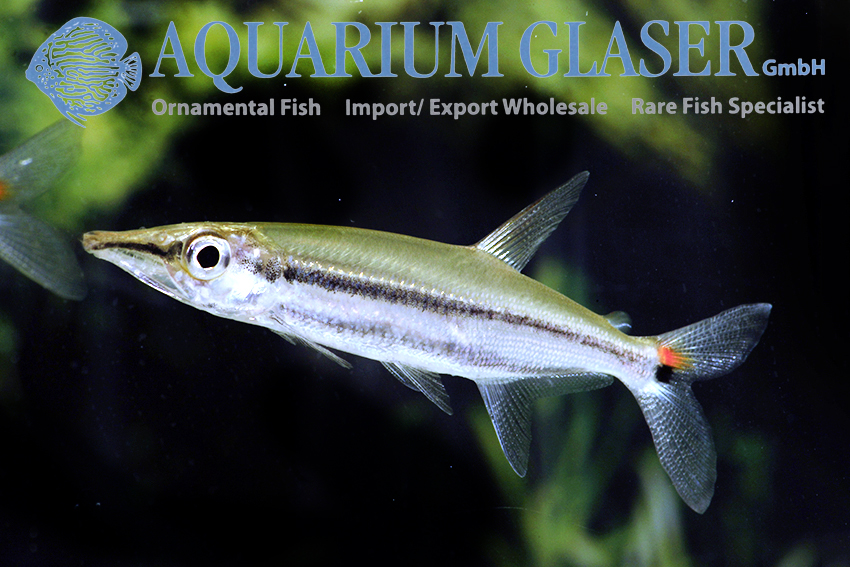
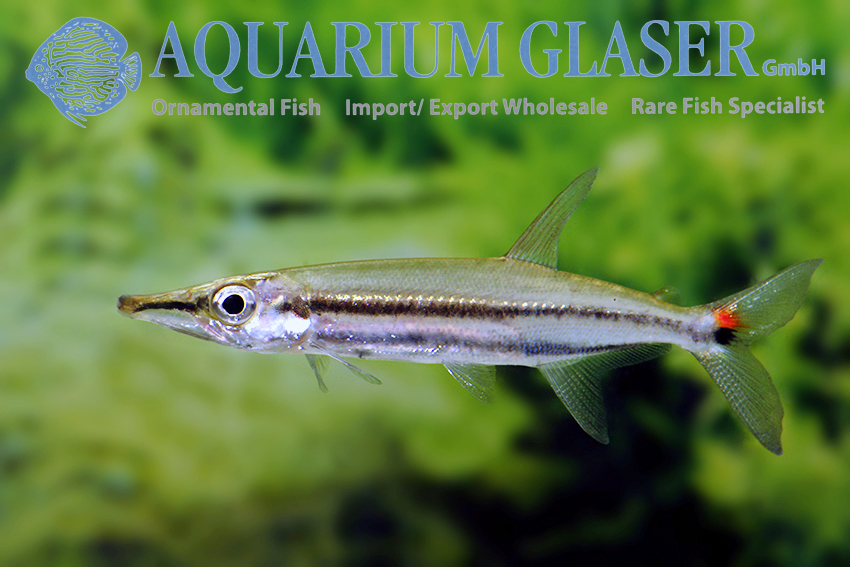
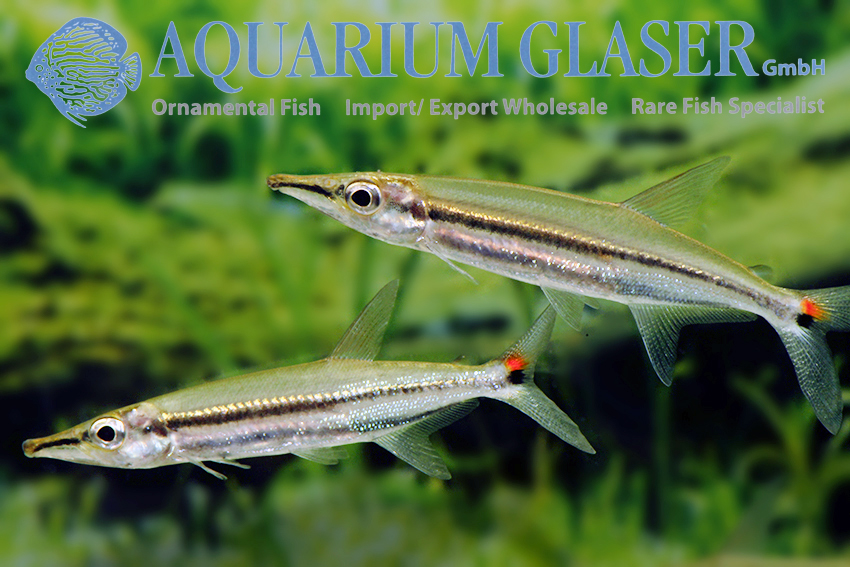
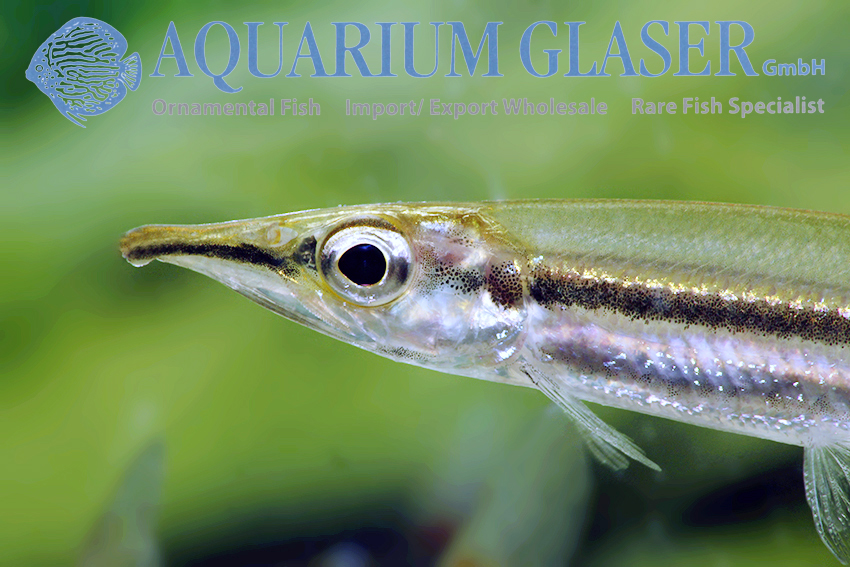
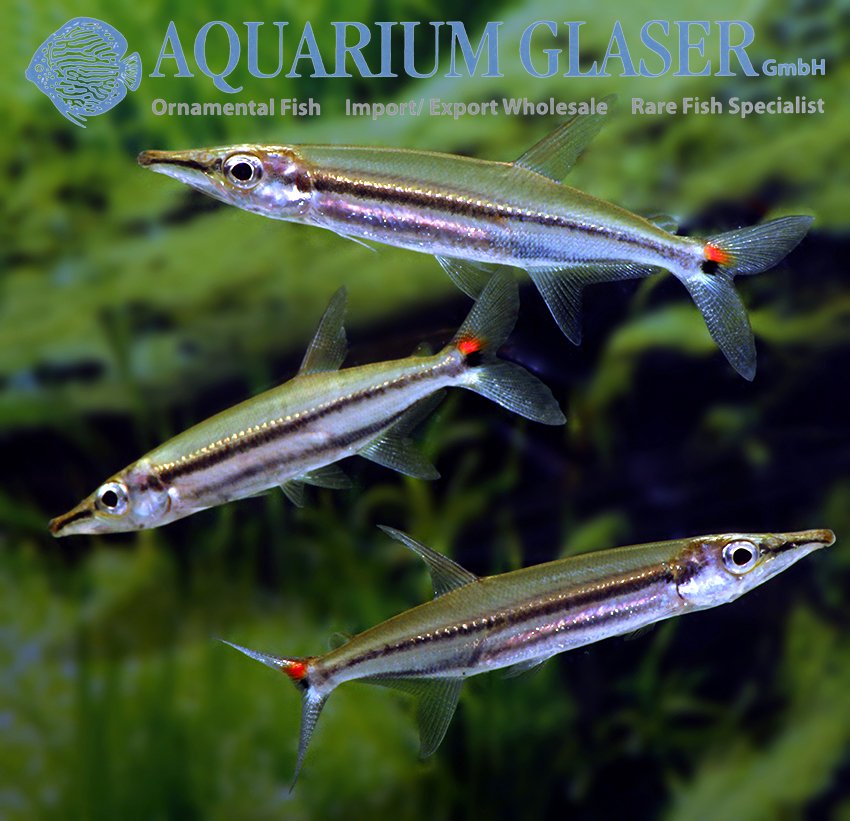
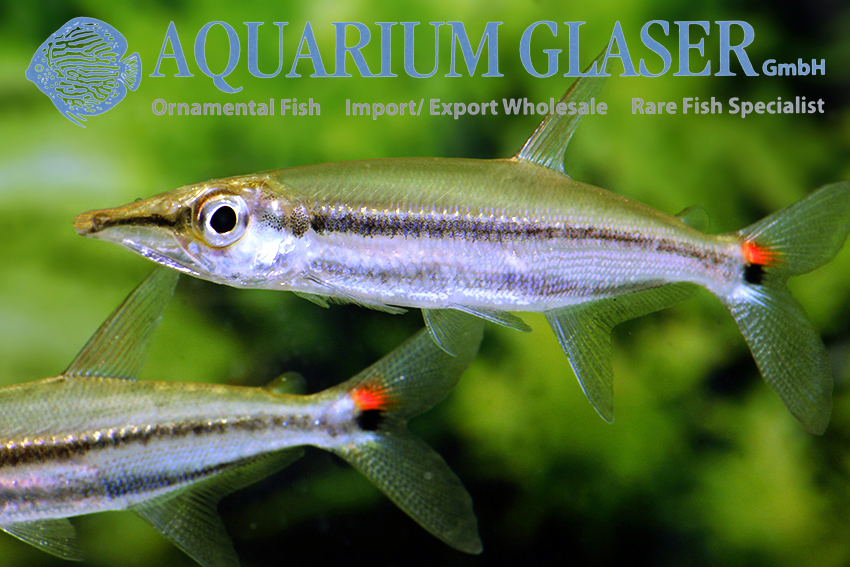
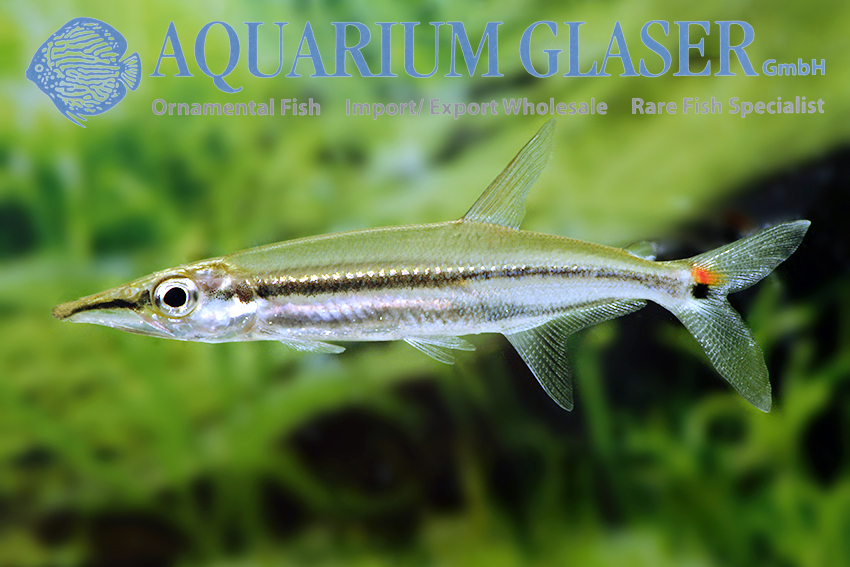
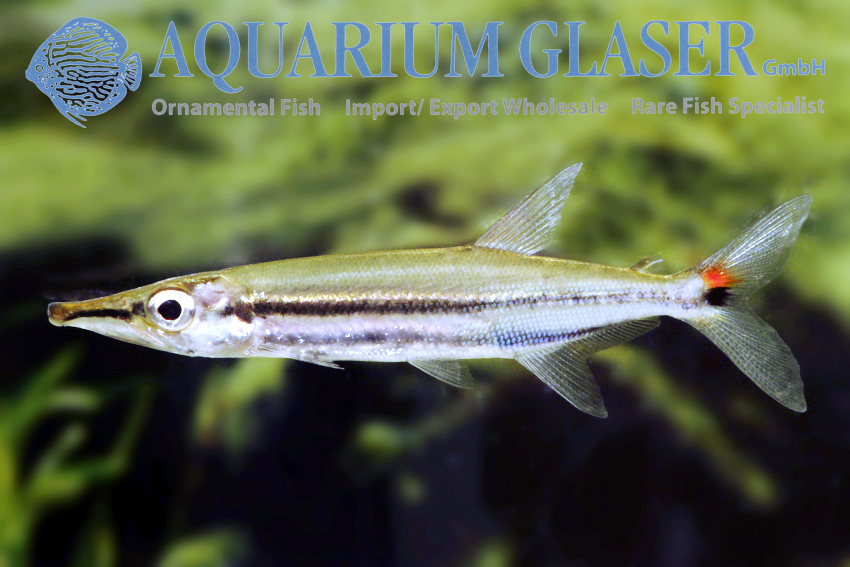
Acestrorhynchus isalinae was first scientifically described in 1983 from the drainage of the Rio Madeira. No exports of the species originate from there, but there is a beautiful book about the fish of the Rio Madeira; the A. isalinae depicted there matches the animals we regularly import from Peru in all color characteristics. As early as 1909, Eigenmann described an extremely similar species from British Guiana, namely Acestrorhynchus nasutus. It is occasionally speculated that A. nasutus and A. isalinae are the same species, or that all fish imported as A. isalinae are in fact A. nasutus.
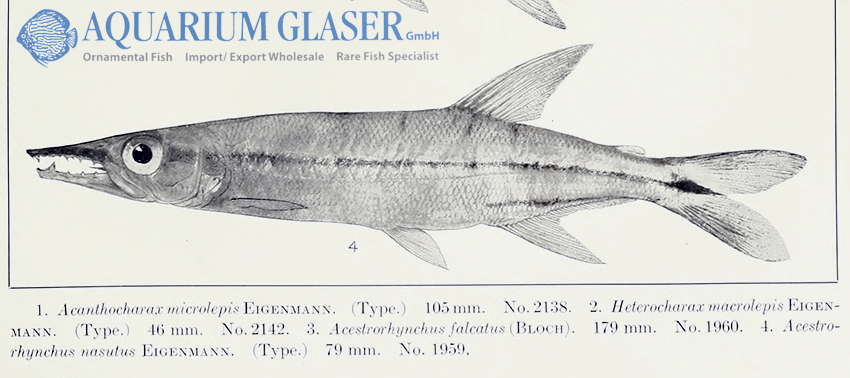
However, as can be clearly seen in the 1903 photograph of the type specimen of A. nasutus, the black caudal base spot in this species is not punctate as in A. isalinae, but rather diamond-shaped, extending to the end of the caudal fin; Furthermore, in A. nasutus, the ventral stripe ends above the anal fin, whereas in A. isalinae it extends along the entire length of the abdomen. Apparently, A. nasutus has never been imported for the aquarium trade. A. nasutus also grows to only about 7.5 cm in length. Furthermore, the similarly colored A. maculipinna from the Amazon region in Brazil—which also remains small (8 cm without the caudal fin)—has a large black spot at the base of the dorsal fin.
Acestrorhynchus are generally relatively peaceful toward one another and toward other fish that are not potential food sources. However, this must be modified in that it is not advisable to keep specimens of different sizes together in the case of A. isalinae. In this scenario, the larger specimens will bully the smaller ones, even if the size difference is only 1–2 cm. In extreme cases, the bullying can even be fatal, so exercise caution!
The chemical composition of the water is relatively unimportant for A. isalinae; a pH between 6 and 8, water hardness ranging from soft to moderately hard, and a temperature between 22 and 26°C are ideal conditions. Feeding presents a challenge. Live feed fish should be avoided whenever possible, as they can always carry pathogens. Smaller A. isalinae readily eat live white mosquito larvae, for example. With a little patience, the animals can almost always be accustomed to coarse frozen food.
For our customers: the animals have – depending on size – code 202100 (4-5 cm) to code 202104 (9-12 cm) on our stock list. Please note that we supply exclusively to wholesalers.
Literature:
Eigenmann, C. H. (1912): The freshwater fishes of British Guiana, including a study of the ecological grouping of species, and the relation of the fauna of the plateau to that of the lowlands. Memoirs of the Carnegie Museum v. 5 (no. 1): i-xxii + 1-578, Pls. 1-103.
Menezes, N. A. & J. Géry (1983): Seven new acestrorhynchin characid species (Osteichthyes, Ostariophysi, Characiformes) with comments on the systematics of the group. Revue Suisse de Zoologie v. 90 (no. 3): 563-592.
de Queiroz, L. J., Torrente-Vilara, G., Ohara, W. M., da Silva Pires, T. H., Zuanon, J & C. R. da Costa Doria (2013): Peixes do Rio Madeira, Vol 1-3, Sao Paulo
Text & photos: Frank Schäfer
