








There is hardly any other genus of South American cichlids where there is as much confusion regarding species delimitation as there is with the Oscars (Astronotus). For a long time, only two species were generally recognized: A. ocellatus and A. crassipinnis. However, there are apparently significantly more species; currently (2026), A. crassipinnis, A. mikoljii, and A. ocellatus are generally accepted, while A. rubroocellatus and A. zebra are only accepted with reservations. Genetically, at least six different species can be distinguished, but it remains unclear how they should be named.
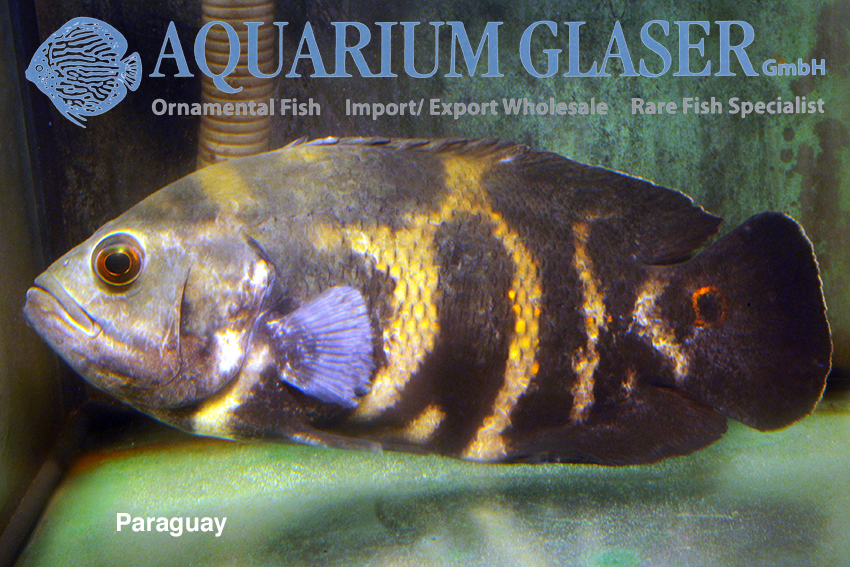
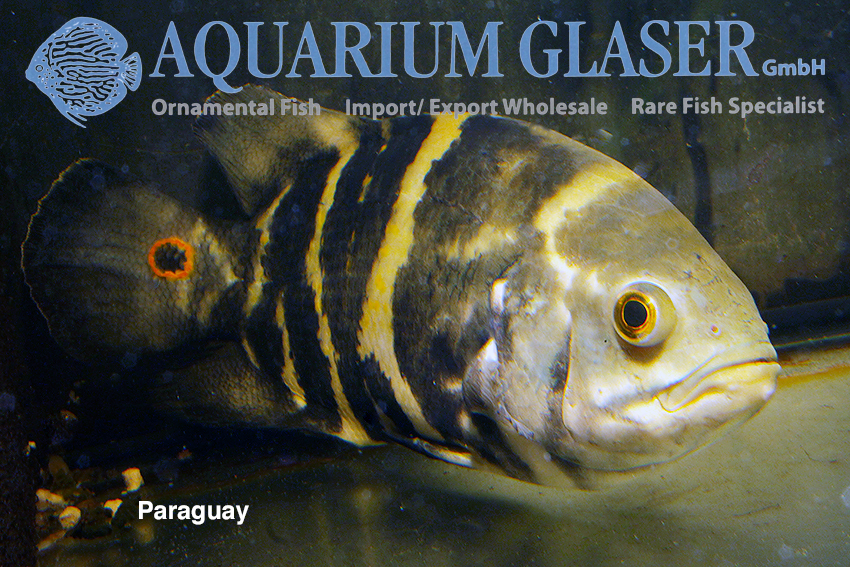
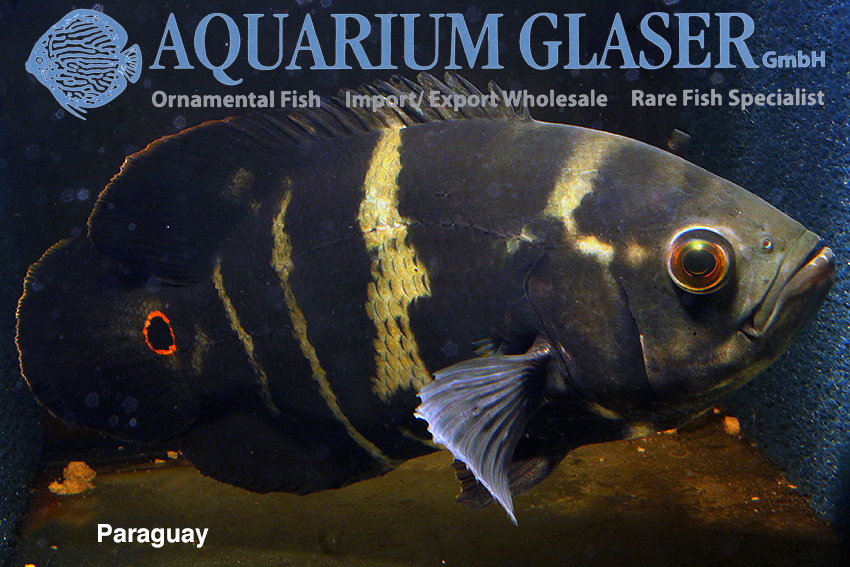
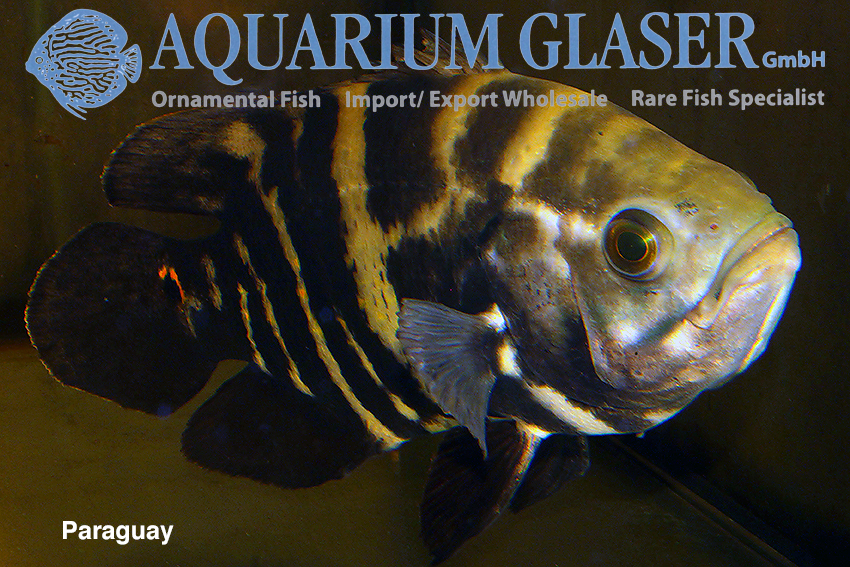
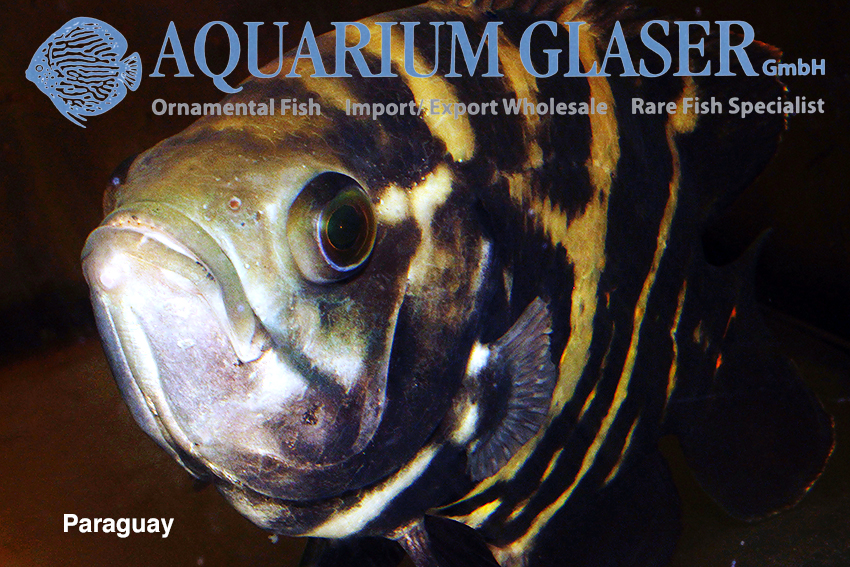
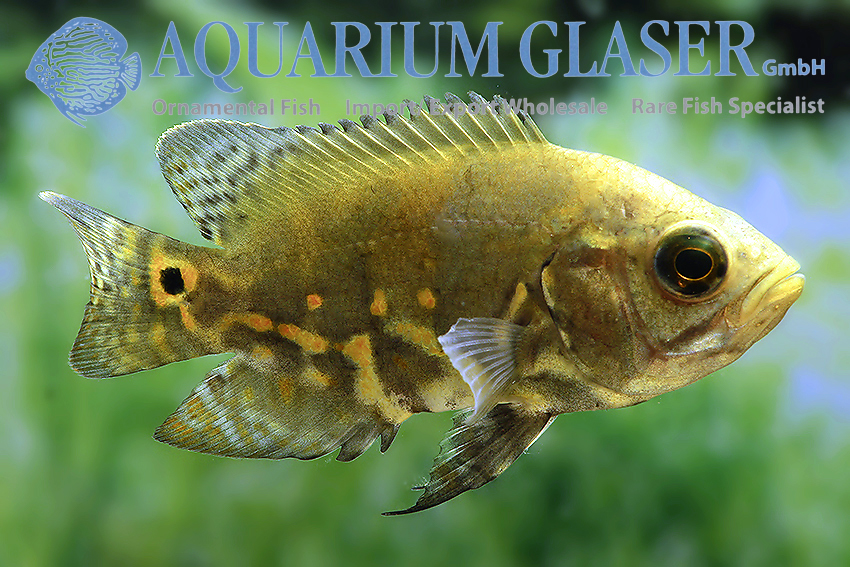
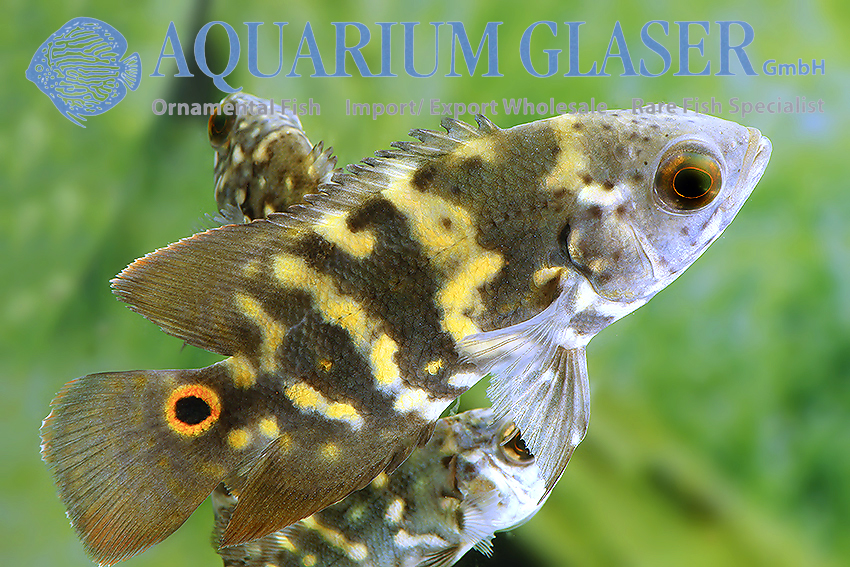
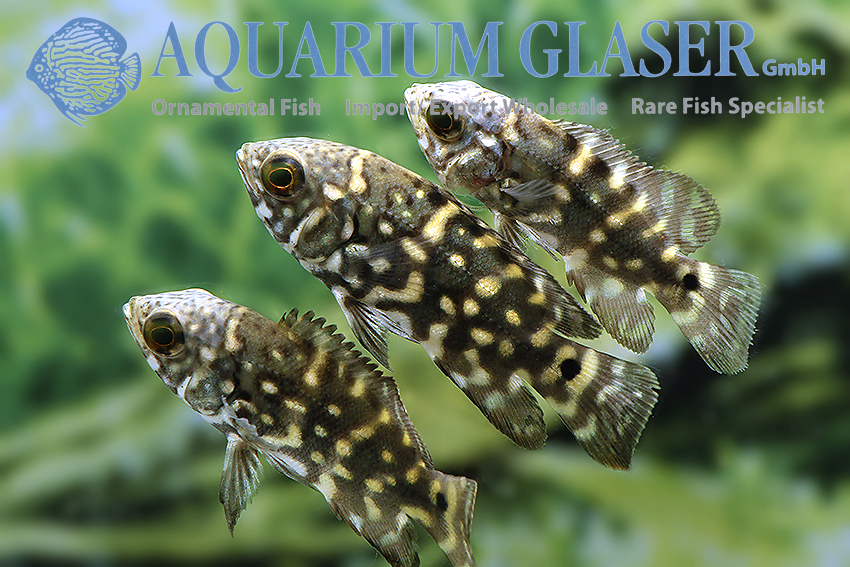
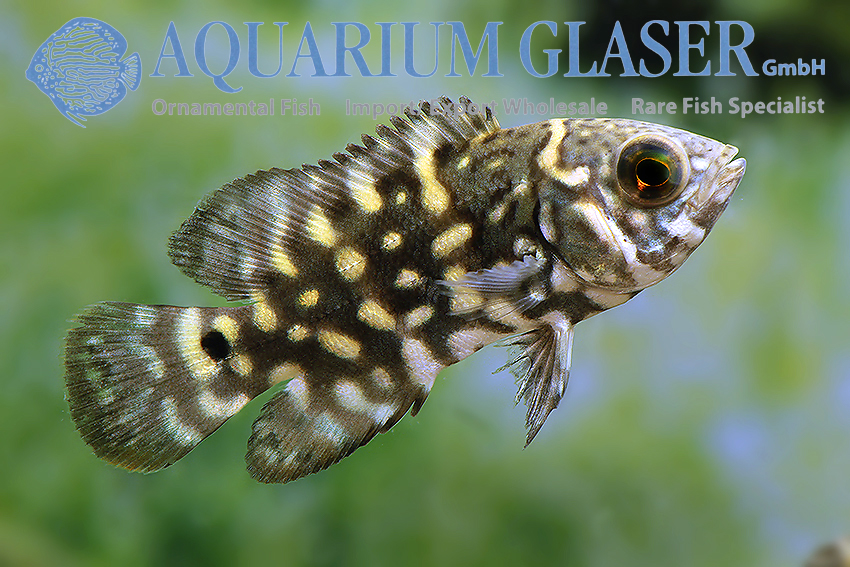
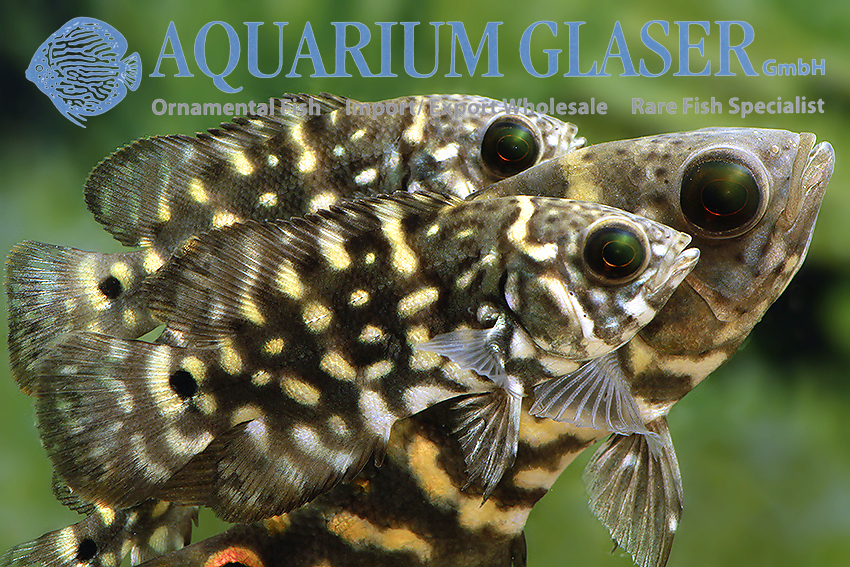
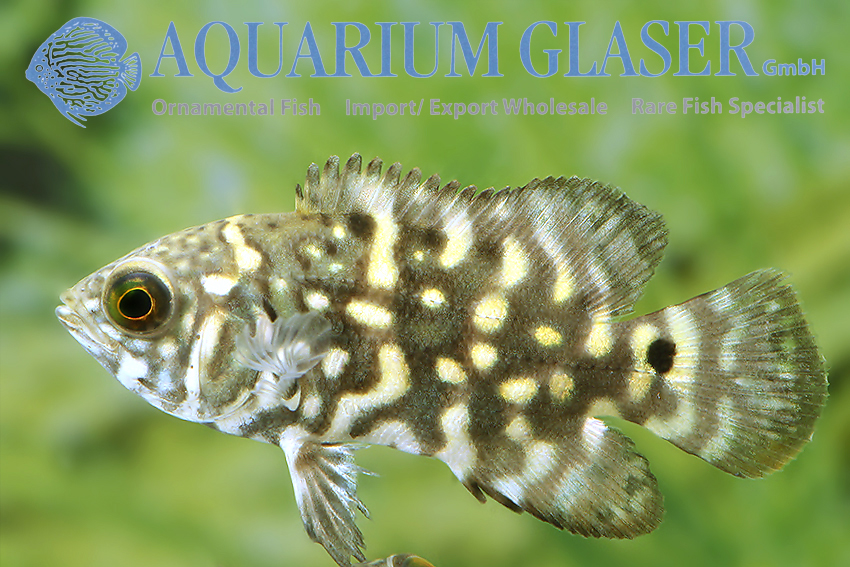
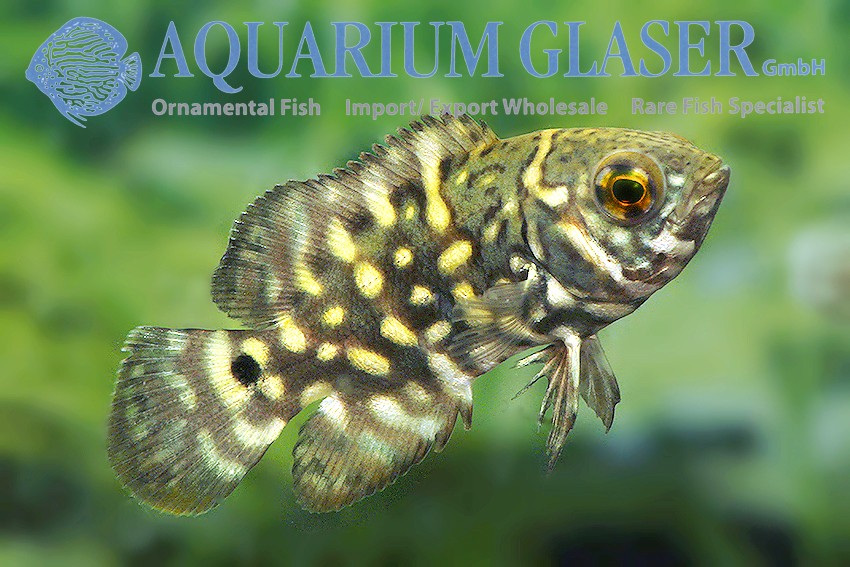
Distinguishing between Oscar species is therefore extremely tricky and can only be done with certainty using molecular biological methods (DNA analysis). However, the juvenile coloration of three of the species considered valid is very different. The “common” Oscar, A. ocellatus, is well known from pet stores; A. rubroocellatus looks exactly the same as a baby (see https://www.aquariumglaser.de/en/fisharchive/astronotus-rubroocellatus-rio-negro-2/). A. crassipinnis juveniles have very striking yellow-and-black coloration (“Bumblebee Oscars”)—which we showcase in this post—and A. mikoljii juveniles are very colorful (see https://www.aquariumglaser.de/en/fisharchive/astronotus-mikoljii-4/)
From time to time, we import very attractive young Oscar cichlids from Brazil that are sold under the name “Astronotus crassipinnis.” The species A. crassipinnis does exist in Brazil, but there is no way to verify whether the species identification is correct. We suspect that these fish are captive-bred, most likely from aquaculture operations for food fish. Due to the uncertainties described above, we refer to these fish as Astronotus cf. crassipinnis “Bumble Bee.”
These beautiful fish exhibit the typical behavior of all young Astronotus: they have a strong need to be with conspecifics. The striking coloration of all young Oscar fish is actually camouflage. The fish form large schools and swim so close together that they appear to a potential predator as a single, large fish.
The loss of juvenile markings is indicated by the development of their characteristic eye spot at the base of the tail. From that point on, the young Oscars begin to live more individually (or in small groups). The eye spot, in turn, serves to mislead predators (which orient themselves by the victim’s eye when hunting). Once they reach this size, Oscar fish prefer to eat small fish, but in an aquarium they will also accept any other type of hearty, meat-based food.
We don’t know what these Bumble Bee Oscars from Brazil look like as fully grown fish. However, we can assume with some certainty that this Astronotus species will also grow to be about 25–30 cm long. However, we occasionally import larger wild-caught Oscars (15–18 cm) from Paraguay, which we believe to be A. crassipinnis and which also have a very distinctive pattern—consisting of vertical yellow and black stripes—that differs from the more commonly known Oscars.
For our customers: these fish are listed under codes 632302 (4–6 cm) through 632307 (15–18 cm) on our stock list. Please note that we supply exclusively to wholesale customers.
Text & Photos: Frank Schäfer
