








Dwarf raboras (Boraras) are very popular among hobbyists. Scientifically, there are six recognized species (B. urophthalmoides, B. brigittae, B. merah, B. maculata, B. micros, and B. naevus), and distinguishing between them can sometimes be tricky. For example, the validity of B. merah is a subject of controversy in the hobby because very careful breeding experiments have shown that these are actually females of B. brigittae. The two smallest species, B. micros and B. naevus, are found far apart from each other—B. micros in northern Thailand and B. naevus in the south. Unfortunately, the color differences mentioned in scientific papers on these species are often of little practical help, as intermediate forms exist.
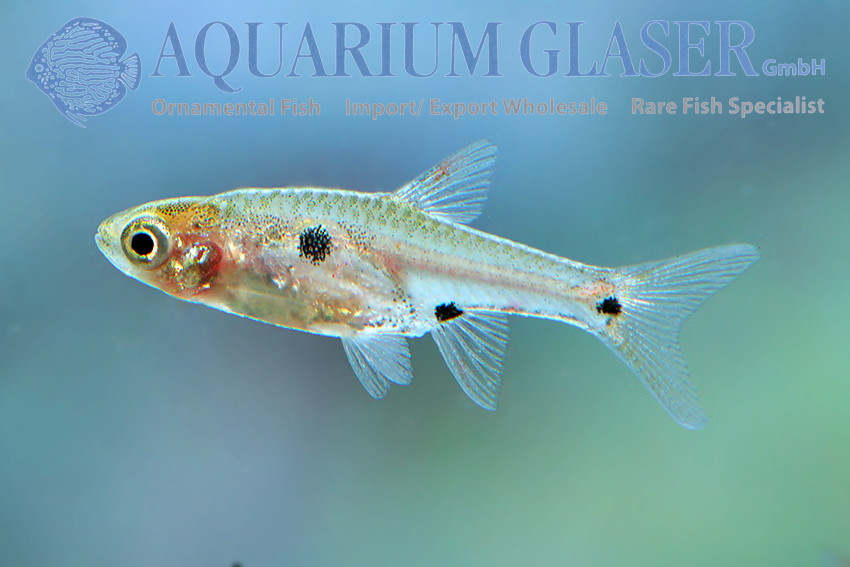
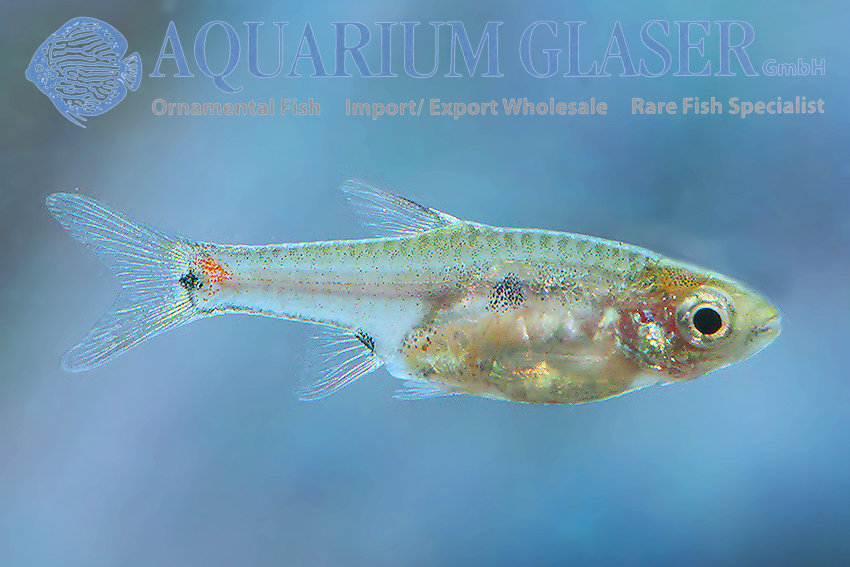
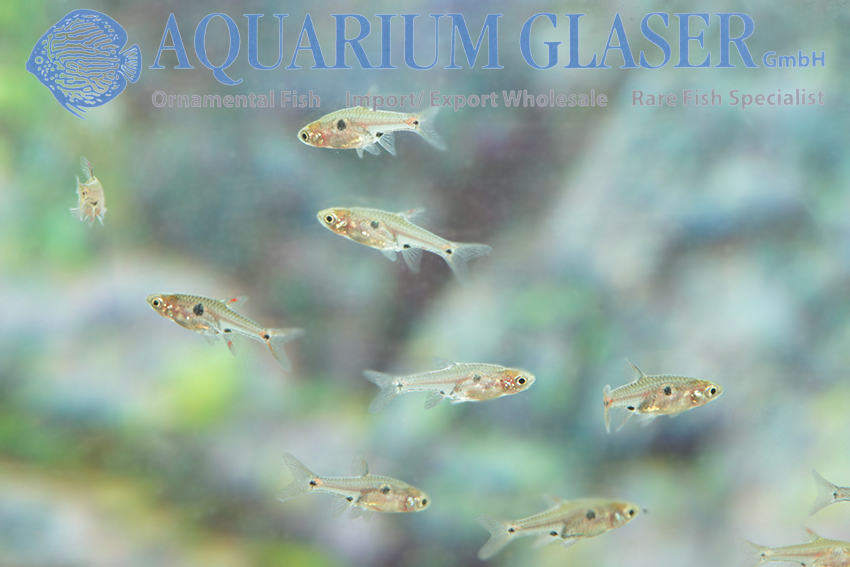
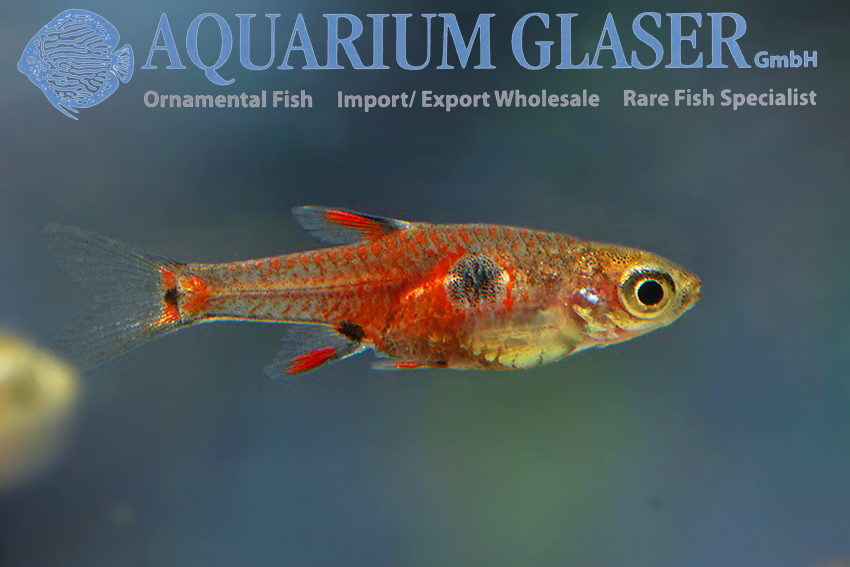
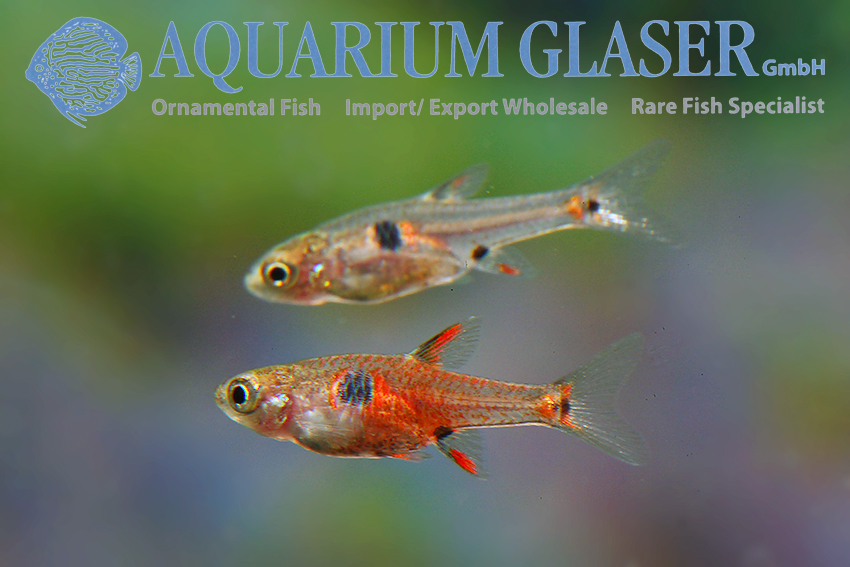
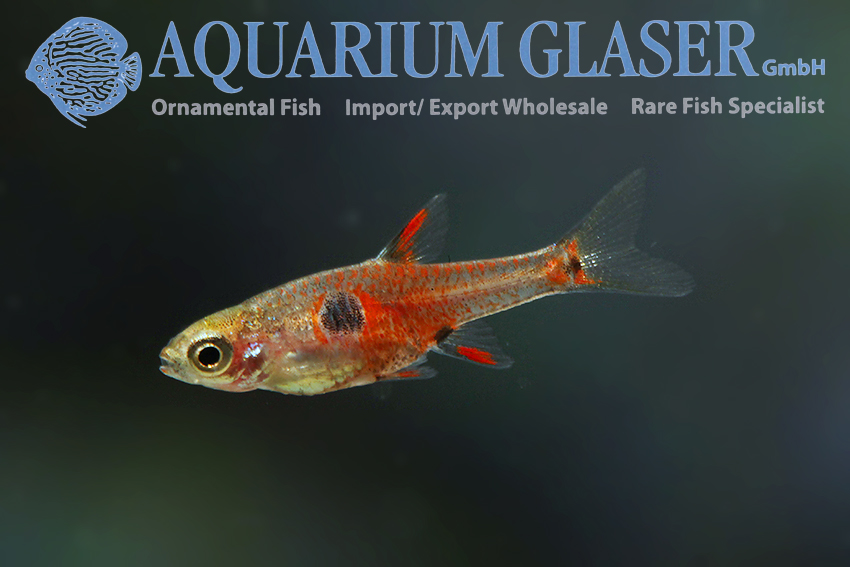
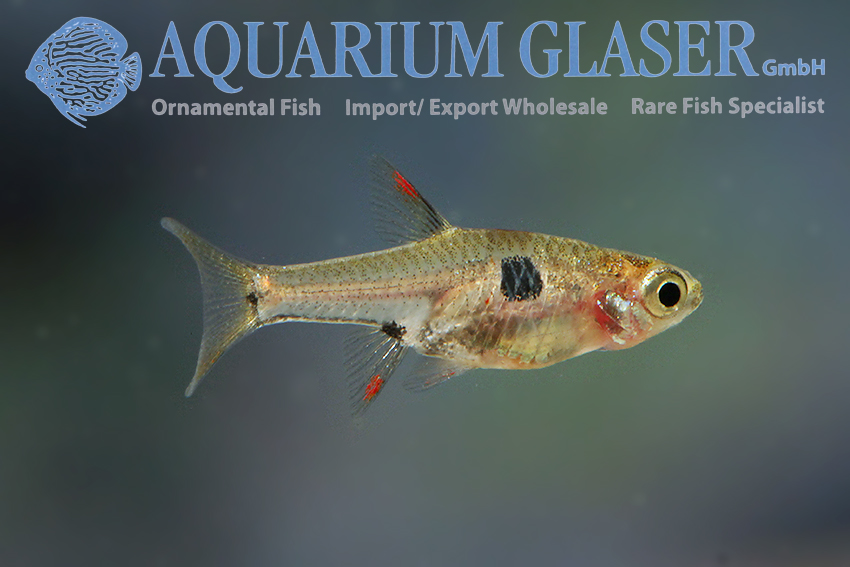
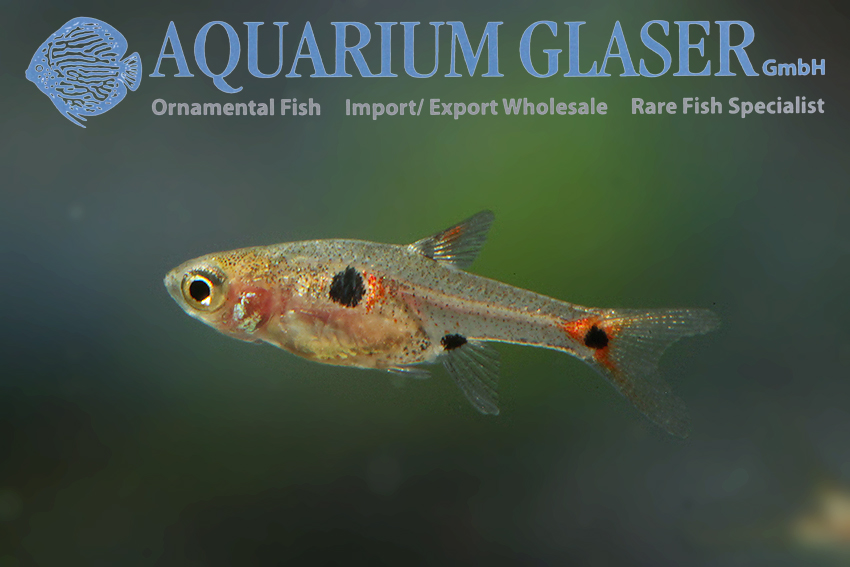
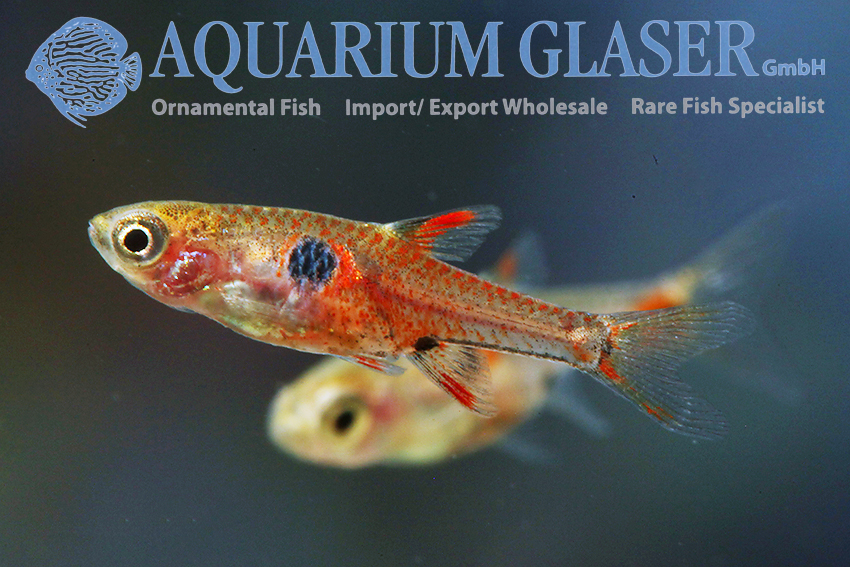
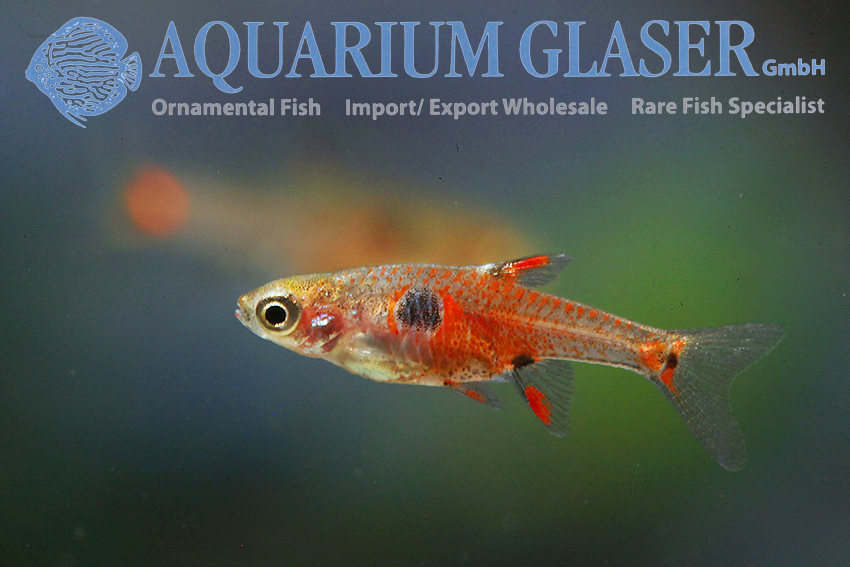
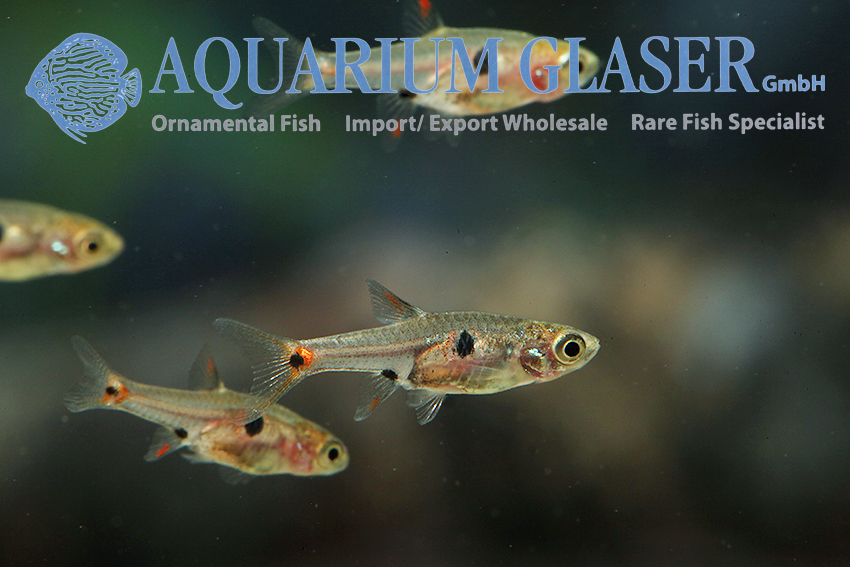
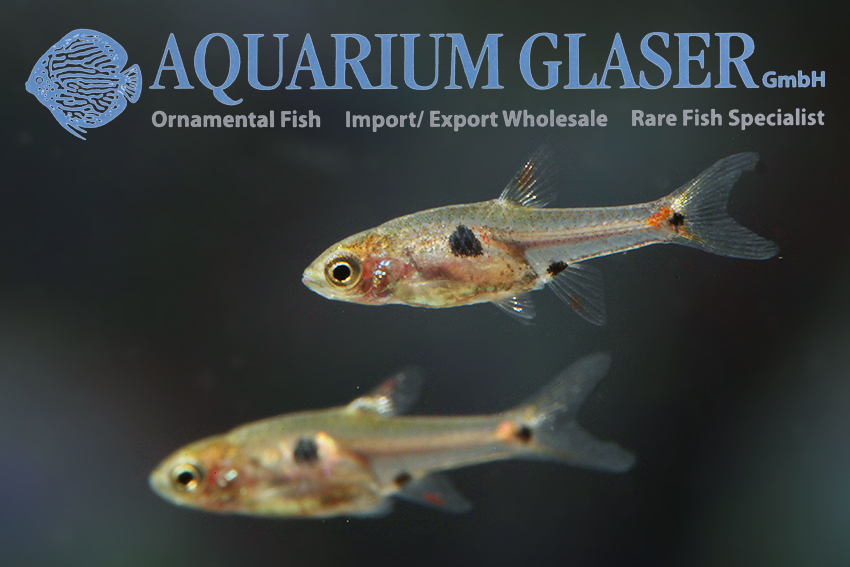
As a general rule, B. naevus from southern Thailand exhibits pronounced sexual dichromatism, meaning that males and females differ greatly in coloration. The shoulder spot of males is very large, often highly oval, and in any case much larger than that of females. The scientific literature states that the shoulder spot in B. micros is roughly the same size in both sexes. We regularly receive both species—one from the north and one from the south. Visually, they are almost indistinguishable at first glance. B. micros does not develop its full coloration until late; this species must be well acclimated for the males to develop their magnificent red body coloration. However, there is one difference between the two species that is easily recognizable in a sharp photo: B. micros has only 5–6 divided dorsal fin rays, while B. naevus has 7.
In breeding colors, B. micros—like all Boraras males—is absolutely delightful. The red coloration is most intense in the abdominal region behind the shoulder spot. This distinguishes them from all other Boraras males with red breeding colors, in which the red coloration is distributed more or less evenly across the entire body.
Maximum size: approx. 2 cm; Temperature: 22–28°C; pH and hardness: essentially irrelevant for care (drinking water), though their vibrant colors are only displayed in soft water enriched with humic substances; for breeding, the water should be soft and acidic; Diet: Omnivorous; Social behavior: Peaceful schooling fish.
For our customers: These fish are listed under code 452812 on our stock list. Please note that we supply exclusively to wholesale customers.
Text & Photos: Frank Schäfer
