








The marbled hatchetfish (Carnegiella strigata) is the ideal aquarium fish. It remains small (4 cm), is peaceful, and has interesting coloration. The species is widespread throughout South America (Brazil, Ecuador, Bolivia, Colombia, Guyana, Peru, and Suriname) and is common. That is why it is almost always available in the ornamental fish trade.
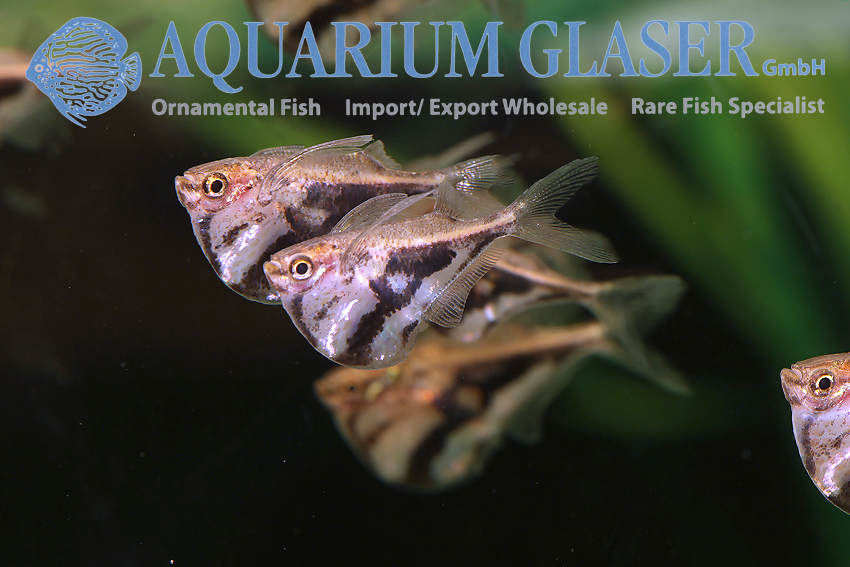
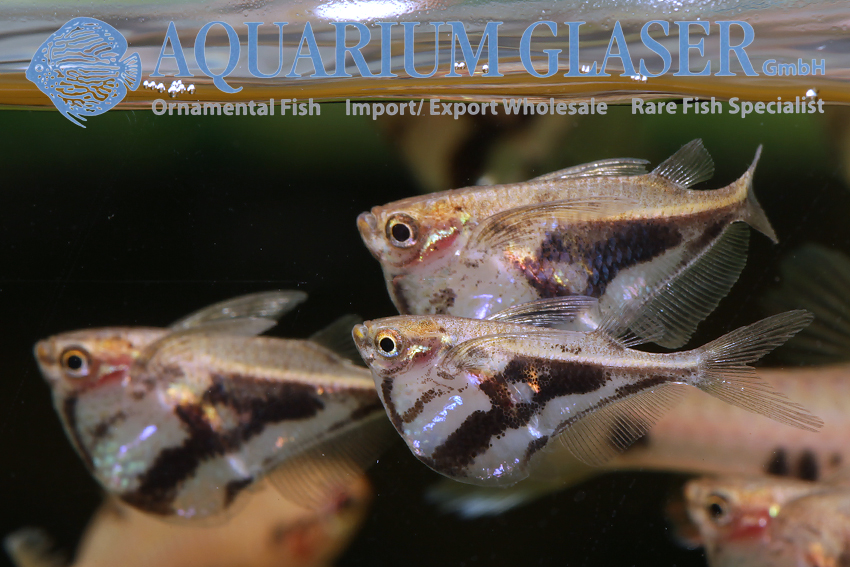
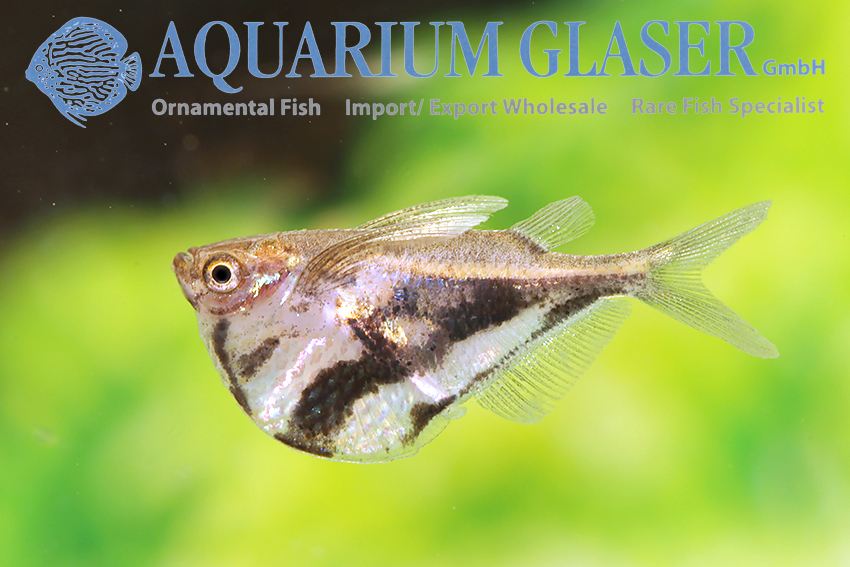
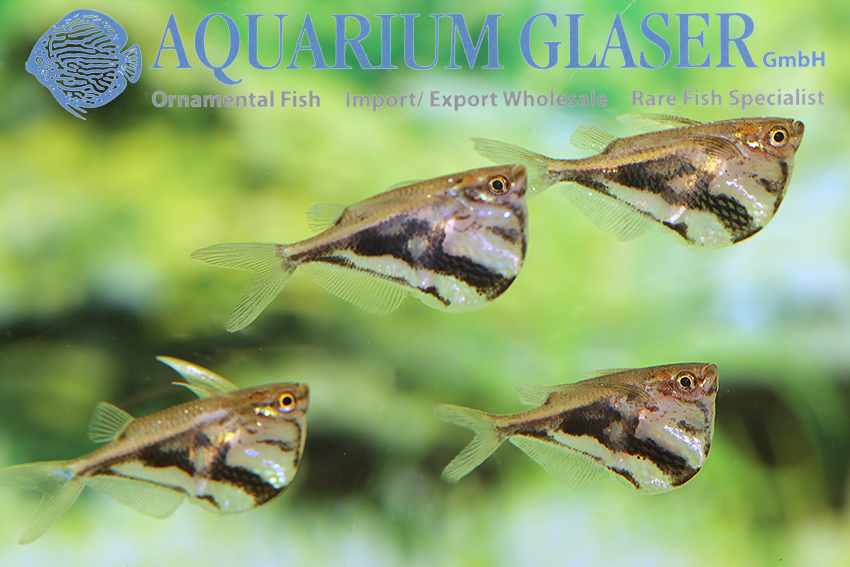
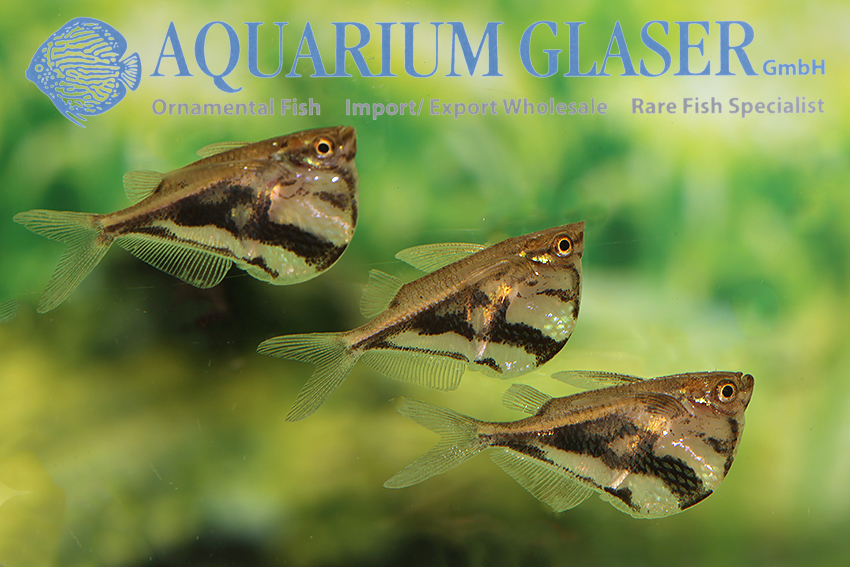
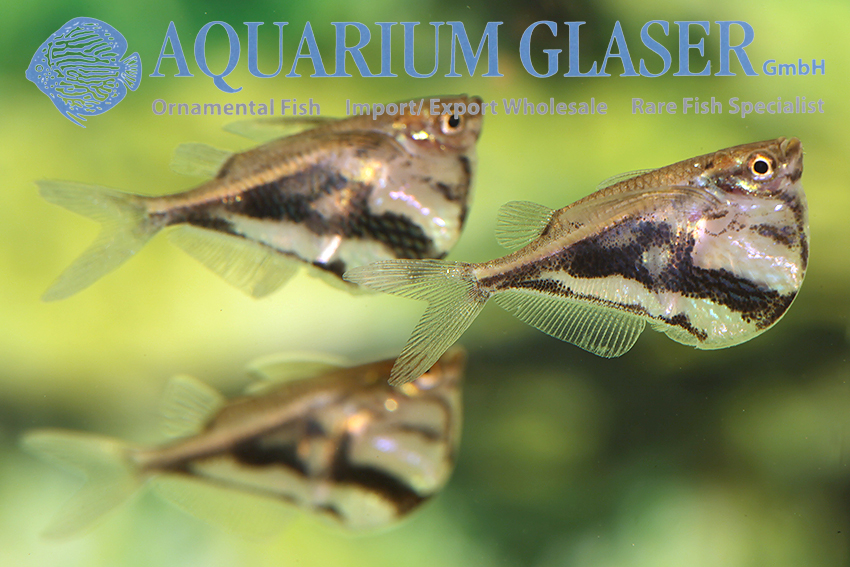
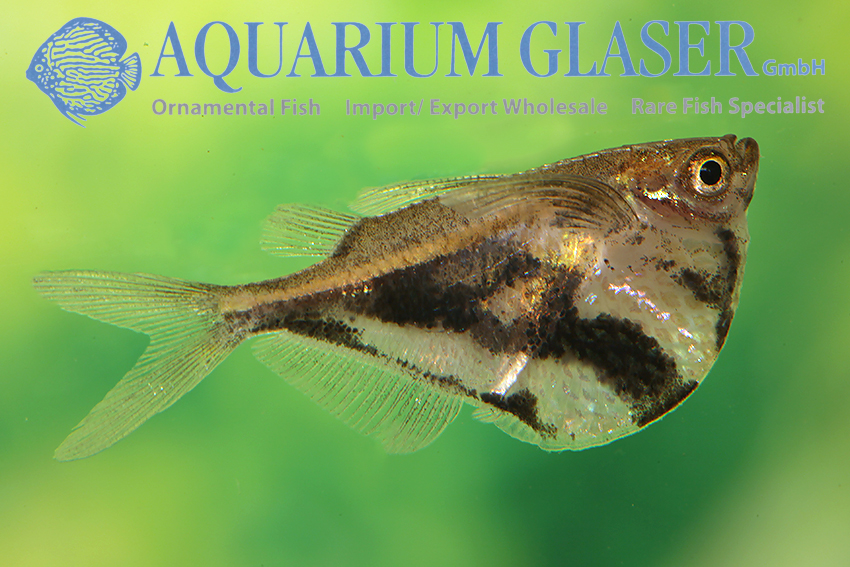
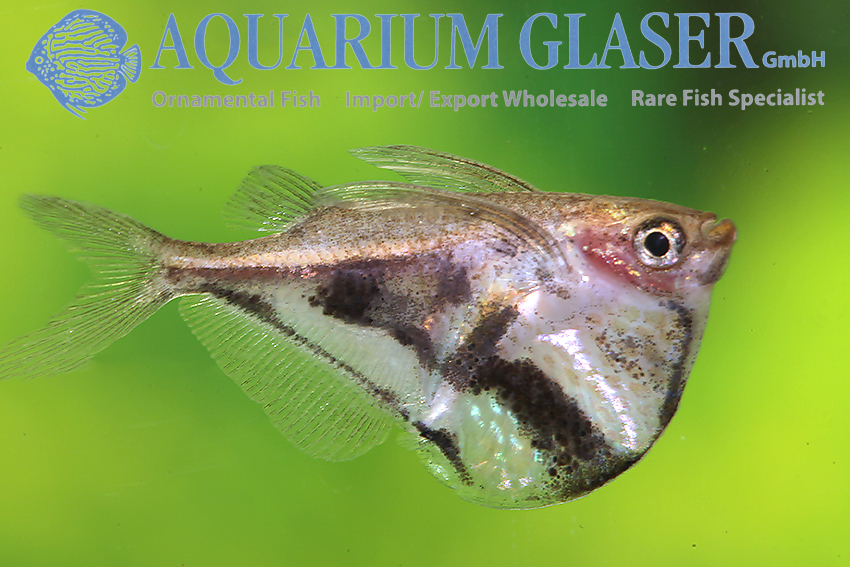
The distinctive shape of the fish and the variability of their markings have led to several, sometimes conflicting, revisions in the past. Furthermore, there were early instances of misidentification and duplicate descriptions. One thing is certain: the Marbled hatchetfish looks different in its various ranges. In the past, several subspecies were therefore described, such as fasciata from Brazil (Tabatinga), marowini and surinamensis from Suriname, and vesca from Guyana. Currently, however, these subspecies are not scientifically recognized.
Perhaps the most beautiful—because it is the most striking—variant comes to us from the upper Amazon (Peru and Colombia) and is sold in the trade as “vesca.” The difference between this trade-vesca and “normal” strigata—which were at one time even classified as separate species—lies in the pattern. In strigata, as it is known in the trade, the widest body band forks well below an imaginary horizontal line across the belly to the base of the anal fin, whereas in the trade-vesca, it forks well above this imaginary line. As a result, in this „trade-vesca“, this widest of all body bands is very broad, and the fish appears visually much darker than the strigata form.
The only problem is that the names are used exactly the wrong way around in the trade. Based on Weitzman’s careful research findings, the dark fish is the “true” Carnegiella strigata, while the “true” vesca is the lighter form, in which the widest body band already forks near the edge of the belly. Regardless of all the confusion: here you will find pictures of the “trade-strigata”: https://www.aquariumglaser.de/en/fisharchive/carnegiella-strigata-lg-xlg-2/; all pictures in this post show “trade-vesca.”
Hatchetfishes are somewhat skittish during the acclimation period and should never be kept with aggressive species. They are ideally suited to being kept with bottom-dwelling fish such as armored catfish. When feeding, ensure that the fish only take food from the surface. Flake food provides a good dietary foundation, but for breeding, you’ll need to put in a bit more effort and feed them small insects such as fruit flies. It is important to feed them several times a day in small amounts. The sexes are not easily distinguishable by appearance, but females grow slightly larger and become rounder around the midsection during the spawning season.
For our customers: these fish have code 214301 (sm) to 214306 (lg-xlg) on our stock list. Please note that we supply exclusively to wholesale customers.
Text & photos: Frank Schäfer
