








The cichlids (family Cichlidae) are a species-rich group of brood-caring fish found in South America, Africa, Asia and Madagascar. The current distribution of the approximately 1787 species, which are spread over around 256 genera, clearly shows that the cichlids originated when South America and Africa (plus other continental plates) were still connected in the primeval continent of Gondwana. South America separated from Africa around 116 million years ago; however, the first fossil evidence of cichlids only exists from the Eocene, an geological period that began around 56 million years ago.
Cichlids are so-called secondary freshwater fish, which means that their ancestors came from the sea. Today, only a few (less than 10) species can still live in the sea. It can therefore be assumed that specialization in freshwater was an important evolutionary factor in the development of cichlids. It should never be forgotten that the composition of seawater is very similar all over the world. There are local differences in salinity, but these are usually negligible, whereas the pH value is the same everywhere at 8.3 and the oxygen content is comparatively high. In fresh water, however, the living conditions are extremely varied. The pH value can range from around 4 to over 9, the salt content from practically zero to significantly higher than in the sea and the oxygen content is also very different. There is no doubt that this ecological diversity has led to the enormous variety of species of freshwater fish. Although only 3% of the water on earth is freshwater, around 50% of the approximately 37,000 known fish species can be found in it.
The cichlid Heterochromis multidens originates from Central Africa (Congo and Cameroon) and is particularly interesting with regard to the things described above, as it is considered to be the most original of all cichlids still alive today and, according to some scientists, is more closely related to South American cichlids than to all African ones; of course, there are also other opinions on this. The animals are very rarely kept in the aquarium, as they reach a good 30 cm in length (males grow about 10 cm larger than females) and are not particularly striking in color. Adult males develop a bizarrely steep forehead, similar to that of the South American Hypselecara (although this is not intended to imply a particularly close relationship). The peculiarities of Heterochromis multidens are so numerous that a separate subfamily, the Heterochrominae, has been established for them! But even this is controversial. As always: ask two experts and you’ll get three completely different opinions…
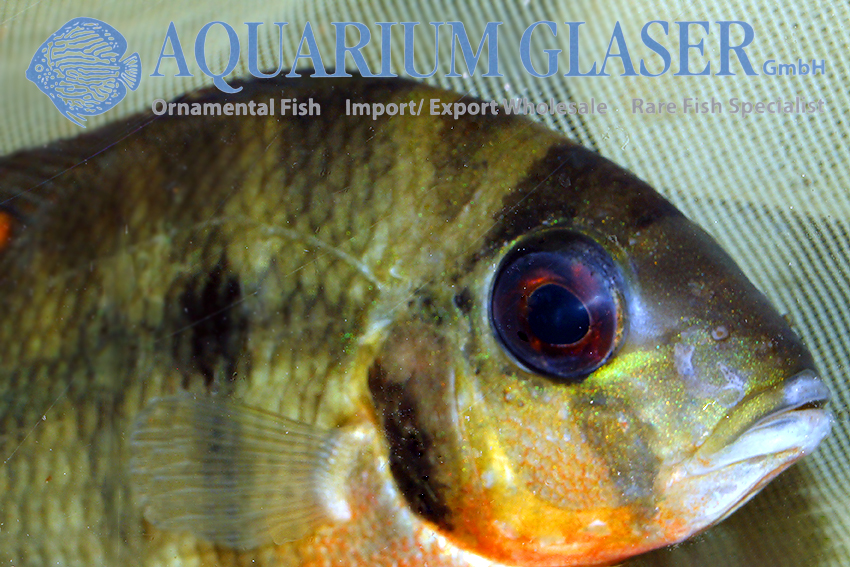
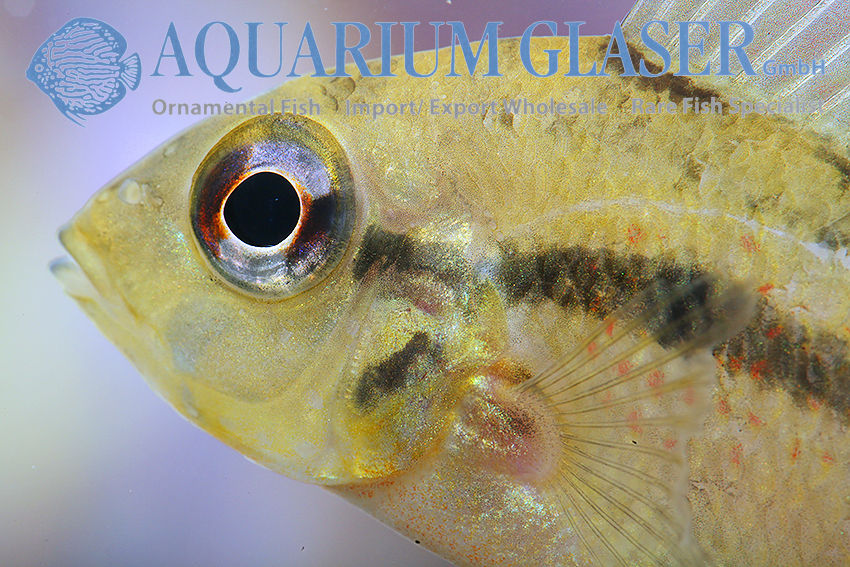
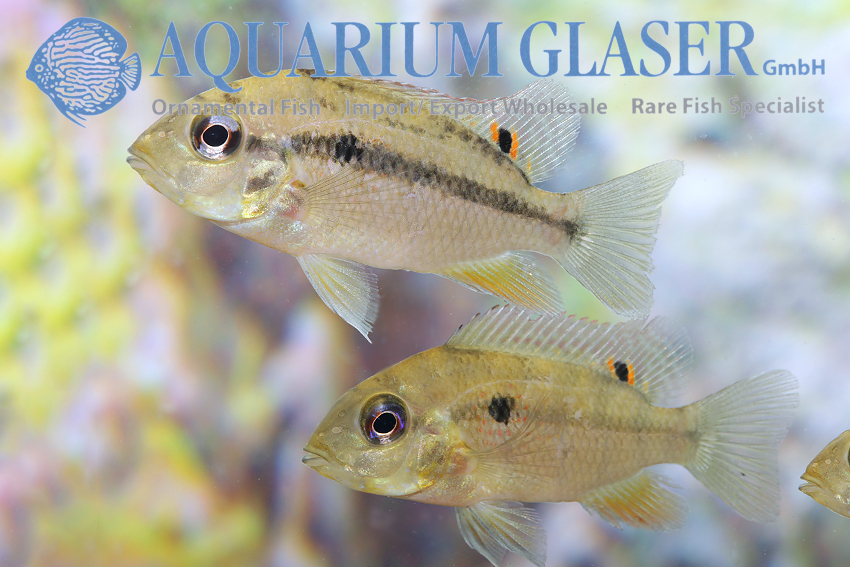
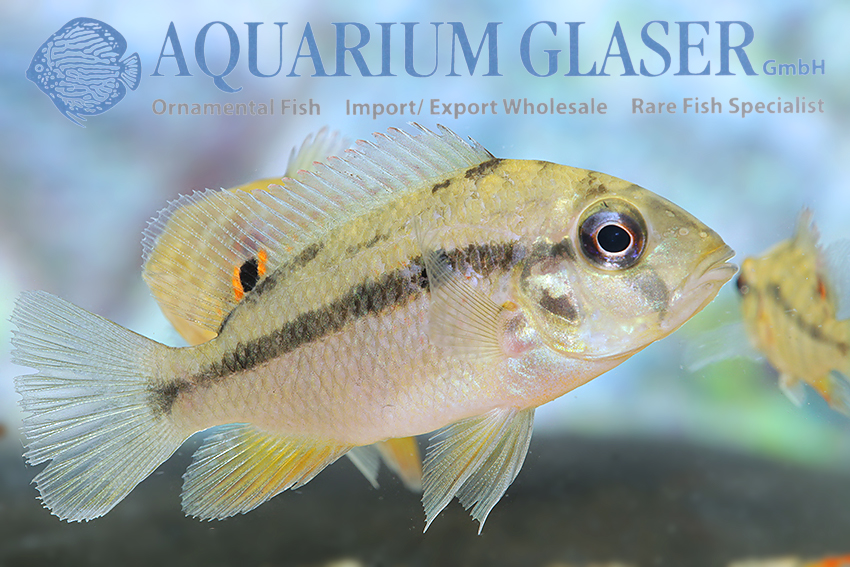
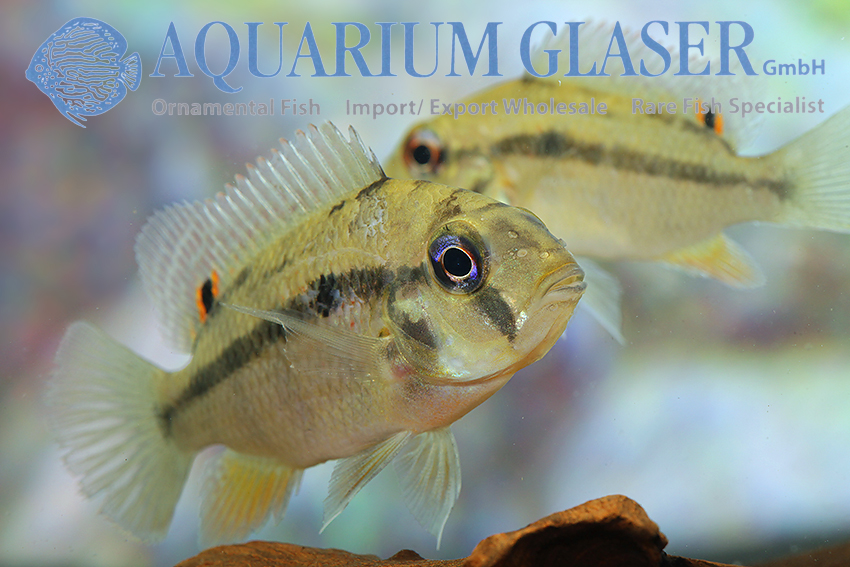
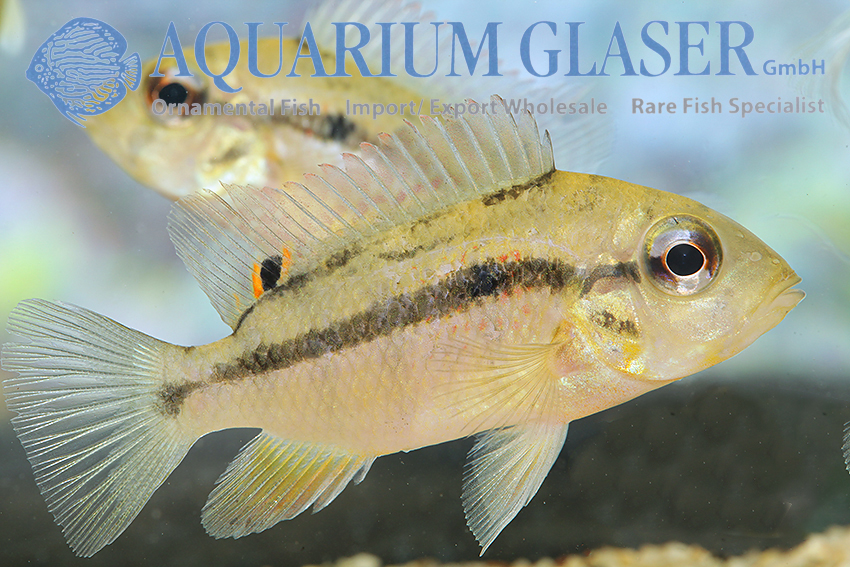
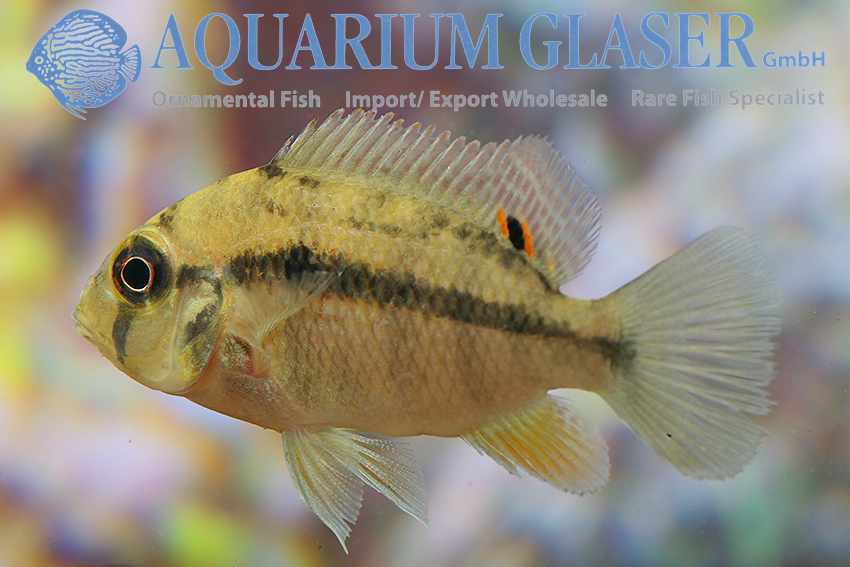
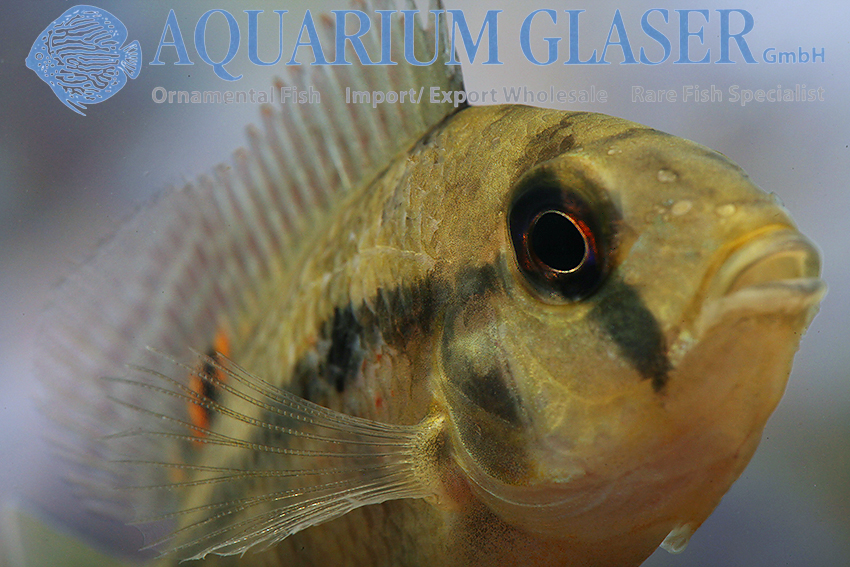
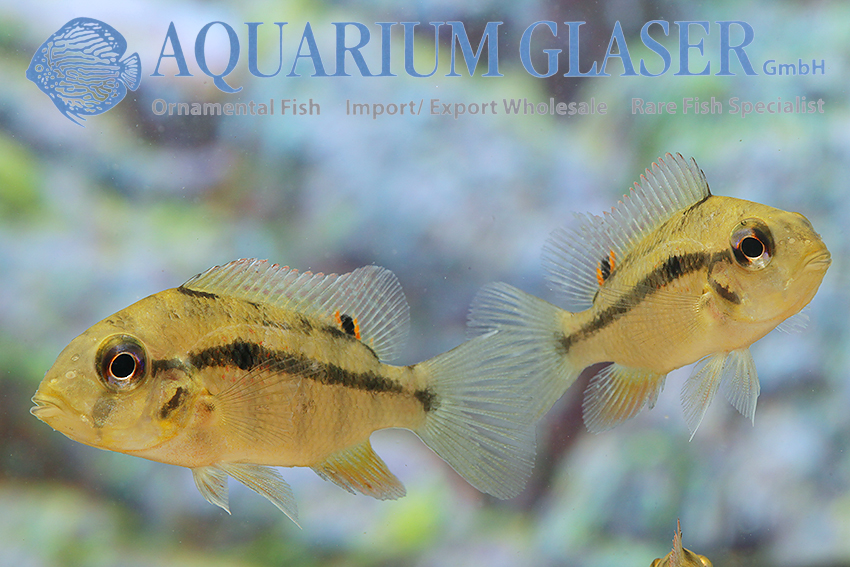
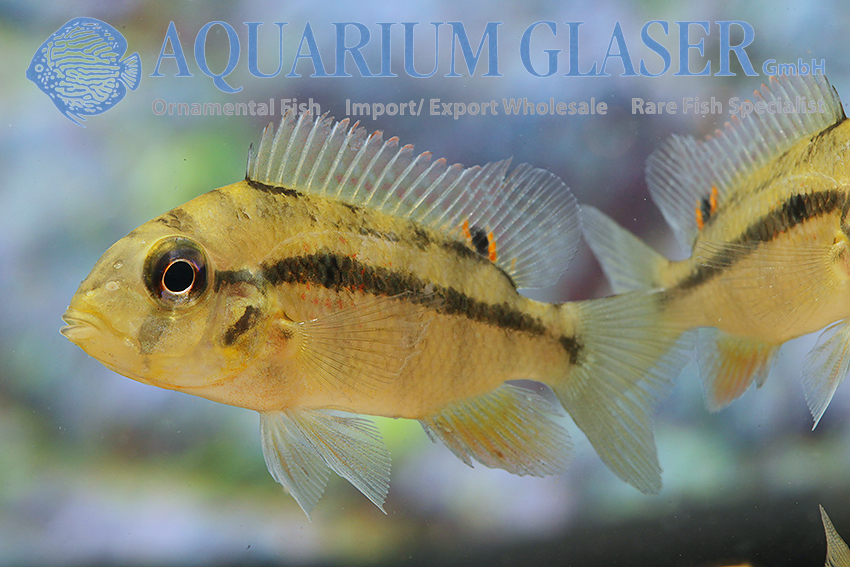
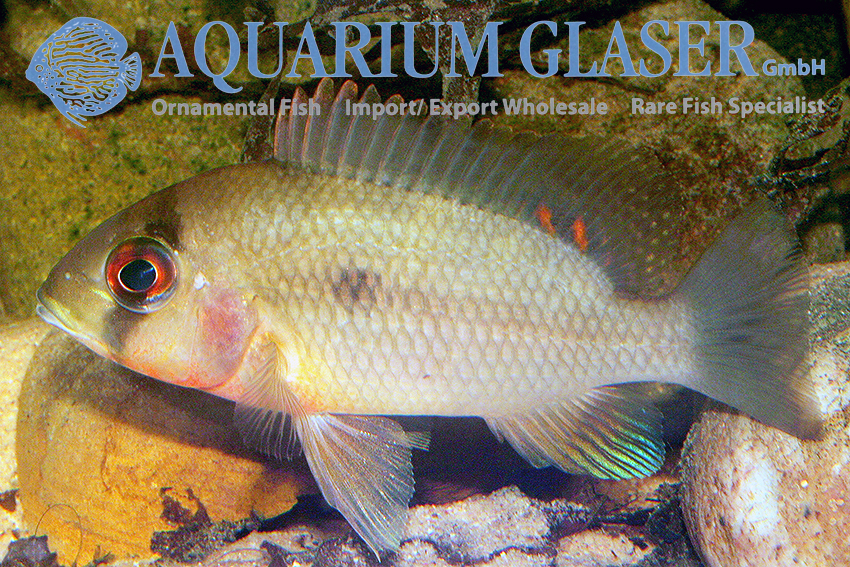
However, there is still a lot of research to be done on Heterochromis multidens and we have just received a number of juveniles. These are German offspring. Michel Keijman has written a detailed report about the animals in the DCG-Info 2020. According to him, the females have a red breast, the males do not; the females also show a black spot behind the eye, which the males lack. The males have a broad red seam in the dorsal fin and a red caudal fin. However, it is not yet possible to determine the sex of our still quite young animals (4-7 cm). The picture of a largely colored, but still young female was taken in 2012, when we received a single specimen from the Congo. Unfortunately, this specimen was not followed by any others. These cichlids require large aquaria, large amounts of food and can (still) be characterized as quite demanding. They are open-breeders with a parent family. Hopefully they won’t disappear any time soon so that many nature-loving people can study them at home.
For our customers: the animals have code 537603 on our stocklist. Please note that we only supply the wholesale trade.
Literature:
Keijman, M. (2020): Heterochromis multidens (PELLEGRIN, 1900) – Der ursprünglichste noch lebende Buntbarsch? DCG-Informationen 51 (1): 20-24
Text & photos: Frank Schäfer
