








Traditionally, two species of red-eyed Moenkhausia are distinguished, which are virtually indistinguishable in appearance. These are M. oligolepis from the Amazon region and the Guianas, and M. sanctaefilomenae from the adjacent southern zone, the Rio Paraguay and Parnahyba. There are color-based details for species differentiation, but these are often unreliable. For example, M. oligolepis is also called the “mirror-spot tetra” because the prominent black spot on the base of the tail—which all species in this group possess—is flanked at the front and back by a broad white band. However, this also applies to some M. sanctaefilomenae. A reliable distinguishing feature is therefore that M. oligolepis has more—and thus smaller—scales than M. sanctaefilomenae. In the longitudinal row, M. oligolepis has 29–32 scales, while M. sanctaefilomenae has 22–26.
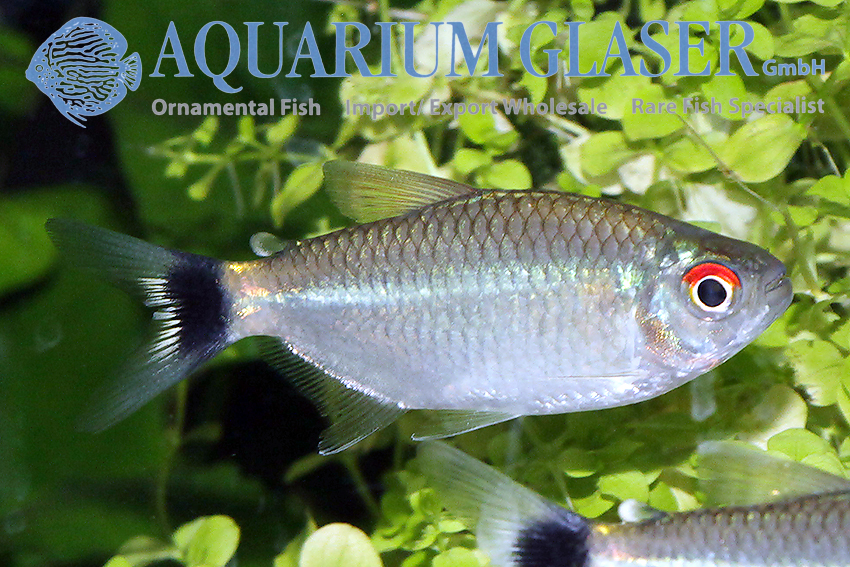
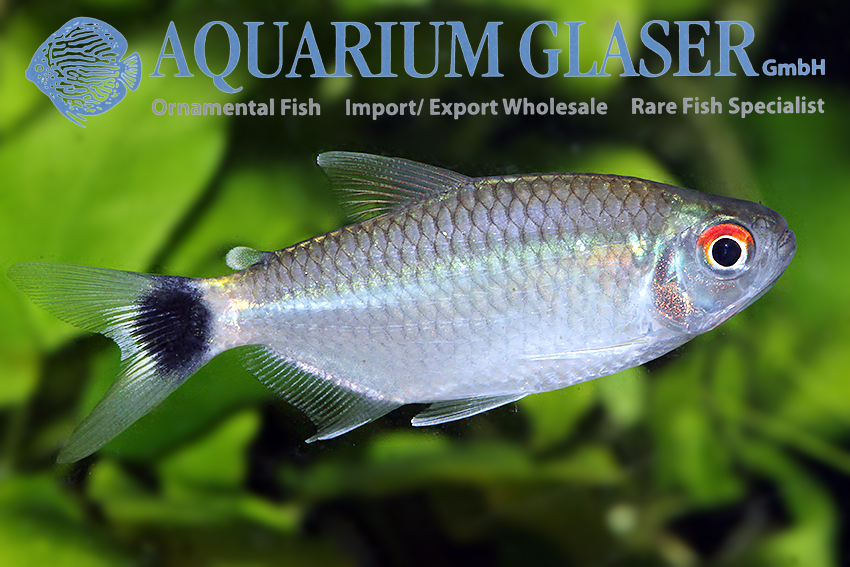
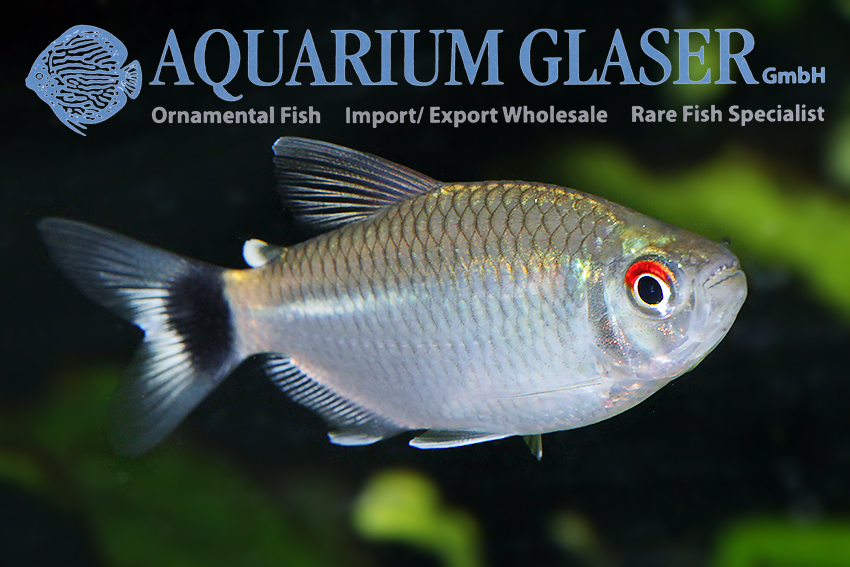
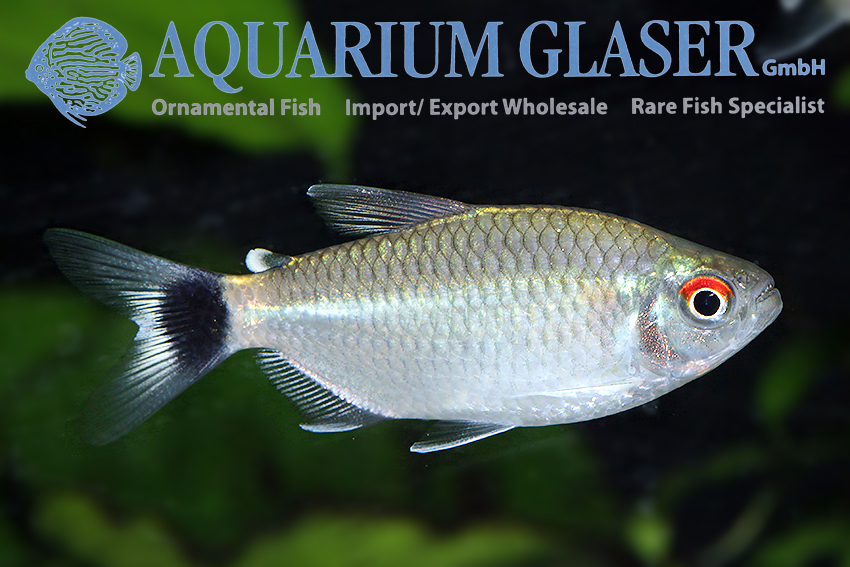
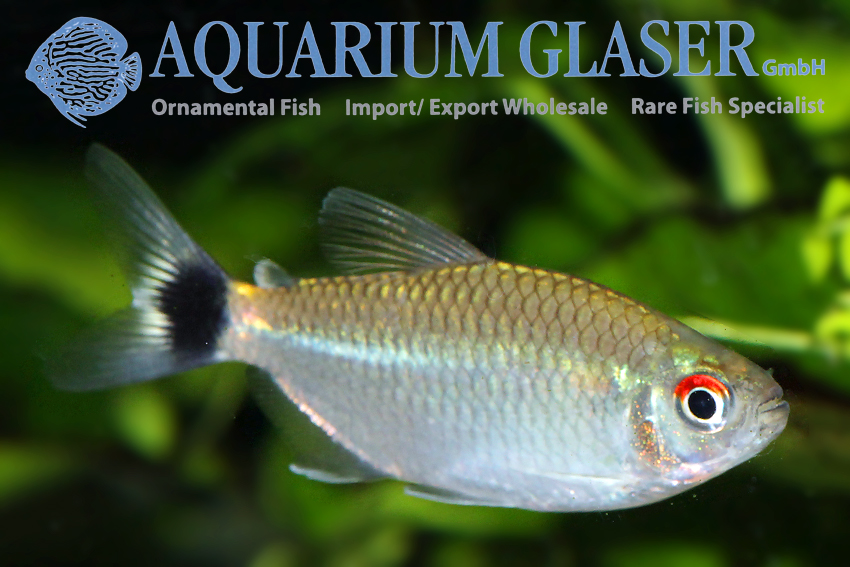
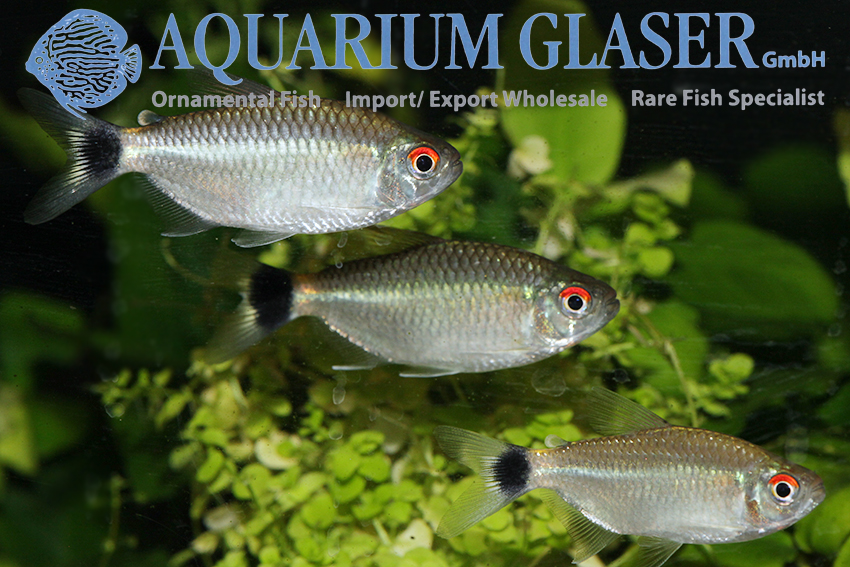
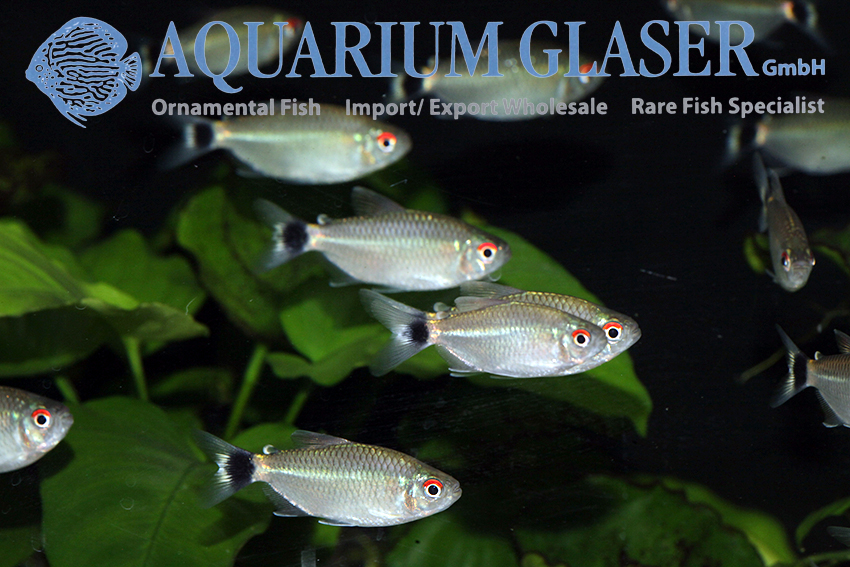
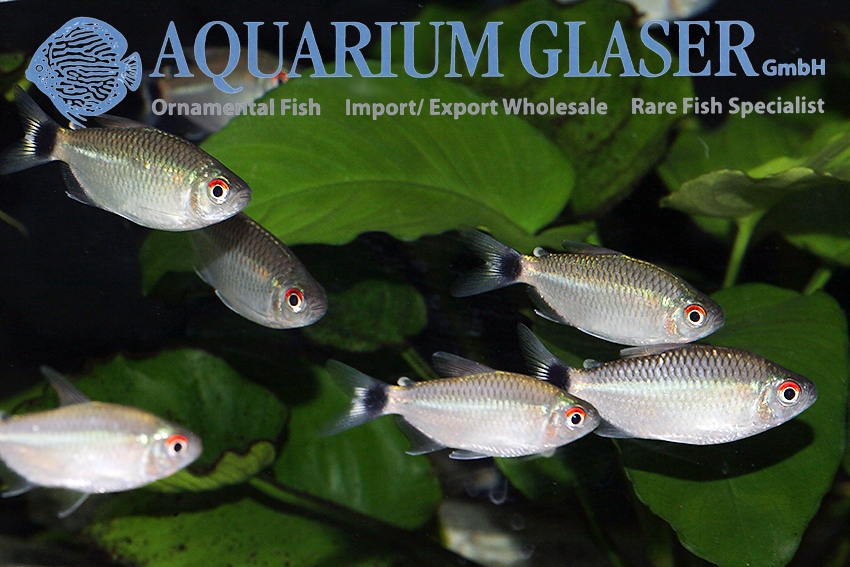
But it would be too simple if there were only these two options. In fact, two additional “red-eyed Moenkhausia” species have been described in recent years: M. forestii (2009) and M. pyrophthalma (1994). M. forestii—just like M. sanctaefilomenae—originates from the Rio Paraguay basin and differs only slightly from M. sanctaefilomenae. We quote: “Moenkhausia forestii can be distinguished from M. sanctaefilomenae in the number of transverse series of scales above the lateral line (5, vs. 4 scales, respectively), by the number of transverse series of scales below the lateral line (4, vs. 3 scales, respectively).” All three red-eyed Moenkhausia are currently classified in the genus Bario. In the hobby, M. forestii has likely not yet appeared, or rather, it is very unlikely that it will be recognized as a species distinct from M. sanctaefilomenae. The fourth species, M. pyrophthalma (the species name means “fire eye”), is currently classified in the genus Ramirezella; this fish is much slimmer than those mentioned so far and has a completely different pattern at the base of the tail, making it virtually impossible to confuse.
The most recent research shows that there are actually three species of red eyed Moenkhausia in the drainage of the Rio Paraguay: B. forestii and B. sanctaefilomenae (both with an incomplete lateral line) and B. australis (with a complete lateral line). The latter was described as early as 1908, but it was later believed that the lateral line was variable and unsuitable for species identification.
We are occasionally able to import wild red-eyed Moenkhausia, sometimes M. sanctaefilomenae from Paraguay (see https://www.aquariumglaser.de/en/09-characoids-tetra-relationship/moenkhausia_sanctaefilomenae_wild_en/) and sometimes M. oligolepis from Peru.
Caring for and breeding both species is easy (probably also for B. forestii and B. australis, if one could obtain them); water parameters play only a minor role. pH levels between 6 and 8, soft to moderately hard water (and even hard water after acclimation), a water temperature between 22 and 26°C as a guideline (it can occasionally be slightly lower or higher), and red-eyed Moenkhausia will thrive. They will eat any commercially available ornamental fish food of suitable size. Red-eyed Moenkhausia should always be kept in as large a school as possible. With a maximum length of 12 cm (total length including tail fin), M. oligolepis grows significantly larger than M. sanctaefilomenae (approx. 7 cm) and is therefore better suited than the latter as a companion fish for larger cichlids, etc.
For our customers: M. oligolepis has – depending on size – code 268902 (md), 268903 (md-lg), and 268904 (xlg) – on our stock list. Please note that we supply exclusively to wholesalers.
Literature:
Mirande, J.M., Körber, S., Terán, G.E. & G. Aguílera (2024): Welche Spezies mit roten Augen ist es? Die Moenkhausia oligolepis Gruppe in Argentinien (Characiformes: Characidae). AKFS-aktuell (49): 23-30
Text & photos: Frank Schäfer
