








For a long time, it was believed that Pethia stoliczkana, was native only to Burma; but it is now considered to be relatively widespread throughout Southeast Asia, and scientific databases list it as occurring in the basins of the Chindwin-Irrawaddy, Mae Klong, Chao Phraya, and Mekong rivers in India, Burma ( = Myanmar), Thailand, Laos, and China (Yunnan). It was a popular aquarium fish until the 1960s, as the fish are very tolerant of low temperatures and do not require a heater in the aquarium. Later, it was supplanted by more colorful species, and today it is a rarity in the aquarium trade. In the past, it was generally considered a subspecies of Pethia ticto, and many alleged sightings of P. ticto outside of India actually refer to P. stoliczkana.
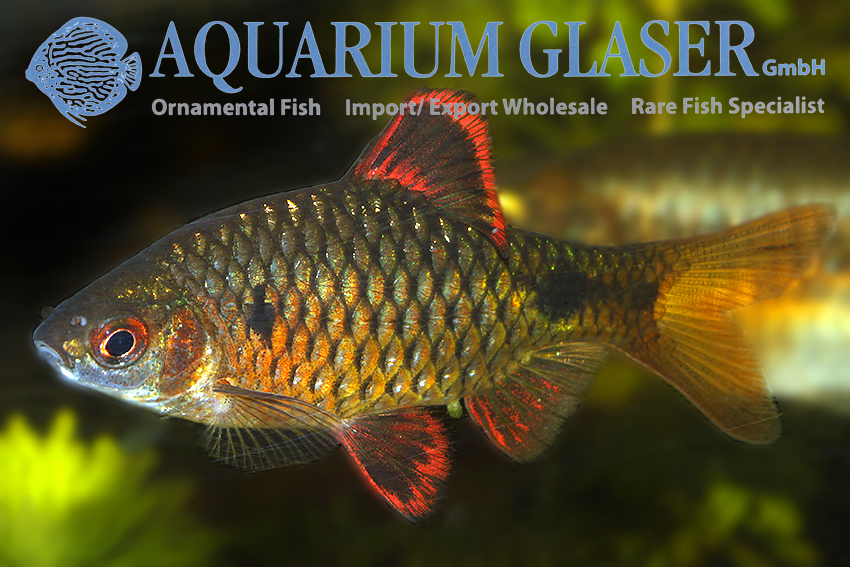
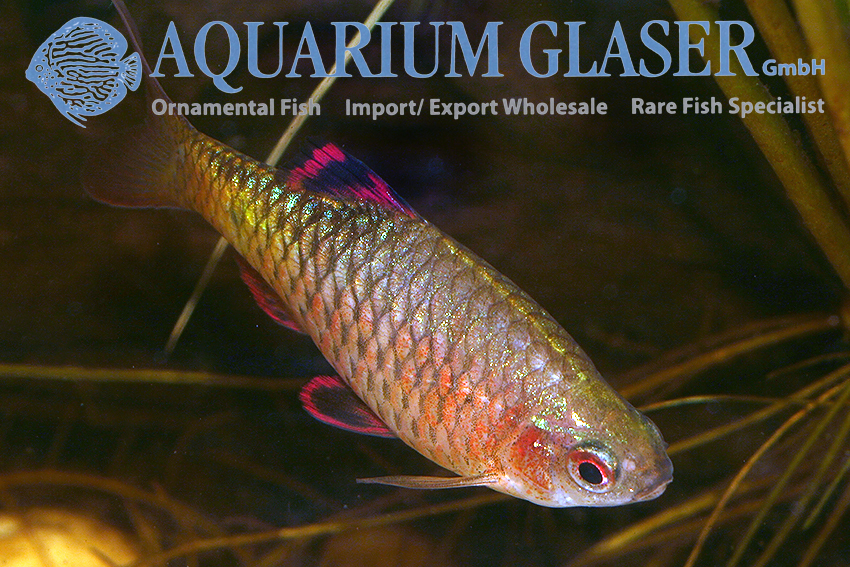
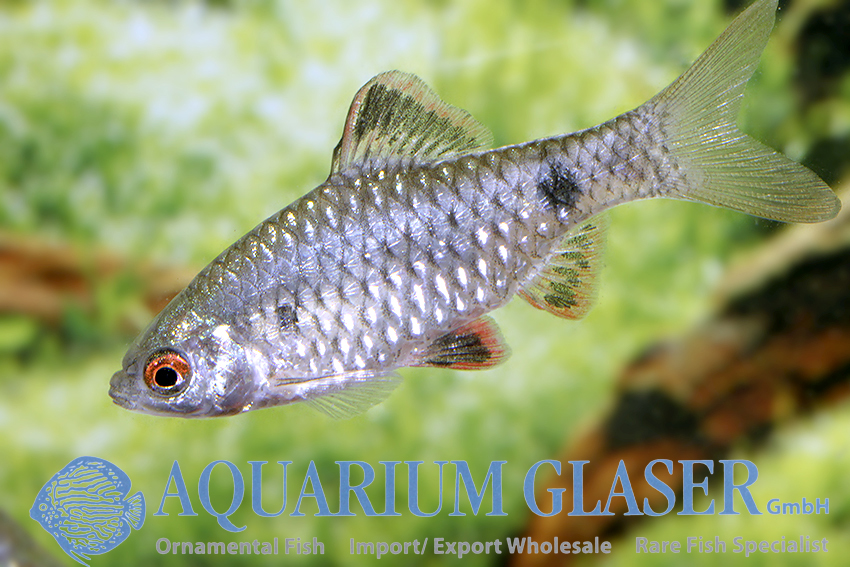
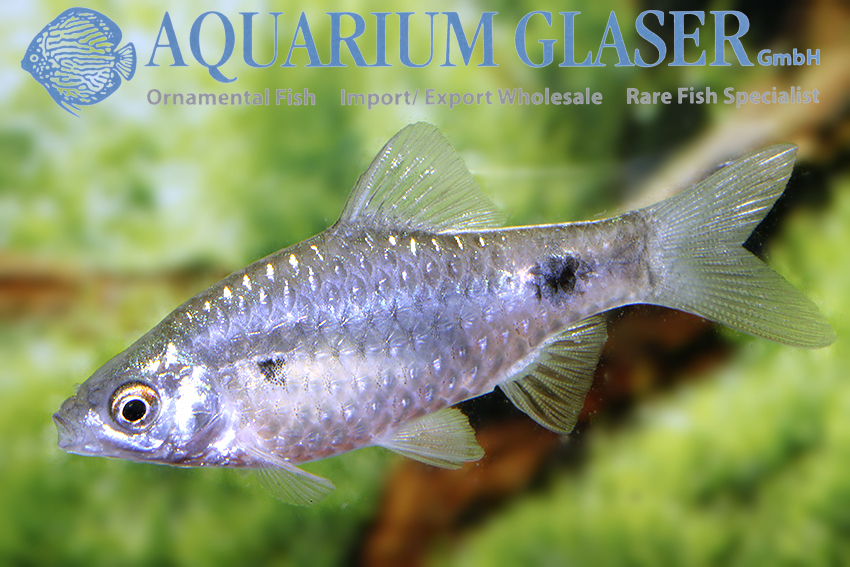
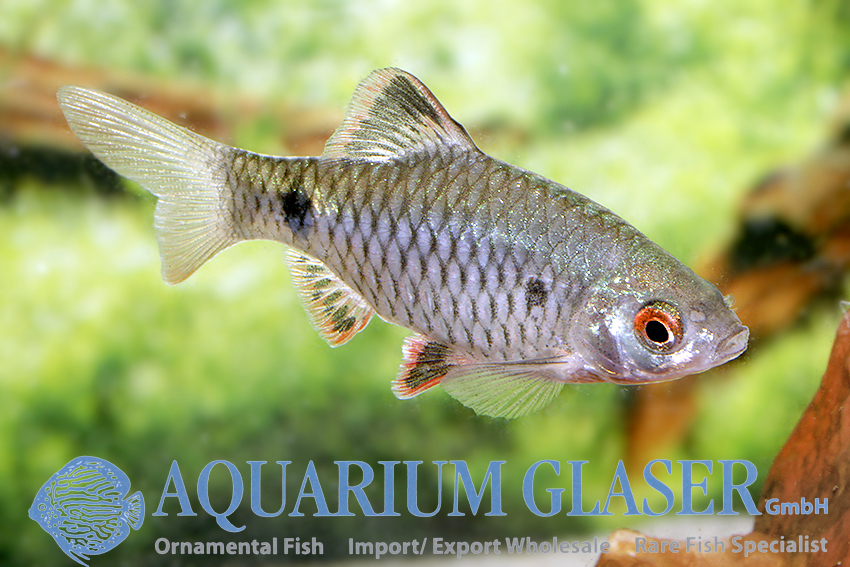
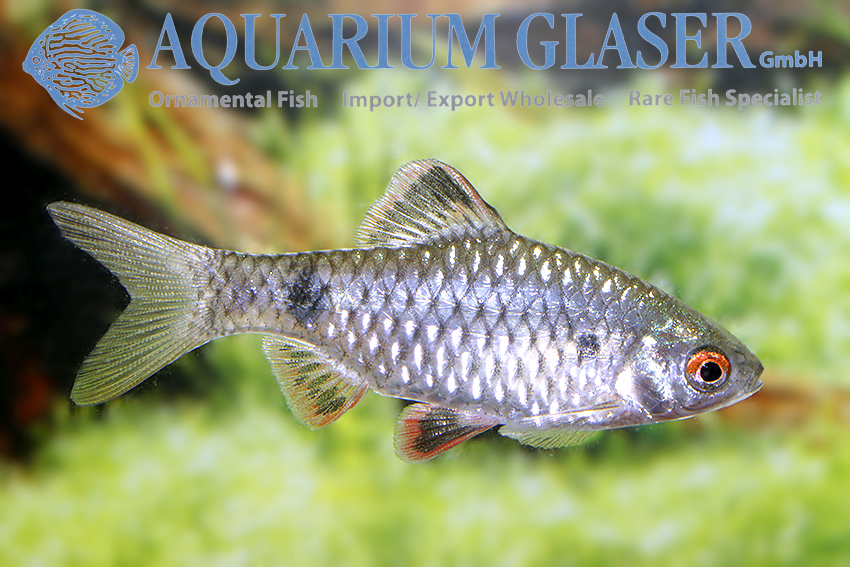
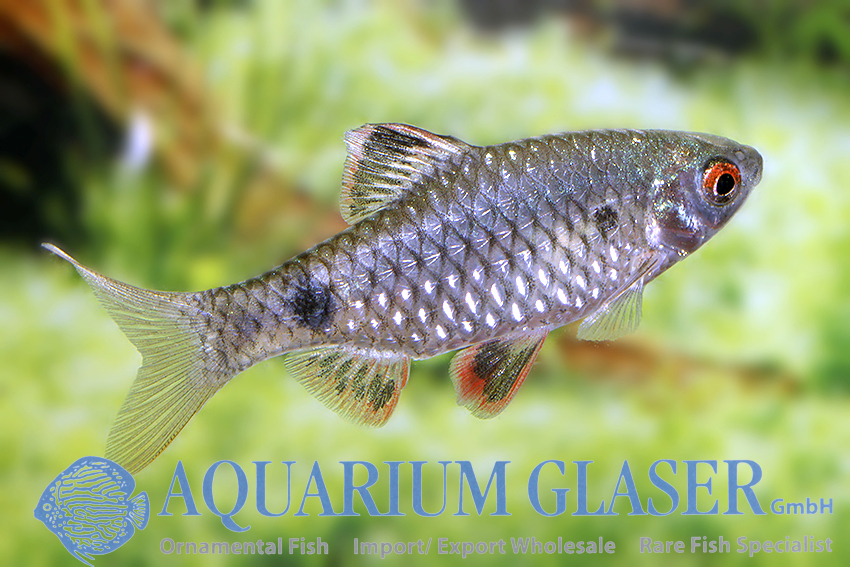
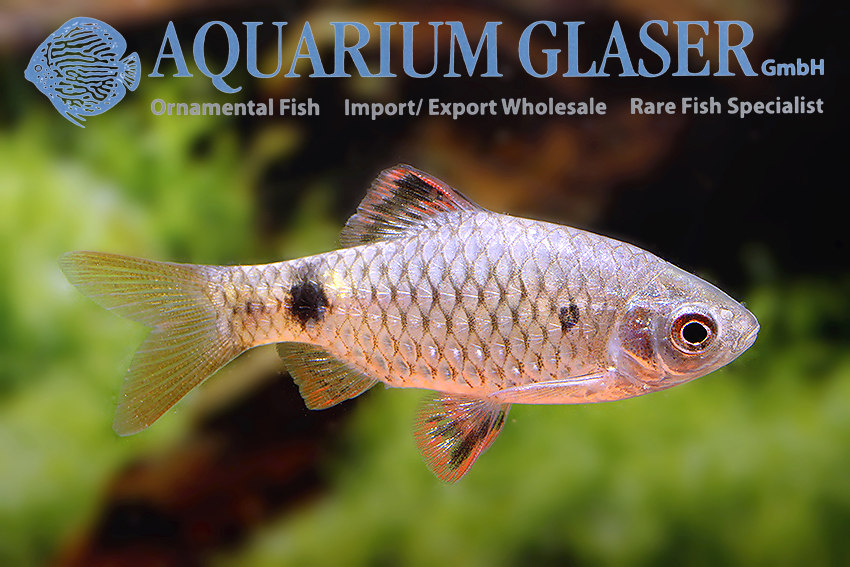
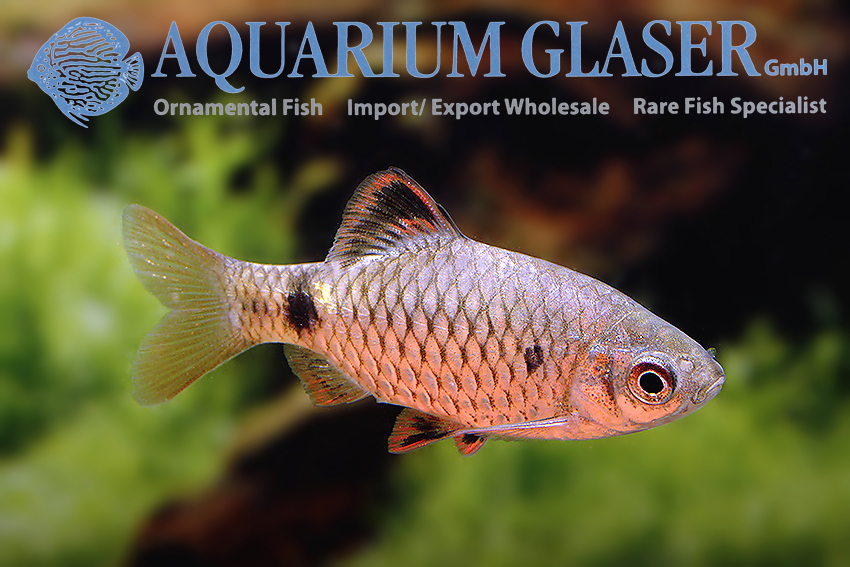
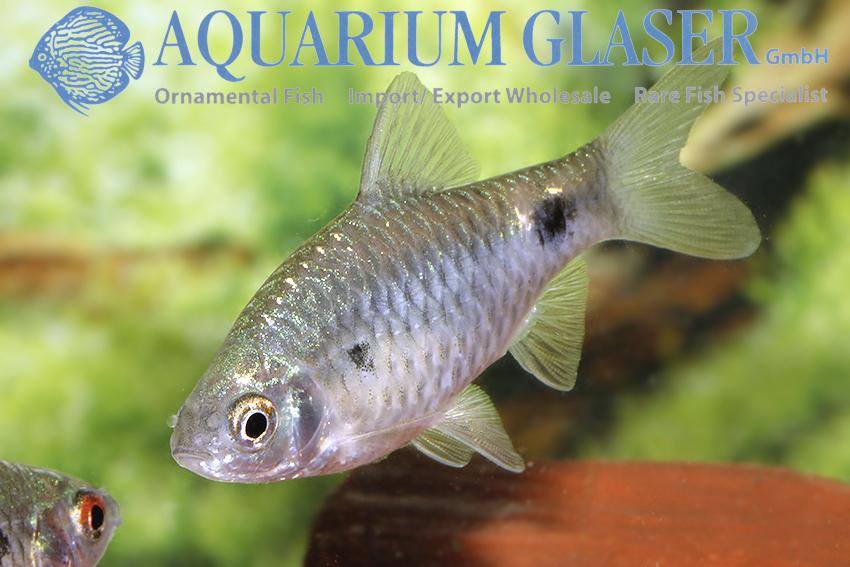
The photos in this post show specimens collected in the wild in Burma; the females differ from the males in that their fins are colorless. In the aquarium, the sunspot barb is identical to the well-known Odessa barb, Pethia padamya (https://www.aquariumglaser.de/en/08-carp-like-fishes-2-barbs-minnows-carps-goldfish-etc/pethia-padamya-wild-2/), with which it apparently also occasionally coexists. However, it is not entirely clear whether these two very closely related species merely inhabit the same range but are ecologically distinct, or whether they are actually found together in the same biotope.
Caring for and breeding this beautiful barb is completely hassle-free. Unfortunately, the juveniles display only silvery hues, which is why they are difficult to market these days. Water parameters are unimportant; any water suitable for drinking is also suitable for keeping these fish. The water temperature can range from 14 to 28°C; slightly higher or lower temperatures won’t cause harm, as long as they don’t persist for too long or occur abruptly. They will eat just about anything suitable for ornamental fish. They also have a need for plant-based food. This can easily be met with suitable flake food, etc. However, if this is not provided, they will nibble on delicate aquatic plants. In general, barbs should not be kept in overly sterile conditions. Mulm—the mixture of dead plant matter, feces, etc.—is an important and essential component of many barbs’ diet and is crucial for their healthy gut microbiome. To ensure the fish develop optimal coloration and display their full range of behaviors, they should never be kept in groups of fewer than 10–12 individuals. Pethia stoliczkanus grows to approximately 5–6 cm.
For our customers: these fish are listed under code 372304 on our stock list. Please note that we supply exclusively to wholesale customers.
Text & photos: Frank Schäfer
