








One of the very first exotic ornamental fish ever was a species that arrived in Berlin in 1895, sent to Paul Matte under the name Pimelodus gracilis. Although this slender “thread catfish” received generally positive reviews, it remained confined to the aquariums of only a few enthusiasts. Whether the identification at the time was correct remains an open question. From today’s perspective, it was in any case a member of the genus Pimelodella. This genus was formerly classified among the “antenna catfish” (Pimelodidae). Today, it is classified within the Heptapteridae, for which there is no common English name.
With currently about 84 accepted species, Pimelodella is a highly species-rich genus found throughout South America. The last comprehensive overview dates back to 1917; in it, Carl Eigenmann distinguished 34 species, 50 fewer than today. This makes identifying the species within the genus a highly complex undertaking, especially since one can never be certain whether one might be dealing with an undescribed species.
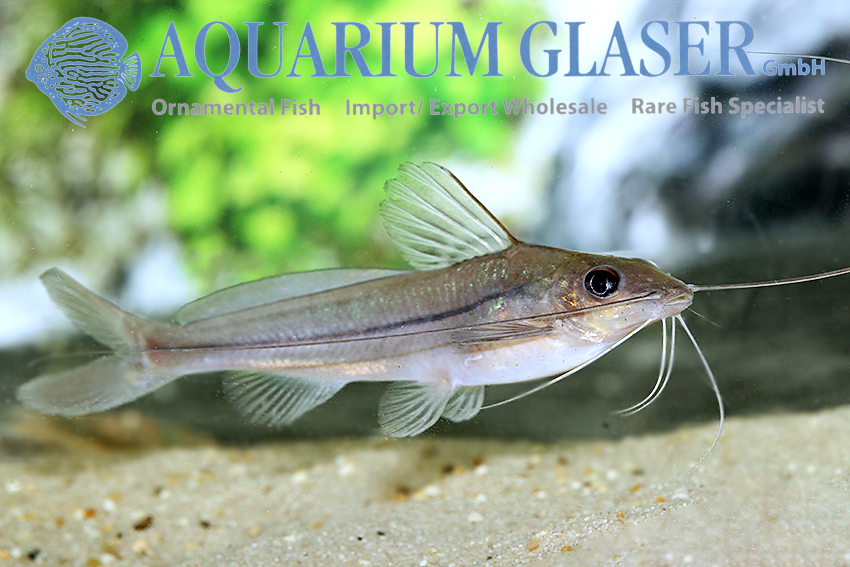
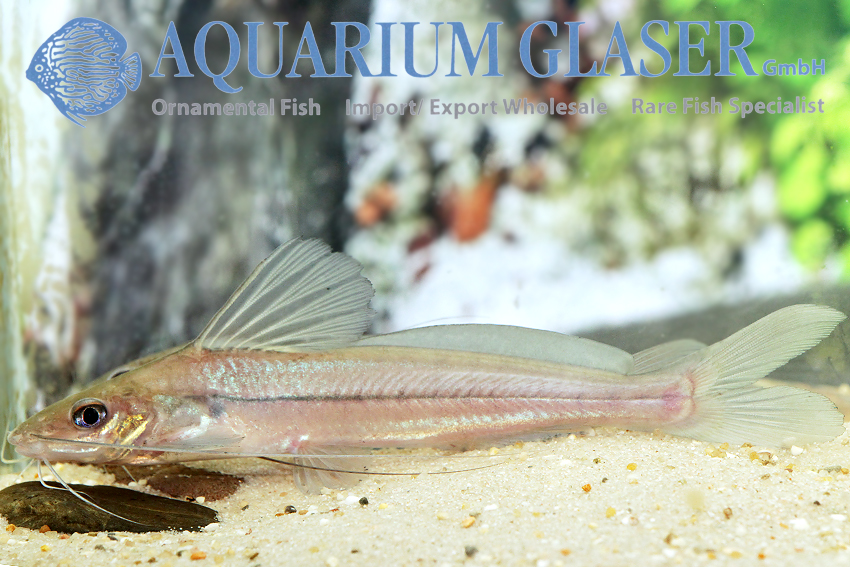
In principle, all Pimelodella species are well-suited for the hobby. There are very small species (around 6–7 cm), but also larger ones. The largest known species grows to about 30 cm in length. Since they all look very similar: slender body, usually a dark stripe along the flank, a relatively large, deeply notched caudal fin, a large adipose fin, all set against a yellowish-ochre-bronze background that can reflect bluish, greenish, or golden hues depending on the light, little effort has been made so far to take a closer look at these animals, which are rare and usually imported only as bycatch. But now, a species we imported from Peru has piqued our curiosity and ambition!
Almost exactly a year ago, we imported 20 young specimens of a Pimelodella species from Peru; given that this import contained a species of algae-eating tetra (https://www.aquariumglaser.de/fischarchiv/parodon-sp-cf-pongoensis/) new to us, found only in a specific region of Peru, we considered it likely that this Pimelodella species—which had not been offered to us before—also originated from there. And lo and behold, in the same paper in which Parodon pongoensis is described, there is also the first description of a Pimelodella species, namely P. montana. The illustration in the description shows a fish that looked very similar to ours; therefore, we initially named the species P. cf. montana.
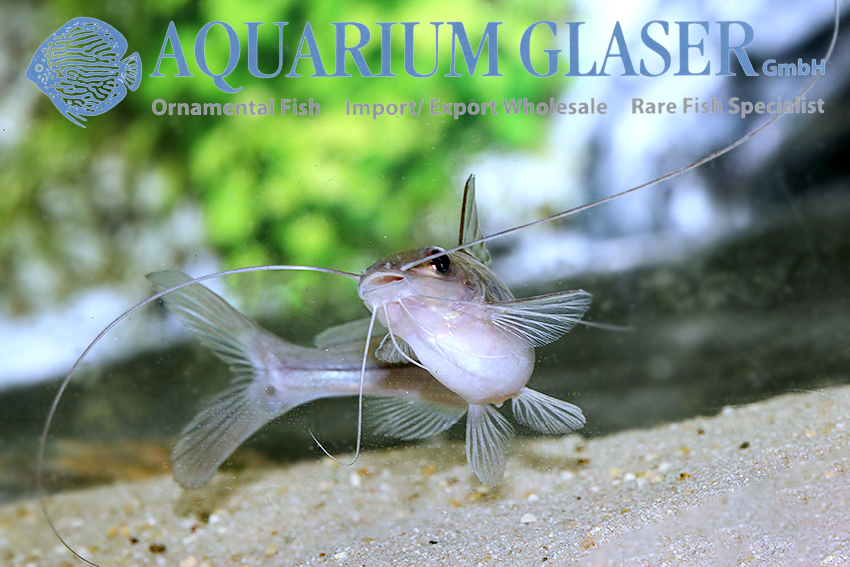
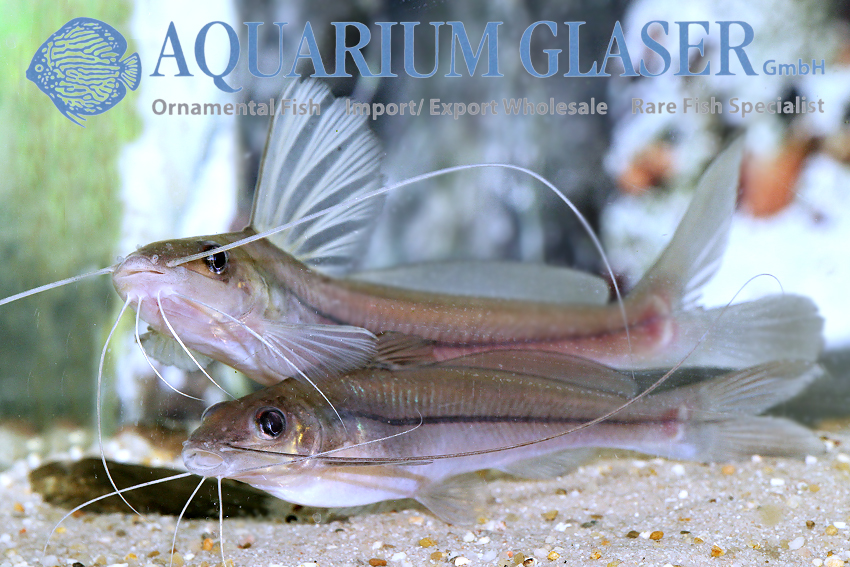
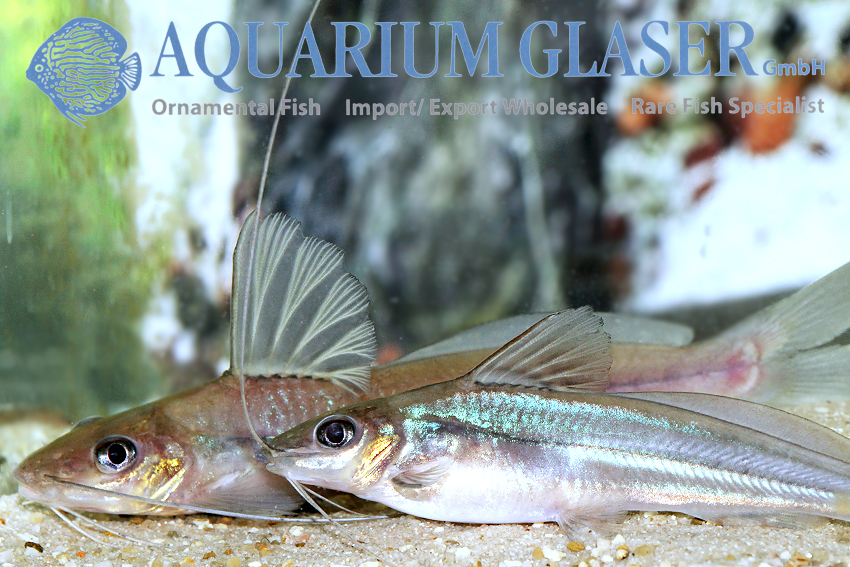
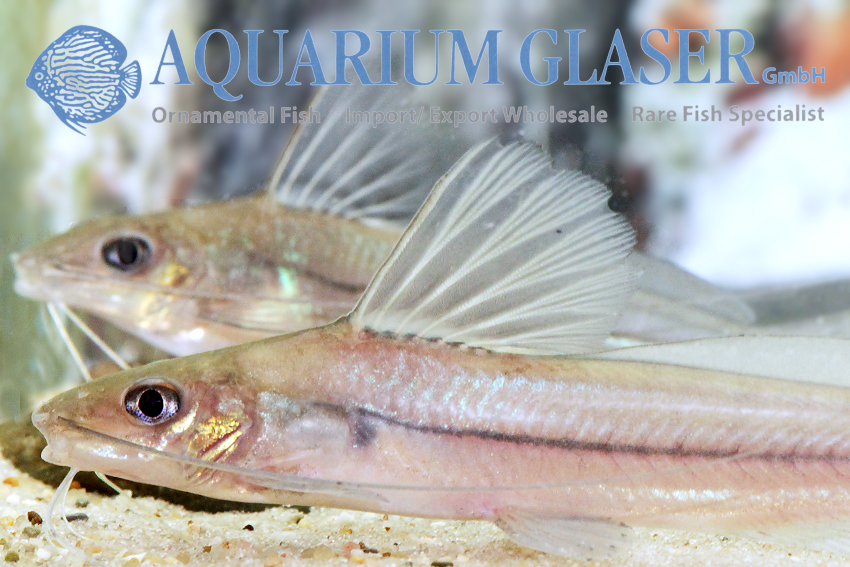
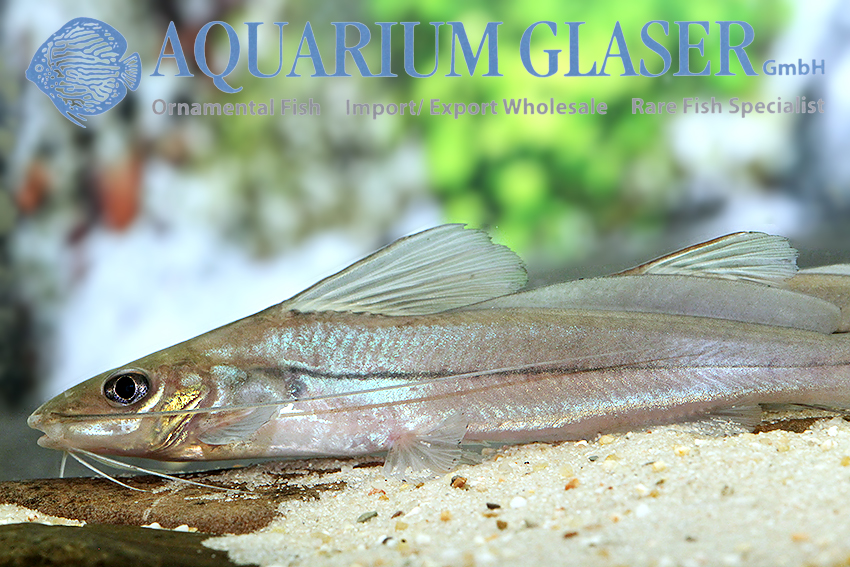
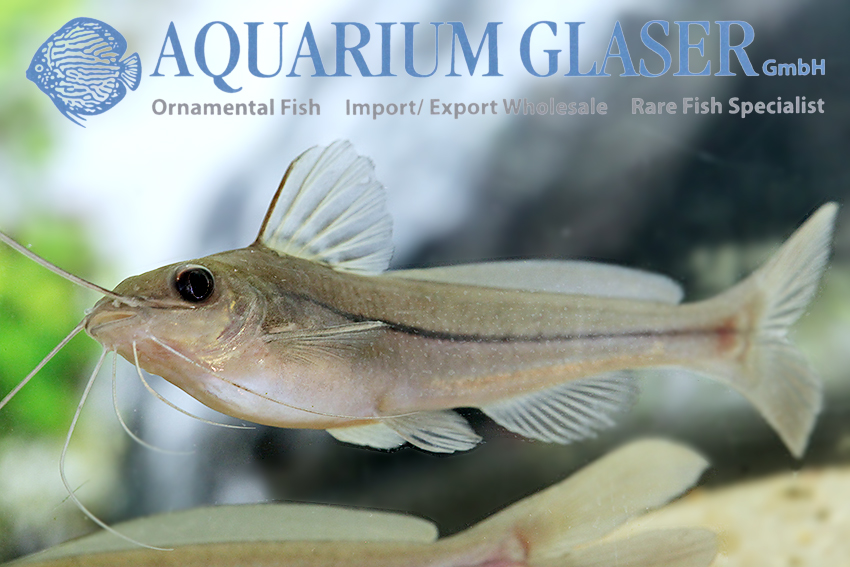
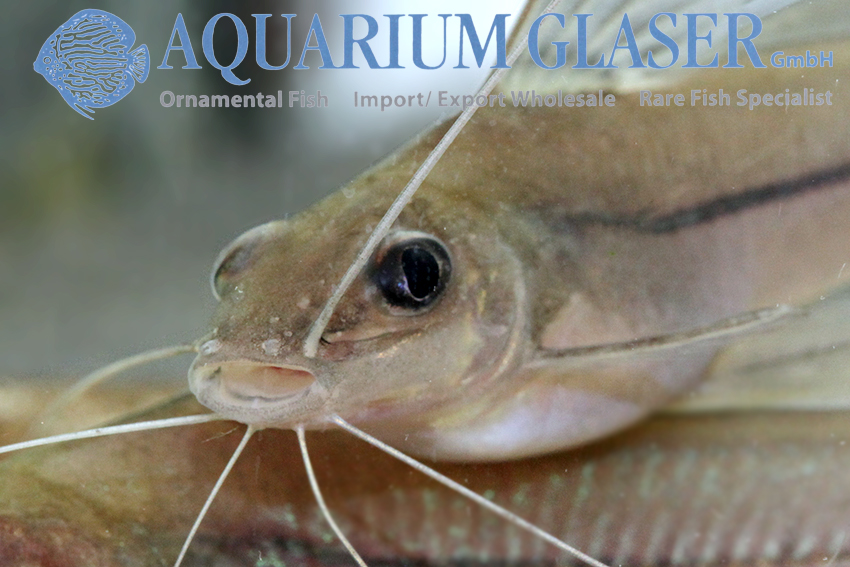
We sold most of the specimens under this name and received no complaints from our customers. In the meantime, however, the four remaining fish have grown and reached sexual maturity. They now measure about 12 cm in total length. One male has developed an enlarged, sail-shaped dorsal fin, and one female has a belly filled with eggs. The photos accompanying this post show these two fish. To date, we are not aware of any reports of such sexual dimorphism in any Pimelodella species. The only published information indicates that certain species exhibit thread-like extensions in the dorsal fin of males. To our knowledge, the striking sexual dimorphism observed in our species has previously been found only in Brachyrhamdia species.
Currently, 16 species of the genus Pimelodella are reported from Peru; we can rule out 10 of them, as they differ significantly from our fish in color and/or anatomy. However, we cannot assess some of the remaining six species at all, because there are no illustrations available and the verbal descriptions are not conclusive. Pimelodella hartwelli is certainly very similar, but P. ophthalmica is also a strong candidate. We have now ruled out P. montana, as the dark longitudinal stripe in this species begins on the snout, whereas in our specimens it starts only behind the gill cover.
Even though we cannot provide a precise identification: Pimelodella species are clearly worthy of greater attention in the aquarium hobby. They are peaceful, do not grow too large, and are therefore definitely an asset to community aquariums with slightly larger fish. And who knows? Perhaps they can even be bred under aquarium conditions. To our knowledge, there are no reports of successful breeding to date.
For our customers: these animals have code 279513 on our stock list. Please note that we supply exclusively to wholesalers.
Text & photos: Frank Schäfer
