








We have mentioned this on several occasions: whether the short-finned Molly breeds actually belong to the species Poecilia sphenops has never been scientifically investigated. In the hobby, at least four different species (P. butleri, P. mexicana, P. salvatoris, and P. sphenops) are more or less regularly represented, and they can hardly be distinguished using standard methods. All four species were at times—including by scientists—grouped together under the single species P. sphenops. The classification under which the short-finned Molly breeds are usually designated as P. sphenops dates back to this period. Over the more than 100 years that these fish have been bred in aquariums, crossbreeding has occurred repeatedly—whether intentionally or unintentionally. Many of these crossbreeds resulted in specimens with distinct appearances, whose characteristics were stabilized by breeders through appropriate measures. This led to the many colorful Molly breeds we know today.
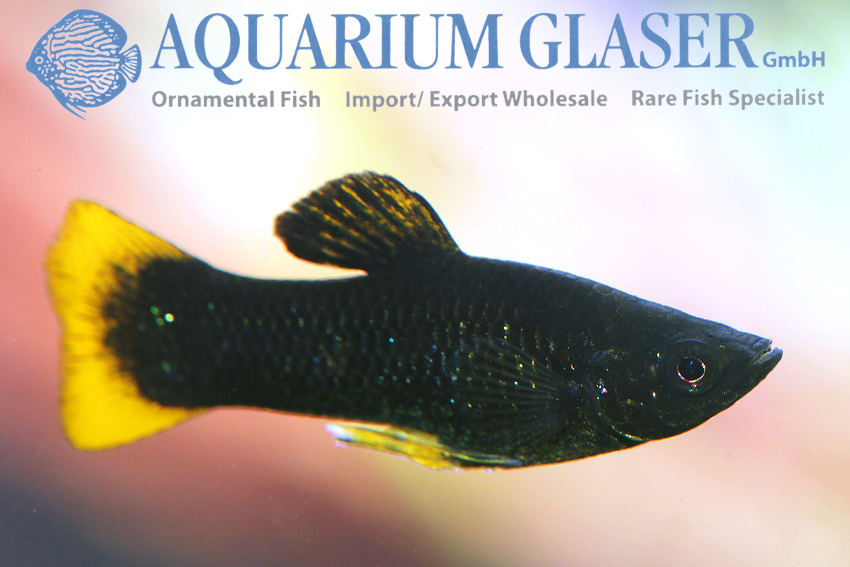
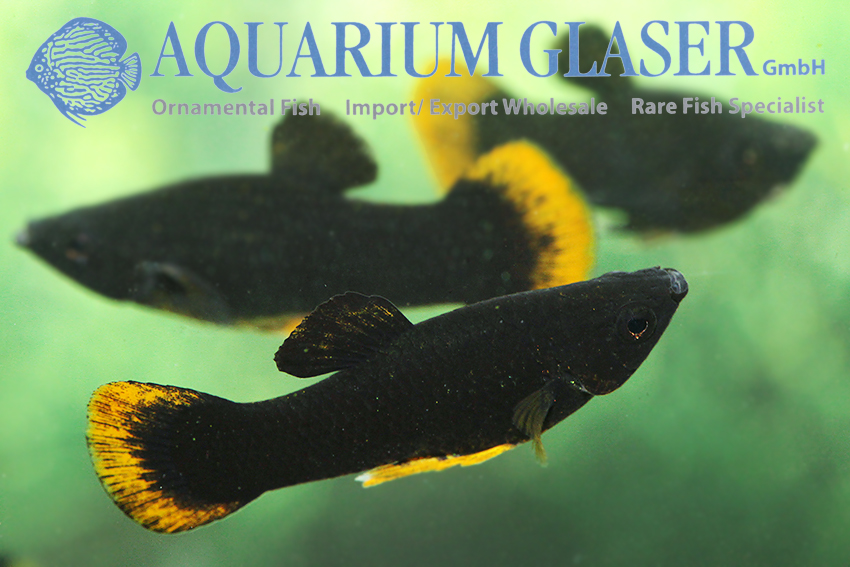
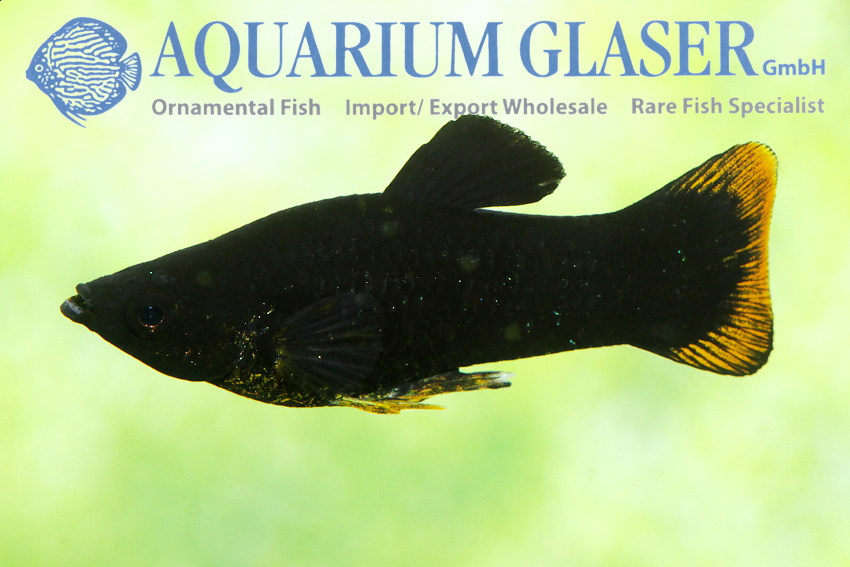
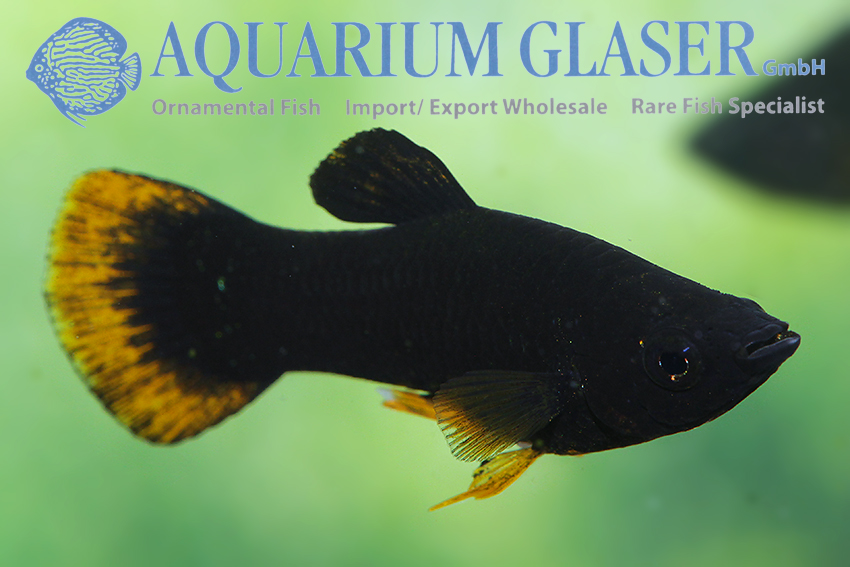
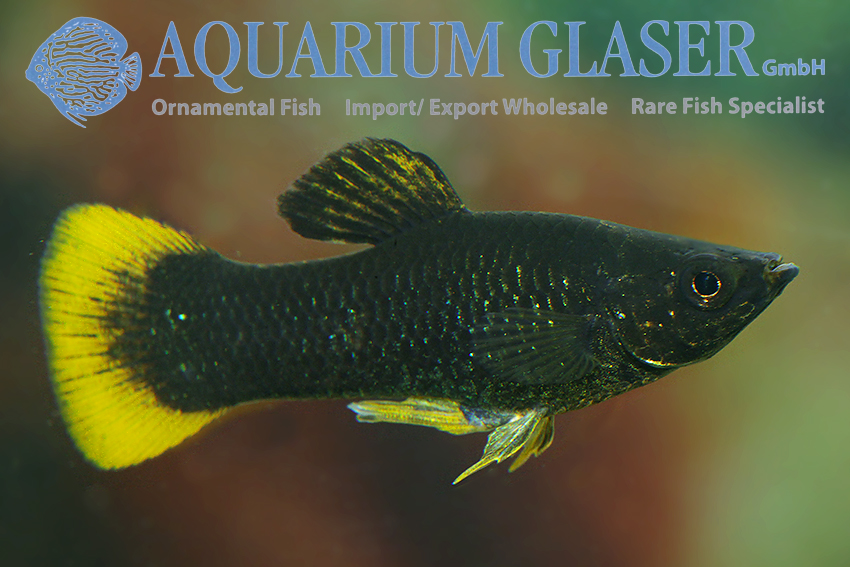
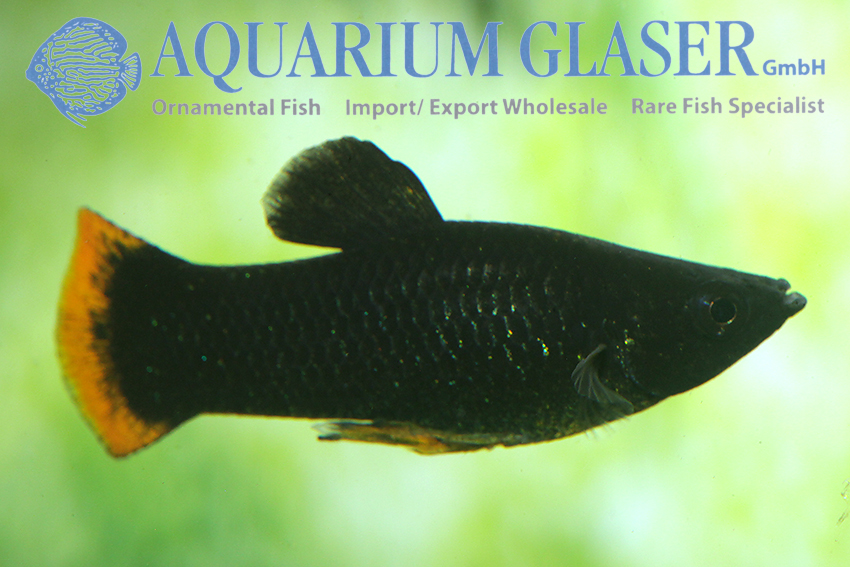
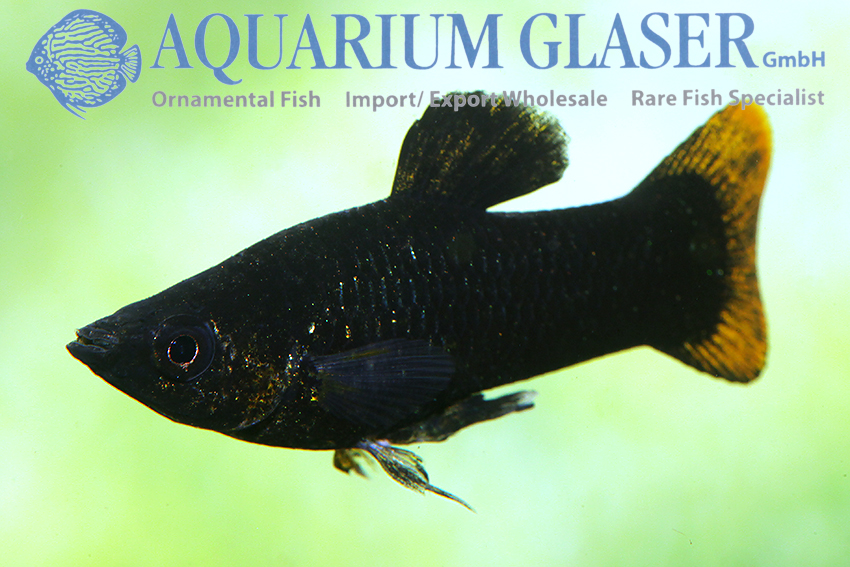
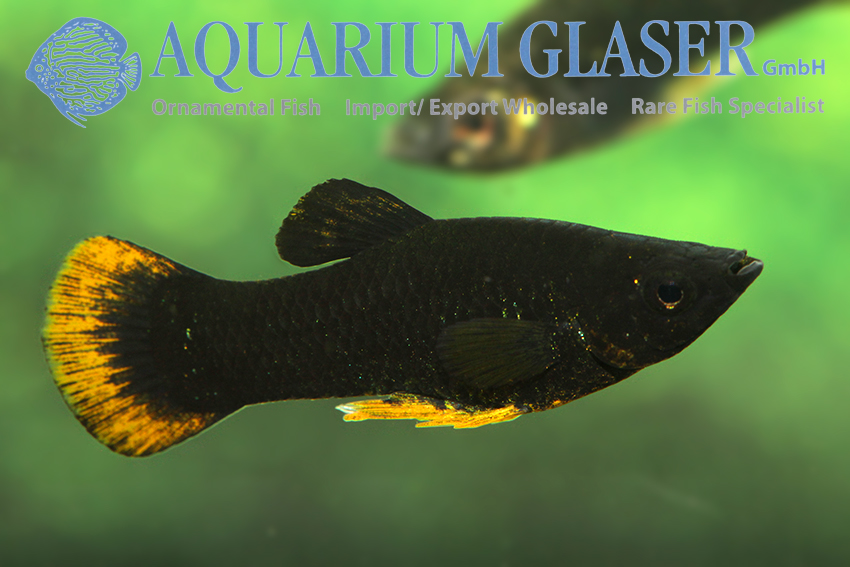
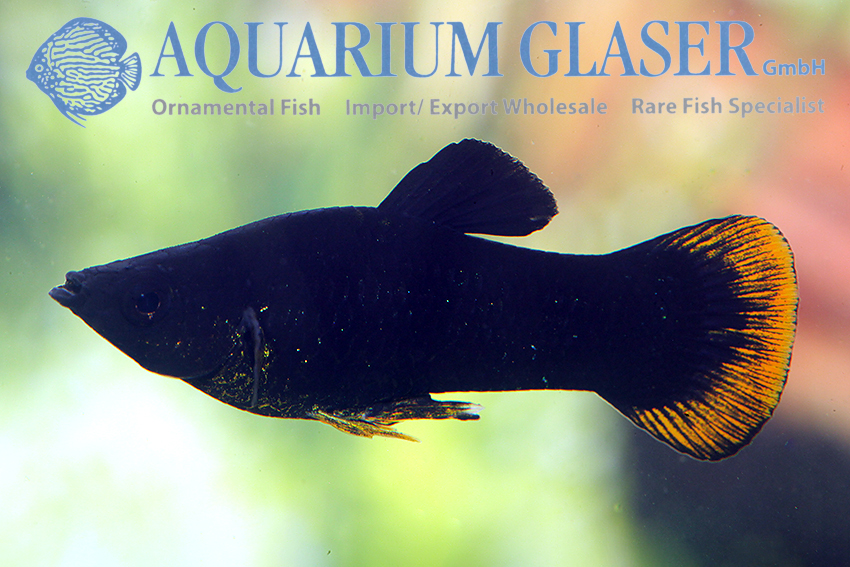
The latest star in the molly world is the very, very attractive short-finned molly breed known as the “Black Orange Tail.” Many wild molly species and populations already display a broad orange edge on their caudal fin, though this trait is typically limited to high-ranking individual males. In Southeast Asia, breeders have now succeeded in stabilizing this trait, so it is consistently displayed regardless of social rank. However, you’ll search in vain for females in tanks housing these attractive fish—they are exclusively males. Anyone wishing to breed these fish must therefore rely on “normal” Black Molly females. Incidentally, Black Orange Tail Mollies have tiny, blue-green shimmering spots on their bodies; this is completely normal and expected. It does, however, make our keepers nervous, as at first glance these spots bear a resemblance to Ichthyophthirius.
Caring for and breeding mollies is not without its challenges. These fish are sensitive to chemical and organic pollutants in the water. Adding a small amount of salt (1 teaspoon per 10 liters of water) can often help, but it’s essential to maintain hard water, a stable pH level above 7.5, and low-bacteria conditions to ensure long-term enjoyment of these fish. Proper feeding is also very important. In the wild, mollies consume a great deal of plant matter in the form of algae. Food that is too high in protein and fat can therefore lead to intestinal diseases. All of this sounds more complicated than it is. It is no coincidence that mollies have been delighting aquarists around the world since 1909.
For our customers: Poecilia sphenops Black Orange Tail has code 432173 on our stock list. Please note that we supply exclusively to wholesalers.
Text & photos: Frank Schäfer
