





In a book on gouramis published in 1957, the author, Sol Kessler, writes that about 15 years earlier (i.e., in 1942, in the midst of World War II!), various variants of the species—based on mutations of the spotted gourami (Trichogaster trichopterus or Trichopodus trichopterus)—had been bred in Europe. Using these fish—which were apparently not bred further in Germany — a breeder named Cosby in Texas — who, according to Kessler, ran a relatively small ornamental fish farm—is said to have bred a genetically stable strain known as the Marble or Cosby gourami. Because of this history, this gourami — one of the most commonly traded worldwide — is also referred to as “Trichogaster cosby,” though this is not a scientific name but rather a made-up one. As a bred variety, the Marble Gourami does not have its own scientific name. In science, bred varieties are considered to be the same species as the original form and therefore bear the same scientific name—in this case, Trichogaster or Trichopodus trichopterus.
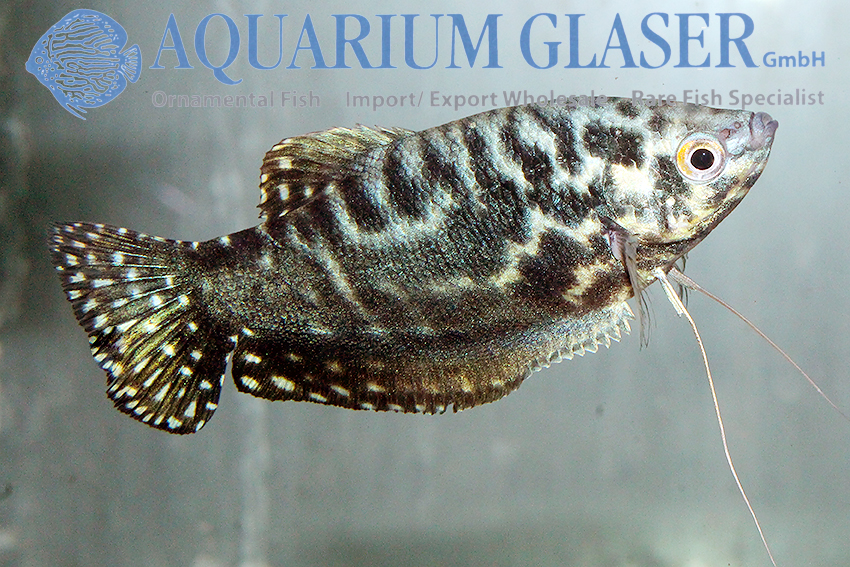
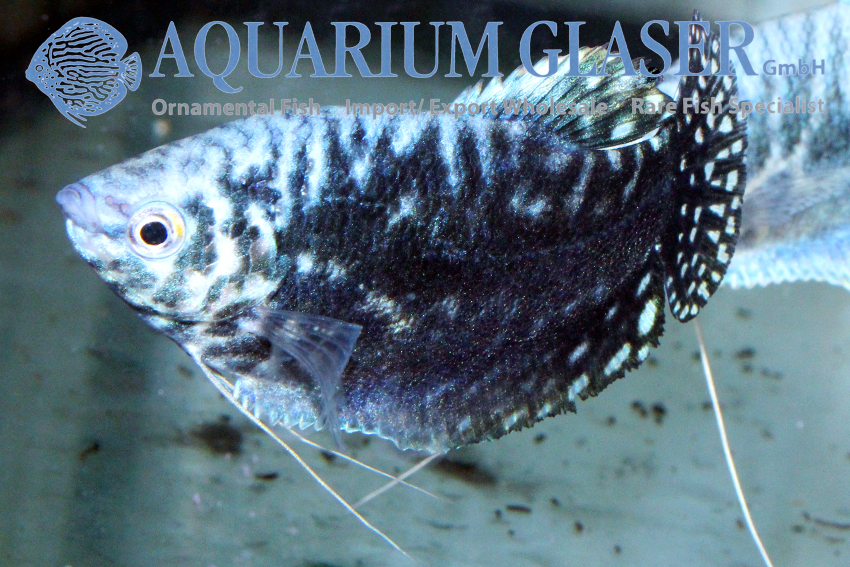
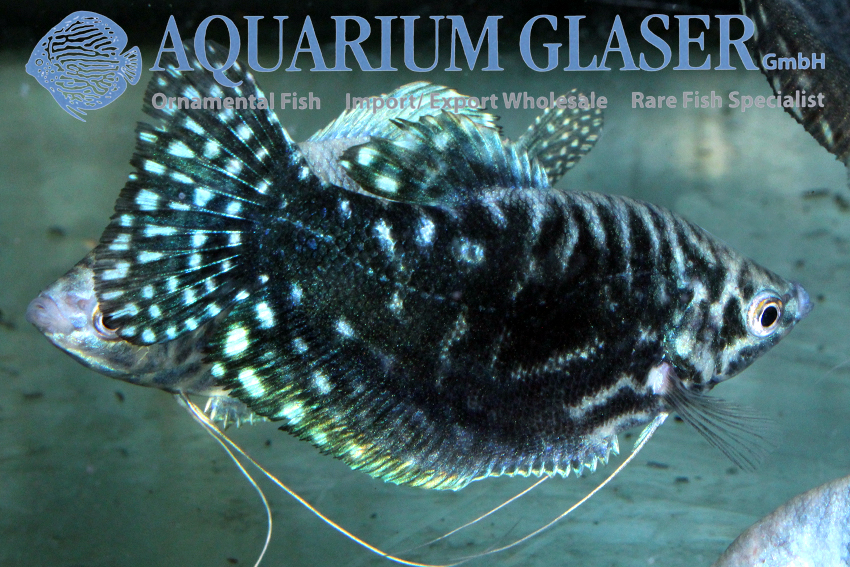
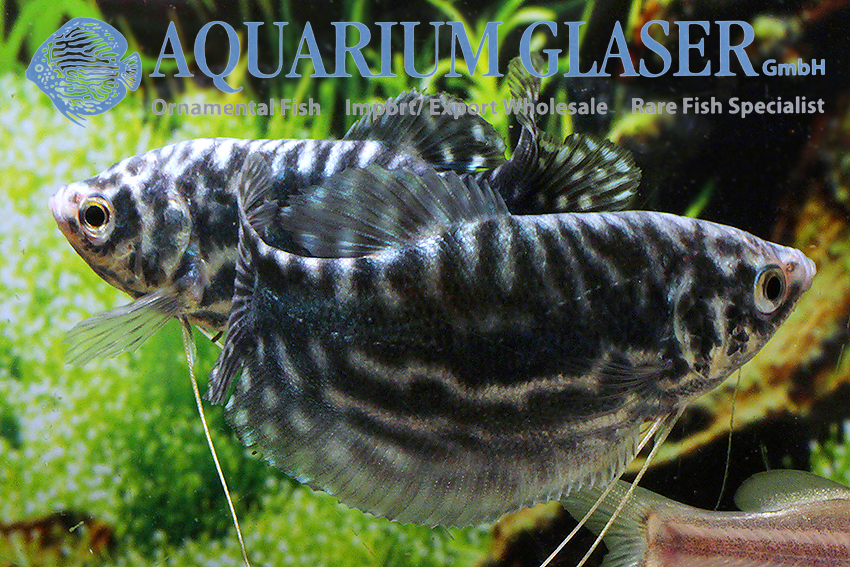
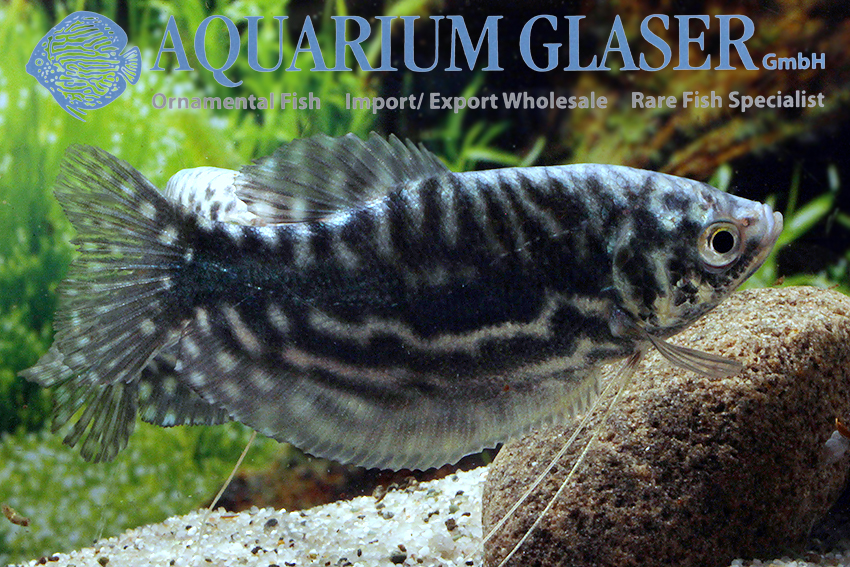
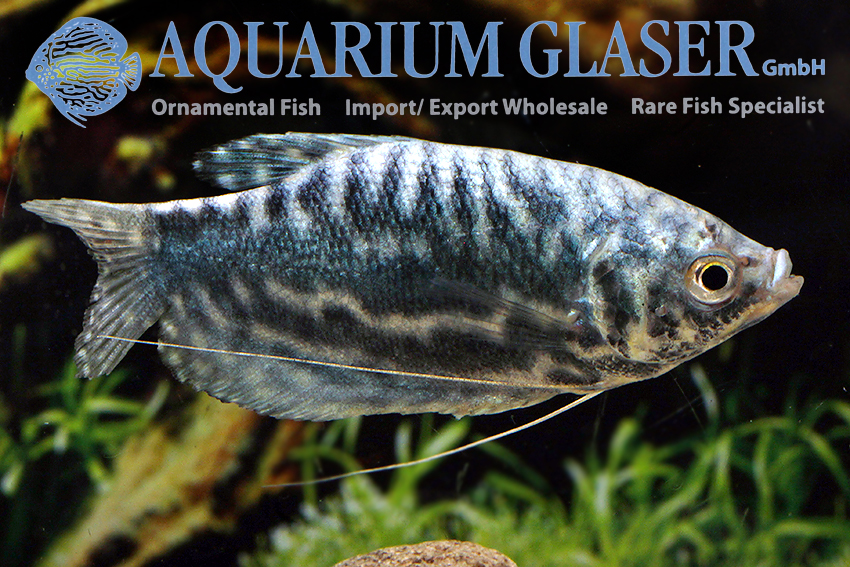
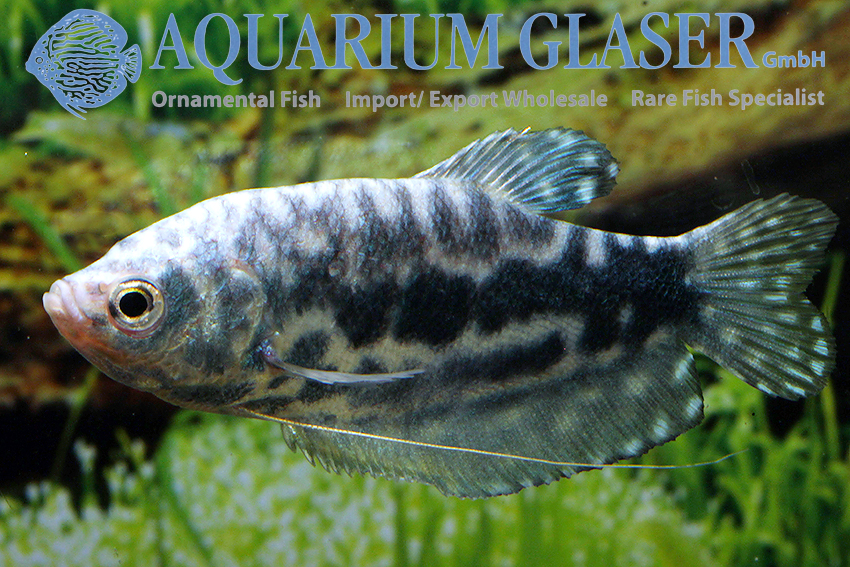
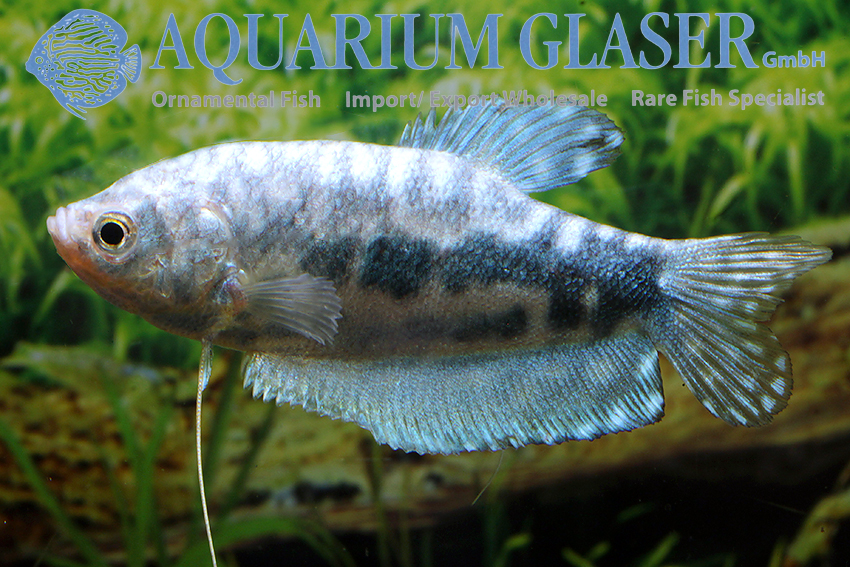
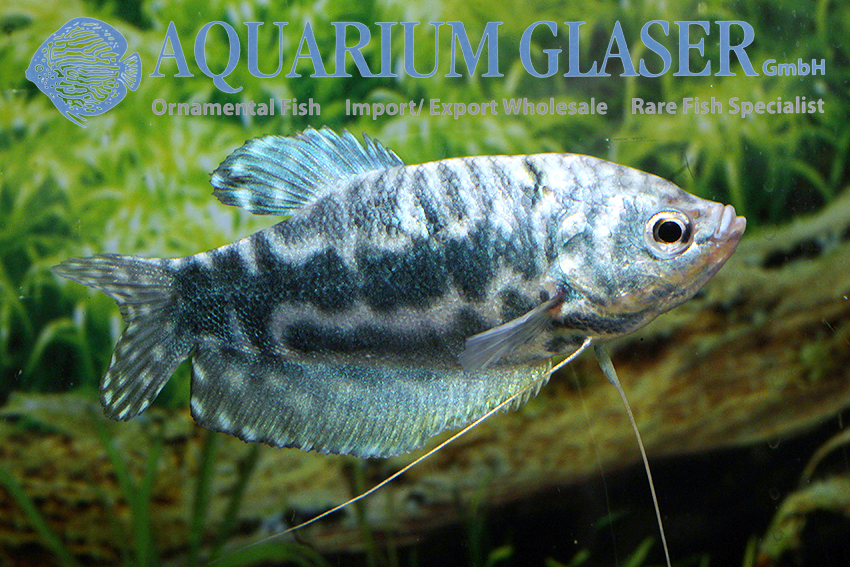
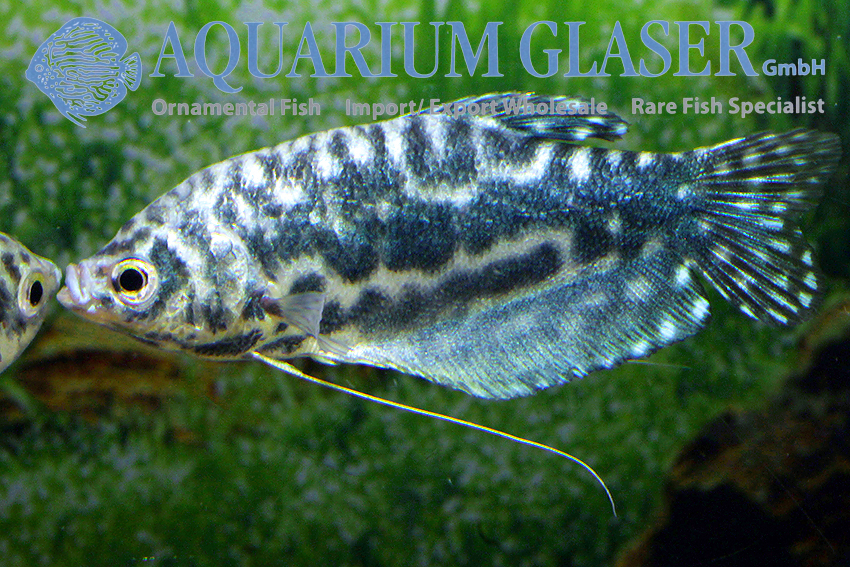
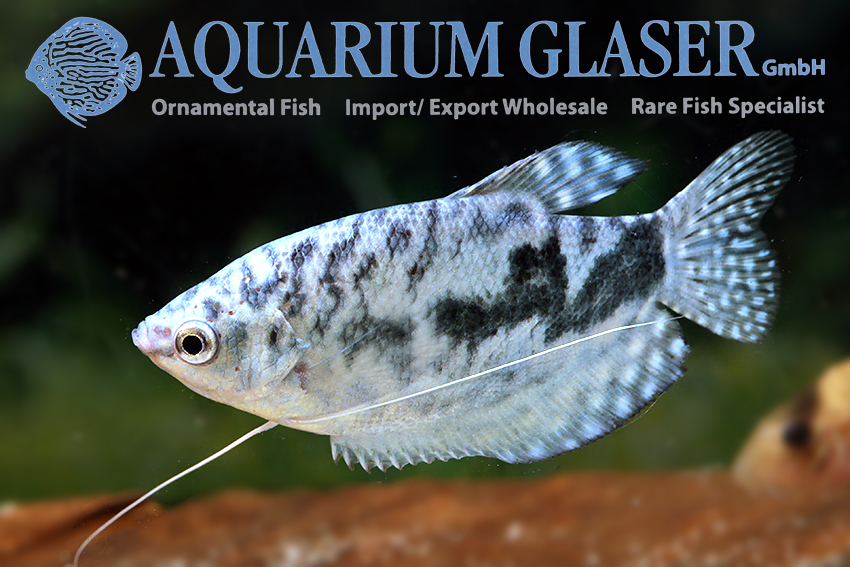
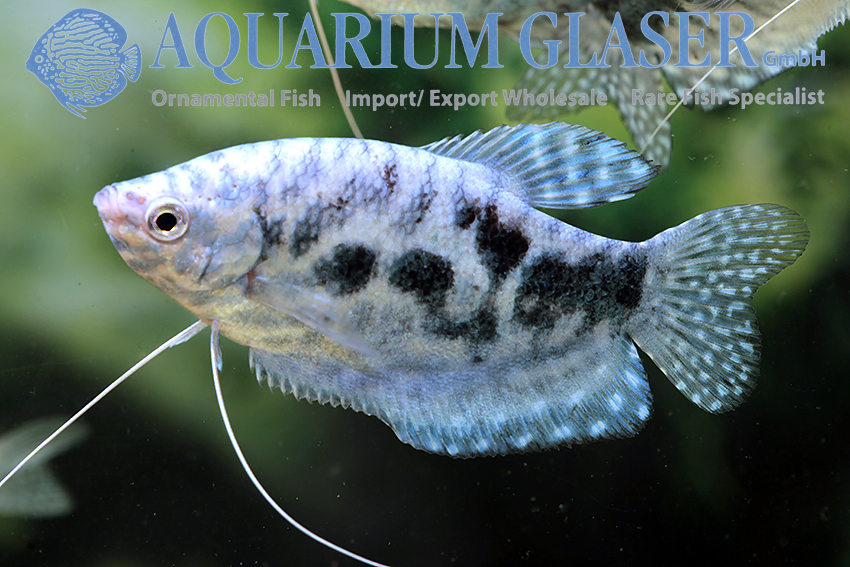
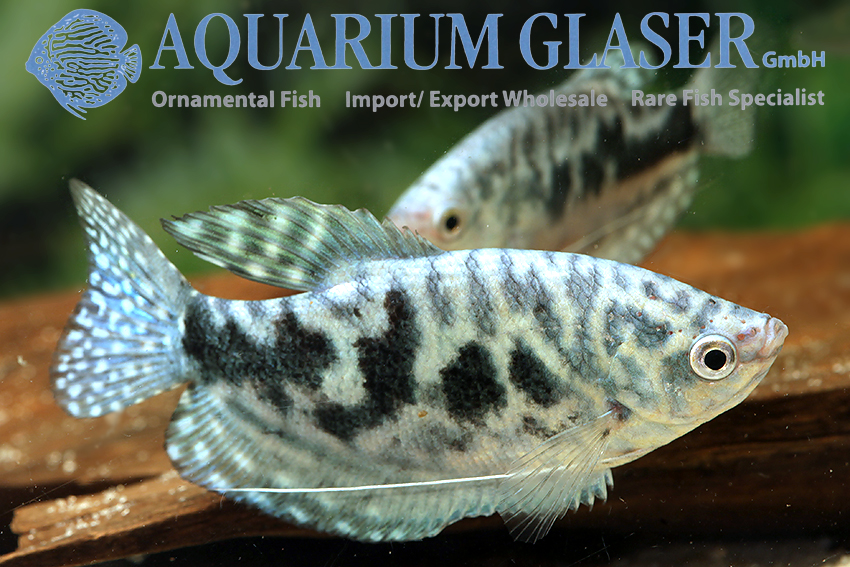
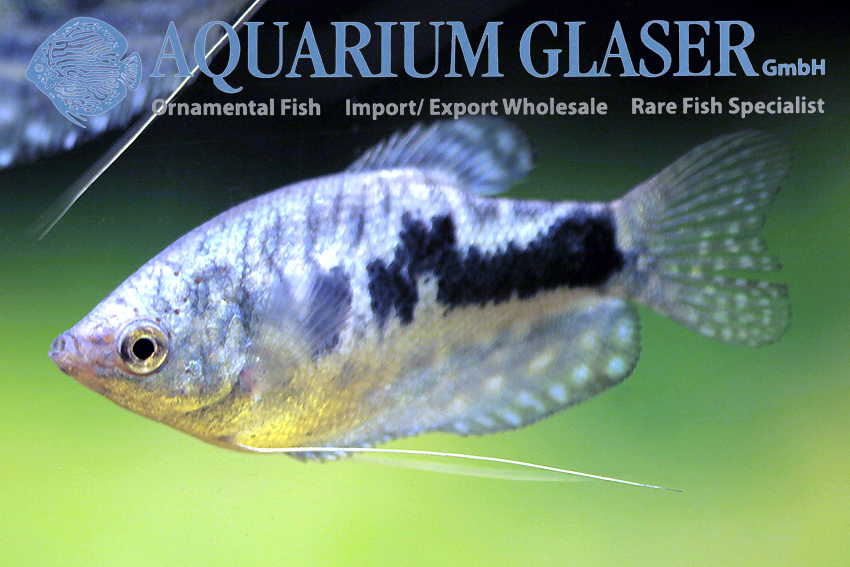
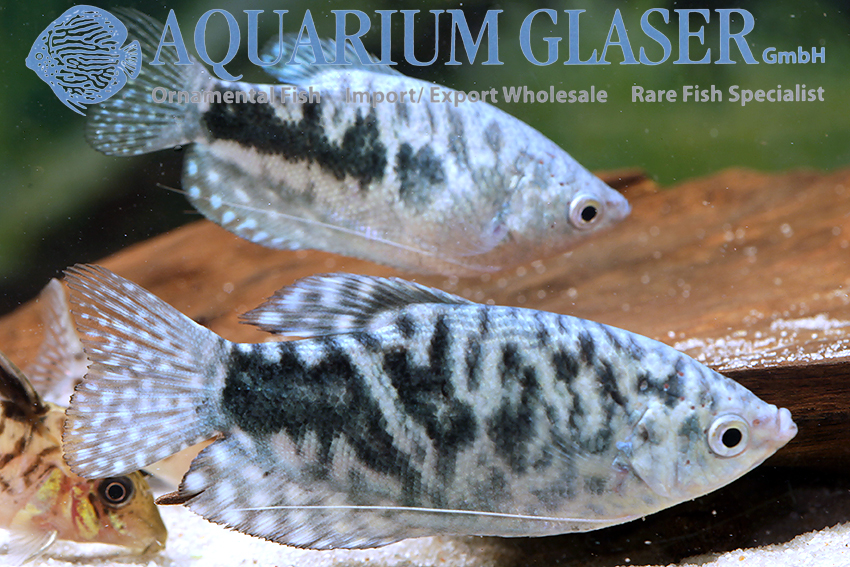
Incidentally, Marble Gouramis do not necessarily have to be bred to have a blue base color. The marble pattern—which is essentially an intensification of the courtship colors of the Spotted gourami, even outside the breeding season—can be bred onto all known base colors (brown, blue, gold, silver) of the Spotted gourami. However, you will almost never find anything other than blue Marble Gouramis in pet stores.
These are very beautiful, peaceful gouramis that are ideal for community aquariums. They adapt exceptionally well to a wide range of water conditions, and any tap water is suitable for their care and breeding. At temperatures above 26°C, the males — recognizable by their pointed and elongated dorsal fin — enter breeding mode and build a foam nest. During this time, they become very territorial and aggressive. When they’re in breeding mode, Cosby gouramis turn almost black.
The aquarium for gouramis should be set up with as much structural variety as possible, featuring a soft substrate, lush vegetation, and areas partially shaded by floating plants. You can keep any number of specimens of both sexes, but you must ensure that the water temperature is low enough to prevent the males from entering breeding mode; otherwise, there will be bloodshed. Any commercially available ornamental fish food (dry, frozen, and live food) is suitable, but keep in mind that gouramis have relatively small mouths.
Never keep gouramis with fin-nipping fish species (e.g., tiger barbs, flame tetras, goodeids), as these will bite off the gouramis’ highly sensitive pelvic fins, which play an important role as tactile organs.
Maximum size: approx. 12–15 cm; Temperature: 20–30°C; pH and hardness: not significant for care and breeding (tap water); Diet: Omnivorous; Social behavior: Outside the breeding season, a peaceful fish with a social hierarchy.
For our customers: Depending on their size, these fish are listed under codes 468900 through 468914 on our stock list. Please note that we supply exclusively to wholesale customers.
Text & photos: Frank Schäfer
