








“Marigold” is the English name for a prized medicinal plant associated with the Virgin Mary. The flowers of the common marigold are a rich orange-yellow—just like those of the Marigold swordtail.
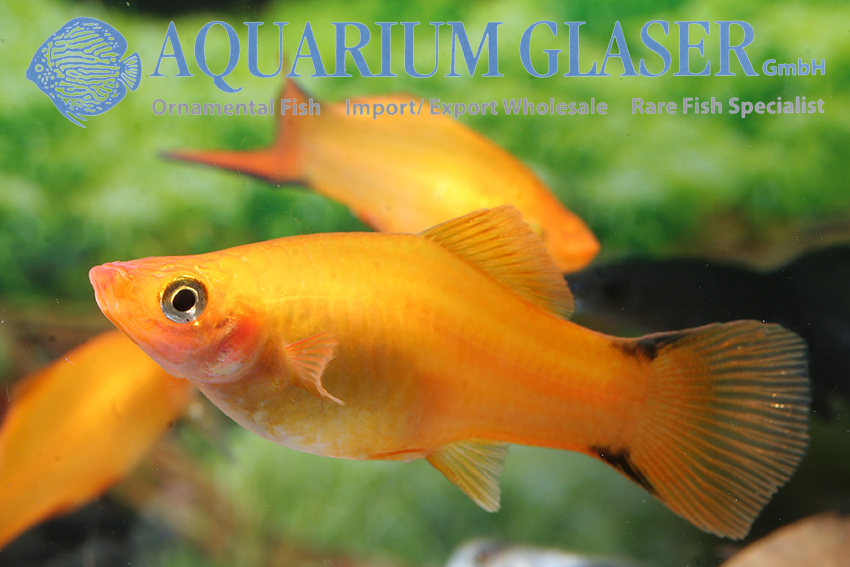
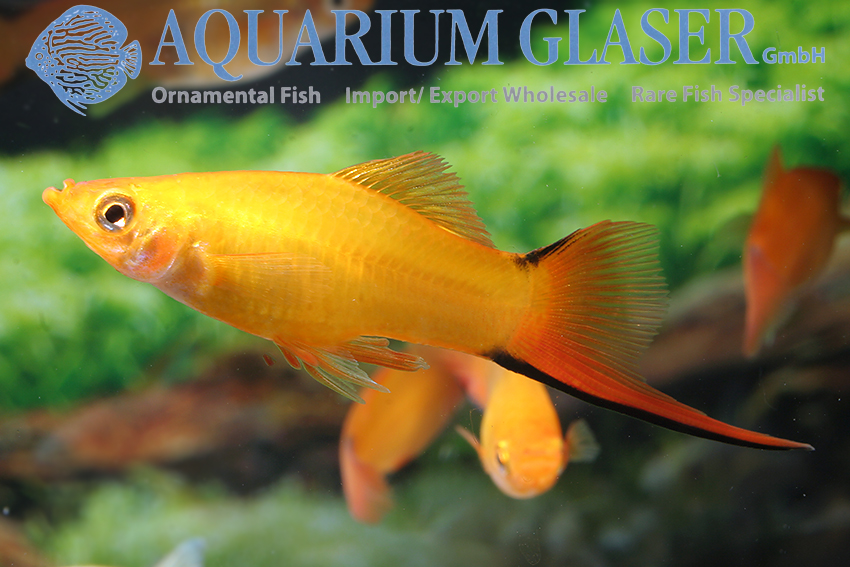
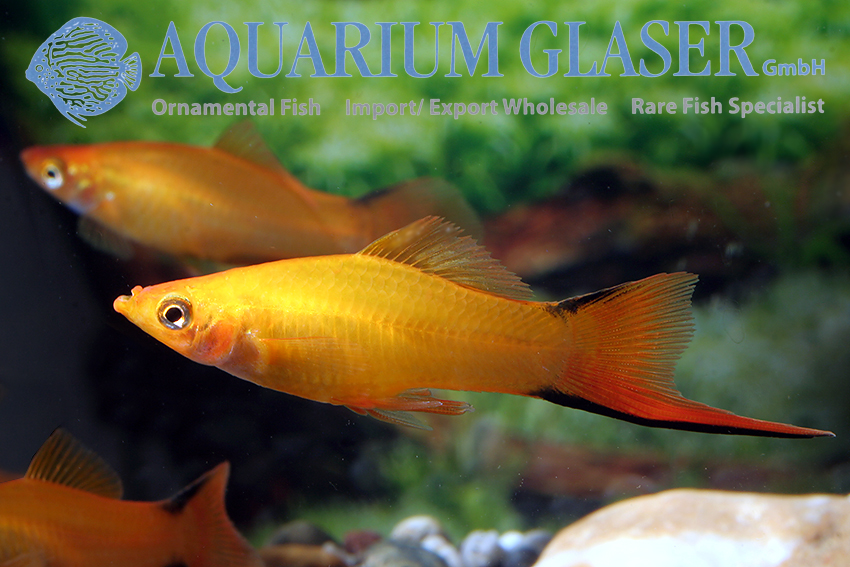
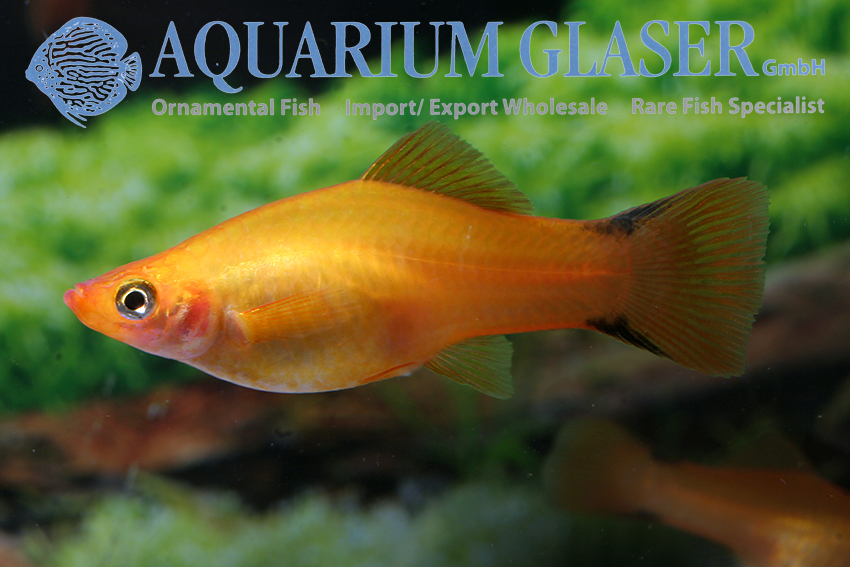
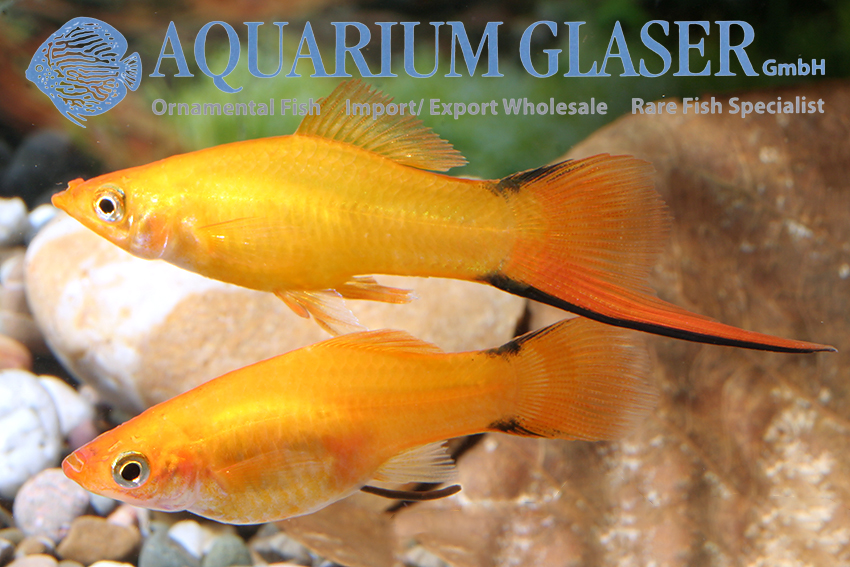
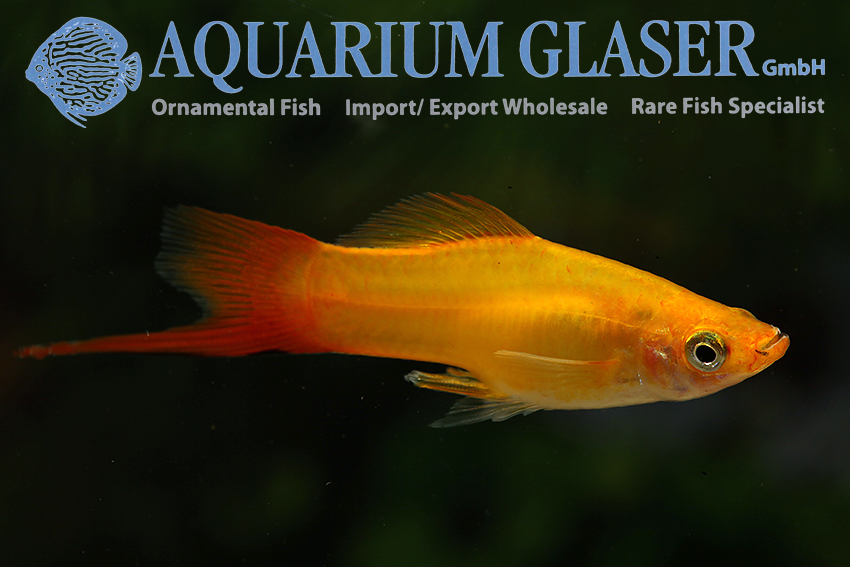
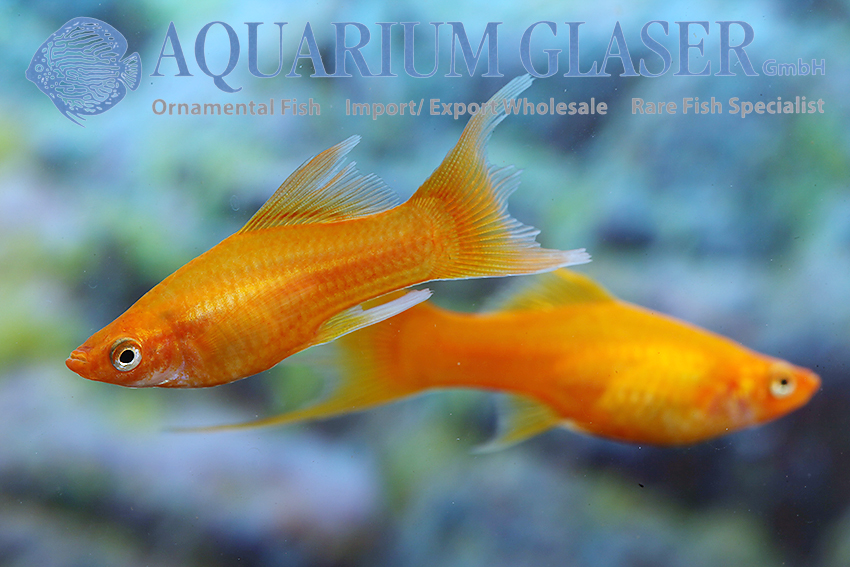
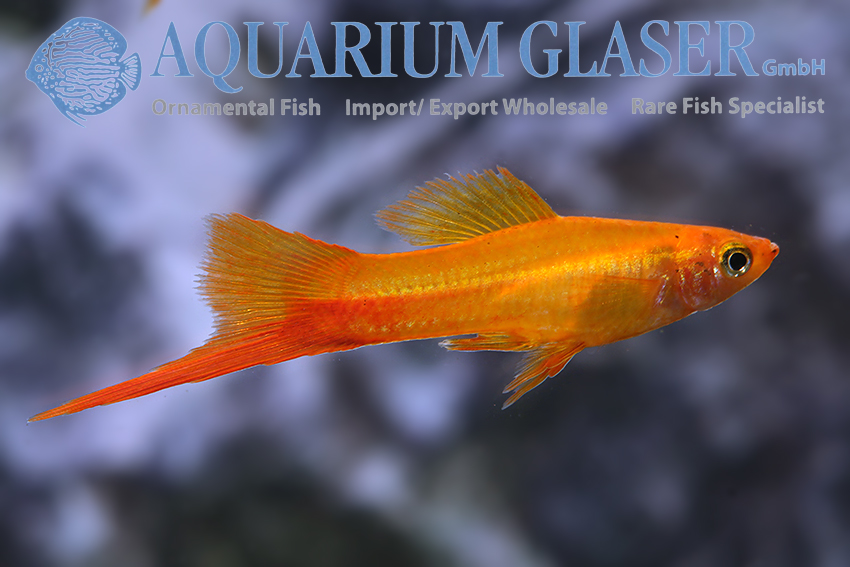
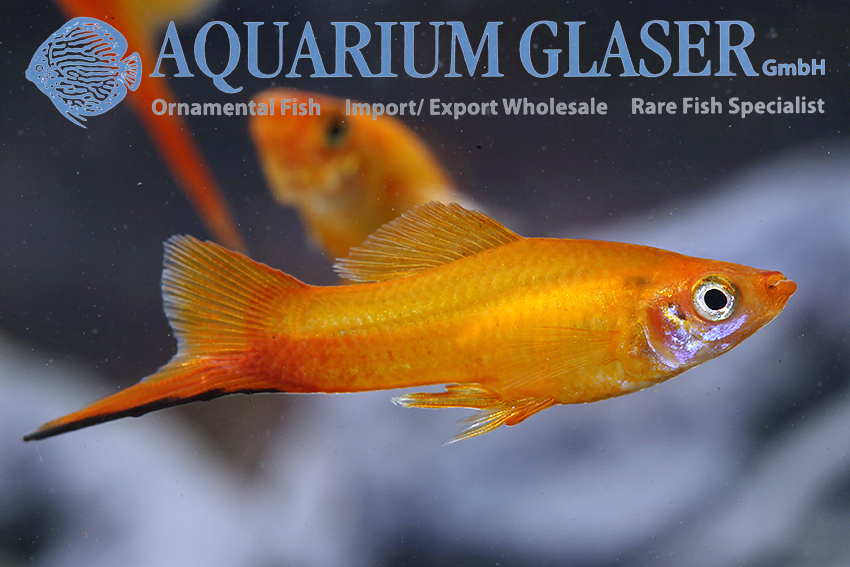
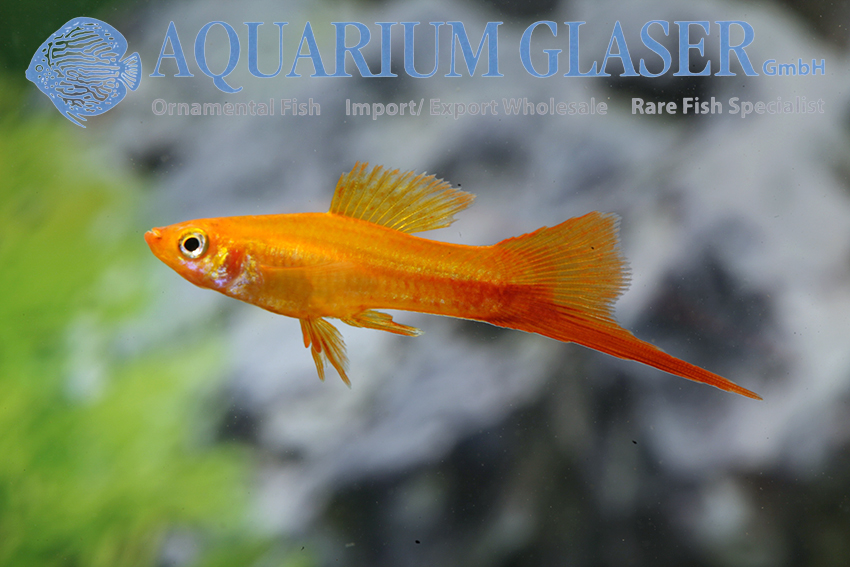
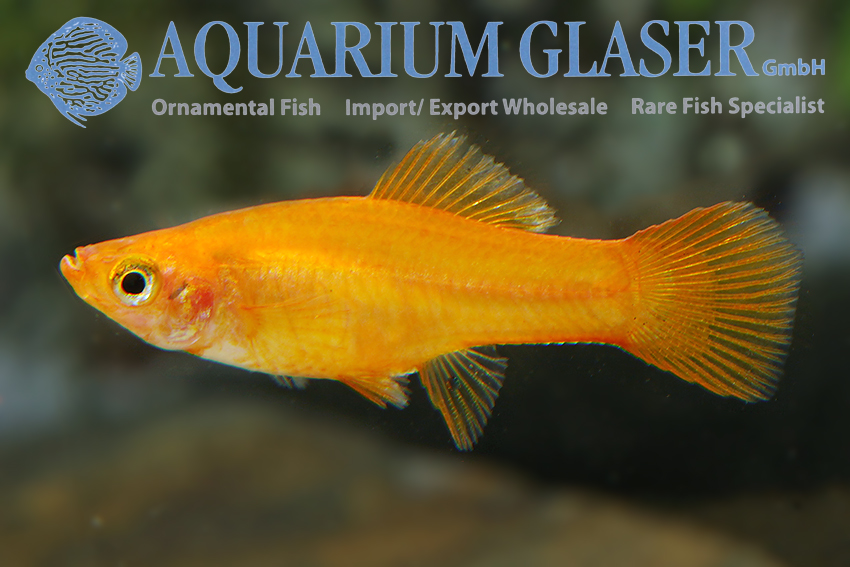
Yellow platies and, soon after, yellow swordtails have been around for a long time. The color first appeared in the platy Xiphophorus maculatus and was transferred to the swordtail through crossbreeding. All of this took place before World War I. The Marigold is much younger. This coloration was first found in the variable platy, X. variatus. However, this fish did enter the hobby much later, around 1931. The first illustrations of Marigold variatus-platies appeared in the literature around 1963. At that time, they were still called “new yellow platies.” We don’t know exactly who coined the name “Marigold” or when. It’s already used in Kurt Jacobs’ 1969 standard work on livebearers, though only for X. variatus with that coloration. The color was thus transferred to the Swordtail only later through crossbreeding.
Is any of this important? Well, from time to time, it’s good to remind yourself just how much time, effort, and passion goes into breeding such a colorful little aquarium fish. We think that helps you appreciate them even more. These days, people rarely distinguish between yellow swordtails and marigold swordtails. Almost all “yellow swordtails” or “gold swordtails” available in stores currently are marigold strains. The difference? In “true” yellow swordtails, the base color is a pale lemon yellow and the caudal fin is pale yellow or nearly colorless (only the males’ sword is often framed in black); in marigold swordtails, the body color is orange-yellow (almost red under certain lighting conditions) and the caudal fin is more or less orange-red. Intensely colored Marigolds are also marketed as “Sunset”. Many names, all the same fish. All fin types, including Lyra, can be bred in Marigolds. Black markings are also possible. The most popular is the Comet, whose caudal fin is framed in black at the top and bottom, but there are also Halfmoon (i.e., with a black spot at the base of the tail) and black-speckled strains.
Maximum size: approx. 8–10 cm (excluding the caudal fin); Temperature: 20–28°C; pH and hardness: not significant for care (tap water), not soft or acidic; Diet: Omnivorous; Social behavior: Schooling fish with a social hierarchy.
For our customers: The animals listed on our stock list have the following codes: 420172 (spotted), 420173 (halfmoon), 420183 (comet), 420812 (lyra tail), and 420202–420204 (no additional markings). Please note that we supply exclusively to wholesale customers.
Text & photos: Frank Schäfer
