





The Vienna swordtail was given this name around 1933; the reason for this is unknown. It is an albino swordtail with red eyes and a deep red body. While “normal” albino swordtails have a white or flesh-colored body in addition to red eyes—because they lack the gene responsible for body pigmentation—the Vienna Swordtail, although albino, is colored a velvety deep red all over its body. How is this possible?
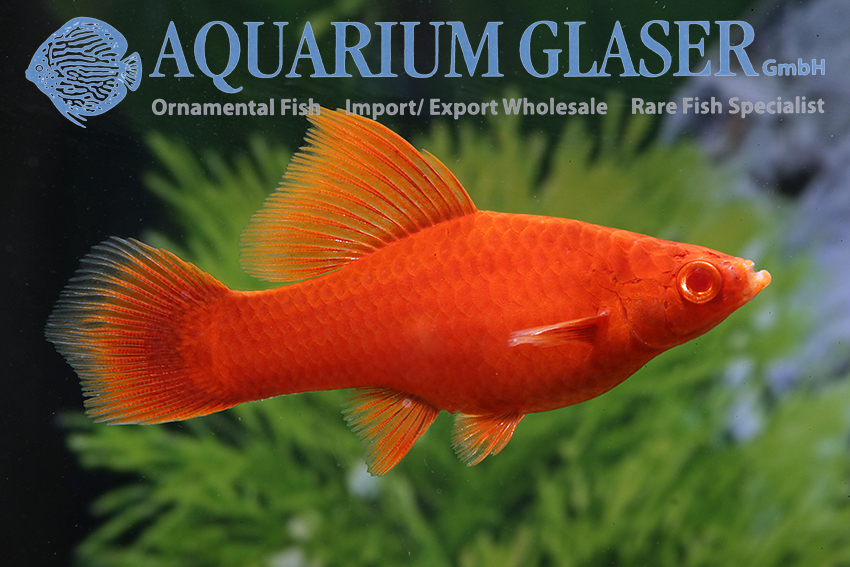
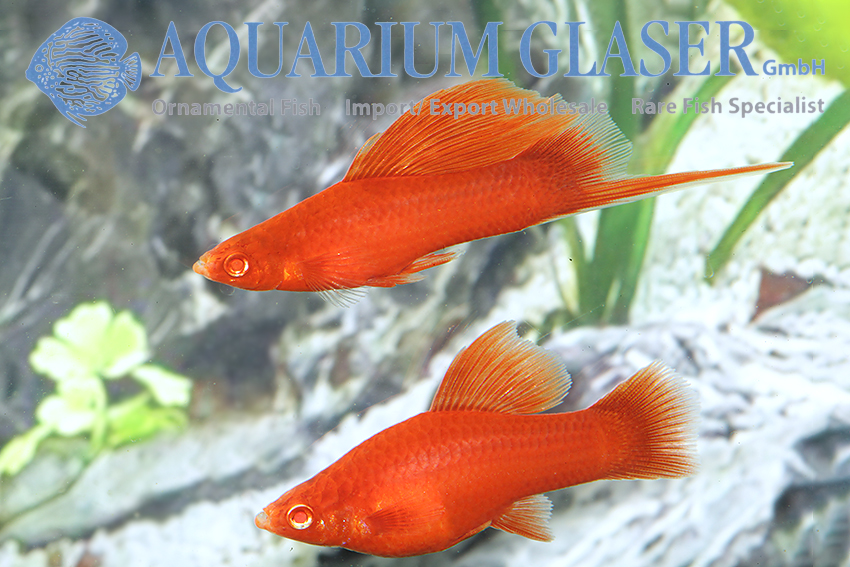
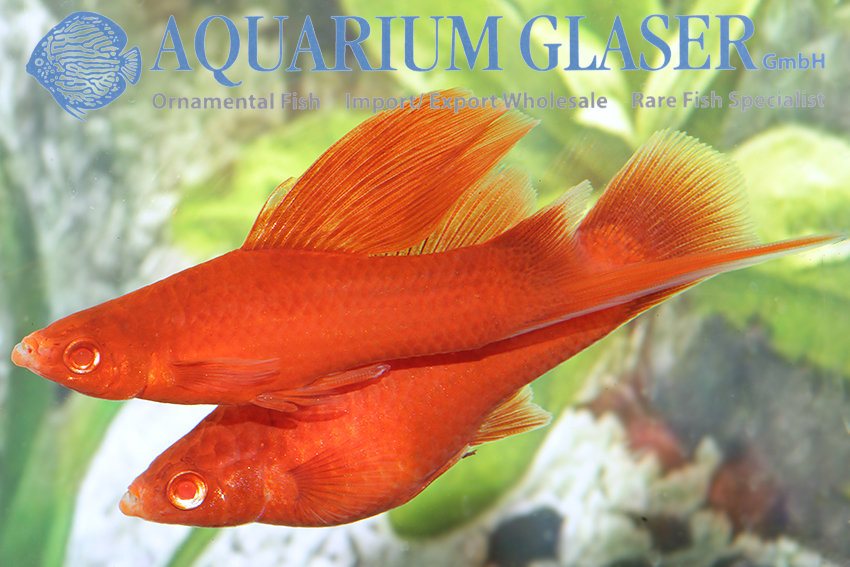
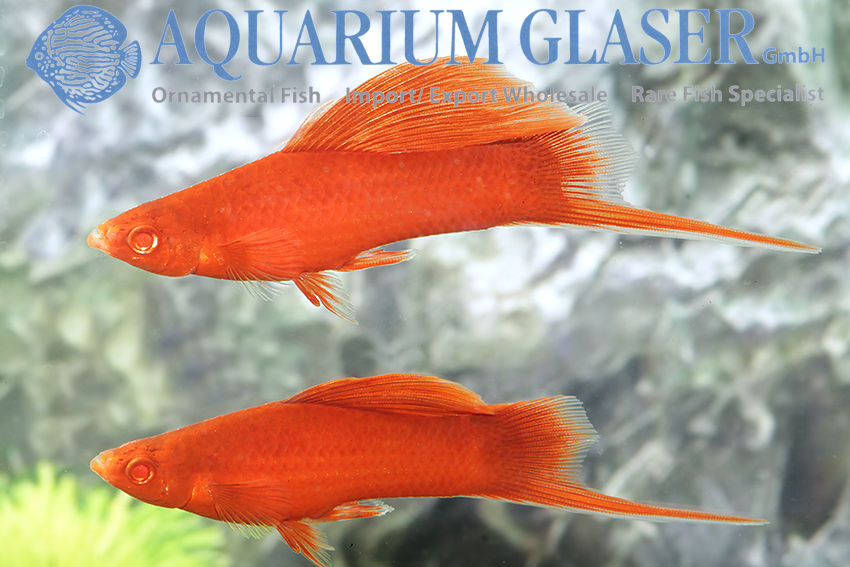
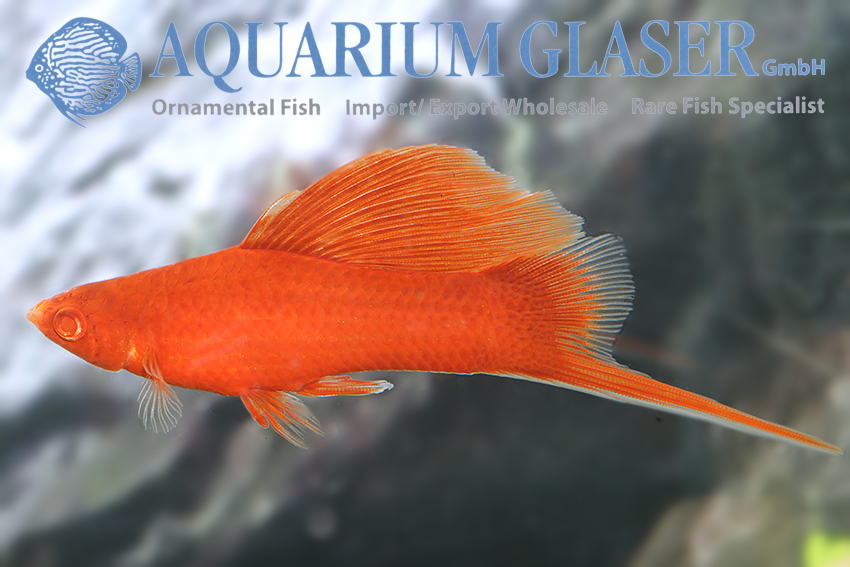
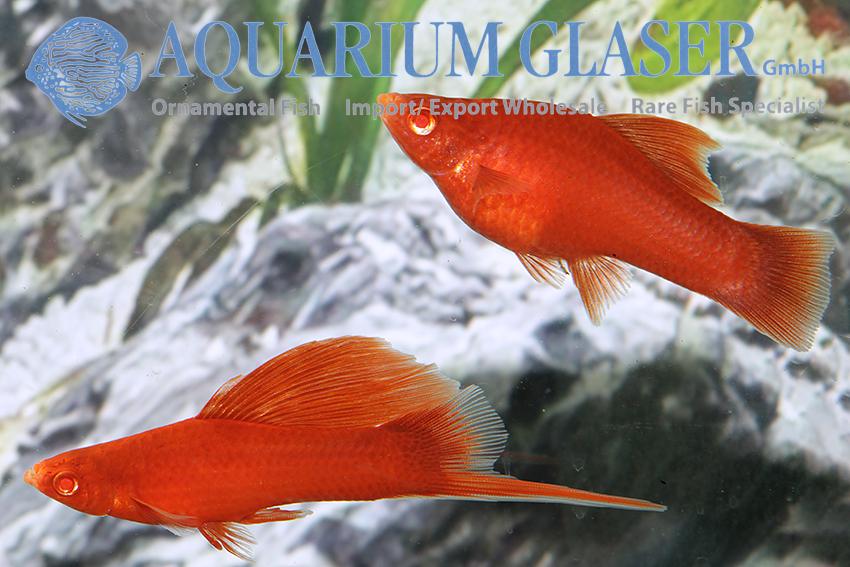
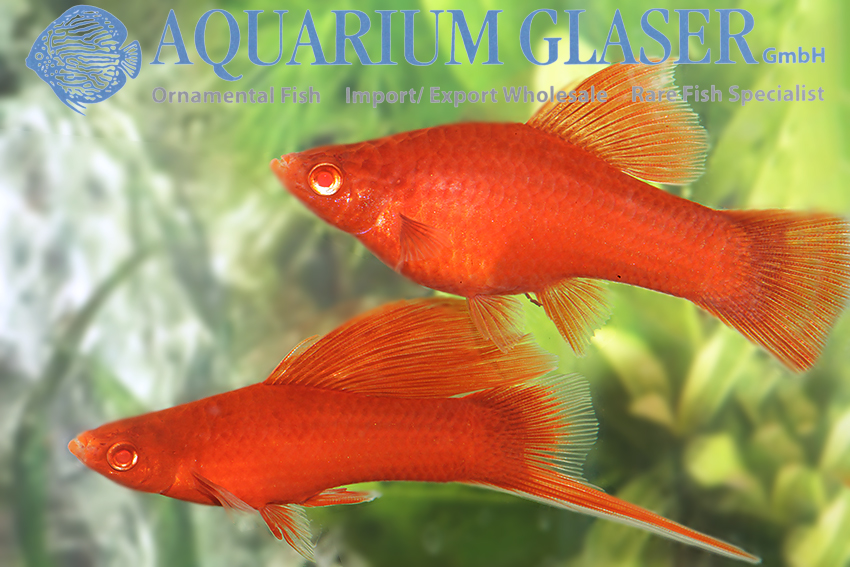
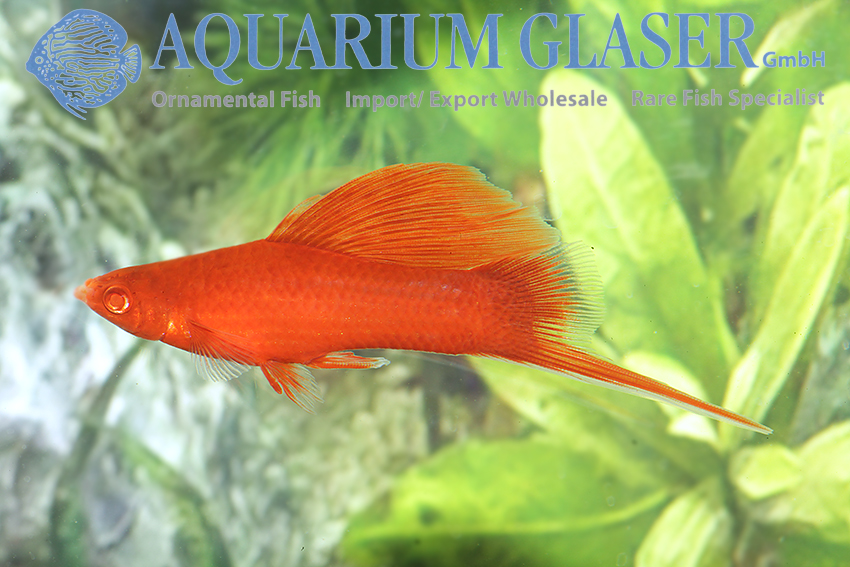
Although there are swordtail populations in the wild where some of the males (usually the so-called alpha males, i.e., the highest-ranking individuals) are red, this color in aquarium strains usually comes from a related species, the platy (X. maculatus). By crossbreeding red platies with wild-type green swordtails, breeders succeeded in producing red swordtails. In swordtails, the gene for this—let’s call it “platy red”—is located at a different locus (“allele”) than the genes for the other body colors. Consequently, it is not affected by albinism, and albino swordtails with Platy red turn a particularly bright red: the “Viennese.”
Recently, Vienna Broccoli Swordtails have become very popular. These are essentially Simpson Swordtails—that is, fish with a mutation in which the dorsal fin is extended like a flag. When normal Simpsons are crossed with Lyratail swordtails, some of the offspring develop an increase in the number of fin rays in the dorsal fin, along with individual elongated rays, which makes the dorsal fin particularly large and flowing: Broccoli (https://www.aquariumglaser.de/en/18-toothcarps-killis-and-livebearers/xiphophorus-hellerii-broccoli-2/)
Without the increased number of fin rays, the Vienna Simpsons are simply called “Highfin.” We currently have some magnificent specimens of these in stock.
Maximum size: Males approx. 6–8 cm (without sword), females around 10 cm; Temperature: 22–28°C; pH and hardness: not important for care (tap water), just not soft or acidic; Diet: Omnivorous; Social behavior: Schooling fish with a social hierarchy. You should not keep two males per aquarium; this rarely works out well—keep either just one or at least five.
For our customers: these fish have code 420962 on our stock list. Please note that we supply exclusively to wholesale customers.
Text & photos: Frank Schäfer
