
We received a small number of German bred specimens of this spectacular new sport.


For our customers: the animals have code 686752 on our stocklist. Please note that we exclusively supply the wholesale trade.
Text & photos: Frank Schäfer








We received a small number of German bred specimens of this spectacular new sport.
For our customers: the animals have code 686752 on our stocklist. Please note that we exclusively supply the wholesale trade.
Text & photos: Frank Schäfer
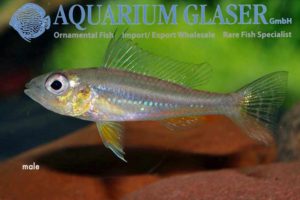
We have very nice, healthy specimens of this extremely rare dwarf cichlid from Venezuela in stock. For more information, please see http://www.aquariumglaser.de/en/news/Biotoecus_special_en/ For our customers: the fish have code 634483 on our stocklist. Please note that we exclusively supply the wholesale trade. Available in very limited numbers only! Text & photos: Frank Schäfer
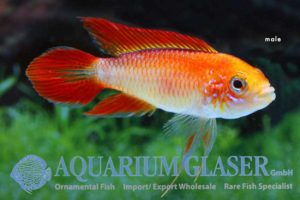
We received extraordinary beautiful specimens of this sport. Available in limited numbers only! For our customers: the animals have code 614883 on our stocklist. Please note that we exclusively supply the wholesale trade. Text & photos: Frank Schäfer
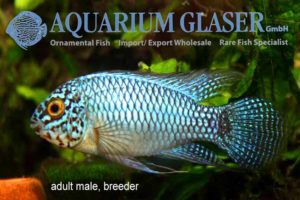
We received German bred ones of this magnificent Apistogramma. Very colorful! For our customers: the fish have code 628613 on our stocklist. Please note that we exclusively supply the wholesale trade. Text: Frank Schäfer, photos: Frank Schäfer, Rainer Hoyer
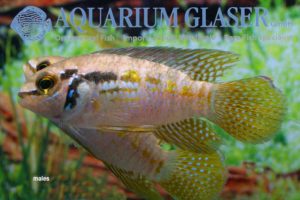
Finally we were able to import once more this charming dwarf cichlid. The fish was known in the hobby under the name of Laetacara sp. “Buckelkopf” ( = humphead) before the scientific description. For more informations, please click http://www.aquariumglaser.de/en/news/Laetacara_araguaiae_en/ For our customers: the animals have code 603002 on our stocklist. Please note that we exclusively […]

Currently more than 80 species of Apistogramma are described and scientifically accepted. About 60 additional species are already known, but not described scientifically. A pretty species of Apistogramma has been imported from Peru since the middle of the 1980ies. Due to the nice pattern of red and blue colours in the face, the species has been given the provisionally name Apistogramma sp. Masken (the German term Masken means mask).


The species seems to be restricted to the Departamento Loreto in Peru, where it lives in soft (6-149 µS/cm), acidic (pH 4.5 – 5.6) and warm (25-30°C), clear water. However, the species has proofed to be quite adaptable in aquaria and can be kept and bred under variable conditions. Males attain a total length of about 6 cm, females of about 4 cm.


Currently we have very nice wild collected specimens of Apistogramma paulmuelleri in stock.
For our customers: the fish have code 628733 on our stocklist. Please note that we we exclusively supply the wholesale trade.


Lexicon: Apistogramma: ancient Greek, means “with unreliable line”. It is not known wether the lateral line organ or the pattern is meant. paulmuelleri: dedication name for the biogeographer Paul Müller (1940 – 2010).
Text & photos: Frank Schäfer
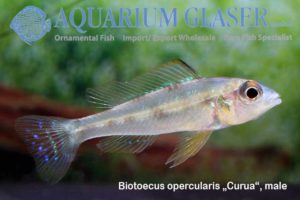
For the first time ever we can offer both species of Biotoecus that have been described scientifically so far at the same time! Both species are among the rarest fish in the trade and this is the reason why it is so remarkable to have both of them in stock. Moreover, we can offer for […]
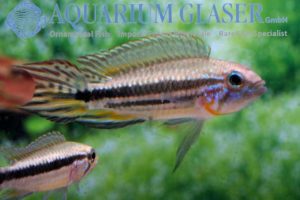
Apistogramma mendezi Although Apistogramma mendezi can be imported only occasionally and is also rarely bred the beautiful species is known to develop a great number of local varieties. Additionally males of the very same local population show a high degree of polychromatism. The term polychromatism means that animals can show a differing individual colour pattern […]
Currently we can offer an absolute rarity from Venezuela: Biotoecus dicentrarchus. In this dwarf cichlid the male attains a maximum length of about 6 cm, the female of about 4-5 cm. The fish are sandbottom dwellers. For breeding the male builds a large sandhill where the pair is spawning. For our customers: the fish have […]
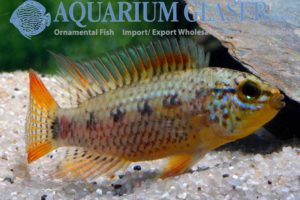
Apistogramma sp. Xingu is a Brazilian species of Apistogramma which is still undescribed scientifically. Like many Apistogramma species this fish has a number of varieties. We just received beautiful large bred specimens of the “Vielfleck”-variety (Vielfleck = many spots). For our customers: the fish have code 628744 on our stocklist. Please note that we exclusively […]
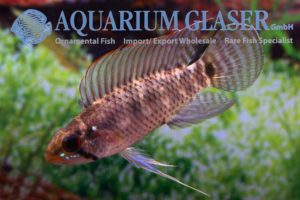
This pretty dwarf cichlid was known in the hobby under the names of Apistogramma sp. “Segelflossen” (=sailfin), A. sp. “Puerto Ayacucho” and A. sp. “Vierstreifen” (= four stripes) until it became described scientifically. The species has never been imported on a regular basis and currently no importations appear at all. So we are quite happy […]
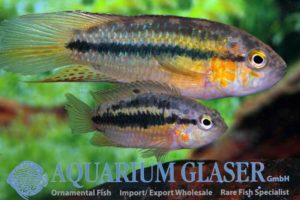
The funny name of the species, which has not been researched by scientists so far, derives from the collecting site, the Crique Sourourou in French Guyana. This Crique flows near the coast and is a tributary to the rivers Sinnamary and Kourou. It has been collected in 2002 by Wolfgang Staeck, who brought it to […]
Our staff member Harald Jahn returned this week from his trip to Brazil and soon after him came the very special selected Apistogramma he ordered from the fishermen. Of course the fish have to settle a bit before we can make nice photos of them, so we show you the species in the famous pictures made by Dieter Bork from fully grown males.
The following species reached us:

Apstogramma diplotaenia – one of the most wanted Apistogramma at all, code 618641

Apistogramma elizabethae – the red bellied variety from Sao Gabriel, code 618712

Apistogramma mendezi Santa Isabel – also a red bellied variety of that beautiful animal, code 624782

Apistogramma mendezi – even the “normal” variety is a real eyeburner and rarely seen in the market, code 624812

Apistogramma sp. Miua – similar to the former, but with a different caudal fin pattern, code 624822

Apistogramma sp. Wilhelmi – a breathtaking beautiful relative of A. agassizi with a lilac chin spot, code 630713
All species are, however, available in limited numbers only. Please note that we exclusively supply the wholesale trade.
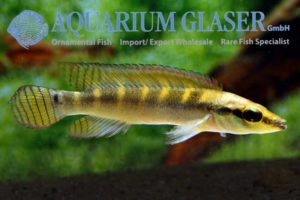
The season for this wonderful dwarf cichlid has started. Males attain a maximum length of about 8 cm, females stay smaller and become only 6-7 cm long. Both sexes of the variety we currently have in stock has black bands in the vertical fins. Males can be recognized best by the overall shape (larger and […]
-mann-300x200.jpg)
The shipment from the Madre de Dios region in Bolivia also contained a pretty new species of Apistogramma. The fish is without any doubt a close relative of A. luelingi. Due to its bright yellow coloration we provisionally named it “Bolivia Gold”. Our largest males have a length of about 4 cm, the females are […]

Due to the regularly offered, amazing bred sports of the Ram (Mikrogeophagus ramirezi) one tends to forget, how breathtaking beautiful the wild collected fish is already. Currently we have fully grown, wild collected Rams from Venezuela in stock. By the way: wild collected Rams become only about 5 cm long (in males), females even stay smaller, so this species is definitely a dwarf cichlid!


For our customers: the animals have code 686515 on our stocklist. Please note that we exclusively supply the wholesale trade.
Text & photos: Frank Schäfer

We received Rams “Gold” in showsize from our proved breeder. Available in limited numbers only!

For our customers: the fish have code 686805 on our stocklist. Please note that we exclusively supply the wholesale trade.

Text & photos: Frank Schäfer

A completely new species of Apistogramma reached us recently from Peru. It was named “Apistogramma Cristal” by the exporter. However, this name has no scientific value at all. Available in very limited numbers only!

For our customers: the fish have code 618104 on our stocklist. Please note that we exclusively supply the wholesale trade.


Text & photos: Frank Schäfer
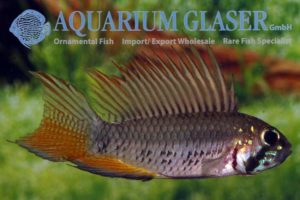
This dwarf cichlid has been described finally scientifically under the name of A. megaptera. It is known in the aquarium hobby for decades already under the name of Apistogramma sp. “Breitbinden”. The German word “Breitbinden” means “broad band”. This refers to the broad dark band under the eye. Currently we have wonderful wild collected specimens […]
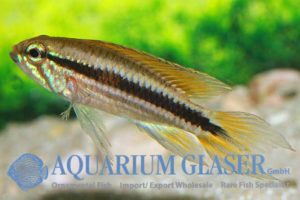
Currently we have this very rare dwarf cichlid in super condition and size in stock. Only available in limited numbers! For our customers: the fish have code 624812 on our stocklist. Please note that we exclusively supply the wholesale trade. Text & photos: Frank Schäfer

We have received another, gorgeous sport of the ram from our German breeder. The fish have sizes of 2.5 – 3.5 cm and are very healthy.

For our customers: the fish have code 686723 on our stocklist. Please note that we exclusively supply the wholesale trade. The new ram is available in limited numbers only!
Text & photos: Frank Schäfer

This is a brandnew, extreme beautiful sport of the ram. We have them in sizes of 2.5 – 3.5 cm.

For our customers: the fish have code 686733 on our stocklist. Please note that we exclusively supply the wholesale trade.
Text & photos: Frank Schäfer
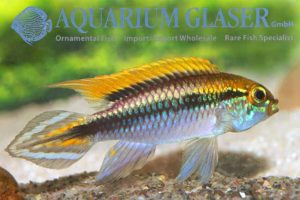
Currently we received one of the most beatiful varieties of Apistogramma agassizii in limited numbers. The variety “Flamenco” is collected in the wild, but according to our exporter it does not represent a local population. The Flamenco variety is selected from other “normal” Apistogramma agassizii catches. It is well known that under aquarium conditions it […]
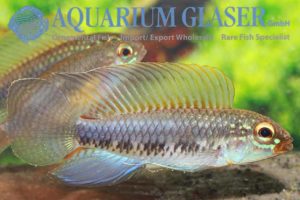
Sadly this beautiful dwarf cichlid is only occasionally available, but currently we were able to import once more beautiful, fully grown specimens. The fish are very stable and display all the behaviour that makes the keeping of these fish so desirable. Like its close relative A. uaupesi, which differs from A. iniridae mainly due to […]
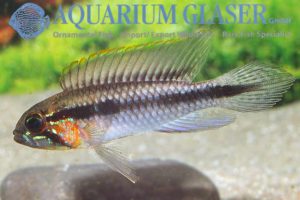
This pretty blackwater Apistogramma is imported only very occasionally. Now we were able to manage one of these rare imports again. The fish originates from Brazil where it is found in the central Rio Negro and lower Rio Branco basins. A. gephyra looks quite similar to A. agassizii and its aquarium maintenance is comparable to […]
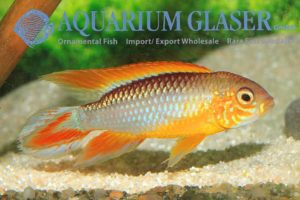
Currently we have wonderful, fully grown specimens of this marvelous sport in stock, originating from German breeders. The fish literally seem to glow from inside! It is very interesting that the typical polychromatism that can be observed in wild populations of this dwarf cichlid is also found in this artificial sport. Polychromatism means that coloration […]
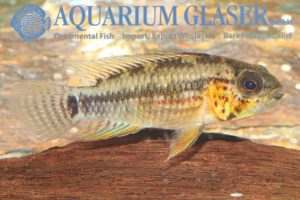
Currently we received a new Apistogramma from Brazil, a close relative of the species known as A. sp. Xingu in the hobby. Like most Apistogramma, A. sp. Xingu, which has been imported in 1988 for the first time, has developed a number of varieties. Some of them appear within one population, others seem to represent […]
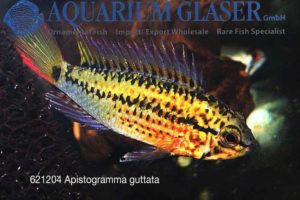
Code: 621204
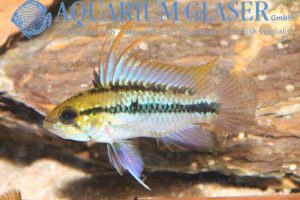
In case this dwarf cichlid would not exist it would be necessary to invent it for the aquarium hobby. Apistogramma trifasciata is an ideal aquarium inhabitant. The species stays small – males around 5 cm, females around 4 cm. It is completely undemanding regarding water chemistry – keeping and breeding is possible even in medium […]
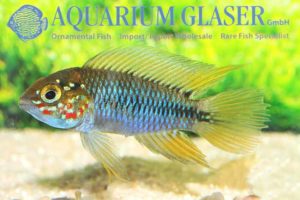
Recently we received beautiful wild collected specimens of A. borellii from Paraguay. This species is an ideal aquarium fish. In contrast to many other species of the genus A. borellii is completely undemanding regarding water chemistry. Even in medium hard, slightly alcalic water the species thrives well and even breeds. The behaviour of A. borelli […]
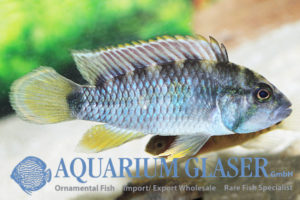
We were able to import this new dwarf cichlid from Peru now. The fish is without any doubt a close relative of the species Apistogramma nijsseni, A. panduro and the still undescribed A. sp. “Inka II”. In contrast to these species the seam around the caudal fin in males is yellow instaed of red-orange. The […]
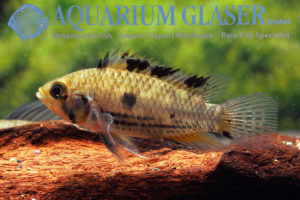
Some species of fish are very popular in the aquarium hobby. Many of them are kept only as sports or breeding forms that do not exist in the wild and most aquarists are completely unaware how the wild form looks like. One of these species is the very popular dwarf cichlid Apistogramma cacatuoides. The species […]
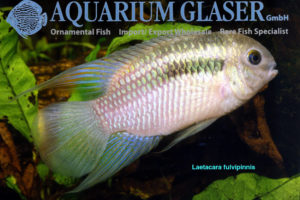
Laetacara sp. „Buckelkopf“ described scientifically. Laetacara sp. „Buckelkopf“ is known in the hobby for many years already. The somewhat unusal common name (the German word „Buckelkopf“ means „humphead“) derives from the feature developed by some very old males, but this happens rather seldom. It is a typical dwarf cichlid, the males grow to a length […]
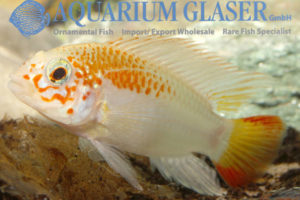
For the first time we can offer now this beautiful dwarf cichlid in a golden sport. This sport does not occur in nature. The contrasting golden and red colours make the fish extremely attractive. As Apistogramma viejita originates from Colombia it should be kept at higher temperatures as usual, eg 26 – 28°C. Water should […]
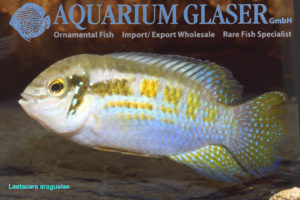
Laetacara sp. „Buckelkopf“ described scientifically Laetacara sp. „Buckelkopf“ is known in the hobby for many years already. The somewhat unusal common name (the German word „Buckelkopf“ means „humphead“) derives from the feature developed by some very old males, but this happens rather seldom. It is a typical dwarf cichlid, the males grow to a length […]
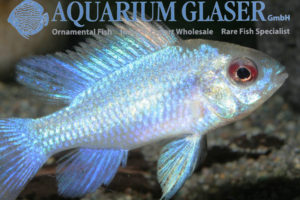
The Ram is one of the most beautiful aquarium fishes. The wild Ram originates from the llanos of the Orinoco. The newest sport of this dwarf cichlids is blue all over the body. It is virtually impossible to illustrate this very special colour in a high resolution picture. Only reducing the resolution brings the effect […]

We currently have an extraordinary good and healthy stock of Golden Rams, bred in Germany. They have a perfect size and are highly recommended for anybody who wants to try these beauties for the first time.

For our customers: the fish have code 686802 on our stocklist. Please note that we exclusively supply the wholesale market.
Text & Photos: Frank Schäfer
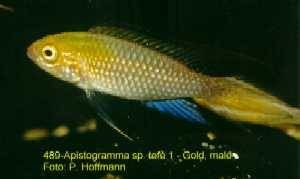
The first golden animals were found among a bred shoal of young, approx. 14 days old Apistogramma sp. Tefé 1. From them a breeding phylum for further generations of Golden Apistogramma developed. Their growth is plainly slower than the growth of the normal Apistogramma sp. Tefé 1 and their breeding is generally more difficult. Their […]
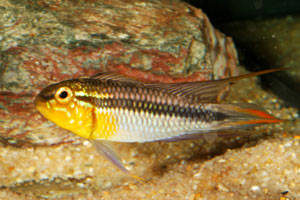
The fish in this picture shows the beautiful A. agassizii colour morph from the Rio Abacaxis, which lies in the middle part of the Amazon River in Brasil. Recently a number of new varieties are introduced to the hobby, originating from breeding as well as import of local colour morphs. We can only hope that […]
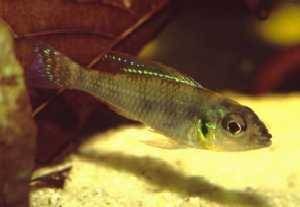
For quite a while Aquarium Glaser imports this dwarfcichlid regularly from Rio Tapajos in Brasil. This Cichlids, which only get approx. 4-5cm can be kept in pairs in smaller aquariums from 50 ltr and up already. If the aquarium is bigger, a larger group can be brought in, but in doing so a slightly surplus […]
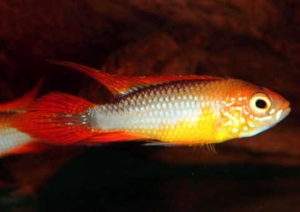
September 2006: Few days ago we received a delivery of fishes from a well-known German breeder. The here introduced Apistogramma agassizi „Fire Red “increases the heartbeat of each Apistogramma fan. The strong red of the caudal -, dorsal – and anal fin forms a fantastic contrast with the blue-yellow body colouring and a dark longitudinal […]
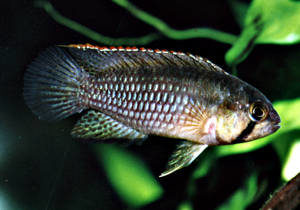
This fish was caught in October 2001 in a blackwater-river nearby Rockstone/Guyana. It is a peaceful fish which only grows up to 60mm. The males are more elongate than the females and have clearly visible spots in the dorsal and caudal fins. Water of following parameters was used for breeding and keeping them: 5°dGH, pH […]
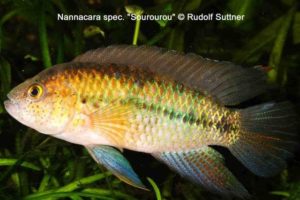
From the Crique Sourourou in French Guyana originates this beautiful new Nannacara variant. We are pleased to be able to offer some offspring to you. According to information of an experienced Nannacara specialist their maintenance is unproblematic, even in middle hard water. The breed however succeeds only in soft and sour water according to their […]
