








An import from southeastern Brazil provided us with, among other things, several specimens of a piranha that has rarely been seen in the aquarium trade to date: Serrasalmus marginatus. In any case, it seems likely to us that this is the species in question, which is widespread in the Paraná-Paraguay and Uruguay river systems. Very similar species include S. irritans from the Orinoco (Colombia and Venezuela)—see https://www.aquariumglaser.de/en/09-characoids-tetra-relationship/serrasalmus-irritans-2/—and the recently described S. magallensi from Bolivia. The newly described S. castellonae—also from Bolivia—looks similar as well. When you consider that the scientific paper describing S. castellonae is 19 pages long, and the description of S. magallensi is 24 pages long—and that’s using scientific language—you can appreciate that many piranha species are incredibly similar to one another, and even scientists require extremely detailed explanations to make the differences reasonably plausible.
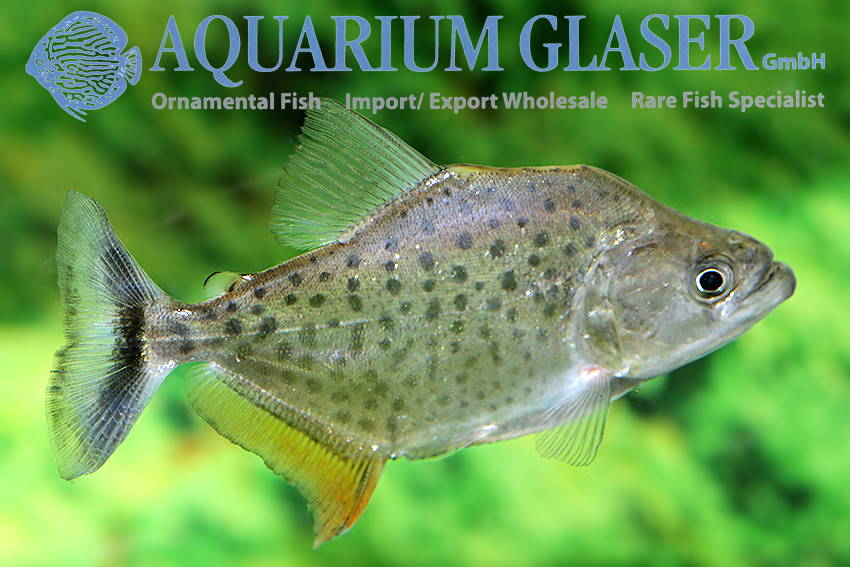
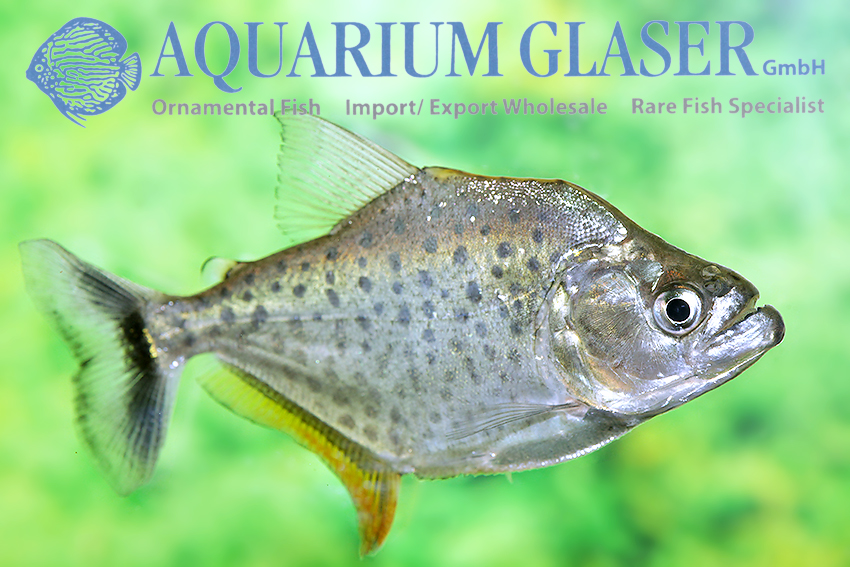

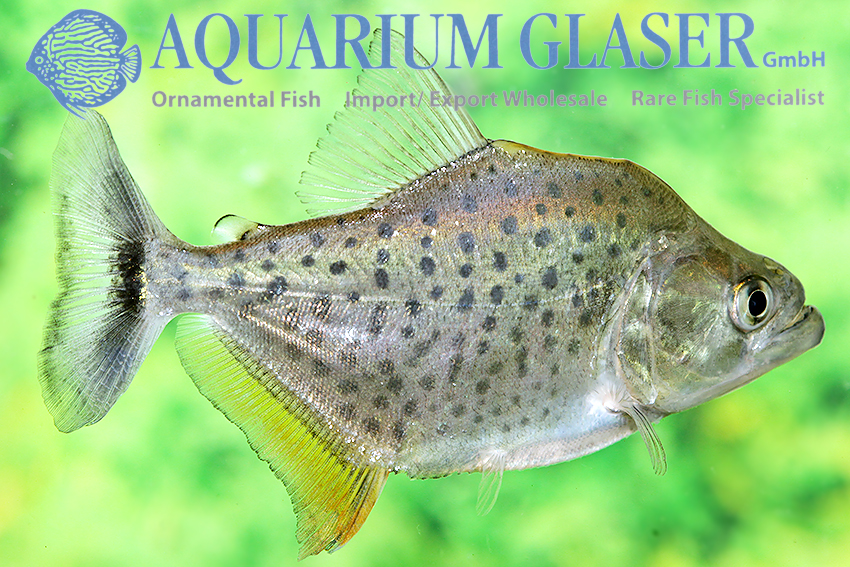
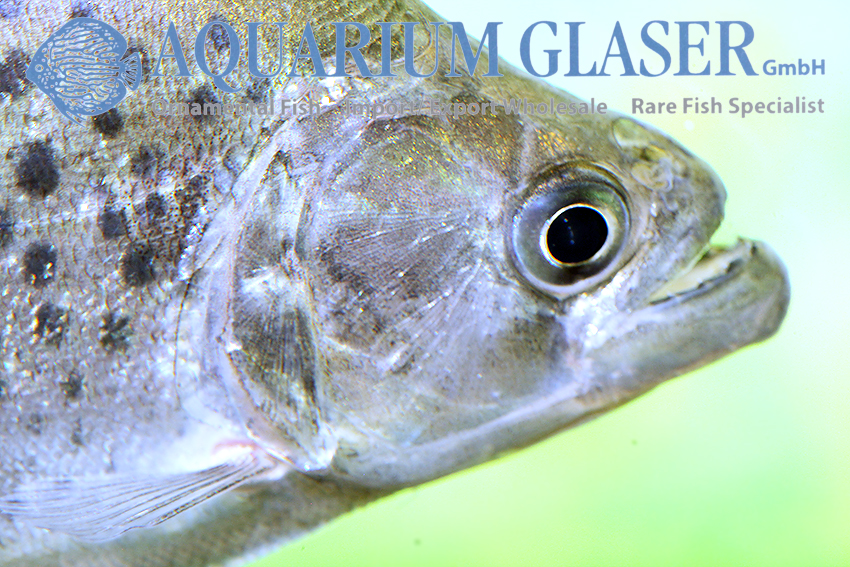


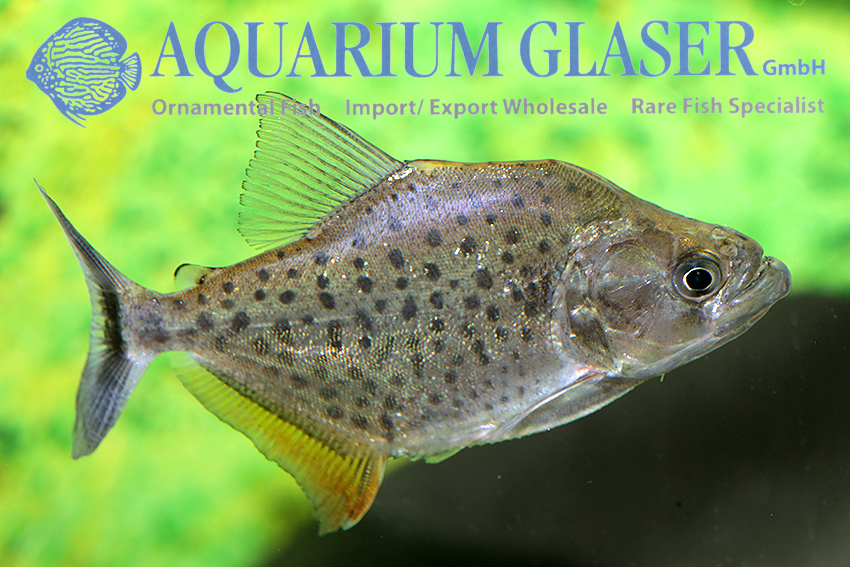
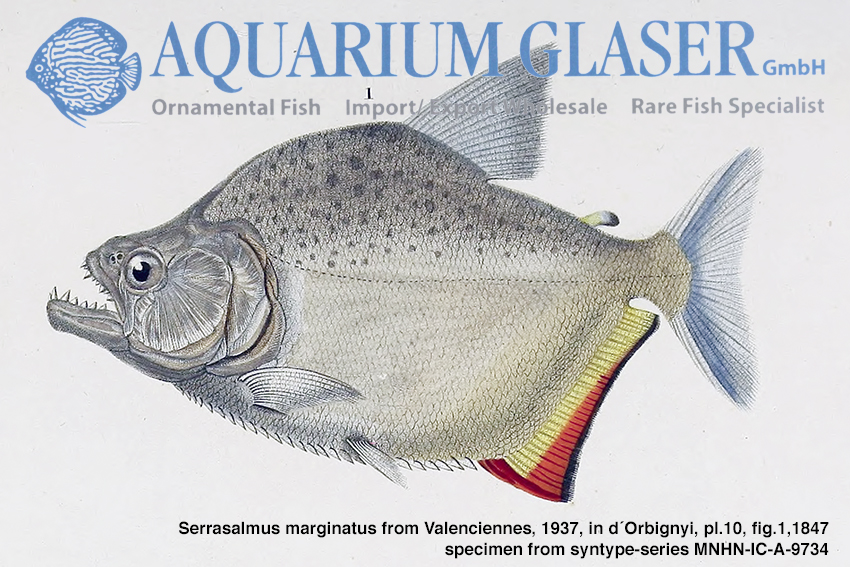
For us, it is the combination of origin, body shape, and anal fin coloration that leads us to conclude that our current imports are S. marginatus. In their description of S. castellonae, the authors once again highlight how important caudal fin coloration is for avoiding confusion between closely related species. However, this very characteristic has so far been insufficiently studied in S. marginatus. The species was scientifically named as early as 1837, and there is also a very beautiful, colored illustration of the presumed type specimen. The three original specimens from the Río de la Plata in Argentina, which were collected by d’Orbignyi 1826-1833 and used to describe S. marginatus, are still preserved in the Paris museum. However, the crucial detail—whether the posterior edge of the caudal fin is colorless or black—cannot be determined with certainty from these specimens. Therefore, it is entirely possible that the fish we currently classify as S. marginatus may be reclassified in the future.
Regardless, our specimens are currently 12–15 cm long. We keep them individually, as piranhas in this taxonomic group are considered solitary and fin-nippers. The maximum length for S. marginatus is listed in the literature as 30 cm.
We are pleased to have been able to import these beautiful specimens of a piranha species that is so rarely available. These are, of course, fish intended for specialists and will never gain any significant importance in the aquarium hobby. Nevertheless, they represent a piece of the puzzle that can help expand our still-insufficient knowledge of piranhas.
For our customers: these fish are listed under code 292305 on our stock list. Please note that we supply exclusively to wholesalers.
References:
Gallo-Cardozo, F., M. Maldonado, M. Careaga & F. M. Carvajal-Vallejos (2024): A new species of Piranha (Serrasalmus, Serrasalmidae) from the upper Madeira River system, Amazon basin, Bolivia. Journal of Ichthyology v. 64 (no. 3): 386-409.
Gallo-Cardozo, F., M. Careaga & F. M. Carvajal-Vallejos (2025): A new cryptic species of Piranha Serrasalmus (Serrasalmidae) from the Bolivian Amazon, upper Madeira River system. Journal of Ichthyology v. 65 (no. 4): 574-592.
Text & photos: Frank Schäfer
