
Fish Archive (3164)

  • High End Guppys

    25. April 2018

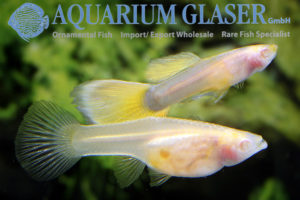
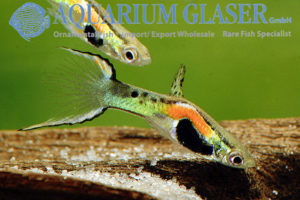
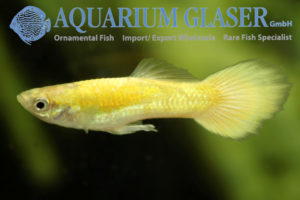
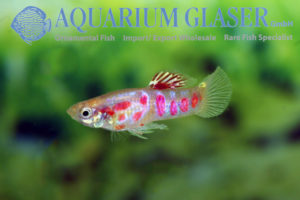
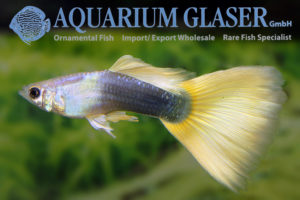
    Currently we can offer several High Quality German Bred Guppys. This breeder is specialized inbreeding rare varieties that are offered by pair, which means that the genetically correct female is supplied along with the male. The sports illustrated here – „Full Platinum Albino“ and „Yellow Tuxedo“ – are only two of serveral ones we have […]
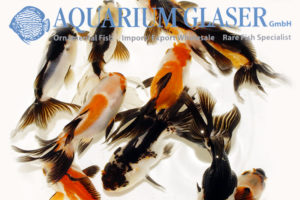
  • Goldfish Oranda 2-3 Colour

    23. April 2018

    In the minds of many keepers the goldfish is a coldwater fish and has its high season in spring time, when the garden pond season starts. This is of course true, but reflects only a part of the reality. The highly developed sports – like the orandas – often are better kept in aquaria than […]

  • Micracanthicus vandragti L280

    20. April 2018

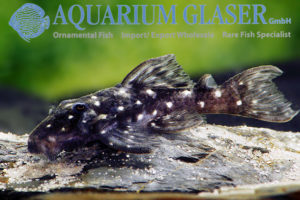
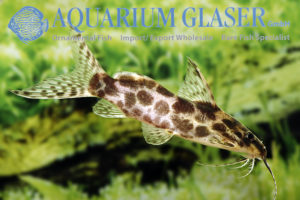
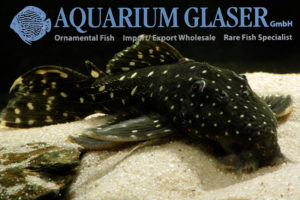
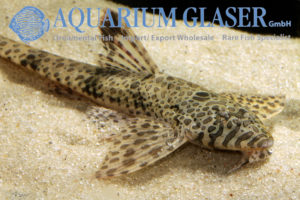
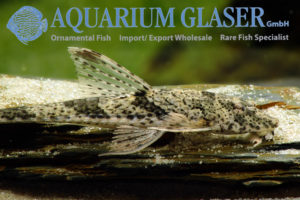
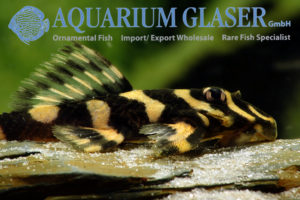
    One could think that this unusual suckermouth catfish – it originates from the Rio Ventuari in Venezuela – represents the juvenile form of a Leporacanthicus, for example L240 or L241. But in fact L280 is a dwarf species that hardly ever becomes bigger than 5 cm. Until now only single specimens appeared in the trade, […]

  • Pangio anguillaris

    16. April 2018

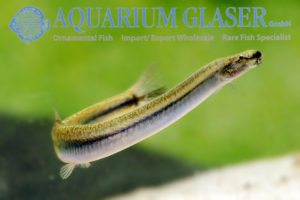
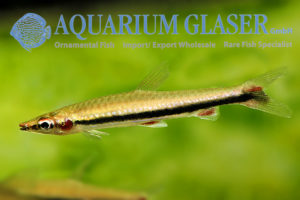
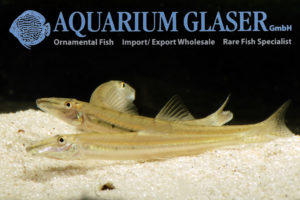
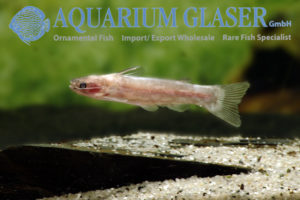
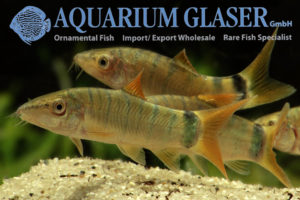
    The Kuhli loaches (Pangio, formerly Acanthophthalmus) form an important part of all smaller community tanks with a southeast Asian character. Here the small „watersnakeletts“ are cleaning and feed all the small food particles that might have been overlooked by the other fish. Of course the loaches have to be fed also; this is no problem […]

  • Pethia conchonius Neon Red

    13. April 2018

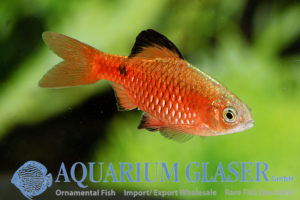
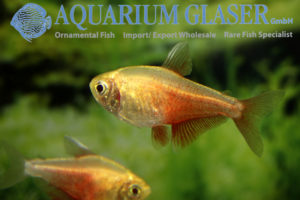
    The neon red ruby barb is an artifical sport of the ruby barb available for many years already. The fish are extremely beautiful; we usually obtain them from breeders from southeast Asia. Now we received this sport from an European breeder and his strain is particually beautiful. Like in the Asian cousins the flanks are […]

  • Poecilia reticulata Guppy Yellow Taxi Glass Belly

    13. April 2018

    These Glass Belly Guppys are very special. Their coloration lacks not only all black pigment – they are true albinos – but also the silver pigmentation of the abdomen. So one can study the complete develepment of the eggs and youngsters in the belly of the female fish. This means these fish are a perfect […]

  • Akysis portellus

    13. April 2018

    The wasp catfishes (Akysis) become more and more popular in the aquarium hobby. Their common name refers to venomous glands these fishes have at the base of the dorsal and the pectoral fins. A sting by the spines of these fins is very painful, though it it is harmless; only allergy sufferers should be double […]

  • Guyanancistrus guahiborum L106

    11. April 2018

    Currently we have extremely nice youngsters of L106 in stock. They originate from Venezuela. There is a second, very similar L-number, L122. L106 has a deeper body. Maximum size reported for L106 is about 15 cm, recently our fish are 4-6 cm long. The species has been described scientifically in 2005 under the name of […]

  • Apistogramma trifasciata

    6. April 2018

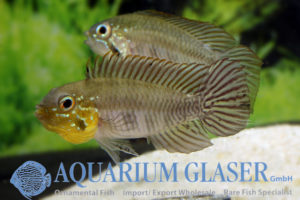
    In case this dwarf cichlid would not exist it would be necessary to invent it for the aquarium hobby. Apistogramma trifasciata is an ideal aquarium inhabitant. The species stays small – males around 5 cm, females around 4 cm. It is completely undemanding regarding water chemistry – keeping and breeding is possible even in medium […]

  • Corydoras amapaensis

    6. April 2018

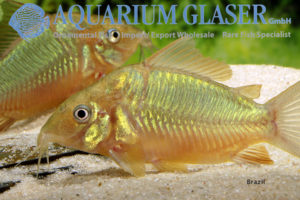
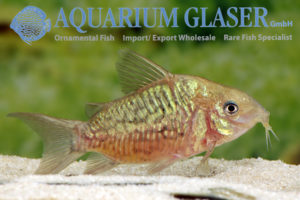
    The beautiful long snouted Corydoras amapaensis is a top rarity in the ornamental fish trade. Only very occisonally, every 5-6 years, some specimens can be imported. So we are very glad that we can offer now for the first time some bred ones. The fish are currently about 4 cm long and have just reached […]

  • Exodon paradoxus

    6. April 2018

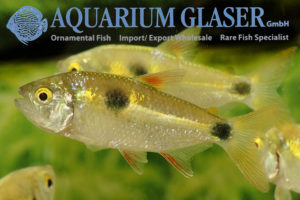
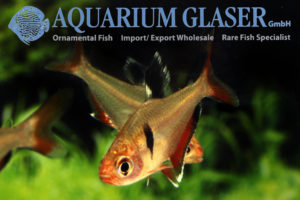
    For many aquaristis the Bucktooth tetra, Exodon paradoxus, is simply the most beautiful tetra from South America. The splendid fish glitter and glimmer like diamonds and they never stay still. They hunt and hit their conspecifics permanently and an uneducated watcher may become quite concerned that the fish will eventually hurt each other. But this […]

  • Sicyopus rubicundus

    4. April 2018

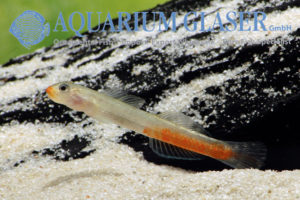
    We received from Indonesia once more a nice shipment containing pretty Sicyopus gobies. These gobies are – despite the external similarity – not feeding on Aufwuchs and microfilm like Stiphodon and Sicyopterus, but are little predators that feed on quite large food items. These include also very small fish and shrimps up to a length […]

  • Potamotrygon wallacei

    29. March 2018

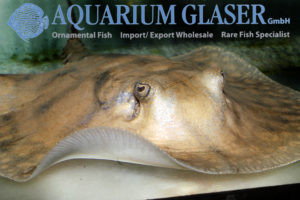
    This freshwater stingray lives endemically in the Rio Negro system in Brazil and is or was the most often imported species of Potamotrygon from Brazil at all. However until recently they fish were wrongly identified as P. histrix, a different species that is not kept in aquaria at all and occurs in southern South America. […]

  • Symphysodon discus Blue Head Tumbira

    29. March 2018

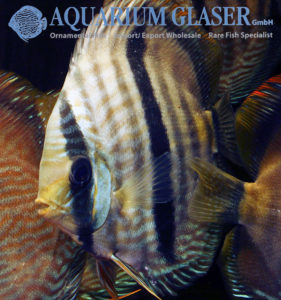
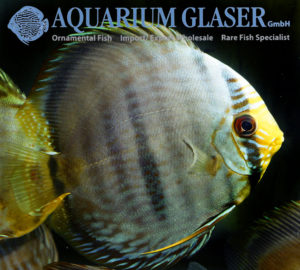
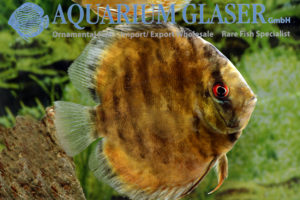
    Here, as promised, another remarkable Heckel variety we currently have in stock: Blue Head Tumbira. One should not think that every specimen of that variety has a solid blue opercle; Tumbira (the name refers to a Tukano community at the bank of the Rio Negro, below Sao Gabriel de Cachoeira) are still wild collected discus […]

  • Acestrorhynchus isalineae

    26. March 2018

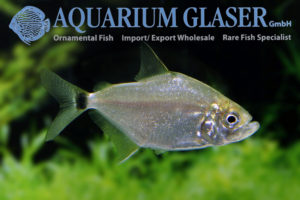
    The barracuda tetras (Acestrorhynchus) a good aquarium fishes, although they are predators that prefer to feed on small other fish. Most species are medium sized – about 20-30 cm maximum length – but there do exist also dwarf species. Among the latter is A. isalineae. This species attains only 7.5 cm in standard length, this […]

  • Waikhomia sahyadriensis (formerly: Barbus, Puntius)

    23. March 2018

    The Khavlibarb originates from the Yenna River in Satara district in the Indian state of Marahashtra. This is a peaceful species, which could however nibble on fresh sprouts of aquarium plants. They can be kept with any peaceful tank mates without any problems. The aquarium should be decorated with robust plants and part of the […]

  • Odonteleotris macrodon

    23. March 2018

    We obtained from Thailand five specimens of that odd goby which are about 15 cm long. Our first idea was that they would belong to the species Oxyeleotris urophthalmus. The genus Oxyeleotris is repersented by three species in Thailand, two of them with an ocellus in the upper part of the caudal peduncle. Both are […]

  • Apistogramma gephyra wild

    22. March 2018

    Since its scientific description in 1980 this dwarf cichlid is subject of an ongoing debate among keepers and breeders of Apistogramma. Some think that A. gephyra is a mere variety of A. agassizii, others defend its status quo as a separate species. Most likely both parties are right. There can be no doubt that A. […]

  • Nannostomus harrisoni

    19. March 2018

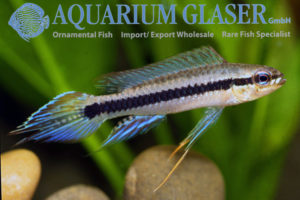
    The Blackstripe pencilfish has been described from Guyana scientifically back in 1909. Here he fish inhabits exclusively the Demerara river basin. The beautiful species attains a maximum length of 4.5 cm and is very peaceful. Formerly the fish was placed in a separate genus, namely Poecilobrycon, due to the long snout. In the meantime the […]

  • Symphysodon discus „Heckel Nova Olinda“

    16. March 2018

    We are now in the last third of the current discus season. A particular charakter of this season is the comparably great number of extremely beautiful Heckel discus. We currently have a number of varieties in stock and want to feature them for you. But of course it is not that easy to take pictures […]

  • Molly Copper Lyretail

    14. March 2018

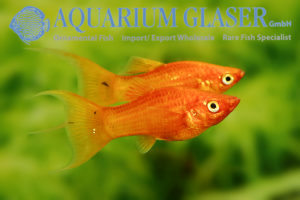
    A beautiful sport of Molly from Singapore is Copper Lyretail, a very colourful variety. Obviously the species Poecilia sphenops formed the basis of that strain. The combination of the colour copper and the lyretail led to males in which the anal fin is much too broad to serve as a gonopodium. So the pure males […]

  • Pterophyllum scalare „Bicolor Blue“

    12. March 2018

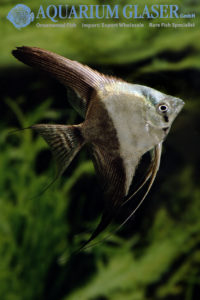
    We can offer this brandnew sport of the Angelfish (Pterophyllum scalare „Bicolor Blue“) for the very first time now. The animals still differ individually in respect of pattern, but especially the front back of all specimens is already blue. The breeder guaranteed us that the parents are full blue bicolor with a real intensive colour.  […]

  • Bryconalestes longipinnis

    9. March 2018

    The African Longfin Tetra (Bryconalestes longipinnis, = Brycinus longipinnis) is a classic ornamental fish from Nigeria; we have it almost anytime in stock. Usually the fish traded are 3-5 cm long, which means that they are about half grown (maximum size reported for that species is 16 cm, but this is as rare as a […]

  • Bagarius suchus

    9. March 2018

    There are currently four species placed in the genus Bagarius, which are called devil catfish. The biggest one, which grows up to 200 cm in length, is Bagarius yarelli. It can be found in many parts of south and south-east Asia. The smallest is Bagarius bagarius, which grows up to only 15-20 cm and comes […]

  • Hemigrammus levis Gold

    7. March 2018

    It is very difficult to determine gold tetras. The golden coloration is the skin reaction on a harmless infection with a parasite. If a tetra feeds the faeces of a fish-eating bird that contains the eggs of the parasite – a worm – in the intestine of the fish the eggs hatch and the larvae […]

  • Phallichthys tico

    2. March 2018

    Once more we are able to offer this top-rarity among the livebearers. The charming fish – males reach a maximum length of about 2.5 cm, females 4.5 cm – are restricted to the upper reaches of the river San Juan in Costa Rica and Nicaragua. No commercial fishing for ornamental fish does exist there and […]

  • Sphaerichtys vaillanti

    28. February 2018

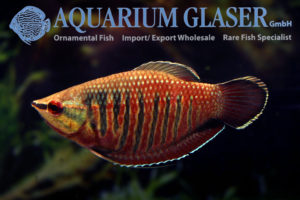
    Finally we can offer again the most beautiful species of Chocolate Gourami: Sphaerichtys vaillanti. The species originates from the Kapuas basin in the Indonesian part of the island of Borneo. S. vaillanti is not only the most beautiful, but also the hardiest species of all Chocolate Gouramis. However, it is nevertheless by no means an […]

  • Distichodus lusosso

    26. February 2018

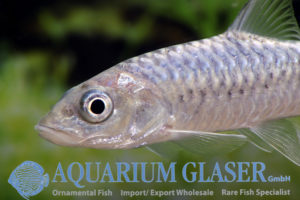
    The longsnout distichodus has a very wide distribution in the Congo basin. The species attains a length of up to 40 cm; we recently obtain extremly charming, small juveniles. D. lusosso is an omnivorous fish; a great part of the food is plant material, so a planting of the tank is usually not possible. One […]

  • Synodontis soloni

    23. February 2018

    We obtained a very rarely offered squeaker catfish from the Congo: Synodontis soloni. The species is medium sized (for squeakers): 20-25 cm long specimens can be called real big ones. The large caudal fin and the slender body give hints that this is a rheophilic species. Against conspecifics our specimens, which are currently 12-15 cm […]

  • Melanocharacidium cf. dispilomma

    21. February 2018

    We obtained this charming ground tetra from Brazil. Melanocharacidium dispilomma has a very wide distrubution in northern South America. There are scientific reports from Bolivia, Brazil, the Guyana countries, Venezuela, and Colombia. There is a strange contrast between this very wide distribution and the fact that M. dispilomma has been described scientifically only in 1993. […]

  • Anostomus anostomus

    19. February 2018

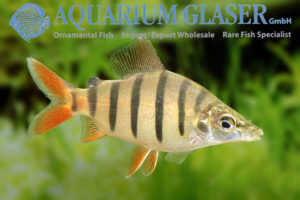
    The Striped Headstander is one of the most beautiful species of tetra from South America. It really looks like the big brother of the Threestripe pencilfish, Nannostomus trifasciatus. Anostomus anostomus attains a maximum length of about 15-18 cm. Sadly there are hardly ever exportations of ornamental fish from Guyana currently, so the beauty became rare […]

  • Epiplatys dageti monroviae

    16. February 2018

    This panchax belongs without any doubt to the most popular killifish at all. There are many reasons for that: the beautiful coloration, the small size (4-5.5 cm), the fact that these fish can be kept in community tanks, and the adaptility to many different water conditions are some of them. The Red Chinned Panchax is […]

  • Geophagus cf. abalios

    16. February 2018

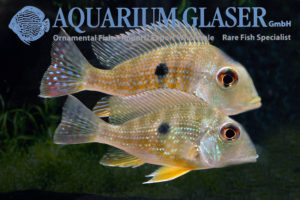
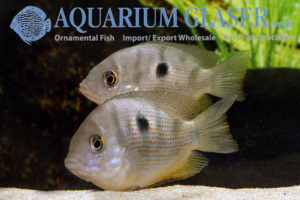
    Currently we have as well larger wild collected specimens and bred ones in stock. G. cf. abalios is a beautful, ovophilous mouthbrooider and originates from Venezuela. The fish have bred in our showroom. At that time they had a total length of about 8 cm, so we initially thought they would represent a dwarf variety. […]

  • Nerita polita

    14. February 2018

    We obtained the charming algae snail Nerita polita from Thailand. This „racing snail“ is also known by the popular name of Polished Nerite. It inhabits large parts of the Indo-West-Pacific and is extremely common. It was described scientifically as early as 1758, the year of birth of the scientific naming of organisms, by Carl von […]

  • Corydoras longipinnis

    12. February 2018

    We were able to import an interesting Corydoras species from Paraguay, namely Corydoras longipinnis. This species has been scientifically described as recently as 2007 by Joachim Knaack. The new species is a close relative to the well known Corydoras paleatus and reminds one somewhat of the longfinned sport of that species. In Corydoras longipinnis only […]

  • Hyphessobrycon paepkei

    9. February 2018

    The Goldshoulder rosy tetra, Hyphessobrycon paepkei, has been described only a few years ago, the type specimens originated from our fishhouse. THe natural distribution is in the Rio Negro in Brazil. Usullay onyl a few specimens could be selected from shipments of other species, but now we are able to offer the beautiful Goldshoulder rosy […]

  • Mastacembelus unicolor

    9. February 2018

    We import the beautiful fire eel, Mastacembelus erythrotaenia, on a regular basis from Indonesia, usually large specimens, 30-60 cm long. These fish are about as thick as a forearm. Most recently we obtained again four specimens, 50-60 cm long. However, two of them looked totally different. They lack completely the red stripes and spots which […]

  • Wallagonia micropogon

    7. February 2018

    This is a fish like an evening in a swamp: dark and spooky. Wallagonia micropogon is a predator, anyone can see. The validity of the species W. micropogon is the subject of controversial discussion, many scientists believe that it is a synonym of Wallagonia leerii. Our specimens originate from Thailand. Currently they are small, only […]

  • Aphyosemion punctatum

    5. February 2018

    This gorgeous killi originates from Gabon. We can currently offer very nice German bred ones. The beautiful red and yellow colours fit perfect in the x-mas time, don´t they? Keeping and breeding the up to 4.5 cm long species can be compared with the by far better known lyretail killi, Aphyosemion australe. For our customers: […]

  • Guppy Endler Black Bar

    2. February 2018

    There are so many new sports in Endler guppys (Poecilia wingei); it is really difficult to keep the overview. Sadly some of these new sports loose the charme of the wild type fish which are characterized by the very tiny males (usually they should not grow larger than 1.5 – 2cm) and the overboarding vivacity. […]

  • Polypterus lapradei

    2. February 2018

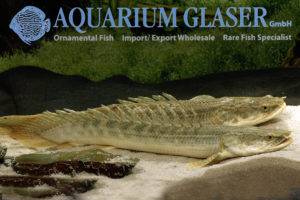
    Napoleon Bonaparte was leader of a campaign through Egypt in the years 1798-1801. He was followed by 169 scientists, among them the zoologist Étienne Geoffroy Saint-Hilaire. After the return to France, Saint-Hilaire described a very strange species of fish he collected in the Nile river in Egypt under the (vernacular) name of Polyptère bichir. The […]

  • Danakilia sp. Sukoray

    31. January 2018

    Danakilia are very strange cichlids that were described scientifically only very recently and were – of course – totally unknown in the hobby, until Anton Lamboj was able to bring some specimens alive back to Austria from Etritrea. He made this expedition together with Giorgio Chiozzi from the Milan Museum. One of the new discovered […]

  • Sternarchogiton preto

    29. January 2018

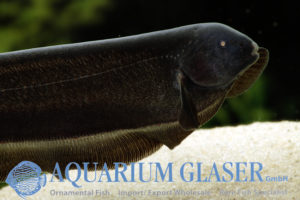
    Most probably this importation of this black knifefish from Peru („preto“ means „black“) is the first one to Europe. At least the pictures of a life specimen we post here are the only ones we know about. The uniform black coloration is a good feature to distinguish the species from other members of the genus […]

  • Hemichromis exsul

    26. January 2018

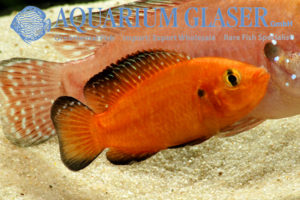
    Red jewel cichlids are wonderful aquariumfishes despite the fact that sometimes very quarrelsome individuals appear. For scientists the complex of species of red jewel cichlids remains a mess. Many meristic features overlap and additionally many species are highly polychromatic. Hemichromis exsul has been described scientifically already in 1933 under the name of Pelmatochromis exsul. Type […]

  • Aphyosemion gabunense marginatum

    26. January 2018

    The concept of subspecies is denied by many recent ichthyologists. They argument that there are either differences – in that case the fish are full species – or there are no differences – in that case they don´t have to be named at all. However, this argumentation does not consider the existing fact that both […]

  • Protopterus annectens Nigeria

    24. January 2018

    There are four species of lungfish occuring in Africa. It is sometimes pretty difficult to distiguish them. In any case the Westafrican Lungfish (Protopterus annectens) is the most common one in the ornamental fish trade, although „most common“ has to be seen as very nuanced. These fish become almost a metre long and are very […]

  • Kneria stappersii

    22. January 2018

    We can offer now for the first time a species of the strange genus Kneria (shellears) as German bred ones. Nobody will buy a shellear for the bright coloration. These fish become about 5 – 7.5 cm long (depending on the species). They have a number of peculiarities that make them extremely interesting from a […]

  • Dimidiochromis compressiceps Albino

    19. January 2018

    There is no consensus among aquarists regarding albino sports. One part of the hobbyists find them awkward, the other part simply wonderful. Readers belonging to the first group: please accept our excuse, next week a different fish will be subject of the post again. For all the others: The Malawi-Eyebiter (Dimidiochromis compressiceps) has a bad […]

  • Aplocheilichthys normani

    19. January 2018

    A real classic among the species of fish that Takashi Amano preferred to use for his legendary nature aquaria setups is Aplocheilichthys normani (= Poropanchax normani). A single specimen of that lampeye is a rather drab creature, but a larger school of them in a tank with dimmed light is like magic! The blue eyes […]

  • Polypterus teugelsi Bred

    17. January 2018

    The Cross river in Western Africa is a legendary river. The course of the river starts in Cameroon, the lower part flows through Nigeria. The river is famous for its high degree of endemic species; „endemic“ means that the species occurs only there and nowhere else. Among the endemic species are for example Tetraodon pustulatus […]

  • Brochiloricaria macrodon

    15. January 2018

    We received from Paraguay this wonderful mouthbrooding whiptail catfish. Once we had this species even as bred ones in stock – many years ago. In our recent import the prolongations of the fins are very obvious. This reminds a bit in Lamontichthys. However, Brochiloricaria has a completely different mouth structure and feeding habit. Brochiloricaria are […]

  • Hyphessobrycon wadai

    22. December 2017

    We are very glad to be able to offer this beautiful tetra for the first time now. The fish are German bred ones. The species has been described only in 2016. The natural distribution is the upper basin of the Rio Tapajós. This tetra is already a popular aquarium fish in Sao Paulo (Brazil) since […]

  • Guppy Platinum Gold

    20. December 2017

    The latest creation from the jewellery Sri Lanka: Platinum Gold. This fish is a further development of the Guppy Full Platinum, which we obtained in August, also from Sri Lanka. The yellow or golden coloration differs a lot individually in the Platinum Gold. Some specimens look like the Full Platinum, just with a yellowish tinge, […]

  • Macrobrachium scabriculum

    18. December 2017

    We have obtained once more beautiful chameleon shrimps (Macrobrachium scabriculum) from India. The common name for that species has been given by Uwe Werner due to the change of the basic coloration during the life. Initially these shrimps are translucent, then they usually become blueish, then brownish and finally almost black. Only the contrasting stripe […]

  • Leporacanthicus sp. L326

    15. December 2017

    This unusual Leporacanthicus originates from the Orinoco. The L-number was given already back in 2002. Initially the fish was imported from Colombia. It is said that these fish were collected in the area around Puerto Carreño. We currently received this fish for the first time ever; our specimens come from Venezuela. L326 differs from all […]

  • Thorichthys meeki

    15. December 2017

    The Firemouth (Thorichthys meeki, formerly Cichlasoma meeki) originates from Mexico and belongs to the most popular cichlids at all. This popularity is not at least due to the impressive face mask of the species. No other species of cichlid shows in such perfectness the bottom of the mouth and the deep red skin that covers […]

  • Puntigrus anchisporus „Moss Green“

    14. December 2017

    Many people will still know the tiger barb under the wrong name Barbus or Puntius tetrazona. This species – the correct name is Puntigrus tetrazona – is, however, never kept in aquaria or traded, but exclusively the close relative Puntigrus anchisporus. Both species can be easily distinguished from each other by the colour of the […]

  • Madeira-Discus arrived!

    11. December 2017

    There are so many varieties of discus known, but none of the wild collected fish are as variable as the ones from the Rio Madeira. Basically speaking, the Madeira discus is a brown-blue one. The brown morphs of that variety very often exhibit a high degree of red and/or yellow colour on the body, while […]

  • The total ban of Channa in the EU is off the table!

    8. December 2017

    According to our very well informed sources the application to ban the trade and keeping of all species of snakehead (Channa) in the EU has been refused. Obviously just in time the contradiction could be submitted that the ban of a complete genus is not according to the law, but that in any case for […]

  • Garra culiciphaga

    6. December 2017

    A quite new fish in the hobby is Garra culiciphaga. Initially this species has been described by the French scientist Pellegrin in 1927 under the name of Hemigrammocapoeta culiciphaga. The up to 8 cm long fish was placed in the genus Hemigrammocapoeta since 2015; recently specilaized researchers see it rather in the genus Garra. The […]

  • Acantopsis rungthipae

    29. November 2017

    You don´t know that name? We didn´t either, until some days ago a taxonomical revision of the horseface loaches of the genus Acantopsis was published. All loaches of the genus used to be named Acantopsis dialuzona in the trade (sometimes the synonym A. choirorhynchos was also used). Currently seven different species are considered to be […]

  • Tor putitora

    28. November 2017

    The Mahseer carps from India are mythical fishes. They belong to the largest carp species of the subcontinent and it is said that they can reach up to 2 m in length. These carps inhabit the same ecological niches in India that are held in Europe by the salmons and trouts. Like in the latter […]

  • Apistogramma gibbiceps

    24. November 2017

    Currently we received once more this pretty dwarf cichlid from the Ro Negro basin. It is a typical company of the cardinal tetra in the wild. The species Apistogramma gibbceps cannot be confused with any other species of Apistogramma when it shows the species-specific vertical bars on the belly. Sadly these bars are not visible […]

  • Hyphessobrycon flammeus GOLD

    24. November 2017

    We want to remind on one of the first species of tetra that reached us from the area around Rio de Janeiro: Hyphessobrycon flammeus, the Flame Tetra. Since the first importation in the year 1924 the species is present in aquaria all over the world, for the fish are easy to breed and very productive. […]

  • Etroplus maculatus

    22. November 2017

    The Indian cichlid, Etroplus maculatus, is a very popular aquarium fish and never disappeared after its first importation again. Recent research suggests that Etroplus is not a close relative of the cichlid family, but rather of the damselfishes (Pomacentridae). However that does not mean anything for the hobby. Etroplus maculatus can be kept and bred […]

  • Brochis splendens and B. cf. splendens CW 35

    20. November 2017

    Currently is a top season for large, breathtaking Green Cats, Brochis splendens. We have two varieties in stock which are collected in areas that have roughly 1.200 km distance from each other. The one comes from Peru and represents the „typical“ B. splendens. The species has been described scientifically from the Rio Tocantins in Brazil; […]

  • Taeniacara candidi

    17. November 2017

    This dwarf cichlid from Brazil is a very pretty species. Currently we have charming wild collected specimens in a good number in stock. Principically speaking Taeniacara – there is only one known species, T. candidi – is a very elongated Apistogramma. So the aquarium biology is quite comparable in both genera. That means the fish […]

  • Parauchenoglanis punctatus

    17. November 2017

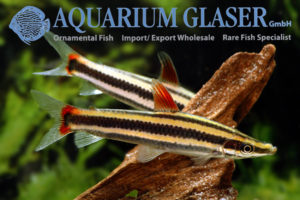
    Among the imports from central Africa this beautiful catfish is a real rarity. It is known so far only from the central Congo basin. From that region only few fish are imported regulary. The species attains a length of approximately 40 cm. Thus it is a perfect tankmate for show aquaria with larger species of […]

  • Hyphessobrycon eques wild

    15. November 2017

    The Serpae tetra is one of the most popular tetras at all. This is doubtless due to its intensive red coloration. In respect of the behaviour one cannot trust them too far. They have the nasty tendency to bite off pieces of finnage from other fish, also from conspecifics.  From a scientific point of view […]

  • Tatia dunni „White“

    13. November 2017

    We were able to import the wooddrift catfish Tatia dunni for the first time in 2010 (see http://www.aquariumglaser.de/en/fish-archives/tatia_dunni_en/). Animals from this stock were given to one of our breeders, Jürgen Hattenberger. Sadly he died unexpected a few weeks ago. Jürgen was able to establish a breeding stock from the first importation and since then we […]

  • Hemiloricaria melini

    10. November 2017

    Lately we introduced to you Hemiloricaria sp. „Puerto Ayacucho“, a species known so far from Venezuela only, which we could import along with Hemiloricaria melini from Brazil. This post led to a number of requests wether we could also depict the imported melini-Whiptails. Well, we can: here they are! Hemiloricaria melini forms along with H. […]

  • Maylandia greshakei

    10. November 2017

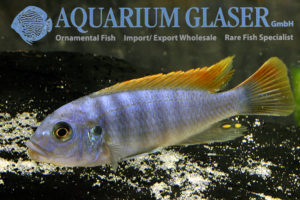
    The zebra cichlids fro  Lake Malawi are very popular aquarium fishes. Among them is Maylandia greshakei, which looks very special due to its bright orange dorsal fin. In the wild – the fish is endemic to Lake Malawi – it is restricted to only two comparatively small areas, eg Crocdile Rocks and Makokola Reef, both […]

  • Tilapia buettikoferi

    8. November 2017

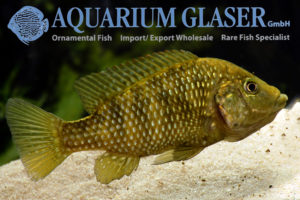
    There are several species of cichlid termed „zebra cichlid“ in the aquarium hobby. However, none of the has a black-and-white pattern like the wild horse, but a green or blue basic colour. Examples are „Zebra cichlid“ from Central America (Amatilania nigrofasciata, formerly placed in Cichlasoma) or the „zebras“ from Lake Malawi (genus Maylandia). A real […]

  • Catathyridium jenynsii

    6. November 2017

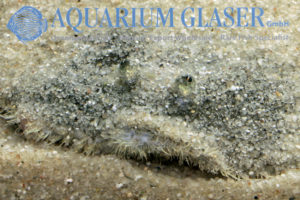
    Flatfishes, like flounders, soles, turbots etc. are usually living in marine environments. But there do exist also pure freshwater species. Among them is Catathyridium jenynsii from southern South America. We obtained a specimen from Paraguay, but the fish has a pretty wide distribution in the large river basins of the Paraná and Uruguay. The species […]

  • Cherax peknyi

    3. November 2017

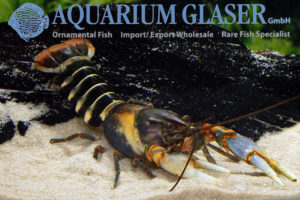
    Finally we were able to import once more zebra lobsters. These crayfish had several changes in respect of the determination, because the freshwater crayfish from New Guinea were hardly know prior to their discovery as aquarium inhabitants. Initially they were imported under the name of C. misolicus, but it was guessed they might be closer […]

  • Nomorhamphus liemi 

    3. November 2017

    This wonderfully coloured halfbeak originates from the island of Sulawesi ( = Celebes) where it occurs in the southern half; it is endemic in the Maros highlands. In contrast to the closely related genus Dermogenys the upper and the lower jaw are approximately equally long (thus the generic name). In some species, however, is seems […]

  • Hemiloricaria sp. „Puerto Ayacucho“

    27. October 2017

    Finally we were able again to import some of the beautiful Hemiloricaria melini from ´Brazil (Rio Negro basin). As usual this shipment contained several bycatches, like H. sp. Weißdorn and H. castroi (see our post http://www.aquariumglaser.de/en/fish-archives/hemiloricaria-bycatches/), but this time there were also some specimens we have never seen before. The most obvious feature of the […]

  • A little sensation: the first documented OB discus!

    27. October 2017

    A few weeks ago we received a shipment of hald grown wild collected discus via Manaus. The animals acclimatised very well. As soon as they showed the normal coloration we found that there was one very special animal among them. It was blotched. Initially we thought that the animal would be sick, but it feeds […]

  • Corydoras pantanalensis

    25. October 2017

    Currently we can offer one of the most beautiful and most splendid species of Corydoras, namely C. pantanalensis. Before its scientific description it was known as C5. This species attains a body length of about 8 cm and is one of the largest species of Corydoras. Within the genus, C. pantanalensis belongs to a relationship […]

  • Procatopus aberrans

    23. October 2017

    We obtained very nice Procatopus aberrans from Nigeria. These lampeyes are very peaceful schooling fish that live near the water surface or at least in the upper third of the water column. In contrast to most other species of lampeye that have an iridescent blue zone in the iris, in P. aberrans the iridescent zone […]

  • Guppy Endler „Ginga Rubra“

    20. October 2017

    This charming sport of the Guppy is said to have been developed in Japan. The name of the Japanese breeder is cited as Tanaka. The „Ginga Rubra“ is a very lively and robust sport. Our specimens are German bred ones, the basic colour of our fish is blond. For our customers: the fish have code […]

  • Corydoras orcesi and C. pastazensis

    20. October 2017

    These beautifully marked species appeared only very occasionally in the aquarium hobby. Corydoras orcesi has been described from the Rio Tigre system in Ecuador. Initially it was described as a subspecies of the similar Corydoras pastazensis. However, so far no intergrades have been found and this makes it very likely that both are seperate species. […]

  • L168 Zonancistrus brachyurus

    18. October 2017

    We obtained wonderful L168 from Brazil. In this case the L-number provides a safer information than the scientific name. Due to several misidentifications this fish was in the hobby initially named Peckoltia pulcher, then Dekeyseria pulcher, sometimes also Zonancistrus pictus. But the valid name (this is at least current state of the art) is Zonancistrus […]

  • Chelonodon patoca

    16. October 2017

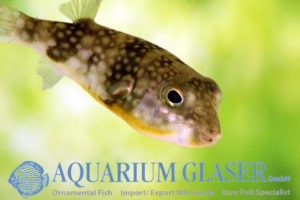
    We received this beautiful species of brackish water puffer from Thailand. The species Chelonodon patoca has a wide distrubution in the Indian Ocean. It is often placed in the genus Chelonodontops in recent times. Adult specimens – the species becomes up to 30 cm long – usually live in the sea, while young fish live […]
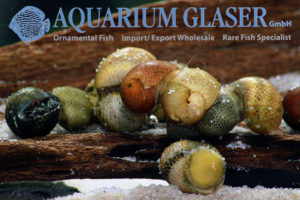
  • Xiphophorus hellerii King Lyratail

    13. October 2017

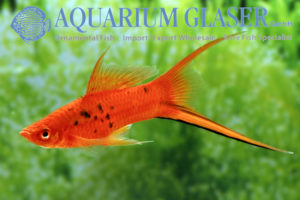
    Lyretail swordtails are a sport of Xiphophorus hellerii and rather difficult to breed. Usually only the females can be used for breeding. They need „normal“ males for mating, because in most Lyretail males the fin that is used for insemination in livebearers, the so called gonopodium, is much prolonged and useless. Among ornamental fish breeders […]

  • Etroplus canarensis

    13. October 2017

    Only three species of cichlid are found in Asia, all of them belong to the genus Etroplus. But many scientists believe that Etroplus are closer to damsels than to cichlids. Anyway, all three species are marvelous aquarium fish. Two of them, E. maculatus and E. suratensis are wide spread.   There was no trace of […]

  • Nothobranchius eggersi Kubiti-Utete 07

    11. October 2017

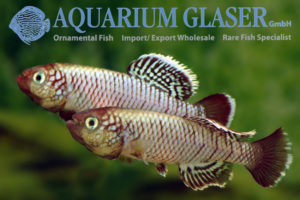
    Among the most variable species of kiliifish is Nothobranchius eggersi, the Orchid nothobranch. This species has been discovered on an expedition in winter 1980/81 by Lothar Seegers, Gerd Eggers, and Christel Kasselmann in eastern Tanzania. One year later L. Seegers described the species scientifically. The species lives endemic in the Rufiji river basin. The type […]
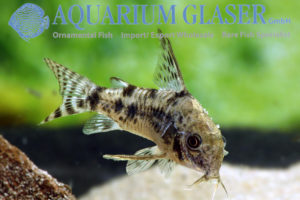
  • Gymnallabes typus

    9. October 2017

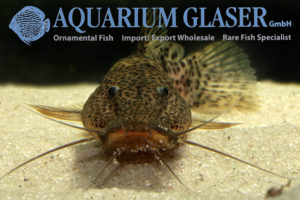
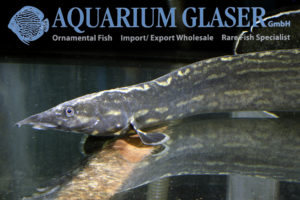
    We obtain a very strange catfish on a regular basis from Nigeria: Gymnallabes typus. Sadly the fish has been given the name Channalabes apus in the hobby; this is a different species from the Congo. The catfish has an eel-like body, becomes 20-30 cm long, has an impressive mustache and tiny little eyes. In the […]
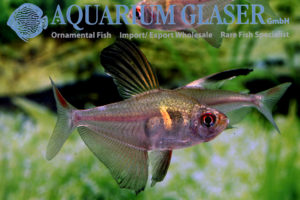
  • Betta splendens Wild

    6. October 2017

    The wild forms of the Betta splendens-group are very difficult to determinate, even for specialists and in some cases a safe determination will fail at all. Currently these species are placed in the group: Betta imbellis, B. mahachaiensis, B. siamorientalis, B. smaragdina, B. splendens, and B. stiktos. Inside this group one can differentiate two subgroups, […]
  • Rasbora sarawakensis

    4. October 2017

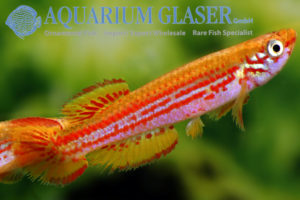
    Once more we are able to offer that pretty Rasbora that attains a maximum length of about 5 cm. This Rasbora is a very peaceful fish that will not touch any plant in the tank. It prefers to swim in small schools along with conspecifics. R. sarawakensis feeds readily on any type of usual fish […]
  • Congochromis sabinae and C. sp. „Green Speckle“

    29. September 2017

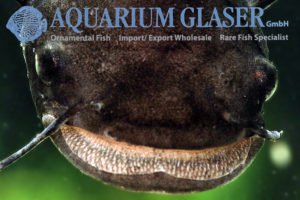
    We obtained these beautiful and extremely rarely offered dwarf cichlids as bycatches with other fishes from the Congo. Congochromis sabinae was prior to its scientific description known under a number of trade names: C. sp. „Bloody Mary“, C. sp. „Gemena“, C. sp. „Bamanja“ or C. sp. „Makoua, all of them also in the combination with […]
  • Nandus nebulosus

    28. September 2017

    We received from Thailand the only rarely offered Nandus nebulosus. There are two, pretty similar species of Nandus occuring in Thailand: thre deep-bodied N. oxyrhynchus from the basins of the large rivers Mekong and Mae Klong and the somewhat more slender, short nosed species N. nebulosus from the south of the country. However, regions are […]
  • Yasuhikotakia modesta

    25. September 2017

    We received from Thailand this wonderful sport of the Blue Loach (Yasuhikotakia modesta, formerly known as Botia modesta). The species is well known for its variability. Most often the fish are blue with bright red fins, but the body colour can vary from blue over green to blue-grey and the fins can be anything from […]
  • Gymnothorax polyuranodon

    22. September 2017

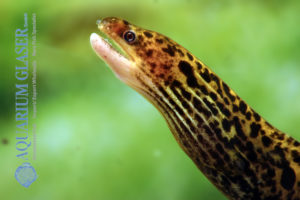
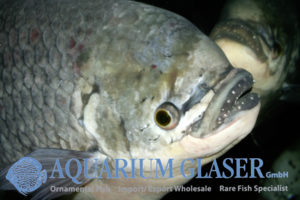
    This is the only real freshwater species of moray: Gymnothorax polyuranodon. Usually this species is not found over 30-40 km away from the coast, but most often in pure freshwater. The other salt tolerant species of moray, for example Gymnothorax tile, usually do not leave the tidal zone. We could import this only very rarely […]
  • Osphronemus exodon

    20. September 2017

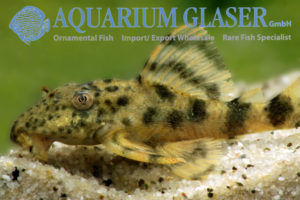
    Until the end of the 20th century it was believed that the giant gouramies would be represented only by one single species. But then a number of additional species was recognized, among them Osphronemus exodon from the Mekong river. Juveniles look very much alike common giant gouramies (O. goramy), only educated people note the higher […]
  • Peckoltia brevis / LDA 78

    18. September 2017

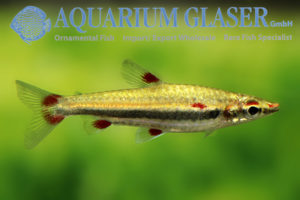
    We received this beautiful small pleco once more from Brazil. The species became popular in the hobby long time before any L-numbers were created. Peckoltia brevis attains a maximum length of about 12 cm. It originates from affluents of the Amzaon river, for example from the Rio Purus, the Rio Jurua, the Rio Manacapuru, and […]
  • Nannostomus trifasciatus „Gold“

    15. September 2017

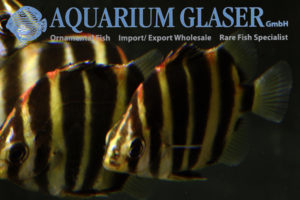
    Only very rarely we obtain assorted „goldtetras“ in numbers. An exception of that rule is, however, „the“ gold tetra, Hyphessobrycon saizi (usually traded under the wrong name H. eos). But basically every tetra can become a golden one – they are only hard to find. We now received from Peru large, fully mature golden Nannostomus […]

  • Scatophagus tetracanthus

    13. September 2017

    We received this top rarity from the Pacific coast of Eastern Africa. For the first time ever we can offer 27 specimens. Like all scats this species is completely euryhalin, this means it can change freely between the sea and freshwater; this is their typical behaviour in the wild. Much more important than the salt […]

  • Otopharynx lithobates

    11. September 2017

    Today we took the photo equipment in our fishhouse (instead of taking fish from the fishhouse in the phototank), for here in one of our tanks a great show is presented: 50 sexually ripe (7-10 cm long) Otopharynx lithobates, more than half of them males in breeding mood. Wow. In the natural habitat, males of […]