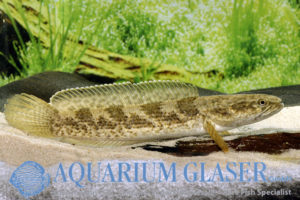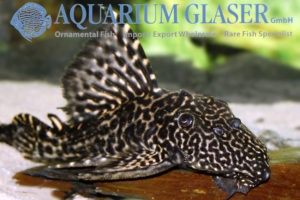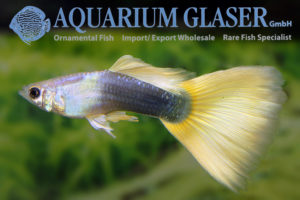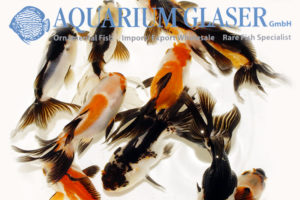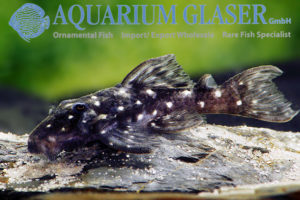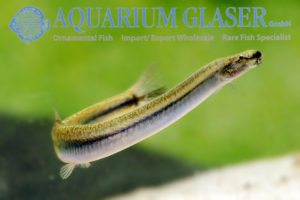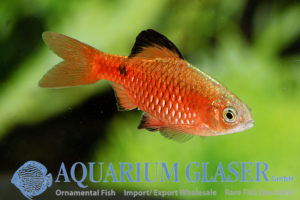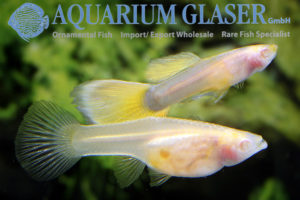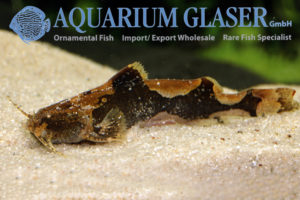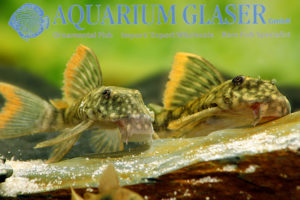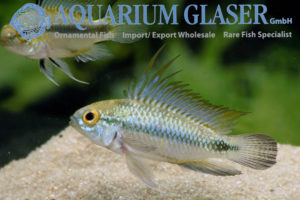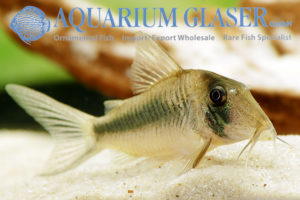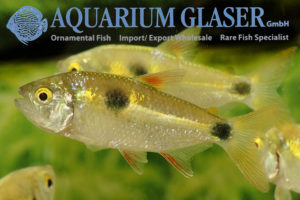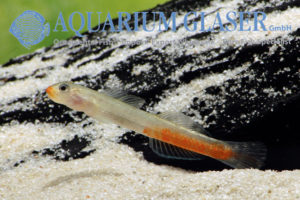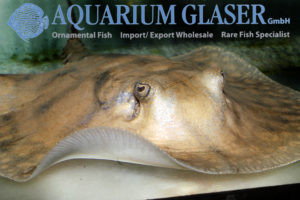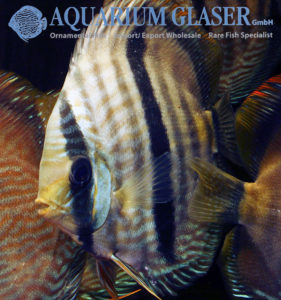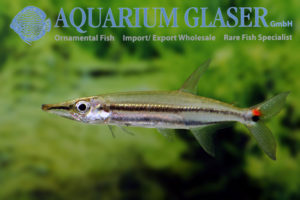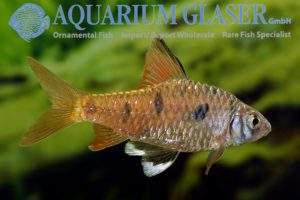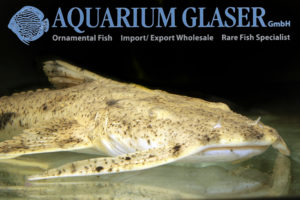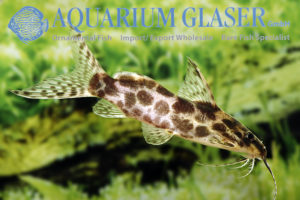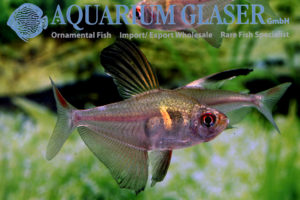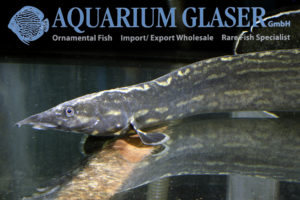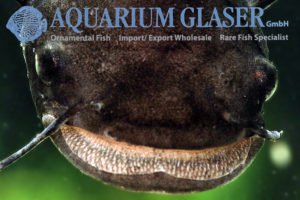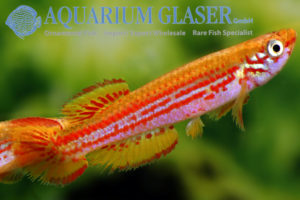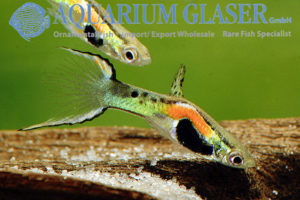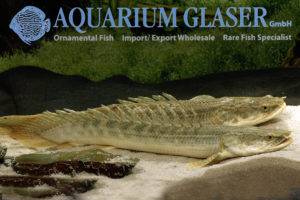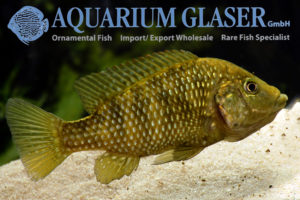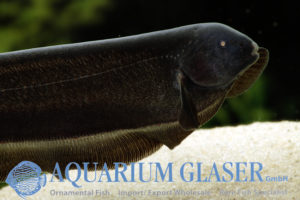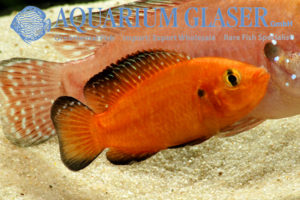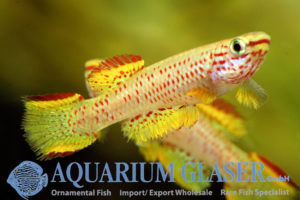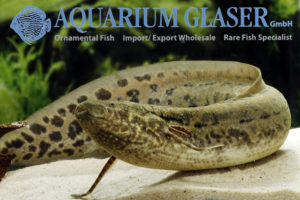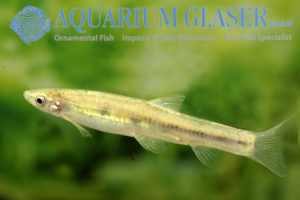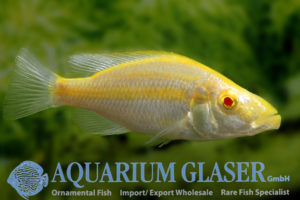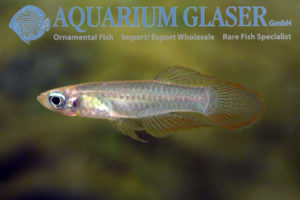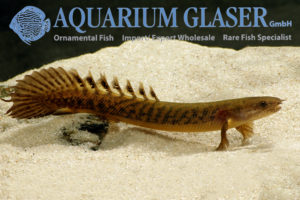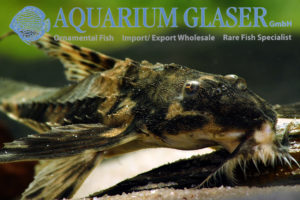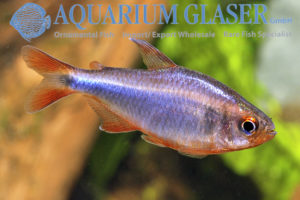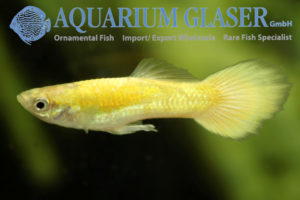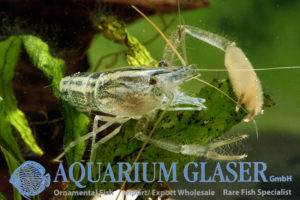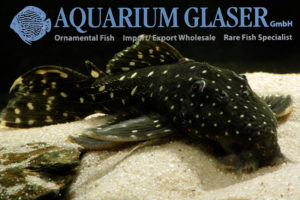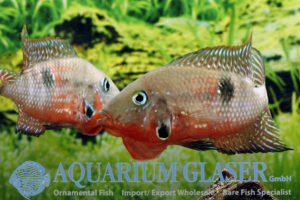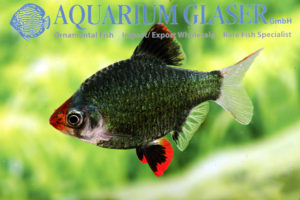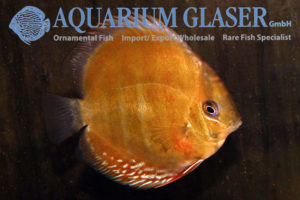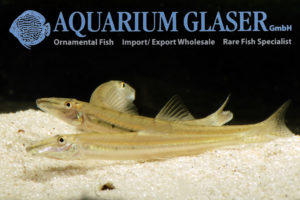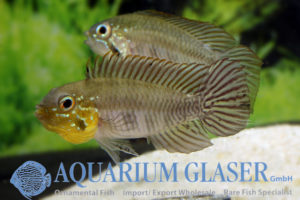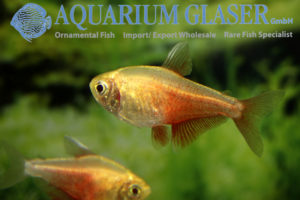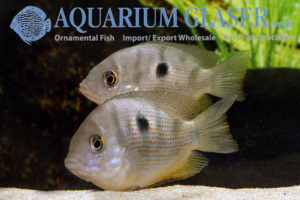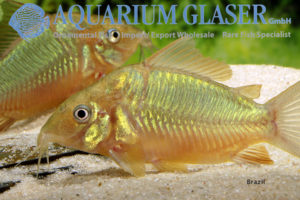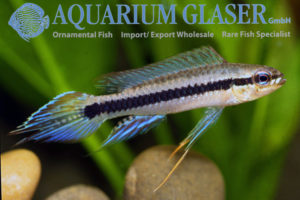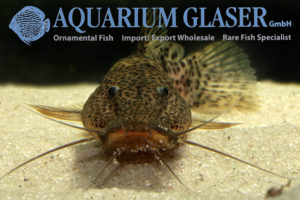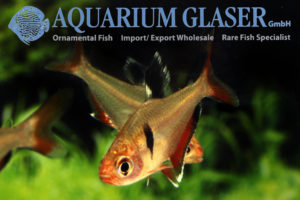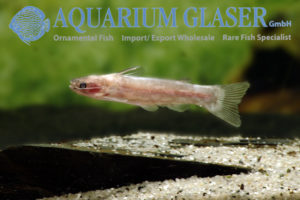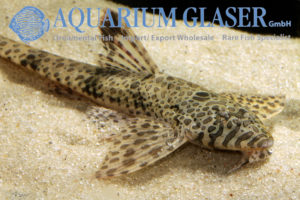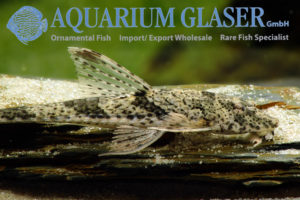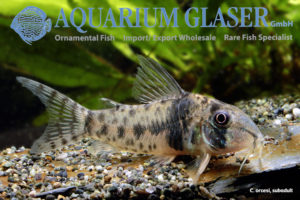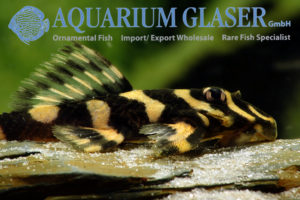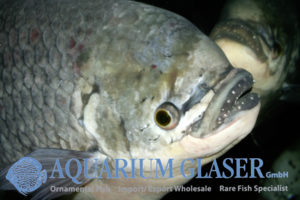

Lately we introduced to you Hemiloricaria sp. „Puerto Ayacucho“, a species known so far from Venezuela only, which we could import along with Hemiloricaria melini from Brazil. This post led to a number of requests wether we could also depict the imported melini-Whiptails. Well, we can: here they are! Hemiloricaria melini forms along with H. […]
Fish Archive (3192)
-
-
Maylandia greshakei
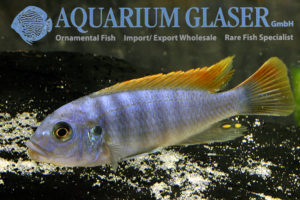
The zebra cichlids fro Lake Malawi are very popular aquarium fishes. Among them is Maylandia greshakei, which looks very special due to its bright orange dorsal fin. In the wild – the fish is endemic to Lake Malawi – it is restricted to only two comparatively small areas, eg Crocdile Rocks and Makokola Reef, both […]
-
Tilapia buettikoferi
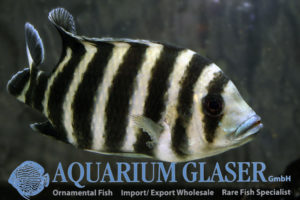
There are several species of cichlid termed „zebra cichlid“ in the aquarium hobby. However, none of the has a black-and-white pattern like the wild horse, but a green or blue basic colour. Examples are „Zebra cichlid“ from Central America (Amatilania nigrofasciata, formerly placed in Cichlasoma) or the „zebras“ from Lake Malawi (genus Maylandia). A real […]
-
Catathyridium jenynsii
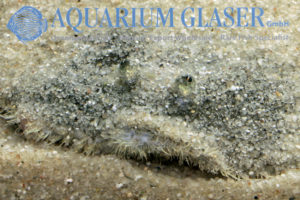
Flatfishes, like flounders, soles, turbots etc. are usually living in marine environments. But there do exist also pure freshwater species. Among them is Catathyridium jenynsii from southern South America. We obtained a specimen from Paraguay, but the fish has a pretty wide distribution in the large river basins of the Paraná and Uruguay. The species […]
-
Cherax peknyi
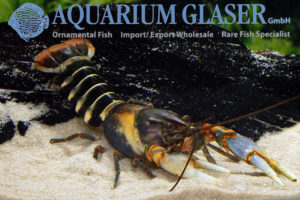
Finally we were able to import once more zebra lobsters. These crayfish had several changes in respect of the determination, because the freshwater crayfish from New Guinea were hardly know prior to their discovery as aquarium inhabitants. Initially they were imported under the name of C. misolicus, but it was guessed they might be closer […]
-
Nomorhamphus liemi
This wonderfully coloured halfbeak originates from the island of Sulawesi ( = Celebes) where it occurs in the southern half; it is endemic in the Maros highlands. In contrast to the closely related genus Dermogenys the upper and the lower jaw are approximately equally long (thus the generic name). In some species, however, is seems […]
-
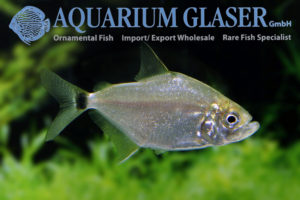
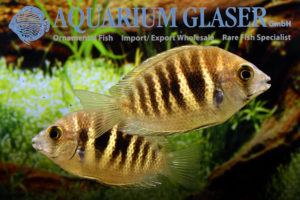
Catoprion mento
Photos: Frank Schäfer
-
Hemiloricaria sp. „Puerto Ayacucho“
Finally we were able again to import some of the beautiful Hemiloricaria melini from ´Brazil (Rio Negro basin). As usual this shipment contained several bycatches, like H. sp. Weißdorn and H. castroi (see our post http://www.aquariumglaser.de/en/fish-archives/hemiloricaria-bycatches/), but this time there were also some specimens we have never seen before. The most obvious feature of the […]
-
A little sensation: the first documented OB discus!
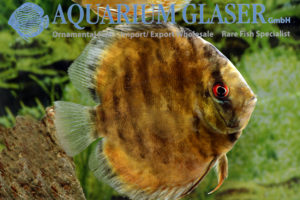
A few weeks ago we received a shipment of hald grown wild collected discus via Manaus. The animals acclimatised very well. As soon as they showed the normal coloration we found that there was one very special animal among them. It was blotched. Initially we thought that the animal would be sick, but it feeds […]
-
Corydoras pantanalensis
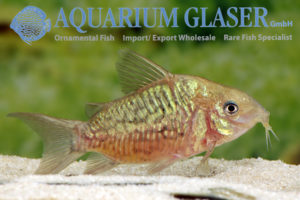
Currently we can offer one of the most beautiful and most splendid species of Corydoras, namely C. pantanalensis. Before its scientific description it was known as C5. This species attains a body length of about 8 cm and is one of the largest species of Corydoras. Within the genus, C. pantanalensis belongs to a relationship […]
-
Procatopus aberrans
We obtained very nice Procatopus aberrans from Nigeria. These lampeyes are very peaceful schooling fish that live near the water surface or at least in the upper third of the water column. In contrast to most other species of lampeye that have an iridescent blue zone in the iris, in P. aberrans the iridescent zone […]
-
Guppy Endler „Ginga Rubra“
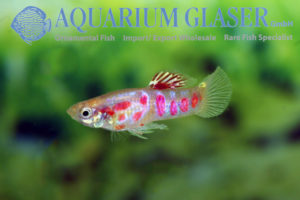
This charming sport of the Guppy is said to have been developed in Japan. The name of the Japanese breeder is cited as Tanaka. The „Ginga Rubra“ is a very lively and robust sport. Our specimens are German bred ones, the basic colour of our fish is blond. For our customers: the fish have code […]
-
Corydoras orcesi and C. pastazensis
These beautifully marked species appeared only very occasionally in the aquarium hobby. Corydoras orcesi has been described from the Rio Tigre system in Ecuador. Initially it was described as a subspecies of the similar Corydoras pastazensis. However, so far no intergrades have been found and this makes it very likely that both are seperate species. […]
-
L168 Zonancistrus brachyurus
We obtained wonderful L168 from Brazil. In this case the L-number provides a safer information than the scientific name. Due to several misidentifications this fish was in the hobby initially named Peckoltia pulcher, then Dekeyseria pulcher, sometimes also Zonancistrus pictus. But the valid name (this is at least current state of the art) is Zonancistrus […]
-
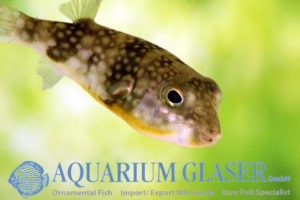
Chelonodon patoca
We received this beautiful species of brackish water puffer from Thailand. The species Chelonodon patoca has a wide distrubution in the Indian Ocean. It is often placed in the genus Chelonodontops in recent times. Adult specimens – the species becomes up to 30 cm long – usually live in the sea, while young fish live […]
-
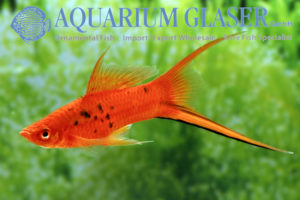
Xiphophorus hellerii King Lyratail
Lyretail swordtails are a sport of Xiphophorus hellerii and rather difficult to breed. Usually only the females can be used for breeding. They need „normal“ males for mating, because in most Lyretail males the fin that is used for insemination in livebearers, the so called gonopodium, is much prolonged and useless. Among ornamental fish breeders […]
-
Etroplus canarensis
Only three species of cichlid are found in Asia, all of them belong to the genus Etroplus. But many scientists believe that Etroplus are closer to damsels than to cichlids. Anyway, all three species are marvelous aquarium fish. Two of them, E. maculatus and E. suratensis are wide spread. There was no trace of […]
-
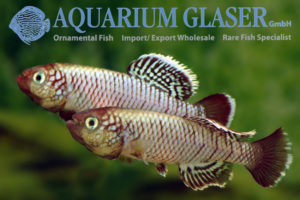
Nothobranchius eggersi Kubiti-Utete 07
Among the most variable species of kiliifish is Nothobranchius eggersi, the Orchid nothobranch. This species has been discovered on an expedition in winter 1980/81 by Lothar Seegers, Gerd Eggers, and Christel Kasselmann in eastern Tanzania. One year later L. Seegers described the species scientifically. The species lives endemic in the Rufiji river basin. The type […]
-
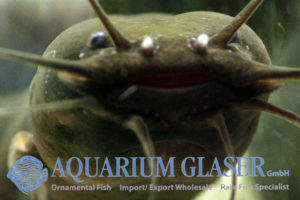
Gymnallabes typus
We obtain a very strange catfish on a regular basis from Nigeria: Gymnallabes typus. Sadly the fish has been given the name Channalabes apus in the hobby; this is a different species from the Congo. The catfish has an eel-like body, becomes 20-30 cm long, has an impressive mustache and tiny little eyes. In the […]
-
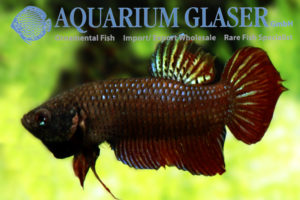
Betta splendens Wild
The wild forms of the Betta splendens-group are very difficult to determinate, even for specialists and in some cases a safe determination will fail at all. Currently these species are placed in the group: Betta imbellis, B. mahachaiensis, B. siamorientalis, B. smaragdina, B. splendens, and B. stiktos. Inside this group one can differentiate two subgroups, […]
-
Rasbora sarawakensis
Once more we are able to offer that pretty Rasbora that attains a maximum length of about 5 cm. This Rasbora is a very peaceful fish that will not touch any plant in the tank. It prefers to swim in small schools along with conspecifics. R. sarawakensis feeds readily on any type of usual fish […]
-
Congochromis sabinae and C. sp. „Green Speckle“
We obtained these beautiful and extremely rarely offered dwarf cichlids as bycatches with other fishes from the Congo. Congochromis sabinae was prior to its scientific description known under a number of trade names: C. sp. „Bloody Mary“, C. sp. „Gemena“, C. sp. „Bamanja“ or C. sp. „Makoua, all of them also in the combination with […]
-
Nandus nebulosus
We received from Thailand the only rarely offered Nandus nebulosus. There are two, pretty similar species of Nandus occuring in Thailand: thre deep-bodied N. oxyrhynchus from the basins of the large rivers Mekong and Mae Klong and the somewhat more slender, short nosed species N. nebulosus from the south of the country. However, regions are […]
-
Yasuhikotakia modesta
We received from Thailand this wonderful sport of the Blue Loach (Yasuhikotakia modesta, formerly known as Botia modesta). The species is well known for its variability. Most often the fish are blue with bright red fins, but the body colour can vary from blue over green to blue-grey and the fins can be anything from […]
-
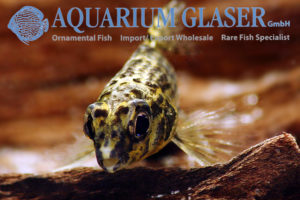
Gymnothorax polyuranodon
This is the only real freshwater species of moray: Gymnothorax polyuranodon. Usually this species is not found over 30-40 km away from the coast, but most often in pure freshwater. The other salt tolerant species of moray, for example Gymnothorax tile, usually do not leave the tidal zone. We could import this only very rarely […]
-
Osphronemus exodon
Until the end of the 20th century it was believed that the giant gouramies would be represented only by one single species. But then a number of additional species was recognized, among them Osphronemus exodon from the Mekong river. Juveniles look very much alike common giant gouramies (O. goramy), only educated people note the higher […]
-
Peckoltia brevis / LDA 78
We received this beautiful small pleco once more from Brazil. The species became popular in the hobby long time before any L-numbers were created. Peckoltia brevis attains a maximum length of about 12 cm. It originates from affluents of the Amzaon river, for example from the Rio Purus, the Rio Jurua, the Rio Manacapuru, and […]
-
Nannostomus trifasciatus „Gold“
Only very rarely we obtain assorted „goldtetras“ in numbers. An exception of that rule is, however, „the“ gold tetra, Hyphessobrycon saizi (usually traded under the wrong name H. eos). But basically every tetra can become a golden one – they are only hard to find. We now received from Peru large, fully mature golden Nannostomus […]
-
Scatophagus tetracanthus
We received this top rarity from the Pacific coast of Eastern Africa. For the first time ever we can offer 27 specimens. Like all scats this species is completely euryhalin, this means it can change freely between the sea and freshwater; this is their typical behaviour in the wild. Much more important than the salt […]
-
Otopharynx lithobates
Today we took the photo equipment in our fishhouse (instead of taking fish from the fishhouse in the phototank), for here in one of our tanks a great show is presented: 50 sexually ripe (7-10 cm long) Otopharynx lithobates, more than half of them males in breeding mood. Wow. In the natural habitat, males of […]
-
A visit at ornamental fish breeder Jülich
Where do the ornamental fish in the trade come from? The largest amount for sure from breeding installations in south east Asia, followed next by Israel and Czechia. But there do exist als smaller, more specialized breeding facilities that breed the unusual type of fish. We always try to be attractive as trade partners for […]
-
New Guppy: Elephant Ear
The pectoral fins in Guppys are usually transparent. But there do exist sports with black pectoral fins, like the so called „nigrocaudatus“-types and the Moskow Guppys. Breeders have made this peculiarity the target of their most recent new sport. Obviously initially only colourful guppys with pitchblack pectorals were planned, but then the breeders discovered that […]
-
Hyphessobrycon cf. agulha Red Tail
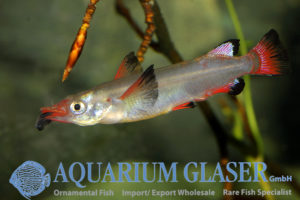
We received a new species of tetra in number which reached us in former times in single specimens only from the Rio Negro region. Without any doubts the animals are identical with the tetra illustrated on page 472 of „the bible of tetra lovers“, Gery´s „Characoids of the world“. The caption says „Hyphessobrycon agulha, or […]
-
Hypoptopoma psilogaster
The genus Hypoptopoma comprises small to medium sized loricariids. The largest species known becomes about 10 cm long. At the first glimpse they look much alike a Otocinclus, but larger. Typical for members of Hypoptopoma is the position of the eyes. They are placed in way at the side of the head that the fish […]
-
Guppy Full Platinum
My dear! After 15 years of pleasureful co-operation our flashlight installation of the photo tank crashed. Today the substitute arrived and we tested it with the latest guppy sport from Sri Lanka: Full Platinum. As anybody knows who has ever tried it: totally white and totally black fish are the hardest challenge in respect of […]
-
Luciocephalus pulcher
The pikehead, Luciocephalus pulcher, is a highly specialized anabantoid, a relative of the chocolate gouramies. Like the latter the pikehead is a mouthbrooder. Luciocephalus is the only true predator among the various anabantoids; in its natural habitat it feeds preferably on shrimps. The calm, beautiful animal (Latin pulcher = beautiful) would for sure be a […]
-
Poecila mexicana Campeche
The wild mollys from Central America were always and will stay an enigma for generations of scientists. In each brook the fish look somewhat different. And as if that would not be eough, they also have within every population different shaped males: small and slender early ripe male, large and deep bodies late ripe males […]
-
Badis autumnum
The number of species of chameleon fish has increased drastically in the past years. Until the year 2002 only one genus and ones species with four subspecies were accepted, now there are two genera (Badis and Dario) with 23 species in Badis and 6 in Dario. One of the latest described species is Badis autumnum, […]
-
Channa sp. „Burmese Red Rim Rainbow“
Finally we were able to import a number of specimens of this exttemely beautiful, small species of snakehead from Burma. The fish attain a maximum length of about 12-15 cm and are a close relative of Channa gachua. However, the body of „Red Rim“ is much more depressed. In respect of coloration one feature makes […]
-
Corydoras burgessi
Now the season for the very beautiful and much beloved orange blotch corys has started. There does exist a good number of different species and varietoies, all have in common a brightly shining spot on the neck. Depending on light this glows from yellow to almost red. This glowing spot helps the fish in the […]
-
Mastacembelus pantherinus
Once more we were able to import an extemely rarely offered species of spiny eel, namely Mastacembelus pantherinus. In the internet this species is in general named M. dayi, but M. dayi has recently proofed to by a synonym of M. alboguttatus. Researcher Ralf Britz – he described, by the way, also M. pantherinus – […]
-
Laetacara curviceps
Quite a long time before the species of Apistogramma became popular in the hobby, another species of dwarf cichlid from Brazil was a favorite aquarium fish: Laetacara curviceps, the flag acara. At these times it was called Aequidens curviceps. Sadly the fish became rather rare in the past years. So we are glad that we […]
-
Xiphophorus hellerii „Broccoli“
What is a Broccoli swordtail? A green swordtail that smells like cabbage? No, not at all! If one crosses a simpson swordtail – simpsons are the swordtails with the long dorsal fin – with a lyretail swordtail – lyretails have prolongations in all fins – some of the offspring have a very long simpson dorsal […]
-
Chilatherina sentaniensis
110 yeras ago – 1907 – the German-Dutch scientist Max Weber described freshwater fishes from New Guinea, which have been collected by a scientific expedition to the island by the Netherlands in 1903. One of the new species was a rainbowfish. Weber named it Rhombatractus sentanienis. Nowadays we know that fish under the name of […]
-
Apistogramma sp. Marandu
We received from Peru for the very first time this new, interesting and beautiful species of Apistogramma; sadly no further information on the origin is available. As the new fish cannot be applied for sure to an already described species, we simply adopted the name the exporter gave to the fish. Marandu belongs to the […]
-
Glyptoperichthys scrophus
The genus Glypterperichthys (Sailfin plecos) is represented in the hobby mainly by thetwo species G. gibbiceps and G. joselimaianus, because both species have a very attractive coloration. Both are bred in large numbers in Southeast Asia and so they are almost anytime available for moderate prices. A rarity is G. scrophus, the rhino sailfin pleco […]
-
Guppy Magenta Tuxedo
The breeders and farmers of ornamental fish in Sri Lanka still suffer from the catastrophal rains some weeks ago. Nevertheless they supply us with wonderful guppys and other livebearers, for example the beautiful Guppy Magenta Tuxedo. We have this strain from Sri Lank since 1998 in stock. All customers that order now bred fish from […]
-
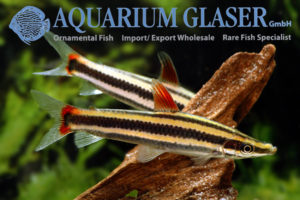
Melanotaenia australis
One of the species of rainbowfishes with the longest aqurium history is the dwarf rainbowfish, Melanotaenia maccullochi. It reached Europe as early as 1934 and is kept and bred since then. However, if we order nowadays M. maccullochi from Indonesia we do not get this species, but another one which has only a rough similarity […]
-
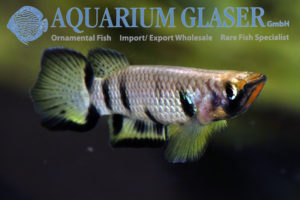
Polypterus palmas
We received once more from Guinea the comparatively small (20-25 cm) and very pretty Polypterus palmas. Currently our fish are 10-12 cm long. Formerly the species has been splitted in several subspecies, but this seems not to reflect the real situation. Two of these subspecies have been recorded from Guinea, namely P. p. palmas and […]
-
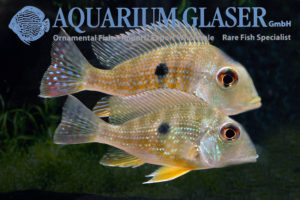
Ammocryptocharax elegans
There is probably no other species of freshwater fish that has such a bilious green coloration as it is shown by the 4-5 cm long ground characin Ammocryptocharax elegans. We were able to import a few specimens from Brazil. However, one should know that these fish can change their coloration very fast and in case […]
-
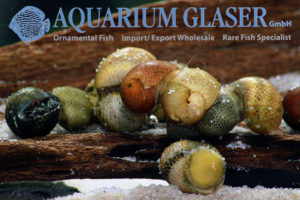
Moenkhausia agnesae
We received once more the fantastic Moenkhausia agnesae from Peru. This is a larger species that can be kept ideally along with cichlids and catfish. Maximum length reported from M. agnesae is about 8 cm. Formerly this species has been often confused with M. simulata. However, the horizontal stripes in M. simulata are all black, […]
-
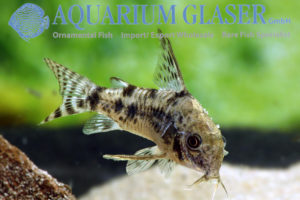
Channa bleheri
Currently is the import season for one of the most beautiful species of snakehead, the rainbow snakehead (Channa bleheri) from the state of Assam in India. The species is not only very colorful, but also stay comparatively small (at least in comaprison with some other snakeheads), namely 15-20 cm. Moreover this species is – again […]
-
Atractosteus spatula
The Alligator gars are so-called living fossils. They developed about 100 million years ago in the upper Cretaceous and haven´t changed much since then. Currently two genera live in the New World, namely Atractosteus (containing three species) and Lepisosteus (four species). The members of Atractosteus can reach about 2 m in length (formerly they are […]
-
L 128 Hemiancistrus sp. or Ancistrinae gen. sp.
Many L-numbers have received correct scientific names in the meantime; not so the „Blue Phantom“, which ist stil undescribed. Currently most keepers tend to place the species in the genus Hemiancistrus, but this is not confirmed. It is also possible that the fish will have to be placed in a new genus (Ancistrinae gen.sp.). We […]
-
Trichopsis schalleri
Schaller´s Croaking Gourami is sadly only very occassionally available in the trade. The very pretty fish originates from central Thailand; it attains a length of about 4 cm. So it becomes larger than the Croaking Dwarf Gourami (Trichopsis pumila, 2,5-3 cm), but stays smaller than the common Croaking Gourami (T. vittata, up to 6 cm). […]
-
Trigonostigma somphongsi
The Siamese Dwarf Rasbora (Trigonostigma somphongsi, formerly Rasbora somphongsi) has been described scientifically in 1958 on the basis of specimens that were imported by the ornamental fish trade by the end of 1957 from Thailand. So the exact type locality was unknown from the beginning. In the original description nothing but “Thailand” was mentioned, later, […]
-
Apteronotus albifrons WHITE
The Black Ghost (Apteronotus albifrons) is a most beautiful and elegant knifefish from South America. The species has a very wide distribution, wild collected specimens most often come from the Orinoco (Colombia and Venezuela). However, the up to 50 cm long species is also bred since many years in Indonesia on a regular basis. The […]
-
Aplocheilus lineatus “Gold”
The golden sport of Aplocheilus lineatus is very popualr in the aquarium hobby and the only member of the genus that can be found on a regular basis in the petshops. The reason for that is quite simple: the golden sport exhibits even as a small juvenile (3-5 cm length) already the attractive coloration, while […]
-
Hyphessobrycon eques wild
The Serpae tetra is one of the most popular tetras at all. This is doubtless due to its intensive red coloration. In respect of the behaviour one cannot trust them too far. They have the nasty tendency to bite off pieces of finnage from other fish, also from conspecifics. From a scientific point of […]
-
Apistogramma atahualpa
Before its scientific description this beautiful species of dwarf cichlid was known in the hobby as the „Sunset-Apistogramma“. And in fact the body coloration of a female during brood care reminds one in a sunset. The scientific name, atahualpa, refers to the last great ruler of the Inka empire: Atahualpa. He was captured by the […]
-
Monostichodus mesmaekersi
For the first time ever we can offer this pretty and very interesting tetra from the Congo. The species is practically unknown among aquarists. The genus Monostichodus (formerly: Hemistichodus) belongs to the relationship of the subfamily Ichthyborinae (fin eaters). Many members of that group are specialized fish that feed almost exclusively on parts of fins […]
-
Channa harcourtbutleri
We obtained some specimens of this only very rarely offered snakehead from Burma. The species is a very close relative of Channa gachua. In fact, it has been considered to be a mere synonym of C. gachua for a very long time. But Ng, Ng & Britz could show in 1999 that C. harcourtbutleri is […]
-
Trichogaster leerii Wild
For the first time we obtained wild collected pearl gourami from Thailand. This is worth mentioning for several reasons. First, it is very ambigously discussed in the scientific literature wether the species occurs in Thailand at all; twice: the wild populations of the pearl gourami are declining terryfing fast, for the species is strictly adopted […]
-
Amphilophus xiloaensis
In the lakes of Nicaragua a group of cichlids evolved, which is very interesting from a biological point of view: the Midas cichlids. Formerly they were classified only in two or three variable species within the catch-all genus Cichlasoma: Cichlasoma citrinellum, C. labiatum, and C. zaliosum. Nowadays they are placed in the genus Amphilophus. These […]
-
Chitala blanci
The Asian featherbacks, which have a well developed dorsal fin, have been placed in the genus Notopterus for a long time. Nowadays the genus Notopterus is seen monotypic (it contains only the single species N. notopterus) and the high-backed forms have been placed in another genus, namely Chitala. Currently we have the very attractive species […]
-
Synodontis batensoda
There does exist a good number of species of Synodontis that tend to swim upside down. The best known species is without any doubt the upside down cat, Synodontis nigriventris from the Congo. Now we were able to import the very rarely offered Synodontis batensoda from Nigeria, which shows a similar behaviour. It seems to […]
-
Dimidiochromis strigatus
The genus Dimidiochromis comprises currently four accepted species. Only one of them, D. compressiceps, is found in the trade on a regular basis and has become an ornamental fish so far. D. strigatus can still be considered a rarity in the trade. We have the species stocked now for the first time, our fish are […]
-
Misgurnus anguillicaudatus
We received beautiful weather loaches via Hongkong. The genus is characterized by the existence of ten barbels around the mouth. The funny name „weather loach“ was given in medieval times, when these loaches were kept in captivity as weather prophets. These fish breath not only via gills but have an additional breathing technique. When the […]
-
Iriatherina werneri
Currently we have wonderful, fully grown specimens of the Threadfin Rainbowfish in stock. Like a butterfly its wings the male Threadfin Rainbowfish flaps its first dorsal fin during courtship. The males can be easily recognized by the long filaments of the second dorsal and the anal fin. The tender species attains a maximum length of […]
-
Brevibora dorsiocellata
Once more we were able to import this beautiful dwarf rasbora in good numbers. Al large school of them is a fascinating look! The Eyespot Rasbora, Brevibora dorsiocellata, is a well known, classical aquarium fish. Sadly the species became almost forgotten in the 1980ies. It was Mr. Takashi Amano from Japan who was responsible for […]
-
Brycon hilarii
Every year comes a season for one of the most wanted fish or large show aquaria: Salminus maxillosus. And every year we have to look wether the ordered young fish really belong to that species. The Salminus are large (usually up to 60 cm, sometimes reaching even 1 m in length) predatory fishes hat feed […]
-
Another new sport of fighting fish: Fancy Dragon Pla Kat
Fighting fish are absolutely popular currently. The splendid colours, the easy breeding, the interesting behaviour and the unproblematic keeping are the reasons. Against other fish than conspecifics Betta splendens are usually completely peaceful; the only general exception are fancy guppys, as these are often erronously taken for male fighting fish and attacked. Until now the […]
-
Rhynchodoras woodsi
Only very rarely members of the enigmatic genus Rhynchodoras (family Doradidae) appear in the ornamental fish trade. It is believed that these fish live in the very riverbed where collectors of ornamental fishes usually do not fish at all. All species of Rhynchodoras have a strange appendix on the jaw that looks like a share; […]
-
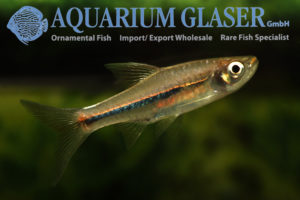
Corydoras elegans “Peru”
We received a small number of this pretty cory from Peru. It was shipped under the nice name „Corydoras Brilliante“. In fact the dark longitudinal band of the fish shines in a bright emerald green when the reflecting light comes in the correct angle, but all in all the fish is „only“ a local variety […]
-
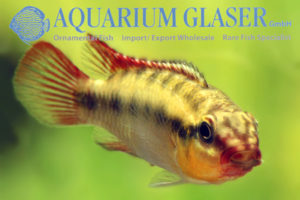
Wallaceochromis signatus
Prior to its scientific description this species as been known in the hobby under the names of Pelvicachromis sp. „Bandi1“ or „Guinea“. The species can be always easily recognized by the black tailspot of the female. Usally the female has only one black spot in the dorsal fin; the fact that the photomodel from our […]
-
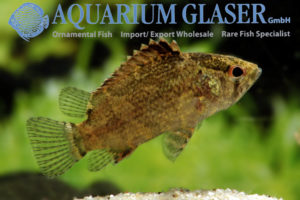
Pygocentrus piraya
The „real“ piranha, Pygocentrus piraya, is restricted to the river system of the Sao Francisco in southern Brazil. It is a up to 30 cm long species, which is characterized by its deep red breast and the mighty jaws when it is fully grown.However, even juveniles display a very attractive coloration. Most piranha species belong […]
-
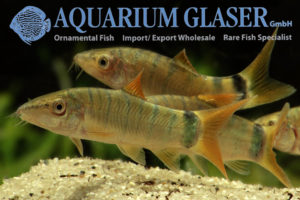
Hyphessobrycon herbertaxelrodi Wild
Wild collected black neon tetra? This is extremely rare, even in our company. The black neon tetra is one of the most often traded ornamental fish at all and much sought for. So it is available any time in any number as bred ones, even some artifical sports have been bred, like „smoke“ or „albino“. […]
-
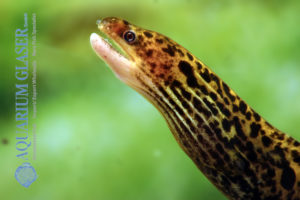
Pelvicachromis roloffi
The maybe rarest of all dwarf cichlids of the genus Pelvicachromis is P. roloffi. So we are very glad that in our current import from Guinea some specimens were included. This species depicts in almost all different moods a clearly visible, horizontal band. The females are – as usual in Pelvicachromis – the more colorful […]
-
Wallaceochromis humilis „Kasewe“
Finally we were able again to organize an import of – inter alia – dwarf cichlids from Guinea. Formerly all these fish were placed in the genus Pelvicachromis, but the species humilis, signatus, and rubrolabiatus have been transferred to the newly described genus Wallaceochromis in 2016. The naming of the different local populations of these […]
-
Wonderful bred Altum angels available!
The Altum angel (Pterophyllum altum) is extremely demanding during the rearing period. If the breeder makes even a minor mistake in respect of water quality or the food this results at once in a life-long deformation of the fish. These gnarled ventral fins, crooked anal fins or defects of the operculum are not heritable; so […]
-
Puntius titteya „Longfin“
Quite recently a new sport of the cherry barb, Puntius titteya, apperaed in the market. The fish are offered from Southeast Asia. We have imported them now for the very first time. A most intersting fact is that in this sport only the caudal fin is prolonged, the remaining fins have normal size. In all […]
-
Two new tetras from the Rio Negro region: Hyphessobrycon paepkei and H. cf. agulha
In a shipment containing Hyphessobrycon socolofi (Socolof´s bleeding heart) we found an extraordinary large number of bycatches. Allmost half of the shipment were another species, obviously a close relative of H. ornatus (Rosy tetra). We took a closer look and found the the bycatches were the Goldshoulder rosy tetra, H. paepkei. This species has been […]
-
Betta splendens – real fighter Pla Kat Luk Maw
It is a well known fact that the Betta splendens kept in the aquarium hobby as ornamental fish do not represent the species as it appears in the wild, but a domesticated fish. Initially this sport has been bred for combats, similar like sports of cocks and dogs. Only in the 1920ies, when supplying ornamental […]
-
Channa bankanensis
Many species of snakehead look very attractive as juveniles. Channa bankanensis is no exception from that rule. The reason for the sometimes extraordinary change in coloration is the behaviour. Juvenile Channa are usually schooling fish. Depending on the species they swim in close schools up to a length of 3 cm or even 15 cm. […]
-
Luciosoma setigerum
This barb with the extremely aerodynamic shape originates from Indonesia. Despite the size the fish can reach – up to 25 cm – the peaceful and splendid colored fish is an ideal inhabitant for a community tank with other large barbs from Asia, like Bala sharks (Balantiocheilus) or Sahyadria denisonii. For our customers: the fish […]
-
Copella arnoldi
The Splashing tetra (Copella arnoldi) is very famous due to it´s unique way of spawning. The pair jumps out of the water and deposites the eggs on the underside of plant leafes hanging over the water surface (in the aquarium they often spawn on the top glass). After spawning the male guards the clutch and […]
-
Freshwater pipefish from West Africa
There are three species of freshwater pipefish known to occur in West Africa. They live in inland waters along the coast and have a very wide distribution. One can find these fishes from the Senegal to Angola (roughly 16°N to 18°S). The term „West Africa“ is not used here in the sense of the UN, […]
-
Hyphessobrycon melanostichos
In our latest newsletter I made a regattable mistake: I used pictures of Hyphessobrycon cf. melanostichos instead of pictures of the „real“ Hyphessobrycon melanostichos in the post; H. cf. melanostichos differs a lot from the „real“ species in life colours. So here are now pictures of the „real“ H. melanostichos, the fish we currently have […]
-
Pseudogastromyzon cheni
Now the season for the charming hillstream loaches imported via Hongkong has started. There do exist several species and we also have several species in stock currently. There is a lot of confusion regarding the identity of two species of Pseudogastromyzon, namely P. cheni and P. myersi. Both species look almost identical. And both species […]
-
Boraras brigittae
Dieter Vogt described in 1978 a subspecies of Rasbora urophthalma (please see the entry for Boraras urophthalmoides in our fisharchives: http://www.aquariumglaser.de/en/fish-archives/boraras_urophthalmoides_formerly_rasbora_urophthalma__en/) from Borneo. He named the fish Rasbora urophthalma brigittae, a dedication name in honour for his wife Brigitte. The German name is „mosquito rasbora“. This is not because the fish are as tiny as […]
-
Danio sp. Hikari Blue & Yellow
Hikari-Danios belong to a scientifically still undescribed species of Danio from Burma. The closest relative is Danio kerri. However, Hikari danios are by far more colorful than D. kerri and really beautiful fish. Keeping and breeding Hikari Danios is absolutely comparable to the very well known zebra fish, Danio rerio. Hikari danios attain a maximum […]
-
Macrognathus aculeatus
Once more we obtained from India (Bengal) wonderful Eyespot Spiny Eels. The fish are of adult size and 12-15 cm long. The only complicated thing in this species is the scientific naming. The Eyespot Spiny Eel attains a maximum length of about 20 cm and ist one of the most colourful species of all spiny […]
-
Betta simplex
This small (5-6 cm) mouthbrooding species from Thailand is a very nice addition to the good assortment of wild collected Betta we currently have in stock. Betta simplex is a very close relative to the species Betta picta from Java, Betta falx from Sumatra, and Betta taeniata from Borneo. All the mentioned species share the […]
-
Hyphessobrycon sp. Red-Blue Peru Tetra, now H. margitae
This tetra, which attains a maximum length of about 4-5 cm, is without any doubts one of the most attractive members of the tetra family. The species has been described scientifically recently under the name of Hyphessobrycon margitae. It originates from Peru, according to the exporters from the Loreto region, Rio Nanay basin. Regarding the […]
-
Phractolaemus ansorgii
Finally we were able to import again Phractolaemus ansorgii. The last importation was years ago. Sadly the fish are sold out already, but we nevertheless want to show you the interesting animals. Formerly we obtained these fish from Nigeria, this time they originate from the Congo. In our current import obviously two colour morphs appear, […]
-
Altolamprologus calvus
This cichlid belongs to the most attractive species of the family from Lake Tanganyika. It attains a maximum length of about 13 cm. Despite the lurky look the fish is one of the most peaceful species of cichlid at all. One can say as a rule: if another fish is too large to serve as […]
-
Hemigrammus rubrostriatus
Until now we were able to present this beautiful tetra – which has been described scientifically only in 2015 – to you only as a very rare bycatch (see http://www.aquariumglaser.de/en/fish-archives/hemigrammus-rubrostriatus/). But finally we managed a larger importation of that beauty from Venezuela. The fish are about 4-5 cm longer, adult and in full colour. They […]
-
Corydoras sodalis
We received beautiful coloured Netted Corys. The species Corydoras sodalis is quite often imported, but mostly under the completely wrong name of Corydoras punctatus. The real C. punctatus originates from Surinam, occurs hardly ever in the trade and looks very similar to the well known species C. julii and C. trilineatus. A cory that can […]
-
Rhaphiodon vulpinus
Rhaphiodon vulpinus belongs to the largest of the sabertooth tetras. The species can attain a maximum length of about 80 cm and a weight of up to 2.1 kg. It has a very wide distribution in South America where it is called „Biara“. This predator has, very much alike the close realtives of the genus […]
-
Extraordinary attractive Hypancistrus debilittera (L129) arrived!
Currently is the best import season for plecos from the Rio Orinoco. So we have a large number of species in stock. Among them is of course Hypancistrus debilittera, which was called L129 before it became described scientifically. This is a pretty, small species with an enormous range of colour pattern. There hardly exist two […]
- « Previous Page
- 1
- …
- 15
- 16
- 17
- 18
- 19
- …
- 32
- Next Page »