
Fish Archive (3141)

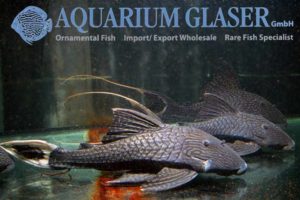
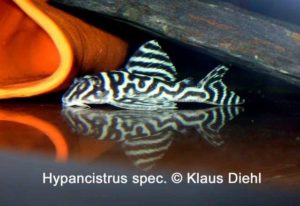
  • Hypancistrus spec. „Belo Monte“ (L 287, L 399, L 400)

    6. July 2007

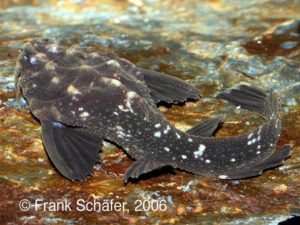
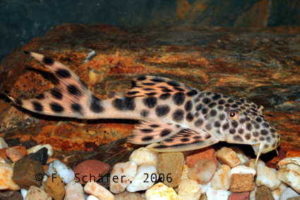
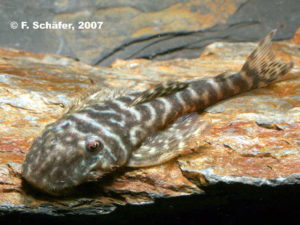
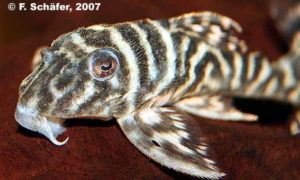
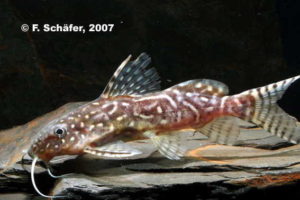
    The denomination of this beautiful Hypancistrus is still disputed. It run long time under the number L 287, so it is named on our stock list. Recently it is called L 399 and/or L 400, the origin is the Rio Xingu, where it gets caught in the neighbourhood of Belo Monte. This species belongs into […]

  • Tetraodon mbu

    Tetraodon mbu

    6. July 2007

    April 2002: Yesterday we received from the Republic of Congo, this beautiful Tetraodon mbu, the real congo-puffer. We got this item in this huge size never before.The maximum size cited in the literature is nearly 70cm. It is astounding how individuals differ in their behaviour: there are shy and also agressive ones. More details you […]

  • Haplochromis sp. Mburo Blacky

    Haplochromis sp. Mburo Blacky

    6. July 2007

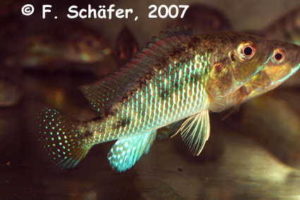
    The “Mburo Blacky” is coming from Lake Mburo in Uganda. This species is undescribed until now and grows up to 12cm. It does not dig and do not eat plants, but it is rather agressive and therefor those fish need bigger tanks (1 meter in length and up) in which they can find places to […]

  • Geophagus crassilabris

    Geophagus crassilabris

    6. July 2007

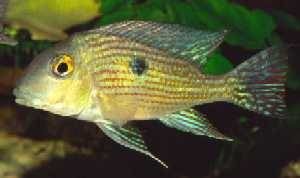
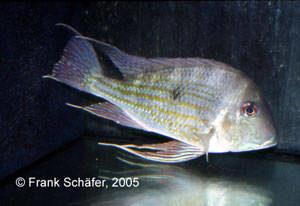
    Very large animals, up to 20 cm, came to us from Colombia. These beautiful fish came as well from the Rio Chacu. These eartheaters live in nature in a habitat of moderately flowing streams and rivers. Remarkably for this group of eartheaters is the way they breed their eggs, not as normally in the throat […]

  • Hoplarchus psittacus

    Hoplarchus psittacus

    6. July 2007

    This, by specialised hobbyists of large South American cichlid, well known species is only very rarely offered to the public. Our animals were imported from Columbia. The best way to take good care of these beautiful cichlids, which can grow up to 40 cm, is to keep them in large fish tanks with plenty of […]

  • Tahuantinsuyoa macantzatza

    Tahuantinsuyoa macantzatza

    6. July 2007

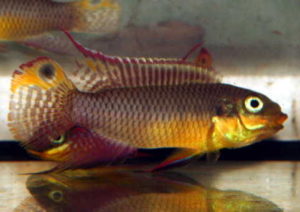
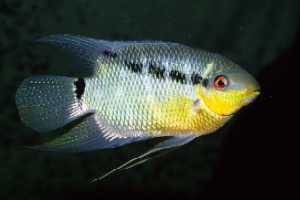
    The unpronounceable from the Incas empire. So an article about Tahuantinsuyoa macantzatza the Inca Stone Fish could be titled. After fearing over years that they had become extinct, we succeeded to import a larger number of them at the beginning of 2003. For the first time we can offer now both: very beautiful wild caught […]

  • Goniopsis pelii

    Goniopsis pelii

    6. July 2007

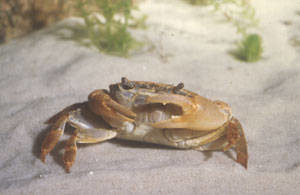
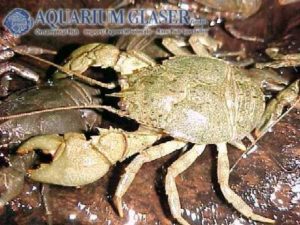
    June 2006: The mangrove crab Goniopsis pelii reached us from the Atlantic coast of Africa. Their orange and blue coloured claws are very remarkable. They owe their name to the mangrove woods where they naturally occur. This by water and land affected biotope has to be reproduced in the terrarium, since they need both habitats […]

  • Neocaridina sp RED CRYSTAL SHRIMP

    Neocaridina sp RED CRYSTAL SHRIMP

    6. July 2007

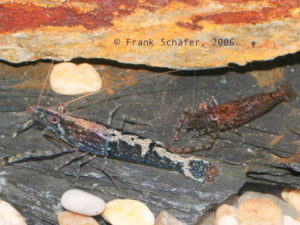
    December 2002: Here we have it: german bred red crystal shrimp. We only got a few pieces, but we expect a limited quantity in the near future. This shrimp of the family Neocaridina is easy to keep and can be kept with not too big growing fish in a community tank (Photo F. Schäfer, Text […]

  • Uca tangeri

    6. July 2007

    The eastern Atlantic from Portugal to Angola, is the origin of the fiddler crab Uca tangeri, where they inhabit sand and mangrove coasts. The to an enormous size grown major claw of the males is remarkable. It is used for attracting the females and to the fight between rivaling males. In their periodically flooded habitat […]

  • Devario pathirana

    6. July 2007

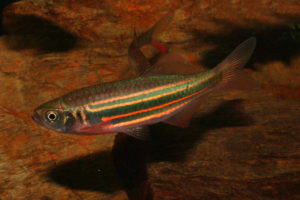
      We received this endemic kind, which was only specified in the late 1980s, from Sri Lanka. Devario (formerly: Danio) pathirana exclusively occurs in a small area in Sri Lanka. Their final size is 8cm, they are easy to keep and their breeding is no problem either. This species is as demanding as the far […]

  • Diskus „Wild Lago Inanum“

    Diskus „Wild Lago Inanum“

    6. July 2007

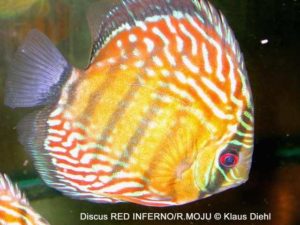
    This very beautiful discus fish is traded as well under the name „Semi Royal Blue“. Wild caught discus fish are just beautiful! It is remarkable that still new wild type varieties are found and imported. Wild caught discus fish will not be feeling themselves well if not kept under optimal conditions. This malcontent will be […]

  • Sturisoma sp. „Kolombien“

    Sturisoma sp. „Colombia“

    6. July 2007

    This for science unknown species was imported with a unique shipment from Colombia. Sturisoma sp. „Colombia“ was found in the Rio Chaco in the North of Colombia. This elegant Sturisoma species differs from the short finned species, which live on sandy habitats as well as from Sturisoma festivum by difference in colouration and body form. […]

  • Hyphessobrycon agulha

    6. July 2007

    This very attractive Tetra originates from the Rio Madeira, which runs into the Amazon River downstream from Manaus in Brazil. This Characin species will probably not grow much larger then 6 cm. They are friendly and lively schooling fish, very suitable for a community tank. These fish are not difficult in keeping and will tolerate […]

  • Aplocheilichthys katangae

    6. July 2007

    From the Katanga province of the Congo we recieved Aplocheilichtys katangae. These non seasonal killies have a large distribution area in the central southern Africa. There they inhabit shallow, overgrown brooks and ponds. Their maximum size is approximately 6 cm. They feed on small water insects and crustaceans in tanks they can be fed with […]

  • Botia sp. „New Emperor“

    6. July 2007

    The ever first import of Botia sp. “New Emperor”, probably comes from the borderland of Burma/Thailand. It should appear in a decadal yearly rhythm in a large amount and can only be caught then. An area informed ichthyologist stated that transportation through bordering hilly regions can only be helped by small mopeds, where a slight […]

  • Hypancistrus zebra L 46 „Double Tailfin

    6. July 2007

    November 2006: At present we can offer beside „normal “German bred zebras (surely the most demanded of all L-numbers) an individual with a doubled lower caudal fin. This change of the fin is probably to be led back on a disturbance in the embryonic development. If someone hopes to breed a race of „veil tailed […]

  • Panaque spec.

    6. July 2007

    June 2006: Just freshly arrived! Also for „old stagers“ there are again and again genuine surprises with us. In a shipment from Peru we received today several particularly delicate Loricariids, which represent a petite alternative to the frequently maintained Hypancistrus species. However their size of (50 – 70 cm) probably exceeds the possibilities of most […]

  • Betta falx

    6. July 2007

    Betta falx, belonging to the Betta picta form circle, was scientifically described 1998 by Tan and Kottelat. Their origin is the central part of Sumatra, where it occurs in dense overgrown, nearly standing waters. The water conditions at the habitat (pH 5.7, GH 0 – 1, KH 0 – 1) do not have to be […]

  • Sphaerichthys vaillanti

    6. July 2007

    Sphaerichthys vaillanti is probably the rarest and most desired species of the Chocolate Gouramies. Their origin is Kalimantan the indonesian part of Borneo. Since they are black water inhabitants, the water equivalents should be adapted in the aquarium to it. This species does best in peat filtered water. Water must be changed often, and a […]

  • Hemichromis cf. cristatus „Benue“

    Hemichromis cf. cristatus „Benue“

    6. July 2007

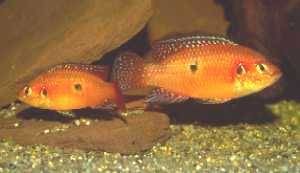
    This beautiful cichlid comes from the Benue-river. At least the females grow up to 5cm, the males reach their maximum size with 7cm. Among themselves they are peaceful and they also can be kept with other fish. But there is a slightly rough behaviour, which is typical for all red cichlids. But much less than […]

  • Cherax lorentzi

    6. July 2007

    In its shining armour Cherax lorenzi reminds of a medieval knight, who is on its way to the tournament. With a size of 12 cm it can be kept very good in aquariums starting from 100 cm length. Contrary to some of its relatives Cherax lorenzi does not seem to harm other tank mates. Therefore […]

  • Platy variatus „Highfin Orange“

    Platy variatus „Highfin Orange“

    6. July 2007

    This Highfin Platy certainly belongs to the most beautiful new breds of the last time. The flowing transition from scarlet to yellow and its enlarged backfin makes it’s attraction. Since it doesn’t differ from other Platys in it’s keeping demands, it will certainly become a gain in der Aquaristik.

  • Salminus brasiliensis (früher: maxillosus)

    Salminus brasiliensis (formerly: maxillosus)

    6. July 2007

    April 2004: At present Aquarium Glaser can offer Salminus brasiliensis (formerly: S. maxillosus) as a further characin rarity. This up to 1 m and over 20 kg growing fish is a migratory species. These migrations take place from October to January, and are correlated with the rise of the water levels as well as the […]

  • Hyphessobrycon sweglesi

    Red Phantom tetra, Hyphessobrycon sweglesi

    6. July 2007

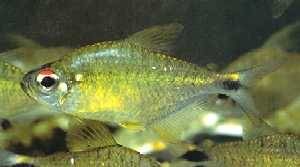
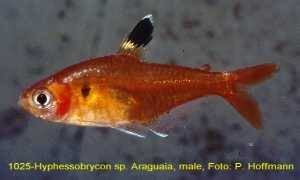
    Until a few years ago Red Phantom tetra, Hyphessobrycon sweglesi was easy to identify, even though under the name of Megalamphodus sweglesi. Lately “Red Phantom Tetras” appear more often, which are very similar to it, but also show other characteristics. It stays (temporarily) unclear, if they are own species, subspecies or “local forms”. Interested hobbyists, […]

  • Chromobotia macracanthus

    6. July 2007

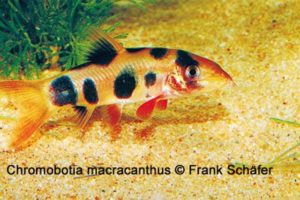
    In our picture you see an interesting mutant of the clown loach, which reached us these days. Although Chromobotia macracanthus formerly known as Botia macracantha is a long time tank inhabitant, it is still not without mysteries. This applies particularly to the breed, so far we have only coincidence success. Also in the maintenance they […]

  • Cochliodon spec. var. marbled L 360a

    6. July 2007

    From the drainage basin of the Tapajos arrived a new, until now not imported loricariid catfish at our facility. Body form and yellow fin seams remind strongly of L 360, the body and parts of the fins however exhibit a veining atypical for L 360. In their maintenance requirements they might probably not differ from […]

  • Glyptoperichthys joselimaianus L 1, L 22

    6. July 2007

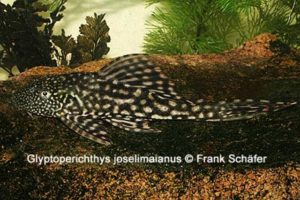
    Glyptoperichthys joselimaianus the “White Spot – Glycopterichthys” originates from the Rio Araguaia, one of the main tributaries of the Rio Tocantins in Brazil. There it inhabits different habitats, it was found e.g. on deadwood and also on flooded meadows. Natural water conditions (white water) do not have to be copied for maintenance, L 1 are […]

  • Panaque spec. „New Royal Golden Thunder“

    6. July 2007

    September 2006: This week we succeeded in importing several of this beautiful new Panaque from Brazil. In their appearance they remind of L 27, are however flatter and slimmer than these. In addition they possess a larger mouth and their dorsal fin is smaller. These characteristics let assume that they originate from strongly flowing river […]

  • Heterotis niloticus

    6. July 2007

    As next the relative of the largest truly freshwater fish Arapaima gigas Heterotis niloticus has a large attractiveness. With a maximum length of scarcely about one meter it is however more suitable for the aquarium maintenance than its South American relatives. In Africa they originally inhabit different waters types south the Sahara. A difference to […]

  • Tetraodon pustulatus

    Tetraodon pustulatus

    6. July 2007

    TETRAODON PUSTULATUS was caught in Cross-River in Cameroon. External shape and behaviour of adult animals remind one of Tetraodon mbu. The maximum size is quoted with 36cm in literature. Young animals being kept together do not show any injuries so that it is safe to assume that they are not very aggressive. Tetraodon pustulatus has […]
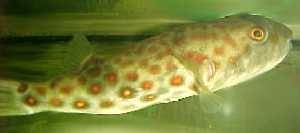
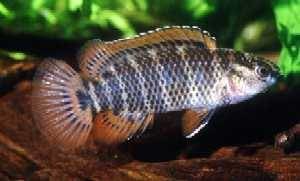
  • Badis sp. Patao

    Badis corycaeus (formely: sp. Putao)

    6. July 2007

    This new, brown-red Badis was imported from the borderland of Myanmar and China. They can can be kept even in cooler temperatures and are easily satisfied. Also bred ones are already available. (Photos & Text D. Bork)

  • Uaru amphiacanthoides -Santarem-

    6. July 2007

    At present we can offer this magnificent variant of Uaru amphiacanthoides originating from Santarem. The fish impress by their metallical resplendent body and the cherry red eyes. All Uarus are expressed plant lovers. Beside a meaty nutrition vegetarian food should be offered. The food spectrum is large, almost all fruit and vegetables are accepted and […]
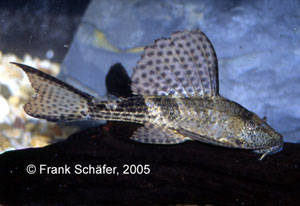
  • New Crab

    6. July 2007

    June 2006: Is considered already nearly as rule: Every week we get an new crab. Under the trade name “goldenpincer crab” we could firstly import few exemplars of a new, still undescribed crab species from Southeast Asia. Further iInformation will follow. (Photo C.Luckhaup, Text K.Diehl)

  • Boraras cf. micros

    6. July 2007

    THE SPECIES HAS BEEN DESCRIBED SCIENTIFICALLY IN THE MEANTIME UNDER THE NAME OF BORARAS NAEVUS. PLEASE CHECK THE FOLLOWING PAGE: http://www.aquariumglaser.de/en/boraras-naevus_de_1397.html This scientifically undescribed dwarf fish was imported from Singapore. They have very bright coloration and will not outgrow 1.5 cm in length. Like all Boraras dwarfs these fish need a special aquarium on their […]
  • Danionella aff. Mirifica

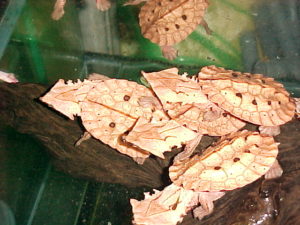
    Danionella aff. Mirifica

    6. July 2007

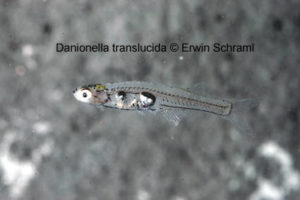
    This species is the smallest representative of the carp family. It length does not exceed 1.5 cm. This fish comes from Myanmar (former Burma) and is imported only rarely. It is a typical shoaling fish and apparently lives in nature in large formations. Male fish attract the females for mating with clear croaking noises. These […]
  • Kein Bild

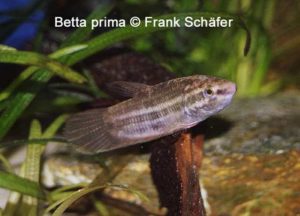
    Labiobarbus leptocheila

    6. July 2007

    Labiobarbus leptocheila is a up to 30 cm long barb originating from Southeast Asia. There it is found from the Mekong area over the Malayan peninsula to Java, Sumatra and Borneo. Typically for the genus Labiobarbus is the protracted dorsal fin, as well as through black marks on the scales formed longitudinal stripes. In their […]
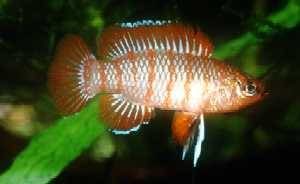
  • Corydoras spectabilis

    Corydoras spectabilis

    6. July 2007

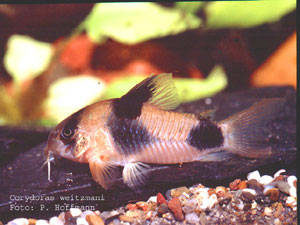
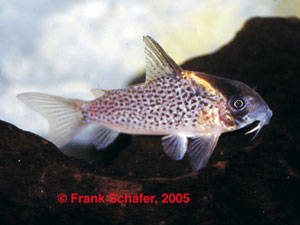
    In fact we have ordered Corydoras guapore from Manaus,…but what we got was totally different. We got for the first time Corydoras spectabilis, which is found in the upper Rio Guaporé around Vila Bela. (Photo E. Schraml, Text Aquarium Glaser)

  • Distichodus sexfasciatus

    6. July 2007

    From the Congo River basin in the Democratic Republic of the Congo (formerly Zaire) originates Distichodus sexfasciatus. This in the aquarium to approximately 30 cm growing characin is a pronounced herbivore. This has to be regarded for the basin setup, since most smooth leaved plants are regarded as food. Some hardy plants as Anubias- or […]
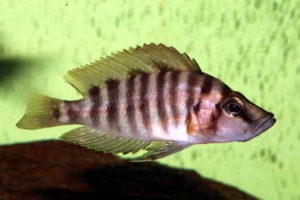
  • Serrasalmus cf. brandtii

    6. July 2007

    From the Rio Sao Francisco originates this with Serrasalmus brandtii closely related species. They are quite aggressive and as young fish they can be held as a shoal in the species aquarium. Adults with a size of over 30cm length need then naturally very large tanks. At first freshly imported Piranhas accept usually only living […]
  • Hasemania sp. „Red“

    Hasemania sp. „Red“

    6. July 2007

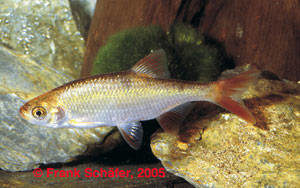
    This small characin is a very attractive fish and a fast swimmer as well. It could be determined as a representative of the Hasemania genus, because it misses the characteristic adipose fin, which is one of the features that determine characins. Up to now we used to have only one species belonging to this genus, […]
  • Ammocryptocharax sp. „spotted“

    Ammocryptocharax sp. „spotted“

    6. July 2007

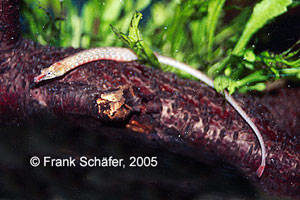
    This scientifically undescribed ground tetra originates from Peru. This is a peaceful species also when housed with delicate fish. This is a medium size tetra fish, which probably does not grow larger then 5 cm. If more then one male of this ground tetra inhabits the tank then they can become somewhat territorial and therefore […]