Code: 238302








Code: 238302
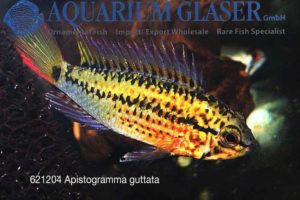
Code: 621204
Code 258608
Code: 413692
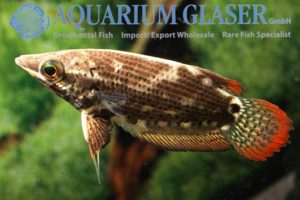
Chocolate gouramis are very beautiful, but demanding anabantoids. Thus they should be kept by experienced aquarists only. There are three genera of chocolate gourami, Sphaerichthys (four species), Parasphaerichthys (two species) and Ctenops (monotypical). The only species in Ctenops is nobilis, the Noble gourami from India. It represents the largest of all chocolate gouramis and can […]
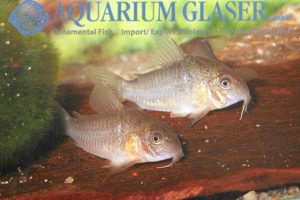
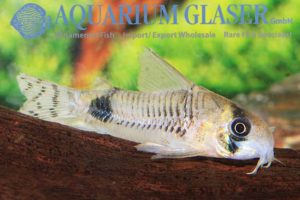
In contrast to the typical variety of C. polystictus, which originates from the upper Rio Paraguay (state of Mato Grosso, Brazil), the Pantanal-variety has much smaller and more numerous spots. Aquarists specialized in Corydoras thus think it is possible that the Pantanal population represents a seperate species. However, even among the Pantanal corys a variation […]
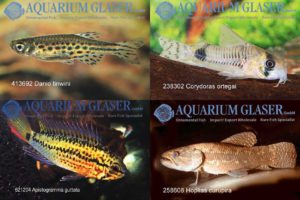
Dear customers, our weekly importations regularly content species and varieties we never or only very occassionally had in stock. Thus they are – at least for us – new. Sadly it is for different reasons not possible to portray all of them in detail. However, we want to show you at least some of the […]
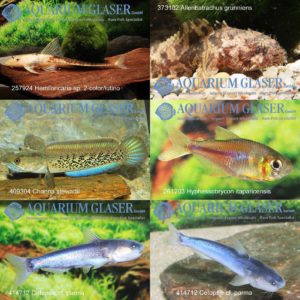
Dear customers, our weekly importations regularly content species and varieties we never or only very occassionally had in stock. Thus they are – at least for us – new. Sadly it is for different reasons not possible to portray all of them in detail. However, we want to show you at least some of the […]
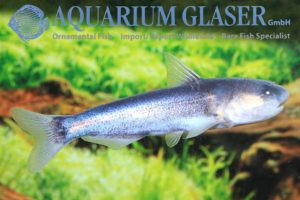
Code: 414712
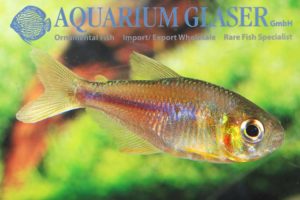
Code: 261203
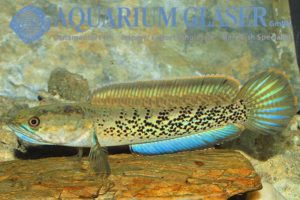
Code: 409304
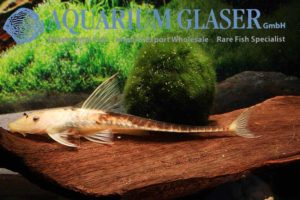
Code: 257924
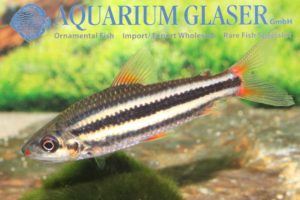
Currently we were able to organize one of the rare imports from Guyana and so we have the beautiful Leporinus arcus originating from there in stock again. The genus Leporinus contains almost 100 species and is thus pretty big. Nevertheless only very few species could establish themselves as aquarium inhabitants. Most of them become quite […]
Code: 432182
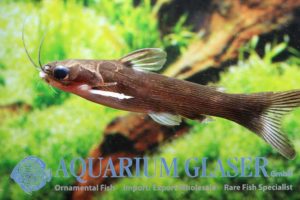
Once more we were able to import a species new for for the hobby: Tatia strigata. This small species – maximum length reported is around 6 cm – has been discovered and described as late as 1995. The unique colour pattern that differs slightly individually makes the species unmistakable. As in all Tatia, males can […]
Only limited number available. Code: 262322
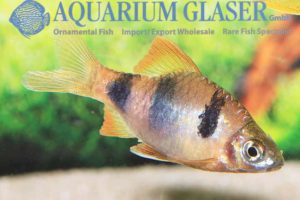
This extraordinary barb originates from the South of India. It is a very close relative to the well known Black Ruby Barb (Barbus nigrofasciatus) from the nearby island of Sri Lanka, from which it differs mainly by coloration. What makes B. narayani so attractive is the unique lilac-blue hue that is shining on the body […]
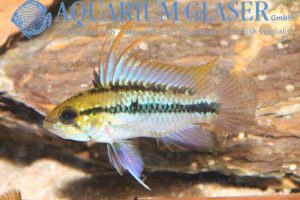
In case this dwarf cichlid would not exist it would be necessary to invent it for the aquarium hobby. Apistogramma trifasciata is an ideal aquarium inhabitant. The species stays small – males around 5 cm, females around 4 cm. It is completely undemanding regarding water chemistry – keeping and breeding is possible even in medium […]
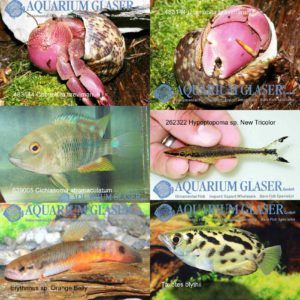
Dear customers, our weekly importations regularly content species and varieties we never or only very occassionally had in stock. Thus they are – at least for us – new. Sadly it is for different reasons not possible to portray all of them in detail. However, we want to show you at least some of the […]
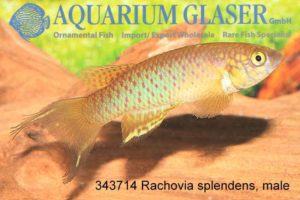
Code 343714
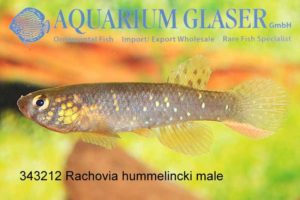
Code: 343212
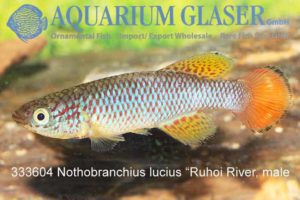
Code: 333604
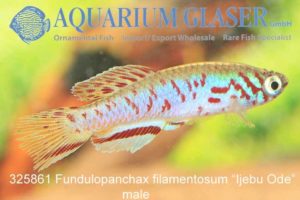
Code: 325861
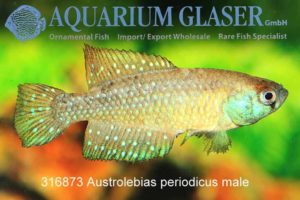
Code: 316873
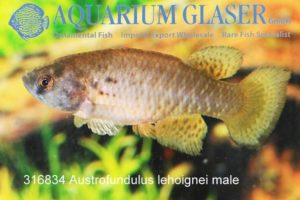
Code: 316834
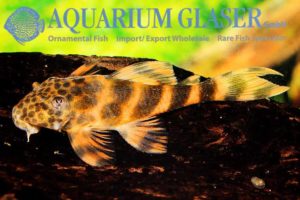
The loricariid catfish L387 is imported only occasionally and in small numbers from Colombia and Venezuela. This is due to the fact that obviously another, easily available and (at least in juvenile stages and fright coloration) very similar species occurs where L387 lives: L147. So we get wild collected L387 only as so-called by-catches. Initially […]
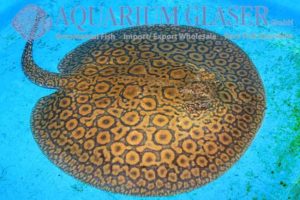
We have received two beautiful stingrays from Peru which were collected in the Rio Ucuyali. Both specimens have a disc width of about 15-20 cm and are males. According to the grade of development of their sexual organs the species grows to a much bigger size. The fish do not fit any scientific description published […]
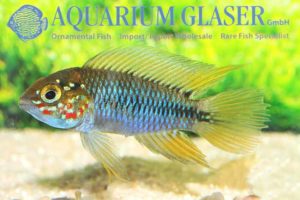
Recently we received beautiful wild collected specimens of A. borellii from Paraguay. This species is an ideal aquarium fish. In contrast to many other species of the genus A. borellii is completely undemanding regarding water chemistry. Even in medium hard, slightly alcalic water the species thrives well and even breeds. The behaviour of A. borelli […]
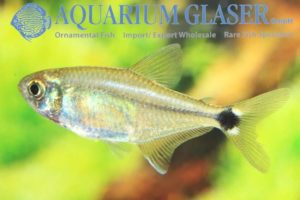
Code: 259823
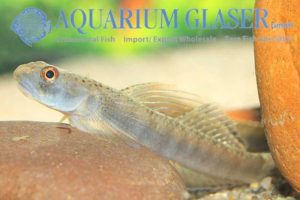
Code: 456043
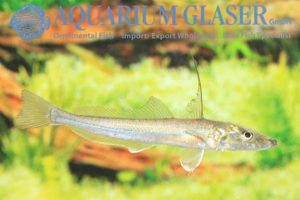
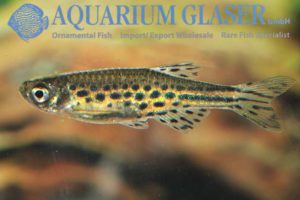
The difference between “foodfish” and “ornamental fish” is often hard to tell. For example, who in Europe would term the zebra barb (Danio rerio) a foodfish? Nevertheless hundreds of thousands of these tiny animals are collected daily in India, become dried and are sold as a spice. On the other hand young examples of attractive […]
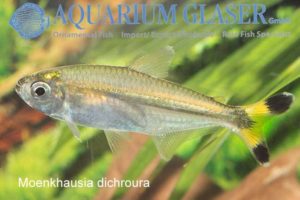
Code: 268583
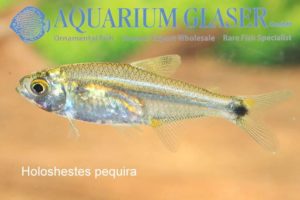
Code: 258412
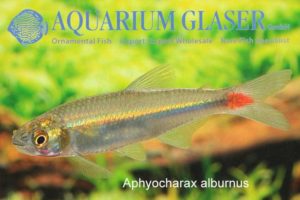
Code: 206203
Dear customers, our weekly importatios regularly content species and varieties we never or only very occassionally had in stock. Thus they are – at least for us – new. Sadly it is for different reasons not possible to portray all of them in detail. However, we want to show you at least some of the […]
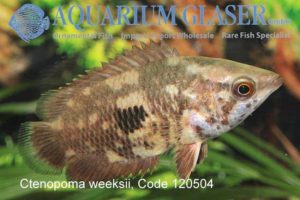
For our customers: the fish have code 120504 on our stocklist.
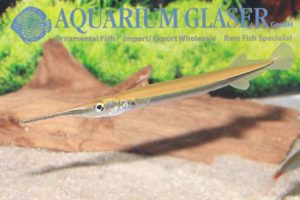
The Needlefishes (Belonidae) are a relative small family and are represented by a small number (about 35) of species only, but these are very successful and can be found in marine and freshwater habitats of temperate and tropical regions worldwide. Some of them are so common that they form the basis of a commercial fishery […]
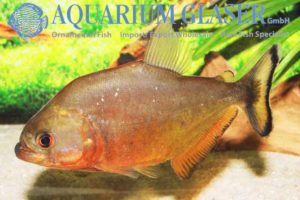
The correct determination of piranha species is one of the most difficult chapters in ichthyology at all. Even the specialized authorities for that group of fish have often different points of view. And so we quite often can only look for the very few features that are accepted as species specific, like the black bands […]
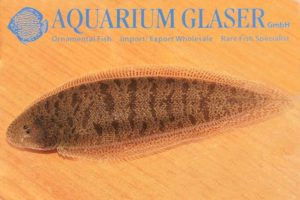
For our customers: the animals have code 412934 on our stocklist.
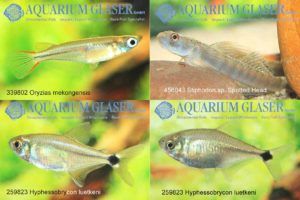
Dear customers, our weekly importatios regularly content species and varieties we never or only very occassionally had in stock. Thus they are – at least for us – new. Sadly it is for different reasons not possible to portray all of them in detail. However, we want to show you at least some of the […]
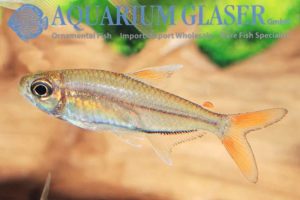
For our customers: the animals have code 268634 on our stocklist.
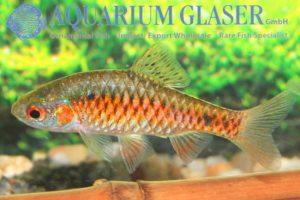
Many species of Indian barbs belong to the most popular ornatmental fish at all. This is due to their brillant colours, the peacefulness and the easy keeping of these fish. A new species – Barbus manipurensis, which we can offer currently – has the potential to become also such a evergreen. The fish has been […]
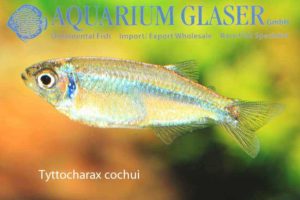
The lively species of the genus Tyttocharax belong to the smallest species of tetra at all. They hardly ever become larger than 2 cm. Two species are currently quite often imported, both originate from Peru: T. cochui and T. madeirae. At the first glimpse both species look very similar and have been often confused in […]
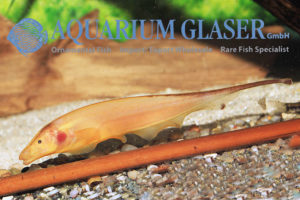
A very special knifefish reached us currently from Colombia: a golden Apteronotus leptorhynchus! The species is widespread and common in Colombia and we have the “Brown Ghost” regularly stocked; but this is the first time ever that we became aware of a specimen with such an unique coloration. For our customers: the animal has code […]
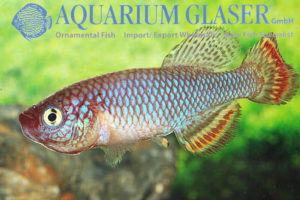
Code number: 332683 Photo: Frank Schäfer
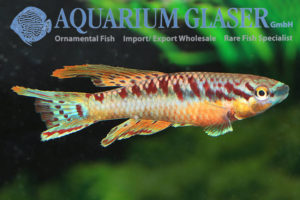
Code number: 305504 Photo: Frank Schäfer
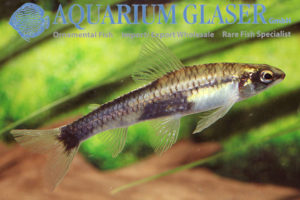
Code number: 215703 Photos: Frank Schäfer
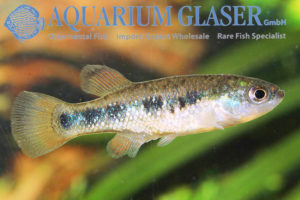
Code number: 216211 Photo: Frank Schäfer
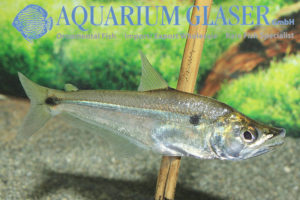
The tretras represent a group of fishes that has developed a lot of very contrasting forms. Everybody knows the cardinal tetra (Paracheirodon axelrodi) as a paragon for a peaceful community fish, but the pack hunting piranha that bites big pieces of meat off its victim is also well known. Among the predatory species are the […]
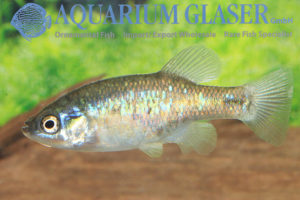
Code number: 476401 Photo: Frank Schäfer
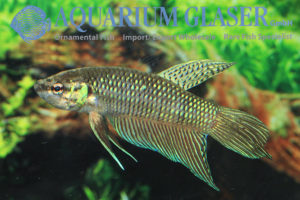
Code number: 377103 Photo: Frank Schäfer
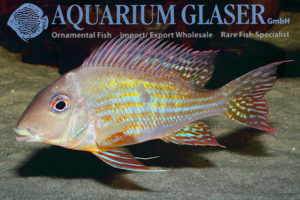
Code number: 675003 Photos: Thomas Weidner
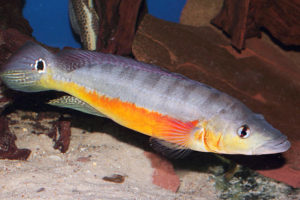
Code number: 673612 Photos: Thomas Weidner
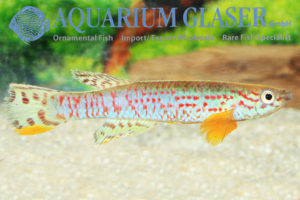
For the first time ever we have this pretty killifish in stock. Our specimes are German bred. This up to 5 cm long fish originates from Cameroon. It has been described scientifically in 2009. The closest relative of this species is the well known Aphyosemion ahli. The easiest way to distinguish these two species from […]
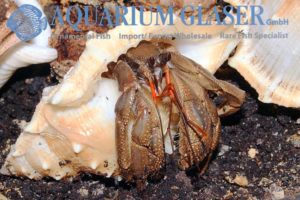
For the first time we can offer this interesting species of terrestrial hermit crab in a xxl- format! Besides this the animals also bear extremely beautiful shells of marine snails. Keeping these terrestrial hermit crabs does not differ from other species. This means one has to keep them in groups; the terrarium has to contain […]
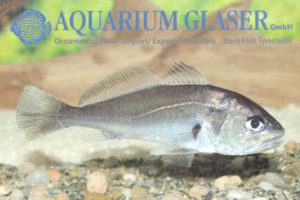
Croakers, also called Drums (Sciaenidae) are a fish family that comprises about 290 species. Most of them are marine, but some occur exclusively in fresh water. In South America about 20 species and 4 genera are known to live in fresh water. The smallest among them becomes only 7 cm long (Pachypops pigmaeus), most become […]
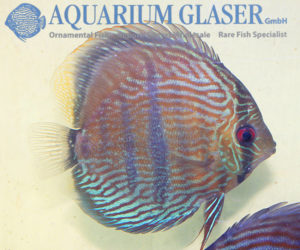
The term “discus Heckel cross” is given for fish with a broader central bar on the body, the so called “Heckel bar”. Despite this the fish are very different and probably also originate from different regions. Among them are real gems, some with a high degree of red body colouration. For our customers: the fish […]
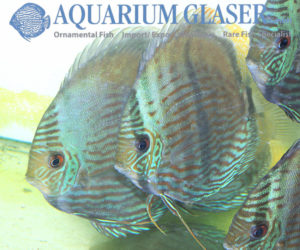
Currently we have beautiful, large Heckel discus from the Rio Nhamunda in stock. The characteristic feature of that variety is the bright blue sash-like band. For our customers: the fish have code 734095 on our stocklist. Please note that we exclusively supply the wholesale trade. Text & photo: Frank Schäfer
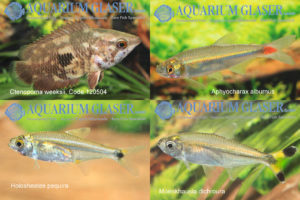
Dear customers, our weekly importatios regularly content species and varieties we never or only very occassionally had in stock. Thus they are – at least for us – new. Sadly it is for different reasons not possible to portray all of them in detail. However, we want to show you at least some of the […]
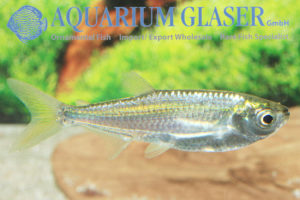
Code number: 298282 Photo: Frank Schäfer
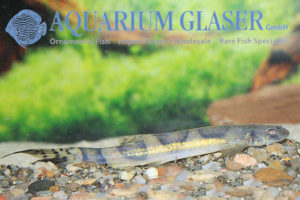
Code number: 285593 Photos: Frank Schäfer
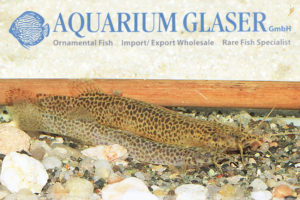
Code number: 264302 photos: Frank Schäfer
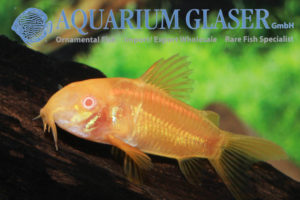
Code number: 221092 Photos: Frank Schäfer
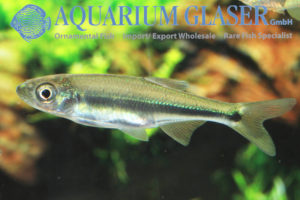
Code number: 408003 Photo: Frank Schäfer
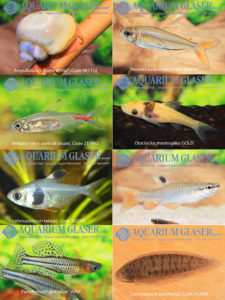
Dear customers, our weekly importatios regularly content species and varieties we never or only very occassionally had in stock. Thus they are – at least for us – new. Sadly it is for different reasons not possible to portray all of them in detail. However, we want to show you at least some of the […]
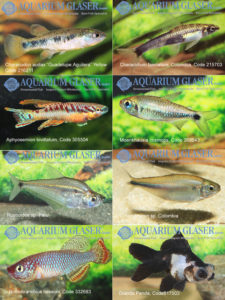
Dear customers, our weekly importatios regularly content species and varieties we never or only very occassionally had in stock. Thus they are – at least for us – new. Sadly it is for different reasons not possible to portray all of them in detail. However, we want to show you at least some of the […]
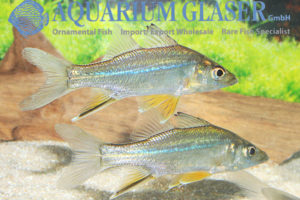
The snooks (Centropomus) are distributed in the New World; currently 12 species are recognized. Persons that are reminiscent of giant perches (Lates) by looking at snooks are not wrong: until quite recently the snooks and the giant perches were united in a single family, Centropomidae. We were now able to import a pretty species of […]
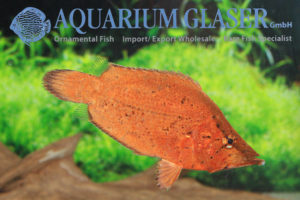
The Leaffish, Monocirrhus polyacanthus, belongs to the most astonishing species of freshwater fish at all. The species – the genus Monocirrhus is monotypical – is spread all over the Amazon basin. It is found in Bolivia, Brazil, Colombia, Peru, and Venezuela. Our imports usually come from Peru, so the current one does. The Leaffish belongs […]
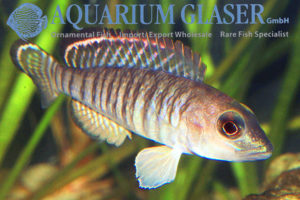
This beautiful cichlid from Lake Tanganyika belongs to the dwarf cichlids. Males become around 5.5 cm, females around 3.5 cm long. At the first glimpse one would think that these tiny fish are “snail brooders”, e.g. that the females would spawn only in empty snail shells. However, this is not true. In their natural habitat […]
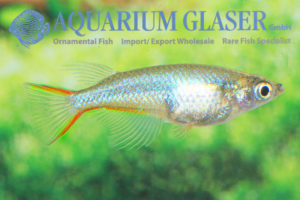
The ricefishes (Oryzias) are well known in the aquarium hobby. Currently 26 species are recognized scientifically. The latest described species is also the most beautiful one: Oryzias woworae was named only in 2010! Immediately after its description it was imported for the aquarium hobby and caused a sensation. We are glad to be able to […]
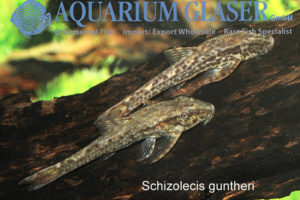
The coastal rainforests of southeastern Brazil are the home of a good number of unusual aquarium fish. One of the most popular and most attractive species from that region is for sure Scleromystax barbatus, the Bearded cory (formerly known as Corydoras b.). Sadly the natural habitats in that region are much affected by the growing […]
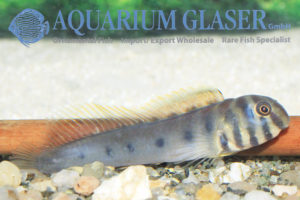
Omobranchus belongs to the Blenniidae family, most of which live in marine environments. Due to their funny behaviour and the generally easy keeping the blennies are favorite fish of the marine hobbyists. There are only very few species that settle permanently in fresh or brackish water. One of the latter is the pretty Omobranchus zebra, […]
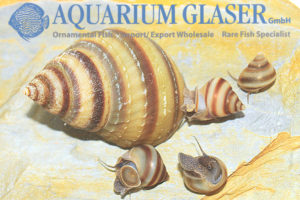
This nice, live bearing snail could be imported again from Inle lake in Burma. It is a close relative to the European species of Viviparus (river snails). Like these they feed on soft particles like mouldered food tablets, detritus etc. They do not fit for fights against algae. On the other hand they also leave […]
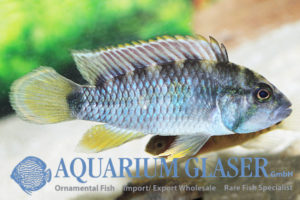
We were able to import this new dwarf cichlid from Peru now. The fish is without any doubt a close relative of the species Apistogramma nijsseni, A. panduro and the still undescribed A. sp. “Inka II”. In contrast to these species the seam around the caudal fin in males is yellow instaed of red-orange. The […]
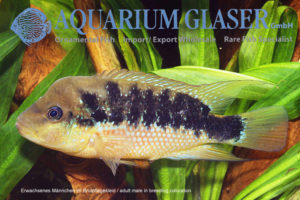
The large cichlids from Central America are a bit out of fashion currently. That is a sad thing, for hardly any other fish combines in such a perfect matter brillant coloration, personality and interesting behaviour. Of course these fish need large tanks and an equipment that fits their needs, but if these things are given […]
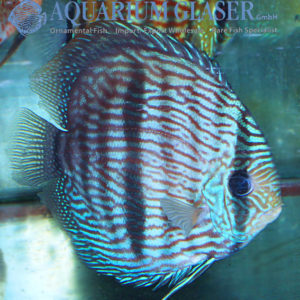
Once more our Japanese friend Mr Akira Ishinabe has placed his discus he displayed in the current discus championship in Duisburg in our facility to give them an opportuntity to rest a bit after the stress of the exhibition before they turn back home to Japan. His Green Wild was able to get the first […]
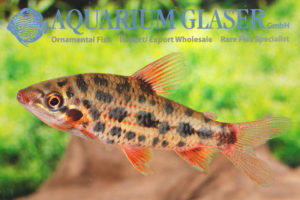
Currently we were able to import the most beautiful species of Leporinus we have ever seen from Brazil. As the determination of juvenile Leporinus is almost impossible in many cases we decided to adopt the exporter ´s name given for the fish on his stocklist. Without any doubt, however, the new fish belongs to a […]
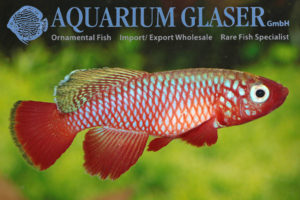
We have this beautiful nothobranch currently as bred specimens in stock. Nothobranchs are in general extremely beautiful fish, but this species is even more beautiful due to its deep red colours and the minuite size. The species is already known in the hobby for quite a long time. In Aqualog “Killifishes of the World – […]
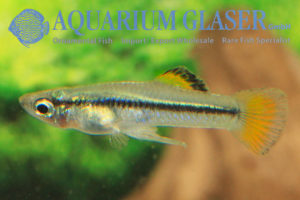
Once more we are able to offer a beautiful dwarf livebearer that proofed to be a bit problematical in respect of breeding – not keeping! – in a long time sight under traditional aquarium conditions. However, under the open skies of Southeast Asia they breed pretty well. Flexipenis vittatus is also often placed in Gambusia. […]
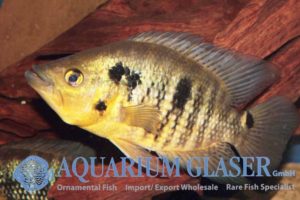
In the wild, Caquataia kraussii is something like a million fish. There is literally no waterbody, may it be pond, lake, or river in the Llanos of Venezuela without this cichlid. So the cichlid enthusiast is a bit left alone with the question why it takes so long if one searches for this fish in […]
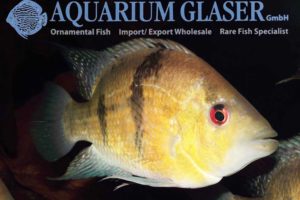
Caquetaia myersi belongs definetly to the real rarities in the aquaria of the world. The main reason for this is the fact that it occurs in the wild far from the usual collecting sites in Colombia. What makes fishing in those areas even more difficult is the presence of guerilla which has quite different interests […]
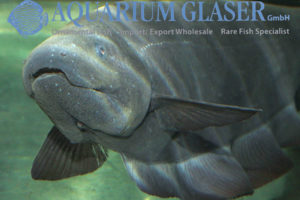
There is a lot of movement in the South American Knifefishes. Science has put an eye on these fascinating, electrical fishes and so a flood of new species descriptions and revisions has been published quite recently. Most genera and species are only weakly electric and use the electric pulses for orientation and communication. However, the […]
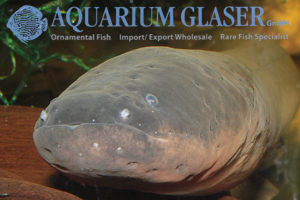
Wonderful Electric eels (Electrophorus electricus) from Peru reached us lately. The animals are 40-50 cm long. The three of them are astonishingly peaceful among each other and feed readily. The fish have nice pale spots on the flanks, which are typical for specimens from Peru and which make the fish even more attractive. For our […]
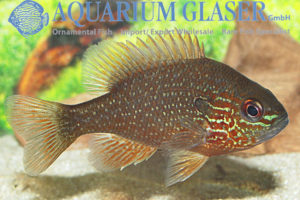
Sunfishes belong to the most colourful species of coldwater fish. The most widespread species in the hobby is Lepomis gibbosus, but the genus comprises not less than 12 species. Lepomis megalotis is native from NE-Mexico to the Great Lakes in the US and is additionally introduced in many countries. Up to six subspecies have been […]
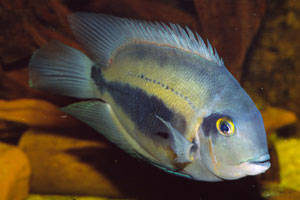
This large cichlid, which can grow up to 30 cm in length, has a wide distribution throughout South America. Despite its modest colouration and considerable size this species is well known in the fish tanks of the aquarium hobbyist, mainly because of the interesting behaviour and the lack of aggressiveness against fellow tank mates. Especially […]
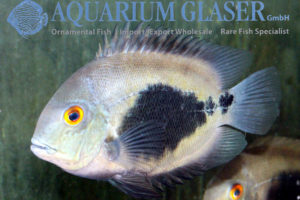
Extremely beautiful, fully grown specimens of this amazonian species of cichlid reached us now from Brazil. Uaru are peaceful fishes that can be best compared with discus regarding demands on water quality and temperature. However, Uaru are more or less specialized herbivorous fishes. For our customers: the fish have code 688517 on our stocklist. Please […]
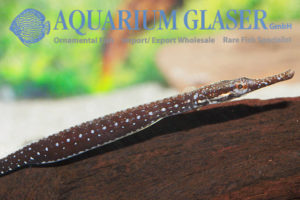
Currently we were able to import a new species of freshwater pipefish from India: Hippichthys penicillus. Basically speaking, there are two types of pipefish. First, the ones that swim free in the water column, imitating plant material (sticks etc.). Twice the ones that are bottom-dwellers and crawl like snakes between plants, stones, roots etc.. The […]
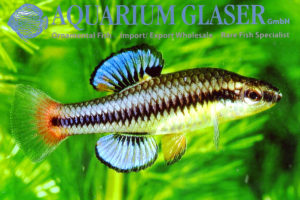
Once more we were able to stock another real gem among the aquarium fish: Lucania goodei. The Bluefin killifish originates from Florida and reaches a length of about 5 cm. Our specimens are German bred. In contrast to most other species of killifish this is a schooling species. To observe the harmless comment fights of […]
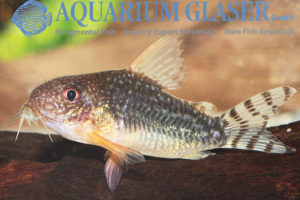
Currently we have beautiful German bred specimens of Corydoras gossei in stock. This is a very lively species of Corydoras. It originates from the Rio Mamoré in Brazil. Wild collected specimens are hardly ever available. Corydoras gossei is a close relative of C. sterbai. However, due to the dark basic coloration in C. gossei the […]
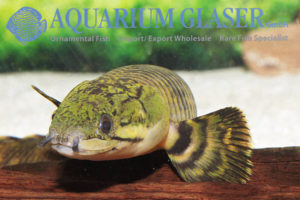
Bichirs are so-called living fossils. 60 million years old fossilizations are known which can be assigned to recent species! There are 16 recent species known so far, all of them originating from Africa. The latest discovered species is also the smallest one: Polypterus mokelembembe was described in 2006. Formely the species was confused with P. […]
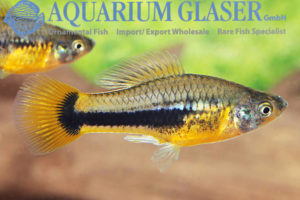
The Variable platyfish (Xiphophorus variatus) is represented in millions of home aquaria by uncountered cultivated forms. However, their wild ancestors – and there are a lot of different populations – are almost unknown even to the most experienced aquarists. As the specific name already suggests: each local population looks different. The place of origin of […]
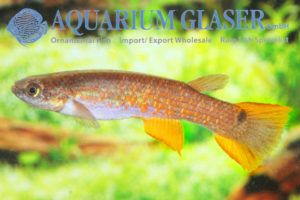
The killifishes of the genus Rivulus represent the most species-rich genus of New World Killis. We received recently beautiful R. rectocaudatus from Peru, which are unique due to their amazing orange anal and caudal fins, as well as due to their orange scales along the body. Rivulus are not annual fish at all, but live […]
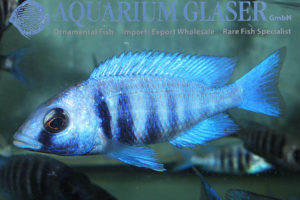
The generic placement of the Malawian cichlids formerly lumped in the genus Haplochromis depend on their melanin pattern, eg the black markings in the basic coloration. Sadly the melanin pattern is not recognisable in the only existing type specimen of Haplochromis phenochilus, which was described in 1935; thus its correct generic placement remains unknown until […]
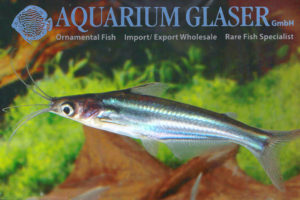
The shark cats belonging to the genera Pangasius and Pangasianodon are very popular. The reason is their interesting swimming behaviour which reminds one in sharks. However, these fish have one big disadvantage: they grow to a very large size. Even the smallest of them, the common Siamese shark Pangasianodon hypophthalmus, becomes at least 30 – […]
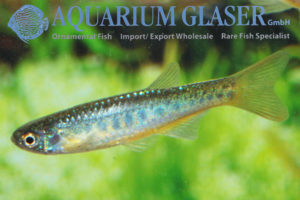
Back in 2005 we were able to import this pretty species from Burma for the first time. This appeared under the provisional trade name Danio sp. “Pantherinus” (see http://www.aquariumglaser.de/en/danio-sp-pantherinus-_de_699.html). In 2009 the species was formally described as Danio aesculapii. It was named after the ancient Greek god of medicine, whose regalia were a stick with […]
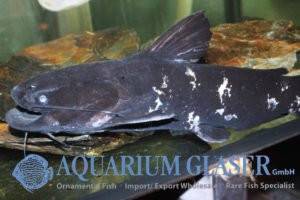
The genus Trachycorystes currently comprises three described species. In the aquarium hobby so far only T. trachycorystes appeared. For this up to 45 cm long species, please see http://www.aquariumglaser.de/en/news/Trachycorystes_trachycorystes_en/ Recently we received a 25-30 cm long specimen from Peru with an unique coloration: white, irregular spots on both sides of the body! It is unknown […]
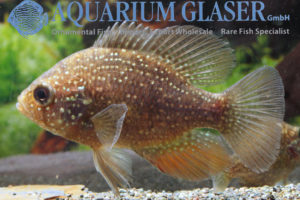
The Bluespotted Sunfish (Enneacanthus gloriosus) is a coldwater fish and a real oldtimer among aquarium fish. Aquarists used to name the up to 7.5 cm long fish “working class discus”, due to its brillant colours and the nice behaviour. However, it was never as expensive as the discus. Bluespotted Sunfish occur in nature along the […]
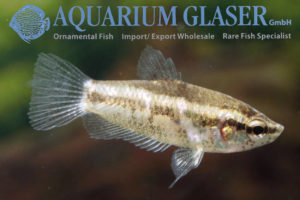
Once more we have the smallest anabatoid fish of the world in stock: Parasphaerichthys ocellatus, the mini chocolate gorami. This tiny species hardly reaches 2 cm in length. In contrast to all other chocolate gouramis this is a bubblenester builder (all others are mouthbrooders) and should be kept and bred in harder, slightly alcalic water […]
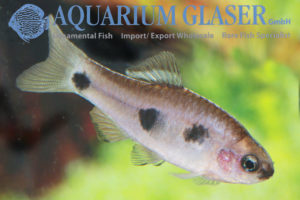
Three very similar species of dwarfish barbs occur in the central Congo basin. All of them become only 3-4 cm long. Additional forms are already known, but not researched scientifically yet. The three described species are B. candens, B. hulstaerti, and B. papilio. They live in shadowy brooks that have a acidic (pH 5.0 – […]
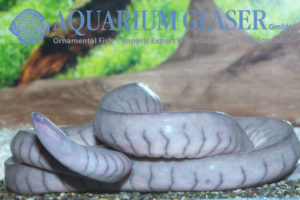
Most people interested in natural history know two orders within the class Amphibia, namely the Anura (frogs, toads etc.) and the Caudata (news, salamanders etc.). Much less people know that there is a third order, the Gymnophiona (caecilians), although this order has more than 180 species. However, most of them are nocturnal and live burrowed […]
