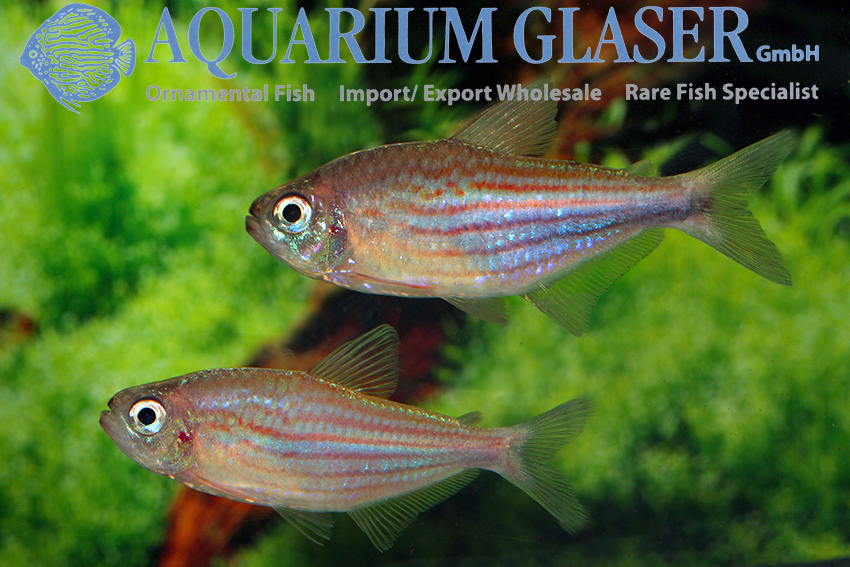
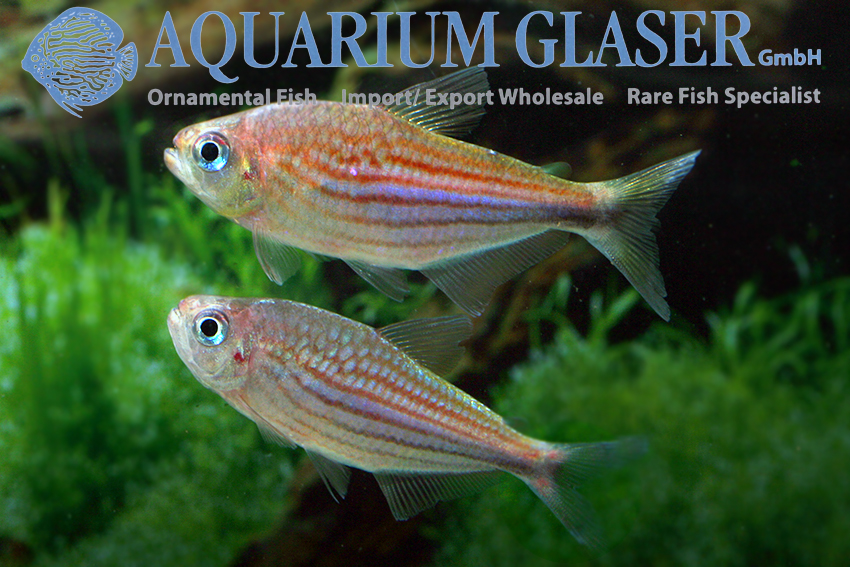
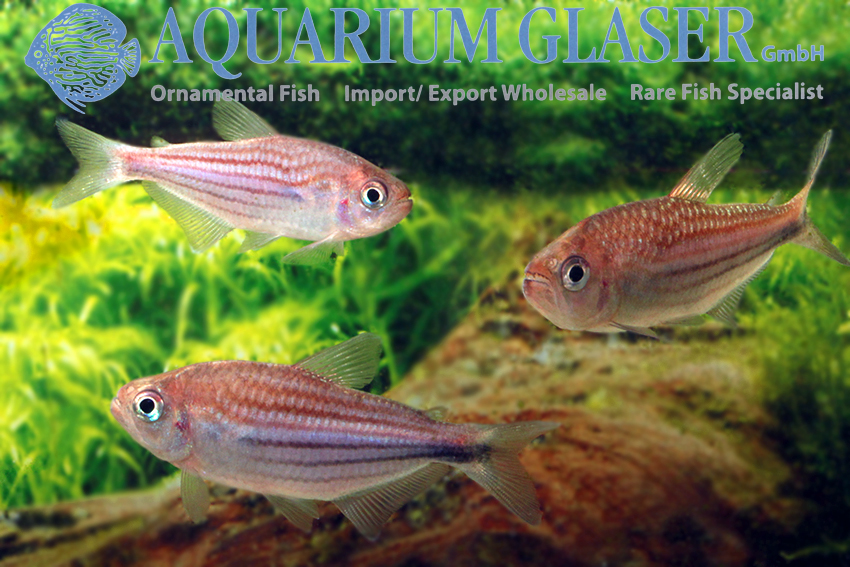
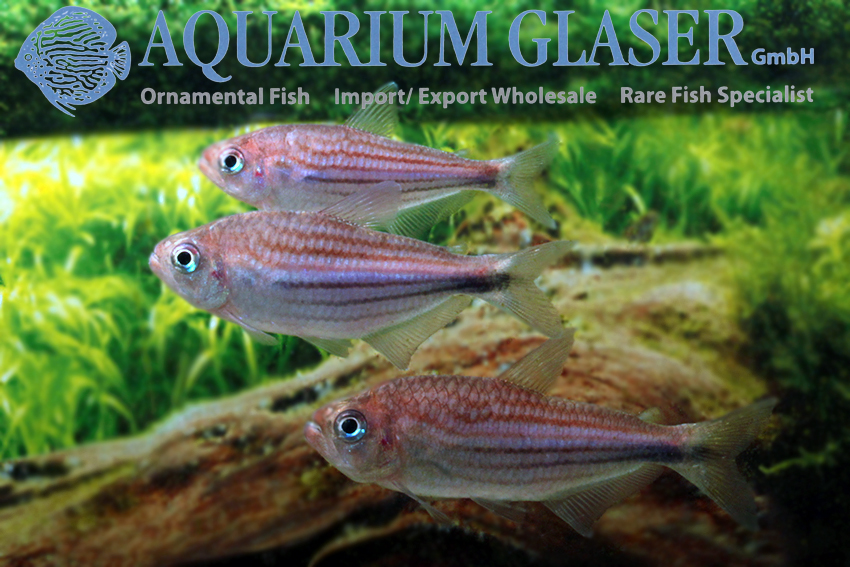
Author Archives: Frank Schäfer

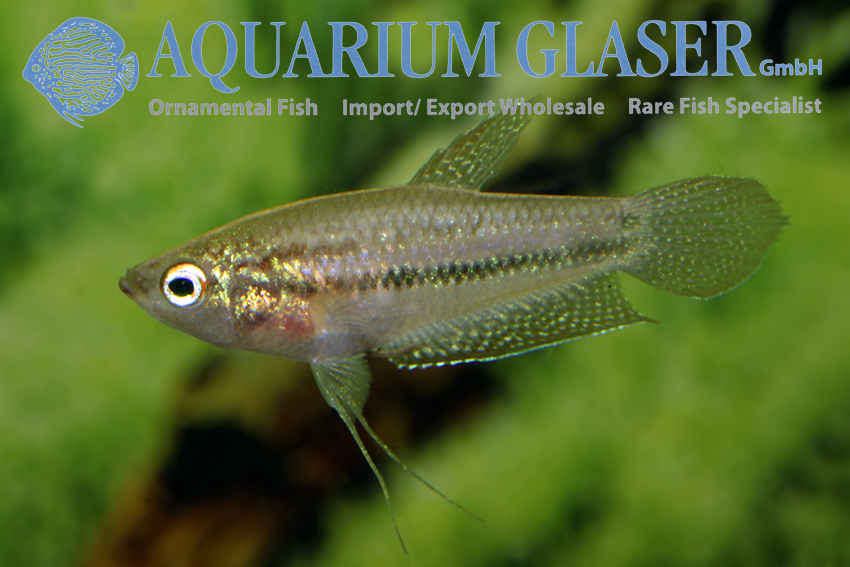
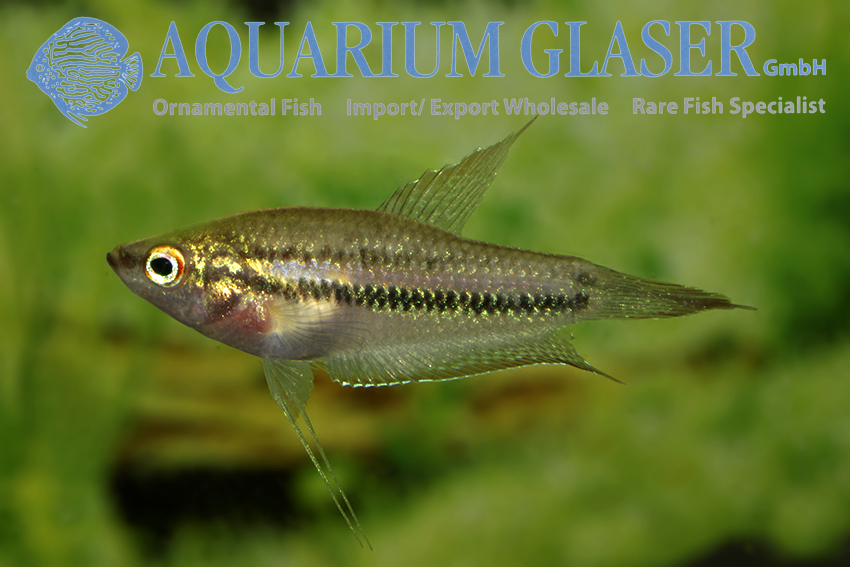
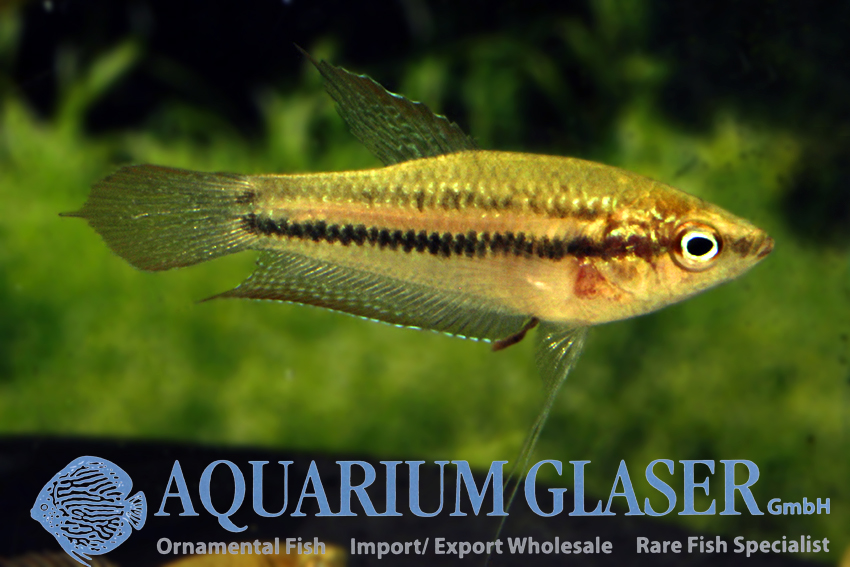
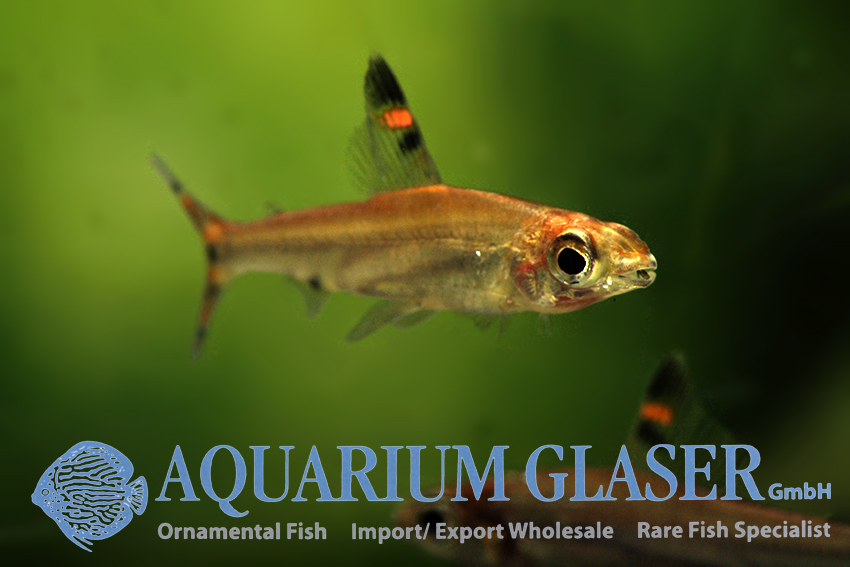
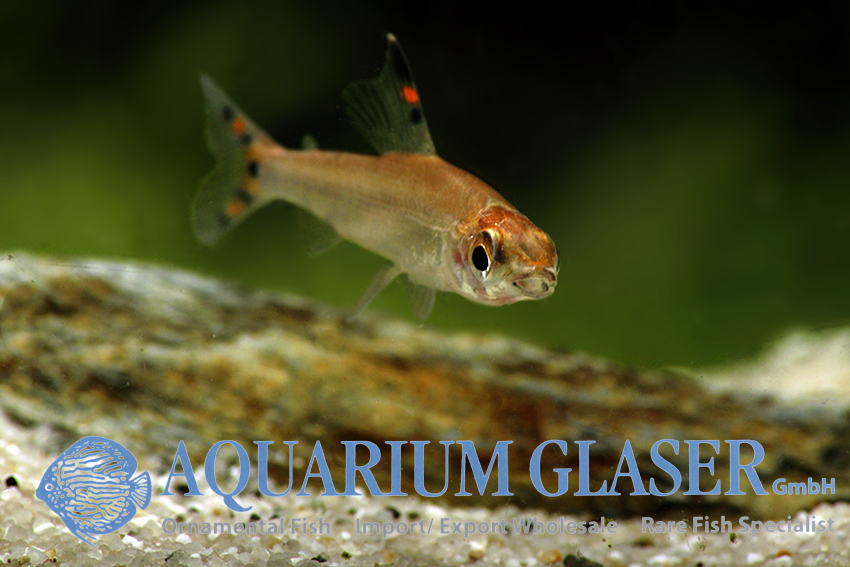
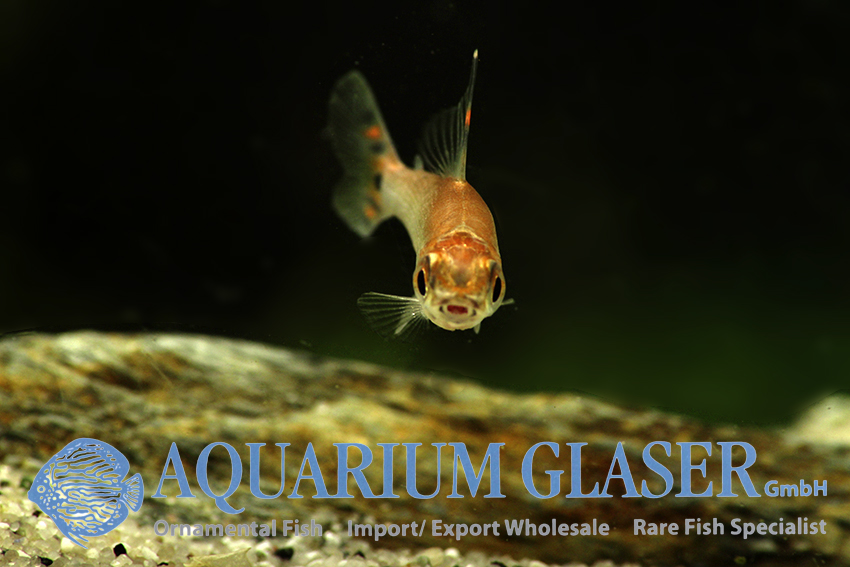
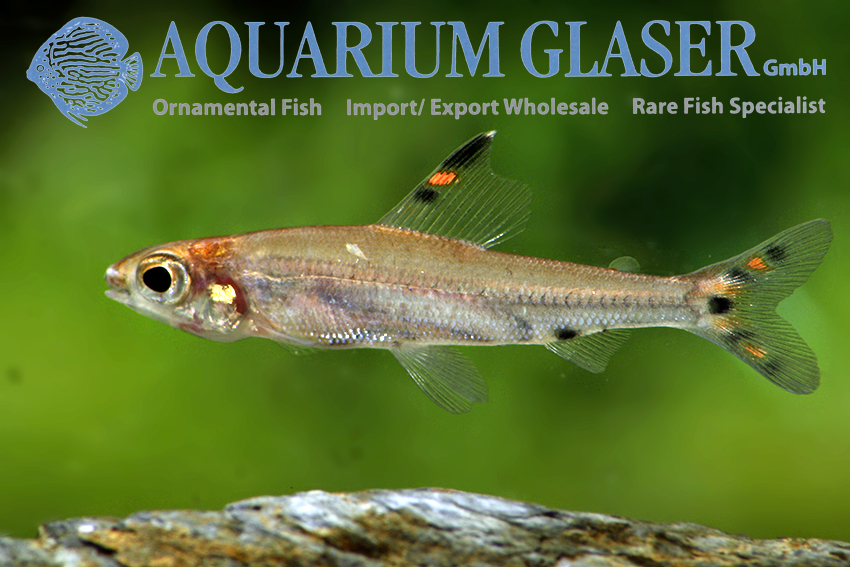
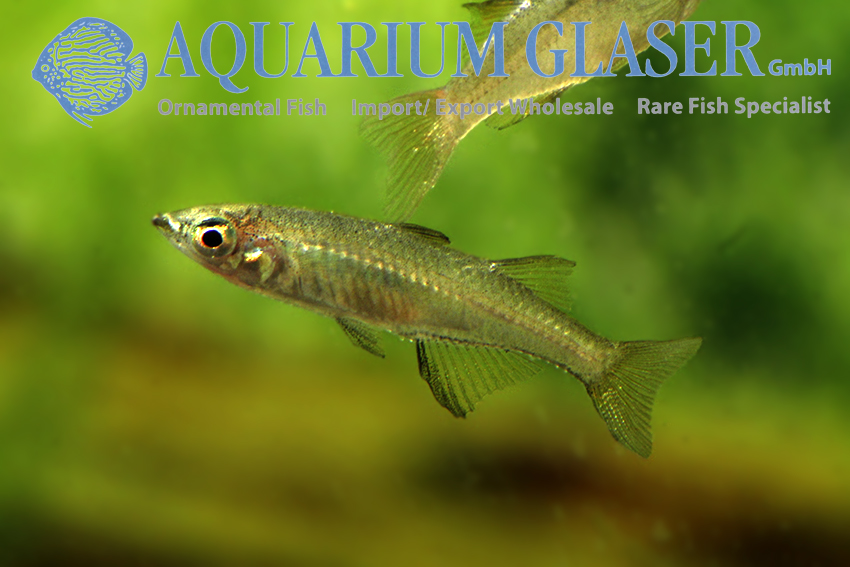
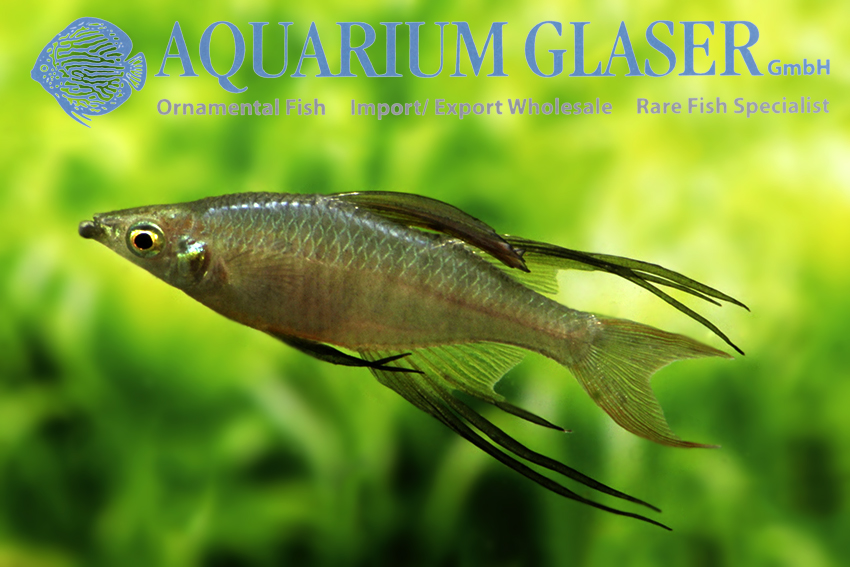
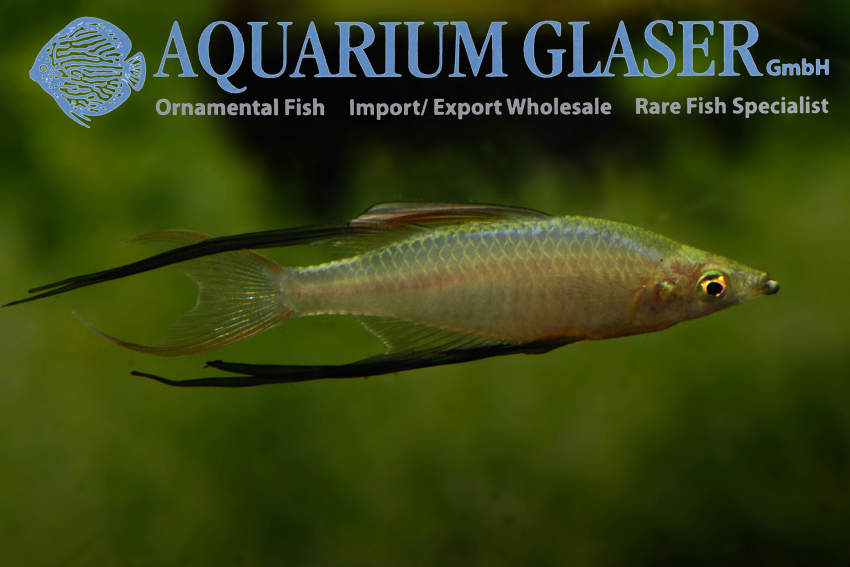
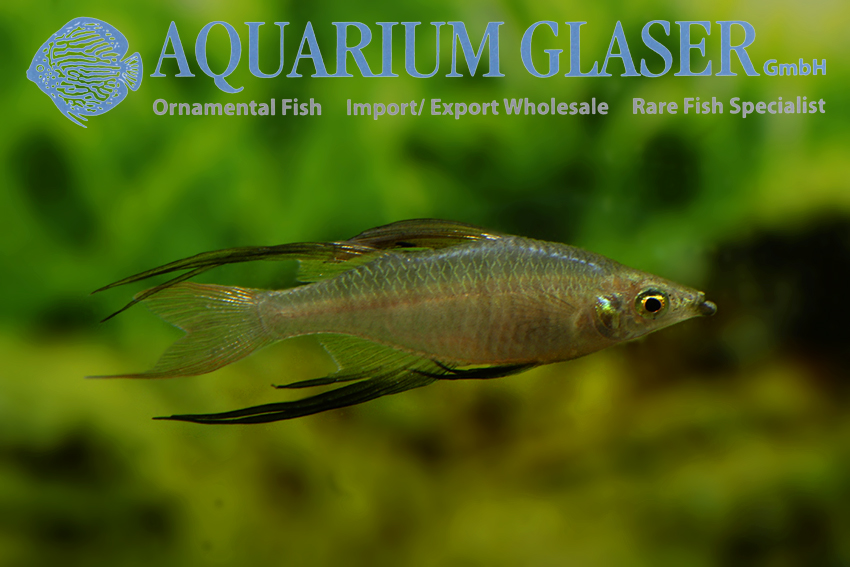
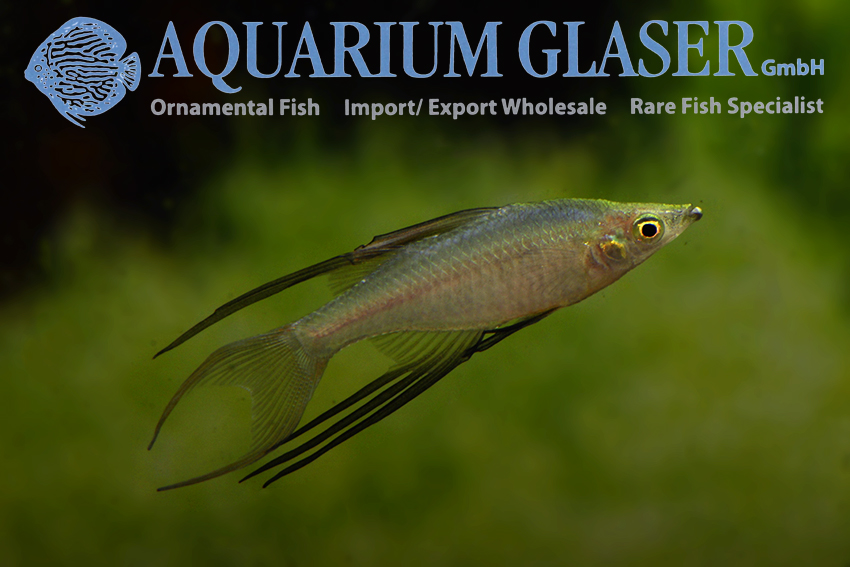
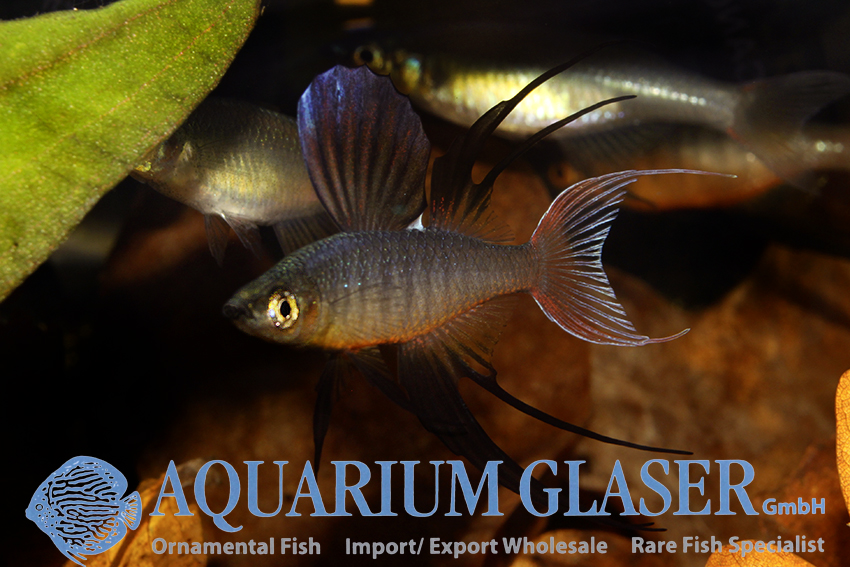
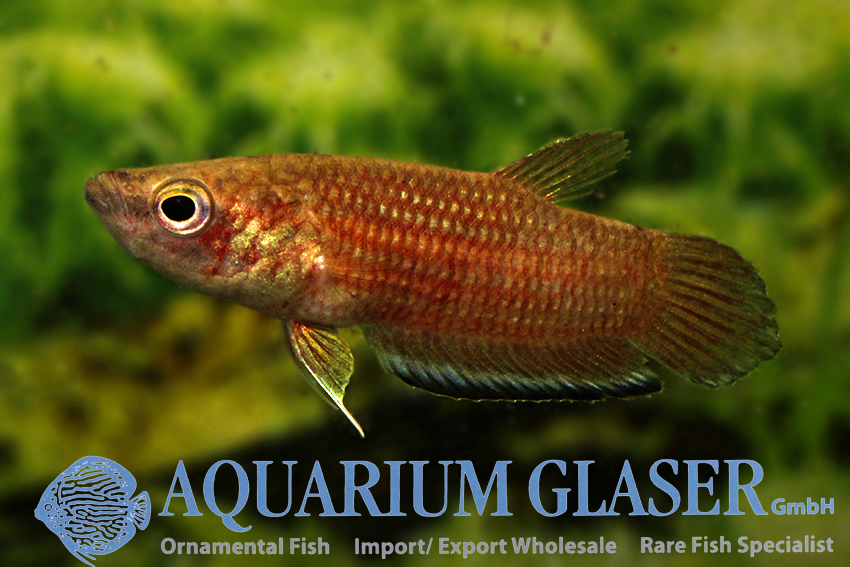
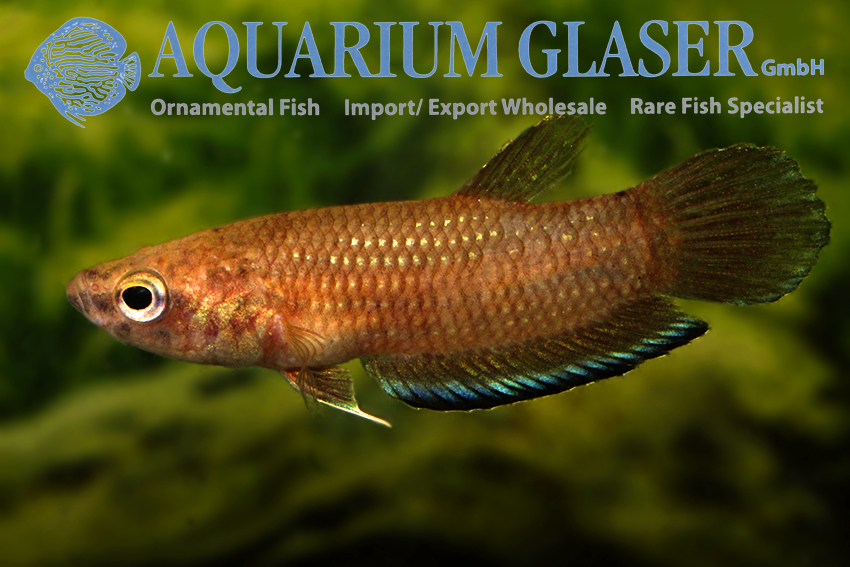
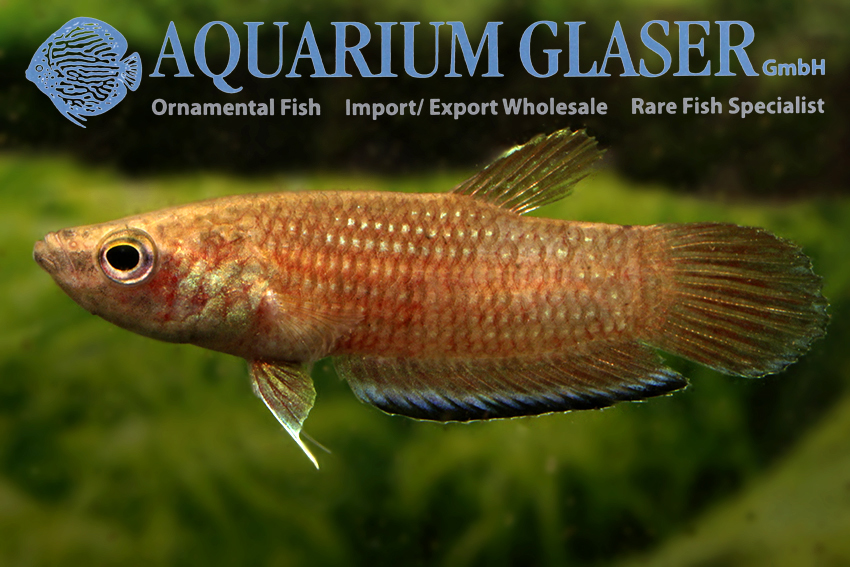
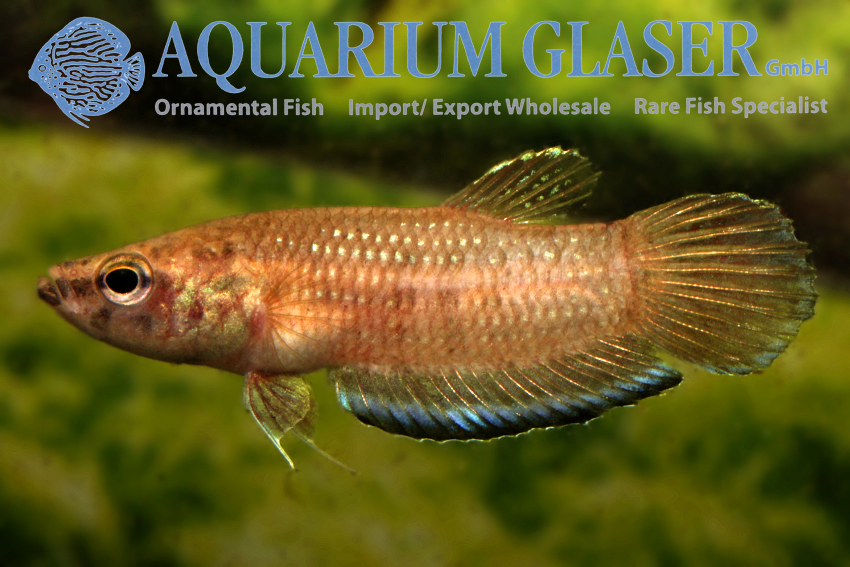
Iriatherina werneri

19. June 2017

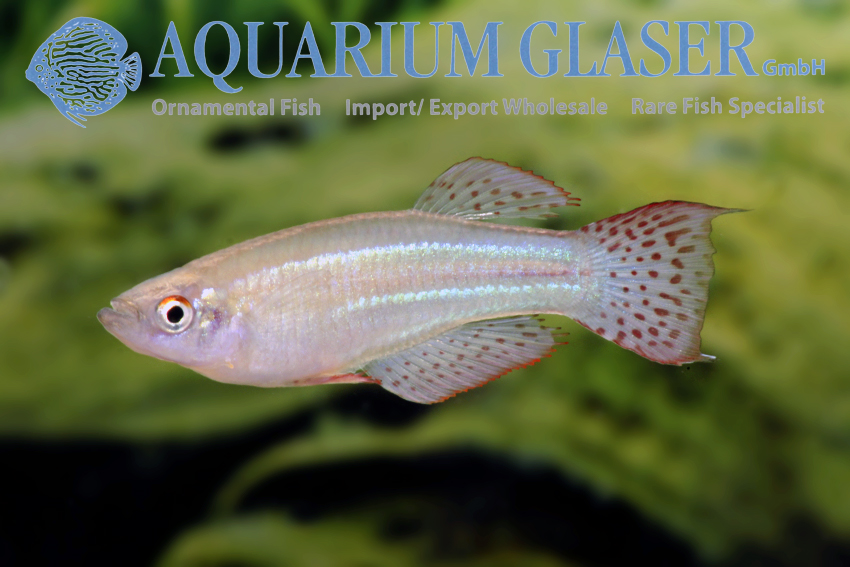
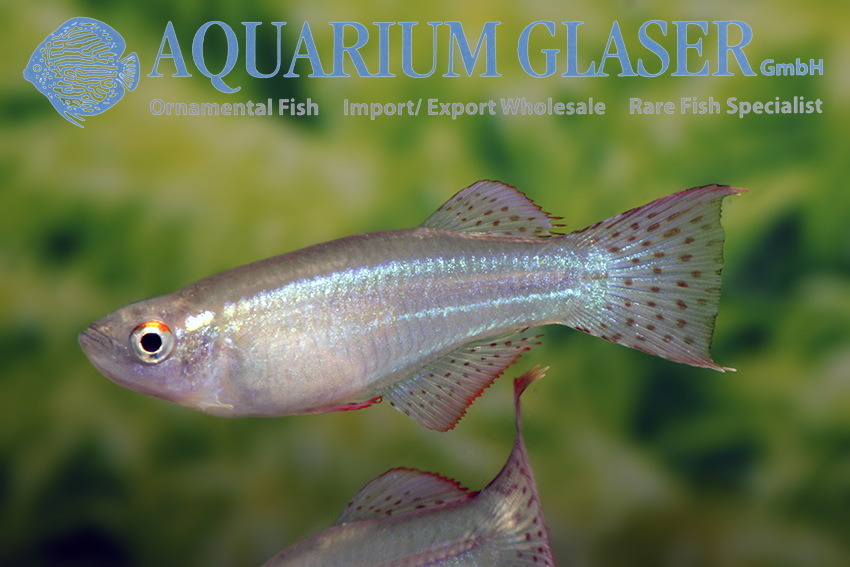
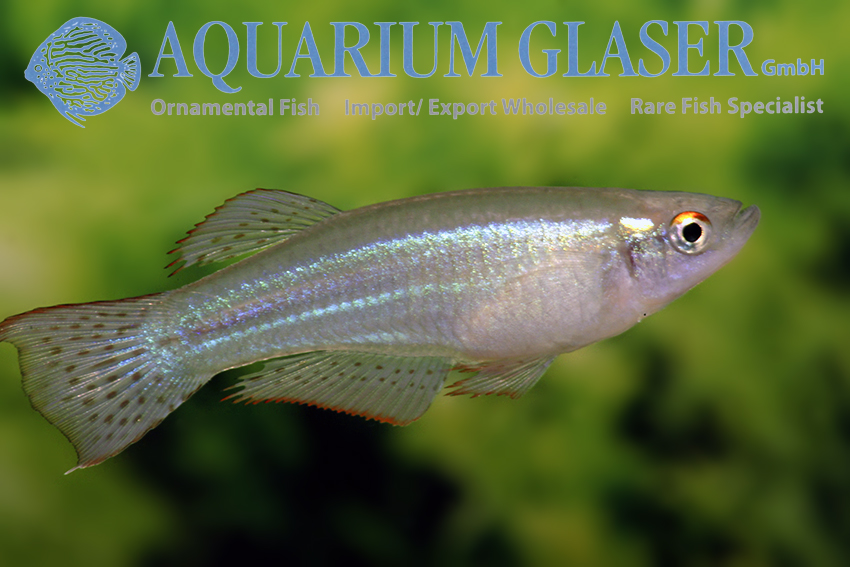
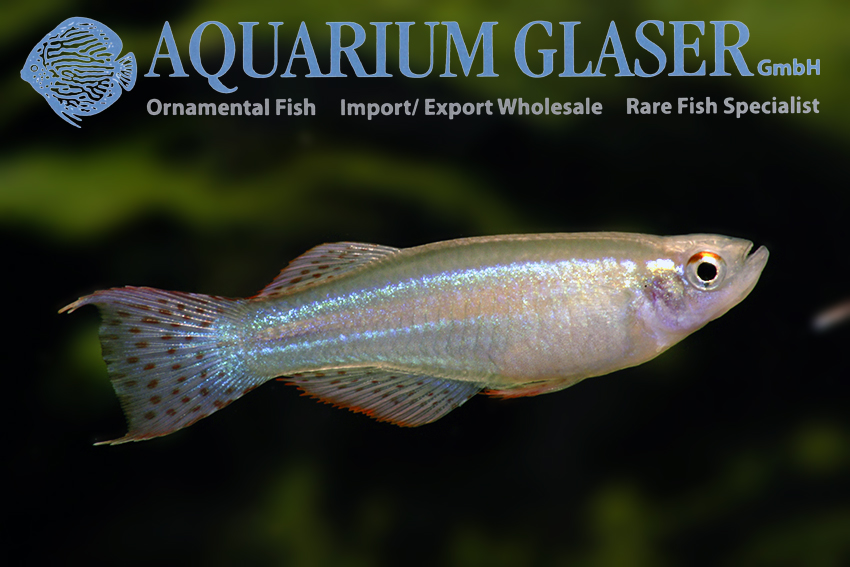
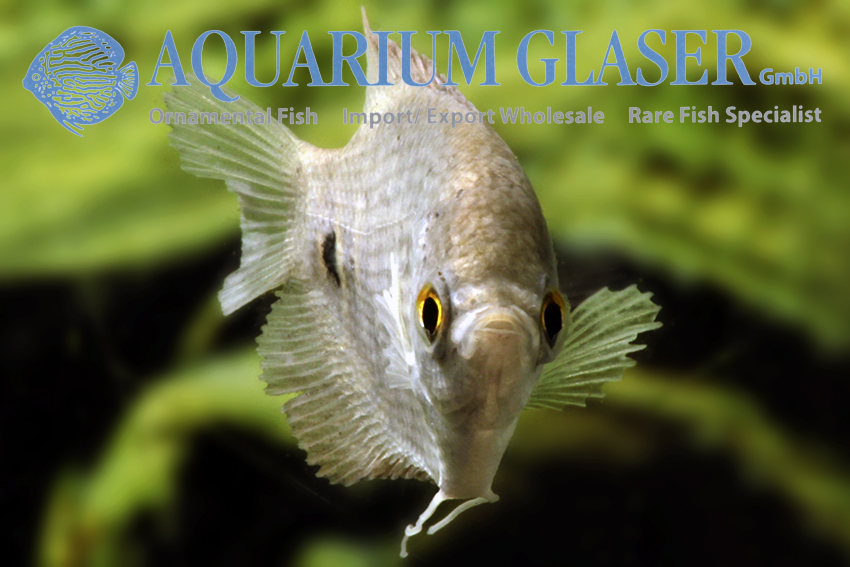
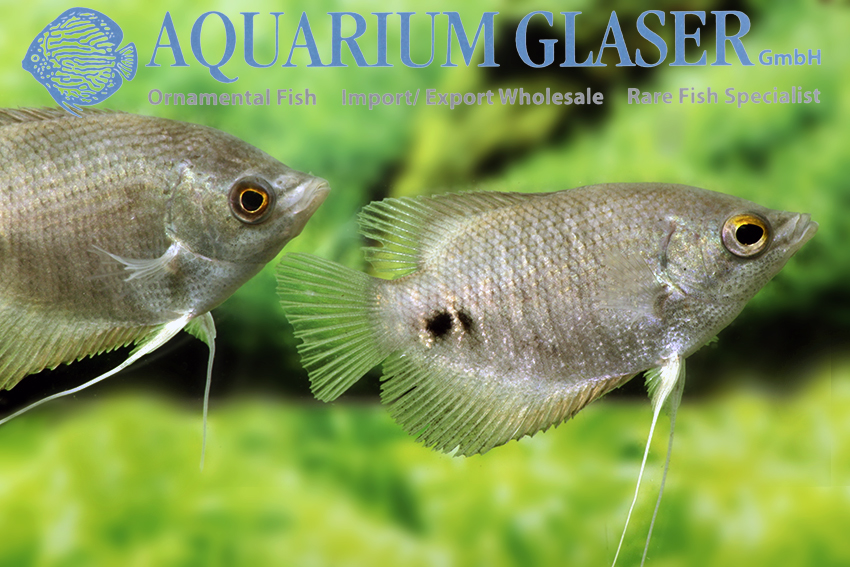
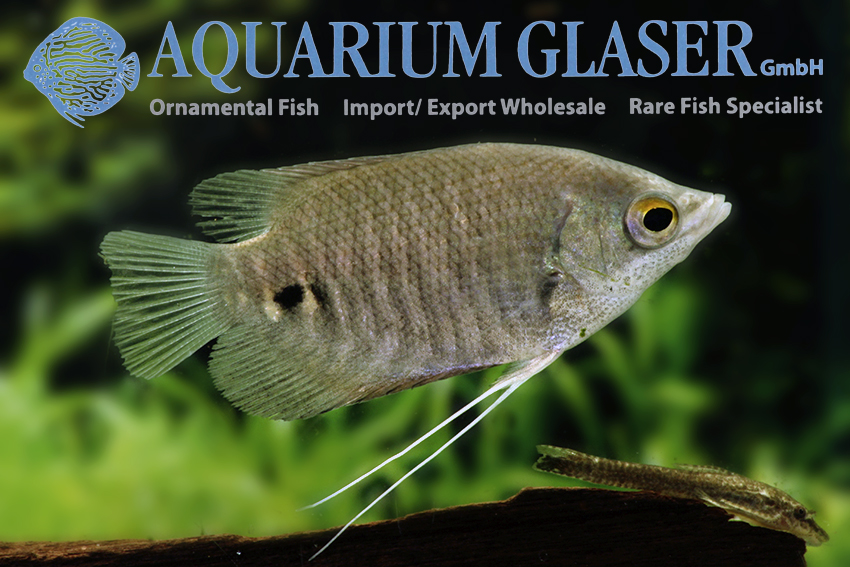
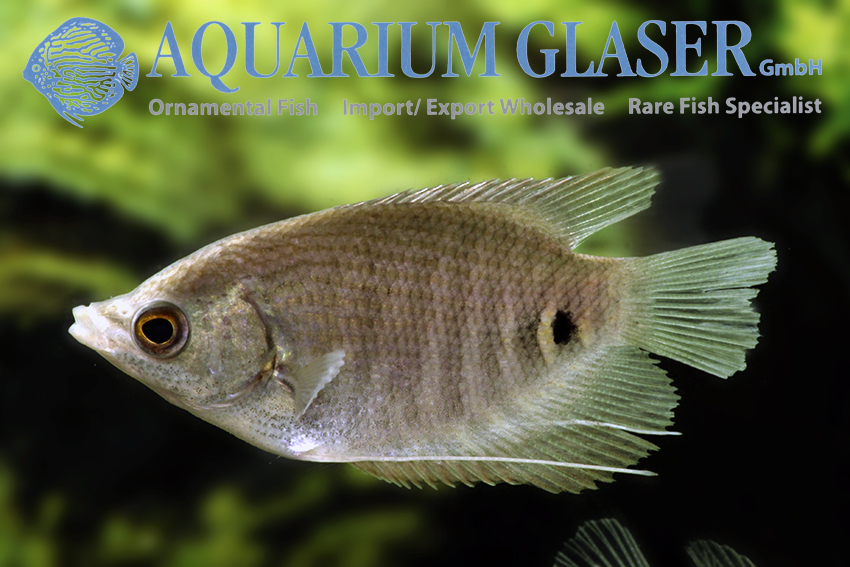
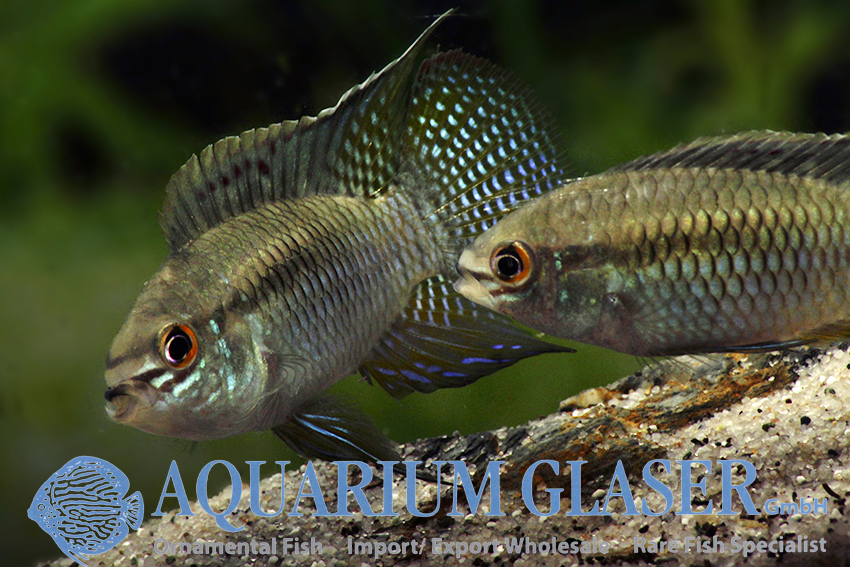
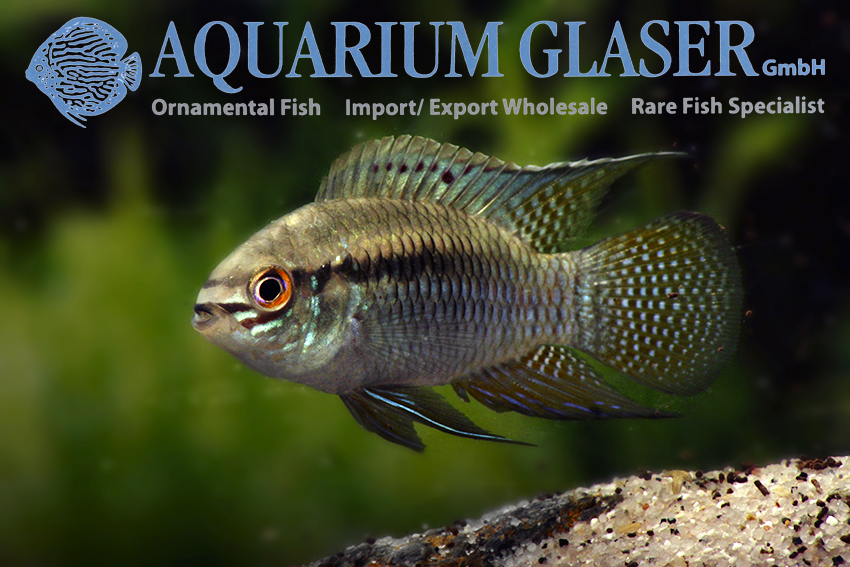
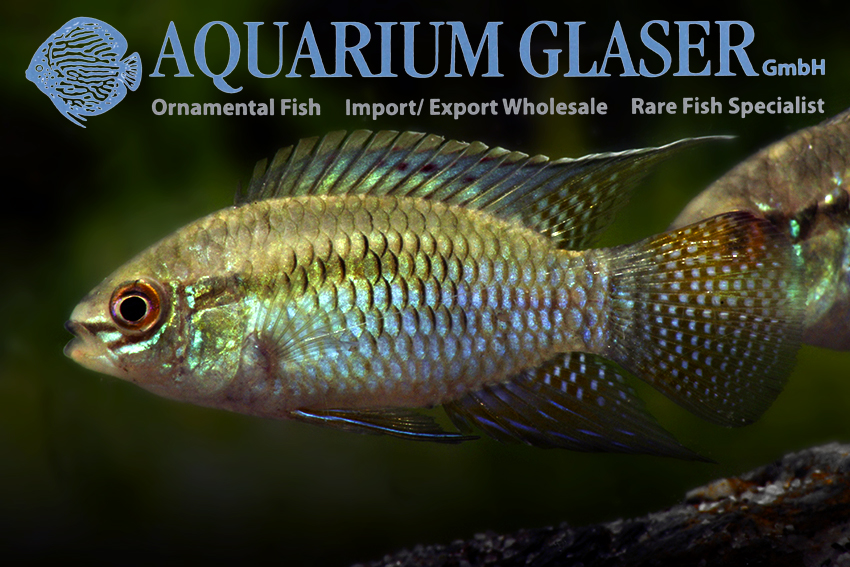
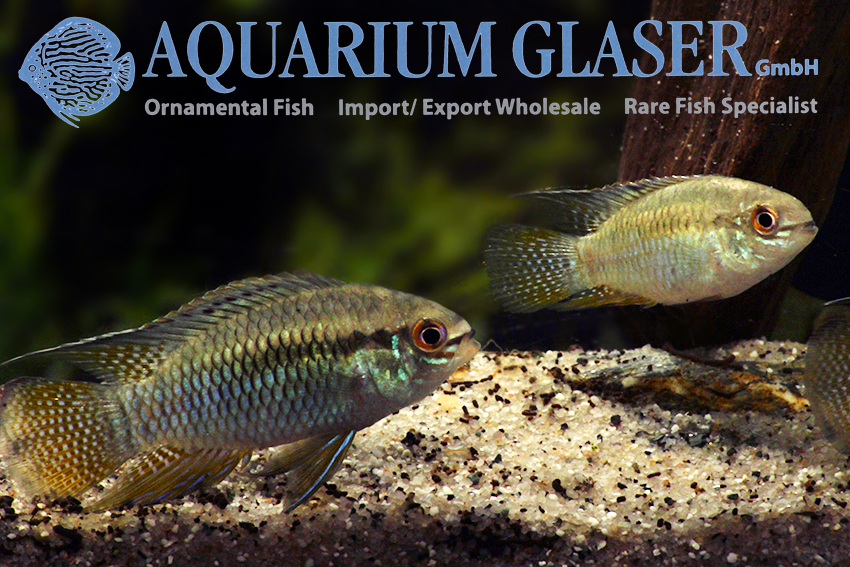
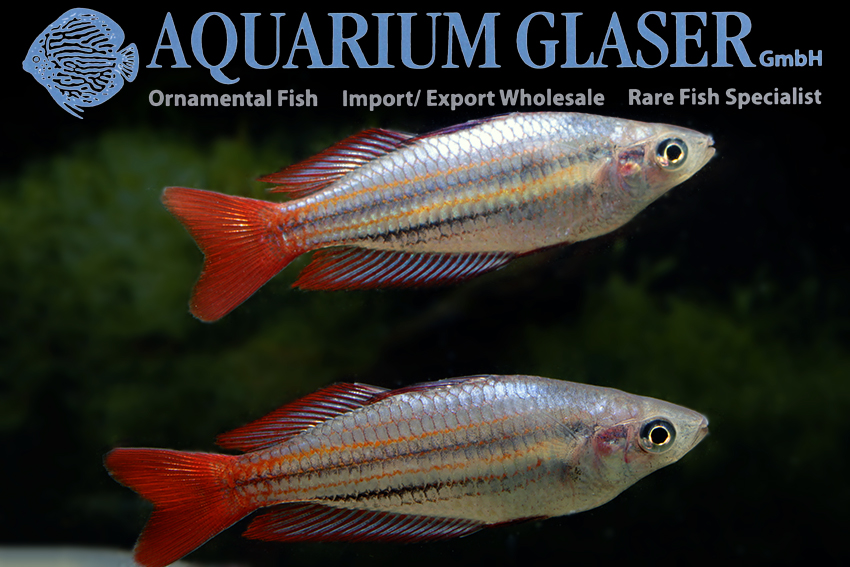
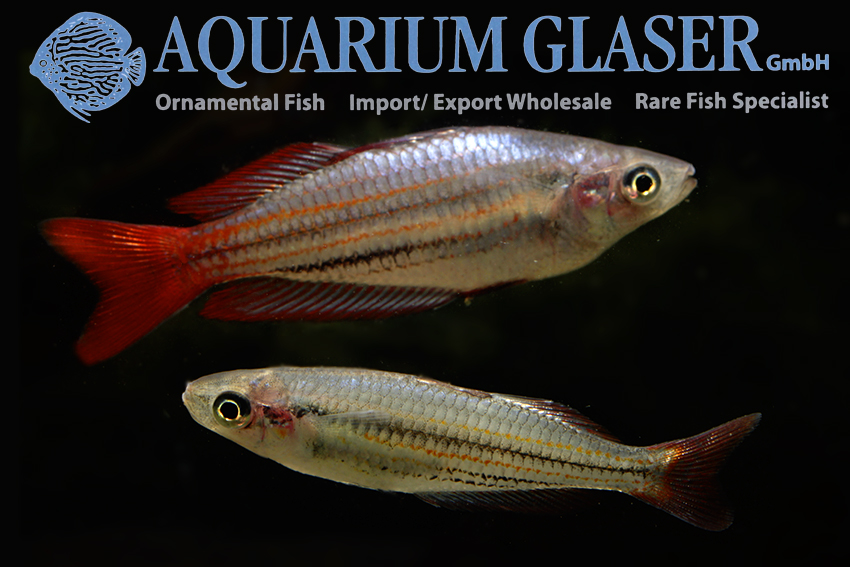
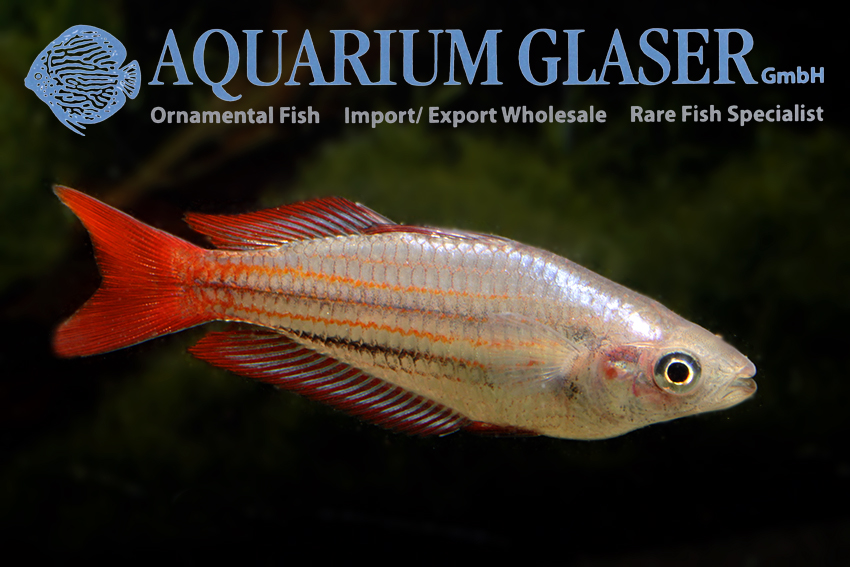
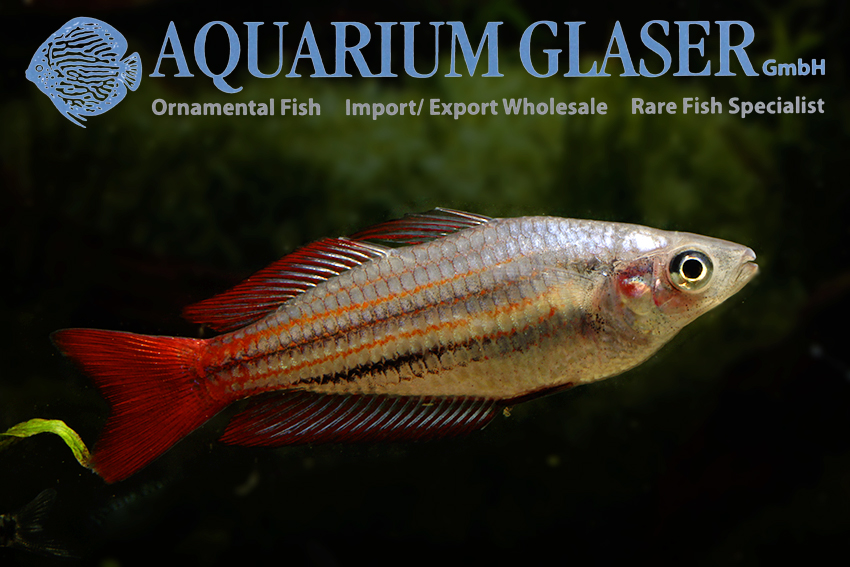
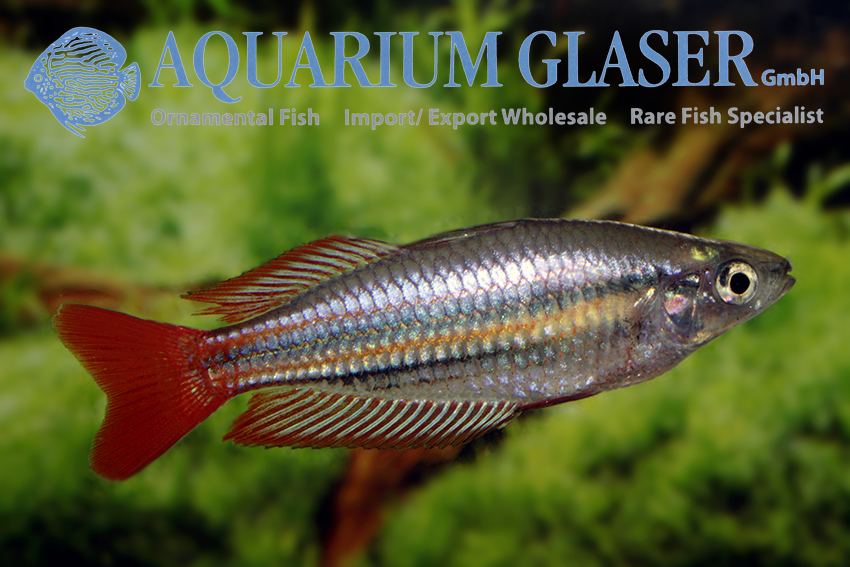
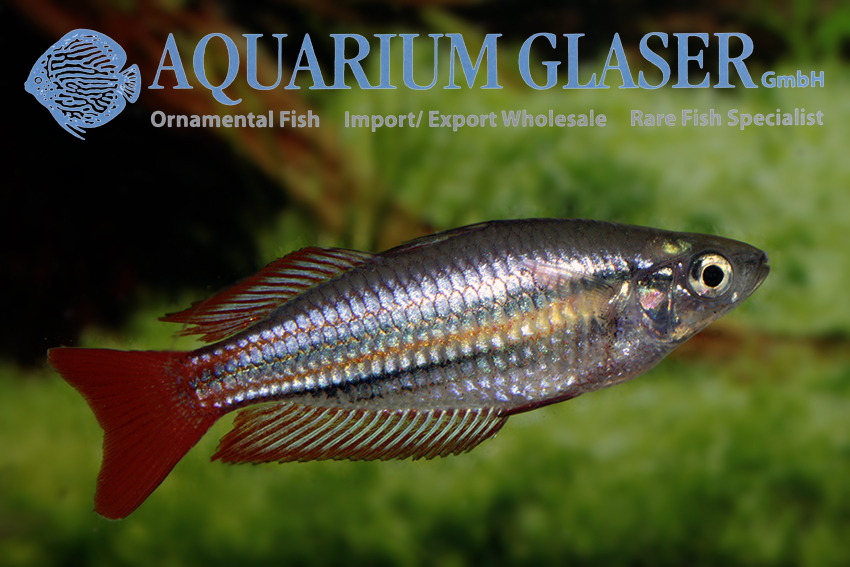
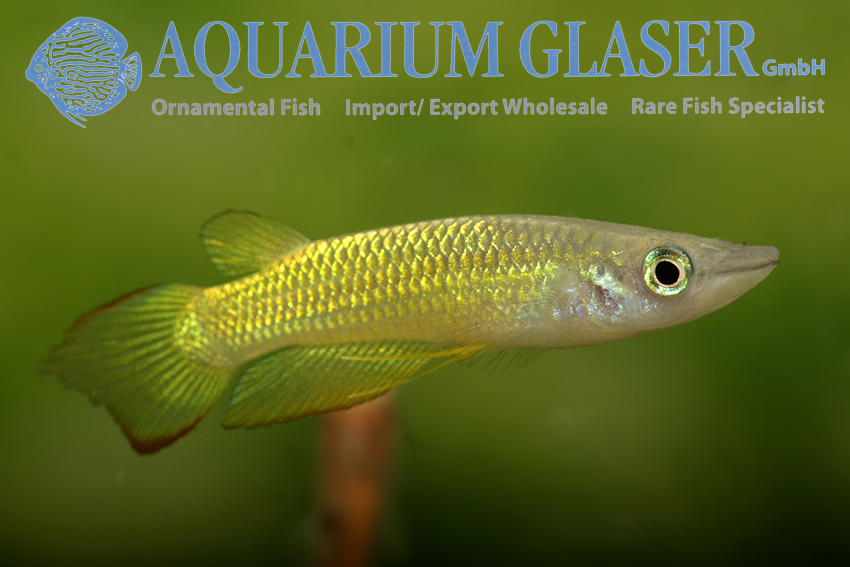
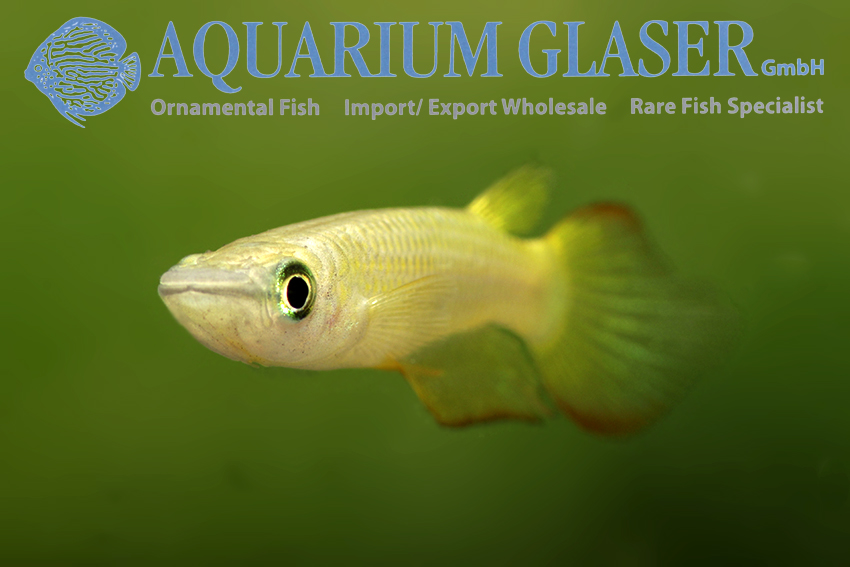
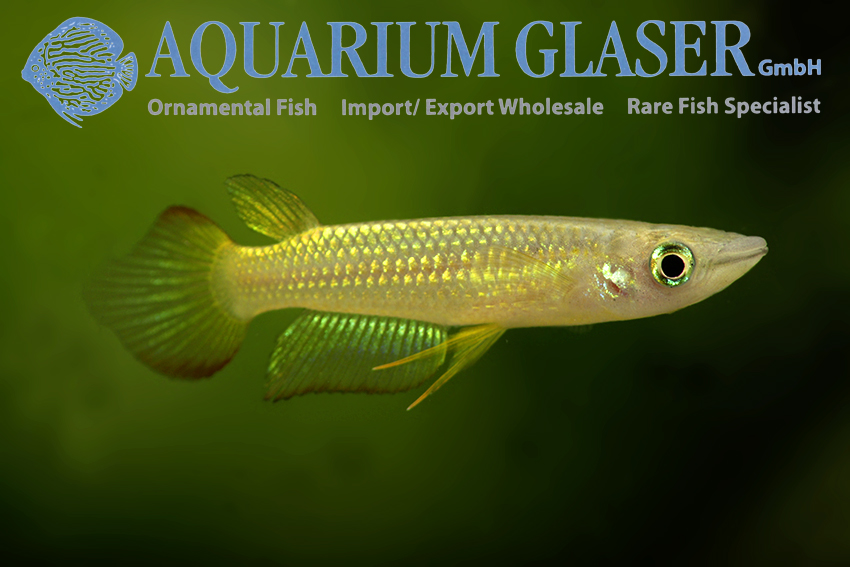
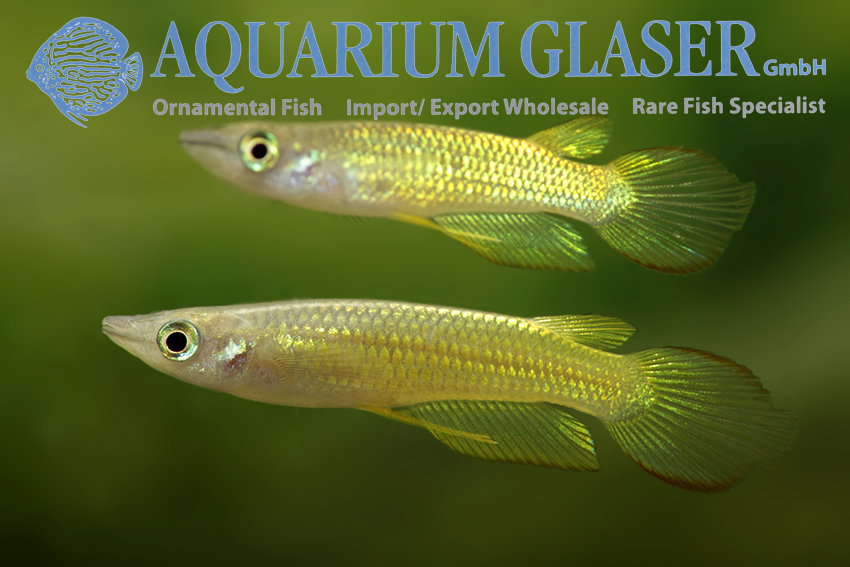
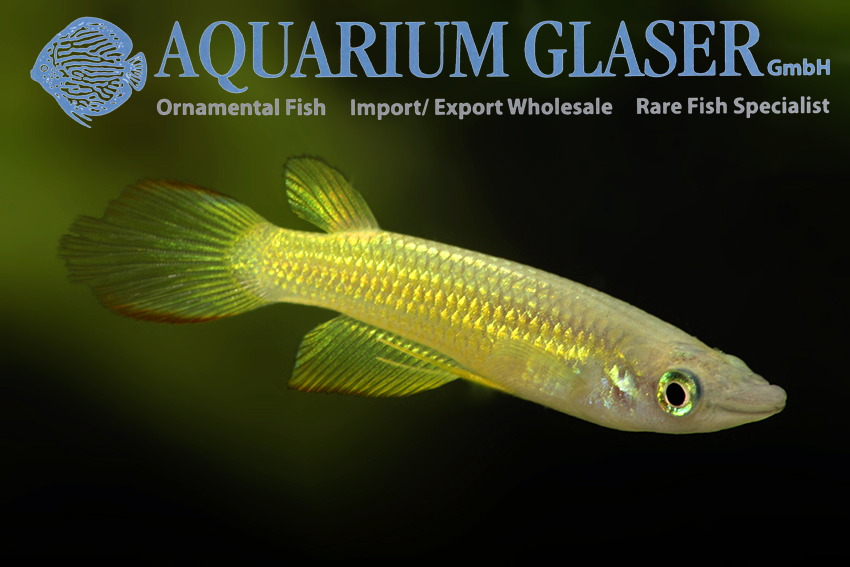
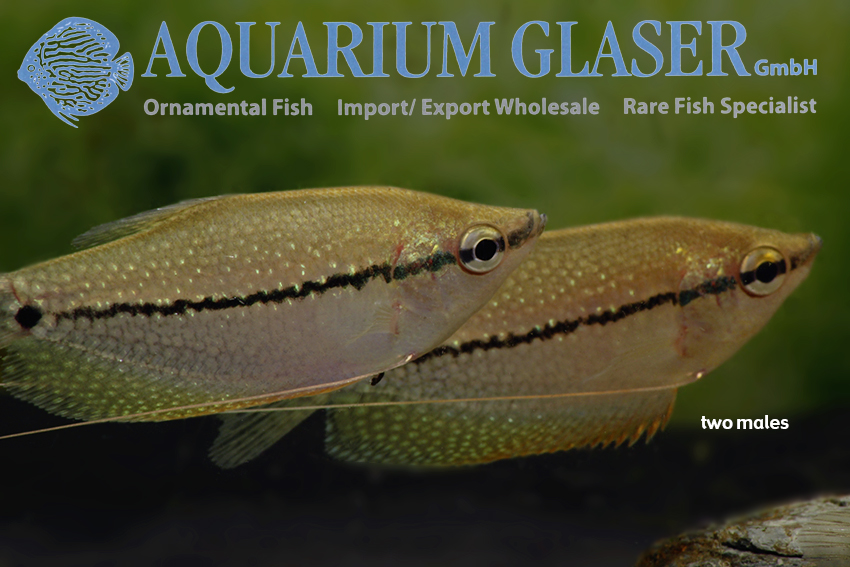
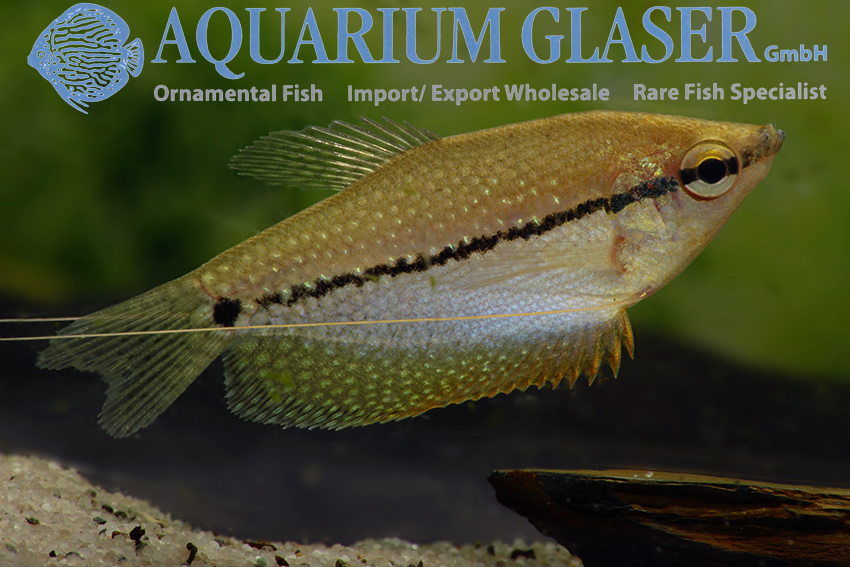
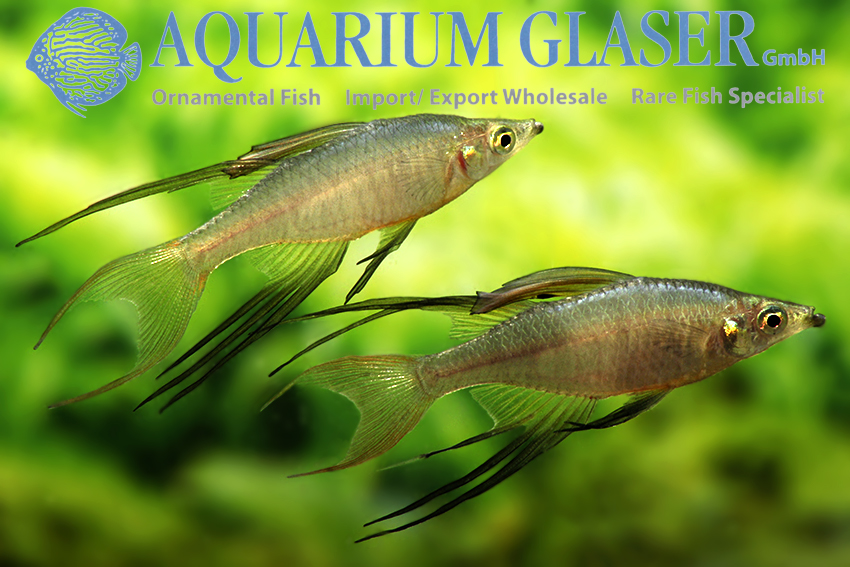
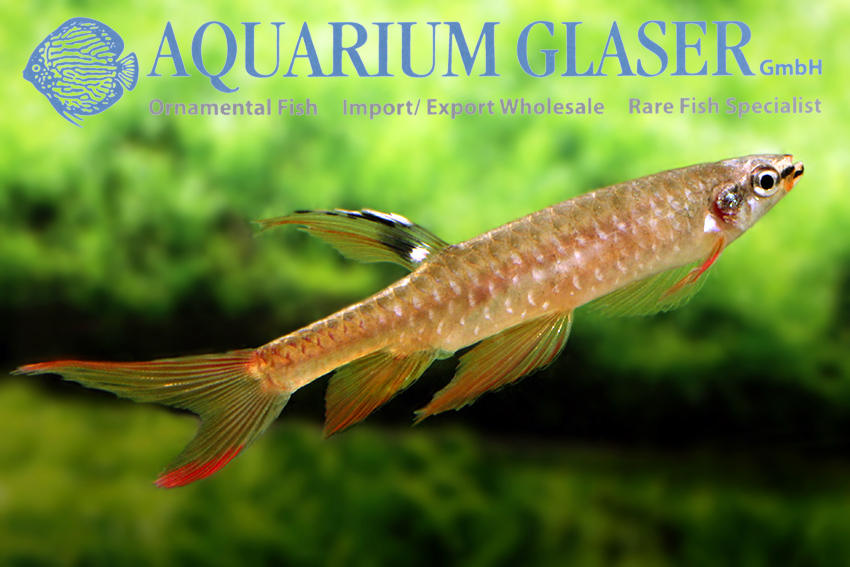
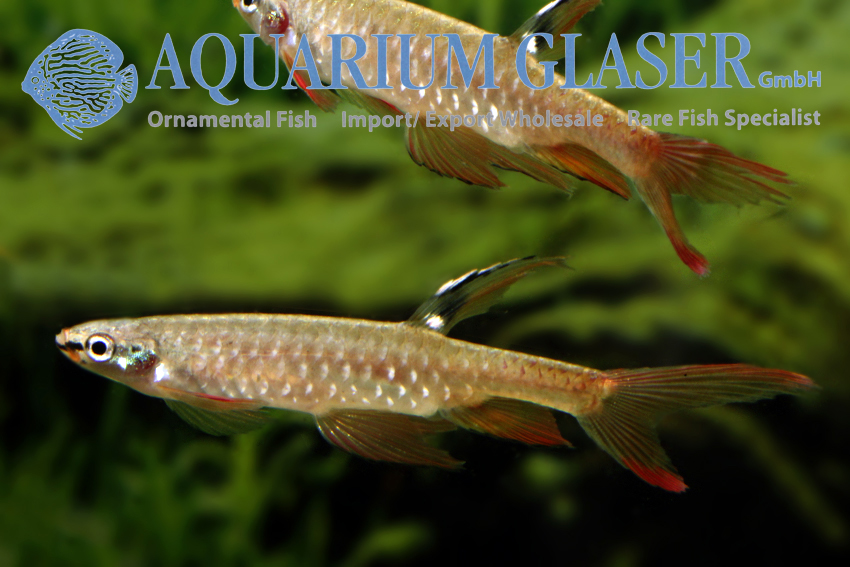
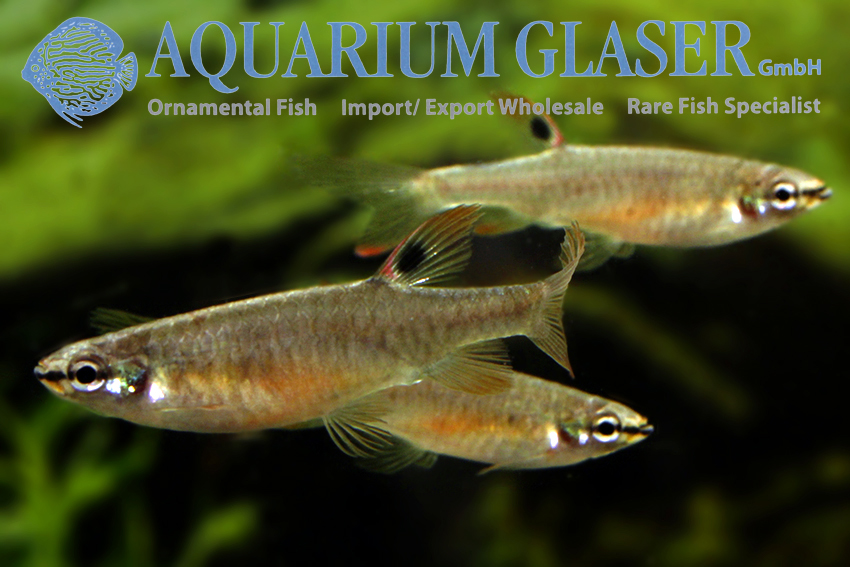
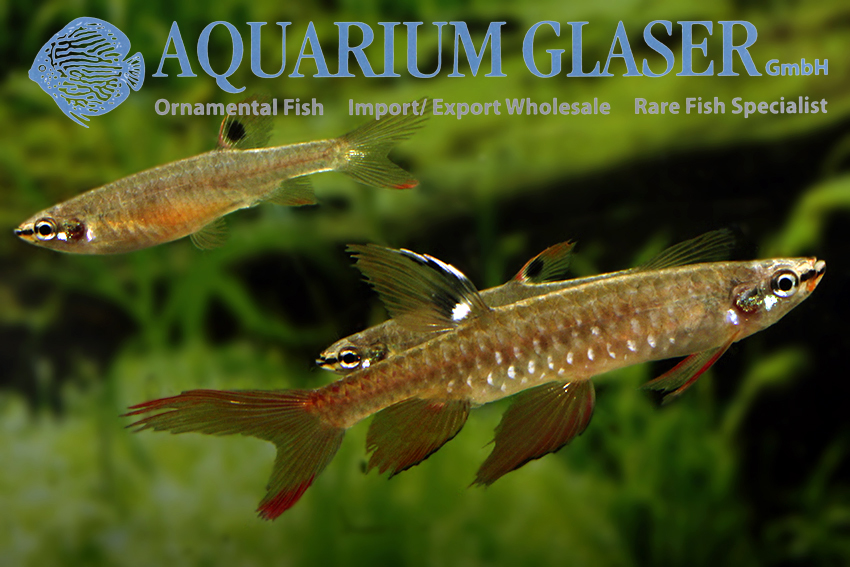
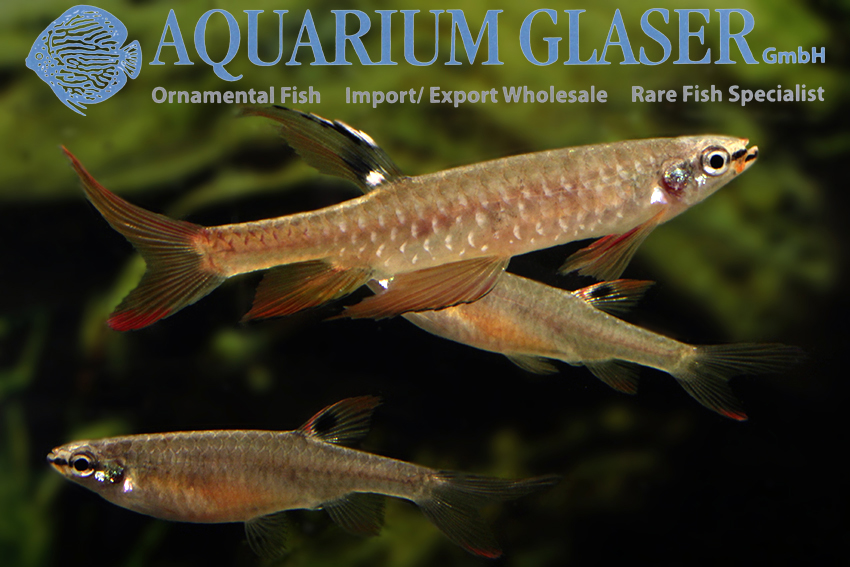
Currently we have wonderful, fully grown specimens of the Threadfin Rainbowfish in stock. Like a butterfly its wings the male Threadfin Rainbowfish flaps its first dorsal fin during courtship. The males can be easily recognized by the long filaments of the second dorsal and the anal fin. The tender species attains a maximum length of about 5 cm.

There is hardly another aquarium fish as peaceful as this one. One must never keep I. werneri in company with rough behaviour, the Threadfin Rainbowfish will not survive under such conditions. In respect of water chemistry the Threadfin Rainbowfish is flexible. It thrives well in a pH of 5.5 to around 8.0 (BUT: be very careful when adopting the fish to new conditions, it is extremely sensitive against sudden changes!) and soft to medium hard water. The water temperature should be slightly higher than usual, about 25-29°C. But the most important factor is the correct feeding. These fish have a very small mouth. Food particles must be small, too! Best is living brine shrimp nauplii, but I. werneri feeds also on very fine dry food, micro, vinegar worms, rotatoria, cyclops (this can be frosted, too), etc.

Who is willing to fulfil the demands of that fish and also adds some peat, alder cones, or dead leaves in the tank will be rewarded by beautiful and fascinating looks.

For our customers: the fish have code 421704 on our stocklist. Please note that we exclusively supply the wholesale trade.

Text & photos: Frank Schäfer
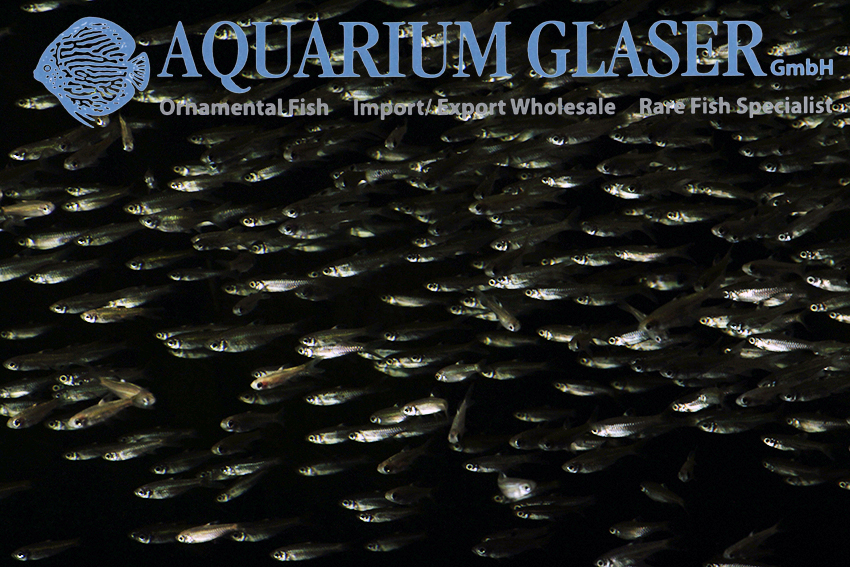
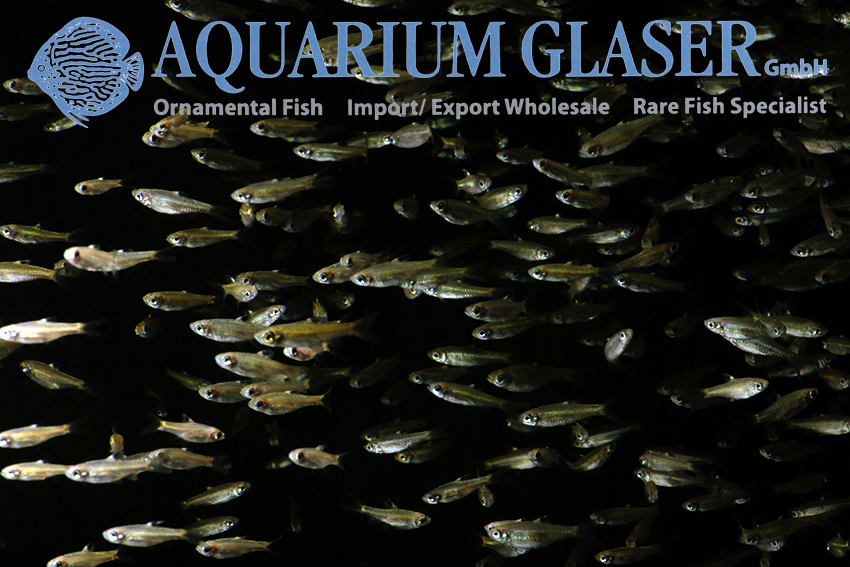
Brevibora dorsiocellata

17. June 2017

Once more we were able to import this beautiful dwarf rasbora in good numbers. Al large school of them is a fascinating look!

The Eyespot Rasbora, Brevibora dorsiocellata, is a well known, classical aquarium fish. Sadly the species became almost forgotten in the 1980ies. It was Mr. Takashi Amano from Japan who was responsible for the comeback of the species. Amano often used a large school of B. dorsiocellata for his stylish tanks – a real eyecatcher!

The genus Brevibora has been separated in 2010 from Rasbora. Currently four species are known, but sadly in recent new descriptions serious mistakes have been made, so the names will change in near future again. For that reason we use the name that is best known in the hobby – Brevibora dorsiocellata.

Eyespot Rasboras are peaceful and undemanding fishes that can be kept even by beginners in the hobby. There is only one point that should be mentioned: the fish look best (most probably because they feel safe) when kept in larger schools, starting with 10 specimens – the more the better.

For our customers: the fish have code 451802 on our stocklist. Please note that we exclusively supply the wholesale trade.

Text & photos: Frank Schäfer
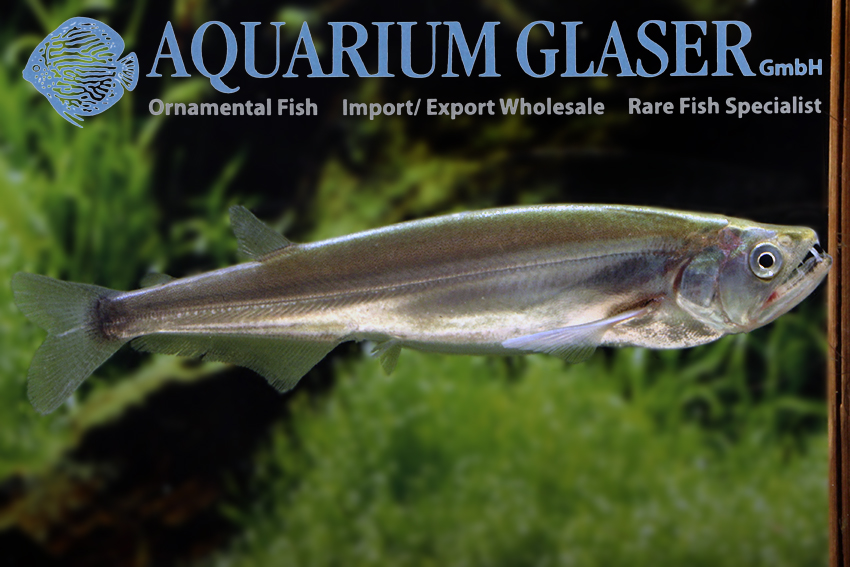
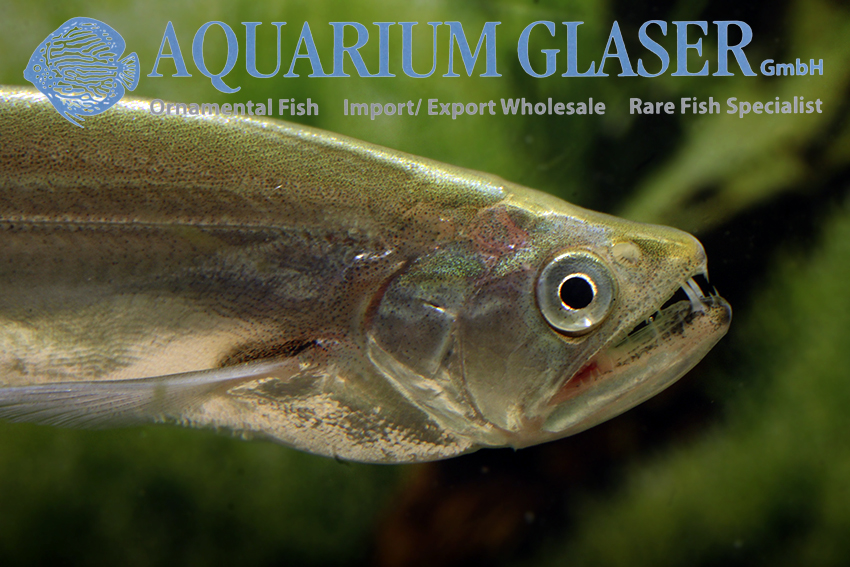
Brycon hilarii

12. June 2017

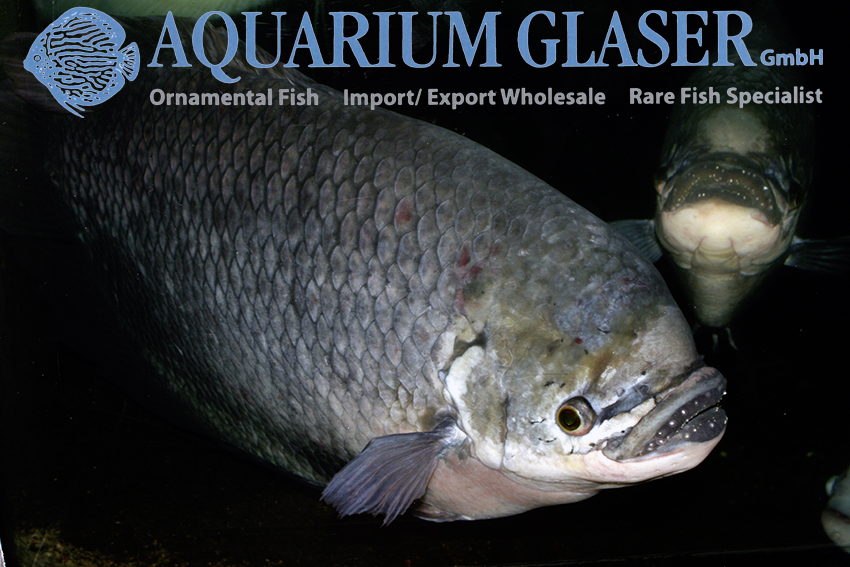
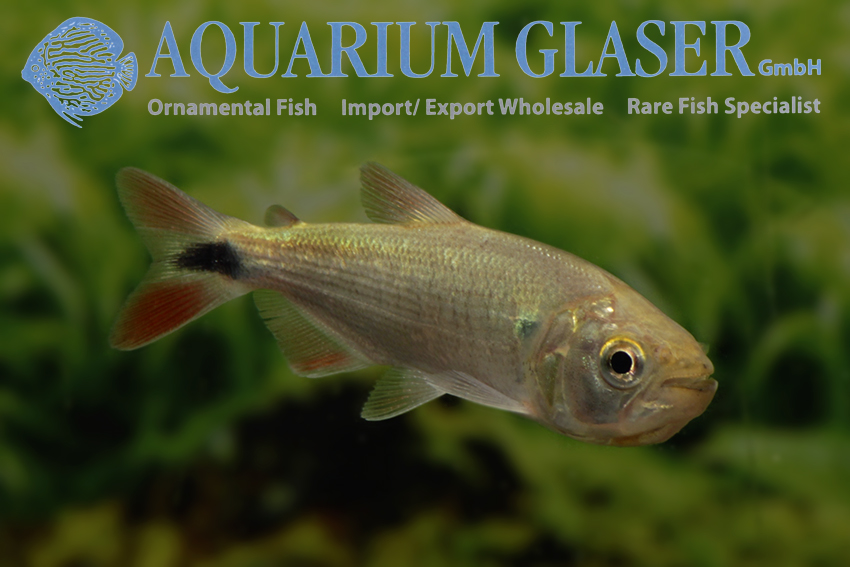
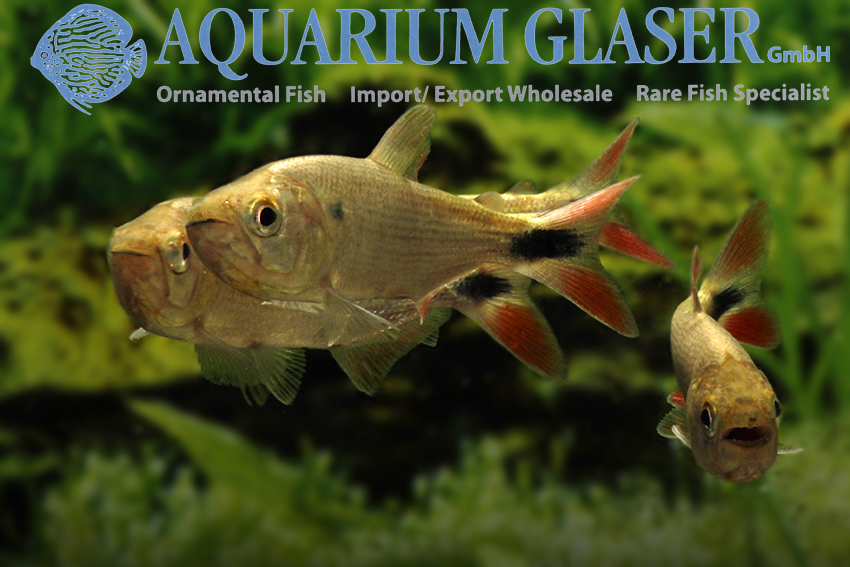
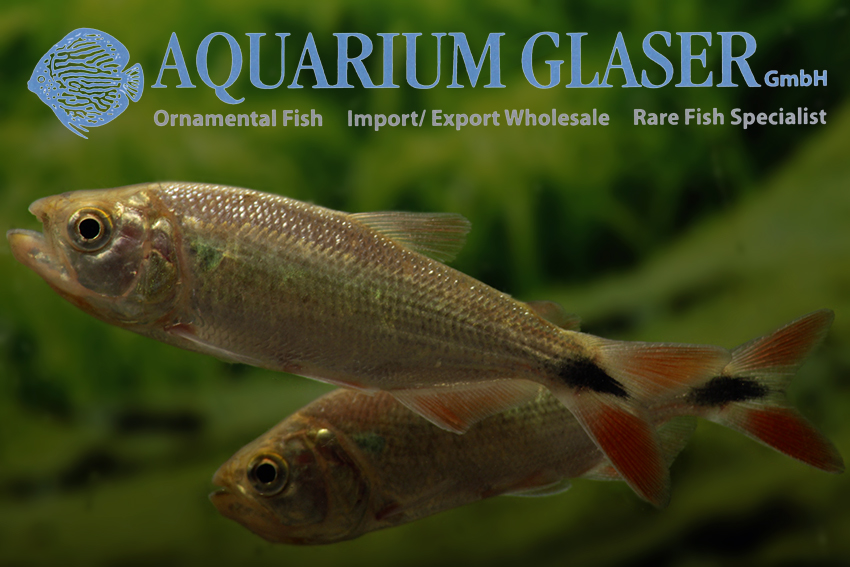
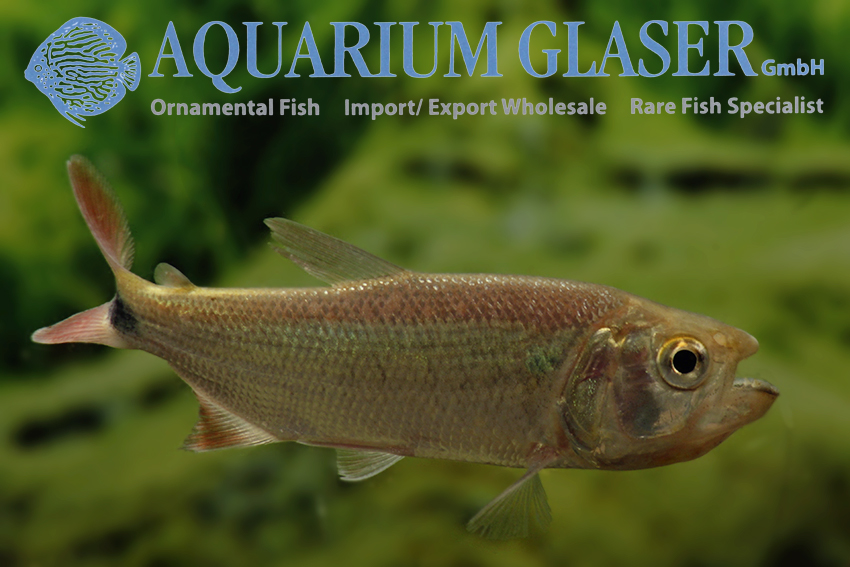
Every year comes a season for one of the most wanted fish or large show aquaria: Salminus maxillosus. And every year we have to look wether the ordered young fish really belong to that species. The Salminus are large (usually up to 60 cm, sometimes reaching even 1 m in length) predatory fishes hat feed almost exclusively on other fish. They imitate a harmless plant eating tetra: Brycon hilarii. In the schools of Brycon hilarii the young Salminus can easily come close to their prey. This is called „aggessive mimikry“. The Brycon is also a large fish that usually attains a length of about 40-50 cm. All in all: Salminus and Brycon look very much alike in respect of coloration.

Yesterday the first „Salminus“ import of the year from the Orinoco river arrived. All fish are Brycon hilarii. Luckily we have made pictures of Salminus of a similar size last year, so we can compare. In the internet a lot of picture are pblished under the name of Salminus maxillosus that in fact show Brycon hilarii. For all that want to compare with their own eyes: here are pictures of a Salminus (http://www.aquariumglaser.de/en/fish-archives/salminus_arrived__en/)

Brycon hilarii is a comparatively peaceful fish. Of course it will not be able to withstand to use a very small fish as an appetizer, but basically it is a plant and fruit eating species. Among conspecifics it is very peaceful, in contrast to Salminus which can be quite quarrelsome. 

The correct scientific name of our imports is not easy to apply. In the beginning of 2017 a scientific revision of the genus Brycon was published. According to that there are four species of Brycon with a dark band in the caudal fin: B. orthotaenia, B. hilarii, B. whitei, and B. polylepis. Of those only the two latter have a natural distribution in the Orinoco, but both species look totally different from our imports. B. whitei has a distinct dark band all over the body, and B. polylepis has a totally different shape of the body (much more slender than out fish). B. orthotaenia looks very much alike our fish, but B. orthotaenia is endemic in the Rio Sao Francisco. So we stay with the name of Brycon hilarii, although this species is recorded as occuruing naturally only in the Amazon river and the Paraguay river, but it is bred and stocked as a food fish in many areas. Maybe ongoing research will show that our fish may belong to another species.

For our customers: the fish have code 212702 on our stocklist. Please note that we exclusively supply the wholesale trade.

Text & photo: Frank Schäfer

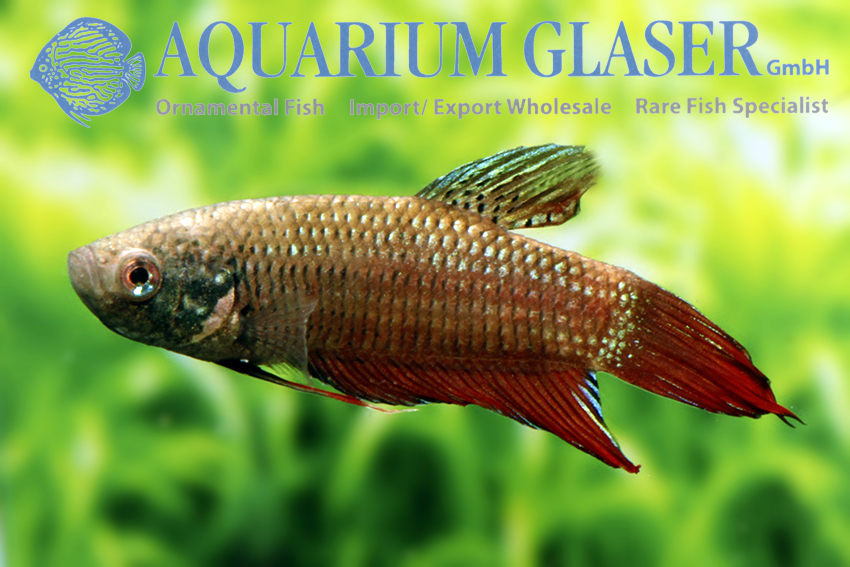
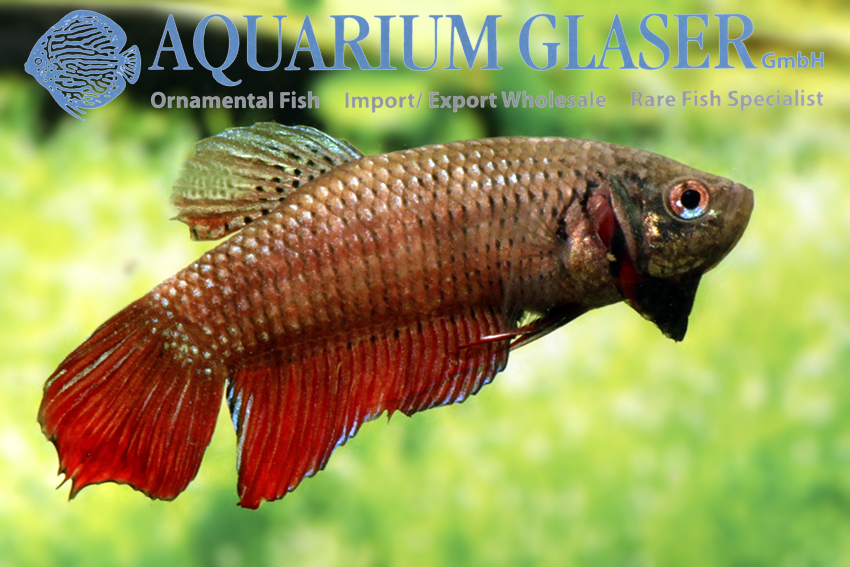
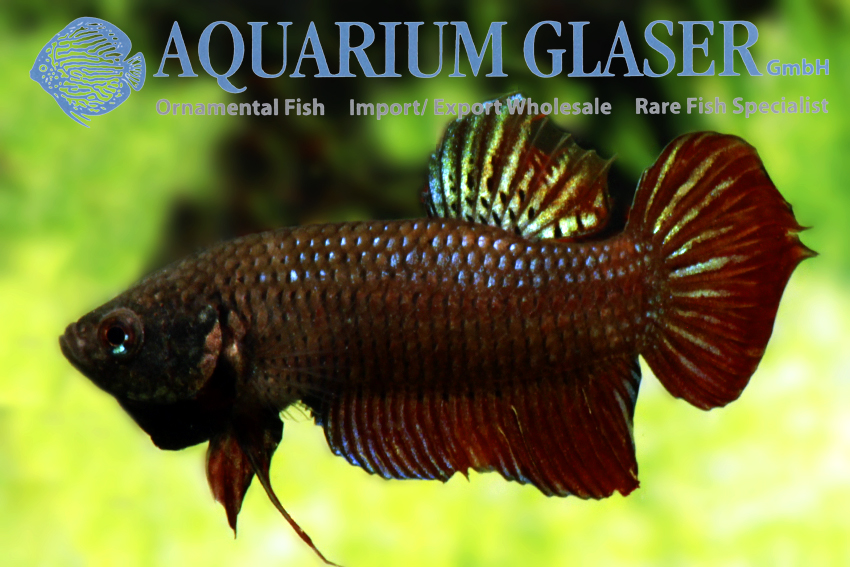
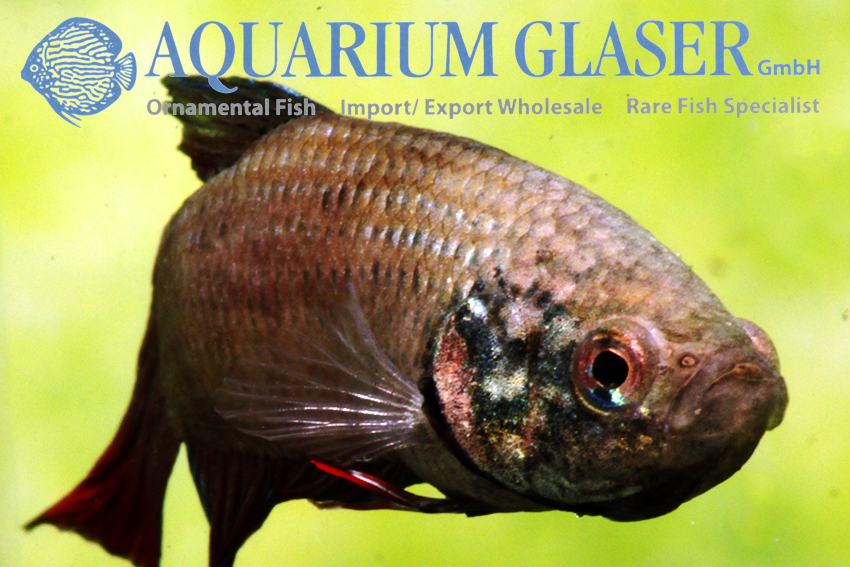
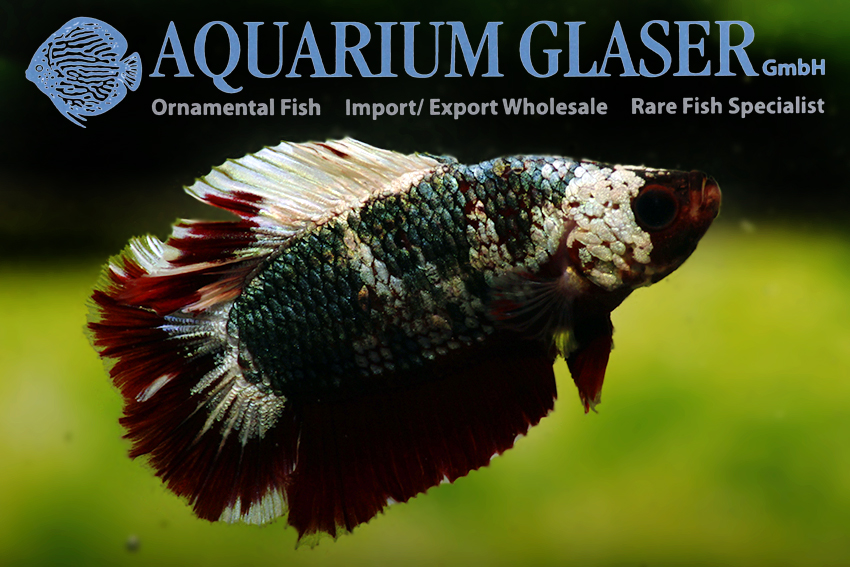
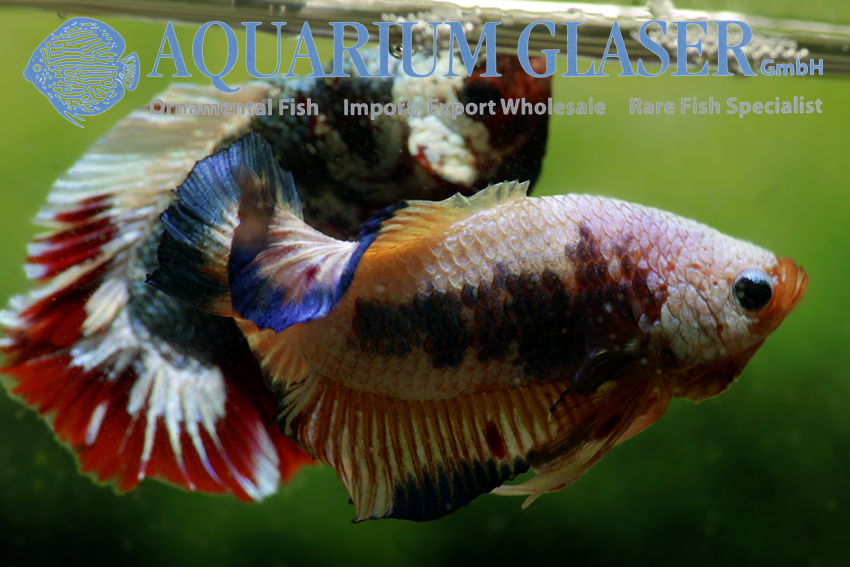
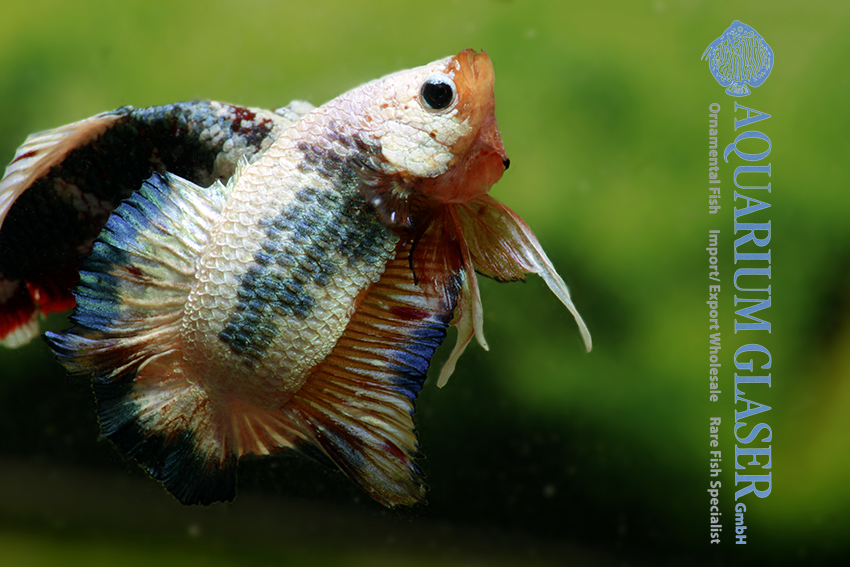
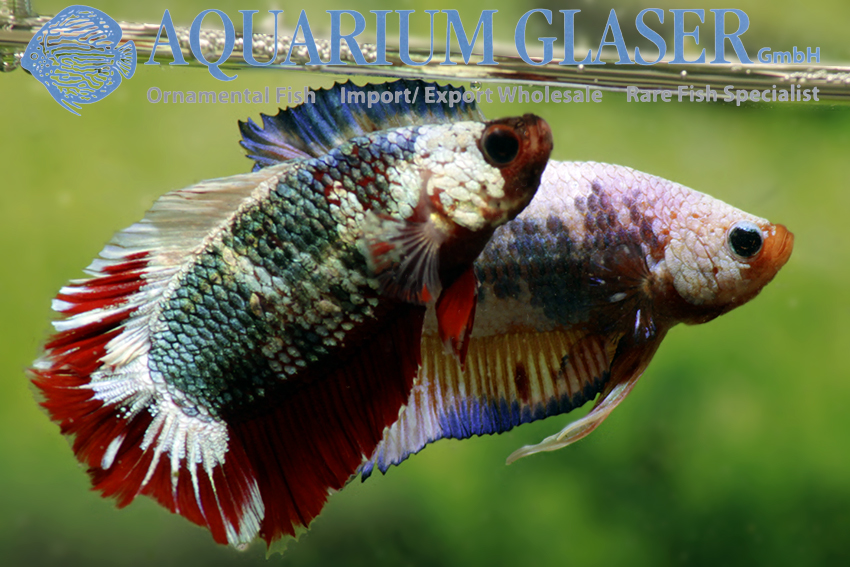
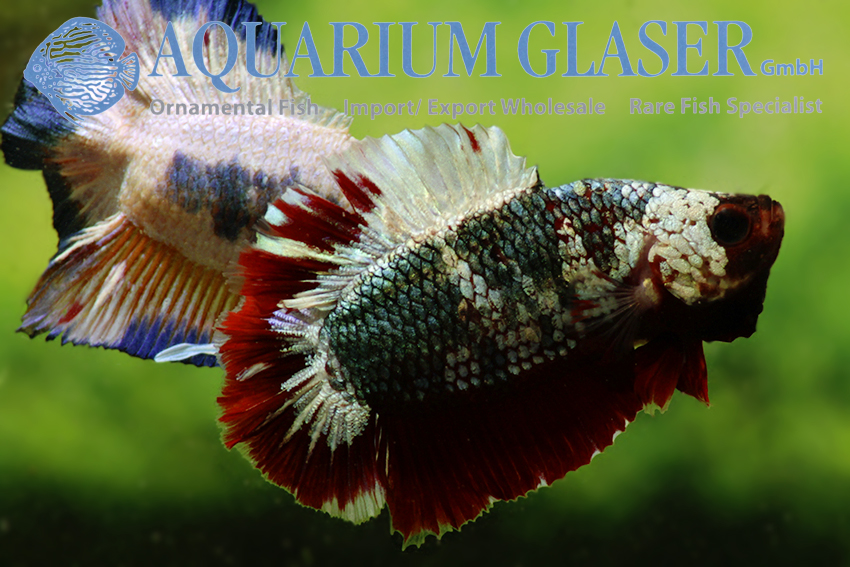
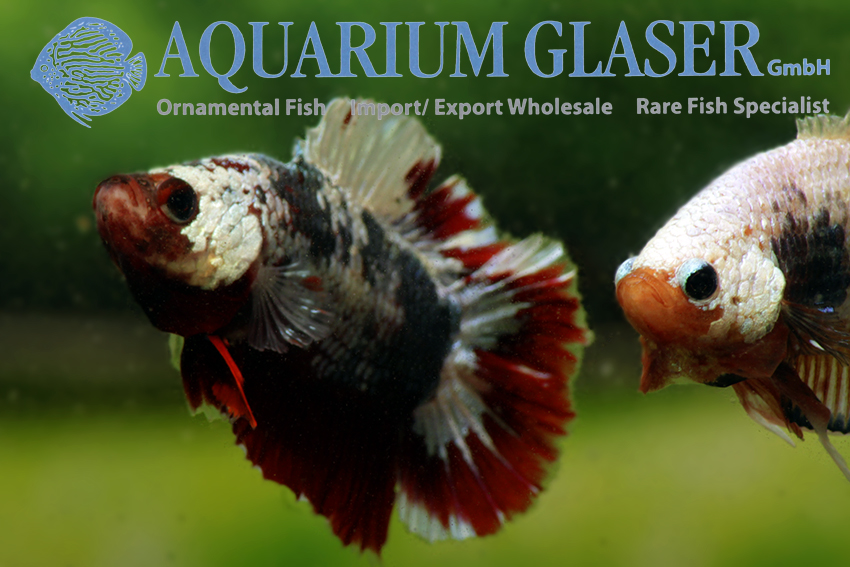
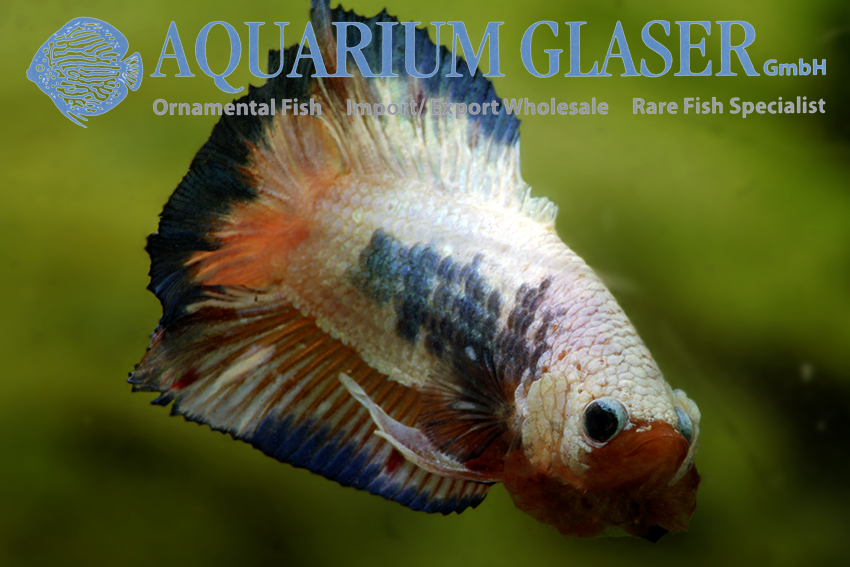
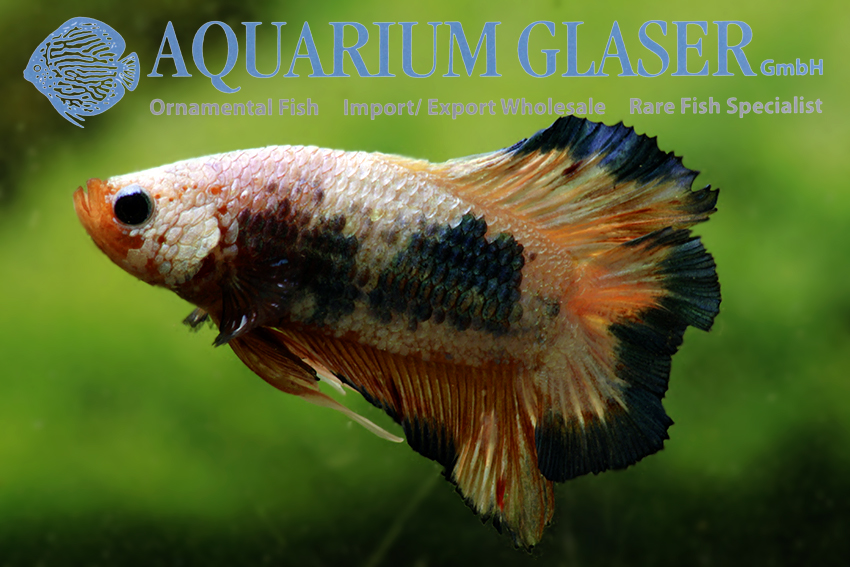
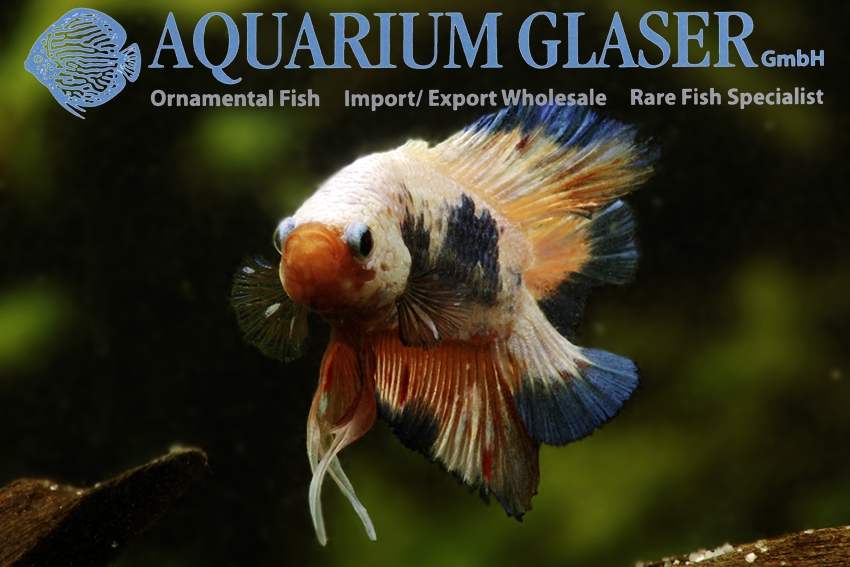
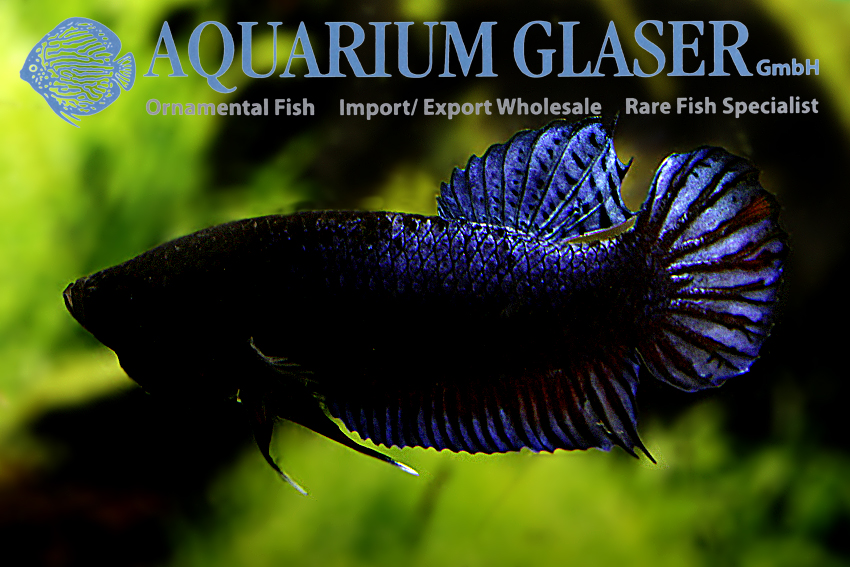
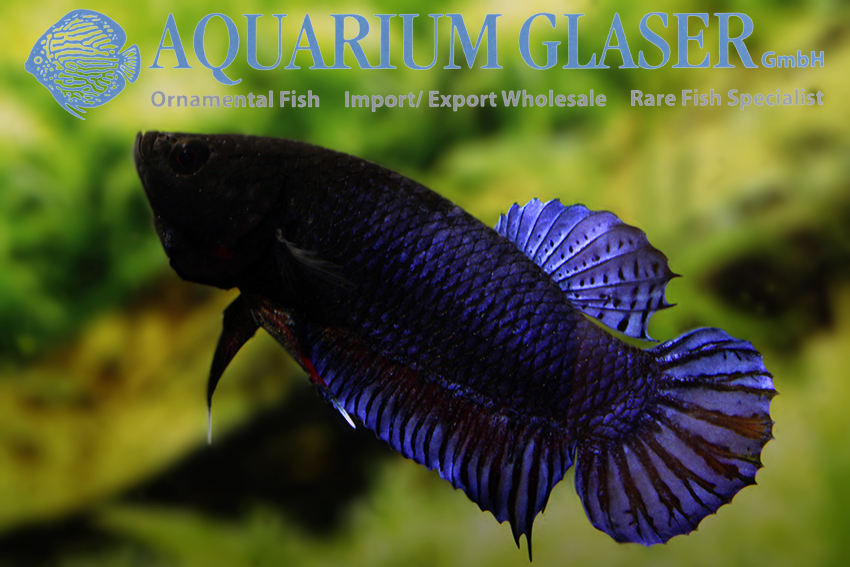
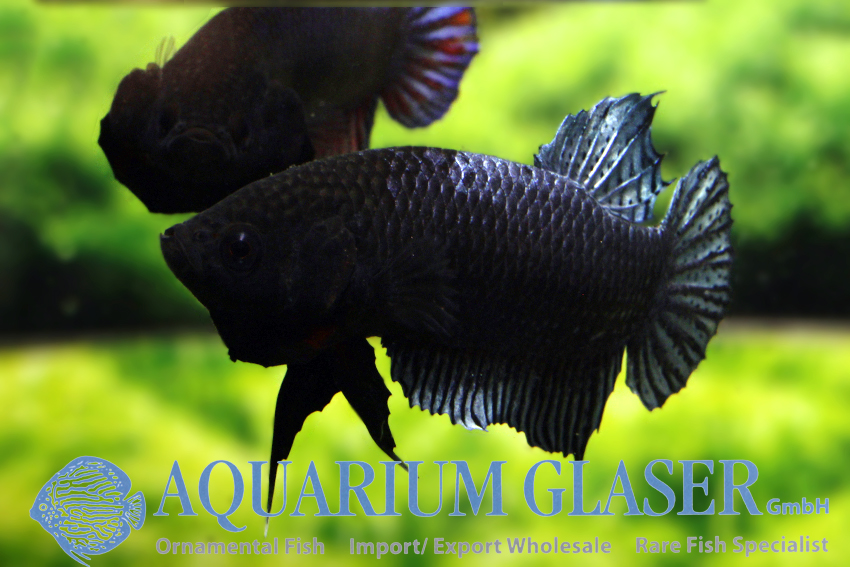
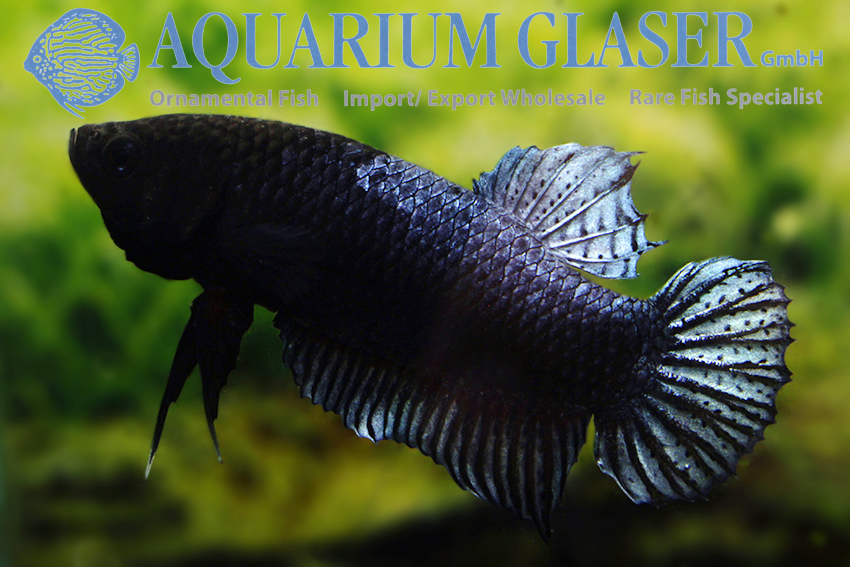
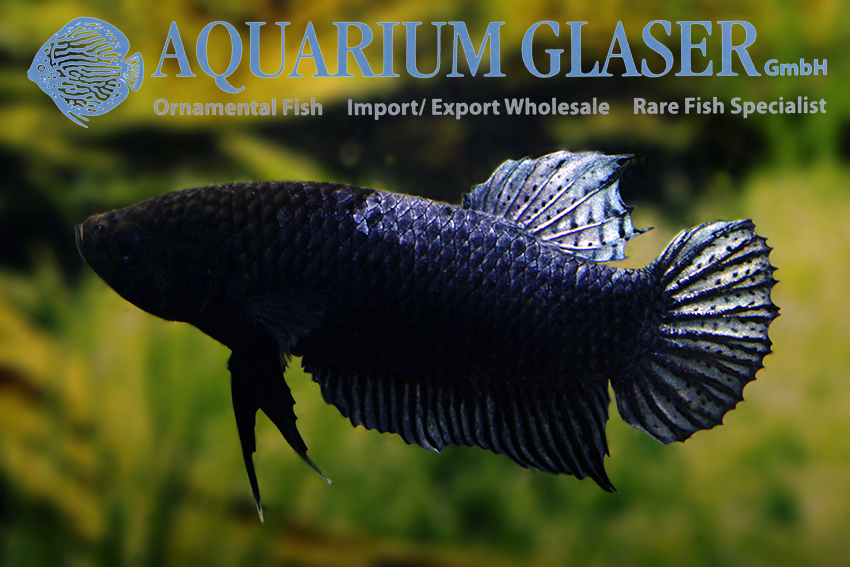
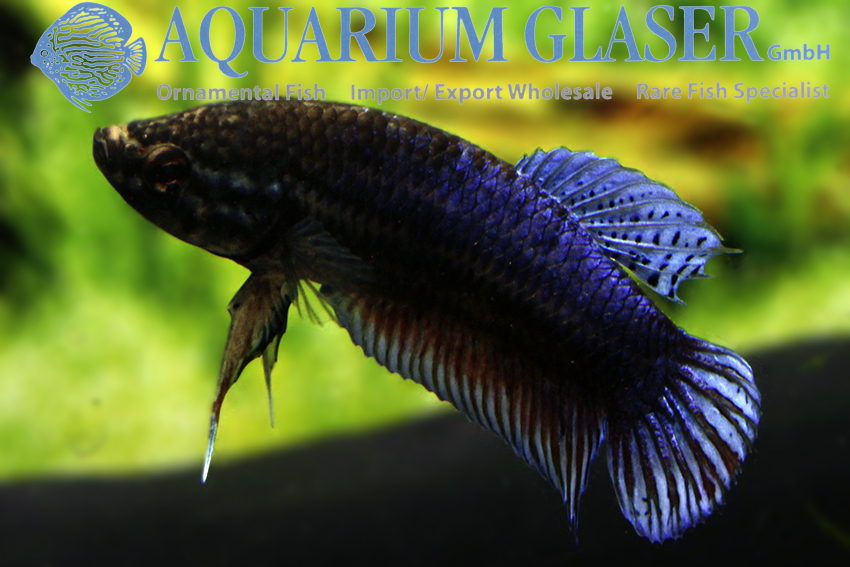
Another new sport of fighting fish: Fancy Dragon Pla Kat

9. June 2017

Fighting fish are absolutely popular currently. The splendid colours, the easy breeding, the interesting behaviour and the unproblematic keeping are the reasons. Against other fish than conspecifics Betta splendens are usually completely peaceful; the only general exception are fancy guppys, as these are often erronously taken for male fighting fish and attacked.

Until now the development of a long dorsal fin (this is a mutation) was bound to another mutation, the splittail. In splittails the tail fin is parted in two. So far splittails are bred only on veiltail varieties. It is necessary to know that the gene for „veiltail“ is dominant against the shorttail gene. So the breeder has to have a great deal of knowledge of genetics to breed shorttailed splittails. Shorttailed fish are generally named as pla kat. The Fancy Dragon Pla Kat that appeared now for the first time in the market has the long dorsal fin of the splittail, but a different shape of the caudal fin. The latter is rather a halfmoon, most probably because splittails are not very popular in central Europe. However, there are folds in the caudal fin, maybe a heritage of the splittail ancestor.

Each individual fish of the Fancy Dragon Pla Kat looks different. But in respect of the instinctive fighting behaviour they are typical fighting fish. The fight starts with a sinking of the bottom of the mouth and spreading of the gills and opercula; after that the fish start lateral displaying with maximum spread fins. The ventral fins are used like flags in that state of the fight. Only after a good while the fish start to a fight to damage the competitor. This begins with „empty“ bites against the fins. At that stage of the fight we separate the photomodels to avoid any hurts. If we would not do so the fish would start to bite in the fins (the Thai idiom pla kat means „biting fish“) which can look really destoyed after some time. However, the fight usually does not lead to the death of one of the competitors and the fins regenerate completely. Nevertheless it cannot be recommended to keep more than one male per tank.

Text & photos: Frank Schäfer
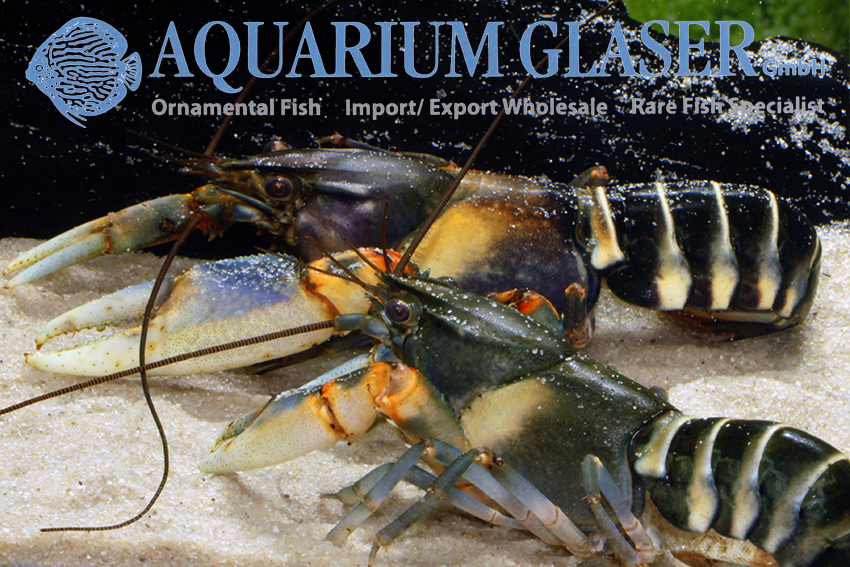
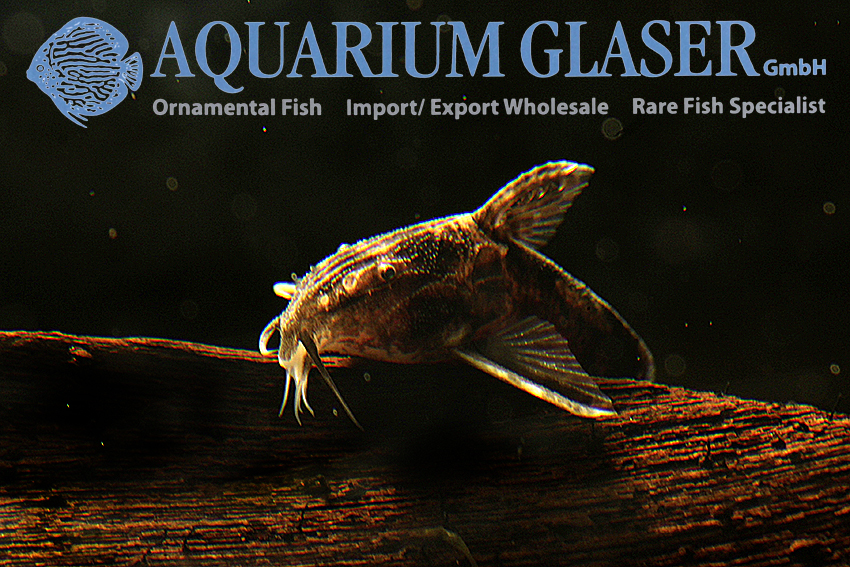
Rhynchodoras woodsi

9. June 2017

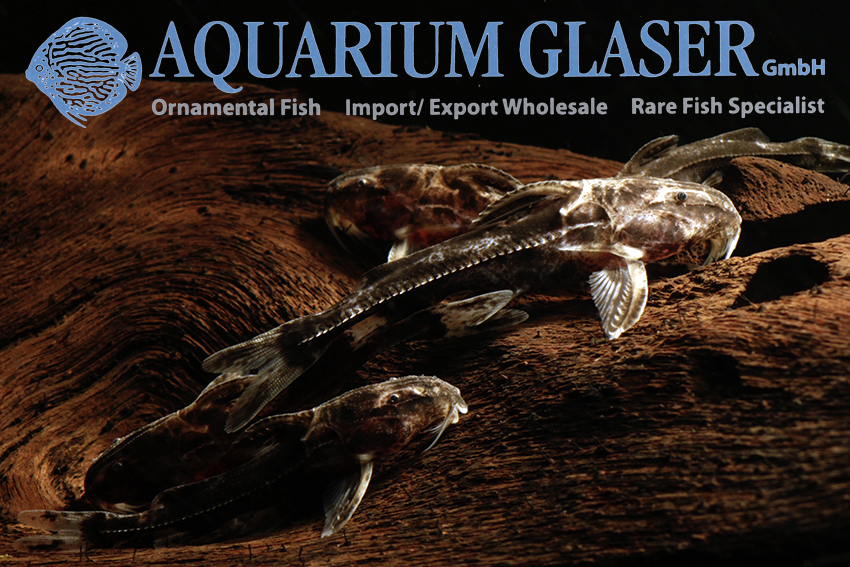
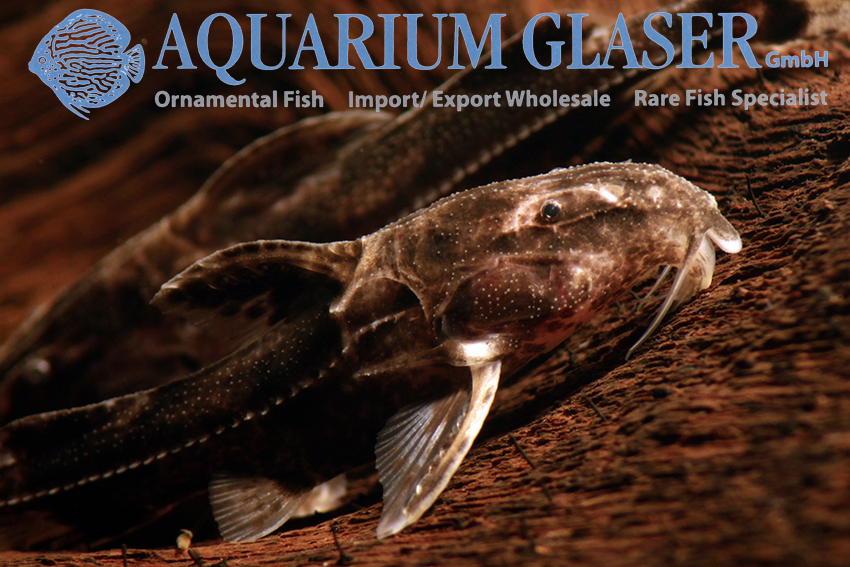
Only very rarely members of the enigmatic genus Rhynchodoras (family Doradidae) appear in the ornamental fish trade. It is believed that these fish live in the very riverbed where collectors of ornamental fishes usually do not fish at all. All species of Rhynchodoras have a strange appendix on the jaw that looks like a share; the function of this structure is unknown.

Three species are currently recognized in the genus, none of them is reported from Peru so far; our fish are from Peru. It is nevertheless very likely that our specimens belong to  Rhynchodoras woodsi, a species described in 1976 from the Rio Pastaza basin in Ecuador. It is reported so far (despite Ecuador) from the Amazon basin in Brazil (not in the rivers Xingu and Tocantins) and Guyana. Maximum length reported is 10.5 cm, our fish are currently 3-4 cm long.

For our customers: the fish have code 287511 on our stocklist. Please note that we exclusively supply the wholesale trade. Available in small numbers only!

Text & photos: Frank Schäfer
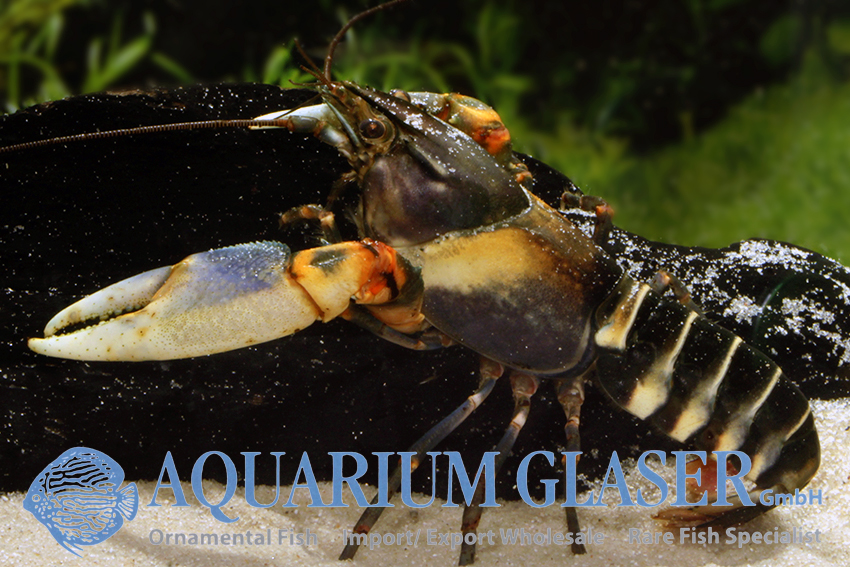
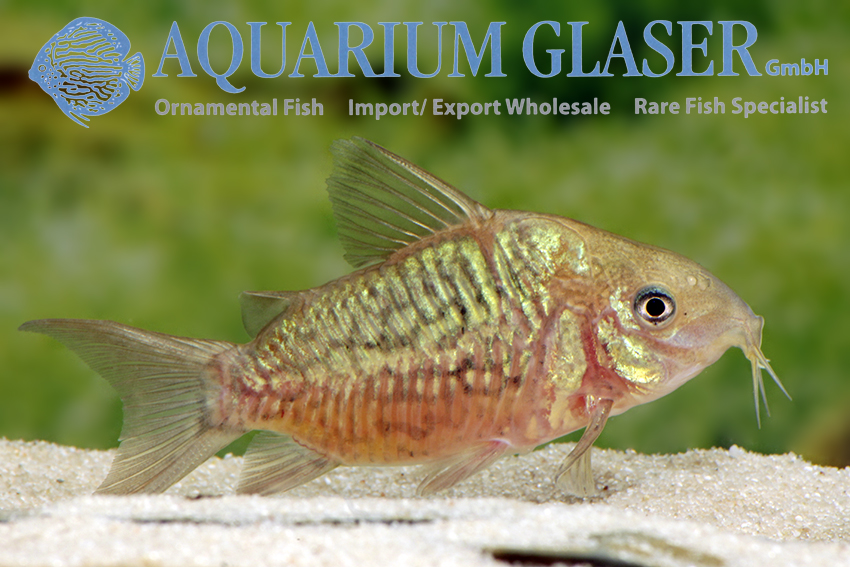
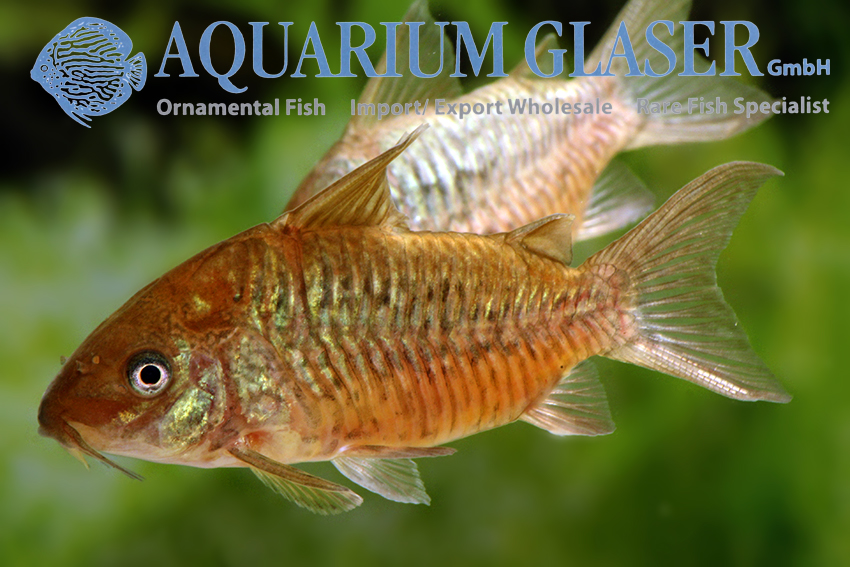
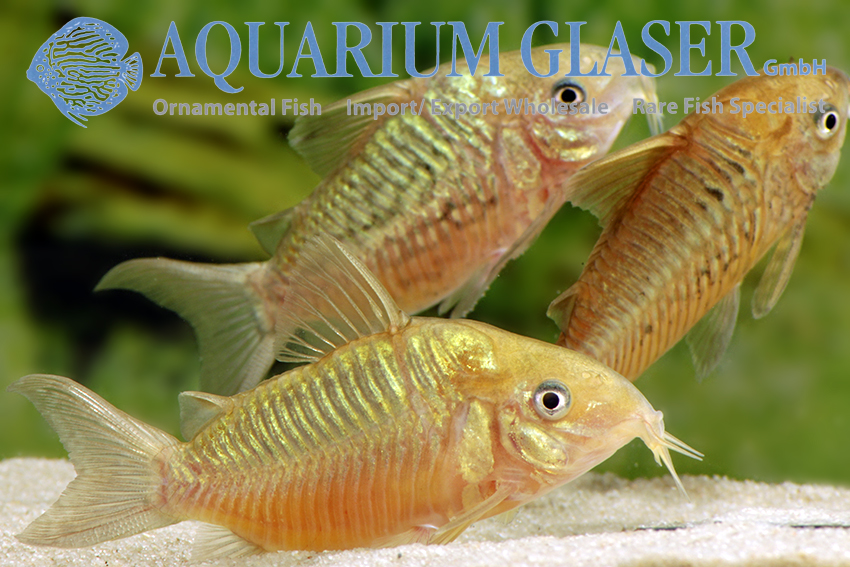
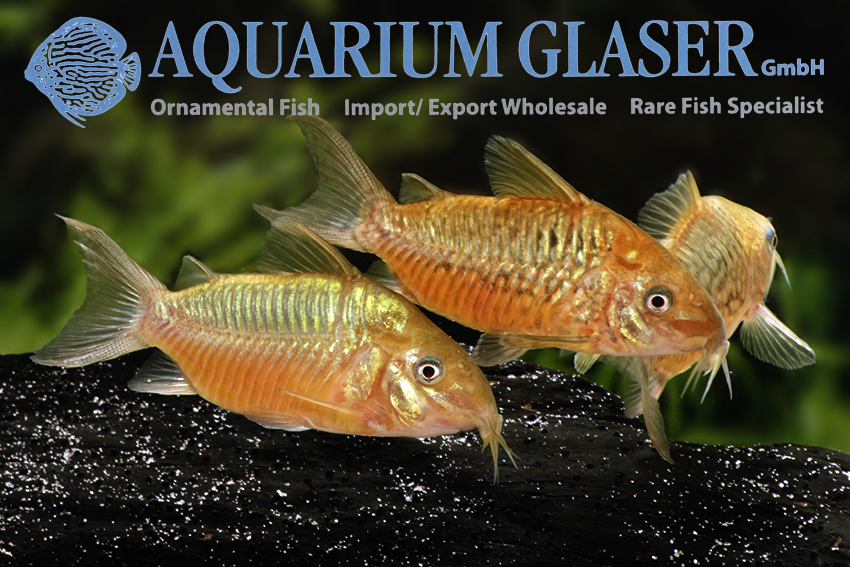
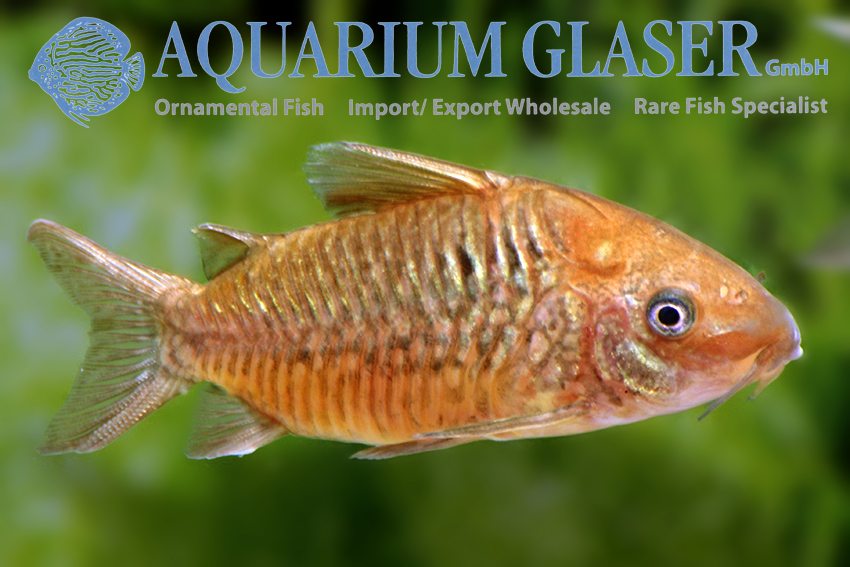
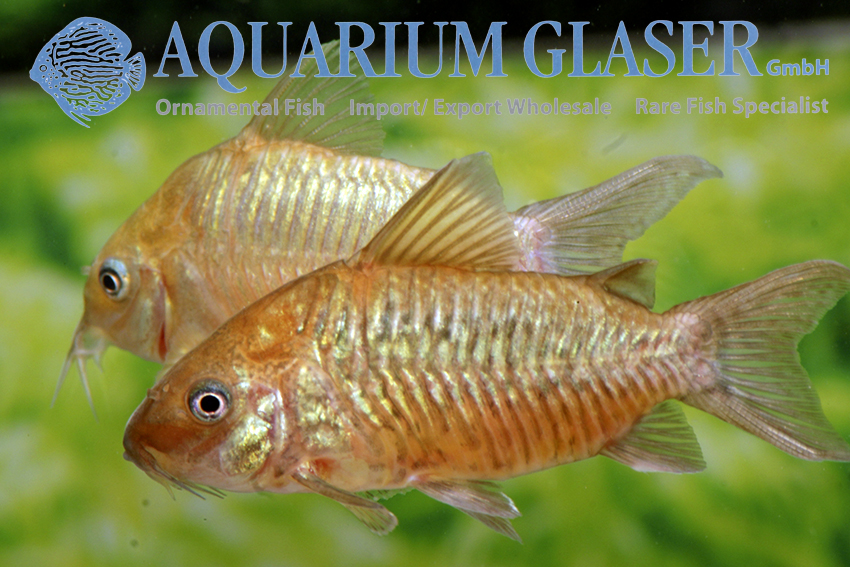
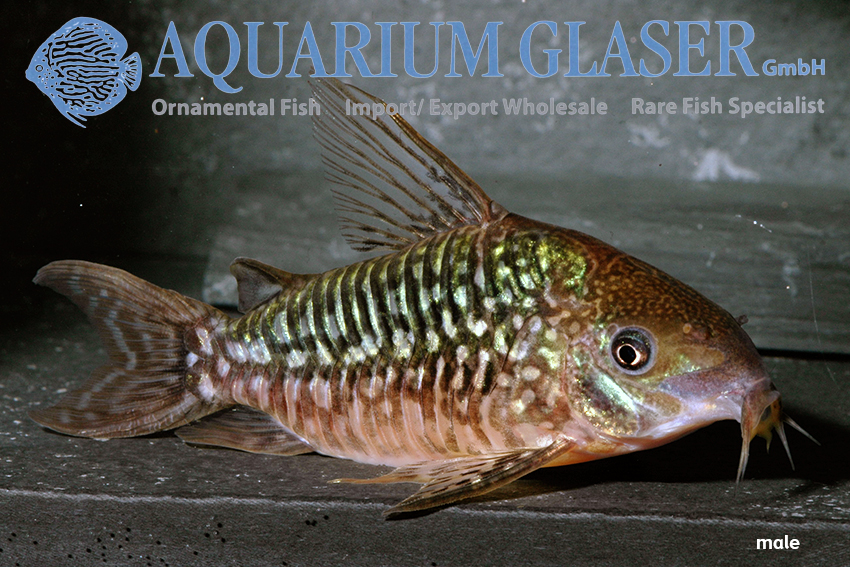
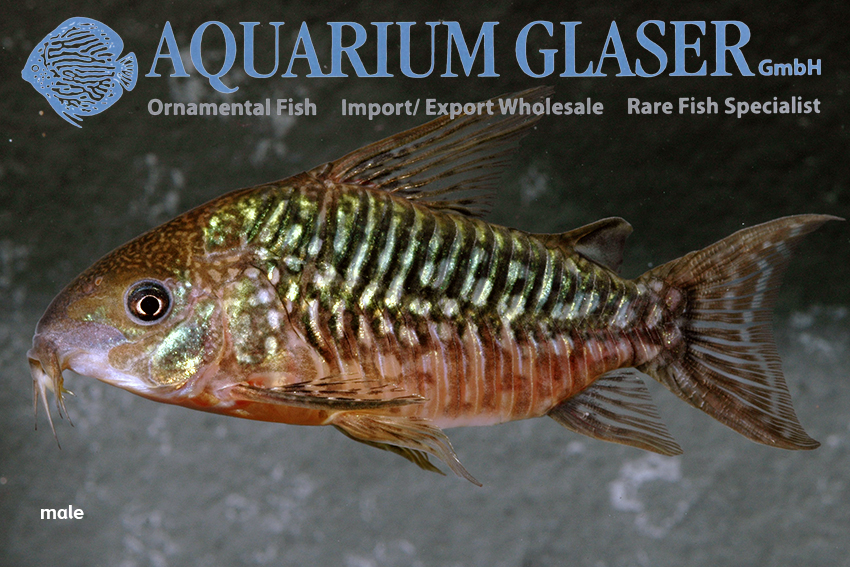
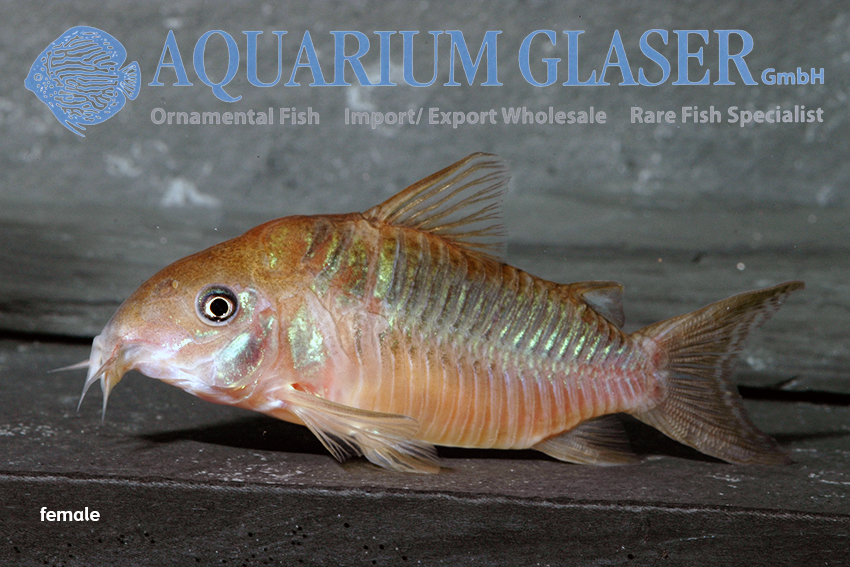
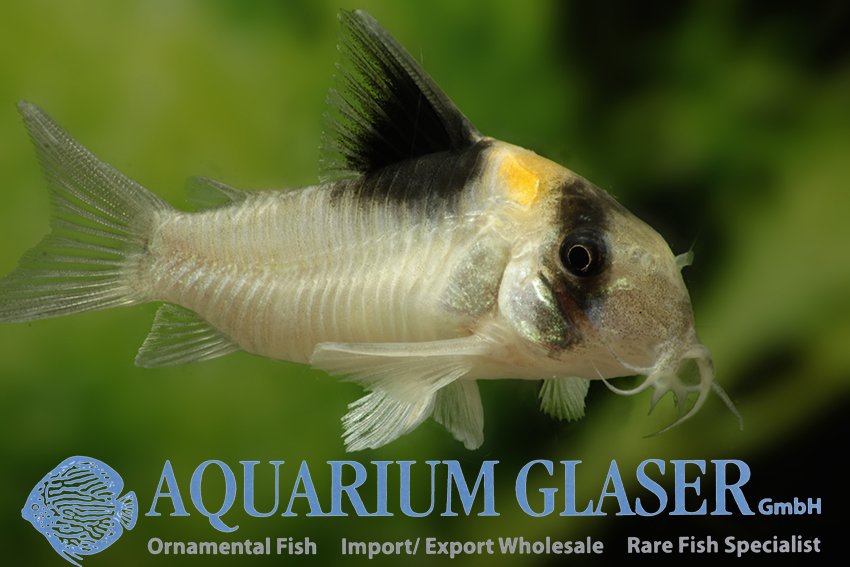
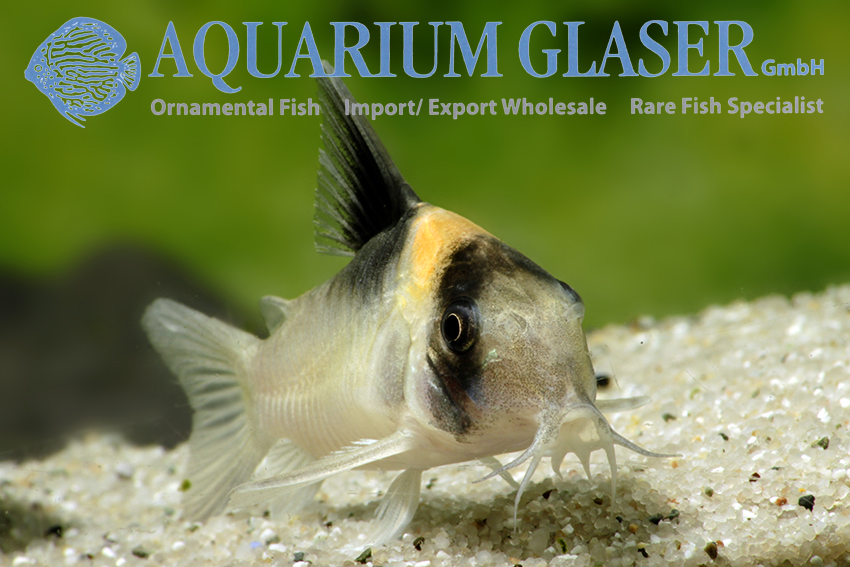
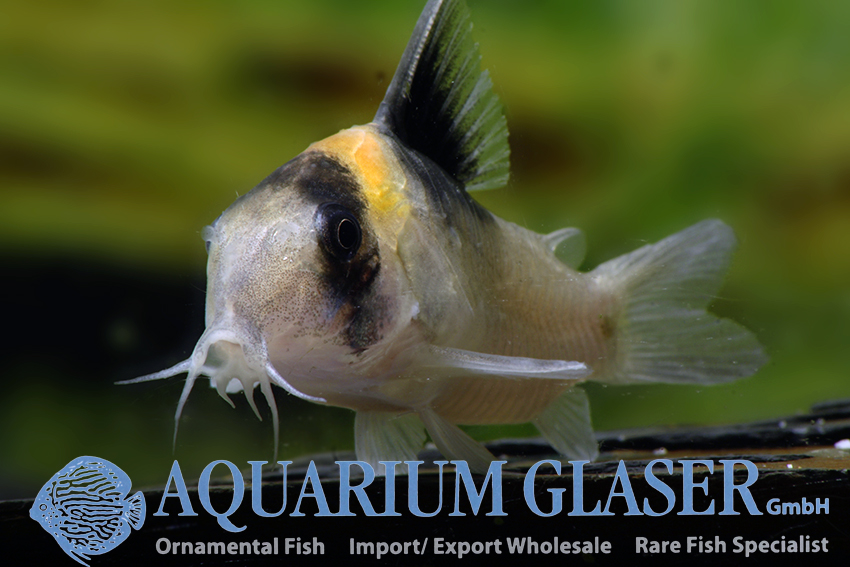
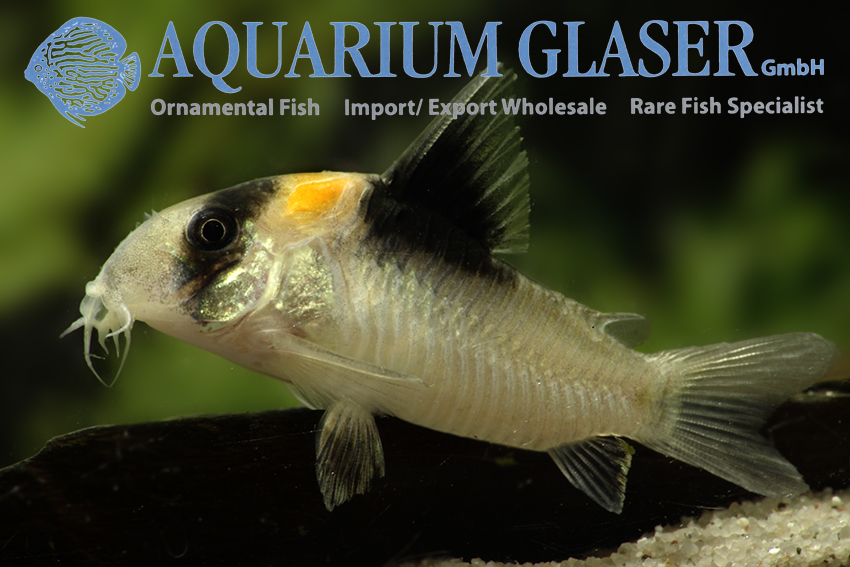
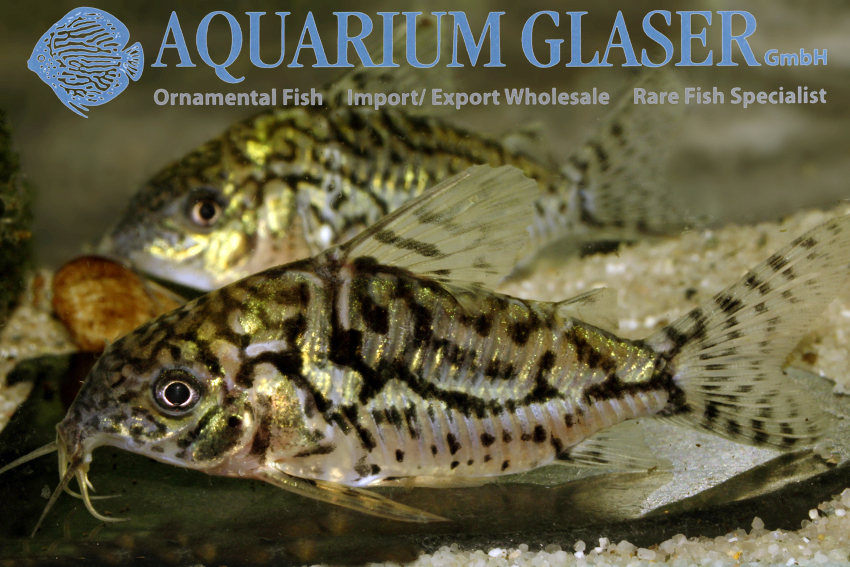
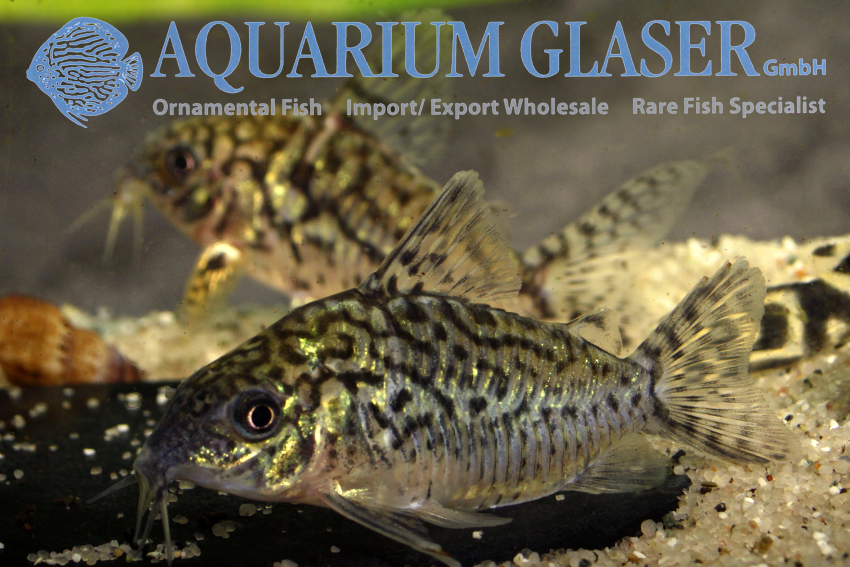
Corydoras elegans “Peru”

7. June 2017

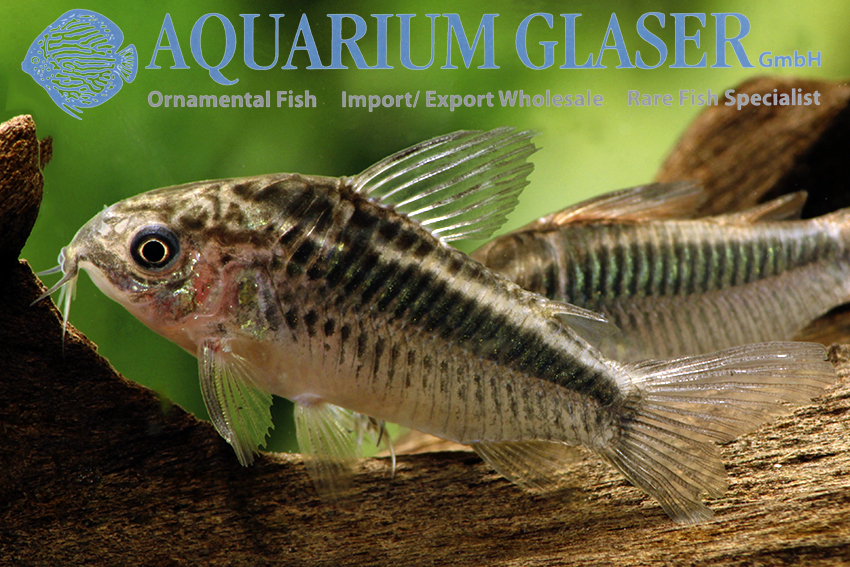
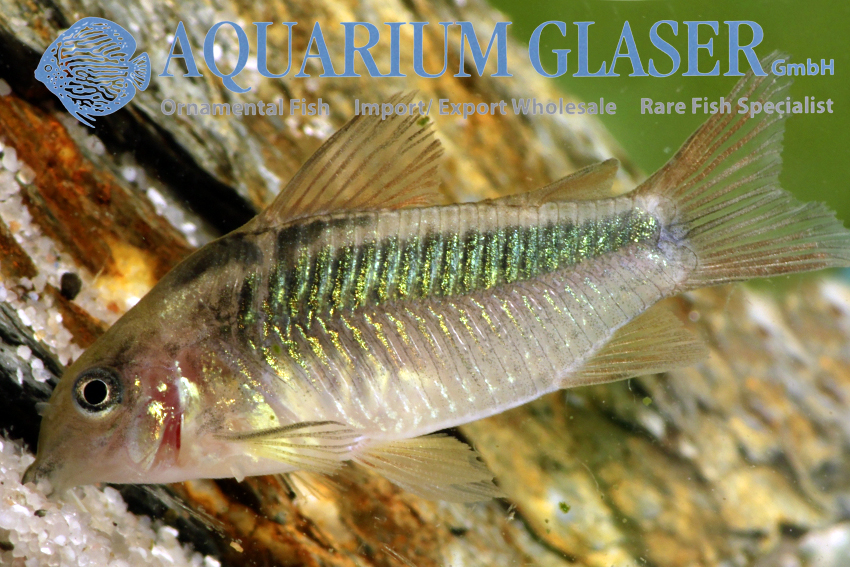
We received a small number of this pretty cory from Peru. It was shipped under the nice name „Corydoras Brilliante“. In fact the dark longitudinal band of the fish shines in a bright emerald green when the reflecting light comes in the correct angle, but all in all the fish is „only“ a local variety of Corydoras elegans as it currently understood; C. elegans has a very wide distribution in the Amazon basin. However, on the other hand, a good number of doubts exist that all the „varieties“ applied to C. elegans really represent only one species.

A close look shows differences in coloration. The Peruvian fish have – in contrast to specimens from Brazil, the type locality of C. elegans is near Tefé – a short dark band in the neck that end below the dorsal fin. This shot band is well separated from the usual longitudinal dark band along the complete body that is so typical for C. elegans. This coloration of the Peuvian fish fits perfectly to the pictures made in the 1940ies from a species named Corydoras pestai. The scientific description of C. pestai bases on a specimen imported by the aquarium trade and exhibited with some conspecifics in the zoological garden of Munich, Hellabrunn. The type locality is unknown, and the type specimen destroyed during a bombing attack in WW2.

Nowadays Corydoras pestai is considered to be a synonym of C. elegans, but due to the lack of a type specimen this synonymization is not very certain. Maybe the „Brilliante“ is a C. pestai? Anyway, we name them Corydoras elegans „Peru“…

For our customers: the fish have code 229053 on our stocklist. Please note thta we exclusively supply the wholesale trade. Available in very small numbers only!

Text & Photos: Frank Schäfer

Wallaceochromis signatus

6. June 2017

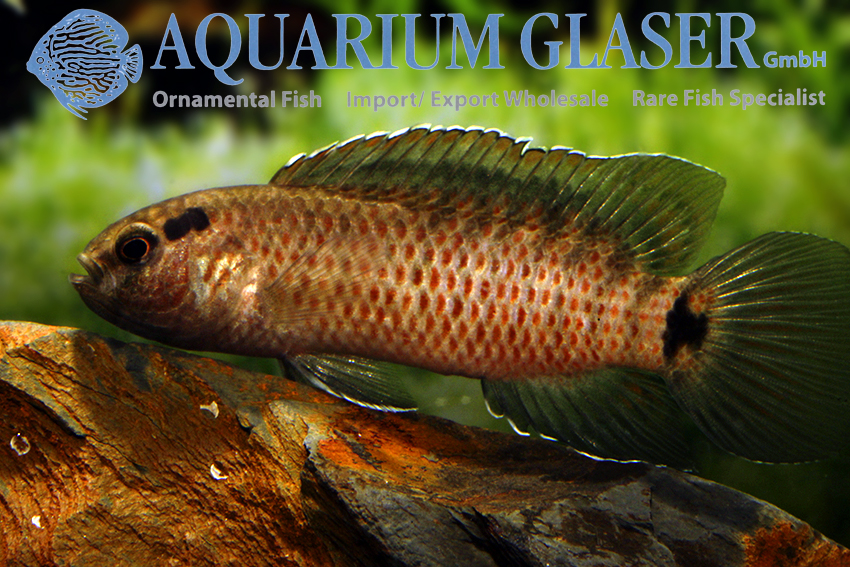
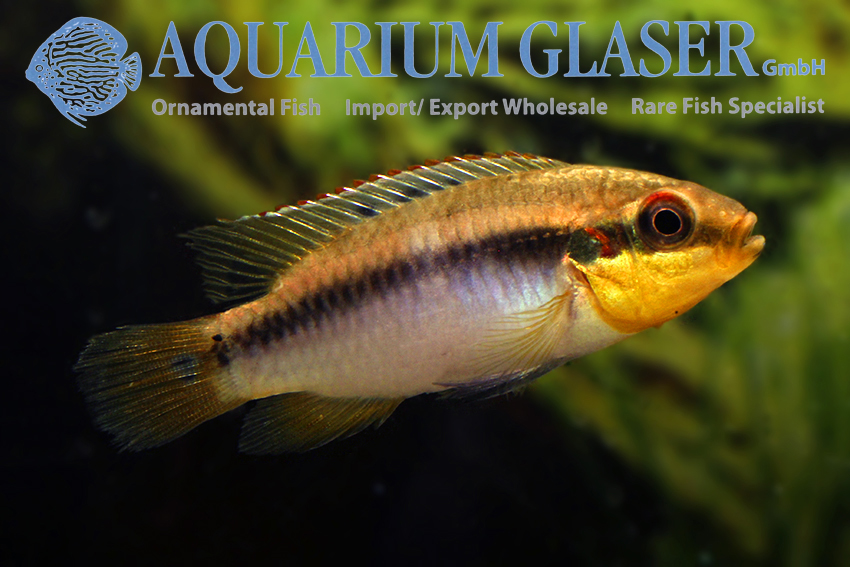
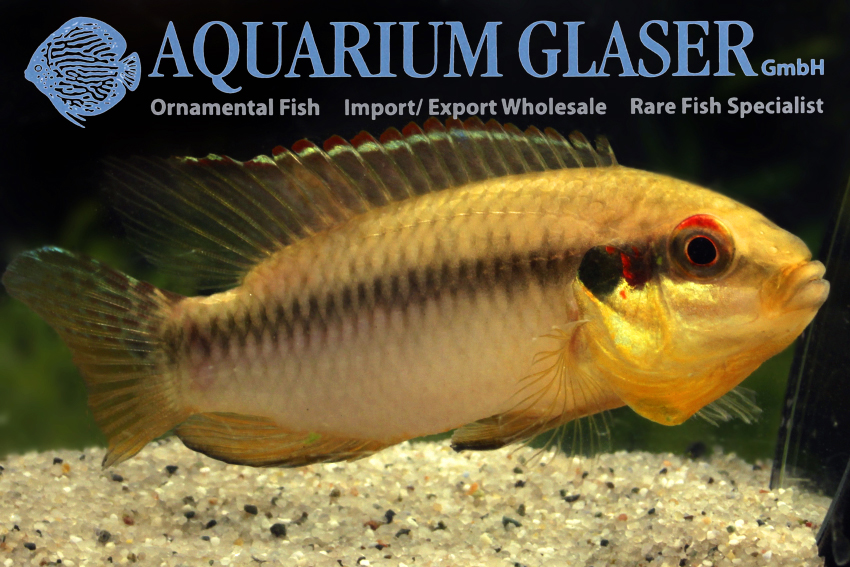
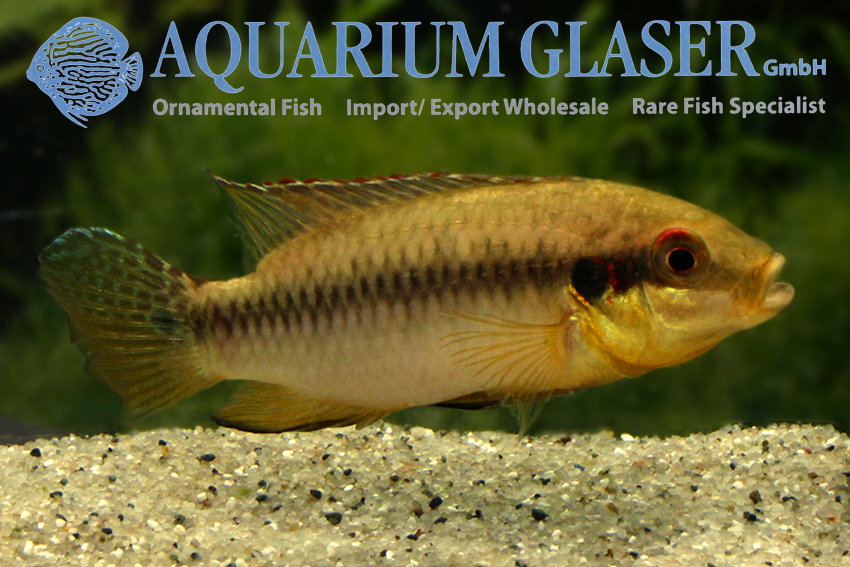
Prior to its scientific description this species as been known in the hobby under the names of Pelvicachromis sp. „Bandi1“ or „Guinea“. The species can be always easily recognized by the black tailspot of the female. Usally the female has only one black spot in the dorsal fin; the fact that the photomodel from our current stock has two spots in der dorsal bases on an individual aberration. The many spots in the dorsal fin in the male is also species-specific for Wallaceochromis signatus.

The cichlids love to dig! One should keep all these dwarf cichlids always in a tank that contains at least in part a soft sandy bottom. Digging in the sand serves not only to let the fish feel comfortable, but it is also very healthy for them.

For our customers: the fish have code 560454 on our stocklist. Please note that we exclusively supply the wholesale trade. Available in small numbers only!

Text & photos: Frank Schäfer
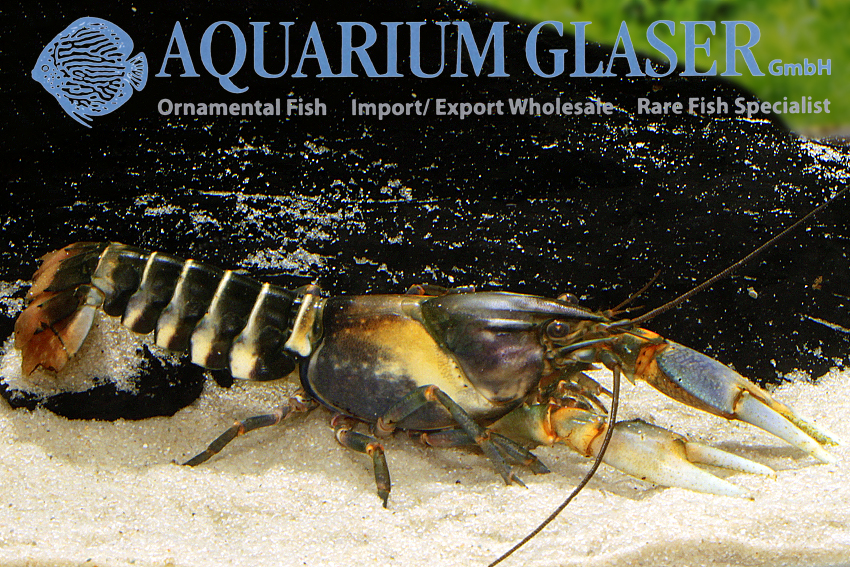
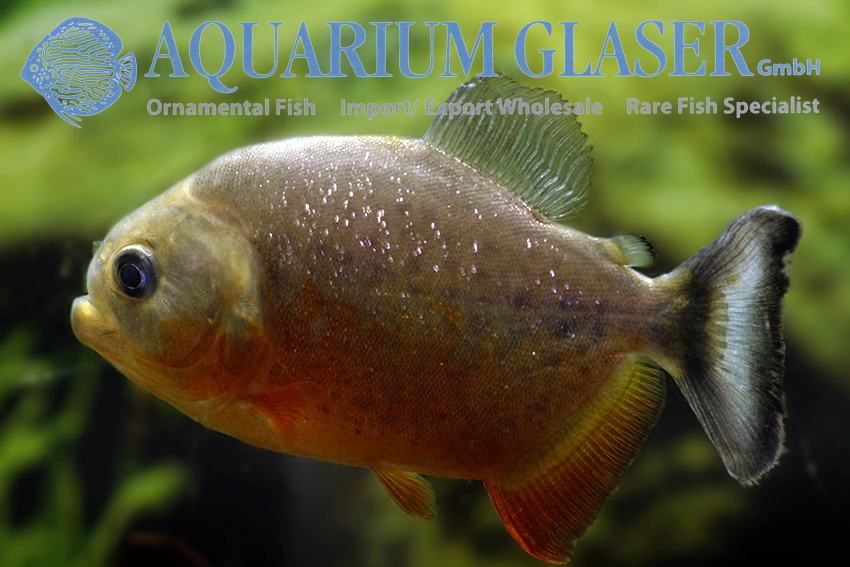
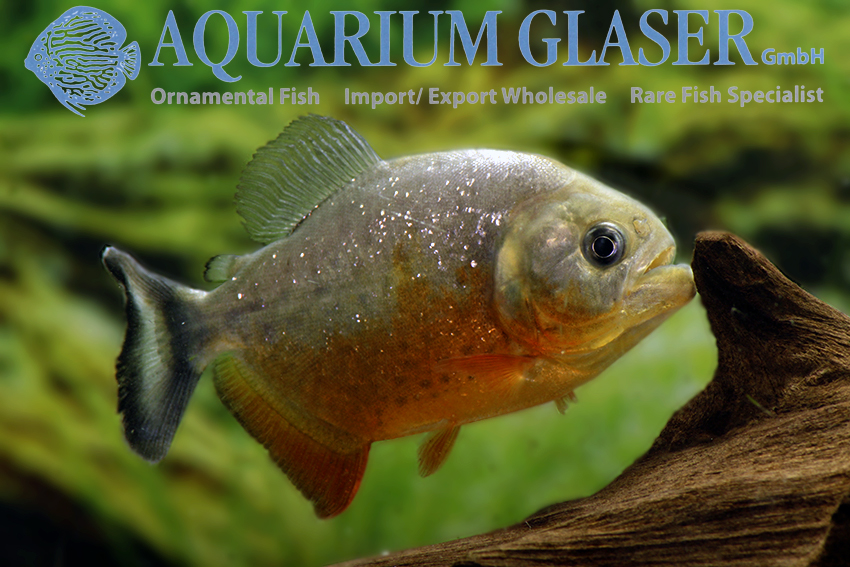
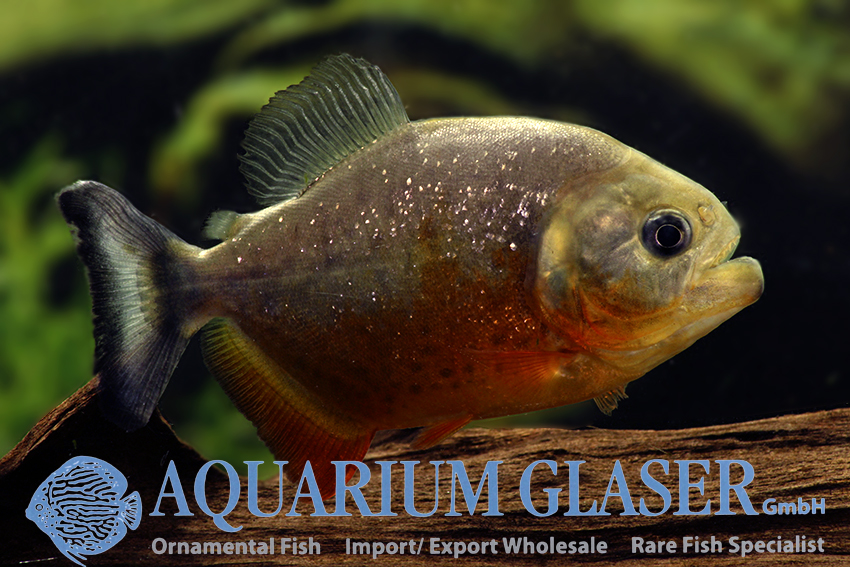
Pygocentrus piraya

3. June 2017

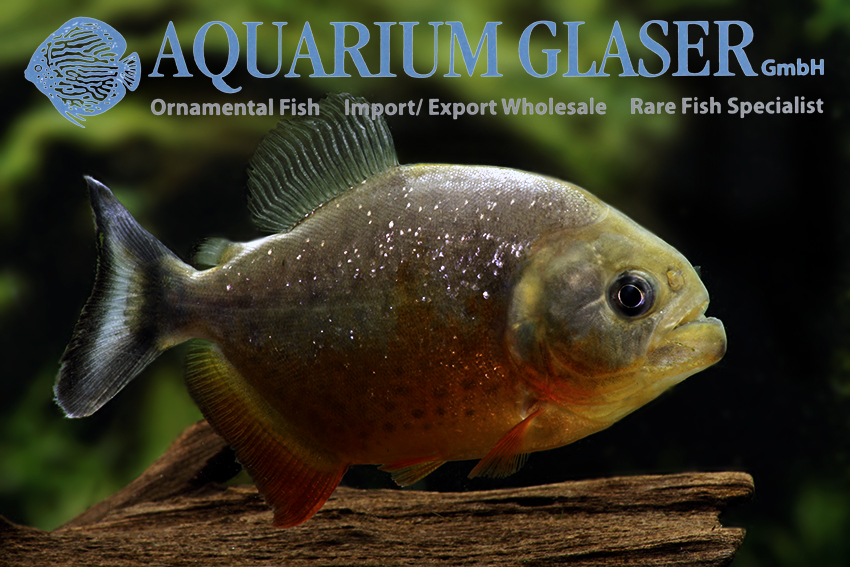
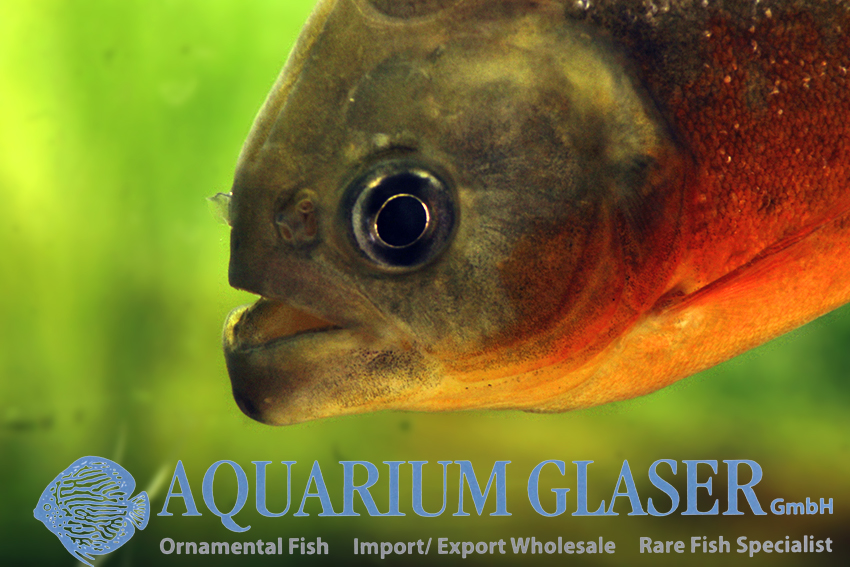
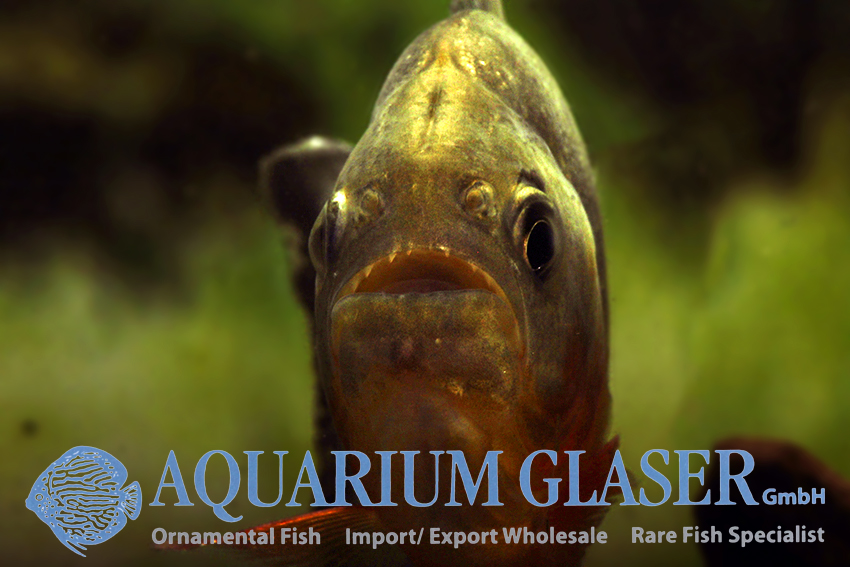
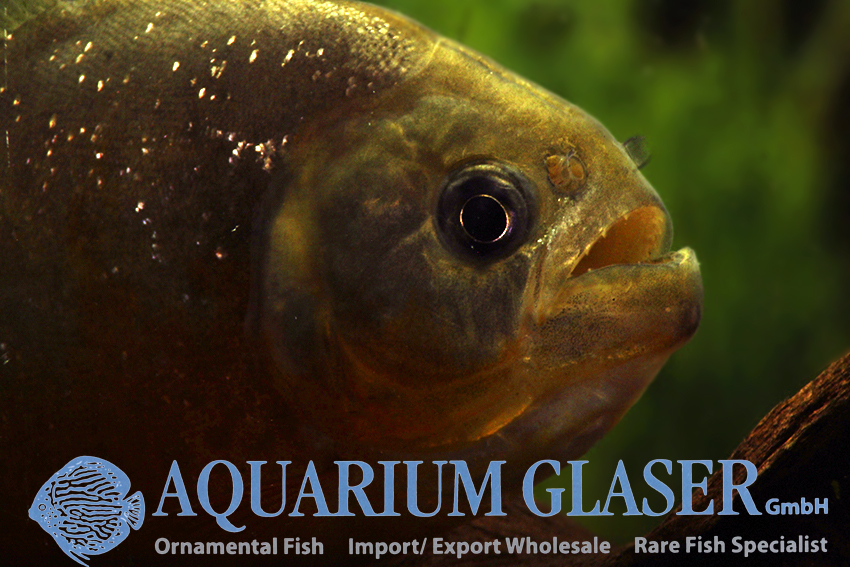
The „real“ piranha, Pygocentrus piraya, is restricted to the river system of the Sao Francisco in southern Brazil. It is a up to 30 cm long species, which is characterized by its deep red breast and the mighty jaws when it is fully grown.However, even juveniles display a very attractive coloration.

Most piranha species belong to the genus Serrasalmus. Externally Pygocentrus and Serrasalmus are very similar, but the behaviour of the members of the two genera is completely different. All Serrasalmus are fin eaters and solitary fish whereas all three Pygocentrus species (P. caribe, P. nattereri and P. piraya) are schooling fish.

This means that P. piraya should be kept in real big aquaria, as it becomes a large fish and must be kept in groups. When they reach maturity, pairs build up small territories (places around large plants are most wanted). They dig out spawning pits by hitting away the gravel with the caudal fin and defend this against other fish. Only the male defends eggs (many thousands) and fry. The brood care ends when the young become free swimming.

Usually no piranha will attack a human being. Nevertheless you should keep respect as the fish have razorsharp teeth and can give really heavy bites. There is only real danger when the aquarium is too small for the fish and they cannot get out of the way or during feeding times, as by chance the piranha can take the keeper’s finger for food by mistake.

All in all P. piraya is a gorgeous fish for show tanks where it can also show its faszinating and highly developed behaviour.

Text & Photo: Frank Schäfer

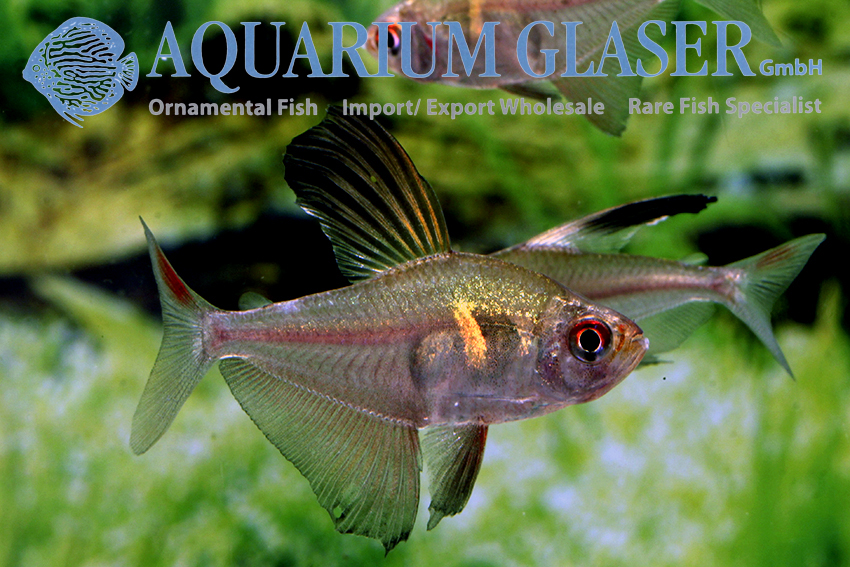
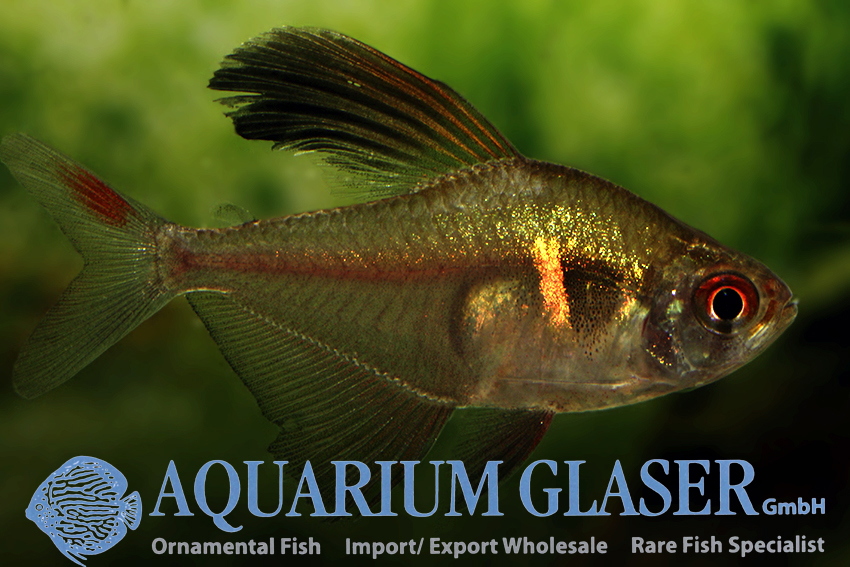
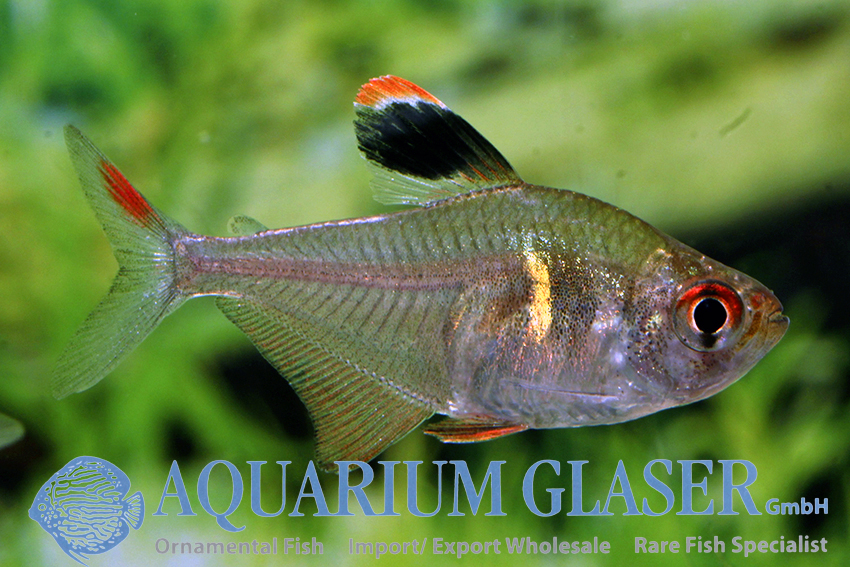
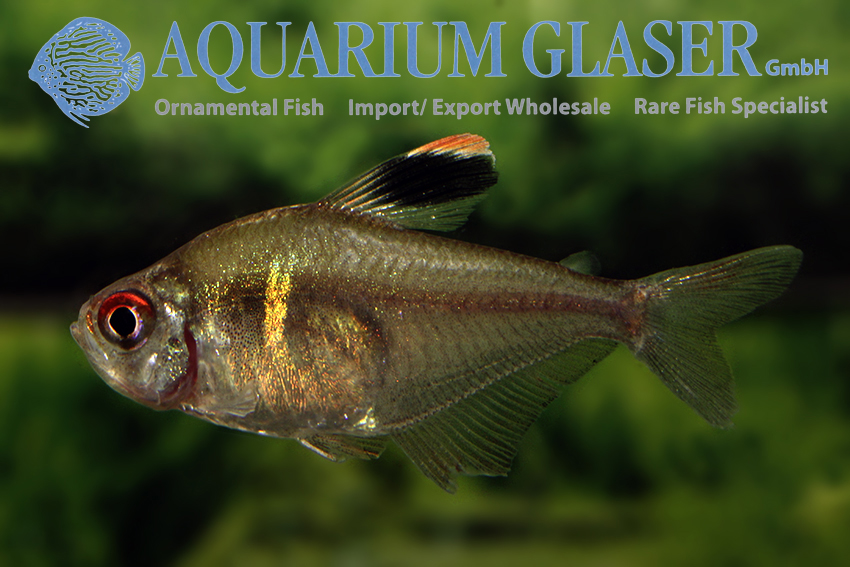
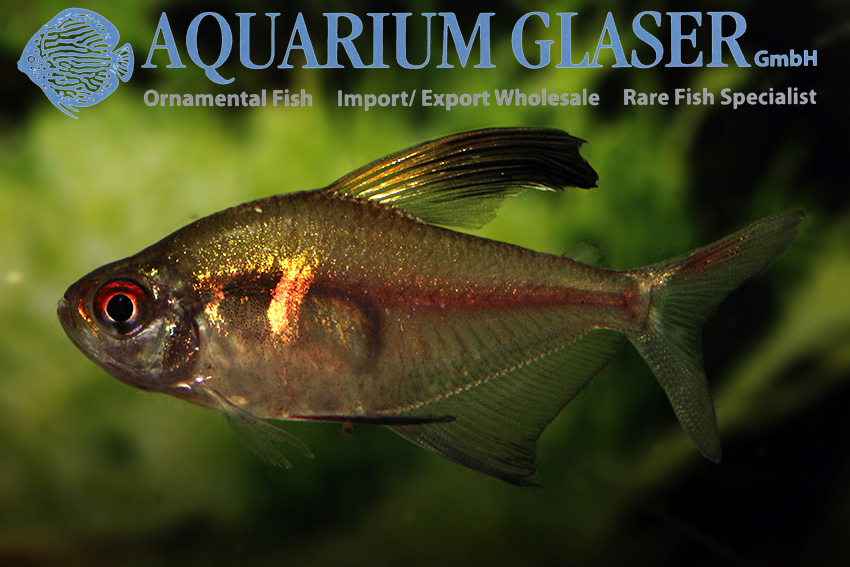
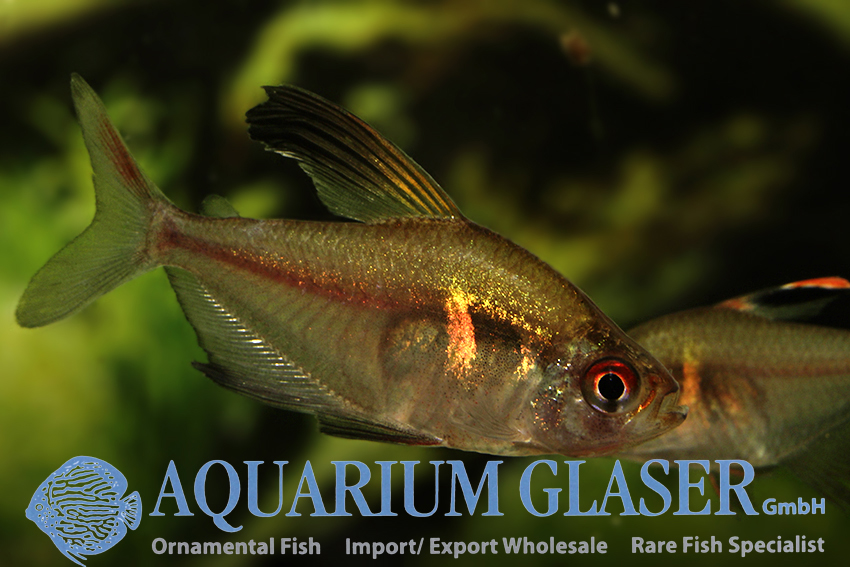
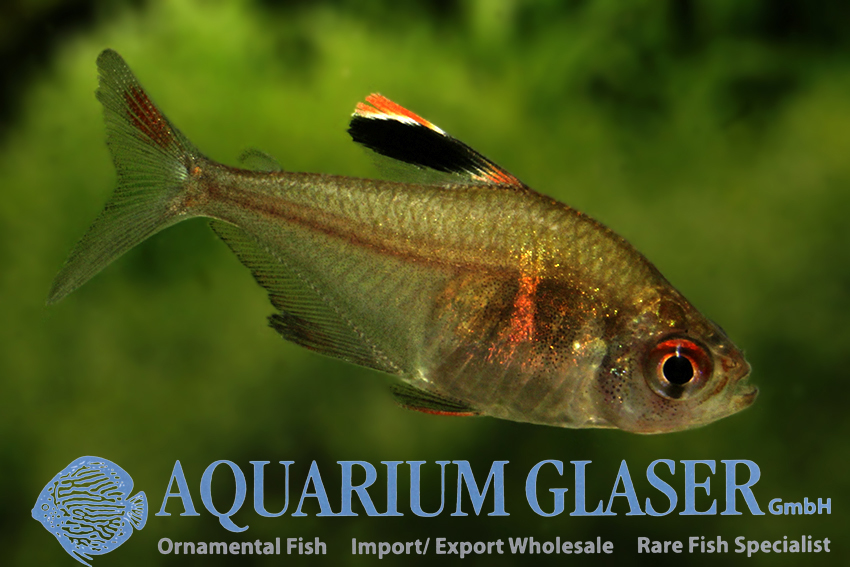
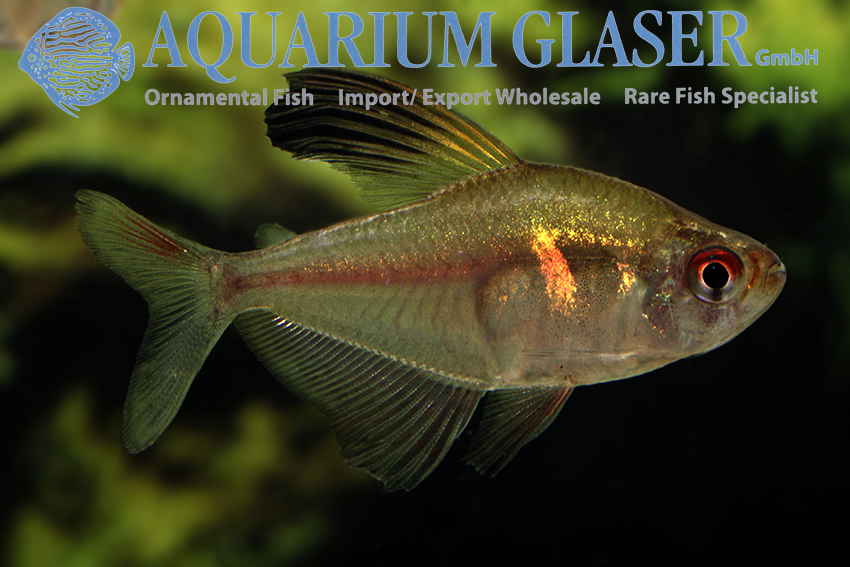
Hyphessobrycon herbertaxelrodi Wild

3. June 2017

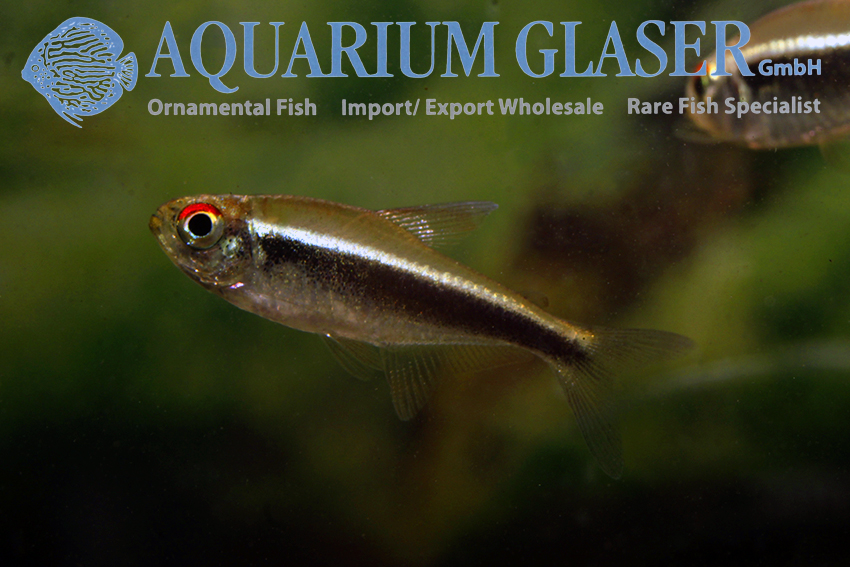
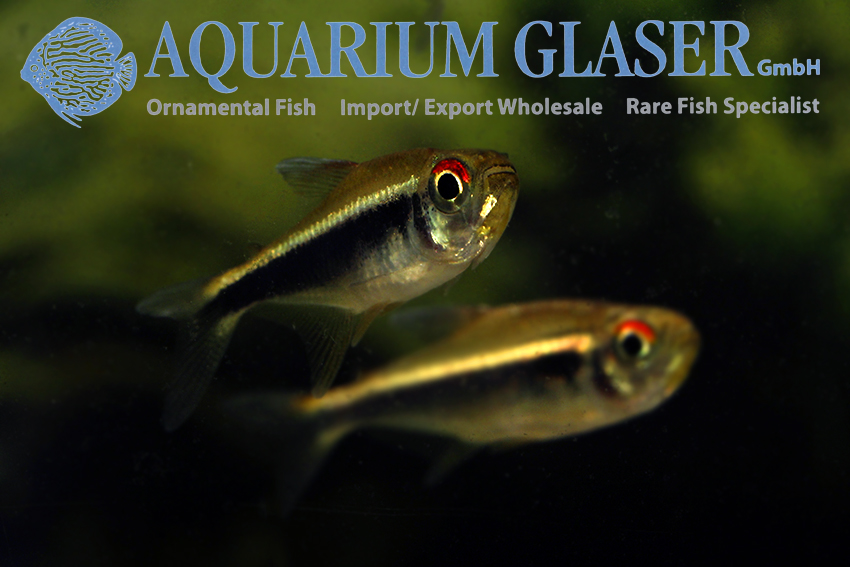
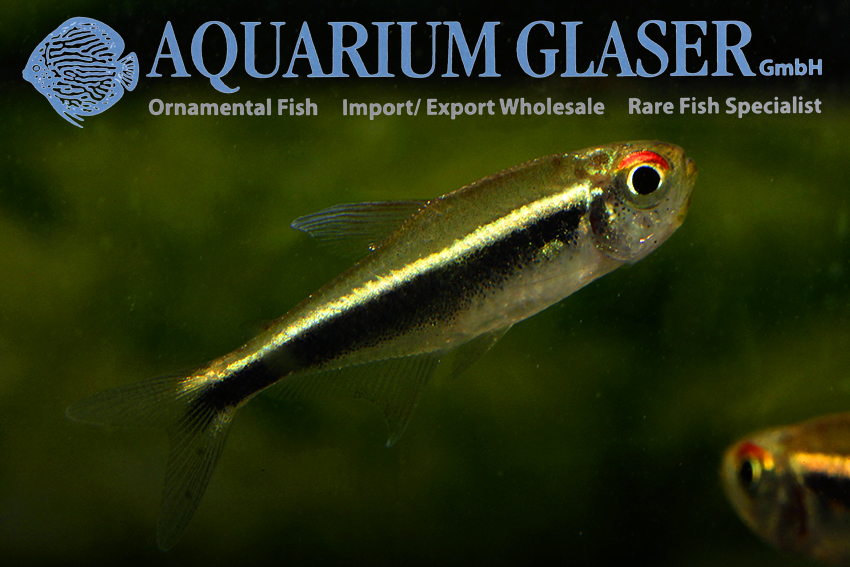
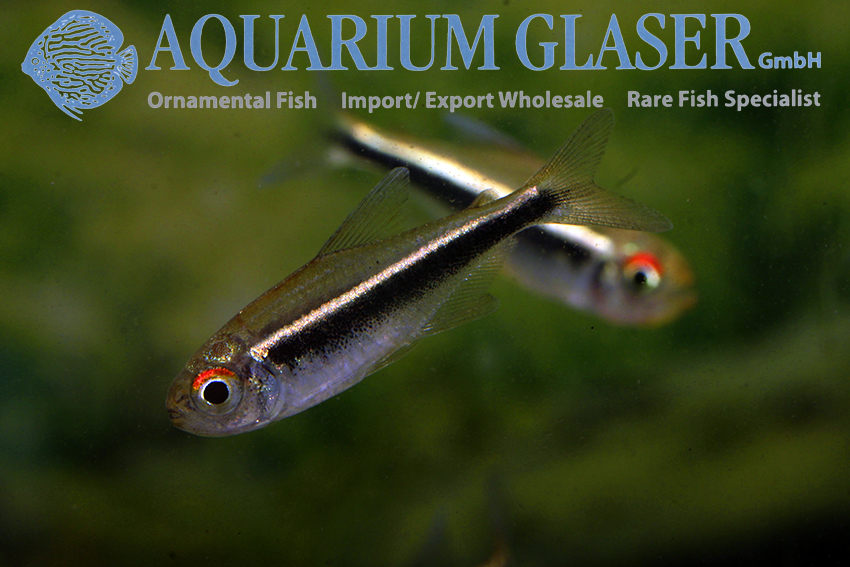
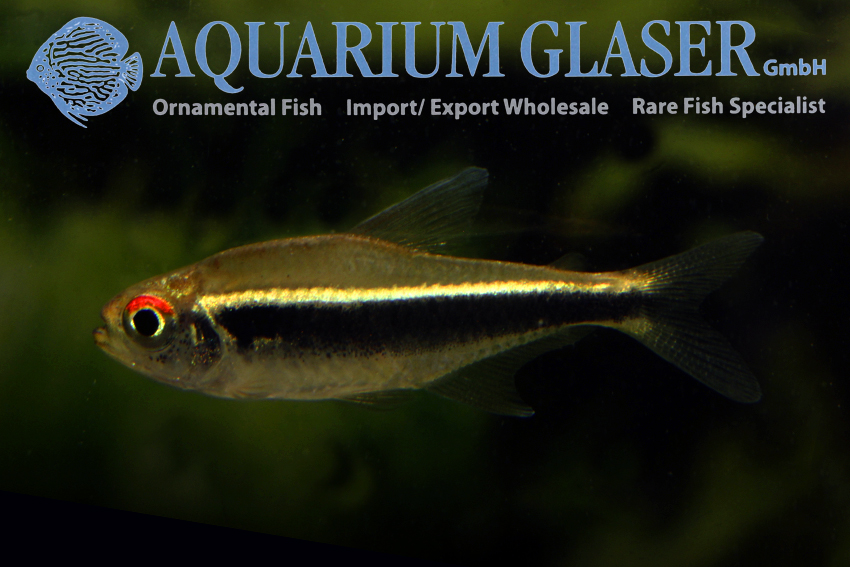
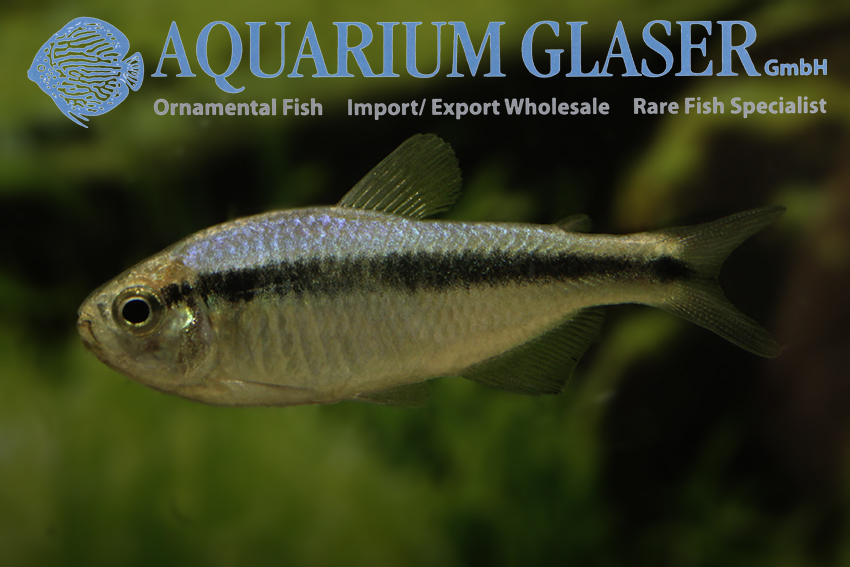
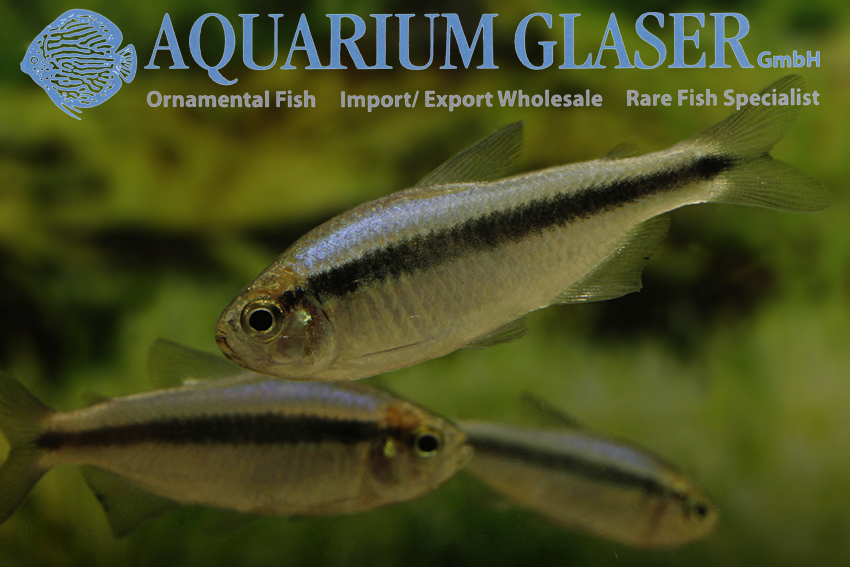
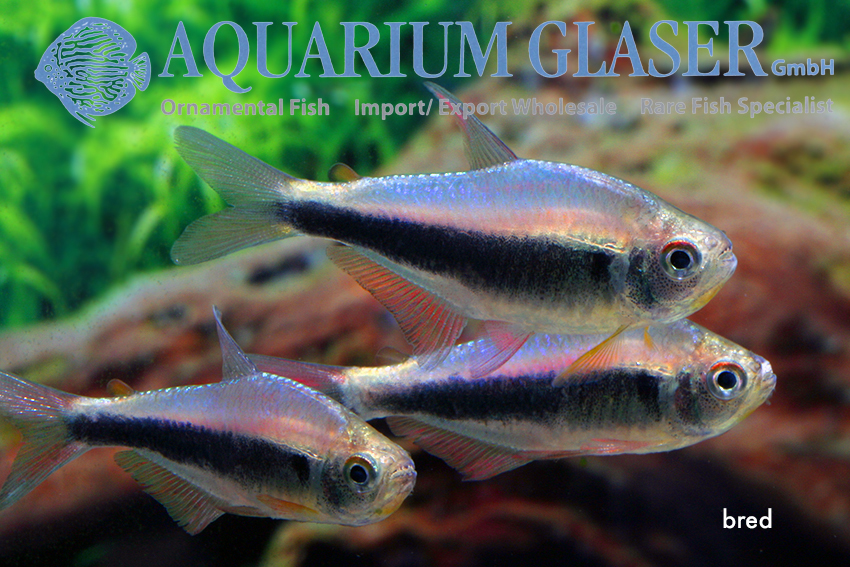
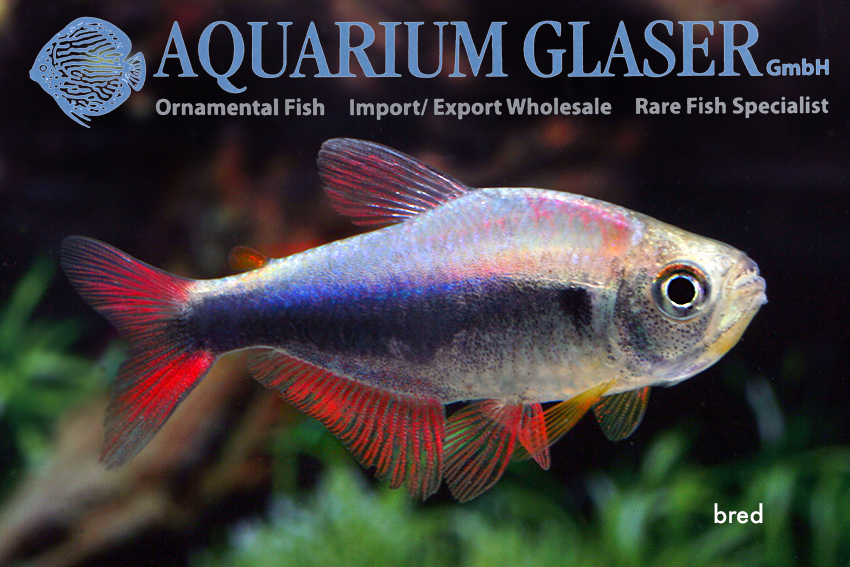
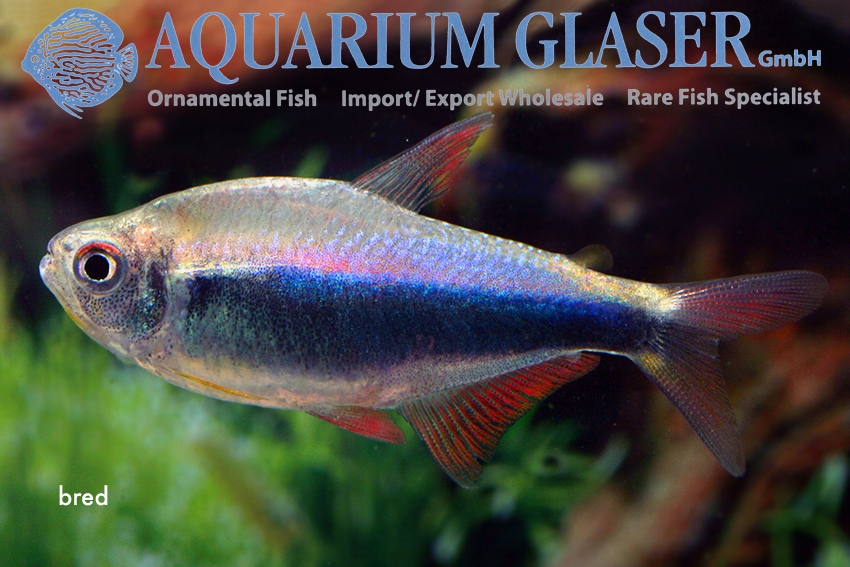
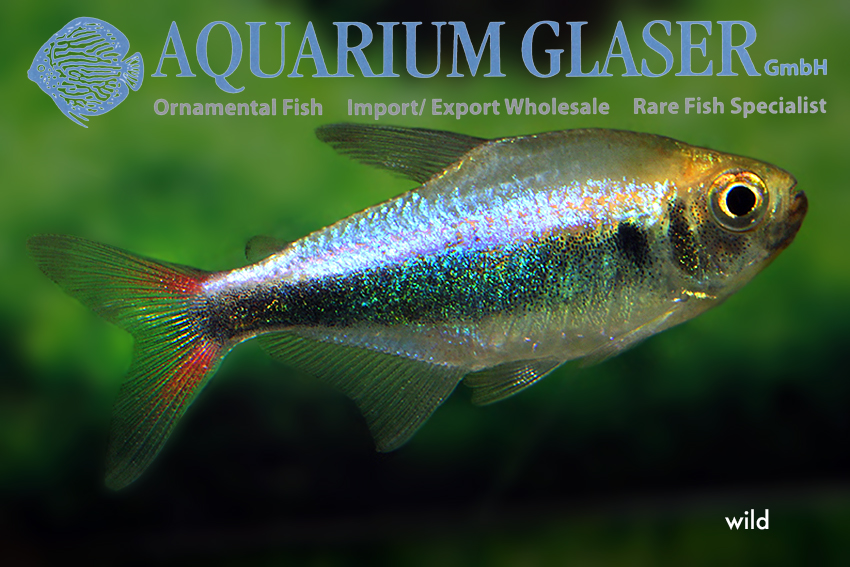
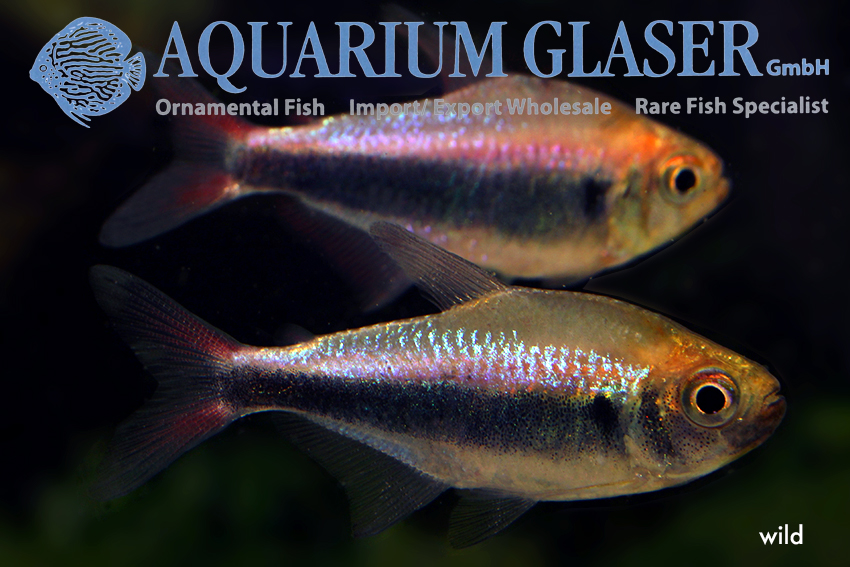
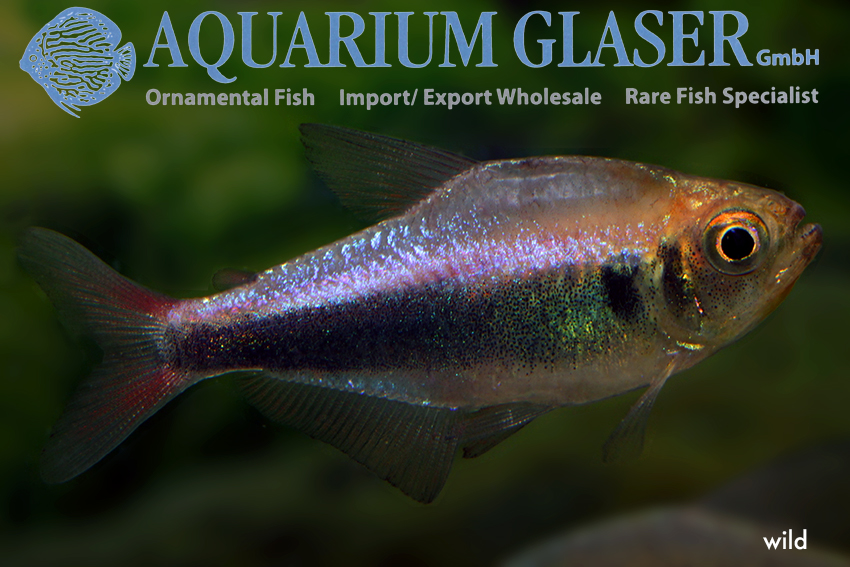
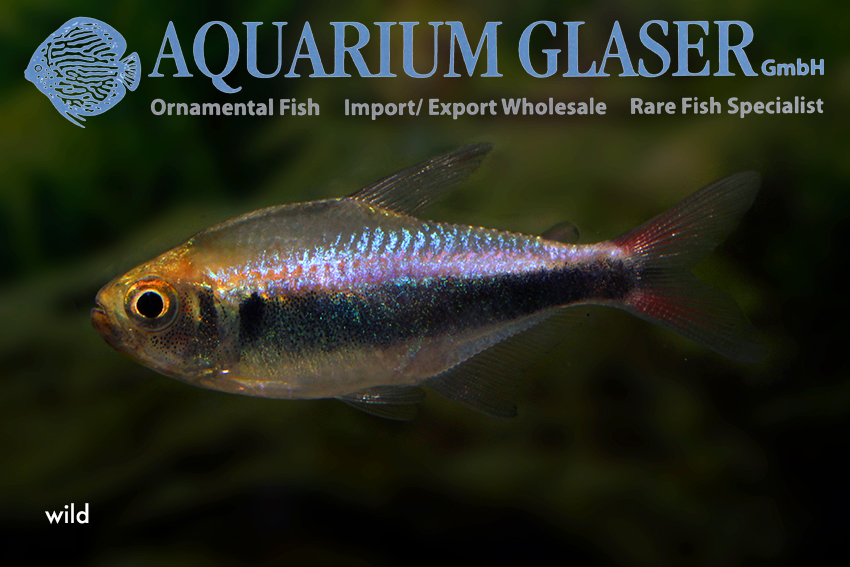
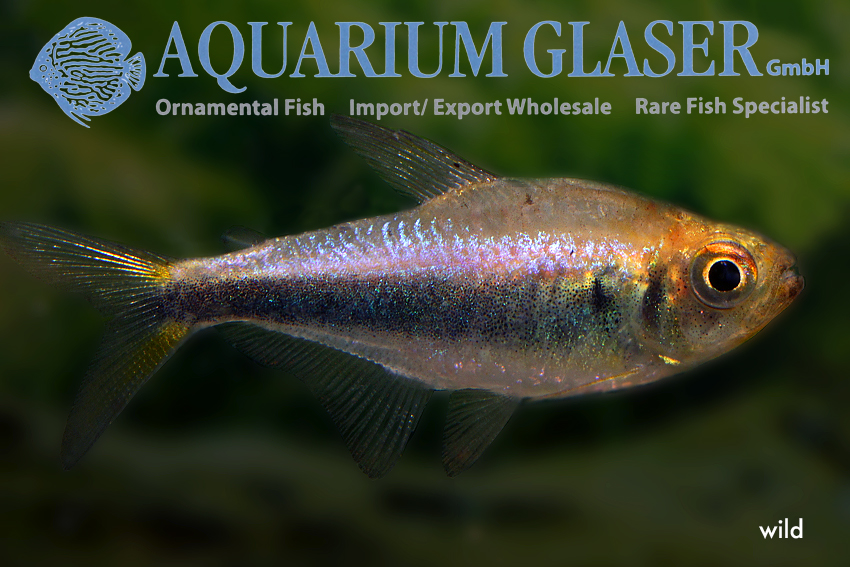
Wild collected black neon tetra? This is extremely rare, even in our company. The black neon tetra is one of the most often traded ornamental fish at all and much sought for. So it is available any time in any number as bred ones, even some artifical sports have been bred, like „smoke“ or „albino“. These bred fish are also always much cheaper than a wild collected fish can be. So we are very glad that we now managed a small importation of wild collected animals. The species originates from the Rio Paraguay basin in Brazil and Bolivia.

For our customers: the fish have code 260913 on our stocklist. Please note that we exclusively supply the wholesale trade.

Text & photos: Frank Schäfer
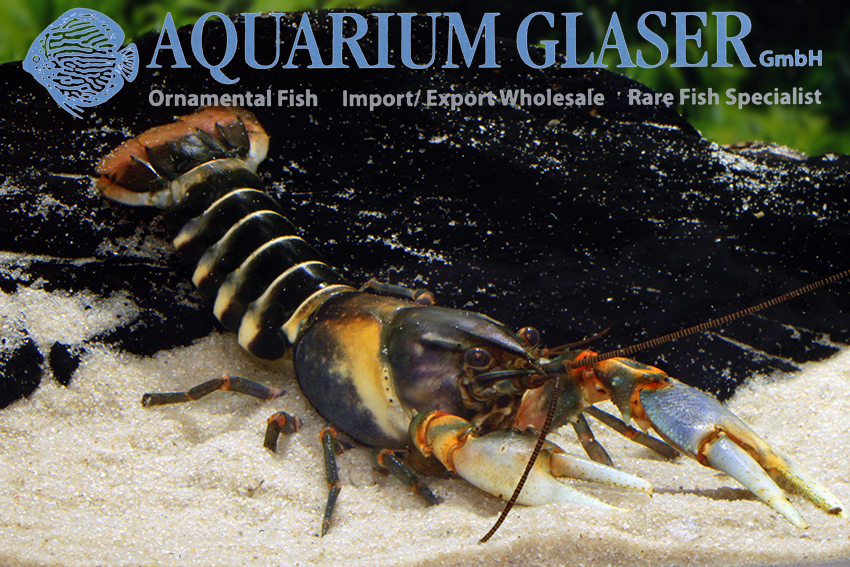
Pelvicachromis roloffi

1. June 2017

The maybe rarest of all dwarf cichlids of the genus Pelvicachromis is P. roloffi. So we are very glad that in our current import from Guinea some specimens were included. This species depicts in almost all different moods a clearly visible, horizontal band. The females are – as usual in Pelvicachromis – the more colorful fishes. P. roloffi is a small species. Males hardly grow larger than 8.5 cm, femals always stay smaller.

For our customers: the fish have code 560303 on our stocklist. Please note the we exclusively supply the wholesale trade. Available in small numbers only!

Text & photos: Frank Schäfer
Wallaceochromis humilis „Kasewe“

30. May 2017

Finally we were able again to organize an import of – inter alia – dwarf cichlids from Guinea. Formerly all these fish were placed in the genus Pelvicachromis, but the species humilis, signatus, and rubrolabiatus have been transferred to the newly described genus Wallaceochromis in 2016. The naming of the different local populations of these fish is somewhat confusing, as by far not all specimens collected together look the same phenotypically. This time we mainly obtained the local variety „Kasewe“. The photos show specimens from our current stock. But we also received other varieties which we plan to show you in the next days.

For our customers: the fish have code 559523 on our stocklist. Please note that we exclusively supply the wholesale trade.

Text & photos: Frank Schäfer
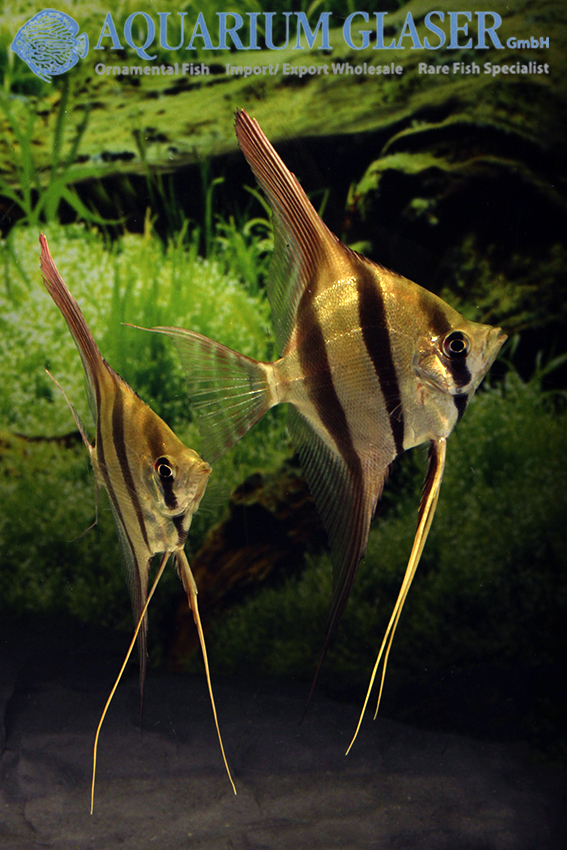
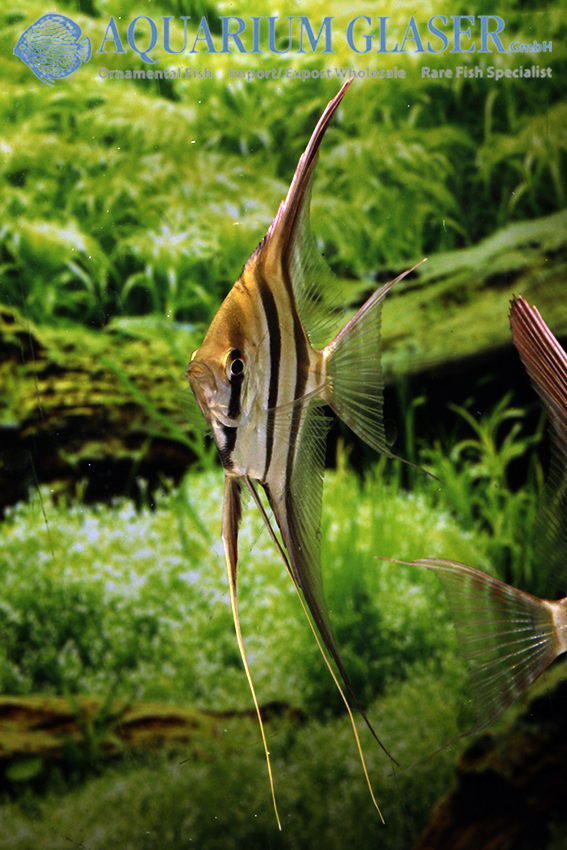
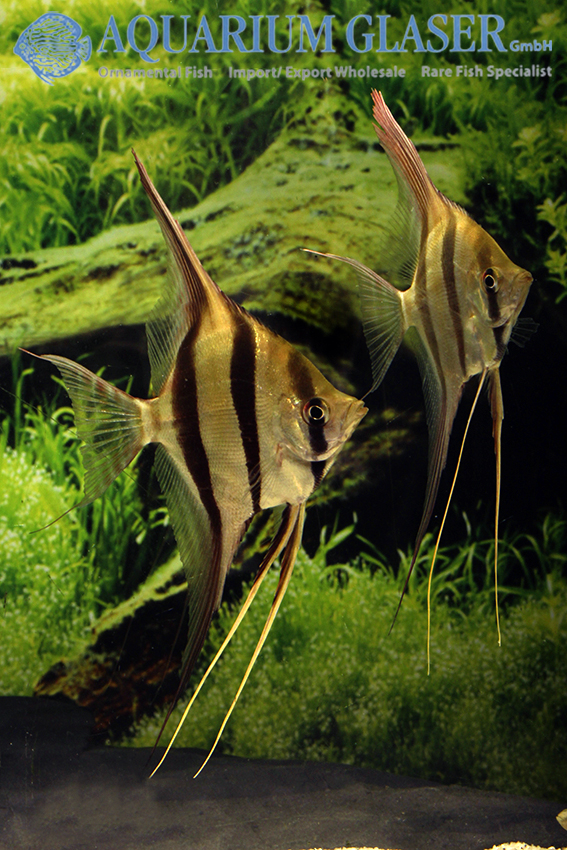
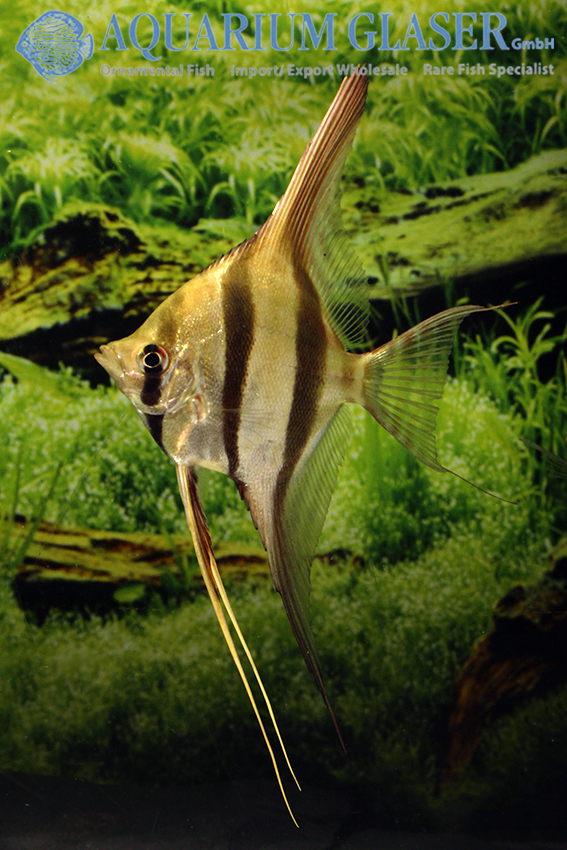
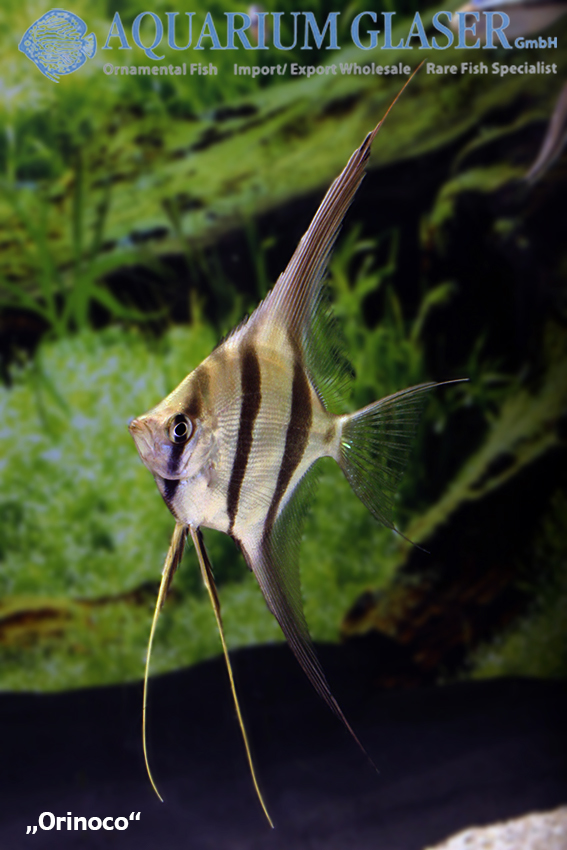
Wonderful bred Altum angels available!

10. May 2017

The Altum angel (Pterophyllum altum) is extremely demanding during the rearing period. If the breeder makes even a minor mistake in respect of water quality or the food this results at once in a life-long deformation of the fish. These gnarled ventral fins, crooked anal fins or defects of the operculum are not heritable; so it is possible to get good offspring from these deformed animals. But they nevertheless do not look good.

Now we are in the happy position that we can offer even two different strain of top quality bred Altums; both breeders offer real perfect fish that look as good a s wild collected ones but lack the notorious sensibility of the latter. The brood we call „Orinoco“ differ from the regular ones by the extremly long filaments especially from the dorsal fin, otherwise both strains have no remarkable differences.

For our customers: the fish have code 698303 (Orinoco) and 698402 on our stocklist. Please note that we exclusively supply the wholesale trade.

Text & photos: Frank Schäfer
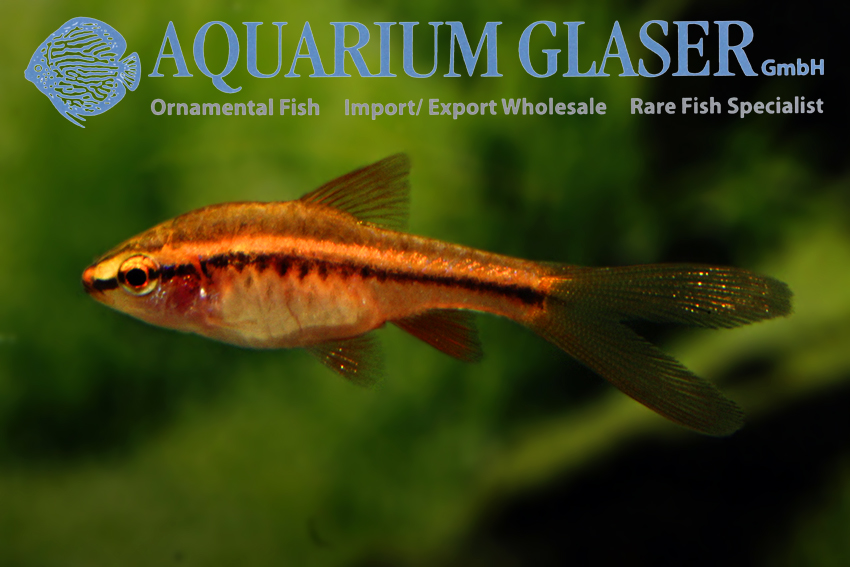
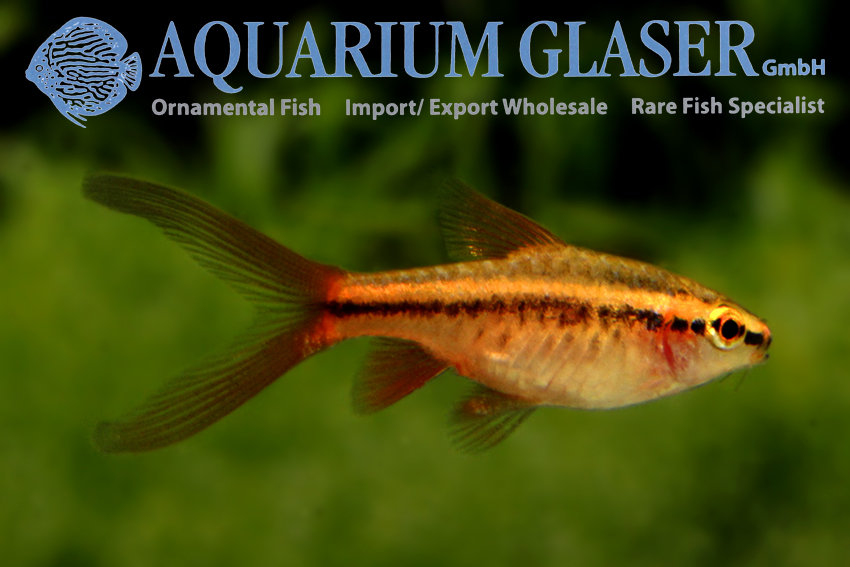
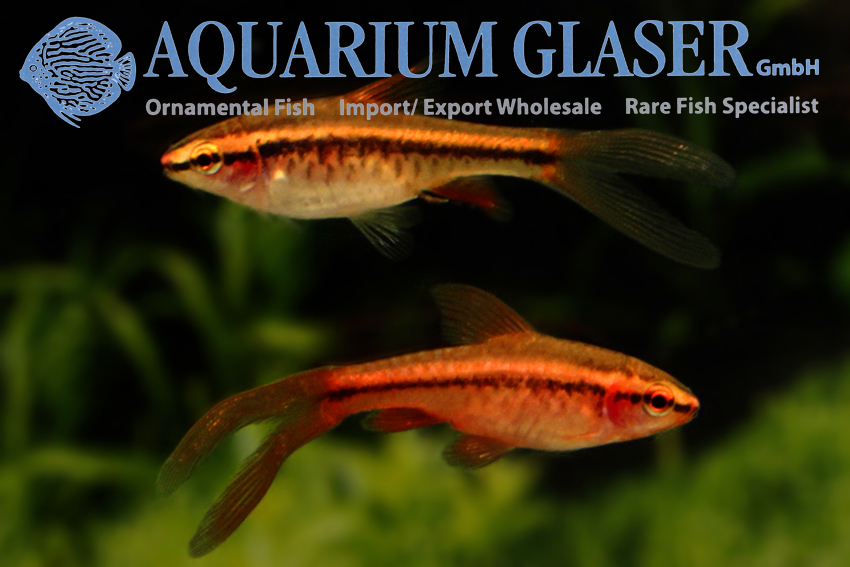
Puntius titteya „Longfin“

8. May 2017

Quite recently a new sport of the cherry barb, Puntius titteya, apperaed in the market. The fish are offered from Southeast Asia. We have imported them now for the very first time. A most intersting fact is that in this sport only the caudal fin is prolonged, the remaining fins have normal size. In all longfin/veiltail varieties of cyprinid fish that are known so far (mountain minnow, Tanichthys albonubes; zebra fish, Danio rerio; leopard danio, Danio frankei; rosy barb, Pethia conchonius; goldfish, Carassius auratus; Kkoi, Cyprinus carpio) the reaminig fins are also prolonged, not only the caudal fin. This pecularity gives the cherry barb „longfin“ a really extraordinary look.

For our customers: the fish have code 372642 on our stocklist. Please note that we exclusively supply the wholesale trade.

Text & photos: Frank Schäfer
Two new tetras from the Rio Negro region: Hyphessobrycon paepkei and H. cf. agulha

5. May 2017

In a shipment containing Hyphessobrycon socolofi (Socolof´s bleeding heart) we found an extraordinary large number of bycatches. Allmost half of the shipment were another species, obviously a close relative of H. ornatus (Rosy tetra). We took a closer look and found the the bycatches were the Goldshoulder rosy tetra, H. paepkei. This species has been described only a few years ago, the type specimens also originated from our fishhouse. Usullay onyl a few specimens could be selected from shipments of other species, but this time we had quite a good number. So we decided to assort them. A nasty buisiness, but now we were able to offer the beautiful Goldshoulder rosy tetra for the first time on a regular basis. Regarding keeping this fish: it does not differ in any respect from well known, closely related aquarium fish, like the phantom tetras or the rosy tetras.

Another new species also reached us in former times in single specimens only from the Rio Negro region. Without any doubts the animals are identical with the tetra illustrated on page 472 of „the bible of tetra lovers“, Gery´s „Characoids of the world“. The caption says „Hyphessobrycon agulha, or close to it“. In contrast to all the different varieties of tetra that look similar this one has very attractive red stripes in the caudal fin. This new tetra is also comparable in respect of aquarium demands to a very well known one, namely the Black Neon, Hyphessobrycon herbertaxelrodi.

Hyhessobrycon cf agulha

For our customers: Both species were available in limited numbers only and are sadly sold out already.

Text & photos: Frank Schäfer
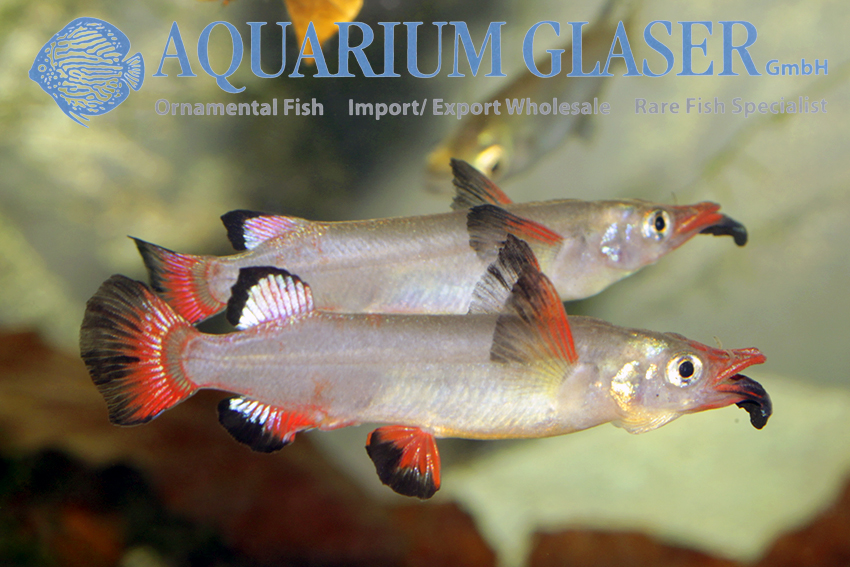
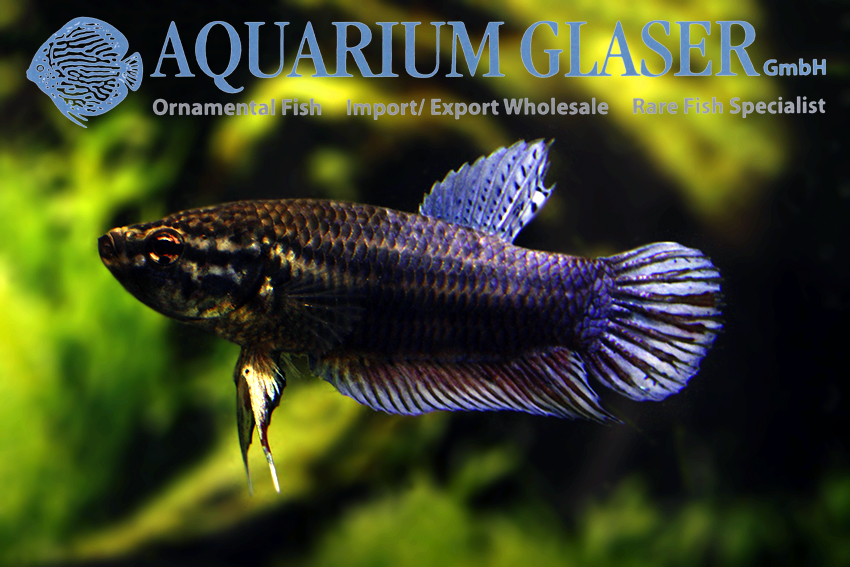
Betta splendens – real fighter Pla Kat Luk Maw

5. May 2017

It is a well known fact that the Betta splendens kept in the aquarium hobby as ornamental fish do not represent the species as it appears in the wild, but a domesticated fish. Initially this sport has been bred for combats, similar like sports of cocks and dogs. Only in the 1920ies, when supplying ornamental fish for the aquarium hobby became more and more an important economic factor for people in Southeast Asia, breeders started to select veiltailed sports and aberrant colour varieties. These fish are useless for combats.

The tradition of fish fights is still alive in many parts of Asia. Due to the high sums of money people bet here – and which lead to the ruin of many bet-junkies – these combats are under legal control, but in many areas they are also cultural property under special protection.

Here in central Europe is no interest in watching animals fighting and to bet on the winner, we are focussed on the empathy with the animal we keep. Nevertheless it is very interesting for a real enthusiast to get the possibility for studying these real fighters among the Bettas. These fish are called Pla Kat Luk Maw in Thai, which means about „biting fish of the earthen pot“. „Earthen pot“ refers to the traditional pottery vessels used for breeding the fish. One of the most astonishing facts is that almost any red is missing in the coloration of the fish. Even the skin of the gill-membranes, which are spread when the fish is in aggressive mood, are pitchblack, as the whole fish appears in highest excitation. Pla Kat Luk Maw are usually bred in blue, but sometimes also turquoise animals appear.

For our customers: the fish have code 391019 on our stocklist. Please note that we exclusively supply the wholesale trade. Available in limited numbers only!

Text & photos: Frank Schäfer
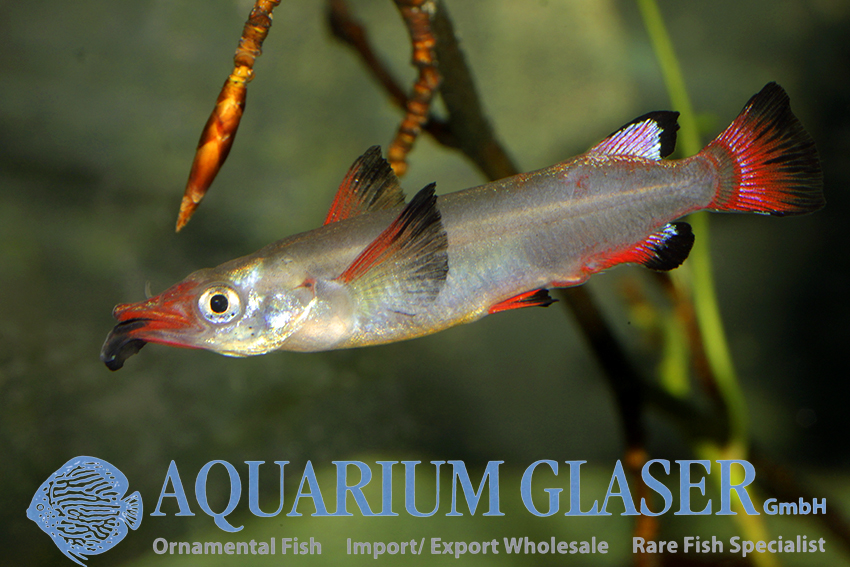
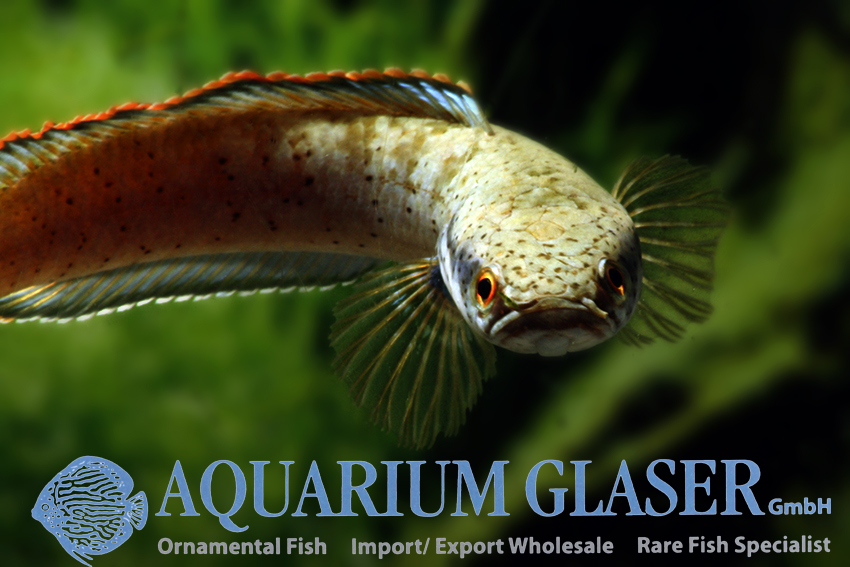
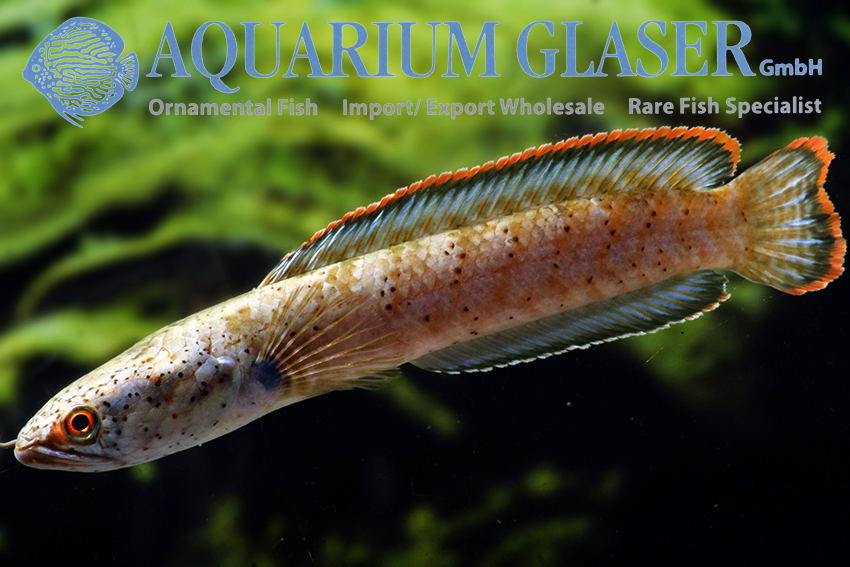
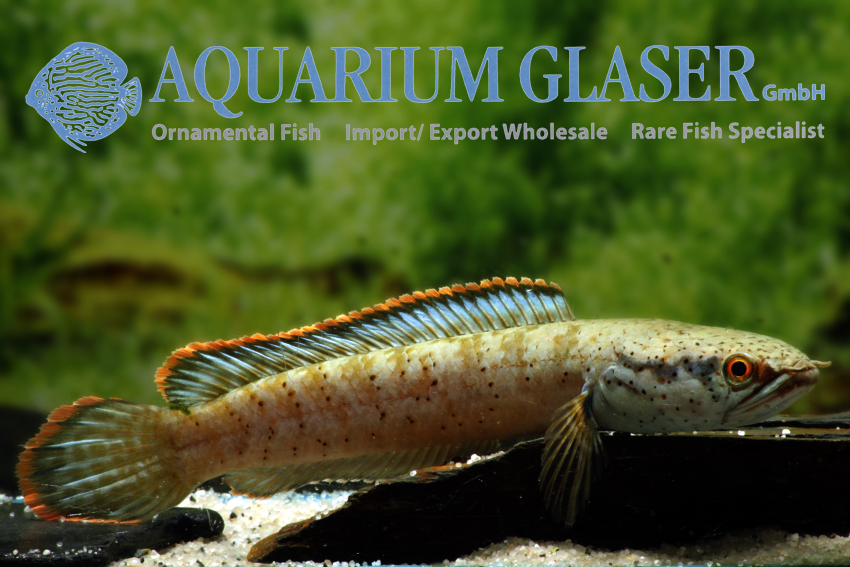
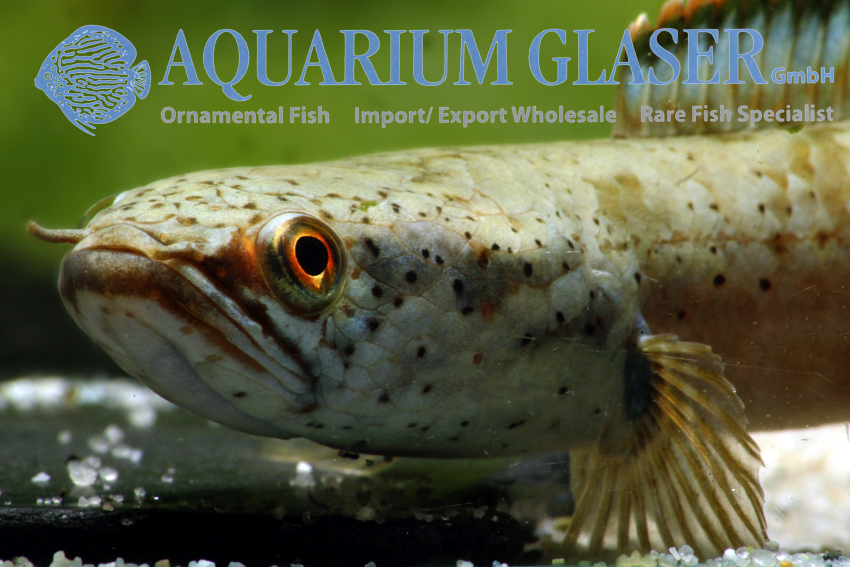
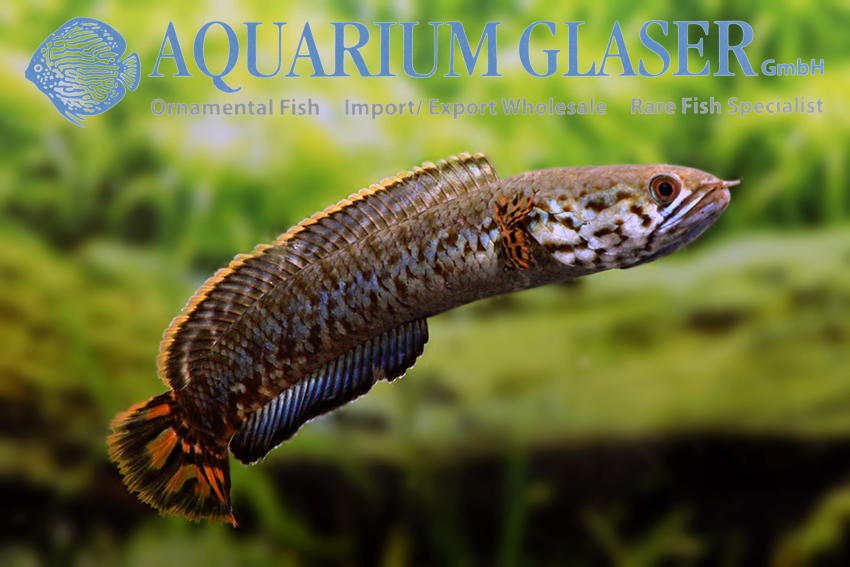
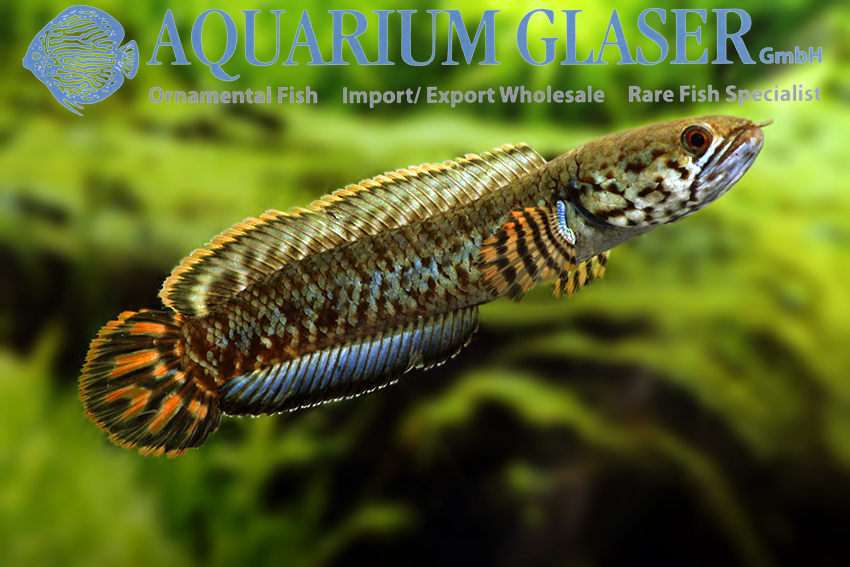
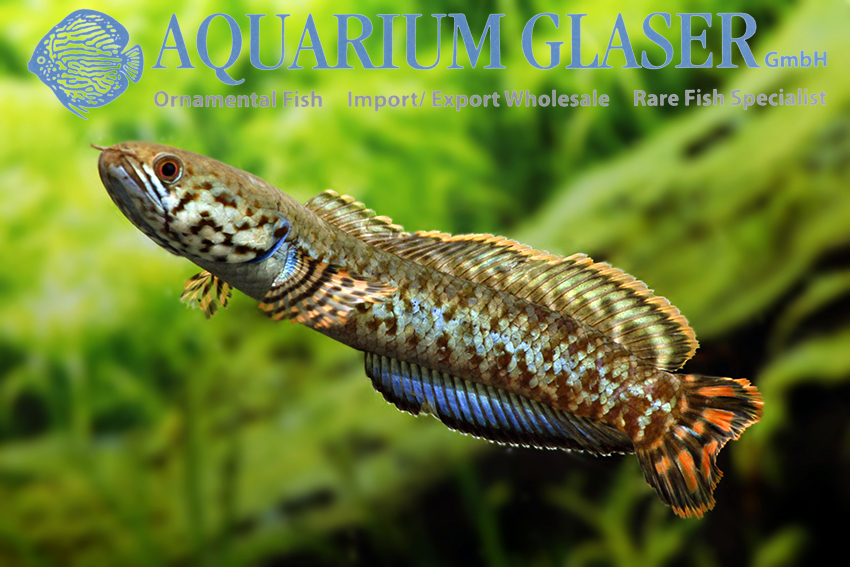
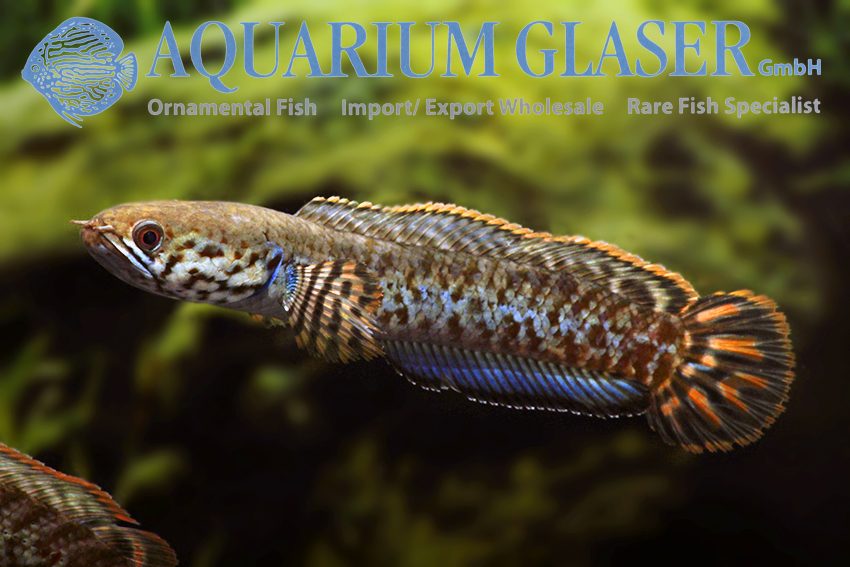
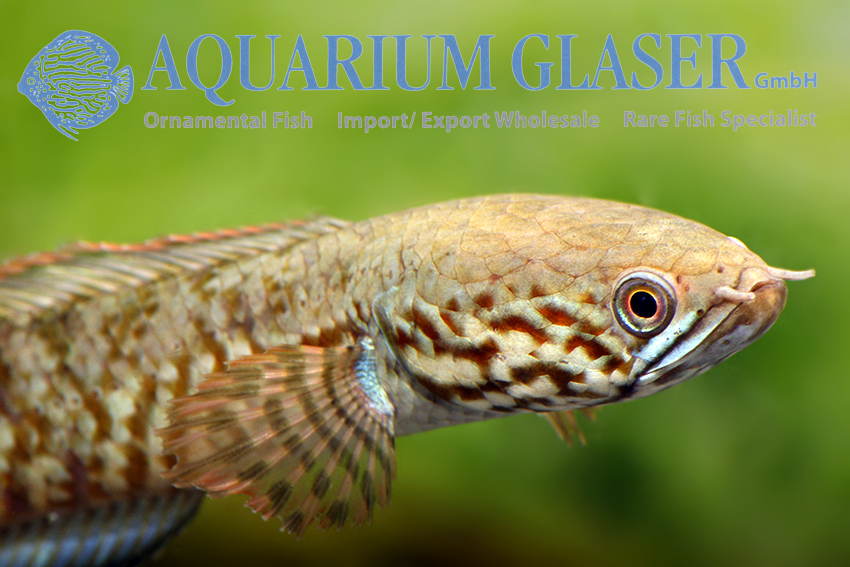
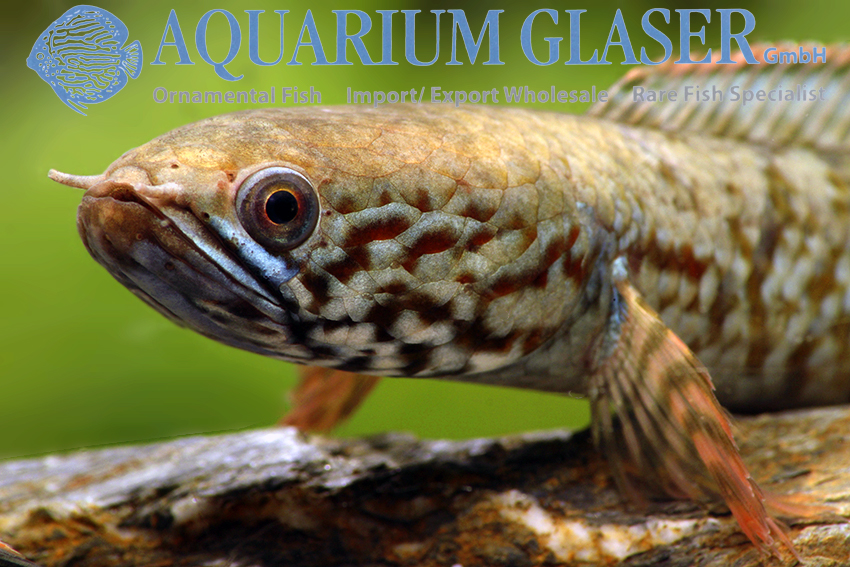
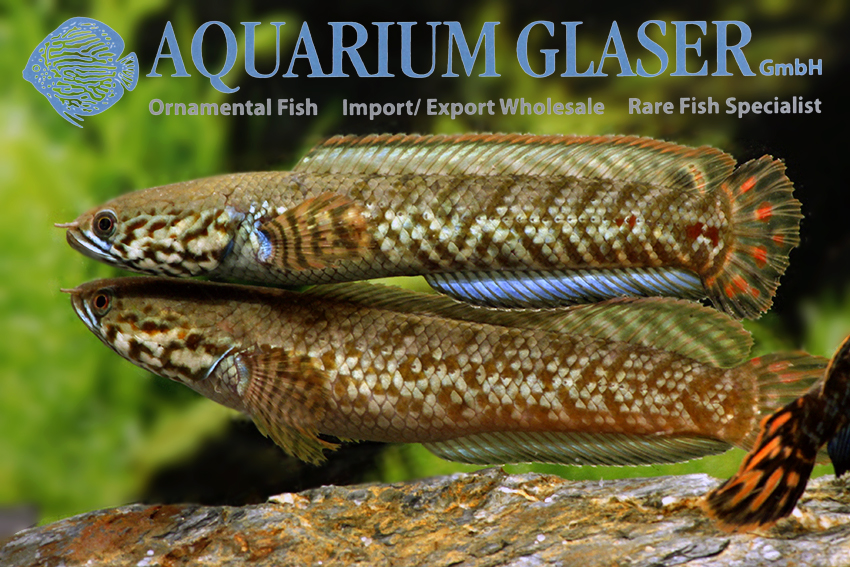
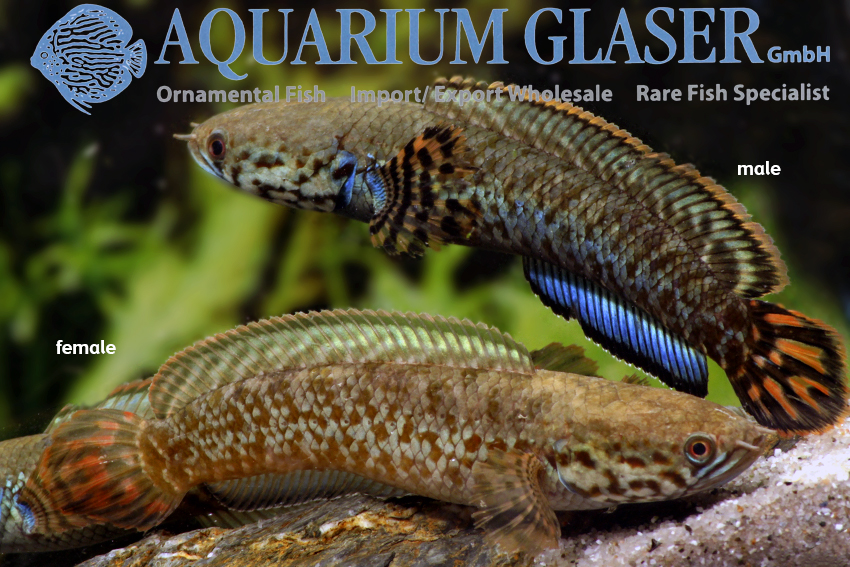
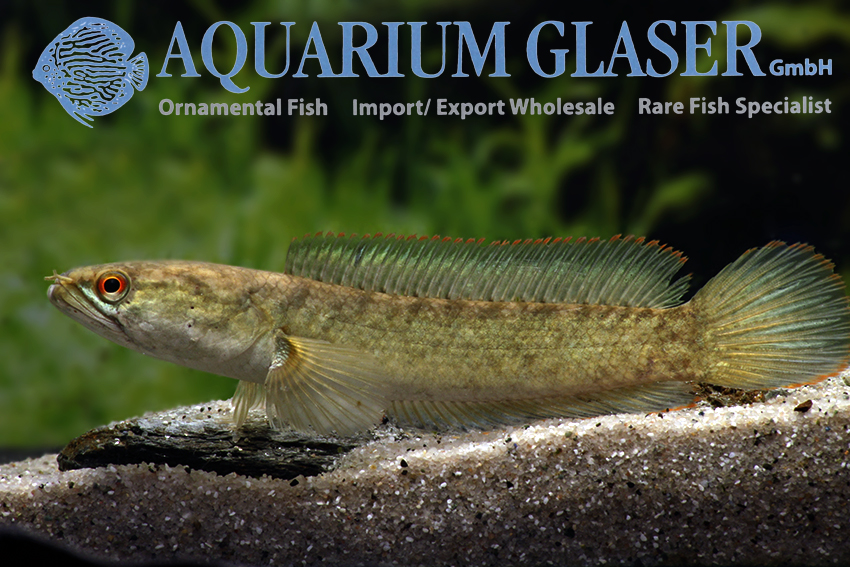
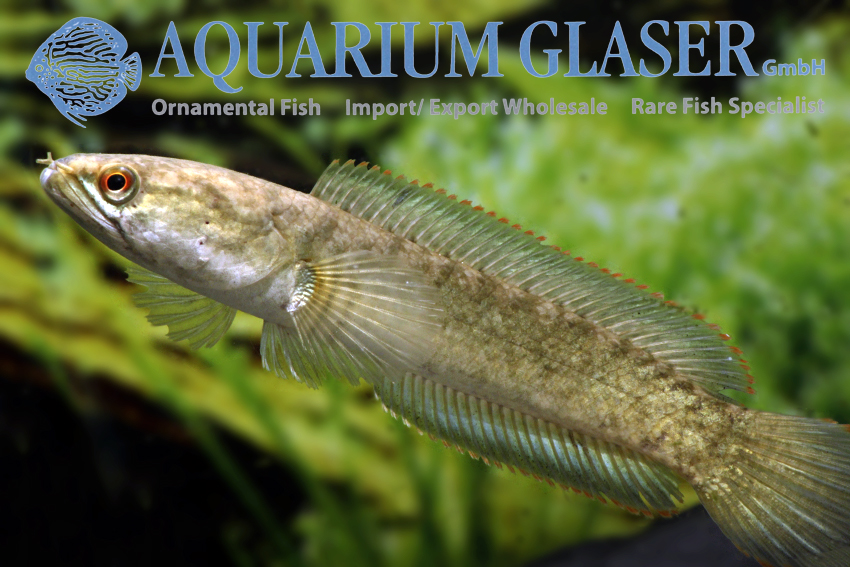
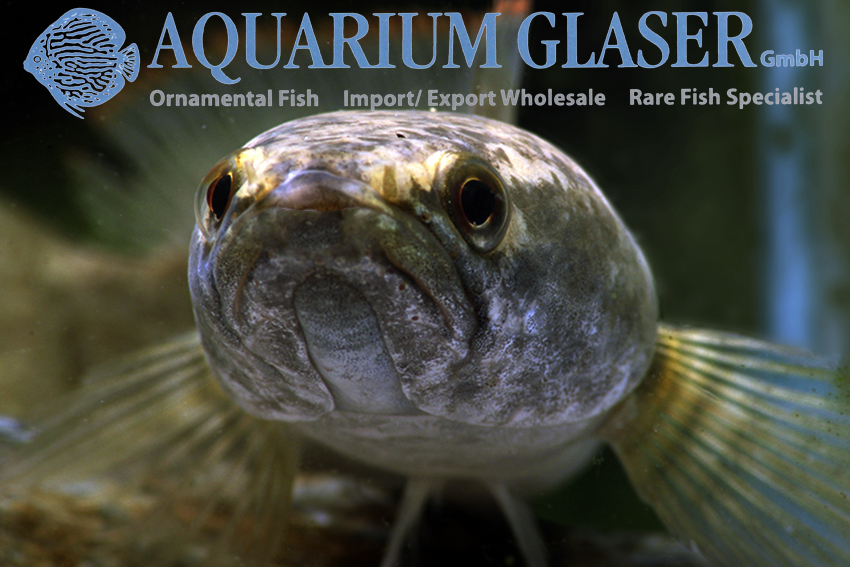
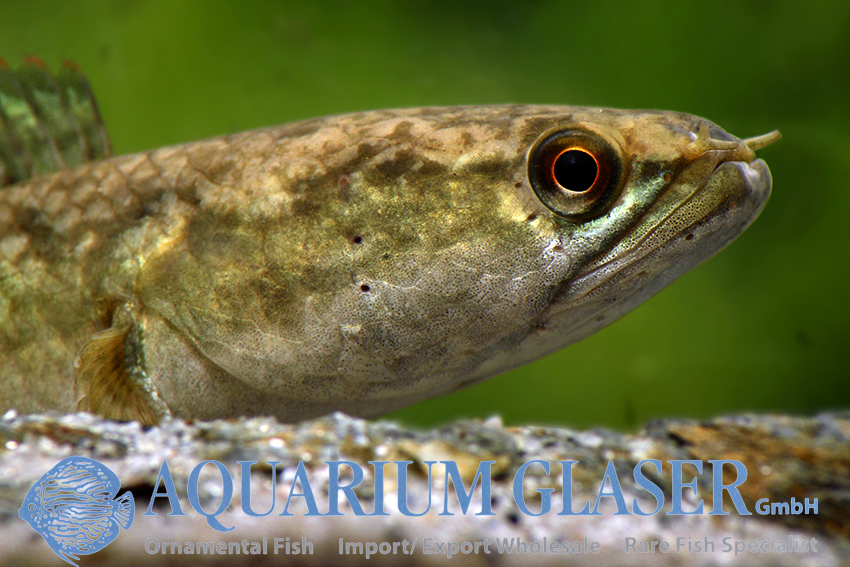
Channa bankanensis

4. May 2017

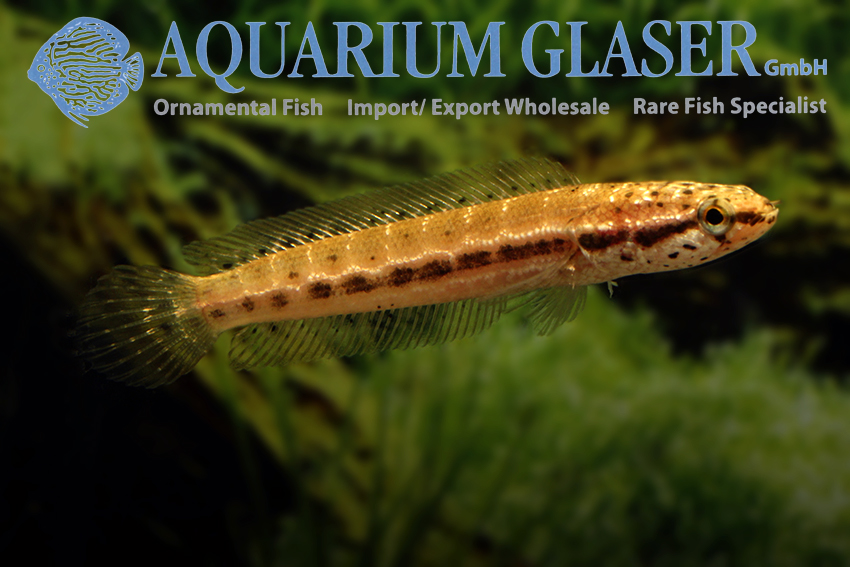
Many species of snakehead look very attractive as juveniles. Channa bankanensis is no exception from that rule. The reason for the sometimes extraordinary change in coloration is the behaviour. Juvenile Channa are usually schooling fish. Depending on the species they swim in close schools up to a length of 3 cm or even 15 cm. The contrasting juvenile coloration has two basic reasons: first, it helps conspecifics to identify other fish as members of the same species, and second it confuseses predators for the silhouette of the single specimen is only hard to detect in a school.

Later on snakeheads become more and more solitary fish and the coloration becomes dull. Now camouflage is asked, for larger snakeheads are usually predators that feed on small other fish.

Channa bankanensis belongs to the medium sized species that attain a maximum length of 25-30 cm. The species is a typical blackwater inhabitant that lives in the wild in waters with a very acidic character: pH around 3! Luckily the do not demand this in aquaria. Channa banakanensis is distributed in Indonesia and Malaysia.

We currently have very pretty 4-6 cm long juveniles in stock.

For our customers: the animals have code 409021 on our stocklsit. Please note that we exclusively supply the wholeale trade.

Text & photos: Frank Schäfer
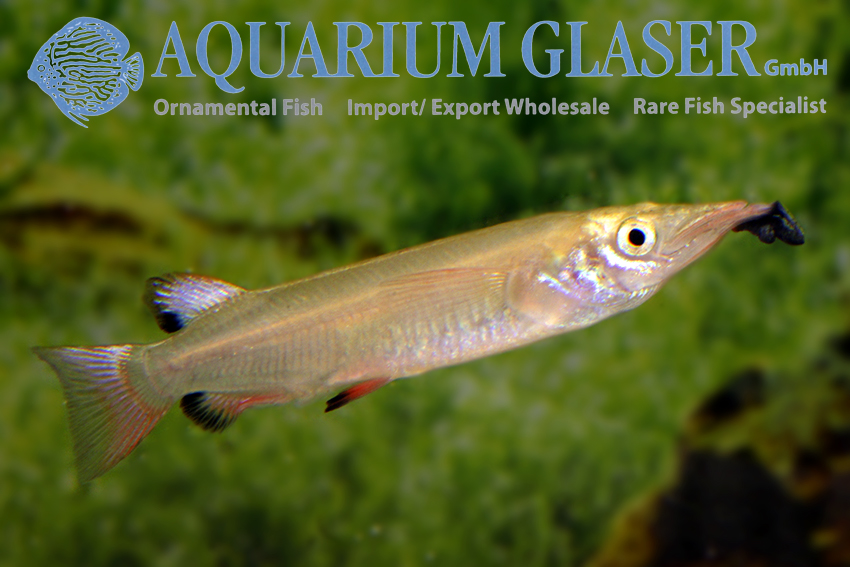
Luciosoma setigerum

3. May 2017

This barb with the extremely aerodynamic shape originates from Indonesia. Despite the size the fish can reach – up to 25 cm – the peaceful and splendid colored fish is an ideal inhabitant for a community tank with other large barbs from Asia, like Bala sharks (Balantiocheilus) or Sahyadria denisonii.

For our customers: the fish have code 425002 on our stocklist. Please note that we exclusively supply the wholesale trade.

Text & photos: Frank Schäfer
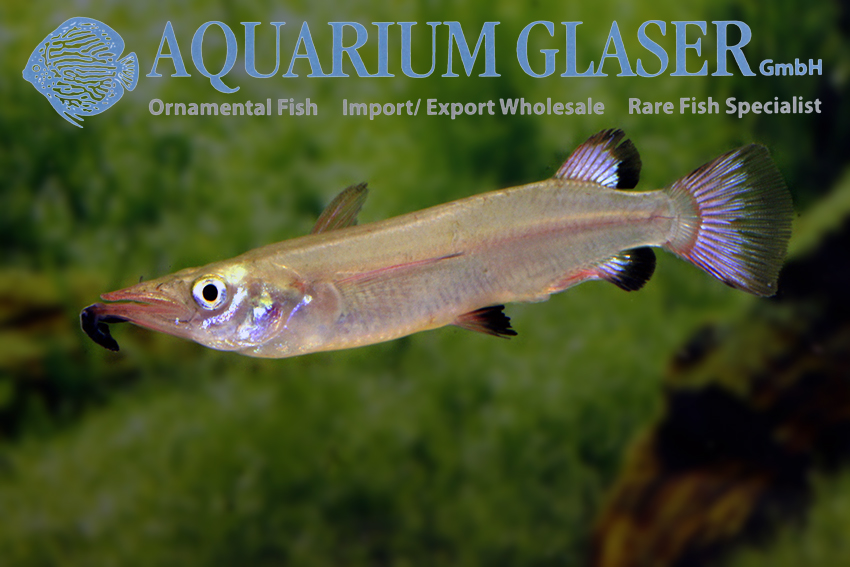
Copella arnoldi

2. May 2017

The Splashing tetra (Copella arnoldi) is very famous due to it´s unique way of spawning. The pair jumps out of the water and deposites the eggs on the underside of plant leafes hanging over the water surface (in the aquarium they often spawn on the top glass). After spawning the male guards the clutch and splashes water in regular intervalls over the eggs to avoid drying. The offspring hatches within 36 hours.

This fascinating behaviour is one of the „must have seen“ events in the life of every real enthusiast. However, one tends to forget sometimes the fact that the Splashing tetra also is a real beauty! Currently we have fully grown animals in stock. The Splashing tetra inhabits in the wild savannah creeks in the Rio Xingu basin in Brazil; however, nowadays almost exclusively bred specimens can be found in the trade.s

For our customers: the fish have code 219554 on our stocklist. Please note that we exclusively supply the wholesale trade.

Text & photos: Frank Schäfer
Freshwater pipefish from West Africa

28. April 2017

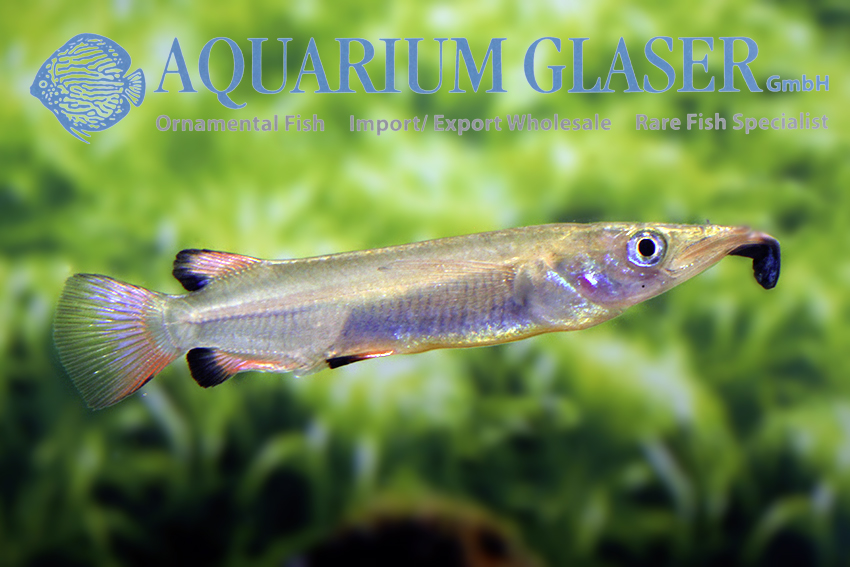
There are three species of freshwater pipefish known to occur in West Africa. They live in inland waters along the coast and have a very wide distribution. One can find these fishes from the Senegal to Angola (roughly 16°N to 18°S). The term „West Africa“ is not used here in the sense of the UN, but is meant as the whole coastal line of the continent. We obtain our freshwater pipefish from Nigeria.

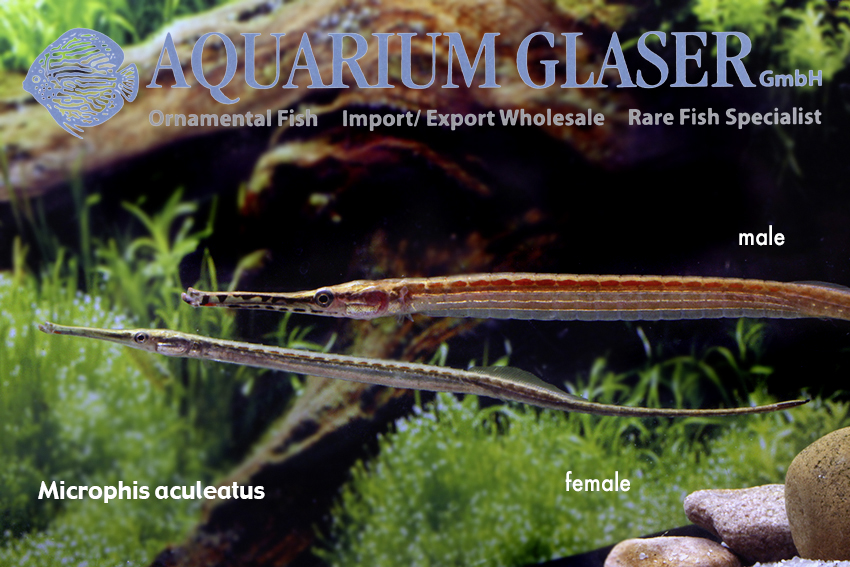
From time to time we can import the largest of the three species, namely Microphis aculeatus. This pipefish becomes about 15-20 cm long. Microphis live free swimming in the water column and imitate a dead stick. Usually one can observe them in a horizontal posture. More information on the very interesting species can be found here: http://www.aquariumglaser.de/en/fish-archives/gorgeous_pipefish_arrived_from_nigeria__en/

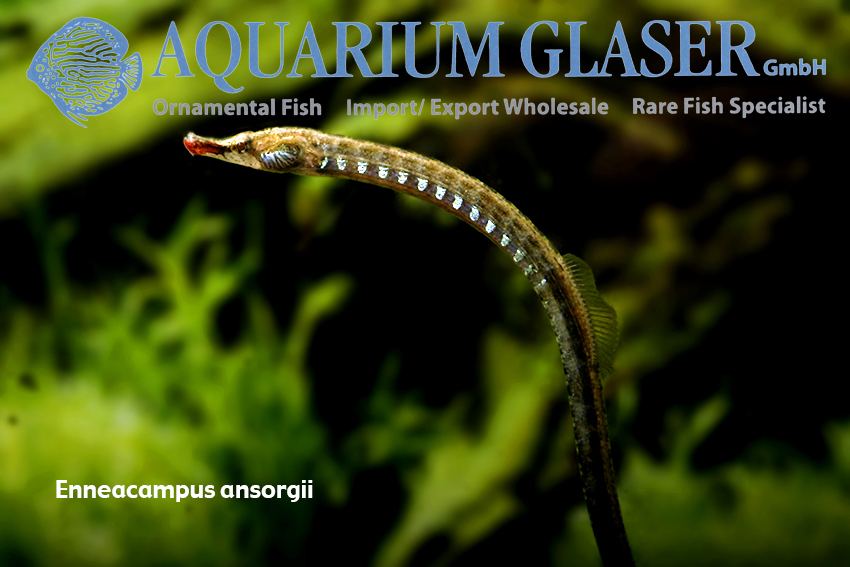
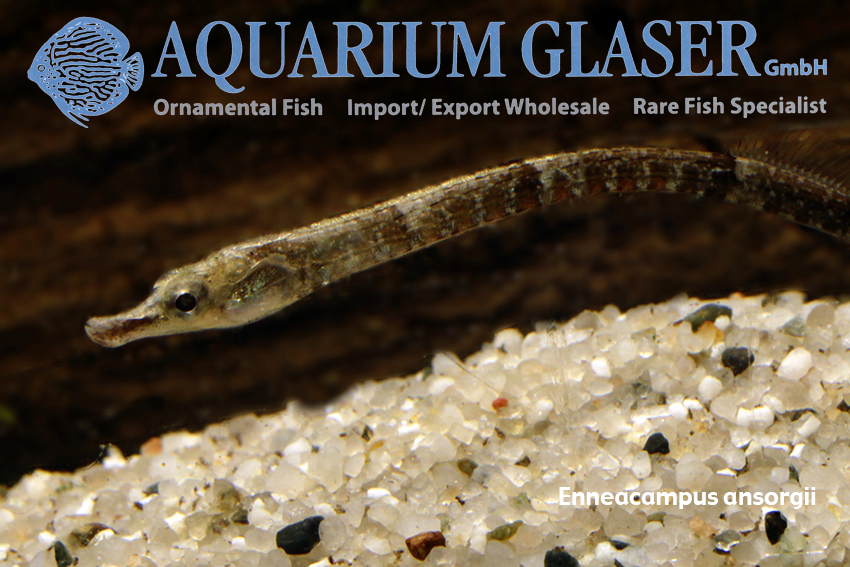
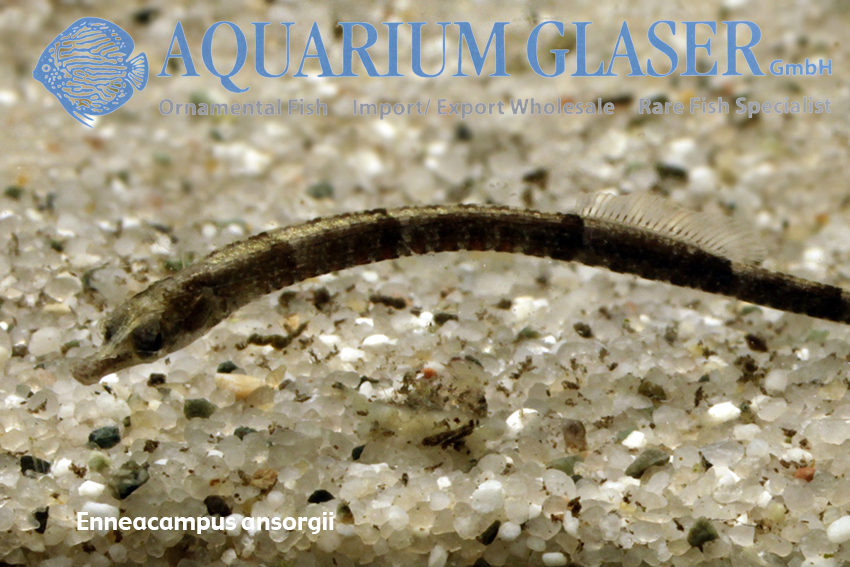
In our current import of that species we found intermixed some bycatches of the two other known species of pipefish from West Africa. Both belong to the genus Enneacampus. This genus has been established only in 1981 and contains only these two species. In contrast to Microphis Enneacampus live more substrate orientated. Although they swim around from time to time they prefer to rest on the bottom or to crawl in caves or waterplants. The first species is Enneacampus ansorgii, a species that is already known quite well in the hobby. It is even bred from time to time. This species is quite tiny and attains a total length of about 8-14 cm. Males have been found to bear eggs with a length of 7.5 cm already. There is a comparatively large number of publications in the aquarium literature, but most of it has been written prior to 1981 under the synonym of Syngnathus pulchellus. So if one does research on the species in literature the search should include the name Syngnathus pulchellus.

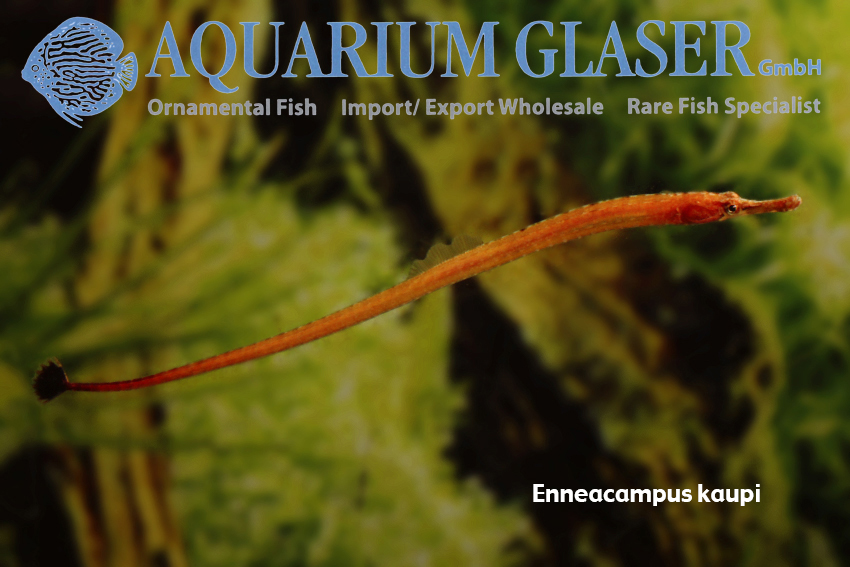
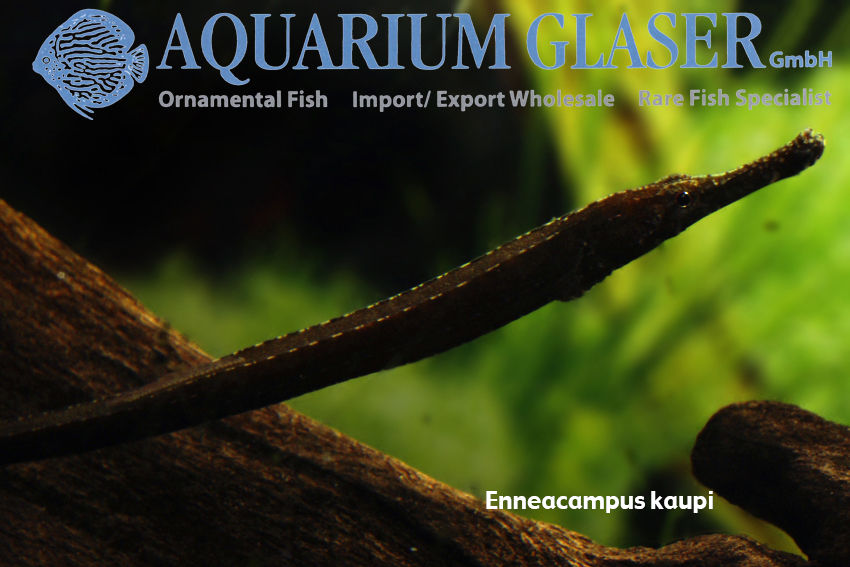
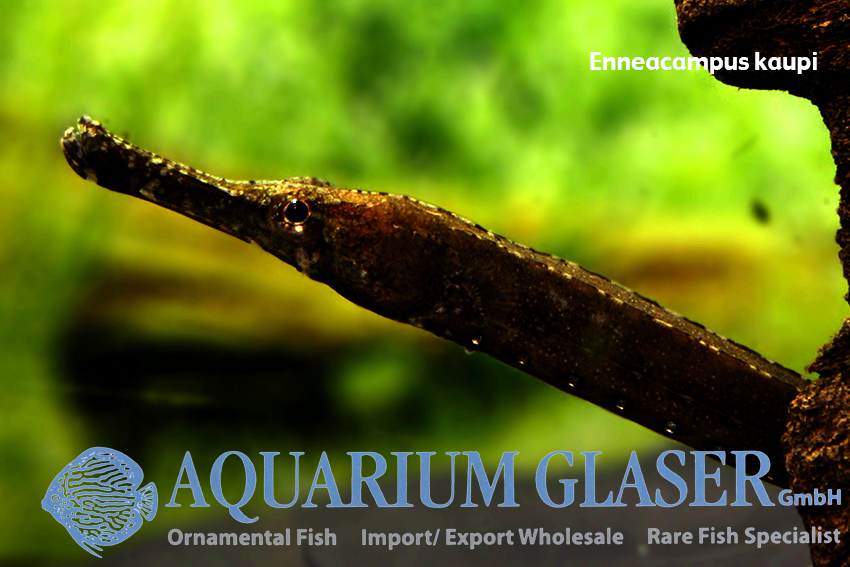
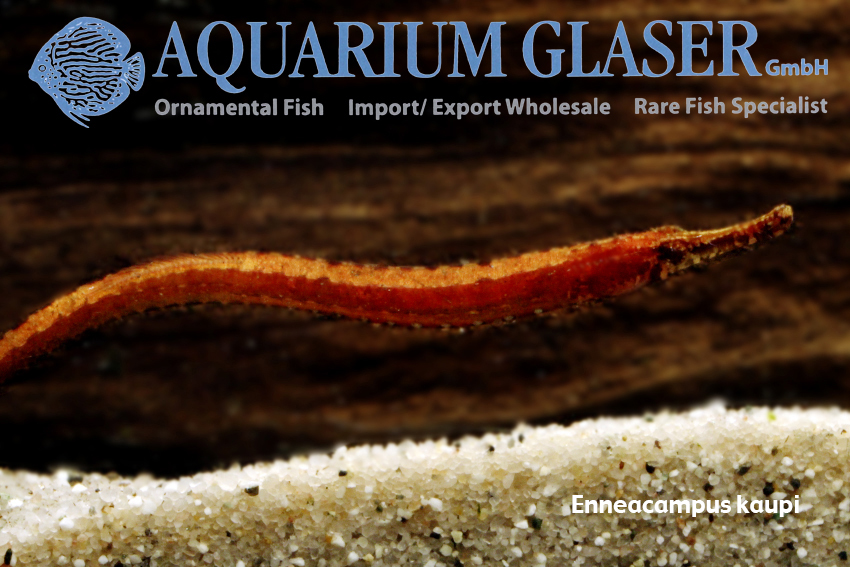
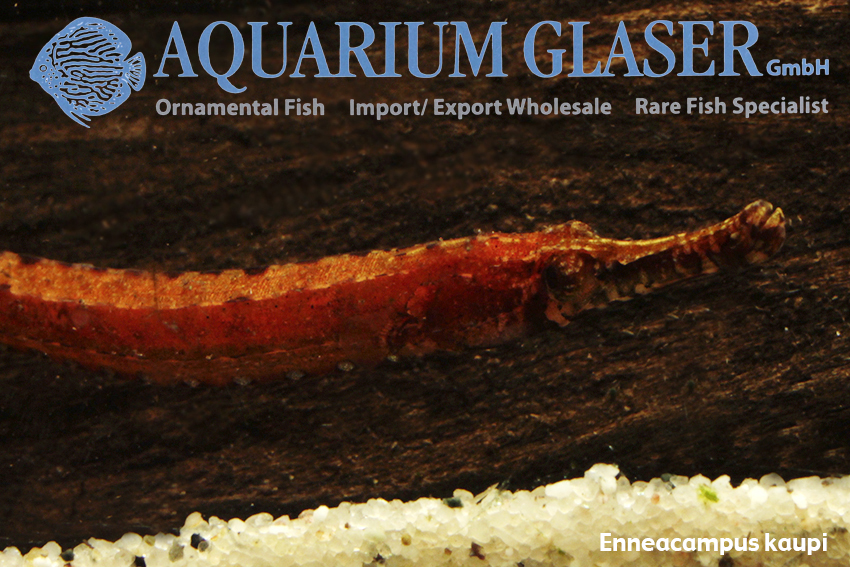
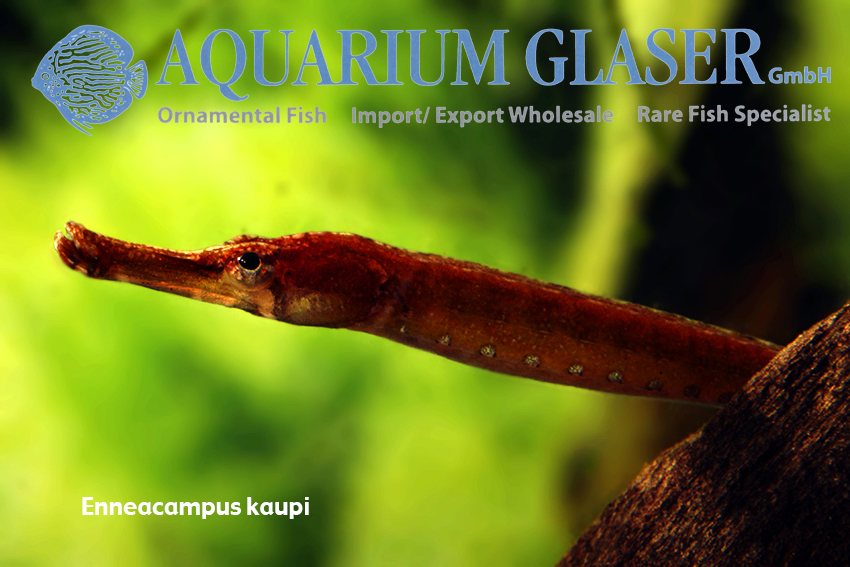
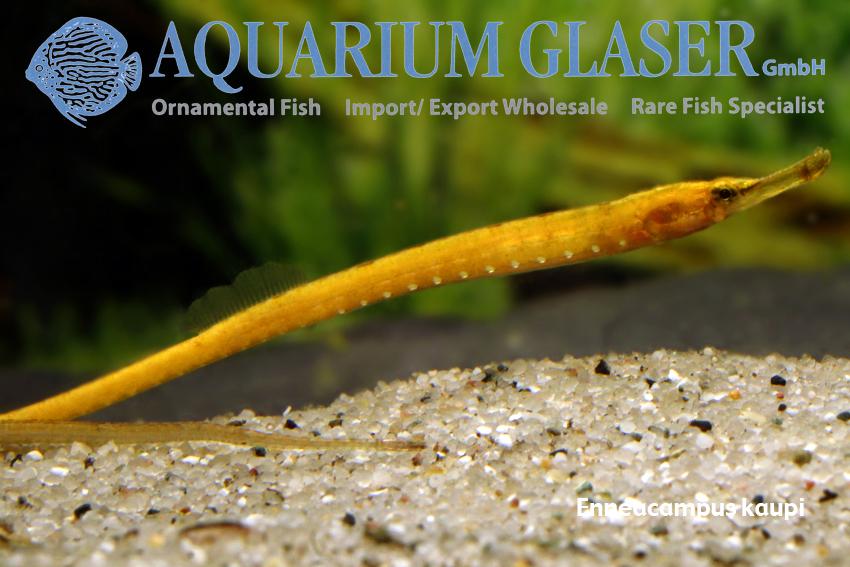
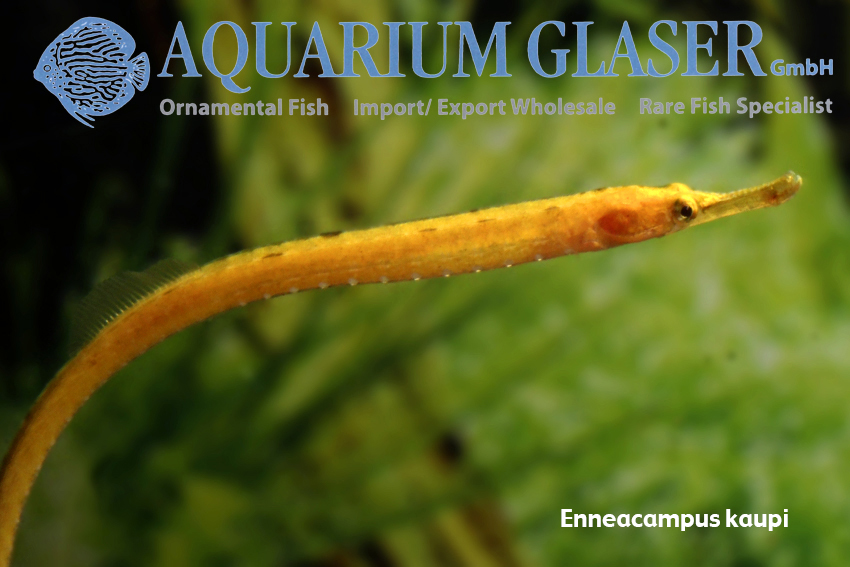
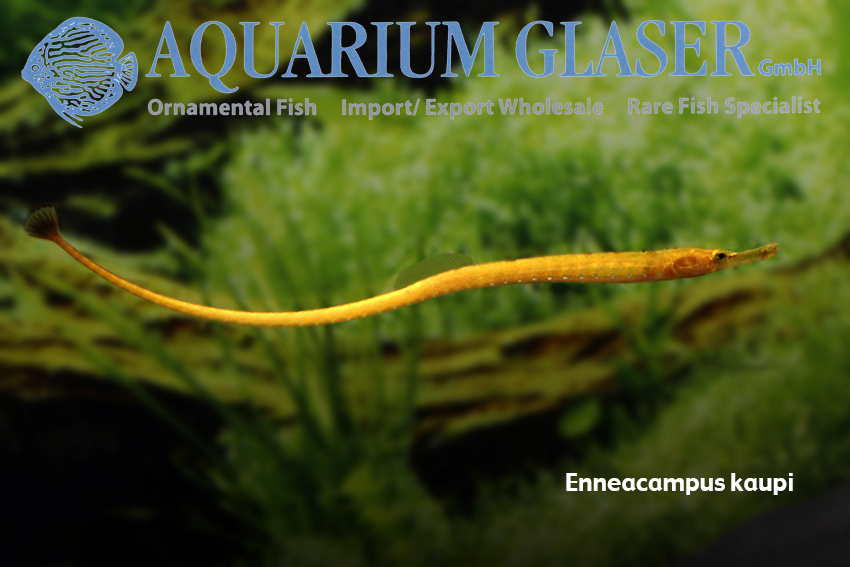
We find the coloration of the second species, Enneacampus kaupi, quite spectacular. Five specimens we could pick from our Micophis import, one is bright yellow, three are brick red and one almost black. We think the these colours are due to the breeding season, because in the scientific literature E. kaupi is described as rather brown with a red belly. This species is somewhat larger than E. ansorgii, sexual activity starts at a length of 8.5-9 cm, while the largest specimen observed so far had a length of 17 cm. Both species of Enneacampus look very similar at the first glimpse, but on a closer look one can clearly see that E. kaupi has a comparatively longer snout.

Regarding keeping pipefish in aquaria: all species are quite demanding fish in respect of feeding. Without a a save source for living food it can not be recommended to try to keep them. Microphis aculeatus and Enneacampus kaupi feed readily on life bloodworm and white moskito larvae. The tiny M. ansorgii cannot swallow such large food items, they prefer small crustaceans, like Cyclops, Daphnia etc. They also accept Artemia nauplii (best: newly hatched, due to the nutrition factor). If one has to feed the pipefish regularly with brine shrimp it is best to add some salt to the water in the aquarium (a tablespoon per 10 litres of waters). This is tolerated by the pipefish and the brineshrimp stay much longer alive.

For our customers: Micophis aculeatus has code 149204 on our stocklist. The few specimens of Enneacampus have been given to a breeder, so we have none for sale. Please note that we exclusively supply the wholesale trade.

Text & Photos: Frank Schäfer
Hyphessobrycon melanostichos

28. April 2017

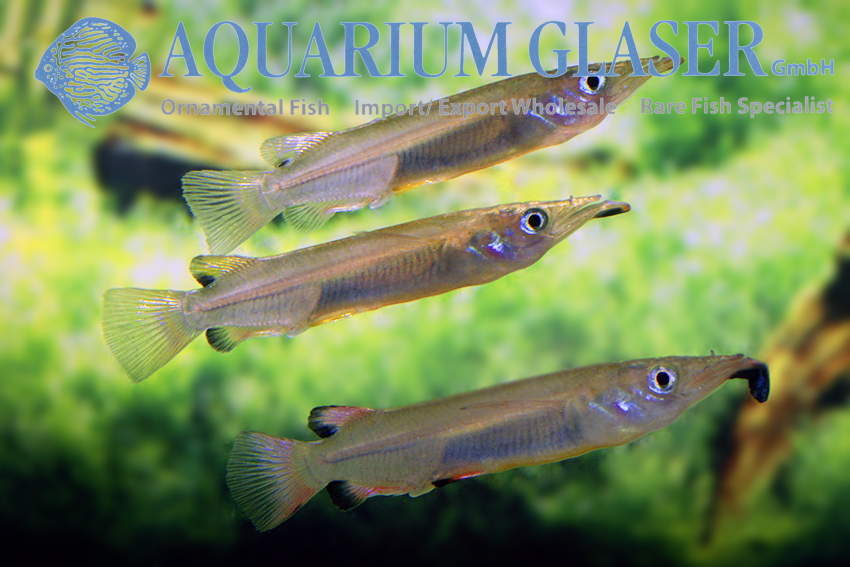
In our latest newsletter I made a regattable mistake: I used pictures of Hyphessobrycon cf. melanostichos instead of pictures of the „real“ Hyphessobrycon melanostichos in the post; H. cf. melanostichos differs a lot from the „real“ species in life colours. So here are now pictures of the „real“ H. melanostichos, the fish we currently have in stock. It is very interesting that in tis species the male changes a lot in coloration, as we have seen it in Hemigrammus coeruleus. This is very unusual in species of the Hemigrammus-Hyphessobrycon-relationship, in which the males usually only get a bit brighter coloration during courtship.

Hyphessobrycon melanostichos has a striking bright skyblue dorsal coloration. The species has been described scientifically in 2006 from the state of Mato Grosso in Brazil; here H. melanostichos is found in the upper reaches of the Rio Tapajós basin. The species is distinguished from all other species of Hyphessobrycon by the comobination of the following characters: „a conspicuous longitudinal broad black band, beginning on the posterior margin of orbit and reaching the distal tip of middle caudal fin rays; humeral spot vertically elongate and distinct from lateral band; and 16 to 18 branched anal-fin rays.“ (Carvalho & Bertaco, 2006)

The coloration (of preserved fish) is the same in Hyphessobrycon cf. melanostichos, but this form has 19 branched anal fin rays. Moreover in the original description of H. melanostichos a freshly preserved male is illustrated, obviously a breeding animal. The coloration of this specimen fits perfectly to the one of the mating male we can illustrate here (it is one of the parents of the fish we currently have in stock). So we have no doubt anymore that we now have the „real“ Hyphessobrycon melanostichos in stock, while the status of the H. cf. melanostichos remains the subject of further investigations.

For our customers: the „real“ Hyphessobrycon melanostichos has code 261832 on our stocklist. Please note that we exclusively supply the wholesale trade.

Text: Frank Schäfer, photos: Frank Schäfer, Peter & Martin Hoffmann

Literature: 

Carvalho, T. P. and V. A. Bertaco (2006): Two new species of Hyphessobrycon (Teleostei: Characidae) from upper rio Tapajós basin on Chapada dos Parecis, central Brazil. Neotropical Ichthyology v. 4 (no. 3): 301-308.

Pseudogastromyzon cheni

25. April 2017

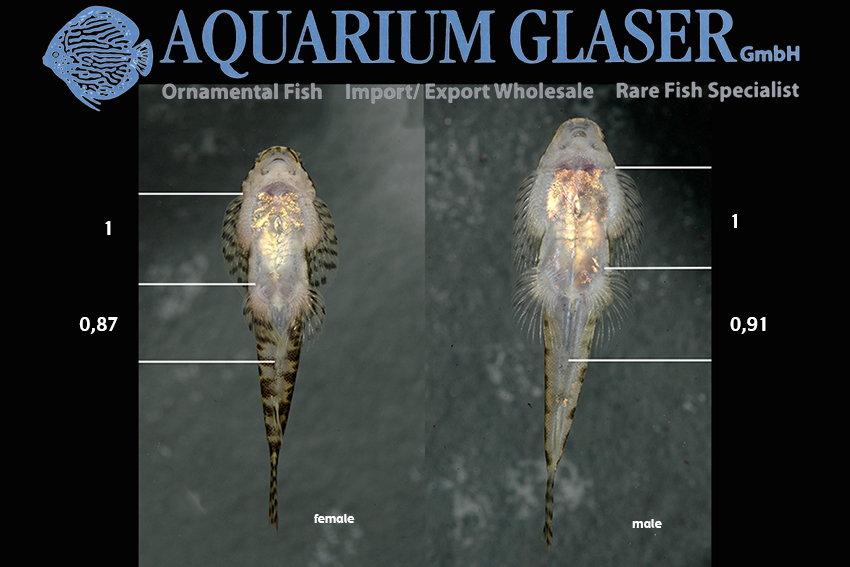
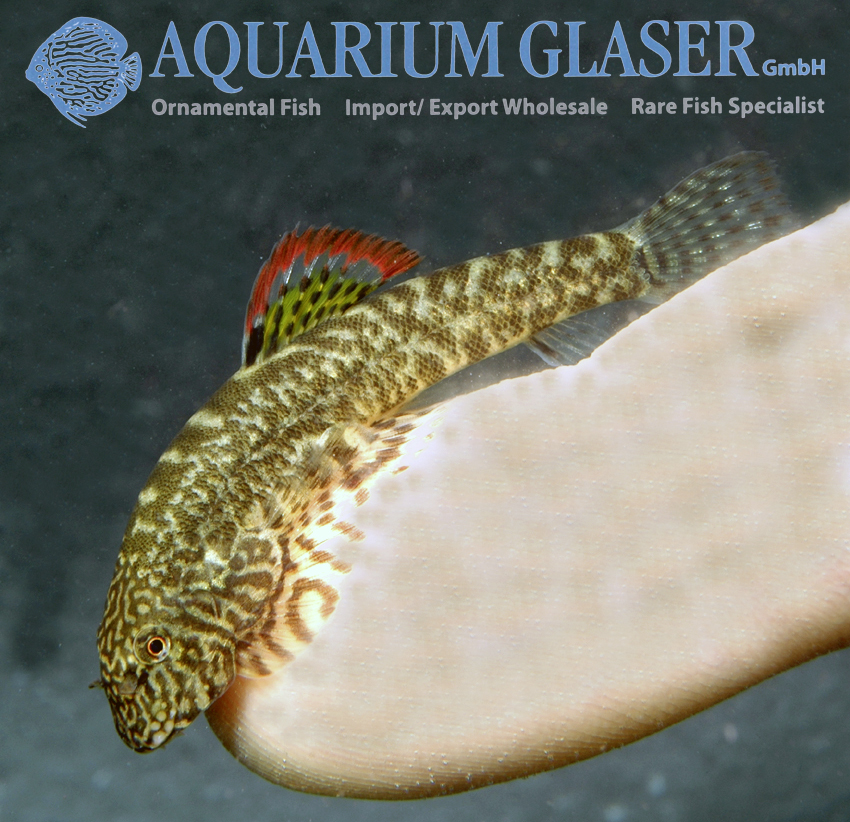
Now the season for the charming hillstream loaches imported via Hongkong has started. There do exist several species and we also have several species in stock currently. There is a lot of confusion regarding the identity of two species of Pseudogastromyzon, namely P. cheni and P. myersi. Both species look almost identical. And both species show a high degree of variability in respect of coloration. There is only one (known) possibilty to tell them apart for sure: one has to take measurements. The first measurement is the distance between the origin of the pectoral fin and the origin of the ventral fin. The second measurement has to be done for the distance between the origin of the ventral fin and the anus. If both measurements are equal, then the fish is P. myersi. Is distance 1 larger than distance 2 the fish in question is P. cheni. This difference can be found in both sexes. We have shown the technique of the measurements in one of the pictures accompanying this post. All individuals depicted are P. cheni.


To be honest, until now we looked rather for (somewhat obscure) differences in coloration to tell the two species apart. Currently we have both (?) in stock. The pictures presented here are already elder, so we plan to investigate our fish in the fishhouse in the near future once more. We are very curious what this investigation will show up!

Anyway, both species are very nice and very entertaining aquarium inhabitants. They love a tank with a lot of current, a lot of stones, and a lot of light. Like all loaches the hillstream-loaches feed on small invertebrates, but the horny lips also allow them to scratch algae from the stones. In the aquarium they readily feed on any usual type of fish food. The water temperature in the tank for these hillstream loaches sholud not climb over 24°C for longer times.

For our customers: the fish have code 448524 (P. cheni) and 445802 (P. myersi) on our stocklist. Please note that we exclusively supply the wholesale trade.

Text: Frank Schäfer, photos: Erwin Schraml

Boraras brigittae

21. April 2017

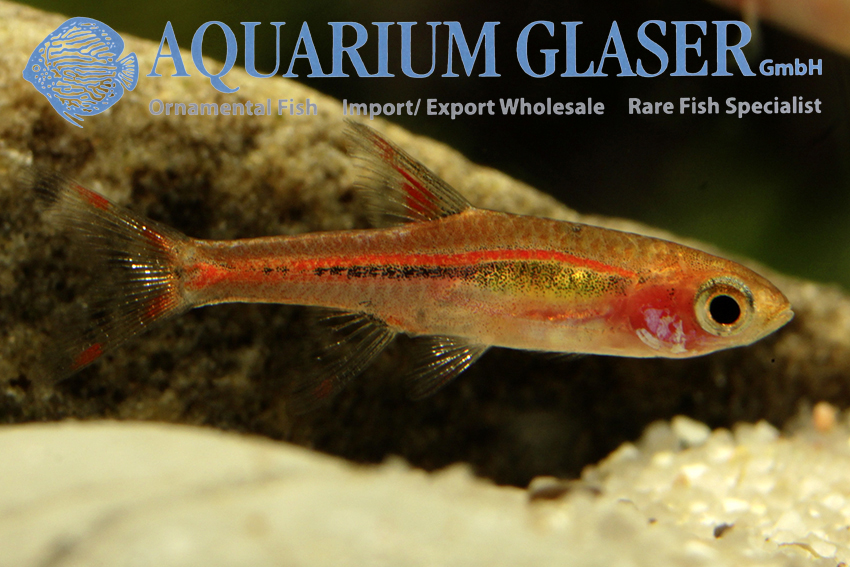
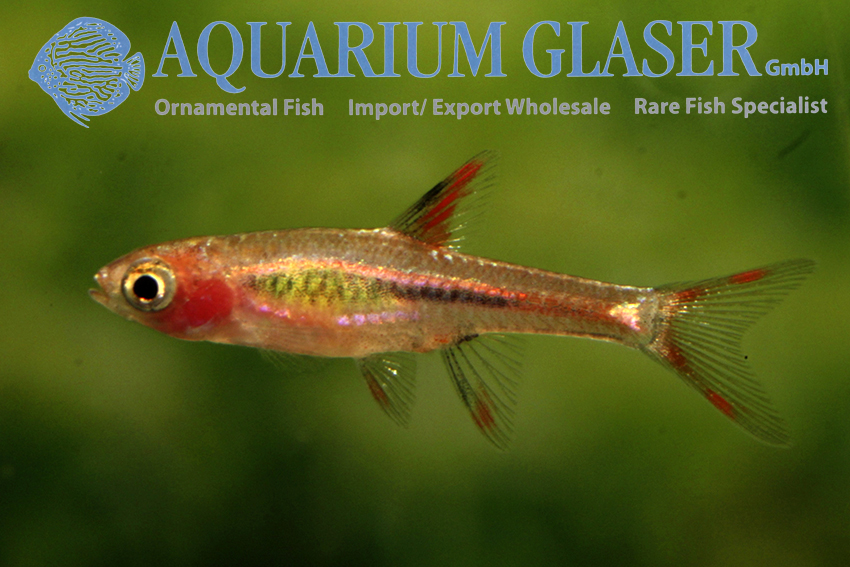
Dieter Vogt described in 1978 a subspecies of Rasbora urophthalma (please see the entry for Boraras urophthalmoides in our fisharchives: http://www.aquariumglaser.de/en/fish-archives/boraras_urophthalmoides_formerly_rasbora_urophthalma__en/) from Borneo. He named the fish Rasbora urophthalma brigittae, a dedication name in honour for his wife Brigitte. The German name is „mosquito rasbora“. This is not because the fish are as tiny as mosquitos or as red as moskitos after having a dinner, but due to the fact that there were so many mosquitos at the collecting site that fishing became a real pain.Today the mosquito rasbora is regarded as a full species in Boraras and thus the correct name is Boraras brigittae.

For our customers: B. brigittae has code 451102 on our stocklist. Please note that we exclusively supply to the wholesale market.

Text & photos: Frank Schäfer
Danio sp. Hikari Blue & Yellow

20. April 2017

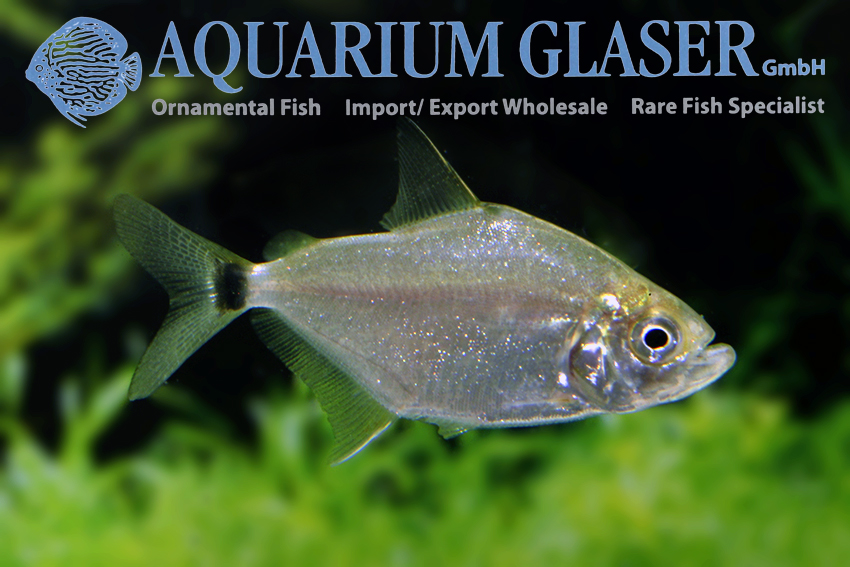
Hikari-Danios belong to a scientifically still undescribed species of Danio from Burma. The closest relative is Danio kerri. However, Hikari danios are by far more colorful than D. kerri and really beautiful fish. Keeping and breeding Hikari Danios is absolutely comparable to the very well known zebra fish, Danio rerio. Hikari danios attain a maximum length of about 5 cm.

It has been a quite long time since the last import of these pretty fish. Now we were able to get them again. By that opportunity we found that we had two different codenumbers for Hikari danios, one for „blue“ and one for „yellow“. We asked our supplier and he answered: in fact the fish have formerly been assorted in blue and yellow ones until we became aware that the blue ones are the females and the yellow ones the males…

For our customers: the fish have code 413733 on our stocklist. Please note that we exclusively supply the wholesale trade.

Text & photos: Frank Schäfer
Macrognathus aculeatus

18. April 2017

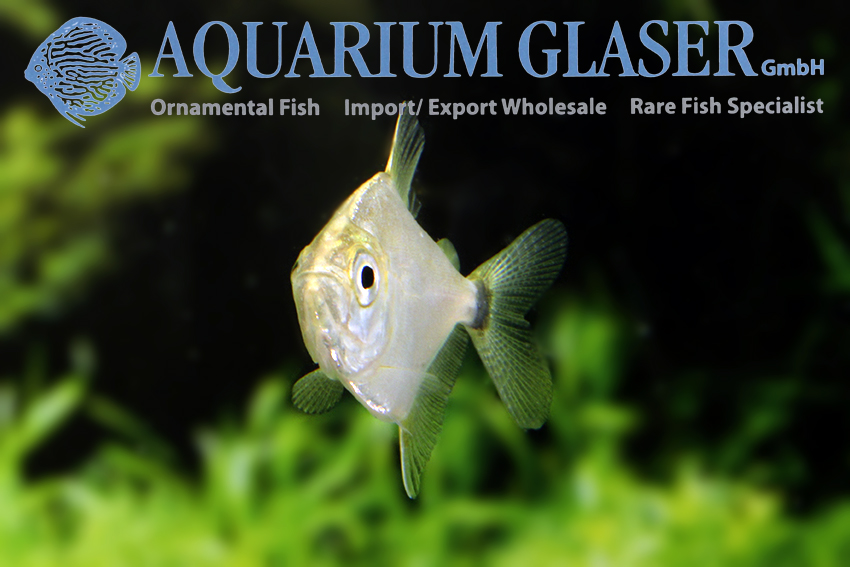
Once more we obtained from India (Bengal) wonderful Eyespot Spiny Eels. The fish are of adult size and 12-15 cm long. The only complicated thing in this species is the scientific naming. The Eyespot Spiny Eel attains a maximum length of about 20 cm and ist one of the most colourful species of all spiny eels. One should be very careful during the acclimatisation, as the fish tends to develop a fungus in small wounds, but once the fish is settled it is very hardy and long living.

Formerly it was thought that there is only one species of Macrognathus, namely Macrognathus aculeatus, with an extremely wide distribution over South and Southeast Asia. Nowadays only individuals from Indonesia are thought to belong really to M. aculeatus. The small, striped Eyespot Spiny Eel from Bengal and Bangladesh is still named „Macrognathus aculeatus“ in many books and scientific articles on freshwater fishes of the region, but it´s proper name is – according to the most recent scientific research – Macrognathus aral.

One should keep this beautiful fish in a tank with a well structured equipment – roots, stones, caves, plants – and a soft bottom. Very small fish will be eaten, but against all other fish and conspecifics the Eyespot Spiny Eels are very peaceful. Settled fish will usually accept even granulated dry food, but frozen food items (bloodworm, large Artemia etc.) should be offered, too. Eyespot Spiny Eels spawn often in aquaria; males are smaller and more dainty than the females. Astonishingly these bottom-dwelling fish prefer the roots of swimming plants to spawn in. It is most likely that this hinders the eggs to sink in the deep muddy bottom in the natural habitats of the fish where the eggs would suffer. Spiny eels do not take any further care for their eggs.

For our customers: the fish have code 425155 on our stocklist. Please note that we exclusively supply the wholesale trade.

Text & photos: Frank Schäfer
Betta simplex

12. April 2017

This small (5-6 cm) mouthbrooding species from Thailand is a very nice addition to the good assortment of wild collected Betta we currently have in stock. Betta simplex is a very close relative to the species Betta picta from Java, Betta falx from Sumatra, and Betta taeniata from Borneo. All the mentioned species share the same ancestor. The males have a broad green to blue (reddish in B. falx) seam in the anal and the caudal fin. Our B. simplex are not fully grown yet, but already sexually ripe. The males do show already what beauties they will become when fully adult. In contrast to many other mouthbrooding Betta species, B. simplex is not adopted to soft, acidic water, for the natural habitat (near the town of Krabi in the south of Thiland) is characterised by lime stone hills.

For our customers: the fish have code 387752 on our stocklist. Please note that we exclusively supply the wholesale trade.

Text & photos: Frank Schäfer
Hyphessobrycon sp. Red-Blue Peru Tetra, now H. margitae

12. April 2017

This tetra, which attains a maximum length of about 4-5 cm, is without any doubts one of the most attractive members of the tetra family. The species has been described scientifically recently under the name of Hyphessobrycon margitae. It originates from Peru, according to the exporters from the Loreto region, Rio Nanay basin. Regarding the behaviour it shows a lot of similarities to the Purple emperor tetra (Inpaichthys kerri). Sometimes H. margitae is confused with Hyphessobrycon nigricinctus, the Peruvian emperor tetra, which has, however, a much narrower lateral band.

The Red-Blue Peru-Tetra is a peaceful animal that can be kept in any community tank with other peaceful fish. We can currently offer fully grown bred specimens, but we also have sometimes wild collected specimens in stock.

For our customers: the fish have code 262153 (wild) and 262164 (bred) on our stocklist. Please note that we exclusively supply the wholesale trade.

Lexicon: Hyphessobrycon: ancient Greek, means “small Brycon”; Brycon is another genus of tetra. Inpaichthys: dedication name for the  Instituto Nacional de Pesquisas da Amazonia (INPA); ichthys is ancient Greek and means “fish”. kerri: dedication name for W. E. Kerr, at the time director of INPA. nigricintus: Latin, means “with a black band”. margitae: named in honour of the wife of the describer, Margit Zarske.

Poecilia wingei, Endler´s Livebearer „White Peacock“

10. April 2017

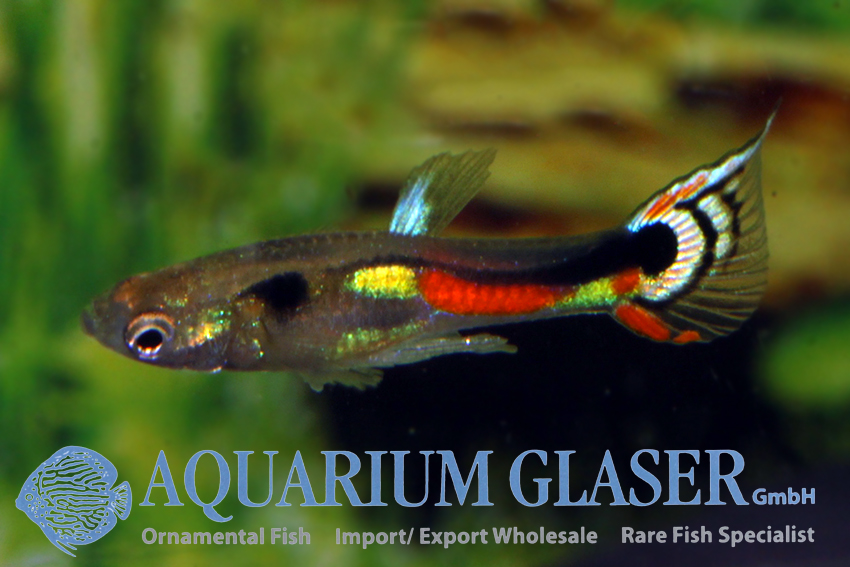
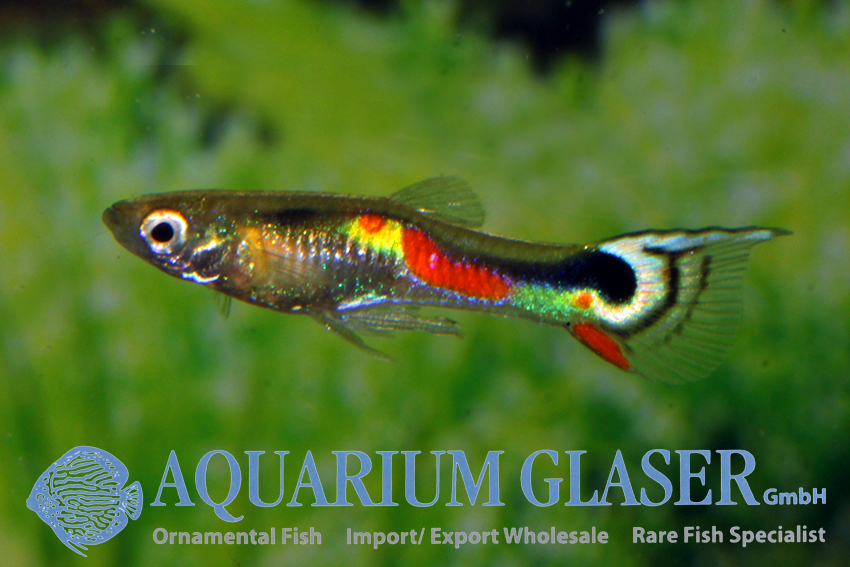
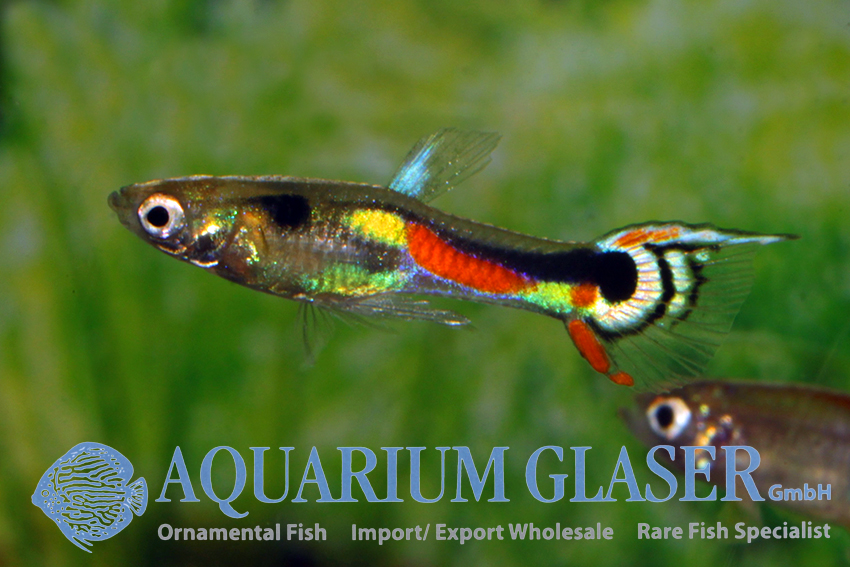
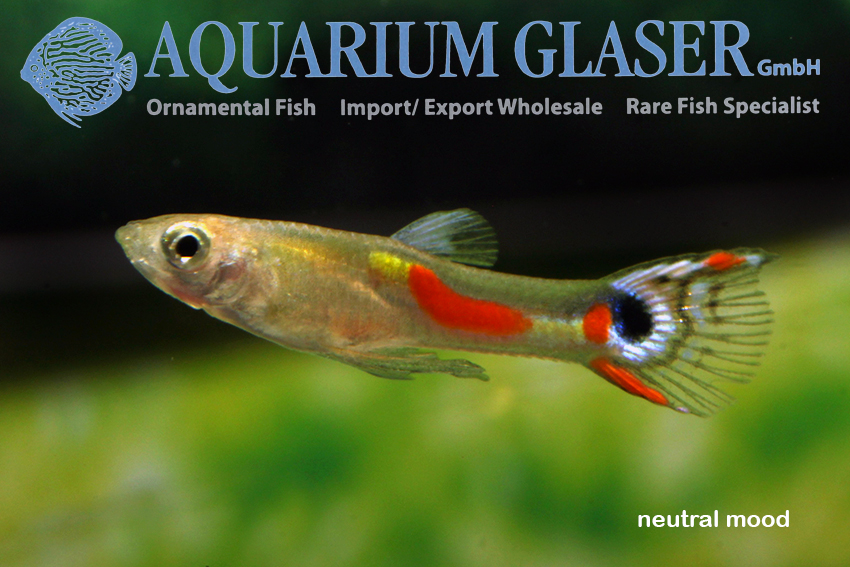
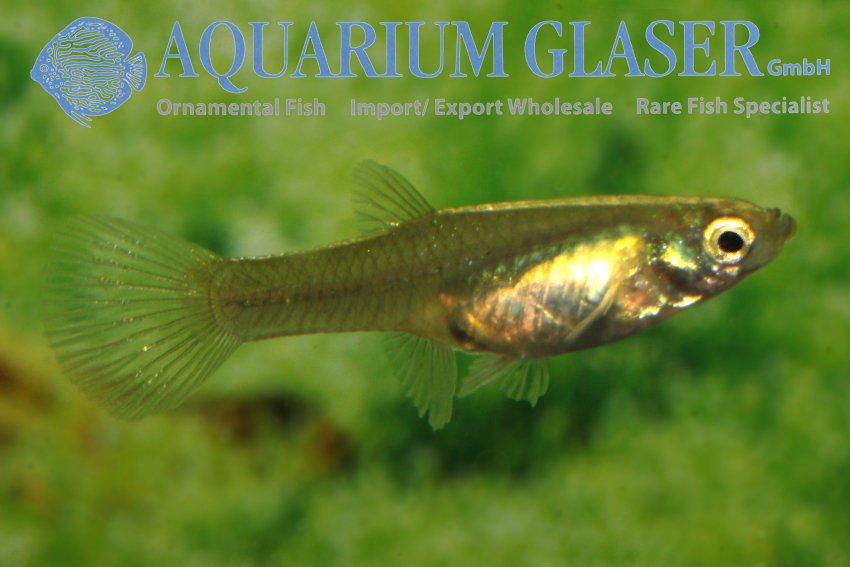
The breeding of the different sports of Endler´s Livebearer has become a popular branch of the hobby. There are a lot of sports, some artifical – developed by cross-breeding or selective breeding – some are different looking populations that appear in the wild. The White Peacock is such a wild type. The ancestors of the fish in the trade have been collected by Armado Pou in 2004 from the Laguna de los Patos North Lake, according to the informations available from specialized web pages. For sure the fish are now much more uniformly coloured than the animals living in the wild, but they still have their extremely lively habit and they have stayed so wonderful small and dainty. Displaying males become much darker in coloration, compared with the neutral coloration. We obtain our fish from our proofed breeder in Thailand. The matching females are also available.

For our customers: the animals have code 419117 on our stocklist. Please note that we exclusively supply the wholesale trade.

Text & photos: Frank Schäfer
Phractolaemus ansorgii

10. April 2017

Finally we were able to import again Phractolaemus ansorgii. The last importation was years ago. Sadly the fish are sold out already, but we nevertheless want to show you the interesting animals.

Formerly we obtained these fish from Nigeria, this time they originate from the Congo. In our current import obviously two colour morphs appear, a more reddish one and a more blackish one. We didn´t observe such differences in our former importations, the Nigerian ones were uniformly brownish. Sexually active males develop breeding tubercles along the flanks and around the eyes. 

These unique fishes are said to be close relatives of the Kneriidae on the one side, but they show also many relations to the bony tongues, and here especially to the butterfly fish, Pantodon buchholzi. Phractolaemus are air breathers. It s said that these fish can attain a maximum length of about 20 cm. The photographed male that clearly shows breeding tubercles – is about 8 cm long. There is almost nothing known on the natural history of these unusual fishes.

Text & photos: Frank Schäfer
Altolamprologus calvus

7. April 2017

This cichlid belongs to the most attractive species of the family from Lake Tanganyika. It attains a maximum length of about 13 cm. Despite the lurky look the fish is one of the most peaceful species of cichlid at all. One can say as a rule: if another fish is too large to serve as food it will become simply ignored. And astonishing enough: although Altolamprologus calvus is for sure a predator in the wild it happily accepts even flake food in the aquarium…


For our customers: the fish have code 543303 on our stocklist. Please note that we exclusively supply the wholesale trade.


Hemigrammus rubrostriatus

5. April 2017

Until now we were able to present this beautiful tetra – which has been described scientifically only in 2015 – to you only as a very rare bycatch (see http://www.aquariumglaser.de/en/fish-archives/hemigrammus-rubrostriatus/). But finally we managed a larger importation of that beauty from Venezuela. The fish are about 4-5 cm longer, adult and in full colour. They belong obviously to the most attarctive small species of tetra at all. The tail pattern is similar to the Head-and-Tail-tetras (Hemigrammus ocellifer and H. falsus), but the bright tailspot is blood red instead of yellow; the gorgeous red horizontal stripe is as bright as in Hyphessobrycon amapaensis and the golden-yellow belly shines like that of the Kitty tetra, Hyphessobrycon heliacus. Additional the red and white pattern of the fins is very nice in H. rubrostriatus. If a tetra would have been designed as an ideal community fish, this is it!

If it comes to the requirements of the fish: Hemigrammus rubrostriatus – we suggest Red-Stripe tetra as a common name – is as easy to keep as its congeners that live in aquaria for almost a century now. Any tap water will do for keeping. However, soft, slightly acidic water and the addition of humic acids from dead leaves, peat, alder cones, roots etc. will increase the intensity of the colours.

For our customers: the fish have code 257473 on our stocklist. Please note that we exclusively supply the wholesale trade.

Text & photos: Frank Schäfer
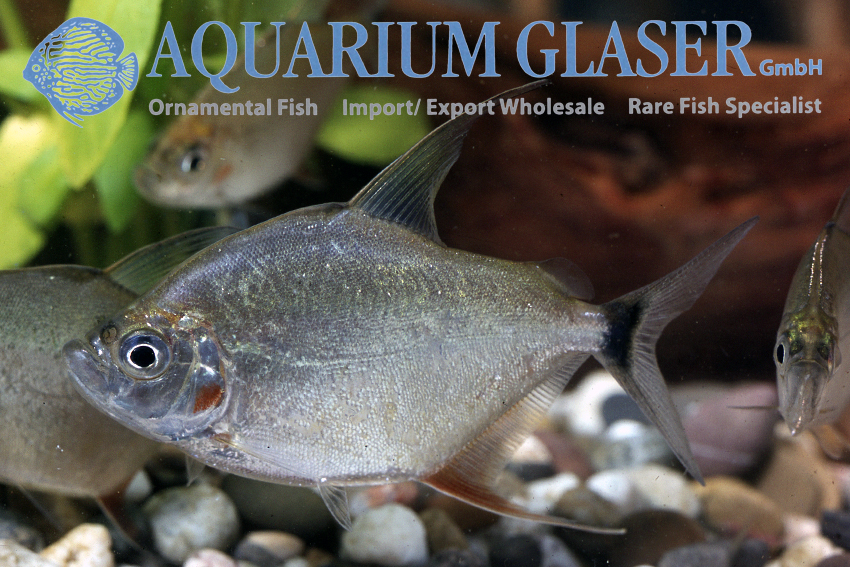
Corydoras sodalis

3. April 2017

We received beautiful coloured Netted Corys. The species Corydoras sodalis is quite often imported, but mostly under the completely wrong name of Corydoras punctatus. The real C. punctatus originates from Surinam, occurs hardly ever in the trade and looks very similar to the well known species C. julii and C. trilineatus. A cory that can be really easily confused with C. sodalis is C. reticulatus. Both have the same pattern and the same body shape, but in C. reticulatus always a clearly marked, dark spot is present in the dorsal fin, which always lacks in C. sodalis.

The extraordinary nice colours in our recently imported C. sodalis can possibly be due to the breeding season of the species. The closely related C. pantanalensis (formerly known as C5) also shows a very nice pattern during the breeding season. However, C. sodalis reaches onyl a maximum length of about 5-6 cm, while his cousin from the Pantanal becomes much larger. The natural distribution of C. sodalis is a large area in the upper Amazon region of Peru and Brazil. Our current import originates from Brazil.

For our customers: the fish have code 246705 on our stocklist. Please note that we exclusively supply the wholesale trade.

Text & photos: Frank Schäfer
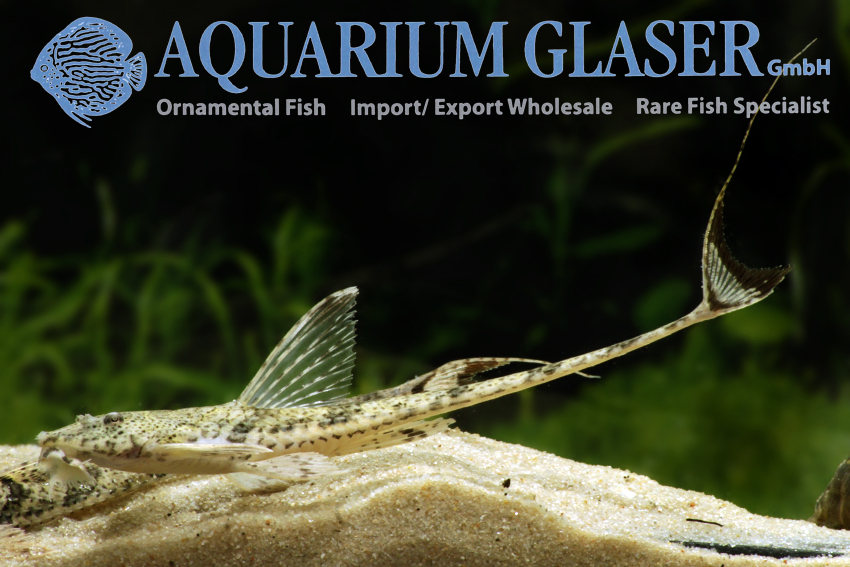
Rhaphiodon vulpinus

3. April 2017

Rhaphiodon vulpinus belongs to the largest of the sabertooth tetras. The species can attain a maximum length of about 80 cm and a weight of up to 2.1 kg. It has a very wide distribution in South America where it is called „Biara“. This predator has, very much alike the close realtives of the genus Hydrolycus, two very long teeth in the lower jaw. With these the fish spears its prey. When the mouth is closed, the long teeth fit in a sheath in the roof of the mouth. Biaras are wonderful subjects for public or very large private aquaria. Currently we have juveniles of different size from Peru in stock. Against conspecifics and other species of fish that cannot be eaten, Rhaphiodon vulpinus is very peaceful.

For our customers: the fish have code 287502 on our stocklist. Please note that we exclusively supply the wholesale trade.

Text & photos: Frank Schäfer
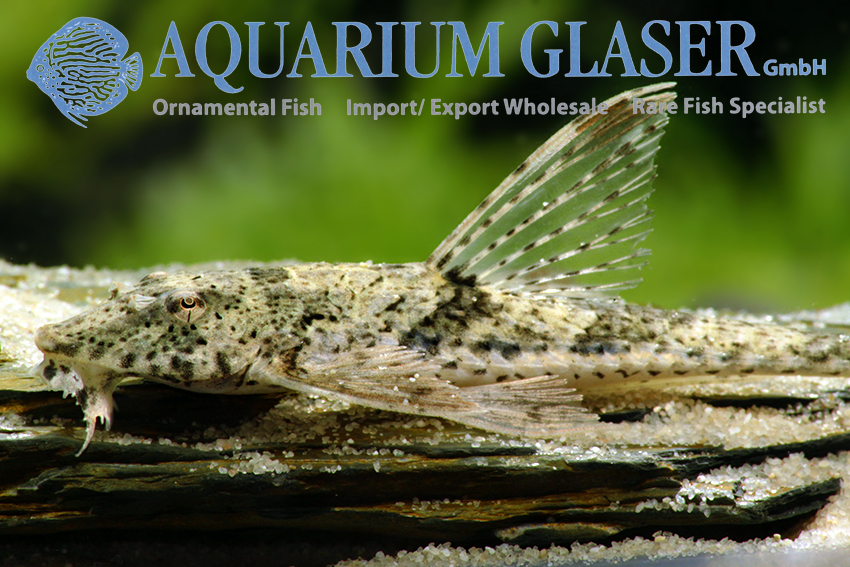
Extraordinary attractive Hypancistrus debilittera (L129) arrived!

2. April 2017

Currently is the best import season for plecos from the Rio Orinoco. So we have a large number of species in stock. Among them is of course Hypancistrus debilittera, which was called L129 before it became described scientifically. This is a pretty, small species with an enormous range of colour pattern. There hardly exist two specimens that look exactly identical. The maximum size of that species is approximately 10 cm.

In our current imports almost all specimens have amore contrasting pattern than we are used to in that species. We cannot explain that phenomenon, but we really like it!

For our customers: the fish have code 26480-L129-1 on our stocklist. Please note that we exclusively supply the wholesale trade.

Text & photos: Frank Schäfer
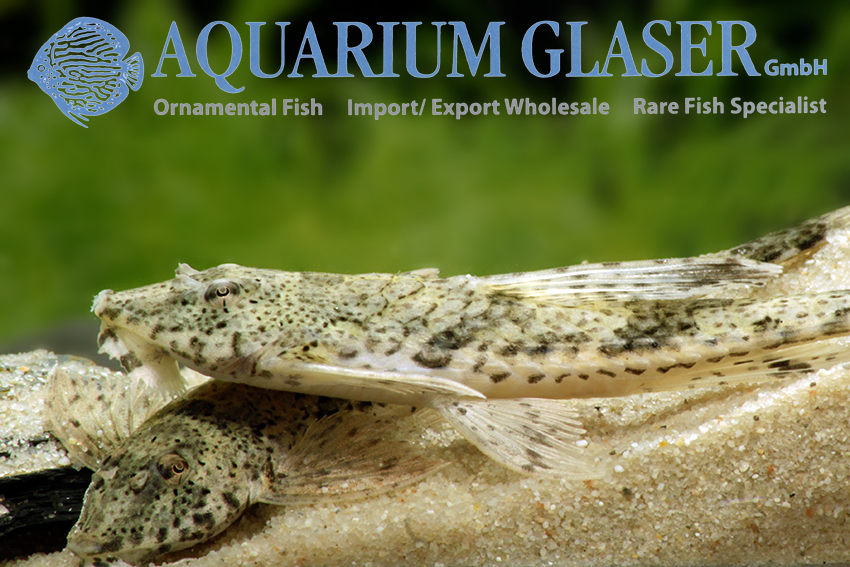
Benitochromis nigrodorsalis

2. April 2017

We can cvurrently offer a very small number of German bred specimens of a top rarity among the cichlids of western Africa: Benitochromis nigrodorsalis. This species has been described scientifically only in 2001. It originates from Cameroon and the island of Fernando Poo. Prior to the scientific descrption the fish was known as „Chromidotilapia finleyi Moliwe“ in the hobby. The species attains a length of about 12 cm.
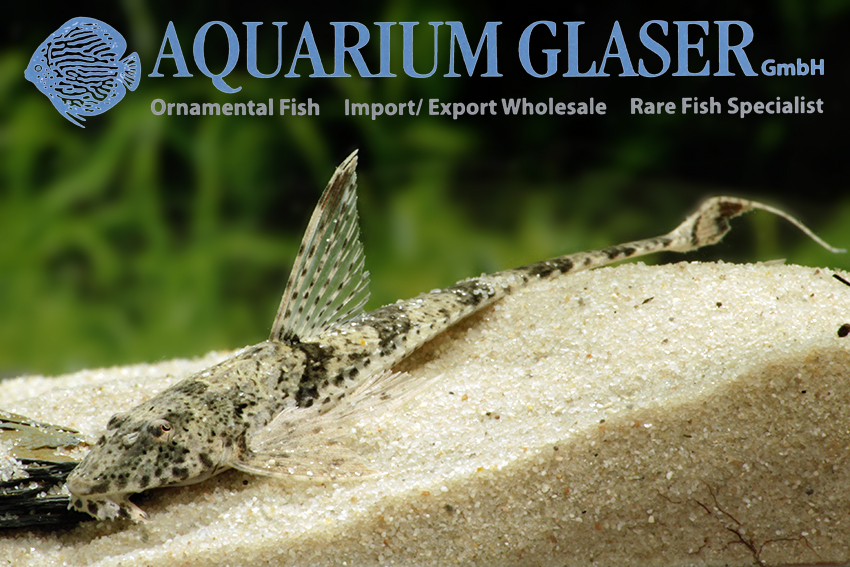
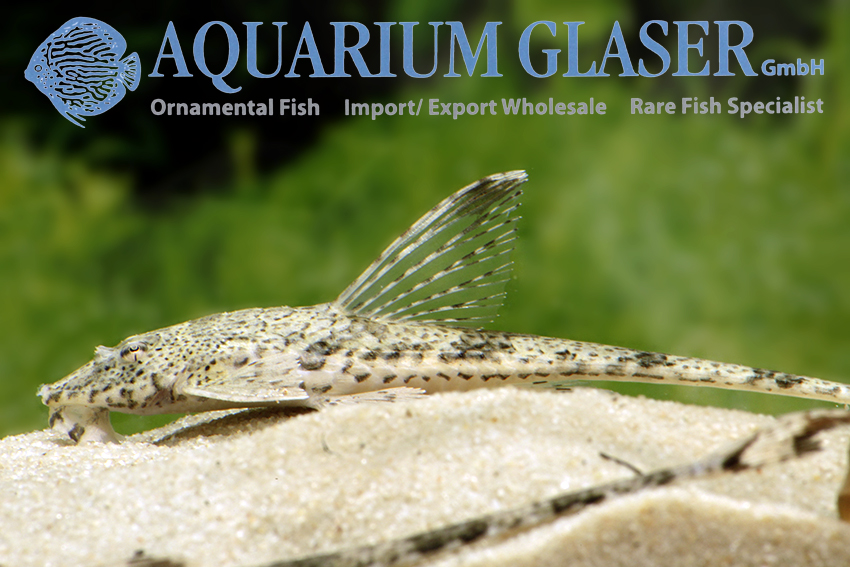
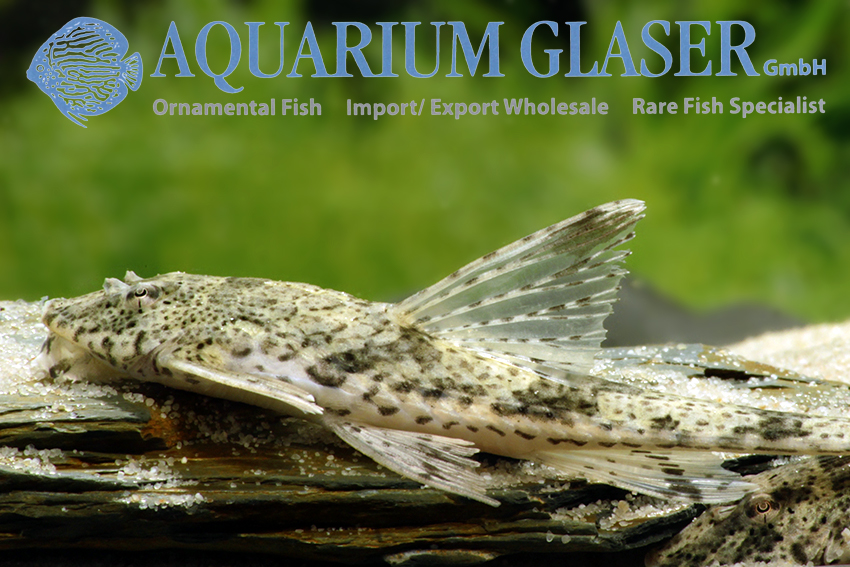
Benitochromis is closely related to the Pelvicachromis species and can be compared regarding the aquarium biology quite good with these peaceful and colorful cichlids. In contrast to Pelvicachromis, which are cave brooders, Benitochromis are biparental, ovophilous mouthbrooders. This means that both parents take care for eggs and fry; eggs and fry are given from parent to parent several times per day. The eggs are taken in the mouth immediately after spawning (= ovophilous).

For our customers: the fish have code 503045 on our stocklist. Please note that we exclusively supply the wholesale trade.

Text & photos: Frank Schäfer
Lepidosiren paradoxus

29. March 2017

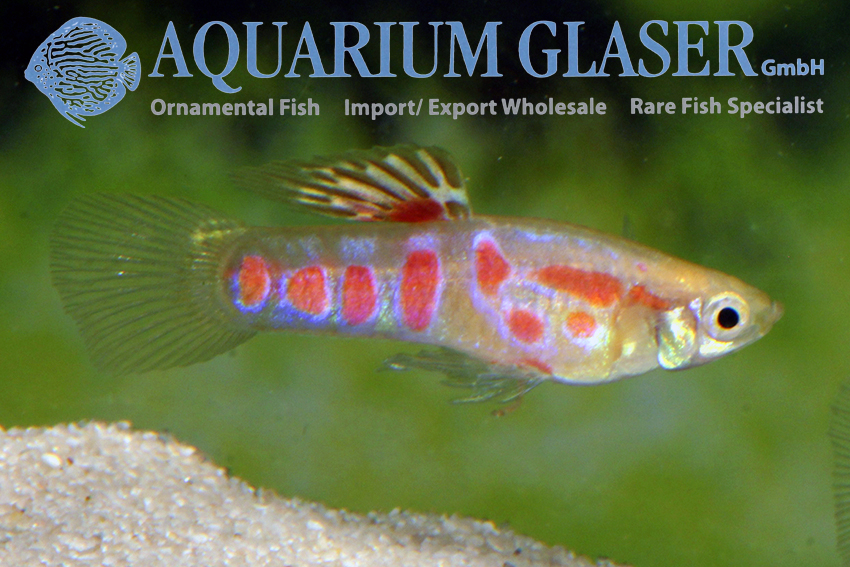
The South American Lungfish is a very interesting fish, but it has only very drab colours. The usual pattern is mudcolour, eg brownish, greyish, sometimes a bit blackish. But why should an animal that lives in swamps and feeds on snails show bright coloration? On the other hand: astonishingly enough, very young specimens, like the ones we obtained recently from Peru (6-9 cm long) are very pretty! The fish are pitchblack and have golden-yellow dots. Against conspecfics the youngsters are very peaceful. This cannot be said about the adults! Pictures of adult specimens can be seen here: http://www.aquariumglaser.de/en/fish-archives/lepidosiren_paradoxus_en/

For our customers: the fish have code 265501 on our stocklist. Please note that we exclusively supply the wholesale trade.

Text & photos: Frank Schäfer
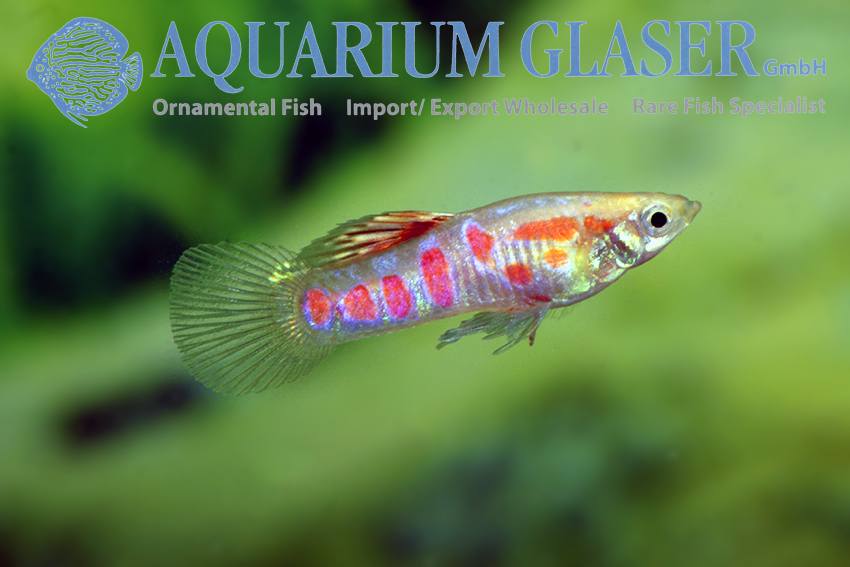
Hemiodontichthys acipenserinus

28. March 2017

This species has been named “Pinocchio cat” in the trade due to its funny looking nose. The species represents the smallest of all mouthbrooding whiptail cats – it usually grows only to 10 cm total length in aquaria – and is thus very well suited for keeping. We currently were able to import these beautiful animals once more from Peru.

The fish are – as already mentioned – mouthbrooders, the male takes care for the eggs. We are very happy that one of our males currently bears a batch of eggs. Of course, we are a wholesaler, not a breeding station, but nevertheless this shows us that our fish really feel good, for otherwise they would not breed at all.

For our customers: the fish have code 257904 on our stocklist. Please note that we exclusively supply the wholesale trade.

Text & photos: Frank Schäfer
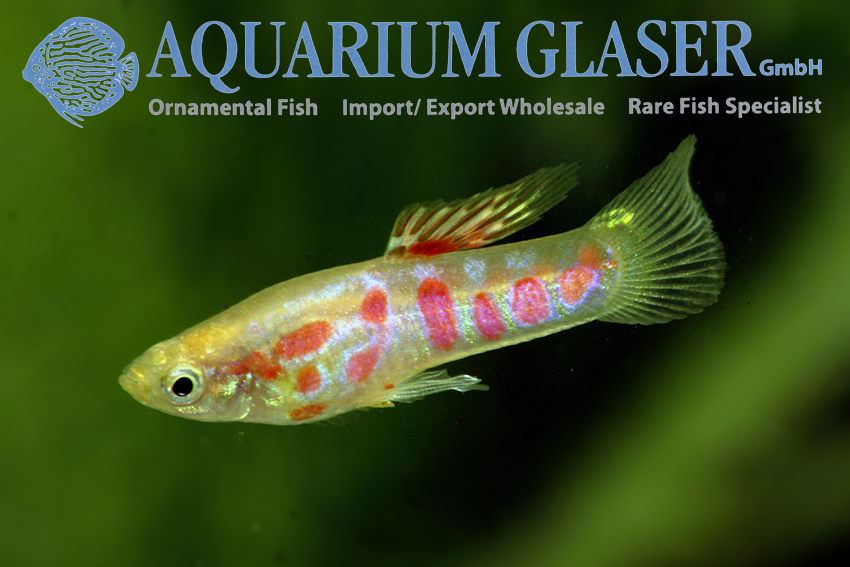
Wild Rams

28. March 2017

Due to the regularly offered, amazing bred sports of the Ram (Mikrogeophagus ramirezi) one tends to forget, how breathtaking beautiful the wild collected fish is already. Currently we have fully grown, wild collected Rams from Venezuela in stock. By the way: wild collected Rams become only about 5 cm long (in males), females even stay smaller, so this species is definitely a dwarf cichlid!

For our customers: the animals have code 686515 on our stocklist. Please note that we exclusively supply the wholesale trade.

Text & photos: Frank Schäfer
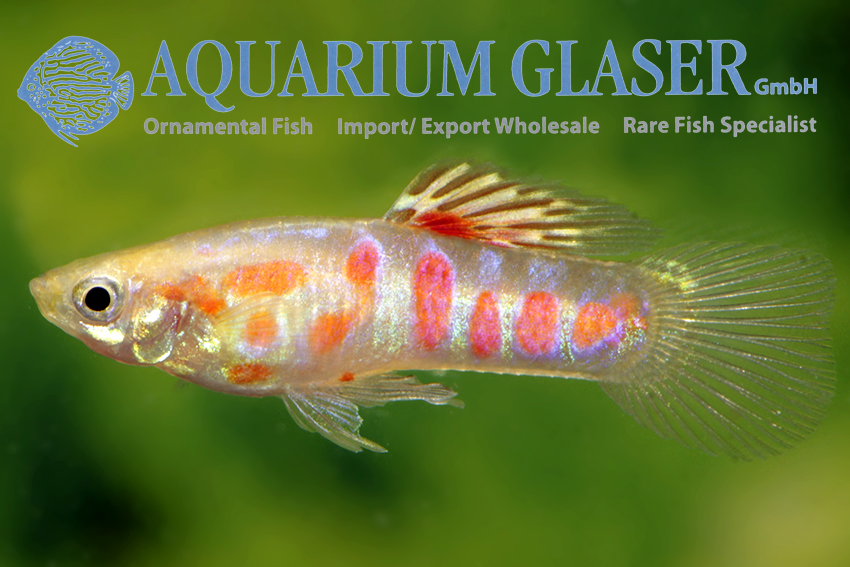
Peckoltia sp. Red Tiger L209

24. March 2017

When we imported this beauty for the very first time it was not possible to identify it as a already known species. But now there is a consensus among hobbyists that it is identical with L209. L209 is a typical member of the genus Peckoltia. The omnivorous species attains a maximum length of about 15 cm. The species originates from the Rio Madeira. In the meantime it was possible to breed the fish successful, so hopefully it will stay available in the hobby.

Text & photos: Frank Schäfer
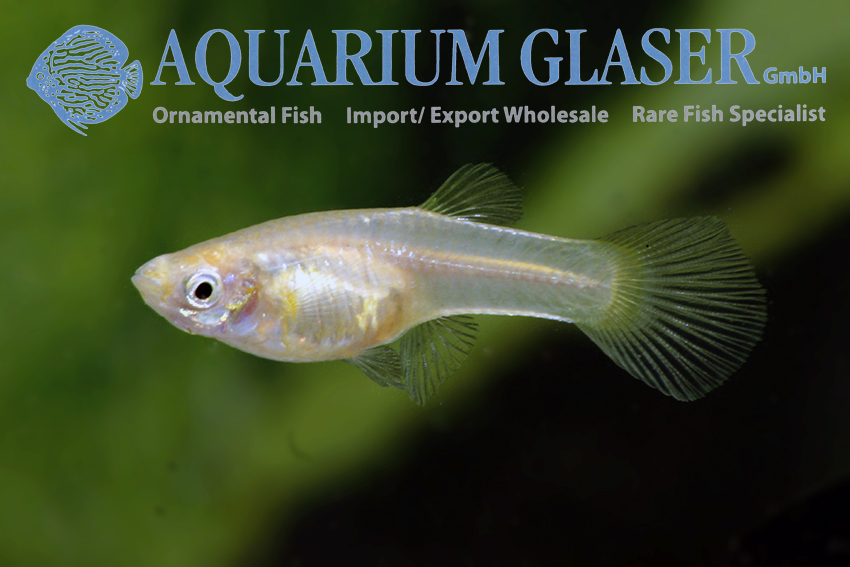
Stiphodon semoni

22. March 2017

Once more we were able to import one of the gorgeous gobies belonging to the genus Stiphodon. This time we most likely received Stiphodon semoni, a species that is known for a long time already scientifically. It has been described already back in 1895. The species has a wide distribution, it is known from Sulawesi, Bali, New Guinea (Irian Jaya), generally in Indonesia, in the west to the Solomon Islands. The larvae of this species develop in marine environment, so the wide distribution is not so astonishing. The adults are strictly freshwater fish that prefer clear, small streams.

The members of the genus Stiphodon are in general termed as „neon gobies“, but this fits especially for S. semoni. Keeping these fish is pretty easy, Stiphodon are very peaceful fish. They should be kept in groups. In that case they show a lot of interesting behaviour. The bottom of the tank should be furnished with round river stones of about 6-8 cm diameter, and portions of sandy bottom. Of course these current loving fish should have a good filtration in their tank. The water temperature can be between 24 and 28 °C.

For our customers: the fish have code 456103 on our stocklsit. Please note that we exclusively supply the wholesale trade.

Text & photos: Frank Schäfer
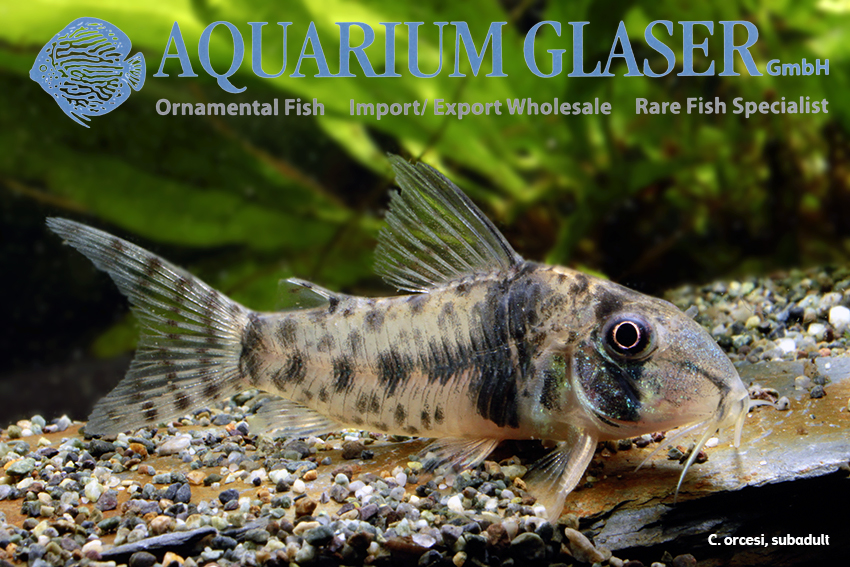
Laevimon kottelati

22. March 2017

We were able to import some specimens of the freshwater crab Laevimon kottelati. This interesting an beautiful crab attains a size of about 4.5 cm Carapax-width aund existis endemicly in Vietnam. Here it has been discovered in 1998 and decribed scientifically in 2005 as a new species in a new genus. It lives amphibic in the shallow water of the bank of small rivers. The photos of live specimens we post here are to the best of our knowledge the only ones that exist.

For our customers: the animals have code 484053 on our stockiest. Please note that we exclusively supply the wholesale trade.

Text & Photos: Frank Schäfer

Brachygobius sabanus Thailand

20. March 2017

We received this pretty species of bumblebee goby from Thailand. The determination of bumblebee gobies often proofes to be quite tricky; usually a big questionmark has to be set behind the names. Brachybobius sabanus has been described initially from Borneo (Sabah), our fish have been collected in Thailand. But the illustration accompanying the original description of B. sabanus fits very good for our specimens.

B. sabanus attains a maximum length of about 2.5 cm. The coloration differs a lot individually. The species inhabits pure freshwater habitats. We were very glad to observe a spawning in our facility. But we thought the eggs would suffer from fungus quite fast. When the male was defending the whitish eggs still for days we took a closer look and discovered that the eyes of the offspring were already visible in the eggs. In fact it was the white yolk sack, not fungus that made the eggs look white! Sadly the larvae hatched on weekend in the night when no one was in our fishhouse. But we think an experienced hobbyist should be able to raise Brachygobius sabanus without problems.

For our customers: the fish have code 407252 on our stocklist. Please note that we exclusively supply the wholesale trade.

Text & photos: Frank Schäfer
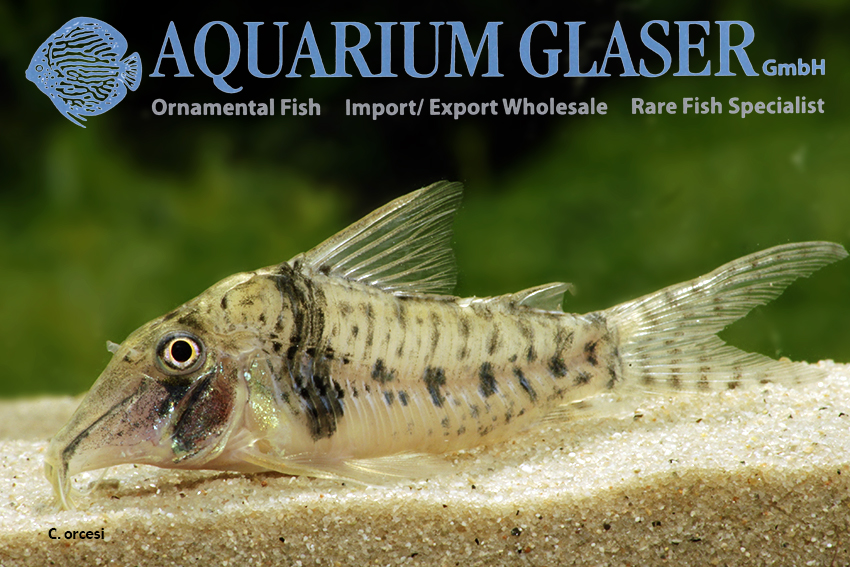
Mastacembelus sp. „Nargis“

17. March 2017

We could import this new discovery – a spiny eel – for the first time now from Burma. Initially I thought it would be a member of the M.-armatus-group, but the specialist for spiny eels, Ralf Britz from Natural History Museum in London led me to the idea to take a closer look on the caudal fin. Indeed this fin is fairly separated from the dorsal and the anal fin in Mastacembelus sp. „Nargis“ , while it is merged with these fins in the M.-armatus-group. Ralf thinks that M. sp. Nargis is closest to M. caudiocellatus, but of course he also says that more and detailed observations have to be done to proof this. In the meantime it is best to name the fish Mastacembelus sp. „Nargis“.

It is much likely that Mastacembelus sp. „Nargis“ belongs to the medium sized members of the genus and will attain a maximum length of about 25 cm or so. Our (short) experience with the fish shows that it is as peaceful, gregarious and secretly as one expects from a member of this relationship.

For our customers: the fish have code 426215 on our stocklist. Please note that we exclusively supply the wholesale trade. Available in limited numbers only!

Text & photos: Frank Schäfer
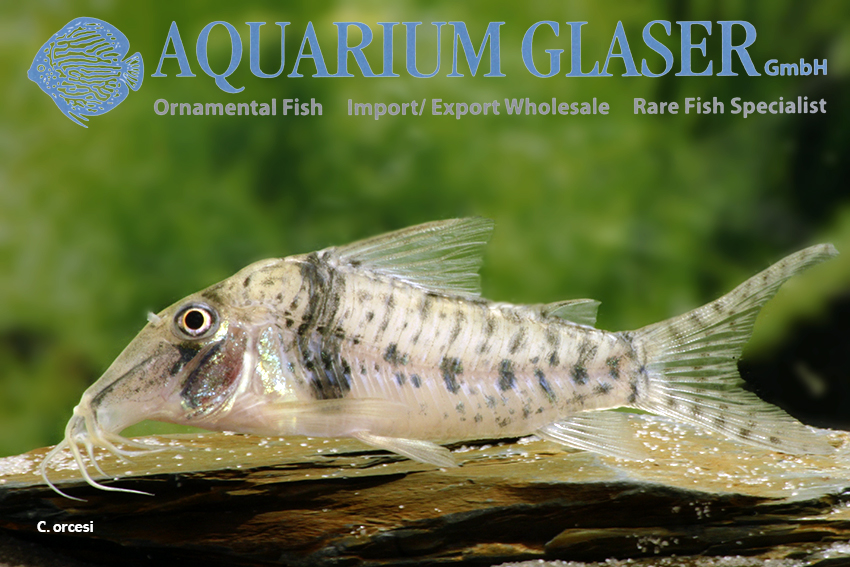
Betta ferox

17. March 2017

Sometimes we receive wild collected specimens of that very rare species of Betta. The mouthbrooding species is known so far only from a very small area in Thailand (Bori Pat). Here the fish inhabit brooks with soft and slightly acidic water. The water temperature there is around 25°C. Maximum length reported is about 8 cm, male become generally larger than the females. Females have almost no shining scales on the body.

For our customers: the fish have code 381343 on our stocklist. Please note that we exclusively supply the wholesale trade.

Text & photos: Frank Schäfer
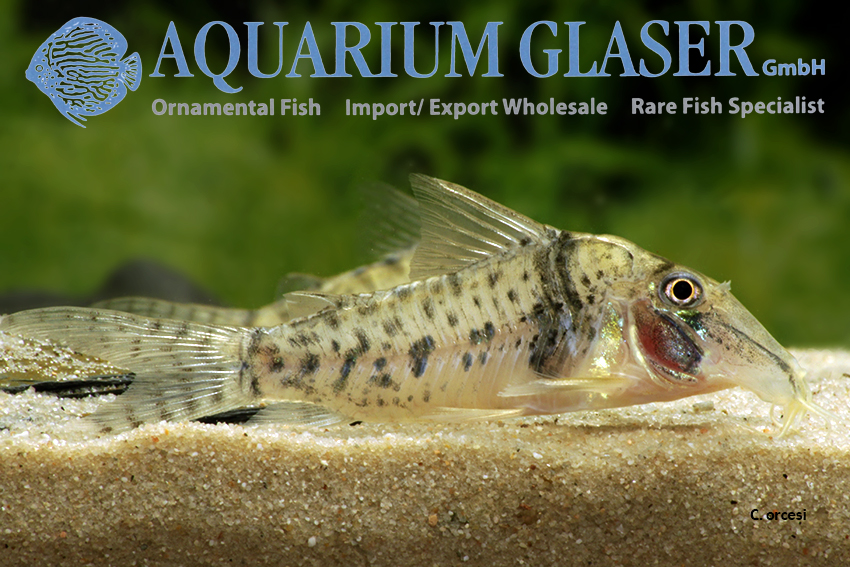
Corydoras fowleri / coriatae

17. March 2017

The very long snouted Corydoras fowleri has been described scientifically in 1950 on the basis of a single specimen. Since that it has not been seen for decades anymore. Only at the end of the 1990ies imports from Peru arrived. The imported fish proofed to be very variable in respect of coloration. It is still a matter of debate wether C. coriatae represents only one of these sports or wether the species is a valid species on its own. But who cares? In any case they are very impressing, beautiful aquarium fish!

For our customers: the fish have code 229814 on our stocklist. Please note that we exclusively supply the wholesale trade.

Text & photos: Frank Schäfer
Stiphodon semoni

15. March 2017

Once more we were able to import one of the gorgeous gobies belonging to the genus Stiphodon. This time we most likely received Stiphodon semoni, a species that is known for a long time already scientifically. It has been described already back in 1895. The species has a wide distribution, it is known from Sulawesi, Bali, New Guinea (Irian Jaya), generally in Indonesia, in the west to the Solomon Islands. The larvae of this species develop in marine environment, so the wide distribution is not so astonishing. The adults are strictly freshwater fish that prefer clear, small streams.

The members of the genus Stiphodon are in general termed as „neon gobies“, but this fits especially for S. semoni. Keeping these fish is pretty easy, Stiphodon are very peaceful fish. They should be kept in groups. In that case they show a lot of interesting behaviour. The bottom of the tank should be furnished with round river stones of about 6-8 cm diameter, and portions of sandy bottom. Of course these current loving fish should have a good filtration in their tank. The water temperature can be between 24 and 28 °C.

For our customers: the fish have code 456103 on our stocklsit. Please note that we exclusively supply the wholesale trade.

Text & photos: Frank Schäfer
Phenacogrammus interruptus Albino

15. March 2017

Currently we receive beautiful cultivated albino Congo Tetras (Phenacogrammus interruptus) from Southeast Asia. Like in all true albinos the eyes of the fish are red due to the genetically caused lack of black body pigment (melanin). In many other species of fish albinos have a uniform whitish, yellowish or flesh-coloured body. Not so in the Congo Tetra. The iridescent colours of the body of that species are also extant in the albino variety. This makes the fish look so extraordinary nice.

Lexicon: Phenacogrammus: from ancient Greek, meaning “with tricky line”; this refers to the fact that the shape of the lateral line cannot be used to distinguish this genus from other genera. interruptus: Latin for “interrupted”. Refers to the shape of the lateral line.

For our customers: the fish have code 159454 on our stocklist. Please note that we supply exclusively the wholesale trade.

Text & Photos: Frank Schäfer
Apistogramma borellii Paraguay wild

11. March 2017

Recently we received beautiful wild collected specimens of A. borellii from Paraguay. This species is an ideal aquarium fish. In contrast to many other species of the genus A. borellii is completely undemanding regarding water chemistry. Even in medium hard, slightly alcalic water the species thrives well and even breeds. The behaviour of A. borelli is similar to most other Apistogrammas: it is a polygamous species (that means each male breeds with several females), a cavebrooder, and the female has to do the most work in respect of taking care for the fry. However, A. borellii is among all the different types of Apistogramma the one that fits best to human ideals: it is even possible to keep it in pairs and every now and then even males take care for the brood. It is recommended to keep the fish in unheated aquaria during some weeks of the year. This will lead to a longer life in A. borellii and healthier fish.

During the current photosession we observed by chance that the neck-pattern of the fish formes so-called „eyespots“. These eyespots make the fish look by far bigger for possible predators. To the best of our knowledge this phenomenon has not been been mentioned for any Apistogramma species so far!

For our customers: the fish have code 615703 on our stocklist. Please note that we exclusively supply the wholesale trade.

Lexicon: Apistogramma: ancient Greek, means “with unreliable line”. It is not known wether the lateral line organ or the pattern is meant. borellii: dedication name. 

Common name: Umbrella cichlid, Yellow dwarf cichlid

Text & photos: Frank Schäfer
Black winged dwarf hatchets

11. March 2017

There are two species of Black winged dwarf hatchets recognized. These charming little creatures hardly reach 3 cm in length. From Peru and Colombia we get occasionally Carnegiella schereri. The fish, however, are usually sent under the name of „Gasteropelecus sternicla, size small“. In fact both species have a very similar coloration, but C. schereri lacks, like all species of Carnegiella, the adipose fin, which is always present in species of Gasteropelecus.

From Brazil we get Carnegiella marthae. Both species of dwarf hatchet are so closely related that in former times they were considered only as subspecies to each other. In that case they were named Carnegiella marthae marthae and Carnegiella marthae schereri. Both species can easily distinguished by the coloration. C. schereri has always a spotted belly, in C. marthae the belly is striped.


For our customers: Carnegiella schereri has code 214152, C. marthae 214002 on our stocklist. Please note that we are supplying the wholesale trade only.

Text & Photos: Frank Schäfer
Danio sp. Hikari Blue & Yellow

8. March 2017

Hikari-Danios belong to a scientifically still undescribed species of Danio from Burma. The closest relative is Danio kerri. However, Hikari danios are by far more colorful than D. kerri and really beautiful fish. Keeping and breeding Hikari Danios is absolutely comparable to the very well known zebra fish, Danio rerio. Hikari danios attain a maximum length of about 5 cm.

It has been a quite long time since the last import of these pretty fish. Now we were able to get them again. By that opportunity we found that we had two different codenumbers for Hikari danios, one for „blue“ and one for „yellow“. We asked our supplier and he answered: in fact the fish have formerly been assorted in blue and yellow ones until we became aware that the blue ones are the females and the yellow ones the males…

For our customers: the fish have code 413733 on our stocklist. Please note that we exclusively supply the wholesale trade.

Text & photos: Frank Schäfer
Chaetobranchopsis australis

8. March 2017

Here it is: the cichlid with the probably most interesting mode of feeding from Paraguay! Chaetobranchopsis australis is specialized in feeding small planktic organisms. The up to 12-14 cm long fish swallows water like a vacuum cleaner and sieves the plankton with long gill rakers out of it. Obviously at the time of our importation – last september – the plankton in Paraguay is rather rare, for the fish are more skinny than we like it; but we are sure this has become corrected in the meantime in the fishhouses of our customers.

Chaetobranchopsis belongs to the very few species of cichlid in which the breeding behaviour is absolutely unknown. Aquarium fish have been observed in cleaning stones, so they might be open brooders, but no one knows!

For our customers: the animals have code 634904 on our stocklist. Please note that we exclusively supply the wholesale trade.

Text & photos: Frank Schäfer
 

Hemiloricaria teffeana

6. March 2017

The vicinity of Tefé (written Teffe in elder publications) in Brazil is a place of wonders in aquarists eyes. When the name Tefé is spoken everybody is reminded in beautiful Green Discus and gorgeous Apistogramma agassizii from that region. But ther also lives a very attractive whiptail catfish: Hemiloricaria teffeana. However, the species has a wider distribution, like (on a species level) Green Discus and Apistogramma agassizii also have.

For our customers: the fish have code 257975 on our stocklist. Please note that we exclusively supply the wholesale trade. Available in very limited numbers only!

Text & photos: Frank Schäfer
Pelvicachromis pulcher wild Yellow

6. March 2017

The yellow sport of Pelvicachromis pulcher originates from southwest Nigeria. Here they are collected west of the Niger delta in the area of the Ethiop river. The names Yellow, Red or Green for the different sports of P. pulcher refers to the colour of the opercles; all of them get a red belly at times. In all Pelvicachromis the females are the more attractive fish, P. pulcher is no exception from that rule. One can study in wild collected fish the variation of the eye-spots in die dorsal fin of the females, which can differ individually from zero to five.

For our customers: the fish have code 560202 on our stocklist. Please note that we exclusively supply the wholesale trade.

Text & photos: Frank Schäfer
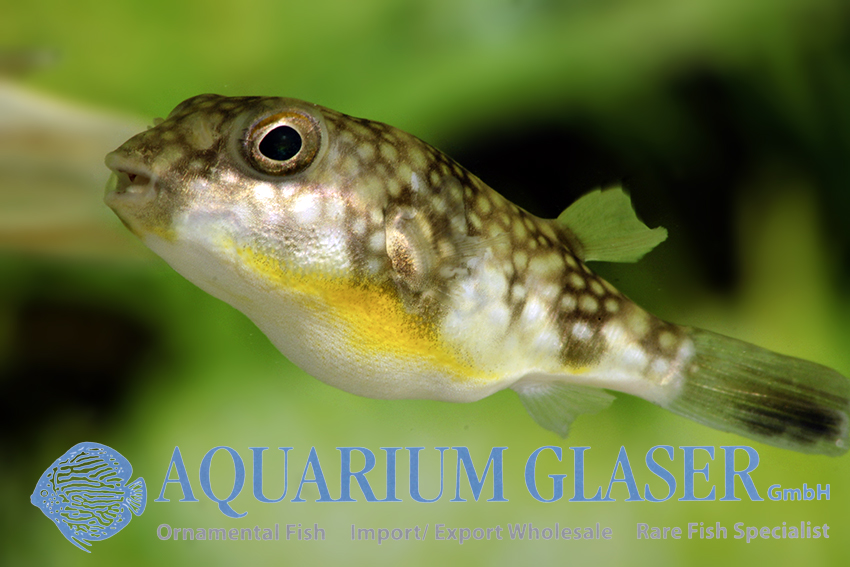
Hemichromis sp. Neon

3. March 2017

If the only thing a hobbyist cares for for be the coloration, we would hardly need other species than Jewel Cichlids. The „Neon“ is an artifical sport, most probably bred by crossing different species and selection. The blue iridescent spots, present in most species of Hemichromis, are much larger in the „Neon“ sport. With respect to the body shape, the „Neon“ is closest to H. guttatus.

But colour is not everything. Sadly all Jewel Cichlids have in common that it is impossible to know wether an individual will be peaceful or agggressive. Within one species both types of behaviour can appear. Some specimens are lambs, others are wolves.

However, the breathtaking splendid coloration and the really wonderful family life of these cichlids are worth the risk!

For our customers: the fish have code 537142 on our stocklist. Please note that we exclusively supply the wholesale trade.

Text & photos: Frank Schäfer
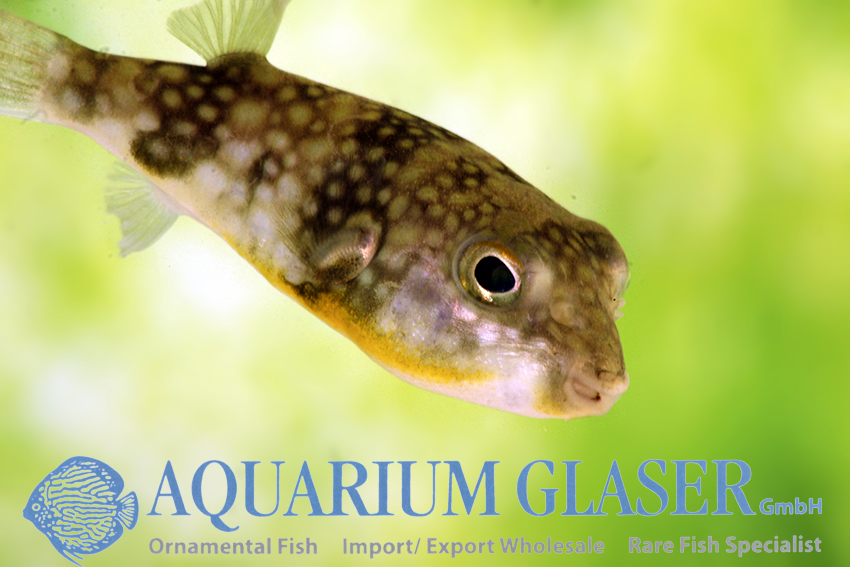
Melanocharacidium sp. Peru

3. March 2017

The ground tetras belonging to the genus Melanocharacidium can change their coloration drastically. This makes a determination often pretty difficult, because the characters used in scientific papers to distinguish the species cannot be seen in life fish and the colours exhibited in preserved specimens may be very different from those observed in life specimens.

The genus Melanocharacidium contains so far nine scientifically described species, none of them has been ever reported for Peru. The only species that lives „nearby“ is Melanocharacidium rex from Ecuador. Sadly there are only two known specimens; however, it seems to be unlikely that our fish belong to the species M. rex, for the type specimen of M. rex is larger than 10 cm, while our fish seem to be at least sexually differentiated – they are currently 4-5 cm long.

So in all probability our imports belong to a scientifically unknown new species. The fish are very entertaining in the aquarium. They are more bottom-bound than their relatives, the ground tetras of the genus Characidium, which may occassionally be found swimming in the free water column. Depending on mood, our Melanocharacidium can look almost black, in other moods they exhibit a dark horizontal band that is followed by a brightly shining one.

For our customers: the fish have code 215903 on our stocklist. Please note that we exclusively supply the wholesale trade.

Text & photos; Frank Schäfer
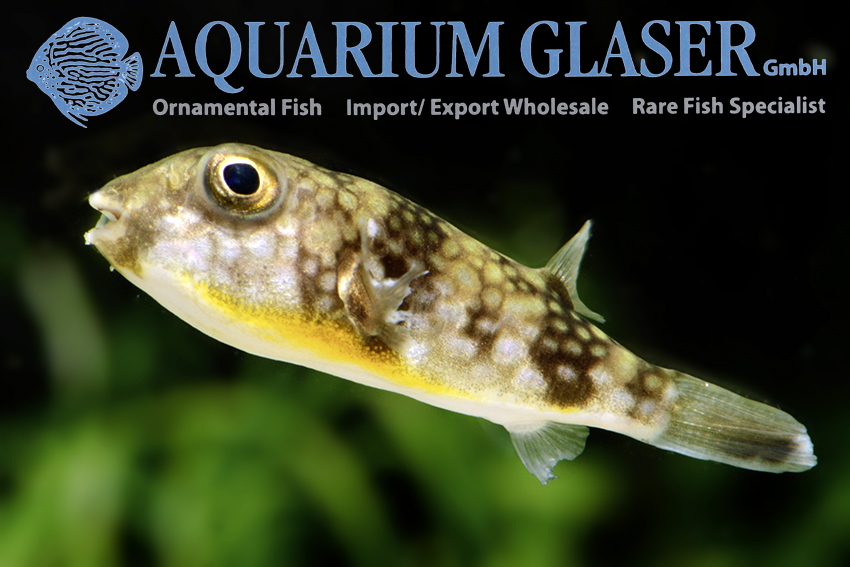
Oryzias dancena “Thailand”

1. March 2017

Usually we obtain the rice fish (Oryzias dancena, in elder books often referred to as O. melastigma) from India. This is also the country from where it as been described scientifically. But now we obtained very healthy and vivid specimens from Thailand.

Oryzias dancena can be distinguished from other, similar species quite good by the white seamed fins. The anal fin of the male has an irregular border. In very old males the finrays may be even extended. The females of this species carry the eggs after spawning around for a while, before they deposit them in plant leaves. This behaviour is typical for all Oryzias species.

Oryzias dancena are absolutely peaceful fish that fit perfecty for any community tank. Here they live basically in the upper third of the tank. Feeding Oryzias is problem-free, for the fish take readily any types of usual fish food. However, food particles must not be too large. Hard, slightly alcalic water is preferred, but one can say that any water that can be used a drinking water for humans can be used to keep and breed Oryzias dancena. The fish attains a maximum length of about 3-4 cm.

For our customers: the animals have code 339602 on our stocklist. Please note that we exclusively supply the wholesale trade.

Text & photos: Frank Schäfer
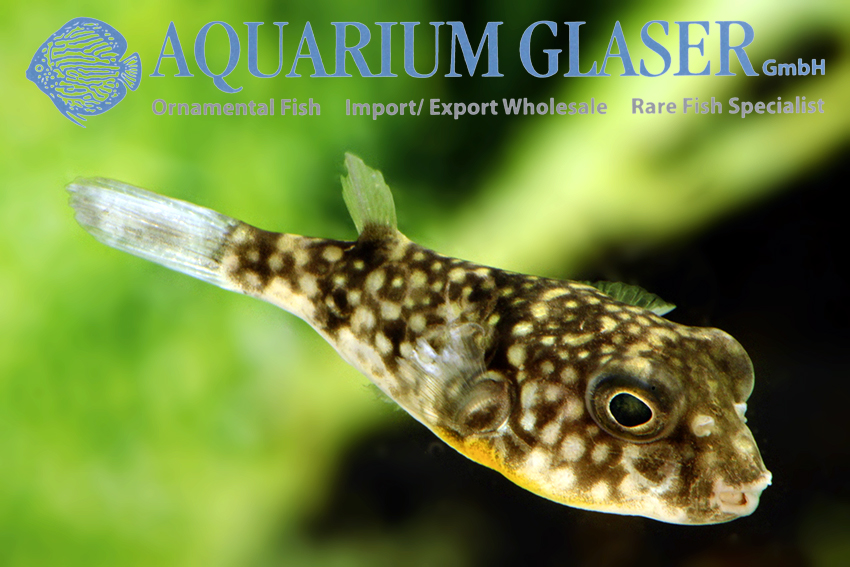
Myxocyprinus asiaticus

27. February 2017

We have the Chinese Whimple Carp, sometimes called the Batman-Loach, almost anytime in stock. Sadly the species is in danger of extinction in the wild, mainly due to hydroelectric power stations. All specimens traded come from aquaculture and are bred in captivity.

Usually we get the fish from Singapore, but as a test we ordered some from a new supplier from Honkong now. Of course we observed these fish very carefully and found that there are two different phenotypes. Some specimens are reddish and the mighty dorsal fin is rounded at its tip. Others are rather black-and-white and the dorsal fin of these fish is much more pointed. Both phenotypes can be found in fish of the same size, the photographed ones are both 10-12 cm long. Do these differences in coloration represent the different sexes? That would be astonishing, as all whimple carps in the trade are still small juveniles. This fish can attain a maximum length of about 1.2 metres and a weight of about 23 kg; the adults look totally different, too.

Well, we will see. We will put the two photo models in a 5.000 litre tank and see how they develop.

Due to their maximum size only juveniles can be kept in normal sized home aquaria. Later the fish have to move in really big tanks or garden ponds. The species is winter-hardy in central Europe. They are much sought for to be kept along with koi carps, for Myxocyprinus is a algae eater and helps to keep the pond clean.

For our customers: the fish have code 438003 (6-8 cm) and 438005 (10-12 cm). Please note that we exclusively supply the wholesale trade.

Text & photos: Frank Schäfer
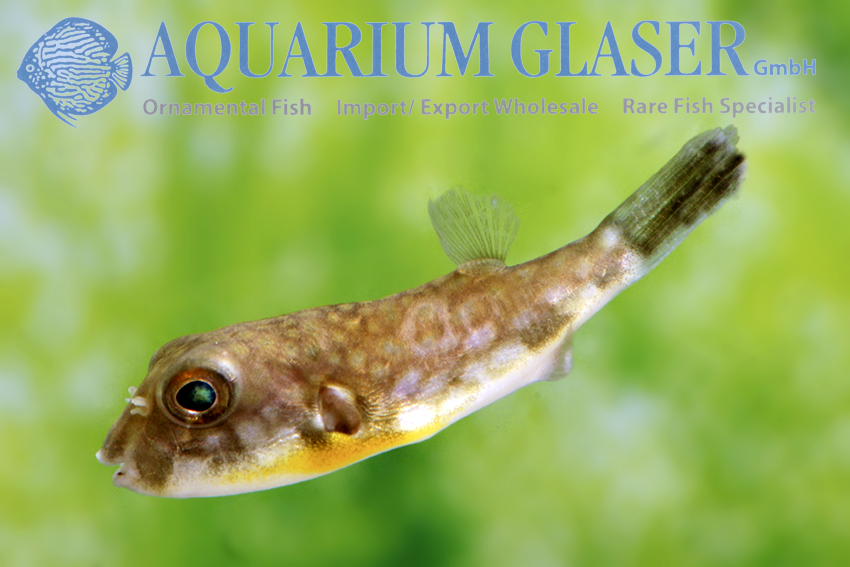
Distichodus teugelsi

27. February 2017

D. teugelsi attains a maximum length of about 5-6 cm and is one of the smallest species of Distichodus at all – and one of the prettiest! A few specimens reached aus from the DR Congo. Here the fish inhabit soft, acidic water in the middle course of the Congo river.

 The males stay smaller than the females. The females also have a much bigger belly. Although Distichodus are known to love disputing with conspecifics – D. teugelsi is no exception of that rule – these small quarrels have no serious consequences. All species of Distichodus need plant matter as food, so one must suppose that D. teugelsi also will happily feed the complete underwater garden, if it is offered to the fish by the aquarist. 

For our customers: the animals have code 128053 on our stocklist. Please note that we exclusively supply the wholesale trade. Available in very small numbers only!

Text & photos: Frank Schäfer
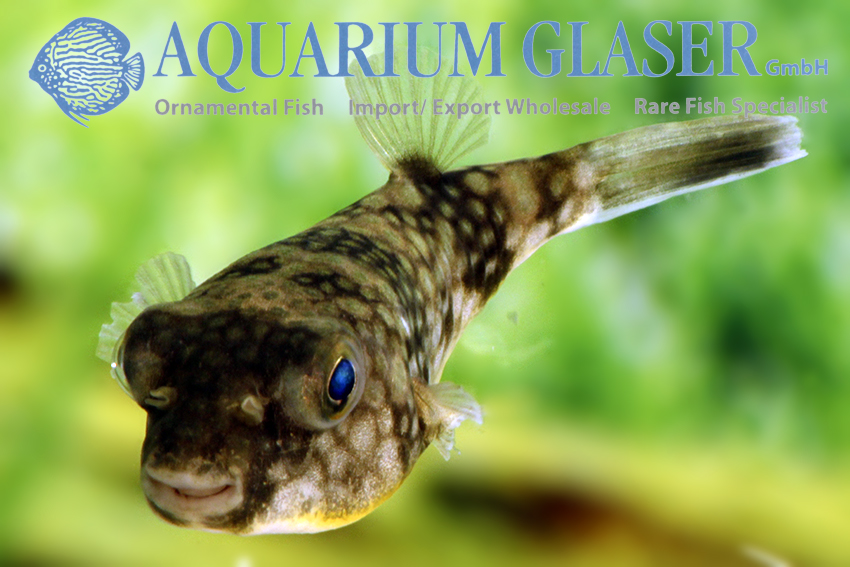
Apistogramma elizabethae

24. February 2017

On wednesday we received wild collected Apistogramma elizabethae. Anytime we get such rarities we take an even closer look than anyway on the fishes wether they really belong to the ordered species and if bycatches are among them. Apistogramma elizabethae can be told apart from other, similar species by an unique feature: alarmed fish loose much of their coloration and show two horizontically arranged oval spots on the flanks. This double spot can be also seen under special light conditions in relaxed fish, but it is much less obvious then.

So we took our documentary photos and discovered a male that looked totally different from all Apistogramma-elizabethae males we have ever seen before: it had broad vertical bars on the belly! We selected the fish and two others to take a closer look in the phototank. But here the male didn´t show that coloration anymore. Instead it came very quickly in mood for sexual activities and delivered a fabulous combat with his likeness in a small pocket mirror. These fish are simply gorgeous!

For our customers: the animals have code 618712 on our stocklist. Please note that we exclusively supply the wholesale trade.

Text & photos: Frank Schäfer
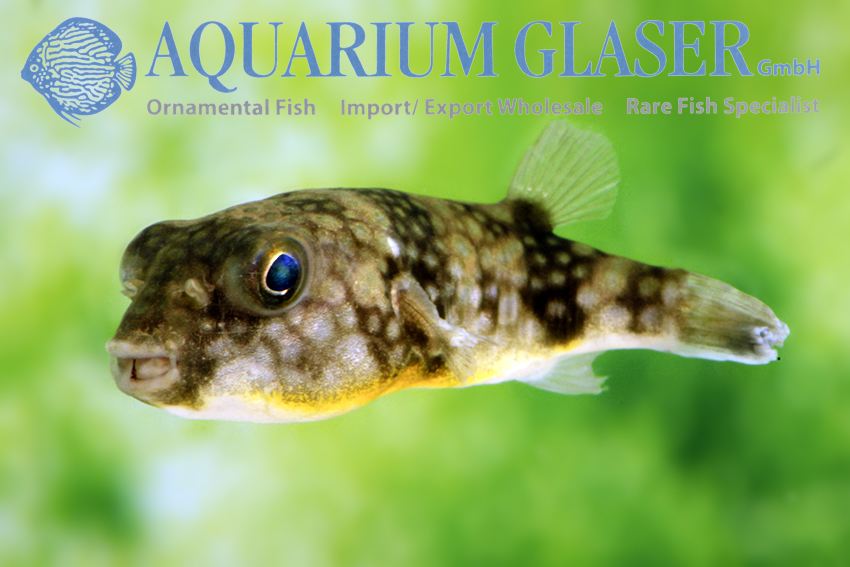
Sphaerichthys acrostoma

24. February 2017

The Golden Chocolate Gourami may be the least attractive of all Chocolate Gouramis in respect of coloration, but it is nevertheless a very interesting species. The fish is the rarest of all Chocolate Gouramis as well in the hobby as in the wild. So we are very glad in case we are able to offer it.

The species is a mouthbrooder, the male cares for the eggs. Females develope a dark spot behind the head during displaying and can be also recognized by the vertical stripes over the yellowish belly. Males, on the other hand, can show a hoizontal stripe on the body. 

In contrast to the other species of chocolate gourami, Sphaerichthys acrostoma seems to be rather peaceful against conspecifics; at least they can be often observed swimming around in small groups. This species attains a maximum length of about 5 cm.

For our customers: the fish have code 455703 on our stocklist. Please note that we exclusively supply the wholesale trade.

Text & photos: Frank Schäfer
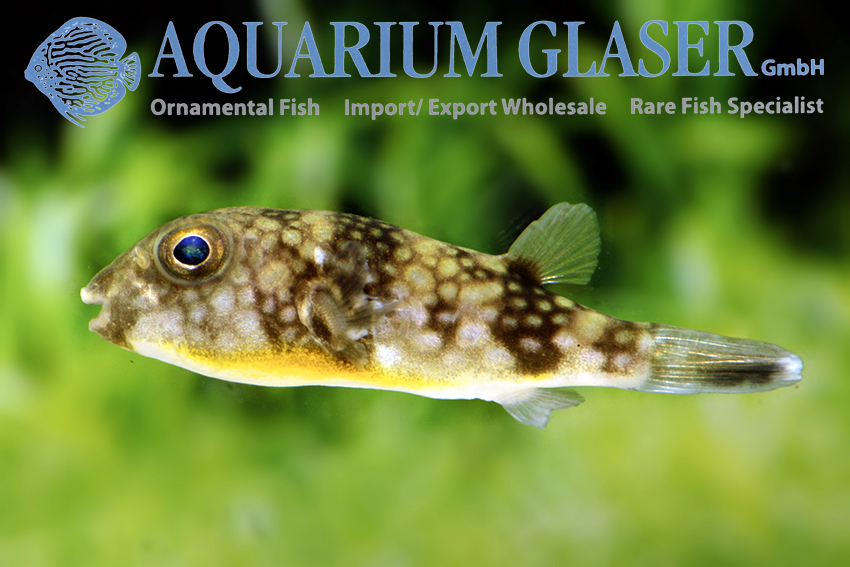
Hemigrammus bellottii – the Golden Glowlight Tetra

24. February 2017

The common Glowlight Tetra, Hemigrammus erythrozonus, originates from Guyana. The species is very popular in the aquarium hobby. But only few hobbyists know that there does exist a comparatively close relative of the common Glowlight in Colombia and Brazil: the Golden Glowlight, Hemigrammus bellottii. The latter is often found along with the Cardinal (Paracheirodon axelrodi) and it is a very nice contrast fish to the Cardinal in a community tank. Usually the Golden Glowlight is imported only by chance, as a by-catch of the Cardinal. But from time to time we manage to import a larger number of the pretty fish. The fire red upper eye and the golden stripe look very nice in a rather dark equipped tank.

For our customers: the fish have code 256032 on our stocklist. Please note that we exclusively supply the wholesale trade.

Text & photos: Frank Schäfer
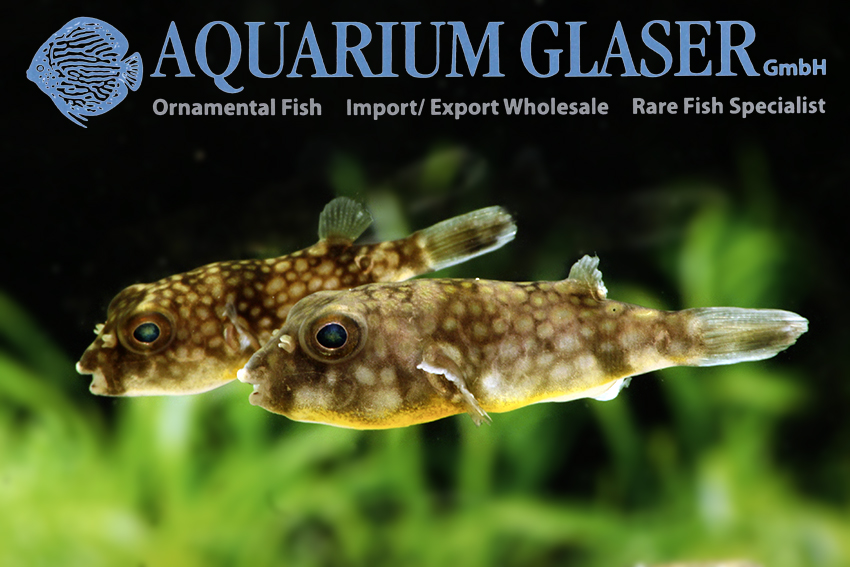
Apistogramma eunotus „Rio Tapiche“

22. February 2017

Apistogramma eunotus is among the species of Apistogramma with the deepest body of all. The species can be told apart from other, similar species, best by the large blueish spot on the opercle.

We obtained recently very different specimens of A. eunotus from the Rio Tapiche in Peru. They differ in many respects from typical A. eunotus. The fully grown males have prolonged fin lappets in the dorsal fin (not prolonged in males of normal A. eunotus), a well marked pattern in the caudal fin (no pattern in the caudal fin in normal A. eunotus) and the caudal fin has in fully grown males a prolongation on the upper and the lower edge (no prolongation at all or only a slight prolongation on the upper edge of that fin in normal A. eunotus).
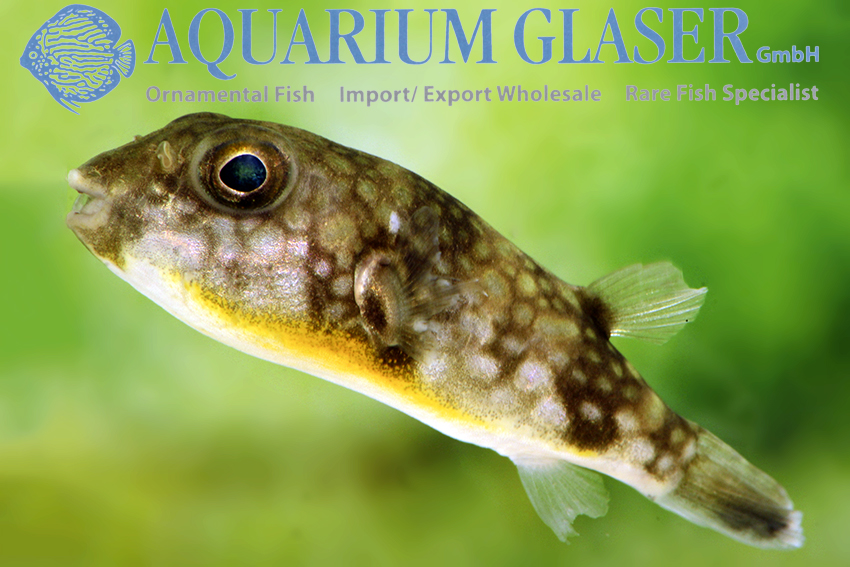
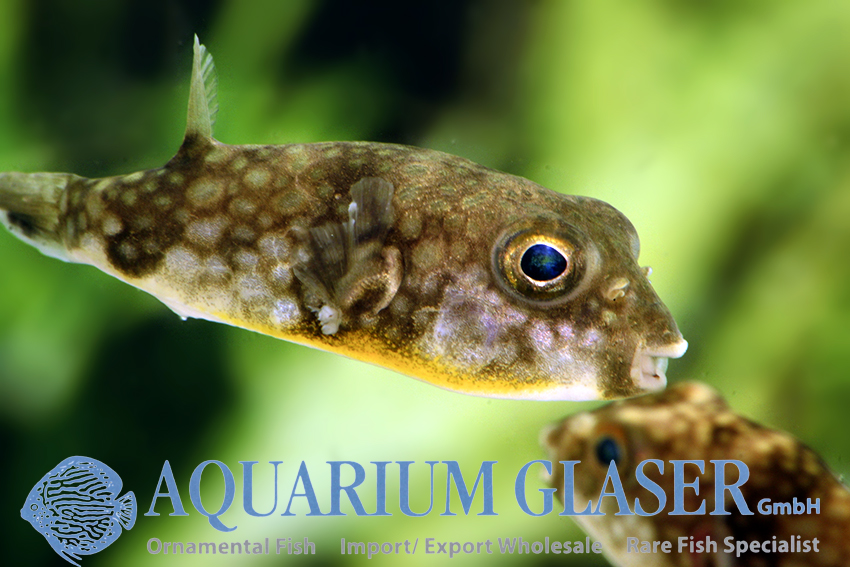
Are these difference enough to establish a new species? This is not our decision. There have been some descriptions of new species of Apistogramma recently, but none of them seems to be identical with our new importations. It is very interesting that the newly imported Apistogramma eunotus „Rio Tapiche“ seems to represent a link beween the normal A. eunotus found in Peru and the Apistogramma species of the A.-macmasteri-complex found in the Orinoco drainage.

For our customers: the fish have code 618904 on our stocklist. Please note that we exclusively supply the wholesale trade.

Text & photos: Frank Schäfer

Elassoma zonatum

22. February 2017

Even our grandfathers will remember the dwarf sunfishes. The tiny, hardly 3 cm long fish are ideal inhabitants for small tanks that are not heated. Elassoma originate from the USA. Formerly only one species of the genus was represented in the hobby, namely Elassoma evergladei. But in the meantime additional species became avialable. Among them is E. zonatum. This species originates from eastern and central parts of the United States.

Elassoma zonatum is a perfect aquarium fish and as good suited as its well known cousin. One has to keep in mind that Elassoma will refuse dry food, but otherwise they are easy to keep. Sadly the offspring is extremely small, so a successful rearing will be performed by experienced hobbyists only.

For our customers: the fish have code 414725 on our stocklist. Please note that we exclusively supply the wholesale trade. Only very few specimens available!

Text & photos: Frank Schäfer

Betta coccina

20. February 2017

Finally we can offer once more one of the beautiful Bettas belonging to the relationship of the „small red ones“: Betta coccina. The Vinered fighter, also called the Blue spot fighter, comes from Sumatra, Jambi province. Like all these „small red ones“ it occurs in forests. Here the fish live among the dead leaves of the trees. The collectors often report that no free water is visble, but only wet litter. However, in rainy seasons Betta coccina can be also found in more „normal“ types of water bodies. The water there is always soft and acidic, most often of deep brown colour.

The small fish are comparatively peaceful against conspecifics; usually one can keep and breed them in small groups. The males like to build their small foam nests in dark, hidden places. The black plastic tins that are used for analogue photo films are much sought for that purpose by breeders, but become rare at times of digital photography…

Sadly the fish gives only a rough idea how beautiful it can look when it is placed in the light photo tank with clear and clean water. So – as a great exception – we decided in this special case to use a picture from the German wikipedia, which is licenced under Creative Commons: https://commons.wikimedia.org/wiki/File%3ABetta_coccina_%22Jambi-Sumatra%22.JPG; By Parostoteles (Own work) [CC BY-SA 3.0 (http://creativecommons.org/licenses/by-sa/3.0)], via Wikimedia Commons. This picture shows a male in breeding condition.

The remaining pictures show, as usual, animals of our current stock.

For our customers: the fish have code 379903 on our stocklist. Please note that we exclusively supply the wholesale trade.

Text & photos: Frank Schäfer

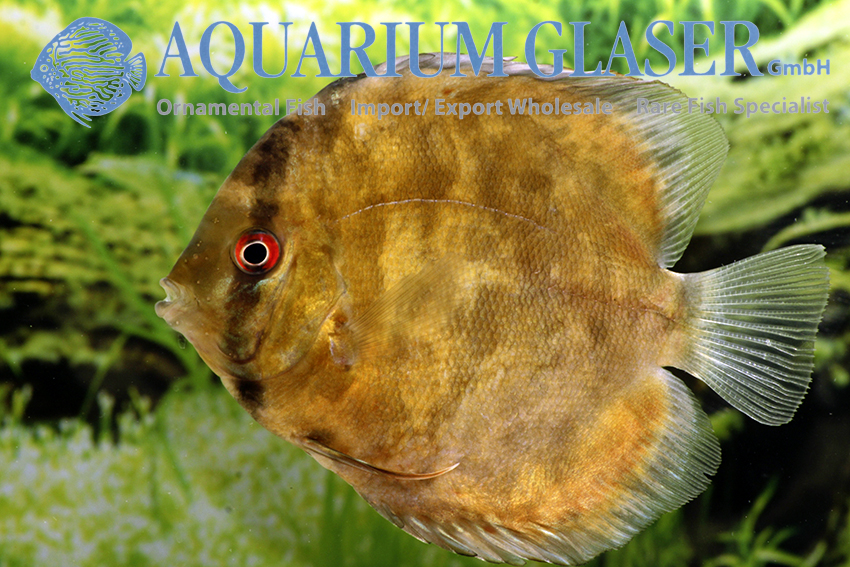
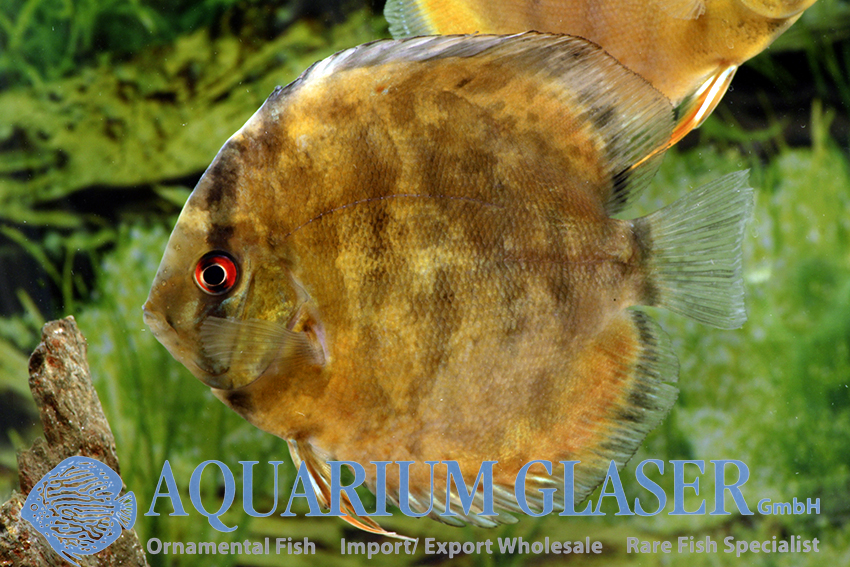
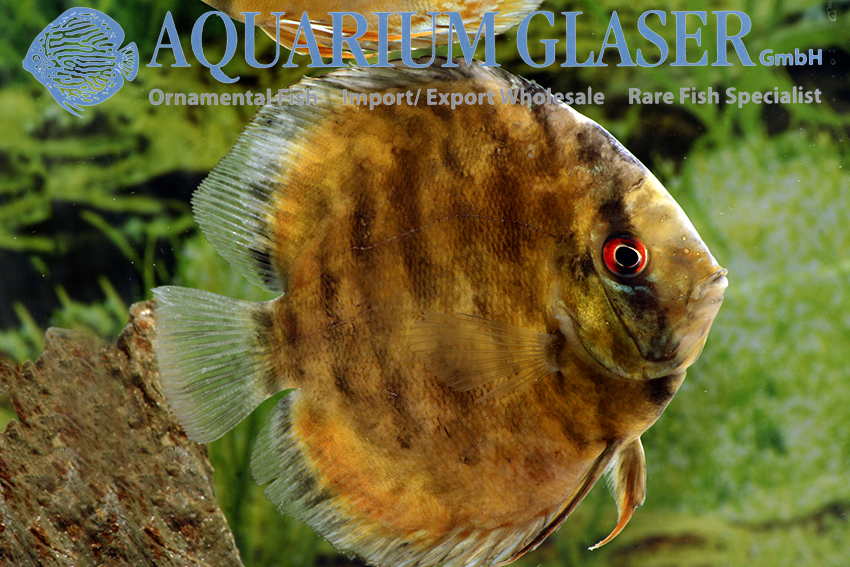
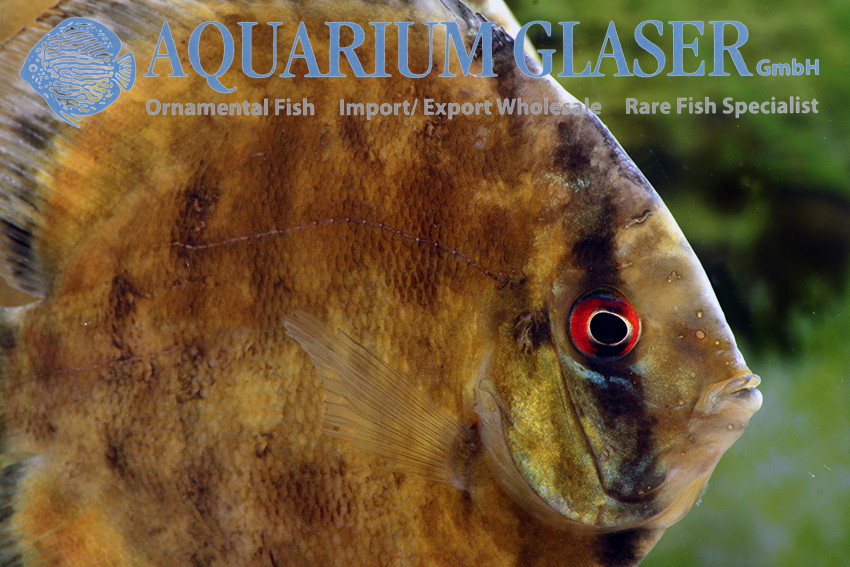
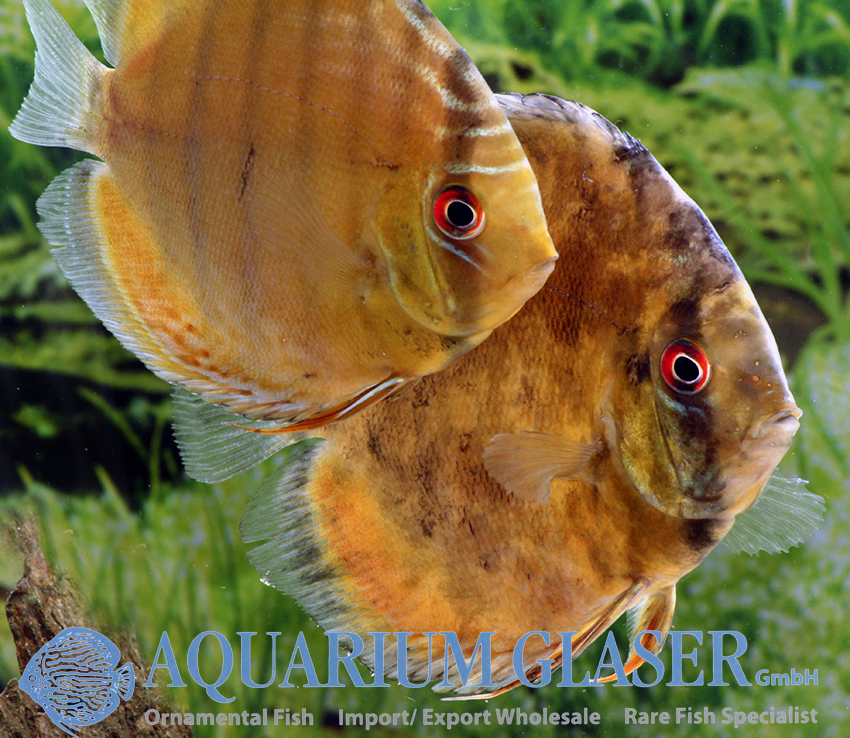
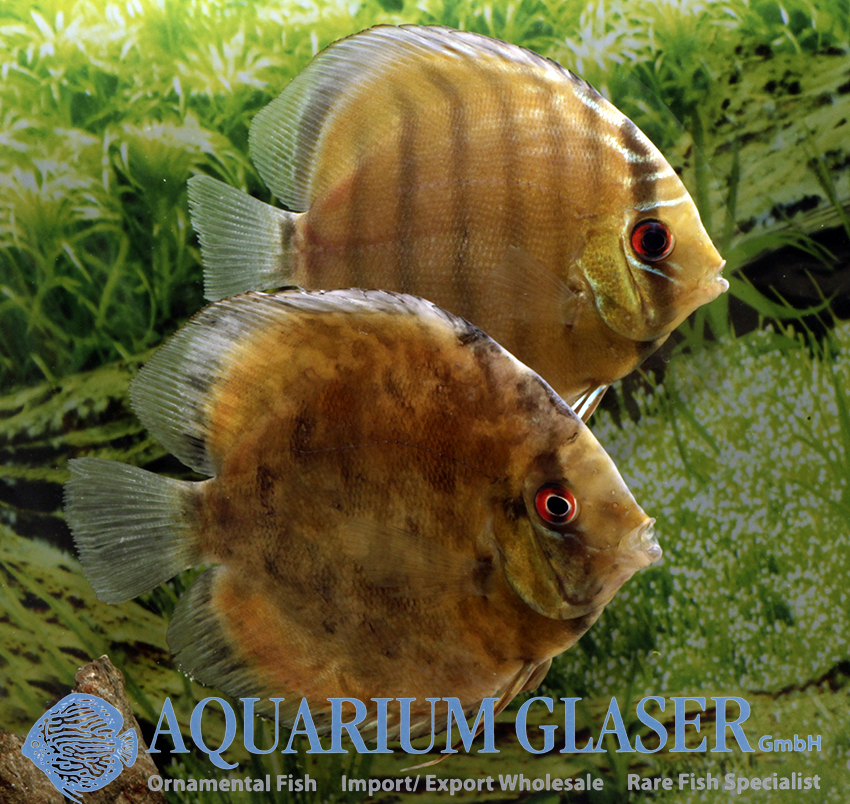
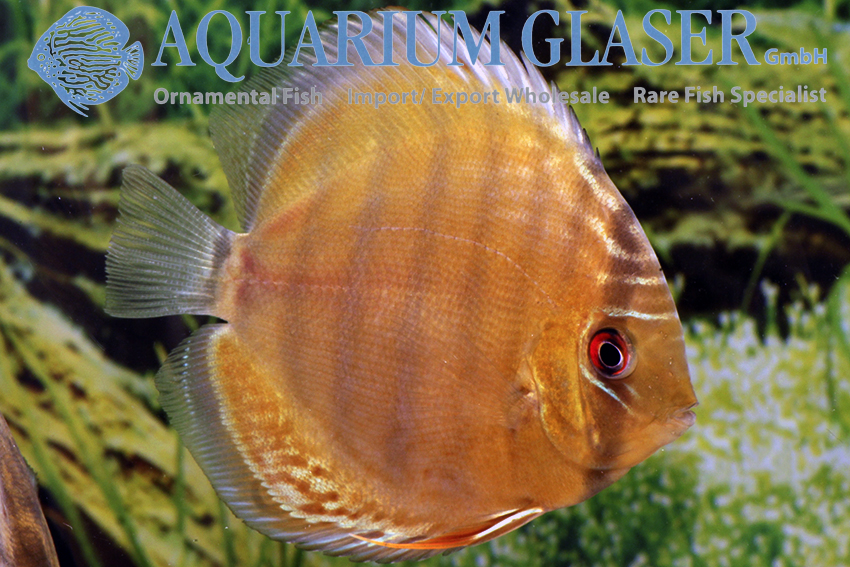
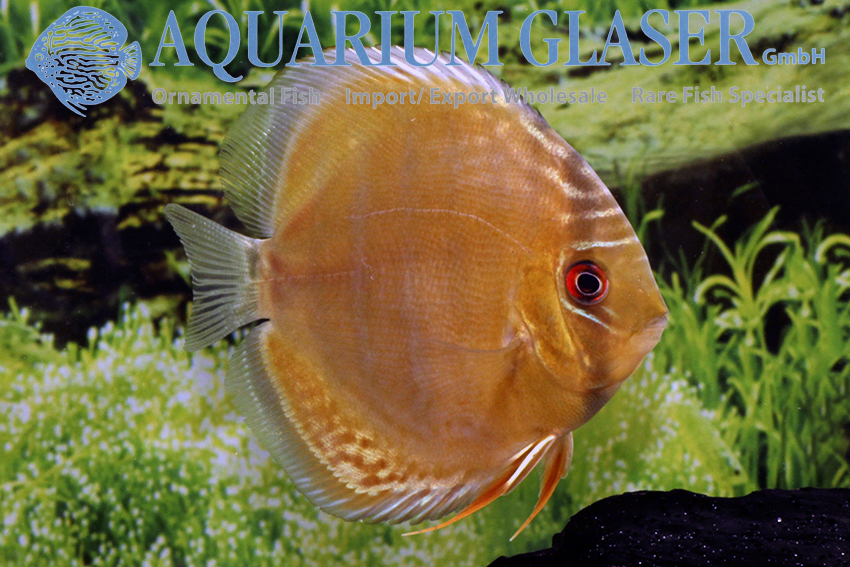
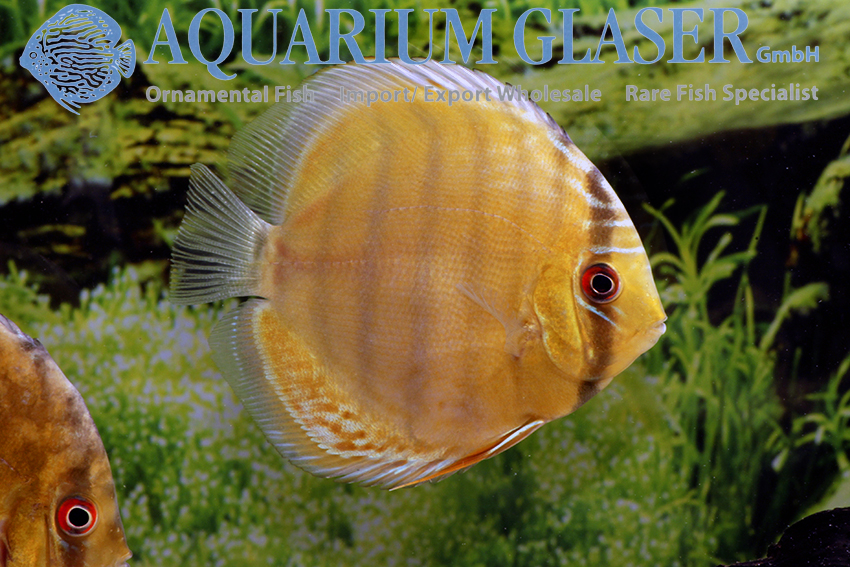
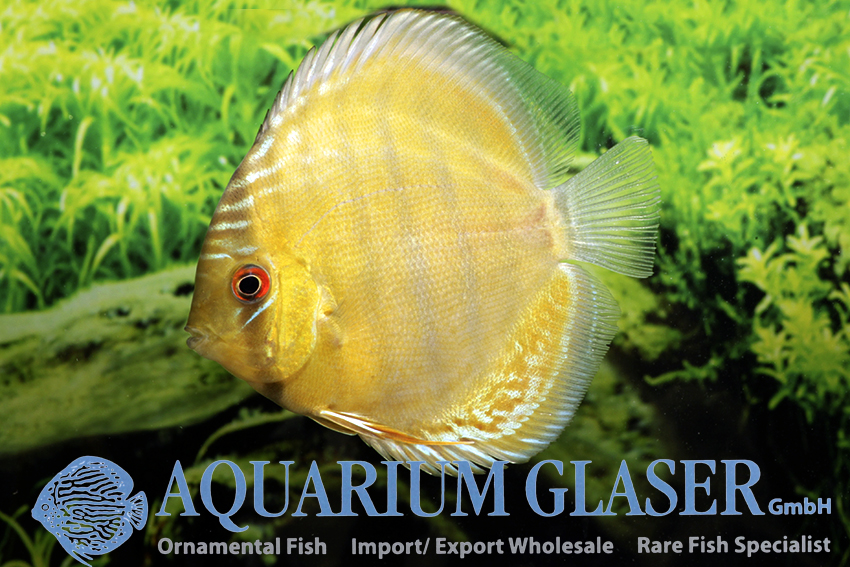
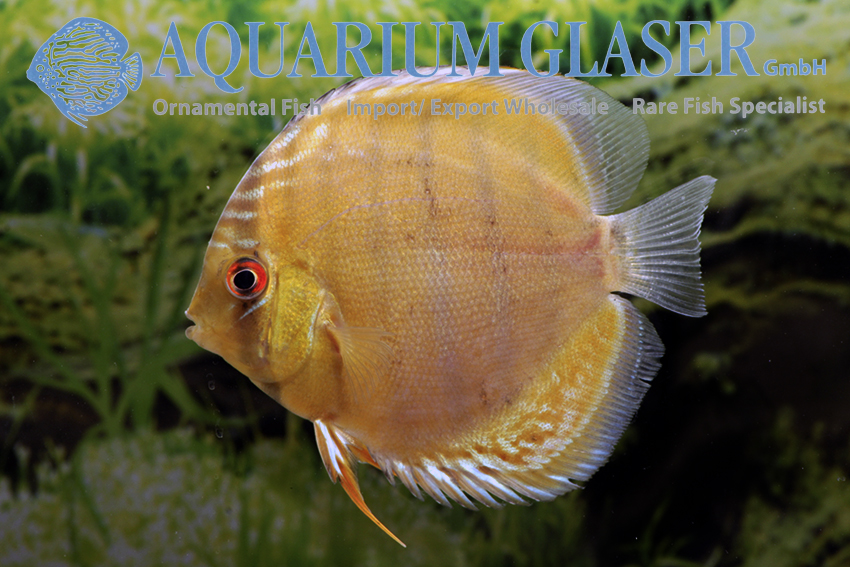
Discus Heckel Cross Jatapu

20. February 2017

The high season for wild collected discus starts around October and ends in April. Nevertheless, good wild collected discus are available the whole year throught! Some varieties are in general very rarely offered, a good example are the so called Heckel Cross from the Rio Jatapu. They are real beauties! The out-of-season summer discus have a great advantage: they are even healthier and even more stable than the comparatively fresh collected animals available during the high season!

For our customers: the Heckel Cross from the Rio Jatapu have code 735046 on our stocklist. Please note that we exclusively supply the wholesale trade.

Text & photos: Frank Schäfer

Channa sp. Meghalaya

19. February 2017

Currently is the season for species of Channa from India. Every now and then we can offer the gorgeous Channa pardalis, which is also known in the hobby under the name of „True Blue“ (see http://www.aquariumglaser.de/en/fish-archives/channa_sp_true_blue_en/). There is a second, very similar Channa, traded under the name of Channa sp. Meghalaya. There is a rumour among the Channa freaks that this should represent a second, valid species of Channa, already under scientific description. The main differences between the True Blue and Meghalaya are said to be the lack of black spots in the face of the Meghalaya and the presence of a bright orange zone in front of the eye of Meghalaya.

Currently we have both Channa in stock, a good opportunity to take a closer look on them. So I picked up the largest (14-15 cm) pair of C. sp. Meghalaya (at least the male is for sure a male) and the smallest individual and photographed them. The female fits perfectly to the diffeences described above: no black spots in the face and a bright orange zone in front of the eye. The male fits not as good. The black spots are also lacking, but there is not the slightest sign of an orange zone in front of the eye. The halfgrown young adult has so many black spots in the face that I thought a C. pardalis would have been placed erroneously in the tank of the C. sp. Meghalaya – but then I spotted the bright orange zone in front of the eye…

So – as a conclusion: there are no constant differences in respect of head coloration between Channa pardalis (True Blue) and C. sp. Meghalaya. One should keep and breed them separatly, but there are in no way clear specific differences.

For our customers: Channa sp. Meghalaya have code 409283 on our stocklist, Channa pardalis (True Blue) code 409383. Please note that we exclusively supply the wholesale trade. Both Channa are available in limited numbers only!

Text & photos: Frank Schäfer

A great classic: Gasteropelecus sternicla

19. February 2017

The flying fish of the freshwater, the hatchetfishes, are popular aquarium fishes for a long time already. They are peaceful, look very interesting and live near the water surface.


The Common Hatchetfish (Gasteropelecus sternicla) is quite abundand in larger parts of South America. So we have the species more or less always in stock. In recent times, they are also often offered as bred ones from Indonesia. Usually the fish traded are about 3 cm long. Now we obtained xxl-specimens from Colombia, up to 7.5 cm long! Gorgeous animals….

For our customers: the fish have code 254405 on our stocklist. Please note that we exclusively supply the wholesale trade.

Text & photos: Frank Schäfer

Heros liberifer German bred

19. February 2017

The mouthbrooding species of Heros from Venezuela has finally a widely accepted scientific name: Heros liberifer. Please see http://www.aqua riumglaser.de/en/fish-archives/the_mouthbrooding_heros_from_venezuela_a_new_species_heros_liberifer_en/ for detailed information on that case. From time to time we can offer beautiful, 10-14 cm long German bred specimens of that rare fish.

For our customers: the animal has code 682945 on our stocklist. Please note that we exclusively supply the wholesale trade.

Text & photos: Frank Schäfer

Zonancistrus sp. L52

15. February 2017

The season for plecos from the rio Orinoko started very well. Many much sought for species are available in many different sizes. Most specimens of the Orinoco Butterfly Pleco (L52) we currently have in stock are charming and very pretty youngsters, but we also have a few large (9-11 cm) animals in our fishhouse. The species attains a mximum length of about 15 cm. L52 are omnivorous fishes that need some wood as food supplement, too. There are several reports on a successful breeding, the species is a typicla cave brooder. Despite the fact L52 is very undemanding in respect of general water conditions, the experience tells us that they show the most contrasting colours in soft and acidic water.

For our customers: the animals have code 26480 -L 52-0 (3-4 cm) and 26480 -L 52-4 (9-11 cm) on our stocklsit. Please note that we exclusively supply the wholesale trade.

Text & photos: Frank Schäfer

The story of the Cologne wild guppy

15. February 2017

It was back in 1977 when first reports about this „German wild guppy“ appeared in aquarium journals. This was in the „Informationen der Deutschen Guppy-Förderation Nr.3“. Shortly after that Franz-Peter Müllenholz wrote a report for the magazine TI (No 42, June 1978) on that fish that lived in a brook near Cologne. The water was very polluted, there were deformed animals, but most of the fish were very healthy and lively. Müllenholz also pointed out the very selender figure of that fish. Werner Ladiges, editor of the TI, doubted that these guppys really established a constant population. But two editions later, in TI No 44 (December 1978) the theme was continued. In a short note it was made clear that a power plant led the cooling water in that brook, so it became heated. In March, the water temperature was as high as 19°C. This is the salient point, fot the lowest temperature tolerated by guppys over a longer period (some weeks) is about 14-16°C.

In scientific literature the existence of these guppys is even longer documented (Friedrich, 1973). He also named the brook: it is the Gillbach, and the power plant is os the cole plant Niederaußem (the largest power plant of that type in Germany). The guppys were (and still are) also present in the lower Erft, in which the Gillbach flows. The lower Erft is heated by hot water pumped up from up to 400 m depth from cole mines. Here do not exist only guppys, but also many other tropcal organisms: Amatitlania nigrofasciata, Ancistrus, the snails Melanoides tuberculatus and Planorbella duryi, the annelid worm Branchyura sowerbii, the planaria Dugesia tigrina, the shrimps Neocaridina davidi and Macrobacrium dayanum, as well as a nuber of tropical water weeds: Azolla filiculoides, Egeria densa, Lemna aequinoctialis, L. minuta, Myriophyllum aquaticum, Pistia stratiotes, and Shinnersia rivularis (Friedrich, 2005). Most of these organisms are for sure relaesed by aquarists, but in some cases it is not clear were they originate from.

The Cologne wild guppys are interesting animals. And the good news is: one has not to travel to Cologne to get them. Currently we have these „Cologne wild guppys“ in stock, they are aquarium-bred specimens, but the ancestors were collected in the Gillbach. So these fish found back their way in the tanks of the hobbyists – a quite interesting process from a scientific point of view that gives insights in co-evolutionary processes of mankind and their domesticated animals. In the Gillbach and the Erft the guppys will become extinct as soon as the introduction of heate water ends – that´s for sure. But maybe they can survive as a curiosity in the tanks of aquarists? Nobody knows…

For our customers: the fish have code 419028 on our stocklist. Please note that we exclusively supply the wholesale trade.

Literature cited:

Friedrich, G. (1973): Ökologische Untersuchungen an einem thermisch anomalen Fließgewässer (Erft/Niederrhein). – Schriftenreihe Landesanstalt für Gewässerkunde und Gewässerschutz NRW Heft 33, Kempen-Hüls. 

Friedrich, G. (2005): Die untere Erft – Ein subtropischer Fluss. LUA Gewässergütebericht 2005: 101–103 

Ladiges, W. (1978): Betr.: Guppypopulation in der Nähe von Köln. TI Tatsachen und Informationen aus der Aquaristik 12 (44): 42

Müllenholz, F.-P. (1978): Guppypopulation in der Nähe von Köln. TI Tatsachen und Informationen aus der Aquaristik 12 (42): 42-43

Text & photos: Frank Schäfer

Caridina logemanni Crystal Super Red Cologne Strain

15. February 2017

Since the very first start of breeding sports in ornamental fish some strains were named after the tow they appeared first. Examples are the „Vienna Emerald Guppy“, the „Hamburg Swordtail“, or the „Bristol Shubunkin“.

This tradition also took place in dwarf shrimps and so a „cologne strain“ of Caridina logemanni exists. We now obtained a number of very nice specimens from that strain that exhibit an extraordinary high degree of red coloration.

For our customers: the animals have code 485339 on our stocklist. Please note that we exclusively supply the wholesale trade.

Text & photos: Frank Schäfer

Xiphophorus variatus „La Laguna“

14. February 2017

Once more we can offer a very beautiful wild sport of the variable platy: La Laguna! Our specimens are German bred. This sport originates from San Luis Potosi in Mexico; La Laguna de la Media Luna is a very popular place for tourism.

The peculiar difference of the population La Laguna to other sports of the variable platy are the dark seams of the caudal and the dorsal fin in males in full coloration, the so-called alpha-males. Not all males always show the colours in full intensity; it is recommend to keep several males together. Competition stimulates the development of colors!

For our customers: the fish have code 442981 on our stocklist. Please note that we exclusively supply the wholesale trade.

Text & photos: Frank Schäfer

Apistogramma trifasciata „Rio San Martin“

14. February 2017

We received very nice German bred specimens of that dwarf cichlid. The specimens are descendants of the yellow-headed population that has been initially collected by the well known dwarf cichlid specialist and ichthyologist Dr. Wolfgang Steack in the Rio San Martin (Rio Guapore basin). He portrayed that population in detail in the DCG Sonderheft 2008 (March, 2008). Our breeder told us that this variety proofes to polychromatic. Among the offspring every now and than also more or less blue-headed specimens appear.

For our customers: the fish have code 630152 on our stocklist. Please note that we exclusively supply the wholesale trade.

Text & photos: Frank Schäfer

Only in the transit…

14. February 2017

There are not many species of fish in which the demand is greater than the number of offered animals. The Rainbow Darter (Etheostoma caeruleum) from North America belongs to these exceptional species. The pretty, small species – it attains a maximum length of 7-8 cm –  has been imported as early as 1899, but it always stayed rare.

Now we obtained 10 adult bred specimens, which are, however, not for sale, but which will go to another breeder. We hope the new breeder will be able to produce a good number of offspring for us.

Although the Rainbow Darter inhabits cool, fast running watter in the wild it is all but demanding. The species deposits the eggs in the ground. Hopefully they will do it in great numbers in their new home and then we will be able to offer the pretty fish to all who are interested in it.

Text & photos: Frank Schäfer

How to pack 600 Volts!

13. February 2017

The Electric Eel, Electrophorus electricus, has the strongest electric discharges of all known electric species of fish (electric catfish, electric rays, elephant fishes, knifefishes). Up to 600 Volts are quite common, very large specimens may produce even stronger discharges. The Electric Eel is no eel at all, but belongs to the New World Knifefishes. Five families, 30 genera, and about 180 species are known, all of them are electric. But only the Electric Eel uses its power to konck out prey or to defend itself against enemies. All other species use their (weak) electric organ only for infraspecific communication or for orientation. This organ works a bit like a radar.

The Electric Eel becomes more than 2 metres long. Large specimens are much wanted by public aquaria all over the world. Keeping these large fish is astonshing simple. As the Electic Eel often inhabits swampy habitats it has developed a breathing organ that enables the fish to breath atmospheric air they take from the water surface.

Click here for the video: zitteraalfang – Klein

You can see on the video enclosed how such a muscleman is caught and prepared for transportation to the final homeplace – in this special case a public aquarium in France. The most important thing in such an operation is to keep calm. Neither the animal nor the catcher must become nervous, otherwise accidents may appear.

For our customers: the Electric Eel has code 25320 on our stocklist. Please note that we exclusively supply the wholesale trade. Available in limited numbers only!

Text & photos: Frank Schäfer, video & catcher: Christian „The Mighty“ Fiedler

Rivulus punctatus

13. February 2017

This charming dwarf killi – it becomes only 3-4 cm long – reached us from Paraguay. The species is remarkable for several reasons. First of all this is the species of Rivulus that can be found most far in the south. R. punctatus can tolerate temperatures as low as 12°C for a short time. These are the temperatures a freshwater fish has to face in these southern parts of South America temporarily.

Another special feature of the species is the fact that the males can have very different patterns in the caudal fin.

Keeping and breeding Rivulus punctatus is rather easy. The species belongs to the subgenus Melanorivulus. However, there is one thing one must keep always in mind: these fish are excellent jumpers! This passion often costs their lifes. In the wild the fish wander through wet grasses and can often be found found from an open water. So the tank for R. punctatus must be covered absolutely closely.

For our customers: the fish have code 344002 on our stocklist. Please note that we exclusively supply the wholesale trade.

Text & photos: Frank Schäfer

Cyprinion semiplotum

10. February 2017

One of the advantages of the aquarium hobby is that there exists a species of fish for any thinkable taste. Most of our readers will for sure prefer the cardinal tetra, but the plump and drab coloured Cyprinion semiplotum is also worth a look.

This species of carp attains a maximum length of about 60 cm and originates from the north of India, Nepal and Bhutan. However, specimens larger than 30 cm are hardly ever found in the wild. According to the exporter, one can collect the species only a few weeks per year (august-spetember) and even at that time they are anything but common. The IUCN Red List lists the species as vulnerable. Population has declined for 30% in the last decade and it is presumed that it will shrink for another 30-50% in the decade coming. The reasons for that decline are overfishing, deforestation and pollution of the habitats. This unique carp lives exclusively in clear mountain streams in the Himalaya, which flow to the Ganges and the Brahmaputra. The specimens currently traded are said to originate from the Sankosh and Torsa rivers in North Bengal. However, collecting young specimens for the aquarium trade has no effect at all on the population. But due to the declining populations is is not very likely that the fish will appear on the ornamental fish market in the future again.

Almost nothing is known on the aquarium biology of this omnivorous species. It is said that it can be best compared with that of Labeo-kind fish. This means that one should keep the fish in larger groups, for otherwise they may develop an aggressive behaviour. It is self explaining that fish of that size should be kept in large aquaria. Hardness and pH are of lesser interest, but one should keep in mind that the species originates from subtropical regions and thus they should be kept not too warm (14-24°C).

For our customers: the fish have code 412952 on our stocklist. Please note that we exclusively supply the wholesale trade.

Lexicon: Cyprinion: this refers to the relationship of the Common carp (Cyprinus): semiplotum: means “half swimming”.

Common name: Assamese kingfish

Apistogramma personata Mitu

10. February 2017

The identity of this dwarf cichlid – it belongs to the absolute top-rarities – is under discussion. It is a fact hat it has been collected for the first time in 1995 by Uwe Werner and company near Mitu, Colombia. The city of Mitu is placed at the banks of the Rio Vaupes. Uwe was able to bring some live specimens with him, but sadly they did not breed successfully. These fish were introduced in the hobby literature under the name of A. personata. Uwe Römer in his book „Cichliden Atlas“ identifies these fish as Apistogramma brevis. However, both species – A. brevis and A. personata – are only very poorly studied, so currently it is not possible to decide which opinion is the right one. We simply named them Apistogramma personata Mitu because they are better known in the hobby under that name.

In respect of coloration this species is not a burner, but very interesting. The ability to change the colours is enormous – all pictures show the very same three specimens, one male and two females. A very interesting fact is that the male shows eyespots on the opercles when it is very excited; in cool moods these eyespots are hardly visible.

For our customers: the fish have code 626484 on our stocklist. Please note that we exclusively supply the wholesale trade. Available in small numbers only!

Text & photos: Frank Schäfer

Gnathocharax steindachneri

10. February 2017

In the natural habitat of the cardinal tetra food sources are very scarce. So it is really astonishing how many species can exist there. However, many of them stay very small. Good luck for the aquarium hobby, for they all make very good ornamental species!

Even a predatory species of that biotope is such a dwarf: Gnathocharax steindachneri. It attains a maximum length of only 5 cm and belongs to the closer relationship to the freshwater barracudas (Acestrorhynchus), what is clearly visibly by the structure of the fangs and teeth. However, Gnathocharax is not dangerous for other fishes larger than approx. 1 cm. Most probably the species feeds on fish and insect larvae in the wild.

Currently we were able once more to import this most interesting species of tetra. It is perfectly suitable for community tanks with cardinals and other tetras. Here Gnathocharax loves to swim along with conspecifics in the upper third of the water column. The fish feed readily on any type of usual fish food, even dry food is taken from the very first day on, despite the specialized dentition.

For our customers: the fish have code 254653 on our stocklist. Please note that we exclusively supply the wholesale trade.

Text & photos: Frank Schäfer

Xiphophorus hellerii „guentheri Golden Stream“

8. February 2017

Once more we can present to you an interesting and beautiful wild variety of a livebearer: Xiphophorus hellerii „guentheri Golden Stream“, This unusual Green Swordtail originates from the surroundings of the Golden Stream preserve in Belize, Mexico. This presevere covers an area of about 61 km2 and contains a large number of rare and endangered species. Our specimens of Xiphophorus hellerii „guentheri Golden Stream“ are bred ones from Southeast Asia.

In Germany usually spotted swordtails are called „guentheri“. The subspecies Xiphophorus hellerii guentheri has been described from Guatemala. The „Golden Stream“ does not fit to what we think is a guentheri, but the name has been accepted widely in the community of liveberaer enthusiasts so we feel that the name should not be changed without eager need. It is by far more important that such animals are bred in pure strains. Only under these conditions it will be possible in the future to study behaviour and genetics of wild fish. There do exist already enough artifical sports and crosses.

One of the pecularities of the „Golden Stream“ is that there still exists a natural polymorphism in males. One can obain from the same brood small, tiny, often very colourful males and real bulls that have about the double body mass compared with their small conspecifics. These so called early and late males appear initially in any population of swordtail, but in the domesticated strains the breeders often eliminate the small early males and so only large, late males exist. 

The males of the „Golden Steam“ often exhibit dark vertical stripes on the shoulder. All in all the „Golden Stream“ is a wonderful wild type of swordtail that can be recommended warmly to all hobbyists interested in studies of behaviour and genetics; but a hobbyist that simply enjoys beautiful fish will also make a good choice in buying Xiphophorus hellerii „guentheri Golden Stream“.

For our customers: the fish have code 421268 on our stocklist. Please note that we exclusively supply the wholesale trade.

Text & Photos: Frank Schäfer

Centromochlus heckelii

30. January 2017

It is a pity that we can offer this interesting driftwood catfish only very rarely and in small numbers. The species has a wide distribution in the Amazon and Orinoco river basins. It attains a maximum length of about 14-15 cm. Our specimens originate from Peru; here is also the type locality for the species.Two features in that fish are very obvious: the large eyes and the also large pectoral fins which are always spread. The spines of the pectoral fins should be taken with care: one can become nasty stung by them and the spines also tend to tengle up in the meshs of a net when it is necessary to catch the fish. The sexes can be distinguished best by the shape of the maxillary barbels: these barbels are curved in males, straight in females.

For our customers: the fish have code 214703 on our stocklist. Please note that we supply exclusively the wholesale trade.

Text & photos: Frank Schäfer

Procatopus aberrans

30. January 2017

We obtained very nice glitter fishes from Nigeria: Procatopus aberrans. These lampeyes are very peaceful schooling fish that live near the water surface or at least in the upper third of the water column. In contrast to most other species of lampeye that have an iridescent blue zone in the iris, in P. aberrans the iridescent zone in the eye is copper red. This is seen best when the light comes from top. It is recommended to keep lampeyes in general in a tank in which at least a few hours per day natural sunlight can shine in. Under these conditions the brillant turquoise flanks and the bright copper red eyes shine in a way the delights the heart of every real aquarist!

For our customers: the animals have code 343102 on our stocklist. Please note that we exclusively supply the wholesale trade.

Text & photos: Frank Schäfer

Acarichthys heckelii Albino

20. January 2017

We received this extraordinary and beautiful sport of Acarichthys heckelii from Taiwan. A. heckelii is a comparatively large species of cichlid that can attain over the years a total length of more than 20 cm. And the fish becomes more and more beautiful with every year! The species is very peaceful. Aquarium maintenance is comparable with Geophagus or the Ram, but A. heckelii is much less demanding in respect of the water chemistry. A. heckelii is a cave brooder that can be quite productive.

For our customers: the fish have code 601043 on our stocklist. Please note that we exclusively supply the wholesale trade.

Text & photos. Frank Schäfer

Serpenticobitis cingulata

21. March 2016

We received this beautiful loach from Thailand. The genus Serpenticobitis contains only three species, all of which were described in 1997/98. They differ mainly in their coloration: in S. octozona (the type species, comes from Laos and Cambodia) the light spaces between the dark bands are very narrow, in S. zonata (Laos) much wider. Whereas in these two species the dark bands extend to the ventral edge, in the third known species, S. cingulata (Thailand), they end well before the ventral edge.

These loaches are very peaceful, sociable and grow to around 6 cm long. Their body structure is very similar to that of Nemacheilus species, but they behave more like hillstream loaches. Just like hillstream loaches, they can cling to glass panes etc. The animals shown here come from the middle Mekong catchment in northern Thailand.

For our customers: the animals have code 455012 on our stocklist. Please note that we exclusively supply the wholesale trade.

Text & photos: Frank Schäfer

Corydoras evelynae und C. sp. C20: enigmatic Corys

9. March 2016

We
obtained corys from Brazil, which had been collected in the upper
Amazon. The exporter had identified them as Corydoras evelynae. Indeed
the upper Amazon is type locality of C. evelynae; this species has a
dark band over the back, which is broken in pieces; under the dorsal fin
is a broad, rectangular spot that looks quadratic when watched from
above; the dorsal spine is dark; on the flanks are two thin, parallel
running horizontal bands; the species has a dark eye-band (this
description bases on the holotype specimen). Since the first
description, which was made in 1963 on the basis of only one specimen,
Corydoras evelynae is subject of many speculations and has become
imported only very rarely.

Our
new importations show some similarities with C. evelynae, but also many
differences. They look most similar to the fish that have been named
C20 in 1994. The number C20 has been eliminated later, because it is
thought to represent only the juvenile of C. arcuatus.

However,
our largest C20 imported now show clearly that they do not belong to
Corydoras arcuatus. C. arcuatus of similar size (about 4 cm long) from
Peru look totally different, are regarded as large already in the trade
and have, of course, the species-specific pattern.

We
cannot exclude the possibility that C20 represents a juvenile stage of
the so-called Super-Arcuatus from Brazil, a scientifically undescibed,
very large (up to 8 cm) species; however, we do not think that this is
very much likely.

A
juvenile specimen (about 2 cm long) of Corydoras evelynae from
Colombia, which we obtained as a sample specimen from the Rio Vaupes in
May 2015 already showed the typical pattern of C. evelynae as described
above. So it can be excluded that C. evelynae has a long-lasting
juvenile pattern that differs from the adult pattern.

We
cannot decide wether our new importations represent specimens of C20 or
of a totally new species of Corydoras. In any way they are pretty
members of the genus that have a pattern similar to that of C. evelynae,
but a body shape that reminds one in the Corydoras-loretoensis-group.

For
our customers: the fish have code 229542 on or stocklist. Please note
that we exclusively supply the wholesale trade. Available in very small
numbers only!

Text & photos: Frank Schäfer