
Author Archives: Paul_

Big from Peru!

24. September 2008

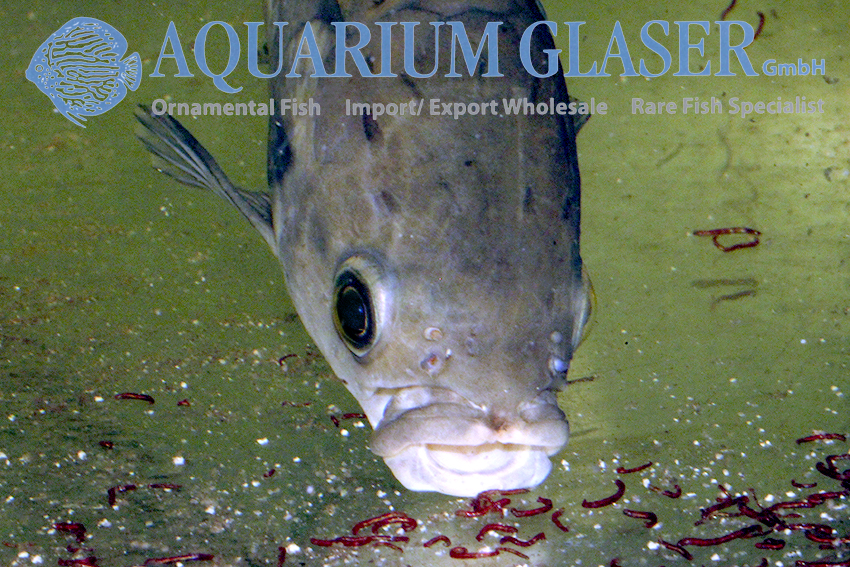
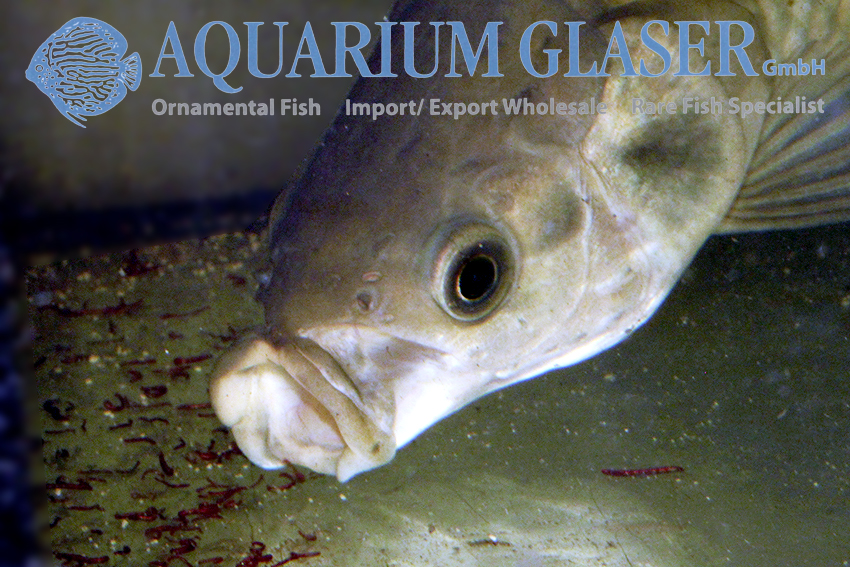
As last week 2 very huge boxes arrived from Peru the whole Aquarium Glaser team was full of excitement to their content. Then two giant specimens of the giant Panaques LDA 65 appeared in the best condition. With a length of about 60 cm, they should be mature, for “normal” tanks they are obviously not suitable. In very large tanks, they are certainly interesting fish, and could be for example socialized with stingrays or large predatory characins or catfishes.

L90 Panaque var.JUANJUI

19. September 2008

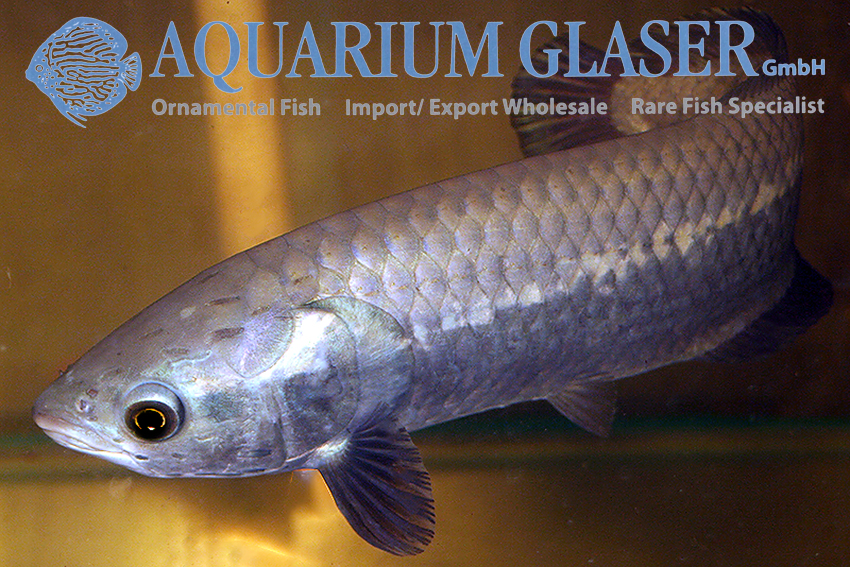
Last week this very attractive variant of L 90 arrived from the vicinity of Juanjui (Peru). They are very intense light-dark patterned fishes with glowing red eyes . The white filaments of their caudal fin give them an additional elegance. Feeding with special food (shrimps, or red discus food)can change fin colors to a strong orange. All in all, a beautiful newcomer,
unfortunately only in small numbers available.

(Photo F.Schäfer, Text K.Diehl)

Angaben zum Tier
Herkunft Peru
Verfügbare Größe in cm 15-20

New Guppies available!

17. September 2008

From now in limited numbers available:

beautiful strains of Guppies! Please note that you will get for all the strains the correct females.

Ptychochromis oligacanthus

4. September 2008

They come from the crater lake Bempazawa on the island Nosy Be nearby Madagascar and we have few of them available for first time: Ptychochromis oligacanthus “Bempazawa”. Their final length is more than 20 cm, but with their current size of about 15cm, they already reached sexually maturity. They have no special demands for food and water chemistry also their aggression is low. For cichlid lovers they are surely an interesting enrichment and guarantee a certain exclusiveness for their owner.

(Photo R.Neunkirchen, Text K.Diehl)

Angaben zum Tier
Herkunft Madakaskar
Verfügbare Größe in cm 12-15

Herichthys sp. BLUE-GALAXY

6. August 2008

(Aug.6th 2008) A brand new star is born: Herichthys sp. Blue-Galaxy. We are proud to be able to supply limited numbers of this this beautiful breeding form for the first time. They are pubescent in a size of 6-8cm, which
they have successfully demonstrated in a tank in our office. Since they should not get as big as other
members of the Herichthys family, they will be found soon in many tanks.(Photo R.Neunkirchen, Text K.Diehl)

Angaben zum Tier
Herkunft Zuchtform
Verfügbare Größe in cm 5-7 & 7-9

Stiphodon semoni

25. July 2008

(23.Aug.2008) From Indonesia we received this beautiful neon-blue goby. Stiphodon semoni grows up to 4-5cm and was
several times imported under the wrong name Sthiphodon elegans. Its habitats are fast floating hillstreams with
rocky ground. It is found in Indonesia, the Philippines, New Guniea and the Solomon Islands. The nourishment
for this item is easy: we feed it dry food and life Tubifex. All in all a very fabulous goby which should be
kept by advanced hobbyists.(Photo F.Schäfer, Text R.Neunkirchen)

Angaben zum Tier
Herkunft Indonesien
Verfügbare Größe in cm 3-4

Synodontis granulosus

6. June 2008

(June 6th 2008) Actually we are able to supply one of the most beautiful member of the Synodontis family. They come from the Lake Tanganjika so they need harder water with a higher pH. These are extremely active fishes which grow up to 25cm, so they should only be kept in bigger tanks. Adults are aggressive among themselves, which is the main reason why they are not bred so far. They are very peaceful to other inhabitants of a Lake Tanganjika tank, so they are real beauties in your cichlid tank.

(Photo F.Schäfer, Text K.Diehl)

Angaben zum Tier
Herkunft Afrika Lake Tanganjika
Verfügbare Größe in cm 8-10 & 10-14

Parathelphusa pantherina

28. May 2008

(21.Mai 2008) Last week we received from the Matano Lake in Indonesia a very beautiful crab: the panthercrab.
Since they live nearly totally under water, they need only a small terrestrial part in their tank. A hard water with a temperature from 25-29°C is favored. They can be easily fed with all kind of foods; from pellets to frozen food they eat nearly everything. Assure that the tank you keep them in is closed in a proper way, because they are real jailbreakers!(Photo F.Schäfer, Text R.Neunkirchen)

Angaben zum Tier
Herkunft Indonesien
Verfügbare Größe in cm 4-6

Glanidium melanopterum

9. May 2008

(09.May 2008) A real strange fish was now imported by us from the south of Brasil. This fish belongs to the Glanidium family and shows a size of about 40cm, which is really big for such an fish. They look very calm, but during the night they start to eat….everything what they can get into their big mouth,; so be careful in other inhabitants you want to keep together with them!By the way: this fish reproduce by inner fertilization.
(Photo & Text F.Schäfer)

Angaben zum Tier
Herkunft Brasilien
Verfügbare Größe in cm 40

Sphaerichthys vaillanti

25. April 2008

(25.April 2008) A real beauty made by nature is currently available: Sphaerichthys vaillanti. This fish, which is called red chocolate gourami, is without any doubt the best looking one of all 4 Sphaerichthys members. The water should be soft, not too cold (25-29°C) with a low pH (4,5-6,5). If you offer these water parameters, you will find in this item one of the best looking gouramis you ever saw! Important to notice that they only should be kept with other fishes, which also show a very calm and peaceful behaviour. If you will only keep this fish in your tank, you surely will be fascinated by their broodcare, because they are mouthbreeders. They eat all kind of food, including dry stuff, but for breeding them, we recommend live food.

(Photo & Text R. Neunkirchen)

Angaben zum Tier
Herkunft Borneo
Verfügbare Größe in cm 4-5

Oreoglanis siamensis

21. April 2008

(21.April 2008)…and again we got something very rare: Oreoglanis siamensis. But only a very few pieces. They live in the Mekong area and the Chao Phyraya basins. In the northern part of Thailand you can find them
in the mountain area of Mae Nam Ping and Doi Chiang Dow. They are found in fast floating hillstreams with a temperature of around 18°C and a pH of 6,4-8,9. The oxygen is about 8-10mg per liter and must be considered
if you want to keep this fish. You can feed them with all kind of small fishfood like tabletts or small frozen food. Because they are very rare in their habitats, there are still projects in Asia to breed them and release the bred ones into the nature.

(Photo F.Schäfer, Text R.Neunkirchen)

Angaben zum Tier
Herkunft Thailand
Verfügbare Größe in cm 4-6 & 6-8

Uaru fernandezyepezi

9. April 2008

(9.April 2008)For the first time we can offer some offspring of Uaru fernandezyepezi. The home of this extremely rare cichlid is in the border area of Colombia and Venezuela, where they occur in the area of the Rio Atabapo. From there origin some challenging fishes such the Altum-Angels. Their requirements are similar, the water hardness should be low, temperature high (around 29°C)
and the pH value significantly in the acidic range. High temperatures and a low germinal
improve environment.(Photo F.Schäfer, Text K.Diehl)

Angaben zum Tier
Herkunft Kolumbien/ Venezuela
Verfügbare Größe in cm 6-8

Sinogastromyzon wui

18. February 2008

(18. Feb.2008) Last week we received this loach which was described by FANG 1930. Their habitat is from the Nanpan-jiang and Xi-jiang basins in Guangdong to Guanxi provinces in China. The maximum size is about 8-10cm.
They should be kept in cold water, not over 22-23°C, and they have very high oxygen requirements. To offer the perfect conditions, use a pump to bring a heavy stream in your tank, because they live in fast streaming
hill rivers. The pH should be from 7.0 to 8.0. This species feeds, like only some others of its family, mainly with carnivorous food. Algaes will not be eaten.(Photo F.Schäfer, Text R.Neunkirchen)

Angaben zum Tier
Herkunft China
Verfügbare Größe in cm 4-5

Homaloptera tweediei

14. February 2008

(14.Feb.2008) The adult size of the gecko-loach, Homaloptera tweediei, is only approx. 4cm. This species is very interesting for the hobbyists, because they can be kept for a longer period in a water temperature of more
than 24°C. The main reason is the origin in central Thailand. After acclimatisation they are very thankful and easy to keep; even in a community tank. Interesting to know: they are highly reproductive, in the wild the number of fish can double in less than 15 month!(Photo F.Schäfer, Text R.Neunkirchen)

Angaben zum Tier
Herkunft Thailand
Verfügbare Größe in cm 3-4

Coenobita cf.pseudorugosus

11. February 2008

(11.Feb.2008) Again a new “crawler”: Coenobita cf.pseudorugosus. From Asia we received this super red hermit crab. The conditions to keep them are similar to all other land hermit crabs. Noteworthy are the nice flats they carry: from screwdriver snails of 5-6cm which the hermit quit the leasing contract…because of own requirement….(Photo F.Schäfer, Text R.Neunkirchen)

Angaben zum Tier
Herkunft Indonesien
Verfügbare Größe in cm 5-6

Hypancistrus spec. L 173b

1. February 2008

(19.Feb.2008) After a long break back in our stock: German offspring of L 173. This very rare Hypancistrus is probably the most closely with L 46 related species. As juveniles they look like zebras with an irregular stripe pattern. Their final size is a little larger than L 46 L also their clutches are larger. Since they share their habitat with some other Hypancistrus species, they should be kept like them.

(Photo F. Schäfer, Text K. Diehl)

Angaben zum Tier
Herkunft Brasilien
Verfügbare Größe in cm 4-6 & 6-8

Corydoras sp. C 115/116

16. January 2008

(16.Jan.2008) This Longnose armored catfish was caught by Hoffmann & Hoffmann in Peru in a small canyon 50km away from Puerto Maldonado toward Boliva in 2004 and brought along legally. The very variable drawing,
from monochromatically grey to big black spots
on the sides of body (hence C115 and 116) is interesting. The breeding is surprisingly simple for a longnose, the females place the rather small eggs separately into “moss plants”. The youngsters grow extreme fast.

(Photo & Text P.& M.Hoffmann)

Angaben zum Tier
Herkunft Peru
Verfügbare Größe in cm 3

Bryconamericus/Hemibrycon sp.

16. January 2008

(16.Jan.2008) These beautiful, agile, steel-blue shining tetra, which grow up to approx. 6cm were caught by Hoffmann & Hoffmann in a clearwater stream in Peru nearby the Andes in 2004. Six animals reached Germany and could be bred. They do not need much warmth, 24°C are sufficient. The youngsters grow slowly.
An exact classification was not successful so far, it seems to be an undescribed species.
(Photo & Text P.& M.Hoffmann)

Angaben zum Tier
Herkunft Peru
Verfügbare Größe in cm 3-4

Cheirodon sp. (A)

16. January 2008

(16.Jan.2008) The most colourful type of the three different Cheirodon/Odontostilbe species caught by Hoffmann & Hoffmann in Peru in 2004, which cannot be classified exactly is Cheirodon sp. (A). The animals have red coloured belly- and anal fins, males more intense than females. Also these fish were already often bred. They are productive and fast-growing.(Photo & Text P.& M.Hoffmann)

Angaben zum Tier
Herkunft Peru
Verfügbare Größe in cm 2

An brand new snakehead!

27. December 2007

First time imported: a brand new and undescribed snakehead from India; Channa sp. . So far we only know that this fish belongs to the same group  as Channa bleheri. Therefore  we believe that the max.size will be around 12cm. As soon as we will get more information about them , we will share with you!


Auriglobus silus

21. December 2007

(21.Dec.2007) Streched Puffer is his name. This week we recieved this frisky puffer from Thailand. They are easy to keep and do not need special water parameters. In bigger sizes they can tend to fight between themselves. All in all
it is an interesting puffer, which will be kept mainly from experts or experienced hobbyists. (Photo F.Schäfer, Text R.Neunkirchen)

Angaben zum Tier
Herkunft Thailand
Verfügbare Größe in cm 4-5

Platy BLEEDING HEART BLUE COMET

19. December 2007

(19.Dec.2007) Also this new bred variety arrived here last week. Currently we only have a few pieces in stock, which are males only. The coloration “bleeding heart” – the deep red basic colour, which is only restricted to the below body half – can only appear at males for genetic reasons. The females cannot
be distinguished from “normal” blue Platies. Therefore breeders must rely on blue Platy females to multiply this beautiful species.(Photo F.Schäfer, Text R.Neunkirchen)

Angaben zum Tier
Herkunft Thailand
Verfügbare Größe in cm 2-3

Sewellia sp. Spotted

19. December 2007

(19.Dec.2007) This, very attractive, probably scientifically not described hillstream sucker reached us from Vietnam.
They remember on Sewellia lineolata but their point pattern is finer and also is the for S. lineolata
characteristic “stripe” missing. Like all hillstream suckers they come from fast flowing water, there
they inhabit rapid flowing streams where they graze on boulders. This means for the fishkeeper that
their high demands on the water quality and oxygen content have to be fullfilled. A strong filter
generating a high flow, rounded rocks and a strong lighting (algae growth!) are important. As they
feed on Algae and small invertebrates their diet should not be to rich in content.(Photo F. Schäfer, Text K. Diehl).

Angaben zum Tier
Herkunft Vietnam
Verfügbare Größe in cm 5-6

Poropuntius laoensis

19. December 2007

(19.Dec.2007) For the first time Aquarium Glaser was able to import this barb, which is sized 20-25cm and which is quite unnoticeable at first sight. It usually residents in clear wood bourns in the catchment area of the huge Mekong River. The peaceful animals turn out to be very colourful, if you look closely. Especially the pale yellow shiny tail is extreme attractive, which caused the name “Goldtailed Tinfold Barb”. The rare species is only available in small quantities.

(Photo & Text F.Schäfer)

Aqualog Calendar-Yearbook 2008

18. December 2007

Just in time for the new year, the “Aqualog Calendar-Yearbook 2008” is out now.

350 top quality colour photos, published for the first time.
600 details of conferences and exhibitions worldwide.
500 zoos, public aquaria, and nature parks worldwide.
500 aquarium and terrarium associations worldwide.
500 European veterinary practices for fishes and terrarium animals. Maps of rivers and lakes in Africa, Asia, South America, etc. Worldwide national customs codes, holiday dates, places to visit,and lots of other useful tips and information.  This valuable work is the ideal present for any aquarium or terrarium enthusiast, for any occasion. To place your order just click HERE!

Alpheus cyanoteles

17. December 2007

(17.Dec.2007) Pistolshrimp…that`s what they are called. Currently we have a very limited number in stock.
Generally this is a brackish item, which is totally adapted to live in freshwater. They come from the peninsula
of Malaysia. They can create a sound like the shoot of a pistol, which is why they are called Pistolshrimp. You
can hear this very well even outside of the tank! Among themselves they are incompatible. We recommend to keep
them single. You can feed them with all kinds of different foods….they just eat everything.
(Photo F.Schäfer, Text R.Neunkirchen)

Angaben zum Tier
Herkunft Thailand
Verfügbare Größe in cm 5-7

Tylototriton shanjing

13. December 2007

(13.Dec.2007) One of the most beautiful representative of the genus Tylototriton is available: T.shanjing. These beauties comes not on a regular base. Their habitat is the middle and western part of the chinese province Yunnan, Laos & Myanmar. They live in subtropical forests in an altitude of around 2000meters. The females lay up to 300 eggs in ponds or slow running rivers. They should be kept in a terrarium with forest soil, moos, leafs and a “bathing area”. Be careful about the temperatures: they should kept in a range of 15-20°C, during the night temperatures can drop. The max. size is around 17cm, but sexing them is only possible for specialized hobbyists. In general it is a very interesting item, which is not recommended to inexperienced people.

(Photo F.Schäfer, Text R.Neunkirchen)

Angaben zum Tier
Herkunft China / Laos
Verfügbare Größe in cm 10-12

FIRST TIME IMPORTED: Arothron firmamentum

13. December 2007

ERSTIMPORT: Arothron firmamentum

Just yesterday we got from Burma an marine pufferwhich was caught in pure freshwater: Arothron firmamentum. This is the first time that this item was found in freshwater and we hope that we can provide more details about them soon.

Macrobrachium sp.RED CLAW

10. December 2007

This amazing shrimp arrived last week: Macrobrachium sp.RED CLAW. We received a very limited number of this item, which is coming from east Borneo. Our supplier told us that he
never shipped them to Europe before. This picture is showing a male, if you click on the small blue fish next to the picture, you will see the female. (Photo F.Schäfer, Text R.Neunkirchen)

Angaben zum Tier
Herkunft Borneo
Verfügbare Größe in cm 3-4

Occidozyga lima

30. November 2007

(30.Nov.2007) From now available on a regular base : Occidozyga lima, the floating frog. These funny guys come from Indonesia. They are easy to keep and should be kept in small groups of at least 10 pieces. They only grow up to 3-4cm and show no sexual dimorphism. They eat all kind of small flies like Drosophila, but also frozen food will be accepted. After a while you can also feed them with a pincer, if you try patiently. Most of the time they are floating on the surface of the water, but you should give them the possibility to leave the water with some “swimming isles”. The only thing you should care for is there “jump ability”, so the tanke must be closed correctly.

(Photo F.Schäfer, Text R.Neunkirchen)

Angaben zum Tier
Herkunft Sulawesi
Verfügbare Größe in cm 2,5-3

Isichthys henryi

30. November 2007

(29.Nov.2007) Currently in stock: one of the rarest Mormyrids in the world: Isichthys henryi. Our supplier from
Guinea informed us that this item appear only 2-4weeks per year! So it only can be called luck to have nearly
one hundret pieces right now in stock! To keep the single is recommended, because they are agressive to others
of the same species. If you want to keep them together, you have to offer them a big, carefully structured tank
with many places to hide. They are very slow eaters; due this they should not be kept with other greedy fish.
If you follow these instructions, you will find in this fish one of the most interesting Mormyrids, which only
grows up to to 10cm.(Photo F.Schäfer, Text R.Neunkirchen)

Angaben zum Tier
Herkunft Guinea
Verfügbare Größe in cm 6-8

Caridina cf. propinqua

30. November 2007

30.Nov.2007) Now we are happy to have them available in big numbers : the mandarinshrimp, Caridina cf. propinqua.
Yesterday we received a good quantity of this beautiful shrimp from our supplier . Their origin is the isle of
Sulawesi. So far we can say are they easy to keep; the females grow up to 2cm , the males remain a little bit
smaller. From our experience we can not confirm the rumors that this is a brackish species. First trials to
breed them are still made. We are sure that this beautiful shrimp will find a regular place in our tanks.
(Photo F.Schäfer, Text R.Neunkirchen)

Angaben zum Tier
Herkunft Sulawesi
Verfügbare Größe in cm 1,5-2

Hypostomus isbrueckeri

27. November 2007

(28.Nov.2007)At the moment we have a group of nearly full-grown Hypostomus isbrueckeri in stock. The here pictured male is easily distinguishable from its partners by the bright colors of the caudal fin. This is probably the only Loricariid species which shows such a pronounced gender difference. Their origin is the border region Brazil, Argentina, and imports of them are rather rare. As recently some breeding attempts of big loricariids were succesful, ambitious breeders should also try to spawn this species. Since they originate from a region with a subtropical climate, they should not be kept all year round at high temperatures. A well-structured, unheated tank should be ideal for them. (Photo und Text K. Diehl)

Angaben zum Tier
Herkunft Brasilien, Argentinien
Verfügbare Größe in cm 25

Macrobrachium rosenbergii

26. November 2007

(26.Nov.2007)The genus Macrobrachium rosenbergii is playing a very important role in the Aquaculture in many regions of asia. Mainly in Thailand they are bred in huge numbers for human consumption. This shrimp belongs to the family Palaemonidae and from time to time they are mported to Europe. But when you find this very nice shrimp in a shop, do not underestimate this item: they grow up to 25-30cm body-size, including their claws even up to 50cm!!! Therefore they should only be kept by experienced hobbyists! Needless to say that they need big tanks with many places to hide. But this real beauty is worth to be kept, check the beautiful picture by Chris Luckhaup! Mentionable is that they are sensitive during the time of transport, so single packing in big bags is very important to guarantee a save arrival.(Photo C.Luckhaup, Text R.Neunkirchen)

Angaben zum Tier
Herkunft Thailand
Verfügbare Größe in cm 7-9

Pseudacanthicus spec. Typhoon

2. November 2007

(2nd.Nov.2007) For the first time we can offer Pseudacanthicus spec. Typhoon. This extremely attractive Cactus Pleco comes from Brazil, its origin is kept as a secret, so that no information concerning the river were they have been caught can be made. In the appearance they reminiscent of Pseudacanthicus spec. “Titanic” L 273, the colour (black body with orange-white stains), however, differs strongly from the Titanics. Remarkable are the wonderful long, orange-coloured filaments of the caudal fin, as well as the orange tip of the dorsal fin. Photos of the exporter can prove that they reach a size of > 30 cm and are still very attractive.

(Photo R.Neunkirchen, Text K.Diehl)

Angaben zum Tier
Herkunft Brasilien
Verfügbare Größe in cm 12-15

Micropoecilia picta RED

1. November 2007

(15.Jan.2008) FINALLY in good quantities available: MICROPOECILIA PICTA RED. From now we will have this beautiful fish on a regular base in stock. We get it from our breeder by pair. A much better availability is now guaranteed. (Photo & Text R. Neunkirchen)

Angaben zum Tier
Herkunft Guyana-Venezuela
Verfügbare Größe in cm 3-4

Caridina cf. propinqua /Orange Shrimp

1. November 2007

A NEW ARRIVAL of the week: Cardina cf. propinqua!

This beautiful orange shrimp arrived yesterday. The latin name is Caridina cf. propinqua. We got a limited number of this extreme nice shrimp. Basically they are easy to keep, but if they will start to loose their colour, you just have to reduce the pH. This wild caught item will arrive in the coming weeks in bigger numbers.

This shrimp is really amazing!

Phenacogrammus cf. ansorgei

12. October 2007

(12.Oct.2007) Last week we received a real beauty from Zaire: Phenacogrammus cf. ansorgei. This species grows up to 8cm and was caught in the Lac Mai Ndombe. In the past this lake was called Lac Leopold II. This is a “blackwater” lake, this means all fish from there should be kept in a pH of about 6,00. We will try to breed them and we are sure we can offer in the near future the first german bred ones of the really beautiful item! (Photo F.Schäfer, Text R.Neunkirchen)

Angaben zum Tier
Herkunft Lac Mai Ndombe / Zaire
Verfügbare Größe in cm 5-7

Corbicula sp.

27. September 2007

From Corbicula sp., a maximally 3 cm long mussel, we can offer 2 different colour types. They are hermaphrodites, whose larvae do not, contrary to some other kinds of mussels, exhibit parasitical stages. Since they filter their food from the water, they clean it of suspended matters, bacteria and protozoa. So they can be called called with good right bio filters. About 40 l water per shell should be present. With a higher population density a suspension from e.g. wheat meal should be fed. The water should have at least a small carbonate content, also pH values under 6 should be avoided, since otherwise the shell structure suffers. A fine sandy soil comes to meet them, on the basis of their trails, the mobility can be well reconstructed. (Photo K. U. Genzel, Text K. Diehl)

Angaben zum Tier
Herkunft Nordamerika
Verfügbare Größe in cm 0,8 - 1,5

Anentome helena

20. September 2007

mg class=”alignnone size-full wp-image-147928″ src=”http://www.aquariumglaser.de/wp-content/uploads/Anentome-helena.jpg” alt=”” width=”591″ height=”394″ />

From now available: the snail-eating snail ANENTOME HELENA. This item coming from asia, is perfect cleaning your tank from snails. The snail is finding her victims with her trunk. With a total length of about 1,5cm is this item also suitable for very small tanks, in which many hobbyists are keeping dwraf shrimps. In such small tanks it is nearly impossible to reduce other snails with loaches of puffers After eating all snails, you can feed those with protein containing food. Just try them! (Photo F.Schäfer Text R. Neunkirchen)

Angaben zum Tier
Herkunft Asien
Verfügbare Größe in cm 1-1,5

Barbus (Puntius) tetrazona BLACKFIN

12. September 2007

We got them! For the FIRST time in europe we have a small amount of german bred “Black Finned Tiger Barbs” (Kapuas area)in stock! This is the REAL Puntius tetrazona. In 2006, a privat hobbyist imported 8 pieces of this species. Mr. Dieter Bork bred a a small amount for us, which is actually available. Since 70 years, the red finned Tiger Barb is imported under the name Puntius tetrazona, which is not correct. The red finned one is called actually Punts anchisporus.

(Text R. Neunkirchen, Photo D. Bork)

Angaben zum Tier
Herkunft Borneo
Verfügbare Größe in cm 2-3

Demanietta sirikit

10. September 2007

Just last week we got a few pieces of the beautiful thai crab Demanietta sirikit! This crab lives in 50-100cm long tunnels near by the riverside. They are building their homes so deep until they reach the level of the groundwater. In the mating season they look for a partner. This happens during the rainy season….when many fruits becomes ripen.
The youngsters grow under the pleon of the female and when the are fully developed, they leave their mother and start their own lifes.

Angaben zum Tier
Herkunft Thailand
Verfügbare Größe in cm 6 cm
NahrungNahrung Obst & Früchte
Pflege Terrarium

Subscribe for our newsletter!

31. August 2007

As one of the main innovations you can subscribe to our newsletter from now on!

No matter if you are our customer or “just” an ornamental fish hobbyist, who is interested in news around his hobby.

Simply subscribe to our newsletter and you will be getting informed regularly (until revoked) with news and interesting facts.

Just enter your e-mail address and a password of your choice in the column Newsletter. You will promptly receive an e-mail from us with a link, which you have to confirm.

You can cancel our newsletter again or change your e-mail address in exactly the same way. Fast, easy and simple!

We will try to provide you every month with current news! Enjoy your hobby!

Finally we are done!

31. August 2007

We made it:

Our new homepage is ready!

Herewith we would like to warmly welcome ALL hobbyists dedicated to ornamental fish on our newly designed website!

After weeks of thinking, many different possibilities and changes – optically and in content – we did it: Our new homepage is ready…with many news and improvements. We especially thank the company Aspiria Informationstechnologie in Hanau, Germany, which realized our wishes 100%!

With the new layout we succeeded to create our page more functional and more user-friendly. New features such as “Fish of the week” on the first page, the login for stocklist download for our wholesale customers as well as the Newsletter make our website (hopefully) even more interesting for you!

And here our tip for all, who cannot buy the fish of their dreams directly from us: Simply click the pdf-symbol below the fish description, print it and ask your retailer or wholesaler for your favourite fish!

We hope that you will like our page and we would be glad about your regular visits!

Cichla temensis

6. July 2007

Cichla temensis does not represent a fish for everyone. We could import them from Venezuela, where they are estimated fishes for consumption and sold under the name Tucunare. In its natural environment they can reach an overall length of 1 m with a weight of approximately 10 kg. They grow to be the largest of all the cichlids. These a predatory fish and will eat anything that moves and can fit in its mouth. So tankmates should be of good size. Recommended companions include Piranhas, Pacu, Arowana and other large cichlids such as Crenicichla species. Recommended foods are live feeders (crayfish, small fish, large fish, insects, etc.), frozen and freeze dried foods, and carnivore pellets. A Cichla aquarium should be decorated with large rocks and roots to offer hiding places. A number of large robust plants are also to be recommended. The roots and rocks should be placed directly on the bottom glass to void that the large fishes tip them of and causes the glass to crack. Cichla species are excellent jumpers and often jump out of the water if they get spooked so a well covered aquarium is a necessity. The pH and water hardness levels are less important since these fishes are very tolerant to different conditions. They need warm water and should be kept in aquariums with a water temperature of 23-28ºC. (Photo F. Schäfer, Text K. Diehl)

Angaben zum Tier
Herkunft Venezuela, Kolumbien, Brasilien

Retroculus lapidifer

6. July 2007

Retroculus lapidifer

To take sensibly care of Retroculus lapidifer, which comes from Rio Tocantins/Rio Araguaia catchment area, you should own quariums with a base of 150 x 60cm minimum, as this species can grow very big (25-30cm). But despite its size you should not socialize it with aggressive cichlids, because it has only a certain self-assertion among his own kind. The food is not really difficult, you will make these fish evidently happy, if you give them big bits, e.g. rough krill, mussels or small fish. Also dry food will be eaten. R. lapidifer might cause difficulties sometimes during the settling and an infection of Ichthyo can drag on for a long time. Often only a daily subsequent dosing will then be helpful. All Retroculus kinds are particular susceptible regarding the water quality and often they are the first inside the aquarium to respond to an interfered nitrogen circulation. Breeding is quite possible, but is mostly only successful in big aquariums and with animals, which are at least 2 years old. Retroculus lapidifer belong to the hole-egg-layer, which means that a ground hollow must be dug over which the fish lay their eggs. Afterwards the spawn is getting collected by both parents and covered with rough sand, leaves, empty shells and things like that. Breeding of the young ones succeeds with new hatchet Artemia without problems.(Photos & text by T. Weidner)

Angaben zum Tier
Herkunft Brasilien, Rio Tocantis, R. Araguaia

Cambarellus patzcuarensis

6. July 2007

Cambarellus patzcuarensis

November 2003: New arrival! The orange dwarf lobster, Cambarellus patzcuarensis. They grow only up to 3-4cm. Just yesterday we got a very limited quantity from a german breeder. These dwarf lobsters are slightly agressive among each other. The origin is the lake Patzcuaro in Mexico.(Photo F. Schäfer, Text K. Diehl)

Angaben zum Tier
Herkunft Mexiko
Name Cambarellus patzcuarensis

Sesarma spec. „Neon Face“

6. July 2007

Sesarma spec. „Neon Face“

April 2005: These days we got a new crab species from Asia. The blue green irisdescent coloration of its face advised the name „Neon Face“. If further information is available, we will add it to our text.(Photo F. Schäfer, Text K. Diehl)

Angaben zum Tier
Herkunft Südost Asien

Devario spec. „Bloodstripe“

6. July 2007

This danio originating from Asia grows to approx. 12 cm . Devario spec. “Bloodstripe” represents an attractive enriching of the offered danio species. The habitat of the fish, drawn with a remarkable red strip, is located on the Indian subcontinent. Females are more corpulent and somewhat larger than males according to the typical danio pattern. As peaceful swarm fish they are suitable for the planted community tank, according to the size of the active fish the tank should be not too small (length 100cm). Devario spec. “Bloodstripe” accepts all usual kinds of fish food. The requirements on water chemistry and temperature are not high, and a further spreading of this species in our tanks should be possible.(Photo F. Schäfer, Text K. Diehl)

Angaben zum Tier
Herkunft Südost Asien

Corydoras sp. C 30

6. July 2007

Corydoras C 30, a scientifically still not described species, originates from the area of the Amazon delta (Federal State Amapa) in Brazil. In its appearance it reminds of Corydoras melanistius a further north in Surinam and Guyana occurring species. Like all Corys C 30 should be held not in a to small group (5 – 8 animals). They like a fine, not sharp edged gravel or sand, a layer of detritus disturb them by no means with their bottom feeding. It is important that sufficient free surface is present, where they can go on searching for food. A dense planting at the edges of the tank and some roots give them retreat areas, which they visit occasionally. They are ideal representatives for a community tank with South American fish. It is hard to imagine an aquarium with characins and dwarf cichlids without a group of Corydoras species.

(Photo F. Schäfer, Text K. Diehl)

Angaben zum Tier
Herkunft Brasilien

Rineloricaria melini

6. July 2007

As a further german bred rarity we can offer Rineloricaria melini at present. Our specimen of the probably most attractive Rineloricaria species have with 9 – 12 cm length already attained full growth and are of outstanding quality. Their origin is the area of the Rio Negro where they live in black water biotopes. Like all Rineloricaria species they are cave spawners in the male gender. An aquarium for Rineloricarias should have densely planted zones, and also open areas and some caves. They are omnivores, which need both vegetable and animal food.

(Photo F. Schäfer, Text K. Diehl)

Angaben zum Tier
Herkunft Brasilien, Rio Negro

Apistogramma agassizii ,,Abacaxis“

6. July 2007

Apistogramma agassizii ,,Abacaxis“

The fish in this picture shows the beautiful A. agassizii colour morph from the Rio Abacaxis, which lies in the middle part of the Amazon River in Brasil. Recently a number of new varieties are introduced to the hobby, originating from breeding as well as import of local colour morphs. We can only hope that these beautiful varieties will obtain a permanent place in our fascinating hobby. The breeding of A. agassizi in not very complicated if you are aware of the typical conditions of keeping Apistogramma. Soft and clean water with low pH, enough hiding places with caves having small openings for the females to be used as breeding places, are the basal conditions for successful breeding. With this know-how plus a small amount of aquaristical intuition nothing will be in the way for many hours of fascinating observation in front of the fish tank.

(Photo: R.Suttner, Text: Izaak den Daas)

Angaben zum Tier
Herkunft Brasilien, Rio Abacaxis

stingray-babies

6. July 2007

July 2005: During the night from Sunday to Monday it was about time: We got three babies. About five weeks ago we had received a female from Pantanal River and we immediately noticed on arrival that this fish was not alone: It was pregnant. After five weeks now of intensive care, these three babies were safely born in the night mentioned above. Their size is approx. 8 to 9cm Ø. The mother is approx. 35cm tall and was put into another tank right after delivery. It is noticeable that the young ones show much different markings than their mother. The father of the little ones could not be found out anymore.

Hypancistrus spec. L 173 Bred

6. July 2007

March 2007: Freshly arrived: Beautiful German breds of L 173. For the first time we can offer thereby more than a “handful” of these wonderful rare pieces. The large variability of their pattern is remarkable. The bluish glow is common in all the white of their fins. (Photo F. Schäfer, Text K. Diehl)

Angaben zum Tier
Herkunft Brasilien
Name Hypancistrus spec. L 173

Pseudoacanthicus spec. „Albino Titanic“ L 273

6. July 2007

Pseudoacanthicus spec. „Albino Titanic“ L 273

April 2005: Only one fish of the albino form of the well-known „Titanic Catfish“ was imported from Belem (Brazil). L 273 is normally extremely variably coloured from fish to fish. As well as splendid specimens with contrasting dark grey/yellow plus orange colouration there are also individuals that are predominantly mouse grey with black dots and have only orange fin tips. This unique deep yellow specimen is a new variety. We can only hope that in future this albino variety can be offered in larger quantities. L 273 grows to more than 30 cm long and need therefore large fish tanks. This species is very territorial and will defend its living space against other fish of the same species. Against other aquarium inhabitants this catfish is peaceful.(Text: I. den Daas, Photo: E.Schraml)

Angaben zum Tier
Herkunft Brasilien, Rio Tapajois
Name Pseudoacanthicus spec. „Albino Titanic“

Micropercops swinhonis

6. July 2007

One of the most beautiful new fish species of 2003 is this goby, which is rather widely spread in China, Korea and Japan. Already in 1873 Günther described it under the name Eleotris swinhonis of Shanghai, China, but it made its way to our tanks only now. It can reach a maximum size of approx. 8cm. They are peaceful fish, which must not be kept too warm – according to their subtropical origin. 18-22°C are ideal. They eat every frozen and alive food of adequate size, after habituation many specimen also accept dry food. As no regular imports of this beautiful species are made from the spreading area, the currently available fish are German bred. (Photo F. Schäfer, Text K. Diehl)

Angaben zum Tier
Herkunft China, Japan, Korea

Polypterus teugelsi

6. July 2007

From the Cross River system in Cameroon originates Polypterus teugelsi. This 2004 scientifically described species could be imported in this spring for the first time. They exhibit a black network, which covers an olive background on the dorsal and dorsolateral surface of the body. This and their brightly orange colored belly are singular in bichirs. In their homeland they inhabit shaded rainforest streams, water chemistry plays a subordinated role for their maintenance, strong food and regular water changes, however are of great importance.(Photo F. Schäfer, Text K. Diehl)

Angaben zum Tier
Herkunft Kamerun, Cross River

Orthochromis stormsi

6. July 2007

Orthochromis stormsi reached us as bycatch with Steatocranus casuarius. Both species originate from Central Africa, where they inhabit the cataracts of the Congo River. Their maximum size amounts to 12 cm, whereby the females remain somewhat smaller. The differences between sexes are only weakly pronounced, males appear more multicoloured, females have a darker basic colour. Their social behaviour is very interesting, because of their rather high aggression potential one should however maintain them in one not to small groups. In a 200l tank about 10 animals can be accommodated. In such a group is a constant movement, apart from its favourite activity the feeding, it hunts conspecifics through the tank, rests on a stone and begins then again with hunting on the neighbours. According to their origin from fast flowing waters they need clean, oxygen-rich water. Otherwise they are rather undemanding, with good care one will discover with high probability sometime a “chewing” female and can look forward to the new generation.

(Photo F. Schäfer, Text K. Diehl)

Angaben zum Tier
Herkunft Congo, Congo River

Teleogramma depressum

6. July 2007

Teleogramma depressum

This rapid inhabitant from the lower Congo catchment area, which grows up to 10cm is generally regarded as the worlds flattest cichlid. At first sight it it looks like the little more known T. brichardi, but T. depressum – as the species name already tells – is distinctly more flattened, which you can especially see, if it props up on the ground with its bellyfins in its typical way. The care hardly causes any problems for the keeper, as T. depressum is very easy to feed with every common food. As the animals are to theirself territorial, you should – despite their small size – own an aquarium with a minimum capacity of 160l. Plants are not getting eaten and there are no special demands to the water values. Being cavebreeders they love cramped niches and clefts, inside which they can retire and later spread their eggs, too. The tighter the cleft, the better they feel inside. Partially stones which are lieing flat on the ground, are creating holes by the animals themselves. The sexes can be distinguished rather easily and so the females soon show a broad red-orange zone on their tail fin, which the males do not have or which is reduced to a very small line. Females being mature to spawn show a yellow-orange to reddish belly. Males keep the usual brown-black primary colour. (Photo & Text T. Weidner)

Angaben zum Tier
Herkunft Kongo

Geophagus altifrons

6. July 2007

Geophagus altifrons

You can surely excellently argue about taste, but the various populations of Geophagus altifrons could justly conquer a solid place among Cichlid lovers. And one of the most beautiful variants might be Geophagus altifrons “Tapajos”. Additionally, G. altifrons is an easy-to-keep cichlid. It requires aquariums with at least 500 ltr. capacity due to its size of 30cm maximum, but when being kept in such a tank it is rather undemanding to its keeper. The softer the water, the more beautifully coloured this fish is. But you can also keep it in harder water or higher pH-values without problems. Despite its size it is willing to accept dry food, frozen food must not be too coarse and without hard shells, otherwise digestive trouble might occur. As it is an eartheater, fine ground without sharp edges for burrowing must be available. It does not eat plants, but as it burrows, it is difficult to fasten plants tightly in the ground. Geophagus altifrons is a ovophile mouthbreeder, which can be even bred in a little harder water (approx. 25 °dGH). (Photo & Text von T. Weidner)

Angaben zum Tier
Herkunft Brasilien

Camptandrium sp.

6. July 2007

July 2006: Few days ago we could import a new attractive crab species. It belongs to the genus Camptandrium, the species is yet not determined. They originate from India, where they were caught on the banks of the Ganges river in the proximity Calcuttas. There they live in estuaries and a therefore a salt additive to the aquarium water is reasonable. With approximately 1 cm length they attained full growth and so they represent the ideal inhabitant for the trendy mini aquariums. (Photo F. Schäfer, Text K. Diehl)

Angaben zum Tier
Herkunft Indien

Demanietta spec. Laos

6. July 2007

From the border area of Laos and Thailand origins the expressed beautiful fresh water crab Demanietta spec. „Laos“. They exist in different colour forms. Fresh water crabs need an aquarium with a land- and water part. Some branches or stones will offer them climbing possibilities. As omnivores they despise nearly none of the usual crab-food, naturally it should already be diversified.(Photo F. Schäfer, Text K. Diehl)

Angaben zum Tier
Herkunft Thailand, Laos

Sesarmops intermedium, Flower Crab

6. July 2007

Sesarmops intermedium

This crab is known under the trading name “Flower Crab”. It will not outgrow 4 cm, measured by its carapace. These crustaceans have two large, red claws, which could weigh up to half the total body weight. In nature they feed mainly on algae and other organic material, which they catch with smaller pincers. The Flower Crab needs a dry surface in their tank. Feeding in captivity is no problem at all; they eat all available fish food including flake and pellets. To thrive these crustaceans need an addition of salt in the water. One teaspoon for 10 litres of water should be sufficient. Their tank should be thoroughly covered because crabs and lobsters are notorious escape artists, who will find every small opening to get out of their artificial environment in order to dry up and perish somewhere in the room.(Photo: Frank Schäfer, Text: Izaak den Daas)

Angaben zum Tier
Herkunft Taiwan

Barbus hulstaerti

6. July 2007

August 2006: Last night we received a small jewel from the Congo basin. For the first time a somewhat larger number, of the more than 30 years for the hobby lost Butterfly Barb Barbus hulstaerti could be imported. The lively fish, reaches 4cm in length and fascinates by its wonderful colors. In their area of origin they live in flat, shady and relative cool jungle waters. The discovery site data indicate with water values of pH around 6; and a total hardness under 5 DGH no excessive problems for their maintenance. The more delicate males can be differentiated from the larger, chubbier females at the more narrow anterior side spot. Due to the complicated political situation in the Congo the availability of wild caughts is not secured, therefore ambitious breeders should take care of this swimming gem to secure their existence in our aquaria.(Photo F. Schäfer, Text K. Diehl)

Angaben zum Tier
Herkunft Kongo

Discherodontus ashmeadi

6. July 2007

The redtail barb Discherodontus ashmeadi originating from the tropical Southeast Asia can reach an overall length of up to 14cm. As habitat Mekong and Meklong are indicated. In their appearance the dark dorsal fin mark, as well as the strongly red markings of the caudal fin are particularly noticeable. In their habitat they inhabit brooks and rivers with clear water, a moderate to strong current and a gravel to stony bottom. There they occurs near decaying plant debris where it feeds on insects and other invertebrates. Active swarm fish of this size need roomy aquariums, a meter tank should it for a swarm already be. For the socialization robust representatives of the asiatic fish fauna are suitable. Particularly the representatives of the genus Botia or other barbs will do fine.(Photo F. Schäfer, Text K. Diehl)

Angaben zum Tier
Herkunft Thailand, Mekong

Corydoras sp. C 71

6. July 2007

Corydoras sp. C 71

August 2006: With Corydoras spec. C 71 we could import a further rare species from Brazil. They originate from the Rio Arua in the Federal State Para. With a final size of 6 cm they belong to the medium sized Corys. The requirements for their maintenance might be the same as for other Corydoras species. An aquarium with open space and retreat areas, provided with fine sand, might be ideal. Probably they do not place excessive requirements against the water chemistry. Since well-known breeders already attempt to breed them there will be in some time offspring of them available.

(Photo F. Schäfer, Text K. Diehl)

Angaben zum Tier
Herkunft Brasilien

Cynopotamus atratoensis

6. July 2007

Cynopotamus atratoensis

Only three of these predatory characins found their way to Aquarium Glaser. This group of characins form the subfamily Cynopotaminae within the family of real American characins (Characidae). The representatives of this subfamily are relatively large fish, which can reach a total length between 15 and 30 cm in adulthood. Cynopotamus have large mouth openings with strong jaws obtaining long needle sharp teeth. This makes it possible to chase even large fish by having a strong grip on their large and strong prey. Cynopotamus can be found throughout subtropical and tropical South America. They mostly live in clear and white water habitats. These are territorial characins. Unfortunately these fish are not imported regularly to Europe and observations in captivity of these fascinating objects can therefore rarely be made.(Photo: Frank Schäfer, Text: Izaak den Daas)

Angaben zum Tier
Herkunft Kolumbien

Hisonotus notatus

6. July 2007

Hisonotus notatus

July 2006 From southeast Brazil we could import some rare pieces from the relationship of the popular Otocinclus species. In its homeland Hisonotus ornatus inhabits with weeds infested waters. It may not be kept too warm. 24°C probably represents the reasonable upper limit. The requirements for their maintenance do not differ from those of the Otocinclus species: good filtering, predominantly vegetable nutrition and frequent water changes are the requirements for their well-being. a durable care(Photo F. Schäfer, Text K. Diehl)

Angaben zum Tier
Herkunft Südost Brasilien

Rineloricaria sp. „Colombia“

6. July 2007

Rineloricaria sp. „Kolombien“

A remarkable species which came in in one of our import from Colombia. These fishes also originate from the Rio Chacu in the northern tip of the country. Because of the many bristles of the male this species has been falsely determined as Rineloricaria latirostris. A comparison with the pictures (see Mergus Catfish Atlas Part I) of the different species shows clearly the distinction, and will leave no room for doubts. This species is not demanding in the home aquarium and is breeding willingly when offered caves in the form of tubes. This is a productive fish and can easily lay 100 and even more eggs. The striking bristles on the head of the male are completely missing on the female. Also the basic colouration of the female is more lighter. The final length is approximately 18 cm. (Text: I. den Daas, Photo: F. Schäfer)

Angaben zum Tier
Herkunft Kolumbien, Rio Chacu

Schistura nicholsi

6. July 2007

To an unusually large about 200 species comprehending genus belongs Schistura nicholsi the Redtail Zebra Sand Loach. It originates from the Mekong basin in Thailand and Laos, where it inhabits fast flowing waters on a stony ground. This is to be considered during its aquarium maintenance. In order to ensure a high oxygen content and obtain a sufficient current in the aquarium, it should have an efficient filter. With approximately 9 cm they attain full growth, tanks of 1 m length are sufficiently large for a group of at least 5 animals. With pebbles in different sizes and some roots you can try to arrange a bank seam in the aquarium. This is accepted enthusiastically by the fish, always they are on investigation and search for food. At most they like living insect larvae, can however be accustomed without any problems to frosted and also flake food. (Photo F. Schäfer, Text K. Diehl)

Angaben zum Tier
Herkunft Laos, Thailand, Mekong

Ancistrus spec. L 111

6. July 2007

This ancistrus, which supposedly originates from Colombia, exhibits similarities to L 89, but like L 156 has round spots arranged in a honeycomb pattern. Unlike these other two L-numbers, L 111 has a uniformly marked iris ring and light/dark grey striped pectoral fin spines. This catfish is said to grow to about 10 cm, and so far the only photo in existence is of a female fish as shown in the Aqualog reference book “all L-numbers”- keeping and breeding of this species is like its distant cousin the bristlenose catfish, although the more recent imported species are generally more sensitive then the well known aquarium cleaner fish.

(Photo: Frank Schäfer, Text: Izaak den Daas)

Angaben zum Tier
Herkunft Kolumbien, Brasilien

Etheostoma fusiforme

6. July 2007

Etheostoma fusiforme

October 2003: This week we received a limited number of Etheosoma fusiforme. These goby-like perches are also called Darters and originates from North America. Darter males inspire during the courtship with beautiful colors. During the summer months this species can be held also in the domestic garden pond. (Photo F. Schäfer, Text K. Diehl)

Angaben zum Tier
Herkunft Östliche USA

Channa maculata

6. July 2007

Channa maculata is a snakehead which origins of the border area of China and Viet Nam. It is there very common and offered on markets in large numbers, naturally as a food fish. In their habitat C. maculata lives in ponds, lakes and ditches, usually over sandy or muddy bottoms. With a final size of maximally 30cm they belong to the species which can be maintained in the aquarium. As expressed predatory fish they feed on large insects, fish and frogs. Their enormous appetite can be usually satisfied in the aquarium by strip cut fish meat. For the socialization only fish, which are larger than the maintained snakeheads, are suitable. Also among themselves snakeheads can be quite incompatible, daily detailed control of the aquarium can help to avoid losses.

(Photo F. Schäfer, Text K. Diehl)

Angaben zum Tier
Herkunft China, Vietnam

Mastacembelus greshoffi

6. July 2007

Some time ago we could import Mastacembelus greshoffi from the Congo. Here we have a spiny eel getting approximately 35 cm long, which occurs over rocky bottoms in rivers and lakes, also in rapids. Spiny eels are intelligent fish, they show a multiplicity of interesting behaviours. They also can become amazing tame and eat then literally from the hand of their caregiver. Best meaty food is eaten and rather plenty of it. They like mosquito larvae, worms and also now and then a small fish. Therefore not too small tank mates should be selected for their socialization in a community tank. A complete covering of the aquarium is important, since spiny eels rank among the “escapee kings” under the aquarium fish. With a little luck and smartness the breeding of this species should be possible, some relatives have already successfully be bred in aquaria.(Photo F. Schäfer, Text K. Diehl)

Angaben zum Tier
Herkunft Kongo, Cingo River

Ctenochromis polli

6. July 2007

Ctenochromis polli occurring in the Congo River belongs to the rather rarely kept cichlids. Despite their body length of maximally 11cm they should not be kept in too small aquariums (100cm). The males are quite aggressive and pursue the females and suppressed males. They need sufficient hiding places, therefore the interior arrangement of the aquarium should be strongly arranged by roots, stones and large plants. The animals prefer life food and frosted food, after successful acclimatisation they will take flake and/or granulated food too. These fish prefer temperatures between 25 and 28 degrees Celsius. They are delayed mouthbreeders in the female sex. The raising of the brood with Artemia Naupliae and small flake food does not represent large problems.

(Photo: Erwin Schraml, Text: Klaus Diehl)

Angaben zum Tier
Herkunft Congo, Unterlauf des Kongo
Lateinischer NameLateinischer Name Ctenochromis polli

Satanopera acuticeps

6. July 2007

Satanopera acuticeps

Normally the durable care of Satanopera acuticeps is only possible in soft and sour pH-value. But as it was finally successful to breed this eartheater inside the aquarium, it could be that the bred ones are easier to keep and even easier to breed. So far the breeding was possible furthermore only in soft (< 4 °dGH) and sour (pH 5.5-6.0) waters at 30°C. But as the bred ones can be unproblematically raised in hard and alkaline water, it is safe to assume that the their care is not as critical anymore. Of course it would be better to use soft and sour water for their care. S. acuticeps is a Cichlid, which must be fed often (3 times a day minimum) and varied. A socialization with greedy or agressive othrt fish should be avoided, because S. acuticeps is only slightly able to assert itself despite its size (20 cm). (Photo & Text von T. Weidner)

Angaben zum Tier
Herkunft Brasilien, Rio Branco, Negro, Solimões

Carcinoscorpius rotundicauda

6. July 2007

Carcinoscorpius rotundicauda Carcinoscorpius rotundicauda

Horseshoe crabs are rightfully described as living fossils, because their ancesters populated the warm flat seas about 500 million years ago.The description of the horseshoe crab is misleading because their next relatives are arachnids and not the crabs. The Moluccan-horseshoe crab that is being presented, comes from southeast Asia and lives in coastal ranges from India to Indonesia. It can reach a length to 30cm and is therefor suitable for aquarium keeping. However a good portion of salt should be added to the water. With a conductivity of 6 mS/cm, they are expressed lively in our plant.(Photo F. Schäfer, Text K. Diehl)

Angaben zum Tier
Herkunft Indien - Indonesien

Euryrhynchus amazoniensis

6. July 2007

April 2006: Now available again: Euryrhynchus amazoniensis a rare shrimp species from South America. The delightful pattern of points and stripes on their body justifies its English name Peru Zebra Shrimp. For a long-lasting maintenance the only 3 cm large getting species needs low pH values and soft water, since otherwise a certain susceptibility against bacterial diseases seems to be present. Due to its small size it should naturally not be socialized with predatory fish. E. amazoniensis is very suitable for a South American society tank with small characins and corys.(Photo F. Schäfer, Text K. Diehl)

Angaben zum Tier
Herkunft Peru, Brasilien

Tanichthys albonubes „Gold“

6. July 2007

Tanichthys albonubes “Gold” is a selection of the well-known White Cloud or White Cloud Mountain Minnow. They were imported since the end of the 30's of the past century and were called at that time “Working Man's Neon” or the “Poor Man's Neon”. This referred on the one hand to its attractive colouring, otherwise it stood for the in comparison to neon at that time very low price. In its southwest Chinese homeland the White Cloud has become extinct due to dam projects and environmental damage, in the aquarium this is fortunately not to be feared. Because they origin from a region with tropical to the subtropical climate, they can stand temperatures to just below 10°C, and thus be set during summer into outdoor ponds. There they are outstanding devourers of mosquito larvae. A certain seasonal temperature change is promoting their breed. In the aquarium they are frugal omnivores, as swarm fishes they naturally should be maintained in a group.(Photo F. Schäfer, Text K. Diehl)

Angaben zum Tier
Herkunft Zuchtform

Diskus Royal Blue/Rio Moju

6. July 2007

If an increase of beauty and charisma of the at 01.02.06 introduced Diskus variant Red Inferno/Rio Moju is still possible, then by the Royal Blues originating from the same river. When first seeing these fishes I remembered the headline of an old “aquarien magazin” article. In January 1972 Eduard Schmidt Focke a famous german discus breeder wrote “Forget the price”. It dealt with the first imported Wattleys Tuerkis Diskus a selection from Royal Blue, which at that time were sold for 500 $. Sometimes, if something extraordinary meets, one should lay aside the ratio and actually forget the price, particularly since today discus cost in relation to the purchasing power only a fraction of the 34 years ago required prices. And with something completely extraordinary it acts with this dicus, perfect bluish green wave lines on an orange brown basic colour, strongly coloured ventral fins and bright eyes. For me they are simply the perfect discus.

(Photo F. Schäfer, Text K. Diehl)

Angaben zum Tier
Herkunft Brasilien, Rio Moju

Hyphessobrycon agulha

6. July 2007

This very attractive Tetra originates from the Rio Madeira, which runs into the Amazon River downstream from Manaus in Brazil. This Characin species will probably not grow much larger then 6 cm. They are friendly and lively schooling fish, very suitable for a community tank. These fish are not difficult in keeping and will tolerate all types of water. As all representatives of the Hyphessobrycon family these fish will thrive in a well-planted aquarium with many small leave plants, but also enough room for swimming. They also prefer a dark coloured substrate. They the ideal inhabitants for the so-called Dutch aquarium and they will show their best colours with soft lights.(Photo F. Schäfer, Text K. Diehl)

Angaben zum Tier
Herkunft Brasilien, Rio Madeira

Ancistrus spec. L 352

6. July 2007

Ancistrus spec. L 352

Our photo shows a pair of Ancistrus spec. L 352, one with 6 – 7 cm very small remaining loricariid from the Rio Iriri. In the view from above the different body forms can easily be be recognized. This and the characteristic beard of the males makes a differentiating of the sexes quite easy. As the high L number rightfully let assume, they were imported for the first time only a few years ago and until now only rarely traded.(Photo F. Schäfer, Text K. Diehl)

Angaben zum Tier
Herkunft Brasilien, Rio Iriri

Hypancistrus spec. L 236

6. July 2007

Hypancistrus spec. L 236

„Simply the Best “: Some days ago we could import some of this beauties. With a size of approx. 10cm the white of the here illustrated male shows a fantastic intensity. It seems that one of imported fishes is a not less beautiful female, and so we hope to be able to offer some days breds of these rarities(Photo and Text K. Diehl)

Angaben zum Tier
Herkunft Brasilien
Name Hypancistrus spec. L 236

Scobiancistrus aureatus L 14

6. July 2007

December 2006: Last week received we a really impressive, male Scobiancistrus aureatus. With a length of about 30 cm it might be attained full growth. The strong spines on the gill cover (Interopercularodontodes), as well as on their pectoral fins are remarkable. As most L-catfishes from the Rio Xingu they like warmer waters, for their maintenance the water temperature should not fall durably below 26°C . For breeding, which did not succeed as far as I know yet, there must be surely higher temperatures, most L-catfishes from the Xingu are bred at temperatures between 28°C and 30°C .

(Photo F. Schäfer, Text K. Diehl)

Angaben zum Tier
Herkunft Brasilien, Rio Xingu

Protopterus aethiopicus congicus

6. July 2007

Freshly arrived: Marbled lungfishes (Protopterus aethiopicus) rank among the genuine survival artists. For respiration they are dependent on atmospheric air, if one refuses them the admission to the surface, they can drown in the water (aquarium). The air breathing allows them, however, a nearly amphibious way of life. So they are able to withstand desiccation on floodplains by aestivating in cocoons. Contrary to some other lung fish species the marbled lungfish is quite remarkably colored and at least as young individuals well suitable for the maintenance in aquaria.(Photo F. Schäfer, Text K. Diehl)

Angaben zum Tier
Herkunft Kongo, Congo River
Name Protopterus aethiopicus Zaire

Osphromenus exodon

6. July 2007

Osphromenus exodon

Even this fish looks like the common gourami, it is really something special & rare. As far as we know, this species was never before importet to Germany. When they have the size of about 30-40cm, they turn their lips inside out and show many small white teeths. Unfortunately this stadium is only shown in pictures in the original description. But here is a tip: take a look on this fish in the zoo WILHELMA in Stuttgart/Germany!(Photo F. Schäfer, Text K. Diehl)

Angaben zum Tier
Herkunft Kambodscha
Name Osphromenus exodon
Lateinischer NameLateinischer Name Osphromenus exodon

Mastacembelus spec. „Kamerun“

6. July 2007

This spiny eel reached us from Cameroon. The classification to a species was so far not possible for us. Since spiny eels predominantly are found on sandy to muddy bottom, they require a sand substrate in which to dig and hide. Flat rocks are also good for these fish to burrow under; just make sure that all rocks and gravel are rounded and not sharp, or the eel may injure its body. The chemistry of water does not play a crucial role, a lighter salt additive is recommended with many species. Spiny eels like to eat small live foods such as, crustaceans, brine shrimp, blood worms, glass worms, tubifex worms and fish. After acclimatisation frozen food as e.g. brine shrimp, blood worms, daphnia, glass worms and plankton will do too. Some Mastacembelus – species have been breeded in captivity. Their pattern of behaviour is very versatile, so that they should been kept more often in our fish tanks.(Photo F. Schäfer, Text K. Diehl)

Angaben zum Tier
Herkunft Kamerun

Chitala ornata, Clown Featherback

6. July 2007

The Clown Featherback is well known to the hobby and has been imported as early as 1934 from South-East Asia. They are nocturnal fish and when they get older they become solitary. The fish tank should be decorated with dense patches of plants on the sides and back but should be kept with enough swimming space. A couple of hiding places made with stones and bogwood should not be omitted. These fish prefer shady areas and therefore floating plants should be added as well. The water should be soft (below 5 degrees German hardness) and sligthly acidious (pH 6.0-6.5). These fish are predatory. They take all kinds of live food (worms, insects and their larvae, molluscs and fish). Small cut meat preferably crab meat are taken as well. C.ornata Is the biggest representative of the family. It has been published that Individuals have been grown up to 1 meter in length. These animals are favoured as food fish in the countries they originate from.(Photo: Frank Schäfer, Text: Izaak den Daas)

Angaben zum Tier
Herkunft Laos, Thailand Kamboscha, Mekong
Name Tausenddollarfisch

Geosesarma sp. VAMPIRE

6. July 2007

Geosesarma sp. VAMPIRE Geosesarma sp. VAMPIRE Geosesarma sp. VAMPIRE Geosesarma sp. VAMPIRE

March 2006: They are among us. Fortunately only in a small number: Vampire crabs! With a close look the horror will pack you, remind the ends of its shears very strongly of the carnassial teeth of vampires. At night one would like to meet them with their shiny red eyes in no case. Now in seriousness. We could import only a small number of these fantastic looking Geosesarma species originating from Sulawesi. Their small size and beautiful colouring make it one of the most remarkable new imports of the last time. As a fresh-water crab it is ideally suitable for the Aqua- Terrarium or Paludarium. Their bizarre appearance and strong colours let them become an absolute eye catcher in the room jungle. Perhaps future owners of the small Vampires should gather a garlic supply, because you do not know what will happen at night.(Photo F. Schäfer, Text K. Diehl)

Angaben zum Tier
Herkunft Indonesien, Sulawesi
Name Vampire Crab

Barbus jae

6. July 2007

The Jae barb is one rarely out of central Africa imported dwarf barb. With scarcely four centimeters of length they attained full growth and show an attractive red coloration on their fins. The red hue of the fins is more weakly pronounced with the females; their body exhibits predominantly beige-brown tones. In addition the females become somewhat larger and stronger than the slimmer males. For aquarium maintenance they should be kept by pH around 6 and DGH < 8 according to their origin. Temperatures of 21 - 25 °C are sufficient. The space requirement of the Jae barb is to be fulfilled with smaller aquariums, it represents thus a outstanding addition of the assortment remaining small fish. It should be associated with small lasting, calm species, so that its delicate beauty does not go down. Also for living together with the popular dwarf shrimps it is an ideal tank mate.(Photo: Erwin Schraml, Text: Klaus Diehl)

Angaben zum Tier
Herkunft Kongo

Diskus Semi royal, Rio Moju

6. July 2007

Like the introduced before Discus from the same area (Rio Moju) the “Semi Royal” variant shows a strong red coloration at the seam of their body and their fins. With them the wave pattern is nearly continuous distributed over the entire body.

(Photo F. Schäfer, Text K. Diehl)

Angaben zum Tier
Herkunft Brasilien, Rio Moju

Erythrinus erythrinus

6. July 2007

June 2007: Last week we imported from Peru a small amount of probably the most beautiful of all wolf characins. A big advantage of Erythrinus erythrinus is it’s size, that stays with about 25 cm in a tolerable area. It doesn’t have excessive claims with water-chemistry. In it’s homeland, it lives next to small streams and also in swampy zones with significantly low oxygen content. As a markedly predator, it obviously can only be held with fishes that are about the same in size. Breeding success in captivity has not been known yet.(Photo F. Schäfer, Text K. Diehl)

Angaben zum Tier
Herkunft Peru

Sturisoma sp. „Colombia“

6. July 2007

Sturisoma sp. „Kolombien“

This for science unknown species was imported with a unique shipment from Colombia. Sturisoma sp. „Colombia“ was found in the Rio Chaco in the North of Colombia. This elegant Sturisoma species differs from the short finned species, which live on sandy habitats as well as from Sturisoma festivum by difference in colouration and body form. Obvious is the position of the dorsal fin, which is markedly set backwards, and standing straight up. The striking colour pattern gives us hope that this species will be imported more reglarly in future. The fish probably will be not getting much larger then 15 cm. (Text: I. den Daas, Photo: F. Schäfer)

Angaben zum Tier
Herkunft Kolumbien, Rio Chacu

Red Phantom tetra, Hyphessobrycon sweglesi

6. July 2007

Hyphessobrycon sweglesi

Until a few years ago Red Phantom tetra, Hyphessobrycon sweglesi was easy to identify, even though under the name of Megalamphodus sweglesi. Lately “Red Phantom Tetras” appear more often, which are very similar to it, but also show other characteristics. It stays (temporarily) unclear, if they are own species, subspecies or “local forms”. Interested hobbyists, who would like to breed this tetra should know that the young fish are very small and prone to “infusorios” and that they require smallest life food in the beginning , if possible. Their growth is extreme slow during the first weeks/months. For this reason wildcaught ones are prevailingly put on the market.(Photos & Text von P. & M. Hoffmann)

Angaben zum Tier
Herkunft Kolumbien, Venezuela, Orinoko

Biotoecus sp. „Tapajos – New“

6. July 2007

For quite a while Aquarium Glaser imports this dwarfcichlid regularly from Rio Tapajos in Brasil. This Cichlids, which only get approx. 4-5cm can be kept in pairs in smaller aquariums from 50 ltr and up already. If the aquarium is bigger, a larger group can be brought in, but in doing so a slightly surplus of females would be recommandable. The feeding is rather easy, as long as you can regularly offer smaller live or frozen food. Dry food will only be accepted in absolute special cases. The aquarium can be planted exuberantly, as plants are not getting noticed or even eaten. As they are cave brooders, you should leave the area in front of the cave entrances free from plants, so that the fish can dig there carefreely in the sand. But please note that you will not find a desert landscape, because only small quantities of sand can be moved with regards to the final size of the fish. Unfortunately the tender pastels only show to advantage in soft and sour water, so that the fish are quite demanding on the water condition. If Biotoecus sp. “Tapajos-New” really is a new species, was not claryfied yet, but it seems rather likely that it is a population of Biotoecus opercularis. (Photo & Text by T. Weidner)

Angaben zum Tier
Herkunft Brasilien, Tapajos

Baryancistrus demantoides L 200 High Fin

6. July 2007

From Colombia we could import expressed beautiful L 200 High Fin. Now we have very attractive partially completely yellow colored specimen of the species Baryancistrus demantoides in stock. They will get only about 15 cm long and remain thereby substantially smaller than the also with the number L the 200 labeled Hemiancistrus subviridis. Compared with the more often maintained Hypancistrus „species” they are quite little shy and do not only appear while feeding. Their aggressiveness is limited, so that they can be already maintained in a meter tank (Photo F. Schäfer, Text K. Diehl)

Angaben zum Tier
Herkunft Venezuela, Kolumbien

Hypancistrus spec. L 236x

6. July 2007

November 2006: At Christmas we would like to present a star at the catfish heaven. We can offer some offspring of the queen imperial zebra Hypancistrus spec. L 236x, a beautiful and very looked for species. They come from a German breeder, who had the luck that the two from us imported animals formed a pair. In their appearance they are very variable, differ however at the less stretched body form and at the stronger contrast clearly of the at 09.12.05 introduced Hypancistrus spec. “Belo Monte”. In their maintenance requirements they correspond to other Hypancistrus species of the L 66 group. The breeder told us that they are a little quarrelsome, so that the aquariums should not be selected too small. There will be only extremely sporadically imports of this species and so we hope, that engaged hobbyists will take care of this species and secure the conservation of the aquarium population.

(Photo & Text K. Diehl)

Angaben zum Tier
Herkunft Brasilien
Name Hypancistrus spec. L 236x

Leporacanthicus sp. „NEW“

6. July 2007

April 2007: We received a particularly beautiful easter surprise this week from Colombia. The representative of the genus Leporacanthicus illustrated here is probably the first and only specimen on the market. It reminds of the in the Orinoco occurring L 240 and L 241, as well as of Leporacanthicus cf. “Venezuela”. But its white spots are larger and the portion of white color is higher. Whether it is a color mutant of the well-known Leporacanthicus species or a new „species “, cannot be judged on the basis of a single specimen. Its expressed attractiveness stands however except question.

Angaben zum Tier
Herkunft Kolumbien
Name Leporacanthicus sp. „NEW“