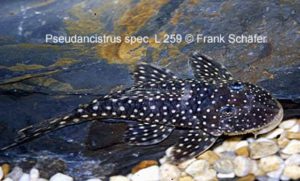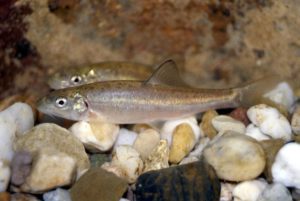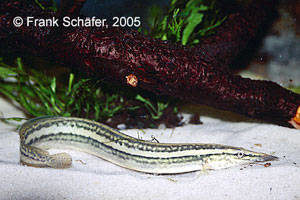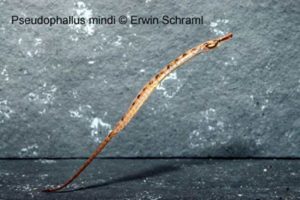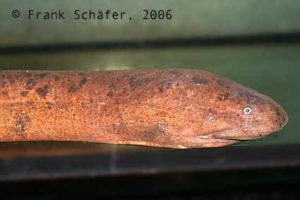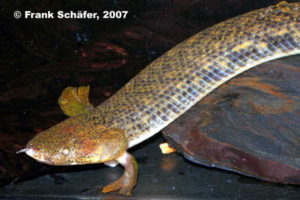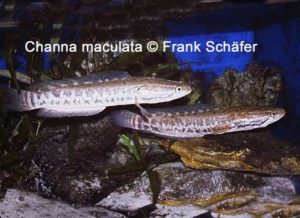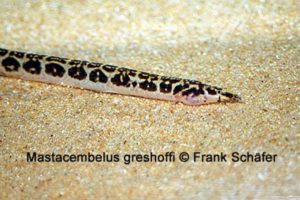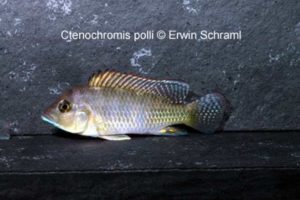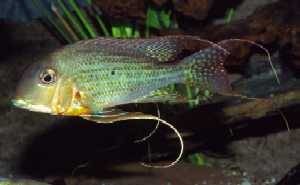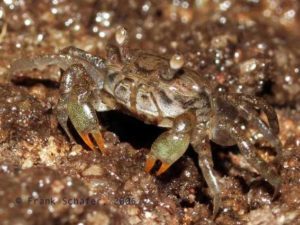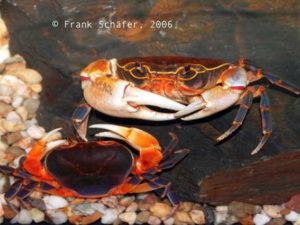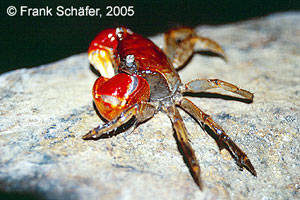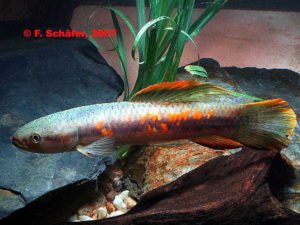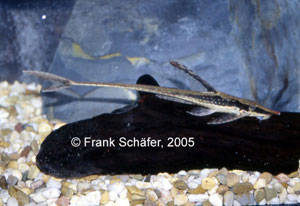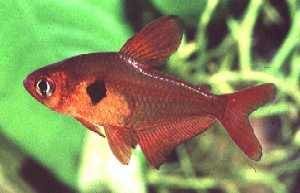

As a beauty in the conventional sense Synbranchus marmoratus can not be chracterised, but even the extraordinary has its attraction. At the moment we can offer beside swamp eels in „normal“ sizes a giant of approximately 1 m length. Of course a predator of this size should not be kept together with small „food fishes […]
Fish Archive (3213)
-
-
Malpulutta kretseri
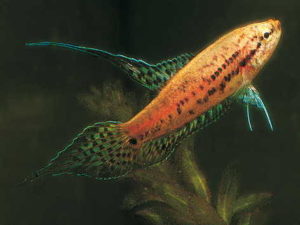
September 2006: As German breds we can offer Malpulutta kretseri. These preciousnesses are very rare in the wild and therefore strictly protected in their homeland (Sri Lanka). There they inhabit soft and sour waters and therefore their keeping in aquaria can be somewhat difficult. Small, dimly lit species tanks with a lot of shelters are […]
-
Carassius auratus „Weißer Komet“
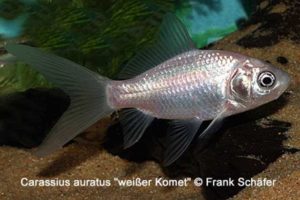
At the first warm days of march humans get a certain urge to go outdoors. In the garden is exactly looked how everything becomes green and also the pond gets a first critical inspection and stocktaking. Who wants to supplement the fish population, can plan now and should include the white comet to its considerations. […]
-
Altolamprologus compressiceps
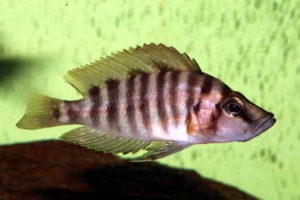
From the shores of lake Tanganjika orgins (Alto)lamprologus compressiceps. There the about 13 cm long getting fishhunter inhabits the detrital zone, which it roams on search for food. When a prey is seen it approaches in slow motion, near the booty it speeds up and catches the victim. Because of its strong lateral flattening it […]
-
Brotia pagodula
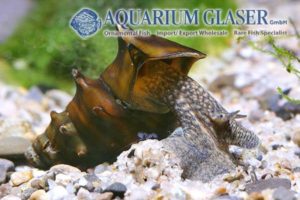
(28.Nov.2007) From Southeast Asia we got a still rarely traded snail species. Brotia pagodula is a live-bearing snail, as an endemic species it can be found only in the Moei, a river between Myanmar and Thailand. Their strongly wound house, provided with numerous spikes, gives them a bizzare appearance. On the search for algae they […]
-
Procambarus clarkii „WHITE“
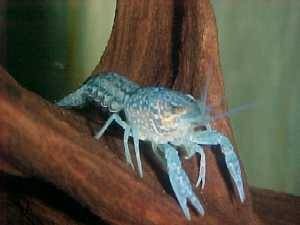
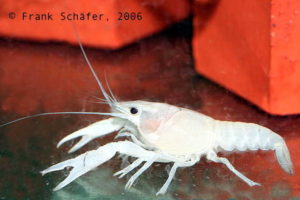
Under the numerous color forms of the Red Swamp Crayfish is Procambaris clarkii „White ” at present very popular. They are tough tank inhabitants, easily to reproduct and possess a high reproduction rate. Procambarus clarkii does not place large requirements towards the water chemistry, a strong filtering is however necessary, since they have a strong […]
-
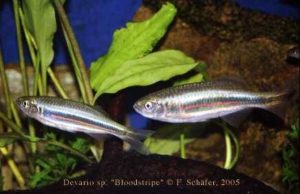
Devario regina
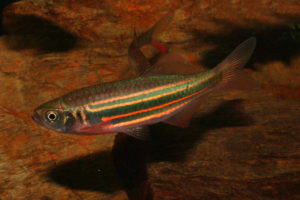
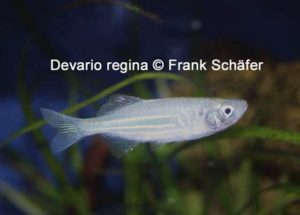
The Queen Danio (Devario regina) is a tropical fish belonging to the minnow family (Cyprinidae). Originating in India, Myanmar, Thailand, northwestern Malaya, and the Mekong basin it is quite rarely seen in our tanks. Other species often found in the same locality as D. regina are Puntius lateristriga, Rasbora paviei, various Poropuntius, Neolissochilus, Barilius, Nemacheilus […]
-
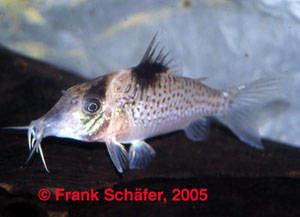
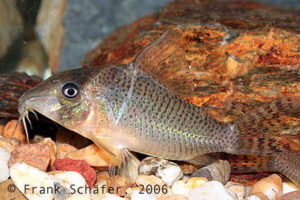
Corydoras ephippifer
This true mailed catfish species was imported from Belem (Brazil). The latin name „ephippifer“ is a combination from „ephippium“ (lat. = saddle) und „ferre“ (lat. = bearing) referring to the black spot on the basis of the dorsal fin. The animals reach a maximal length of 6 cm. They should be kept in a group. […]
-
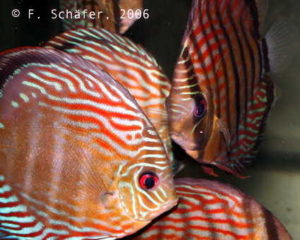
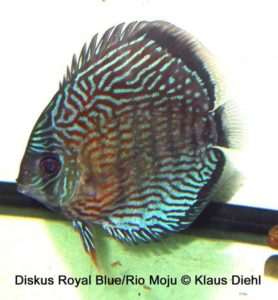
Diskus Nhamunda rosé
Nhamunda Rosé is the trade name of a strain of the brown discus Symphysodon aequifasciatus axelrodi originated in the Rio Nhamunda (northern influent of Amazon, west the city Alenquer). Now again some Nhamunda Rosé are available. Characteristic for this variety is the partially laminar high red part of the brown primary colour. Thus they are […]
-
Hydrolycus tatauaia
From Peru some sabre toothed Tiger Fishes of the species Hydrolycus tatauaia came to us. For the maintenance of these impressive hunters naturally roomy aquariums (> 1000l) are needed. Young specimen can be kept in swarms, in the wild even swarms of mixed species were observed. With ageing their aggression potential rises and they become […]
-
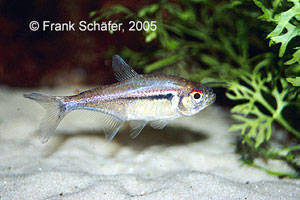
Cheirodon spec. „Gold Neon“
At present we can offer some Cardinals of the variety „Gold Neon“. This is one of some more in the wild rarely existing colour forms of Cheirodon axelrodi. Actually it is not clear whether this colour forms are distinct species or varieties of the cardinal. At the “Gold Neon” the blue colour strip is replaced […]
-
Pterosturiosoma microps
Pterosturiosoma microps is one of the regularly imported Loricariidae from Peru, although not in bigger quantities. Even though it is more impressing in colour by its soft black-grey, it can still arouse enthusiasm by its remarkable appearance and its impressive but graceful fins. But its steady nursing is not quite easy. Whereas the acclimatization probably […]
-
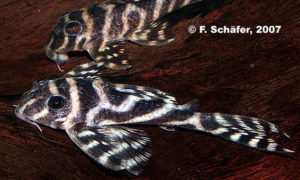
Synodontis angelicus
From the Katanga province of the Congo we could import some partly striped specimen of Synodontis angelicus. Formerly these forms were regarded as the subspecies Synodontis angelicus zonatus, today they are considered however as a color variant of the species. In any case they are very decorative and should not be missing in Congo basins […]